Article Contents:
- What it means to decorate an interior door rather than replace it
- Quick selection guide: which elements are responsible for which effect
- What you can buy for decorating the door panel
- Decorating an interior door with moldings: when a frame is better than carving
- How to choose a molding scheme for a door
- How not to mismatch door trim with a different style
- Need to decorate an old interior door without replacement
- Need to make a white door in neoclassical style
- Need to match the door with wooden furniture
- Need to design the opening in the hallway
- Need to make the door an accent
- How to decorate an interior door without replacing the panel?
- What to buy for door panel decor?
- Can you decorate a smooth white door with moldings?
- What is better: moldings, carved overlays, or wooden rosettes?
- Can furniture overlays be used on doors?
- How to choose architraves for a decorated door?
- Do I need to change the handle when decorating a door?
- What to choose: a handle without coating or with coating?
- How not to overload a door with decor?
- Should decorative elements be painted before installation?
- How to know if decor is suitable for an old door?
- Which STAVROS elements to buy for door decor?
- How does door decor differ from buying a new interior door?
- Is it possible to decorate all doors in an apartment the same way?
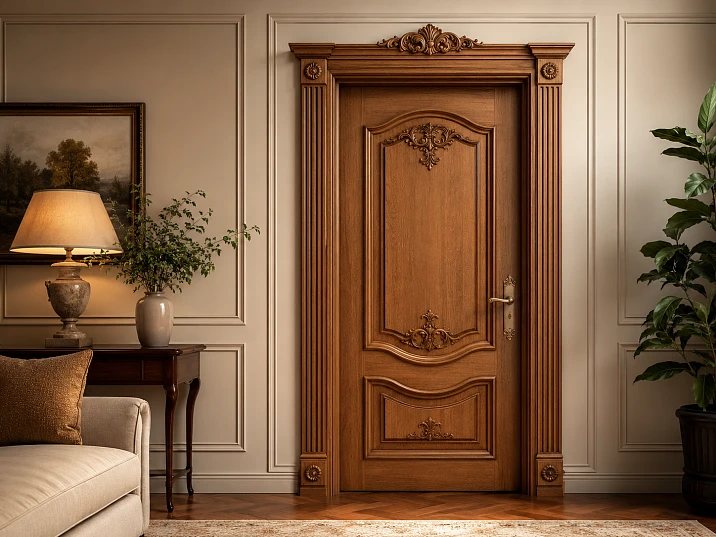
How to decorate an interior door if the door itself is still sturdy, closes well, and does not require replacement, but looks too plain, outdated, or clashes with the new interior? In such a situation, it is not always necessary to buy a new door leaf, replace the frame, and start renovations from scratch. Often, it is enough to skillfully put together a decorative set: update the leaf, add relief, replace the handle, select architraves, and tie the door to the furniture, baseboard, walls, and the overall style of the room.
Door decor works especially well where the door itself has become too neutral. A smooth white leaf can be made to resemble a neoclassical paneled door. An old wooden door can be enhanced with carved overlays and a new handle. A simple frame can be strengthened with an architrave so that the opening looks not like a random construction detail, but part of the interior.
The main thing is not to buy decor based on a single beautiful photo. A door is always perceived as a whole: the leaf, handle, architraves, extension, baseboard, wall color, nearby furniture. If you choose only one detail and do not connect it with the other elements, the door can become overloaded, alien, or visually heavy. Therefore, the right approach starts not with the question "which overlay to take," but with a more precise question: what to buy for decorating an interior door specifically in your case.
STAVROS helps to assemble such a set from wooden decorative elements: for the leaf, frame, handles, and adjacent interior details. In the article, we will discuss how to update a door without replacement, how to decorate the door leaf, how to use moldings, carved overlays, rosettes, architraves, and wooden handles, as well as what mistakes most often ruin the result.
What does it mean to decorate an interior door rather than replace it
Decorating a door is not an attempt to mask serious technical problems. If the leaf is warped, the frame is damaged, the hinges can't handle the load, and the door closes poorly, you first need to address the structural part. Decorating doors is appropriate when the base is sound, but the appearance no longer suits the interior.
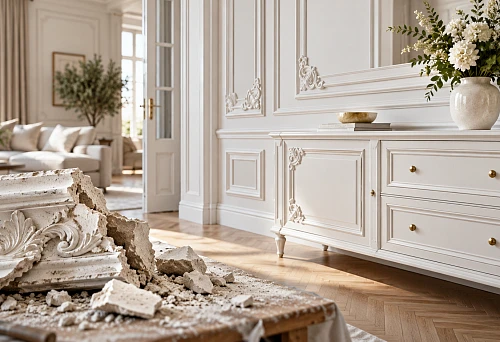
Most often, such a task arises after renovation. The walls have been repainted, furniture updated, baseboard replaced, but the interior door remains the same. Against the backdrop of the new interior, it may look too flat, cheap, or out of place. Decor helps not to throw away a functional door, but to bring it into the new style.
Decor has several working levels. The first is the leaf itself: moldings, decorative overlays, rosettes, panels, narrow profiles are added to it. The second is the frame: architraves around the door make the opening more expressive and help connect the door to the wall. The third is the handle: a small detail that greatly influences the impression of the door because a person constantly sees and touches it. The fourth is adjacent elements: baseboard, furniture facades, cornice, wall decor.
That's why it's better to think through interior door decor as a set. You can start with one detail, but keep the entire composition in mind. For example, if frames from molding appear on the leaf, the handle shouldn't be random modern hardware with a cold shine if the whole door leans toward warm classicism. If the architrave is wide and figured, the leaf itself can be made calmer. If the door is small and narrow, large carved elements should be used carefully.




Quick selection map: which elements are responsible for which effect
Перед покупкой удобно разделить декор по задачам. Одна деталь делает дверь рельефнее, другая закрывает слабое обрамление, третья помогает связать дверь с мебелью. Такая логика защищает от случайного набора красивых, но несовместимых элементов.
| Buyer's task | What can be used | What effect it gives | What to check before ordering |
|---|---|---|---|
| Make a smooth door more expressive | Moldings, narrow profiles, decorative frames | The panel looks more cohesive, with relief and proportion appearing | Panel size, symmetry, edge margins, handle location |
| Add a classic accent | Carved overlays, wooden rosettes, shaped elements | The door gets a more decorative, interior character | Element scale, thickness, combination with trim |
| Update an old door without replacement | Overlays, handle, trims, new color | The old door leaf looks neater and closer to the new interior | Base condition, surface evenness, finish compatibility |
| Make the opening look more expensive visually | Wooden architraves, profiled framing | The door is perceived not separately, but as a full opening | Wall width, extension, baseboard, room style |
| Connect the door with the furniture | Wooden handle, carved decor, overlays in a similar style | The door supports the facades, dresser, wardrobe, or console | Material, color of future finish, shape of handles |
| Avoid overload | One main decorative technique instead of a set of everything at once | The door looks expressive but not heavy | Room size, ceiling height, door leaf width |
This table helps to immediately understand an important thing: the decor of wooden doors does not have to be complex. Sometimes it is enough to replace the handle and add calm moldings. Sometimes it is better to invest in a beautiful frame. And in a classic interior, on the contrary, without carved details, the door may seem too empty.
Our factory also produces:
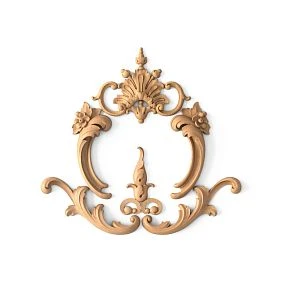
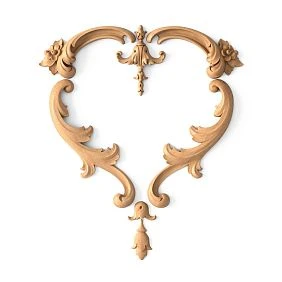
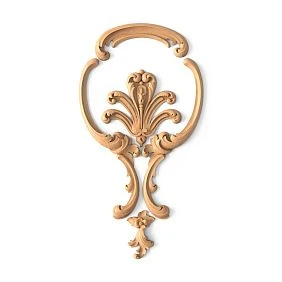
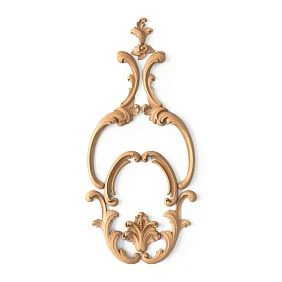
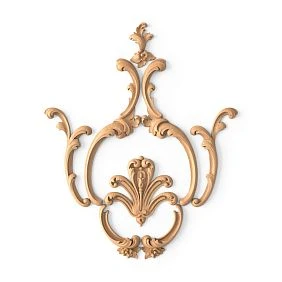
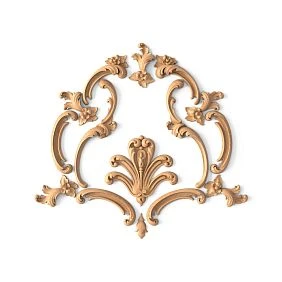
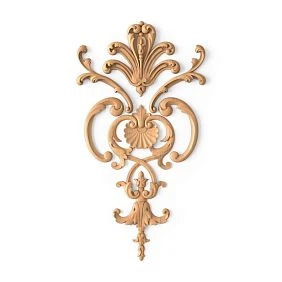
What can be bought for door leaf decor
The door leaf is the main plane that a person looks at. If it is smooth, without panels and decorative frames, the interior may seem simplified. This is especially noticeable in classic, neoclassical styles, studies, living rooms, bedrooms with wooden furniture or carved details.
Four groups of elements are most often used for the leaf.
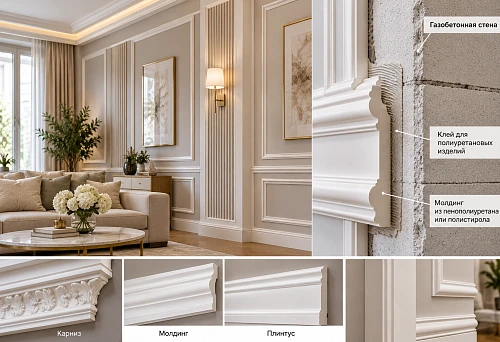
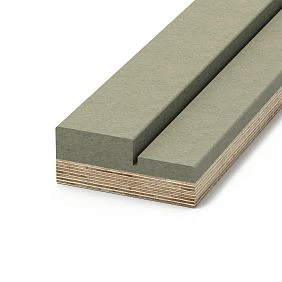
The first group is moldings. They help to assemble a frame, imitate a panel, divide the plane into vertical zones. Decorating interior doors with moldings is good because it can be both very calm and more expressive. It all depends on the width of the profile, the number of frames, and the future finish.
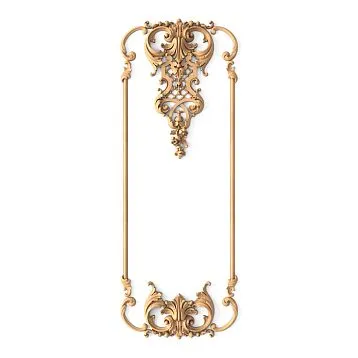
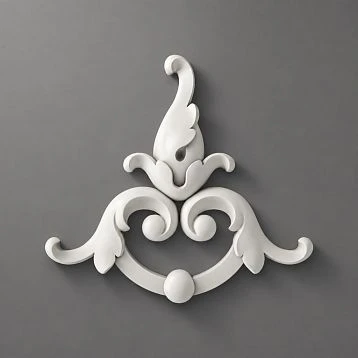
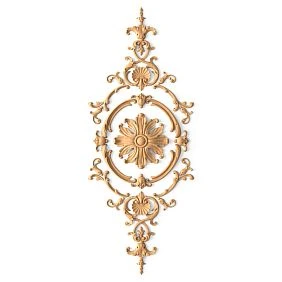
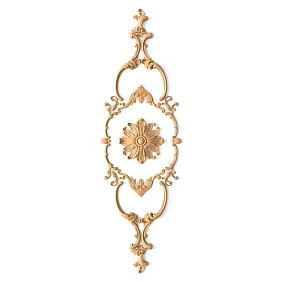
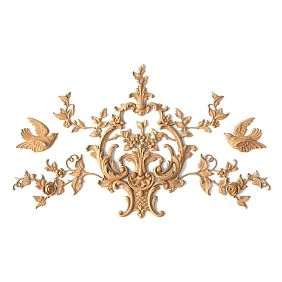
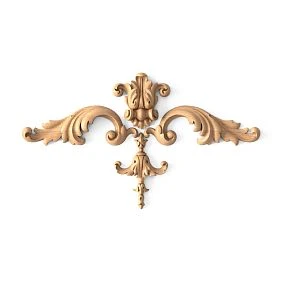
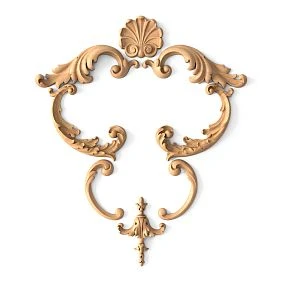
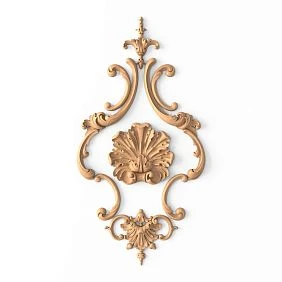
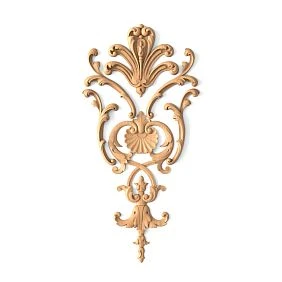
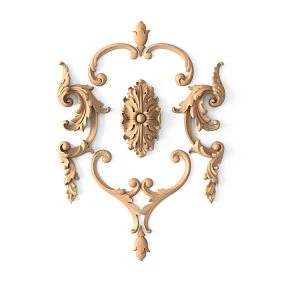
The second group is overlays. If you need to buy decorative door overlays, first assess the size of the panel and the style. The overlay can be a central accent, a paired detail at the top and bottom, a corner element within a frame, or part of a symmetrical composition. You can browse the STAVROS catalog Decorative solid wood overlays and choose a shape to match the furniture, door, or wall decor.
The third group is rosettes. A wooden rosette on a door acts as a decorative center. It can be used on a smooth panel, inside a molding frame, at the top of the door, or as a repeating motif. This technique is especially appropriate in classic, neoclassical, study interiors, living rooms, and bedrooms, where the door should look not like a construction plane but part of the finish.
The fourth group is narrow profiles, glazing beads, and elements that help make the composition neater. They are not always eye-catching, but it is these details that often create completeness. Without them, the door may look as if separate decor was simply glued onto it. With them, a system emerges: frame, offset, center, repetition, connection with the handle and architraves.
If you need a complete selection, you can look not at one detail but at the entire section STAVROS Decorative Elements. This way, it is easier to avoid mixing random shapes and to imagine in advance which elements will work together.
Get Consultation
Decorating an interior door with moldings: when a frame is better than carving
Decorating doors with moldings is one of the safest ways to update a simple door. Molding does not require complex ornamentation, does not overload the panel, and works well for modern interiors where neat geometry is needed. This technique is especially often used for white doors, enameled doors, calm neoclassicism, and apartments where you want to add relief without heavy carving.
The main task of molding is to create a frame. The frame makes the door plane look assembled. The eye sees not an empty rectangle but a clear architecture: top, bottom, center, vertical indents. Even a simple smooth panel after such decor begins to resemble a paneled door.
But moldings for door decoration require precision. An error of one or two centimeters may be unnoticeable in a photo, but on a real door it immediately catches the eye. If the top frame is higher than the bottom without reason, if the offsets from the edge are different, if the molding comes too close to the handle, the door looks homemade. Therefore, before purchasing, you need to measure the panel, mark the handle area, check the opening direction, and understand how many frames will be on the door.
The most common patterns are one large vertical frame, two frames one above the other, a narrow upper and tall lower frame, and symmetrical rectangles in a neoclassical style. For a tall door, a more elongated composition can be used. For a low or narrow door, it is better not to break up the surface too finely.
If you need to buy decorative molding for doors, it is useful to look not only at the profile itself but also at adjacent elements: the casing, baseboard, cornice, and furniture facades. Section moldings, cornices, baseboards, and casings helps to select elements in a consistent logic so that the door does not clash with the room's finish.
How to choose a molding pattern for a door
For a calm modern interior, simple geometry works best. This could be a single frame without carved elements, painted in the color of the door leaf. Such a door doesn't shout about itself, but already looks deeper and more expensive.
For neoclassicism, symmetrical decor of a white interior door with moldings is suitable. White enamel, even margins, neat frames, and a new handle give the feeling of a finished interior door. In this scenario, it is better not to add too much carving: the molding itself creates the necessary architecture.
For classic style, the frame can be enhanced with a decorative overlay or rosette. But here it is important to choose one main focal point. If the door already has a figured casing, and moldings, carved overlays, and a large handle appear on the leaf, the composition can become heavy.
For an old door, molding is good because it helps hide the visual simplicity of the leaf. But it should not mask surface damage. If the base is uneven, with peeling coating, preparation is needed first. It is better to install decor on a clean, stable, and even surface.
Carved overlays and wooden rosettes for doors
Carved elements are needed where geometry alone is not enough. They add character: classic, study, historical, furniture-like. Wooden carved decor for doors is especially appropriate when the room already has furniture with panels, carved facades, massive legs, decorative cornices, frames, or classic baseboards.
The carved overlay can work in different ways. In the center of the door, it becomes the main accent. In a paired version, it supports the vertical line of the panel. In the corners of a molding frame, it helps make the composition more elegant. On an old door, the applied decor of wooden doors can distract attention from a too-simple plane and connect it with other wooden details.
A wooden rosette is a more point-specific element. It does not cover a large area, but creates a clear decorative center. It can be used next to molding frames, above the handle, in the upper part of the panel, or paired with other elements. The main thing is not to place the rosette randomly. It must have a role: the center of a frame, a motif repeat, a connection with furniture, an accent in a classic opening.
When a buyer is looking to buy decorative elements for interior doors, they often imagine a ready-made beautiful door, but do not always understand what the result consists of. In practice, the result comes not from individual "beautiful details," but from a combination of scale, symmetry, and repeats. If the overlay is large, the handle should match it in expressiveness. If the rosette is thin and neat, it is better to choose a casing that is not too heavy. If the door is next to a carved cabinet or dresser, the panel decor can be selected to echo the furniture's language.
For more expressive projects, you can look at Carved wooden decoration. Such a section is useful when the door should become part of a larger interior solution, rather than just receiving a single overlay.
How to decorate door trims
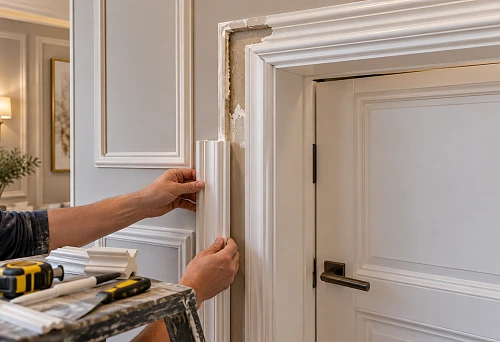
Sometimes the problem is not with the panel but with the framing. The door may be neat, but a thin flat trim makes the entire opening weak. The wall looks empty, the transition from the panel to the finish seems random, and the door does not hold the room's scale. In such a case, decorating an interior door should start not with overlays but with trims.
The trim forms a frame around the opening. It affects how the door is perceived from a distance. A narrow smooth trim almost disappears on the wall. A wide profiled trim makes the opening more noticeable. A shaped trim adds classic depth. A wooden trim with a pattern can support the carved decor of the door, but here it is especially important not to slip into a facade or house style if it is about a city interior door.
If the task is to buy a wooden door casing, you need to evaluate not only the width and pattern, but also the adjacent details. The casing should match the baseboard, extension, moldings on the door leaf, and the furniture in the room. When the opening is wide or the wall is thicker than the frame, you need to understand in advance how the extension is handled. For this situation, a separate article about which extension to buy for the door, because even a beautiful trim will not save the opening if the extension is chosen randomly.
Select Wooden casings is worthwhile when you want to decorate not only the door leaf, but the entire doorway. This approach is especially important for living rooms, studies, hallways, and corridors where several doors are in the same area. If you only replace one handle, the effect will be small. If you create a unified framing, the interior immediately becomes more cohesive.
How not to steer a door casing into a foreign style
A door casing has a different task than an exterior window casing or house carving. Inside an apartment or house, it must work with the scale of the room, ceiling height, furniture, and wall finishes. Too active a pattern on a small opening can look heavy. Too simple a casing next to a carved door leaf can get lost.
If the door is designed in a classic style, the casing can be shaped and noticeable. If the interior is closer to neoclassicism, it's better to choose a calm profile and support it with moldings on the door leaf. If the room is modern, the casing can be left laconic, and the expressiveness transferred to the handle or a neat frame.
When you need to delve deeper into framing specifically, you can additionally look at the article about wooden trims for door openings. It helps not to mix the task of decorating the door leaf with the separate task of selecting the width, profile, and style of the casing.
How to choose a handle for a renovated interior door
The handle seems like a small detail until the door is being updated. After decorating the door leaf, the old handle often looks foreign. It can be too modern, too shiny, too simple, or simply not match the new character of the door. Therefore, the question "how to replace the handle and update the door" is directly related to the overall decor.
A wooden door handle works especially well where you need to connect the door leaf with furniture. If the room has a wooden chest of drawers, console, wardrobe, bed, mirror frame, or carved elements, a wooden handle helps the door become part of that group. It does not look like random metal hardware but supports the material and warm texture.
You can view in the catalog wooden STAVROS handlesWhen choosing, it is important to consider the shape, size, mounting method, finish, and how the handle will look next to moldings, overlays, and trim. If the door already has active carved decor, the handle should not compete with it. If the panel is plain, the handle can become the main accent.
Separately, it is worth distinguishing handles by finish. uncoated wooden handles convenient when the element needs to be painted, tinted, or matched to a specific door or furniture finish. wooden handles with coating are suitable when you want to get a finished detail faster and not deal with separate final processing. Current parameters, finish options, and compatibility are always best checked in the product card before ordering.
If you need a more detailed breakdown specifically on hardware, you can use the material on how to choose Wooden door handleIn the context of door decor, the handle is important not by itself, but as a final detail that connects the panel, trim, and furniture.
Comparison of options: moldings, overlays, rosettes, casings, and handles
The same question 'what to decorate the door panel with' can lead to different purchases. It all depends on what effect is needed: a light refresh, a classic accent, a complete doorway design, or connecting the door with furniture.
| Decor option | When to choose | What it gives the door | When it's better not to overload |
|---|---|---|---|
| Moldings | The door is smooth, needs geometry, neoclassicism, calm classic | Create frames, make the panel look like a paneled door | If the door is narrow, don't split it too finely |
| Carved overlays | Need expressive wooden decor for doors | They add ornament, support furniture and classic style | If a very active trim has already been chosen |
| Wooden rosettes | Need a point accent or center of composition | Make the door more decorative without solid carving | If there is no clear layout scheme on the panel |
| Wooden trims | Weak framing, simple opening, hallway or living room renovation | Make the door part of the room's architecture | If the extension and wall width are not resolved |
| Wooden handle | Need to quickly refresh the impression and tie the door to the furniture | Works as a final tactile and visual detail | If the shape of the handle does not match the new door style |
| Set of several elements | The door should become a noticeable part of the interior | Allows you to assemble a complete solution | If elements are purchased without measurements and a general scheme |
This comparison shows that there is no single correct option. For one door, a handle and molding are enough. For another, a casing is needed. For a third, carved decor, a rosette, and a calm frame are required. The mistake begins where the buyer tries to put everything they liked in the catalog on one door at once.
Ready-made door decor scenarios
To choose faster, it's helpful to match your task to a ready-made scenario. These are not strict rules, but working routes that help you understand where to start your purchase.
| Scenario | What to buy | Which interior it suits | Practical advice |
|---|---|---|---|
| Quick update | New handle and simple moldings | Modern interior, calm neoclassicism | Start with a handle and a frame layout, do not add carving unnecessarily |
| Classic door | Figurative architraves, carved overlays, wooden handle | Classic, study, living room | Ensure the architrave and overlays do not conflict in scale |
| White neoclassics | Molding frames, neat handle, calm architrave | Bedroom, living room, hallway | White color enhances geometry, so symmetry is especially important |
| Accent door | Rosette, paired overlays, expressive handle | Living room, study, entrance to private area | Make one main center, do not overload the entire plane |
| Updating an old door | Casings, handle, overlays, surface preparation | Repair without replacing the door leaf | First check the condition of the base, then choose the decor |
| Pairing with furniture | Wooden handle, overlays in a similar style, calm moldings | Room with wooden furniture | Repeat the furniture motif, but don't copy it too literally |
For DIY door decor, a scenario-based approach is especially convenient. It reduces the risk of unnecessary purchases. Instead of a set of random details, you understand in advance what exactly should change: the plane, the frame, the handle, or the entire opening.
How to choose decor to match the room style
A door rarely stands alone. It is located next to walls, furniture, baseboards, curtains, mirrors, cabinets, and lighting. Therefore, decor for wooden doors should be chosen not only based on the beauty of the element but also on the style of the room.
In a classic interior, carved overlays, shaped architraves, wooden rosettes, and a more expressive handle are acceptable. But classic does not mean overload. A good classic door relies on proportions. If the panel is low, it is better to choose one strong vertical composition rather than several small details.
In neoclassicism, moldings, symmetry, calm frames, light coloring, and neat handles work better. Door decor in neoclassicism is usually based not on complex carving but on clean geometry and good framing. Here it is especially important to maintain equal spacing and not mix too many ornaments.
In a modern interior, decor can be almost invisible. For example, a thin molding in the color of the door, a simple wooden handle, a laconic architrave. This option makes the door neater but does not turn it into a classic object. For minimalist rooms, it is better not to use active carved overlays unless they are supported by furniture.
In interiors with wooden furniture, the door can be linked to the facades. If there is a chest of drawers with wooden handles or carved elements nearby, it is logical to use a similar material on the door. An article about DIY furniture decorationcan also help here, because the technique of repeating decor on furniture and the door often creates a cohesive interior.
In the hallway and entryway, it is important to think about several doors at once. If three or four panels are visible in the area, the decor of one door should be compatible with the others. You can use identical handles, identical trims, or repeat the molding scheme. Then the hallway looks put together, not like a random set of doors.
How to choose the size, scale, and location for decor
The most common mistake when decorating a door is choosing an element without considering scale. The overlay may look beautiful in a photo, but on the actual panel, it might be too large. The molding may seem neat, but after installation, it might be too close to the edge. The handle may be nice on its own, but next to a carved rosette, it looks small.
Start with measurements. Measure the height and width of the panel, the distance to the handle, the width of the visible part of the architrave, the depth of the opening, and the height of the adjacent baseboard. If you plan to decorate interior doors with moldings, draw a diagram on paper or mark it with painter's tape on the door itself. This is a simple way to see if the indents are too narrow, if the frame interferes with the handle, or if the composition fragments the panel.
For a tall door, you can use more elongated frames. For a standard panel, two zones are often suitable: the upper and lower. For a narrow door, it is better not to place wide elements on the edges, otherwise the passage will seem even narrower. For a door in a small room, it is better to choose calmer decor because a person looks at it from a close distance.
The thickness of the element is also important. An overly protruding overlay next to the handle can interfere with your hand. Too much relief decor on a passage door can snag on clothes or bags more quickly. If the door opens toward a wall, you need to check whether the protruding element will hit the door stop, furniture, or adjacent casing.
The material and finish affect not only the appearance but also the order of work. If the elements will be painted together with the door, it's better to plan ahead for priming, sanding, joints, and the sequence of installation. If you choose ready-made elements with a coating, you need to match the color and style more precisely. It's best to verify all relevant parameters in product cards or check with a STAVROS manager before ordering.
What not to make from scratch if there are ready-made STAVROS elements
The query "how to decorate an interior door with your own hands" often leads to the idea of cutting decor yourself, searching for random slats, picking blanks in different places, or trying to assemble a complex composition from unsuitable elements. This path is possible, but it often takes more time than it seems.
You don't have to cut out complex carved decor by hand if you can choose a ready-made overlay. You don't need to make a rosette from scratch if there is a ready-made decorative element. You shouldn't buy a random construction profile if you need a neat molding for door decor. You don't have to separately look for a handle that will coincidentally match the wooden parts if you can view a group of handles and decor in one system.
Ready-made elements do not eliminate independent work. The buyer still needs to measure the door leaf, choose a scheme, prepare the base, think through the finish, and carefully install the parts. But ready-made decor shortens the most difficult stage: creating the shape. Instead of manually drawing an ornament or adjusting a random blank, you can focus on the composition and quality of installation.
This is especially important for those who are updating not just one door, but several. If an apartment has five interior doors, random decor will quickly create inconsistency. Ready-made elements help repeat the scheme: identical handles, similar frames, a unified casing, and a consistent finish. As a result, the interior looks well-thought-out, rather than assembled from leftovers.
What to buy together for interior door decor
A door is rarely updated with just one detail. Even if the purchase starts with an overlay, a question about the handle, casing, molding, or trim almost always arises nearby. Therefore, before ordering, it is useful to assemble a set.
If you are choosing overlays for the door leaf, immediately think about molding. An overlay without a frame can look lonely, especially on a large smooth door leaf. Molding helps give it boundaries and connect it with the shape of the door.
If you are changing the handle, evaluate the casings. A new wooden handle against the background of an old flat frame may look better, but the entire opening will still remain weak. Sometimes it is more profitable to buy a handle and casing together than to later select the second part separately.
If you are choosing architraves, check the extension. You can buy a wooden door architrave only after understanding the wall width and the condition of the opening. Otherwise, a beautiful frame may not cover the necessary areas or may not align with the frame.
If you are decorating a door in a classic style, think about the neighboring furniture. Carved elements on the door will look more convincing if there is repetition in the room: dresser handles, mirror frame, decorative overlay on the facade, profiled baseboard. The door should not be the only carved object in an empty modern room, unless such contrast is specifically intended.
| What to add to the purchase | Why this is needed | Which scenario it suits | What to pay attention to |
|---|---|---|---|
| Decorative overlays | Add relief and accent to the door leaf | Classic, updating an old door, accent door | Door leaf size, symmetry, element thickness |
| Moldings | Form a frame and make the door more architectural | Neoclassical, white door, calm decor | Indentations, corners, handle location |
| Wooden rosettes | Create a central decorative motif | Living room, study, classic bedroom | Scale and connection with the rest of the decor |
| Wooden trims | Enhance the opening and connect the door to the wall | Hallway, corridor, living room | Wall width, extension, baseboard |
| Wooden handle | Completes the update and connects the door to the furniture | Any update scenario | Shape, coating, grip comfort |
| Carved decoration | Makes the door expressive and supports the classic style | Classic, study, interior with massive furniture | Do not overload the door leaf and the casing simultaneously |
The commercially correct route looks like this: first choose the main decorative technique, then add supporting details, then check the dimensions and finish, and only after that place the order. This makes it easier to buy wooden door decor without random mismatches.
How not to confuse door decor with similar products
Buyers often mix different product groups: furniture overlays, door overlays, moldings, casings, extensions, baseboards, carved decor, handles. Many elements can indeed be similar in material and style, but their purpose is different.
A decorative overlay for the door leaf is an accent on the door itself. It does not replace the architrave and does not cover the joint around the opening. It is chosen based on the leaf size, thickness, shape, and style.
Molding is a profile for a frame or linear decor. It does not work as an independent carved center, but it helps to assemble the geometry. If you want to make a simple door look like a paneled one, you often start with molding.
Casing is the framing of the opening. It does not decorate the center of the leaf, but it greatly affects the appearance of the entire door. It is worth buying a wooden casing for the door when the transition from the leaf to the wall looks weak.
An extension is needed when the wall is wider than the frame and the opening needs to be covered in depth. It cannot be replaced by a casing. If the extension is not planned, the framing may look unfinished.
A handle is a functional and decorative detail. It should be comfortable, compatible with the door, and suitable in style. A beautiful handle does not replace the decor of the leaf, but it can greatly improve the impression of the door.
Carved wooden decor is a broader group. It may include elements for furniture, walls, doors, and interior compositions. Before purchasing, you need to check the purpose, size, and how a specific detail will work on the leaf.
The main rule is simple: do not buy an element just because it is wooden and beautiful. First, determine its role. It should fulfill a specific task: decorate a surface, frame an opening, replace a handle, assemble a frame, support furniture, or connect several details.
Practical selection for different situations
Need to decorate an old interior door without replacing it
First, check the condition of the door. If the coating is peeling, there are deep chips, or the leaf is warped, decor will not solve the problem. If the door is level and functional, you can update it with three elements: moldings, overlays, and a handle. Moldings will provide new geometry, overlays will add character, and the handle will complete the update.
For an old door, it's often better not to choose too small decor. It can emphasize imperfections. A calmer frame and one expressive element work more reliably.
Need to make a white door in neoclassical style
Here, the best route is to decorate the interior door with moldings. A white door accepts frames well because the light surface emphasizes shadows from the profile. Carving can be added very sparingly: for example, one rosette or a small accent, if the interior requires it.
It's better to choose the handle after the molding scheme. If the frames are thin and calm, a too heavy handle may stand out. If the door is tall and the framing is expressive, the handle should be more noticeable.
Need to connect the door with wooden furniture
Look at the shape of the furniture. If the facades are strict, the door can be decorated with moldings and a wooden handle. If the furniture is carved, overlays or rosettes are acceptable. If there are already wooden handles in the room, the door can be supported with a similar material, but it's not necessary to copy the shape exactly.
This approach works especially well in the bedroom, study, and living room. The door ceases to be a construction element and becomes part of the furniture group.
Need to design an opening in the hallway
In the hallway, consistency is most important. If several doors are visible, it's better to use the same architraves and handles. The door panels can remain plain, but the framing should be uniform. For a hallway, it's often more advantageous to start with wooden architraves and then decide if decor is needed on each panel.
Need to make the door an accent
An accent door should have one main feature. This could be a large rosette, an expressive overlay, a contrasting finish, an unusual handle, or a rich architrave. Don't use everything at once. If the door becomes the center of attention, there should be enough calm space around it.
Mistakes when decorating an interior door
The first mistake is buying decor without measuring the door leaf. On the product page, an element may look universal, but on your door, it may turn out too large, too small, or inconvenient next to the handle. Before ordering, you need to measure the leaf and at least roughly lay out the composition.
The second mistake is not considering the door's swing direction. Protruding decor may end up next to a wall, furniture, or a door stop. This is especially important for narrow hallways, walk-in closets, bathrooms, and doors that open almost flush against a wall.
The third mistake is placing thick elements near the handle. Your hand should be able to reach the handle freely. If a bulky overlay is placed nearby, using the door will be inconvenient.
The fourth mistake is not coordinating the architrave with the baseboard. The door may be beautiful, but if the architrave ends abruptly next to an unsuitable baseboard, the opening looks poorly thought out. It's better to assess the entire lower wall area in advance.
The fifth mistake is mixing different carving styles. One overlay may be floral, another geometric, the handle modern, the trim strict. Individually, the elements are beautiful; together, they clash.
The sixth mistake is overloading a small door. On a narrow leaf, large overlays, wide moldings, and a massive handle can look heavy. For small doors, it's better to choose one or two features.
The seventh mistake is painting elements after sloppy installation. If the joints are poorly prepared, the paint will highlight defects. It's better to plan the work order in advance: preparation, fitting, installation, sanding, finishing.
The eighth mistake is making a composition without symmetry. A door is a geometrically strict object. Random offsets on it are more noticeable than on a wall or furniture.
The ninth mistake is forgetting about the extension and wall thickness. A beautiful trim won't solve the problem of a deep opening if the side part of the wall isn't covered.
The tenth mistake is choosing a handle separately from the overall style. The handle is in your hand every day and constantly in sight. If it doesn't match the new decor, the update looks incomplete.
Who interior door decor suits, and who should choose a different path
Door decor is well suited for those whose panel is functional but visually outdated. It's a rational option for renovations without completely replacing doors. Especially if you need to update several rooms, and replacing all panels is expensive, time-consuming, or impractical.
This approach suits owners of apartments after cosmetic renovations, country houses with wooden elements, interiors in classic and neoclassical styles, studies, living rooms, bedrooms, hallways. It is also useful for designers and craftsmen who need to assemble a decorative solution from ready-made elements rather than crafting each detail from scratch.
The decor is suitable for those who want to connect the door with the furniture. For example, the room has a wooden chest of drawers, bed, console, mirror frame, or carved facades. The door can be supported with a handle, overlay, or molding so it doesn't look out of place.
But there are situations where it's better to choose a different path. If the door is technically damaged, decor won't replace repairs. If the panel is too cheap in construction and doesn't hold fasteners well, you first need to assess the possibility of installing elements. If the interior is extremely minimalist, carved decor may be excessive. If the opening requires work with the frame and extension, you can't limit yourself to overlays on the panel.
An honest choice is always better than a random purchase. Sometimes a handle is enough. Sometimes a trim is needed. Sometimes it's better not to touch the panel but to update the framing. And sometimes the door really is easier to replace. The buyer's task is to understand which scenario applies to their specific situation.
How to buy decorative elements for an interior door at STAVROS
Before ordering, start not with the cart but with a quick check. Measure the door, determine the style, choose the main decorative technique, and decide which elements should work together. After that, you can move on to the products.
If the main focus is on the door leaf, look at overlays, rosettes, moldings, and carved decor. If the task is framing, start with casings and extensions. If you need to quickly refresh the impression, start with the handle. If you want to assemble a complete set, look at several groups at once and check compatibility by size, material, and finish.
At STAVROS, it's convenient to select elements based on the task's meaning: panel, handle, casing, carved decor, profile details. Before ordering, carefully check the dimensions, material, coating, and purpose in the product card. If the decor is being selected for an existing door, furniture, or complex interior composition, it's better to check compatibility with a STAVROS manager in advance.
You shouldn't order decorative elements for interior doors to buy with the principle 'we'll figure it out later.' It's much more reliable to assemble a set in advance: what goes on the panel, what around the opening, which handle will complete the look, whether finishing is needed, and how the elements will combine with furniture and baseboard.
FAQ: questions about interior door decor
How to decorate an interior door without replacing the panel?
If the door is functional, it can be updated with moldings, decorative overlays, wooden rosettes, a new casing, and a handle. It's best to start with an overall scheme: what changes on the door leaf, what around the opening, and which handle completes the composition.
What to buy for door panel decor?
Moldings, carved overlays, wooden rosettes, decorative panels, and narrow profiles are suitable for the door leaf. The choice depends on the style: for neoclassicism, moldings are more often used; for classicism, carved elements; for a calm update, a handle and a simple frame.
Can a smooth white door be decorated with moldings?
Yes, a white smooth door is well suited for molding frames. The main thing is to maintain symmetry, equal indentations, and not place the profile too close to the handle or the edge of the leaf.
What is better: moldings, carved overlays, or wooden rosettes?
Moldings provide geometry, overlays add pronounced decor, rosettes work as a point accent. For a calm interior, it is better to start with moldings. For a classic one, add overlays. For an accent door, you can use a rosette as the center of the composition.
Can furniture overlays be used on doors?
Yes, if they are suitable in size, thickness, style, and installation method. It's important to check that the overlay does not interfere with the handle, door opening, or surface maintenance.
How to choose trim for a decorated door?
The trims should match the door leaf, baseboard, extension, and the overall style of the room. If the leaf is already active, it's better to choose a calmer trim. If the leaf is simple, the frame can take on a decorative role.
Do I need to change the handle when decorating the door?
Often yes. An old handle can ruin the impression even of a neatly decorated leaf. A wooden handle helps connect the door with furniture, overlays, trims, and other wooden details in the room.
What to choose: a handle without coating or with coating?
A handle without coating is convenient if it needs to be painted or tinted to match the door and furniture. A handle with coating is suitable when a more finished part is needed. Before ordering, check the current options in the product card.
How not to overload the door with decor?
Choose one main technique. For example, a molding frame and a calm handle. Or a trim and a new handle without carving on the leaf. Or a rosette as a center and a minimum of additional details. The more active one element is, the calmer the others should be.
Do decorative elements need to be painted before installation?
This depends on the material, coating, installation scheme, and desired result. Sometimes it's more convenient to first try on and install the elements, then prepare the joints and paint together with the leaf. Sometimes it's better to use already coated parts. The order of work should be thought out in advance.
How to know if the decor will suit an old door?
Check the evenness of the panel, the condition of the coating, the strength of the base, and the door's operation. If the door closes poorly or the surface is deteriorating, preparation or repair is needed first. If the base is stable, the decor can refresh the appearance well.
Which STAVROS elements should I buy for door decor?
Most often, people look at overlays, moldings, wooden rosettes, architraves, handles, and carved decor. The specific set depends on the task: to decorate the door leaf, enhance the opening, replace a handle, or assemble a door in a unified style with the furniture.
How does door decor differ from buying a new interior door?
Buying a new door solves the issue of construction and complete renewal. Decor solves a visual task when the existing panel is still functional. It's a way to refresh the appearance, connect the door with the interior, and not change the entire door group.
Can all doors in an apartment be decorated identically?
Yes, and it's often the best option for a hallway or entryway. You can repeat handles, architraves, molding patterns, or color. The main thing is to calculate the number of elements in advance and check if they fit all door panels in size.
Result: the door can be updated without replacement if you assemble the decor thoughtfully
An interior door changes the impression of a room more than it seems. It occupies a noticeable plane, constantly comes into view, and connects the wall, furniture, baseboard, handles, and opening. Therefore, door decor should not be a random decoration, but a well-thought-out set.
If you need to quickly refresh the door, start with a handle and simple moldings. If you want a classic look, add carved overlays, rosettes, and a suitable architrave. If the opening, not the door leaf, looks weak, pay attention to the framing and extensions. If the door should support the furniture, choose wooden elements that echo the facades, frames, chests, or consoles.
STAVROS helps you move from an idea to selecting specific details: view overlays, moldings, architraves, handles, and carved decor, check parameters in the cards, and assemble a set for your interior. Before ordering, check the dimensions, material, finish, compatibility, and role of each element. Then the updated door will look not like a random alteration, but like a full-fledged part of the interior.