Article Contents:
- Why choosing a molding profile is more important than it seems
- Smooth moldings: calm elegance without excessive classicism
- What makes a smooth profile appealing
- Where smooth moldings work best
- Smooth molding in wall color: a trick that always works
- Embossed moldings: when the interior needs character and expressiveness
- When embossed molding is appropriate
- Embossed molding and ornament: how not to make a mistake
- Embossed molding for painting
- Narrow moldings: lightness that doesn't weigh down
- What is considered a narrow molding
- Where narrow moldings work best
- Combining narrow moldings
- Wide moldings: solidity, scale, and a grand effect
- When wide moldings are needed
- Wide molding and proportions
- How to choose a molding for a specific room: practical logic
- Moldings for different interior styles
- Moldings for a modern apartment
- Moldings for neoclassicism
- Moldings for classic style
- Moldings for Scandinavian style
- Moldings for Art Deco
- Moldings for painting: what's important to know
- Three approaches to molding color
- How to paint moldings correctly
- When moldings need stucco decor
- Corner overlays for frames
- When wall moldings need to be connected to the ceiling
- Ceiling cornice as a continuation of wall moldings
- Chandelier rosette as the center of the ceiling composition
- How to correctly calculate moldings: practical tips
- Calculation for frame decor
- Calculation for ceiling cornice
- Individual Elements
- Moldings for the bedroom: a special conversation
- Headboard as the main decorative zone
- Moldings around the perimeter of the bedroom
- Moldings for the living room: three working schemes
- FAQ: answers to the most important questions about choosing moldings
- About the Company STAVROS
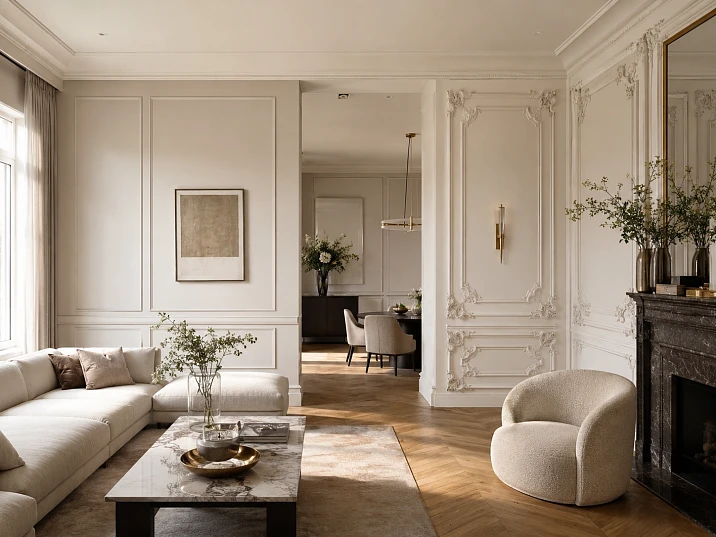
There are things that radically change an interior — not renovation, not furniture, not expensive fabrics, but one correctly chosen molding on the wall. Or an incorrect one — and then the wall looks either overloaded or nondescript, while an expensive sofa and good parquet lose half their effect. Why does this happen? Because the molding sets the scale, rhythm, and character of the entire surface. It either works for the interior or against it.
A person who chooses Moldings made of polyurethane for the first time usually looks at a catalog and thinks something like: "Here's a smooth one, here's one with an ornament, here's a narrow one, here's a wide one — which one?" This is an honest question, and it requires an honest answer. Not "take any," but a specific analysis: what exactly suits your room, your style, and your task. That's exactly what we'll do.

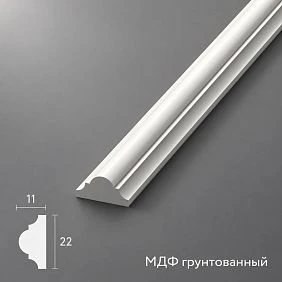
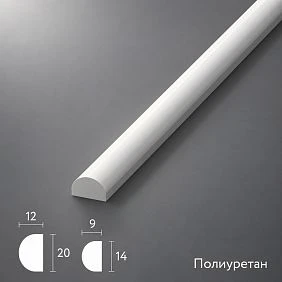

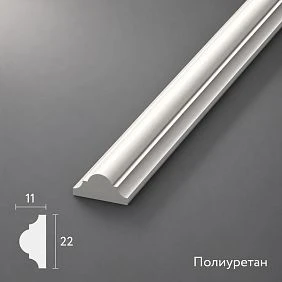
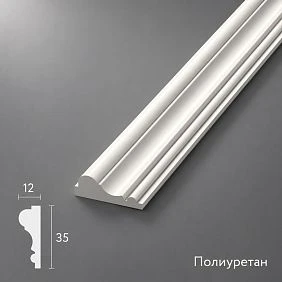
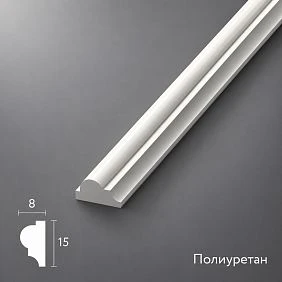
Why choosing a molding profile is more important than it seems
A molding is not just a decorative strip. It is a visual tool with several functions simultaneously. It structures the wall, creates relief, adds shadow, and sets the stylistic direction. And if you choose the wrong profile, none of these functions will work as they should.
Imagine a wall 2.5 meters high and 4 meters long. On it is a molding 8 mm wide. It simply doesn't read: too thin, the eye doesn't notice it. Now imagine the same molding, but 80 mm wide with a lush floral ornament. It will overwhelm the wall, create a feeling of heaviness, and visually shrink the room. Neither one solves the problem.
A correctly chosen molding is one that is proportionate to the wall, matches the ceiling height, is consistent with the style of the furniture, and is painted the right color. Only then does it do its job: it turns an ordinary painted surface into an architecturally meaningful plane that looks expensive — precisely because it is thoughtfully done.
buy polyurethane moldings is one step. But before this step, there are several decisions that determine the result. Let's start with the main division.




Smooth moldings: calm elegance without excessive classicism
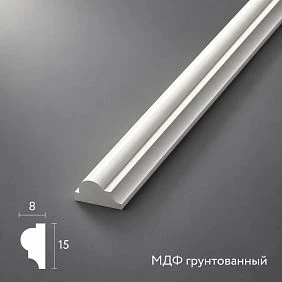
A smooth molding is a profile without ornament. No acanthus leaf, no meander, no plant pattern. Only shape: a rounded, square, beveled, or stepped profile without decorative relief on the surface.
It is smooth moldings that are the most popular choice in residential interiors today. The reason is simple: they are versatile. A smooth profile is not tied to any historical style — it fits equally organically in a modern apartment, neoclassical, Scandinavian interior, or a transitional style without a clear definition.
Our factory also produces:
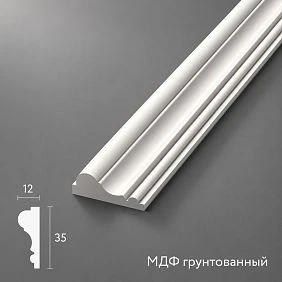


What makes a smooth profile attractive
Smooth moldings create structure on the wall — frames, lines, geometry. But they do not create stylistic references to the past. It is pure form: the rectangle of a frame, the horizontal line of a cornice, the vertical line of a trim. The eye perceives not "classics" but "order." It is this kind of order that is associated with an expensive, thoughtful interior.
The second advantage is that they are paintable. A smooth molding painted the color of the wall literally disappears as a separate object and turns into a surface relief. This is one of the most elegant techniques in modern design: a wall with moldings looks voluminous but not overloaded. No pretentiousness — only the play of shadows from the profile.
The third is scalability. A smooth profile can be taken with a width of 15 mm for neat, light frames in a small bedroom, and the same principle works with a 50 mm profile for an accent wall in a spacious living room. A relief molding does not work this way: as the width increases, it becomes more noticeable, the ornament enlarges and can look heavy.
Get Consultation
Where smooth moldings work best
A modern apartment with minimalist furniture. If the room has not a single classical element — no carving, no turned legs, no gold — a smooth molding is the only correct choice here. A relief profile would look like a random guest from another era.
Bedroom. The bedroom is a zone of rest, and nothing should create visual tension. A smooth molding in a frame behind the headboard, painted the same color as the wall, gives a feeling of cozy volume without decorative noise.
Hallway. In a hallway, space is limited, and every decorative element must be neat. A narrow smooth molding on the side walls stretches the space upward without weighing it down.
Study or home office. Strictness, concentration, order — a smooth profile perfectly matches the atmosphere of a workspace.
Children's room. Here, only smooth, small molding is appropriate. The children's room is already saturated with color and objects — adding relief ornamentation to the walls would overload the space completely.
Smooth molding in the color of the wall: a technique that always works
Painting moldings the same color as the wall is a technique from professional design portfolios. It turns decor into architecture. A wall with such moldings looks like a surface with built-in relief, rather than a "decorated" surface. The effect is especially strong on walls of deep, rich colors: dark green, anthracite, blue-gray — smooth white moldings on such a wall play like hidden lighting.
And conversely: smooth white moldings on a white wall create a very subtle, almost imperceptible relief — an embossing effect. It is laconic, not flashy, yet visible. Exactly the result that is called "expensive and tasteful."
Relief moldings: when the interior needs character and expressiveness
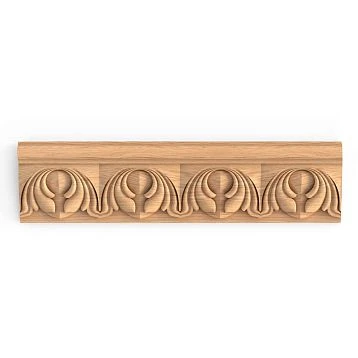
Relief molding is a profile with ornamentation. The pattern can be varied: plant motifs with leaves and curls, geometric repeating patterns, classic meander, pearl row, ionics, garlands, woven ornaments. Each pattern carries its own historical and stylistic weight.
If smooth molding is architecture, then relief molding is sculpture in linear format. It doesn't just structure the wall: it decorates it, gives it historical depth, creates a sense of material value.
When relief molding is appropriate
Relief profile requires stylistic support from the rest of the interior. If the room has at least a few classical elements — carved furniture, ornamental textiles, a stucco rosette on the ceiling, decorative dishes with plant patterns — relief molding will organically fit into this system.
Classic and neoclassical. This is the main habitat of relief molding. In a classic interior, it is not a decoration but a necessary architectural element, without which the walls seem empty.
Living room with high ceilings. The larger the space, the larger and more expressive the molding can be. In a large living room with a ceiling of 3 meters or more, a relief profile 50–70 mm wide looks organic and creates the feel of a grand hall.
Hall and entryway in a country house. In spaces that inherently serve a representative function, relief molding makes a statement about the level of quality. It sets the tone even before the guest proceeds further.
Study with a library. Dark wood, leather, books — and relief moldings around built-in shelving. This is the aesthetic of an old-fashioned study, and it works flawlessly.
Restaurant, hotel, showroom. Commercial interiors aimed at creating an atmosphere often use relief moldings precisely for their ability to instantly elevate the perception of the space.
Relief molding and ornament: how to avoid mistakes
When choosing a relief profile, it's important to understand: the more complex the ornament, the more rigidly it is tied to a specific style. A rich acanthus leaf is Baroque and Classicism. A bead-and-reel pattern is the Ionic order, strict classicism. A geometric meander is somewhat more neutral, but still historical. A braided ornament is closer to Neoclassicism and Art Deco.
If your interior is modern, but you want a bit more expressiveness than a smooth profile provides, look for relief moldings with a geometric rather than a floral pattern. They provide structure and interest without directly referencing historical styles.
Relief molding for painting
An important point: a relief molding for painting loses some of its expressiveness if painted with a single coat using a roller. The relief needs to be carefully painted with a brush, otherwise gaps will remain in the recesses. However, after painting with a thin layer of gold or dark patina, the pattern in the relief acquires incredible depth — and this is already a highly decorative technique.
to buy molding with relief profiles — and get the effect of real sculptural stucco at a budget several times lower than gypsum counterparts. This is the main advantage of polyurethane.
Narrow moldings: lightness that doesn't weigh down
Molding width is not just a size. It's the visual "volume" of the decor. A narrow molding speaks quietly but clearly. It creates presence without declaring itself at full voice.
What is considered a narrow molding
Narrow moldings are typically those with a width from 10 to 25 mm. These are thin profiles that create a clear geometric line on the wall. Frames made from such moldings look airy, light, almost graphic — like a pencil outline on a white sheet.
Where narrow moldings work best
Small rooms and apartments with ceilings up to 2.6 m. In such a space, a wide molding will "eat up" the height and feel oppressive. A narrow one adds decor without reducing volume.
The wall behind the sofa — for a single accent frame. There's no need to decorate the entire wall: one frame made of narrow molding behind the sofa creates a focal point in the living room.
A minimalist bedroom. A narrow molding around the headboard is that "one precise stroke" that makes the bedroom feel complete.
A children's room. Narrow geometric frames on the walls of a children's room are both decor and an opportunity to paint each frame in its own color. The result is a playful, uncluttered environment.
A hallway with a narrow corridor. Vertical frames made of narrow moldings visually stretch the corridor upward. This is one of the most effective techniques for working with narrow spaces.
Combining narrow moldings
An interesting technique: use two narrow moldings of different widths to create a double frame. The outer frame is a 20–25 mm molding, the inner one is 10–12 mm at a distance of 3–5 cm. A double frame looks much richer than a single one, with minimal additional cost.
Wide moldings: solidity, scale, and a grand effect
A wide molding is a different story. Profiles with a width of 50 to 100 mm or more are already an architectural element, not just a line on the wall. It requires space, height, and stylistic confidence.
When wide moldings are needed
A spacious living room of 25–30 sq. m. A large wall with small moldings gets lost—they are simply not visible in the overall space. A wide profile sets the scale corresponding to the room size.
Rooms with high ceilings (from 3 m). High ceilings create a 'void' in the upper part of the wall. Wide moldings compensate for this effect: they visually 'lower' the ceiling to a comfortable height and fill the wall with expressive decor.
Hall in a country house. The entrance space in a private home often has significant dimensions. Wide relief moldings here are a statement about the character of the entire house.
Formal areas: dining room, library, study. In rooms designed for guests and to make an impression, a wide molding works at full strength.
Commercial interiors. Hotels, restaurants, executive-class offices—here, wide moldings are a standard of interior quality.
Wide molding and proportions
The main rule: molding should not take up more than 10–12% of the wall height. If the ceiling is 2.5 meters, the most comfortable molding width is about 25 cm for horizontal elements and about 60–70 mm for frame decor. With a ceiling of 3.5 meters, you can work with profiles of 80–100 mm and larger.
Too wide molding in a small room is a mistake that is hard to fix. Therefore, before buying, measure the wall, calculate the proportions, and if in doubt, make a paper template of the desired width and hold it against the wall. This takes 5 minutes and saves you from an expensive mistake.
How to choose molding for a specific room: practical logic
Enough theory — let's move to specifics. Here is a decision-making table to help you choose the right profile.
| Room | Width recommendation | Relief recommendation |
|---|---|---|
| Small bedroom (up to 16 sq. m) | Narrow, 15–25 mm | smooth |
| Medium bedroom (16–20 sq. m) | Medium, 25–40 mm | Smooth or light texture |
| Standard living room (20–30 sq m) | Medium–wide, 35–60 mm | Smooth or moderate texture |
| Large living room (from 30 sq m) | Wide, 50–80 mm | Smooth or textured |
| Hallway | Narrow–medium, 15–35 mm | smooth |
| Office | Medium–wide, 35–60 mm | Smooth or textured |
| Children's room | Narrow, 15–25 mm | Smooth only |
| Country house hall | Wide, from 60 mm | Embossed or smooth wide |
| Commercial interior | Typically wide per design | Embossed or strict wide |
This table is not a strict rule, but a starting point. The final decision is always made considering the specific space, furniture, wall color, and lighting.
Moldings for different interior styles
Moldings for a modern apartment
Modern interior is a broad concept. But the general rule: the fewer historical details in the room, the simpler the molding should be. For a modern apartment, the best choice is smooth profiles with a clear geometric shape. A square or rectangular profile with sharp edges, painted to match the wall. Minimum details, maximum effect.
Moldings for walls In a modern interior, they work as an architectural element, not a decorative one. Frames on walls are zoning, order, structure. Not ornament.
Moldings for neoclassicism
Neoclassicism is the golden mean between pure minimalism and historical classicism. Both smooth and moderately embossed profiles are acceptable here. Moldings with light profiling work well — stepped or shelf profile, restrained meander, thin pearl string.
For neoclassicism, consistency is important: wall moldings should be stylistically connected to ceiling cornices, door trims, and furniture profiles. An interior in this style is a system, and each profile in it must "communicate" with its neighbors.
Moldings for classic style
A classic interior requires relief moldings. A smooth profile here would look like an absurd simplification. Classicism thrives on ornamentation, detailing, and richness of forms. Wide cornices with acanthus leaves, profiles with egg-and-dart and bead motifs, and frame moldings with stucco decoration inside are appropriate here.
Moldings for Scandinavian style
Scandinavian style is white, light, and calm. Moldings are possible here, but only in the most laconic execution. A smooth thin profile, white on a white wall. No ornamentation, no accents. Molding as barely visible geometry.
Moldings for Art Deco style
Art Deco is geometry, contrast, rhythm. Moldings for this style should have geometric ornamentation: rhythmic repeats, sharp angles, zigzags, sunburst patterns. The color should be contrasting: white molding on a dark wall or a gilded profile on a neutral background.
Moldings for painting: what's important to know
Most polyurethane moldings come white — this is a primed surface ready for painting. They can be painted any color with acrylic paint.
Three approaches to molding color
Molding in the color of the ceiling is a classic solution for ceiling cornices. The cornice is perceived as a transitional element between the wall and the ceiling, and when it is painted in the color of the ceiling, this boundary becomes architecturally clean.
Molding in the color of the wall is a modern technique for frame decor. The molding disappears as a separate object and becomes a surface relief. The effect of exquisite embossing.
Contrast molding is a bold design solution. White frames on a dark green wall, black on beige, gold on deep blue. This is a statement, and it requires confidence.
How to paint moldings correctly
After installation and sealing of joints, prime the entire surface (moldings plus wall). Let it dry. Then apply the first coat of main paint with a roller over the wall and moldings. After drying, apply the second coat. Paint relief areas with a thin brush.
If the moldings need to be painted a different color than the wall, first paint the moldings with a brush, let them dry, then tape off the edge of the molding with painter's tape and paint the wall with a roller.
When stucco decor is needed for moldings
There are situations where a molding frame on the wall looks good, but something is missing. There is a frame, there is geometry, but inside there is emptiness. This is a normal reaction: an empty frame is a finished element, but not always expressive enough.
This is where Decorative stucco — point-applied decorative elements with a relief ornament, placed inside the frame or in its corners. A small medallion in the center of the frame, corner appliqués in the four corners — and the frame transforms from a geometric shape into a full-fledged decorative panel.
Buy Moldings to enhance molding frames is a logical next step after selecting and purchasing moldings. This is especially relevant for the living room and bedroom, where walls are examined carefully and a complete, rich effect is desired.
Corner overlays for frames
A separate type of decor is corner overlays. They are attached to the corners of a molding frame and give the frame a "finished" look. Instead of a simple mitered corner, a small ornamental element appears that architecturally completes the frame.
Corner overlays work especially well in cases where the molding corner is uneven or slightly inaccurate for some reason. The overlay covers this joint and turns it into a decorative accent.
buy decorative moldings in the form of corner overlays for molding frames — this is both a practical and beautiful solution.
When wall moldings need to be connected to the ceiling
Here is one of the most common mistakes when working with moldings: the walls are beautifully decorated with frames, everything looks great — but the ceiling is completely empty. The chandelier hangs without a rosette, the ceiling perimeter is not framed by anything, and the walls and ceiling literally do not communicate with each other. The result is a good solution implemented only halfway.
For the interior to look complete, the walls and ceiling must be connected. This is done in two ways.
Ceiling cornice as a continuation of wall moldings
The ceiling cornice is installed at the junction of the wall and ceiling and is a literal continuation of the wall theme on another plane. If the moldings on the walls are smooth, the cornice is also smooth. If they are embossed, then the relief is coordinated.
Ceiling molding for this task must be stylistically unified with the moldings on the walls. Matching the ornament is not necessary, but the profile and "tone" of the decor must be coordinated.
A ceiling rosette under a chandelier as the center of a ceiling composition
If there is a cornice on the ceiling, and the chandelier hangs without a rosette, it is an unfinished story. Ceiling rosette completes the ceiling theme: the perimeter is framed with a cornice, the center with a rosette. The rest of the ceiling space remains clean, and the effect lies in that cleanliness.
The rosette is chosen in proportion to the chandelier and in harmony with the style of the cornice. For a smooth cornice, a smooth rosette or one with a light geometric pattern. For a relief cornice, one with an ornament.
Buy ceiling molding together with wall moldings means ensuring stylistic unity of the entire space, not just one plane.
How to correctly calculate moldings: practical tips
Before placing an order, you need to make an accurate calculation. Mistakes here are costly — literally: buying moldings from another batch is risky because the shade may differ slightly.
Calculation for frame decor
Draw the wall on paper and mark the planned frames on it. Indicate the dimensions of each frame. Add up the perimeters of all frames. Add 15% for trimming and possible defects. This is your order length.
Example: a wall 4 × 2.5 m, three frames measuring 1 × 0.8 m. Perimeter of one frame: (1 + 0.8) × 2 = 3.6 m. Three frames: 3.6 × 3 = 10.8 m. With a 15% margin: 10.8 × 1.15 ≈ 12.5 m. We order 13 meters.
Calculation for a ceiling cornice
Measure the perimeter of the room along the ceiling. Add 10–12% for joints and trimming at corners. This is your cornice footage.
Example: room 5 × 4 m, perimeter 18 m. With allowance: 18 × 1.12 ≈ 20.2 m. Order 21 meters.
Individual pieces
Sockets, decorative overlays, corner elements are counted individually. For paired elements, order a pair plus one spare — in case of defects during installation.
Moldings for the bedroom: a special topic
The bedroom deserves special attention because it is where a person spends a third of their life and where the quality of the interior is perceived most acutely and emotionally.
Headboard as the main decorative zone
The wall behind the bed is the first thing a person sees when waking up and the last thing they see when falling asleep. It should be beautiful, calm, and complete. Moldings here create a frame around the headboard — a decorative 'niche' without actual depth.
For this task, medium moldings 25–40 mm in a smooth finish work well. The frame is made to the width of the bed or slightly wider, the height is chosen so that the top edge of the frame is about 20–30 cm above the headboard.
Inside the frame, you can leave the wall neutral or paint it in a richer color — an accent wall behind the bed with a molding frame looks like a high-level design solution.
Moldings around the perimeter of the bedroom
In addition to the headboard, moldings in the bedroom can run along all walls — as a horizontal line at a height of about 80–90 cm from the floor (this is the so-called "chair rail"). The space below this line is painted in a darker or richer color, above — light. This technique gives the bedroom depth and structure.
Moldings for the living room: three working schemes
The living room is the most "molding-friendly" room in the apartment. It is here that this decor is used most often and with the greatest effect.
Scheme "Frames behind the sofa". One accent wall behind the sofa is divided into 2–3 vertical frames. Medium moldings, 30–50 mm. The frames occupy the entire height of the wall or reach a height of 180–200 cm. This creates a "panel" effect that is associated with an expensive interior.
Scheme "Perimeter plus accent". A horizontal strip of molding runs along all walls at a height of 80–100 cm, and on one wall an accent is additionally created from vertical frames above this strip. The effect of double zoning.
Scheme "Full perimeter". Moldings run along all four walls: the frames are repeated on each. This is a classic "panel" wall division, familiar from 19th-century interiors. It requires patience, precise marking, and a good supply of moldings, but the result is impressive.
FAQ: answers to the most important questions about choosing moldings
Which moldings are best to choose for an apartment: smooth or embossed?
For most modern apartments, smooth polyurethane moldings are better suited. They are versatile, look organic in different styles, and paint well. Embossed ones are for classic and neoclassical interiors, for large rooms and commercial spaces.
What is better: narrow or wide wall molding?
Narrow molding (15–25 mm) — for small rooms, bedrooms, hallways. Wide (50–80 mm) — for spacious living rooms, halls, rooms with high ceilings. The main criterion is proportion relative to the wall.
How do moldings make an interior more expensive?
Molding creates a relief on the wall that reads as an architectural element. This adds volume and completeness to the surface, which the brain automatically associates with high-quality expensive renovation. Key condition: the molding must be correctly sized, painted, and neatly installed.
Can moldings be used in a modern interior?
Yes. Thin smooth moldings forming geometric frames are one of the most popular design techniques in modern interiors. The style is determined not by the fact of molding itself, but by its shape and color.
How to properly choose the width of molding?
Focus on ceiling height. Ceiling 2.5 m — molding for frames up to 35 mm, for cornice up to 50 mm. Ceiling 3 m — frame molding up to 55 mm, cornice up to 80 mm. Ceiling higher — you can work with profiles from 80 mm and wider.
What to buy together with moldings?
Mounting acrylic glue, acrylic sealant for joints, painter's tape, white paint or paint to match the wall, 15% extra molding. If necessary — Decorative stucco for frames and Ceiling molding to create a unified style system.
Do I need to prime the wall before gluing moldings?
It is advisable, especially on loose plasters. Acrylic primer improves adhesion and strengthens the base. On a dense painted wall, primer is less necessary.
Can moldings be painted a color different from the wall?
Yes. A molding in the color of the ceiling on the wall is a classic. A molding in a contrasting color is a design solution. A molding in the color of the wall is an elegant embossed effect. All three options work with proper application.
With proper installation and painting, they will last for decades. Polyurethane does not absorb moisture, does not crack, and does not yellow under an acrylic coating. Physically, it is stronger than plaster and more resistant to moisture and temperature changes than wood.
With proper installation and painting, it lasts for decades. Polyurethane does not absorb moisture, does not crack, and does not yellow under an acrylic coating. Physically, it is stronger than plaster and more resistant to moisture and temperature fluctuations than wood.
Can I buy polyurethane moldings and install it yourself, without a professional?
Yes. Installing polyurethane moldings is accessible to anyone with basic construction skills. You need a knife or hacksaw, a miter box, glue, a level, and painter's tape. The main thing is patience during marking and accuracy when cutting corners.
About the company STAVROS
When it's time to make a choice — smooth or embossed, narrow or wide — it's better to rely on a proven assortment with clear characteristics. STAVROS is a Russian company that specializes in the production and sale of decorative polyurethane products for residential and commercial interiors.
in the STAVROS catalog Moldings made of polyurethane various profiles — from narrow smooth to wide textured, Decorative stucco to enhance frame decors, Ceiling molding и ceiling rosettes for a complete vertical solution of the entire space. STAVROS products feature a distinct relief, stable dimensions, and reliable polyurethane quality, ready for installation and painting.
STAVROS works with Contact us to confirm shipping to your destination. The company's specialists will help you choose the right profile for your room, calculate the footage, and assemble a kit for installation. Want your interior to look more expensive? Start with the right molding — and STAVROS will help you find it.