Article Contents:
- Buy wooden ornament
- Which wooden ornament to buy
- Purpose: what determines the choice
- Material: why wood cannot be replaced
- Size and Scale
- Depth of Relief
- Compatibility: how the ornament fits into the system
- Types of wooden ornaments
- Carved wooden ornament
- Decorative wooden overlays
- Wooden patterns for window casings
- Ornament in Russian style
- Where to use wooden ornament
- For furniture
- For doors
- For facade
- For walls and interior
- Wooden ornament for furniture
- How to choose the size of the overlay
- How to match ornament with handles and legs
- How to use ornament during restoration
- How not to overload the facade with carving
- Wooden ornament for window casings and facade
- Window casings: function and beauty together
- Patterns on the facade: a system, not a coincidence
- Wooden lace: a living tradition
- What affects the price of wooden ornament
- How to choose a wooden ornament before buying
- Mistakes when buying a wooden ornament
- Where to buy a wooden ornament
- FAQ: answers to popular questions about wooden ornaments
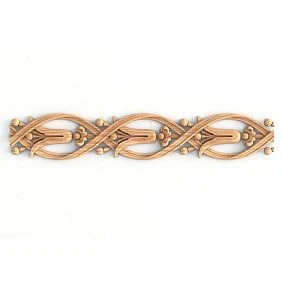
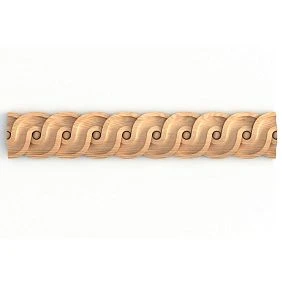
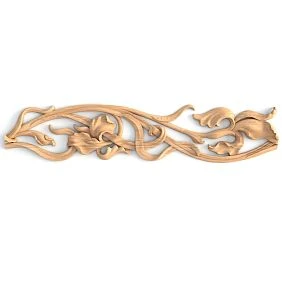
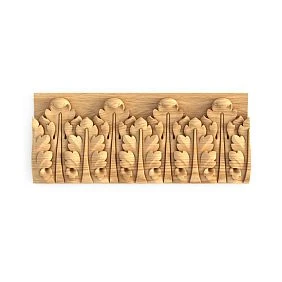
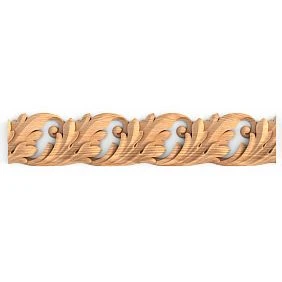
Buy wooden ornament
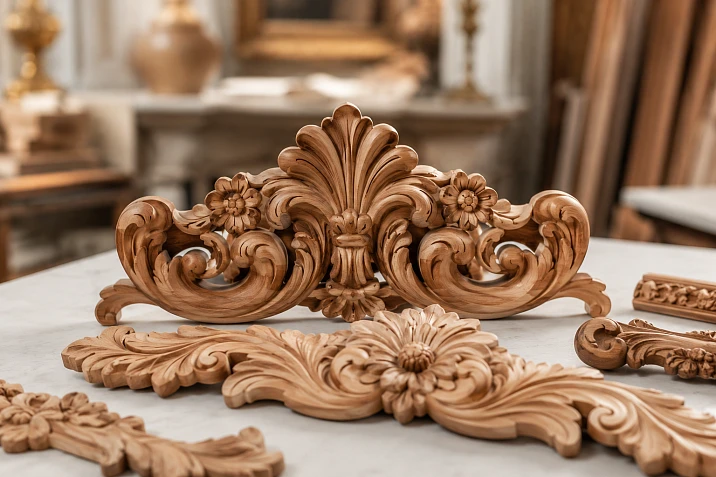
There are things that cannot be faked: the scent of living wood, the warmth of a natural surface, and that special character that a carved pattern gives to a space. Buying a wooden ornament means investing in an interior or facade something more than decor. It is a choice in favor of craftsmanship, tradition, and uniqueness.




Which wooden ornament to buy
Before opening the catalog and comparing models, it's worth stopping and asking yourself a few honest questions. What is the ornament for? Where will it stand, hang, or work? What style should it support and what should it match? Buying a wooden ornament is not the same as choosing a beautiful picture for the wall. It's a decision that affects the perception of the entire interior or facade.
Today, you can buy a wooden ornament in a wide range: from small applied rosettes costing a few hundred rubles to large ornamental panels whose price matches their artistic value. It is fundamentally important to understand the purpose — and base your choice of size, relief depth, wood species, and design style on that.
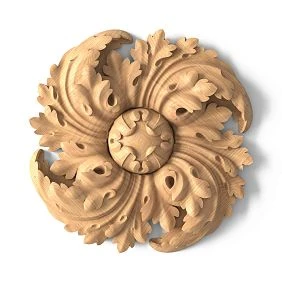
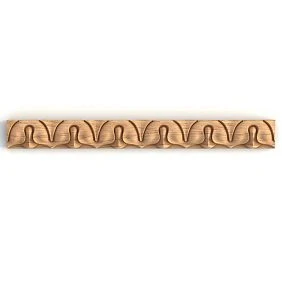
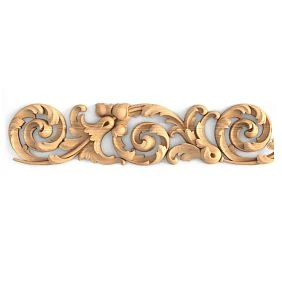
Our factory also produces:
Purpose: what determines the choice
A wooden ornament can serve three fundamentally different functions. The first is decorative accent: it becomes the main visual statement on the facade of a cabinet, door, or wall. The second is supportive: it fits into an existing decor system, enhances it, and adds detail. The third is restoration: it replaces a lost element, restoring the historical appearance of furniture or an architectural object. In each case, the requirements for the ornament are different, and this must be considered before choosing a specific model.
Get Consultation
Material: why wood cannot be replaced
Natural wood is not just a material. It is a carrier of texture that cannot be replicated by synthetic substitutes. Oak provides a dense, expressive pattern with characteristic pores — it is chosen for dark classics, study interiors, and facades with deep relief. Beech is more uniform and softer in texture, ideal for white enamel and light tints. Pine is more affordable, easy to carve, and widely used in house carving and for platbands. It is the natural material that allows finishing decorative wooden ornaments by any method — varnish, stain, patina, enamel, tinting to match the project — which fundamentally distinguishes them from polyurethane analogs.
Size and scale
One of the most common mistakes when buying is a mismatch between the size of the ornament and the scale of the surface. A small rosette on a large facade gets lost and looks random. A large panel on a small door overwhelms and ruins the proportion. A simple rule applies here: the ornament should occupy 30 to 60% of the surface it decorates — and leave breathing space around it. Measure the surface before buying, not after.
Relief Depth
Relief is what gives the ornament volume, light, and shadow. Flat 2D ornament — for platbands, facade compositions, and layering patterns. Deep 3D relief — for central accent overlays on cabinets, chests of drawers, and doors, where plasticity and expressiveness are important. Choosing the depth of relief is not only an aesthetic decision but also a practical one: deep relief is harder to paint, but it creates a more lively play of light and shadow.
Compatibility: how the ornament fits into the system
wooden patterns for furniture work in the system — together with furniture handles, with matching legs, moldings и baseboard. If the ornament is Baroque — scrolls, acanthus, rocaille — then the handles should be in the same key: figured, cast or carved. If the ornament is geometric — strict lines, regular shapes — then all the fittings should be laconic. Inconsistency of details destroys the interior more surely than any other mistakes.
Types of wooden ornaments
Wooden ornament is a broad concept. It covers dozens of types of products: from tiny corner overlays to monumental ornamental panels. Let's break down the main types — to understand what exactly to look for and for what tasks.
Carved wooden ornament
Carved wooden ornament is the pinnacle of decorative craftsmanship. The pattern is created by removing material: a cutter or chisel removes wood along a given contour, leaving a relief design. The more complex the ornament, the higher the requirements for precision and quality of equipment — and the more expressive the result.
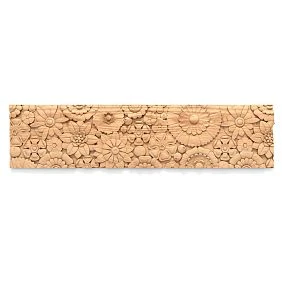
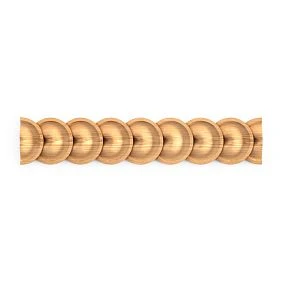
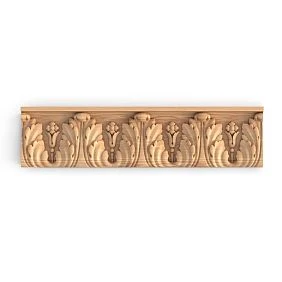
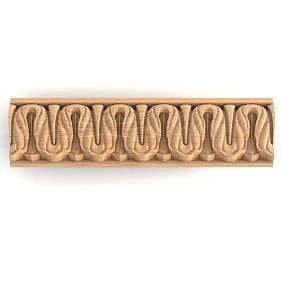
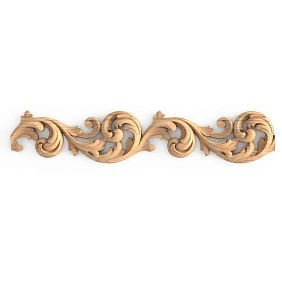
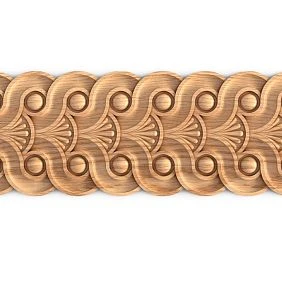
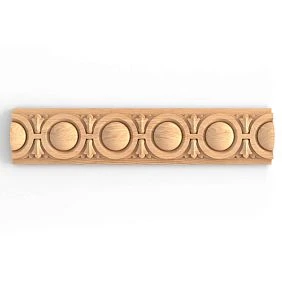
Carved wooden decoration includes a wide range of motifs. Floral — acanthus leaves, garlands, vines, flower heads, grapevines, laurel branches. Classical — rocailles, cartouches, mascaron, volutes. Geometric — weaves, meanders, diamond grids, wavy borders. Ornaments of Russian folk architecture — solar symbols, braided patterns, birds, leaves and flowers in the special style of folk carving. Each type carries its own cultural and stylistic weight — and requires an appropriate context.
Carved wooden ornament is made primarily from oak and beech — species that provide clarity of contour and resistance to deformation. It is the clarity of contour that determines the quality of a carved product: a good ornament is recognized at first glance by how accurately the transitions between elements are drawn, how deep the relief is, and how precisely the symmetry is maintained.
Decorative wooden overlays
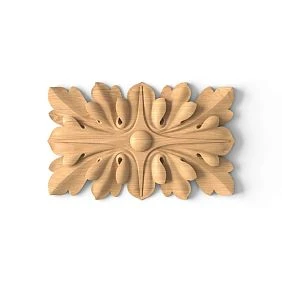
Decorative wooden overlays are a group of finished products mounted on the surface of furniture, doors, walls, or facades. They can be part of an ornamental composition or serve as an independent accent element. The STAVROS catalog features over 400 models. decorative wooden overlays — and each is designed to seamlessly fit a specific task.
What the assortment includes:
-
Center overlays — placed in the center of a facade or door, becoming a focal point
-
Corner overlays — installed in the corners of facades, frames, panels, providing a finished look and concealing joints
-
Symmetrical and asymmetrical elements — for creating both strict and dynamic compositions
-
Ornamental panels — complex multi-component items with ornamentation, covering a significant area of the facade
-
Modular overlays (construction kits) — elements that connect to each other and join with profiled moldings
-
Overlays with a groove for molding — allow mounting decor over the profile, creating a multi-level composition
The author's collection "Summer Garden" deserves special attention — baroque carving with botanical motifs in a modern artistic interpretation. Lively silhouettes of leaves, branches, birds, and flowers — these elements work both independently and in combination with other overlays, opening up possibilities for countless decorative combinations.
Wooden patterns for window trims
Buying wooden patterns for window trims is one of the most popular requests among those who decorate wooden houses, cottages, and country estates. And this is understandable: Patterns wooden window casings — it's not just decor. It's the calling card of the house, its face, the first thing any passerby sees.
You can buy wooden patterns for window trims today in standard sizes with the possibility of adaptation for an individual project. STAVROS trims are made from glued pine panels without knots or resin pockets — this is fundamentally important for facade use, where wood is exposed to temperature changes and humidity. Standard length is 2000 mm, thickness is 18 mm. The products are fully sanded and ready for any finishing coating.
The range of house carving includes both traditional patterns of Russian architecture and more modern ornamental solutions. The flat (2D) pattern of the trims allows creating rich facade compositions by layering: narrow trims are attached on top of wide ones, creating the effect of multi-level lace. The project can be supplemented with openwork corners, central overlays, carved brackets, and connecting elements — all of this is available in one catalog of house carving.
Ornament in Russian style
Wooden ornament in Russian style is a separate big story. Russian house carving is rooted in a centuries-old tradition of wooden architecture, where each pattern carried not only a decorative but also a symbolic load. Solar signs, woven patterns, birds with outstretched wings, grapevines, flower buds, fern leaves — all these motifs have formed a unique visual language that remains alive and recognizable to this day.
Russian wooden ornament is experiencing a true revival today. Wooden houses in Russian style, country estates, restaurants, and baths with traditional decor — everywhere patterns that speak of rootedness in culture are in demand. It is important that this style has not become ossified: modern interpretations of Russian ornament preserve the spirit of tradition but use modern production technologies, allowing for precision and repeatability without loss of artistry.
More about traditions and modern solutions in Russian ornament — in the article about wooden ornament STAVROS. And about the stylistic principles of Russian facade decor — in the material about wooden ornament in Russian style.
Where to use wooden ornament
Wooden ornament is a universal tool. It works both in interiors, on facades, and in restoration. Let's analyze each scenario separately — with specific application examples.
For furniture
Wooden furniture decor is the most traditional and sought-after application of wooden ornaments. A wardrobe, chest of drawers, sideboard, kitchen front, display case — any of these items radically changes its appearance when a carved element is added.
Furniture Decoration from Wood mounted on the facade using glue or thin screws (with puttied heads), then coated in the same color and finish as the main facade. The result is furniture that looks like a single piece with carved fronts, not just furniture with glued-on decorations.
Particularly expressive Decorative Wooden Patterns they work on kitchen sets in a classic style. A central rosette on the cabinet front, corner overlays on wall units, an ornamental insert on the oven panel — all this turns a standard kitchen set into a piece with character.
When restoring furniture, wooden ornaments are indispensable: they allow you to restore lost applied elements without changing the main structure of the piece. This is especially relevant for old sideboards, chests of drawers, and wardrobes where the original decor is partially damaged or lost.
For doors
A door leaf is one of the most expressive planes in an interior. Doors set the tone for the transition between spaces. A wooden ornament for a door can be mounted directly onto the leaf — as a central insert, as corner accents, as a frame composition with applied moldings.
For doors, it is especially important to coordinate the ornament with furniture handles and the overall interior style. If the handles are Baroque—with curls and cast rosettes—then the applied ornament on the door should be in the same vein. Any mismatch here is immediately noticeable.
Wooden ornamentation on door portals is a separate topic. Portals with profiled uprights, cornices, and corner elements create an architectural accent that turns the opening into a true frame. This solution is especially relevant in classic interiors, studies, and dining rooms.
For the facade
The facade of a wooden house without carved ornamentation is an unfinished sentence. It is the patterns on the window casings, cornices, and gables that transform a house from a structure into an image. Buying wooden patterns for facade casings means taking the main step towards giving the house a face.
STAVROS house carving includes Carved Mouldings, connecting and decorative elements, flat balusters. All are made of frost-resistant glued pine, resistant to deformation, and ready for any protective coating. The standard length of 2000 mm allows the casings to be adapted to window openings of any size without complex modifications.
Ornamentation on the casings of wooden houses is not just a tradition. It is a practical way to protect the ends of logs and beams from moisture, and at the same time, to declare the character of the house. Wooden lace on the facade works as a continuous dialogue between the house and the street: it both conceals and decorates, and tells a story. Rich house carving has always attracted the eye—and today, in an era of faceless standard construction, this quality becomes a true value.
For walls and interior
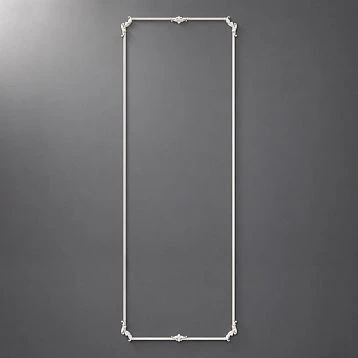
In the interior, wooden ornamentation is used more widely than is commonly thought. An accent wall with panels and carved inserts—instead of wallpaper or monochrome painting. A decorative frame made of profile with corner overlay—as a way to create rhythm on a large wall plane. A carved insert in boiserie—as an accent in a wall panel system.
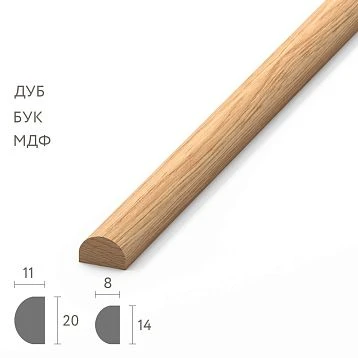
wooden ornament works together with moldings и baseboard as a single system. It is the moldings that set the horizontal and vertical rhythm of the wall, and the ornamental overlays at the system's nodal points—intersections, centers, corners—become decorative accents that make the system lively and non-trivial.
For ceiling areas, wooden ornamentation is used in the form of ceiling rosettes, cornice overlays, and central medallions. In a classic interior, such elements visually "raise" the ceiling and create a sense of completeness for the entire space.
Wooden ornamentation for furniture
Let's talk separately and in detail about furniture applications — because this is where there are the most nuances and opportunities for mistakes.
How to choose the size of the overlay
The size of the decorative overlay is chosen based on the size of the facade, not the other way around. It is important to understand this from the very beginning. A standard kitchen cabinet facade with a width of 600 mm and a height of 720 mm — and the central overlay for it should occupy about 200–300 mm in width and 300–400 mm in height, leaving enough space around.
Corner overlays are selected based on the principle of corner proportion: they should visually "hold" the corner without filling it entirely. The optimal size for a corner overlay is about 80–120 mm on each side for a standard facade.
For large cabinets, sideboards, portals — the ornamental elements increase accordingly. A monumental item requires a monumental accent: a small rosette on a large facade looks out of place, like a pencil signature on a monumental canvas.
How to coordinate ornamentation with handles and legs
decorative wooden ornaments и Furniture Handles must exist in the same decorative language. If the facade features baroque acanthus, a handle with a smooth metal rod will look like a foreign element. Conversely, a carved wooden handle made from the same solid wood as the ornamentation creates the feeling of a product born as a single whole.
The same applies to furniture legsA turned leg with a baroque profile — with fluting and a barrel-shaped section — will support the baroque ornament on the facade. A straight tapered leg in the neoclassical style — a geometric ornament. A cabriole leg — rocaille carving. Mismatch between the leg and the ornament destroys the image more surely than any other inconsistency.
How to use ornament in restoration
Restoration is one of the most important applications of wooden ornament. An old cabinet or chest of drawers with missing applied elements is easy to restore: just measure the traces of the previous decor and select an overlay of the appropriate size and style. It is for this purpose that the STAVROS catalog offers products in a wide range of sizes — from miniature to large-format.
When restoring, two conditions must be observed. First, the new ornament must be made of the same wood species as the item being restored, or as close as possible in structure. Second, the finish coating of the new element must perfectly match the color of the existing furniture coating. That is why wooden ornaments are supplied without coating: this gives the craftsman complete freedom in choosing the finish.
How not to overload the facade with carving
This is perhaps the main aesthetic question when working with ornament. An overloaded facade — with ornament in every corner, on every style, around the entire perimeter — looks chaotic and heavy. The rule is simple: decor must have a center of gravity. One large accent (central overlay) plus two to four supporting elements (corner overlays, moldings) — this is a system that works. Five to six ornaments of different sizes without a single center — this is chaos.
The classic principle is 'one soloist, the rest are accompaniment.' The central overlay sets the theme, the corner elements support it, Molding creates a frame. Three levels — and the interior breathes.
Wooden ornament for architraves and facades
House carving is a genre that cannot be considered in isolation from the architecture of a wooden house. The ornament here is not a decoration added on top. It is an organic part of the structure, which both protects and tells a story.
Window casings: function and beauty together
Buy wooden patterns on window casings — means making the window part of the facade ensemble. The casing not only frames the opening — it hides gaps between the wall and the window frame, protects the ends of logs from moisture, and simultaneously serves as the decorative dominant of the facade. Without a casing, the window looks bare and unprotected — with a casing, it becomes part of the unified image of the house.
STAVROS casings are produced with a variety of patterns — from strict geometric to rich floral, from minimalist linear to saturated ornamental. The standard length of 2000 mm with cutting to the required size allows you to design any window — both in a private house and in a commercial property.
The principle of layering — "wooden lace" — is created precisely through the combination of several types of casings of different widths: a wide casing is the base, a narrow one is on top of it. Carved connecting elements or wooden rosettes are installed at the joints. As a result, the window acquires a voluminous, multi-layered framing, which in folk tradition was called "lace" — and this definition is more accurate than any other.
Patterns on the facade: a system, not a coincidence
The facade ornament works only as a system. You cannot put carved casings on one window and leave another bare — this destroys unity. You cannot use one ornament on windows and a completely different one on the cornice and pediment. The system implies:
-
a unified carving style on all facade elements;
-
consistency of the pattern rhythm on casings and cornice overhang;
-
repeatability of key motifs — leaves, curls, geometric elements — across the entire facade;
-
matching the scale of the ornament to the scale of the facade
Carved Casings can be supplemented with decorative brackets, flat balusters for a veranda or gazebo, carved cornice under-eaves. All together, this is full-fledged house carving that turns a house into a work of art.
Wooden lace: a living tradition
Wooden lace is a term rooted in Russian carving culture. An openwork through-cut ornament that creates a play of light and shadow on the facade is a special type of house carving where the pattern is cut through the board. It is this type of carving that creates the effect of a weightless, airy pattern that changes depending on the viewing angle and lighting. Carved wooden ornament – this is an art that preserves traditions of the past and finds its place in modern interiors. It can decorate any space, adding style, elegance, and individuality. Use wooden ornaments to create expressive accents, decorate facades, furniture, and walls, and you will transform your space, making it unique and irreplaceable! in this technique is a true architectural phenomenon that cannot be replicated with any other material.
What affects the price of wooden ornament
Buy wooden ornament price is a question that concerns everyone. The range here is wide: from 920 rubles for a simple overlay to 15,000 rubles and above for a complex ornamental panel. Let's break down what lies behind this.
1. Wood species
Oak is more expensive than beech, beech is more expensive than pine. The price difference reflects the difference in density, strength, and visual expressiveness of the material.
2. Element size
The larger the ornament, the greater the material consumption and the longer the processing time. An ornamental panel made of several connected elements costs several times more than a single overlay.
3. Relief depth
Deep relief requires a more complex cutter path and more passes. This increases both time and tool wear — and is reflected in the price.
4. Ornament complexity
A simple geometric pattern with straight lines — and a complex Baroque acanthus with dozens of transitions — are different production complexity categories. The more details in the ornament, the higher the price.
5. Number of elements
If you need not just one ornament but a full set — for all kitchen fronts or all windows on a facade — the total cost can be significant. Keep this in mind when planning your budget.
6. Presence of coating
Ornaments are supplied without coating — which gives freedom in finishing but requires independent processing. If you need a ready-to-install part with applied varnish or tinting, that is a separate service.
7. Type of installation
Standard adhesive installation is simple. Installation with sampling for molding or in a boiserie system is more complex. This affects both the choice of product and the cost of work.
8. Individual size
A non-standard size — custom-made — is always more expensive than a serial product. But it is the individual ornament that allows you to perfectly fit into a specific facade or window opening size.
9. Combination with other elements
An ornament in a system — with moldings, legs, handles, baseboards — requires the selection of several products. The total budget of the system is higher than the cost of one element, but the result is incomparably more expressive.
10. Delivery and packaging
Carved wooden elements are fragile goods. Professional packaging prevents damage during transportation, and this is also part of the order cost.
How to choose a wooden ornament before purchasing
Choosing an ornament is a process that requires a systematic approach. To avoid disappointment with your purchase, follow a clear algorithm.
Step 1. Determine the installation location
Furniture, door, casing, wall, ceiling, facade — each location dictates its own requirements for size, material, and type of ornament.
Step 2. Measure the surface
Accurate measurements are the basis of the right choice. Record the width, height, and the presence of frames, moldings, and other elements that limit the working area.
Step 3. Choose a style
Classic, Baroque, Neoclassical, Russian folk, geometric, floral — each style has its own plasticity and decorative language. It is important that the chosen style matches the overall style of the interior or exterior.
Step 4. Select the size
Based on the surface measurements, determine the optimal size of the ornament. Don't forget the principle of breathing: the ornament should not occupy all available space.
Step 5. Check the relief depth
For furniture facades, medium relief is preferable — it is clearly visible but does not interfere with closing doors. For accent wall compositions and door portals, deeper relief will provide a better effect.
Step 6. Decide if a symmetrical set is needed
For facades with two doors, mirror pairs are needed. In the STAVROS catalog, most overlays are available in left and right versions — keep this in mind when ordering.
Step 7. Coordinate with furniture, doors, architraves, or the facade
Before placing an order, visually "try on" the ornament in context. If possible, print or cut out a paper template in the desired size and attach it to the surface: this makes it easy to assess proportions before purchase.
Step 8. Choose the coating
Determine in advance what color and finish the ornament will be painted — under varnish, enamel, stain, or patina. This will help choose the right wood species: beech takes enamel better, oak looks more expressive under clear varnish.
Step 9. Check the mounting method
Most overlays are mounted with glue. Some products have a special groove for molding — for installation over a profile. Clarify this before ordering.
Step 10. Allow for a margin in complex compositions
When creating ornamental systems — with multiple elements, joints, corner solutions — order with a small margin. This protects against a situation where one element turns out to be defective or damaged during installation.
Mistakes when buying wooden ornament
Knowing about mistakes means not repeating them. Here are the ones that occur most often.
They buy ornament without measuring. The most common one. An ornament that looks perfect on screen may turn out to be half the size or larger than needed.
They don't consider the scale of furniture or facade. A large ornament on a small facade is a visual imbalance. A small ornament on a monumental object loses its accent.
They mix different carving styles. Baroque acanthus and a minimalist geometric pattern in one system is a conflict, not eclecticism. Eclecticism requires professional management; random mixing does not.
They don't check thickness and relief. An overlay that is too thick will prevent the cabinet door from closing. A relief that is too thin will be lost under paint.
They don't coordinate the ornament with furniture handles, legs, moldings и plinth. Each of these elements is part of a system. An uncoordinated element disrupts the system.
They don't plan painting or tinting. The ornament is supplied without coating. If you don't plan the finish before purchase, you may get an unexpected result when applying paint.
They buy one element without calculating the entire composition. One overlay on one door out of six is worse than no decor at all. Decor works as a system, not as singles.
Where to buy wooden ornament
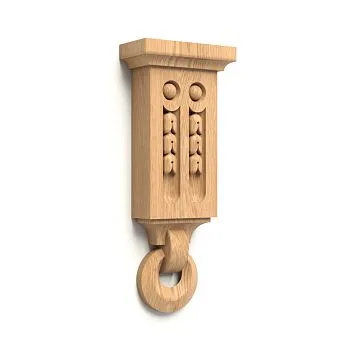
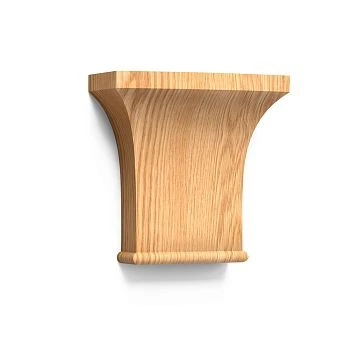
Buy Wooden Patterns In the STAVROS online store, this is access to a catalog with over 400 models of decorative overlays plus the full range of carved decor: rosettes, brackets, capitals, legs, moldings, architraves, frames. All of these are products of our own manufacture from solid oak, beech, and pine, without intermediaries or extra charges.
buy wooden ornament You can buy individually — from a single item. This is important when you need one element for restoration or a test before a large order. Delivery is carried out throughout Russia — to Moscow, St. Petersburg, and regions. Self-pickup is available from warehouses in Moscow and St. Petersburg.
For a cohesive design — whether it's a furniture project, a door portal, a house facade, or an interior wall system — it's worth immediately considering the entire set of decorative elements: Carved wooden decoration, Appliques with ornamentation, Moldings, Skirting, Handles, Legs и Casings. Only then is an interior born — not just a collection of individual beautiful objects.
FAQ: answers to popular questions about wooden ornaments
Which wooden ornament should I buy for furniture?
For furniture, it's better to choose an ornament based on the size of the facade, interior style, and depth of relief. It's important to coordinate decorative wooden ornaments с furniture handles и legs — all elements should speak the same decorative language.
How does a carved ornament differ from a decorative overlay?
A carved ornament is a description of the type of decor and pattern. decorative insert — this is a finished product that is mounted on a surface. Most overlays are made using carving techniques — that is, they are carved ornaments in finished form.
Can a wooden ornament be used on a facade?
Yes. For the facade, Carved Mouldings pine ones are used, resistant to humidity and temperature changes. It is important to choose the right final protective coating and renew it in a timely manner.
What affects the price of a wooden ornament?
The type of wood, size, depth of relief, complexity of the pattern, number of elements, presence of coating, custom size, and delivery cost. Products in the catalog of carved decor STAVROS are available from 920 rubles.
How to choose a wooden ornament in Russian style?
You should focus on traditional motifs of folk architecture: weaves, solar signs, plant patterns, birds. More details — in the article about wooden ornament in Russian style.
Where to use wooden patterns in the interior?
On furniture facades, doors, wall panels, ceiling areas, in frame systems with moldings и baseboard. wooden ornament works wherever an expressive decorative accent is needed.