

























Article Contents:
- Short answer: STU-003 or STU-004
- Confirmed specifications of two frames
- Why the difference in dimensions changes the entire project
- Full chair and half-chair: why these are not interchangeable names
- When to buy STU-003
- Living room and fireplace area
- Office and Library
- Hotel, club, grand hall
- Dining room and kitchen-living room
- Meeting room and small office
- Restaurant, cafe and waiting area
- Beech for enamel
- Oak for tinting
- Upholstery STU-003
- Upholstery STU-004
- Control sample before the series
- Small living room
- Spacious classic living room
- Kitchen-living room
- Bedroom
- Office
- Restaurant and cafe
- Waiting area and salon
- 1. Which wooden chair frame should I buy for the living room?
- 2. Which model should I choose for the dining table?
- 3. How much larger is STU-003 than STU-004?
- 4. Can STU-004 be considered a full-fledged upholstered chair?
- 5. What to choose — beech or oak?
- 6. Are the frames ready for use?
- 7. How much fabric is needed for STU-003?
- 8. Can I order several identical STU-004 for a restaurant?
- 9. How to check if STU-003 will fit through a doorway?
- 10. Can STU-003 and STU-004 be combined in one interior?
- 11. Which frame is easier to integrate into a modern interior?
- 12. Where to see other wooden bases?
- 13. What is more important to check before ordering?
- 14. Where to clarify the current price, availability, and terms?
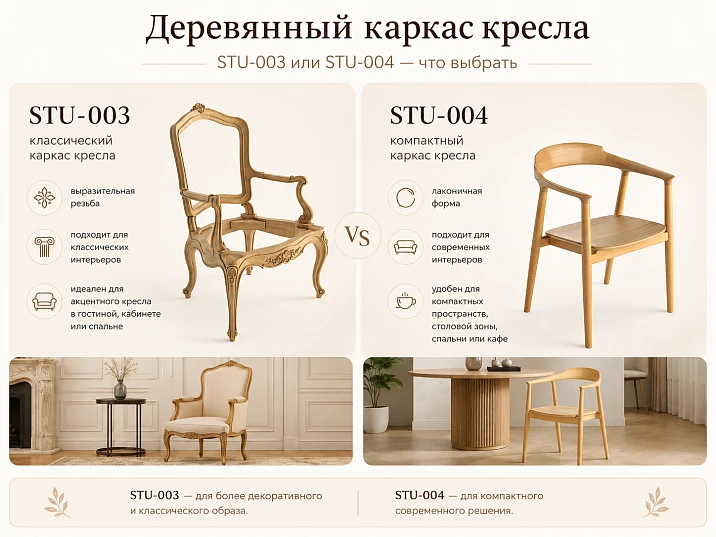
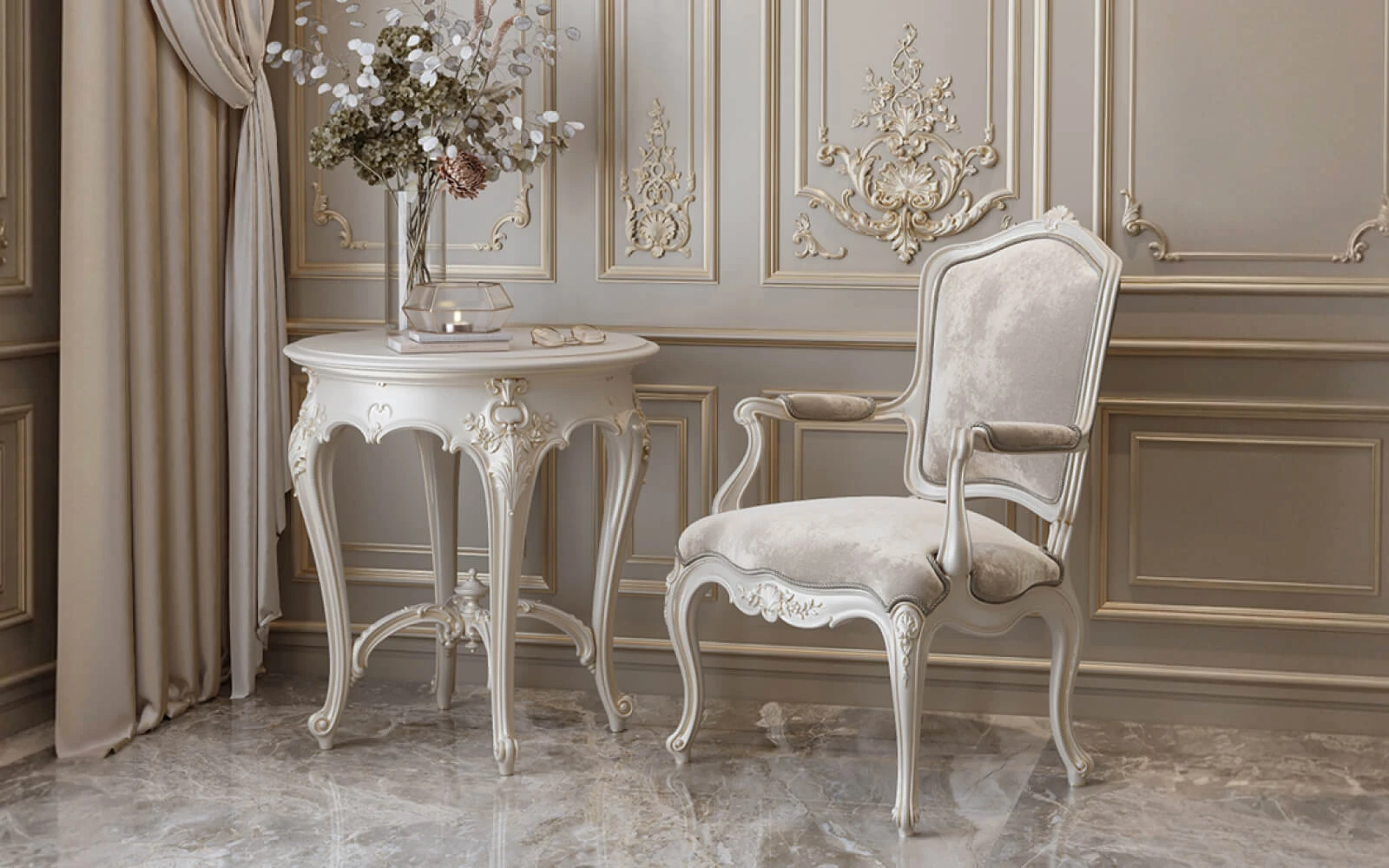
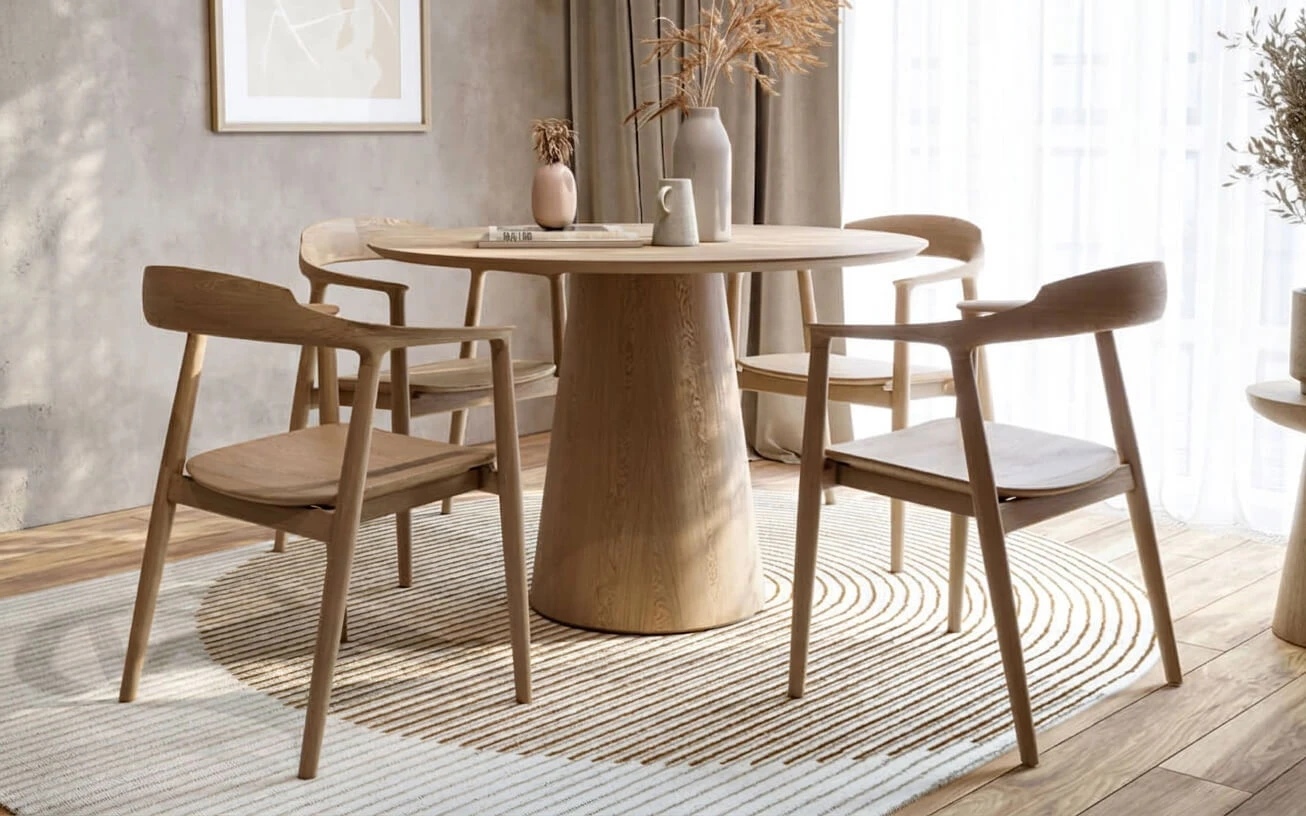
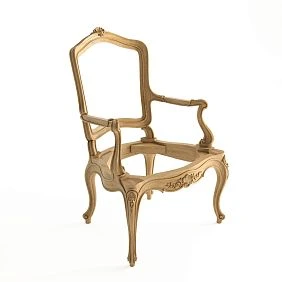
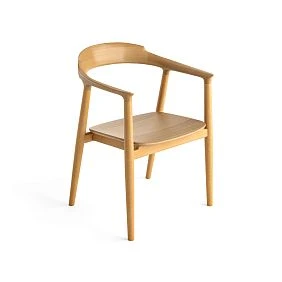
The choice between STU-003 and STU-004 starts not with color or even the cost of finishing. These are two different bases in scale and purpose. STU-003 is a large carved frame of a full-sized chair measuring 676 × 1010 × 688 mm in the Louis XV style. STU-004 is a compact frame of an armchair measuring 558 × 779 × 537 mm with a laconic geometry and Scandinavian character.
When required wooden chair frame to buy For a living room, study, or library, STU-003 is often considered. When the piece needs to work at a dining table, in a meeting room, restaurant, or small waiting area, it's more practical to evaluate STU-004. Below we'll break down not only the appearance but also the dimensions, layout scenarios, choice of beech or oak, future upholstery, total project cost, and mistakes that are discovered only after ordering.
Short answer: STU-003 or STU-004
STU-003 should be chosen when you need a standalone piece of furniture with a high carved back, a noticeable classic silhouette, and full areas for a soft seat, backrest, and armrests. Such a frame does not blend into the setting: it becomes the center of the composition, sets the scale of the living room or study, and requires enough free space around it.
STU-004 is suitable for a different task. It is a compact half-chair with armrests that smoothly transition into the backrest line. It is appropriate at a table, in a kitchen-living room, meeting room, cafe, restaurant, salon, or waiting area. The model is lower, narrower, and shallower in overall depth, so it allows placing several identical pieces without overwhelming the room.
| Task | What to choose | Why |
|---|---|---|
| Accent chair for the living room | STU-003 | High carved back, classic form, and full soft part. |
| Half-chair at the dining table | STU-004 | More compact in all three overall dimensions, visually calmer. |
| Classic study or library | STU-003 | Representative silhouette in the style of Louis XV. |
| Meeting room, restaurant, waiting area | STU-004 | More convenient for serial arrangement and maintaining aisles. |
| Full custom upholstery | STU-003 | Fields are provided on the seat, backrest, and armrests. |
| Small kitchen-living room | STU-004 | Width is 118 mm less, height is 231 mm less, overall depth dimension is 151 mm less. |
To compare items, you can open two cards at once: buy classic chair frame STU-003 и buy compact chair-frame STU-004In the product cards, it is important to double-check the current execution options before ordering, because the article helps to choose the base type but does not replace the coordination of the specific configuration.
Confirmed characteristics of two frames
Both models share a common starting point: they are made of beech or oak and have a "Prestige" sanding finish. Beech is considered for enamel, while oak is for tinting. The similarity almost ends there. The shape, scale, backrest character, armrest design, and primary usage scenario differ fundamentally between STU-003 and STU-004.
| Parameter | STU-003 | STU-004 |
|---|---|---|
| Type | Full chair frame | Chair-armchair / semi-armchair frame |
| Size | 676 × 1010 × 688 mm | 558 × 779 × 537 mm |
| Material | Beech or oak | Beech or oak |
| Sanding | «Prestige» | «Prestige» |
| Recommended finishing direction | Beech under enamel, oak under tinting | Beech under enamel, oak under tinting |
| Style | Louis XV, French classic | Scandinavian minimalism |
| Backrest | High, concave, carved | Smooth semicircular |
| Armrests | Open, with areas for soft bolsters | Flow into the backrest line |
| Soft part | Cushions on the seat, backrest, and armrests | Configuration is determined by the project |
| Main scenario | Living room, study, library, hall | Dining room, kitchen-living room, study, HoReCa |
| Delivery | Assembled | Rigid box |
The numbers in the table are the overall dimensions of the frames. They cannot be automatically considered as seat width, seat height, or useful depth of the soft part. These parameters depend on the design of the future upholstery and must be clarified according to the drawing, product card, and with the craftsman who will form the base, filler, and cover. This caveat is especially important when selecting a chair for a table: the external size and actual seating are not the same thing.
If the task is broader than comparing two models, it is useful to first learn how to choose a wooden chair frame, and then return to STU-003 and STU-004 with a clear list of requirements for size, style, and future upholstery.
Our factory also produces:
Why the difference in dimensions changes the entire project
STU-003 is 118 mm wider, 231 mm taller, and 151 mm larger in overall depth than STU-004. On paper, these values may seem insignificant, especially when choosing a chair based on a beautiful close-up photo. In a real room, the difference is immediately noticeable. It affects walkways, distance to the wall, placement of a coffee or dining table, the possibility of adding a second chair, the delivery route, and even the visual balance next to a sofa, cabinet, or fireplace.
A large item needs space. If STU-003 is placed flush against a wall or squeezed between other objects, the carved silhouette will lose its expressiveness, and using the chair will become uncomfortable. For it, you need to determine in advance not only the footprint of 676 × 688 mm, but also the working area: space for approach, turning, leg movement, and possibly pulling up a side table. The height of 1010 mm is also noticeable in the composition. The chair will compete with a console, windowsill, wall decor, and the lower line of paintings, so the layout must be evaluated as a whole.
STU-004 is easier to integrate into a dense furniture group. The width of 558 mm allows considering several half-chairs around a table, but you cannot simply divide the tabletop length by the frame width. Intervals for arms and movement must be left between items, and space behind the backrest to push the chair back and stand up. Armrests require separate checking against the apron and tabletop edge: even a compact frame may not fit under a specific table.
A practical way to check is to mark the dimensions with painter's tape on the floor. For STU-003, mark a rectangle of 676 × 688 mm; for STU-004, 558 × 537 mm. Then add real walkways around and try to live with this layout: open a door, walk to a window, pull out a drawer, push back the chair, approach the table. A cardboard mockup or a temporary vertical slat will help feel the heights of 1010 and 779 mm. Such a test takes less time than correcting a mistaken purchase.
Separately, check the delivery route: width of doorways, corridor turns, stairs, elevator, room entrance, and the ability to safely maneuver a large item. For STU-003, which is delivered assembled, this is especially important. Before ordering, study the delivery conditions for large furniture frames and inform the manager about the specifics of the property.
Get Consultation
Full chair and half chair: why these are not interchangeable names
STU-003 and STU-004 share the presence of armrests, but the functional similarity does not end there and does not make the models direct analogs. A full chair is usually chosen as a place for longer relaxation, reading, conversation, or work in a study. It is perceived separately from the dining group. It can stand by a floor lamp, next to a library, opposite a sofa, by a fireplace, or in a hotel lobby. The high backrest and developed soft part form an independent comfortable volume.
A half chair retains arm support, but in role it is closer to a chair. It is easier to place at a table, repeat in a set of four or six pieces, use in a conference room or restaurant. Here, not only individual seating is important, but also the density of arrangement, the ability to quickly move the item, ease of cleaning, repeatability of finish and upholstery. STU-004 follows exactly this logic: a compact overall size and a calm semicircular backrest allow creating a rhythmic group.
An error occurs when a buyer expects from STU-004 the feeling of a deep lounge chair or, conversely, tries to use STU-003 as an ordinary chair at the head of a compact dining table. In the first case, expectations of softness and long-term seating may not match the actual construction. In the second, the large frame will take up too much space and disrupt passages. The model name should be linked to the task, not just to external appeal.
Before making a final decision, it is useful to conduct a seating test on a sample or agree on the future geometry of the soft part with the upholsterer. The height of the finished seat depends not only on the wooden base, but also on the construction of the base, the thickness of the padding, and the tension of the fabric. For a project at a table, additionally measure the height of the tabletop and the lower line of the apron so that the armrests do not hit it.
When to buy STU-003
STU-003 reveals itself where the chair is given an independent role. Its high concave backrest, S-shaped cabriole legs, and carved plasticity are associated with the style of Louis XV and French classics. Such an item does not need to be disguised. On the contrary, a composition is built around it: fabric, wood shade, trim, furniture nails, lighting, and neighboring items are selected.
Living room and fireplace area
In the living room, STU-003 can work as a single accent or part of a symmetrical pair. One frame is appropriate next to a sofa when you need to add a separate reading spot and make the composition less standard. Two identical chairs can be placed opposite the sofa, on either side of the fireplace or console. The paired scheme requires an exact match of finish and upholstery, so it is better to order both bases in one batch and approve a control sample of color and fabric before starting work.
Study and library
In a study, a large classic frame supports the representative character of the interior. The high backrest reads well next to bookcases and wooden wall paneling. Here it is especially important not to overload the item with decorative fabric. If the carving is already active, a solid velvet, leather, or material with a small repeat often helps maintain balance. The exact choice of fabric and its attachment method should be determined by the upholsterer after inspecting the frame.
Hotel, club, grand lobby
In commercial interiors, STU-003 is suitable for accent seating: at the reception desk, in an intimate waiting area, hotel library, or private club. It is not a model for maximum seating density. Its value lies in visual expressiveness and individual character. For intensive use, fabric is chosen based on wear resistance, and wood finish is coordinated with the maintenance regime. A serial order should start with one control piece to check fit, color, seams, and fabric behavior on complex geometry.
STU-003 is preliminarily suitable if the room accommodates a width of 676 mm and a total depth of 688 mm, and the project involves full upholstery of the seat, backrest, and armrests. A master upholsterer is needed to properly form the base, padding, and decorative details. If these conditions are met, you can proceed to the card of the wooden chair frame 676 × 1010 × 688 mm and check the order parameters.
Who STU-003 is not suitable for: the owner of a small kitchen where the chair must fully slide under the table; a project with six identical seats in a limited area; an interior requiring maximally neutral modern geometry; a client who does not plan full upholstery work. In these cases, the expressive frame will be too large or require more steps than the task entails.
When it's better to choose STU-004
STU-004 is not a scaled-down version of STU-003, but a separate type of item. The smooth semicircular backrest and armrests form a continuous line, carved decoration is minimal, and the overall silhouette is linked to Scandinavian minimalism. The model is easier to combine with a minimalist table, modern kitchen, light walls, and calm room architecture.
Dining room and kitchen-living room
The main scenario for STU-004 is seating at a table. The armrests make the item more comfortable than a regular chair, and the compact dimensions allow considering a set. But before ordering, be sure to measure not only the free length of the tabletop. Check the height of the armrests relative to the apron, the distance between the table legs, the ability to pull the armchair out, and the clearance behind the backrest. For a round table, make a paper or tape template of each item: radial arrangement uses space differently than rectangular.
Meeting room and small office
In the STU-004 meeting room, it provides arm support but does not create a heavy club atmosphere. Several identical half-chairs form a neat rhythm around the table. For an office, the model works well as a guest chair, especially when the full-sized STU-003 is visually and physically too large. The upholstery should be coordinated with the cabinet fronts or tabletop, but it is not necessary to achieve a perfect shade match: sometimes a general temperature direction and repetition of the wood texture are enough.
Restaurant, cafe, and waiting area
For HoReCa, serial production, ease of passage, repairability of upholstery, and color consistency across the entire batch are important. STU-004 is better suited for repeated arrangements than a large accent chair. Before launching the series, it is worth assembling one sample: check the final seat height, arm position, fabric behavior at the backrest curve, ease of cleaning under the item, and the actual distance between adjacent seats. Such a prototype reduces the risk of discovering an uncomfortable height or excessive seating density after the batch has already been manufactured.
The detailed logic of the model is explained in the material about the frame of the STU-004 chair. To purchase, go to the product page STU-004 size 558 × 779 × 537 mm and check the material, finish, and current terms.
Who STU-004 may not suit: a client who needs a tall, formal silhouette; a project with a fully upholstered backrest and pronounced classic armrests; a Baroque or Rococo interior requiring active carving; a scenario of prolonged relaxed seating if the item is expected to provide a deep, soft chair feel. In such cases, it is worth returning to STU-003 or evaluating other bases in the category.
Classic or Scandinavian minimalism: choosing by style without superficial labels
The frame style affects not only the decorative impression. It determines how the object interacts with fabric, walls, furniture, and open space. STU-003 is built on complex plasticity: cabriole legs, carving, a high concave back, and open armrests create a rich silhouette. It needs an environment where these lines can be appreciated. Classic panels, moldings, paneled facades, stone, wood, brass or bronze accents are appropriate nearby — provided the details do not compete with each other.
STU-004 works in the opposite way. Its character is built on a continuous line of the back and armrests, compactness, and the absence of active carved decoration. The model pairs well with smooth facades, calm walls, natural texture, modern lighting, and minimalist tables. But minimalism does not mean facelessness. Expressiveness can be created through wood shade, tactile fabric, contrasting piping, or neat oak tinting.
Modern classic allows both models, but with different logic. STU-003 becomes a historical quote and the main accent. To prevent the piece from looking theatrical, the carving can be supported by calm enamel and solid upholstery. STU-004 works as a more restrained base: it can be connected to classic details through noble material, color, or fabric, without copying the antique form.
An eclectic interior also does not cancel the rules of scale. Mixing styles works well when objects have a common link: wood color, line repetition, a unified fabric palette, or symmetrical arrangement. A random pairing of carved STU-003 with a very small simple table can look unbalanced. Similarly, STU-004 next to a massive palace suite risks getting lost. First determine the role of the chair, then select the surroundings.
When you need to assemble an entire interior rather than choose one model from a photo, you can order a selection of frame, finish, and upholstery. This is especially useful for paired chairs, a complex classic room, or a commercial series where an error in shade and scale repeats across multiple pieces.
Beech or oak: which material to choose for the chair frame
Both models are available in beech or oak. The choice of wood species should be linked to the future finish, the overall furniture group, and the character of the interior. In confirmed data, beech is indicated as an option for enamel, and oak for tinting. This is not just an aesthetic recommendation. Enamel hides the natural grain and allows for a smooth colored surface, while tinting emphasizes the wood texture.
Beech for enamel
Beech is a reasonable choice when an exact color is important: white, cream, gray, deep dark, or another shade coordinated with the project. For STU-003, enamel can either emphasize the relief through light and shadow or make the classic form calmer. For STU-004, a smooth matte finish supports modern geometry. Before production, a test sample on a separate piece or hidden area is mandatory. The same color from a catalog changes depending on gloss, primer, lighting, and adjacent materials.
Oak for tinting
Oak is chosen when the texture should remain part of the image. On STU-003, tinting adds depth to the classic form and can connect the chair with a bookcase, table, or wall panels. On STU-004, the visible wood grain makes the minimalist silhouette warmer and more material. The exact shade should be evaluated on a real oak sample, because the image on the screen does not show all the nuances of the wood and coating.
Beech and oak should not be mixed within a single visually unified batch without a conscious design reason. Even after opaque finishing, the species may perceive materials differently and have different surface characteristics. For four or six identical half-armchairs, it is more logical to choose one species, one coating system, and keep the color code. For a pair of STU-003, it is also important to ensure the same upholstery direction and fabric pattern placement.
'Prestige' sanding means a prepared surface, but it cannot be considered a finished protective finish. The frame requires a coordinated finishing system. Painting or tinting is done before final upholstery to avoid soiling the fabric and to gain access to all wooden areas. Suitable items can be viewed in the section buy materials for finishing the wooden frame, however, the specific coating system must be selected based on the wood species, desired result, and the craftsman's technology.
Before ordering, formulate the solution completely: model, wood species, finish type, gloss level, shade, fabric, piping, or nails. A fragmented choice of 'first the frame, then we'll figure something out' often leads to unnecessary logistics between workshops and repeated color approval.
How to choose upholstery and not ruin the proportions
The frame for upholstery is not an almost finished chair, but the foundation of the project. The final silhouette depends on the base of the soft part, the thickness of the padding, the method of fabric tension, seams, piping, decorative nails, and the direction of the pile. Two workshops can get visually different items on the same frame. Therefore, the choice of fabric cannot be separated from the construction.
Upholstery STU-003
STU-003 has panels on the seat, backrest, and armrests. This is a full-fledged soft project in which the fabric occupies a significant part of the visible surface. A large pattern needs to be laid out in advance by centers and checked how it runs on the concave backrest. Velvet requires control of the pile direction: different areas may appear lighter or darker. Leather and eco-leather have their own requirements for cutting and tension. Piping emphasizes the contour, and furniture nails enhance the classic character, but both solutions must be planned into the technology in advance.
Fabric consumption cannot be universally assigned based solely on the model name. It depends on the roll width, pattern repeat, direction of the pattern or nap, number of seams, and the chosen design. Purchasing material before consulting an upholsterer is risky: you may end up with a shortage of the same batch or a large leftover that will not be needed.
Upholstery STU-004
For STU-004, the configuration of the soft part depends on the project. It is especially important here not to make the seat excessively thick and high: the half-chair should maintain a connection with the table and a comfortable hand position. Excessive filler volume can visually weigh down the minimalist frame and alter the seating position. For a series in a restaurant or meeting room, it is more practical to choose a fabric that can be replicated, cleaned, and replaced if necessary without disrupting the overall look of the group.
If a patterned fabric is used, the pattern must be positioned identically on all items in the batch. For a round backrest, this requires precise marking. A solid textured fabric is simpler in serial production, but it also needs a control sample: the seam, piping, and tension on curves can change the perception of color.
Control sample before the series
For a pair of STU-003, four STU-004, or a large HoReCa batch, first fully finish and upholster one item. Evaluate it during the day and evening, next to the table and other materials. Sit in it, check the height, hand position, elasticity, seams, and fabric stability. Only after confirming the sample should you proceed with the remaining frames. This is not an unnecessary step, but a way to establish a standard that the workshop will replicate for the series.
Additional analysis of base preparation is provided in the guide what to check before purchasing a frame for upholstery. It will help coordinate the work of the carpentry, painting, and upholstery workshops before the materials end up in different places.
Practical selection for specific rooms
The same model behaves differently depending on the room. The decision should be made not based on an abstract style, but on traffic routes, neighboring furniture, and the role of the seating spot.
Small living room
If free space is limited, do not judge solely by width. Mark the full dimensions and passage. One STU-003 can be appropriate even in a small room if it replaces two random items and becomes the sole accent. But a pair of large armchairs will almost certainly require a spacious area. STU-004 is easier to integrate next to a compact table or use as an extra guest seat.
Spacious classic living room
Here, STU-003 gets the necessary scale. The high backrest can support the vertical lines of doors, panels, or bookshelves. Paired arrangement creates symmetry. STU-004 is also possible in such a room, but more likely in a separate dining or work area, rather than as the main chair.
Kitchen-living room
For a table, STU-004 is usually preferable. It combines armrests with a more compact size. In an open-plan layout, the finish of the half-chairs can be tied to kitchen fronts, bar stools, or countertops. STU-004 makes sense only in a separate lounge area if there is enough space between the kitchen and living room and the chair does not obstruct main pathways.
Bedroom
STU-003 can become a reading chair by the window or part of a classic composition next to a vanity table, but you need to check the passage to the bed and wardrobe. STU-004 is suitable for a compact workspace or as a half-chair at a console. In a bedroom, it is especially important to assess the backrest height relative to the windowsill and not block natural light.
Cabinet
STU-003 is chosen for a representative area, reading, or conversation. STU-004 is for visitors at a desk or in a meeting area. In one study, the models can be combined only with a clear hierarchy: a large owner's chair or accent chair separately, compact half-chairs as a group. Do not try to present them as identical pieces of a set.
Restaurant and cafe
STU-004 is more logical for main seating because it helps maintain density and a consistent rhythm. STU-003 can be used selectively—in a lounge area, by the fireplace, or in a private room. For a commercial space, evaluate not only design but also cleaning, fabric replaceability, maintaining passages, the possibility of reordering, and ease of moving items by staff.
Waiting area and salon
Several STU-004 can be placed along a wall or around a small table. They provide a personal space and arm support without taking up the volume of a full armchair. STU-003 is suitable when the interior revolves around one striking piece, for example in a showroom, boutique, or premium reception. But it should not be placed in a narrow passage just for a dramatic photo.
If neither of the two models fits the task, do not artificially choose the "lesser evil." In the section, you can buy solid wood furniture frames and compare other bases by purpose and size.
What to buy together with a wooden chair frame
Purchasing a base triggers several related stages: wood finishing, forming the soft part, fabric selection, delivery between workshops, and final installation. The earlier these stages are combined into one route, the lower the risk that the chosen enamel won't match the fabric, the armrests will be too high for the table, or the frame won't fit through the room.
| What to add to the purchase | Why | For which scenario | What to Check |
|---|---|---|---|
| Finishing materials | Prepare beech for enamel or oak for tinting | Both models | Compatibility of the coating system with the wood species and the master's technique |
| Upholstery fabric or leather | Form the soft part and external appearance | STU-003 — full project; STU-004 — by selected configuration | Pattern repeat, pile direction, roll width, abrasion resistance |
| Filling and base | Set the elasticity and height of the finished seat | Especially important for a desk chair | Final height, thickness, and alignment with the frame |
| Piping or furniture nails | Finish the upholstery border | Usually STU-003, but depends on the project | Attachment method and style consistency |
| Control sample | Approve the color before finishing the entire frame or batch | Paired armchairs and serial half-armchairs | Color under daylight and artificial lighting |
| Design project | Connect the frame, fabric, finish, and arrangement | Complex classic, large batches, multiple zones | Exact dimensions of the room and adjacent furniture |
The article deliberately does not specify universal fasteners, fabric consumption, filler composition, and coating system: these data depend on the chosen design and the contractor's technology. It is safer to hand over the frame to a professional painter and upholsterer than to gather materials based on random advice. For an author's project, it is useful to look at how to create a custom chair on a ready-made base.
For serial purchase, fix the specification: article number, wood species, finish type, color code, gloss level, fabric, pattern direction, piping, seams, and the approved reference sample. Such a document helps to repeat the result and reduces discrepancies between the client, designer, painter, and upholsterer.
How not to confuse STU-003 and STU-004 with similar frames
The name "chair frame" covers too many different bases. Before purchasing, look not only at the presence of a backrest and armrests. Compare the overall size, silhouette height, leg shape, number of soft zones, usage scenario, and how the item will interact with the table. STU-003 is a full-fledged chair with a carved classic shape. STU-004 is a compact half-chair with a modern character. Substituting one for the other usually happens when the decision is made based on a frontal photo without scale.
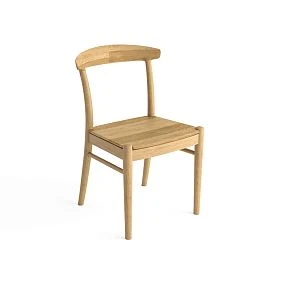
If armrests are not needed and an even more compact seating is required, it makes sense to look at the compact chair frame STU-005For a classic group without the need for a full armchair, you can look at the carved frame of the STU-007 chair. These models cannot be automatically considered replacements for STU-003 or STU-004, but they help understand whether you need the format of an armchair, a half-armchair, or a chair.
For a dining group, it is useful to additionally look at wooden chair frames. Perhaps armrests are only needed for two pieces at the head of the table, while the remaining seats are better made with narrower chairs. This combination preserves comfort and does not overload the long side of the tabletop.
Do not confuse a prepared wooden frame with a finished upholstered armchair. The buyer still has finishing work and, depending on the model, upholstery work ahead. Comparing the price of a frame with the price of a fully finished item is incorrect: the scope of work and degree of customization differ. A frame is chosen for the opportunity to get the desired wood species, color, fabric, and character, not for immediate use without additional steps.
You should also not choose a base for self-cutting based on photographs. The models have complex geometry and joints, and STU-004 is described in the card as a structure with mortise and tenon joints. A finished base allows you to focus on finishing and upholstery without turning the furniture project into an experiment with the load-bearing structure.
How to compare the total cost, not just the frame price
The price in the card is only one part of the future chair. STU-003 and STU-004 cannot be correctly compared by a single cost line because the scope of subsequent work is different. The large STU-003 assumes a full upholstered part on the seat, backrest, and armrests. STU-004 is more compact, and the upholstery configuration depends on the project. Even with the same wood species, the amount of fabric, labor for cutting and finishing may differ.
| Expense item | What affects the amount | How to avoid overspending |
|---|---|---|
| The frame itself | Model, breed, current order conditions | Check the article and characteristics in the card |
| Wood finishing | Enamel or tinting, preparation, carving complexity | Approve a test paint before the main work |
| Base and filler | Soft part construction and required fit | Coordinate with the upholsterer before purchasing materials |
| Fabric or leather | Roll width, repeat, pile direction, batch | Make layout and purchase material from one lot |
| Upholsterer's work | Number of soft zones, shape complexity, seams and piping | Show frame to master before approving estimate |
| Logistics | Delivery to painter, upholsterer, and site | Assemble sequential work route |
| Reference sample | Full finishing of the first item | Consider it part of quality control, not an extra expense |
Request a stage-by-stage estimate from the contractors. This makes it clear how the cost of STU-003 differs from STU-004 and where the difference arises: in the finishing area, carving complexity, volume of the soft part, fabric, or logistics. Do not try to reduce the budget by purchasing fabric without calculation or by refusing the control sample. It is these "savings" that most often lead to rework.
The current price and availability cannot be fixed in the article: they need to be checked in the product cards immediately before ordering. A commercial comparison should be based on the full estimate of the finished item, not on an outdated figure.
Step-by-step route for selection and ordering
- Determine the role of the item. For relaxation and accent composition, consider STU-003. For a table, meeting room, or serial arrangement — STU-004.
- Mark the dimensions. Use actual rectangles of 676 × 688 mm and 558 × 537 mm, add walkways and item movement.
- Check the height. Create a vertical layout of 1010 or 779 mm and evaluate it next to the windowsill, table, decor, and sofa back.
- Choose the wood species. Beech — for the enamel project, oak — for tinting while preserving the texture.
- Coordinate the soft part. Show the model to the upholsterer, discuss seat height, padding, fabric, piping, seams, and consumption.
- Check the delivery route. Especially for STU-003 when assembled: doors, hallways, elevator, stairs, turns.
- Approve the samples. Make a test paint-out and, for the series, one fully finished item.
- Verify the product card. Check the current terms, material, and parameters right before placing the order.
This order does not complicate the purchase; on the contrary, it reduces the number of returns to already made decisions. When the model is chosen before the fabric, the fabric before the soft part construction, and the finish without a sample, each subsequent craftsman is forced to correct the limitations of the previous stage.
To start, you can open a general category and buy solid wood furniture frames, then compare STU-003 and STU-004 with alternatives. After selecting a model, finalize the specification and coordinate the sequence of finishing, upholstery, and delivery.
Main mistakes when choosing STU-003 or STU-004
Choosing based on a single photo.Without scale, the large STU-003 and compact STU-004 may appear similar in size. Mistaking overall dimensions for seat size.
Overall dimensions do not equal the usable width, depth, and height of the finished seating. Buying STU-003 for a cramped dining group.
The chair may block the aisle and not slide under the table. Expecting the depth of a lounge chair from STU-004.
This is a half-chair, the main logic of which is related to the table and compact seating. Do not check the armrests at the table.
You need to know the height of the apron, the edge of the tabletop, and the actual height of the finished seating. Buy fabric before consulting the upholsterer.
Consumption depends on the roll, repeat, pile, and construction of the soft part. Mix beech and oak in the same batch.
Differences in wood species complicate the replication of the surface and the overall character of the items. Consider sanding as a finished coating.
The frame requires a coordinated protective and decorative finish. Upholster before painting.
The fabric obstructs access to the wood and risks being damaged by finishing materials. Launch the series without a sample.
An error in fit, color, or seam will repeat on every item. Do not check the drift path.
Especially critical for the assembled STU-003. Compare only the price of frames.
The total cost includes finishing, upholstery, fabric, labor, and logistics.
Who each model suits and who it does not suit
| Model | Suitable | Not suitable or requires caution |
|---|---|---|
| STU-003 | Living room, study, library, fireplace area, classic hotel, designer armchair, steam room composition | Tight dining group, narrow passage, project without upholsterer, interior requiring maximally neutral form |
| STU-004 | Dining room, kitchen-living room, meeting room, small study, restaurant, cafe, salon, waiting area, set of several items | Formal armchair with high back, baroque and rococo with active carving, expectation of deep relaxed seating of a full armchair |
The choice cannot be reduced to the formula "large room — STU-003, small — STU-004". In a spacious dining room, a compact set may still be needed, and in a small living room, one large armchair can become a justified centerpiece. The main criterion is the role of the item and the space organized around it.
How to check ergonomics before manufacturing the soft part
Even precise overall dimensions do not answer all questions about seating. The frame sets the architecture of the item, but the final position of the person is formed after the base, filler, and fabric are added. Therefore, the check is divided into two levels. First, they assess whether the item itself fits in the room. Then, together with the upholsterer, they determine what the finished seating should be like: how high, springy, and voluminous the soft part will be, where the arms will be, and how the back will support the body.
For STU-003, it is especially important not to make the soft part excessively massive. The carved frame already has an expressive silhouette, and a too-thick seat can visually shorten the legs, hide the proportions of the apron, and change the character of the armchair. On the back, a readable boundary between wood and fabric must be maintained. Armrests with areas for soft rolls require symmetry: a small difference in thickness or tension is immediately noticeable because the right and left sides are compared by eye.
For STU-004, the main risk is different. A semi-armchair is often chosen for a table, meaning the final seat height and armrest height must match the specific furniture. If the soft package is made too high, the person will be raised relative to the tabletop, and the armrests may no longer fit under it. If the seat is made too soft, the seating will sag noticeably, and the comfortable position at the table will change. These parameters cannot be guessed from an image — they are agreed upon based on samples and measurements.
It is useful to temporarily simulate the soft part with dense sheets of foam material or folded blankets of different thicknesses. Such a mock-up does not replace professional calculation, but helps compare several height options and understand how the position of the hands changes. For a dining scenario, the exact table that will be used with the semi-armchair should be nearby. For STU-003, the test is conducted in the actual relaxation area: next to a coffee table, floor lamp, and other furniture.
If frames are purchased for people of different heights, you should not look for one abstractly "ideal" fit. It is better to define the main scenario and test it on several users. For a private interior, priority belongs to the owners. For a restaurant or meeting room, a more universal solution is chosen, and not only comfort is evaluated, but also the speed with which a person sits down, stands up, and moves the item.
How to coordinate the work of a designer, painter, and upholsterer
The chair frame passes through several workshops, and each makes decisions that affect the next. The designer determines the image, color, and placement of the item. The painter selects the coating system and application technology. The upholsterer forms the soft part and secures the fabric. If specialists work in isolation, even well-executed stages may not come together into a single result.
The first document should be a simple specification. It records the article number, quantity, wood species, desired finish type, color reference, gloss level, fabric, pattern direction, piping, decorative elements, and installation location. For STU-004, the dimensions and table height are indicated. For STU-003, the position of the chair in the room and the nature of adjacent furniture are indicated. Photos of the room and material samples are added to the specification.
The painter must know which wooden areas will remain exposed after upholstery and where an excessive coating layer is unacceptable. The upholsterer, in turn, must understand how the surface is protected and which areas cannot be damaged by tools. The sequence is usually arranged so that the main wood finishing is completed before the final installation of the fabric. The specific technology is determined by the performers, because different coatings have their own requirements for drying and subsequent operations.
The test paint sample should be viewed next to the fabric, not separately on a white sheet. Light enamel can change the perception of beige textiles, and dark tinting can make the same material visually warmer. For STU-003, additionally check that the carving is not lost in a too dark coating. For STU-004, evaluate whether the laconic line of the backrest maintains its integrity and whether the piping looks like a random frame.
After manufacturing the first finished item, a short approval act is drawn up: the accepted color, pattern position, seam type, soft part thickness, and finished seat height. For a single chair, this helps to record the result for the future. For a series, it becomes a mandatory standard. If another item is needed in a year, the saved specification and sample significantly increase the chance of repeating the original solution.
When it is difficult to coordinate all stages independently, it is reasonable order a selection of frame, finish, and upholsteryProfessional coordination is especially valuable where several models, complex fabric, or a non-standard color are chosen simultaneously.
One item, a pair, or a set: how requirements change
A single armchair allows for more freedom. It can differ from the rest of the furniture in color, fabric, and style because it works as an accent. This is why STU-003 is often chosen as a single piece. In this case, you can use expressive velvet, a complex enamel shade, or a noticeable piping. However, the accent should not be random: at least one parameter — color, material, line, or scale — connects the armchair to the interior.
A paired composition requires precision. Two STU-003s on either side of a fireplace or opposite a sofa will constantly be compared. A difference in wood shade, pile direction, seat height, or pattern placement immediately disrupts symmetry. It is better to order frames together, finish them in one cycle, and upholster them from the same fabric lot. Even if the armchairs are placed at a distance, the eye perceives them as a pair.
A set of four or six STU-004s imposes even stricter requirements for repeatability. Here, not only identical appearance but also equal finished seat height is important. If one semi-armchair differs due to filling or tension, it can be felt at a common table. The workshop must work according to an approved sample, and the cut parts must have a uniform direction.
When calculating the quantity, consider a reserve not only for area but also for fabric. Material from a different batch may differ in shade. For a commercial project, it is worth discussing the possibility of local repair or reupholstery in advance. Sometimes it is wise to keep a small fabric reserve specifically for future restoration of one item. There is no universal reserve volume: it is determined by the upholsterer after layout.
A mixed group is also possible. For example, two STU-004s with armrests are placed at the head of a rectangular table, while narrower chairs are used along the long sides. This technique saves space and maintains hierarchy. To select a base without armrests, you can look at the compact chair frame STU-005 or explore other options in the category.
Do not buy different quantities of frames in stages without checking the possibility of repeating the material and finish. For a unified group, it is safer to place one order or pre-set all parameters so that a subsequent order does not turn into a selection of an approximately similar item.
Care, use, and possibility of updating the armchair
The service life of a finished item depends not only on the wooden frame but also on the chosen coating, upholstery, and usage conditions. Care instructions should be provided by the craftsmen who applied the finish and worked with the fabric. A universal product for all surfaces cannot be chosen: a composition suitable for one enamel may be undesirable for another coating, and the method of cleaning velvet differs from caring for leather.
In everyday use, it is important not to lift the armchair by the armrest or top of the backrest, especially if the item is heavy and fully upholstered. It should be moved by supporting it from below and avoiding impacts of the legs against thresholds. For STU-003 with a high backrest, care must be taken that it does not hit a doorway or light fixture when being carried. STU-004 in a restaurant is moved more often, so staff should be shown a safe way to handle the semi-armchair.
The advantage of a frame for custom upholstery lies in the possibility of renewal. When the fabric wears out or the interior changes, the high-quality base can be reupholstered and, if technologically possible, the wood finish can be refreshed. However, such work should be entrusted to specialists: improper removal of fabric can damage edges and surfaces, and accidental sanding can alter the shape of carved details.
For the commercial series, plan for repairability in advance. A solid fabric without a complex pattern is easier for local replacement. A saved color code and finish sample help restore one item without redoing the entire group. If decorative nails or special trim are used, keep their name and supplier in the specification.
Before installation at the site, ensure the floor is level and the legs are not subject to accidental point loads. Any stability adjustments should be performed by a furniture specialist. Self-filing of legs or placing random hard objects underneath can disrupt the geometry and appearance.
What to prepare before contacting STAVROS
The more accurate the initial data, the more useful the consultation will be, and the fewer decisions will need to be reconsidered after purchase. Do not limit yourself to phrases like "need a chair for a classic interior" or "want a compact model for a table." Prepare a short description of the task: the room, the number of items, the role of each chair, the available area, the desired wood species, and the intended finish.
For STU-003, specify whether it will be a single chair, a symmetrical pair, or part of a complex furniture composition. Attach the dimensions of the free area, the height of the windowsill, the distance to the sofa or coffee table, as well as photos of the delivery path. If the frame is to be placed near a fireplace, console, or bookcase, front-facing photos of these objects are useful: they make it easier to assess scale and stylistic compatibility.
For STU-004, data about the dining or conference table is especially important. The tabletop height, the height of the lower apron, the distance between legs, the tabletop shape, and the number of seats are needed. Add a room layout with walkways. If the armchairs are planned for a restaurant, specify the width of the main routes, the expected seating density, and cleaning requirements. This information helps determine whether the armchair format is suitable or if some seats should be made as regular chairs.
Separately describe the future finish. The phrase "light wood" is insufficient: clarify whether you want a covering enamel or a visible texture under stain, a matte or glossier surface, a calm natural shade or a contrasting color. If there is already wooden furniture in the room, attach a photo taken in daylight and, if possible, a physical sample. Matching from a photo is not guaranteed, but such a reference is more useful than a verbal description.
For upholstery, prepare an image of the fabric, its name, and technical data if the material has already been chosen. Inform whether there is a large pattern repeat, pile direction, trim, or decorative nails. If the fabric has not yet been chosen, indicate the operating conditions: private interior, family with children, hotel, restaurant, or office. This does not replace a consultation with an upholsterer, but helps immediately exclude solutions that do not match the actual load.
Before payment, double-check the article number, quantity, wood species, and delivery address. For a large assembled STU-003, confirm the possibility of entry. For a batch of STU-004, ensure that all items belong to the same order and should be processed uniformly. Check current commercial terms, availability, and deadlines directly in the product cards and with the manager, as they may change.
A prepared request saves time not only for the manager but also for the buyer. Instead of a general conversation about taste, specific risks are discussed: whether the frame will fit, whether it is compatible with the table, which wood species suits the finish, and how to organize further work. As a result, choosing STU-003 or STU-004 becomes part of a well-thought-out furniture project, rather than a spontaneous purchase based on an image.
FAQ: frequent questions about STU-003 and STU-004
1. Which wooden chair frame should I buy for the living room?
For a separate relaxation area, a classic study, or a composition by the fireplace, STU-003 is often more suitable. It is taller, wider, deeper in overall dimensions, and has a pronounced carved shape. For a small living room or a spot near a compact table, you can consider STU-004, but you need to determine in advance whether you expect a full-fledged armchair or a semi-armchair.
2. Which model should I choose for the dining table?
The main scenario for STU-004 is related to the dining room and kitchen-living room. Before ordering, check the height of the armrests relative to the apron, the distance between the table legs, and the space for pulling out. STU-003 can be used at the head of a large table only after precise space verification; for a compact group, it is often too large.
3. How much larger is STU-003 than STU-004?
STU-003 is 118 mm wider, 231 mm taller, and 151 mm larger in overall depth dimension. The dimensions compared are 676 × 1010 × 688 mm and 558 × 779 × 537 mm. These figures refer to overall dimensions, not the usable seat area.
4. Can STU-004 be considered a full-fledged upholstered armchair?
It is more accurate to call it a chair-armchair or semi-armchair. It provides arm support and a more comfortable format compared to a regular chair, but in terms of scale and primary role, it differs from the full-size STU-003. The configuration of the soft part of STU-004 depends on the project.
5. What to choose — beech or oak?
Beech is specified as an option under enamel when an even color is needed. Oak is for tinting that preserves the visible texture of the wood. The choice is linked to the finish of adjacent furniture, the style of the room, and the desired surface character. For a series, it is better to use one species.
6. Are the frames ready for use?
No. These are wooden bases that require final finishing, as well as upholstery work according to the chosen model and project. The "Prestige" sanding does not replace a protective-decorative coating.
7. How much fabric is needed for STU-003?
A universal number cannot be assigned. Consumption depends on the roll width, pattern repeat, pile direction, selected seams, and the design of the soft part. The calculation is performed by the upholsterer after project approval. It is better to buy fabric only after layout.
8. Can I order several identical STU-004 for a restaurant?
The model is suitable for series arrangement, but it is better to start the batch after making one control item. On it, the fit, finish, fabric, seams, height, and distances in the actual layout are checked. After approval, the sample becomes the standard for the entire series.
9. How to check if STU-003 will fit into the room?
Compare the overall size of 676 × 1010 × 688 mm with the width of doors, corridors, staircases, and the elevator. Consider not only the minimum opening but also the ability to turn the assembled item. A complex route should be discussed before ordering and delivery.
10. Can STU-003 and STU-004 be combined in one interior?
Yes, if they have different roles. For example, STU-003 works as an accent chair in the lounge area, while STU-004 serves as a set by the table. The models can be linked by a common palette, wood species, or fabric, but they should not be depicted as identical items from the same set.
11. Which frame is easier to fit into a modern interior?
STU-004 is initially closer to Scandinavian minimalism and modern geometry. STU-003 can also be used in modern classic or eclectic styles, but it will become an active historical quote. For it, calm finishes and enough free space are especially important.
12. Where can I see other wooden bases?
Other options are collected in the category where you can buy solid wood furniture frames. For a more specific task, open the section and look at wooden chair frames.
13. What is more important to check before ordering?
The role of the item, overall dimensions, passages, armrest height at the table, delivery route, wood species, future finish, and upholstery plan. For the series, a control sample and one fully finished prototype are additionally needed.
14. Where can I clarify the current price, availability, and terms?
This information should be checked in the STU-003 and STU-004 cards immediately before purchase. The article does not capture changing commercial parameters and helps you choose the right model based on task, scale, and style.
How to buy a wooden chair frame on STAVROS
Start with the layout and an honest answer to the question of what item you need: a full-sized armchair for relaxation or a compact semi-armchair at a table. Then mark the dimensions, coordinate the upholstered part, and choose the type of wood. After that, compare model cards and check current conditions.
For a living room, study, library, and classic accent composition, open STU-003 made of beech or oak. For a dining room, kitchen-living room, meeting room, restaurant, or waiting area, evaluate semi-armchair with armrests made of solid wood. If the task does not fit these two scenarios, go to the frame category and compare alternative models.
When placing an order, provide the manager with the selected wood type, desired finish, number of items, and delivery specifics. For a complex project, attach a floor plan, table dimensions, photos of passageways, and fabric references. The more specific the initial data, the easier it is to detect incompatibility in scale or delivery route in advance.
STU-003 and STU-004 solve different tasks, so there is no universal winner. STU-003 is chosen for its scale, high carved back, and the ability to create a full-fledged designer armchair. STU-004 is chosen for its compactness, arm support, and ease of serial arrangement. The right purchase starts not with the question "which model is prettier," but with the precise role of the item in the room. After such a choice, the wooden frame becomes a reliable foundation for the project, and the finish and upholstery enhance the already found solution, rather than trying to fix an incorrect size.
Selection result
STU-003 — a full-fledged classic armchair for a spacious living room, study, library, or formal interior.
STU-004 — a compact chair-armchair for a dining group, meeting room, kitchen-living room, restaurant, and waiting area.