








































































Article Contents:
- What is a wooden chair frame and how it differs from a finished product
- How a wooden frame differs from a metal or rattan one
- Who needs a chair frame without upholstery: seven real scenarios
- Furniture workshops and upholsterers
- Interior designers
- Restorers
- Manufacturers of upholstered furniture
- Private customers with a specific interior
- Restaurants, hotels, private clubs
- Educational workshops and educational projects
- Why a solid wood frame is not a "random blank"
- Oak, beech or MDF: an honest comparative analysis
- Oak: strength and character
- Beech: stability and painting
- Pine: for summer houses and temporary solutions
- How to choose a chair frame for upholstery: a detailed checklist
- 1. Determine the seat width
- 2. Check the backrest height
- 3. Consider the seat height after padding
- 4. Choose the armrest shape
- 5. Evaluate the chair depth
- 6. Check the thickness of legs and apron
- 7. Decide on the finish of visible wooden parts
- 8. Ensure compatibility with the planned fabric
- Chair frame for a classic interior: what is important to know
- Carved legs as a decorative program
- High backrest and its significance
- Chair as part of a furniture set
- Chair for study, living room, hall
- What to buy with a chair frame: a systematic view
- Furniture legs for a frame with unfinished supports
- Wooden rosettes for corner accents
- Carved overlays for decorating wooden surfaces
- Molding for coordination with the interior
- Upholstery materials
- Related frames for a set
- Preparing a wooden frame for upholstery: step-by-step instructions
- Step 1. Check the geometry
- Step 2. Sand all visible surfaces
- Step 3. Apply the finish coating to visible parts
- Step 4. Cover areas that should not be stained with glue
- Step 5. Coordinate the thickness of soft materials with the upholsterer
- Step 6. Try on the fabric before final stretching
- Step 7. After upholstery — final check
- Mistakes when buying a chair frame: breakdown for each
- Where to buy a wooden chair frame: what to look for from a supplier
- FAQ: answers to popular questions about wooden chair frames
A chair is not just a piece of furniture. It is a statement about space, about taste, about how a person understands comfort and status. And when it comes to a truly custom chair — with the right seating, with chosen fabric, with wooden details for a specific interior — it all starts not with upholstery and not with foam. It all starts with the frame.
Buying a wooden chair frame means getting the load-bearing base around which the master upholsterer builds everything else. The size of the seating area, the height of the backrest, the shape of the armrests, the character of the legs — each of these parameters is set by the frame. A correctly chosen base is half the success. An incorrect one is a source of problems that cannot be fixed with foam or the most expensive fabric.
This article provides a detailed, honest, and practically oriented analysis: what a wooden chair frame is, who needs it, how to choose it, which material to prefer, how to prepare it for upholstery, and what mistakes to avoid when purchasing.
What is a wooden chair frame and how does it differ from a finished product
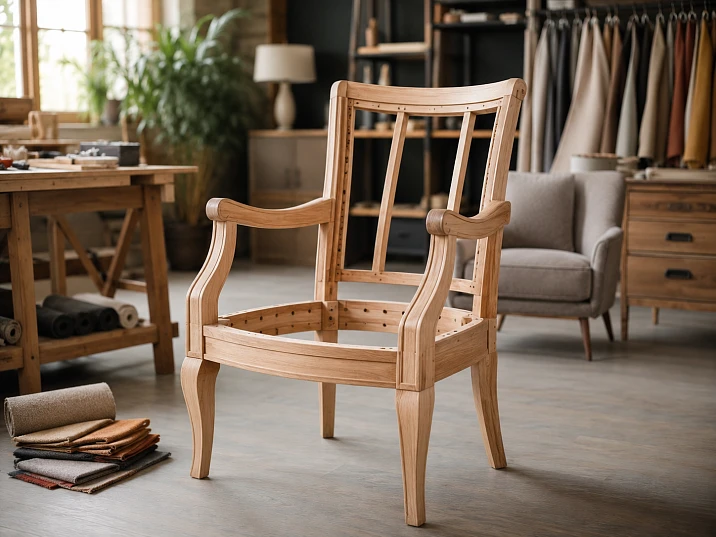
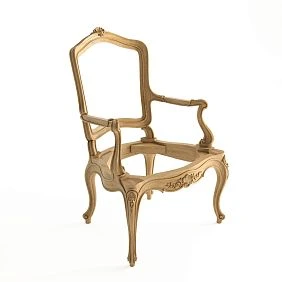
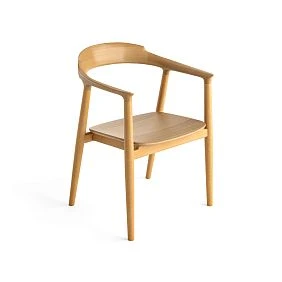
A chair frame is a load-bearing wooden structure without final soft filling and without decorative upholstery. It is the base: a frame that defines the shape and bears the load, ensures seating geometry, and creates conditions for subsequent soft finishing.
Buying a chair frame means acquiring precisely this base: ready for sanding, painting, or tinting of visible wooden parts (legs, armrests, backrest elements) and for installing straps, padding, foam, and fabric.
How does a chair frame differ from a finished chair? The answer is simple: the frame is the beginning of the journey. The finished chair is its completion. But it is in this 'beginning' that the entire constructive logic of the product is hidden. The choice of frame determines:
-
the proportions and ergonomics of the future chair
-
the style — from strict classic to soft Provence
-
the durability of the structure
-
the possibility of reupholstery after 10–15 years without replacing the base
A chair frame is not a blank. It is an architectural solution in miniature. And its selection should be treated accordingly.
How does a wooden frame differ from a metal or rattan one?
A metal frame is a choice for office, hanging, and modern minimalist chairs. It is durable but aesthetically cold and incompatible with classic interiors.
A rattan frame is for chairs in tropical, colonial, or bohemian style. Rattan dictates its own aesthetic: it cannot be changed with paint or different fabric.
A wooden chair frame made of solid wood is a universal base for classic, neoclassical, baroque, empire, Provencal, and modern classic interiors. It can be painted, tinted, or varnished. Its legs can be carved or strict. Its armrests can be curved or straight. It is not a single product but a platform for solutions.
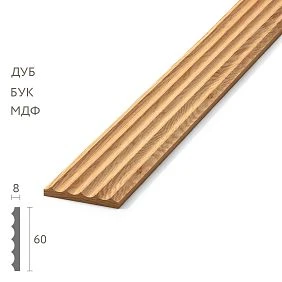
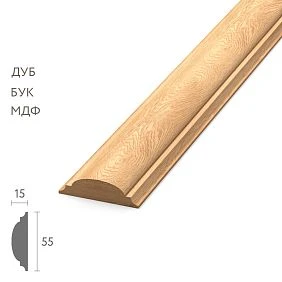
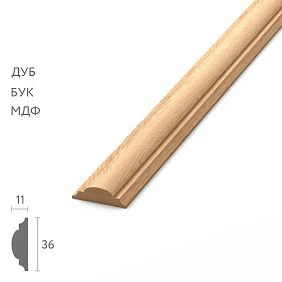
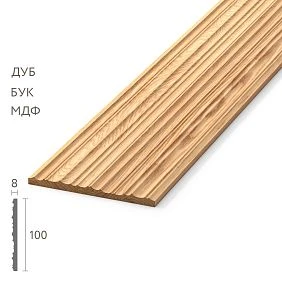
Our factory also produces:
Who needs a chair frame without upholstery: seven real scenarios
Demand for buying a chair frame is formed by different categories of buyers. And each has its own logic.
Get Consultation
Furniture workshops and upholsterers
For a professional upholsterer, a wooden frame is a working material. The master takes an order from a client, selects the right base, upholsters it with the chosen fabric, and delivers a chair that fits perfectly into the client's interior. Without a good frame, good work cannot be achieved.
Interior designers
When designing a turnkey interior, a designer often faces the task: the furniture must be custom, unlike what everyone else has. Buy a solid wood chair frame with carved legs, choose fabric to match the space's color scheme, coordinate the wood tint with other wooden elements in the room — and get a chair that is not in any ready-made furniture catalog.
Restorers
An old chair often has worn upholstery and frayed foam, but a durable wooden frame that can be restored: sanded, re-varnished, joints reinforced — and reupholstered. However, in some cases, the frame requires partial or complete replacement. And here, a wooden frame for upholstery is needed, close in proportions to the original product.
Upholstered furniture manufacturers
Small upholstered furniture manufacturers often purchase Furniture Frames from Solid Wood from a specialized supplier, while handling upholstery, filler selection, and final assembly themselves. This allows them to focus on their core competency without investing in woodworking production.
Private clients with specific interiors
An apartment owner with a classic interior wants a chair for a specific fabric, a specific niche size, and a specific ceiling height. No ready-made model from catalogs fits exactly. Buying a wooden chair frame and ordering upholstery from a craftsman is the way to get what is not available in stores.
Restaurants, hotels, private clubs
For HoReCa, chairs are not a comfort item but a working tool with high usage intensity. A wooden chair frame for a restaurant or hotel must be designed for frequent use, easily reupholstered when the covering wears out, and maintain its geometry after hundreds of load cycles.
At the same time, the chairs in the hall must form a unified ensemble—a single style, a single wood, a single tint. This is only possible with a batch purchase of one frame model followed by upholstery.
Educational workshops and training projects
Furniture and design schools, upholstery studios, training centers for upholsterers—all use wooden chair frames as educational material for practicing tensioning techniques, corner folding, working with foam, and decorative nails.
Why a solid wood frame is not a "random blank"
There is a temptation to solve the problem more simply: take a cheap plywood structure knocked together in the nearest carpentry shop without drawings. Why doesn't this work?
Geometry. An industrial or high-quality production frame is made according to a drawing with tolerances. The angles are right, the sides are symmetrical, the seat is horizontal. A homemade structure has distortions that the upholstery material only emphasizes, not hides.
Joint strength. Tenon joints with glue, reinforced with corner blocks or metal brackets, provide structural reliability. Nail joints in a cheap blank will loosen after a year or two.
Shape stability. Properly dried solid wood does not deform after upholstery. Raw or under-dried wood causes warping, cracks, and joint separation.
Readiness for upholstery. A good frame already provides points for strap tensioning, zones for seat fasteners, and armrest shapes convenient for the upholsterer's work.
Possibility of decorative finishing of visible parts. Legs, armrests, backrest elements — everything that remains visible after upholstery must accept a final coating. Solid wood is sanded, tinted, varnished, or painted, depending on the task.
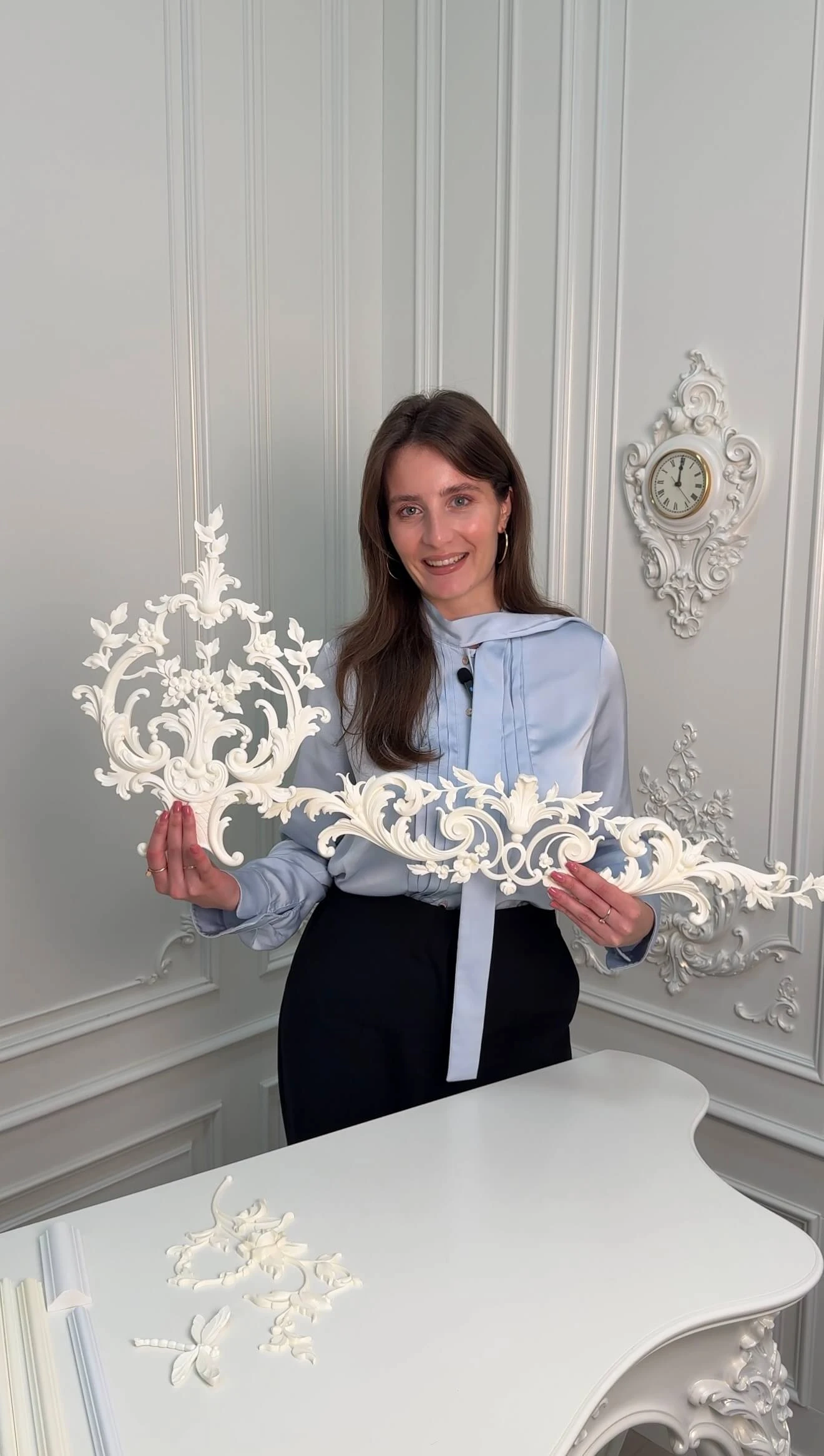
Carved furniture frames and table bases from the STAVROS catalog are products where both the structure and the decorative program are developed: visible wooden parts with relief decor, clear joints, solid wood of proven species.
Oak, beech, or MDF: an honest comparative analysis
Choosing the material for the chair frame is one of the key parameters that determines durability, decorative possibilities, and the price of the product.
| Material | When to choose | Advantages | Limitations |
|---|---|---|---|
| Oak | Premium chair, natural finish | Strength, expressive texture, status, durability | Higher price |
| Beech | Chair for enamel, fabric, velour | Dense, even, excellent workability, good paintability | Less pronounced texture with transparent finish |
| Spruce | Frames without high loads, cottage | Lightness, affordable price | Soft wood prone to dents and chips |
| MDF | Individual flat decorative elements | Stable geometry | Does not replace an array in a load-bearing structure |
| Plywood | Curved seat and backrest elements | Flexibility, stability | Not a target material for a premium chair |
Oak: strength and character
Oak (density 750–950 kg/m³) is a traditional furniture material for items made to last. Its dense structure withstands both load weight and long-term use without losing geometry.
Visible wooden parts of the chair made of oak — legs, armrests, decorative backrest elements — under clear varnish or oil showcase an expressive texture with wide annual rings. This material reads as expensive even without a magnifying glass.
For an oak chair frame, proper drying is important: kiln drying to 8–10% moisture content is the norm. Over-dried or under-dried oak causes cracks in joint areas.
Beech: stability and painting
Beech (620–750 kg/m³) is a fine-grained, dense, homogeneous species. For white, cream, or colored enamel — ideal: the surface is smooth, without large pores, the enamel lays evenly.
A beech chair frame is a choice for interiors where wood is not emphasized as a texture but serves as a load-bearing base under upholstery. A Provencal white chair with linen fabric, a classic chair with patinated "bone" enamel — all of this is beech.
In terms of strength, beech is only slightly inferior to oak. For residential interiors — sufficient. For restaurant loads — oak is better.
Pine: for cottages and temporary solutions
Pine (450–550 kg/m³) is light, easy to work with, and the most affordable. For a chair frame with low usage intensity — cottage, children's room, decorative objects — it is suitable. For formal chairs, restaurant and office loads — no.
An important feature: pine exudes resin. Before painting, deresinification is mandatory, otherwise resin pockets will show through the coating.
How to choose a chair frame for upholstery: a detailed checklist
A step-by-step guide for those who approach the task seriously.
1. Determine the width of the seating area
The standard seat width of a classic chair is 540–600 mm. A wide relaxation chair is 650–700 mm. A dining group chair is 450–500 mm.
After upholstery (foam + fabric), the width of the seating area will decrease by 20–40 mm on each side. This is important to consider when calculating.
2. Check the backrest height
Low backrest (300–400 mm from the seat) — a lounge-style chair for relaxation. Medium (450–550 mm) — a universal option. High (600 mm and above) — a classic "fireside" chair with full back support.
A high backrest visually enlarges the chair and requires more fabric volume during upholstery.
3. Account for the seat height after filling
The seat height of the chair frame is usually 390–430 mm. After installing 60–80 mm foam and fabric, the final seat height will be 450–510 mm. This is the standard ergonomic height for a chair.
If the client is shorter or taller than average, adjust the frame leg height at the ordering stage.
4. Choose the armrest shape
Straight, horizontal armrests — for strict classic and neoclassical styles. Curved armrests with rounded front ends — for soft classic and Provencal styles. Recessed (lowered, without a rigid horizontal line) armrests — for chairs with side upholstery.
The shape of the armrests affects not only ergonomics but also the complexity of upholstery: curved armrests require higher skill from the craftsman when stretching the fabric.
5. Assess the chair's depth
The seat depth of the frame (from the front edge to the backrest) is typically 500–550 mm. After padding, the effective seating depth is 460–510 mm. For a chair at a desk or in a dining group, 440–480 mm is sufficient.
6. Check the thickness of the legs and apron
Legs are the visible load-bearing part of the frame. Their thickness affects both strength and the visual appearance of the chair. Massive legs 50×50 mm — for "heavy" classic styles. Slim turned legs 35–40 mm in diameter — for elegant classic forms. Carved legs with decorative furniture legs and supports — for Baroque and Empire styles.
The apron is a horizontal beam connecting the legs. Its height and thickness determine the rigidity of the seat base. An overly thin apron is a source of squeaking and loosening of joints.
7. Decide on the finish of visible wooden parts
The finish of the legs, armrests, and backrest elements is what remains visible after upholstery. It should be coordinated with other wooden elements of the interior: wooden floors, wooden trimwith doors, frames.
Finish options:
-
clear lacquer — for oak chairs with expressive texture
-
oil or wax — for a warm natural texture
-
tinting + lacquer — to match a specific interior color
-
enamel (white, cream, gold, dark color) — for Provence, classic, baroque
8. Ensure compatibility with the planned fabric
Different fabrics require different base constructions:
-
velvet and velour — require a perfectly smooth base, without surface defects
-
leather and eco-leather — are sensitive to the base relief
-
Linen and cotton forgive small irregularities
-
Dense upholstery fabrics are versatile
If the fabric requires high-tension stretching (e.g., smooth leather), the frame must be perfectly flat in the seat plane.
Chair frame for a classic interior: what you need to know
A classic interior is a system. There are no random objects in it. Every element fits into the overall style code: Wooden Picture Frame coordinated with cornices and baseboards, door moldings with wall moldings, furniture with wooden details of doors and windows.
A chair in a classic interior is not an autonomous object, but part of this system. And its wooden frame must be made in the same logic.
Carved legs as a decorative program
Carved chair legs are the most expressive element that makes it 'classic'. A cabriole leg with an acanthus leaf on the knee, a straight fluted leg, a turned tapered leg with a rosette at the base — each shape belongs to a specific style.
Decorative wooden inlays from the STAVROS catalog allow you to complement the visible wooden parts of the frame: corner rosettes on the apron, applied ornament on the front stretcher, decor on the outer surface of the armrests.
High backrest and its significance
A high-back chair — "fireplace", "library", "master's" — an image from English clubs and continental parlour rooms. The high backrest visually "stretches" the chair, making it more prestigious. And at the same time, it requires the right chair: it will stand against the wall, not obstruct passage, and be positioned like a "throne" chair in the side part of the room.
The frame of a high-back chair combined with velvet or silk upholstery and carved wooden legs creates the image of a chair from expensive private clubs, studies, and libraries.
Chair as part of a furniture set
In classic interiors, a chair often pairs with a sofa or another chair. Buying two identical chair frames from the same batch is the right strategy: uniform material, uniform toning, uniform proportions.
Furniture Frames from Solid Wood in the STAVROS catalog allow forming sets: chair + chair or a chair paired with other furniture items in a coordinated style.
Chair for study, living room, hall
Study — a strict chair with a straight back, dark wood, leather or velour upholstery in a dark tone. Living room — a softer shape, curved armrest lines, delicate fabric. Hall — a ceremonial chair with a high backrest, paired placement near a mirror or console.
In each of these scenarios, the key is the correctly chosen chair frame. Its proportions determine whether the finished chair will be a "perfect fit" or an "approximate solution".
What to buy with a chair frame: a systematic view
Buying a wooden chair frame is the first step. For the final result, you need the right set of accompanying elements.
Furniture legs for a frame with unfinished supports
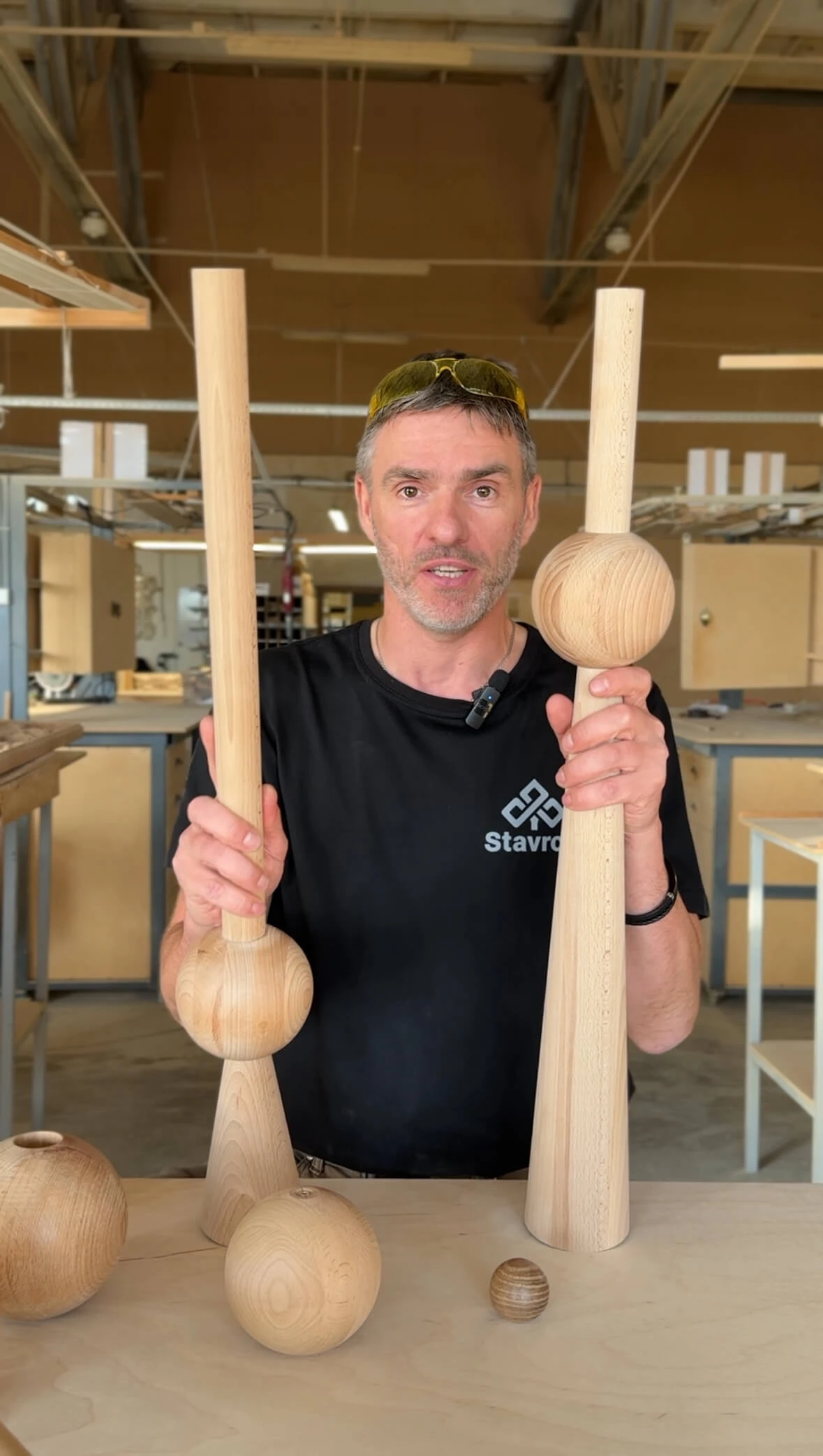
In some frames, legs are supplied as blanks with a clean fit, and the buyer chooses decorative Furniture Legs and Supports ones to match their style: carved, turned, tapered, fluted.
Wooden rosettes for corner accents
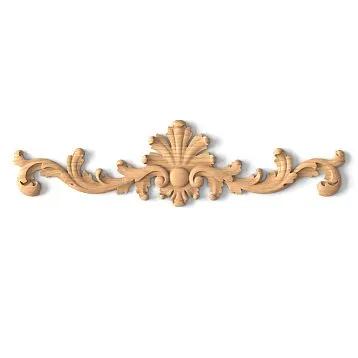
Wooden sockets — decorative round or square overlays on the corner points of the apron, on the joints of armrests with the backrest, on the front stretchers. They enrich the visible parts of the frame with ornamentation and create visual completeness in classic models.
Carved overlays for decorating wooden surfaces
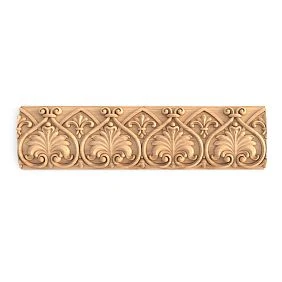
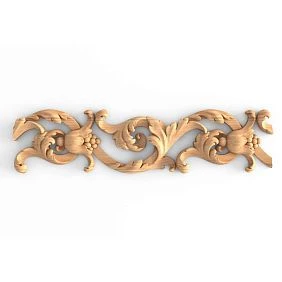
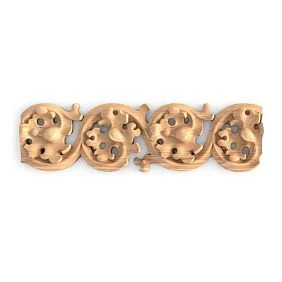
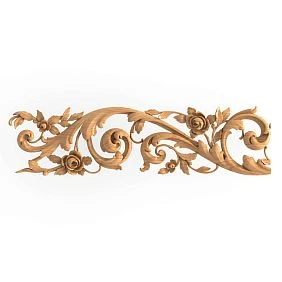
Wooden carved appliqués are mounted on visible flat surfaces of the frame: the front edge of the apron, the outer surface of the armrest. An overlay with a floral ornament or meander turns a simple frame into a decorated one — without a complete redesign of the structure.
Moldings for coordination with the interior
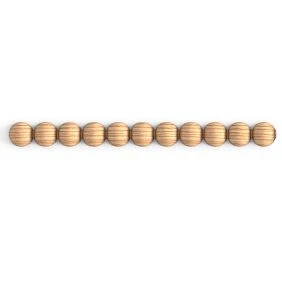
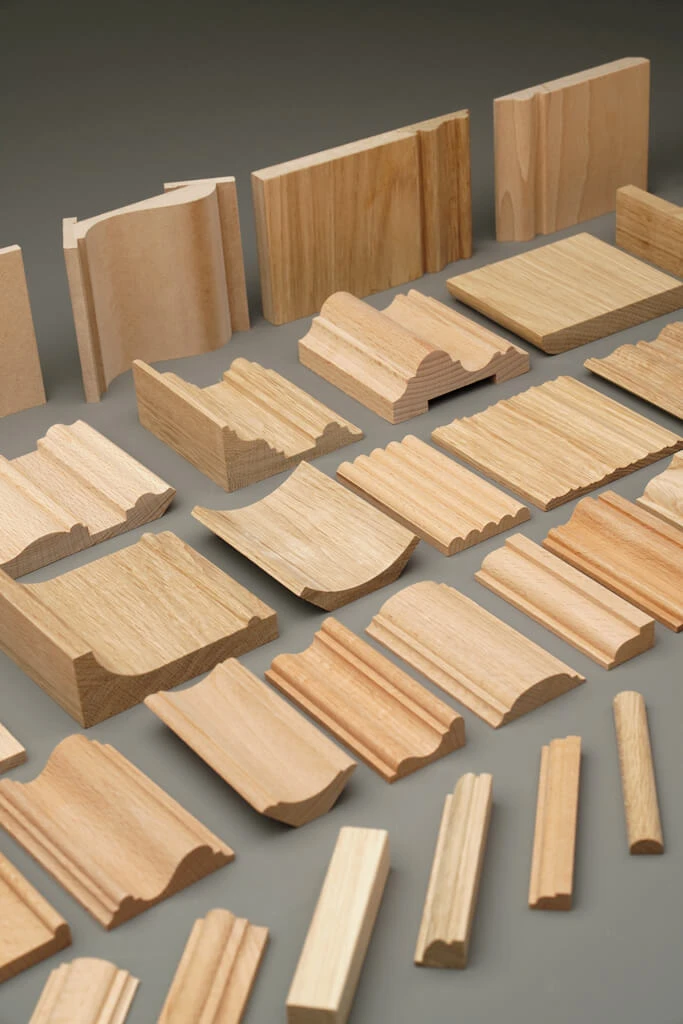
Wooden trim — baseboards, cornices, trims — in a coordinated tint with the chair frame creates a unified wooden program for the room. Dark tinting of the chair legs + dark wooden baseboard + dark wooden door casings — this is an ensemble that reads as a professional designer's work.
Upholstery materials
If you are not handing the chair over to an upholsterer, but are doing the upholstery yourself:
-
straps for the base deck (jute or rubber)
-
foam rubber with a density of 35–45 kg/m³ for the seat
-
foam rubber with a density of 25–30 kg/m³ for the backrest
-
padding polyester for "soft" volume
-
fabric with a 20–25% allowance from the calculated yardage
-
furniture stapler and staples 10–12 mm
Adjacent frames for the set
If the project includes several pieces of furniture — study the adjacent items: Solid wood table frames or wooden basesSingle supplier — single material, single drying, single tinting.
Preparing a wooden frame for upholstery: step-by-step instructions
Getting a frame is not the finish line. Between purchase and handover to the upholsterer, there are important steps that affect the quality of the final product.
Step 1. Check the geometry
Place the frame on a flat horizontal surface. All four legs should touch the surface without wobbling. If there is a misalignment, it must be corrected by adjusting the joints before any other treatment.
Step 2. Sand all visible surfaces
Sanding: sequence 80 → 120 → 180 → 220 (for tinting) or 80 → 120 → 180 (for enamel). Sand along the grain. After final sanding, go over the surface with a slightly damp cloth: this will raise the grain. Let it dry — and sand again with 220-grit sandpaper.
Step 3. Apply the finish coating to visible parts
Before upholstery — painting, tinting, or varnishing visible wooden parts. Areas that will be hidden under the upholstery — treat with an antiseptic.
Step 4. Cover areas that should not be stained with glue
The master upholsterer works with glue. Legs, armrests, visible parts of the backrest must be protected with masking tape in areas close to the upholstery seams.
Step 5. Coordinate the thickness of soft materials with the upholsterer
The final seat height, the "plumpness" of the backrest, the shape of the armrests after upholstery — all of this depends on the thickness of the foam rubber and the angle of fabric tension. Discuss these parameters with the master before starting work: doing so afterward is impossible without disassembly.
Step 6. Try on the fabric before final tensioning
Ask the upholsterer to do a "fitting" of the fabric without final fastening — to check the pattern, the direction of the pile (for velvet and velour), and the matching of the pattern at the seams. Velvet with the wrong pile direction gives a different shade on different panels.
Step 7. Final inspection after upholstery
Stability on a level surface. No squeaking under load. Symmetry of the armrests. Evenness of fabric tension. Correct placement of decorative nails (if provided). These parameters are checked before delivery to the customer.
Mistakes when buying a chair frame: breakdown of each
1. They buy without understanding the final seat height. The seat height of the frame is 390 mm, after padding — 470 mm. If the owner is short, their feet will not reach the floor. The height of the legs needs to be adjusted before purchase, not after.
2. They do not account for the thickness of the foam rubber. Foam rubber 80 mm with a density of 40 kg/m³ + fabric will add 85–90 mm to the seat height. A frame with a seat height of 420 mm will become a chair with a height of 505 mm — above the ergonomic norm.
3. They choose a weak structure for high load. A lightweight pine frame for a restaurant will loosen within a season. For commercial use, oak with reinforced joints is needed.
4. They mix frame and upholstery styles. A baroque frame with curved legs and ornamental overlays + loft-style upholstery with coarse linen creates a visual conflict. The frame and fabric should belong to the same style program.
5. They don't check the material. "Solid wood" is a phrase used for both oak and spruce. Specify the wood species clearly. For a chair's load-bearing frame, at least beech, ideally oak.
6. They buy without knowing who will do the upholstery. Upholstery work is a separate specialization. A good upholsterer will ask questions about the frame that help choose the right model. Buying a chair frame without an agreement with the upholsterer risks incompatibility of the structure with their technique.
7. They compare a wooden frame with a metal one. These are different product categories with different application scenarios. A solid wood chair frame is for classic interiors, designer furniture, and natural finishes. Metal is for office, hanging, and industrial solutions. Comparing by price without considering this difference is a logical error.
8. They don't consider the finish of visible parts when choosing the wood species. Oak under white enamel is technically possible but requires careful priming of large pores. Beech under the same enamel is smooth and easy. The wood species must match the planned finish.
9. They don't buy as a set for a suite. Two chairs from different batches, even with the same tint, may have slight tone differences. For suite solutions, only one batch.
10. They don't think about future reupholstery. A good wooden chair frame, if properly assembled, can last 20–30 years. During this time, the upholstery will need to be changed once or twice. Ensure the structure can be disassembled for reupholstery without damaging the frame.
Where to buy a wooden chair frame: what to look for from a supplier
Buying a chair frame from the right supplier means protecting yourself from most of the mistakes listed above.
What a supplier should have:
-
specification of a specific wood species (oak, beech, not "solid wood")
-
frame dimensions: seat width, depth, backrest height, seat height, overall height
-
photos of the actual product — not renders
-
ability to order a non-standard size
-
availability of related items: legs, overlays, rosettes — for complete assembly
In the STAVROS catalog:
-
Furniture Frames from Solid Wood — wooden bases for upholstered furniture
-
Carved furniture frames and table bases — structures with a decorative program
-
Furniture Legs and Supports — for matching to a specific frame
-
Wooden carved appliqués — for decorating visible parts
-
Wooden sockets — for corner accents
Learn more about how the furniture frame system works and what solutions are possible for custom furniture — in the article oak timber and furniture frames.
FAQ: answers to popular questions about wooden chair frames
Where to buy a wooden chair frame?
Better — from a furniture frame manufacturer specifying the wood species, exact dimensions, and the ability to select matching elements (legs, overlays, rosettes). The STAVROS catalog features Furniture Frames from Solid Wood with Contact us to confirm shipping to your destination.
How does a chair frame differ from a finished chair?
A frame is a load-bearing wooden base without upholstery or padding. A finished chair has foam rubber, padding, and decorative fabric or leather. By purchasing a frame, you choose the upholstery material, color, and padding density yourself.
Can I buy a chair frame and upholster it separately?
Yes. That's exactly why frames are sold without upholstery: you hand them over to an upholsterer with your chosen fabric — and get a chair tailored to your specifications.
Which is better: oak or beech for a chair frame?
Oak — for natural finishes (varnish, oil, tinting), for premium and commercial products. Beech — for chairs to be painted with enamel, for Provence and classic white interiors. Both materials are high-quality load-bearing species for furniture.
Is a wooden frame suitable for an upholstered chair?
Yes, a wooden frame is the basis of an upholstered chair. Straps, foam rubber, padding polyester, and fabric are mounted on it.
Can a chair frame be used for a restaurant or hotel?
Yes, if the structure is made of hardwood (oak), the joints are reinforced, and the coating is designed for frequent use. For HoReCa, repairability is especially important: the upholstery is changed, the frame lasts for years.
What is the standard size of a chair frame?
Seat width: 540–600 mm. Depth: 500–550 mm. Seat height (without filler): 390–430 mm. Backrest height: 400–650 mm. Total chair height: 820–1000 mm. These parameters vary depending on the model and style.