Article Contents:
- What are wooden window patterns
- How window decor differs from door architrave
- Environment and operating conditions
- Proportions and scale
- Type and viewing angle
- What elements are used for window decoration
- Upper carved architrave — "towel"
- Side panels
- Bottom plank
- Connecting elements and rosettes
- Decorative overlays and openwork inserts
- Brackets
- Flat balusters
- How to choose a pattern to match the style of the house
- Wooden house made of timber or logs
- Dacha and small country house
- Country cottage with facade finishing
- House in classic Russian style
- Material and Coating
- Glued pine without knots
- Preparation for Finishing
- Finish Coatings
- Regular Maintenance
- How to choose the size of carved elements
- Width of the trim and window size
- Height of the top element
- Scale of the house and number of floors
- Distance between windows
- Rhythm and repetition
- Patterns for windows in a wooden house
- Preserve the facade's character
- Unified decor system
- Color of trim and house color
- Window patterns for a summer house and country home
- Quick facade update
- Minimum set for a country window
- For a summer house with multiple windows
- Mistakes when choosing wooden window patterns
- Where to buy wooden window patterns
- About the company
- FAQ - answers to popular questions
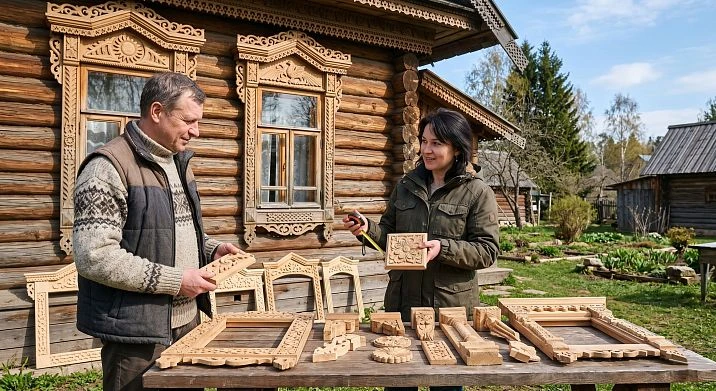
There is such a phenomenon — stopping in front of a house. Not because it is big or new, not because it is made of expensive stone. People stop in front of a house whose windows are decorated with carvings. A white lace pattern on a wooden trim, an openwork ornament above the window, connecting rosettes at the corners — and the house comes alive. It ceases to be a building and becomes a statement.
The tradition of decorating windows with wooden patterns in Russia dates back several centuries. But this is not just history — it is a living practice that is experiencing a true renaissance today. Wooden houses made of timber, country cottages, dachas, houses in settlements — more and more owners want to give their home a face. A face that has character, tradition, and handmade warmth. And the first step towards this is wooden patterns for windows: carved architraves, decorative strips, connecting elements, and house carving for the facade.
This article is a complete practical guide to selection. No lyricism for the sake of lyricism — with specifics, dimensions, examples, and an understanding of exactly what you need for your home.
What are wooden patterns for windows
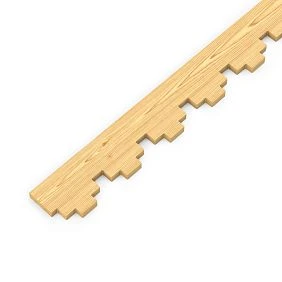
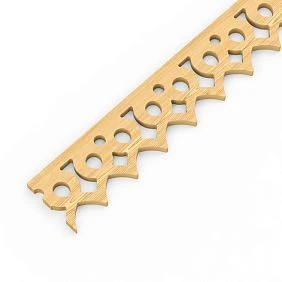
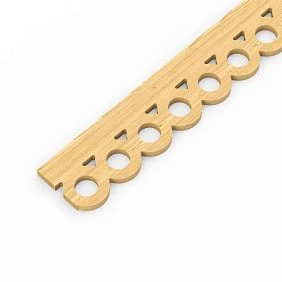
Wooden patterns on windows is a general name for a complex of facade decorative elements that frame the window opening from the outside. The basis of this system is a carved architrave — vertical side strips and a horizontal top strip that frame the window around the perimeter. The architrave is supplemented with connecting elements, corner details, decorative rosettes, and overlays, which together create a complete window composition.
All of these are house carving from wood as a separate type of decorative art and construction craft. Its task is to make the facade expressive, lively, and recognizable.
It is important to understand: wooden patterns for windows are not an applied ornament for the sake of ornament. This is architectural decor that performs several tasks simultaneously. First, aesthetic: it creates the image of the house, sets its style and character. Second, protective: a properly installed architrave closes the gap between the window frame and the wall, protecting it from moisture and wind. Third, scaling: the ornamental design of the window changes the visual perception of its size and proportions.
wooden patterns — this is a living plastic language that Russian craftsmen have honed for centuries. Today, thanks to numerically controlled machines and modern materials, this language has become accessible to everyone who wants to give their home a voice.




How window decor differs from door casing
This difference is fundamental and must be clearly understood before purchasing.
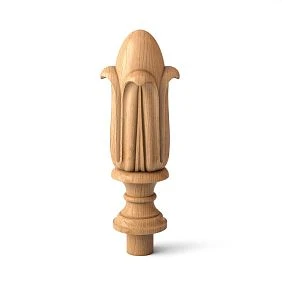
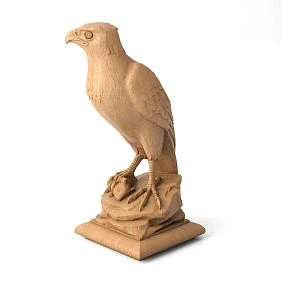
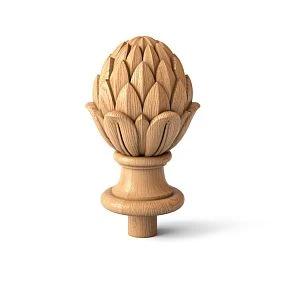
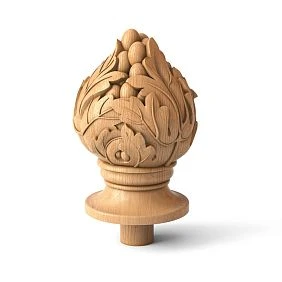
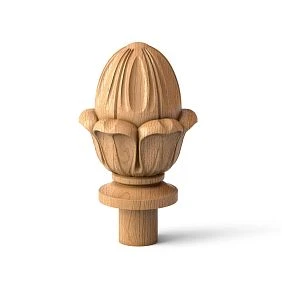
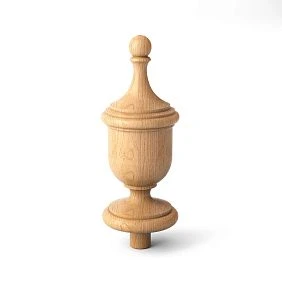
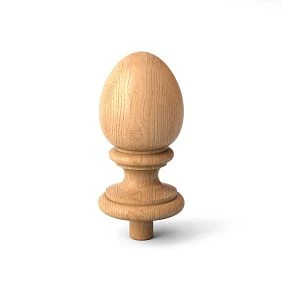
Our factory also produces:
Environment and operating conditions
Door casing is typically mounted on the interior side of the doorway — indoors. It is protected from direct atmospheric exposure, does not come into contact with precipitation, and does not experience the full range of outdoor temperature fluctuations.
Window decor works on the facade — outdoors. Sun, rain, snow, frost, wind — all of these affect the carved elements year-round. Therefore, the material and coating for window patterns must be fundamentally different: frost-resistant wood, high-quality impregnation, protective paint, or weather-resistant varnish.
STAVROS manufactures carved window casings from glued pine panels without knots or resin pockets. This construction is fundamentally important: regular pine releases resin under sunlight, which destroys the coating. Glued panels are free of this — they are geometrically stable and do not crack.
Get Consultation
Proportions and Scale
Door casing is proportionate to the door leaf — its width is designed for a vertical rectangle 200–210 cm high. Window casing works in different proportions: a window is typically more horizontal than a door, and the top plank — the "towel" — is the central decorative element visible from the street.
The top carved element on a window is often wider and more ornamentally rich than the side planks. It carries the main decorative accent. In door casing, such a "towel" is typically absent — vertical lines dominate there.
View and perspective of perception
Door casing is perceived from a close distance — 1–2 meters. Window decor is viewed from the street, i.e., from a distance of 5–15 meters. This means the facade requires an ornament with a large, clear pattern that is readable from afar: openwork geometry, large floral motifs, distinct cutouts.
What elements are used for window decoration
The system of decorating a window with wooden carvings consists of several components. Understanding each of them will allow you to assemble a competent and complete composition.
Upper carved casing — "towel"
The central and most expressive element of window decor. A horizontal plank that is mounted above the window and carries the main ornament. It is the "towel" that is the face of the window — from the street it catches the eye first.
In the STAVROS house carving Upper casings are represented by models NL-1, NL-3, NL-4, NL-5, NL-6, NL-7, NL-8, NL-13, NL-14, NL-16 — with different levels of ornamental saturation: from strict and laconic NL-5 to rich openwork NL-8 with deep cutouts.
All casings have a standard length of 2000 mm and a thickness of 18 mm. For a window of the required width, the plank is cut to the desired size.
Side planks
Vertical elements that decorate the left and right sides of the window opening. Side planks create the window frame, supporting the ornament of the upper casing. They can have the same ornament as the upper one, or a calmer, complementary pattern.
Bottom strip
A horizontal plank under the window is not a common element, but in a complete window system it completes the framing from below. In a number of traditional styles, the lower framing was more modest than the upper one and was made in the form of a simple profile.
Connecting elements and sockets
These are corner and joint parts that connect the side and upper planks into a single system. In the STAVROS catalog — the SNL series: connecting elements SNL-1, SNL-2, SNL-3, SNL-8, SNL-9, SNL-10, SNL-11, SNL-12, SNL-13, SNL-14, SNL-15, SNL-19.
Sockets and connecting overlays perform two tasks: they cover the joints between the casing strips and add a decorative accent to the corner points. This is a fundamental detail — it is the connecting elements that turn a set of strips into a complete architectural system.
Decorative overlays and openwork inserts
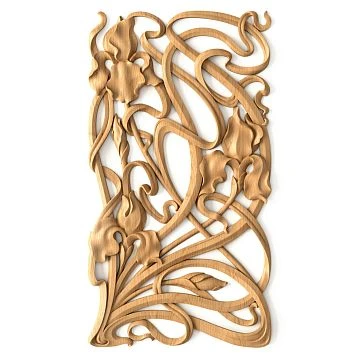
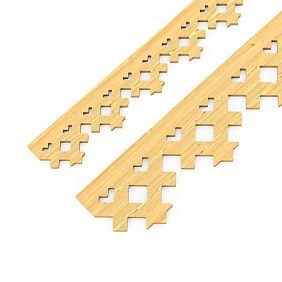
Wooden Inlays are used to enrich the window composition with additional decorative accents: ornamental inserts in the center of the upper casing, openwork corner details, decorative frames. They are mounted on top of the main casing, creating a multi-layered, three-dimensional composition.
This is exactly how the layering principle works — the most important technique of house carving: narrow casings are attached on top of wide ones, creating depth and volume that are visible from afar.
Brackets
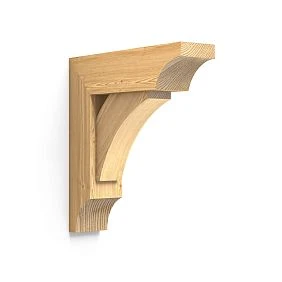
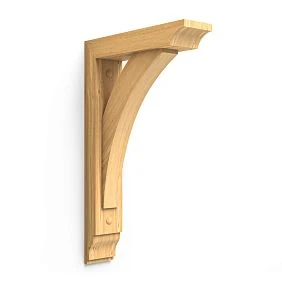
Wooden brackets KR-070 and KR-071 from the STAVROS catalog are decorative support elements installed on the sides of a window or under a canopy. They add volume, create an architectural accent, and give the facade a sense of grandeur. They are especially organic in country houses with pronounced architectural details: canopies, roof overhangs, verandas.
Flat balusters
Carved balusters BNL-2 are an element for decorative fencing and facade rhythm. They are used under windows as a decorative frieze, on balconies, verandas, and porch railings. Together with window casings, they create a unified facade system of house carving.
How to choose a pattern to match the style of the house
Not every pattern suits every house. The ornament is a character, and it must correspond to the architectural statement of the entire facade.
A wooden house made of timber or logs
A wooden house is the most organic environment for house carving. Here, the patterns on the window casings continue the wooden nature of the building itself. Choose casings with floral ornaments or geometric openwork cutouts — NL-3, NL-7, NL-8. They rhyme with the texture of the wood and create the feeling of a cohesive wooden house where every detail speaks the same language.
For such a house, a rich ornament is appropriate: openwork carving, deep cutouts, multi-layered compositions of several casings. wooden house ornament In the Russian tradition, this is wealth that knows no excess.
A dacha and a small country house
For a dacha, more laconic window casings are suitable: NL-1, NL-4, NL-5, NL-14. Their ornament is expressive enough to give the house character, but not overloaded: a small house does not need monumental carving — it needs decoration proportionate to its scale.
For a dacha, the principle works well: all windows in identical casings, connecting elements of the same series — and the facade immediately gains rhythm and unity, which is enough for an expressive image.
A country cottage with facade finishing
If the house is sided, faced with brick or plaster — wooden carving on the windows creates a decorative contrast. White carved casings on a gray or beige facade background look especially bright: they highlight the windows, create decorative accents, and give the house individuality without a radical facade overhaul.
For a cottage with modern architecture, choose casings with geometric ornament without excessive vegetation: strict openwork, clear cutouts, even rhythm. This will be a modern interpretation of house carving — without antiquity, but with cultural memory.
A house in classic Russian style
For a house that was built or reconstructed with a deliberate orientation towards Russian wooden architecture — rich carved casings, brackets, flat balusters, decorative cornices. A complete system of house carving, where each element supports the overall style. It is for such projects that STAVROS offers over 40 ideas for facade decoration using casings and related carved details.
Material and Finish
The quality of wooden patterns on windows is determined by two factors: material and coating. A mistake in either leads to the carving starting to crack, exude resin, lose shape and color after two seasons.
Glued pine without knots
STAVROS manufactures facade trims and house carving elements from glued pine furniture board, in which all knots and resin pockets are pre-cut. This is a fundamentally important technology: ordinary pine board on the south side of the facade, under the influence of ultraviolet light, will release resin, which seeps out under the paint, forming drips and bubbles, destroying the coating from within.
A glued board without resin pockets lacks this drawback. It does not deform with humidity changes, does not develop longitudinal cracks, and stably holds its shape. The product thickness of 18 mm is sufficient for exterior use.
Preparation for Finishing
All STAVROS trims are carefully sanded and supplied without a finish coating. This is the right approach: the finish coating should be applied by the owner or a craftsman on site — taking into account the climate zone, facade color, and desired effect.
Before applying the coating, treatment with an antiseptic primer is recommended — especially on the ends and at joints. The ends are the most vulnerable part of any wooden product outdoors: this is where moisture penetrates the wood in the absence of a quality coating.
Finish coatings
-
Weather-resistant enamel is a traditional coating for house carving. White enamel on the facade is a classic. Red, blue, green — bold regional traditions. Applied in two coats over primer.
-
Paint for exterior wood is a modern option with high resistance to UV and precipitation. Matte or semi-matte — the choice depends on the desired effect.
-
Weather-resistant varnish — for those who want to preserve the natural color of the wood. Modern exterior varnishes provide 5–8 years of protection, provided regular (every 2–3 years) renewal.
-
Tinting + weather-resistant varnish — allows you to achieve a dark or colored tone while preserving the texture.
Regular Maintenance
Wooden patterns on the facade require minimal but regular maintenance: every 3–5 years — inspection of the coating condition, touch-up of paint on problem areas (especially on horizontal surfaces where water accumulates). With proper care, carved trims made of glued pine last 20 years or more.
How to choose the size of carved elements
The right size is the right proportion. The pattern should be proportionate to the window, and the window decor should be proportionate to the facade as a whole.
Width of the casing and window size
Standard STAVROS casings have a fixed width built into the profile design. For most windows in standard Russian houses — 600–1000 mm wide and 900–1400 mm high — side casings with a width of 100–150 mm work optimally.
The upper "towel" is selected according to the window width: a 2000 mm long casing is cut to the window width plus the overlap of the side planks (usually 15–20 cm on each side). Connecting elements at the corners cover the joints.
Height of the upper element
The height of the "towel" — the distance from the lower to the upper edge of the top plank — should be proportionate to the window height. For a window 1200–1400 mm high, the optimal height of the upper casing is 15–25 cm. This creates the window's "cap" visible from the street.
House scale and number of floors
A one-story house with small windows — delicate casings without excessive richness. A two-story house with tall windows — you can afford wider and richer profiles, as they are perceived from a greater distance.
Distance between windows
If windows are located close to each other, wide side casings can visually "merge" them. In this case, the side planks are made narrower or are omitted altogether, focusing on the upper "towels".
Rhythm and repetition
Identical window casings on all windows of one facade is the main principle. The rhythm of a repeating pattern creates a sense of harmony and architectural thoughtfulness. Different casings on adjacent windows are chaos, not variety.
Window patterns for a wooden house
A wooden house and wood carving is a union that has existed in Russia for over three hundred years. It was in wooden architecture that all traditional ornaments were born: solar signs, plant shoots, geometric openwork carving.
Preserve the character of the facade
The key principle of decorating a wooden house with carvings is not to overload. Wood itself is a textured and living material. Carved patterns on windows should emphasize this liveliness, not compete with it.
For a wooden house made of timber or logs, casings with moderate ornament saturation are optimal: an openwork geometric or plant pattern with enough 'air' — space between pattern elements. A heavy, dense ornament on a wooden wall will create a feeling of overload.
Unified decor system
Window casings should match the decor of the porch, canopy, veranda, and fencing. That is why STAVROS offers a complete system of house carving: casings + connecting elements + brackets + flat balusters. All from one series, with a unified visual language.
Color of casings and color of the house
White casings on a natural-toned wooden wall is a classic that works flawlessly. It emphasizes contrast, makes windows clear and expressive. The white color of carving is a tradition of hundreds of Russian wooden houses from the Volga region to Siberia.
Tinted carving in the color of the wall is a more delicate solution: the trim does not catch the eye but creates volume and texture. This is a modern interpretation of tradition.
Patterns for windows for a dacha and country house
A dacha is a special architectural phenomenon. A small house that you want to make cozy, warm, and unique. Without large expenses and without radical reconstruction. And wooden window patterns are exactly the solution that changes the appearance of a dacha house quickly, affordably, and convincingly.
Quick facade update
Imagine: a dacha made of boards or clapboard, painted yellow or green. A typical Soviet facade. But add white carved trims NL-4 or NL-5 with connecting rosettes at the corners — and the same house turns into a cozy village house with character. No renovation, no plaster facade.
That is why wooden window decor is in particular demand among dacha owners: it is a quick, affordable, and very expressive way to give the house an image.
Minimum set for a dacha window
For a typical dacha window 800–1000 mm wide, the following is sufficient:
-
1 upper trim (length 2000 mm, cut to size on site)
-
2 side trims (length 2000 mm each, cut to height)
-
4 connecting elements for corner joints
All together — this is a complete set for one window. Optionally, it can be supplemented with decorative overlays or brackets. The cost of one set for a country window is affordable even with a limited budget for facade renovation.
For a country house with multiple windows
Calculate the requirement for each window separately: different windows may be of different sizes. Order trims with a 10–15% margin — for trimming and possible errors in corner joints. All planks are standard length 2000 mm, so meterage calculation is simple.
Mistakes when choosing wooden patterns for windows
Mistakes in choosing window decor are wasted money and time. Let's break down each one specifically and honestly.
Choosing too small an ornament for a large facade. A trim with a fine openwork pattern designed for perception from a meter away will turn into a gray strip without a pattern from the street. For the facade, a large, readable ornament with clear cutouts is needed.
Choosing a pattern without connection to the house style. A rich baroque ornament on a modern cottage with panoramic windows is a conflict, not a decoration. The ornament should speak the same style language as the house.
Not considering weather protection. Installing trims without pre-treatment with an antiseptic and without a quality finish coating means condemning them to rot within 2–3 seasons. Coating is a mandatory step, not an option.
Making different patterns on adjacent windows. A mix of ornaments on one facade is chaos that destroys architectural integrity. Choose one trim and install it consistently on all windows of the same facade.
Forgetting about the color of the roof and facade. White trims on a white facade are not a mistake, but they get lost. Red trims on a red house are the same story. You need either contrast or an exact match in color nuance. Evaluate the color combination with the facade in advance.
Buying elements without measuring the window. A trim of standard length 2000 mm is cut to size on site. But connecting elements have fixed dimensions — they must match the width of the trim. Without precise measurements of the window and trim, parts may not align.
Not allowing for cutting waste. For each window, take 15% more length than calculated. Cutting at an angle, correcting mistakes, and a reserve for unforeseen issues — all of this consumes the "extra" centimeters.
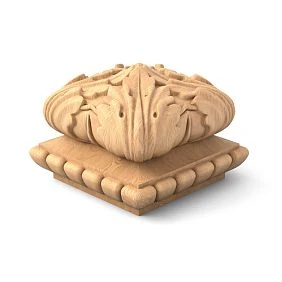
Confusing interior carved decor with exterior house carving. Carved wooden decoration For interiors — overlays, rosettes, capitals — are made from other types of wood and not designed for outdoor use. Using them on the facade means rapid deterioration. For outdoors — only special facade products.
Where to buy wooden patterns for windows
Full range of carved trims and house carving for window decoration — in the STAVROS catalog:
-
STAVROS house carving — carved trims of the NL series (NL-1, NL-3, NL-4, NL-5, NL-6, NL-7, NL-8, NL-13, NL-14, NL-16), connecting elements of the SNL series, brackets KR-070 and KR-071, flat balusters BNL.
-
Wooden Inlays — decorative inserts to enrich window compositions.
-
Carved wooden decoration — for decorating interior and facade elements.
-
Wooden products for interior and facade — a complete catalog for comprehensive home decoration.
All platbands are made from glued pine panels without knots or resin pockets. Standard length is 2000 mm, thickness is 18 mm. Some models are in stock. Contact us to confirm shipping to your destination. Custom sizes and patterns available upon request.
About the Company
STAVROS is a Russian manufacturer of wooden products for interiors and facades, founded in 2002 in Saint Petersburg. The company has confirmed top-level restoration experience: Konstantinovsky Palace in Strelna, the Hermitage, Alexander Palace, Trinity Cathedral. Production of carved platbands, house carving, moldings, cornices, baseboards, carved decor for furniture and facades. All products are made on CNC machines with manual finishing and sanding. Shipment from 1 piece, Contact us to confirm shipping to your destination. and CIS.
FAQ — answers to popular questions
Which wooden patterns are suitable for windows?
For window decoration, carved platbands (top and side), connecting elements, decorative overlays, and brackets are used. All elements are made of pine and intended for exterior facade installation.
How does a carved window platband differ from a door platband?
A window platband is installed externally on the facade and must be resistant to weather conditions. A door platband is more often mounted indoors. The ornament of a window platband is designed for viewing from a distance of 5–15 meters.
Can house carving be used on a modern house?
Yes. Geometric and concise patterns of carved platbands are organic on modern cottages with any facade finish. White platbands on siding or plaster create an expressive decorative accent.
How to choose the size of a wooden pattern for a window?
Focus on the width and height of the window. A standard trim piece 2000 mm long is cut to size on site. Connectors are selected based on the width of the trim. Add 15% extra for cutting.
What elements are needed to decorate a window?
Basic set: top trim ("towel"), 2 side trims, 4 connectors. Additional: bottom strip, decorative overlays, brackets.
Can wooden carved elements be painted?
Yes. All products are supplied without coating and are ready for painting with enamel, weather-resistant varnish, or tinting. Before the final coating, treatment with an antiseptic primer is mandatory.
How to protect wooden decor on the facade?
Priming with antiseptic, double coating with weather-resistant enamel or varnish, special attention to ends and horizontal surfaces. Renew the coating every 3–5 years.
How to avoid overloading the facade with carved patterns?
Choose one type of trim for all windows on the facade, maintain unity of ornament and color, do not mix different style directions. The ornament should be readable, not overloaded with details.
Are carved window casings suitable for a summer house?
Yes, this is one of the most popular applications. For a summer house, a laconic casing from the NL-1, NL-4, or NL-5 series with connecting elements is enough — and the house gets a cozy rustic look.
Where to buy wooden window patterns?
In the STAVROS catalog — carved window casings, connecting elements, and house carving for windows with Contact us to confirm shipping to your destination.: stavros.ru.