








































































Article Contents:
- Why choosing a material is a decision made for years ahead
- Wooden balusters: why wood remains the first choice
- Where wooden balusters work best
- Pros of wooden balusters
- Cons of wooden balusters
- Oak, beech, or pine: what to choose from
- Metal and forged balusters: strength and limitations
- What are metal balusters
- When metal is the right choice
- Limitations of Metal Balusters
- Glass balusters and railings: visual openness and its price
- How glass balusters are constructed
- Advantages of glass railings
- Significant limitations of glass
- Acrylic balusters: visual effect and technical realities
- What are acrylic balusters
- Advantages of acrylic
- Serious limitations of acrylic
- Honest comparison of four materials
- Comparison table
- What is more profitable for a private house
- Why wooden balusters are easier to choose as a set
- What is included in the full wooden set
- Which wooden balusters to choose instead of metal, glass, or acrylic
- Instead of forged balusters
- Instead of stainless steel and metal balusters
- Instead of glass and acrylic railings
- Mistakes when choosing baluster material: what is most often done wrong
- Mistake 1: chosen by photo, not by house style
- Mistake 2: did not calculate the full set
- Mistake 3: did not consider maintenance
- Mistake 4: did not check compatibility with the handrail
- Error 5: chose material without considering safety
- Error 6: bought balusters without posts from the same system
- Where to buy wooden balusters for a staircase in a private house
- About the Company STAVROS
- FAQ: Answers to Popular Questions
- Which balusters are best to buy for a wooden staircase?
- What is cheaper: wooden or wrought iron balusters?
- Can metal balusters be replaced with wooden ones?
- Are glass balusters suitable for a classic home?
- Where to buy wooden balusters and handrails as a set?
- Are acrylic balusters durable?
- Which balusters feel warmer to the touch?
- How to choose wooden balusters to match the style of your home?
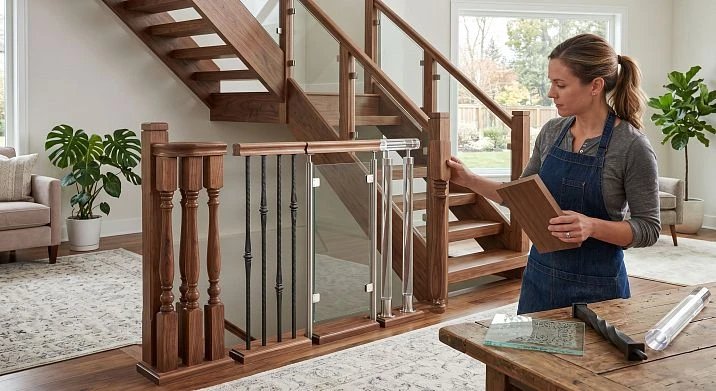
Before buying balusters, a buyer inevitably faces the choice of material. And this is not a secondary issue. The material of the baluster determines everything: the appearance of the staircase in ten years, the complexity of installation today, the cost of replacement if damaged, compatibility with the handrail, maintenance, and the feeling the staircase creates in the home.
Wood, metal, glass, acrylic — each material speaks in its own voice. And before placing an order, it is worth hearing each of them without marketing embellishments: honestly, with specifics, with an understanding of what suits your home and your staircase.
In this article, we will break down all four materials using the same scheme: what it is, how it looks in a real interior, how much it costs, how it is installed, what maintenance it requires, and who it is actually suitable for. At the end — an honest comparison and a clear answer: what exactly to choose for a wooden staircase in a private home.
Why choosing a material is a decision made for years to come
The question seems simple: found a beautiful photo online, found a similar product, bought it. The problem is that in the photo you see one moment — a new railing in studio lighting. But you do not see how this material behaves after a year, how it is cleaned, what happens with an accidental impact, how it combines with a wooden handrail and posts.
balusters for staircase to buy correct means making a decision based on several criteria simultaneously:
-
Style — classic, minimalism, loft, country, neoclassical require different materials
-
Staircase type — wooden, metal frame, concrete — each type has preferred solutions
-
Load and safety — a residential home with children requires a different approach than an office staircase
-
Installation — DIY or with a professional
-
Budget for the complete set, not just individual balusters
-
Maintenance and durability — what will happen to this material in 5, 10, 15 years
Let's consider each material from this perspective.




Wooden balusters: why wood remains the first choice
Let's start with wood — not because it's the only option, but because for most private homes and cottages, wood objectively wins based on a combination of criteria.
Our factory also produces:
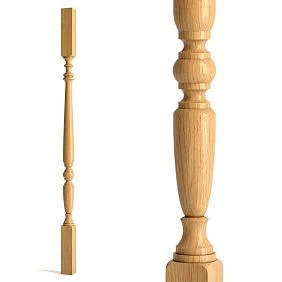
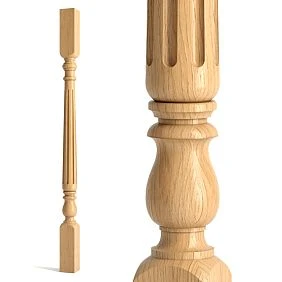
Where wooden balusters work best
A wooden staircase with wooden balusters is architectural organic. When the steps are oak, the handrail is oak, and the balusters are oak — the railing is not "inserted" into the staircase, but is part of it. A single material, a single surface temperature, a single response to the coating: varnish, oil, or paint applies evenly to the entire railing.
Buy wooden balusters — means getting an element that is compatible with the system: a handrail from the same series, posts from the same wood species, standard fasteners. Everything is purchased from one manufacturer and installed according to one instruction.
Get Consultation
Advantages of wooden balusters
Warm to the touch. Wood does not cool the hand in frost — unlike metal and glass. In a house where people walk up the stairs barefoot, this is significant.
Repairability. A scratch on a wooden baluster is fixed by sanding and reapplying the coating. Without special tools, without calling a craftsman. Chipped a corner — a wooden baluster can be replaced with a single piece from the same series.
Easy installation. A wooden baluster is inserted into the handrail with a tenon and fastened from below — a standard operation without welding, metal cutting, or special glass glue. Details in the guide on installation of wooden railings and balusters.
Systematic choice. buy balusters and handrails from one catalog, in one style, with guaranteed compatibility — only wood offers this possibility to its full extent.
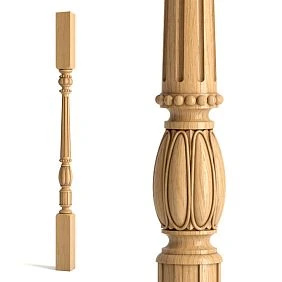
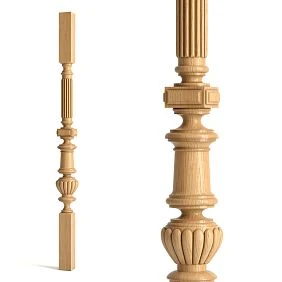
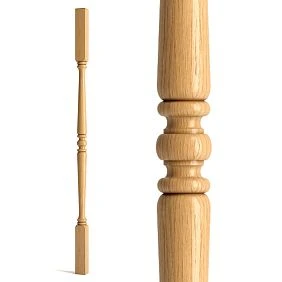
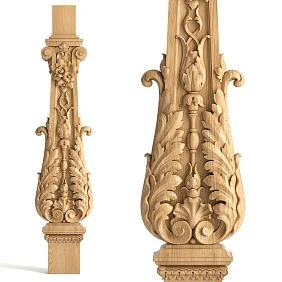
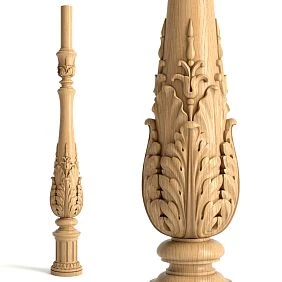
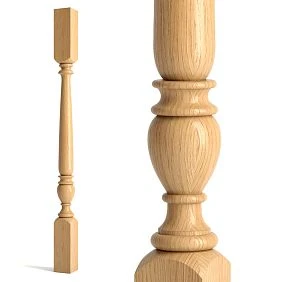
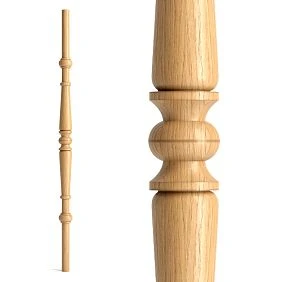
Wide range of shapes. Turned, Carved wooden balusters, Flat balusters, square balusters for stairs — over 50 profile options for any style.
Treatment and finishing for any interior. Dark staining, light oil, white paint, clear varnish — wood accepts any coating and transforms to suit the task.
Disadvantages of wooden balusters
Honesty requires admitting: wood is not without limitations.
Requires maintenance. Every few years — refreshing the coating. It's not difficult, but takes time.
Sensitivity to humidity. On an open porch without a canopy or in a room with constantly high humidity — risk of deformation without proper treatment. Solution: coating with moisture-resistant varnish or oil and kiln-drying of the workpiece.
Soft woods scratch. A pine baluster in a home with children will get scratches. Solution — choose oak or beech: hard woods are more resistant.
No feeling of 'air' in the space. Wood is a voluminous material. Glass and acrylic visually 'open up' the space. This is not a disadvantage in a wooden house, but in a small apartment — an argument for comparison.
Oak, beech, or pine: what to choose from
Buy oak balusters — this is durability, expressive texture, and hardness of 3.7–3.9 Brinell units. For a grand staircase in a cottage, for a home built to last decades — oak is the first choice.
Buy beech balusters — this is optimal hardness at a lower price. For painting, beech works better than oak: uniform texture, even coating. Savings of 20–30% compared to oak.
Pine is a budget option for a summer house or country home with moderate load. With proper treatment, it lasts a long time and looks warm and natural.
Metal and forged balusters: strength and limitations
Metal ranks second in popularity after wood. This is understandable: metal balusters are strong, durable, allow a very thin silhouette — and this is what catches the eye in advertising photos.
What are metal balusters
The term "metal balusters" covers different products:
Forged balusters — made by hand or on forging equipment. This is artistic forging: bent rods, leaves, curls, rosettes. Price — high: hand forging is expensive. Appearance — decoratively rich, close to classic or Provence style.
Cast iron balusters — heavy, with relief ornamentation, monumental. Suitable for interiors with a historical accent — mansions, old estates, theater foyers. Rare in residential homes due to weight and cost.
Stainless steel balusters — a modern option for loft, high-tech, minimalism. Tubes 12–16 mm, matte or mirror polish. Cold, clear, technological. Allow combination with glass inserts.
Stamped steel balusters — mass-market segment. Painted or powder-coated finish, standard profiles. Cheaper than forged ones, but without their decorativeness.
When metal is the right choice
Metal fencing is organic for:
-
Stairs on a metal frame (steel stringers or channels)
-
Modern interiors in loft or industrial style
-
Open terraces and outdoor stairs — stainless steel is not afraid of moisture
-
Commercial facilities with high load
Limitations of metal balusters
Cold surface. Metal in winter is an unpleasant contact with a bare hand on the railing. In a residential house, everyone notices this.
Incompatibility with wooden handrails. A wooden handrail on metal balusters requires a transition mounting system. There is no standard ready-made system of "metal baluster + wooden handrail" — this is always a custom modification on site.
Noise. Metal balusters transmit vibration from the steps to the handrail. In a wooden house, this is audible.
Corrosion. Painted steel balusters in a room with humidity fluctuations begin to rust after a few years at paint chip locations.
Wrought iron balusters are piece goods. If one baluster is damaged, it is impossible to replace a single one from a hand-forged batch. Only a repeat order to the blacksmith is possible, with potential differences in details.
Welded installation. Metal balusters are often installed by welding. This involves a craftsman with equipment, sparks in a residential area, and subsequent grinding and painting of the welds.
Glass balusters and railings: visual openness and its price
Glass railing is the choice of those who want to maximally 'open up' the staircase space, creating a feeling of air and lightness. The effect is impressive, but it comes with specific technical and financial realities.
How glass balusters are constructed
Glass railings for stairs exist in two fundamental variants.
Panel railing is not individual balusters, but monolithic sections of tempered glass 8–12 mm thick, fixed in floor point mounts or in a groove profile. Technically, these are not balusters at all — they are span fillings without vertical posts.
Glass insert balusters are individual rectangular glass sections fixed between metal or wooden posts. They are used in mixed constructions where metal or wood provides the load-bearing frame, and glass serves as decorative filling.
Advantages of glass railings
-
Visual openness: the space above and below the staircase is visible through
-
Modern look in interiors with large windows, light floors, light walls
-
Strength of tempered glass — with proper installation, it withstands standard lateral loads
-
Easy maintenance: glass is wiped dry
Significant limitations of glass
Price. Tempered glass 10 mm thick, custom-cut to span sizes — this is expensive. A complete glass railing set for a two-flight staircase costs several times more than a wooden one.
Installation. Glass sections are installed by a specialized team. Point stainless steel clamps, custom cutting to the size of each span. A mistake in size means replacing the entire section.
Marks. Glass instantly shows handprints, fingerprints, smudges. In a house with children, this is a constant concern.
Repair. Broken tempered glass shatters into thousands of small fragments — the standard for safety glazing. But replacement requires a new custom section.
Style. Glass railing fits in modern interiors, high-tech, and homes with glass and concrete. In a wooden house, classic, or country style — glass stands out from the overall look. Wooden balusters with a carved handrail speak a completely different language.
Acrylic balusters: visual effect and technical realities
Acrylic balusters are a relatively new type of product, appearing as an alternative to glass: a similar transparency effect, but lighter weight and more affordable.
What are acrylic balusters
Acrylic (polymethyl methacrylate, organic glass) is a transparent polymer that takes any shape when cast or milled. Acrylic balusters are available in several variants:
Transparent — imitate crystal or glass, creating an "airy" post effect. Beautiful in photos, unusual in the interior.
Colored (tinted or painted) — provide additional decorative effect: amber, smoky, colorful.
With built-in lighting — an LED strip inside the acrylic rod creates a glowing railing effect. In demand in custom design projects.
Advantages of acrylic
-
Unusual appearance, stands out among standard solutions
-
Lighter than glass with a similar visual effect
-
Does not shatter into sharp shards — unlike glass (but cracks and scratches)
-
Possibility of built-in lighting
Serious limitations of acrylic
Softness of the surface. Acrylic scratches much more easily than glass, wood, or metal. Scratches appear on the surface of an acrylic baluster from ordinary contact with rings, buckles, or accidental impacts from hard objects. After a year of active use, transparent acrylic loses its initial transparency — a "cloudiness" appears from many small scratches.
Limited load-bearing capacity. Acrylic under lateral load is not the best material for a load-bearing baluster in the classical sense. In most structures, acrylic balusters are used as decorative infill in a metal frame, rather than as independent supports.
Style. Acrylic balusters are appropriate in designer non-commercial projects and non-standard interiors. In a wooden house with a classic staircase, they are inappropriate. Wood and acrylic are different "languages" — they do not complement, but exclude each other.
Installation complexity. Acrylic balusters require special fasteners and caution during installation: acrylic is fragile under mechanical stress at attachment points.
An honest comparison of four materials
It's time to look at all four options side by side — without advertising or bias.
Comparison table
| Criterion | Wood | Metal / Forging | Glass | Acrylic |
|---|---|---|---|---|
| Kit price | Moderate | Medium – high | High | Medium |
| Installation | Simple, DIY | Complex, often welding | Complex, specialists | Medium, special fasteners |
| Care | Once every few years | Monitor painting | Frequent wiping | Caution — scratches |
| Repair | Light (sanding, replacement) | Complex (welding, painting) | Section replacement | Element replacement |
| Compatibility with wooden handrail | Ideal | Requires modification | Partial | Complex |
| Style | Classic, country, eco, neoclassical | Loft, industrial, forged classic | High-tech, minimalism | Designer, non-standard |
| Durability | 20–40 years with care | 15–30 years | 15–25 years | 5–10 years (scratches) |
| Warm to the touch | Yes | No | No | Partially |
| Safety upon breakage | Neutral | Sharp edges | Chips | Cracks |
What is more profitable for a private house
If the house is wooden, classic, country or neoclassical — the choice is obvious. Buy wooden balusters and design the staircase in a single material — this is both aesthetically correct and practically reasonable.
If the house is in a loft style with a metal frame and concrete floors, consider stainless steel or forged metal elements. But even here, a wooden handrail combined with metal balusters is a popular and warm solution.
If the apartment is in high-tech style with an open staircase as an architectural accent — glass or stainless steel are justified. But calculate the budget taking into account installation by specialists.
Why wooden balusters are easier to choose as a set
This argument in favor of wood is often underestimated — yet it is often the decisive one in real practice.
For a wooden fence, everything is purchased from one manufacturer: balusters and posts for a wooden staircase, handrails, fasteners. All elements from one system, one style, one wood species, one production standard. Compatibility is guaranteed: the handrail groove precisely accepts the baluster tenon, the post matches the fence height, the fasteners are standard.
For a metal railing on a wooden staircase, it's customization. For a glass one, it's a completely different installation system, completely different contractors. For an acrylic one, it's an even more non-standard project.
buy staircase components — it's one delivery, one call to the manager, one calculation. It saves time, nerves, and money on logistics.
What is included in a complete wooden set
-
wooden balusters for staircases — by calculation of quantity and spacing
-
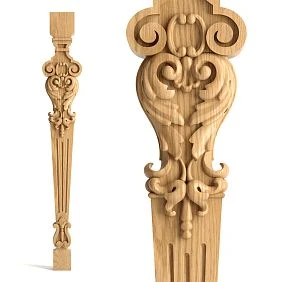
Carved wooden posts — load-bearing elements at the beginning and end of each flight
-
Handrail — in linear meters, for the baluster tenon
-
Fasteners: M8–M10 studs, nuts, PVA glue
It is this systematic nature that is the main practical advantage of wood over other materials.
Which wooden balusters to choose instead of metal, glass, or acrylic
Each of the three 'competing' materials has its own visual image. For those who initially looked at metal, glass, or acrylic but are considering wood as an alternative — we show specific wooden solutions.
Instead of forged balusters
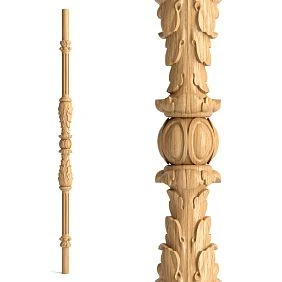
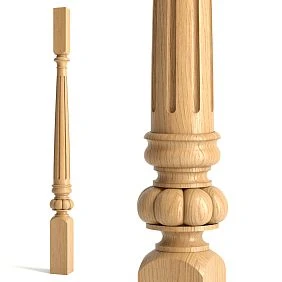
Artistic forging is decorative richness. The wooden analogue in terms of visual richness is Carved wooden balusters: turned-carved profiles with flutes, diamonds, and floral elements. Under dark stain or golden oil, such balusters create an image that rivals wrought iron fencing in decorativeness. At the same time — warm to the touch, easy installation, lower price.
carved wooden balusters in combination with carved balusters form an ensemble that is organic in any classic home — without compromises.
Instead of stainless steel and metal balusters
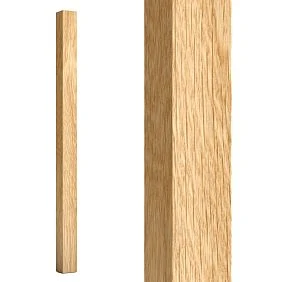
Stainless steel is restraint and geometry. The wooden analogue is square balusters for stairs Made of beech or oak with a dark tint. Section 45×45 mm, minimalist profile, clear geometry. In a wooden house, such balusters in wenge or walnut look modern and strict — without a "rustic" touch.
Instead of glass and acrylic railings
Glass and acrylic give a feeling of air and openness. The wooden equivalent in terms of "lightness" is — Flat wooden balusters with a narrow silhouette. They look significantly more "transparent" than wide turned balusters: the space between them is clearly readable, the railing does not appear heavy. At the same time — all the advantages of wood: warmth, repairability, compatibility with the handrail.
Also Flat baluster with a decorative silhouette — an excellent solution for a wooden house in country style, where lightness is needed without metal and glass.
Mistakes when choosing the material of balusters: what is most often done wrong
This section is for those who want to make a choice once and for all.
Mistake 1: Chose by photo, not by house style
A beautiful photo of a glass railing in an interior with concrete and metal — and you bought the same for a wooden house with a wooden staircase. The result is a stylistic conflict: glass doesn't "get along" with logs, beams, and a wooden handrail.
Mistake 2: did not calculate the complete set
You chose metal balusters — cheap compared to carved wooden ones. Then you calculated: welder installation, transition brackets for the wooden handrail, painting of joints, spare parts. The result — more expensive than a wooden set.
Mistake 3: Didn't consider maintenance
A glass railing with children in the house means wiping handprints every day. Acrylic — first scratches after six months. Wood requires maintenance once every few years — and that's much less time.
Mistake 4: didn't check compatibility with the handrail
You bought metal balusters — it turned out that the wooden handrail cannot be attached to them in a standard way. An individual metal insert is needed. That's unplanned expenses and installation delays.
Mistake 5: chose material without considering safety
Glass railing without lamination — produces sharp shards on impact. Thin metal rods — sharp edges when deformed. A wooden baluster does not create sharp fragments when damaged: this is important in a house with children.
Mistake 6: bought balusters without posts from the same system
Metal posts with wooden support posts — that's two different 'languages' in one railing. Wooden Staircase Posts must match the style and material of the balusters. This is the basis of a systematic approach.
Where to buy wooden balusters for stairs in a private house
The decision in favor of wood is the beginning, not the end. The next step: choose a model, wood species, calculate the quantity, and order a set from the manufacturer.
buy balusters for the staircase from a direct manufacturer — means getting the best price without a middleman markup, a systematic order in one style, a set calculation, and free consultation on parameters.
Selection algorithm:
-
Determine the style: classic → turned; modern → square; country → flat; baroque → carved
-
Choose the wood species: pine → for a dacha; beech → for painted railing; oak → durable classic
-
Specify the dimensions: height, diameter, tenon size
-
Order a calculation: balusters + posts + handrail + fasteners
-
Confirm delivery: one order, one batch, one delivery
Balusters price — in the STAVROS catalog with filtering by type, wood species, and size.
About the company STAVROS
STAVROS is a Russian manufacturer of solid wood products since 2002. Production cycle: harvesting → chamber drying to 8–10% → CNC turning and milling → sanding → batch quality control.
The catalog includes over 50 models of balusters (turned, carved, flat, square), wooden — more massive vertical elements installed at key structural points and carrying increased load., handrails and a complete set staircase components. Wood species: oak, beech, pine, ash. Compatibility of elements within the series is guaranteed by production.
Pickup from Moscow and St. Petersburg. Contact us to confirm shipping to your destination. Free consultation and calculation of the set for each project — from a country staircase to a grand cottage railing.
FAQ: Answers to popular questions
Which balusters are best to buy for a wooden staircase?
For a wooden staircase — wooden balusters: ideal compatibility with the handrail, posts, and components. Choice of shape — according to the style of the house: turned for classic, square for minimalism, carved for baroque.
What is cheaper: wooden or forged balusters?
Hand-forged balusters are more expensive than wooden ones with a comparable decorative effect. Mass-produced metal balusters can be cheaper, but require a welder for installation and are not directly compatible with a wooden handrail.
Can metal balusters be replaced with wooden ones?
Yes. You need to consider the method of attachment to the step (tenon, threaded rod, or base plate), compatibility with the handrail, and height. Consultation with the manufacturer is mandatory before ordering.
Are glass balusters suitable for a classic home?
No. Glass fits organically in modern interiors — high-tech, minimalism. For a classic wooden staircase in a cottage — wooden carved or turned balusters.
Where to buy wooden balusters and railings as a set?
In the STAVROS catalog — balusters, posts, handrails, and fasteners from one system, with guaranteed compatibility. Free calculation of the set — based on your staircase parameters.
Are acrylic balusters durable?
Acrylic scratches significantly easier than wood or glass. The actual service life without loss of appearance is 5–7 years with careful use. For a residential staircase with heavy use — not the best choice.
Which balusters feel warmer to the touch?
Wood is the only one of the four materials that feels warm to the touch at any room temperature. Metal and glass are cold in winter. Acrylic is neutral.
How to choose wooden balusters to match the style of your home?
Country, rustic → flat balusters. Classic → turned. Neoclassical, Empire → carved. Minimalism, Scandinavian style → square. Current catalog with photos — at stavros.ru.
Get Consultation
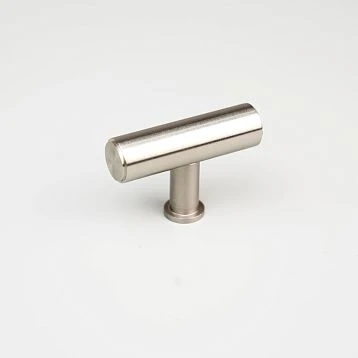
Furniture handle Oscar HL-061-2M
from 21.96 $

Decor Set C-004-1-1
from 630.32 $
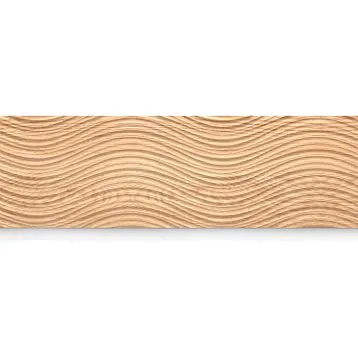
● Universality. The wooden trim K-017 is suitable for any style and room, whether it's a living room, bedroom, office, kitchen, bathroom, or hallway. The wooden trim K-017 can be used for various purposes and tasks, such as framing, cladding, decorating, or zoning. The wooden trim K-017 easily complements other decorative elements, creating a harmonious and cohesive look.
from 19.52 $
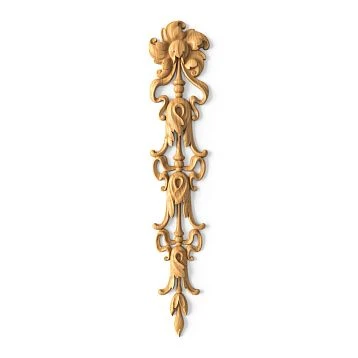
Wooden Decor N-501
from 18.66 $