


























Article Contents:
- MN-207 or MN-227: short answer
- Confirmed dimensions and materials
- Why the difference is not just in height
- 35 mm affect convenience but don't explain the entire design
- The 150 × 150 mm base requires space
- The 70 × 70 mm cross-section is easier to place
- Four legs enhance the effect
- Large chest of drawers
- Massive cabinet
- Sofa with open base
- Bench
- Pouf
- Large wardrobe or sideboard
- Furniture where legs should be an accent
- When MN-207 will be too large
- Bedside table
- Small chest of drawers
- TV cabinet
- Cabinet
- Compact sofa
- Furniture with straight fronts
- When MN-227 becomes visually too weak
- Commode
- Cabinet
- Cabinet
- Sofa
- Ottoman and pouf
- Example for a chest of drawers
- Bedside table
- TV cabinet
- Sofa
- Gap for cleaning
- Cabinet height
- Indentation from the front
- Indentation from the side
- Four or six legs
- Central support
- Legs under internal partitions
- Checking door and drawer opening
- Floor plane
- Diagonal check
- Tall cabinet
- Soft furniture
- Beech under white enamel
- Beech for colored enamel
- Matte enamel
- Oak for light tinting
- Oak for dark tinting
- Why oak isn't always needed under enamel
- How to prepare the kit for finishing
- Round glide FUR-021
- Felt foot pad FUR-027
- How to choose between 19 and 24 mm
- The foot pad does not replace leveling
- MN-207 and a regular wooden cube
- MN-227 and a standard rectangular rail
- Geometric and carved legs
- Furniture leg and tall dining support
- Leg and adjustable support
- Leg and furniture wheel
- Beech under enamel and ready painted leg
- Oak for tinting and finished shade
- Need to replace low legs on the dresser
- Need to make the dresser visually more massive
- Need to lighten the cabinet
- Need to lift the sofa for cleaning
- Need to match legs to existing handles
- Need to update an old cabinet
- Need to preserve the parquet
- Need to choose between white and oak legs
- Check the bottom of the case
- Marking
- Old holes
- Install before finishing
- Install after finishing
- Inspection after assembly
- Bedroom
- Living Room
- Entry Hall
- Children's room
- Office
- Walk-in closet
- Salon, hotel, or showroom
- Make a base template
- Mark the height on the front view
- Check the color
- Look at the furniture from a distance
- Compare with neighboring items
- Order the set in one batch
- Comparing only the heights of 180 and 145 mm
- Not considering the 150 × 150 mm platform
- Placing MN-207 too close to the edge
- Choosing MN-227 for an excessively massive cabinet without a mockup
- Not calculating the final height
- Ignoring the strength of the bottom
- Using four legs on a long cabinet without checking
- Buying oak for dense enamel without reason
- Painting the set without a test swatch
- Forgetting about thrust bearings
- Considering the thrust bearing as an adjustment
- Transferring old holes to the new model
- Selecting legs one by one
- How is MN-207 different from MN-227?
- Which leg is taller?
- How much does the base width differ?
- Which model should I choose for a small dresser?
- Which leg is suitable for a large cabinet?
- Can I install MN-207 on a sofa?
- Will MN-227 fit a wardrobe?
- How to calculate the new furniture height?
- Is a fifth central support needed?
- What should I choose for white enamel — birch or oak?
- How to preserve the oak leg texture?
- Can I paint the legs before installation?
- Which glides are suitable for MN-227?
- Will these glides fit the MN-207?
- How to protect a wooden floor from scratches?
- What distance should be left from the leg to the edge of the body?
- Can the short legs on the MN-207 be replaced?
- Is it necessary to reinforce the bottom of the cabinet?
- Can new legs be installed into the old holes?
- Which model is best for a robot vacuum?
- Which leg is best for minimalism?
- Can the MN-207 and MN-227 be combined in one piece of furniture?
- How many legs to buy for a dresser?
- Where to buy MN-207 and MN-227?
- What to check right before payment?

Comparison of two modern geometric supports made of beech or oak for case and upholstered furniture


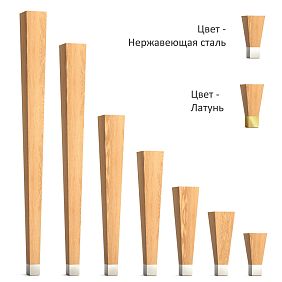


MN-207 or MN-227: short answer
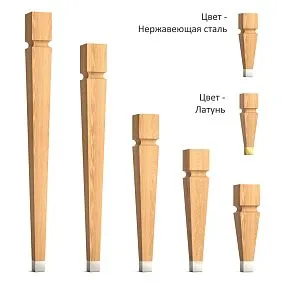
MN-207 measuring 180 × 150 × 150 mm is chosen for a large chest of drawers, massive cabinet, sofa, bench, or pouf, where the leg should become a noticeable part of the design. The base 150 × 150 mm requires a sufficiently wide lower plane of the body and free space from the edge. MN-227 measuring 145 × 70 × 70 mm is suitable for a compact cabinet, small chest of drawers, wardrobe, TV stand, or sofa with a laconic facade. It lifts the body but does not draw attention away from handles, doors, and trim.
Buy MN-207 Buy MN-227 View all furniture legs Legs for finishing
MN-207 — large geometric support. Height 180 mm, base 150 × 150 mm; clearly visible under the body and requires a sufficiently wide installation area.
MN-227 — compact support. Height 145 mm, cross-section 70 × 70 mm; easier to place under a narrow cabinet, wardrobe, or small chest of drawers.
The difference is not limited to 35 mm in height. The visible base area of MN-207 is significantly larger, so four such legs change the entire silhouette of the furniture.
Beech — for enamel. Suitable for white, black, colored, or other opaque finishes, if specified in the project.
Oak — for tinting. Preserves the natural texture and helps connect the supports with the facade, countertop, or handles made of natural wood.
The load cannot be determined by the size of the leg. It depends on the body, fastening, number of supports, location, and strength of the furniture bottom.
When a buyer decides to purchase wooden furniture legs for a new body or to remodel existing furniture, height often seems like the main parameter. In comparing MN-207 and MN-227, this is an overly simplistic approach. Yes, one model is 35 mm taller, but the base differs much more: 150 × 150 mm versus 70 × 70 mm. Under furniture, this translates into two different characters — a massive architectural base and a compact geometric support.
MN-207 forms a noticeable lower belt. Four wide legs support a large chest of drawers, sofa, ottoman, or cabinet and visually connect the body to the floor. MN-227 raises the furniture by 145 mm but keeps attention on the facade, handles, and overall shape. It fits more easily under narrow side panels, takes up less space at the edge, and suits minimalist modern furniture.
Both models can be ordered in beech or oak with a "Prestige" sanding quality. Beech is intended for enamel, oak for tinting. Therefore, the choice is not based on the principle of "large leg only for painting, compact only for wood." First, determine the scale and fit, then the material, color, glider, and fastening.
For a large body, you can purchase the geometric leg MN-207. For a cabinet, wardrobe, or small chest of drawers — purchase the geometric leg MN-227. If 180 and 145 mm do not match the required height, it is better to open the catalog of legs and supports STAVROS and compare other sizes.
Confirmed sizes and materials
| Parameter | MN-207 | MN-227 | What this means for furniture |
|---|---|---|---|
| Main size | 180 × 150 × 150 mm | 145 × 70 × 70 mm | MN-207 is taller and more than twice as wide on each side of the base. |
| Additional sizes | E × F: 141 × 25 mm | Additional sizes not shown in the diagram | The MN-207 drawing must be checked before designing the mount. |
| Material | Beech or oak | Beech or oak | The model can be selected by size without giving up the desired breed. |
| Sanding quality | «Prestige» | «Prestige» | Both supports are prepared for neat subsequent finishing. |
| Beech | For enamel | For enamel | Suitable for opaque white, colored, or dark painting. |
| Oak | For tinting | For tinting | The natural wood grain is preserved. |
| Character | Large geometric support | Compact geometric support | The first becomes part of the body architecture, the second supports the facade without dominating. |
| Main scenarios | Chest of drawers, sofa, armchair, bench, ottoman, cabinet, massive sideboard | Chest of drawers, cabinet, sideboard, sofa, and other modern furniture | The final choice depends on the body width and installation area. |
In terms of the area of a conventional square base, the MN-207 is approximately 4.6 times larger than the MN-227: 22,500 mm² versus 4,900 mm². This arithmetic does not replace a drawing of the actual shape, but it explains the perception well. Four MN-207s create noticeable support blocks, while four MN-227s leave more air under the body and between the legs.
Our factory also produces:



Why the difference is not just in height
A height of 180 or 145 mm determines the clearance under the furniture and the final level of the body. But the width of the base sets the proportions, the position from the edge, and the degree of visibility. Even if both models are painted the same color, the MN-207 looks more massive due to the wide support area. The MN-227 is perceived as a neat vertical.
Get Consultation
35 mm affect convenience but do not explain the entire design
The MN-207 raises the body by 35 mm higher. For a chest of drawers, this changes the position of the tabletop; for a bedside table, the relationship to the mattress; for a sofa, the seat height and overall clearance. However, the wide base is more noticeable than the height difference, especially when viewed from the front.
A 150 × 150 mm base requires space
The leg cannot be placed so that a significant part of the platform extends beyond the edge of the bottom or conflicts with the side panel. There must be a sufficiently wide and sturdy mounting area under the body. On a narrow cabinet, the MN-207 may physically not fit without reinforcement or design changes.
A 70 × 70 mm cross-section is easier to place
The MN-227 is easier to move away from the front, baseboard, or back wall. It suits a body with narrow side panels and allows maintaining a small offset from the edge. But compactness does not automatically mean sufficiency: the bottom and fastening must still bear the load.
Four legs amplify the effect
The individual MN-207 seems moderate, but the set of four wide supports creates a powerful lower belt. MN-227 repeats more easily and does not conflict with the facade. Therefore, before ordering, it is useful to make a frontal layout of the entire item, rather than evaluating one leg against a white background of the card.
Comparison of MN-207 and MN-227 by task
| Task | What to choose | Why |
|---|---|---|
| Large chest of drawers with wide sides | MN-207 | The base 150 × 150 mm looks proportionate to the massive body and becomes part of the design. |
| Small chest of drawers or bedside table | MN-227 | The 70 × 70 mm section fits more easily under a narrow body and does not overload the facade. |
| Massive TV cabinet | Depends on the width of the body | MN-207 creates a strong base, MN-227 maintains lightness and distracts less from the screen. |
| Compact cabinet | MN-227 | A small support is easier to place under narrow side panels and a baseboard. |
| A sofa where the legs should be visible | MN-207 | A height of 180 mm and a wide geometry create a noticeable furniture accent. |
| A sofa with a minimalist body | MN-227 | A compact leg supports the modern silhouette and does not clash with the upholstery. |
| A bench or ottoman with a wide base | MN-207 | A large support emphasizes the piece and better matches a massive body. |
| Furniture where the front and handles should remain the main focus | MN-227 | The leg creates a gap but does not form a heavy lower section. |
When to buy MN-207
MN-207 is needed where the support must be not just a technical detail, but a visible part of the furniture architecture. The height of 180 mm creates a noticeable gap, and the base of 150 × 150 mm visually connects the body to the floor. This leg works best under large furniture, where the wide geometry does not appear accidentally heavy.
Large chest of drawers
A wide chest of drawers with a massive tabletop, straight fronts, and large handles can maintain the scale of MN-207. Four legs form a stable visual base and make the lower part of the piece expressive. Before ordering, you need to check the width of the side panels, the position of internal partitions, and the strength of the bottom.
For such a project you can choose a massive leg for the chest of drawers and pass the drawing to the furniture maker before cutting the body.
Massive cabinet
Under a wide cabinet, MN-207 creates the feeling of a finished piece, rather than a body placed on random supports. The model is especially appropriate when the facade has large rectangular panels, wide frames, or a pronounced wood texture. On a narrow cabinet, the 150 mm base may take up too much of the lower plane.
Sofa with an open base
A high leg makes the sofa lighter in silhouette, but MN-207 itself remains noticeable. It suits a model where the supports are open and must maintain the strict geometry of the armrests or body. The final seat height changes, so you cannot simply replace short legs with 180 mm ones without calculation.
Bench
On a wide bench, large supports can become the main decorative motif. MN-207 works well with a straight body and dense upholstery when the legs are visible from all sides. You need to check if there is enough space for four bases and whether the usable space under the soft frame is reduced.
Pouf
For a large square or rectangular pouf, MN-207 creates a strong geometric silhouette. On a small pouf, the bases can come closer together and make the piece heavy. In this case, MN-227 looks more precise.
A large-format cabinet or sideboard
MN-207 can support a tall body only with a calculated design. A wide base visually matches a massive piece, but a tall cabinet is especially demanding in terms of stability and wall attachment. Legs do not replace anti-tip fixation.
Furniture where legs should be an accent
White, black, or colored enamel turns MN-207 into a graphic detail. Tinted oak makes the base more natural and ties it to the tabletop. If the facade is already rich with carving, complex handles, and contrasting finishes, a large leg can create an excessive number of accents.
When MN-207 will be too large
On a bedside table, narrow cabinet, or lightweight TV stand, a 150 × 150 mm base may physically not fit or leave too small an edge offset. Visually, the legs will appear heavier than the body. Then MN-227 is a better fit.
When to buy MN-227
MN-227 is chosen when furniture needs to be raised, maintain a convenient clearance above the floor, and not change the character of the facade. The height of 145 mm is noticeable, but the 70 × 70 mm cross-section remains compact. This geometry suits small bodies, modern cabinets, cupboards, and sofas with a minimalist form.
Bedside table
A compact support helps align the cabinet with the bed without turning the lower part into a heavy pedestal. The 70 mm cross-section is easier to place under a narrow body. Before purchasing, you need to calculate the new tabletop height relative to the mattress.
For the bedroom you can choose a compact leg for the cabinet in beech or oak.
Small chest of drawers
MN-227 gives the main role to the facades and handles. Four supports create a gap, making the piece look lighter and cleaning underneath easier, if the actual height is sufficient for the chosen device. You need to check the dimensions of the specific robot vacuum, not just rely on 145 mm.
TV cabinet
A low cabinet under the TV should not raise the screen above a comfortable viewing line. MN-227 increases the overall height less than MN-207 and visually does not compete with the screen. For a long cabinet, a central or additional support may be needed.
Wardrobe
The compact cross-section is easier to place under side panels and internal partitions. But the 145 mm height increases the leverage and stability requirements for a tall cabinet. The cabinet must be secured to the wall according to the design.
Compact sofa
MN-227 lifts the sofa and maintains a light lower line. It suits a body where the upholstery and armrests remain the main visual content. Before replacement, you need to check the seat height, attachment, and position of the internal structural frame elements.
Furniture with straight facades
The square cross-section 70 × 70 mm supports minimalism, straight doors, and simple handles. The leg does not imitate classic carving and does not change the laconic character of the piece. In oak, it adds natural texture; in enamel, it can completely match the facade.
When MN-227 becomes too weak visually
Under a wide heavy dresser, a sofa with large armrests, or a massive bench, compact supports may look random. Even if the mounting is calculated, the proportions will be inconsistent. In this case, you need to check MN-207 or other models in the category.
How to choose legs for different types of furniture
Chest of drawers
For a dresser, the width of the body, the number of internal partitions, and the position of the drawers are important. MN-207 is suitable for a large item with a wide bottom. MN-227 is for a small to medium body. A long dresser may require a fifth or sixth support regardless of the chosen model.
In a separate section, you can buy legs for a dresser and compare other forms.
Cabinet
A bedside table often benefits from MN-227 because the 70 mm cross-section does not take up the entire side panel. A massive console or TV cabinet may get MN-207 if the body is wide enough and the new height does not compromise convenience.
Wardrobe
For a tall cabinet, the visual lightness of MN-227 is attractive, but stability becomes critical. MN-207 increases the support geometry, but a wide leg does not automatically solve the tipping problem. The body is secured to the wall.
Sofa
MN-207 makes the supports noticeable and lifts the sofa higher. MN-227 maintains a calmer silhouette. For upholstered furniture, you need to check the seat height after replacement, the frame construction, and the position of the mounting plates.
To compare scenarios, you can choose the height of legs for upholstered furniture.
Ottoman and pouf
A large ottoman withstands the visual scale of MN-207. A compact pouf often looks better on MN-227. If the product is used as a seat, the load and fastening are calculated with particular care.
How to calculate the final height of furniture
Replacing legs changes not only the clearance above the floor. It affects the height of the tabletop, seat, TV screen, door handles, and center of gravity. Therefore, you first need to calculate the new dimension, and then evaluate convenience. The basic logic is simple:
body height + leg height + actual thickness of the mounting assembly = final furniture height.
The thickness of the mounting assembly can be zero in terms of external dimension if the leg is directly adjacent to the bottom, or add a few millimeters when using a plate, insert, or foot pad. The exact value is taken from the project, not assigned in advance.
Example for a dresser
If the dresser body without legs has a height of 700 mm, then with MN-207 the basic dimension will be about 880 mm before accounting for the mounting assembly. With MN-227 — about 845 mm. The 35 mm difference may be noticeable during daily use of the tabletop, but the appearance will change even more due to the width of the supports.
Bedside table
The tabletop should be comfortable relative to the top plane of the mattress. A too-high nightstand makes it difficult to reach for a phone or glass, a too-low one forces you to bend over. Before replacing the legs, measure the actual height of the bed together with the mattress and calculate the nightstand with MN-227 or MN-207.
TV cabinet
A new cabinet height affects the TV's position. If the screen is on a stand, an increase of 145 or 180 mm can raise the image center above the comfortable line. With a wall-mounted TV, changing the cabinet mainly affects the composition and the distance between the screen and the cabinet.
Sofa
For a sofa, the seat height is calculated: the soft furniture frame, cushion thickness, and leg height. Switching from low supports to MN-207 can significantly change the seating. The buyer needs to check if it's comfortable to stand up, if the legs are not dangling, and if the relationship between the sofa and the coffee table changes.
Clearance for cleaning
Leg height does not equal guaranteed clearance across the entire area. Under the cabinet, there may be crossbars, central supports, wires, or other elements. For a robot vacuum, measure the minimum height at the lowest point and compare it with the dimensions of the specific device.
Cabinet height
Increasing the total height of the cabinet can bring it closer to the ceiling and change access to the top shelves. Additionally, a tall cabinet on legs requires reliable wall anchoring. Before ordering, check not only comfort but also the room's height clearance.
How to position legs under the cabinet
Even a correctly chosen model can look and function poorly if placed too close to the edge, too far under the cabinet, or outside the line of internal partitions. The layout depends on the furniture's construction, so the article does not specify a universal offset in millimeters.
Offset from the facade
A leg placed flush with the facade becomes more noticeable and may interfere with feet. A position too deep makes the cabinet visually overhang. MN-207, due to its 150 mm base, is especially sensitive to offset: a small shift is noticeable on the wide platform.
Indent from the sidewall
It is advisable to place the support under the power part of the body, not under the thin middle of the bottom. If the sidewall and internal partition transmit load downward, the leg is positioned considering this line. For MN-227, it is easier to find a suitable area, but the bottom strength should still be checked.
Four or six legs
Four supports are not enough for every body. A long TV cabinet, wide chest of drawers, or sofa may require a fifth central or two additional legs. The decision depends on the span, bottom material, weight, and partition placement. The quantity should not be chosen solely for a symmetrical appearance.
Central support
The central leg helps reduce deflection but must have a suitable height and reliable fastening. If the outer MN-207 or MN-227 are supplemented with another support, all points must be in the same plane. Otherwise, the body will wobble.
Legs under internal partitions
On a chest of drawers or cabinet, internal verticals are often load-bearing. Placing supports under them allows load to be transmitted more directly. For MN-207, a wide platform can cover several bottom zones, but this does not replace reinforcement.
Checking door and drawer opening
Supports should not interfere with the plinth, hinges, lower guides, or pull-out drawers. On a sofa, access to transformation mechanisms should be checked. Before drilling, it is useful to assemble a paper template of the base 150 × 150 and 70 × 70 mm and apply it from below.
How to check furniture stability
A wide leg does not guarantee stability, and a compact one does not mean weak furniture. The result is influenced by the center of gravity, body height, support spacing width, bottom rigidity, and fastening. Tall cabinets, narrow nightstands, and sofas with mechanisms are evaluated with particular attention.
Floor flatness
Even level legs can wobble on an uneven floor. Before installation, the base is checked with a level. Glides protect the covering but do not always compensate for height differences. The adjustment function for FUR-021 and FUR-027 is not confirmed in the diagram.
Diagonal check
After installation, the furniture is placed in position and the corners are pressed alternately. If the body wobbles, first check the equal height of the supports, fastenings, and floor flatness. The problem must not be fixed with random pieces of material under one leg.
Tall body
A cabinet or tall dresser on legs gets a larger lever relative to the floor. It is fastened to the wall if this is provided by the design and safety rules. MN-207 with a wide base looks more stable but does not replace anti-tip fastening.
Upholstered furniture
A sofa and ottoman experience dynamic loads: a person sits down, stands up, shifts to the edge. The leg fastening must be designed for such impacts. The installation diagram from a lightweight nightstand cannot be transferred to a sofa without checking the frame.
Beech for enamel or oak for tinting
The material affects not only the color. Beech and oak look different after finishing and bond differently with the body. Both models are available in two variants, so the wood species is chosen after the leg size is approved.
Beech under white enamel
White enamel unifies the supports with the body and reduces visual weight. MN-207 remains large in shape but does not create a dark lower band. MN-227 almost dissolves under a light nightstand and supports the effect of a raised body.
Beech for colored enamel
Black, gray, green, or other geometric legs can become an accent. The exact color and coating system are not specified in the cards, so they are coordinated with the workshop. Before full painting, a test coat on prepared beech is required.
Matte enamel
A matte surface emphasizes geometry well and does not create strong glare on wide planes of MN-207. However, the specific gloss level must match the body. The difference between the leg and the facade is noticeable even with the same color code if the coatings have different finishes.
Oak for light tinting
Light oak suits furniture in a natural palette. MN-207 shows more texture due to large planes, MN-227 adds a delicate wooden detail. Tinting of all four or six legs is done in one batch.
Oak for dark tinting
Dark oak makes the supports more noticeable. MN-207 turns into a powerful architectural base, and MN-227 into a graphic compact leg. On a small body, dark MN-207 may appear excessively heavy.
Why oak is not always needed under enamel
If the wood texture is completely covered by an opaque coating, beech under enamel usually matches the stated card logic. Oak is chosen when the natural grain under the tint is important. This helps avoid overpaying for texture that the finish will hide anyway.
How to prepare the set for finishing
The legs are checked for wood color, marked, and a test coat is made. It is better to finish the entire set at the same time. Ends and hidden areas are also coated, especially if the furniture will be placed in a room with humidity fluctuations.
Before ordering, you can choose legs for enamel or tinting and compare other shapes from beech and oak.
Which glides to buy
The glide protects the bottom of the support and the floor covering, but it cannot be chosen only by outer diameter. You need to check the actual bottom surface, attachment method, floor material, and permissible thickness. In the MN-227 card, among the recommended fittings, there are FUR-021 with a diameter of 19 mm and felt FUR-027 with a diameter of 24 mm.
Round glide FUR-021
FUR-021 has a diameter of 19 mm and comes with a self-tapping screw. It helps move furniture without direct contact of wood with the floor. Before using on MN-207 or MN-227, you need to check the installation location and the depth of the screw.
For a suitable assembly, you can buy round glide FUR-021.
Felt glide FUR-027
The felt version with a diameter of 24 mm is suitable for protecting parquet and other sensitive coatings if the installation method is coordinated with the leg. Felt reduces the risk of scratches but requires monitoring of dirt: sand and hard particles under it can themselves damage the floor.
For a wooden floor, you can buy felt glide FUR-027.
How to choose between 19 and 24 mm
The diameter must fit within the lower platform and not extend beyond the edge. Both dimensions are significantly smaller than the cross-section of MN-227 70 × 70 mm and the base of MN-207 150 × 150 mm, but the actual shape of the lower part and the mounting location are verified against the drawing and the product.
The foot pad does not replace leveling
These items are not claimed as adjustable supports. If the floor has unevenness, the furniture is first aligned structurally. The foot pad protects the surface but should not be used as a random shim to correct geometry.
What to buy together with MN-207 or MN-227
Furniture legs are purchased as a set, but one set of supports is not enough for a finished result. You need to check the mounting, bottom reinforcement, foot pads, finish, and quantity. The confirmed scheme includes two categories by purpose and two foot pads that help assemble a purchasing route without random parts.
| What to add to the purchase | Why this is needed | For which scenario | What to Check |
|---|---|---|---|
| Furniture support 180 × 150 × 150 mm | Creates a large, noticeable base | Large dresser, sofa, ottoman, massive cabinet | The width of the mounting area, final height, and number of supports |
| Furniture support 145 × 70 × 70 mm | Raises the body without a heavy lower belt | Pedestal, small chest of drawers, cabinet, TV stand, sofa | Stability, bottom strength, and edge position |
| wooden legs for a stand | Allow comparison of other supports for cabinet furniture | MN-207 is too wide, and MN-227 does not fit in height | Size, material, shape, and mounting plate |
| buy wooden sofa legs | Helps choose a model for upholstered furniture | Replacement of sofa, armchair, or ottoman legs | Seat height, frame, attachment, and number of legs |
| 19 mm glider for furniture leg | Protects the lower part of the support and facilitates movement | Case or upholstered furniture on a compatible floor | Screw depth and installation location |
| Glide 24 mm for wooden leg | Creates felt protection for parquet and sensitive flooring | Furniture that is occasionally moved | Cleanliness of felt, fixing method, and compatibility with support |
| Buy unpainted furniture legs | Allows selection of a different shape for enamel or tinting | Need a different size, style, or mounting area | Beech or oak, grinding quality and current product card |
How not to confuse a geometric leg with similar supports
MN-207 and a regular wooden cube
The size of 150 × 150 mm does not make MN-207 a simple square blank. The model has confirmed geometry and additional dimensions E × F 141 × 25 mm. For proper fastening, you need to look at the drawing, not replace the product with a random block.
MN-227 and a standard rectangular batten
A cross-section of 70 × 70 mm may resemble a beam, but the finished furniture leg has a processed shape, 'Prestige' sanding, and a furniture purpose. A homemade blank may differ in geometry, humidity, and surface quality.
Geometric and carved legs
MN-207 and MN-227 work due to proportions, not ornament. If the facade requires classic carving, fluting, or turned transitions, these models may look too strict. Then you need to look at other products in the category.
Furniture leg and tall dining support
A height of 180 or 145 mm refers to chests of drawers, cabinets, sofas, and other low furniture. The models are not intended for turning the body into a dining or bar table with leg heights of 700–900 mm. Do not transfer requests for dining bases to them.
Leg and adjustable support
In the confirmed data MN-207 and MN-227, built-in adjustment is not specified. If the floor is uneven and the height of each point needs to be changed, this should be addressed by a separate project, rather than expecting a hidden mechanism inside the wooden support.
Leg and furniture caster
The geometric support creates a stationary base. It is not intended for constant movement of furniture. The glider facilitates sliding and protects the floor, but does not turn a chest of drawers or sofa into a mobile structure.
Beech under enamel and ready painted leg
The phrase "under enamel" describes the purpose of the material and preparation, but does not guarantee a finished white or colored coating. The current finish should be checked in the product card or with a STAVROS manager.
Oak for tinting and finished shade
An oak product allows preserving the texture, but a specific color should not be considered automatically included. The tint is selected according to the sample and coordinated with the facade.
General differences in shapes are explained in the material about how to choose wooden furniture legs.
Practical selection for specific situations
Need to replace low legs on a chest of drawers
First, measure the old height and the new total height of the furniture. Then, check the mounting marks and the strength of the bottom. MN-227 is usually easier to adapt to a small body, MN-207 requires a 150 × 150 mm platform. Old holes cannot be used automatically if they do not match the new assembly.
The dresser needs to be made visually more massive
MN-207 forms a noticeable base and helps connect wide fronts to the floor. Choose oak for tinting for a natural effect or beech for enamel for graphic geometry. Do not place a large leg on a thin bottom without reinforcement.
The cabinet needs to be lightened
MN-227 creates a gap and keeps the front as the main element. The compact cross-section works especially well with smooth doors and small handles. A color matching the body makes the supports even calmer.
The sofa needs to be raised for cleaning
A height of 145 or 180 mm can increase access under the body, but you need to check the minimum actual clearance and the sofa mechanism. Replacing legs changes the seat height and the load on the frame. For selection, you can look at legs to increase clearance under furniture.
Need to select legs to match existing handles
Large square handles or wide frame fronts support MN-207. Thin handles and minimalist doors pair better with MN-227. The material can be linked to the hardware: oak texture will support wooden details, enamel will support the body color.
Need to update an old nightstand
Before replacement, remove the old base or supports and assess the condition of the bottom. The new leg should not hide cracks or weak areas. Sometimes the body needs an additional frame or embedded part.
The parquet must be preserved
Choose the foot pad after checking the lower platform and floor type. For sensitive flooring, it is useful felt protection for parquet under furniture. The felt needs to be cleaned of sand.
You need to choose between white and oak legs
White beech under enamel unites the supports with the painted body. Oak under tinting makes the legs an independent wooden detail. MN-207 shows the chosen material more strongly, MN-227 works more delicately.
How to attach wooden legs
The diagram does not specify universal fasteners for MN-207 and MN-227, so the article does not assign a mounting plate, bolt, or screw as mandatory equipment. The connection method depends on the leg drawing, body, bottom material, and expected load.
Checking the bottom of the body
A thin plate without reinforcement may not hold the support, especially on a sofa or large chest of drawers. The furniture maker evaluates the thickness, load direction, and position of internal partitions. If necessary, an embedded part or a power frame is added.
Marking
All supports must be symmetrical and lie in the same plane. For MN-207, it is convenient to use a 150 × 150 mm template, for MN-227 — 70 × 70 mm. Holes are drilled after dry-laying the entire set.
Old holes
During restoration, old attachment points may not align with the new leg. Using them just for convenience is dangerous: the support will be shifted, or the fastener will hit a weakened area. Old holes are restored, and the new layout is recalculated.
Installation before finishing
Legs can be temporarily installed, height and stability checked, then removed for painting. This approach helps avoid damaging the enamel during marking. The final sequence depends on the furniture production.
Installation after finishing
The finished coating requires careful tools and surface protection. Drilling and tightening must not split the wood or damage the corner. Attachment points are pre-masked and marked.
Inspection after assembly
The furniture is placed on a level floor, loaded gradually, and checked for wobbling. For a sofa, several load positions are checked. For a chest of drawers, opening filled drawers is checked. If there is a problem, the installation is not hidden with a foot cap, but the geometry and fastening are reviewed.
Detailed practical material explains, how to install legs on a chest of drawers.
How models work in different rooms
Bedroom
In the bedroom, bedside tables, dressers, benches, and poufs are more common. MN-227 is well-suited for a compact bedside table: it lifts the body, does not make the base heavy, and does not compete with the bed. MN-207 is appropriate under a wide bench or large dresser, especially if the legs should match the geometry of the headboard or front frames.
Living room
A TV stand, sofa, and large dresser require different approaches. Under a low TV stand, MN-227 keeps the screen as the main element. Under a sofa or massive sideboard, MN-207 can create an expressive support line. The final height should be checked with the coffee table, screen, and seats.
Hallway
Here, the width of the passage and ease of cleaning are important. MN-227 is suitable for a small bedside table or shoe cabinet. MN-207 can be used under a wide bench, but the 150 mm base should not protrude into the passage or interfere with legs.
Children's room
Compact MN-227 usually better preserves the lightness of the furniture. A tall cabinet and dresser need to be secured to the wall. Glides protect the floor but do not solve stability issues. Large MN-207 is possible on a massive low dresser if the body and fastening are designed for it.
Cabinet
Oak legs for tinting support a wooden tabletop, library, and cabinets. MN-207 is suitable for a large sideboard or dresser, MN-227 for a small bedside table and low cabinet. Dark finish makes both models more noticeable.
Wardrobe
Cabinets and tables often stand close to each other. MN-227 is easier to place and maintain a passage. MN-207 requires a free lower zone and can visually fragment a row of built-in furniture. For a tall cabinet, checking the wall fixation is mandatory.
Salon, hotel, or showroom
In a commercial interior, MN-207 can become a recognizable element of a counter, bench, or display dresser. MN-227 is convenient for serial tables, cabinets, and sofas. With frequent rearrangement, glides and fastening strength are especially important.
How to check the scale before purchasing the entire set
The most common mistake occurs not because of an incorrect size in the product card, but because of a wrong idea of how four legs will look under the finished body. One MN-207 in a photo seems like a neat geometric detail, but four 150 × 150 mm bases create a strong lower belt. One MN-227 may look too simple, but in a row it forms an even modern rhythm. Before ordering the full set, it is useful to check both models on a mockup.
Make a base template
Cut out a 150 × 150 mm square from thick paper and a second one 70 × 70 mm. Attach them to the bottom plane of the body at the intended installation locations. This shows whether the leg fits under the side panel, whether it extends beyond the facade, and how much free space remains between the supports.
Mark the height on the front view
Place the furniture on temporary supports 180 and 145 mm high, or draw two options on the photo. Evaluate not only the clearance but also the position of the tabletop, handles, lower drawer, and adjacent furniture. For a sofa, add the seat height; for a cabinet, the mattress or TV level.
Check the color
Dark MN-207 visually appears even larger. White or painted in the body color looks calmer. MN-227 in contrasting oak may become more noticeable than a large leg in the facade tone. Therefore, it is advisable to make the mockup in the approximate color of the future finish.
Look at the furniture from a distance
Up close, attention is drawn to the quality of the shape, and from the other end of the room, to the overall proportion. MN-207 should support the body, not look like separate heavy blocks. MN-227 should not get lost under a massive facade. Checking from a normal viewing point is more useful than evaluating a single detail in hand.
Compare with neighboring items
The height of the legs affects the line of the entire room. A chest may end up higher than a cabinet, a sofa may rise above armchairs, and a wardrobe may approach the ceiling. If there are several items on supports in the room, they don't have to be identical, but the heights and materials should look intentional.
Order the set in one batch
After approving the model, it is better to buy all necessary legs at once. This simplifies wood selection, uniform sanding, and finishing. For a long body, add central supports in advance to avoid buying them after painting and getting a noticeable difference in tone.
If neither option is convincing on the mockup, do not change the body for specific SKUs. In the category, you can choose supports for a wardrobe, dresser, or chest of drawers of a different size and maintain the correct furniture proportions.
Common mistakes when choosing MN-207 and MN-227
Comparing only the height of 180 and 145 mm
The buyer sees a difference of 35 mm and considers the models almost identical. But the MN-207 base is more than twice as wide on each side. In finished furniture, four large legs completely change the lower silhouette.
Not considering the 150 × 150 mm platform
MN-207 is bought for a narrow chest, but after delivery it turns out that the leg does not fit under the side panel or extends beyond the contour. Before ordering, a base template and bottom drawing are needed.
Placing MN-207 too close to the edge
A wide support can protrude beyond the facade, interfere with legs, and transfer load to a weak area. The offset is determined by the design, not by the desire to show the leg more.
Choosing MN-227 for an excessively massive body without a mockup
A compact leg may technically fit but visually appear too thin. A full-size front sketch shows whether the 70 mm cross-section matches the width of the chest or sofa.
Not calculating the final height
After installation, the cabinet ends up higher than the mattress, the sofa becomes uncomfortable to sit on, and the TV is too high. The height formula is applied before purchase.
Ignoring the strength of the bottom
A beautiful leg does not automatically reinforce a weak board. For a large MN-207, an insert, frame, or support relocation under the partition may be required. The same applies to MN-227 on a long body.
Using four legs on a long cabinet without checking
The central part of the bottom may sag. The number of supports is chosen based on length, material, load, and internal partitions. Sometimes a fifth or sixth leg is needed.
Buying oak for dense enamel without reason
An opaque finish hides the texture for which oak is chosen. For the enamel of the card, beech is offered. Oak is more rational to use for tinting when the pattern remains visible.
Paint the set without a test coat
The color on the wood may differ from the catalog sample. One test shows coverage, shade, and gloss level. Errors are especially noticeable on wide planes MN-207.
Forget about the glides
A wooden support directly contacts the floor and may leave a mark. The glide is selected before the final height calculation because it can slightly change the furniture level.
Consider the glide as an adjustment
FUR-021 and FUR-027 are designed for protection and ease of movement, not claimed as adjustable mechanisms. Furniture wobbling is eliminated by correct geometry.
Transfer old holes to the new model
The old fastening may not align with the platform of the new leg. The holes should be assessed, weak areas restored, and new markings made.
Choose legs one by one
Furniture is perceived as a set of four, five, or six supports. One MN-207 does not show the density of the entire base. It is better to buy the entire set in one batch so that the material and finish match.
Who MN-207 is suitable for
- for a large chest of drawers with wide side panels;
- for a massive cabinet or sideboard;
- for a sofa where the legs should be noticeable;
- for a bench and a large pouf;
- for furniture with straight, expressive geometry;
- for a body that accommodates a 150 × 150 mm base;
- for a height of 180 mm, confirmed by calculation;
- for beech under enamel and oak under tinting;
- for a project where the support becomes part of the design;
- for new furniture whose structure is immediately designed for wide legs.
Who is MN-227 suitable for
- for a bedside table and a small interior cabinet;
- for a compact chest of drawers;
- for a TV cabinet and a low cabinet;
- for a sofa with a minimalist frame;
- for furniture where the facade and handles should remain the main focus;
- for a narrow installation area;
- for a height of 145 mm and a moderate clearance;
- for beech under enamel and oak under tinting;
- for a modern minimalist silhouette;
- to replace supports on a finished body, if the mounting allows.
When it's better to choose a different model
- MN-207 does not fit under the body, and MN-227 looks too thin;
- a different height is needed for a cabinet, sofa, or wardrobe;
- the project requires a classic carved or turned shape;
- built-in height adjustment is needed;
- the body is designed for metal plates or special fasteners incompatible with the selected leg;
- the furniture bottom cannot be reinforced;
- a confirmed load rating of a finished certified assembly is required;
- the legs must have a wheel base;
- the furniture is too tall and cannot be securely attached to the wall;
- the color and material do not match the facade and countertop.
In such cases, it is worth checking all dimensions of the furniture supports and choosing a model without compromising on fit.
Another useful test is to look at the bottom part of the furniture with doors and drawers open. An extended drawer changes the center of gravity, and an open door visually shows whether the supports are too deep or too close to the facade. For MN-207, this check is especially important due to the wide base, for MN-227 — due to the compact mounting area. Such an inspection does not replace calculation, but helps to notice conflicts with the plinth, guides, and internal partitions before drilling.
After final marking, it is useful to photograph the bottom plane of the cabinet with the marked centers of all supports. Such a photo helps the cabinetmaker, finisher, and installer work according to one scheme, not shift the legs, and not confuse MN-207 with MN-227 when assembling several items.
Separately, check the identical orientation of the wood grain on all visible supports.
What to Check Before Ordering
- exact article number MN-207 or MN-227;
- size 180 × 150 × 150 or 145 × 70 × 70 mm;
- additional dimensions MN-207 according to the drawing;
- number of legs for a specific body;
- need for central or additional supports;
- width and strength of the mounting platform;
- position of internal partitions;
- final height of the furniture;
- minimum clearance under the body;
- seat height of the sofa or bench;
- stability of the cabinet and need for wall mounting;
- material: beech or oak;
- finish: enamel or tinting;
- foot pad FUR-021 or FUR-027;
- current price, availability and ordering conditions in the card.
How to buy MN-207 or MN-227 on STAVROS
Start with two templates: 150 × 150 mm and 70 × 70 mm. Apply them to the bottom plane of the cabinet and make a front sketch of the furniture at heights of 180 and 145 mm. This quickly shows which model fits physically and matches the scale.
For large furniture, you can buy MN-207 in beech or oak. For a compact cabinet — buy MN-227 in beech or oak. Before payment, check the drawing, material, and quantity.
If the choice is primarily based on finishing, it is useful to study the material on how to prepare unfinished legs for finishing. For cabinet furniture, it is also worth checking marking of fasteners for furniture supports.
Ready-made models with confirmed dimensions are more convenient than random blanks. The buyer knows in advance the height, cross-section, material, and sanding quality, and the furniture maker can incorporate a specific support into the cabinet design. This reduces the risk of rework after finishing.
FAQ: questions about MN-207 and MN-227
How does MN-207 differ from MN-227?
MN-207 is taller and significantly wider: 180 × 150 × 150 mm versus 145 × 70 × 70 mm. The first creates a massive, noticeable base, the second creates a compact, modern clearance.
Which leg is taller?
MN-207. Its height is 180 mm, and MN-227 is 145 mm. The difference is 35 mm.
How much does the base width differ?
The base of MN-207 has a width of 150 mm, MN-227 has 70 mm. By the conditional area of a square base, the difference is approximately 4.6 times.
Which model to choose for a small dresser?
More often MN-227. A 70 × 70 mm section is easier to place under a compact body and keep the facade as the main element.
Which leg is suitable for a large cabinet?
MN-207, if the 150 × 150 mm base fits under the body, and the bottom and fastening are designed. For a light or narrow cabinet, MN-227 is better.
Can MN-207 be installed on a sofa?
Yes, the card links the model with sofas and other upholstered furniture. You need to check the frame, fastening, final seat height, and number of supports.
Is MN-227 suitable for a cabinet?
Yes, if the bottom structure allows installing supports and the tall body is secured to the wall. Legs do not replace anti-tip fixation.
How to calculate the new furniture height?
Add the body height, leg height, and actual mounting node thickness. For MN-207, add 180 mm; for MN-227, add 145 mm.
Is a fifth central support needed?
This depends on the length of the body, bottom material, weight, and partition placement. A long dresser or TV stand may require a central or two additional legs.
What to choose for white enamel — beech or oak?
The cards separate materials as follows: beech for enamel, oak for tinting. For opaque white finish, it is rational to choose beech.
How to preserve the texture of an oak leg?
Use semi-transparent tinting, oil, or another confirmed finish that does not cover the grain. First, make a test swatch.
Can the legs be painted before installation?
Yes, this helps treat all sides and avoid staining the body. But first, it is useful to do a dry fit and marking to avoid damaging the coating during adjustment.
Which glides are suitable for MN-227?
The card among the recommended hardware presents FUR-021 with a diameter of 19 mm and felt FUR-027 with a diameter of 24 mm. Compatibility and installation method are checked against the bottom plate.
Will these glides fit MN-207?
The diameters are smaller than the base of 150 × 150 mm, but this is not enough for an automatic conclusion. You need to check the actual bottom surface, screw depth, and attachment method.
How to protect a wooden floor from scratches?
Use suitable glides, keep them clean, and do not move heavy furniture with dirty felt. Regularly inspect the floor and legs.
What distance should be left from the leg to the edge of the body?
There is no universal offset. The support should be under a sturdy part of the bottom, not protrude beyond the front, and not interfere with use. The size is determined by the furniture maker based on the design.
Can short legs be replaced with MN-207?
Only after calculating the new height, center of gravity, and mounting. A simple replacement will increase the furniture by the difference between the old supports and 180 mm.
Is it necessary to reinforce the bottom of the cabinet?
Sometimes yes. The wide MN-207 and even the compact MN-227 must be attached to an area that transfers the load to the sides or partitions. The decision depends on the body material.
Can new legs be installed into old holes?
Only if the holes match the new mounting and the wood around them remains strong. More often, the layout is done anew.
Which model is best for a robot vacuum cleaner?
MN-207 is higher, but the actual clearance depends on the bottom point of the body and other details. You need to measure the specific robot and the minimum height under the furniture.
Which leg is best for minimalism?
Both are geometric. MN-227 creates a lighter minimalist silhouette, MN-207 suits an interior where a large, strict support should be noticeable.
Can MN-207 and MN-227 be combined in one piece?
Usually not: different heights will create a tilt, and different scales will create an inconsistent base. A mixed scheme is only possible in a specially designed structure.
How many legs to buy for a dresser?
More often a set starts with four, but a long or heavy body may require five or six. The quantity is determined by the project, not by a standard number.
Where to buy MN-207 and MN-227?
In individual STAVROS cards or through the category where you can Buy wooden furniture legs different sizes.
What should you check right before payment?
Article, size, material, quantity, mounting area, final height, glides, finish, and current product card conditions.
Result: MN-207 for a prominent base, MN-227 for a lightweight body
MN-207 and MN-227 belong to the same modern geometric group, are made of beech or oak, and have a "Prestige" finish. But the result under furniture will be completely different. MN-207, size 180 × 150 × 150 mm, creates a large base, suitable for a wide chest of drawers, massive cabinet, sofa, bench, or pouf, and requires a fairly large mounting area. MN-227, size 145 × 70 × 70 mm, is easier to place under a compact body, supports the facade without dominating, and is suitable for a cabinet, small chest of drawers, wardrobe, TV stand, or minimalist sofa.
Before choosing, you need to calculate the final height of the furniture, check the bottom strength, the position of internal partitions, and the number of supports. For a long body, four legs may not be enough. For a tall cabinet, stability check and wall mounting are mandatory. Glides FUR-021 and FUR-027 are selected based on the bottom platform and floor covering.
on the Stavros website you can buy a large wooden leg 180 mm or buy a compact wooden leg 145 mm. Ready-made supports with confirmed dimensions help design the body in advance, choose beech for enamel or oak for tinting, and avoid accidental rework after assembly.