































































Article Contents:
- What is a Polyurethane Bracket and What is it For
- What is a Decorative Bracket
- Where are Brackets Used in Interior Design
- Why Polyurethane Brackets are in Demand in Moscow
- Where are Polyurethane Brackets Used in Interiors
- In Wall Decor
- In Decorative Portals
- In Ceiling and Cornice Compositions
- In accent interior zones
- In combination with other stucco decor elements
- Which polyurethane brackets can be bought in Moscow
- Classic brackets
- Relief decorative brackets
- Minimalist models for a restrained interior
- Accent large brackets
- Brackets for decorative nodes and compositional accents
- How to choose a polyurethane bracket for the task
- If an accent decorative element is needed
- If the bracket should support the overall composition
- If it's important to emphasize the classic style
- If a restrained interior accent is needed
- If the bracket is chosen to match other elements
- How to choose a bracket according to interior style
- For classic style
- For neoclassical style
- For a modern interior with decorative accents
- For an interior with symmetrical composition
- How not to overload the space with decorative elements
- How to choose the size and relief of a bracket
- When a compact bracket is suitable
- When a large accent element is needed
- How to account for wall size or decorative node
- How to coordinate brackets with cornices, moldings, and other details
- Why you can't choose based on photos alone
- What to combine polyurethane brackets with
- Brackets and moldings
- Brackets and cornices
- Brackets and decorative panels
- Brackets and ceiling elements
- How to assemble a cohesive composition without visual noise
- How to buy polyurethane brackets in Moscow without mistakes
- Determine the application location
- Choose the style and shape
- Check the dimensions
- Check compatibility with other decor
- First plan the composition, then choose the element
- Common mistakes when choosing decorative brackets
- Too bulky bracket for a small space
- Too active relief for a calm interior
- Buying without understanding the place in the composition
- Incompatibility with moldings, cornices, and overall style
- Choosing only by photo without considering dimensions
- Overloading the interior with decorative details
- Lack of symmetry where it is needed
- For which projects in Moscow are polyurethane brackets most often purchased
- For Apartments
- For Country Houses
- For commercial interiors
- For a design project
- For interiors with classical accents
- FAQ: answers to popular questions about polyurethane brackets in Moscow
- What is a polyurethane bracket in interior design?
- Where are decorative polyurethane brackets used?
- How to choose a polyurethane bracket by size?
- What does an interior bracket go best with?
- Is a polyurethane bracket suitable for a modern interior?
- When is it better to choose a relief bracket, and when a laconic one?
- Can brackets be combined with moldings and cornices?
- How to avoid mistakes when buying a polyurethane bracket in Moscow?
- Which rooms are suitable for decorative brackets?
- How to determine if a bracket is needed as an accent or as part of a composition?
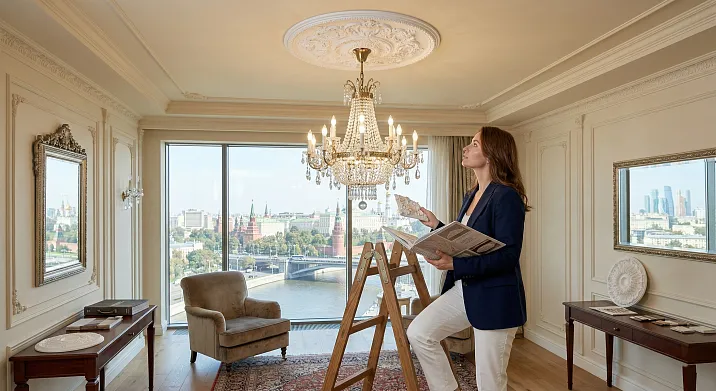
Details make all the difference. This becomes clear when looking at a well-executed interior: there are no random elements, every detail is in its place and contributes to the whole. Polyurethane brackets are one of those decorative accents that are rarely mentioned first, but when used skillfully, they make the interior cohesive, distinctive, and expressive.
Polyurethane brackets in Moscow are chosen for decorative wall finishing, ceiling junctions, portals, and interior compositions in apartments, country houses, and commercial spaces. This element is especially in demand in classical, neoclassical, and richly decorated interiors—where symmetry, accent details, and the coherence of the overall decorative system are important.
Before buying a polyurethane bracket in Moscow, it's important to understand three things: where exactly it will be used in the interior, what scale it should be, and how it will combine with other decorative elements—moldings, cornices, portals, panels. This is exactly what this material is dedicated to—a detailed practical guide to selecting, applying, and purchasing decorative polyurethane brackets.
Full range — in the sectionPolyurethane bracketsSTAVROS. Collections of different styles, shapes, and scales—from compact accent details to large architectural consoles. Read the guide—and choose consciously.


What is a polyurethane bracket and what is it for




What is a decorative bracket
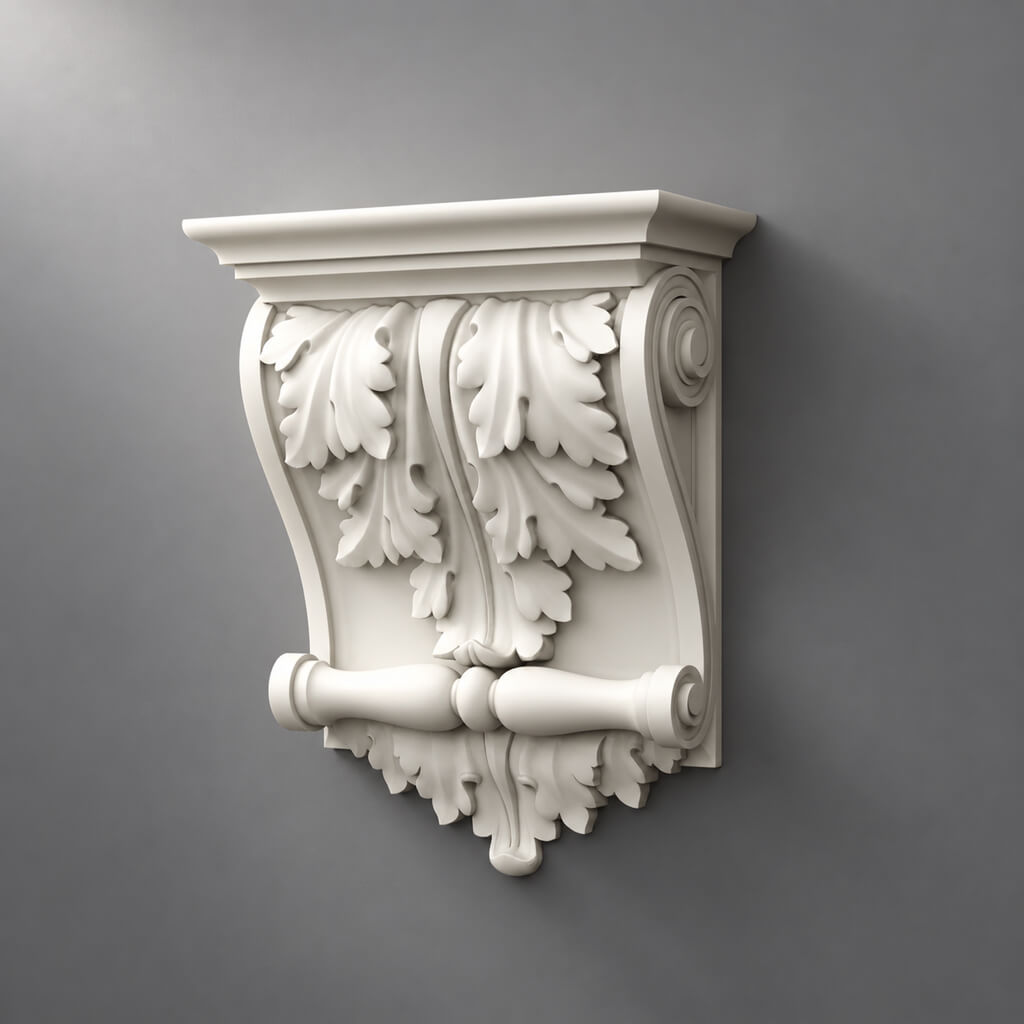
A decorative bracket is a three-dimensional shaped element resembling a protruding console or supporting ledge. In classical architecture, brackets served a load-bearing function: they supported cornices, beams, and balcony slabs. In interior design, they have long lost this functional role, retaining only a decorative one—but this has not made them any less significant.
A polyurethane bracket is manufactured by injection molding from foamed polyurethane with a density of 200 to 420 kg/m³. This ensures high strength with minimal weight. The surface of the product reproduces all the details of the original molded piece—precise ornamentation, clear edges, and sculptural relief. After painting with acrylic paint, a polyurethane bracket is almost indistinguishable from one made of plaster or stone, while weighing 5–7 times less.
Structurally, a decorative polyurethane bracket is a monolithic three-dimensional element with a flat base for mounting on a wall or ceiling and a relief front surface with ornamentation. Sizes range from compact items 10–12 cm in height to large architectural forms 40–60 cm in height.
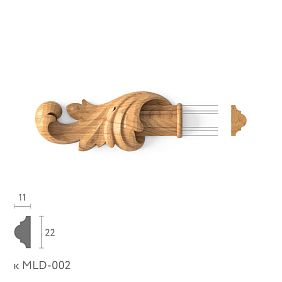
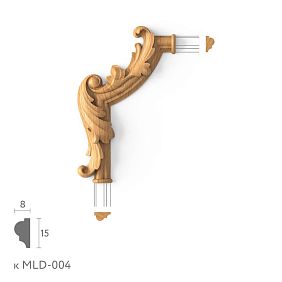
Our factory also produces:



Where brackets are used in interior design
A polyurethane bracket is not a universal decoration that 'can be hung anywhere.' It is a targeted accent element with specific application scenarios. Understanding these scenarios is what distinguishes an informed choice from a random purchase.
Main areas of application:
-
Under cornices—simulating supporting consoles that hold up the ceiling cornice. Brackets are mounted evenly around the perimeter of the room under the cornice profile, creating a sense of architectural support.
-
In decorative portals—on the sides of fireplace portals, doorways, and arched openings, creating lateral supporting accents.
-
On accent walls—as symmetrical decorative nodes on either side of a mirror, painting, niche, or central panel.
-
In niches and wall sections—to create expressive supporting points in decorative niches.
-
In cornice and ceiling assemblies — as part of complex ceiling systems, where the bracket accentuates corner zones or transitions
-
On furniture portals — for decorating bookcases, consoles, sideboards
Get Consultation
Why polyurethane brackets are in demand in Moscow
The Moscow interior decor market is one of the most diverse. Here, brackets are ordered for both city apartments in classical style, and for country houses with developed architectural solutions, and for commercial interiors — hotels, restaurants, office representations, showrooms.
Polyurethane has secured a stable place in Moscow interior projects for several clear reasons. Firstly, precise reproducibility of details — the relief, ornament, shape fully correspond to plaster stucco. Secondly, lightness — unlike gypsum or stone elements, a polyurethane bracket is mounted with ordinary construction adhesive without anchors and dowels. Thirdly, resistance to operating conditions — the bracket does not crack, does not swell, is not afraid of wet cleaning. Fourthly, a wide range of style solutions — from strict laconic forms for modern interiors to rich classical consoles for representative spaces.
Where polyurethane brackets are used in interiors
In wall decoration
The wall is the most common plane for mounting decorative brackets in residential interiors. How exactly do they work here?
A symmetrical pair under a mirror or painting. Two brackets, positioned symmetrically on either side of a central object on the wall — a mirror, painting, decorative panel — create an architectural accent. The brackets seem to 'support' the object, integrating it into the overall decorative system of the wall.
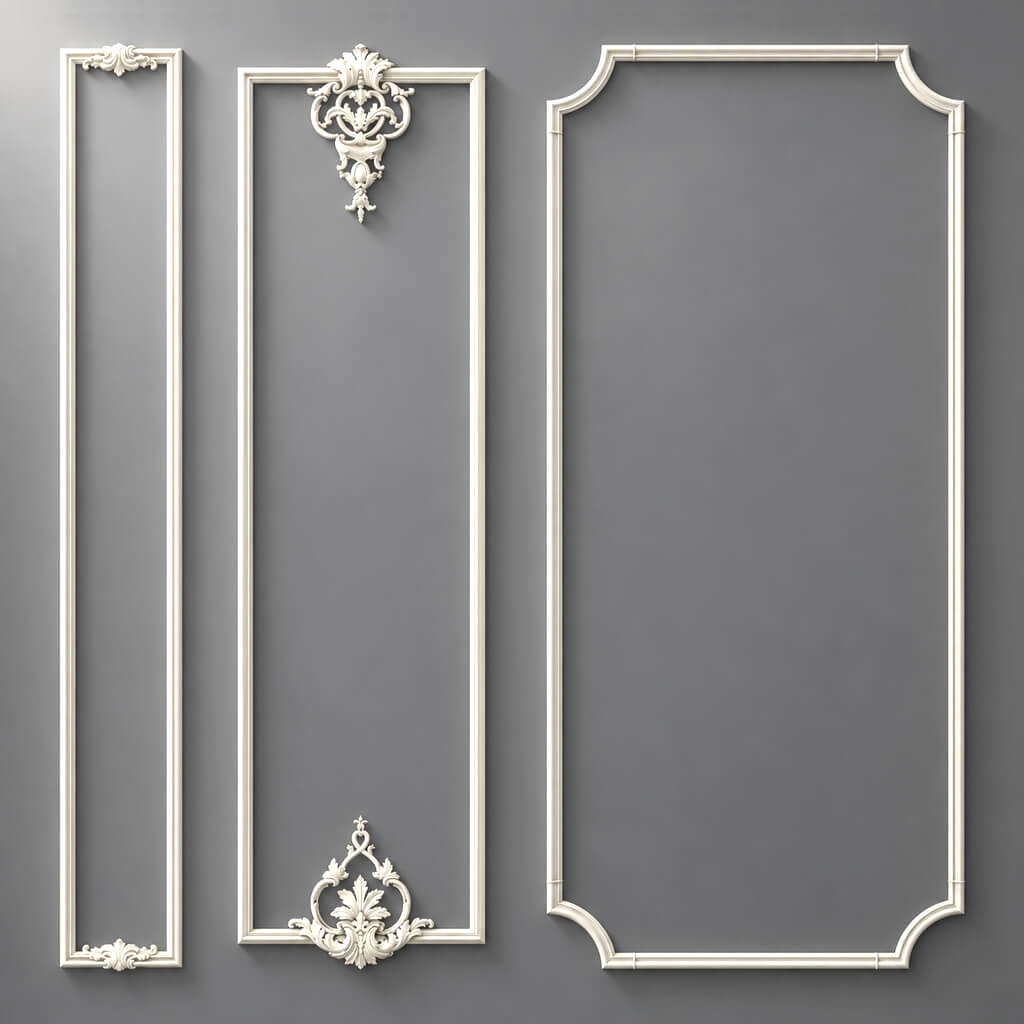
Accent elements in a wall frame system. In interiors with molding frames, a bracket can be positioned at key points of the wall composition — in the lower corners of large frames, on the sides of vertical dividers, in the center of a horizontal belt.
Independent accents on a neutral wall. In interiors without complex wall systems, a pair of brackets on an accent wall creates a decorative rhythm without the load of moldings and frames.
For wall solutions — in the sectionWall DecorSTAVROS offers coordinated moldings and overlays that create an integrated wall system with brackets.
In decorative portals
A portal — the framing of an opening, fireplace, arch, or niche — is perhaps the most classic place for a decorative bracket. In portal architecture, brackets are historically located in support zones: at the base of the entablature (the upper part of the framing), on the sides of the opening, at corner points.
For a fireplace portal, a pair of large brackets on either side of the hearth creates the feeling of a genuine architectural structure — the supporting elements seem to hold the upper part of the portal. This is a strong architectural technique, characteristic of classical and neoclassical interiors.
For arched openings, brackets are mounted at the support point of the arch — where the curvature of the vault begins from the vertical post. These are so-called 'imposts' — corbels from which the arch visually 'starts'.
In ceiling and cornice compositions
This is one of the most expressive scenarios for using decorative brackets. A ceiling cornice with a large profile — especially in rooms with ceilings from 3 m — visually needs 'support'. Brackets, evenly spaced under the cornice along the perimeter of the room or only on accent walls, create a sense of architectural logic: the cornice seems to rest on these consoles.
The interval between brackets under the cornice is chosen based on the rhythm of the wall system and the scale of the room. In large formal halls — 60–120 cm. In medium-sized living rooms — 80–150 cm. In small rooms, this solution is used less frequently, as it requires sufficient scale.
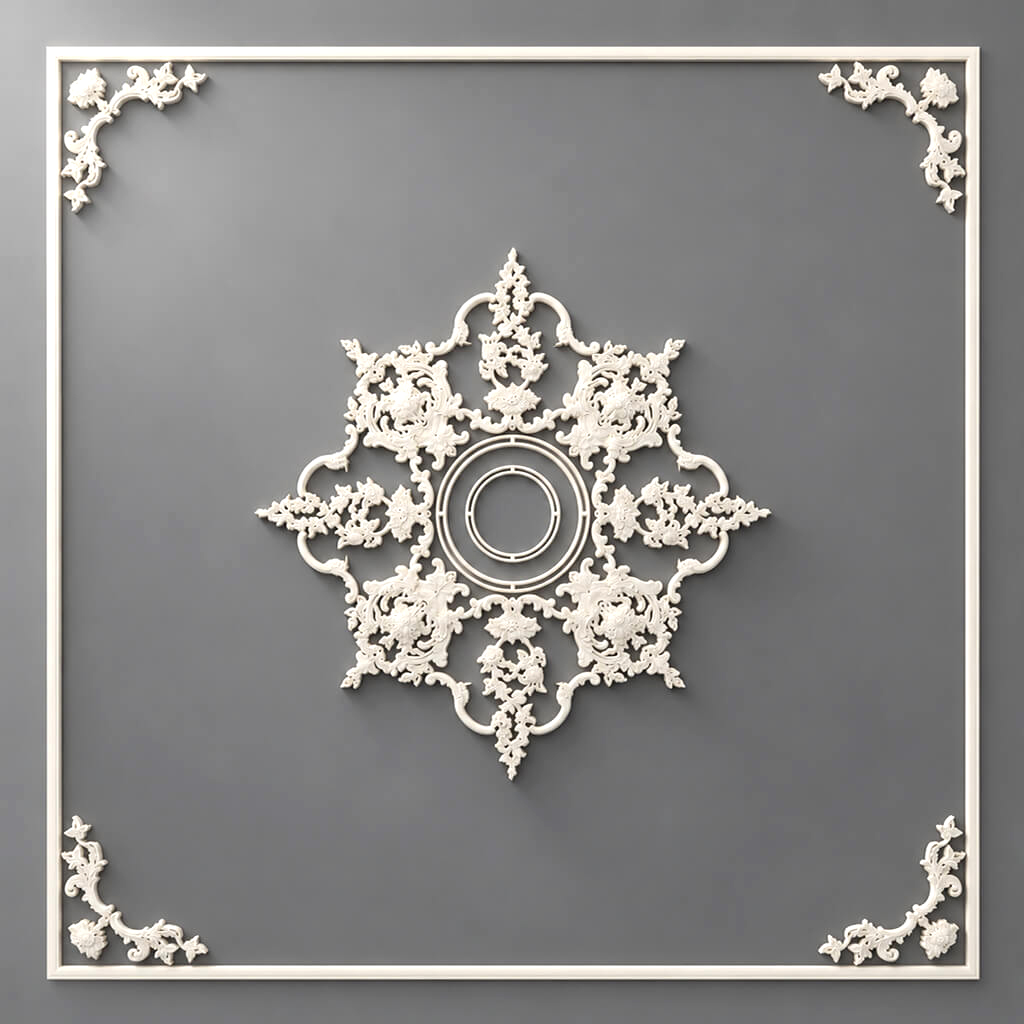
All ceiling elements and cornice systems STAVROS — in the sectionceiling decor.
In accent interior zones
Accent zone — a mirror with a console in the hallway, a bed headboard in the bedroom, a bar counter, a study with library shelves. In each of these zones, brackets can become an accent decorative element.
Especially effective is the combination: bracket + shelf. An open shelf resting on a pair of decorative polyurethane brackets is both a functional and aesthetically strong solution. The polyurethane bracket in this case does not bear a real load (the shelf is attached independently), but creates a sense of support — an important visual effect.
In combination with other elements of stucco decor
A decorative polyurethane bracket rarely exists alone in an interior. It almost always works in conjunction with other elements:
-
The situation is similar withceiling cornices— as a supporting element under a cornice profile
-
The situation is similar withmoldings— as an accent element of a wall system
-
The situation is similar withdecorative inlays— in portal and wall compositions
-
The situation is similar withrosettes— in symmetrical decorative panels
What polyurethane brackets can be bought in Moscow
Classic brackets
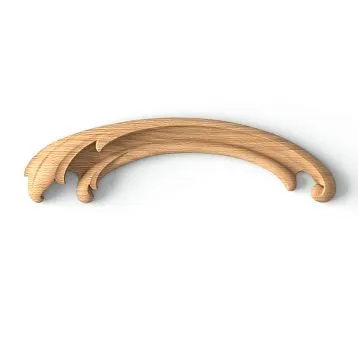
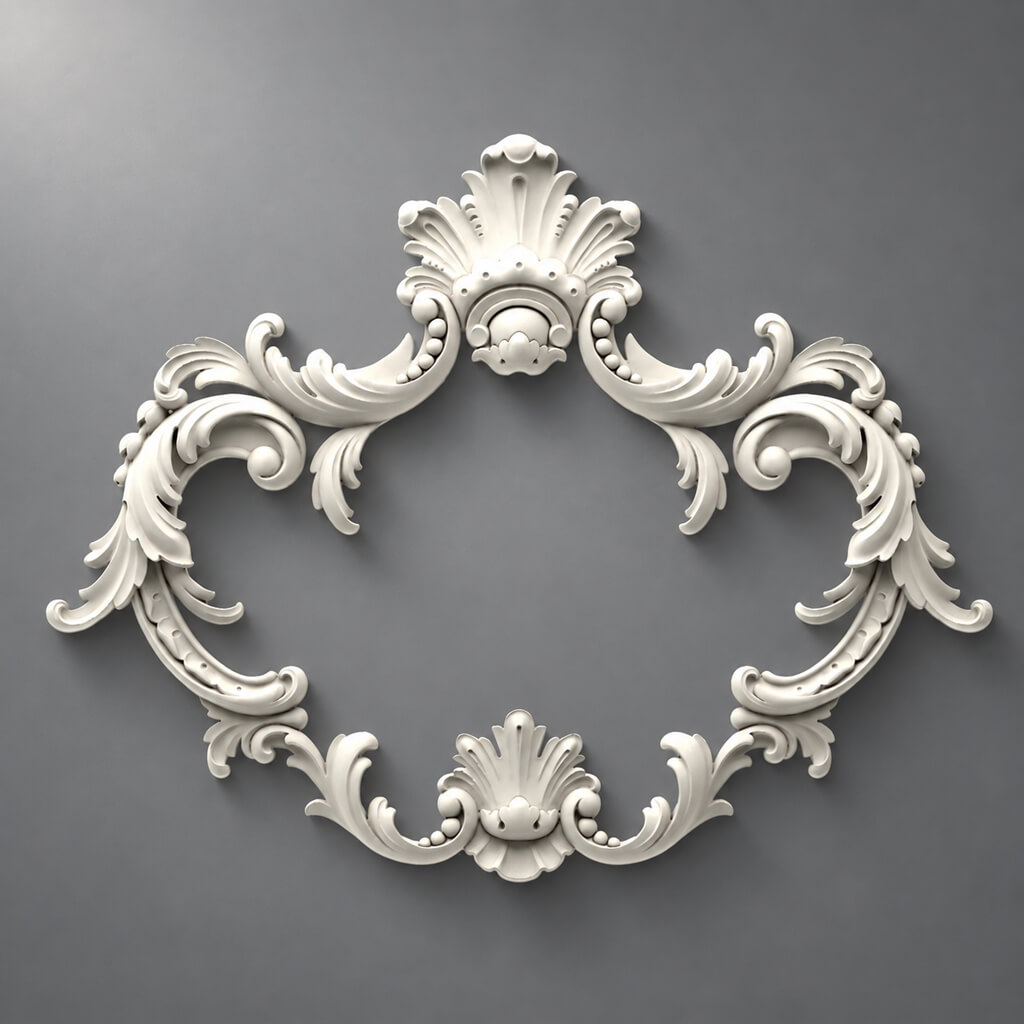
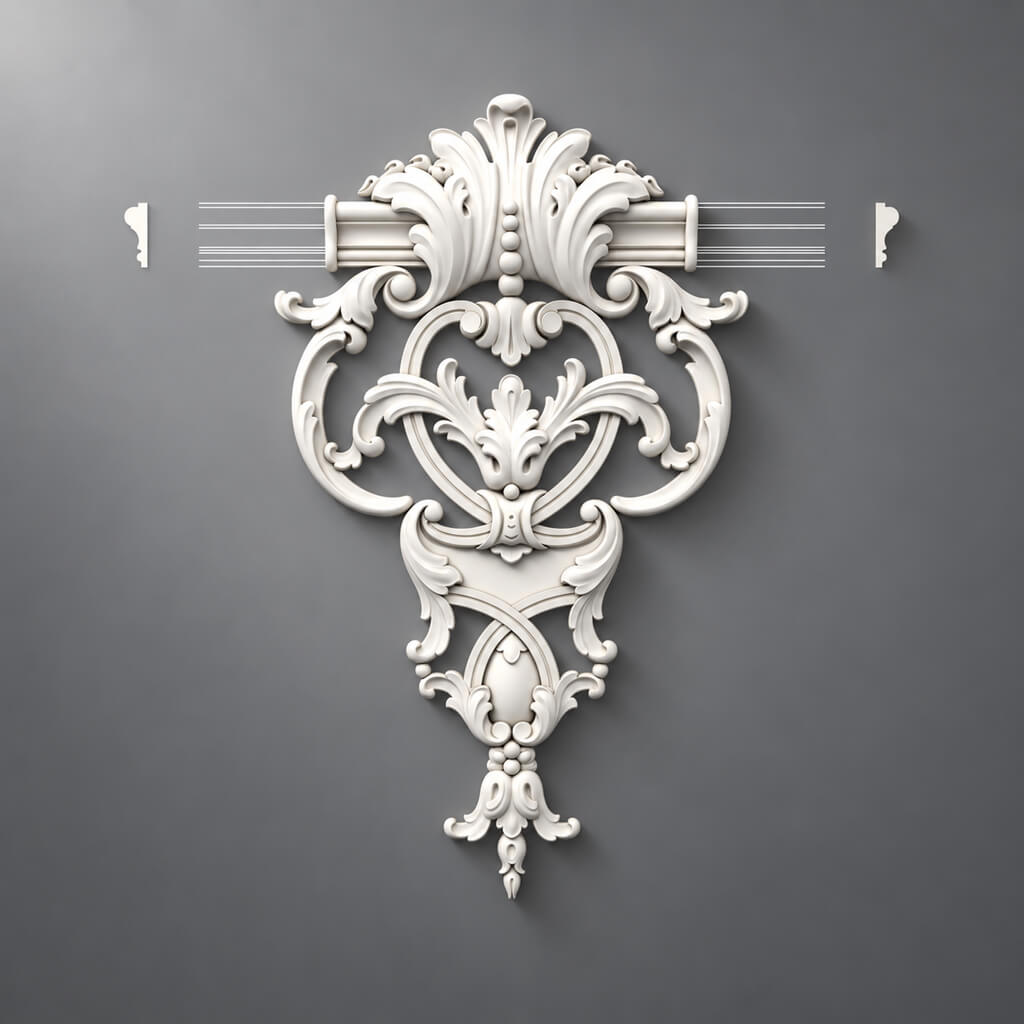
A classic polyurethane bracket is an S-shaped or stepped console form with an ornamental relief. The ornament includes acanthus leaves, volutes, cartouches, and floral garlands. The shape is smooth, with pronounced curved lines that create a sense of organic growth.
Such brackets are organic in interiors with rich stucco decor: living rooms and halls of country houses, formal studies, and classic bedrooms. Their size ranges from medium (height 15–20 cm) to monumental architectural forms (height 40–60 cm).
A classic bracket requires 'company': it is organic only when surrounded by cornices, moldings, and overlays that match in style. A single richly ornamented bracket in a minimalist space looks out of place.
Relief decorative brackets
Relief brackets differ from classic ones in their more modern form while retaining ornamental relief. Here, the geometric basis of the profile is clearer, more angular, and architectural, combined with moderate decorative relief. This stylistic direction is closer to neoclassicism and art deco.
Relief decorative brackets work well in interiors where there is stylistic definition but no desire to lean into overloaded classicism. Moderate ornamentation with a clear profile strikes a balance between decorativeness and restraint.
Concise models for a restrained interior
A concise bracket is a console form without ornamentation or with a minimal decorative accent. It features clear geometric lines, a strict profile, and an absence of relief patterns. Such products work through form and proportions, not through ornamentation.
Concise brackets are appropriate in:
-
Modern interiors with decorative accents
-
Transitional styles between classic and contemporary
-
Commercial interiors where representativeness is needed without overload
A smooth, concise bracket is often the best choice for those who are unsure. It fits into a greater number of interior contexts, does not create a stylistic conflict, and works well paired with smooth cornices and moldings.
Accent large brackets
A large polyurethane bracket — height from 30 to 60 cm — is an architectural accent. It is used where a strong visual effect is needed: under a monumental cornice in a formal hall, in a large fireplace portal, in a tall door frame.
It is important to understand: a large bracket requires proportionate space. Ceiling height — at least 3 m. The scale of the room — sufficient to perceive the large element without a feeling of pressure. An accent large bracket is a solution for country houses, halls, formal living rooms, and representative commercial spaces.
Brackets for decorative nodes and compositional accents
This is a category of compact brackets (height 8–15 cm) that work as point decorative details in wall and ceiling systems. They do not claim the role of the main accent — they enhance and enrich an already built decorative logic.
Such brackets-parts are used:
-
At intersections of molding frames as decorative nodal inserts
-
Under small shelves and niches
-
At corner points of wall panels
-
As symmetrical accents on both sides of the axial element
The entire assortment — in the section brackets, capitals made of polyurethane STAVROS.
How to choose a polyurethane bracket for the task
If an accent decorative element is needed
The task is to create a strong visual accent in a specific area of the interior. The solution is to choose a large or medium bracket with an expressive profile, which will work as an independent decorative object.
Where to place? Symmetrically — on both sides of the mirror, on the sides of the fireplace portal, under the cornice at key points of the feature wall. Symmetry is a mandatory condition for accent use. A single bracket without a pair looks random and unfinished.
What size? An accent bracket should be clearly visible from the main viewing point — from the center of the room, from the seating area, from the entrance. Height — at least 15–20 cm. In large rooms — 30–40 cm.
If the bracket should support the overall composition
The task is to enrich an already existing interior system by adding rhythm and accent points. The bracket here is not the main hero, but a supporting element.
Solution: choose compact or medium brackets from the same collection as the moldings and cornices. Place them at equal intervals, creating a rhythmic repetition. Ornamentation — coordinated with the rest of the decor: not richer and not poorer.
If it's important to emphasize the classical style
A classic interior requires ornamented brackets with rich relief. Acanthus leaves, volutes, cartouches — this is the language of classical decor. The bracket must belong to the same decorative family as the cornices, moldings, and rosettes.
Here, consistency in scale is important: if the cornice is wide and massive — the bracket should be large. If the decorative system is more restrained — the bracket should be of moderate size.
If a restrained interior accent is needed
A restrained accent is a laconic or slightly relief bracket that adds interest without overload. Optimal for neoclassicism, modern interiors with decorative details, for apartments where you want 'a bit of classic' without full immersion in the style.
If a bracket is chosen to pair with other elements
This is the most correct approach. Before choosing a bracket, determine what exactly it will be adjacent to. What style of cornice is installed? What is the character of the moldings? Are there overlays or rosettes in the interior? The bracket should become part of a unified decorative system—not an alien element.
How to choose a bracket according to interior style
For classic style
Classic is the main habitat of decorative brackets. Here they are organic in any application: under cornices, in portals, on accent walls.
Bracket parameters for a classic interior:
-
Ornament: acanthus leaves, volutes, cartouches, floral motifs
-
Size: medium (15–25 cm) and large (30–50 cm) depending on the scale of the room
-
Collection: strictly coordinated with cornices and moldings
-
Placement: always symmetrical, in pairs or in a rhythmic row
For neoclassical style
A neoclassical bracket is precision of form with moderate ornamentation. Relief is present, but it does not dominate. The profile is clear, geometrically precise. The proportions are more modern than in classic, but with clear historical references.
Neoclassicism allows combining a relief bracket with more concise moldings and cornices — provided they belong to the same stylistic direction.
For a modern interior with decorative accents
In a modern interior, the bracket works through the principle of 'one conscious accent.' A concise geometric form without ornament. A clear profile. Installation strictly symmetrical — a pair of brackets, no more.
An important nuance: in a modern interior, a decorative polyurethane bracket should be perceived as an intentional architectural gesture — not as a random detail. Therefore, its placement location is considered especially carefully.
For an interior with a symmetrical composition
Symmetry is the key principle for applying decorative brackets. They are almost never installed alone. A pair, a quartet, a rhythmic row — brackets work through repetition and balance.
In a space with pronounced axial symmetry — an entrance hall with a central mirror, a living room with symmetrical furniture arrangement, a formal hall — decorative brackets become points that enhance this symmetry. Their placement must be measured to the centimeter.
How not to overload the space with decorative elements
This is the main risk when working with expressive accent details. Several rules:
-
One dominant accent — either a rich cornice, or expressive brackets, or a saturated wall system. All three at once is overload.
-
Scale correspondence — the size of the bracket corresponds to the size of the wall and the height of the ceiling
-
Stylistic unity — bracket, cornice, molding, and overlay belong to the same decorative family
-
Limited quantity — in a residential interior, one or two pairs of brackets per room are usually sufficient
How to choose the size and relief of a bracket
When a compact bracket is suitable
A compact bracket (height 8–15 cm) is appropriate:
-
In rooms with ceilings up to 2.7 m
-
As a detail of a wall or ceiling system, not intended to serve as an accent
-
In small decorative nodes — intersections of moldings, corner points of frames
-
In restrained interiors where a detail is needed, not an accent
When a large accent element is needed
Large bracket (height 25–60 cm) is justified:
-
In rooms with ceilings from 3 m
-
Under a monumental cornice in a formal space
-
In a large fireplace portal
-
In country houses with spacious halls and foyers
How to account for wall size or decorative unit
Practical rule: bracket height — no more than 1/6–1/8 of wall height. For a 3 m wall — bracket up to 40–50 cm. For a 2.7 m wall — bracket up to 30–35 cm. Exceeding these proportions creates a sense of disproportion.
The width of the area where the bracket is mounted also matters. Under a 4 m cornice — 3–4 brackets with equal spacing. On a wall zone 1.2 m wide — a pair of brackets symmetrically relative to the center.
How to correlate brackets with cornices, moldings, and other details
Main principle: the scale of ornamentation and relief detailing must be coordinated. If the cornice is narrow and laconic — the bracket cannot be monumentally ornate. If moldings are thin and smooth — the bracket should also be restrained.
Height synchronization is also important: the bracket is mounted strictly under the lower edge of the cornice — or at a specified height from the floor for wall applications. Arbitrary vertical placement disrupts the architectural logic.
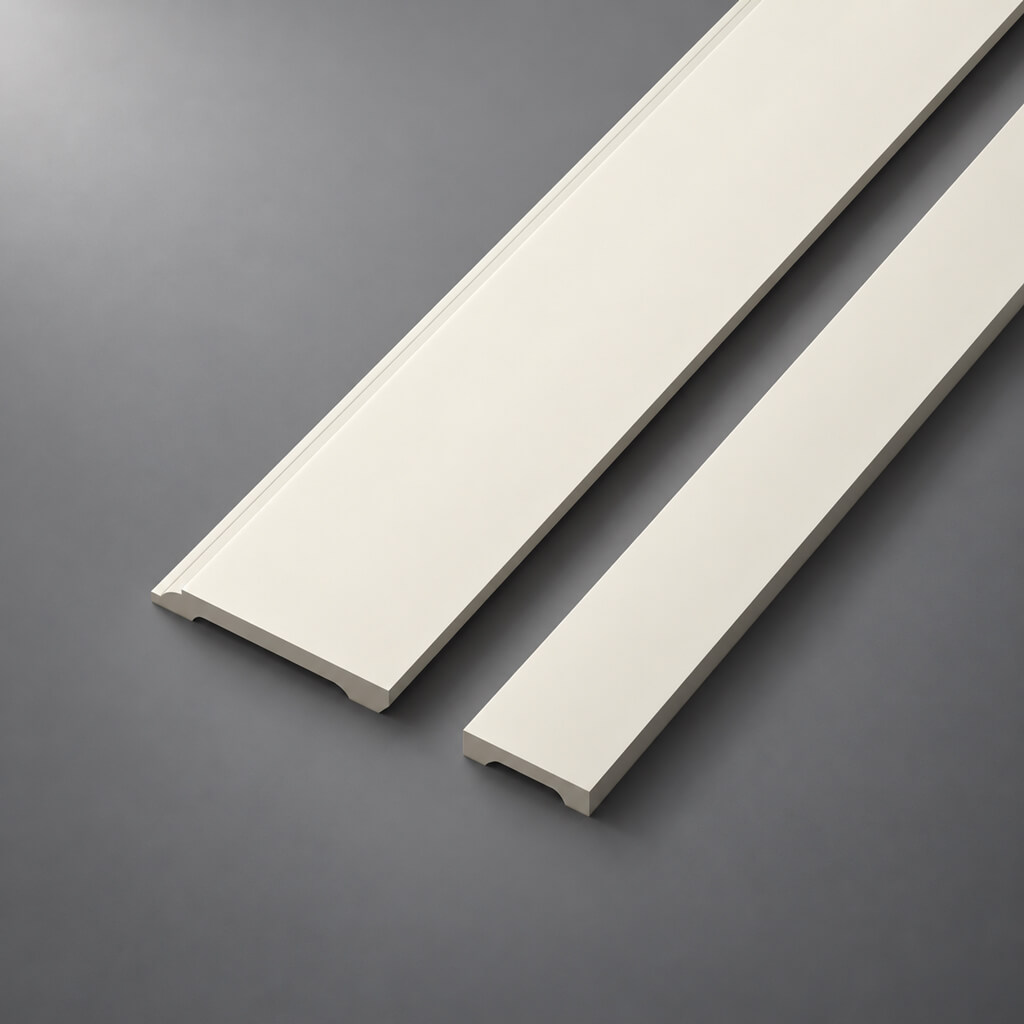
Ceiling MoldingandMoldingsSTAVROS are stylistically coordinated with polyurethane brackets within the collections.
Why you shouldn't choose based on photos alone
The catalog photo was taken under conditions that have nothing to do with your interior. The size of a bracket that looks 'moderate' in a photo of a spacious country house hall will appear monumental in an apartment with 2.7 m ceilings.
Always check the overall dimensions in the product description and compare them to the actual parameters of your wall. Even better — draw a proportional sketch of the wall by hand and mark the intended bracket size on it.
What to combine polyurethane brackets with
Brackets and moldings
Moldings and brackets are a frequent pairing in decorative wall systems. Moldings create wall geometry (frames, dividers), brackets add point-based three-dimensional accents. Together they form a multi-level decorative plane.
Pairing logic:
-
Moldings establish horizontal and vertical rhythm
-
Brackets accentuate the key points of this rhythm
-
The degree of ornamentation of both elements is coordinated
In the STAVROS collections, polyurethane moldings and brackets belong to the same decorative family, which significantly simplifies selection.
Brackets and cornices
This is perhaps the most architecturally justified combination. A cornice is a horizontal line along the perimeter of the ceiling. Brackets are the 'supports' of this cornice, placed at equal intervals under its lower edge.
Combination rules:
-
The height of the bracket corresponds to the scale of the cornice: for a wide one (120+ mm) — a bracket with a height from 20 cm, for a narrow one — from 10–12 cm
-
The ornament of the bracket is coordinated with the ornament of the cornice
-
The rhythm of bracket placement corresponds to the rhythm of the wall system
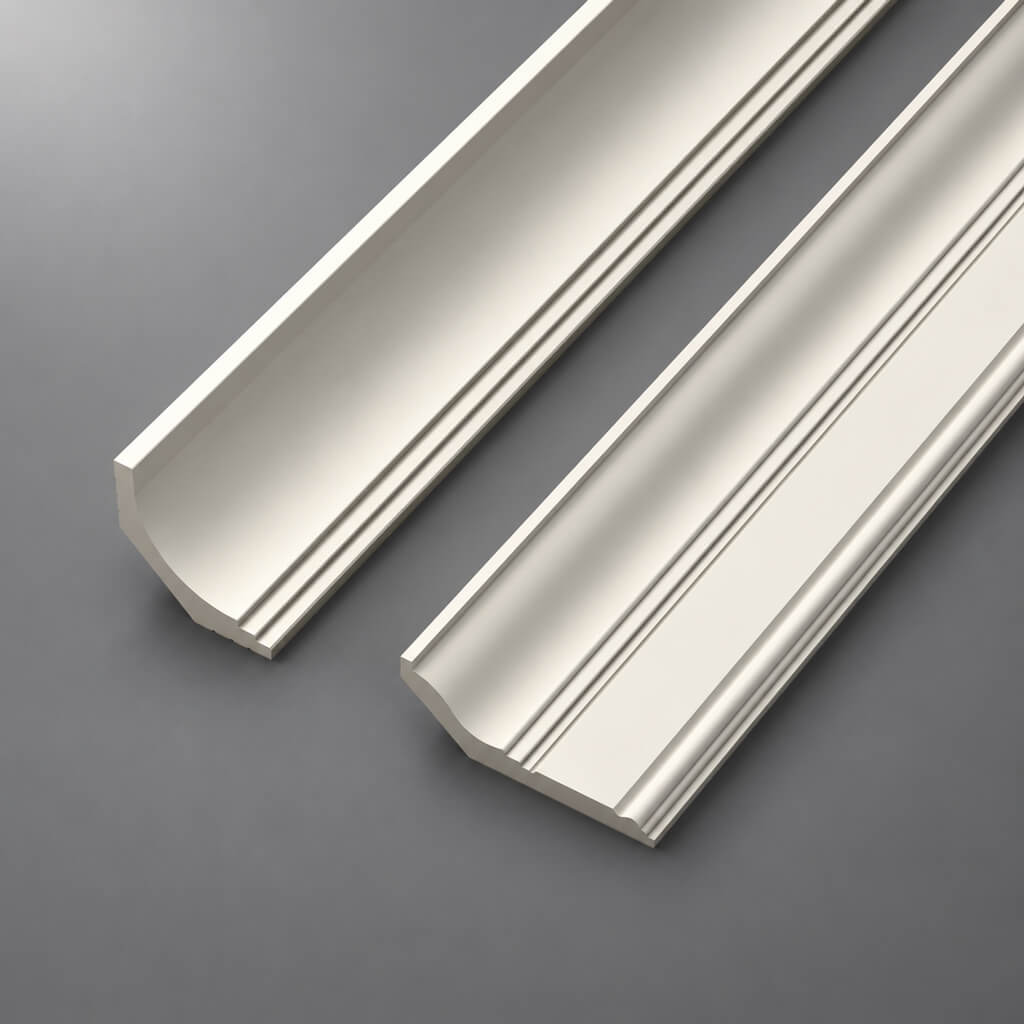
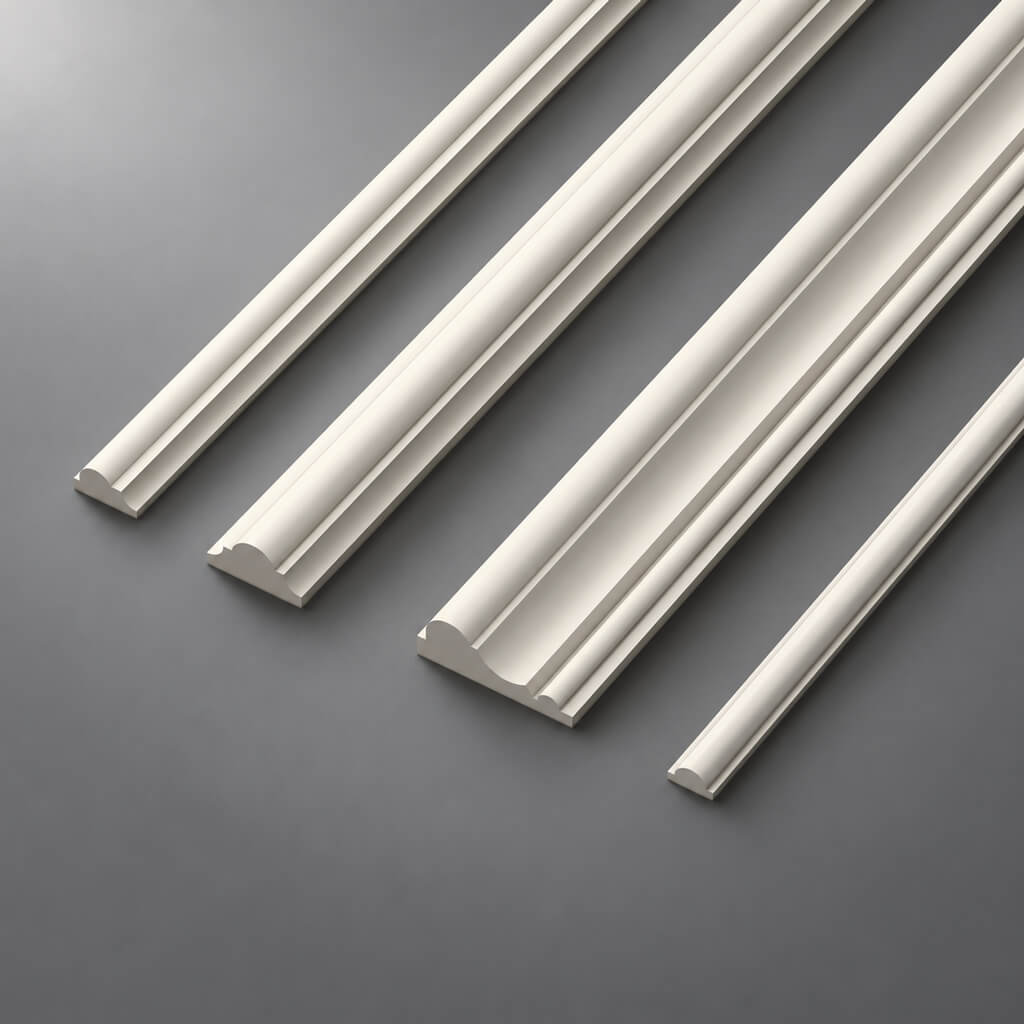
Polyurethane Crown MoldingSTAVROS are produced in the same collections as the brackets, providing a ready-made combination.
Brackets and decorative panels
In classic and neoclassical interiors, the lower part of the wall is often finished with panels: a high baseboard + a horizontal divider + a lower zone in a rich tone. Brackets in such a system can be placed along the divider line—as decorative consoles, 'supporting' the upper part of the wall.
Brackets and ceiling elements
In complex ceiling systems—with coffers, ceiling rosettes, multi-step cornices—brackets participate in the ceiling decorative logic. They can be placed at the corner points of coffers, accentuating the transition from the perimeter cornice to the ceiling plane.
ceiling rosettesandceiling decorin the STAVROS catalog can be selected in a unified stylistic logic with brackets.
How to assemble a cohesive composition without visual noise
Three working principles:
First: hierarchy. In any decorative system, one element is primary, the others are supporting. If the primary element is the cornice, then brackets support it. If the primary element is the brackets by the fireplace, then the cornice can be more restrained.
Second: a single source. All elements are from one decorative family, from one collection, or from stylistically coordinated collections of one brand. Mixing different stylistic sources creates a decorative conflict.
Third: air. There should be space between decorative accents. Neutral zones are an important part of the decorative system. They give the eye a rest and allow the accents to 'sound'.
How to buy a polyurethane bracket in Moscow without mistakes
Determine the placement location
Answer the question specifically: not 'on the wall', but 'under the cornice on the accent wall in the living room' or 'on the sides of the fireplace portal' or 'as a pair at the head of the bed'. The specifics of the location determine everything else — size, shape, orientation.
Select the style and shape
After determining the location — choose the style. This is dictated by the interior, not personal taste detached from context. If the cornices are smooth and modern — the bracket is laconic. If the cornices are classical with acanthus — the bracket has a matching ornament.
Check the dimensions
Measure the ceiling height, width of the application area, distance from the intended installation location to adjacent elements. Compare with the dimensions in the product description. Again: photos without dimensions are insufficient.
Check compatibility with other decor
Mentally (or on a diagram) place the selected bracket in the context of the existing decor. Does it match the style of the cornices? The scale of the moldings? The ornamentation of the overlays? If there is a mismatch anywhere — look for another model.
First, think through the composition, then choose the element
This is the golden rule of decorative design. Not the opposite — 'I'll buy it, and then figure out where to put it'. First the plan, then the purchase. A drawn placement diagram will help correctly determine the number of brackets and check the rhythm of arrangement.
Common mistakes when choosing decorative brackets
Analyzing specific mistakes is practical experience that helps make the right decision. Here are the most common ones.
Too massive a bracket for a small space
A bracket 40 cm high in a room with a 2.6 m ceiling is a mismatch in scale. The decorative element should be proportional to the space. In small rooms, compact brackets 8–15 cm create the necessary accent without overwhelming the scale.
Too active relief for a calm interior
An ornately decorated bracket with acanthus leaves and volutes in a modern, minimalist interior is a style conflict. The relief of the bracket should match the overall decorative tone of the interior.
Buying without understanding its place in the composition
'A beautiful bracket — I'll buy it, I'll figure it out later' is a common scenario that ends with the detail on a storage shelf. A polyurethane bracket is not universal decor, but an element with a specific application scenario. Without understanding this scenario, the purchase is meaningless.
Incompatibility with moldings, cornices, and overall style
A bracket from one collection, cornices from another, moldings from a third — these are three different interior languages in one space. Stylistic unity of decorative elements is not an option, but a requirement.
Choosing only by photo without considering dimensions
This is perhaps the main practical mistake when shopping online. Photos are taken under different scale conditions. Always first check the actual dimensions in the description — height, width, bracket projection from the wall.
Overloading the interior with decorative details
The principle 'more is better' does not work with decor. Six brackets where two are enough create visual fatigue, not decorative richness. Less, more precise, more expressive — that's the correct formula.
Lack of symmetry where it is needed
A single bracket without a pair is a mistake in almost any application scenario. Brackets work through symmetry and repetition. If there is no pair — there is no completeness.
For which projects in Moscow polyurethane brackets are most often purchased
For apartments
In a city apartment, a polyurethane bracket appears as a focal accent: a pair under the cornice on an accent wall in the living room, brackets by the fireplace portal (or its decorative equivalent), compact details in the wall system of a study or hallway.
For apartments with ceilings of 2.7–2.8 m — compact and medium-sized models with a height of 10–20 cm. You can buy a polyurethane bracket in Moscow for an apartment in the catalog STAVROS with delivery.
For a country house
A country house is a space for large-scale solutions. High ceilings from 3 m, halls, formal living rooms, studies with library shelves — all these zones fully justify the use of large architectural brackets.
The combination works especially expressively: a high cornice (from 120 mm) + brackets 25–35 cm high with an interval of 80–120 cm under the cornice along the entire perimeter of the formal living room. This solution transforms the room into a hall.
For commercial interiors
Restaurants, hotels, office receptions, meeting rooms with representative finishes — wherever classic or neoclassical decor creates an atmosphere of status and quality. Brackets here work within a system with rich cornices, paneling, and a well-thought-out lighting concept.
Polyurethane is a practical choice for commercial applications: it requires no special maintenance, is resistant to mechanical impacts, and can be easily repainted if necessary.
For a design project
In design projects, polyurethane brackets are valued for their precision of details and stylistic consistency within the collection. A designer can build a cohesive decorative system: brackets + cornices + moldings + rosettes — all from a single source, in a unified stylistic logic.
For designers in Moscow, STAVROS offers the full necessary range in the sections:Polyurethane moldings, Moldings, Crown Molding, Baseboards, applique.
For an interior with classic accents
A special scenario is an interior that is generally contemporary but includes one classically designed zone: a fireplace wall, a niche with shelves, an entrance hall. In such solutions, brackets appear as part of this 'classical insert' — a targeted, well-justified accent.
FAQ: answers to popular questions about polyurethane brackets in Moscow
What is a polyurethane bracket in interior design?
It is a decorative three-dimensional element of the console type, made of expanded polyurethane. It reproduces the form of an architectural bracket — a protruding support console — and is used for decorative wall finishing, ceiling assemblies, portals, and accent zones in interiors. The full assortment is in the sectionPolyurethane brackets STAVROS.
Where are decorative polyurethane brackets used?
Under cornices around the perimeter of a room — as an imitation of support consoles. In decorative portals — fireplace, door, arch. On accent walls — symmetrically on both sides of a mirror, painting, or niche. At corner points of wall and ceiling systems. As a support for decorative shelves.
How to choose a polyurethane bracket by size?
Guidelines: ceiling up to 2.7 m → bracket 8–15 cm; ceiling 2.7–3 m → bracket 15–25 cm; ceiling from 3 m → bracket from 25 cm. The width of the bracket should not exceed 1/3 of the width of the application area. Height — no more than 1/7 of the wall height.
What does an interior bracket pair best with?
With cornices — under their lower edge as a support element. With moldings — as an accent node in a wall system. With decorative overlays — in portal compositions. All elements should belong to the same stylistic direction.
Is a polyurethane bracket suitable for a modern interior?
Yes — when choosing a laconic, smooth shape without ornament. A geometric bracket with a clear profile and no relief decoration is organic in a modern space as a deliberate architectural accent.
When is it better to choose a relief bracket, and when a laconic one?
Relief — for classic, neoclassical, and art deco. Laconic smooth — for modern interior, Scandinavian style, and transitional solutions. The degree of relief of the bracket should correspond to the overall decorative saturation of the interior.
Can brackets be combined with moldings and cornices?
Not just possible — it's the correct approach. Brackets,MoldingsandCrown Molding— are three levels of one decorative system. The main thing is to choose them from the same collection or coordinated style directions.
How to avoid mistakes when buying a polyurethane bracket in Moscow?
Three steps: determine the place of application and its exact dimensions → choose a style that matches the interior → check how the bracket combines with the existing decor. Always look at the actual dimensions in the description, don't rely only on photos.
For which rooms are decorative brackets suitable?
For living rooms, studies, halls, bedrooms with classic or neoclassical decor. For country houses with high ceilings. For commercial interiors of a representative class. In small rooms — only compact models and only as a point accent.