Article Contents:
- What are unpainted furniture legs
- What does "uncoated" mean
- Why a ready-made form is more convenient than self-turning
- Who are supports without finish suitable for
- Blank for Enameling
- Blank for Toning
- Can a blank for tinting be painted with enamel
- Can a blank for enamel be tinted
- The furniture is painted entirely
- A non-standard shade is needed
- Need to preserve the natural texture of oak
- Old furniture is being restored
- A large batch of one color is needed
- Beech for opaque enamel
- Oak for translucent finish
- Can beech be coated with oil
- Can oak be painted with enamel
- Turned supports
- Carved legs
- Geometric supports
- First calculate the final height
- Why a few centimeters matter
- Diameter and furniture scale
- Four legs or a different number
- Allowance for foot and adjustment
- Low options 100–250 mm
- Medium options 300–500 mm
- High options 600–750 mm
- Straight and angled position
- For cabinets and dressers
- For sofas, armchairs and ottomans
- For benches
- Felt glide
- Stud M8×60
- FUR-001 Kit
- FUR-012 Kit
- Mounting plate
- Foot pad
- Check the entire batch before starting work
- Do a test coat
- Protect the mounting holes
- Process the bottom end
- Mark the legs
- Primer
- Enamel
- Toning
- Varnish or oil
- Drying
- Work with one batch of materials
- Maintain the same order
- Use a control light
- Keep a sample
- Table
- Coffee Table
- Chest of drawers and cabinet
- Sofa and armchair
- Bed
- Ottoman and pouf
- Console
- Chair and stool
- The legs need to be painted in the color of the facade
- Need to get a natural oak shade
- Need white legs for the dresser
- Need black legs for a modern sofa
- Need to update an old cabinet
- Need high supports for a designer table
- Need low spherical legs
- Need a series of furniture for a cafe or hotel
- For tinting and already tinted
- Wooden leg and metal adjustable support
- Leg and under-table
- Furniture leg and baluster
- Choosing only by shape
- Consider "under enamel" as finished coating
- Tint beech purchased for enamel
- Paint one leg separately
- Do not account for tabletop thickness
- Buy four supports for a long body without central support
- Order fasteners after painting
- Do not protect the bottom end
- Use furniture until fully dry
- Do not make a spare leg
- New custom furniture
- Restoration
- Designer furniture
- Commercial interior
- Do not look for wood of unknown moisture content
- Do not copy the profile by eye
- Do not invent fastening after manufacturing
- Do not waste time on rough sanding of complex shapes
- Classic Furniture
- Contemporary furniture
- Scandinavian furniture
- Art Deco
- Provence and vintage
- Kitchen
- Bathroom and wet areas
- Bedroom
- Entry Hall
- Living Room
- Commercial space
- Acclimatization
- Box labeling
- Protection of the finished finish
- Height control
- Color control
- Fastening control
- Trial assembly
- In the color of the facade
- To match the tabletop color
- Match furniture handle color
- Contrast option
- Matte or glossy surface
- Long body
- Tall legs
- Soft furniture
- Uneven floor
- Checking fasteners
- Local damage
- Felt glides
- Moving furniture
- What does "leg under enamel" mean?
- How does a blank for tinting differ from a blank for enamel?
- What is better for furniture legs — beech or oak?
- Do wooden legs need to be primed?
- Can the legs be coated with oil?
- Can beech legs be stained?
- Can oak be painted with opaque enamel?
- How many coats of enamel should be applied?
- Should legs be painted before or after installation?
- How to achieve the same color on all four legs?
- How to protect the bottom end?
- How to choose the mounting?
- How to calculate furniture height considering legs?
- How many legs are needed for heavy furniture?
- Is a spare leg needed?
- How do unfinished legs differ from finished ones?
- Which furniture is MN-145 suitable for?
- What furniture is MN-220 suitable for?
- Can the legs be installed at an angle?
- Where can I buy legs for self-finishing?

Buy unfinished wooden furniture legs It is worth it when the shape of the support has already been chosen, but the color and protective coating must exactly match the specific furniture. A finished turned, carved, or geometric leg saves time on processing the array and creating a complex profile, while the absence of a finish leaves freedom: beech can be prepared for opaque enamel, oak can be emphasized with translucent tinting, varnish, oil, or another compatible finishing system.
This choice is especially useful for custom furniture, restoring a chest of drawers or cabinet, assembling a designer table, replacing old sofa supports, and creating a whole series of items in one color. But the wording "without coating" does not mean that the leg is completely ready for use. The wood needs to be protected, and before painting, check the height, diameter, shape, attachment method, bottom end, and consistency of the entire batch.
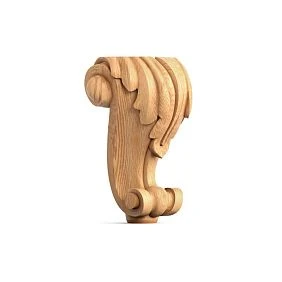
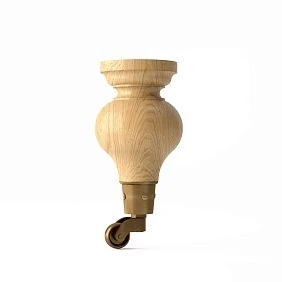
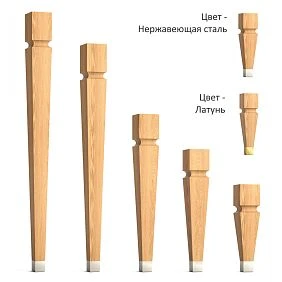
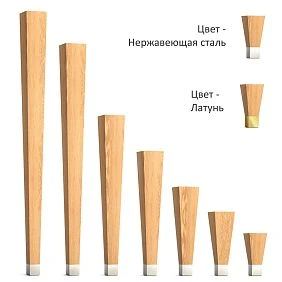
The STAVROS catalog features 165 unpainted items with filters by purpose, size, style, and shape type. The buyer can choose supports for a bed, sofa, armchair, coffee table and regular table, chair, console, chest of drawers, wardrobe, cabinet, stool, or bench. The assortment includes turned, carved, and geometric models, so the article is not limited to one leg: the main task is to understand which blank to buy for future finishing.
After selecting the general logic, you can buy unpainted wooden furniture legs in the desired shape and size. Next, it's important to decide whether the coating will be opaque or translucent, whether you need the high universal MN-145 or the low spherical MN-220, how to calculate the final height of the furniture, and which hardware to include in the order.
What are unpainted furniture legs
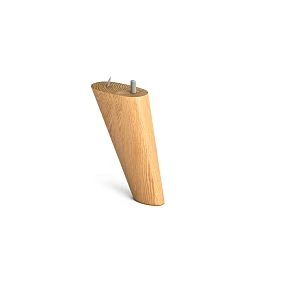
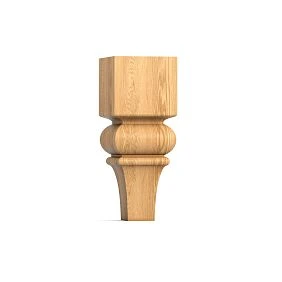
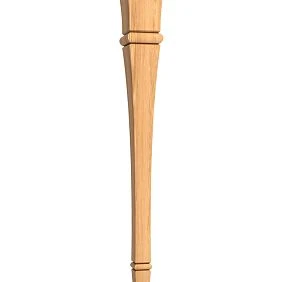
These are ready-made wooden supports with formed geometry and a sanded surface, but without a decorative protective finish. The buyer does not need to turn a cone, sphere, baluster, or carved profile from a block. They receive a repeatable part made of solid wood and independently choose the color, gloss level, and protection method.
An unpainted leg is between a raw random blank and a fully finished product with a factory coating. Its shape is already complete, dimensions are confirmed by the product card, and the surface is prepared for further work. However, the final appearance depends on the chosen enamel, stain, oil, varnish, or other system.




What does 'without coating' mean
There is no finish layer on the surface that protects the wood from moisture, dirt, and regular contact with the floor. Therefore, the support cannot be considered fully finished just because it is smooth and well-sanded. Before installation or immediately after trial assembly, the legs are finished according to the technology of the chosen material.
Our factory also produces:
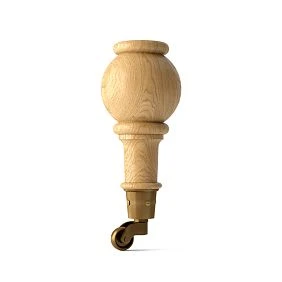
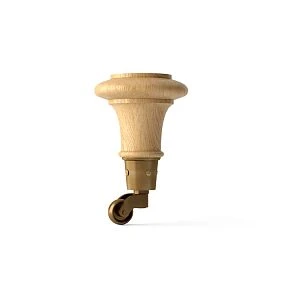
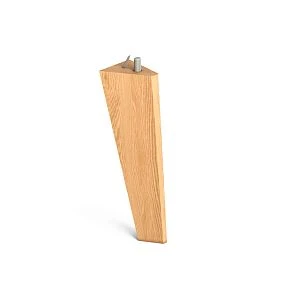
Why a ready-made shape is more convenient than self-turning
Four legs must match in height, diameter, and profile. Even a small difference is noticeable on a table, cabinet, or sofa. Ready-made models allow you to achieve repeatable geometry and focus on color, fastening, and assembly, rather than on creating each part manually.
Get Consultation
Who are unfinished supports for
They are chosen by furniture workshops, designers, restorers, and furniture owners who need a non-standard color. This format is convenient when the legs need to match the facade, tabletop, wooden handles, mirror frame, or existing furniture.
For enamel or for tinting: what's the real difference
These designations refer not to the already applied coating, but to the grade of wood veneer. STAVROS separates blanks based on how the lamellas are matched inside the part. This is directly related to the future transparency of the finish.
Blank for enamel
The lamellas may differ in color and texture because the opaque paint will completely cover the grain. This option is rational for white, black, gray, and colored legs. The main thing is to get an even finish, and the natural difference in wood sections will not be visible after painting.
Blank for tinting
The lamellas are matched more carefully by color and texture, since the translucent finish keeps the wood structure visible. Tonal differences are possible and remain natural, but the overall surface looks more consistent. This option is needed for stain, clear varnish, pigmented oil, and other coatings that do not hide the grain.
Can a blank for tinting be painted with enamel
An opaque coating will hide the grain on such a part as well. But the buyer may overpay for the selection of lamellas, which will not be visible after painting. Therefore, for dense enamel, the corresponding blank is usually chosen if the product page offers both versions.
Can the blank be tinted for enamel
This is a risky choice. Contrasting lamellas and texture differences will show through a clear or semi-transparent finish. If the goal is to show the wood, it's better to choose a tint-ready option right away, rather than trying to fix unevenness with a darker stain.
In the first third of the selection, it's useful to open the category and select furniture legs for enamel or tinting. This way, the shape, size, and grade of the veneer are chosen simultaneously, rather than after receiving the order.
Specifications of two representative models
| Parameter | MN-145 | MN-220 |
|---|---|---|
| Type | Turned round conical leg | Low turned spherical leg |
| Confirmed dimensions | 100, 150, 200, 250, 300, 350, 400, 450, 500, 600, 650, 700 or 750 mm in height; diameter 44 mm | 105 × 109 × 38 × 20 mm or 125 × 130 × 38 × 32 mm according to the A × B × D × E scheme |
| Materials | Beech or oak | Beech or oak |
| Preparation | Beech under enamel; oak under tinting | Beech under enamel; oak under tinting |
| Sanding | «Prestige» | «Prestige» |
| Main Scenario | Tables, consoles, tall furniture and projects with precise height selection | Low cabinets, poufs, sofas, armchairs and upholstered furniture |
| Fittings in the card | Stud M8×60, kits FUR-001 and FUR-012, support pads, mounting plates, including 10° variant | Stud M8×60, kits FUR-001 and FUR-012, felt support pad FUR-027 |
| What to check before ordering | Height, straight or angular position, fastening and final furniture height | Selected size, support area, fasteners and contact with flooring |
MN-145 shows the main advantage of the unpainted range: one shape is available in a wide range of heights and can be used in different projects. MN-220 demonstrates another scenario — a compact spherical support for furniture that does not need to be raised high above the floor.
When it's profitable to buy legs without coating
Furniture is painted entirely
If the body, facades and supports go through one production cycle, unpainted legs are more convenient than ready-made colored ones. Beech for enamel can be primed and painted together with the facades, achieving the same shade and gloss. The difference between batches of finished coating then does not arise.
A non-standard shade is needed
The catalog white, black or brown option does not always match the project. An unpainted support allows you to choose a complex gray-green, deep blue, warm beige or the exact color of the facade. It is important to make a test paint on the same species and shape.
Need to preserve the natural texture of oak
Oak for tinting allows you to select a shade of walnut, natural oak, smoky wood, or another translucent finish. The pattern remains visible, so the leg connects with the tabletop and other wooden elements.
Old furniture is being restored
A ready-made painted leg rarely exactly matches the old surface. A blank without coating gives the opportunity to make several tests, approximate the color, and use patina or local effects. First, check the height and fastening, then select the finish.
A large batch of one color is needed
For a cafe, hotel, salon, or furniture series, repeatability is important. All legs are finished with one system under identical conditions. This is easier to control than assembling ready-made supports from different color batches.
Beech or oak for furniture legs
Beech for opaque enamel
Beech has a calm structure and is suitable for white, black, and colored painting. When the pattern is covered anyway, there is no point in choosing oak just for its texture. Beech becomes a rational base for even color and repeatable batches.
Oak for translucent finish
Oak is chosen when the fibers and pores should remain part of the design. Tinting changes the shade but preserves the natural pattern. On a turned profile, the color looks different on convex and concave areas, so a sample is needed specifically on the leg, not on a flat board.
Can beech be coated with oil
A compatible system can be used, but the visual result will be calmer than on oak. If a pronounced wood grain pattern is important, compare samples. The word "oil" itself does not determine the color and protective properties: the specific composition and its purpose matter.
Can oak be painted with enamel
An opaque coating is possible, but the oak texture won't be the main reason for purchase. Additionally, porosity can affect surface preparation. If you need a uniform color without visible grain, beech under enamel is often simpler and more rational.
Turned, carved, and geometric legs
The shape determines not only the style but also the complexity of finishing. In the general category, you can Buy wooden furniture legs different types and immediately compare the purpose, dimensions, and future painting method.
Turned supports
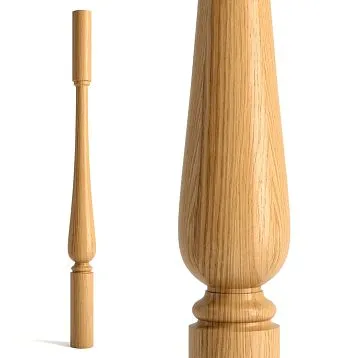
A rounded profile is created by rotating the workpiece. Such legs suit classic, Scandinavian furniture, modern tables, and upholstered furniture. Enamel is applied more evenly with proper rotation of the part, but drips must not be left in transitions and grooves.
Carved legs
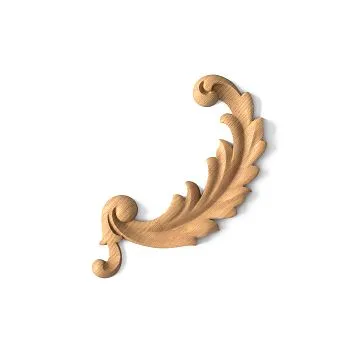
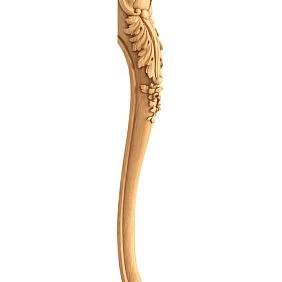
Relief makes furniture more decorative but requires more thorough finishing. Primer, paint, and varnish should not flood small elements. For a semi-transparent finish, it is important to evenly treat the recesses, otherwise they will become too dark.
Geometric supports
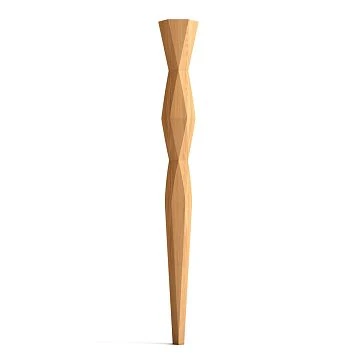
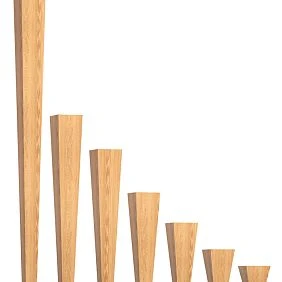
Cones, rectangles, and square shapes suit modern furniture. Sanding marks and uneven gloss are clearly visible on flat faces, so preparation must be careful. Sharp edges require careful application of the coating.
How to choose height and diameter
The leg height changes not only the appearance, but also the fit, access under furniture, tabletop position, and stability. You cannot choose the support separately from the body. The final height includes the thickness of the tabletop, apron, soft furniture base, mounting plate, and foot cap.
First, calculate the total height
For a table, add the leg height, tabletop thickness, and structural elements between them. For a cabinet, add the body height, leg, and foot cap. For a sofa or armchair, consider not only the external dimension but also the seat height after installation.
Why a few centimeters matter
A table that becomes 50 mm higher may be uncomfortable for existing chairs. A cabinet on too high a support loses stability and looks detached from the floor. A low leg, on the contrary, can block access for cleaning and visually weigh down the body.
Diameter and scale of furniture
MN-145 has a diameter of 44 mm. For a light table, this may be sufficient, but for a large tabletop, such a support may look too thin. The structural load capacity is determined by the design, and the visual scale is checked with a mockup and drawing.
Four legs or a different number
The number depends on the size, weight, and construction of the furniture. You cannot automatically place four supports under any long body. A wide chest of drawers or table may require central support, aprons, a frame, or other load distribution.
Allowance for foot pad and adjustment
A felt or adjustable foot adds a small amount of height. On a single product, this is almost imperceptible, but in a precise furniture system, the parameter is set in advance. If different feet are used, the furniture may wobble.
MN-145: high universal turned model
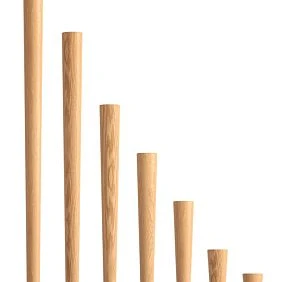
MN-145 is available in thirteen confirmed heights: 100, 150, 200, 250, 300, 350, 400, 450, 500, 600, 650, 700, and 750 mm. The diameter remains 44 mm. This range allows one form to be used in low case furniture, small tables, consoles, regular and high tables.
Low options 100–250 mm
They are suitable for cabinets, small chests of drawers, upholstered furniture, and low tables, if the design allows. The thin cone visually lightens the body and opens up space underneath. At the same time, the short leg maintains fairly compact proportions.
Medium options 300–500 mm
This height is considered for coffee tables, consoles, benches, and designer furniture. The actual purpose depends on the thickness of the body and tabletop. At a height of 500 mm, the 44 mm diameter looks noticeably slimmer, so stability and the frame require special attention.
High options 600–750 mm
They are suitable for tables and tall structures where a long vertical is needed. The higher the support, the greater the influence of straightness, attachment method, and rigidity of the aprons. A high leg cannot be installed under a heavy tabletop without calculating the frame.
Straight and angled position
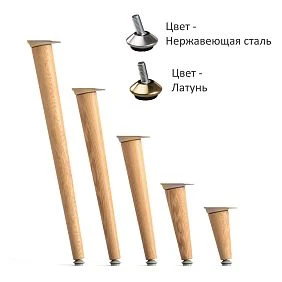
The card offers various mounting elements, including straight and corner mounting solutions. Tilting can make furniture more dynamic and expand the support contour, but it changes the height and points of contact with the floor. The angle is fixed in the project before drilling and painting.
When precise height is needed from a wide range, you can buy a turned furniture leg MN-145 and choose beech under enamel or oak under tinting together with suitable fittings.
MN-220: low spherical support
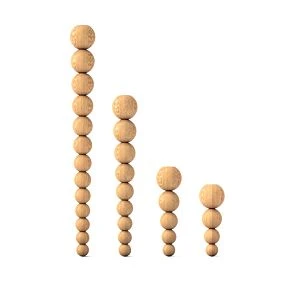
MN-220 has a more compact and visually heavy shape. The card confirms two sizes according to the A × B × D × E scheme: 105 × 109 × 38 × 20 mm and 125 × 130 × 38 × 32 mm. This leg does not create a long vertical line but forms a rounded base for the body.
For cabinets and dressers
The spherical support is suitable for furniture that needs to be slightly raised off the floor while maintaining a stable and cohesive silhouette. It pairs well with a massive body, classic facades, and soft rounded details.
For sofas, armchairs, and poufs
The low leg can become a noticeable part of upholstered furniture without increasing the height excessively. Before ordering, check the wooden frame structure, attachment points, and access to them through the upholstery.
For benches
The compact form supports small upholstered furniture and visually connects the wooden support with the rounded seat. It is important to calculate the final seat height and ensure that the ball does not conflict with the apron.
Felt glider
The MN-220 card offers the FUR-027 felt glider. It helps protect hard flooring and reduce noise when moving. However, the glider does not replace proper support area and does not correct body misalignment.
For low furniture, you can buy a low furniture leg MN-220, choosing one of two sizes, material, and mounting kit.
MN-145 or MN-220: which model to choose
| Criterion | MN-145 | MN-220 |
|---|---|---|
| Shape | Slim turned conical | Low spherical |
| Height | From 100 to 750 mm in confirmed increments | Two compact sizes |
| Visual effect | Lifts the body, creates verticality and lightness | Keeps furniture low and emphasizes the rounded base |
| Typical furniture | Tables, consoles, cabinets, custom designs | Sofas, armchairs, poufs, cabinets, benches |
| Mounting | Straight or corner depending on the chosen hardware | Spike or kit from the card |
| Finishing | Beech under enamel, oak under tinting | Beech under enamel, oak under tinting |
| Main risk | Insufficient rigidity of the tall structure | Incorrect size selection and too low height for cleaning |
How to choose a fastener
The fastener connects the leg to the body and transfers the load. It cannot be chosen just because it is offered next to the product card. You need to know the frame material, base thickness, force direction, and the possibility of subsequent disassembly.
Stud M8×60
A combined stud can be used in furniture assemblies where one part goes into wood and the metric part goes into a mating bushing or plate. The specific scheme depends on the design. The diameter and drilling depth are determined by the craftsman.
Kit FUR-001
Such a kit is considered for a standard leg-to-base connection. Before ordering, check the kit composition in the hardware card and compatibility with the body thickness. It cannot be assumed that it automatically fits any furniture.
Kit FUR-012
An alternative kit provides a different installation scenario. The choice between FUR-001 and FUR-012 depends on the base and required disassembly. If the project is not yet developed, it is better to show the drawing to a manager or furniture craftsman.
Mounting plate
The plate distributes the load over a larger area and simplifies leg replacement. For MN-145, straight and angled options are available, including a 10° plate. The tilt must be considered when calculating height and reach.
Glide
A round, felt, or adjustable glide protects the floor, compensates for minor unevenness, and reduces wood contact with moisture. The bottom end must still be coated: the glide does not fully seal untreated wood.
How to prepare a set of legs for finishing
Check the entire batch before starting work
Lay out the legs side by side, compare height, profile, material, and texture. For oak, assess how to distribute elements across the furniture. For enamel, ensure all parts have the same preparation and are not mixed with the tinting option.
Make a test application
It is better to use a spare leg or an inconspicuous area of the same species. A flat sample does not show how the compound behaves on grooves, spheres, and cones. Pigment and varnish distribute differently on relief.
Protect the mounting holes
Paint and varnish must not fill the threads or the seat. Before finishing, the holes are closed in a suitable way without damaging the wood. After drying, the protection is carefully removed.
Process the bottom end
This section is closest to the floor and absorbs moisture faster. It is primed and coated as carefully as visible surfaces. After installing the foot pad, the protection must remain intact.
Mark the legs
If the wood grain is distributed across the sides of the furniture, each piece is marked on a hidden area. After staining, legs that are similar in shape can easily be confused. Marking helps preserve the chosen composition.
How to paint legs without drips
The exact system depends on the chosen enamel and the coating manufacturer's recommendations. The general principle is several controlled layers instead of one thick one. It is convenient to fix the leg so that it is accessible from all sides and you do not have to hold the part by the fresh surface.
Primer
It evens out absorption, improves adhesion, and helps reveal defects. After priming, the surface is checked under side lighting. On a turned profile, fuzz and scratches in transitions are especially noticeable.
Enamel
The composition is applied evenly, without flooding the grooves and relief. The number of layers is determined by the system, not a universal number. Interlayer treatment is carried out only after sufficient drying.
Staining
The pigment is distributed evenly on all legs. Application must start and end in the same sequence, otherwise the four parts may differ. Excess in the recesses is removed before drying.
Varnish or oil
The finish protects the wood and determines the gloss. Oil requires even absorption, varnish requires control of drips and dust. Material compatibility is tested on a sample.
Drying
The legs are positioned so that the fresh surface does not touch the table or floor. Full readiness for assembly is determined by the coating instructions. Early assembly leaves dents and glues parts to the plate.
How to achieve the same color for four legs
Even identical blanks may accept tinting differently due to the natural wood structure and lamella orientation. The master's task is not to erase natural differences, but to make them consistent. For enamel, a uniform primer, layer thickness, and drying mode are more important. For transparent finishing, identical surface preparation and application sequence are key.
Work with one batch of materials
It is better to take primer, stain, enamel, and varnish for the set from one batch and mix thoroughly. If the composition runs out on the third leg, a new can may differ slightly. On white furniture, the difference will appear in tone; on tinted furniture, in saturation.
Maintain the same order
Treat the top, middle, bottom, and end in the same sequence. The stain holding time should be comparable. If one leg dries longer before removing excess, it will become darker.
Use a control light
Compare details under daylight and side artificial lighting. Front light hides stains and differences in gloss. Place legs next to each other at the same height, rather than evaluating one by one.
Keep the sample
A small painted part or spare leg will help replicate the color later. Record material names, proportions, number of coats, and drying time. Descriptions like "walnut" or "black matte" are not precise enough for repairs.
Application in different types of furniture
Table
For a table, height, frame rigidity, and distance between supports are important. MN-145 allows height adjustment from 100 to 750 mm, but long options require aprons or other framing. The leg color can be matched to the tabletop or made contrasting.
Coffee table
Low and medium turned leg options suit lightweight tabletops, while the spherical MN-220 creates a more massive classic silhouette. The final height is compared to the sofa. Too high supports turn the coffee table into an awkward intermediate structure.
Chest of drawers and bedside table
Legs open up space under the body and visually make furniture lighter. Stability is important for a tall narrow cabinet, while central support is needed for a wide dresser. The support must be attached to a sturdy bottom or frame, not just a thin panel.
Sofa and armchair
Low legs affect seat height, cleaning access, and the look of upholstered furniture. MN-220 suits rounded and classic bases. Before replacement, check the hidden frame and the attachment method of the old supports.
Bed
Leg height changes the overall mattress height and the clearance under the bed. The load is significant, so decorative form does not replace calculation. A wide frame may require more than four support points.
Ottoman and pouf
A low spherical leg emphasizes the soft shape, while a slender turned leg makes the ottoman lighter. The color can be repeated in wooden handles of the hallway or the mirror frame. The bottom end is protected especially carefully due to proximity to the wet floor.
Console
Tall MN-145 legs allow assembling narrow furniture against the wall. But long supports with a diameter of 44 mm need a rigid connection to the side rails. The console should not wobble when touched or when a drawer is opened.
Chair and stool
Seating furniture experiences variable and lateral loads. You cannot choose legs only by height and appearance. A structure with stretchers, crossbars, or other reinforcement, designed by a furniture maker, is required.
Practical choice for specific tasks
The legs need to be painted in the color of the facade.
Choose beech for enamel, coordinate the primer and finish with the body material. Make a test on a turned profile. If the facades are made of MDF, the same paint code does not guarantee visual matching on wood.
You need to achieve the shade of natural oak.
Choose oak for tinting and compare the sample with the tabletop or body. A transparent finish will show natural differences, so the set is sorted before painting.
White legs are needed for the dresser.
Beech for enamel is a rational base. First calculate the height and attachment, then paint the entire set in one batch. Matte white hides small marks more easily, but the type of coating must match the usage.
Black legs are needed for a modern sofa.
A geometric or conical shape usually supports modern furniture. Beech can be coated with opaque black enamel. Check the gloss: gloss shows dust and scratches more, too deep matte may be harder to clean.
Need to update an old nightstand
Remove the old legs and measure not only the height but also the mounting plate. The new support may require a different plate. Old holes are repaired or a new frame is used if they weaken the base.
High supports are needed for the designer table
MN-145 offers heights up to 750 mm. Choose the size considering the tabletop and aprons, then calculate rigidity. A high leg without a frame does not automatically turn the tabletop into a stable table.
Low spherical legs are needed
MN-220 is suitable for upholstered furniture and low cabinets. Compare two sizes from the card and check if the mounting unit fits. A felt foot pad is useful for parquet and laminate.
A furniture series for a cafe or hotel is needed
Order a sample, test the fastening, approve the color, and only then launch the batch. All legs are finished in one cycle. Keep a reserve and coating map for future repairs.
Legs without coating or ready painted
An uncoated support gives freedom but requires time, materials, and control. A ready leg is convenient if the right color already exists and the project does not need individual tinting. Before choosing, compare the entire process, not just the price per part.
| Criterion | Without coating | With ready coating |
|---|---|---|
| Color | Can be matched to the facade, countertop, or interior | Selected from ready-made options |
| Project timeline | Time needed for testing, application, and drying | Can proceed to installation after inspection |
| Finish control | The buyer or workshop is responsible for the result | Coating applied by the manufacturer |
| Non-standard shade | Fits better | May be missing |
| Large series | Convenient with your own painting line | Convenient without finishing production |
| Repair and restoration | Allows you to match the color to old furniture | Only suitable if finished finish matches |
| Risk | Runs, color differences, and insufficient protection | Color mismatch with furniture and damage during installation |
If your own finish is not needed, you can buy wooden furniture legs with coating and choose ready-made supports. This shortens the production cycle but does not eliminate checking the size, fasteners, and color.
What to buy together with legs
The set depends on the furniture design. Legs may require studs, mounting plates, fastening kits, glides, primer, and finish. It is not possible to assign one set for all projects in the article: cards MN-145 and MN-220 offer options, and the final choice is made by the craftsman based on the base.
| What to add to the purchase | Why | For which scenario | What to Check | |||||||||||||||||||
|---|---|---|---|---|---|---|---|---|---|---|---|---|---|---|---|---|---|---|---|---|---|---|
| Stud M8×60 | Connect the leg to the mating part | Detachable furniture assemblies | Drilling depth, bushing, and base material | |||||||||||||||||||
| Kit FUR-001 | Assemble a standard mounting unit | Tables, cabinets, upholstered furniture | Kit composition and base thickness | |||||||||||||||||||
| FUR-012 Kit | Use alternative mounting method | Projects where standard kit is not suitable | Compatibility with leg and body | |||||||||||||||||||
| Mounting plate | Distribute load and simplify replacement | MN-145, straight or angled position | Angle, offset, mounting area | |||||||||||||||||||
| Felt glider | Protect the floor and reduce noise | MN-220 and other low furniture | Diameter and uniformity of installation | |||||||||||||||||||
| Adjustable furniture foot | Compensate for minor floor unevenness | Tables, consoles, cabinets | Seat and additional height | |||||||||||||||||||
| Finishing materials | Protect the wood and achieve the desired color | All unpainted legs | Compatibility of primer, color, and finish | |||||||||||||||||||
| Spare leg |
Make a test coat andFor tinting and already tintedThe blank for tinting remains without a protective coating. It is only better suited for a translucent color due to the selection of lamellas. After purchase, full finishing is required. Wooden leg and metal adjustable supportAn adjustable metal leg solves a technical problem and is often hidden. A wooden support participates in the design. An adjustable foot can be added to wood, but this does not turn it into a universal industrial support. Leg and under-tableFour supports without stretchers do not always form a finished frame. The under-table includes a system of connections and load distribution. For a heavy tabletop, a ready-made frame may be safer. Furniture leg and balusterTurned shapes may look similar, but the purpose, dimensions, and attachment differ. A baluster cannot be used as a support solely based on external similarity without calculation. Mistakes when buyingChoosing only by shapeA beautiful carved leg may not fit in height, diameter, or attachment. First, the structure is calculated, then the decorative profile is selected. Considering "under enamel" as a finished coatingAfter receiving, the buyer discovers natural wood and thinks the order is incomplete. In fact, this is a designation of the glue-up grade. The finish is applied separately. Tinting beech purchased under enamelContrasting slats may show through. If a natural wood look is desired, choose a tinted finish. Paint one leg separatelyEven the same enamel can differ in layer and gloss. It's better to process the set simultaneously. Do not account for the tabletop thicknessThe height of MN-145 is selected without adding the tabletop and aprons. The finished table ends up too high. The calculation is done for the entire structure. Buy four supports for a long body without central supportWide furniture may sag. The number of points is determined by the frame and load, not the usual number four. Order fasteners after paintingIt turns out you need to drill, widen the hole, or adjust the plate. This damages the finish. The mounting assembly is approved before finishing. Do not protect the bottom endMoisture from cleaning is absorbed into the wood. The foot pad does not replace primer and finish on the end grain. Do not use furniture until fully dryThe coating appears dry on top but has not yet gained strength. The plate leaves marks, and dust sticks. The curing time is taken from the system's instructions. Do not make a spare legWith complex tinting, it is difficult to repeat the shade after a few years. A reserve helps to make a test and replace a damaged part. Who unpainted legs are suitable forThis format is suitable for a buyer who understands who will be responsible for the finishing. It could be a furniture workshop, a painting shop, a restorer, or a person with experience working with wood. The main advantage is revealed when the color and surface really need to be customized for a specific project. New custom furnitureThe supports can be included in the general production cycle together with facades, body, and handles. All parts receive the same color, gloss, and degree of aging. Before painting, the fasteners and final height are checked. RestorationA new leg is selected to match the shape and size, then tinted to match the old furniture. A perfect match of the natural grain cannot be expected, but the color and character of the finish can be approximated. Complex restoration requires a sample of the old surface. Custom FurnitureThe designer can combine a ready-made turned or carved form with their own tabletop, body, and color. This saves time on profile fabrication and leaves creative freedom in finishing. Commercial interiorFor a restaurant, hotel, salon, or showroom, it is convenient to order a uniform batch and finish it in a signature color. A test piece is needed before launch: it checks not only the shade but also the coating's durability under intensive use. When it's better to choose a ready-made finishAn unfinished leg may be unnecessary if the buyer lacks a workshop, time for drying, and the ability to do a test. A finished option reduces the risk of drips, gloss differences, and incomplete protection of the bottom end. A ready-made coating is also reasonable for a single small cabinet when the standard color suits the interior. Buying primer, enamel, varnish, and tools independently for four parts may be more complicated than a ready-made solution. But even a finished leg is checked for size and attachment. The finish does not compensate for incorrect height, a weak frame, or an unsuitable plate. What not to make from scratch if there are ready-made STAVROS elementsThe buyer can focus on the project, finishing, and assembly, without turning leg manufacturing into a separate production. There is no need to turn four identical cones, achieve repeatability of a ball, manually carve an ornament, or calibrate random blocks. Not to search for wood of unknown moisture contentRandom blanks can behave differently after processing. A ready-made furniture leg has a specified geometry and is intended for further use in furniture. Do not copy the profile by eyeA difference of a few millimeters becomes noticeable when the supports are placed side by side. Serial models help achieve uniform shape and height. Don't reinvent the mounting after manufacturingCards MN-145 and MN-220 immediately show suitable fittings. This allows designing the base before painting and avoids drilling into fresh finish. Don't waste time on rough sanding of complex shapesPrestige sanding means detailed surface preparation. Before finishing, control is still performed according to coating requirements, but the buyer doesn't have to eliminate rough processing marks at every transition. The commercial route looks like this: finished shape → size check → mounting → trial assembly → finish sample → painting or tinting → final installation. How to match legs to furniture styleClassic furnitureTurned and carved supports complement paneled facades, cornices, and decorative handles. Under enamel, they can be made light; under tinting, they can be matched with an oak tabletop. It's important not to overload a small chest with overly complex carving. Modern furnitureConical and geometric legs suit smooth facades. Black, white, or colored enamel emphasizes the simple shape. For a natural modern interior, oak can be left visually calm under a clear finish. Scandinavian furnitureLight wood, simple cones, and moderate height create a light silhouette. Beech can be coated with light enamel, oak with a natural or slightly tinted compound. The shape should remain concise. Art Deco style is renowned for its love of ornamentation, symmetry, and refined details. The molded decoration NPU-422 can become an excellent complement to geometric motifs and contrasting color combinations characteristic of this style. Try highlighting it with metallic paint or patina — and you’ll get an eye-catching detail that’s hard to look away from.Geometry, contrasting color and metal details can be combined with wooden legs. It is important to match the gloss. Glossy enamel emphasizes the shape but requires particularly even preparation. Provence and vintageTurned supports are suitable for painted furniture with soft patina. The aging effect should not compromise wood protection. First, a durable base finish is created, then a decorative effect using a compatible technique. How to choose a coating for operating conditionsKitchenLegs encounter wet cleaning, splashes and grease. A finish that allows regular cleaning is needed. The bottom end and the area near the floor are protected especially carefully. Bathroom and wet areasUsing wooden supports is only possible with a suitable design and protection system. Not every enamel or oil can be automatically considered moisture-resistant. Coating and ventilation parameters are specified separately. BedroomThe load on the finish is usually lighter, but the bed and nightstands are regularly moved during cleaning. Floor protectors protect the floor, while varnish or oil protects the wood. For children's furniture, confirmed properties of the selected materials are important. HallwayWater and dirt from shoes increase the risk for the bottom end. Low legs MN-220 must be protected over the entire surface, and the felt floor protector should not be left wet. Living roomFor a chest of drawers, console and coffee table, the finish can be chosen primarily by design, but the surface must still withstand cleaning and accidental vacuum cleaner bumps. Commercial spaceFrequent cleaning and high traffic require a durable coating and repairability. Keep a spare leg and an accurate finish map. How to store and transport legs before finishingParts are stored in a dry room on a flat surface, protected from water, dust, and direct heat. Do not leave solid wood near a radiator or on a damp floor. Carved and turned sections are separated with a soft pad to prevent profiles from rubbing against each other. AcclimatizationBefore finishing, the legs are conditioned in workshop conditions according to the production technology. A sharp change in temperature and humidity can affect the wood and the application of the coating. Box labelingIf the order includes multiple sizes, each group is labeled. MN-145 with heights of 450 and 500 mm look visually similar without measurement. The error is discovered only after painting. Protection of the finished finishAfter drying, the legs are packed separately, preventing surfaces from touching. The soft pad must be compatible with the coating and not stick. How to calculate the project budgetThe price of an unpainted leg is only part of the cost. You need to account for quantity, fasteners, foot caps, a spare part, primer, finish, test coating, and labor. For the tall MN-145, a more complex frame may be required; for the MN-220, separate preparation of the upholstered furniture base is needed.
How to check the finished set before installationPlace the legs next to each other on a flat surface. Compare height, color, and gloss. Check the threads and mounting holes, and ensure the coating is not damaged when removing protective caps. Height controlA thin layer of paint should not noticeably change the size, but glides and plates can add height. All supports are assembled with the same hardware and measured as a set. Color controlFor enamel, look for differences in gloss and orange peel; for tinting, look for overly dark areas and spots. Evaluate the legs in the lighting where the furniture will be placed. Mounting controlThe pin must enter along the axis, the plate must fit flush against the base. Play cannot be corrected with an additional layer of paint or glue without calculation. Trial assemblyFurniture is installed without full operational load and checked for stability. If the body wobbles, first look for the cause in the floor, geometry, and fasteners, rather than filing down one leg. How to buy unpainted legs on STAVROSFirst, open the category and filter models by purpose, shape type, and sizes. Then choose beech for enamel or oak for tinting, check the sanding and available hardware. For a project with a precise height, open MN-145; for a low round support, MN-220. Before ordering, prepare a furniture drawing: overall height, tabletop or body thickness, attachment points, and expected load. If using an angle plate, specify the angle and offset. It is helpful to send a diagram to the manager, not just a photo of a leg you like. The current price, availability, and production time are checked in the card of the selected size and material. Do not transfer the price of one option to the entire MN-145 range: height and wood type change the cost. For a tall universal support, you can reopen the card and choose the MN-145 leg made of beech for enamel or oak for tinting. For upholstered furniture and low cabinets — select a spherical wooden leg MN-220. What to check before payment
How to match the color of the legs with the rest of the furnitureIn the color of the facadeThis option makes the body solid and is suitable for cabinets, chests of drawers, and kitchens with painted doors. For beech under enamel, the same color code is used, but it must be checked on a wooden base. The same shade may look different on MDF and solid wood due to primer, texture, and gloss level. In the color of the countertopOak legs for tinting can be matched with a wooden countertop. To do this, compare not only the shade name but also the wood species, grain, and coating transparency. Dark pigment does not turn beech into oak: the fiber character will remain different. In the color of the furniture handlesRepeating the material in the legs and handles helps unify the facade into a single system. If the handles are oak and coated with clear varnish, oak supports are more logical than beech ones. With opaque enamel, matching color and gloss is sufficient. Contrast optionBlack legs under a light body, white under dark furniture, or natural oak under colored enamel can become a noticeable part of the design. The contrast should be repeated in at least one element: handles, frame, lamp, or countertop. Otherwise, the supports look like a random replacement. Matte or glossy surfaceA matte finish is calmer and emphasizes small imperfections less. Gloss makes a turned profile more expressive but shows dust, scratches, and layer differences. On a carved leg, too much shine can distract from the form. How to account for load without dangerous simplificationsThe leg card specifies size and material, but this is not a ready-made furniture calculation. Load depends on the number of supports, the distance between them, the frame, stretchers, tabletop, and usage nature. A table experiences not only vertical weight but also lateral forces when moved or leaned on. Long bodyOn a wide chest or cabinet, the bottom may sag between the outermost legs. A central support or internal frame reduces the span. The decision is made based on the body construction, not visual symmetry. High legsThe longer MN-145, the greater the leverage under lateral force. Therefore, tall versions require rigid connections and properly designed stretchers. Installing four long supports directly into a thin tabletop without a frame creates a risk of wobbling. Upholstered furnitureA sofa and armchair receive dynamic load when a person sits down. The leg must be attached to the load-bearing frame, not to a decorative panel or upholstery material. When replacing old supports, first open and inspect the existing joint. Uneven floorAn adjustable foot helps compensate for a small unevenness but does not fix a crooked frame or legs of different heights. Adjustment is performed after checking geometry on a level surface. How to care for legs after installationCare depends on the finish. Enamel, varnish, and oil react differently to cleaning agents. The universal rule is a soft cloth, quick removal of moisture, and avoiding abrasives. Lower areas are inspected more often because they come into contact with shoes, vacuum cleaners, and water during cleaning. Checking fastenersA few weeks after assembly, check for play. If the leg rotates or the plate comes loose, unload the furniture and determine the cause. Tightening fasteners with excessive force can strip the threads in the wood. Local damageA chip in enamel or a scratch on varnish is repaired using material from the saved system. Random paint of a similar color often differs in gloss. A spare leg or color sample helps achieve an accurate result. Felt glidesFelt is cleaned and replaced when worn out or filled with sand. A dirty glide starts scratching the floor instead of protecting it. After wet cleaning, it must dry completely. Moving furnitureA heavy item should not be pulled by one leg or tilted with all weight transferred to one support. Furniture is lifted by the frame, considering weight and construction. This protects the fastening and the coating of the bottom end. How to check the project before launching the entire batchAssemble one test item or at least one complete assembly unit. It simultaneously checks height, fasteners, foot cap, color, and ease of cleaning. If a leg seems too thin, the furniture wobbles, or the shade doesn't match the facade, fixing one sample is easier than reworking dozens of parts. After the test, finalize the specification: article number, size, wood species, glue joint grade, fastener kit, glide, primer name, color, gloss level, and drying time. For a furniture series, add a support layout diagram and acceptable color deviations. Such a document helps the workshop replicate the result and reduces the risk of accidentally replacing beech under enamel with oak under stain or using a different fastener kit. If the test furniture is used for several days, you can evaluate not only the appearance but also the actual stability, marks on the floor, and height convenience. Only after this should you order and finish the main batch. Frequently asked questionsWhat does "leg for enamel" mean?This is not a painted leg, but a blank where the lamellas were not matched by color and texture. The opaque enamel should cover these differences. After purchase, the support needs to be primed, painted, and protected according to the chosen technology. How is a blank for staining different from a blank for enamel?For translucent finishes, lamellas are matched more carefully by color and texture because the wood grain remains visible. For the enamel option, such differences are acceptable. What is better for furniture legs — beech or oak?Beech is rational under opaque enamel. Oak is chosen when a pronounced texture under stain, oil, or clear varnish is needed. The decision depends not only on strength but also on whether the wood grain should be visible. Do I need to prime wooden legs?For an enamel system, primer is usually part of the preparation, but the specific materials and order are determined by the coating manufacturer. A test coat is mandatory, especially on turned or carved profiles. Can the legs be coated with oil?Yes, if the chosen composition is suitable for the furniture and operating conditions. The oil should be evenly absorbed into all areas, including the bottom end. On oak, the texture appears more expressive than on beech. Can I tint beech legs?Yes, but the result will differ from oak. If the card offers beech specifically for enamel, transparent tinting may show differences in lamellas. For visible texture, it is better to choose a version for tinting. Can I paint oak with opaque enamel?Yes, but the natural pattern will be hidden. Buying oak loses some of its purpose, and preparing the porous surface may be more difficult. For dense painting, beech is often more rational. How many coats of enamel should I apply?There is no universal number. The number of layers, primer, interlayer treatment, and drying time are determined by the manufacturer's system. A thick layer in one pass increases the risk of drips and loss of relief. Should I paint the legs before or after installation?It's more convenient to apply the main finish before final assembly to treat the entire surface and the bottom end. However, fasteners and trial assembly must be checked in advance, otherwise you'll have to drill and damage the coating after painting. How to achieve the same color on four legs?Process them simultaneously with one batch of materials, maintain the same sequence and holding time. For tinting, sort the wood in advance; for enamel, control the layer and gloss. How to protect the bottom end?It is primed and coated with the same protective system as the rest of the leg. Then a suitable glider is installed. An untreated end quickly absorbs moisture during cleaning. How to choose the mounting?You need to know the base material, frame thickness, load direction, and disassembly possibility. Cards offer studs, kits, and plates, but the final scheme is chosen based on the furniture drawing. How to calculate the furniture height considering the legs?Add the height of the leg, body or tabletop, aprons, mounting plate, and glider. For a table, compare the result with chairs; for a sofa, with the planned seat height. How many legs are needed for heavy furniture?It depends on the length of the body, material, frame, and load. Four supports may not be enough for a long dresser, bed, or table. Central support or a rigid frame is needed. Is a spare leg needed?It is useful for test painting and future repairs. With complex tinting or a large batch, it can be difficult to match the color after several years. How do unfinished legs differ from finished ones?Unpainted ones offer freedom of color but require preparation, finishing, and drying. Finished ones can be installed faster if their color and coating match the project. What furniture is MN-145 suitable for?The height range allows it to be considered for tables, consoles, cabinets, and other structures. The specific application depends on the frame, load, and chosen mounting. What furniture is MN-220 suitable for?The spherical low support is suitable for cabinets, sofas, armchairs, poufs, and benches. Before purchasing, compare the two sizes and check the mounting plate. Can the legs be installed at an angle?For MN-145, the product card includes an angled mounting plate. The angle changes the support contour, height, and position of the bottom point, so it is calculated before drilling and finishing. Where can I buy legs for self-finishing?In the STAVROS category, you can select unpainted turned, carved, and geometric models, filter by purpose and size, and then go to the card of the desired support. Conclusion: first the structure, then the colorUnpainted furniture legs provide freedom where finished finishes limit the project. Beech under enamel helps achieve a smooth opaque color, oak under tinting preserves visible texture. Turned, carved, and geometric shapes allow you to assemble furniture of different characters, but no decorative support replaces the calculation of height, frame, and fastening. MN-145 is suitable for projects where a wide range of heights from 100 to 750 mm is important. MN-220 solves the problem of a low spherical support for cabinets and upholstered furniture. Before ordering, you need to select the material, check the mounting unit, include glides and hardware, make a test coating, and treat the entire set with one system. STAVROS offers ready-shaped wooden supports without finish and options with coating. This choice allows you not to manufacture complex geometry from scratch, but to focus on precise size, color, protection, and reliable installation. A conscious route from the product card to trial assembly helps to get furniture where the legs match not only in shade but also in function. |