


























Article Contents:
- What are furniture glides: understanding the terminology
- How this article differs from other STAVROS materials
- What furniture glides are available at STAVROS
- Adjustable glides: when precision is needed
- Felt glides: gentle protection for hard floors
- Self-adhesive glides: a quick solution without tools
- Mounting plate for furniture legs FUR-020
- Why furniture glides are needed: five real-world tasks
- Floor Protection
- Noise reduction
- Stability and unevenness compensation
- Height Adjustment
- Protection of the legs themselves
- How to choose a furniture glider by furniture type
- For a chair
- For table
- For a cabinet and chest of drawers
- For furniture with wooden legs
- How to choose a furniture glider based on floor type
- Parquet and parquet flooring
- Laminate
- Ceramic tile
- Uneven floor: only adjustable
- Selection table: task — type — article
- Mistakes when choosing and installing furniture feet
- Furniture gliders: technical parameters and size chart
- Where to buy STAVROS furniture gliders
- FAQ: furniture glides
There are details you don't think about — until they start to annoy you. A chair squeaks on the parquet. A table wobbles. A cabinet leaves dark marks on the laminate. A bedside table leg slowly but surely scratches the tile. All of this is not a problem with the furniture. It's a problem with the glides. Or rather, their absence or incorrect choice.
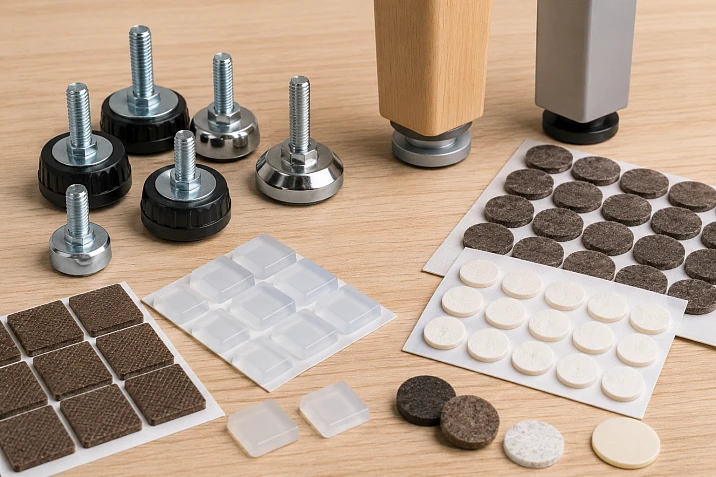
furniture feet STAVROS are small but essential hardware elements for the legs of tables, chairs, cabinets, nightstands, and any other supports. They solve several problems at once: protect the floor from scratches and dents, dampen noise when moving furniture, compensate for uneven surfaces, and extend the service life of the furniture legs themselves.
In the STAVROS catalog, you can buy several types of furniture glides: adjustable with a ball joint, soft felt, quick self-adhesive, and mounting plates for attaching legs. Each type is for a specific task. And that's the essence of the right choice: not "which glide is prettier," but "which one solves my specific problem."

What are furniture glides: understanding the terminology
A furniture glide is a small functional element that is installed on the bottom end of a furniture leg or support. By design, it can be a cup, disc, pad, or plate — depending on the type and task.
Why is it important to understand this? Because many people confuse a glide with a full furniture support. A support is an independent load-bearing element that is attached to the furniture body and bears the entire load. furniture leg — a structural part. A glide is an additional functional element that is installed on an already finished leg or support.
Furniture glides perform five functions:
-
Floor protection — prevent scratches, dents, and marks on parquet, laminate, tile, and other floor coverings
-
Noise reduction — soft and felt elements dampen sound when moving furniture
-
Stability — evenly distribute load, eliminate wobbling
-
Leveling — adjustable glides compensate for uneven floors
-
Leg protection — prevent wear on the lower part of the leg itself when in contact with the floor
Furniture hardware — is a broad concept. Glides are one of its most popular elements because they are installed on almost any furniture and solve real household problems.
How this article differs from other STAVROS materials
A direct answer for those who have already read other materials on the blog.
This is not an article about furniture legs — that covers structural support elements, styles, and design. This is not an article about wooden handles — that covers hardware for opening doors and drawers. This is not an article about underframes — that covers structural frames for tabletops. Not about slatted panels, not about decorative moldings, not about stairs, and not about stucco.
This article is about small hardware for the lower part of furniture: about glides, their types, proper selection based on task and floor type, and about mounting plates as a related element. The focus is narrow and specific: how to protect the floor, eliminate squeaking, level furniture, and choose the right type of glide for specific conditions.
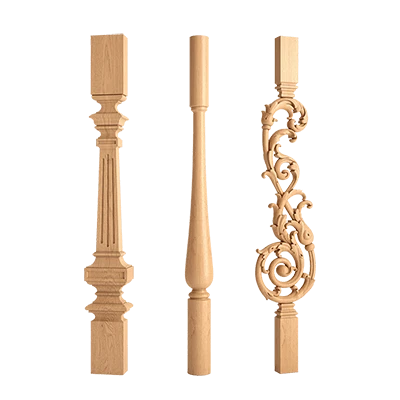
Our factory also produces:
What furniture glides are available at STAVROS
Let's break down each type: construction, parameters, tasks, differences.
Get Consultation
Adjustable support feet: when precision is needed
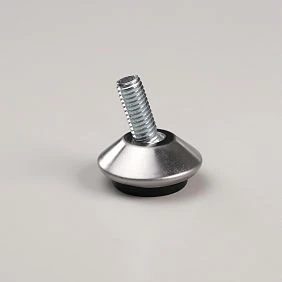
An adjustable support foot is a structurally complex element compared to simple pads. It consists of a base with a ball joint and a threaded system that allows changing the height of the support.
Why is this needed? It's simple: perfectly level floors do not exist. Even in new buildings with fresh screed, there are differences of 2–5 mm per meter. In older housing stock — 10–20 mm or more. On such a surface, furniture without adjustment will stand unstable: slightly wobble, vibrate, and shift under load.
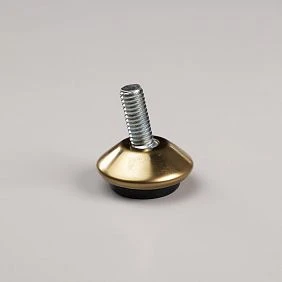
Adjustable support foot D32 FUR-018 — support foot with a base diameter of 32 mm. Diameter is the contact area with the floor. The larger the diameter, the lower the specific pressure on the floor covering. FUR-018 is suitable for medium and high load furniture: dining tables, desks, bookcases, sideboards.
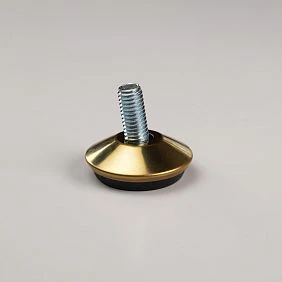
Adjustable support foot D25 FUR-029 — smaller diameter, 25 mm. Suitable for lightweight furniture with thin legs: coffee tables, bedside tables, small consoles, chairs with elegant legs.
What is a ball joint and why is it needed? It is a hinge connection in the base of the support foot that allows the platform to independently adapt to the floor slope angle. If the floor is not horizontal, the ball joint ensures full contact of the base with the surface — without skew and without point load. This is important: point load is the main enemy of parquet and tiles.
Threaded insert M8 is a threaded bushing that screws into the lower part of the furniture leg. The adjustable support foot is screwed onto it. The system "threaded insert + adjustable support foot" is often called an adjustable leg assembly — it allows adjusting the height at any time without disassembling the furniture.
Adjustment range: usually 10–20 mm. To compensate for standard floor irregularities — quite sufficient.
Felt furniture pads: gentle protection for hard floors
If your top priority is protecting your flooring from scratches and scuffs, Felt foot pad this is exactly what you need.
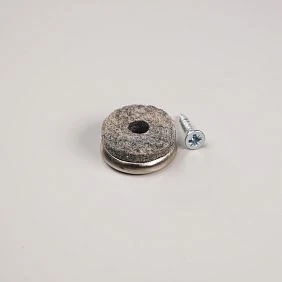
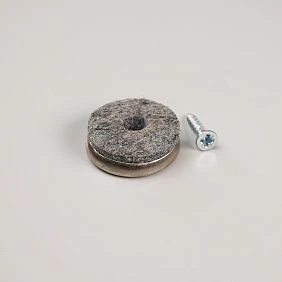
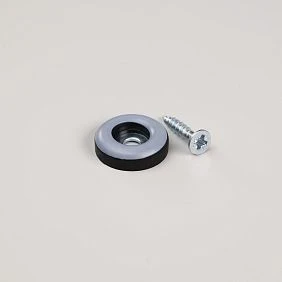
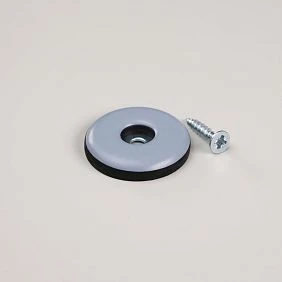
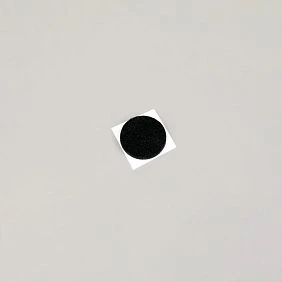
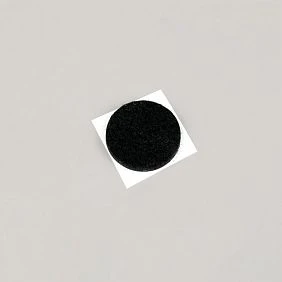
Felt furniture pad d=24 mm FUR-027 is a round felt pad with a diameter of 24 mm. Felt is a pressed wool material with high density. It is soft, yet non-slip, holds its shape well, and leaves no marks on the floor surface.
Why felt and not rubber? Both materials are used to protect floors, but they work differently. Rubber pads fix furniture in place — they don't slide, but they also don't allow furniture to move smoothly. Felt pads provide easy gliding with minimal friction, reducing the risk of scratches when moving furniture.
The felt furniture pad is especially effective:
-
On parquet and engineered wood — soft felt leaves no marks even with frequent movement
-
On laminate — protects the top decorative layer from wear
-
On painted wooden floors — prevents scuffs from appearing
Limitations of felt: absorbs moisture and dirt. In the kitchen, bathroom, or high-traffic hallway, felt furniture pads require periodic replacement — every 6–12 months depending on usage intensity.
How is the FUR-027 felt furniture pad attached? It has a built-in spike or adhesive base for fixing to the bottom end of the leg. Installation takes a few seconds. Replacement does too.
Self-adhesive furniture pads: a quick solution without tools
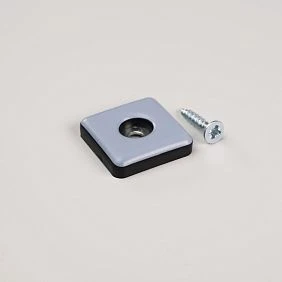
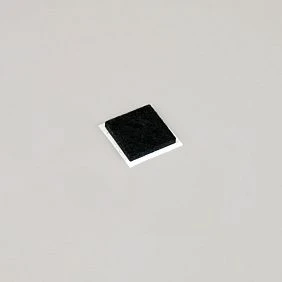
Self-adhesive square furniture pad 20×20 FUR-043 — an ideal option for situations where you need to quickly protect the floor without drilling, screwing, or special tools.
Size 20×20 mm — square shape. This is an important parameter: a square furniture pad is better suited for furniture with a flat bottom surface, for rectangular-section legs, or for protecting the edges of furniture bodies.
Self-adhesive base — high-adhesion double-sided acrylic tape. For installation, you only need to clean and degrease the surface, remove the protective film, and stick it on. It holds securely on wood, metal, plastic, and MDF.
Who is the self-adhesive furniture pad suitable for:
-
For furniture in rentals or temporary arrangements — no need to damage legs with drilling
-
For ready-made furniture purchased without furniture pads
-
To protect the lower edges of cabinets, bedside tables, dressers — where there are no separate legs
-
For lightweight furniture — chairs, coffee tables, auxiliary nightstands
Limitations: the self-adhesive furniture glide is not designed for very heavy furniture (sliding wardrobes, massive sideboards). Under high load, it may peel off over time. For heavy furniture, it is better to choose mechanically fixed options.
Also important: install only on a dry, clean, and degreased surface. On a dirty or wet surface, the self-adhesive glide will not hold.
Mounting plate for furniture legs FUR-020
This element is somewhat separate from "pure" furniture glides, but is closely related to them.
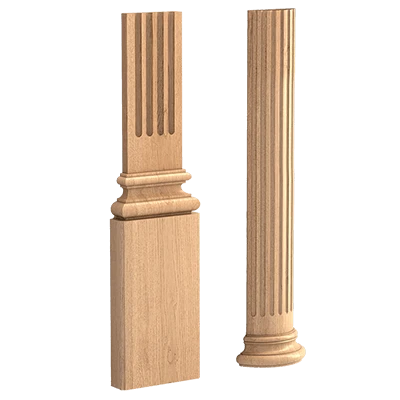
Wooden mounting plate FUR-020 — is a fastening plate for fixing a furniture leg to the furniture body or to the tabletop. It is not a glide in the direct sense, but is part of the "leg + fastening + glide" system.
Why is a mounting plate needed? A leg that is not properly secured will wobble — especially under lateral loads (pushing a table, pulling a chair). The plate provides rigid and reliable attachment of the leg to the body.
Wooden mounting plate FUR-020 — a natural material that pairs with wooden legs and wooden bodies. It is attached to the body with screws, and the leg is screwed into the central threaded hole of the plate.
This plate should be considered as part of a set: Wooden furniture leg + mounting plate FUR-020 + adjustable or felt foot. Three elements together form a complete support system for any furniture.
Why furniture feet are needed: five real tasks
Let's not limit ourselves to abstract 'protects' and 'improves.' Let's break down specific situations where a foot really solves a problem.
Floor protection
This is the main and most obvious task. The legs of chairs, tables, and cabinets create point pressure when in contact with the floor covering. An unprotected wooden leg is essentially an abrasive: with every movement, it removes micro-layers of varnish or paint from parquet, leaves scratches on laminate, and presses into tiles.
Hard plastic without a cushioning element is even worse: it slides unevenly and leaves characteristic scratches. Felt and self-adhesive feet create a soft buffer zone between the leg and the floor.
Important detail: the cost of a foot and the cost of repairing or replacing the floor covering are incomparable. Properly selected feet for floor protection pay for themselves many times over.
Noise reduction
The characteristic sound of a chair being moved across tiles or parquet is one of the most annoying sounds in the household. Squeaking, scraping, 'shuffling' — all of this is the result of hard contact between the leg and the floor.
A soft foot pad — felt or elastic — dampens this sound. It doesn't reduce it, but rather dampens it: the soft material absorbs vibrations and does not transmit them to the floor surface. This is especially relevant in apartment buildings, where the noise of moving furniture is heard on the lower floors.
Stability and compensation for unevenness
Furniture on three points always stands stable — physics. Furniture on four points — only if all four points are in the same plane. The slightest floor unevenness — and one leg "hangs" in the air, and the table or chair starts to wobble.
Adjustable foot pads solve this problem directly: by rotating the pad on the thread, the exact height of each support is set. This is more reliable than placing a matchbox or piece of cardboard under the leg.
Height adjustment
Not only compensation for unevenness, but also deliberate height adjustment. For example, when you need to raise a table by 10–15 mm for comfortable standing work. Or to level uneven legs after repairs.
Adjustable foot pads with step threading allow you to precisely set the desired height and lock it in place.
Protection of the legs themselves
The bottom end of a wooden leg is the most vulnerable spot. The end grain of the wood has a cross-section that absorbs moisture well and is mechanically unstable. When in contact with a damp or hard floor, the bottom end of a wooden leg gradually deteriorates.
A foot pad is a protective "shoe" for the leg. It takes on the contact load, protecting the end from moisture and mechanical wear. Together with wooden furniture legs STAVROS a properly selected foot pad significantly increases the service life of the entire support system.
How to choose a furniture glide based on furniture type
The type of furniture determines two key selection parameters: load and usage pattern. Heavy furniture with a fixed position has one set of requirements. Light furniture that is frequently moved has another.
For a chair
A chair is the most "active" piece of furniture in terms of glides. It is constantly moved: pulled out, pushed in, rearranged. The load on the legs is variable: sitting down (load 60–120 kg), standing up (short-term impulse). Chair legs are thin — usually 25–35 mm in cross-section.
Best choice: felt glide FUR-027 24 mm diameter — soft, does not scratch the floor during frequent movement, diameter matches the size of standard chair legs.
For small deviations (88-92°), you can correct the standard cut with sandpaper, slightly adjusting the angle. self-adhesive glide FUR-043 for square-section legs — quick replacement without tools.
What to check: the leg diameter must match the inner diameter of the glide cup (for insert options) or the diameter of the adhesive base (for surface-mount options).
For table
A table is heavier than a chair, it is moved less often, but the load on the legs is constant and significant. A dining table with four people is 60–100 kg of load alone, plus the weight of the table itself is 20–40 kg. Total: 80–140 kg, evenly distributed over four points.
For a table on an uneven floor — definitely Adjustable support foot D32 FUR-018. A diameter of 32 mm provides sufficient contact area under such a load. The ball joint adapts the base to floor irregularities.
For a table on a level floor with a parquet or laminate covering — felt glides of a larger diameter or several felt pads in a "stack" to increase the area.
Important for tables: make sure the glide is rated for the load. Self-adhesive pads for a heavy dining table are a bad idea: under load, the adhesive deforms over time and starts to peel off.
For a wardrobe and cabinet
A wardrobe is heavy and stands in one place for years. The main task of a glide for a wardrobe is leveling on an uneven floor (so that doors close evenly) and protecting the covering from constant point pressure.
For a wardrobe — adjustable foot with a maximum base diameter: 32 mm. The adjustment allows precise vertical alignment of the cabinet without shims.
A cabinet — smaller in size and weight, often has four compact legs. For a cabinet, it will fit foot cap D25 FUR-029 or the self-adhesive version FUR-043 for legs with a flat bottom end.
For furniture with wooden legs
Wooden legs are a different story. They require a special approach for two reasons.
First: wood is a hygroscopic material. The bottom end of a wooden leg without protection absorbs moisture and gradually swells, cracks, and loses its shape. A foot cap protects against this.
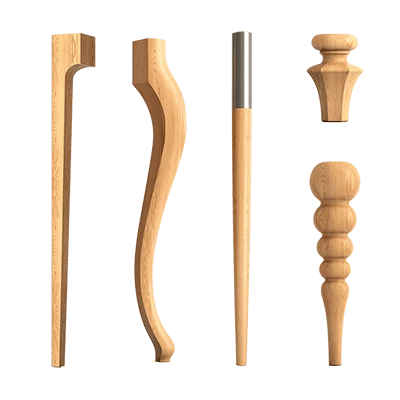
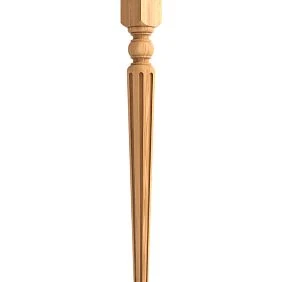
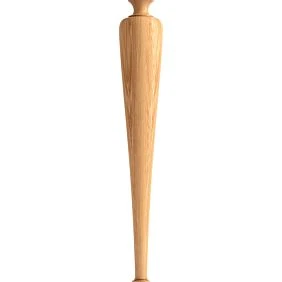
Second: a wooden leg is a decorative element. Wooden furniture legs STAVROS have a complex turned or carved shape, and their bottom end is round, with a diameter of 25–45 mm. For this size, it fits foot cap FUR-027 or FUR-018 depending on the diameter.
Important nuance: the mounting plate FUR-020 and the furniture leg are a pair. Mounting plate secures the leg to the body, and the glider protects the bottom end of the leg from the floor. Three elements in the system — a complete, reliable, and durable support.
How to choose a foot cap based on floor type
Floor covering type is the second key selection parameter. Each covering has its own requirements for hardness, slip resistance, and moisture.
For parquet made of oak, ash, or walnut, it is logical to choose wooden baseboards and corners from the same species. Matching texture and color creates a unified composition where the floor seamlessly transitions into the walls.
Parquet is the most demanding covering. The varnish and oil on parquet are easily scratched even by plastic, let alone metal. At the same time, parquet "lives" — it expands and contracts with changes in humidity.
Best choice: felt gliders for furniture. Felt is soft, does not slip, and leaves no marks. Especially important: do not place metal or plastic gliders without a soft pad on parquet — they leave black streaks and scratches.
Replacement frequency: every 6–12 months with regular use, or as the felt layer wears out.
Many laminate manufacturers produce matching accessories — baseboards, corners, and caps — in tones of their collections. This is convenient — you buy everything in one place, with guaranteed decor consistency.
Laminate is stronger than parquet, but it also scratches. The decorative coating — the top layer that imitates wood — is especially vulnerable. A deep scratch on laminate is already a defect that cannot be removed by polishing.
Both felt and self-adhesive soft furniture pads are suitable for laminate flooring. self-adhesive glide FUR-043 — quick and convenient protection for furniture that is rarely moved.
Important: for heavy furniture on laminate — choose furniture pads with the maximum base area. Point load on laminate creates dents and deformation of locking joints.
Ceramic tile
Tile is a hard and smooth surface. The tile itself is almost scratch-resistant, but furniture slides on tile. Another issue: tile amplifies noise — the sound of a leg on tile spreads throughout the room.
Best solution for tile: elastic or felt furniture pads. They create slight friction, preventing sliding, and simultaneously dampen sound. felt glide FUR-027 on tile — one of the best options: soft, non-slip, noiseless.
Additionally: for kitchens where tile is exposed to moisture and grease, felt furniture pads should be replaced more often — absorbed grease changes the material's properties.
Uneven floor: only adjustable
Any uneven base — screed with differences, wooden floor with 'squeaky' areas, floor in an old house — requires adjustable furniture pads.
Adjustable furniture foot allows you to precisely adjust each leg to a single horizontal plane. Furniture stops wobbling, load is distributed evenly, risk of damage to the floor and furniture itself is minimal.
How to adjust furniture using adjustable leveling feet: place the furniture in position, check for wobbling. Find the "raised" leg (the one where the foot can be turned by hand without effort). Lower it by turning the foot clockwise until it makes stable contact with the floor. Check the tabletop for levelness using a spirit level.
Selection table: task — type — article number
| Task | Foot type | STAVROS product |
|---|---|---|
| Level furniture on uneven floors | Adjustable D32 | FUR-018 |
| Adjustment for light furniture | Adjustable D25 | FUR-029 |
| Parquet and laminate protection | Felt d=24 mm | FUR-027 |
| Quick protection without tools | Self-adhesive 20×20 | FUR-043 |
| Attaching furniture leg to the body | Mounting plate | FUR-020 |
Mistakes in choosing and installing glides
Errors in this topic have minor consequences — but each one costs time and money. Let's break down the most common ones.
Buying without checking the diameter. The most common mistake. A d=24 mm glider won't fit a d=32 mm leg — and vice versa, it will wobble. Always measure the diameter of the leg's bottom end before purchasing. A caliper or ruler is your tool.
Not considering the furniture's weight. A self-adhesive glider for a massive 80 kg cabinet is a guarantee that it will start peeling off in a few weeks. Heavy furniture requires mechanical fastening.
Using felt where adjustment is needed. Felt does not compensate for uneven floors — it only protects the surface. If a table wobbles, a felt glider won't solve the problem. An adjustable one is needed.
Sticking a self-adhesive glider on a dirty surface. Dust, grease, moisture — enemies of the self-adhesive base. The surface must be degreased with isopropyl alcohol, allowed to dry, and only then glued. Otherwise — unreliable fixation within a few days.
Not checking compatibility with the furniture leg. An adjustable glider with an M8 insert is only for legs with an M8 insert screwed in. If the leg has a different thread size, the glider simply won't screw in. Check the thread in advance.
Confusing a glider with a support leg. A glider does not bear structural load — it is an additional element on an already installed leg. If the leg is not properly secured, the glider will not solve the wobbling problem. A Mounting plate or other fastener is needed.
Forgetting about the mounting plate when installing wooden legs. A leg screwed directly into the furniture body without a plate holds worse — especially under lateral loads. Wooden furniture handles and the legs always come with the correct fasteners.
Furniture glides: technical parameters and size chart
Let's break down the parameters to consider when ordering.
Base diameter (d). The larger it is, the lower the load per unit area on the floor. For heavy furniture, choose a larger diameter. For light furniture with thin legs, choose a smaller one.
Glide height. For adjustable ones, this is the adjustment range. For felt and self-adhesive ones, it's a fixed height that must be considered when calculating the final furniture height.
Thread (for adjustable glides). Standard M8 is the most common. Check the size of the insert in the leg before ordering.
Base material. Plastic is lightweight and inexpensive. Metal is durable, for heavy furniture. Soft elastomer or felt is for protecting floor coverings.
Shape. Round glides are for round legs. Square glides are for square or rectangular legs. Universal (flat pads) are for cabinet edges.
Where to buy STAVROS furniture glides
The full range of furniture glides and related fittings is in the section furniture hardware of the STAVROS catalog.
Specific positions:
-
Adjustable support foot D32 FUR-018 — for leveling heavy furniture
-
Adjustable support foot D25 FUR-029 — for light furniture with thin legs
-
Felt glider d=24 mm FUR-027 — for protecting parquet and laminate
-
Self-adhesive glider 20×20 FUR-043 — quick installation without tools
-
Mounting plate FUR-020 — for secure attachment of furniture legs
Additionally — section of wooden furniture legs for those who select a support system as a set.
STAVROS is a Russian manufacturer and supplier of furniture fittings, wooden products, and decorative elements for furniture and interiors. The assortment includes a complete system of support elements: from turned wooden legs to furniture handles and glides for any task. Each item comes with a real article number, photo, and technical specifications for accurate selection.
FAQ: furniture glides
What is a furniture glide?
A small functional element installed on the bottom end of a furniture leg or support. It protects the floor, reduces noise, increases stability, and helps level furniture.
Where to buy STAVROS furniture glides?
In the section furniture hardware. All article numbers come with photos and specifications.
Which glides to choose for parquet?
Felt ones — FUR-027. Soft felt leaves no marks and does not scratch the lacquered surface.
When are adjustable glides needed?
When the floor is uneven or you need to precisely set the height of each leg. FUR-018 (D32) — for heavy furniture, FUR-029 (D25) — for light furniture.
How is a self-adhesive glider different from a felt one?
Self-adhesive (FUR-043) sticks to any smooth surface without tools. Felt (FUR-027) — insert or press-fit, designed for a leg with a round end. Felt is more reliable for frequently used furniture.
Is a mounting plate needed if the leg is already screwed in?
If the leg is tight and doesn't wobble — not necessary. If it starts to wobble under lateral loads — the mounting plate FUR-020 will solve this problem.
Are STAVROS gliders compatible with wooden legs from the same catalog?
Yes. STAVROS wooden legs and gliders from the hardware section are technically compatible elements of one system.