












































































Article Contents:
- Why you need samples and catalogs of stucco before buying
- How this article differs from other STAVROS materials
- What STAVROS products are needed for this topic
- Samples, catalogs and stands
- Main section of polyurethane stucco
- Moldings, cornices, and baseboards
- PU overlays
- Additional sections for complete selection
- What to check on a stucco sample: eight criteria
- Depth of Relief
- Surface Quality
- Element thickness
- Scale of the pattern
- Rigidity and weight
- Visibility of joints
- Paintability
- Compatibility with other elements
- What to look for in a printed catalog of polyurethane decor
- Exhibition stand for stucco molding: why it matters
- Who especially needs samples and stands before purchasing
- For interior designers
- For architects
- For craftsmen and finishers
- For private buyers
- How to choose stucco molding by samples: step-by-step guide
- Selection table: task — section — URL
- How to choose stucco molding for a specific room: practical guidelines
- Small apartment with a 2.5 m ceiling
- Country house with a 3.0–3.2 m ceiling
- Ceremonial rooms with ceilings 3.5 m and higher
- Study or Library
- Samples for design projects: a professional approach
- Mistakes when choosing stucco without samples
- Where to buy samples and catalogs of STAVROS
- FAQ: samples, catalogs and stands of stucco

There is a moment familiar to everyone who has ever ordered decor from a photo on the internet. You receive the package, unpack it — and something is off. Either the profile turned out thinner than expected. Or the relief looks different under real lighting. Or the scale of the ornament is not at all what it seemed on the monitor. The mistake is not critical — but money is spent, time is wasted, and now you either have to return it or redo the entire set.
It is precisely to prevent this situation from occurring that there are polyurethane molding samples, printed catalogs and exhibition stands. These are pre-selection tools — for those who make decisions thoughtfully and want to see the real product before ordering tens of linear meters of moldings or a dozen individual elements.
This article is not about how beautiful Moldings looks in the interior. And not about installation. Here is a specific discussion about how to use samples, catalogs and stands for accurate selection of polyurethane decor before purchase. What to look at. What to check. And where to go in the STAVROS catalog to avoid mistakes.







Why you need samples and catalogs of stucco before purchasing
The question sounds rhetorical — until you encounter the situation described above. Then it ceases to be rhetorical and becomes very practical.
An online product card shows a photo. Sometimes — several angles. Sometimes — a profile view in cross-section. But a photo on a monitor does not convey three things that are crucial when choosing stucco decor.
First — the depth of the relief. An ornament with a depth of 8 mm and an ornament with a depth of 3 mm look completely different under side lighting. In photos — they look similar. In hand, under natural light — they are fundamentally different. The depth of the relief determines how "rich" the stucco will look after painting.
Second — the scale of the elements. The size of the product card does not convey the real scale. A molding 45 mm wide seems small on the screen. In your hands — it is already a noticeable profile. And a 90 mm molding on the screen seems "moderately decent," but in a small room with a 2.5 m ceiling, it will look heavy.
Third — the quality of the surface. Texture, smoothness, absence of micro-defects, uniformity of relief — all this is visible only through physical contact with the product. No photo can replace tactile inspection.
That is why catalog of polyurethane decor and physical samples exist as an independent selection tool — especially for designers, architects, and anyone working with large orders.
And another reason that is mentioned less often. Stucco is purchased as a set: molding, cornice, baseboard, rosette, overlay. All elements must match each other — in style, in the scale of the ornament, in the width of the profile. A printed catalog allows you to lay out several items side by side and check if they form a system. With scattered cards on a website, this is much more difficult to do.




How this article differs from other STAVROS materials
This question deserves a direct answer — so that the reader does not get a feeling of deja vu.
The STAVROS blog has articles about how stucco molding looks in interiors — with ideas, inspiration, and style solutions. There is an article about stucco molding on walls. There is one about stucco molding on the ceiling. There is a detailed installation guide.
This article is about something else. Not "how it looks," not "how to glue it." But about how to choose before purchasing: with a sample in hand, with a catalog on the table, at a stand with live exhibits. This is a special stage of decision-making — between "I want stucco molding" and "I bought stucco molding." It is at this stage that most mistakes are made, which later result in rework.
The focus of the article is maximally practical. Specific actions. Specific guidelines. Direct links to catalog sections.
Our factory also produces:


Which STAVROS products are needed for this topic
Let's break down the hierarchy of sections — so that navigation through the catalog is clear and precise.
Get Consultation
Samples, catalogs, and stands
The main section for this article: STAVROS polyurethane stucco molding samples. Here are printed catalogs with article numbers, sizes, photos of models and profiles, as well as exhibition stands and polyurethane decor samples for physical inspection before ordering.
This is not an auxiliary section or a "for show" one. It is a working tool for designers, architects, builders, and everyone who makes a conscious decision to purchase stucco molding — not at random.
Main section of polyurethane stucco molding
After the samples have been studied and the choice is made — proceed to the main catalog: Polyurethane molding STAVROS. Here the full assortment is collected: moldings, cornices, baseboards, rosettes, overlays, decor for walls, moldings, and ceilings. This section is the main one for those who want Buy molding made of polyurethane.
Moldings, cornices, and baseboards
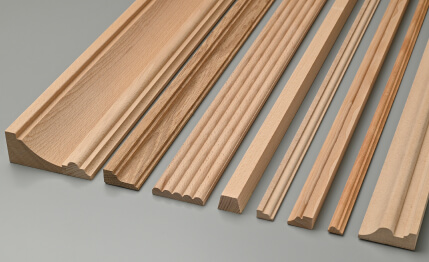
Moldings made of polyurethane — linear profiles for frames, horizontal bands, decorative lines. Molding samples are especially important: it is the width and relief of the profile that determine the character of the entire wall decor. The same molding under different lighting angles and with different wall colors looks different.
Polyurethane cornices and baseboards are in the same section. All three elements must be proportional to each other — this is a rule that the sample helps to verify physically.
PU overlays
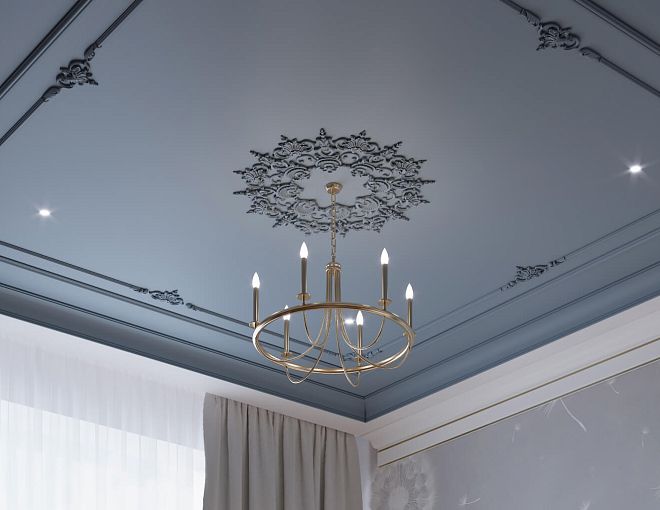
PU overlays — medallions, cartouches, ornamental inserts. molded decoration made of polyurethane in the form of overlays — the type of product that should be viewed as a sample first. The ornament of the overlay is detailed, rich, and its scale is extremely difficult to assess from a photograph. A real sample immediately gives an understanding: suitable or not.
Additional sections for a complete selection
When working with samples and the catalog in parallel, it is worth looking at:
-
Polyurethane ceiling rosettes — to assess the scale of the central ceiling element
-
Wall Decor — for ornamental wall zones
-
Decor for Molding — corner blocks and inserts for frame patterns
What to check against a stucco sample: eight criteria
A sample in hand provides information that no product card can give. But only if you know exactly what to check.
Relief Depth
The first thing to do with a sample is tilt it at an angle to the light source. This is how stucco will look on the wall under oblique lighting — and most rooms are lit this way: light from the side or above, not directly head-on.
The depth of the ornament is the 'shadow'. The deeper the relief, the more expressive the shadow, the richer the visual result. Shallow relief 'washes out' under side light — the ornament becomes barely noticeable. Deep relief, on the contrary, intensifies — every curl, every leaf of the ornament gets its own shadow and volume.
Professional guideline: for living rooms and formal spaces — at least 5–8 mm of relief depth. For modern interiors with geometric profiles — 3–5 mm is sufficient.
Surface Quality
Run your finger over the front surface of the sample. The surface should be even, without bubbles, dips, or waves. Good polyurethane decor is dense, uniform, and void-free.
Now look at the edges. The cut should be clean, without delamination. The edge immediately shows material density: a loose 'porous' structure indicates low quality; a dense, uniform one indicates high-quality polyurethane.
Element thickness
Wall thickness determines strength during installation and durability in use. A wall that is too thin (less than 4–5 mm) risks deformation when heated or under accidental mechanical impact. A good molding should be elastic but not flexible — it should resist bending without effort, but not break during normal installation.
Scale of the ornament
The ornament of a molding has a pitch — the distance at which the motif repeats. For a narrow molding (20–35 mm), a fine ornament pitch of 15–30 mm is used. For a wide molding (65–100 mm), a coarse pitch of 40–80 mm is used. Mismatch of ornament scale to profile width is one of the most common visual errors.
With a sample in hand, this is checked instantly. On screen, only indirectly, by the cross-section.
Rigidity and weight
Polyurethane decor should be lightweight — this is its key advantage over plaster. A molding sample 25–30 cm long should not be heavy. At the same time, it should be rigid: neither bend under finger pressure nor vibrate when tapped.
Excessive flexibility is a sign of low-density polyurethane foam. Such material after installation and painting will behave unpredictably: deform, crack at bends.
Visibility of joints
Try joining two samples end to end or at a 45° angle. Look at how visible the seam is under normal lighting. A clean, straight end without burrs — the seam will be invisible after puttying and painting. An uneven end — the seam will require additional treatment.
Paintability
Good polyurethane decor can be painted with acrylic paint without prior priming. To check: apply a little acrylic paint to the sample. The paint should lay evenly, without rolling off, without spots. The surface should not repel the paint.
Compatibility with other elements
This is the most important check when selecting a set. Take samples of molding and cornice from the same series — and compare. Does the ornament scale match? Does the stylistic direction match (geometry + geometry or floral + floral)?
Samples of several elements laid out side by side instantly show compatibility or incompatibility. This cannot be done with scattered cards on the screen.
What to look for in a printed catalog of polyurethane decor
Printed catalog of polyurethane decor STAVROS is not a brochure with beautiful photos. It is a working document for design and selection.
What it contains and how to work with it:
Article numbers. Each item has a unique article number. This is the key to accurate ordering: knowing the article number, you are guaranteed to receive exactly the element you selected. No "molding roughly like this" — a specific article number, a specific profile.
Dimensions. For each item — width, height, length of a standard piece. This allows you to calculate the actual amount of material for your room. For moldings — width and height of the cross-section. For cornices — height. For rosettes — diameter.
Series and collections. Items in the catalog are grouped by series — these are compatible sets designed as a single system. Molding, cornice, baseboard, corner blocks, and overlays from the same series are guaranteed to match. From different series — additional compatibility check is required.
Profile photo. The catalog typically includes an image of the cross-section — the very photo that shows the actual shape of the profile. This is what allows you to assess the depth of the relief, the character of the profiles, and the proportions.
Application examples. A good catalog shows examples: which moldings are suitable for frames, which for horizontal belts, how a cornice matches a baseboard from the same series.
Availability of matching elements. The catalog shows which moldings have corner blocks and which sockets fit ornamental rings. This allows you to plan a complete set right away.
Working with the catalog: the right order
-
First, determine the style. Geometric or floral? Classic or modern neoclassical?
-
Choose a series that matches the style.
-
Within the series, choose a molding. Write down the article number.
-
Find a cornice and baseboard from the same series. Check the height proportions.
-
Choose a rosette considering the room area and height.
-
Add corner blocks and overlays if necessary.
-
Calculate the quantity based on room dimensions.
Stucco display stand: why it matters
Stucco display stand — the next level after a sample and a catalog. It is an exhibition display where decorative elements are shown in real combinations: molding + cornice + baseboard + rosette in a single "wall–ceiling" fragment.
What does an exhibition stand provide that neither a sample nor a catalog can?
Scale in context. A 120 mm cornice looks different on a stand — next to a molding and under a rosette — than as a separate piece in your hands. On the stand, you can immediately see whether it is "rich," "moderate," or "heavy."
Interaction of elements. On the stand, moldings and cornices are shown together. You can immediately assess whether the combination works. Does a wide cornice look good with a narrow molding? Or do you need a wider molding?
Color after painting. On the stand, exhibits are usually painted — in white "architectural" or ivory color. You can see how the relief reads when painted.
Frame scheme options. A good stand shows several options: a frame made of narrow molding, a frame made of wide molding, a combination with corner blocks and a PU overlay in the center. This gives a concrete understanding of the result.
For those working on large projects — a hotel, a restaurant hall, a country house — a stand is indispensable. It allows you to bring a client or customer to a physical display and finalize the choice before making a purchase.
Who especially needs samples and stands before purchasing
Interior designers
A designer works on a project. They have a concept, a palette, a style — and they need to fit Polyurethane Decor This concept is definitely, without compromise.
From a photo, this is practically impossible with sufficient accuracy. From a sample, a decision is made in minutes.
Designers need samples for another reason: approval with the client. Showing the client a real molding sample is a different conversation than showing a picture on a screen. The client 'touches', 'feels' — and makes a decision more confidently. This saves time on rework.
For Architects
An architect thinks in scale. It is critically important for them to understand how the decor fits into the proportions of the room — not abstractly, but concretely: here is a 4 m wall, here is a 3.2 m ceiling, here is a 140 mm cornice. What does it look like?
Catalog of Polyurethane Decorative Molding with dimensions — an architect's working tool for calculating proportions and choosing the correct scale of profiles.
Samples for an architect are confirmation of material quality, which they must 'get through' technical supervision or approval with the client.
For Craftsmen and Finishers
A practical question that a craftsman cannot solve from a photo: how does this molding cut? What is the wall thickness? Will it join at 45° without a gap? How firmly does it hold with glue without additional fasteners?
A molding sample in hand provides all the answers. The density of the material, behavior when cutting, reaction to finger pressure — this is tactile information that cannot be conveyed in words.
Additionally, a craftsman with a sample can check: how well it adheres Polyurethane moldings to a specific type of surface — plaster, drywall, concrete. This is practically important when working on site.
For private buyers
A private buyer is the most vulnerable category. They are not a professional, they have no experience working with decor, and the only way to protect against mistakes when choosing is to see and touch the product before ordering.
It is for private buyers that the rule is important: do not take polyurethane decor samples just for a collection. Take them with a specific task: here is my room, here is the ceiling height, here are the intended application areas — which molding, which cornice, which rosette?
With samples in hand and specific room dimensions, the decision is made correctly the first time.
How to choose stucco molding by samples: a step-by-step guide
Eight steps that cover the topic of "how to choose correctly".
Step 1. Define the application area.
Wall? Ceiling perimeter? Bottom line? Frames? Ceiling center? One clear task — one type of element.
Step 2. Open the required catalog section.
For the ceiling line — Polyurethane Crown Molding. For frames — Moldings. For the bottom line — Polyurethane Baseboards. For the ceiling center — ceiling rosettes. For accents — PU overlays.
Step 3. Select 2–3 options.
Choose not one, but two or three options. Record the article numbers. Request samples.
Step 4. Physically inspect the sample.
According to the eight criteria described above: relief depth, surface quality, thickness, ornament scale, rigidity, joints, painting, compatibility.
Step 5. Evaluate the relief under different lighting.
In daylight — neutral assessment. In artificial side lighting — working assessment. This is how the stucco will look in a real room most of the time.
Step 6. Select accompanying elements.
From the same series: cornice to molding, baseboard to cornice, corner blocks to molding. Check compatibility on samples — lay them out side by side.
Step 7. Calculate the quantity.
Perimeter of the area + 10–15% margin for linear elements. Number of corner points — for corner blocks. Number of centers (frames, chandeliers) — for individual elements.
Step 8. Go to the main product section to place an order.
Main section: polyurethane products from STAVROS. Specific subsections — by element types.
Selection table: task — section — URL
| Task | What to open | Section |
|---|---|---|
| View samples and catalogs | Samples, catalogs, stands | Samples and catalogs |
| Buy polyurethane stucco molding | All polyurethane products | molding and decor |
| Moldings, cornices, baseboards | Linear profiles | Moldings |
| Cornices only | Ceiling perimeter | Crown Molding |
| Baseboards only | Bottom line | Baseboards |
| Ceiling rosette | Center of the ceiling | Outlets |
| Accent elements | Overlays, medallions | PU overlays |
| Accent wall decor | Wall ornamental zones | Wall Decor |
| Corner blocks for frames | Decor for moldings | Decor for Molding |
How to choose stucco for a specific room: practical guidelines
Let's break down several typical situations — how to work with samples in each of them.
Small apartment with a 2.5 m ceiling
Key limitations: a low ceiling cannot tolerate a high cornice. Large ornament will look heavy. Frame scheme — only on one accent wall, not everywhere.
What to request in samples:
-
Cornices 55–80 mm high — not higher
-
Moldings 25–45 mm wide — delicate profiles
-
Rosettes 250–380 mm in diameter
Sample evaluation criterion: place the cornice sample vertically against the wall. Imagine it around the perimeter of the ceiling. Will it 'press' on the space?
Country house with a ceiling of 3.0–3.2 m
Here a full set of medium scale is possible: cornice 100–140 mm, moldings 40–65 mm, baseboard 80–110 mm, rosette 400–550 mm.
What to check with samples: proportionality of three profiles — cornice, molding, baseboard. Lay out three samples side by side, evaluate scale: cornice is the tallest, baseboard slightly lower, molding noticeably narrower than both.
Formal rooms with a ceiling of 3.5 m and higher
Full set of maximum scale. Cornice 150–200+ mm. Moldings 60–100 mm. Baseboard 120–150 mm. Rosette 550–800 mm. Decoration for ceilings — mandatory.
For such projects, exhibition Stucco display stand — the only way to see the system in the correct proportions. Samples of elements such as a 180 mm cornice must be visually "tried on" to the volume of the room.
Study or library
Strict, moderate decor. Geometric or restrained classical profiles. Cornice 70–90 mm with a clear geometric break. Molding 35–55 mm. No floral ornaments. No overlays with curls.
What to check by sample: strictness of lines, absence of soft transitions. Straight breaks should be clear, sharp — "architectural", not "decorative".
Samples for design projects: a professional approach
For a designer working with catalogs of polyurethane decor STAVROS, it is worth building your own system for working with samples. This saves time and money.
Sample library. A professional designer collects a folder of samples, sorted by style and series. One sample of each molding + the corresponding cornice + a corner block from the same series. This is a working "layout" that can be shown to clients without having to request samples anew each time.
Sample labeling. Each sample with an article number and series. Without labeling, the collection quickly turns into a set of unidentified pieces.
Tie-in to projects. For each project, a separate selection of samples with quantity calculation. Molding article X, quantity Y linear meters; cornice article Z, quantity W linear meters; and so on.
Regular update. The assortment is updated — new series, new profiles appear. A professional designer updates their sample library at least once a year.
Mistakes when choosing stucco without samples
These are not horror stories — these are real situations that happen regularly. And they are all solved in one way: with a sample in hand.
Choosing only by photo. The main mistake. A photo does not convey the depth of relief, scale, surface quality. A photo is an approximate impression, not a basis for ordering a large batch.
Not looking at actual sizes. The molding "looks small" — but in fact the width is 65 mm, and for a room of 12 m² this is a lot. Always check sizes in centimeters and verify with a sample.
Not checking the depth of relief. Buy a molding with a "beautiful ornament", and after painting discover that the ornament is barely visible — because the relief depth is 2–3 mm and is not readable under direct lighting.
Not considering the scale of the room. A 160 mm cornice is beautiful in a three-meter hall. In a corridor with a ceiling of 2.4 m — a disaster. The scale of the room is always a priority.
Mixing elements from different series. A floral molding and a geometric rosette are incompatible. Samples laid out next to each other immediately show this. On screen cards, this can go unnoticed.
Not checking the compatibility of moldings and corner blocks. The corner block from decoration for moldings must exactly match the molding in width. A difference of 3–5 mm is visible to the naked eye.
Do not consider the color after painting. Unpainted polyurethane is whitish or cream. After applying acrylic paint "architectural white", the color changes and the relief reads differently. A sample painted with the selected shade gives an accurate representation of the final result.
Do not order extra. The calculated footage without extra is a guarantee of "not enough". Trimming for corners, defects during installation, unforeseen changes in the layout — all this consumes the extra. Standard: +10–15% to the calculated quantity.
Where to buy STAVROS samples and catalogs
A direct answer to a direct question: samples and catalogs of polyurethane decor STAVROS — in the profile section of the catalog.
Here — printed catalogs with article numbers, sizes and photos of profiles, display stands with samples in real combinations, physical samples of moldings, cornices, baseboards and decorative overlays.
After working with samples and the catalog — go to the main section to order: Polyurethane Items.
STAVROS — Russian manufacturer and supplier polyurethane molding decoration for interior and exterior finishing. A complete system of elements: moldings, cornices, baseboards, ceiling rosettes, PU overlays, decor for walls, moldings and ceilings. Each series is a stylistically consistent system in which all elements combine with each other. STAVROS samples, catalogs and stands are a working tool for designers, architects, craftsmen and private buyers who want to choose correctly the first time.
FAQ: samples, catalogs and stands of stucco
Why are polyurethane stucco samples needed?
To assess the actual relief, scale, surface quality, and compatibility of elements before ordering the main set. It is impossible to do this accurately from a photo.
Where to view STAVROS samples and catalogs?
In the section samples and catalogs of polyurethane decor.
What to check with a sample?
Relief depth, surface quality, thickness, ornament scale, rigidity, joint precision, compatibility with other series elements.
Does a professional need a sample, or only private buyers?
Samples are needed by everyone: designers — for approval with the client, architects — for scale assessment, craftsmen — for understanding installation properties, private buyers — to avoid mistakes.
How to use the printed catalog?
Select a series → choose a molding → write down the article number → find the cornice and plinth from the same series → calculate the quantity → go to the main section to order.
What to do if there is no suitable option in the catalog?
Look at related series — the desired profile may be in a different style direction. Or contact a STAVROS consultant with a description of the task.
Where to buy stucco after choosing from samples?
Main section for ordering: polyurethane products from STAVROS. Specific items are in profile subsections.