










































































Article Contents:
- Polyurethane interior stucco: how to choose elements for interior finishing
- What is interior stucco
- How this article differs from "stucco in interior"
- Which elements are included in STAVROS interior stucco
- Polyurethane products: all in one section
- Moldings, cornices and baseboards: horizontal lines of the interior
- Polyurethane cornices: ceiling line
- Polyurethane baseboards: the bottom line
- Ceiling rosettes: the center of the ceiling composition
- PU overlays: accent points
- Polyurethane wall decor: wall compositions
- Molding decor: corner and connecting elements
- Ceiling decor: extended ceiling compositions
- How to choose interior stucco for your task: summary table
- How to assemble a set of interior stucco
- Minimum kit
- Medium set
- Full set
- Interior stucco for walls
- Interior stucco for ceiling
- Interior stucco for frames and panels
- Interior stucco for classic and neoclassical styles
- Classic
- Neoclassicism
- Modern classics and contemporary
- How interior stucco differs from facade stucco
- Interior stucco for different rooms
- Living Room
- Bedroom
- Entrance Hall and Foyer
- Office
- Five mistakes when choosing interior stucco
- Where to buy STAVROS interior stucco
- FAQ: polyurethane interior stucco


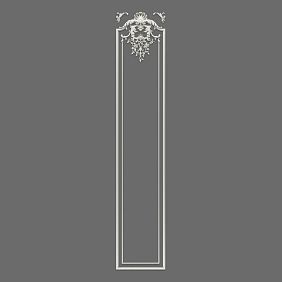
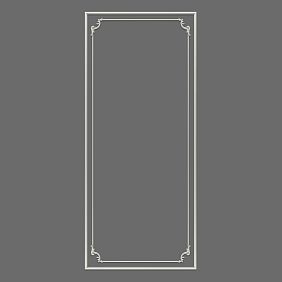
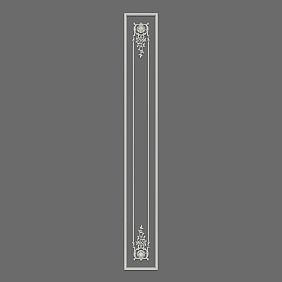
Polyurethane interior stucco: how to choose elements for interior finishing
There is one paradox in renovation that almost everyone faces. The walls are leveled. The ceiling is painted. The floor is laid. The furniture is arranged. Yet something is off — the room doesn't "sound right," the interior lacks the completeness that distinguishes a well-thought-out space from a merely "renovated" one. This "something" is the absence of architectural decor.
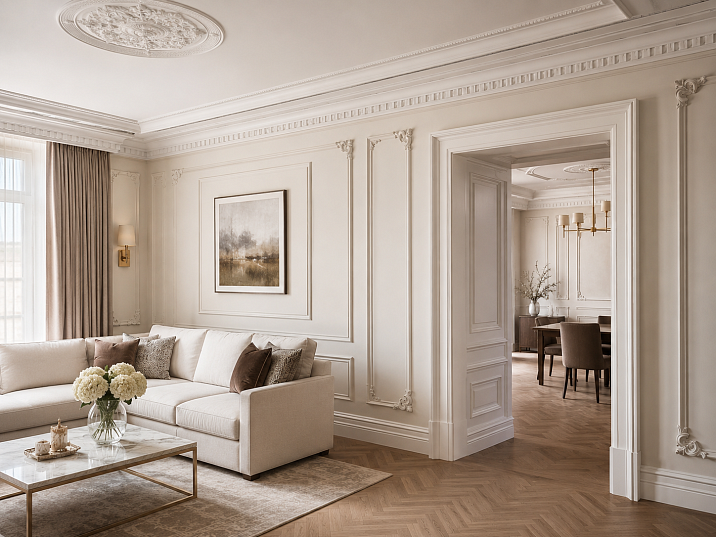
interior moldings — this is precisely the layer that turns finished finishing into a complete interior. A system of decorative elements for interior finishing: moldings, cornices, baseboards, ceiling rosettes, PU overlays, wall decor, and moldings. At STAVROS, such elements are selected in the section polyurethane products, and then refined according to the specific task: walls, ceiling, frames, joints, chandelier design, or decorative accents.
Buying interior polyurethane stucco today means getting decor that is not inferior to plaster stucco in relief quality, surpasses it in ease of installation, and is many times more affordable in cost. This is not a compromise — it is a conscious technological choice.
Let's break it down in order: what is included in the interior stucco system, how to choose each element, how to assemble a set, and where to go to the catalog for purchase.




What is interior stucco
A direct question deserves a direct answer — without vague talk of "wealth and luxury."
Interior stucco is a collection of decorative profiles and piece products used in interior finishing. They are installed on ceilings, walls, joints, and openings to create an architectural pattern: horizontal lines, frame schemes, ceiling centers, lower base belts.
Essentially, interior stucco is the "clothing" for a room. Without it, walls are flat. With it, they become structured, voluminous, and "architectural."
Historically, stucco was made from plaster and alabaster by master plasterers. It was a labor-intensive and expensive process. Today Polyurethane moldings reproduces the same shapes, the same profiles, the same relief — but with fundamental technological advantages:
-
Weight: a polyurethane molding 2 m long weighs 300–900 g versus 2–4 kg for a plaster counterpart
-
Installation: mounting adhesive, no primer, no special tools
-
Processing: cut with a utility knife or hacksaw along any contour
-
Painting: acrylic paint of any color without preliminary priming
-
Service life: 20–30+ years without deformation, cracking, or flaking
-
Cost: significantly lower than plaster analogs with comparable relief detail
Important clarification discussed below: interior molding differs from facade molding. Here — only interior finishing. Only elements for rooms.
Our factory also produces:
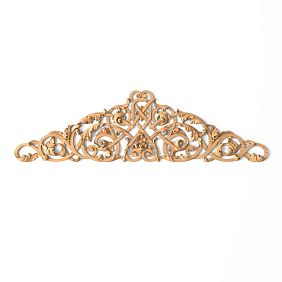
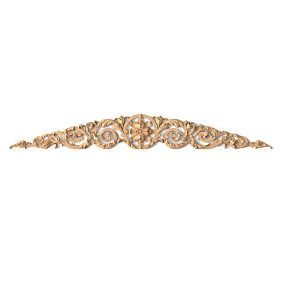
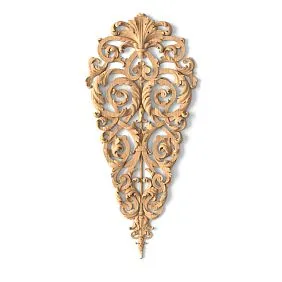
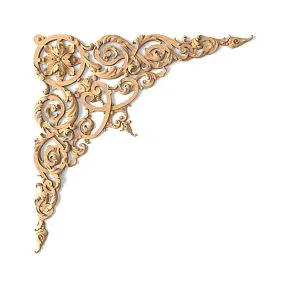
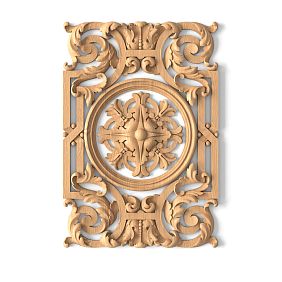


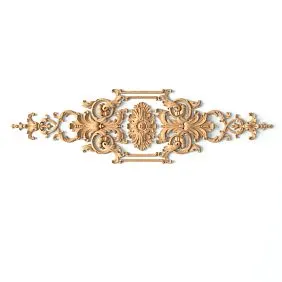
How this article differs from "molding in interior"
This is not an informational article about interior beauty and inspiring ideas. It is a commercial guide for selecting specific elements.
The article "molding in interior" answers the question "what does it look like?". This article answers the question "what exactly to buy and which section to go to?".
There is no repetition of ideas about walls and ceilings in general. There is no installation guide — for that, there is detailed guide on installing polyurethane moldingNo discussions about styles for the sake of styles.
Each section of this article is strictly tied to a specific product section of STAVROS. The main commercial weight is on polyurethane products. Each subsection is a link to a profile category.
Get Consultation
What elements are included in STAVROS interior stucco molding
The interior stucco molding system consists of eight types of elements. Each is an independent item with its own section in the catalog. Together they form a complete finish.
Polyurethane products: everything in one section
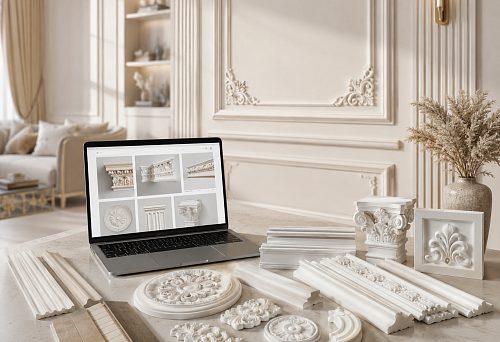
The starting point for anyone looking for polyurethane stucco molding for the interior — the main section of the STAVROS catalog. Here the entire range of decorative elements is collected: moldings, cornices, baseboards, rosettes, overlays, decor for walls, ceilings, and moldings.
This section is a guide to collections and styles. If you don't have a clear idea where to start — start here. If you have a specific task — go to the relevant subsection.
Keys for this section: stucco, buy interior stucco, polyurethane moldings, polyurethane interior items.
Moldings, cornices and baseboards: horizontal lines of the interior
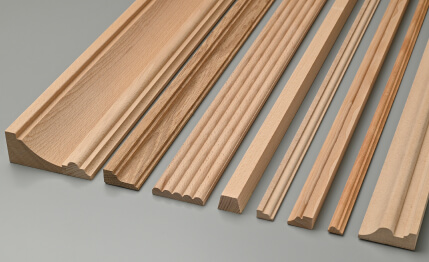
Polyurethane moldings, cornices, and baseboards — linear profiles for horizontal and vertical wall decoration. This is the "skeleton" of decor: without them, any frame scheme, any architectural wall remains at the idea level.
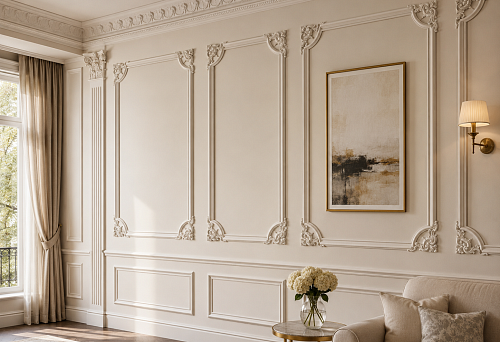
Moldings are used for frame schemes on walls, for boiserie, for decorative panels, for horizontal belts. Width — from 20 to 120+ mm. Profile — from smooth minimalist to richly ornamented classic.
This section contains linear elements of three types:
-
Moldings — for wall frames and decorative lines
-
Cornices — for ceiling line design (ceiling-wall transition)
-
Baseboards — for the bottom line of walls (wall-floor transition)
Three levels form a complete vertical room architecture from floor to ceiling.
Polyurethane cornices: ceiling line
Polyurethane Crown Molding — a separate section for those looking specifically for a ceiling profile. The cornice is installed at the junction of the wall and ceiling and serves two functions simultaneously: decorative (creating a smooth transition between two planes) and architectural (defining the "ceiling line" — a horizontal line visible from any point in the room).
Cornice height: from 40 to 200+ mm. For small rooms with a 2.5 m ceiling — 50–80 mm. For formal rooms with a 3 m ceiling — 100–160 mm.
A cornice without moldings works as an independent element. A cornice paired with moldings and a baseboard creates a complete architectural "frame" for the entire room.
Polyurethane baseboards: the lower line
Polyurethane Baseboards — the lower horizontal line of the wall. In a classic interior, a baseboard is not just a "cover for the gap between the floor and the wall," but a full-fledged decorative element with a profile and height proportional to the cornice.
Proportion rule: baseboard height is approximately 60–80% of cornice height. Molding for the frame is 40–60% of baseboard height. These are classic proportions that have worked in architecture for three thousand years and continue to work today.
Height of polyurethane baseboards in the STAVROS catalog: from 35 to 150+ mm. Suitable for any ceiling height, any style, any interior scale.
Ceiling rosettes: the center of the ceiling composition
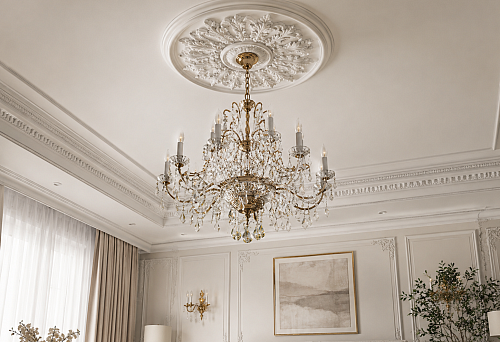
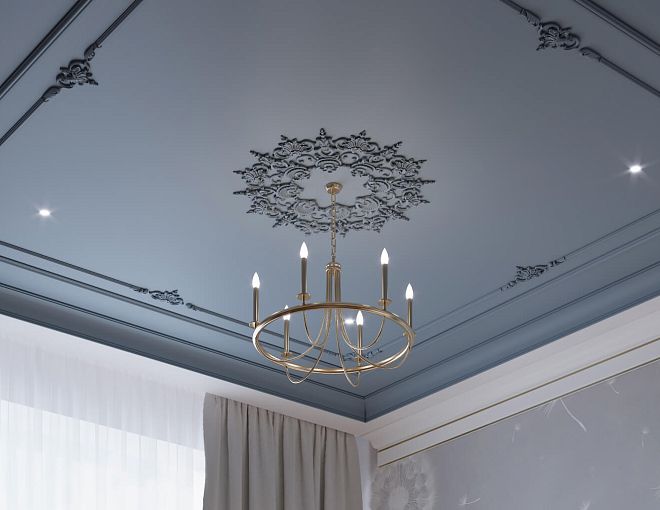
Polyurethane ceiling rosettes — individual central elements for decorating a chandelier and creating a ceiling decorative center. Diameter: from 200 to 800+ mm.
The rosette covers the chandelier's mounting point and visually "anchors" it to the ceiling. Without a rosette, the chandelier hangs in a void — there is no decorative center. With a rosette, an architectural focal point is formed, around which the entire ceiling plane is organized.
Diameter selection: area up to 14 m² — 250–380 mm. Up to 25 m² — 380–550 mm. Over 30 m² — 550–800 mm.
PU overlays: accent points
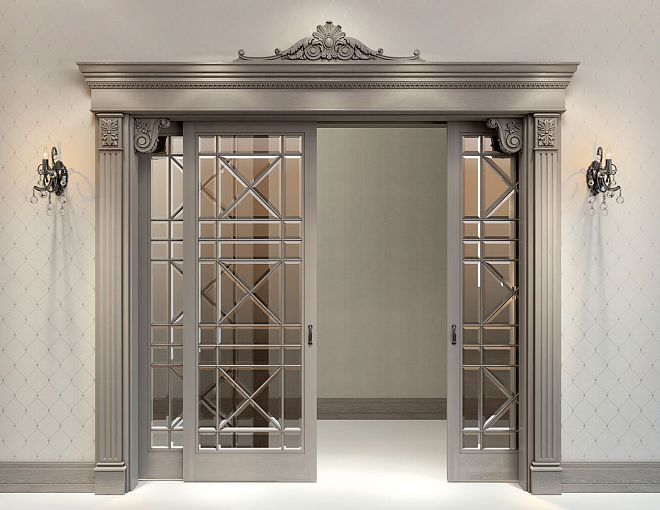
PU overlays — individual decorative elements for accent zones. Medallions, cartouches, ornamental inserts, corner blocks. Installed on walls, in the centers of frames, above doorways, at the intersections of molding lines.
Polyurethane decor for interiors in the form of overlays — this is what elevates decor from the "beautiful" level to the "professionally designed" level. One overlay in the center of a frame turns a geometric outline into a decorative object.
PU overlays require no additional tools: they are applied with mounting adhesive and are painted together with the other elements.
Polyurethane wall decor: wall compositions
Polyurethane wall decor — decorative wall elements for creating accent zones, decorative panels, and wall compositions. Horizontal bands, ornamental inserts, relief friezes.
This section is used for designing accent walls without frame schemes: when what is needed is not "frame geometry" but a decorative surface with relief. Wall decor can be installed as a standalone element or in combination with moldings and overlays.
Decor for moldings: corner and connecting elements
Decor for Molding — corner blocks, inserts and connecting elements for frame schemes. Installed at the corner points of frames: where horizontal and vertical molding segments meet.
The corner block solves three tasks: hides the joint of molding ends, creates a decorative accent in the corner of the frame, and stylistically enriches the scheme. Without corner blocks, the frame is just geometry. With them, it's an architectural detail.
Selection of corner elements: strictly for a specific molding. The width of the corner must match the width of the profile.
Ceiling decor: extended ceiling compositions
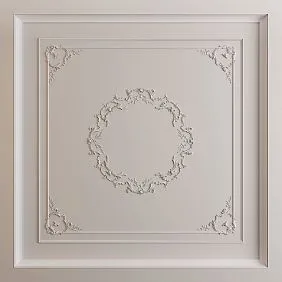
polyurethane ceiling decor — additional ceiling elements for creating multi-level compositions. Ornamental rings around the rosette, ceiling medallions, decorative beams, coffered elements.
This section is for those who are not limited to one rosette and want a full ceiling "picture". Concentric rings around the central rosette create a ceiling decorative center that is visible from any point in the room and sets the scale for the entire space.
How to choose interior stucco for the task: summary table
| Task | What to choose | Catalog section |
|---|---|---|
| Buy interior stucco as a whole | Polyurethane products | Polyurethane moldings |
| Frames and decorative lines on walls | Moldings, cornices and baseboards | Moldings |
| Finish the joint between wall and ceiling | Cornices | Crown Molding |
| Lower decorative line of walls | Baseboards | Baseboards |
| Designate the chandelier mounting point | Ceiling rosettes | Outlets |
| Accent element on a wall or frame | PU overlays | PU overlays |
| Decorative wall panel | Decor for Walls | Wall Decor |
| corner elements for frames | Decor for moldings | Decor for Molding |
| Extended ceiling composition | Decor for Ceilings | ceiling decor |
How to assemble an interior molding kit
A systematic approach is what distinguishes a professional interior from a random set of elements. Three assembly levels.
Minimum kit
Three positions. They create the basic architectural structure of the room.
This minimum already completely changes the perception of the room. The wall gains a top, bottom, and horizontal pattern. The room "gets dressed."
For whom: rental apartment, budget renovation with a quality finish, first experience with molding.
Medium set
Five positions. Adds a ceiling center and decorative accents.
The ceiling rosette completes the upper plane. Overlays in the centers of frames or above openings add decorative points. The interior becomes complete — with a center, perimeter, and accents.
For whom: living room or bedroom in a classic or neoclassical style, country house, apartment with a claim to a "representative interior."
Full set
Eight positions. This is no longer "decor" — this is architecture.
All levels — floor, walls, ceiling — are connected by a unified decorative system. Wall panels with corner blocks, horizontal belts, a central rosette with concentric rings, cornice, baseboard. This is — Polyurethane molding for interior in full scope.
For whom: grand interiors, classic mansions and country houses, representative offices, restaurants and hotels in a classic style.
Interior stucco molding for walls
Let's break down the walls separately — not as an "idea for decoration," but as a specific choice of elements.
The task of wall molding is to create an architectural pattern on a flat surface. This pattern can be horizontal (belts at certain heights), framed (contours dividing the wall into fields), or mixed (a combination of belts and frames).
Horizontal belt: one or two molding at the junction of heights — usually at a height of 90–100 cm and 200–220 cm. It divides the wall into lower (base), middle (main field), and upper (frieze) zones. Classic three-part division.
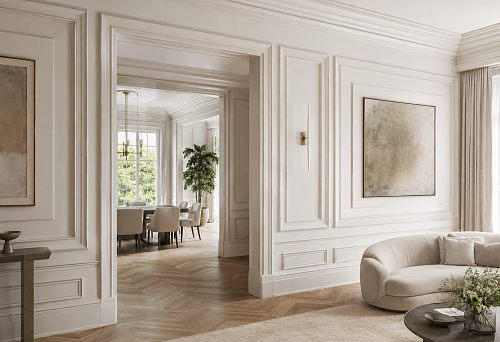
Frame scheme: moldings form rectangular or square frames. Inside the frame — accent paint, wallpaper, or just a clean field. In the corners of the frames — Decor for Molding. In the center of the frame — PU overlay optional.
Accent wall: full decoration of one wall — for example, the accent wall behind the sofa or behind the headboard. A combination of moldings, wall decor, and overlays. The entire accent wall turns into a decorative composition made of polyurethane.
What is needed from the catalog for wall molding:
-
moldings, cornices, and baseboards — main linear elements
-
Polyurethane wall decor — for accent wall zones
-
PU overlays — for accent points
Interior ceiling molding
The ceiling molding system consists of three elements that work together.
Cornice — the base. a polyurethane cornice installed around the perimeter, covers the joint between the wall and ceiling. Without a cornice, the ceiling 'hangs' without a frame. With a cornice, it is framed, structured, 'dressed'.
Ceiling rosette — the center. polyurethane rosette installed at the chandelier attachment point. Diameter depends on the room area and height.
Ceiling decor — the development. ceiling decor — ornamental rings, medallions, additional elements around the rosette. For spacious halls with high ceilings.
Matching principle: the cornice and rosette must be in the same style. A simple geometric cornice goes with a geometric rosette. An elaborate floral cornice goes with an ornamental rosette. A mismatch in styles is immediately noticeable and gives the feeling of an interior "assembled from different sets."
Interior stucco for frames and panels
The frame decorative scheme is a classic wall design technique dating back to palace architecture. The essence: the wall is divided by moldings into rectangular fields — "frames." Each frame is an independent decorative element.
To create a frame scheme, you need:
-
Moldings — linear profiles for the perimeter of the frames
-
Decor for Molding — corner blocks for the four corners of each frame
-
PU overlays — central accent elements inside the frames
The frame scheme is the "most expensive-looking" way to decorate a wall. At the same time, the cost of materials is quite affordable: a few linear meters of molding, corner blocks, and one or two overlays turn an empty wall into a "palace hall."
Boiserie is a variation of the frame scheme where the frames cover the entire wall from floor to ceiling or up to a certain height. For boiserie, wide moldings with a clear, rich profile are needed: their relief creates visual distance between the frames.
Interior stucco for classic and neoclassical styles
Interior style is the language that stucco «speaks». The same element is perceived differently in different styles.
Classic
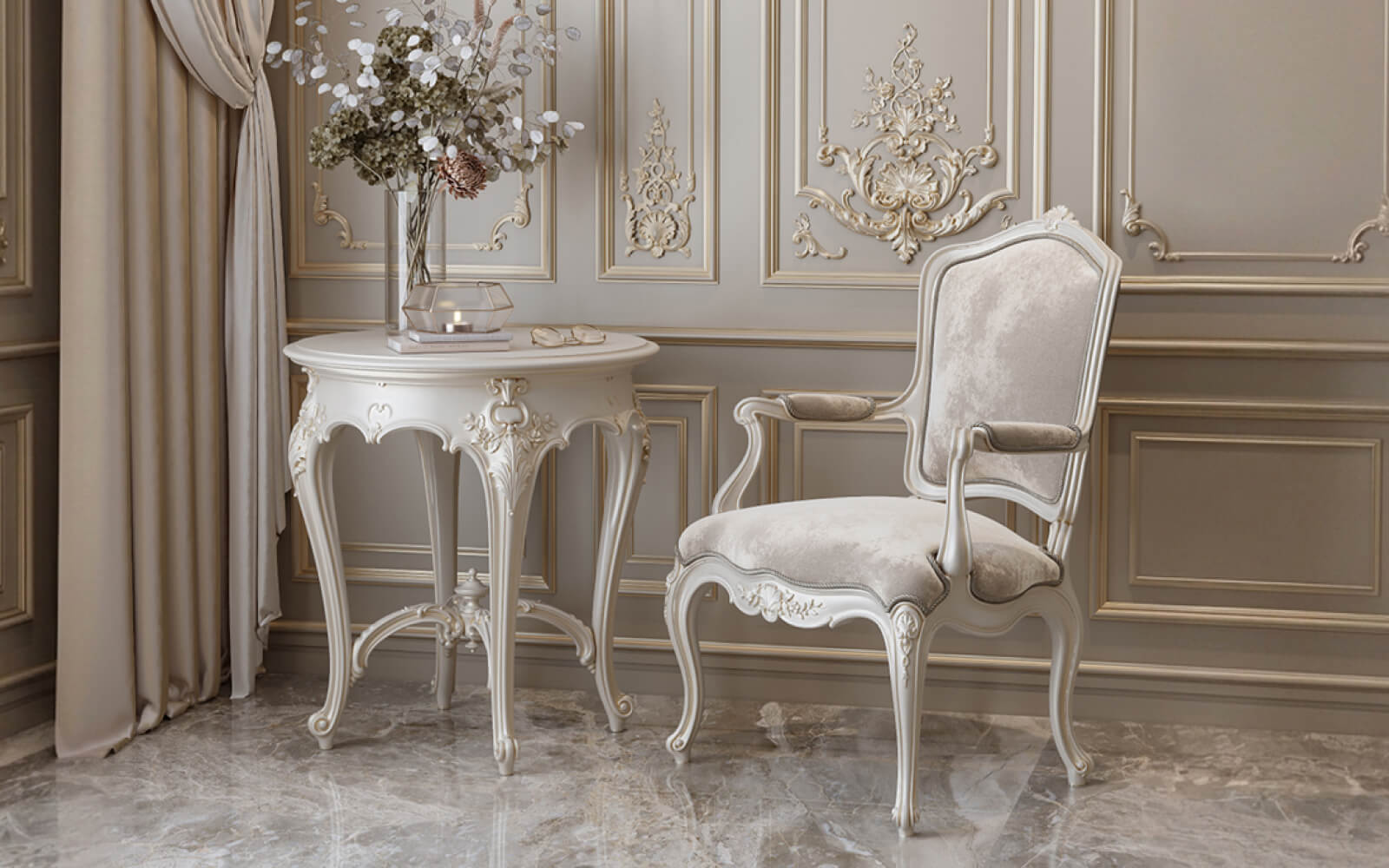
Rich relief, floral ornaments, multiple profile levels. Cornice — 120–180 mm, with developed architrave. Baseboard — 100–140 mm. Moldings — 50–80 mm. Rosette — 500–700 mm with multi-tiered ornament.
Decor is installed on all walls, not just the accent wall. A frame scheme with corner blocks is mandatory. PU overlays — on all frames.
Neoclassicism
Moderate relief, geometric or restrained floral ornament. Cornice — 80–120 mm. Baseboard — 70–100 mm. Moldings — 35–65 mm. Rosette — 380–550 mm.
Decor is concentrated on accent walls. Frame scheme — on one or two walls, the rest are plain. Corner blocks — geometric.
Modern Classic and Contemporary
Minimal relief, clear horizontal lines. Cornice — 50–80 mm, smooth or with a simple profile. Baseboard — 40–70 mm. Moldings — 25–45 mm. Rosette — 250–380 mm, without complex ornament.
Decor — only on the accent wall or only on the ceiling. Walls without overload.
How interior stucco differs from facade stucco
This is an important block. Not for beauty — for understanding boundaries.
Interior stucco is used exclusively indoors. It is not designed to withstand precipitation, ultraviolet radiation, or freeze-thaw temperature cycles.
Facade stucco molding is a completely different task. It has different requirements for the material, adhesive, and surface preparation. STAVROS facade elements are a separate cluster and do not overlap with interior themes.
This article covers only interior finishing. Only interior elements. Only rooms.
If you need facade stucco molding, that is a different section of the catalog. Do not confuse the tasks.
Interior stucco molding for different rooms
Stucco molding in each room solves a different task. Let's break it down by room.
Living Room
The main room — maximum decorative richness. Interior stucco molding for the living room: full set or medium. Accent wall with a frame scheme — mandatory. Rosette — large. Cornice — 100–150 mm.
Living room 20–35 m²: cornice 110–140 mm, molding 45–70 mm, three frames on the accent wall, rosette 450–600 mm, baseboard 85–110 mm. All elements in the same style direction.
Bedroom
Restrained version. The system (cornice + moldings + baseboard + rosette) is preserved, but the scale is reduced. Cornice 70–90 mm. Moldings 30–50 mm. Rosette 320–420 mm. Baseboard 60–80 mm. One accent wall — behind the headboard.
Interior stucco molding for the bedroom — is a balance between expressiveness and calmness. The stucco here is the "background," not the "main character."
Hallway and hall
A small space that forms the first impression of the home. molded decoration made of polyurethane works best for the hallway: a horizontal belt at a height of 100 cm + a cornice 70–90 mm + a baseboard 70–90 mm. For corridors with straight long walls — one frame scheme on the main wall.
Office
Strictness and intellect. Interior stucco molding for the study — a minimal or medium set. A smooth cornice or with a simple geometric profile. Moldings without floral ornaments. A geometric rosette. A baseboard 60–90 mm.
Vertical frames along the main wall of the study create a sense of "archival strictness" — exactly what is needed in a space for work and concentration.
Five mistakes when choosing interior stucco molding
Mistake 1. Buying one element without an overall scheme
One molding without a cornice and baseboard is a fragment without context. Stucco works as a system. Order at least a minimal set — three items.
Mistake 2. Mixing incompatible styles
A floral rosette with a geometric cornice is a style conflict. Choose all elements in one direction. It doesn't have to be the same series — but one 'language'.
Mistake 3. Choosing scale without considering ceiling height
A 160 mm cornice with a 2.5 m ceiling 'presses' on the space. A 50 mm cornice with a 3.5 m ceiling gets lost. The scale of elements should match the height.
Mistake 4. Buying moldings without corner elements
A frame without corner blocks is four ends meeting at 45°. This requires precise cutting and looks 'cheap'. Decor for Molding solves this task and simultaneously enriches the decor.
Mistake 5. Not calculating a reserve for cutting
Always add 10–15% over the calculated footage. When cutting at an angle, material loss is higher than with a straight cut.
Where to buy STAVROS interior stucco
STAVROS interior stucco you need to browse in the main section of polyurethane products — and then go to the specialized subsections for your specific task:
-
General section: Polyurethane moldings
-
Moldings, cornices and baseboards: Moldings
-
Cornices: Polyurethane Crown Molding
-
Baseboards: Polyurethane Baseboards
-
Ceiling rosettes: Outlets
-
PU overlays: applique
-
Wall decor: Wall Decor
-
Decor for moldings: corner and connecting elements
-
Ceiling decor: Ceiling decoration
All items — in stock, with photos, sizes and article numbers. Ready for painting. Use mounting adhesive. No special tools required.
STAVROS is a Russian manufacturer and supplier of decorative polyurethane moldings for interiors. Full range: from basic moldings and cornices to complex frame systems, ceiling compositions, and individual accent elements. All products are for interior finishing, with clear relief, precise geometry, and stylistic consistency within collections. STAVROS interior moldings are a system, not a set of random parts.
FAQ: interior polyurethane moldings
What are interior moldings?
Decorative elements for interior finishing: moldings, cornices, baseboards, ceiling rosettes, PU overlays, wall decor, moldings and ceilings. Main section: Polyurethane Items.
Where to buy STAVROS interior moldings?
In the main section moldings from polyurethane and in specialized subsections for specific tasks.
How does interior stucco differ from exterior stucco?
Interior — for indoors. Exterior — for outdoor finishing. Different material characteristics, different operating conditions. This article covers only interior moldings.
Where to start selecting a set?
Minimum: moldings + cornice + baseboard. Then add a rosette, overlays, and corner elements as needed.
Is this a duplicate of the article "stucco in interior"?
No. That article is about ideas and styles. This one is about choosing specific elements and transitions to the catalog.
Do I need to order elements from the same series?
Preferably from the same style direction. This ensures visual consistency. The same series is ideal, but not necessary.
Can stucco be painted any color?
Yes. Polyurethane can be painted with acrylic paint without prior priming. White, cream, patina, gold, any RAL — all are acceptable.
How to calculate the required amount of molding?
Wall perimeter × 1.1 (10% reserve). Divide by the length of one piece (usually 2 m). The result is the number of pieces.