
























Article Contents:
- What is corner decor for moldings
- How this article differs from the article about joints and installation
- Which STAVROS products are suitable for corner decor
- Polyurethane decor for moldings
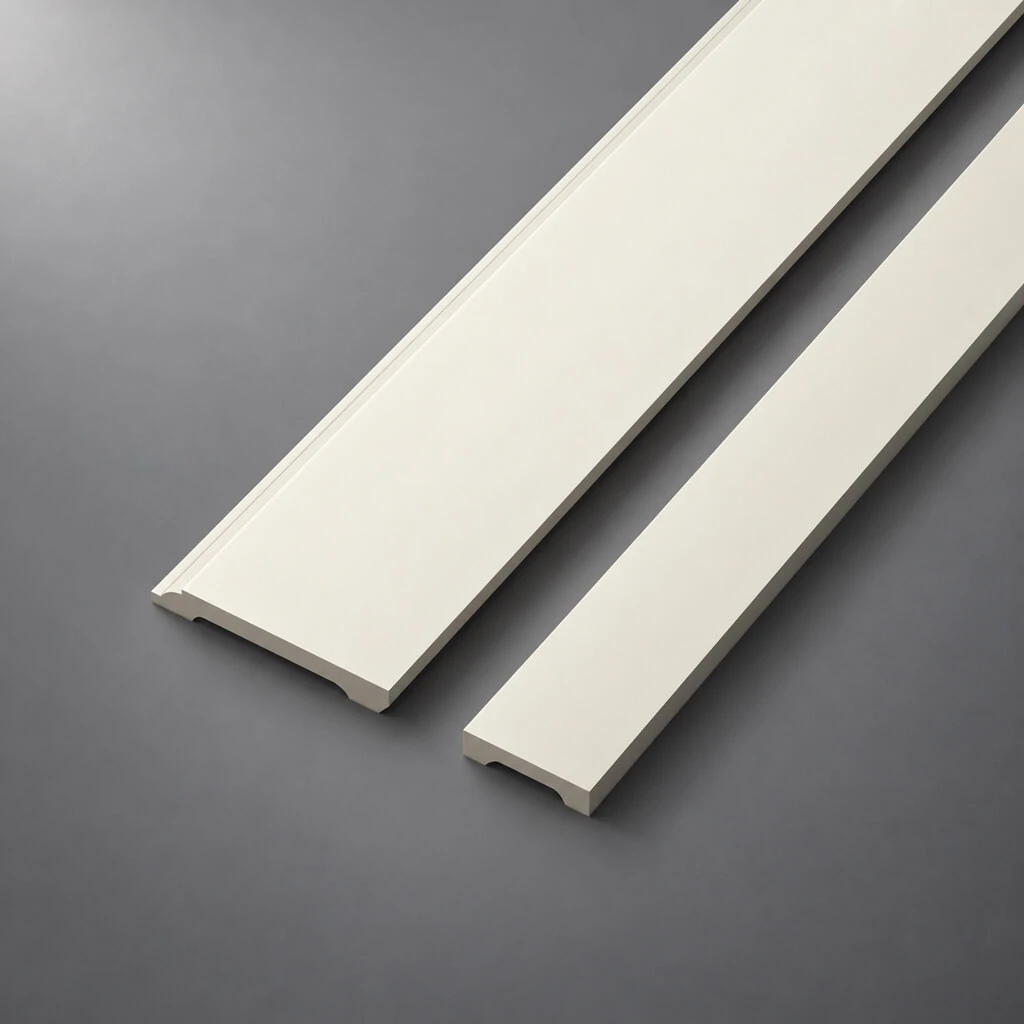
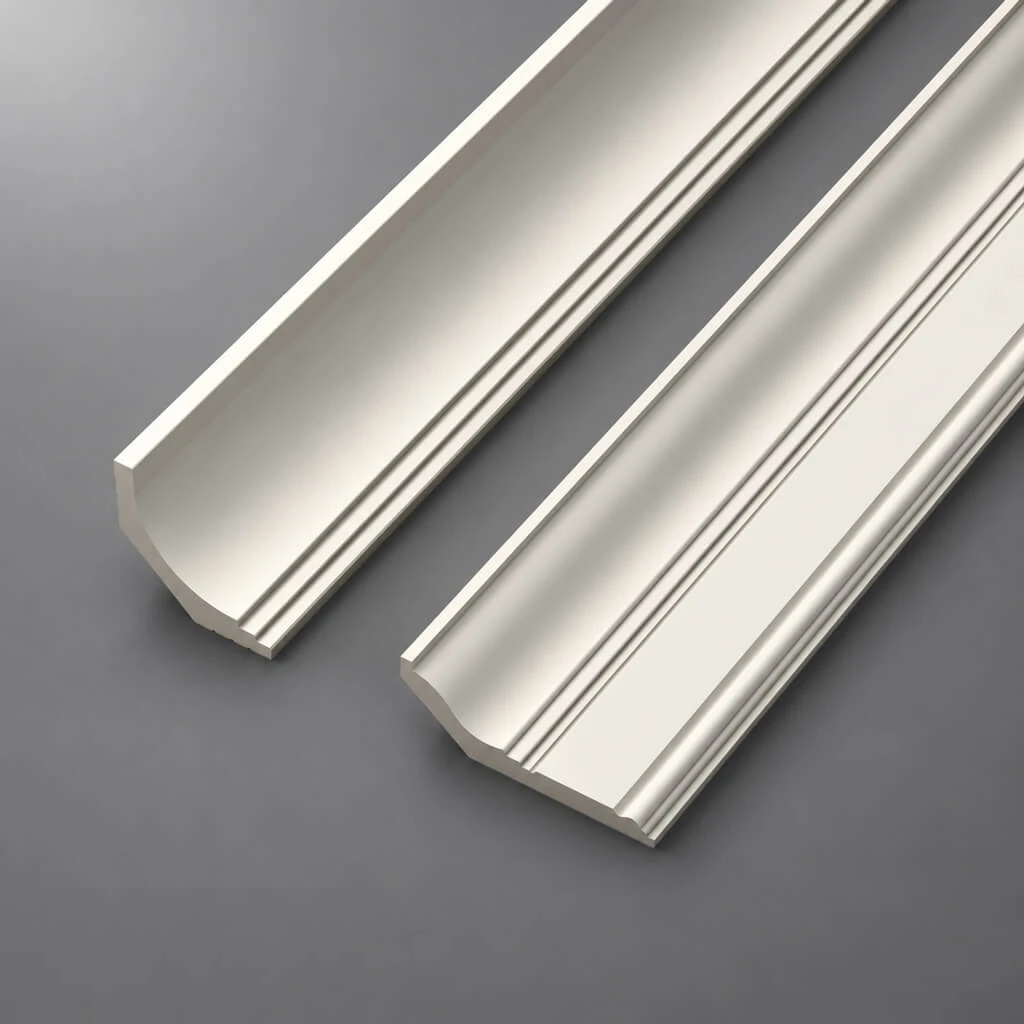
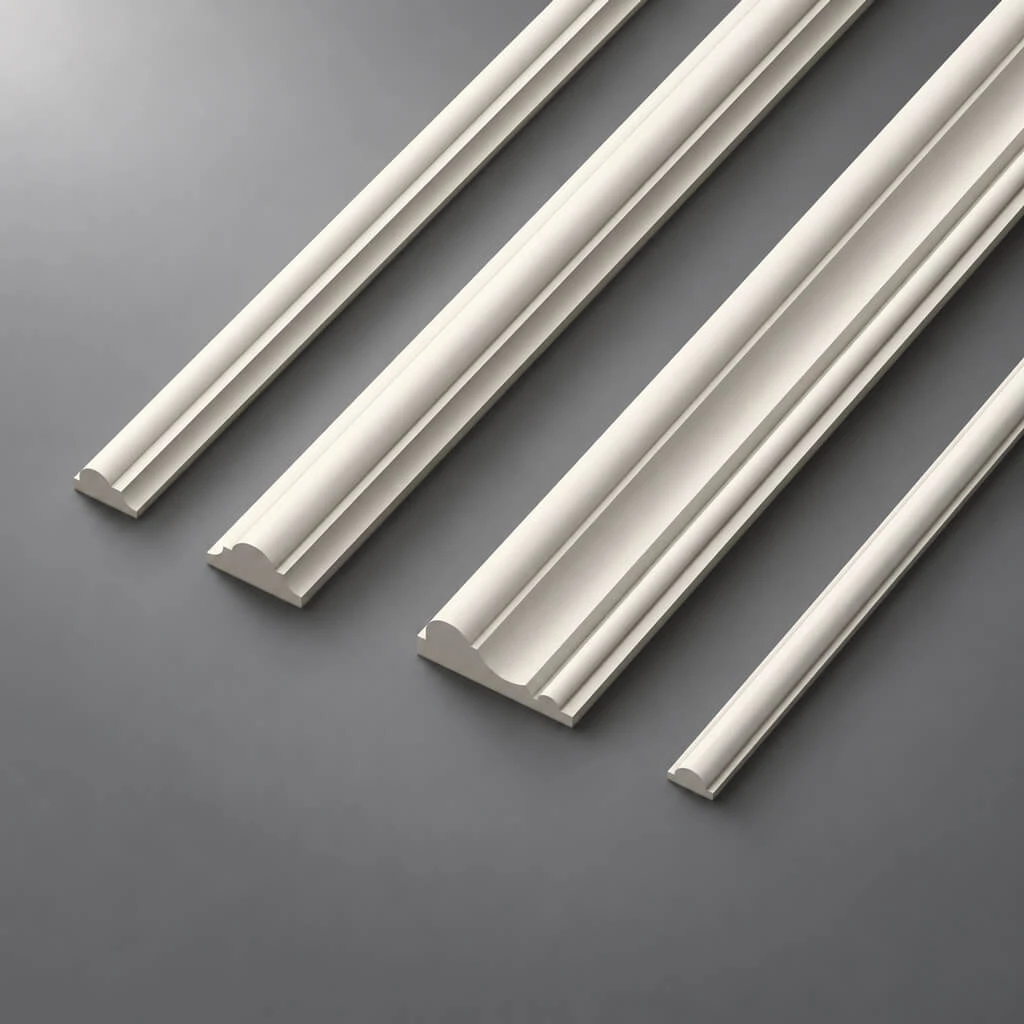
- Moldings, cornices and baseboards made of polyurethane
- PU overlays
- Polyurethane wall decor
- Wooden decor for moldings
- General section
- Where to use corner moldings and polyurethane corners
- Wall frames: classic scenario
- Wall panels and boiserie: architectural depth
- Door leaves and portal frames
- Furniture facades: class in details
- Classic and neoclassical frames: about style
- Left and right corner decor: the main question before purchase
- How to assemble a set for a decorative frame
- Minimal set: pure geometry
- Extended set: frame with character
- Premium set: full wall composition
- STAVROS corner decor selection table
- How to choose a corner element for molding: eight steps
- How to calculate the number of corner elements for different schemes
- Mistakes when choosing corner moldings and corners
- Where to buy corner moldings and decor for STAVROS moldings
- FAQ: corner decor for moldings — frequent questions
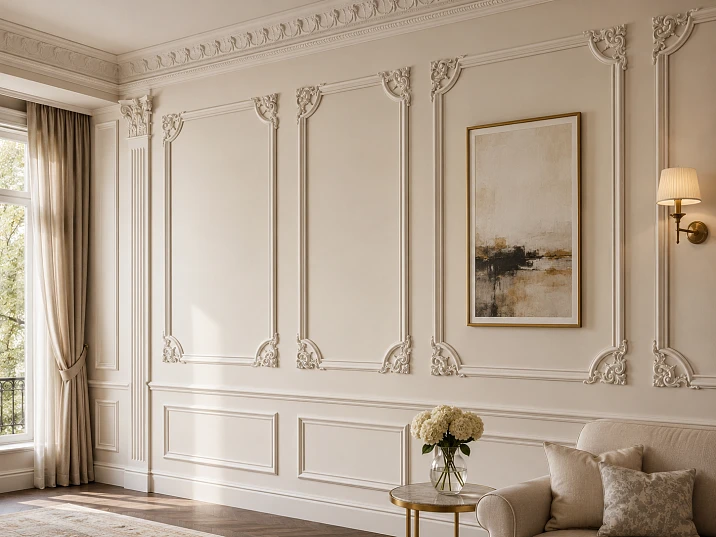
A corner is a test for any decorative frame. It is here, at the intersection of two profiles, that all the beauty or all the failure of the intended composition is concentrated. A flawlessly chosen corner decor for moldings turns an ordinary profile frame into a complete architectural motif — with clear geometry, an expressive accent, and a sense of professionally executed work.
Polyurethane corner moldings are not a minor accessory that can be skipped. They are a key element of any decorative frame: on a wall, wall panel, door leaf, or furniture facade. It is the corner element that sets the stylistic tone and makes the frame complete — or reveals an amateur approach.
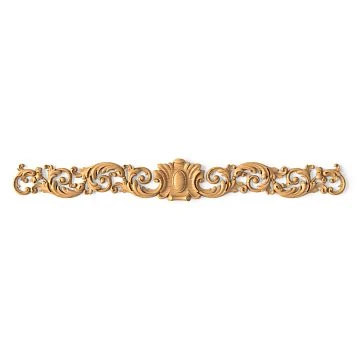
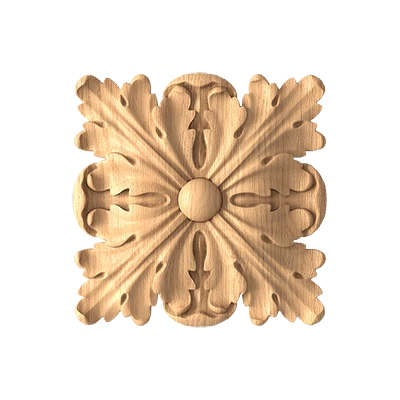
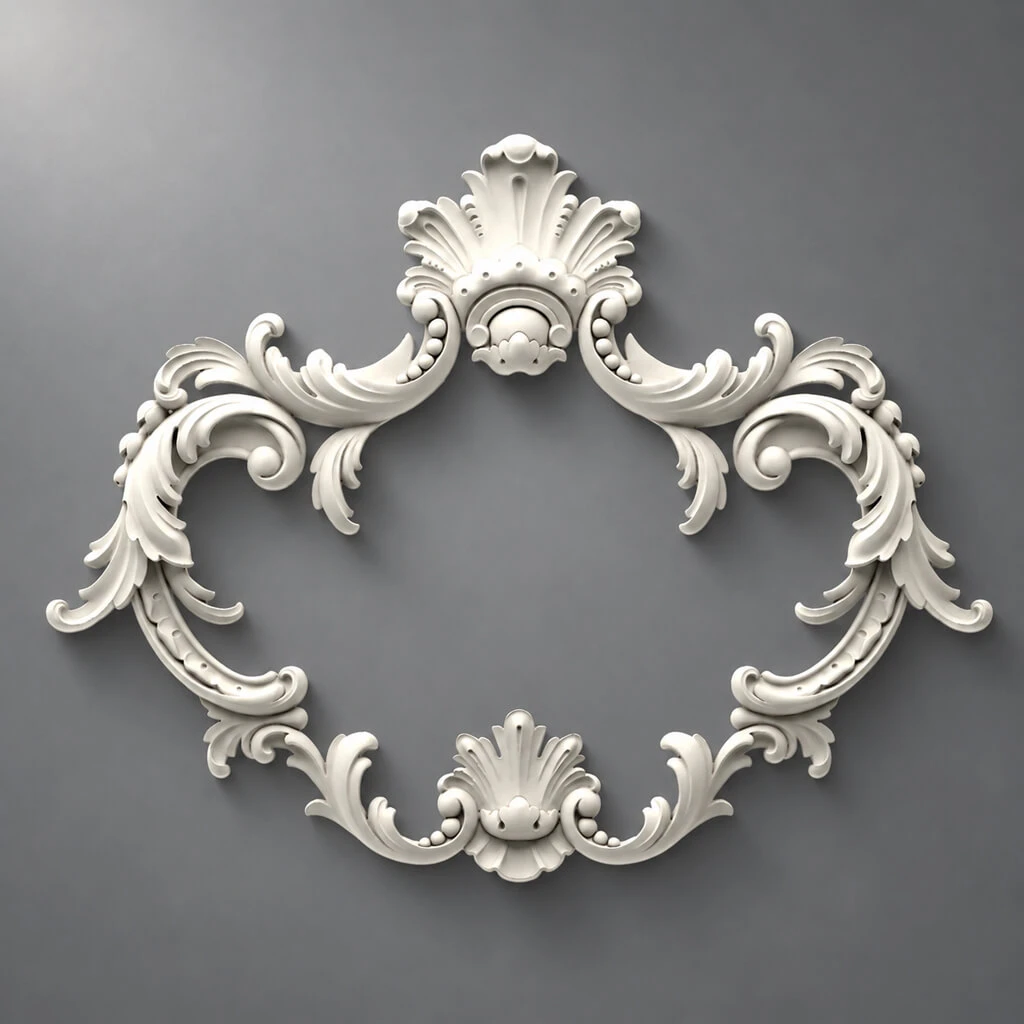
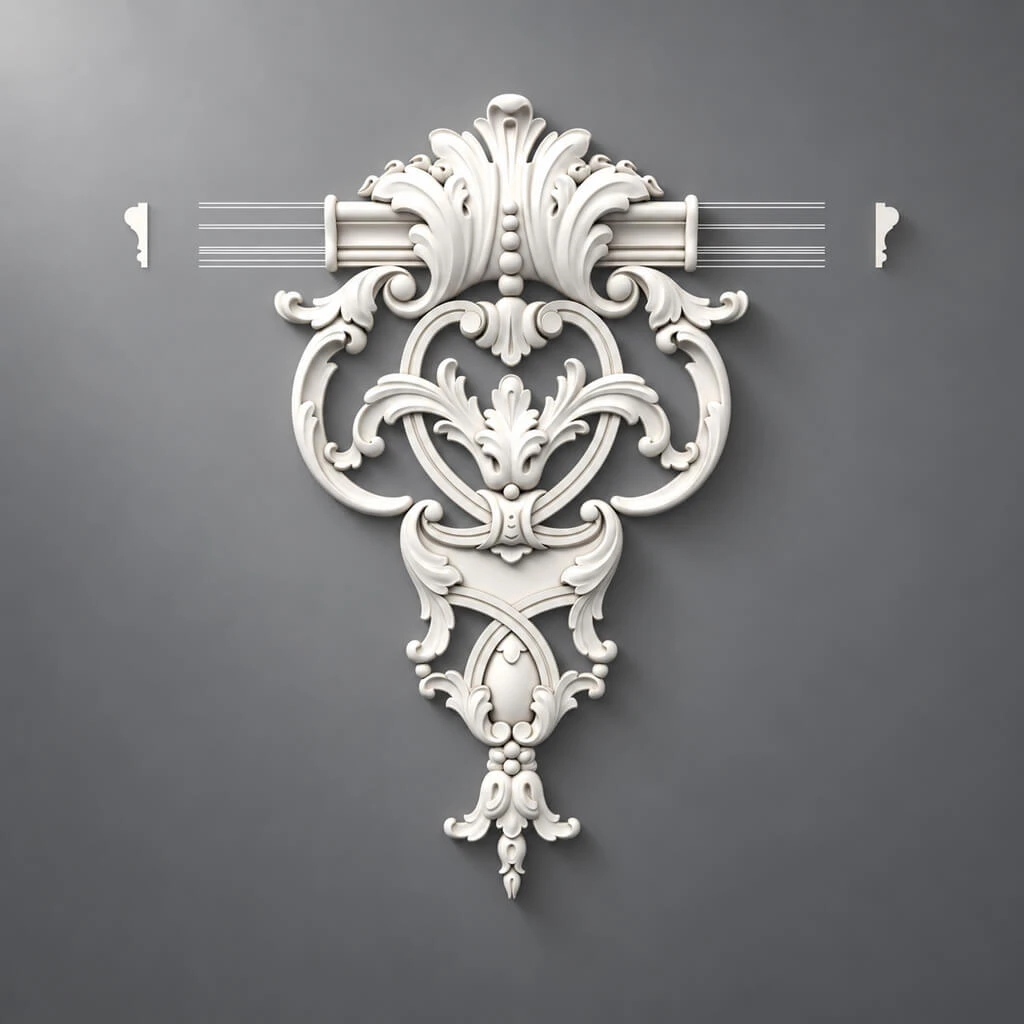
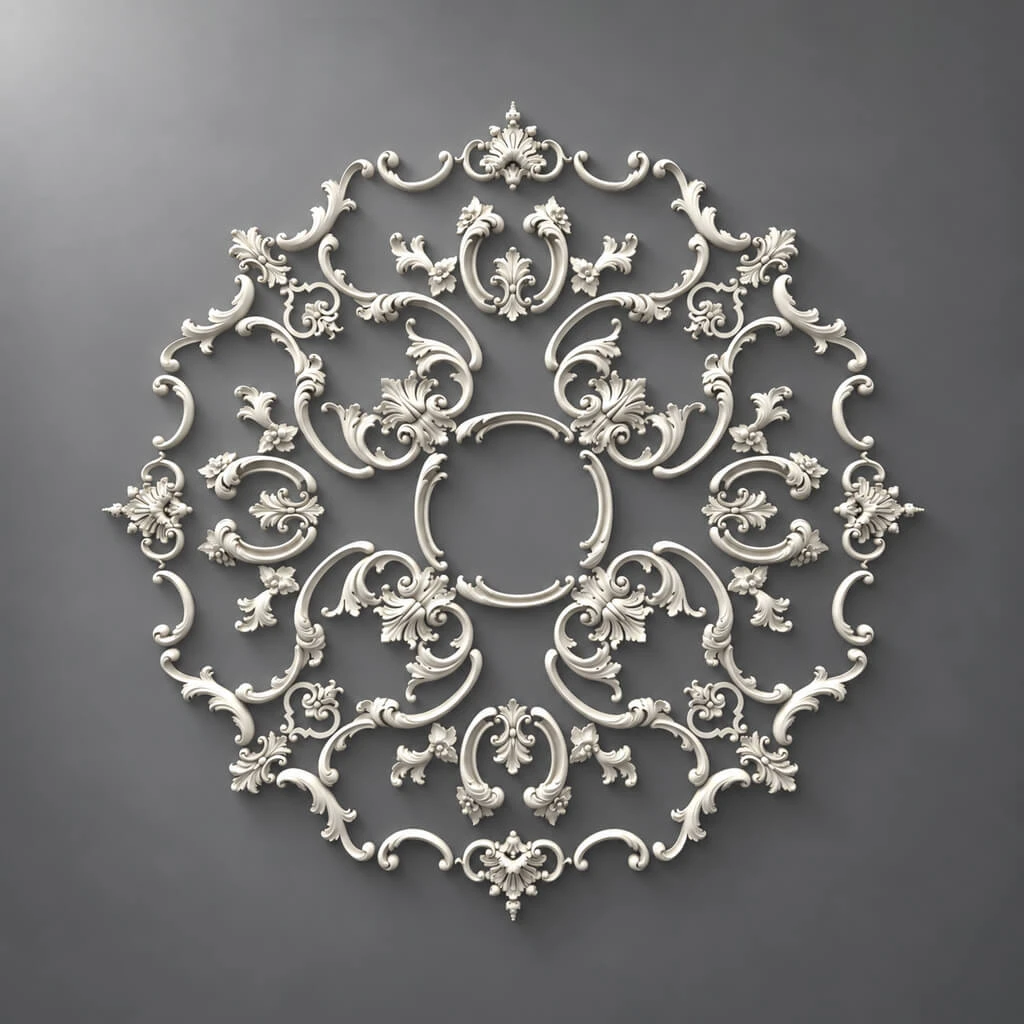
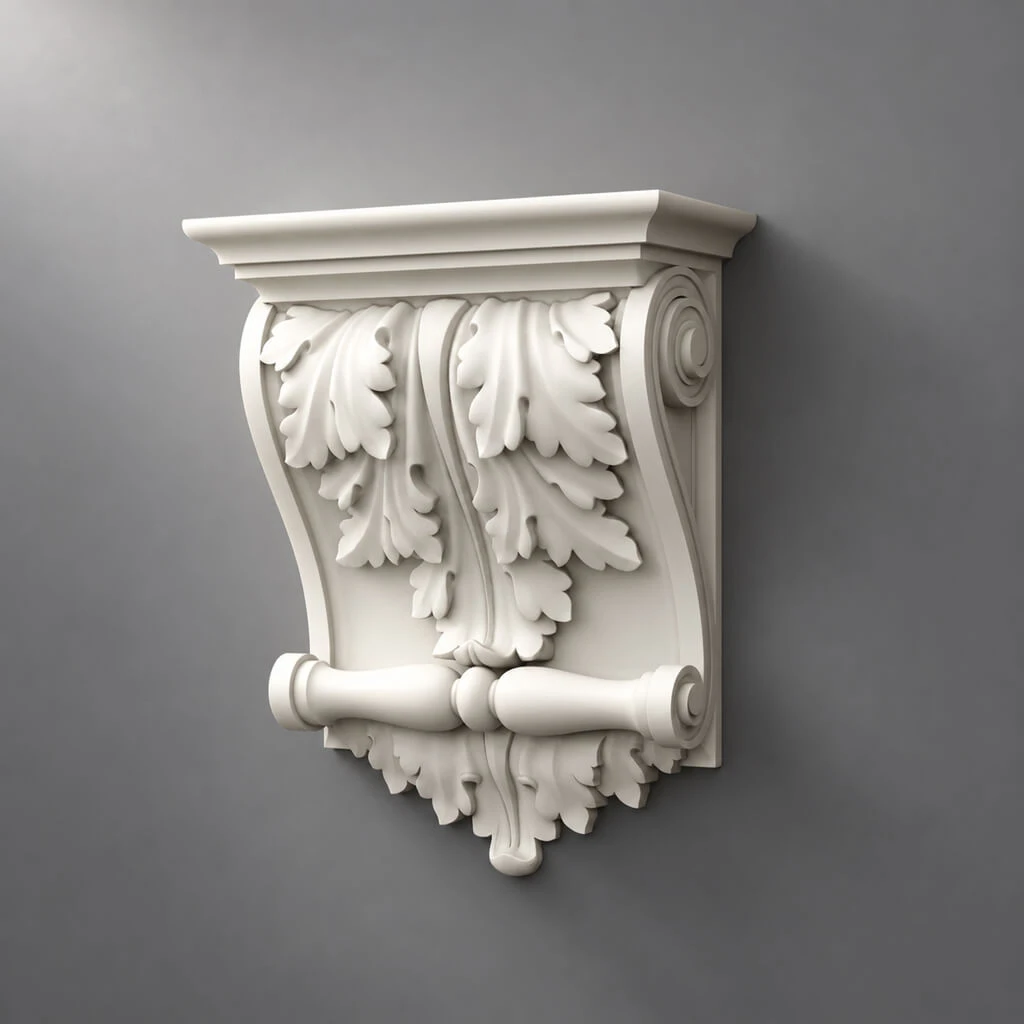
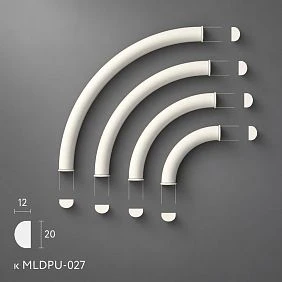
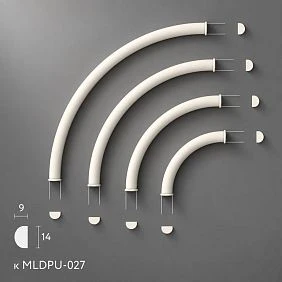
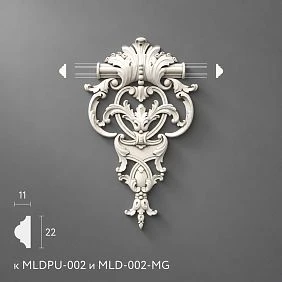
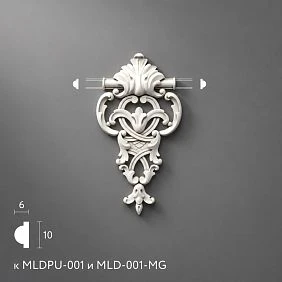
In the STAVROS catalog polyurethane decorative corners are presented in a wide range: from laconic geometric overlays to elaborate relief elements with floral and classical ornamentation. There are polyurethane corner elements and their wooden counterparts. There are left and right versions — and this is a separate topic that we will cover in detail.
If you are looking for how to choose and buy polyurethane corner moldings for frames, panels, and stucco — this guide from the first to the last line is written for you.
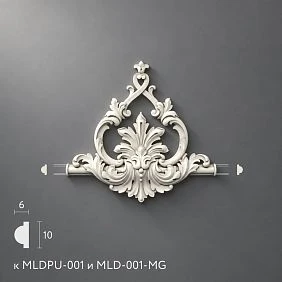
What is corner decor for moldings
Let's start with a definition — clear, without embellishments.
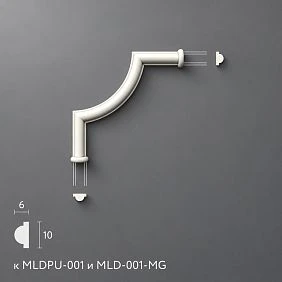
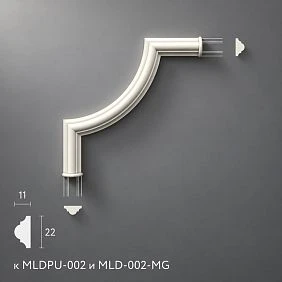
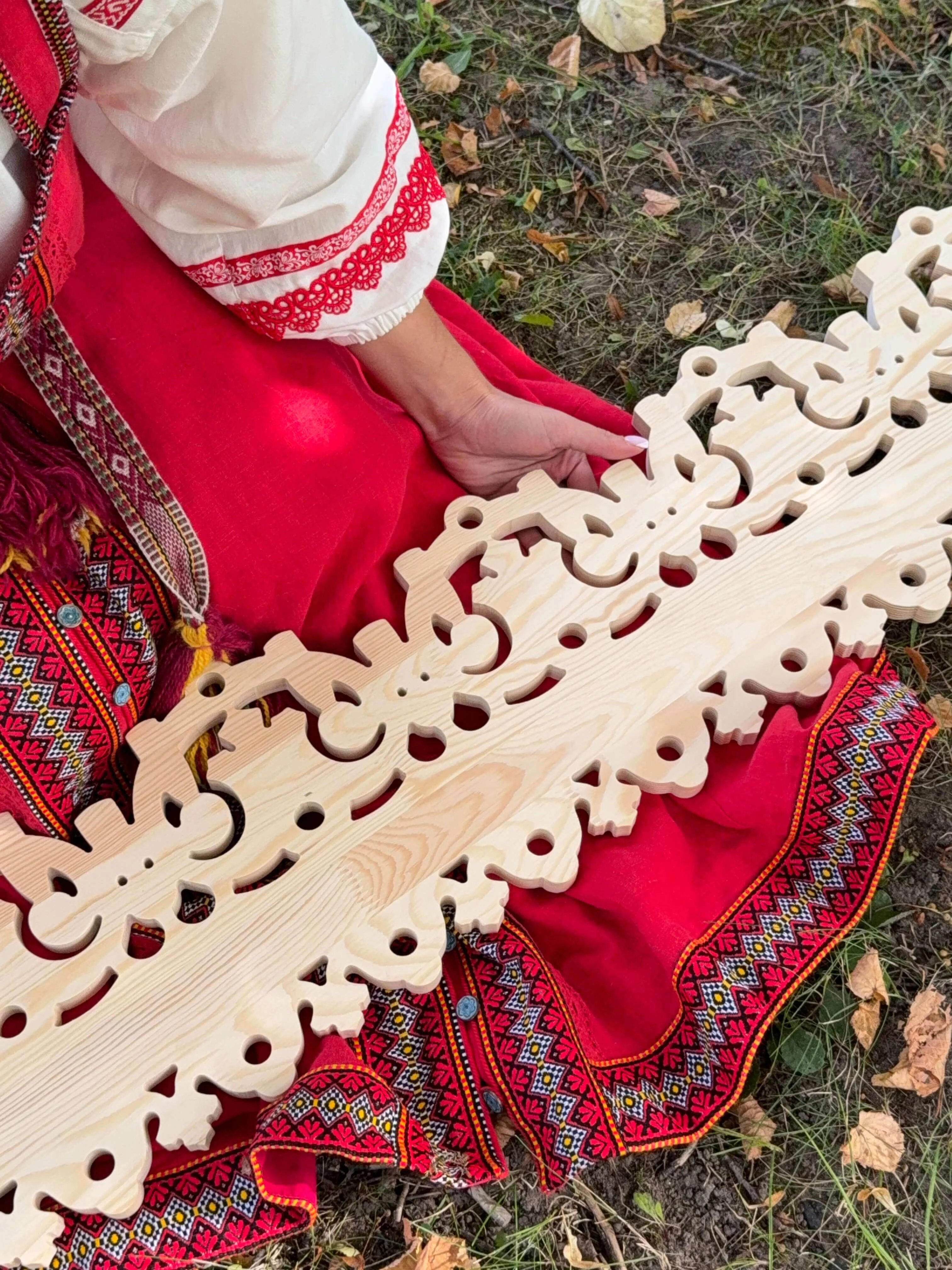
corner decor for moldings — is a piece decorative element that is mounted in the corner of a frame or panel composition made of moldings. It covers the intersection point of two profiles: horizontal and vertical — and simultaneously performs a decorative function, turning a technical joint into an artistic accent.
Why is it needed? Molding is a linear profile. When two profile segments meet at the corner of a frame, they need to be joined. There are two ways: cut at 45° (requires precision and special tools) or install a corner block (covers the joint and adds decor). The corner element is not a "workaround," but a full-fledged design technique that was used even in classic interiors of the 18th–19th centuries.
As an independent stucco decor, the corner element for molding simultaneously:
-
covers the joint of two profiles without cutting
-
creates a decorative accent in the corner of the frame
-
allows the use of moldings without special end treatment
-
sets the stylistic character of the entire composition
Corner moldings made of polyurethane — lightweight, dense, odorless, with clear relief edges. Mounted with glue. Paintable in any color. Resistant to deformation under normal temperature and humidity conditions. This is stucco decor that works even in the hands of a beginner — provided it is correctly selected.
Important clarification: this article is not about installing corner elements or the technique of trimming joints. There is a separate article for that — installing polyurethane molding. Here — about selection, compatibility, configuration, and purchase. This is what you need to know before you open the catalog.
How this article differs from the article about joints and installation
Two questions are often confused: "how to join moldings in a corner" and "which corner decor to choose for a frame." These are different tasks with different answers.
The article about molding installation covers the technical side: tools, cutting at 45°, puttying joints, and the order of gluing. It's about hands, tools, and glue.
This article is about the mind: what to buy, in what quantity, by what criteria to select, how to check the compatibility of a corner with a profile, why orientation (left/right) matters, how to assemble a complete frame or panel composition from individual STAVROS catalog items.
The difference is fundamental. You can have excellent knowledge of installation techniques and still buy corner elements that do not match the molding in width. Or take two identical corners instead of paired left and right ones. Or buy four corners for one frame — and not think that for a series of five frames you need twenty.
This article addresses exactly such mistakes — before they happen.
Our factory also produces:
Which STAVROS products are suitable for corner decor
Only real sections, only real items.
Get Consultation
Polyurethane Molding Decor
Main section for this topic: Decor for polyurethane moldings. Here are collected corner elements from different series — from simple overlays of the MLDPU-027U series to developed relief blocks of the NPU-408, NPU-409, NPU-382, NPU-383 series. There are elements without orientation (symmetric) and elements with L/R (left/right) orientation.
Price range — from 470 rubles for simple corner elements of the MLDPU-027U-2 series to 14,000+ rubles for complex relief blocks of the NPU-383 series. The difference is determined by scale, relief, and style affiliation.
All items are made of polyurethane — ready for painting, compatible with corresponding STAVROS molding profiles. The back side of the elements replicates the profile cross-section — this ensures a tight joint without gaps.
Moldings, cornices and baseboards made of polyurethane
Moldings made of polyurethane — the basic linear part of the frame. The corner element is always selected for a specific molding profile: matching in width and cross-section is mandatory. Buying corners 'separately' from the molding is a mistake: first choose the profile, then the corner decor for it.
PU overlays
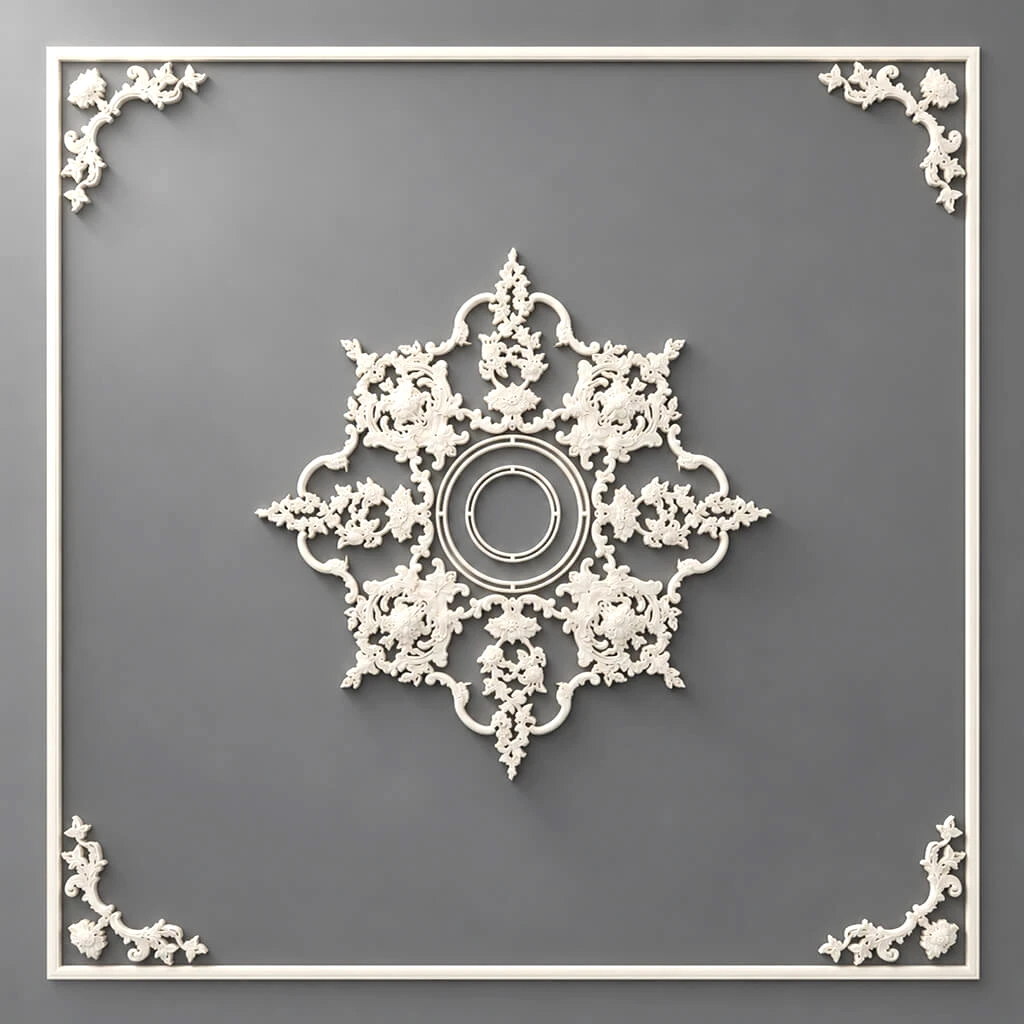
PU overlays — for central decorative accents inside or outside the frame. If the corner element finishes the corners, the PU overlay can complement the center of the frame or mark an accent in the middle of the horizontal molding.
Polyurethane wall decor
Polyurethane wall decor — for extended frame and panel compositions. Corner elements and moldings are the skeleton of the frame. Wall decor is the filling of the field inside the frame and additional accents around it.
Wooden decor for moldings
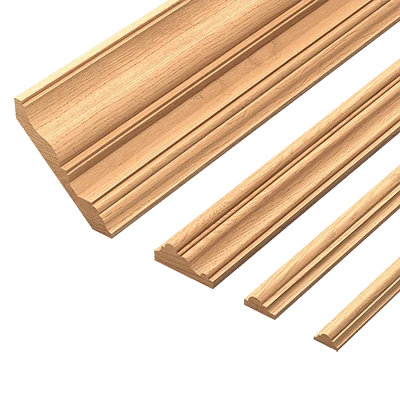
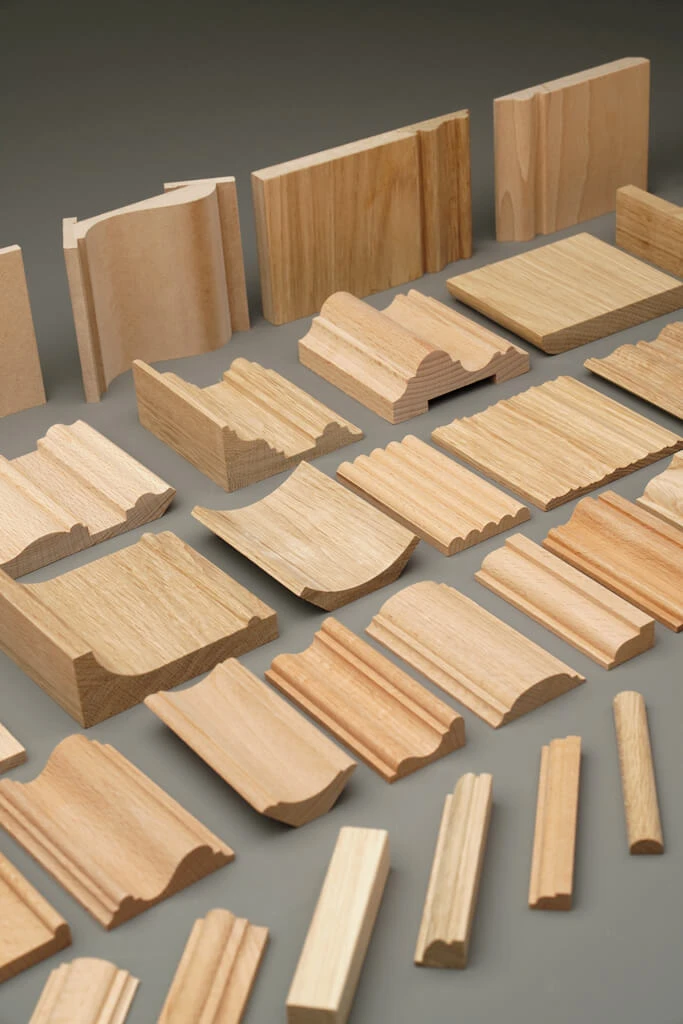
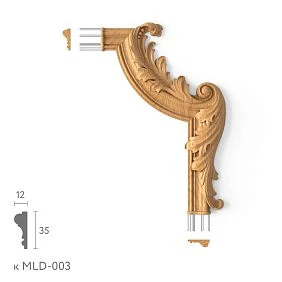
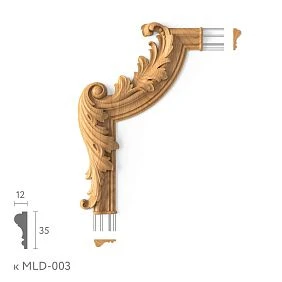
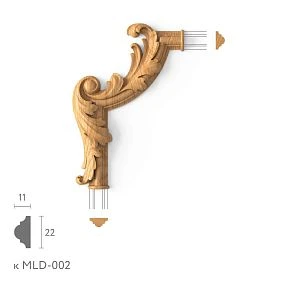
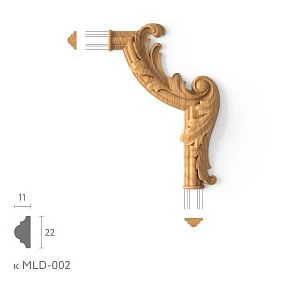
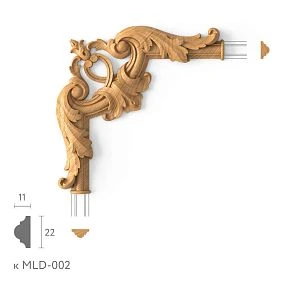
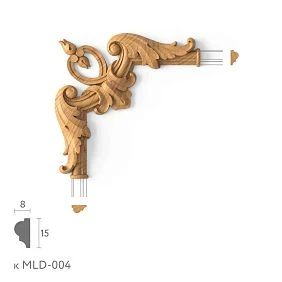
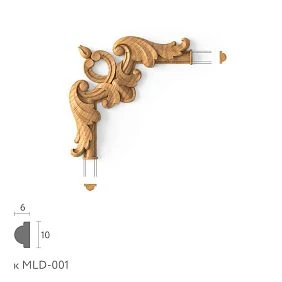
Wood molding decor — for wooden molding frames and furniture facades. The assortment includes: corner elements with carving from beech and oak of the MLD-027U, MLD-001U, MLD-002U, MLD-003U, MLD-004U series and paired left/right versions of the MLD-1U-2.1L/R, MLD-2U-2.1L/R, MLD-3U-2.1L/R, MLD-4U-2.1L/R series. Wooden elements are used with wooden moldings — mixing polyurethane and wood in one frame is undesirable without design logic.
General section
polyurethane products from STAVROS — a starting point for navigating the entire range. If you don't know where to start your selection, come here and then move to the desired categories.
Where to use corner moldings and polyurethane corners
Corner elements are a versatile tool. Let's break down four main scenarios.
Frames on walls: a classic scenario
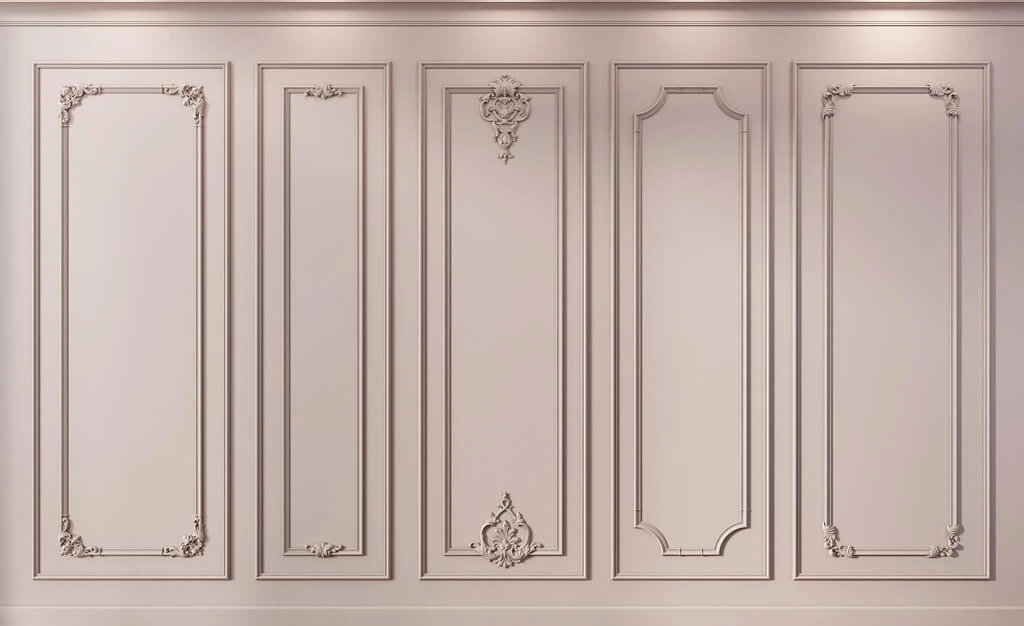
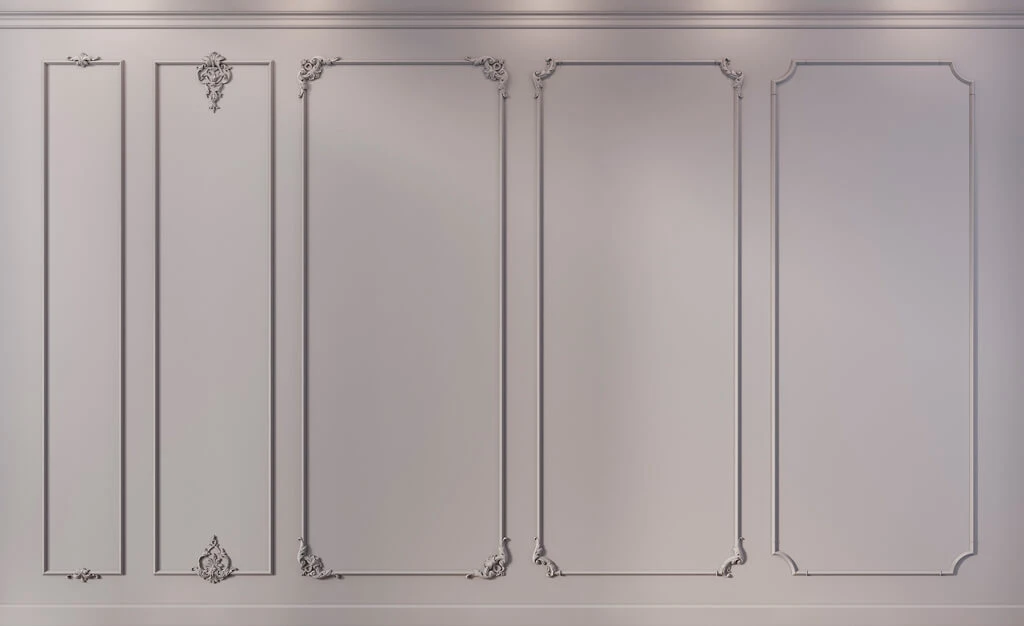
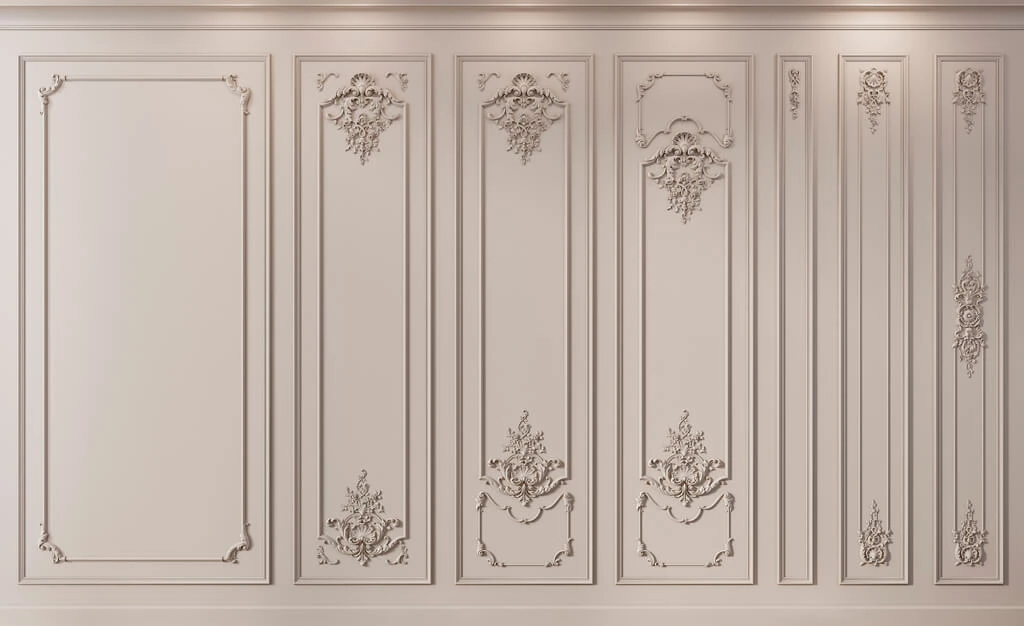
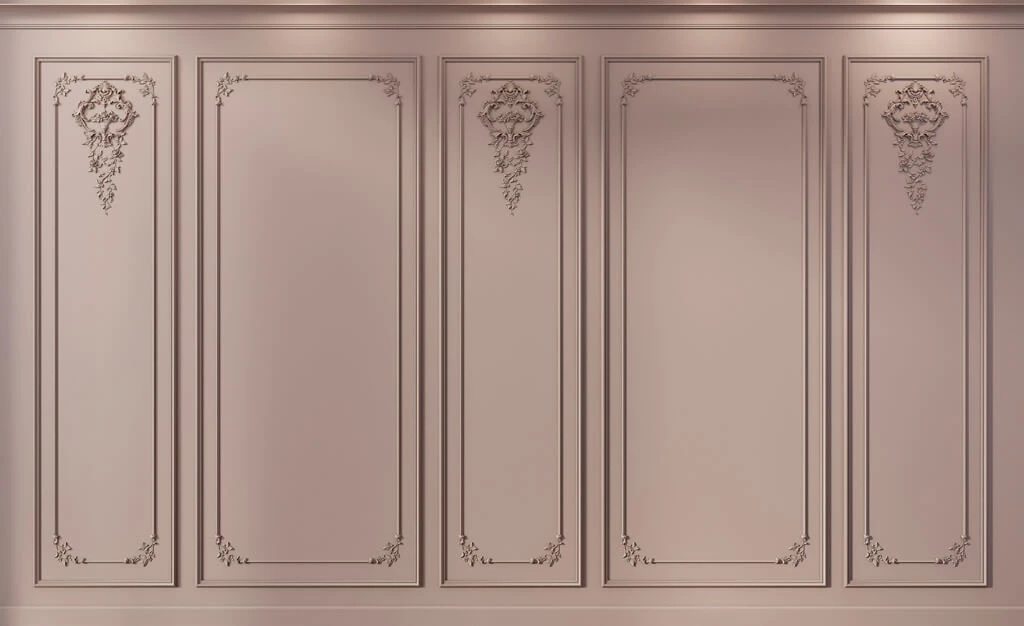
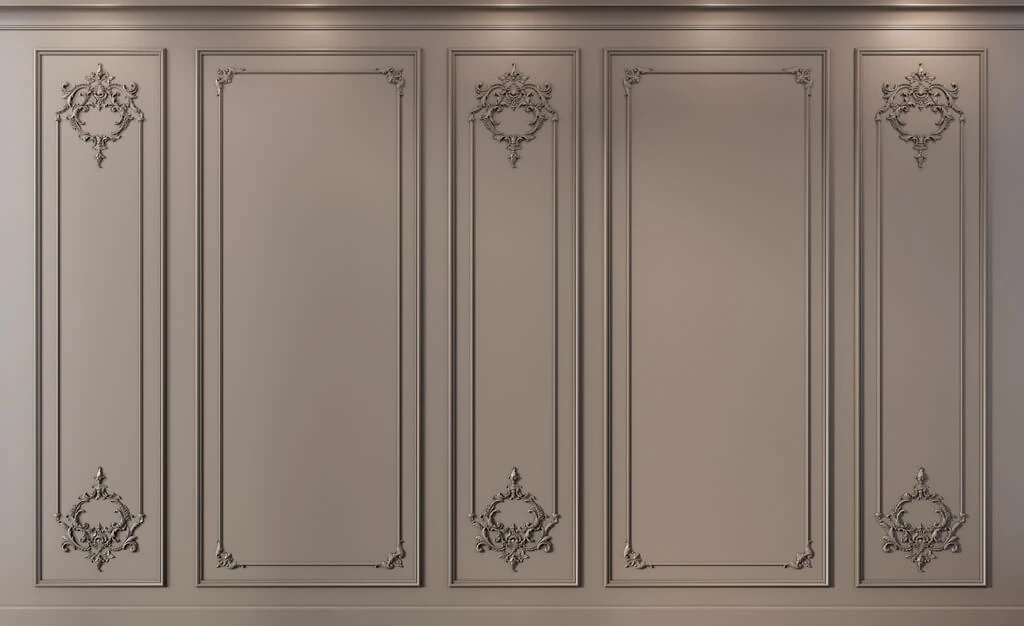
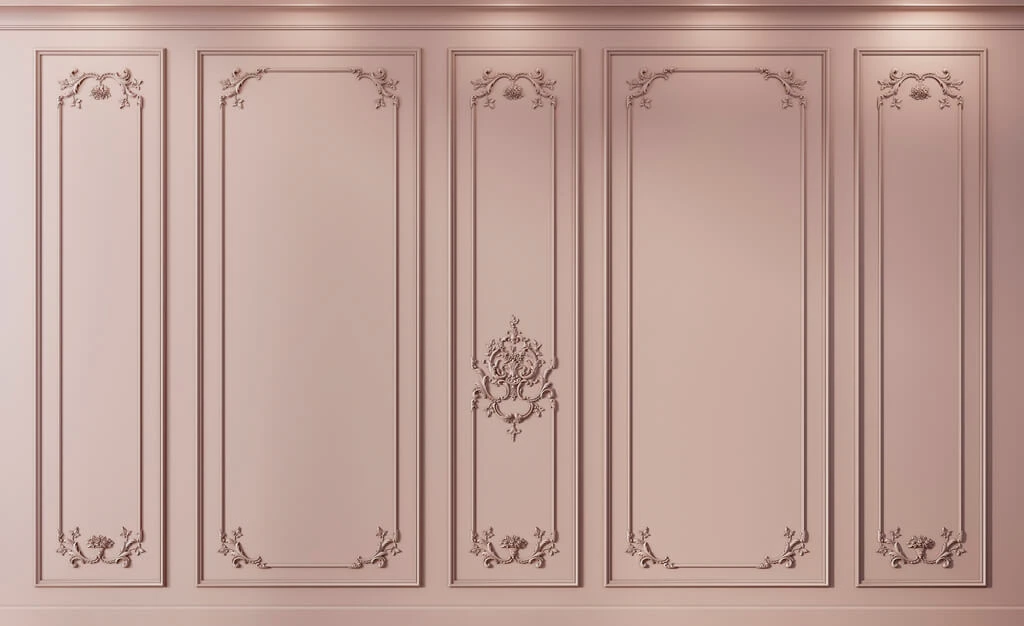
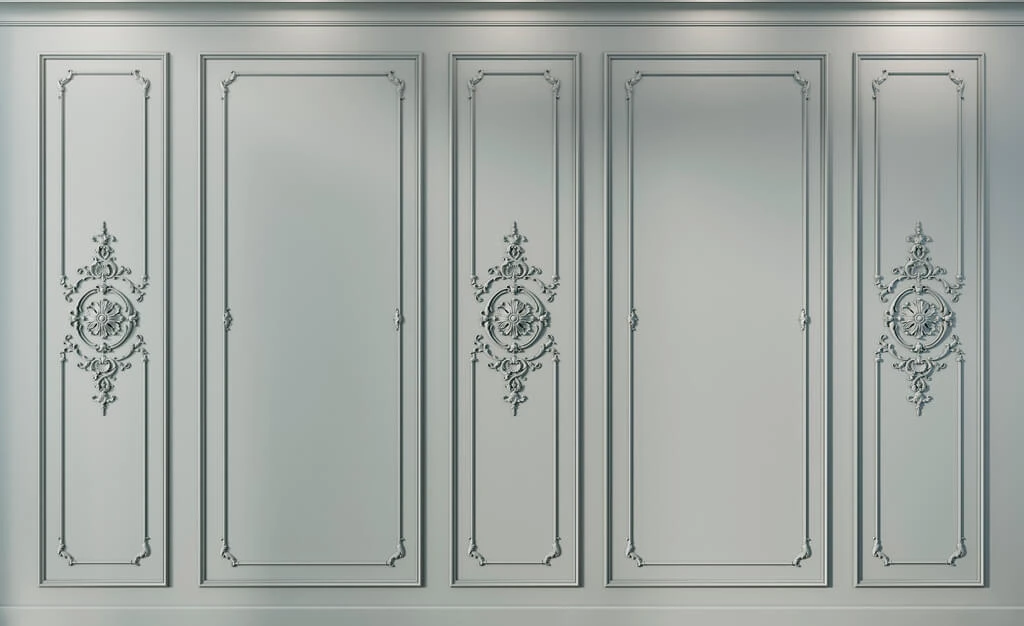
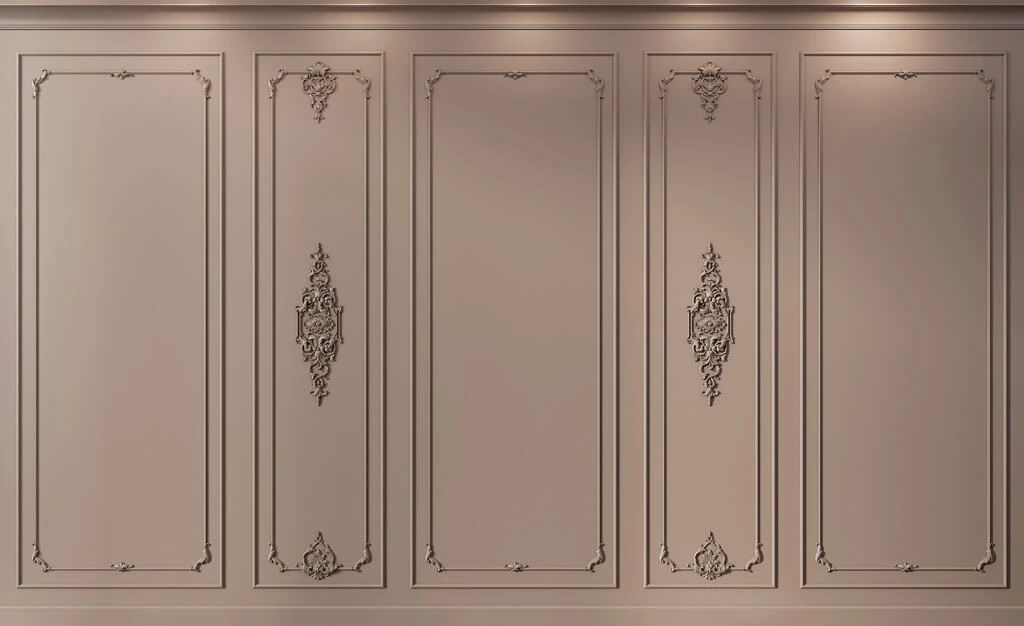
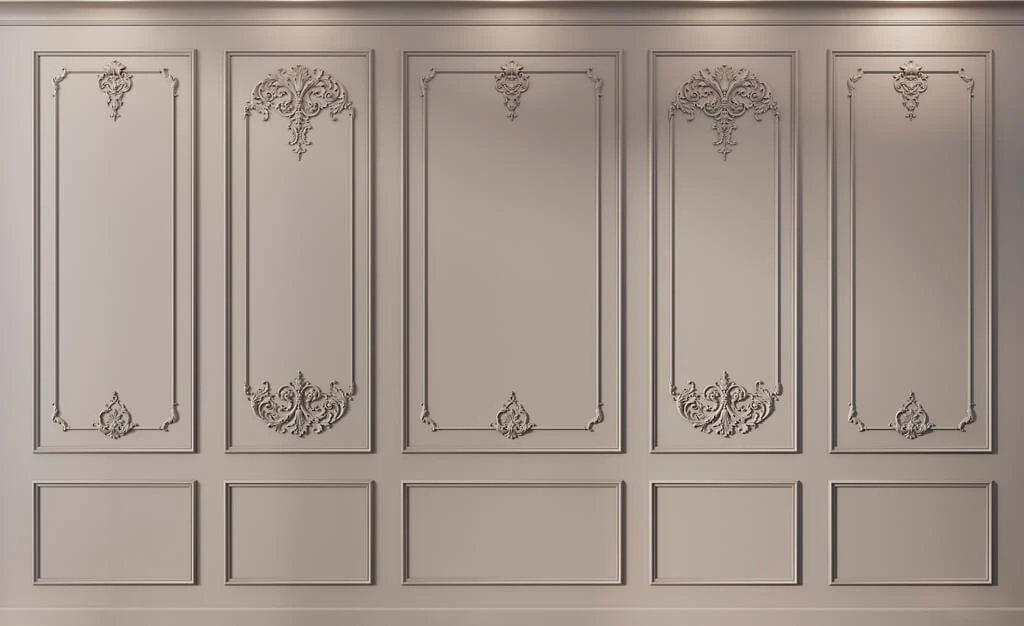
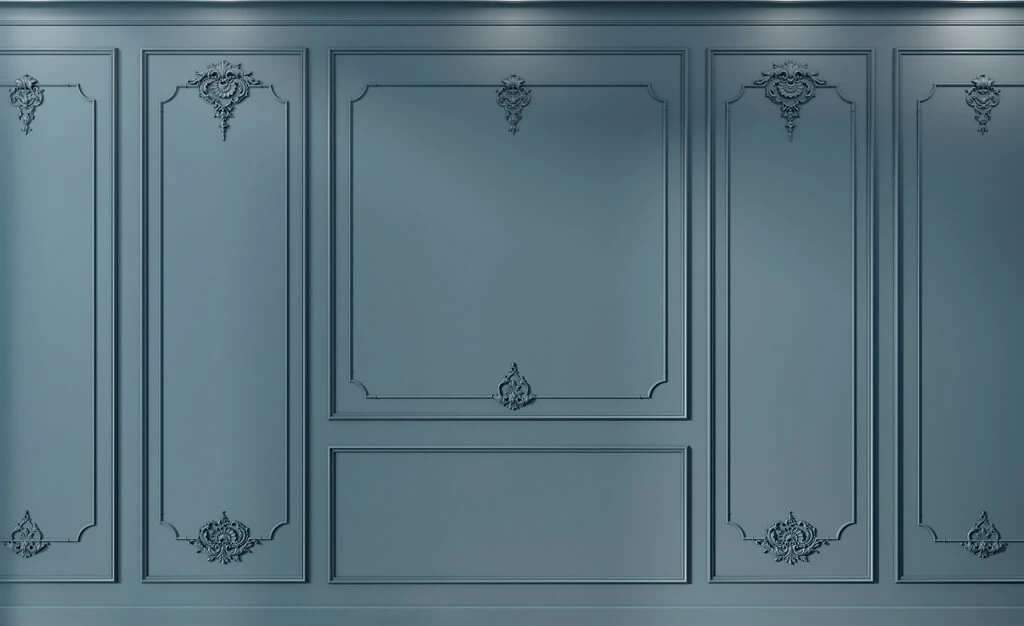
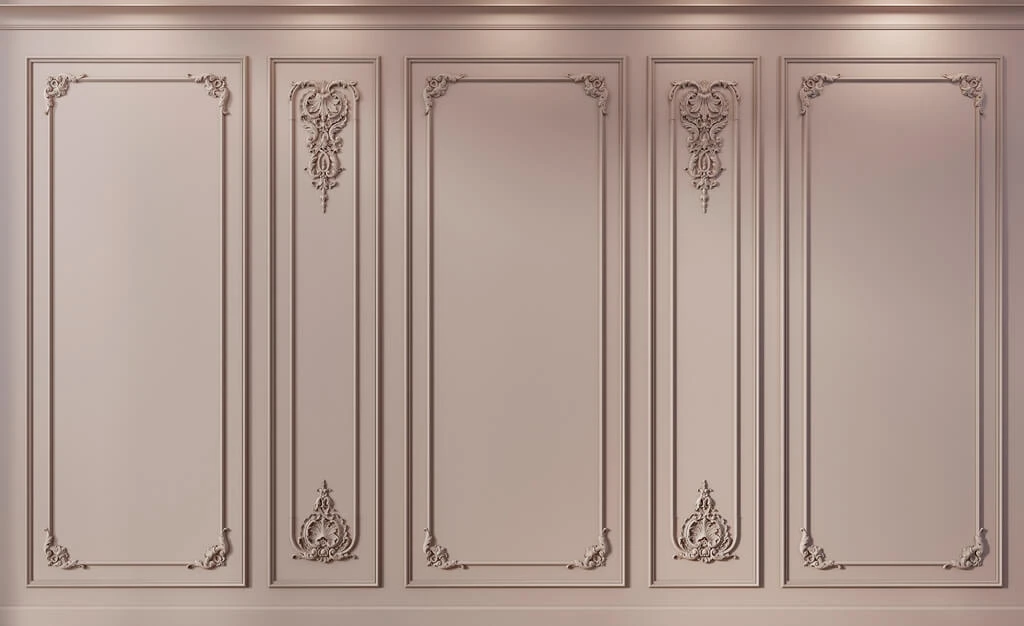
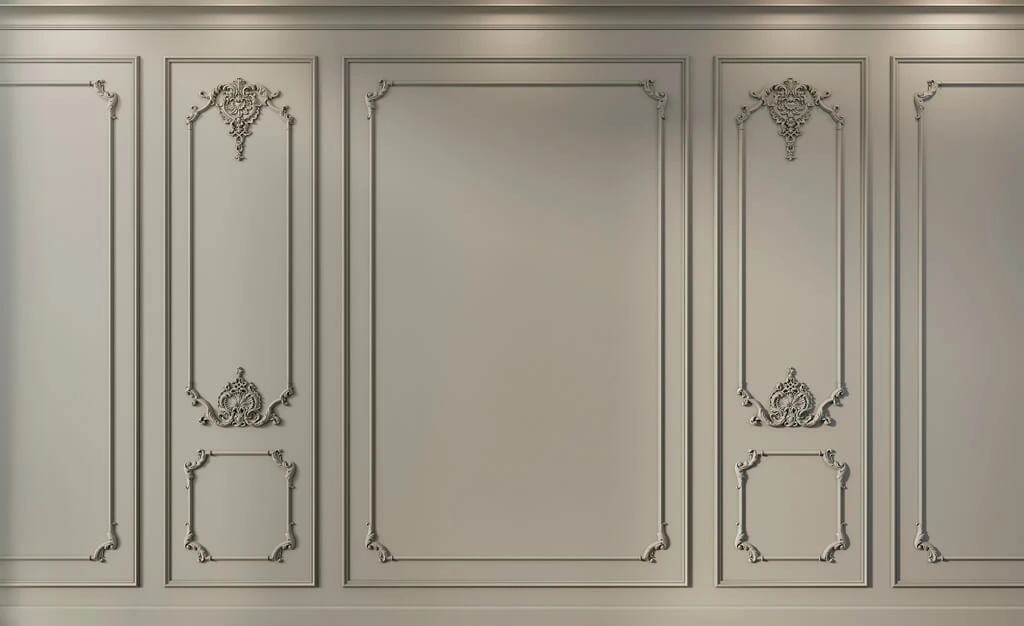
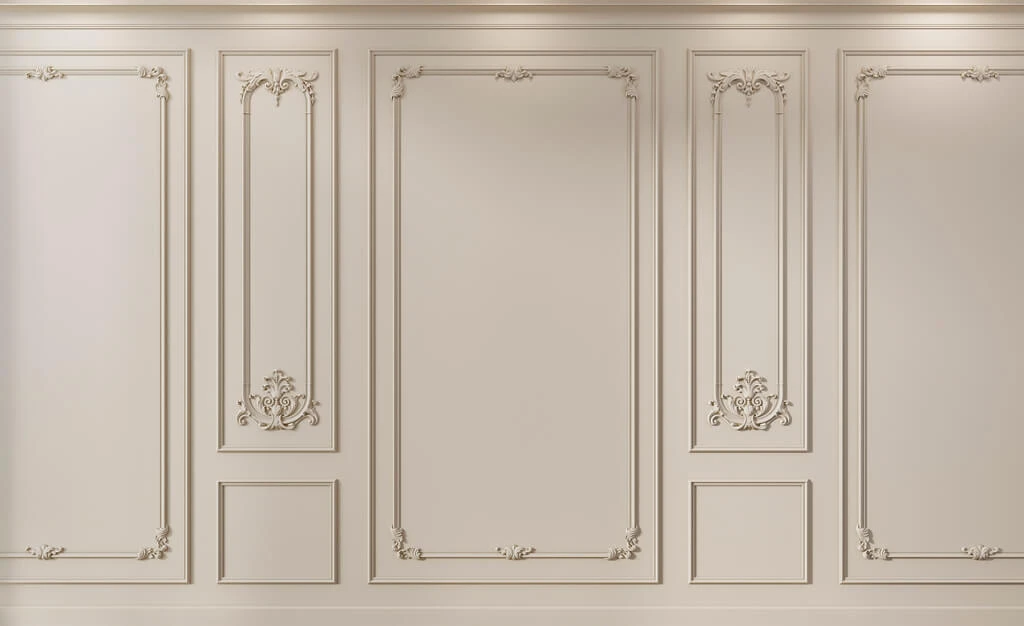
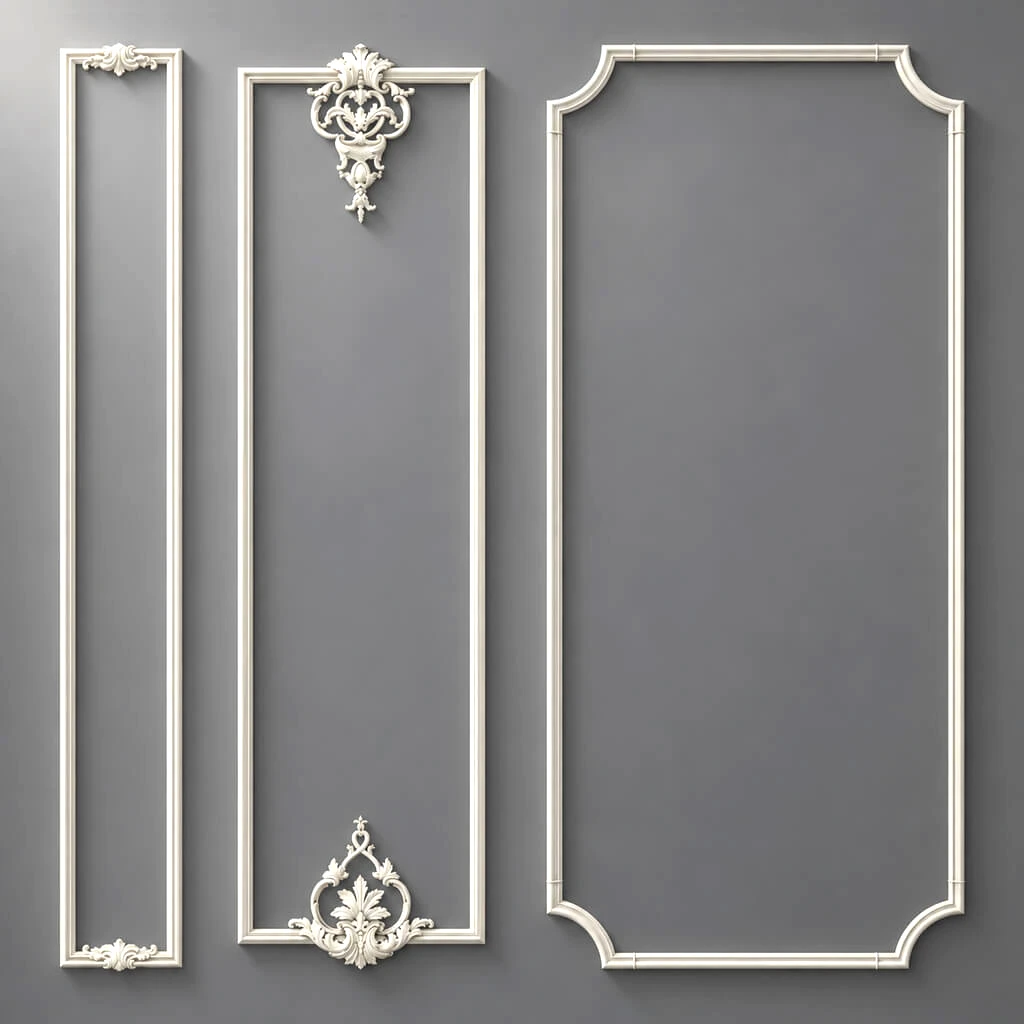
Decorative frames on walls are the most common use of corner moldings. A rectangular or square contour made of molding profile, fixed on the wall, with corner blocks in each of the four corners — this is a basic solution that works in any style.
A frame made of moldings on the wall is not just "beautiful". It is an architectural tool:
-
zones a large wall, breaking it into visual fields
-
creates a sense of depth and relief on a flat surface
-
provides rhythm — a series of frames turns a monotonous wall into an architectural facade
-
highlights accent areas: behind the sofa in the living room, behind the headboard in the bedroom, around the TV zone
Moldings for wall frames selected by profile width (20–80 mm depending on frame scale and ceiling height) and relief style. Corner elements for them — in the section decoration for moldings.
Practical example: living room 5 × 4 m, ceiling 2.8 m. On the accent wall — three frames in a row horizontally, 1.2 m high, 1.1 m wide, molding profile width 40 mm. Corner elements — 4 pcs. per frame, total 12 pieces. Plus 2 PU overlays in the center of two side frames — accent under the chandelier and behind the sofa.
This is a simple scheme. But it is precisely this one — with corner blocks, not with 45° miter cuts — that looks complete even with little experience of the installer.
Wall panels and boiserie: architectural depth
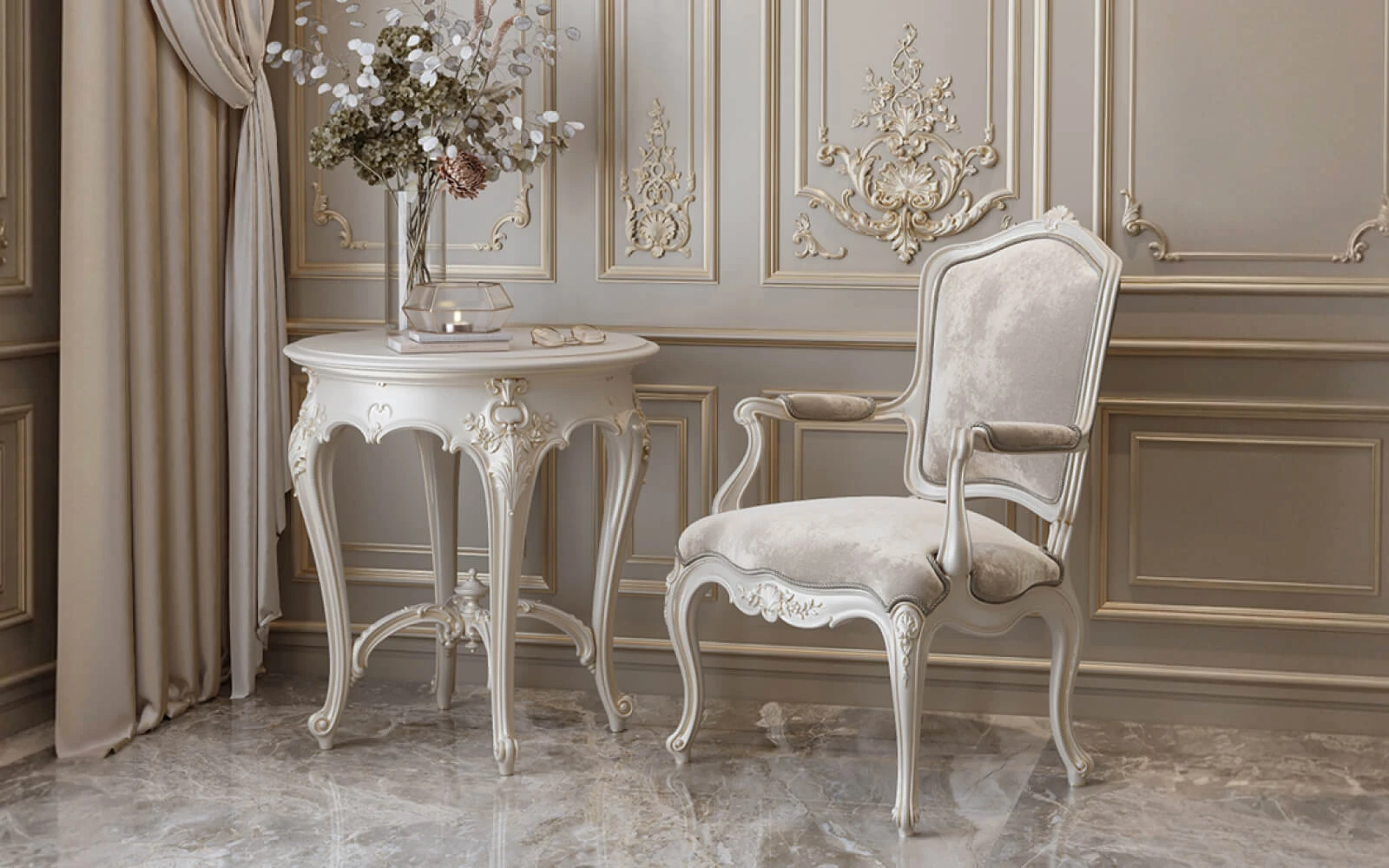
Boiserie is a wooden or decorative wall cladding with panels, often with molding design. In modern interiors, this technique is implemented through Polyurethane wall decor and molding frames.
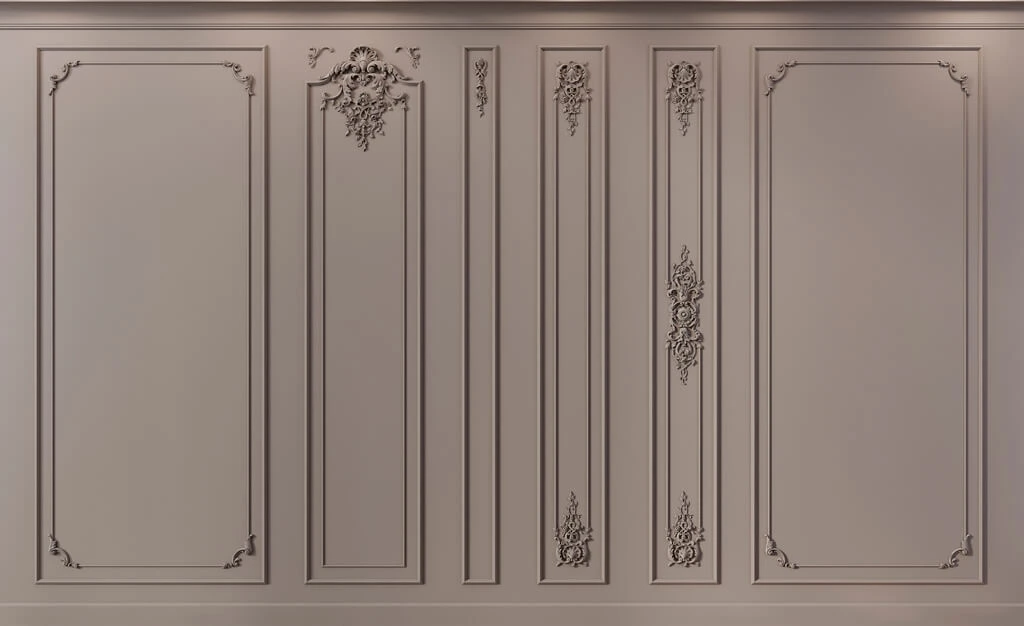
Wall panels are essentially larger-scale frames, sometimes in several levels. For such a scheme, polyurethane corner moldings are indispensable: they allow precise finishing of corners of both external and internal frames without complex cutting.
Feature of panel schemes: one panel can contain several nested frames — outer and inner. Then each frame needs its own set of corner elements. The subordinate (smaller) frame is usually made from a smaller profile molding — and its corner element is different.
Corner decor for wall panels in neoclassical style — these are corner blocks from series with moderate relief. For classic boiserie — richer ones, with floral motif. For modern minimalism — symmetrical blocks with simple geometric shape.
Door panels and portal frames
Doors with decorative moldings are a long-standing interior technique that is experiencing a renaissance today. Molding frames on the door leaf or on the wall around the opening (portal frame) are an excellent field for applying corner elements.
The specifics of door frames: small scale and close-up view. This means increased requirements for the precision of corner block fitting. Joints on a wall frame from a distance of two meters are almost invisible — joints on a door frame are visible from half a meter. Therefore, for doors, corner elements are chosen whose back side exactly matches the molding profile.
Decor for polyurethane moldings — a section where all corner elements for the corresponding STAVROS profiles are concentrated.
Important: the door is not a separate cluster of this article. We are not making material "door stucco." We use the door as an example of applying corner decor — nothing more.
Furniture facades: class in details
Furniture with molding frames includes facades of cabinets, dressers, wardrobe systems, and kitchen sets. A classic molding on a door is a recognizable signal of "quality" and "style." And it is here that wooden corner elements from decoration for moldings prove themselves stronger than polyurethane.
Why wood for furniture? Wooden molding is a traditional material for furniture production. A wooden corner element made of beech or oak is ideally compatible with a wooden molding profile: the same texture, identical reaction to painting or tinting, reliable adhesion.
In the STAVROS assortment, wooden corner elements of the MLD-027U-2/1 series (from 500 rubles), MLD-001U–004U (from 530 to 2080 rubles), as well as paired series with L/R orientation.
Furniture facades with carved corner elements are not an expensive exclusive. It is an affordable technique that elevates furniture from a "flat slab" to "furniture with character."
Classic and Neoclassical Frames: On Style
Corner decor carries stylistic weight — sometimes even more than the molding itself. The profile can be universal, but a corner block with ornament immediately places the frame in a specific era.
For neoclassical: corner blocks with geometric relief, petal motifs, rosettes. Strictness and symmetry. Moderate relief depth. Series NPU-408, NPU-409 — concise classic blocks.
For lavish classic and Empire style: corner elements with developed floral relief, acanthus, scrolls. Series NPU-382, NPU-383 — for formal frames.
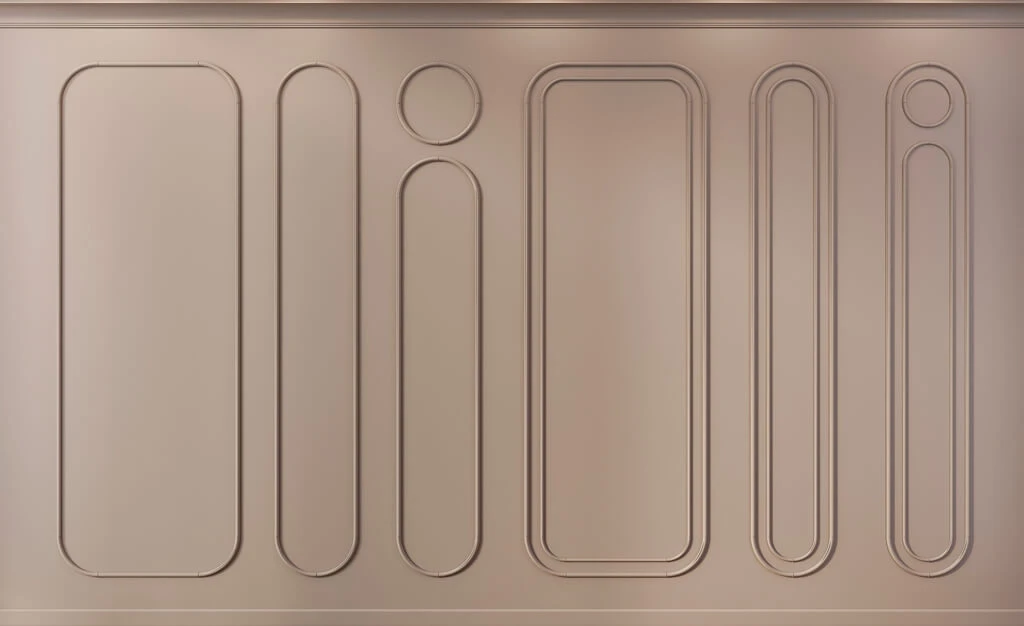
For modern classic and contemporary: corner blocks of series MLDPU-027U — simple, geometric, without ornament. Only form, only a clear corner boundary.
Left and Right Corner Decor: The Main Question Before Purchase
Stop here. This is the most important practical section of the article.
Some corner elements for moldings are symmetrical: they look the same from any side. Such elements are suitable for rectangular frames without additional decor on the side parts of the molding.
But some series are paired, with orientation: left (L) and right (R) versions. What's the difference? In paired elements, the relief pattern is asymmetrical relative to the vertical axis. For example, a volute or scroll 'faces' a specific direction. If you place two identical L-elements in opposite corners, the pattern will 'face' different directions disproportionately. A correct frame is built from two L + two R.
How to determine which one is needed:
-
Take the element and place it in the lower left corner of the frame. Is the decor "looking" to the right and up? This is left (L). For the lower right corner, you need right (R).
-
The upper corners are mirrored: upper left = right element (R), upper right = left element (L). The pattern "looks" toward the center of the frame from all four sides.
For one rectangular frame made of paired elements: 2L + 2R = 4 pieces total.
For a series of five frames on the wall: 10L + 10R = 20 pieces. An orientation error in a large order means tens of rubles wasted and rework.
In the STAVROS catalog, paired series are marked with suffixes .1L and .1R in the article (e.g., NPU.VRS-003-2.1R / NPU.VRS-003-2.1L, MLD-1U-2.1L / MLD-1U-2.1R). Symmetrical series have no orientation suffix (e.g., MLDPU-001U, MLDPU-004U, MLD-001U, MLD-004U).
Before purchasing: open the product card in molding decor section and check: symmetrical element or paired. This is critically important.
How to assemble a set for a decorative frame
Three configuration levels — from minimal to premium.
Minimal set: pure geometry
This is all you need for a functional decorative frame.
Contents:
-
Polyurethane molding — selected profile, cut into 4 segments to the size of the frame
-
corner elements — 4 pieces (or 2L + 2R for paired series)
-
Mounting adhesive
-
Layout diagram (sketch on paper with dimensions)
This set gives a complete frame. The joint at the corners is closed. Geometry is precise. Decor is minimal.
When this is enough: modern style, minimalist interior, small frames on walls, business offices.
Extended set: frame with character
Complements the minimal set with decorative accents.
Contents:
-
corner elements — 4 or 4 paired
-
PU overlays — 1–2 pieces for central accents
-
Decor for Molding — additional elements if necessary
-
Skirting or Cornice — for horizontal connection of the frame system to the ceiling and floor
When to use: living room in neoclassical or modern classic style, bedroom, study. Medium-scale frames — 0.8–1.5 m in width. Wall plane with several frames in a row.
Central PU overlay inside the frame is an architectural accent. For the living room: overlay behind the sofa in the center of the frame. For the bedroom: overlay behind the headboard. One element — and the frame ceases to be just a contour.
Premium set: full wall composition
For formal interiors, high ceilings, classic and Empire style.
Contents:
-
Molding — outer frame and, if necessary, inner frame of a smaller profile
-
Corner decorative elements — for all frame levels (8–12 pieces for a two-level system)
-
PU overlays — central accents, decor above and below the frames
-
Polyurethane wall decor — belt elements, decorative inserts between frames
-
Cornice — ceiling horizontal
-
Skirting — bottom horizontal
This is already an architectural wall — with rhythm, hierarchy of elements, and complete stylistic unity from baseboard to cornice.
Example: a classic-style living room. Three frames horizontally, each two-level (outer frame + inner frame). Outer frame corners — rich ornamental blocks. Inner frame corners — smaller, geometric. In the center of each frame — an overlay with a floral motif. Above the frames — a decorative belt of wall decor. Ceiling — cornice 120 mm. Floor — baseboard 80 mm. All from the same style collection.
STAVROS corner decor selection table
| Task | What to use | Where to go |
|---|---|---|
| Frame corners made of polyurethane molding | corner decor for PU moldings | Decor for PU moldings |
| Straight sides of the frame | Polyurethane moldings | Moldings |
| Decorative accent in the frame field | PU overlays | PU overlays |
| Belt decor and background elements | Decor for Walls | Wall Decor |
| Wooden frame or furniture front | Wooden decor for moldings | Wood molding decor |
| Horizontal ceiling line | Cornices | Crown Molding |
| Wall bottom line | Baseboards | Baseboards |
| General selection of stucco molding | All polyurethane products | Polyurethane Items |
How to choose a corner element for molding: eight steps
A clear algorithm from "I want a frame" to "ready to buy."
Step 1. Determine the surface
Where will the frame be: wall, wall panel, door leaf, furniture front? This determines the material: polyurethane (for walls and doors) or wood (for furniture and wooden frames).
Step 2. Select the corner element material
Polyurethane → Decor for PU moldings. Wood → wooden decor for moldings. Mixing materials without design logic is not recommended.
Step 3. Select the molding
First the profile — then the corner decor. Start with the molding section. Write down the molding article number.
Step 4. Find a compatible corner element
In the molding card or in the molding decor section check compatibility. The corner element must match the molding profile in width and cross-section. If the molding width is 40 mm, the corner block must be designed for this exact size.
Step 5. Check the orientation
Symmetrical or paired (L/R)? If paired — you need 2L + 2R per frame.
Step 6. Choose the relief style
Ornamental (floral, classic) → for classic and neoclassical. Geometric (simple) → for modern classic and contemporary. Carved (wood) → for furniture and wooden interiors.
Step 7. Calculate the quantity
One frame = 4 corner elements. Three frames = 12 corner elements. Two-level frame = 8 (4 for outer + 4 for inner). Add 10–15% spare in case of defects during installation.
Step 8. Go to the catalog and place an order
Polyurethane Items — general section. Decor for Molding — for corner elements. Moldings — for profiles.
How to calculate the number of corner elements for different schemes
Calculation is specifics. Let's be specific.
One simple frame on the wall
-
4 corner elements (or 2L + 2R for paired)
-
Molding length: (frame width × 2) + (frame height × 2) + 10% reserve
Three frames in a row on a horizontal wall
-
12 corner elements (or 6L + 6R)
-
But! Adjacent frames may share molding between them — then no corner blocks are needed between frames, the profile simply continues. Check the diagram.
Two-level frame (outer + inner)
-
8 corner elements of two different series: 4 for the outer frame, 4 for the inner
-
The inner frame is usually made of a narrower molding — corner elements from a different series
Four pilasters symmetrically on the living room walls
-
Each pilaster — 4 corner elements (along the top and bottom horizontals)
-
Total: 4 × 4 = 16 pieces
-
If the frames inside the pilasters are two-level: another 4 × 4 = 16 inner corner elements = 32 total
Count accurately. Keep a reserve. Delivery of additional items takes time.
Mistakes when choosing corner moldings and corners
Nine mistakes, each leading to loss of money or rework.
Mistake 1. Buying 2 corner elements per frame
A frame needs 4 corners. Always. It's a rectangle — it has four corners.
Mistake 2. Not checking corner compatibility with the molding
The corner block must match the molding profile. Width, cross-section, relief depth — everything must align. A corner from a 60 mm molding placed on a 30 mm molding will stick out like a foreign element.
Mistake 3. Confusing left and right elements
Ordering 4 identical L instead of 2L + 2R — and getting a frame where the pattern 'looks' in different directions. Especially painful with a large order.
Mistake 4. Not adding a reserve
Minimum 10% reserve — for both corner elements and molding. Chips, inaccurate cuts, and defects are possible during installation.
Mistake 5. Mixing styles
A baroque corner block with a minimalist molding is not eclecticism, it's incompatibility. The style must be unified.
Mistake 6. Mixing polyurethane and wood without logic
Wooden corner elements on polyurethane molding — technically possible, but the difference is visually noticeable. For interior walls — polyurethane. For furniture — wood. The combination requires a design justification.
Error 7. Directing all traffic to a common section
Specifics are important for the buyer: Decor for Molding — for PU corner elements, wooden decor for moldings — for wooden ones. Direct links speed up the selection.
Error 8. Not accounting for the installation gap
When installing the frame, the ends of the molding must meet exactly under the corner element. If the ends are cut imprecisely, the corner block will not cover the gap. The molding is cut strictly perpendicular, without a bevel.
Error 9. Forgetting about the connection of frames with the cornice and baseboard
Frames on the walls should fit into the system: cornice at the top, baseboard at the bottom. Crown Molding и Baseboards — from the same style line as the moldings.
Where to buy STAVROS corner moldings and molding decor
In STAVROS, you can find polyurethane corner moldings and wooden corners for decorative frames in two sections: Decor for polyurethane moldings — corner elements compatible with polyurethane profiles, and wooden decor for moldings — carved corner elements made of beech and oak for wooden frames and furniture.
To select linear profiles — moldings, cornices, and baseboards. For additional accents — PU overlays и Wall Decor. For installation preparation — installation of polyurethane molding.
STAVROS is a manufacturer and supplier of decorative interior elements with a wide range of polyurethane and wood products. The key advantage of the catalog: corner elements and moldings are designed as a system — corner blocks are precisely compatible with corresponding profiles in geometry and style. This means that with the correct series selection, there will be no gaps, relief mismatches, or stylistic inconsistencies. For the buyer, this means fewer questions, fewer reworks, and more results.
FAQ: corner decor for moldings — frequently asked questions
What is corner decor for moldings?
A single decorative element that is mounted in the corner of a molding frame. It covers the joint of two profiles and creates a decorative accent in the corner. Used on walls, wall panels, doors, and furniture.
How many corner elements are needed for one frame?
Four. A rectangular frame has four corners. If the series is paired (L/R) — 2 left and 2 right.
How do I determine if I need a left or right corner element?
Symmetric series — identical in all corners. Paired series are marked with suffixes L and R in the article number. For one frame from a paired series: 2L + 2R. Check the designation on the product card.
How to choose a corner element for a specific molding?
First, select the molding profile. The corner element is selected based on the width and cross-section of that profile. Use the section decoration for moldings — there, corner elements are grouped by compatible moldings.
Can wooden corner elements be used with polyurethane moldings?
Technically — yes. But visually, the difference in material may be noticeable. For wall frames, polyurethane + polyurethane is recommended. For wooden frames and furniture — wood + wood.
Do I need to cut the molding at 45° when using corner blocks?
No. The corner element hides the end of the molding. The molding is cut perpendicularly — a straight cut. This is one of the main advantages of corner decor over angle cutting.
Where to buy STAVROS polyurethane corner moldings?
In the section Decor for polyurethane moldings — for polyurethane profiles. In the section wooden decor for moldings — for wooden frames and furniture.