




















































































Dimensions and Options
Description
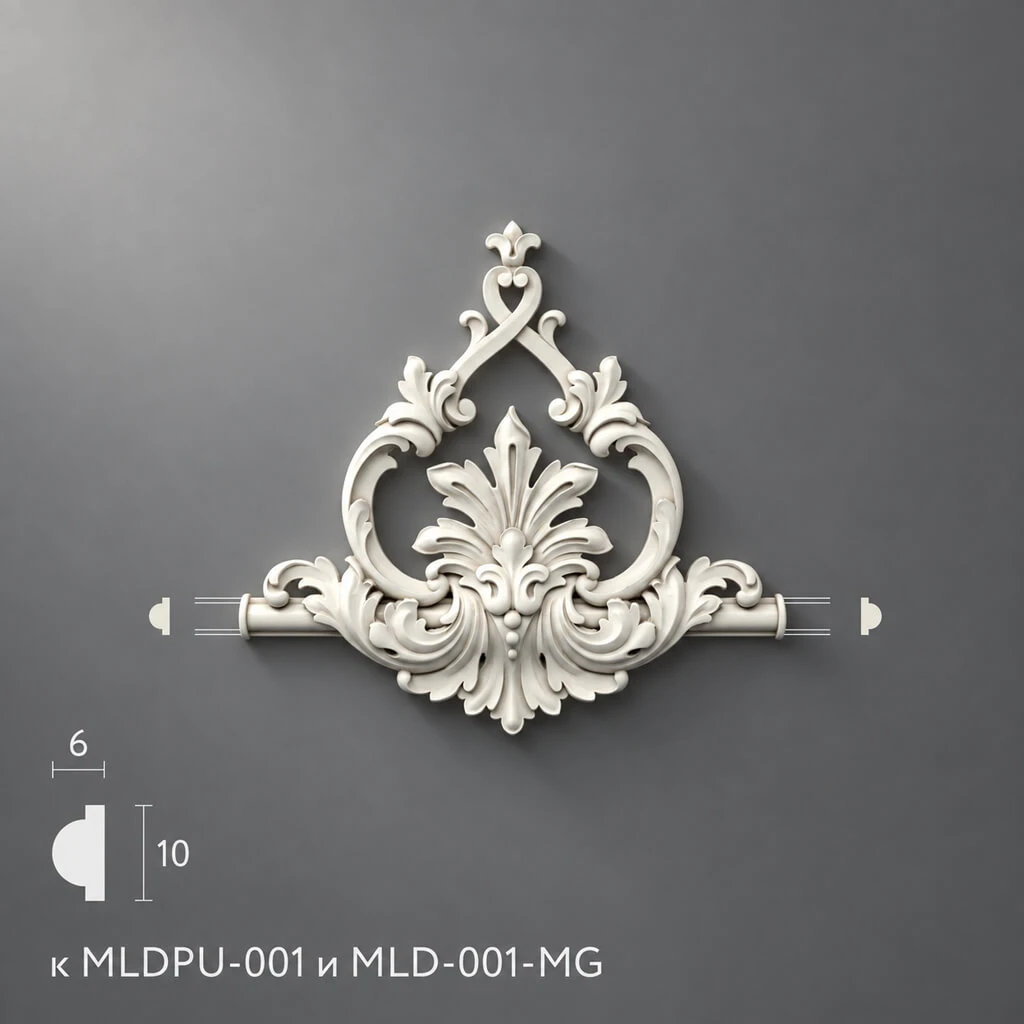
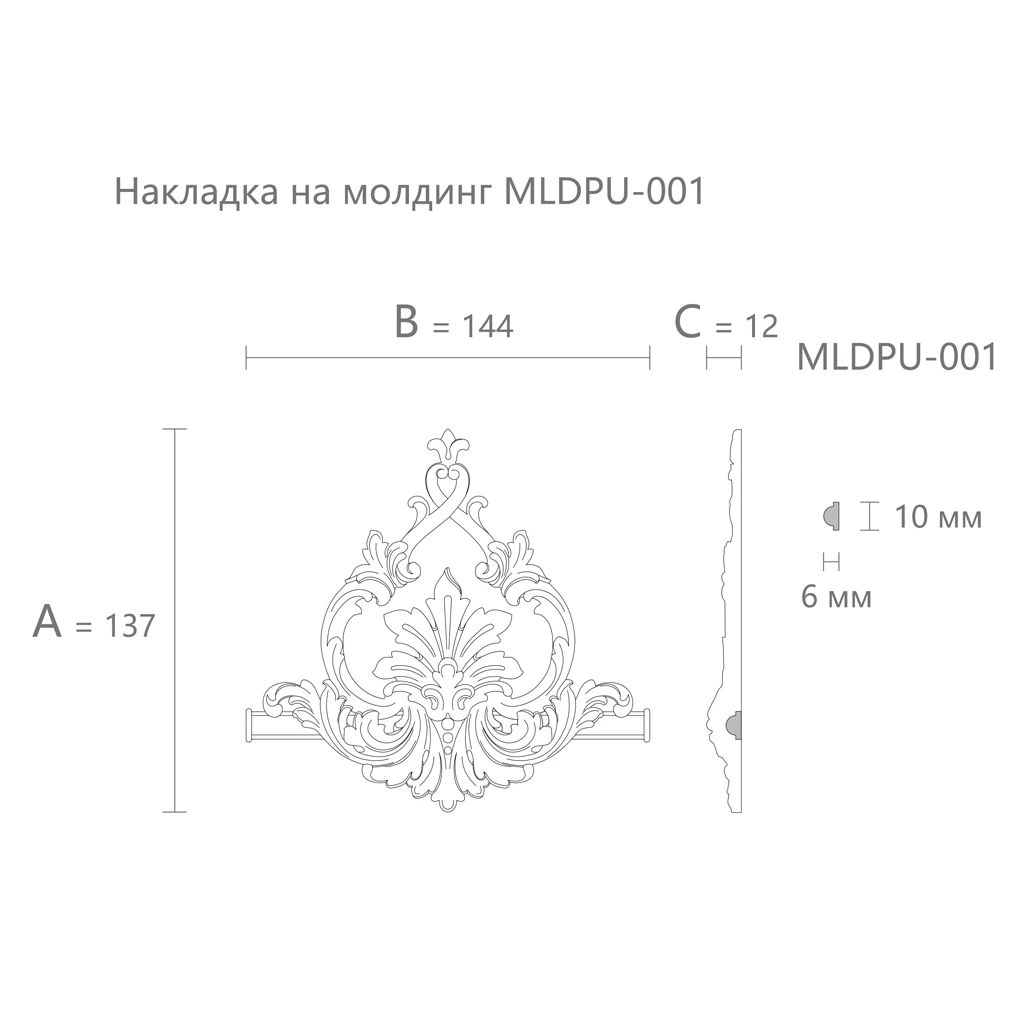
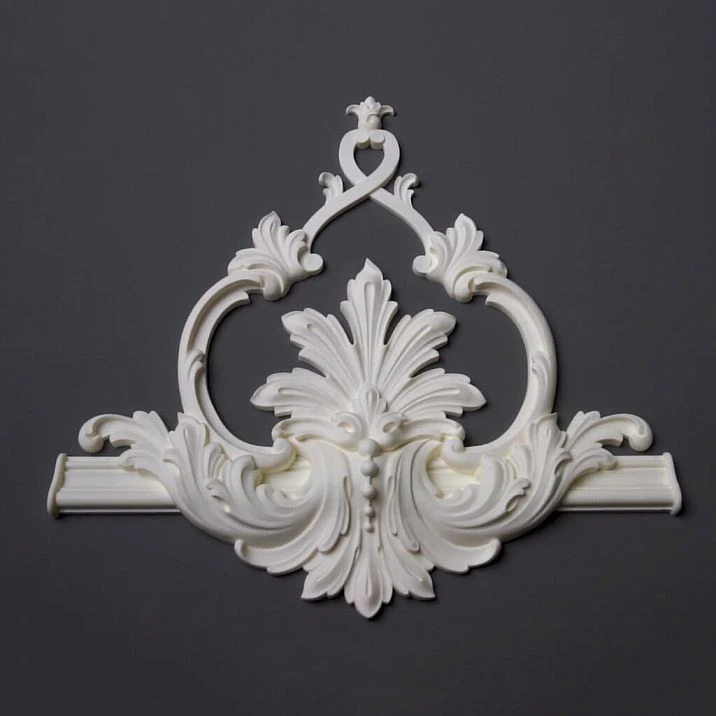
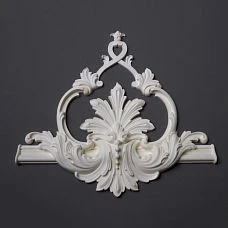
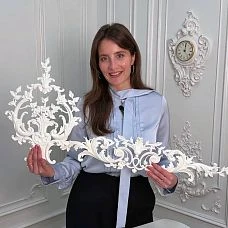
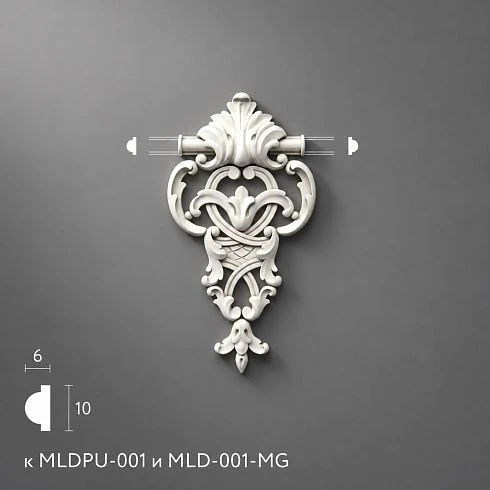
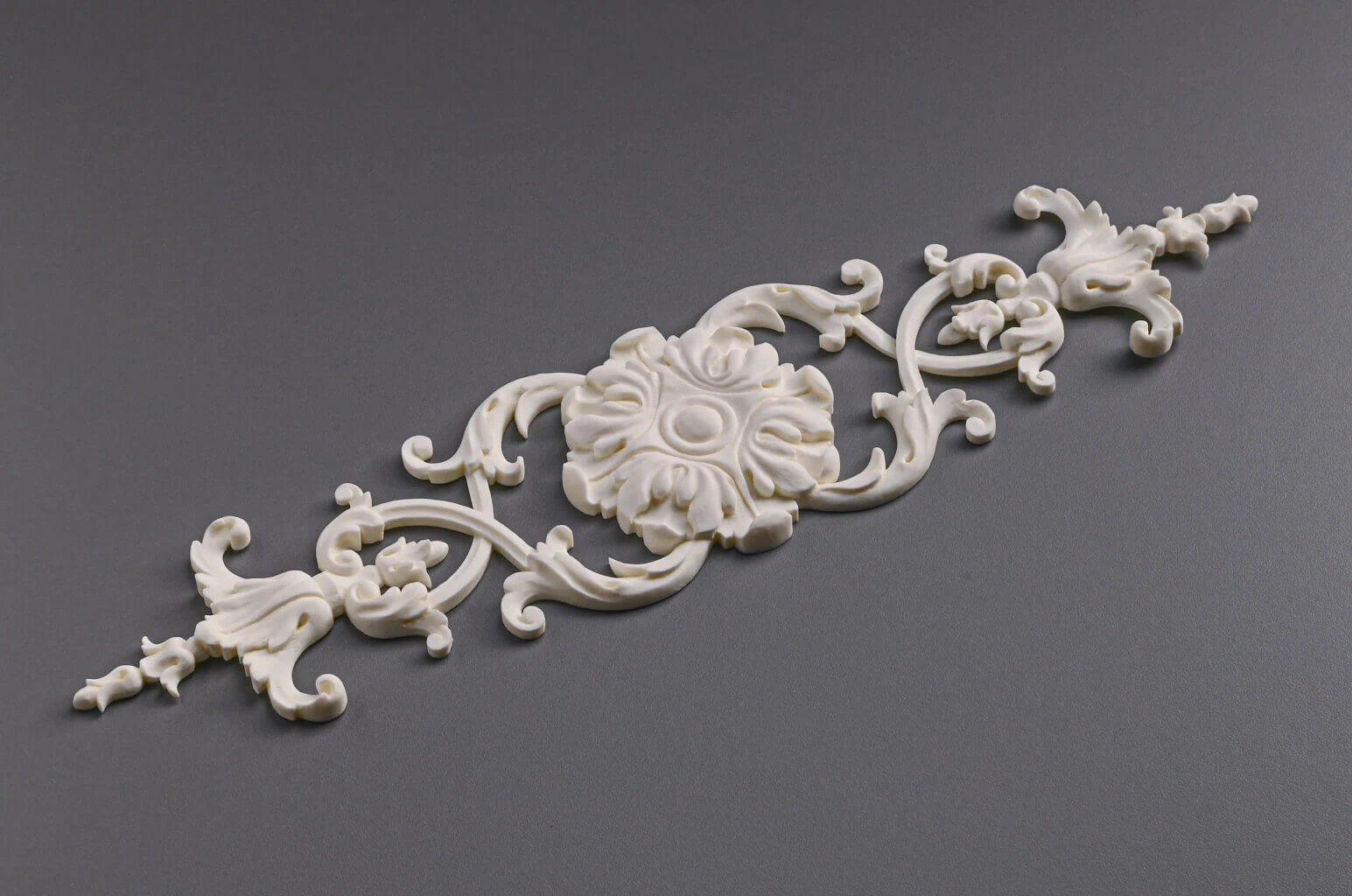
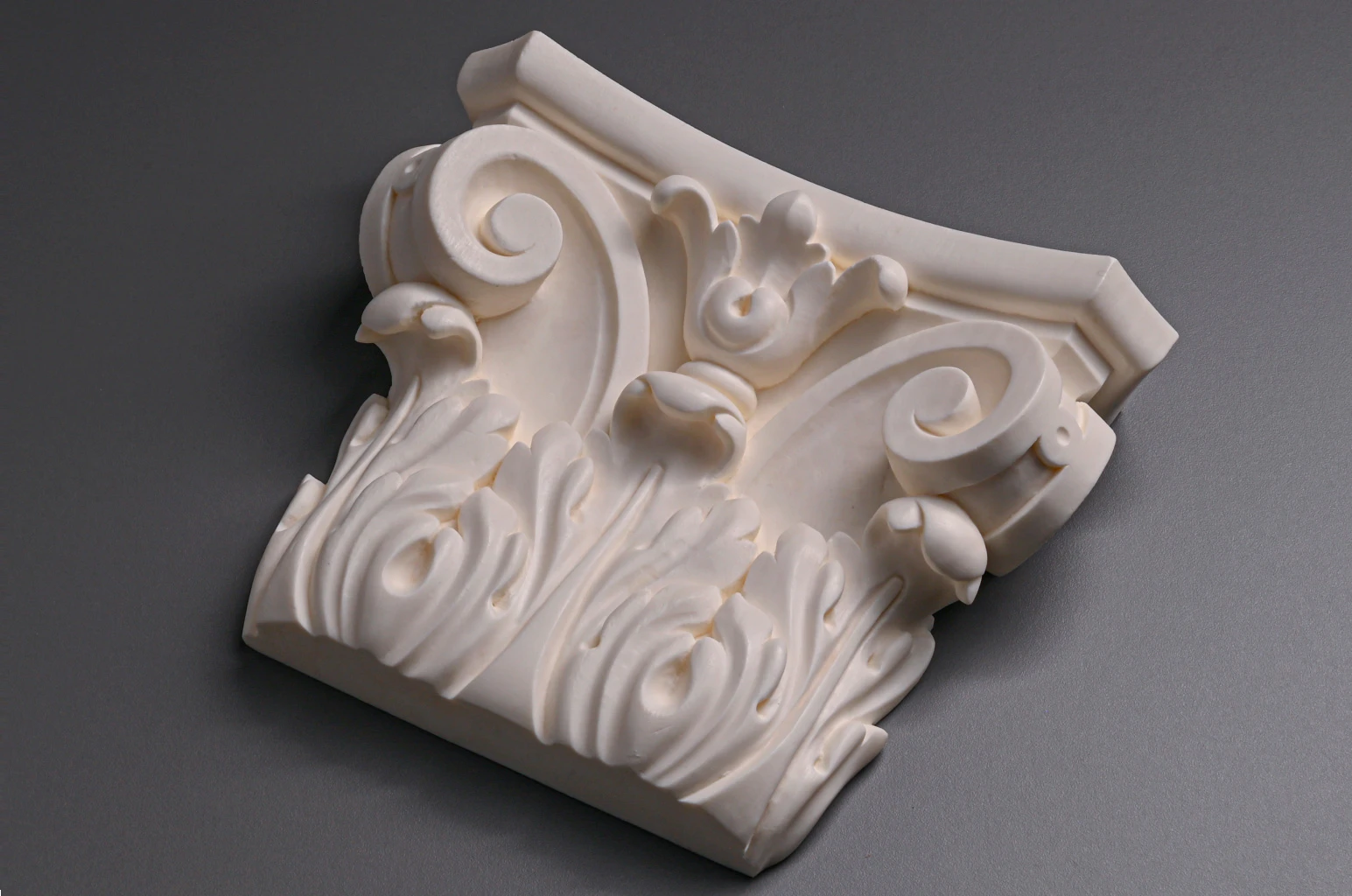
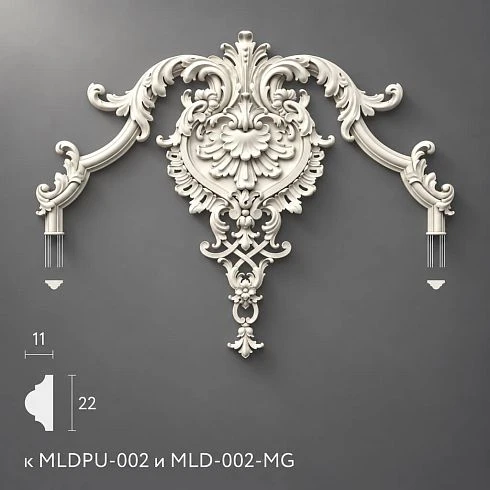
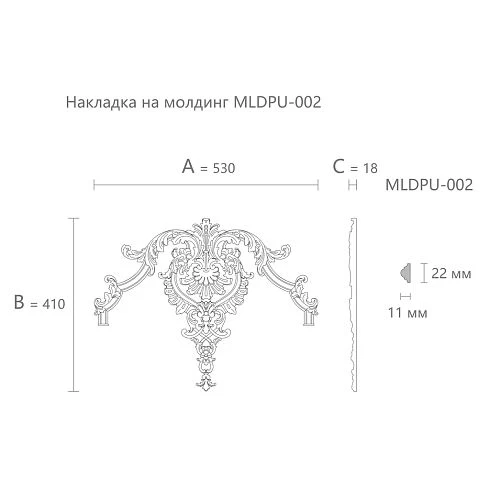
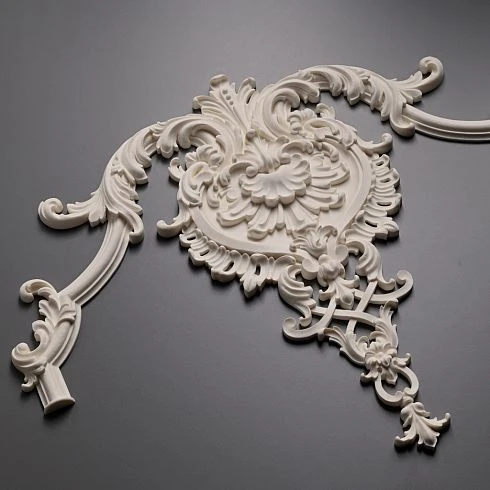
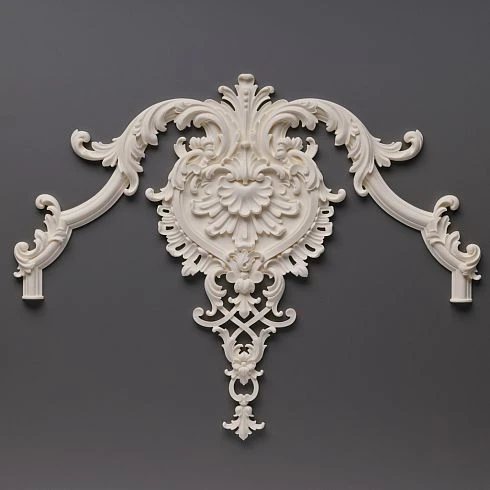
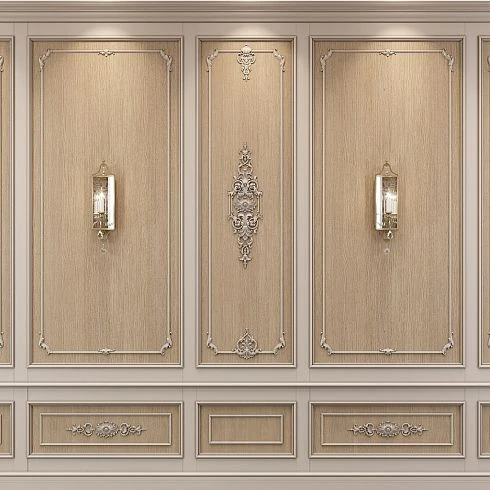
The central overlay MLDPU-1-2.1, measuring 137 × 144 × 12 mm, is designed for accent decoration of the center of a molding composition. The symmetrical floral ornament is built from diverging leaves and smooth scrolls, forming a pronounced vertical center. The element is compatible with moldings MLDPU-001 and MLD-001-MG.
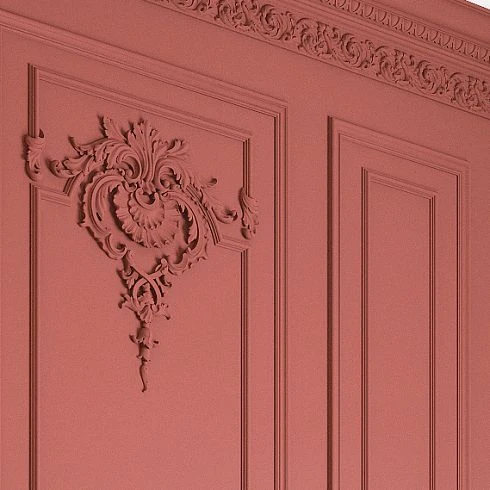
The overlay is used at the center of a wall frame, decorative panel, or horizontal molding band. It highlights the axis of the composition and connects the straight sections of the molding with a richer stucco relief.
Have questions?
Customers also buy

Ekaterina Y.
October 5, 2026
An excellent team! A huge selection of products! I recommend that craftsmen, designers, decorators, and home stagers take a tour of the production facility to immerse themselves and be inspired.
Alexander U.
October 2, 2026
I have been working with Stavros since 2024, and the quality of the products is top-notch. Customers are happy!!!
Elena G.
September 29, 2026
Daria is a very competent specialist; she provided consultation and helped us select items. They were sent promptly.
Polyurethane stucco decor
We have been on the market for over 20 years and are ready to offer you the best combination of aesthetics, quality, and practicality. Our polyurethane is not just a material, but a reliable foundation for flawless details, resistance to moisture and cracks, as well as convenient and quick installation. The company's success began in 2002, when two artists – Andrey Ragozin and Evgeny Tsapko – created a small creative workshop for making carved wooden products. The work of the craftsmen was quickly noticed, and within a year they were invited to participate in the reconstruction of the Konstantinovsky Palace in Strelna.
Every product in our range is the result of years of experience, thoughtful technology, and attention to detail. We constantly update our collections, follow and shape trends in interior design ourselves. From elegant neoclassicism to bold Art Deco, you will find the perfect accent for the interior of your dreams.
Choose durable polyurethane decor STAVROS — beauty proven by time and real projects, not just words.
STAVROS Guarantees
Quality of products without complaints
We save your time, peace of mind, and budget
Large warehouse program
We solve your tasks with maximum speed
Adherence to production deadlines
Streamlined process reduces all risks
Delivery from 1 piece throughout Russia
Quality service regardless of order volume
Your positive business reputation
Reliable partner — the foundation of your business
More products in the molding decor category

Frequently asked questions
Our showrooms are located in Saint Petersburg and Moscow. Production is located in Saint Petersburg.
Moscow contacts: https://www.stavros.ru/contacts_all/?tab=msk
Contacts of Saint Petersburg: https://www.stavros.ru/contacts_all/?tab=spb
- Send request by email [email protected]
- Write to us at Telegram
- Write to us at WhatsApp
- Order by phone +7 (800) 555-46-75
- Visit our showroom in Saint Petersburg and Moscow
Yes, we ship orders throughout Russia and to CIS countries.
We cooperate with transportation companies such as СДЭК and DPD.
You can also arrange pickup of your order through any convenient transportation company for you.
Delivery cost depends on the size, weight of the item, and delivery address.
When placing an order, the delivery cost is calculated automatically and displayed as a separate line on our website.
Prices and availability of items on the website are always current. Data is updated daily.
Note: items in stock are stored on the warehouse in unpolished form and shipped within 3 working days.
If the item is not in stock, average production time: 5–10 working days.
This is the quality of polishing of the items.
Standard — machine polishing, at a more attractive price.
Prestige — detailed hand polishing, items do not require further work.
More details: https://www.stavros.ru/information/kachestvo/
This is the type of veneer of the items.
Under enamel: produced by gluing wooden laminates without color and texture matching. Contrast tonal and textural differences are noticeable. This blank should be chosen if the item is intended for opaque coating.
Under tinting: produced by gluing wooden laminates with color and texture matching. Tonal and textural differences may occur. This blank should be chosen if the item is intended for semi-transparent finish.
More details: https://www.stavros.ru/information/kachestvo/
Beech — dense, non-porous wood, most often used for items covered with enamel.
Oak — dense, porous wood with clearly visible natural grain. Due to its strength and decorative properties, it is often used in items with semi-transparent coating, highlighting the wood pattern.
Custom-made, if non-standard items are required, we can produce products from other types of wood, including blanks provided by the customer, manufactured according to our technical specifications.
All our furniture legs can withstand a vertical load of at least 100 kg.
Average production time for custom-made items: 5–10 working days.
Most items are stored on the warehouse in unpolished form. We need time to polish and pack orders.
Yes, we manufacture non-standard items according to individual projects, but we only accept orders with a minimum quantity.
We can manufacture items of the desired size, but we only work with bulk orders. For details, please consult the sales department manager.
Yes, some of our products can be used outdoors. For example, polyurethane items, as well as carved door casings made of pine.
Other items are produced to order using PUR glue, if minimum quantity is available. No warranty is provided for such products, as outdoor conditions are considered aggressive.
Yes, we paint items when ordering products for a total amount of 150,000 rubles or more.
- Dust removal. After sanding, the surface must be dusted.
- Priming. Apply primer in an even layer.
- Matting. After the primer has fully dried, the surface should be matted (lightly sanded for better adhesion).
- Finish coating. Apply finish coating: lacquer or enamel, in 2 layers, with interlayer drying.
More details: https://www.stavros.ru/information/sovety/
Apply adhesive to the decor. Place it on the surface and press briefly. Then, lift the decor from the surface and leave it open for 3–5 minutes. Press the decor firmly onto the surface and hold for 5–10 seconds.
More details: https://www.stavros.ru/information/sovety/
Ideally, you should prepare a design project before placing an order.
You can do this yourself by downloading drawings of our products from our website, or you can order a project from us.
If the number of decorative elements and fittings is small, our company's manager can assist you with selection.
Unfortunately, this service is not provided.
The packaging method depends on the type of items, but in each case, we ensure sufficient protection for safe transportation.
We most often use corrugated cardboard and stretch film. Fragile items are additionally secured on a rigid base to prevent damage during transport.
We ship all items starting from 1 piece.
Room measurements and item installation can be performed by our partners — carpentry companies represented in most regions of Russia.
Often searched in category Molded decor
4184
4157
3603
2844
347
244
Polyurethane molding MLDPU-1-2.1 — central decorative overlay for molding 137 × 144 × 12 mm
There is a moment in interior work that experienced craftsmen call the 'assembly point.' It's not the final painting or tile laying. It's the moment when disparate decorative elements — perimeter moldings, wall frames, profiles along panels — suddenly receive a central ornamental node that transforms them from a set of parallel strips into a unified architectural system. This is precisely the role performed byPolyurethane molding MLDPU-1-2.1— a central decorative overlay for molding, made from two-component polyurethane, with dimensions 137 × 144 × 12 mm, compatible with moldingsMLDPU-001and MLD-001-MG.
This is not a corner block or a side-oriented overlay. It is a symmetrical central element — an ornamental accent placed at the semantic point of the molding composition: in the center of a horizontal belt, in the middle of a frame, at the key point of a decorative frieze. Buyingthe central overlay for molding MLDPU-1-2.1— means obtaining the detail around which the entire ornamental concept is built.
What is MLDPU-1-2.1
Let's start with a precise definition — because in the world of molding decor, confusion between element types leads to erroneous orders and reworks.
MLDPU-1-2.1 is a central decorative overlay. The article number contains no L (left) or R (right) letters because the product is symmetrical: the ornamental pattern on its front surface reads identically regardless of orientation relative to the vertical axis. This is a key property of a central element — its ornament does not 'face' one direction but unfolds from the axis of symmetry to the right and left simultaneously. This is precisely why such a block is placed in the center, not on the edge.
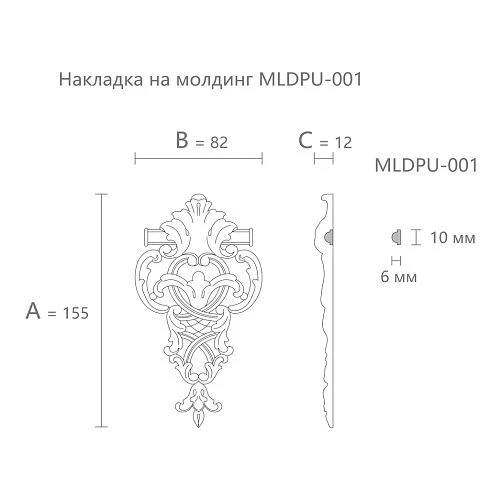
Product dimensions are 137 × 144 × 12 mm. Note: the width (137 mm) and height (144 mm) are almost equal, with a slight predominance of height. This is an almost square format, slightly elongated vertically. Such proportions create an ornamental block with pronounced 'mass' — it occupies noticeable space in the system, is clearly visible from a distance of 2–4 meters, and reads as a substantial decorative accent. The relief projection of 12 mm is slightly greater than that of the side-oriented overlays in the 001 series, which aligns with the logic: the central element should protrude from the molding plane a bit more so that, from a frontal view, it resonates as the culmination of the ornamental program.
Material — two-component polyurethane. Not expanded polystyrene, not plaster, not MDF. Specifically two-component cast polyurethane, which ensures sharp edges of the ornament, geometric stability, and zero water absorption. This matters both during installation and operation — and more details are in the section about the material's advantages.
Technical specifications MLDPU-1-2.1
| Parameter | Value |
|---|---|
| Article number | MLDPU-1-2.1 |
| Element type | Central symmetrical overlay |
| Dimensions | 137 × 144 × 12 mm |
| Material | Two-component polyurethane |
| Surface | Primed, ready for painting |
| Relief projection | 12 мм |
| Installation | Adhesive (liquid nails, acrylic mounting adhesive) |
| Compatibility | MLDPU-001, MLD-001-MG |
| Style | Classic, neoclassic |
| Color before painting | White primed |
Which moldings the central overlay MLDPU-1-2.1 is suitable for
Compatibility in the world of molding decor is a matter of series affiliation. The overlay MLDPU-1-2.1 is designed for the 001 STAVROS series and is compatible with two profiles of this series.
Molding MLDPU-001 — polyurethane profile of the series
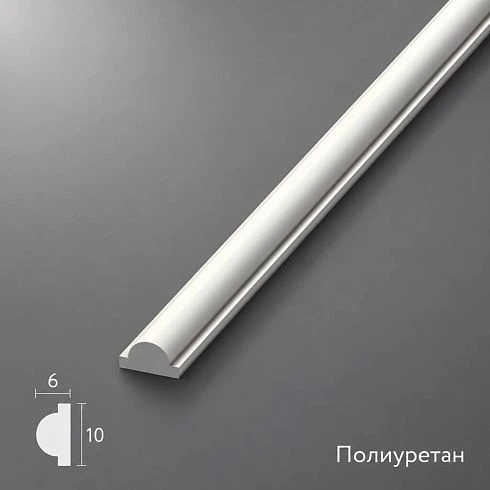
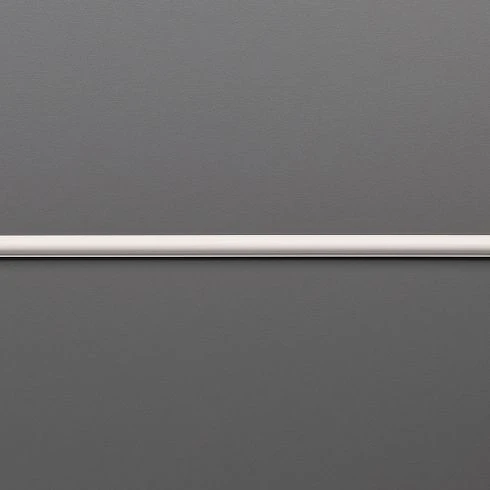
MLDPU-001— polyurethane glazing bead with a semicircular profile cross-section of 10 × 6 mm and a strip length of 2600 mm. This is the basic straight profile of the series: it forms straight sections of frames, horizontal belts, frieze bands, and panel trims. The overlay MLDPU-1-2.1 is geometrically aligned with this profile in width and ornamentally — in style of the pattern. At the point where the central overlay meets the molding MLDPU-001, the ornaments of the two parts form a single decorative unit: the pattern of the molding visually enters the pattern of the overlay and exits from it — without interruption, without overlap, without scale conflict.
This is the principle that distinguishes properly composed decor for moldings from a random set of parts. When parts are designed as a single series — the transition between them is imperceptible. It is this imperceptibility that designers mean when they say 'the interior looks like a single whole.'
MLD-001-MG — MDF molding
MLD-001-MG — MDF version of the 001 series profile. Used where a stiffer and heavier base is preferred on straight sections: in large-format frame systems on high walls, in furniture facade decor, where the MDF molding is milled and glued simultaneously with the panel. The central decorative overlay MLDPU-1-2.1 is fully compatible with MLD-001-MG — ornamental and geometric alignment is preserved.
The practice of mixed systems — MDF on straight runs, polyurethane at ornamental points — is well known to craftsmen who work with wall decor professionally. Two-component polyurethane reproduces fine relief much more accurately than milled MDF. Milling MDF on steep ornamental patterns inevitably 'rounds off' sharp edges, losing detail. Pressure casting from polyurethane is free of this: each edge of the overlay MLDPU-1-2.1 replicates the master mold with an accuracy of tenths of a millimeter.
Series principle — the main rule of selection
STAVROS molding decor catalogis built on the series principle: each molding series has its own set of compatible decorative elements — corner blocks, side-oriented overlays, central inserts. Series 001 is MLDPU-001 plus cornerMLDPU-1U-1.1, left MLDPU-1U-2.1L, right MLDPU-1U-2.1R, and central MLDPU-1-2.1. Compatibility of elements within the series is one hundred percent. Mixing elements from different series is at your own risk and without guarantee of ornamental result.
Central overlay in molding composition: role and placement logic
Why is the central element so important — and why does a molding system without it look unfinished? The answer lies in the principles of classical ornamentation, which are several thousand years old.
Law of the Ornamental Center
In any ornamental system—from the Parthenon friezes to Renaissance coffered ceilings—there exists a principle of dominance: one point in the construction that carries the greatest ornamental weight. Everything else symmetrically submits to this center. Corner elements define the boundaries. Straight moldings create rhythm. Side appliqués place intermediate accents. And only the central element is the main one.
Decorative Appliqué MLDPU-1-2.1plays precisely this role in the 001 series system. When this block stands at the center of a horizontal belt or frame, and side appliqués and molding runs symmetrically diverge on both sides of it, the construction gains semantic organization. There is a center, there is symmetry, there is rhythm. The ornamental concept is realized.
Format Compliance: Why 137 × 144 mm is the Correct Size for the Center
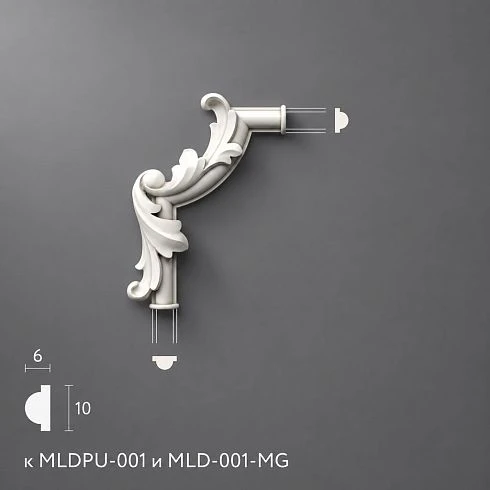
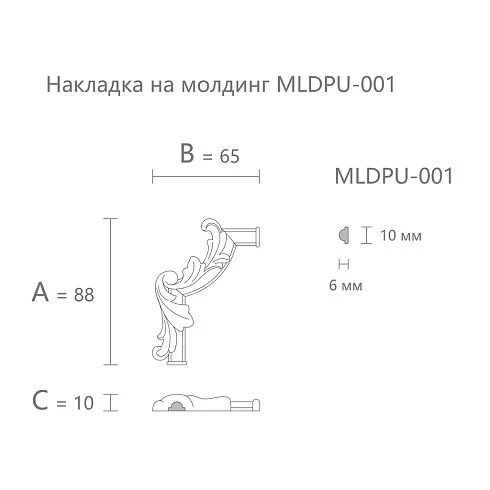
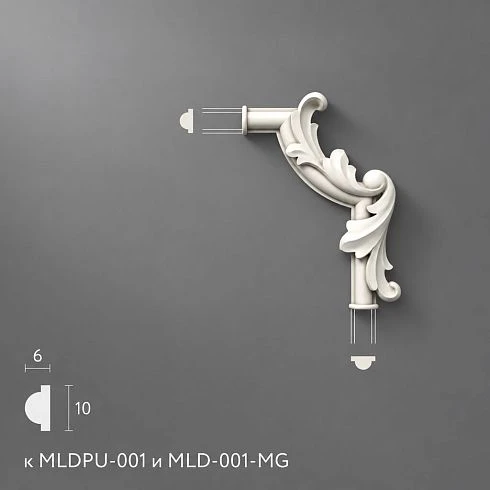
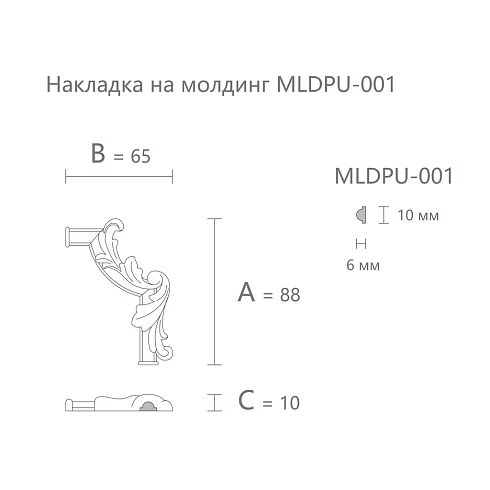
The central element must be larger than the side ones. This is the law of scale hierarchy. The side oriented appliqués of the 001 series have a size of 88 × 65 mm. The central MLDPU-1-2.1 is 137 × 144 mm. Area ratio: 137 × 144 = 19,728 sq. mm versus 88 × 65 = 5,720 sq. mm. The central block is approximately 3.5 times 'heavier' than the side one in terms of front surface area. This creates the hierarchy: the eye first stops at the center, then glides to the side accents—exactly as intended by ornamental logic.
Symmetry and Independence from Orientation
The central appliqué MLDPU-1-2.1 is a symmetrical element. This means: it cannot be turned 'incorrectly'. Horizontal or vertical orientation, face up or down along the vertical axis—the ornament remains correct. For the craftsman, this is liberation from the need to monitor direction: it is enough to apply glue and install precisely according to the markings.
Where the Decorative Element MLDPU-1-2.1 is Applied
The range of application for the central appliqué is broad—and is determined not by the style of the room, but by the presence of a molding system. Wherever there is molding of the 001 series or MLD-001-MG, the central decorative appliqué MLDPU-1-2.1 is appropriate.
Horizontal molding belts and decorative friezes
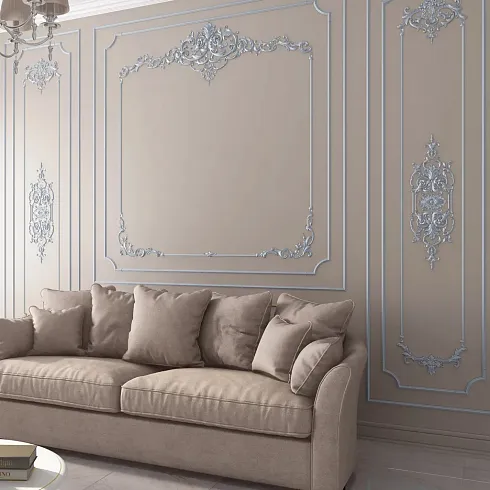
A horizontal molding belt is the simplest and most effective technique for wall decoration. The MLDPU-001 molding runs as a continuous horizontal band around the entire perimeter of a room or along one accent wall. At key points along this band—in the center of large walls, above a fireplace portal, above a sofa, or above a bed headboard—the central overlay MLDPU-1-2.1 is installed.
Visual effect: the molding band ceases to be just a horizontal strip and acquires ornamental 'anchor points'—centers around which the perception of the wall is organized. This transforms the decorative belt from a functional divider into a truly architectural interior element.
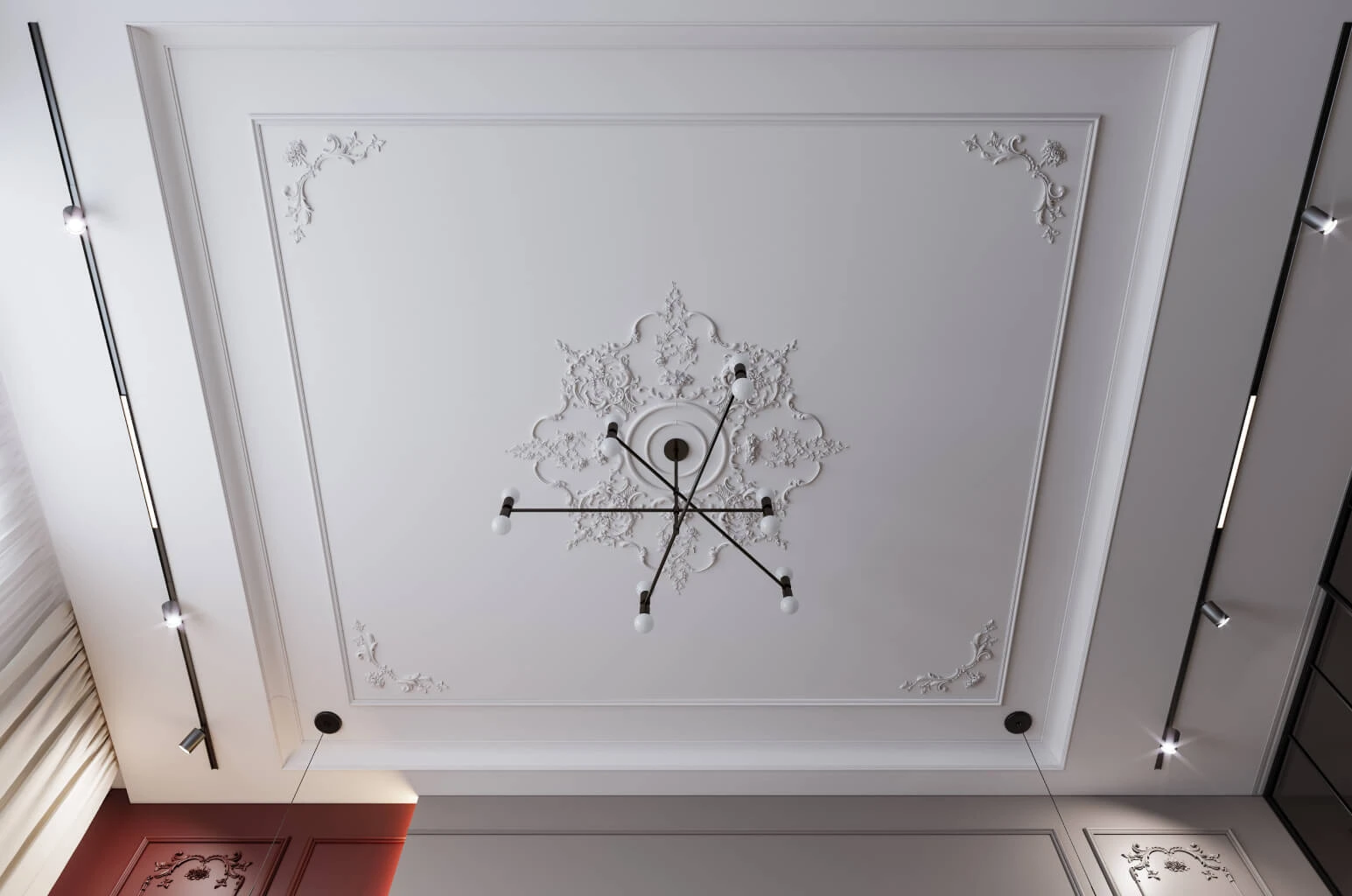
In living rooms with ceilings higher than 280 cm, a horizontal molding belt at a height of 200–220 cm divides the wall into architectural zones. When the MLDPU-1-2.1 overlay is installed in the center of the belt above the main sofa group, this belt gains a semantic dominant that works as an invisible 'frame' around the entire relaxation area. For more on the principles of vertical wall decoration with moldings, see the STAVROS article.'Ceiling with stucco and classic furniture'.
Decorative frames and wall panels
Rectangular wall frames made from MLDPU-001 molding are a separate architectural world. In such a frame, the central overlay MLDPU-1-2.1 can be installed in the center of the horizontal sides—top and bottom—as the main ornamental accent on each edge of the frame. With four corner blocks and two central overlays on the horizontal sides, the frame transforms from a simple rectangular profile into a rich ornamental structure.
Such frames are a basic technique of panel wall decoration, which is currently experiencing a renaissance in modern interiors. Dado panelling, 'French panels,' 'English frames'—all are variations of the same principle: a wall divided into rectangular cells by molding frames. In each cell, a central decorative overlay creates an ornamental accent that individualizes the cell and enhances the overall decorative effect of the system.
The full range of moldings and decorative elements for wall panel systems is in the section'Decor for moldings'STAVROS. There you will also find ready-made collections that allow you to select all system elements in one order.
Molding portals above doors, fireplaces, and niches
In decorative U-shaped portals — above doorways, niches, built-in fireplaces, decorative mirrors —central decor MLDPU-1-2.1is installed in the center of the portal's horizontal 'lintel' — on the axis of symmetry of the structure. This is the point the eye reaches last when perceiving the portal: first the posts, then the horizontal element, then the center. It is here that the ornamental program concludes.
The central overlay on the horizontal lintel of a portal is a technique with a thousand-year history. In Romanesque architecture, it is the keystone of an arch. In Renaissance interiors — a central mask or ornamental cartouche above a door. In modern neoclassical polyurethane — the MLDPU-1-2.1 overlay, which performs the same function without stone masonry or plasterwork.
Furniture facades
On furniture fronts, the central MLDPU-1-2.1 overlay works as an ornamental accent in the center of the frame molding layout. On tall cabinets and wardrobes with large fronts — in the center of the horizontal top rail or in the center of the overall facade height. On wall-mounted cabinets — in the center of the single rectangular field bounded by MLDPU-001 molding.
This technique is especially expressive on built-in sliding wardrobes with wide symmetrical sections: a central overlay on each section creates a rhythmic ornamental pattern along the entire length of the wardrobe, which is perceived as a unified decorative program. The methodology for combining molding elements for furniture is detailed in the STAVROS article."Molding for wooden furniture and wall panels".
Door panels and architraves
In decorative frame layouts on door panels, the central MLDPU-1-2.1 overlay is installed in the top cell — as the ornamental crown of the paneled system. On door architraves made from MLDPU-001 molding — in the center of the horizontal 'lintel' in the upper part of the architrave.
The result is difficult to describe in words — it must be seen. But anyone who has ever opened a door with antique relief decor in a St. Petersburg mansion or a Berlin Gründerzeit apartment knows this feeling: the door is not just a passage, but an architectural object. It is precisely this effect that is achieved by correctly selected decor from the 001 series with the central MLDPU-1-2.1 overlay at key points of the structure.
Classical and neoclassical interiors: scale and proportion
Size 137 × 144 mm in the system of wall decorative elements — a medium-to-large scale. Such a block is clearly visible from a distance of 2–4 meters, which corresponds to the most common viewing distance in living spaces. In classical interiors — strict, with white surfaces and minimal color variety — it is overlays of this scale that set the ornamental rhythm of the wall.
In neoclassical style—where architectural character matters more than historical accuracy—the MLDPU-1-2.1 decor as part of the 001 series creates exactly what is valued in this direction: a delicate ornamental accent without baroque excess. The principles of arranging polyurethane decorative elements are discussed in detail in the STAVROS thematic section."Molding Elements: How to Combine Overlays, Moldings, and Rosettes".
How to combine the central overlay with the molding system of the 001 series
Practical section—for those who already have a calculator in hand and are compiling a list of parts to order.
Typical horizontal belt scheme with a central accent
Scheme: horizontal molding belt 1500 mm above the sofa
Elements:
-
Corner blockMLDPU-1U-1.1— left edge, 97 × 97 mm.
-
Molding MLDPU-001 — run 200 mm.
-
Left side overlay MLDPU-1U-2.1L — 88 × 65 mm.
-
Molding MLDPU-001 — run 100 mm.
-
Central overlay MLDPU-1-2.1 — 137 × 144 mm.
-
Molding MLDPU-001 — run 100 mm.
-
Right side overlay MLDPU-1U-2.1R — 88 × 65 mm.
-
Molding MLDPU-001 — run 200 mm.
-
Corner block MLDPU-1U-1.1 — right edge.
Total horizontally: 97 + 200 + 88 + 100 + 137 + 100 + 88 + 200 + 97 = 1107 mm of molding and decorative elements on a 1500 mm run. The remaining 393 mm is distributed evenly across the runs in the precise calculation.
This scheme creates a rich ornamental band with three levels of accents: corner — side — central. The eye moves toward the center — and finds it. The ornamental program is complete.
Rectangular frame with central accents on the horizontal sides
Scheme: frame 700 × 900 mm (width × height)
-
4 corner blocks MLDPU-1U-1.1 (97 × 97 mm) in the corners.
-
Central overlay MLDPU-1-2.1 (137 mm) in the center of each horizontal side.
-
Side-oriented overlays (88 mm each) on the vertical sides — one or a pair symmetrically.
-
Straight molding runs MLDPU-001 fill all sections between elements.
Upper side 700 mm: angle 97 + run 133 + overlay MLDPU-1-2.1 137 + run 133 + angle 97 = 597 mm occupied by blocks; 103 mm is distributed across runs. Exact calculation considering gaps is performed on-site.
U-shaped portal with central overlay on the lintel
Scheme: decorative portal above a 900 mm wide door opening
-
Two corner blocks MLDPU-1U-1.1 in the upper corners.
-
Central overlay MLDPU-1-2.1 in the center of the horizontal lintel (axis of symmetry at a distance of 450 mm from each edge).
-
Straight molding runs along the horizontal lintel and along the vertical posts.
-
Oriented overlays on the posts (MLDPU-1U-2.1L on the left, MLDPU-1U-2.1R on the right) — optional.
Horizontal lintel 900 mm: angle 97 + run 215 + central overlay 137 + run 215 + angle 97 = 761 mm occupied; the remaining 139 mm is distributed equally between the two runs. Result: the central overlay MLDPU-1-2.1 stands exactly above the middle of the door opening. Everything else works towards this center.
Advantages of polyurethane: not marketing, but the physics of the material
Why two-component polyurethane and not alternatives? Because the task—a decorative overlay with a clear ornamental relief in a system of molding elements—has specific requirements that polyurethane meets better than other materials.
Relief precision: industrial press mold
The ornamental pattern on the central overlay MLDPU-1-2.1—137 × 144 mm front surface with 12 mm relief. This is a sufficiently large decorative block for fine ornamental details to be discernible. Two-component polyurethane cures under pressure in a rigid press mold: each part is an exact copy of the master mold. Sharp edges, clear transitions, no surface porosity.
For comparison: polystyrene foam at such sizes inevitably loses detail in small ornamental elements—the material is too soft and porous. Plaster reproduces relief well but is fragile during transportation and installation, crumbles upon impact. Polyurethane is strong, elastic, precise. This is why the central polyurethane overlay, upon close inspection, gives the same visual impression as historical plaster decor.
Light weight—installation in 10 minutes without assistance
The 137 × 144 × 12 mm polyurethane overlay weighs approximately 80–120 grams. One person, a tube of mounting adhesive, and a construction pencil—enough for complete installation. Apply adhesive, place, press, secure with tape—10 minutes. Compare with plasterwork, which requires a damp environment, plaster mortar, formwork, or holders during setting.
Installation instructions for polyurethane decorative elements—in the section "Tips" STAVROS. There—a list of compatible adhesives and recommendations for sealing joints.
Geometric stability: 137 mm today and in ten years
Polyurethane does not deform with changes in temperature and humidity within residential limits. The central overlay MLDPU-1-2.1, installed in a system with side-oriented blocks, maintains its 137 mm throughout its service life. This is critical for systems with multiple decorative elements: if one block changes size—the entire system is compromised. Polyurethane is free of this risk.
Moisture resistance without limits
The closed-cell structure of the two-component polyurethane prevents water absorption. The MLDPU-1-2.1 decorative overlay is suitable for any interior spaces—bathrooms, kitchens, hallways with sinks, baths with artificial interior decor, spa areas. No humidity restrictions.
Primed surface: the first enamel layer is the finish
The overlay surface is factory-primed—evenly, without gaps. This means: the first layer of acrylic enamel applied to the finished overlay is already the finish, without a 'primer underlay.' Saves time during painting. With monochrome finishing 'matching the wall color'—the overlay completely blends into the surface, leaving only the relief visible under side lighting. With accent painting in a contrasting color—it becomes a bright ornamental statement.
Dimensions 137 × 144 × 12 mm in the decor system: what each parameter means
The three numbers in the dimensional notation are three independent parameters, each with a design value.
137 mm — horizontal coverage
The width of 137 mm determines how much horizontal space the overlay occupies on the molding. In a 1500 mm long horizontal belt, the central block occupies 9.1% of the length—this is significant but not excessive. This coverage is sufficient for the block to be clearly visible and read as the center of the system, but not so large as to 'consume' the straight sections of the molding.
In short belt fragments of 600–800 mm, the same central block will occupy 17–23% of the length—a more saturated ratio that enhances the ornamental effect through denser element arrangement.
144 mm — vertical coverage
Height 144 mm — approximately 15 times greater than the width of the MLDPU-001 molding (molding 10 × 6 mm). This is the standard ratio of the 'protruding' decorative overlay to the base profile: the overlay significantly exceeds the molding in height and is therefore perceived as an independent decorative block, not as a 'thickening' of the profile.
Vertically, the overlay protrudes symmetrically downward and upward from the molding's axis: 144 / 2 = 72 mm in each direction. When the molding is installed at a height of 200 cm from the floor, the lower edge of the overlay will be at a height of 128 cm — a level that is clearly visible both when looking along the wall and when looking directly at the wall from a distance of 2–3 meters.
12 mm — relief projection
Twelve millimeters of projection — a tangible relief upon tactile contact and a distinct shadow under oblique side lighting. Compared to the side overlays of the 001 series (10 mm projection), the central overlay MLDPU-1-2.1 protrudes 2 mm more — a slight difference that, with proper lighting, creates a noticeable ornamental priority: the central block casts a slightly darker shadow under side light and thus 'stands out' visually.
Installation of the central overlay MLDPU-1-2.1: step-by-step breakdown
Installing the overlay is technically not difficult — but requires precise marking, especially when installing in a symmetrical system.
Step 1. Marking the axis of symmetry
Before touching the overlay — apply centerlines to the wall. Vertical axis: the central overlay is placed strictly on the axis of symmetry of the entire composition. A deviation of 3–5 mm is noticeable when viewing the system as a whole. Use a laser level or a stretched string for precise marking.
Horizontal axis: the point where the center of the overlay will be located in height — this is the centerline of the MLDPU-001 molding. If the molding is not yet installed — mark its centerline with a construction pencil and use it to orient the overlay.
Step 2. Surface Preparation
The surface in the installation area must be clean, dry, and free of loose layers. If glossy paint is present — sand the contact area with 220-grit sandpaper. For plastered surfaces with good adhesion — dust removal is sufficient.
Step 3. Applying Adhesive
Apply mounting acrylic adhesive (liquid nails without aggressive solvents) to the back of the overlay. Optimal application pattern: around the perimeter of the back side + in the center — this ensures even adhesion and eliminates voids under the front surface.
Step 4. Contact exposure and fixation
Place the overlay against the surface, press briefly, remove for 3–5 minutes — to activate the contact layer. Press firmly over the entire back area, hold for 15–20 seconds. Secure with painter's tape, pressing around the perimeter of the overlay, for 12–24 hours.
Step 5. Perimeter sealing
After the adhesive has fully cured, fill the joint between the overlay and the wall surface (or molding) with white acrylic sealant. Remove excess with a damp cloth. After drying — sand the joint with 220-grit sandpaper to a monolithic surface.
Step 6. Final painting
Two coats of water-based acrylic matte or semi-matte enamel. Intercoat drying — according to the paint manufacturer's instructions (usually 2–4 hours at room temperature). For working with relief ornament — a short-bristle brush for painting recesses; then a wide brush or thin velour roller for even painting of flat areas.
How to order MLDPU-1-2.1 molding with delivery
Polyurethane molding MLDPU-1-2.1 is available for order on the official STAVROS website. Current warehouse stock is displayed on the product page in real time. Production cycle when out of stock — 3–7 business days.
Delivery: throughout Russia via SDEK and DPD with packaging that prevents damage to the relief surface during transportation.
Pickup: available in Moscow and St. Petersburg.
Complete order for series 001: when ordering molding MLDPU-001, corner blocksMLDPU-1U-1.1, side overlays MLDPU-1U-2.1L and MLDPU-1U-2.1R, and central overlay MLDPU-1-2.1 together, you receive a full set of parts for assembling the molding system of series 001. STAVROS managers will help calculate the quantity of parts for your specific project — contact us via the website form or by phone.
For consultation on selecting series elements and choosing compatible moldings — full catalog on the websiteSTAVROS.
Frequently asked questions about MLDPU-1-2.1
Is this a central or corner element?
Central. MLDPU-1-2.1 is a symmetrical decorative overlay without orientation, designed for installation at the central point of a molding structure. Corner blocks of series 001 are a separate item:MLDPU-1U-1.1.
Which molding does MLDPU-1-2.1 fit?
For molding MLDPU-001 and molding MLD-001-MG — profiles of STAVROS series 001. Use with moldings of other series does not guarantee geometric and ornamental compatibility.
What material is the overlay made of?
Two-component polyurethane — durable, moisture-resistant, precise. Surface is factory-primed, ready for painting with acrylic enamel.
What are the dimensions of MLDPU-1-2.1?
137 × 144 × 12 mm. Width 137 mm, height 144 mm, relief projection 12 mm.
Do I need to purchase the overlay together with the left and right versions?
For a symmetrical molding system — it is optimal to order the central MLDPU-1-2.1 together with the side overlays MLDPU-1U-2.1L (left) and MLDPU-1U-2.1R (right) and the corner blocks MLDPU-1U-1.1. This is the complete set of series 001.
Can the overlay be installed in a bathroom?
Yes. Two-component moisture-resistant polyurethane, non-water-absorbing. MLDPU-1-2.1 is applicable in any interior spaces without humidity restrictions.
What adhesive should be used for installation?
Acrylic liquid nails without organic solvents. Do not use adhesives based on acetone, xylene, solvent — aggressive solvents destroy the polyurethane surface. Detailed recommendations are in the section "Tips" STAVROS.
What to paint with?
With acrylic matte or semi-matte water-based enamel in 2 coats with intercoat drying. The surface is factory-primed, additional primer is not needed.
How to calculate the number of overlays for a wall?
One central overlay MLDPU-1-2.1 per ornamental point in the system: per frame (1–2 pieces — on horizontal sides), per individual horizontal belt (one piece above the center of each wall or large decorative fragment). When calculating the system, you can consult specialists via the website.STAVROS.
Does MLDPU-1-2.1 have analogues in other STAVROS series?
Yes. Each STAVROS molding decor series has its own central element. They differ in size, ornament style, and compatibility with specific profiles. The series selection is determined by the choice of the base molding: first the molding, then the compatible decorative elements. All central overlay options are in the catalog.'Decor for moldings'.
Your request has been sent!
Our manager will contact you within 5 minutes