

























Article Contents:
- What is a carved wooden casing
- How openwork carving differs from regular carving
- Why an openwork casing looks lighter
- When openwork ornament is appropriate on the facade
- For a wooden house
- For a cottage or country facade
- For windows with traditional architecture
- For a project in Russian, Nordic, country, or ethno-style
- If a more durable facade element is needed
- If the facade is overloaded with details
- If a strict modern style is required
- If simple painting and maintenance are important
- By opening width
- By window height
- By ornament density
- By wood species
- By future painting
- By combination with brackets and connecting elements
- Need to highlight the main window on the facade
- Need to design several identical windows
- Need to update the facade of an old wooden house
- Need to design a country house without overload
- Need to assemble the facade in one style
- Installation depends on the base
- Painting should be done before installation or very carefully after
- Facade protection is more important than decorative effect
- Choosing only the most complex pattern
- Not considering the facade background
- Buying one architrave without considering neighboring windows
- Not planning connecting elements
- Confusing a cut-out architrave with any carved architrave
- Forgetting about maintenance
- What is a slotted casing?
- How does slotted carving differ from applied carving?
- Where to use openwork wooden casings?
- Is a slotted casing suitable for a facade?
- How to choose a carved casing for a window?
- Which casing to choose for a wooden house?
- When is it better to refuse a slotted casing?
- What to buy together with carved casings?
- Can I use a slotted casing for just one window?
- What color should I choose for an openwork casing?
- How does the carved casing NL-7 differ from NL-4?
- Where can I buy a slotted wooden casing?
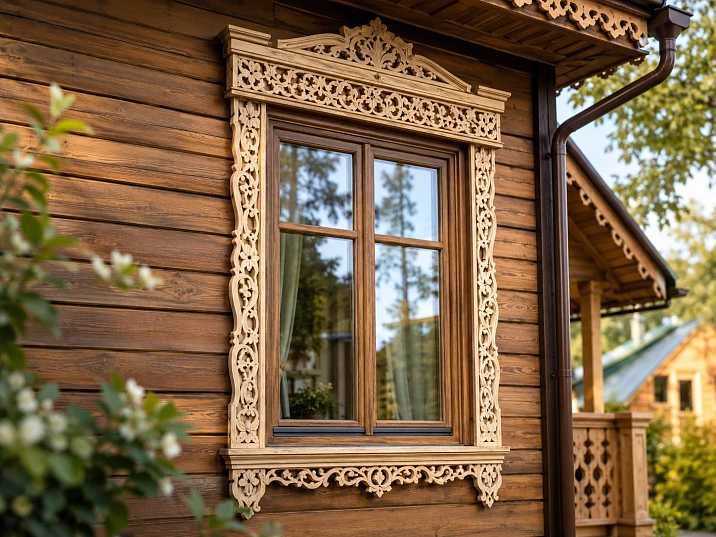
Buying a slotted wooden casing is worth it when the window should become not just a neatly framed opening, but a noticeable part of the facade. Openwork carving creates a light silhouette, provides a beautiful play of light and shadow, emphasizes the traditional character of the house, and makes the window area more expressive even without complex architecture. But such a casing cannot be chosen solely by its beautiful pattern: slotted carving has its own visual tasks, requirements for the facade, risks in maintenance, installation, and combination with other elements of house carving.
A regular carved casing can be dense, relief, overlay, more subdued in shape. A slotted casing works differently: it emphasizes through sections, openwork, silhouette, airiness of the ornament, and how the pattern reads against the wall background. Therefore, it looks especially good on wooden houses, country facades, windows with traditional architecture, in projects with Russian, northern, country, or ethno-mood.
If the task is to choose ready-made facade decor without independently cutting a complex pattern, it is more convenient to start with the section where you can buy a slotted wooden casing and view ready-made elements of house carving. In the STAVROS catalog, you can compare carved casings, connecting elements, brackets, and adjacent facade decor so that the window does not look separate from the entire house.
In this article, we will break down what a slotted architrave is, how openwork carving differs from applied carving, where such decor is truly appropriate, when it is better to choose another type of architrave, and what to buy together so that the facade looks cohesive rather than overloaded with random details.
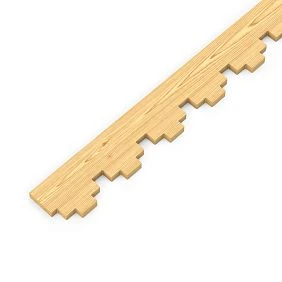
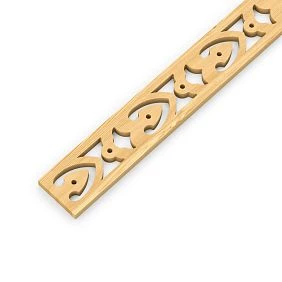
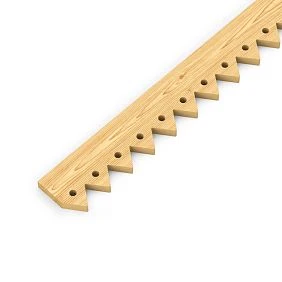
What is a slotted wooden architrave
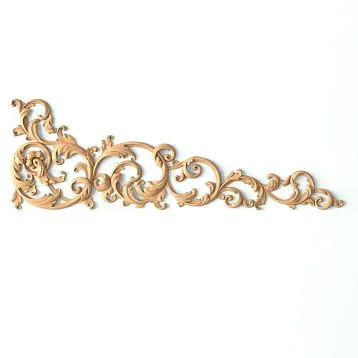
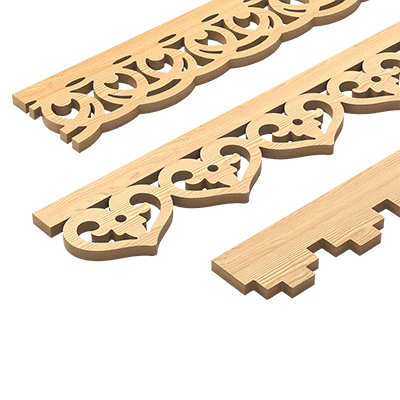
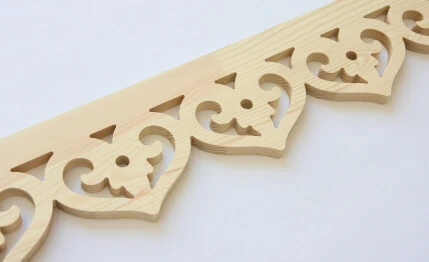
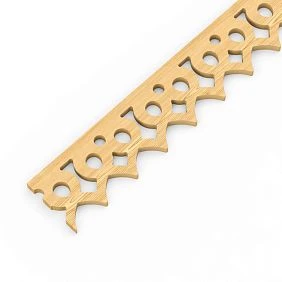
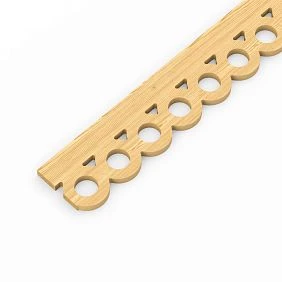
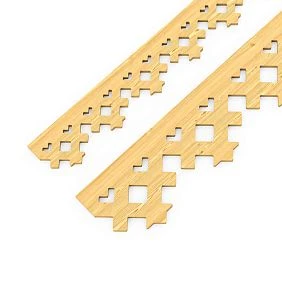
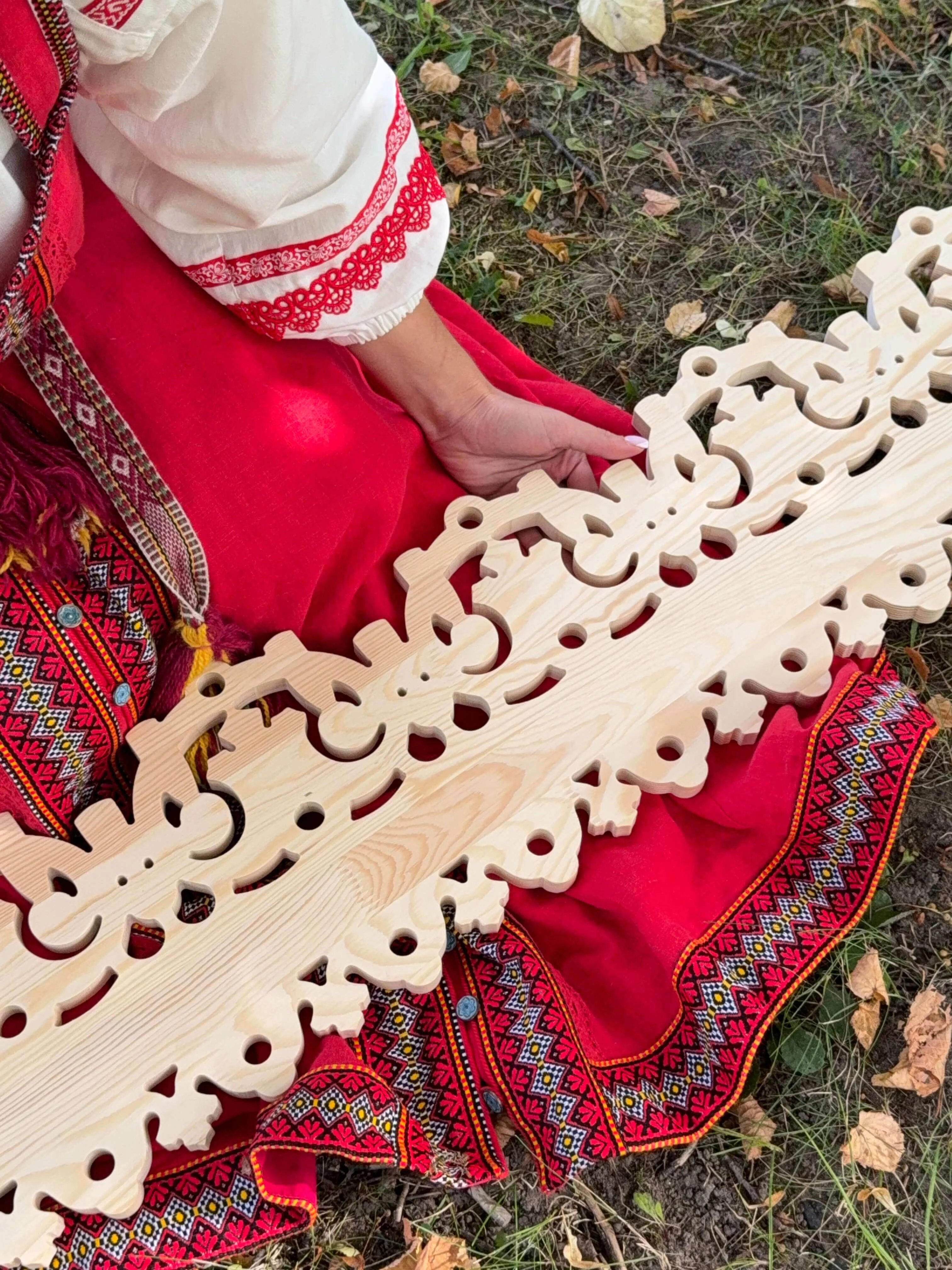
A slotted wooden architrave is a decorative frame for a window or door, where the ornament is created not only by relief but also by through slots. Due to these openings, the pattern becomes openwork: part of the material is removed, and the remaining shape works as a silhouette. Such an architrave looks lighter than a dense applied element and depends more on the background wall, light, facade color, and the distance from which it is viewed.
The main difference of a slotted architrave is not just "carving," but specifically airiness. In a regular carved element, the pattern may be cut on the surface, but the part itself remains denser. In the slotted version, part of the pattern goes through, so the facade gets a more lively decorative contour. The window seems not just framed, but adorned with fine wooden graphics.
This is important for the buyer for two reasons. First, openwork carving has a stronger impact on the style of the house. It immediately references traditional architecture, wooden facades, country houses, old northern houses, Russian style, and decorative house carving. Second, such an architrave requires more careful selection: a pattern that is too small or too active can get lost, overload the facade, or complicate maintenance.
How openwork carving differs from regular carving
Regular carving can be relief, applied, contour, volumetric, or flat-relief. It decorates the surface of the part but does not always make it through. Openwork carving is built on cut-out areas. It is the voids that create the pattern together with the remaining wooden shape.
On the facade, this gives a different effect. An applied carved architrave looks denser and calmer. It can be richly decorated but is perceived as a solid decorative frame. A slotted architrave seems lighter, lacy, graphic. Its pattern is especially noticeable when the color of the architrave contrasts with the facade.
Therefore, the question "how does openwork carving differ from applied carving" is not just technical. It is a question of the external image of the house. Applied decor is more often chosen for a calmer facade. Openwork slotted carving is chosen when you want to make the window noticeable, traditional, elegant, and more expressive.
Our factory also produces:
Why an openwork architrave looks lighter
An openwork wooden window casing looks lighter due to the alternation of wood and voids. The eye sees not a solid board, but a pattern through which the facade is partially visible. The detail appears thinner, airier, and more decorative. This works especially well on a wooden house, where the architecture itself already supports the natural material.
But lightness does not mean universality. If the facade is already overloaded with carved elements, small details, complex coloring, and active texture, the cut-out ornament can get lost. Conversely, if the wall is too empty and simple, an openwork casing can become the main decoration of the window and tie together the entire facade image.
Get Consultation
When a cut-out ornament is appropriate on the facade
A cut-out ornament is appropriate where the facade allows for decorativeness. These are wooden houses, dachas, country cottages, bathhouses, guest houses, verandas, facades with traditional architecture, projects in Russian, Nordic, country, or ethno-style. Such a casing works well around windows that you want to highlight but not overload with massive decor.
If the facade is strict, modern, minimalist, and built on smooth surfaces, openwork carving can look alien. In such a case, it is better to consider a more restrained carved casing or linear facade decor without an active cut-out pattern.
When it is worth buying a cut-out casing
A cut-out casing is not needed for every window. It reveals itself where the architecture of the house itself supports a decorative facade. If the house is wooden, has a traditional shape, visible slopes, eaves, a porch, a veranda, carved brackets, or other elements of house carving, an openwork casing becomes a natural part of the image.
Purchasing such an element is especially justified when you need to design the facade expressively but not turn the window into a heavy frame. The cut-out pattern adds elegance, and due to the through sections, it maintains lightness. Therefore, it is suitable for windows that should be noticeable from the street, from the property, from the terrace, or from the entrance area.
For a wooden house
A casing for a wooden house with openwork carving looks especially organic. A wooden wall, natural texture, traditional window shape, and carved facade decor support each other. In such an environment, a cut-out casing does not seem like an artificial insert. It is perceived as a continuation of the architecture.
If a house is being built or renovated in a traditional style, it's better to look not at one element, but at the entire facade system: platbands, connecting elements, brackets, corner and adjacent window treatments. For this, it's convenient to open the section carved platings for a wooden house and compare which elements can be linked together.
For a dacha or country facade
At the dacha, openwork carving often looks softer than heavy architectural decor. It adds individuality to the house but does not turn the facade into an overly solemn one. Such a platband is well suited for small windows, verandas, guest houses, bathhouses, facades with wooden cladding, or a house where you want to maintain a warm country character.
If the facade is simple, an openwork platband can become the main decorative accent. But then it's important not to overdo it with the number of details: it's better to choose a clear pattern, repeat it on several windows, and support it with adjacent elements only where truly necessary.
For windows with traditional architecture
An openwork wooden platband works well on windows that already have traditional proportions: vertical format, symmetry, visible frame, wooden trim, shutters, or classic placement on the facade. In such a situation, openwork carving emphasizes the window and makes it part of the overall architectural language.
If the window is very modern, large, panoramic, or has a minimalist aluminum system, an openwork platband may look questionable. Here, it's important not to mechanically transfer the decor of house carving to any facade. The platband must suit not only the size but also the character of the window.
For a project in Russian, Northern, Country, or Ethno style
Russian, Northern, Country, and Ethno styles love material, silhouette, handmade character, decorative rhythm, and connection with traditional architecture. Openwork carving supports these directions well. It looks not like a random decoration, but as part of the house's cultural code.
In such projects, it is especially important to maintain balance. The openwork pattern should be expressive but not too fine. If the ornament is overloaded, the facade can become visually noisy. If it is too simple, the meaning of the cut-out carving is lost. A good choice is one where the pattern is readable from a normal distance and does not conflict with other details.
When it is better to choose a different carved architrave
A cut-out architrave is beautiful, but not always practical and not always appropriate. Sometimes it is better for the buyer to choose a denser carved architrave, a calm decorative frame, or another facade element. This does not mean that openwork carving is worse. It means that each type of decor has its own scenario.
The main risk of cut-out carving is excessive decorativeness. It attracts more attention, works more actively with shadow, and requires more careful maintenance. If the facade is strict, modern, overloaded, or in difficult operating conditions, it is better to assess in advance whether the openwork ornament will be superfluous.
If a more durable facade element is needed
The cut-out pattern makes the detail visually lighter, but it has thin sections. The more cutouts and the finer the ornament, the more careful you need to be with installation, protection, and maintenance. If the facade is in an area of active contact, near a narrow passage, next to branches, stairs, or a place where the decor can be touched, it is better to choose a denser element.
For such cases, a ready-made carved architrave without excessively fine openwork is suitable. For example, you can consider Carved casing NL-7 and evaluate its shape, proportions, and applicability to a specific window.
If the facade is overloaded with details
The facade can be beautiful but too saturated: carved cornices, brackets, shutters, contrasting paint, complex cladding, decorative corners, pediments. In such an environment, an openwork architrave can add extra noise. As a result, the window will not become more expressive, and the facade will lose clarity.
If there are already many details, it is better to choose a calmer casing or use openwork not on all windows, but only on the main facade, entrance group, or the most visible side of the house.
If a strict modern style is required
A strict modern facade is usually built on planes, concise lines, and a minimum of decorative details. Cut-out carving in such an environment can look like a foreign historical element. If the goal is to maintain modern purity, it is better to choose a simpler casing, molding, or linear decor without traditional openwork.
At the same time, a modern country house does not always exclude wood. But a carved facade element must be very precisely selected in scale, color, and shape. If there is no confidence, it is better to start with a calmer model.
If simple painting and maintenance are important
The more complex the cut-out pattern, the more carefully you need to approach painting and final protection. Through sections, small bridges, and internal corners require careful treatment. If the buyer wants the simplest possible maintenance and quick painting, a too openwork casing may not be the best choice.
For the facade, it is important not only to buy a beautiful element but also to protect it from weather conditions. A wooden casing needs to be properly prepared, coated, and maintained. The more details, the higher the requirements for accuracy.
Commercial choice: which elements to look at in the catalog
A buyer looking to purchase a carved wooden casing should look not at one card but at the entire section of house carving. This makes it easier to understand which casings fit the window, which elements will help assemble the composition, where connecting parts are needed, and where brackets are appropriate.
| Buyer's task | What to look at | Why this is needed |
|---|---|---|
| Carved casings for the facade are needed | buy a slotted wooden casing | Select ready-made house carving elements for windows and facade. |
| Need a ready-made carved window casing | Carved casing NL-7 | View the finished model and evaluate it for the facade. |
| Need a casing for a window or door | Carved casing NL-4 | Compare another carved casing option for the opening. |
| Need to assemble a facade composition | Connecting elements for house carving | Close joints and connect several decorative parts. |
| Need decor for the facade, canopy or porch | carved facade decor STAVROS | Select brackets and adjacent elements in the same style. |
This approach helps avoid buying the casing separately from the facade. If the window is decorated with openwork carving, connecting elements, brackets, decor for neighboring windows, and materials for final wood protection may be needed nearby. The earlier the set is thought out, the lower the risk of style mismatch.
How to choose a carved casing for a window
Choosing a casing starts not with the pattern, but with the window. You need to consider the width and height of the opening, the distance to the corners of the house, neighboring windows, the color of the facade, the width of the slopes, the style of the roof, the shape of the cornice, and other decorative elements. The cut-out ornament is beautiful only when it is proportionate to the opening and reads well on the facade.
By opening width
The width of the window determines the scale of the casing. A narrow opening will not support too large and heavy decor. A wide window, on the contrary, may lose expressiveness if you choose too thin a frame. The cut-out casing should frame the window, not compete with it.
Before ordering, you need to take accurate measurements of the opening and understand how much space remains around the window. If the casing rests against a corner, cornice, neighboring opening, or drainpipe, the composition will look cramped. This is especially important for facades where windows are located close to each other.
By window height
The height of the window affects the vertical pattern of the casing. If the window is elongated, you can use a more expressive top element. If the window is low and wide, too high an openwork can disrupt the proportions. The casing should emphasize the shape of the opening, not change it accidentally.
For a traditional wooden house, the upper part of the casing is often important. It can be more decorative than the side elements. But if the facade is already saturated with carving, it is better to make the top accent calmer.
By ornament density
Ornament density is one of the key parameters. The more cutouts and fine details, the more openwork the trim appears. However, a pattern that is too small may be hard to read from the street. From a distance, the facade is perceived not as a set of fine lines, but as a general silhouette.
For a small house, it is better to choose a pattern that reads clearly. For a large facade, more expressive carving can be considered, but it should still be visible from a normal distance. If the design is only beautiful up close, it may get lost on the facade.
By tree species
If the wood species is indicated in the product card, it must be checked before ordering. For the facade, it is important how the material will behave after processing, painting, and installation. You cannot choose a trim based solely on shape without understanding what material it is made of and how it needs to be protected.
If the exact materials for the selected model need to be clarified, it is better to check the product card or contact a STAVROS manager. This is especially important for facade decor because it will be used outdoors and requires proper final protection.
Regarding future painting
The color of the trim changes the entire facade. Light openwork carving on a dark wall looks contrasting and festive. A dark trim on a light facade gives a more graphic effect. A trim matching the wall color looks calmer and softer, but the openwork may read less clearly.
Before painting, it is important to consider not only the color but also the protection of the wood. The facade element must withstand temperature changes, humidity, sun, and precipitation. The more complex the cutout pattern, the more carefully the coating needs to be applied to the inner areas of the ornament.
Regarding combination with brackets and connecting elements
A trim rarely exists alone. On the facade, there may be brackets, soffits, connecting elements, corner decor, carved cornices, porch or veranda elements nearby. If each element is chosen separately, the facade may look random.
For a cohesive result, it is better to immediately look at the section carved facade decor STAVROS and select details in the same mood. It is not necessary to use a lot of decor. Sometimes it is enough to repeat the pattern of the trim on several windows and add connecting elements where they are really needed.
What to buy together with carved trims
Buying a trim is not always buying one frame. If the facade is decorated as a whole, you need to think about neighboring windows, joints, brackets, finish coating, fasteners, and mounting materials. This is especially important for openwork carving, because the openwork element must be carefully installed and protected.
If a buyer takes one trim, but there are several identical windows on the facade, the result may look incomplete. If they buy only a decorative frame but do not think about connecting elements, weak spots remain in the composition. If they choose carving without finish protection, the wood may lose its neat appearance faster.
| What to add to the purchase | Why this is needed | When it is especially important |
|---|---|---|
| Connecting elements for house carving | Assemble the composition and neatly close the joints. | When the facade is decorated not with a single element, but with a system. |
| Carved brackets | Support the window style on the porch, canopy, or veranda. | For houses with a decorative entrance group. |
| Trims for neighboring windows | Make the facade whole, rather than decorating one window separately. | When windows are visible from one side of the house. |
| Finish coating for facade protection | Protect wood from external conditions. | For any wooden elements outdoors. |
| Fasteners and mounting materials | Securely install the trim on the facade. | If the element is large, openwork, or installed on a complex base. |
How not to confuse a cut-out trim with similar products
In house carving, there are many similar words: trim, carved trim, cut-out trim, connecting element, bracket, molding, facade decor. For a buyer, a mistake in the name can lead to an incorrect purchase. One element frames a window, another covers a joint, a third supports a canopy, a fourth is needed as linear decor.
| Element | When to choose | What's the difference |
|---|---|---|
| Cut-out trim | When an openwork, light, traditional visual effect is needed. | Works due to through ornament and silhouette. |
| Carved architrave | When a ready-made decorative frame for a window or door is needed. | It can be not only cut-through, but also denser in pattern. |
| Connecting element SNL | When you need to close a joint or assemble a facade composition. | It does not replace the architrave, but complements it. |
| bracket | When decorating a canopy, porch, veranda, or ledge. | Works as a decorative support, not a window frame. |
| Molding | When linear decor is needed, not a facade architrave. | Usually does not solve the task of full window framing. |
If the task is specifically a window on the facade, it's better to start with the house carving section and ready-made architraves. If you need to decorate a porch or canopy, brackets are used. If you need to assemble transitions and joints, connecting elements help. This way, the facade becomes not a set of individual parts, but a unified decorative system.
Practical selection for different situations
Need to highlight the main window on the facade
If the facade has a central window, a window above the porch, or an opening that catches the eye first, a carved architrave can become the main accent. In this case, it's worth choosing a pattern that is clearly readable from a distance and does not look too small.
It's better to make neighboring elements calmer. If all windows are immediately decorated with equally active openwork carving, the facade may become overloaded. Sometimes it's enough to highlight the main window, and decorate the rest with more restrained architraves.
Need to decorate several identical windows
If the facade has several identical windows, it's important to maintain repetition. Different architraves on adjacent openings may look random. It's better to choose one type of pattern and repeat it, leaving differences for the main facade or entrance group.
Before ordering, you need to count the number of openings, check the dimensions of each window, and understand if there are any differences in height, width, slopes, or location. Even a small difference can affect the selection of the architrave.
Need to update the facade of an old wooden house
An old wooden house often benefits from neat house carving. A slotted architrave can restore a traditional character to the facade and hide the feeling of an empty opening. But before purchasing, you need to check the condition of the base, the geometry of the windows, and the quality of the surface around the opening.
If the facade requires repair, the architrave should not mask the problem. First, the base is put in order, then the decor, coating, and installation are selected. Openwork carving looks good only on a carefully prepared facade.
You need to decorate a country house without overloading it
For a country house, it is better to choose not the most complex ornament, but a clear decorative frame with light openwork. Such an architrave will add individuality but will not require too complex a facade composition. This works especially well on small houses where every detail is noticeable.
If the house is small, it is important to watch the scale. Large carving can overwhelm the facade, too small carving can get lost. The right architrave should be noticeable but not compete with the size of the house.
You need to assemble the facade in one style
If, in addition to windows, the porch, veranda, canopy, gable, or entrance group are being decorated, the architraves need to be selected together with other elements. For this, it is convenient to look carved facade decor STAVROS and understand in advance which details will be repeated.
It is not necessary to use a lot of carving. Sometimes architraves, a couple of brackets, and connecting elements are enough. The main thing is that the decor is connected by shape, scale, and color.
Installation, painting, and care: what to consider before purchasing
A carved wooden window casing requires careful handling. It cannot be treated like an ordinary smooth board. The openwork pattern has internal contours, thin sections, and a complex silhouette. Therefore, before purchasing, you need to think not only about beauty but also about installation, painting, protection, and subsequent care.
Installation depends on the base
The facade can be wooden, sheathed, painted, uneven, old, or new. The fastening, preparation, and tightness of fit depend on the base. The casing must be installed so that it does not warp, pull away from the opening, or create gaps where moisture can accumulate.
If the window has a non-standard shape, wide slopes, protruding elements, or complex sheathing, it is better to discuss the installation with a craftsman in advance. This is especially important for carved openwork: the openwork element must be installed without excessive pressure on the thin sections.
Painting should be done before installation or very carefully after
A carved casing has many internal edges. If you paint it after installation, some areas may remain poorly treated. Therefore, it is often more convenient to plan the final protection in advance and treat the element before installation, especially if the ornament is complex.
The color should be chosen considering the facade. A contrasting casing makes the window more noticeable. A casing in the same tone as the facade looks calmer. A too bright color can simplify even beautiful carving, so it is better to check the shade on samples or at least compare it with the facade palette.
Facade protection is more important than the decorative effect
A wooden casing is located outdoors. It faces sun, humidity, temperature changes, precipitation, and seasonal changes. If the wood is not protected, the decorative effect will quickly lose its neatness.
For carved openwork, protection is especially important: the internal sections of the ornament must also be treated. You cannot only cover the front surface and forget about the ends, internal contours, and junction points.
Mistakes when choosing a slotted architrave
Choosing only the most complex pattern
A complex ornament is not always better. On a small facade, it can look heavy. From a distance, fine carving can blend together. In terms of maintenance, a complex pattern requires more attention. You should choose not the most "rich" design, but one that suits the house in scale and style.
Not considering the facade background
Slotted carving is read against the wall background. If the color of the architrave almost matches the facade, the openwork can become barely noticeable. If the contrast is too strong, the window may look overly bright. Color balance is especially important here.
Buying one architrave without considering neighboring windows
The facade is perceived as a whole. If one window is richly decorated while neighboring ones remain bare, the composition may look incomplete. Before purchasing, you should decide whether one window, the entire facade, or only the main side of the house is being decorated.
Not planning connecting elements
If the architrave is to be part of a facade system, without connecting elements, unsightly joints may remain. This is especially noticeable in complex compositions where the architrave is linked to soffits, brackets, or other details.
Confusing a slotted architrave with any carved architrave
Not every carved architrave is fretwork. If you need exactly an openwork visual effect, you need to look at the type of pattern and construction. If a decorative frame is enough, another carved architrave will do, for example Carved casing NL-4.
Forgetting about maintenance
Facade decor needs maintenance. Fretwork carving requires more careful maintenance than a smooth element. If the buyer is not ready to monitor the coating, it is better to choose a less complex pattern or a denser carved architrave.
Who is a fretwork wooden architrave suitable for
A fretwork architrave is suitable for owners of wooden houses, dachas, bathhouses, guest houses, and country facades where you want to emphasize a traditional style. It is especially appropriate if the house is decorated in a Russian, Nordic, country, or ethnic mood.
Such an architrave should be chosen by those who want a light openwork effect, an expressive window, and a decorative facade without heavy massiveness. It is suitable for projects where the window should become a noticeable part of the house but not look rough.
A fretwork architrave is not suitable for those who want a maximally strict modern facade, are not ready to care for wooden decor, do not plan final protection, or choose an element only by picture without considering the window and facade dimensions.
How to buy a carved architrave on STAVROS
It is better to start the purchase with the facade. First, you need to understand which window is being decorated, how many such windows are on the house, what style the facade has, whether an openwork effect is needed or a calmer carved frame is enough. Then you need to measure the opening, assess the free space around the window, and decide whether the architrave will be part of a broader facade composition.
After that, you can go to the section carved platings for a wooden house and compare ready-made elements. If you need a specific ready-made option, it's worth looking at Carved casing NL-7 и Carved casing NL-4. If the facade is assembled as a kit, it's additionally worth evaluating Connecting elements for house carving and brackets.
Before ordering, you need to check the current specifications in the product card: dimensions, material, purpose, installation features, and compatibility with other elements. If the facade is non-standard, it's better to check compatibility in advance with a STAVROS manager and not buy decorative parts separately from the overall design scheme.
FAQ
What is a cut-out architrave?
A cut-out architrave is a wooden decorative frame for a window or door, in which the ornament has through sections. Due to the cutouts, the pattern looks openwork, light, and more graphic on the facade.
How does cut-out carving differ from applied carving?
Cut-out carving is created through through holes and silhouette. Applied carving often works as a relief on the surface. A cut-out architrave looks lighter, while an applied one looks denser and calmer.
Where to use openwork wooden architraves?
They are well suited for wooden houses, cottages, country facades, bathhouses, verandas, windows in Russian, Nordic, country, or ethno-style. On strict modern facades, such decor should be used very carefully.
Is a slotted architrave suitable for a facade?
Yes, if it is correctly selected in size, style, material, and protected with a finish coating. For the facade, it is important to consider weather conditions, installation, and wood care.
How to choose a carved architrave for a window?
You need to measure the width and height of the opening, assess the free space around the window, the facade style, wall color, ornament density, and compatibility with neighboring windows.
Which architrave to choose for a wooden house?
For a wooden house, carved architraves from the house carving section are well suited. If a light traditional effect is needed, you can consider openwork slotted carving. If the facade is already saturated with details, it is better to choose a calmer option.
When is it better to refuse a slotted architrave?
If the facade is strict and modern, if it already has many details, if minimal maintenance is required, or if the element will be in an area of active contact, it is better to choose a different carved architrave.
What to buy together with carved architraves?
Along with architraves, connecting elements for house carving, brackets, architraves for neighboring windows, finish coating for wood protection, fasteners, and installation materials are often needed.
Can I decorate only one window with a carved casing?
Yes, if it is the main window of the facade or a decorative accent. But if there are several identical windows nearby, one heavily decorated window may look accidental. It is better to plan the entire facade in advance.
What color should I choose for an openwork casing?
The color depends on the facade. A contrasting casing makes the pattern more noticeable, while a tone-on-tone option looks calmer. It is important that the ornament is readable from a distance and does not conflict with the overall palette of the house.
How does the carved casing NL-7 differ from NL-4?
These are different ready-made models of carved casings. Before choosing, you need to open the product cards, compare the shape, proportions, sizes, and understand which option is better suited for a specific window or door.
Where can I buy a carved wooden casing?
You can select casings and adjacent facade decor in the STAVROS house carving section. Before ordering, it is worth checking the dimensions, material, purpose, and compatibility with other facade elements.
Conclusion: openwork carving is needed where the window should become part of the house's image
A carved wooden casing is chosen not just for a beautiful pattern. It is needed when the window should get a light openwork silhouette, and the facade should have a more traditional, warm, and expressive character. Such decor works well on wooden houses, cottages, country facades, and projects with Russian, Nordic, country, or ethno vibes.
Before purchasing, it is important to evaluate not only the pattern, but also the window size, facade style, ornament density, future painting, installation, and maintenance. If the facade is overloaded with details or a strict modern style is needed, it is better to choose a different carved casing. If the task is to highlight the window and create expressive house carving, a slotted casing can be a successful solution.