
















































































Article Contents:
- What are molding samples
- Why photos are not enough
- Why a sample is better than random choice
- Before purchasing wooden baseboard
- Before purchasing wooden cornice
- Before purchasing wooden batten
- Before buying a wooden casing
- Check the height
- Check the protrusion
- Evaluate the profile line
- Compare the profile with adjacent parts
- For private renovation
- For the designer
- For a builder or finisher
- For a furniture workshop
- For a commercial property
- Choosing a profile only by a beautiful photo
- Not checking the height in the room
- Do not consider adjacent elements
- Ordering the main volume before approval
- Comparing profiles in the wrong position
- Taking one sample when there are several disputed options
- Why are molding samples needed
- When should you order molding samples
- Can you choose a wooden baseboard without a sample
- How to understand the size of a baseboard from a sample
- How to choose a wooden cornice by sample
- Are wooden batten samples needed
- Does the sample help choose the trim?
- Which is better: one sample or several?
- Where can I see STAVROS product samples?
- What to do after choosing a sample?
- Can the sample be used for installation?
- What to clarify before ordering samples?
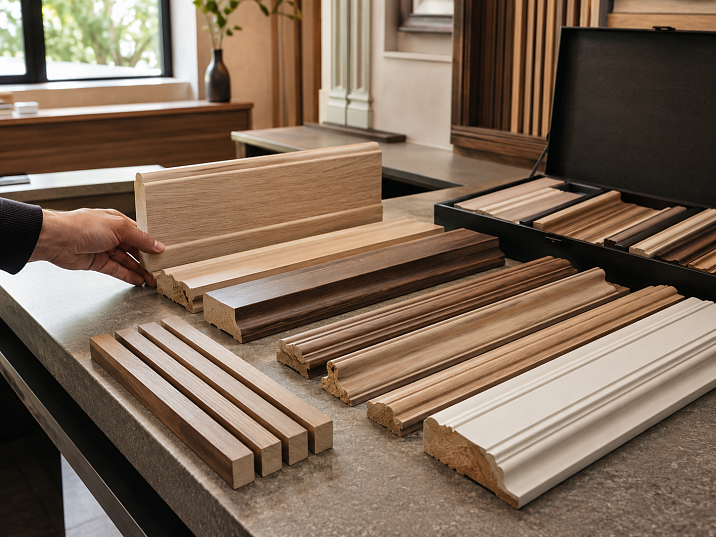
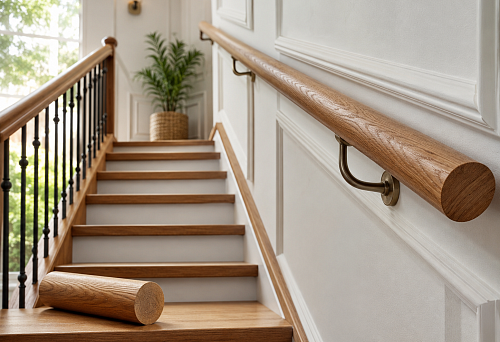
Samples of molding products are needed when the general direction is already clear from the photo, but it is still impossible to confidently choose the profile, height, projection, scale, and visual character of the detail. A wooden baseboard, cornice, slat, or trim may look neat and proportional on the website, but in a real interior, millimeters, shadow, wood texture, and proximity to the door, floor, wall, ceiling, and furniture make all the difference. Therefore, before a large order of molding, it is reasonable to first order a physical sample and test it in the room.
This is especially important for projects where molding is purchased not for one meter, but for an entire room, apartment, house, salon, showroom, or commercial space. A mistake with the profile here costs more than buying a sample: a baseboard that is too high can overwhelm a small room, a slat that is too thin will get lost on the wall, a cornice with an unsuitable overhang will conflict with the ceiling, and a trim of a different scale will not match the door frame and furniture.
At STAVROS you can buy samples of molding products and evaluate the profile in advance before the main order. This is a convenient commercial step between choosing from a catalog and purchasing the full volume of wooden moldings. The buyer gets the opportunity to apply the sample to a wall, floor, door, panel, furniture, or ceiling and see how the piece works in their specific interior.
This purchase is especially useful for designers, builders, furniture workshops, homeowners, and those choosing moldings for complex renovations. The sample helps avoid arguments over pictures and allows making a decision with hands and eyes: whether the profile fits, if it is too large, if the relief is readable, if the mood matches the interior, whether a different size is needed, or if it is better to immediately proceed to ordering the main molding.


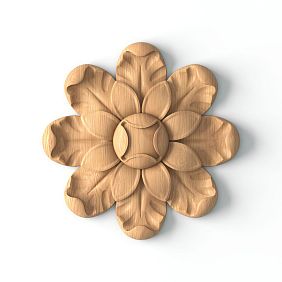


What are molding samples
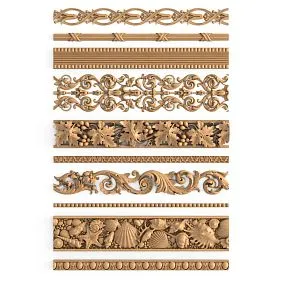
Molding samples are physical fragments of profiles that help evaluate future wooden moldings before purchasing the full volume. Such a sample does not replace the actual baseboard, cornice, slat, or casing in a renovation, but helps understand how the product looks in real life: its shape, height, projection, line, profile depth, how it casts shadows, and how well it matches other materials.
Moldings are always perceived in the scale of the room. On screen, a baseboard may seem restrained, but next to a low wall, it may appear too active. A cornice in a photo may look expressive, but in a room with a low ceiling, it may feel heavy. A slat in a catalog may seem universal, but when applied to a wall, it becomes clear how well it suits the panel, color, door, or furniture. This is exactly why samples are needed.
A sample is especially important when a buyer is choosing between several similar profiles. The difference between them may be small in photos but noticeable in a room. One profile gives a soft classic line, another is more strict, a third gives a deep shadow, and a fourth provides an almost flat transition. Without physical comparison, such nuances are easily missed.




Why photos are not enough
A photo shows the shape but does not always convey the real scale. On the website, the profile is shot close-up, neatly, in good lighting. In a room, it will be seen next to the floor, door, wall, ceiling, lights, furniture, and other details. What looks beautiful separately may turn out to be too small, too large, or not the right character.
Additionally, it is difficult to understand the profile depth from a photo. Moldings work not only with lines but also with shadows. For a baseboard, the top edge is important; for a cornice, the transition from wall to ceiling; for a slat, the rhythm and thickness; for a casing, the width and connection to the door or window. A sample allows seeing these nuances in real light.
Our factory also produces:






Why a sample is better than random choice
Random selection is often based on phrases like "looks good in the photo" or "approximately fits." But molding is not a separate decorative item that can be easily moved. It is bought by linear meters, installed along the perimeter, joined at corners, and connected to doorways, ceilings, panels, and furniture. If the profile doesn't look right after installation, fixing it will be more difficult and expensive.
A sample helps make a decision earlier. It can be placed on the floor, next to a door, raised to the ceiling, compared with a furniture facade, and viewed in the morning and evening under different lighting. This is a simple way to avoid mistakes before placing the main order.
Get Consultation
What problems does buying a sample solve before ordering molding
Buying a sample solves several practical problems at once. It helps choose a profile, check the scale, coordinate the material with a designer or client, compare several options, and ensure the molding truly fits the interior. This is not an extra step, but part of a normal selection process, especially when the project is large or expensive.
| What the buyer checks | Why a sample is needed | Where it is especially important |
|---|---|---|
| Profile height | To understand whether the baseboard, cornice, or trim will be too large. | Apartments, small rooms, spaces with low ceilings. |
| Depth and projection | Evaluate the shadow, relief, and junction with the wall or ceiling. | Cornices, moldings, decorative strips, architraves. |
| Wood texture | Understand how the material looks next to the floor, doors, and furniture. | Interiors with natural wood and visible finish. |
| Combination with finish | Check the profile next to paint, wallpaper, panels, tiles, and facades. | Kitchens, hallways, living rooms, commercial interiors. |
| Overall style | Understand whether the profile fits a classic, neoclassical, or modern interior. | Projects where the molding should connect several zones. |
After such a check, the buyer no longer chooses an abstract product, but a specific profile for their task. This is especially useful if you need to order wooden moldings STAVROS a large volume at once: baseboards around the perimeter, cornices for several rooms, slats for a wall composition, or architraves for all doors.
When to order molding samples
Samples should be ordered not only when there are doubts. Often they are needed precisely in good, well-thought-out projects where accuracy is important. The more expensive the renovation, the larger the volume of molding, and the more the detail affects the interior, the more useful it is to first get a sample.
Before buying a wooden baseboard
A baseboard seems like a simple detail until you need to choose it for an entire apartment or house. The height of the baseboard changes the perception of the walls. A low profile looks calmer, a high one is more expressive and expensive, but requires the right scale. In a small room, a too massive baseboard can draw attention downward. In a spacious living room, a too thin profile will get lost.
A wooden baseboard sample helps to hold the profile against the floor and wall, assess the height, projection, top line, and combination with the flooring. This is especially important if the floor has already been chosen or laid. In real life, you can immediately see whether the profile works with the shade of the floor, door, wall, and furniture.
Before buying a wooden cornice
The cornice works at the junction of the wall and ceiling. It greatly influences the room's architecture. One profile makes the transition soft and classic, another creates a stricter line, and a third can visually lower the ceiling if chosen without considering the room's height.
A wooden cornice sample should be lifted to the installation site and viewed at actual height. On a table or in hands, the profile is perceived differently than under the ceiling. It's important to evaluate not only the pattern but also how the cornice casts shadows, how much it protrudes, and whether it overloads the room.
Before purchasing a wooden slat
A slat can be used on walls, ceilings, in decorative panels, furniture inserts, or zoning. Rhythm is especially important here. One slat alone says little. But a sample helps understand thickness, width, edge shape, texture, and how the detail will look in repetition.
If slats are chosen for a large wall, it's better to apply the sample to the surface in advance and imagine the spacing between elements. A too-thin slat may get lost, a too-wide one may make the wall heavy. The sample allows checking this before purchasing a large quantity of material.
Before purchasing a wooden casing
The casing connects the door or window to the wall. It should match the panel, frame, baseboard, moldings, and the overall room style. An error in casing width is immediately noticeable: a too-narrow profile looks weak, a too-wide one may overload the opening.
It's convenient to apply the casing sample to the door opening and compare it with the baseboard. If the baseboard and casing conflict in scale, the interior seems disjointed. Therefore, before ordering casings for all doors, it's better to physically check the profile.
How a sample differs from purchasing full linear footage
A sample is not a replacement for the main order, but a selection tool. It is purchased before a large purchase to reduce the risk of error. Full linear footage is purchased after the profile is chosen, dimensions are clear, volume is calculated, style is agreed upon, and the material suits the interior.
| Purchase format | What it is for | When to choose |
|---|---|---|
| Molding sample | Check the profile, scale, shape, and how it fits with the interior. | Before the main order, at the selection stage. |
| Full molding order | Purchase the required amount of installation material. | After selecting the profile and calculating the quantity. |
| Sample section | View different product sample options. | When you need to compare not just one profile, but several product groups. |
| Molding catalog | Go to the selection of baseboards, cornices, moldings and other profiles. | When the type of product is already clear. |
The logic is simple: first a sample, then a confident order. If the profile has already been tested in the room, the buyer understands more precisely which wooden moldings STAVROS one they need, what volume to calculate and which adjacent parts should be selected together.
How to choose a profile before ordering
Choosing a profile starts with the installation location. The same linear product may look good on a stand and completely different in a specific room. Therefore, the sample should be applied where it will work: the baseboard to the floor and wall, the cornice to the ceiling, the slat to the plane of the wall or panel, the casing to the door or window opening.
Check the height
The height of the profile affects the scale. The higher the baseboard or casing, the more actively it participates in the interior. The lower the profile, the calmer the result. In a classic interior, more expressive profiles are often appropriate, but they must match the ceiling height and room size. In a modern interior, the profile can be more restrained, but it should still be noticeable.
The sample helps to understand if you have made a mistake with the height. On the product page, the numbers may seem clear, but in the interior they are perceived differently. It is better to apply the sample to the wall once than to doubt it later after installing tens of meters.
Check the protrusion
The protrusion is important for baseboards, cornices, moldings and casings. It determines how much the profile protrudes from the plane, what shadow it casts and how it will join with adjacent parts. A profile that is too flat may not provide the necessary expressiveness. One that protrudes too much may interfere with furniture, curtains, doors or visually weigh down the room.
The profile is checked especially carefully where there is furniture nearby. For example, the baseboard should match the cabinet furniture and not create an extra gap. The cornice should not conflict with the curtains or lighting. The casing should look comfortable next to switches, sockets, cabinets, and slopes.
Evaluate the profile line
Molding can be simple, embossed, classic, more strict, soft, or decorative. The profile line defines the style. One shape suits classic doors, another suits modern smooth walls, and a third suits the wooden trim of a country house.
A sample allows you to see how well the profile line matches the interior. Sometimes in photos the profile seems calm, but in reality it turns out to be more decorative. Or vice versa: it seems expressive, but on the wall it looks too thin. A physical check removes these doubts.
Compare the profile with adjacent details
Baseboards, casings, cornices, and battens rarely exist on their own. They work alongside doors, floors, ceilings, wall panels, furniture, and decor. Therefore, the sample should be compared not in a vacuum, but with real materials.
A good method is to hold the sample against the floor, then the door, then the wall, and take several photos under different lighting. This makes it easier to understand whether the profile looks natural or stands out from the overall picture.
How to understand the size of a baseboard from a sample
The size of the baseboard particularly affects the perception of the room. A tall wooden baseboard can make the interior feel more cohesive and prestigious, but only if the room can handle such a scale. A low profile looks calmer, but in a spacious room it may get lost. Therefore, it is better to evaluate the baseboard sample not in your hands, but at the future installation site.
Place the sample against the wall at floor level and step back a few steps. First, look at it next to the flooring. Then, assess its connection with the door casing, furniture, wall color, and ceiling height. If the profile seems too active even on one fragment, the effect will be stronger after installation around the entire perimeter.
The baseboard also needs to be checked for protrusion. If there is a cabinet, dresser, kitchen, or built-in furniture nearby, a protruding profile can create a gap. In a decorative project, this is not always critical, but in a practical room, it is better to account for it in advance.
How to choose a wooden cornice by sample
A cornice is perceived differently than a baseboard. It is located high, works at the junction of the wall and ceiling, and affects the room's architecture. Therefore, a cornice sample should be lifted to the installation site or at least evaluated in a vertical position, not just on a table.
If the ceiling is low, a too-large cornice can visually lower the room. If the ceiling is high, a too-thin profile will look random. In a classic interior, the cornice often helps to gather the top line of the room, but it is important not to overload it.
The sample helps to see the depth of the shadow. On the ceiling, the profile will work due to light: daylight, evening, side, artificial. If the room has lighting, curtains, ceiling elements, or complex painting, the sample is especially useful.
How to choose a wooden slat by sample
A slat seems like a simple detail, but in repetition, it greatly changes the wall. One sample helps to understand the shape and material, but when choosing a slat, you need to immediately think about the rhythm: how many elements will be on the wall, what step between them, how they will combine with furniture, light, and the plane.
A wooden slat sample can be applied to the wall vertically and horizontally if the project allows different scenarios. Look at how much the slat protrudes, what shadow it casts, how it looks next to the wall color, and whether it seems too thin. If a large decorative area is planned, it is better to evaluate several samples side by side or at least imagine the repetition.
For commercial interiors, salons, showrooms, and offices, a slat sample helps to coordinate the solution with the client. There is no need to explain the profile in words — it can be shown, applied, photographed, and approved before the main order.
How to choose a wooden casing by sample
The casing should match the character of the door, wall, baseboard, and the overall style of the room. If it is too narrow, the door looks poorer. If it is too wide, the opening may appear heavy. If the profile does not match the baseboard, a sense of inconsistency arises.
It is better to apply the casing sample to the actual opening. Look at the profile width, relief depth, connection with the door leaf, and future finishing. If the project has several doors, the sample will help understand whether the chosen profile will repeat well in the hallway, living room, bedroom, or study.
If the door is already installed, checking is especially important. The casing should not only be pleasing in itself but also cover the required area, without conflicting with the slope, switches, furniture, and adjacent baseboard.
Samples for different buyers
For private renovation
In private renovation, samples help avoid emotional mistakes. When a person chooses from a catalog, they often focus on a beautiful photo. But at home, next to real materials, the profile may look different. The sample provides a calm check: applied, looked, compared, made a decision.
For the designer
A designer needs samples for coordination with the client and project completion. Instead of a long explanation, you can show a physical profile, apply it to materials, take a photo, and approve the decision. This reduces the risk of disputes at the installation stage.
For a builder or finisher
A sample helps a builder understand the profile, protrusion, junctions, and future installation. If it is clear in advance how the trim will join with the floor, wall, ceiling, or opening, there is less risk of unpleasant surprises on site.
For a furniture workshop
A workshop can use samples when selecting parts for built-in furniture, wall panels, doors, decorative frames, or interior sets. The trim often needs to match the furniture logic, and the sample helps check the scale.
For a commercial property
In a salon, restaurant, showroom, hotel, or office, the trim affects the client's impression. A mistake with the profile will be visible every day. Samples help you choose a solution before ordering a large volume and coordinate it with several project participants.
What to buy with samples
Trim samples are the first step. After choosing a profile, the buyer usually moves on to the main order: baseboards, cornices, slats, moldings, architraves, or other wooden products. Therefore, samples should be considered together with the trim section and the general product samples section.
| What to look at | Why this is needed | When to proceed |
|---|---|---|
| buy samples of molding products | Check the profile before the main order. | When choosing between several baseboards, cornices, slats, or architraves. |
| STAVROS product samples | View other sample formats for product selection. | When you need to coordinate not only trim but also other product groups. |
| wooden moldings STAVROS | Go to the main selection of baseboards, cornices, moldings, and profiles. | After checking the sample in the interior and calculating the volume. |
How not to confuse samples with similar solutions
A linear product sample can easily be confused with a piece of material, a demonstration image, a product card, a stand, or a full-fledged product for installation. But the sample has its own task: to help choose a profile, not to replace the main order.
| What the buyer sees | What's the difference | How to use correctly |
|---|---|---|
| Molding sample | A physical fragment of the profile for checking shape and scale. | Apply to the place of future installation. |
| Product card | Shows photo, description, and parameters, but does not replace physical verification. | Use for studying characteristics and ordering. |
| Full-size linear product | Purchased for installation in the required volume. | Order after selecting the profile and calculating the footage. |
| Demonstration stand | Helps to show several products or profiles at once. | Use for presentation and comparison of options. |
| Random offcut | May not match the required profile or batch. | Do not use as an exact replacement for the sample. |
Errors when choosing linear footage without a sample
Choosing a profile only based on a nice photo
The photo helps understand the style but does not show how the profile will behave in your room. The shooting angle, light, frame scale, and background can change perception. The sample brings the choice back to reality: you can hold the profile against the wall and see it without guessing.
Do not check the height in the room
The measurement in millimeters is useful, but it does not replace visual inspection. The same baseboard in a room with a 2.5-meter ceiling and in a spacious hall will be perceived differently. Therefore, the height needs to be checked on site.
Not considering adjacent elements
The baseboard should match the casing. The cornice should match the ceiling height and walls. The slat should match the furniture and light. If you check the profile separately, you might miss a conflict with other details.
Order the main volume before approval
If a designer, client, contractor, and furniture workshop are involved in the project, it is better to confirm the decision on a sample. Otherwise, after delivery of a large volume, a dispute may start: the profile is too large, too small, doesn't look right, doesn't match the door.
Comparing profiles in the wrong position
The cornice cannot be evaluated only on the table, the baseboard only in hands, the casing separately from the door. The sample needs to be viewed where it will be installed. This simple rule often saves from mistakes.
Taking one sample when there are several debatable options
If the buyer is choosing between two or three profiles, it is better to compare them side by side. One sample may be liked on its own but lose to another in the real interior. Comparison on site gives a more accurate choice.
Who are molding samples suitable for
Samples are suitable for those who want to buy moldings consciously, without the risk of making a mistake with the profile. This is useful for apartment and house owners, designers, architects, finishers, furniture workshops, salons, showrooms, and anyone who chooses wooden interior products not just from a picture, but based on real material.
Samples are especially needed for large orders. If you plan to buy baseboards for the entire apartment, cornices for several rooms, slats for a large wall, or casings for all doors, physically checking the profile is almost always justified. It helps avoid rework and finalize the decision before paying for the main volume.
Samples may be unnecessary if the buyer already knows the profile exactly, has used it in another project before, has seen it in person, and is confident in the size. But even in this case, for a new interior, it is worth checking whether the conditions have changed: ceiling height, wall color, floor, doors, furniture, and lighting.
How to order samples on STAVROS
It is better to start the purchase from the product card buy samples of molding products. In it, you need to check the current product information, available options, ordering conditions, and parameters important for selection. If the task is broader and you need to look at other formats of demonstration materials, you can open STAVROS product samples.
After receiving the sample, you should not just examine it, but test it in the project. Attach it to the future installation site, compare it with the floor, wall, ceiling, door, furniture, and light. Take a photo, show it to the designer or contractor, note any questionable points. Only after this should you proceed to select the main volume in the section wooden moldings STAVROS.
Before the main order, you need to check the profile, material, quantity, purpose, compatibility with the interior, and future installation. If the project is complex, it is better to clarify details with a STAVROS manager in advance, so that the samples help not just to look at the product, but to make an accurate purchase decision.
FAQ
Why are molding samples needed?
They help check the profile, size, projection, texture, and combination with the interior before purchasing the full volume of baseboard, cornice, batten, or casing.
When should you order molding samples?
Before a large order, when choosing between several profiles, when coordinating a project with a designer, or when it's important to match the room's scale exactly.
Can you choose a wooden baseboard without a sample?
Yes, if the profile is already familiar and fits perfectly. But during a new renovation, a sample helps check the height, projection, and combination with the floor and wall.
How to understand the size of a baseboard from a sample?
Place the sample against the wall at floor level, step back a few steps, and evaluate the height next to the floor, door, furniture, and wall. This way, the size is perceived more accurately than by numbers.
How to choose a wooden cornice based on a sample?
The sample should be evaluated near the ceiling or at least in a position close to the installation. It's important to look at the projection, shadow, and the profile's effect on the room's height.
Are wooden batten samples necessary?
Yes, if the batten is used on a wall, panel, ceiling, or in a furniture composition. The sample helps understand the thickness, width, rhythm, and appearance of the detail in repetition.
Does the sample help choose a casing?
Yes. The casing should be compared with the door, wall, baseboard, and opening. The sample helps understand the width, relief, and overall scale.
What is better: one sample or several?
If the choice is obvious, one may be enough. If there are doubts between profiles, it is better to compare several samples side by side in the same room.
Where can I see samples of STAVROS products?
For a general selection, you can open the STAVROS product samples section. For moldings, it is more convenient to start with the molding samples card.
What to do after choosing a sample?
After checking the profile, you need to calculate the main volume, select the required products in the wooden moldings section, and verify the parameters before ordering.
Can the sample be used for installation?
A sample is needed to select and verify the profile. For installation, full-length linear products are purchased in the required quantity and size.
What to clarify before ordering samples?
Before ordering, it's worth checking which profiles are available, what parameters are specified in the product card, how samples relate to the main catalog of linear products, and what will be needed for further purchase.
Result: a sample helps you buy linear products without mistakes
Samples of linear products are a reasonable step before purchasing wooden baseboards, cornices, slats, architraves, or other profiles. They help you see the actual scale, check the relief, evaluate the shadow, compare the profile with interior materials, and agree on a decision before the main order.
Buying a sample is especially useful if linear products are needed for a large area, several rooms, an entire house, or a commercial project. One small fragment can save a lot of time and prevent mistakes with height, projection, style, and compatibility.
At STAVROS you can buy samples of molding productsand view STAVROS product samples and after checking, proceed to select the full volume in the section wooden moldings STAVROS. This route helps you choose not by guesswork, but by the actual profile that has already been tested in your interior.