






























































Article Contents:
- What are STAVROS wooden construction set elements
- Why these are not craft blanks
- How the axis principle works
- What the modular approach provides
- Wooden balls and spheres with holes
- Cubes and geometric shapes
- Bushings, washers, and discs
- Conical and faceted elements
- Decorative stand
- Partition
- Bedroom: Sanctuary in Modern Russian Style
- Staircase ensemble
- Decorative rod
- Decorative shelf
- For decorative stand
- For partition
- For furniture
- For stairs
- Beech for enamel and even painting
- Oak for tinting and texture
- Why it's better not to mix wood species without a concept
- Repetition of shape
- Symmetry
- Alternation of round and strict forms
- Single wood species
- Accent in the center or at the ends
- Need to assemble a decorative stand against the wall
- Need to make a lightweight partition between zones
- Need to decorate a rod or baluster
- Need to assemble a furniture decorative unit
- Need to replace random blanks with finished parts
- Select only by outer diameter
- Buy elements without calculating quantity
- Mix beech and oak randomly
- Take craft balls instead of furniture elements
- Do not consider adjacent elements
- Make the composition too complex
- Where to buy wooden blanks with a hole?
- How are wooden balls with a hole different from regular craft balls?
- What can be assembled from balls, cubes, washers, and bushings?
- What to choose — beech or oak?
- What elements should I buy together with wooden balls?
- How to calculate the number of elements?
- Can the construction set elements be used for a partition?
- How to select balls, cubes, and washers for one axis?
- Can the construction set elements be used as furniture legs?
- Are wooden elements suitable for painting?
- How to avoid mistakes with the hole?
- Where to use wooden construction elements in the interior?
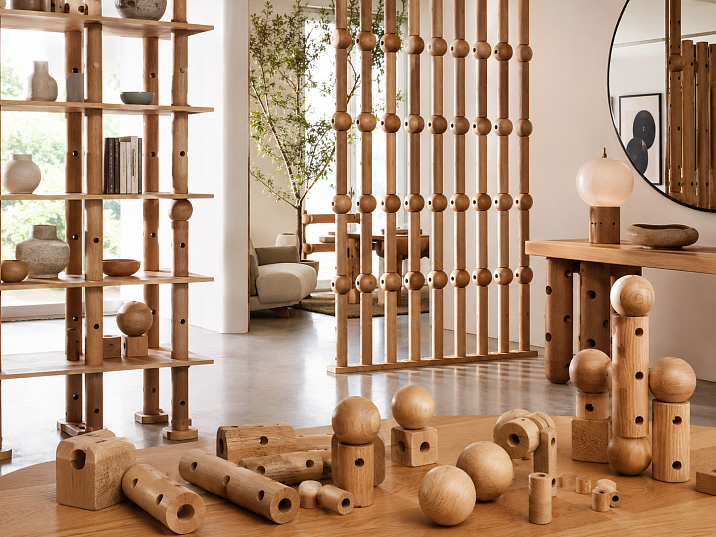
When a buyer searches for where to buy wooden ball blanks, they often need not small beads for crafts, but full-fledged wooden parts for furniture, racks, partitions, balusters, decorative rods, or interior compositions. In such a task, not only the shape and appearance matter. You need to check the hole, mounting diameter, material, element scale, repeatability of parts, and how the ball, cube, washer, bushing, or cone will work on the same axis with other structural components.
STAVROS wooden construction elements are not a toy set or random craft blanks. These are solid beech and oak parts with a hole that can be used in decorative racks, furniture assemblies, partitions, rods, legs, balusters, and custom interior solutions. They are purchased not based on a single beautiful photo, but according to a specific scheme: what is threaded onto the axis, where the accent will be, which elements repeat, how transitions are covered, and which material best matches the rest of the furniture.
If you need not just to choose one ball, but to assemble an expressive wooden assembly, it is more convenient to go directly buy STAVROS wooden construction kit elements to the section where you can select balls, cubes, bushings, washers, discs, and cone parts for one composition. This approach helps avoid searching for scattered blanks and instead build a system: decorative axis, shape repetition, transitions, accents, material, and final finish.
The main mistake in this topic is perceiving a wooden ball with a hole as a simple small detail. In furniture and interior work, it can be part of a rack, support, partition, staircase ensemble, decorative divider, accent on a rod, or a connecting element between larger parts. Therefore, the article will cover what shapes can be bought, how beech and oak differ, how to avoid mistakes with the hole, what to assemble from construction elements, and which STAVROS products logically go together with wooden balls.


What are STAVROS wooden construction set elements
Wooden construction elements are individual geometric parts made of solid wood that have a hole and can work on an axis: a rod, rack, leg, baluster, or other vertical or horizontal element. Unlike ordinary applied decor, such parts are not simply glued to the surface. They participate in assembling a three-dimensional composition and help create a rhythm: ball — washer — cube — bushing — disc — cone — ball again.
It is the hole that makes these elements structurally interesting. The part can be mounted on an axle, used as a spacer, decorative transition, accent in the center of a post, end cap, insert between larger elements, or part of a repeating set. Therefore, when purchasing, not only beauty and material matter, but also the fit. If the hole does not match the axle, the element will not work in the project.
This construction set is convenient for those who make furniture or interiors not from a ready-made template product, but from a set of coordinated parts. A carpenter, furniture maker, designer, or homeowner can choose the shape, material, number of elements, repetition, and assemble a composition for a specific task: a decorative partition, a post at a bar area, a furniture support, a vertical rod, a staircase fragment, or a custom wooden joint.




Why these are not craft blanks
Wooden beads for handicrafts are usually chosen by color, diameter, and decorativeness. They can be small, lightweight, and designed for a cord, ribbon, or simple pendant. This is not enough for a furniture task. Here, the element must match the axle, withstand the scale of the furniture, combine with the array, and be appropriate next to legs, balusters, brackets, baguettes, or carved decor.
If you need a partition, post, or furniture composition, you cannot just take any balls with a hole. They may be too small, have an unsuitable hole diameter, different material, different level of processing, and a completely different visual scale. As a result, instead of an interior detail, you will get a decorative trinket that will be lost against the background of the furniture.
Our factory also produces:


How the axle principle works
The axle is a rod, post, shaft, or vertical element onto which parts are threaded. Each part has a hole, and all elements must sit on one line without misalignment. If the hole is too large, the part will wobble. If too small, it cannot be installed without modification. If elements from different series have different fits, the composition may not assemble.
Therefore, before purchasing, you need not just choose "beautiful wooden balls." You need to understand what they will be mounted on, what diameter the axle has, what elements will be nearby, whether repetition is needed, how many parts are required per post, and what the top and bottom finishes will look like.
Get Consultation
What the modular approach provides
The modular approach helps assemble a composition systematically, not chaotically. For example, a ball can be the main accent, a washer a spacer, a bushing a transition, a cube a geometric contrast, and a cone a finish. When such details are repeated, the post or partition looks well-thought-out, not assembled from random parts.
This is especially important in interiors where several identical axes are visible. If each post is different, the composition becomes noisy. If elements repeat in a consistent rhythm, order emerges. This technique works well in decorative partitions, stair ensembles, furniture posts, bar areas, and custom joinery projects.
What elements can be purchased for the construction set
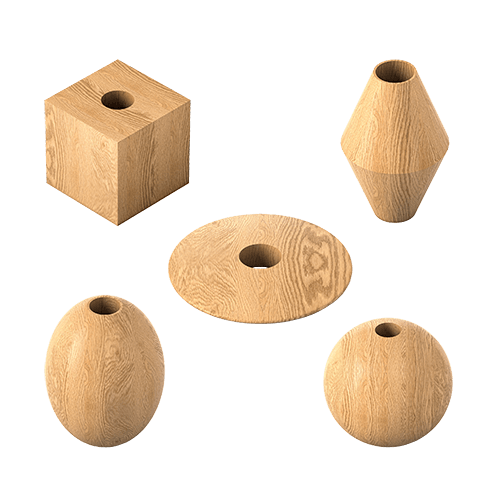
In this topic, it's important to look beyond just wooden balls. The construction set works precisely because it includes different shapes: balls, cubes, bushings, washers, discs, cones, and faceted elements. One shape provides soft volume, another offers strict geometry, a third conceals transitions, and a fourth helps create an accent at the end or center of an axis.
If you only buy balls, the composition may become monotonous. Adding washers, bushings, or cubes introduces rhythm. Using conical elements allows you to finish a post beautifully or emphasize direction. Therefore, it's better to look at wooden balls, cubes, and washers for decorative posts, rather than limiting yourself to one type of part.
| Element | What it brings to the composition | Where to use |
|---|---|---|
| Wooden ball with hole | Soft volume, central accent, smooth transition. | Posts, partitions, decorative rods, furniture components. |
| Cube | Strict geometry and a modern character. | Partitions, furniture compositions, contrast to round shapes. |
| Bushing | Transition between elements and visual elongation of the axis. | Posts, rods, balusters, decorative assemblies. |
| Washer or disc | Separator, pause between forms, neat joint. | Between spheres, cubes, bushings, cones. |
| Conical element | Completion, directional accent, decorative ending. | Top of the post, bottom of the composition, transition to a larger detail. |
Wooden spheres and balls with a hole
A wooden ball with a hole is the most understandable and recognizable form of the construction set. It softens the geometry, adds volume, and works well as a central accent. If the composition consists only of straight parts, the ball makes it livelier. If the project already has a lot of carving, the ball helps to create a pause between more complex elements.
Queries like "buy wooden ball blanks", "wooden ball blanks buy", and "wooden balls blanks buy" often lead to very different products. In furniture tasks, you need to consider not only the ball's diameter but also the hole, material, and compatibility with other parts. If the ball is to be placed on a stand or rod, the mounting diameter becomes as important as the external size.
Wooden balls with a hole can be bought for various tasks: a decorative vertical stand, a partition fragment, an accent on a furniture support, an insert in a staircase composition, a decorative rod, or a custom furniture part. But the larger the project, the less it resembles handicraft. Here, the ball becomes part of the structure and must match the scale.
Cubes and geometric shapes
Cubes add strictness. If a ball feels soft and traditional, a cube gives a more modern and architectural character. It is convenient to use in partitions where clear geometry is needed, or in furniture where a round shape seems too decorative.
A cube works well paired with washers and bushings. For example, a ball can be a central accent, while cubes serve as repeating geometric inserts. In a modern interior, a cube helps make the composition less "lacy" and more cohesive.
Bushings, washers, and discs
Bushings, washers, and discs often seem secondary, but they are what make the composition neat. Without separators, a ball, cube, and cone can look like randomly strung parts. A washer creates a pause. A disc covers the transition. A bushing helps visually lengthen a section and connect different shapes.
In a decorative stand, such elements are especially important. They allow you to repeat the rhythm, set the distance between large parts, and make the assembly more professional. If you skip the separators, the composition may look rough or too dense.
Conical and faceted elements
Conical elements are needed where a composition requires completion. They work well at the top, bottom, end of a rod, near a transition to another part, or as an accent that directs the eye. Faceted elements add play of light and make the shape more expressive.
Such details should not be used randomly. If the composition already has many shapes, a cone may become redundant. But if you need to beautifully finish an axis or highlight the center, it helps make the assembly logical.
Where to use wooden balls and elements with a hole
The main advantage of construction elements is flexibility. They can be used not only in furniture but also in decorative interior structures. They are suitable for vertical posts, partitions, rods, balusters, decorative nodes, furniture compositions, and accent details. But in each scenario, the requirements for size, quantity, and fit change.
Decorative post
A decorative post is one of the most straightforward scenarios. Repeating elements are strung onto a vertical axis: ball, washer, bushing, cube, disc, ball again. Such a post can be part of a partition, furniture, bar area, decorative structure, or custom interior object.
Repetition is important for the post. If elements differ in fit or scale, the vertical line will look uneven. Therefore, it is better to choose one set of shapes in advance and check how they will alternate.
Partition
In a decorative partition, elements with a hole help create not a solid wall but a light rhythmic system. Several vertical axes with repeating balls, cubes, and washers can divide the space without completely blocking it. This technique is suitable for a living room, hallway, staircase area, office, salon, or showroom.
In a partition, height, number of axes, distance between them, and symmetry are especially important. One beautiful ball will not save the composition if the rhythm is broken. You need to calculate in advance how many elements will be needed for each axis and what the repetition will look like on adjacent posts.
Furniture composition
In furniture, wooden elements with holes can function as decorative inserts, transitions, accents on legs, rack details, support elements, or part of an original assembly. They pair well with solid wood, carved decor, wooden legs, and baguette frames.
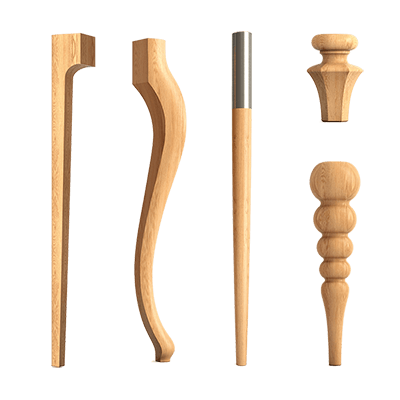
If the project includes furniture supports, it's worth checking in advance solid wood furniture legs for a unified project. This makes it easier to avoid mixing different styles and scales: the leg, ball, washer, and decorative element should look like parts of one system.
Staircase ensemble
In the staircase area, construction elements can support balusters, posts, or decorative transitions. They do not replace full staircase components but help create a more expressive ensemble: repeat the ball shape, add a separator, or emphasize the vertical line.
For a staircase, it's important to consider not just decor. If it's a real staircase structure, safety, fastening, and the purpose of elements must be taken into account. For selecting the main vertical, it's worth looking at wooden balusters for a staircase ensemble, and use construction elements as decorative additions where appropriate.
Decorative rod
The rod can be part of furniture, a partition, a shelf, an interior stand, or a decorative unit. Balls, bushings, and washers help style it so it doesn't look like a simple technical axle. This technique works especially well when the rod is visible and meant to be part of the design.
Decorative shelf
If the composition involves a shelf, it's important not to overload it with small details. Wooden elements with a hole can support the stand or decorative part, while brackets are often needed for the shelf itself. In this case, it's worth additionally checking wooden brackets for decorative shelves, to assemble not only the axle but also the support for the shelf area.
How to choose an element for the task
The choice starts not with the shape, but with the task. The same wooden ball can be appropriate in a stand but too large for a furniture insert. A cube can look great in a modern partition but clash with a classic baluster. A washer can be almost invisible, but without it, the entire composition loses its neatness.
For a decorative stand
For a stand, repeatable elements, consistent fit, and a clear rhythm are important. First, determine the height of the stand. Then choose the axle. After that, select the elements that will repeat. It's better not to mix too many shapes: a ball, washer, and bushing can already yield a beautiful result. A cube or cone is added when a more expressive accent is needed.
If the stand will be visible from all sides, the elements should be neat in shape and consistent in material. Different wood species on the same axle can look random if not intended.
For a partition
For a partition, it's not one element that matters, but the system. You need to determine the number of vertical axes, the height of each axis, the distance between them, and the pattern repetition. If one axis has three balls, it's better to keep the same principle on neighboring ones, otherwise the partition will look chaotic.
Wooden elements with a hole are suitable for a partition if the mounting diameter matches the chosen axis and the structure is designed for such a set of parts. You can't choose based on the principle of "I liked the ball." You need to think in series.
For furniture
In furniture, scale is important. A small ball next to a large leg can get lost. A too large cube on a thin post will look heavy. If an element is used as a transition between a leg and another part, it must be proportionate to both parts.
For a single project, it's useful to look not only at the constructor, but also at carved wood decor for interior. This makes it easier to select adjacent parts that won't conflict with the shape of balls, cubes, and bushings.
For a staircase
In the staircase area, it's better to use constructor elements as decorative additions, not as replacements for load-bearing parts. If a full vertical element is needed, first choose a baluster, post, or other staircase component. Then see where balls, washers, or bushings are appropriate.
In a staircase, repetition is especially important. If one decorative element appears only once, it can look random. If the shape repeats on several nodes, a unified ensemble emerges.
How to avoid mistakes with the hole and mounting diameter
The hole is the main technical parameter in this topic. A beautiful wooden ball won't help if it doesn't fit on the chosen axis. Therefore, before purchasing, you need to measure the rod, post, shaft, or other part on which the element will be installed. Then check the mounting diameter in the product card.
You cannot select elements only by outer diameter. The outer size determines the visual scale, while the inner hole determines installation feasibility. If you make a mistake with the outer size, the composition will look unsuccessful. If you make a mistake with the hole, it simply won't be possible to assemble without modification.
| What to Check | Why this is important | What error occurs |
|---|---|---|
| Shaft diameter | The element must fit without misalignment or play. | The ball wobbles or does not fit onto the rod. |
| Mounting hole | Determines compatibility with the selected stand. | You have to ream out or replace the part. |
| External size | Affects the scale of the composition. | The element looks too small or too heavy. |
| Number of elements | Needed to repeat the rhythm on all axes. | Not enough parts for a symmetrical assembly. |
| Material | Beech and oak look different in finishing. | Inconsistency in texture and color after finishing. |
If the dimensions and fit are not obvious, it's better not to order blindly. Current parameters should be checked in the product card or clarified with a STAVROS manager, especially if the elements are purchased for a series of racks, partitions, or furniture sets.
Beech or oak — what to choose
In this topic, the material affects not only strength but also the visual character. Beech and oak are perceived differently in interiors. Beech is more often chosen for a calm surface, painting, and enamel. Oak is chosen for tinting, oil, and expressive wood texture. Both materials can be appropriate, but in different projects.
Beech for enamel and even painting
Beech is well-suited when you need a calm wooden base without too active a texture. It is convenient to consider for painting, enamel, and projects where form is more important than the wood grain. If the construction elements will be painted in the same color as the furniture, beech can look very neat.
For a modern partition, light rack, painted furniture, or enamel composition, beech is often more logical than oak with its pronounced texture. It provides a wooden base but does not overload the surface with pattern.
Oak for tinting and texture
Oak is chosen when the wood should be a visible part of the design. It has a more expressive character. It reveals itself well under tinting, oil, and natural finishes. If a stand, partition, or furniture composition should look solid and natural, oak may be the best choice.
Oak is especially appropriate next to massive furniture, wooden panels, stairs, classic elements, and interiors where wood texture plays an important role. But if all details are planned to be covered with dense enamel, the active texture of oak may be excessive.
Why it's better not to mix wood species without a concept
Beech and oak can only be combined deliberately. If you randomly take some elements from beech and some from oak and cover them with a transparent or semi-transparent finish, the difference may become noticeable. This is not always bad, but it should be planned in advance. In most furniture and interior tasks, it's easier to choose one species and build the composition in a single material.
How to assemble a beautiful composition
A beautiful composition of wooden elements with a hole is built not on the number of details, but on rhythm. Rhythm appears when shapes repeat in a clear order: sphere — washer — bushing — washer — cube. Or sphere — disc — sphere — disc — cone. There are many options, but the logic is the same: the viewer should see not a random set, but a well-thought-out sequence.
Repetition of shape
Repetition makes the composition calmer. If a sphere appears once, it may look like a random accent. If the sphere repeats at equal intervals, it becomes part of the pattern. This is especially important for partitions where several vertical axes stand next to each other.
Symmetry
Symmetry helps make the stand complete. For example, identical elements at the top and bottom create a sense of order. A central large sphere or cube can become the main accent, while washers and bushings support it on both sides.
Alternation of round and strict forms
A sphere gives softness, a cube gives geometry, a washer gives a pause, a cone gives direction. If you use only round forms, the composition may turn out too soft. If only strict ones, too dry. Alternation helps find balance.
Single wood species
One wood species makes the composition cohesive. This is especially important if the elements will be coated with oil, stain, or clear varnish. When painted in a dense color, the difference may be less noticeable, but it is still better to choose the material in advance.
Accent in the center or at the ends
The accent can be placed in the center of the stand, at the top, bottom, or at the transition point to another part. A central sphere makes the stand more expressive. A cone at the top helps complete the vertical. Washers at the edges separate the main element from neighboring forms.
Commercial selection: what to look for in the catalog for the task
To avoid the purchase turning into a set of random parts, it is better to start from the task. First, determine what is being assembled: a stand, a partition, a furniture unit, a staircase ensemble, or a decorative shelf. Then choose the main forms and only after that calculate the quantity.
| Task | What to look for in the catalog | Where to go |
|---|---|---|
| Decorative stand | Spheres, cubes, washers, bushings. | buy STAVROS wooden construction kit elements |
| Partition | Elements with holes and repeatable shapes. | wooden balls, cubes, and washers for decorative posts |
| Furniture composition | Spheres, discs, cones, and solid wood legs. | solid wood furniture legs for a unified project |
| Staircase ensemble | Balusters and construction elements as decorative additions. | wooden balusters for a staircase ensemble |
| Decorative shelf | Brackets, wooden decor, and elements for the stand. | wooden brackets for decorative shelves |
What to buy together with wooden spheres and construction elements
Wooden spheres are rarely bought completely separately. If they are needed for a stand, bushings, washers, or discs will be needed alongside. If they are used in furniture, it's worth looking at legs. If the task is related to a staircase, balusters appear alongside. If the composition is decorative, it can be supported with carved decor, brackets, or molding.
| What to add to the purchase | Why this is needed | For which scenario |
|---|---|---|
| buy STAVROS wooden construction kit elements | Select spheres, cubes, washers, bushings, and cone parts in a single logic. | Stand, partition, decorative rod. |
| solid wood furniture legs for a unified project | Connect the constructor elements to the furniture support. | Table, console, cabinet, custom furniture. |
| wooden balusters for a staircase ensemble | Select the main vertical line if the composition is related to the staircase. | Staircase, railing, decorative span. |
| carved wood decor for interior | Support the wooden elements with adjacent decor. | Classic interior, furniture, decorative area. |
| wooden brackets for decorative shelves | Assemble a shelf or wall composition with wooden supports. | Shelf, console area, decorative wall. |
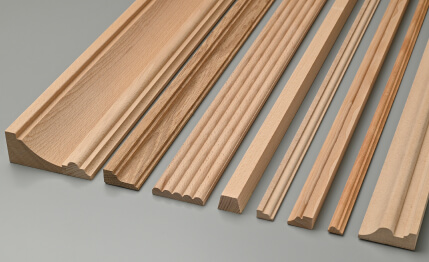
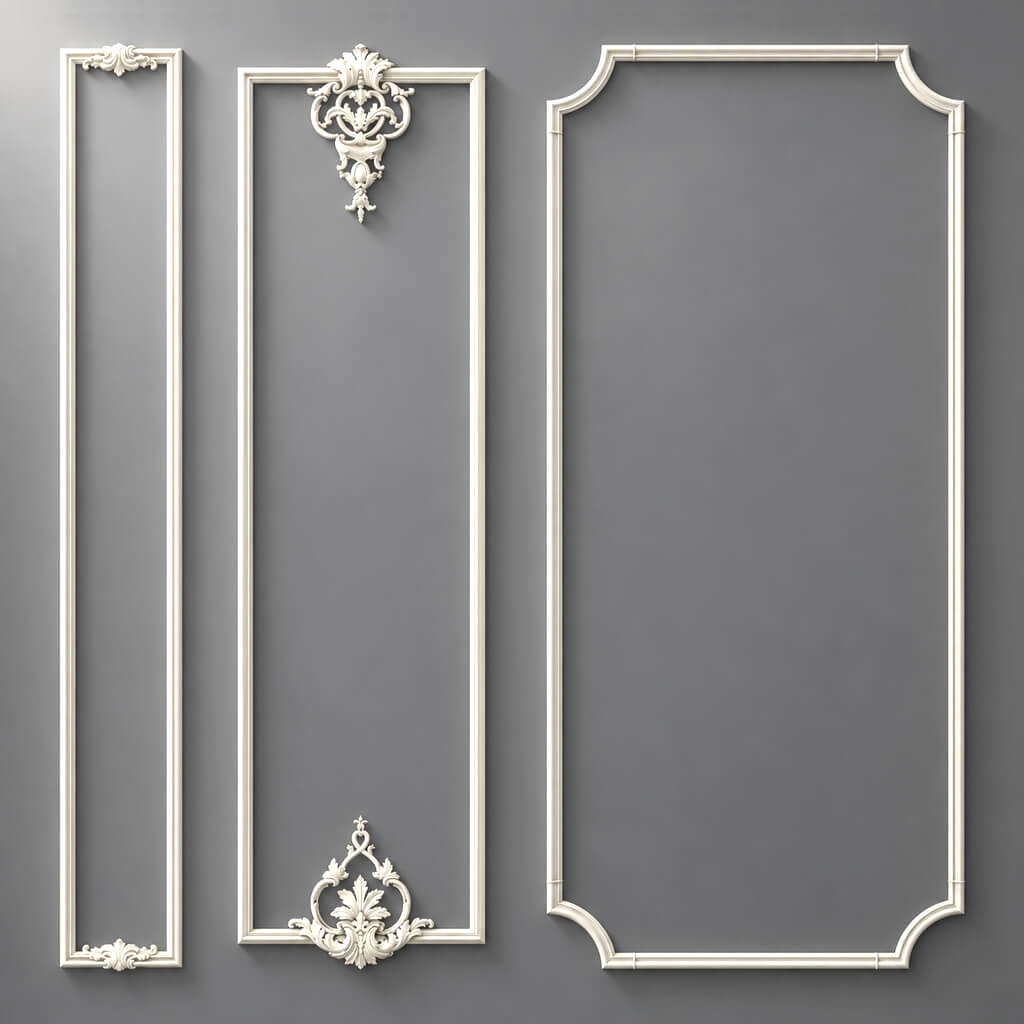
| Wooden molding and trim for frames and panels. | Design adjacent frames, inserts, or decorative panels in a single material. | Interior panels, frames, furniture inserts. |
How not to confuse with similar products
Wooden construction kit parts can be easily confused with other products. A ball with a hole looks like a bead. A baluster is also vertical. A furniture leg can also be wooden. A slatted panel is also related to partitions. But these products have different purposes.
| Similar product | Why this is not the same | When you need exactly this |
|---|---|---|
| Wooden beads for crafts | Smaller scale, different mounting diameter, not a furniture purpose. | For crafts, pendants, small decor. |
| Balusters | These are ready-made vertical elements, not individual geometric parts. | For stair and decorative verticals. |
| Furniture legs | A load-bearing support, not a decorative element on an axis. | When you need a support for a cabinet, table, console, furniture. |
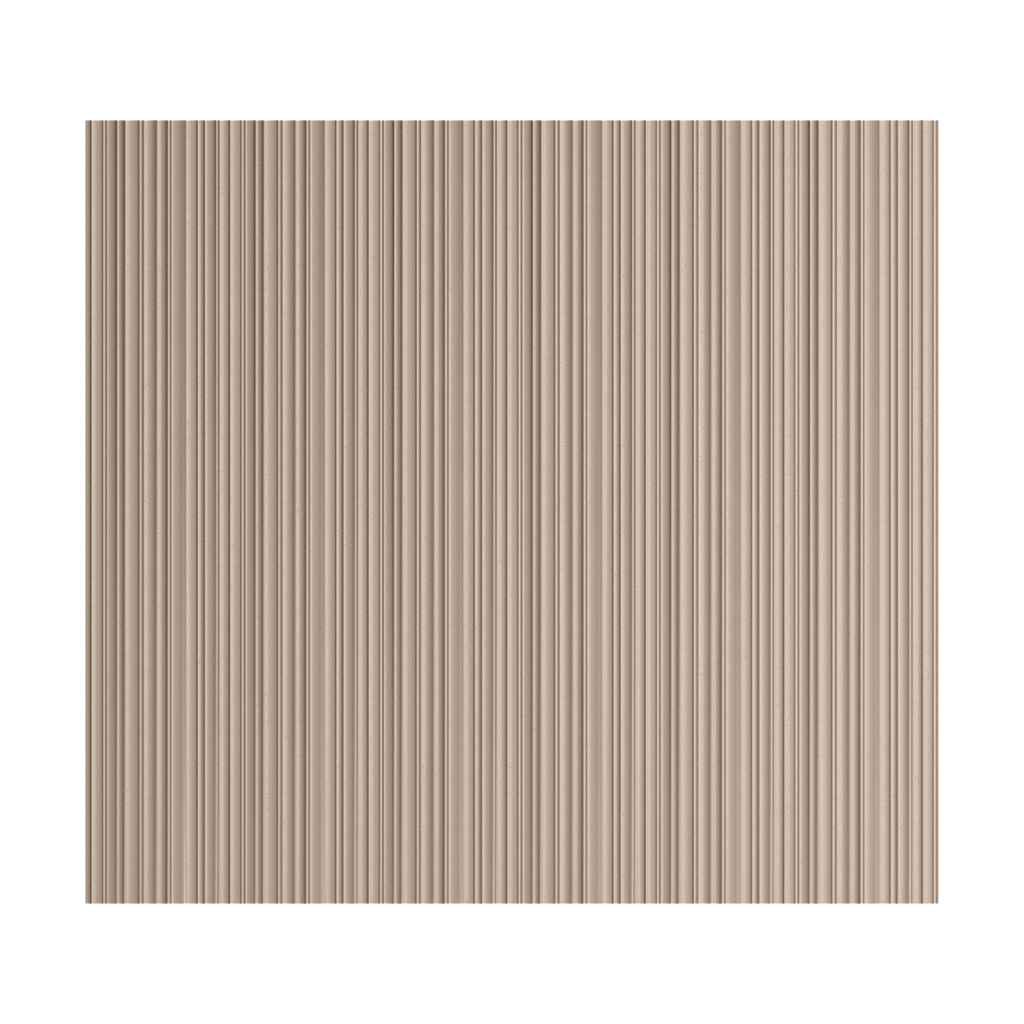
| Slatted panels | Finished wall finish, not a set of parts with a hole. | For walls, columns, and planes. |
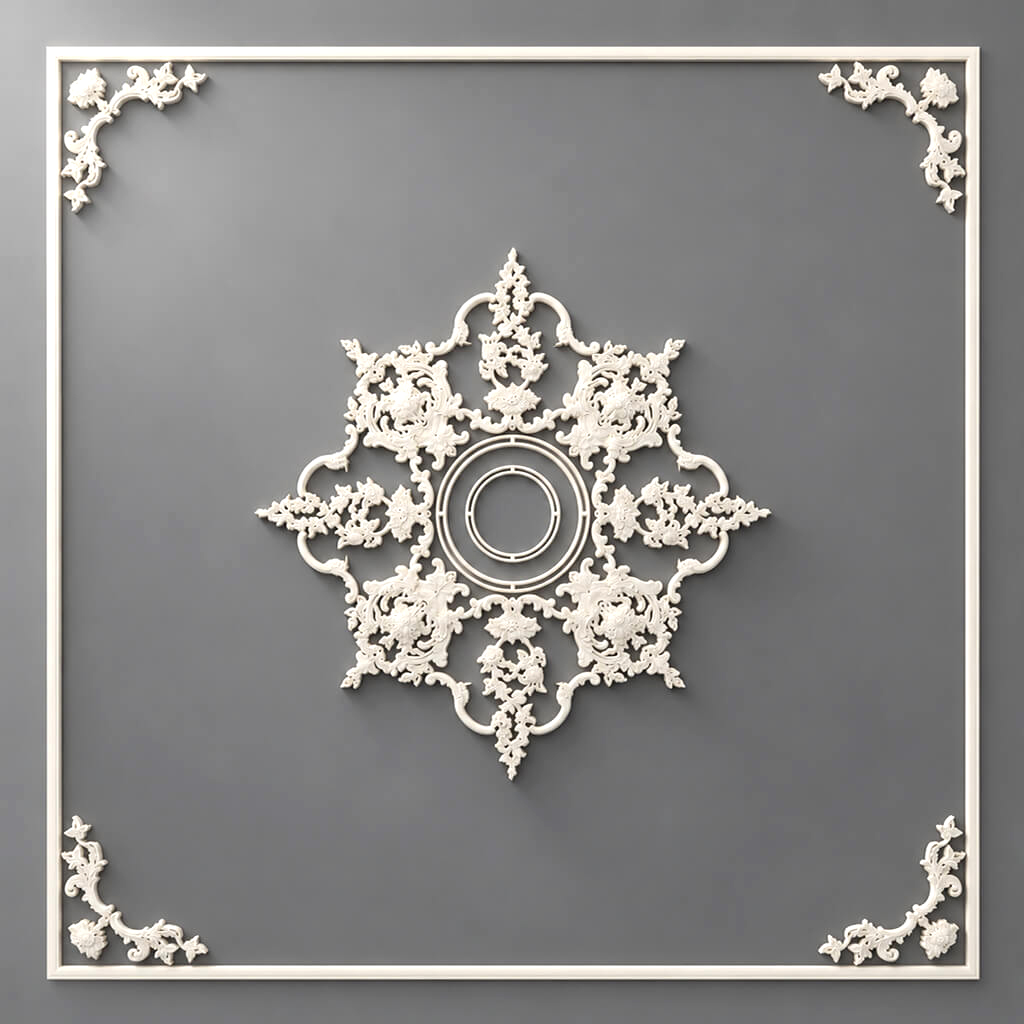
| Decorative rosettes | Flat or relief overlay decor, not an element for a rod. | For furniture facades, walls, ceiling, central accents. |
Here it's important to filter out non-target intent. Electrical sockets, small beads, plastic fittings, and ready-made partitions without size selection are not relevant to this task. If a furniture or interior assembly on an axis is needed, look for elements with a hole from the constructor section.
Practical selection for specific situations
Need to assemble a decorative stand near the wall
For a stand near the wall, it's better to choose a repeatable set: ball, washer, bushing, washer. If a stricter geometry is needed, the ball can be alternated with a cube. Before ordering, measure the height of the future stand and determine how many repeats will fit without overloading.
Need to make a lightweight partition between zones
For a partition, it's important that all vertical axes repeat the same pattern. If each stand has its own set of elements, the partition will become visually noisy. It's better to choose one scheme and repeat it several times.
Need to decorate a rod or baluster
If the rod is already selected, you need to start with its diameter. Then select elements with a suitable hole. It is important not to take parts with a margin of "approximately fits", because the play will be noticeable.
You need to assemble a furniture decorative node
In a furniture node, the element should match the legs, facade, handles, and carved decor. If the furniture is classic, soft rounded shapes are appropriate. If it is modern, you can add cubes, discs, and a stricter rhythm.
You need to replace random blanks with ready-made parts
If the project has already started with ordinary craft balls, but they look small or do not fit the hole, it is better to switch to furniture constructor elements. This makes it easier to maintain scale, material, and repeatability.
Mistakes when buying wooden balls and elements with a hole
Choosing only by outer diameter
The outer size is important, but it does not determine the fit. If the hole does not match the axis, the element will not work. Therefore, the outer diameter and the mounting hole need to be checked together.
Buying elements without calculating the quantity
If you need to assemble several identical posts, you need to calculate not just one axis, but the entire project. A common mistake is to buy parts for one post, and then find that there are not enough repeats for symmetry.
Mixing beech and oak randomly
Different wood species can look different after finishing. If mixing is not intentional, it's better to choose one species for the entire composition.
Using craft balls instead of furniture elements
Small balls may not match the scale of furniture. They are suitable for crafts, but in a stand or partition they often look too small. Additionally, they may have an unsuitable hole.
Not considering adjacent elements
A ball, cube, or washer should match legs, balusters, brackets, molding, and carved decor. If all parts are chosen separately, the project may look like it's assembled from different sets.
Making the composition too complex
The more different shapes, the higher the risk of visual noise. To start, it's better to choose 2–3 shapes and repeat them. A complex pattern is appropriate only when supported by the interior style.
Who are wooden construction elements with a hole suitable for
Such elements are suitable for designers, carpenters, furniture manufacturers, owners of custom interiors, and those who assemble decorative stands, rods, partitions, furniture units, or staircase compositions. This is a good choice for projects where a ready-made standard part is not needed, but the ability to create your own rhythm from individual shapes is.
Constructor elements are especially useful in interiors where wood plays a prominent role. They help connect furniture, partitions, stairs, shelves, and decorative details together. If the project includes solid wood, carved decor, wooden legs, or balusters, such elements can become a logical continuation of the overall theme.
They are not suitable for those who need cheap blanks for crafts, plastic beads, metal fittings, a ready-made partition without size selection, or a load-bearing furniture support without load calculation. Constructor elements solve a decorative-furniture task but do not replace a full engineering calculation where the structure must bear a serious load.
How to buy wooden blanks with a hole at STAVROS
It is best to start the purchase with a project. First, you need to understand what is being assembled: a stand, partition, rod, furniture unit, stair composition, or decorative shelf. Then measure the axis, select the mounting diameter, determine the material, and decide which shapes will be repeated.
After that, you can go to the section and buy STAVROS wooden construction kit elements. If the project is related to furniture, it is also worth looking at solid wood furniture legs for a unified project. For the stair area, useful wooden balusters for a staircase ensemble. For shelves and decorative walls, you can add wooden brackets for decorative shelves or Wooden molding and trim for frames and panels..
Before ordering, it is worth checking the dimensions, material, hole, number of elements, and future finishing. If the composition is complex, it is better to check compatibility with a STAVROS manager in advance so that the elements fit the axis and you do not have to redo the project after purchase.
FAQ
Where to buy wooden blanks with a hole?
They should logically be found in the STAVROS constructor section, where you can select wooden balls, cubes, washers, bushings, disks, and cone elements for posts, partitions, rods, and furniture compositions.
How do wooden balls with a hole differ from regular craft balls?
In furniture tasks, size, mounting hole, wood species, and compatibility with the axis are important. Regular craft balls are often smaller in scale and not designed for furniture or interior assembly.
What can be assembled from balls, cubes, washers, and bushings?
From such elements, you can assemble a decorative post, an accent on a rod, a partition element, a furniture composition, a transition on a baluster, or a decorative node in a custom interior.
What to choose — beech or oak?
Beech is well suited for enamel and even painting. Oak reveals itself better under tinting, oil, and expressive wood grain. The choice depends on the future finish and adjacent wooden elements.
What elements should be purchased together with wooden balls?
Most often, cubes, washers, bushings, disks, and cone elements are purchased together with balls. For furniture, you can additionally look at legs; for stairs, balusters; for decorative zones, carved decor and brackets.
How to calculate the number of elements?
First, you need to determine the height or length of the axis, then choose a repetition pattern and check the size of each element. After that, count the number of parts per axis and multiply by the number of posts or repetitions.
Can construction elements be used for a partition?
Yes, if the mounting diameter matches the axis and the design is calculated for the selected parts. For a partition, repeatability, symmetry, and the same rhythm on adjacent posts are especially important.
How to select balls, cubes, and washers for one axis?
You need to check the mounting hole of all elements, choose a single wood species, and pre-determine the alternation order. It's better not to mix too many shapes in one post.
Can construction elements be used as furniture legs?
No, balls or washers themselves do not replace a full load-bearing leg. They can be used as decorative elements in a furniture composition, but for support, it's better to look at solid wood furniture legs.
Are wooden elements suitable for painting?
Yes, but you need to consider the material. Beech is often chosen for enamel and smooth painting, oak when you want to preserve the texture under tinting or oil. It's better to clarify the exact finishing options before ordering.
How to avoid mistakes with the hole?
Measure the rod or bar on which the element will be installed, and check the mounting diameter in the product card. Do not select parts based only on external size.
Where to use wooden construction set elements in the interior?
They are suitable for decorative posts, partitions, furniture assemblies, rods, staircase ensembles, shelves, custom compositions, and projects where you need to assemble a volumetric wooden rhythm from individual parts.
In summary: a wooden ball with a hole is not a small detail, but part of a well-thought-out composition
Wooden balls, cubes, washers, bushings, discs, and cone elements with a hole help assemble a decorative rod, post, partition, furniture assembly, or staircase accent. They are chosen not as random blanks, but as parts of a unified system: shape, fit, material, repetition, quantity, and finish must match the project's requirements.
The main thing is not to confuse furniture construction set elements with craft beads. In interior work, scale, hole, compatibility with the rod, wood species, and connection with other products are important: legs, balusters, brackets, carved decor, or baguettes.
At STAVROS you can buy STAVROS wooden construction kit elements, select balls, cubes, washers, bushings, and cone parts for a post, partition, or furniture composition. Before ordering, check the mounting diameter, material, number of elements, and future finish — then the finished composition will look not like a random set, but a well-thought-out wooden part of the interior.