






























Article Contents:
- What are wooden furniture legs and why the furniture's appearance depends on them
- When to buy wooden furniture legs
- What types of furniture legs are there
- Carved legs
- Turned legs
- Straight and shaped supports
- Unpainted legs
- Coated legs
- For a sofa
- For a side table
- For a Dresser
- For table
- For a chair and ottoman
- Table: what to buy together
- Need to update an old cabinet
- Need to assemble a chest of drawers on legs
- Need to choose supports for a sofa
- Need to make a custom table
- Need to design a banquette
- Need to replace random supports with furniture legs
- Need to select legs for a commercial space
- Choosing only by photo
- Ignoring Load Capacity
- Buying legs without understanding the fastening
- Making a mistake with the height
- Not matching the legs with the facade
- Choosing a shape that is too complex
- Not planning the coating
- Using a decorative piece instead of a support
- Buy one leg instead of a set
- Not checking the product card before ordering
- Where to buy wooden furniture legs?
- Which wooden legs to choose: with or without coating?
- What furniture are wooden legs suitable for?
- What to check before buying furniture legs?
- How do carved legs differ from simple wooden supports?
- Can I buy hardware for attaching legs?
- Which legs to choose for a cabinet?
- Will wooden legs fit a sofa?
- What affects the price of furniture legs?
- Can unpainted legs be used for painting?
- How is a furniture leg different from a regular wooden blank?
- Do I need to buy legs as a set?
- Which legs to choose for restoring old furniture?
- Where to buy furniture legs in St. Petersburg?

Buying wooden furniture legs is worth it not only when the old support is broken or the furniture needs to be raised off the floor. Legs change the item's seating, height, stability, ease of cleaning, perception of the facade, and the overall style of the furniture. The same cabinet on low simple supports, high turned legs, or expressive carved elements will look like three different items.
Furniture legs are often chosen at the end of a project, even though they influence the proportions of the body. A support that is too low makes a chest of drawers look heavy. One that is too high can compromise stability. A shape that is too simple gets lost on decorative furniture, while overly complex carvings clash with a minimalist facade. Therefore, buying wooden legs is not a minor fitting "for later," but an important stage in furniture selection, restoration, or a custom project.
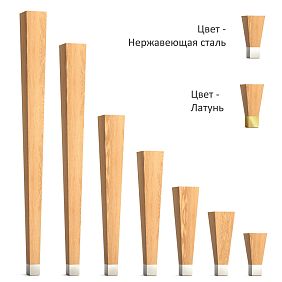
In the STAVROS catalog you can Buy wooden furniture legs for different tasks: updating furniture, assembling a new piece, restoration, making a cabinet, chest of drawers, sofa, armchair, table, chair, or interior item. It is important for the buyer to understand in advance the shape, height, material, presence of coating, method of attachment, and compatibility with the specific furniture structure.
Solid wood supports are especially valued because they work on two levels at once. On one hand, they are a functional part of the furniture that bears the load and sets the body's stance. On the other, they are a visible decorative element that can complement the facade, carved decor, moldings, frame, underframe, and other interior details.




What are wooden furniture legs and why the appearance of furniture depends on them
A furniture leg is a support that connects the furniture body to the floor, sets the height of the piece, affects stability, and helps distribute the load. But in wooden furniture, a leg is almost never just a technical detail. It is visible. It participates in the silhouette, creates a feeling of lightness or massiveness, emphasizes the style, and helps determine what type of piece it is: classic, neoclassical, modern interior, upholstered furniture, joinery product, or custom object.
If you place the body directly on a base, the furniture will look heavier and more monolithic. If you raise it on legs, air appears under the piece, the facade becomes lighter, the floor is seen deeper, and the interior seems less cluttered. This effect is especially noticeable on cabinets, chests of drawers, and armchairs. Legs can make simple furniture more elegant and decorative furniture more cohesive.
Wooden furniture supports are good because they can be selected by material, shape, and future finish. They pair well with facades made of solid wood, veneer, painted MDF, joinery panels, decorative overlays, carved elements, and moldings. If there is already wood in the interior, a wooden leg helps support that material without introducing unnecessary metal or plastic.
However, legs cannot be chosen based on style alone. The buyer must check the height, cross-section, shape, method of attachment, purpose, compatibility with the furniture, and expected load. Particular caution is needed with upholstered furniture, tables, chairs, and tall pieces, where stability depends not only on the beauty of the support but also on the entire structure.
When to buy wooden furniture legs
Wooden furniture legs are purchased in various situations. The most obvious one is replacing old supports. A cabinet, sofa, armchair, or chest of drawers may have worn-out legs, broken fasteners, deteriorated appearance, or changed height requirements. But replacement is not the only scenario. Often, legs are bought to change the character of the furniture without completely redoing the body.
If an old chest of drawers looks too heavy, new legs can visually lift it off the floor. If a cabinet seems too simple, shaped or turned supports add expressiveness. If a sofa sits too low, new supports help change the seating height and simplify cleaning underneath. If a craftsman is creating a custom piece, the legs become part of the structure and decorative concept.
In furniture manufacturing, wooden legs are needed for both serial and custom pieces. They help assemble sofas, armchairs, ottomans, cabinets, chests of drawers, tables, consoles, chairs, or table bases. For a workshop, it's important that the supports are repeatable in shape, match the material, and allow furniture assembly without random mismatches.
In restoration, wooden legs solve several tasks at once. They can replace missing elements, restore the correct height to furniture, support the style of an era, or conversely, help make a modern upgrade. For example, an old body can be repainted, new supports chosen, handles replaced, resulting in a piece that looks fresh but retains its foundation.
In custom interiors, solid wood supports are often chosen not for repair but for the aesthetic. Wooden legs support natural materials, help connect furniture with the floor, facades, wall panels, carved decor, and other items. When all details are thoughtfully selected, the furniture looks like part of a project, not a random purchase.
Our factory also produces:



What types of furniture legs are there
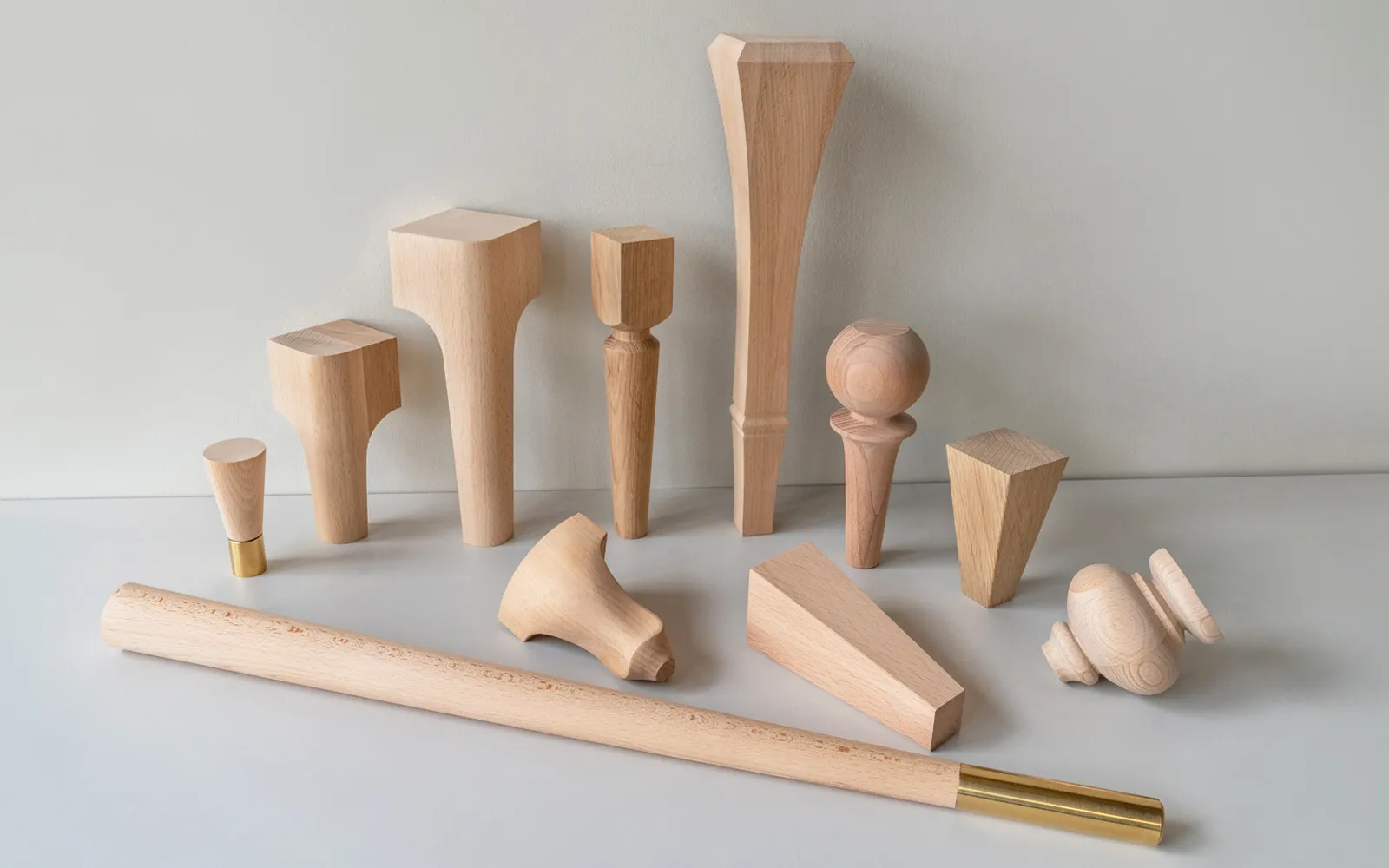
Wooden legs differ in shape, height, decorativeness, material, finish, and purpose. To avoid mistakes, it's better to first determine the type of furniture and then choose the shape. A support for a sofa, a leg for a chest of drawers, and an element for a table should not be selected the same way. They have different loads, seating heights, visual roles, and attachment methods.
Get Consultation
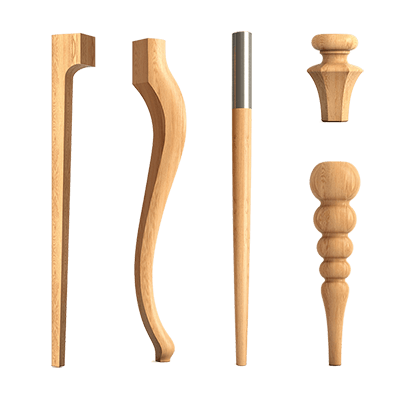
Carved legs
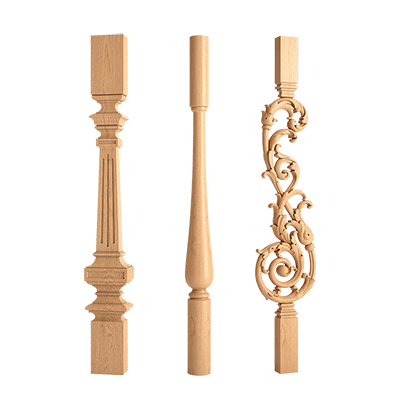
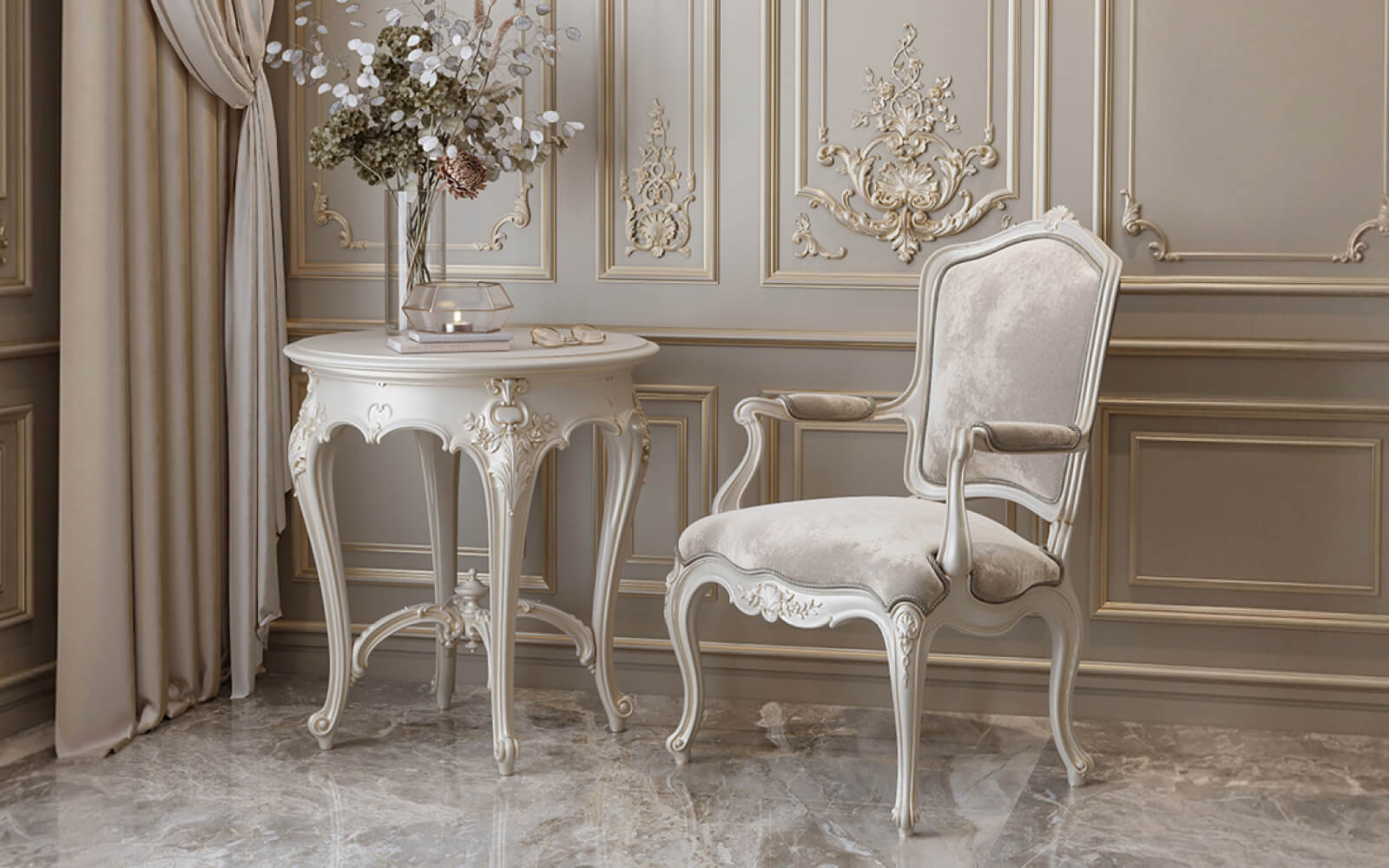
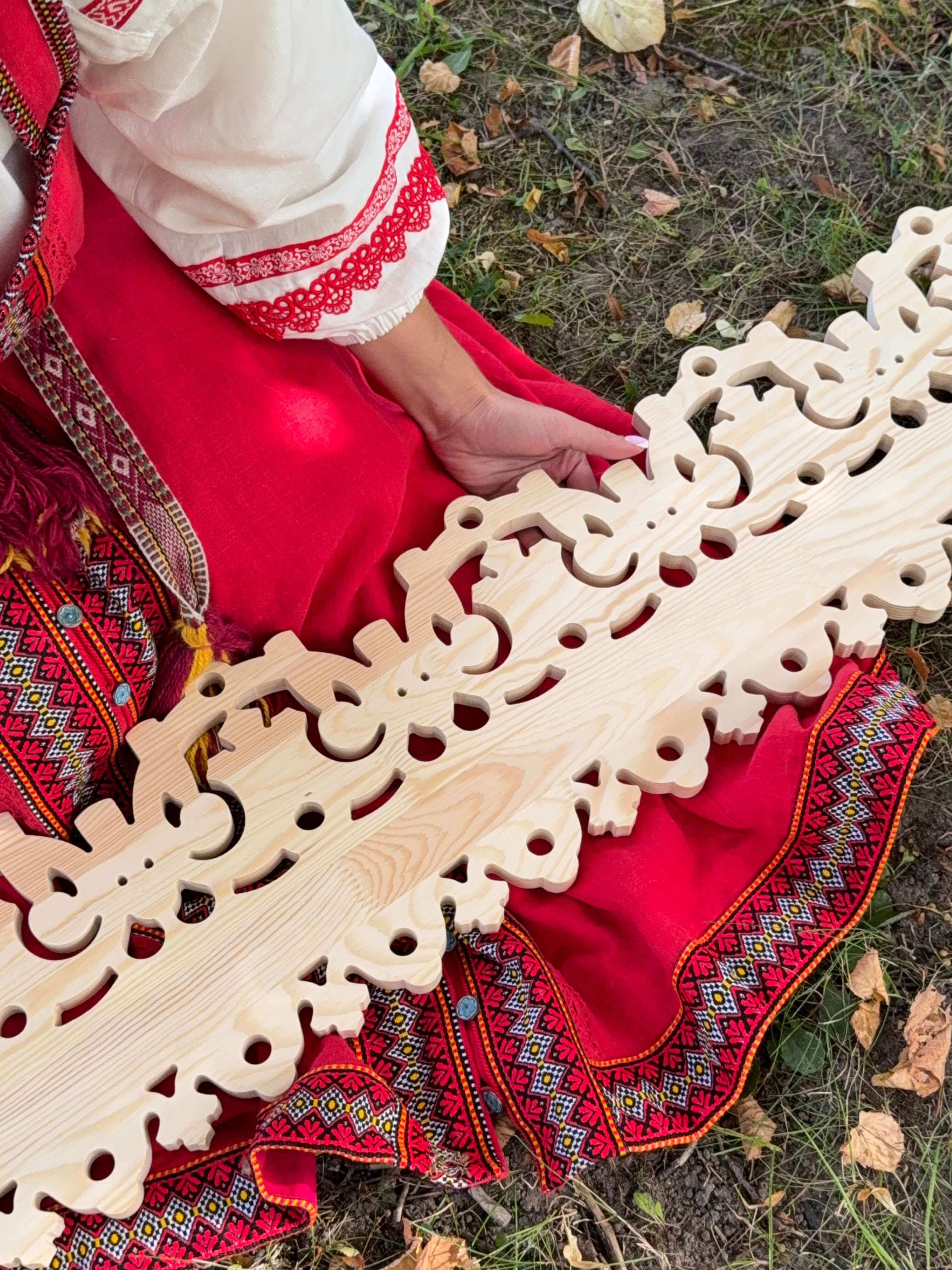
Carved legs work not only as supports but also as a decorative accent. They are suitable for classic furniture, neoclassicism, upholstered furniture with expressive silhouettes, ottomans, armchairs, chests of drawers, cabinets, consoles, custom tables, and pieces where an artistic detail is important. Carving adds depth, play of light and shadow, making the support a visible part of the design.
Such legs look especially good where the facade, upholstery, or body already has a decorative character. For example, a sofa with soft forms, an armchair with wooden details, a chest of drawers with panels, or a cabinet with carved overlays require a support that won't look too simple. In this case, consider Carved legs and supports for furniture.
A carved leg requires careful selection by scale. If the body is small, too large a carving can overload the piece. If the furniture is massive, a too-thin support will get lost and look weak. Before ordering, check the dimensions, attachment method, material, finish, and compatibility with the structure.
Turned legs
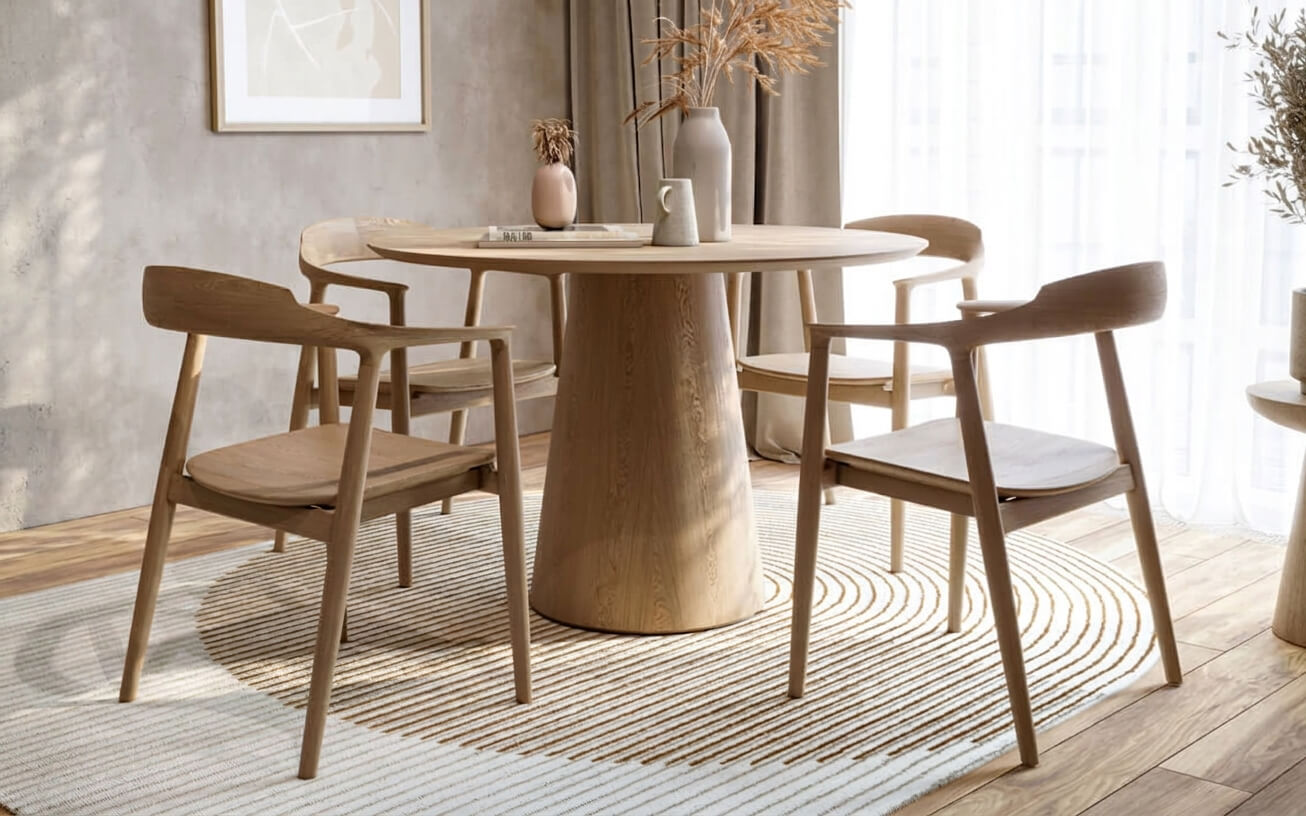
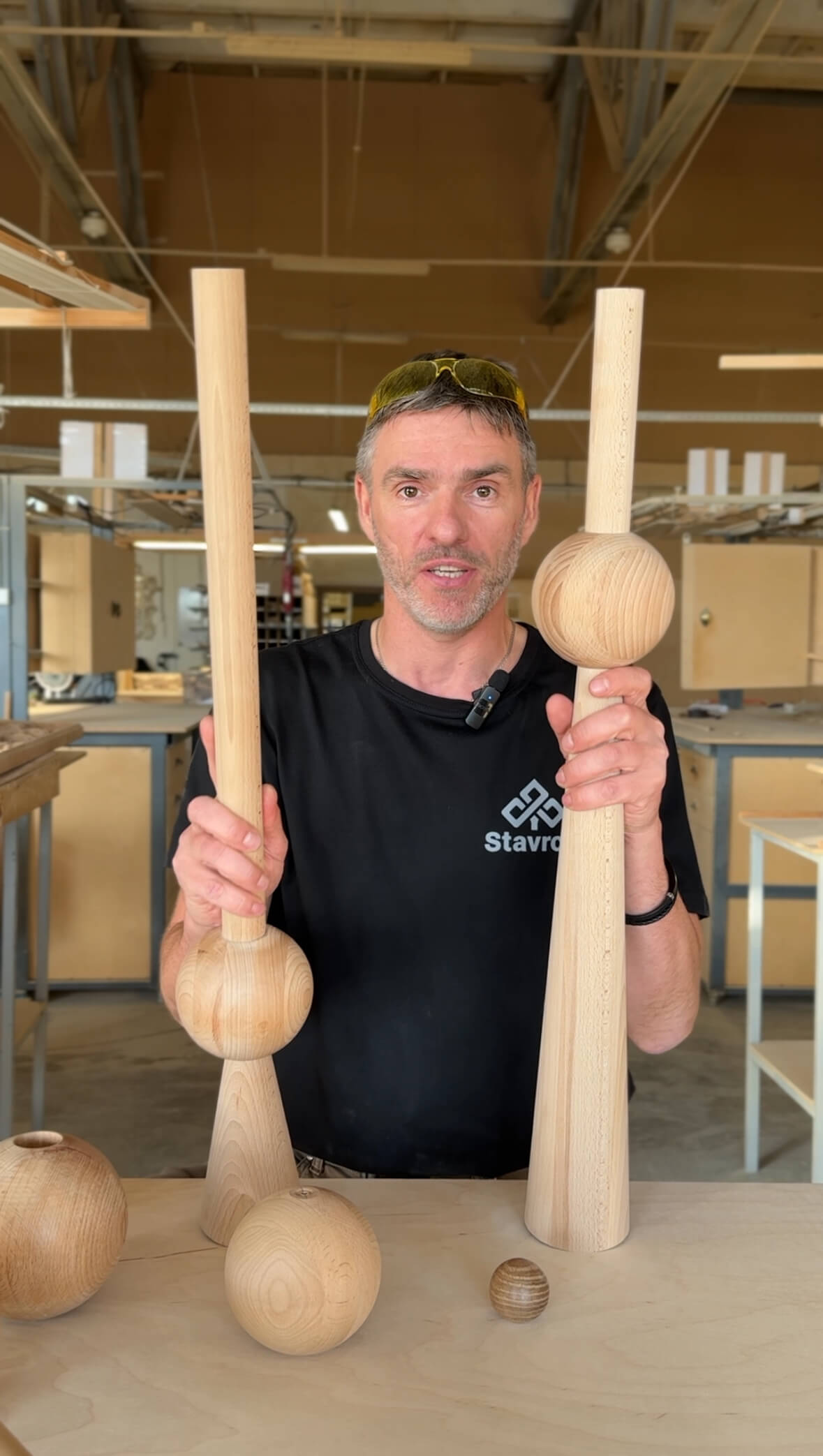
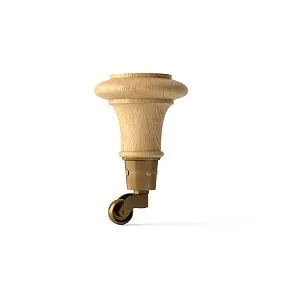
Turned legs create a calmer but expressive silhouette. Their form is built on smooth transitions, circles, tapers, bulges, and proportions. Such a support can be classic, soft, rustic, neoclassical, or universal — it all depends on the specific profile.
Turned legs are well suited for tables, nightstands, chests of drawers, benches, chairs, armchairs, and items where you want decorative appeal without complex carving. They add volume to furniture but usually look lighter than heavily carved elements. They are convenient to use in projects where you need to emphasize the wood but not make the support the main decoration.
When choosing a turned leg, height, diameter, proportions, and attachment method are important. If the support is too thin, the furniture may look visually unstable. If it is too massive, the body becomes heavy. Legs for nightstands and chests of drawers need to be selected especially carefully: there the supports are clearly visible but should not compete with the facade.
Straight and shaped supports
Straight wooden supports are suitable for furniture with a calmer geometry. They work well in modern interiors, minimalism, Scandinavian projects, furniture for painting, simple nightstands, and laconic chests of drawers. The straight shape does not distract attention from the facade and helps maintain a clean silhouette.
Shaped supports add character to furniture. This is a choice for projects where the leg should be noticeable: upholstered furniture, a bench, a classic nightstand, a decorative table, a console, an armchair. The shaped form helps make the piece more expressive even without a complex facade.
The choice between a straight and shaped support depends on what should be the main element in the furniture. If the facade is already active, it is better to make the support calmer. If the body is simple, the legs can take on a decorative role. This way the furniture achieves balance: not overloaded, but not empty either.
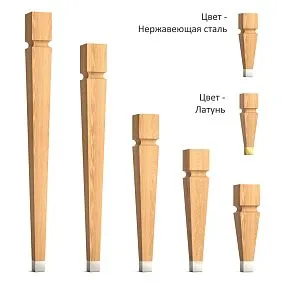
Unpainted legs
Unpainted legs are suitable for projects where individual finishing is needed. They are chosen by craftsmen, designers, and buyers who plan painting, tinting, staining, varnishing, or other finishing solutions for specific furniture. This option is especially useful for restoration, assembling a custom piece, or selecting parts to match an already chosen color.
If the furniture body will be painted, the supports can be finished together with it. This helps avoid differences in shade and makes the piece cohesive. For such tasks, you can look at unpainted solid wood furniture legsBefore ordering, you need to check the shape, dimensions, material, and availability of the selected finish.
An unfinished leg offers freedom but requires additional work. You need to prepare the surface, choose a finish, carefully apply the coating, and let it dry. If the buyer does not plan to do the finishing themselves, it is better to immediately consider ready-made options with a coating.
Legs with coating
Legs with coating are convenient when a ready-made decorative element is needed. The buyer receives a support that is easier to incorporate into a project without separate painting. This is especially useful for furniture that needs to be assembled quickly, updated, or placed in an interior without an additional finishing stage.
Such supports are suitable for new items, commercial interiors, ready-made furniture, projects with a defined palette, and cases where the buyer does not want to handle the final finishing themselves. You can view them in the catalog furniture legs with finish. Before purchasing, you need to compare color perception, dimensions, shape, purpose, and current parameters in the product card.
The coating affects not only the appearance but also the practical use. The requirements for a sofa, armchair, chair, nightstand, and chest of drawers are different. If the furniture will be moved frequently, placed in a walk-through area, or used daily, it is worth clarifying the features of the selected finish and care in advance.
Quick reference table of wooden furniture leg characteristics
| Parameter | What to check | Why this is important for purchase |
|---|---|---|
| Product type | Furniture leg, support, carved support, turned leg | The type affects the appearance, load, fit, and purpose |
| Main section | Buy wooden furniture legs | It's convenient to start your selection with a general category and compare options |
| Material | Array of wood; the actual species should be verified on the product card | The material affects durability, texture, finish, and compatibility with furniture |
| Possible wood species | The diagram shows beech and oak as key options for comparison | Beech and oak differ in visual character, density, and texture |
| Finish | There are unpainted options and legs with a finish | Without finish — for custom finishing; with finish — for a ready-made project |
| Shape | Straight, shaped, turned, carved | The shape affects the style, visual weight, and ease of matching with the body |
| Height | Checked in the product card | Height changes the furniture's fit, usability, and proportions |
| Section and scale | Checked in the product card and task | A too thin or massive support can compromise appearance and stability |
| Mounting | Attachment method and compatibility are clarified before ordering | An error in attachment may require reworking the furniture |
| Load | Should be assessed based on the furniture design and parameters clarified | The support must match the item's weight and usage mode |
| Hardware | Can be viewed Furniture leg hardware | It's better to think through fasteners and mounting elements before ordering |
| Related categories | Frames, underframes, carved decor, decorative elements | Help assemble a furniture project in a unified style |
This table is not for formal checking, but for real selection. The buyer often looks at the leg as a beautiful detail but forgets about height, cross-section, fastening, and load. These parameters determine whether the furniture will be stable, comfortable, and visually correct.
Material: beech, oak, and solid wood
Solid wood legs are chosen for their strength, naturalness, finishing options, and expressive appearance. Solid wood differs from random glued or imitation solutions in that the material feels real: it has texture, density, character, and pairs well with other wooden furniture elements.
Beech is often used where neat wood with a calmer grain is needed. It is well-suited for furniture parts that need to be durable but not necessarily too textured. Beech can be considered for painted and tinted projects if the specific product and finish fit the task.
Oak is perceived as more expressive. Its texture is more noticeable, and its visual image is denser and more prestigious. Oak elements work well in furniture where the wood should be visible: classic dressers, small tables, armchairs, sofas on exposed legs, consoles, items with natural finishes. But oak needs to be carefully matched with other wood species and colors in the interior.
When choosing a material, you need to consider not only the appearance. The leg bears the load, so cross-section, height, shape, fastening method, and furniture construction are important. Even good material won't save the situation if the support is too thin for a heavy body or improperly secured.
The material also affects the finish. Unpainted legs can be selected for painting, tinting, or varnishing. Coated legs are convenient for finished furniture. If the project is complex, it is better to check with the STAVROS manager in advance which parameters are relevant for the selected item: material, dimensions, coating, availability, and compatibility with the furniture.
How to choose the height and shape of legs
The height of legs changes furniture more than it seems. Low supports make an item stable and grounded. High ones create lightness, open up space under the body, and simplify cleaning. Medium height often works as a compromise: the furniture does not look heavy but remains calm and stable.
For a sofa, the height of the legs affects seating. If the support is too low, getting up from the sofa can be uncomfortable, and cleaning underneath becomes more difficult. If it is too high, the proportion of the upholstered furniture changes, and sometimes the feeling of stability is compromised. Sofa legs need to be selected together with the frame, upholstery, seat height, and overall weight of the item.
For a cabinet and chest of drawers, height is especially important visually. Low legs make the body heavier. High ones can turn an ordinary cabinet into a light interior piece. If a buyer is looking to purchase furniture legs for a cabinet, they need to consider not only the shape but also the final height of the cabinet: whether it will be convenient to use the drawers, whether the tabletop will be too high, and whether the proportion of the facade will be disrupted.
For a table and side table, legs are responsible not only for the appearance but also for seating comfort. Here, the height cannot be chosen arbitrarily. The purpose must be considered: coffee table, dining table, console, vanity table, work surface, decorative table. If the exact dimensions are not specified in the project plan, they should be verified before ordering.
For an armchair, ottoman, and chair, stability is important. The leg must match the frame and load. A shaped or carved form can be beautiful, but the seating, angle, attachment, and cross-section must suit the structure. If the furniture will be used daily, comfort and reliability are more important than decorative complexity.
The shape is chosen according to style. A straight support is suitable for laconic items. A turned one is for softer classics, country, neoclassicism, and custom furniture. A carved one is for items where the support should become a decorative part. But the shape must always be connected to the body. The leg should not look as if it was taken from another piece of furniture.
Legs with or without coating: what to buy
The choice between coated and unpainted legs depends on the project stage. If the furniture is already finished and you need to quickly replace the supports or assemble an item without additional finishing, it makes sense to look at coated legs. If the furniture is being painted, tinted, restored, or made to an individual color, unpainted legs offer more freedom.
Unpainted supports are convenient for workshops and design projects. They can be matched to the facade, body, handles, countertop, decorative elements, or the overall interior color. For example, a dresser is repainted in a complex shade, and the legs need to be made to match or provide a soft contrast. In such a case, a ready-made coating may not match, while an unpainted surface allows for more precise work.
Coated legs help shorten the path from purchase to installation. They are suitable for ready-made furniture, minor updates, replacing old supports, and projects where the color scheme is already determined. However, before ordering, you need to check how the coating will combine with the facade, floor, handles, and other wooden details.
From a practical standpoint, the coating is related to maintenance. The supports are close to the floor, so they may encounter dust, wet cleaning, accidental impacts, shoes, vacuum cleaners, and furniture movement. If the furniture is in a walk-through area, hallway, cafe, salon, or hotel room, the finish should be chosen especially carefully.
For comparison, you can open unpainted solid wood furniture legs и furniture legs with finish. Such a review helps to understand which path suits your project: custom finishing or a ready-made decorative element.
Comparison of furniture leg options
| Option | When it fits | Strong point | What to check before ordering |
|---|---|---|---|
| Unpainted legs | Restoration, furniture painting, custom color, author's projects | Can be finished to match the facade, body, or interior | Material, dimensions, preparation for finishing, compatibility with coating |
| Legs with coating | Ready-made furniture, quick replacement of supports, projects without separate finishing | Convenient to include immediately in the furniture project | Color, coating type, dimensions, care |
| Carved legs | Classic, neoclassic, upholstered furniture, decorative cabinets and chests of drawers | Function as both support and expressive decor | Scale of carving, height, attachment, compatibility with the facade |
| Turned legs | Tables, cabinets, chests of drawers, benches, armchairs, furniture with soft silhouette | Provide volume and shape without excessive ornamentation | Proportions, diameter, height, material |
| Straight supports | Modern projects, simple cabinets, minimalism, Scandinavian style | They do not overload furniture and maintain clean geometry | Section, height, stability, load |
| Figurative supports | Author furniture, decorative items, furniture with a pronounced silhouette | Make the item more noticeable | Balance with the body, attachment, overall style |
| Carved supports from the adjacent category | Complex decorative projects | Help assemble furniture in a classic or artistic style | Compatibility with the main leg section and project task |
The table shows the main point: the choice is not limited to "beautiful or not beautiful." The leg must match the item in height, shape, load, material, and style. If the furniture is simple, the support can be decorative. If the furniture is already rich in details, it's better not to overload the lower part.
What affects the price of furniture legs
The query "buy furniture legs price" seems simple, but the price depends on several factors. Comparing supports only by cost without understanding the material and shape is dangerous: a cheap random blank may not fit in load, size, fastening, or appearance, and an unsuitable leg will ruin the entire item.
The first factor is material. Solid wood, species, processing quality, and surface preparation affect the cost. Beech, oak, and other options may differ not only in price but also in visual character. If the project requires a natural texture, the material becomes an important part of the design.
The second factor is size. A tall or massive leg requires more material and may be more difficult to process. A small support for a cabinet and a tall support for a table or sofa are different tasks. Size affects delivery, storage, and installation, but most importantly, stability and visual scale.
The third factor is shape. A simple straight support is usually technologically simpler than a complex turned or carved leg. Carving, figured profile, smooth transitions, and decorative elements increase the value of the product because they require more complex processing.
The fourth factor is coating. An unpainted leg and a coated leg serve different needs. In the first case, the buyer gets a base for individual finishing. In the second, a ready-made decorative element. If a finished external result is needed, the coating can be an important part of the price.
The fifth factor is fastening and related elements. Sometimes the buyer needs not only legs but also mounting hardware. Therefore, it's worth looking in advance Furniture leg hardware and understanding which elements will be needed for installation.
The price becomes clear only after answering the questions: what furniture are the legs for, what height is required, what shape is suitable, is decoration needed, will there be a coating, how is the support attached, and how many pieces are needed. Without this, price comparison turns into a random choice.
How to choose legs for a sofa, cabinet, dresser, table, and armchair
For a sofa
A sofa is upholstered furniture with noticeable load. The legs for a sofa must match the frame, weight, seat height, and upholstery style. If the sofa is classic or neoclassical, carved or turned supports can emphasize its character. If the sofa is modern, it is better to choose a more restrained shape.
You need to check the height of the support. Legs that are too low will complicate cleaning and make the sofa look grounded. Legs that are too high will change the seating position and may disrupt proportions. You also need to consider the number of supports and load distribution. If the design is complex, it is better to clarify the parameters before ordering.
For a cabinet
A cabinet visually depends heavily on its legs. A small body on successful supports can look like a designer piece. If the legs are too simple, the cabinet will become ordinary. If they are too decorative, they may overwhelm the facade. For a TV cabinet, horizontality is important; for a bedside cabinet, lightness; for a console, elegance.
If you need to buy furniture legs for a cabinet, you should start with the height and shape of the body. A low, wide cabinet can look good on low, calm supports. A compact cabinet by the bed can benefit from a more shaped leg. For a paintable project, unpainted supports are suitable.
For a chest of drawers
A chest of drawers often has an active facade: drawers, handles, panels, overlays, color. The legs should support the composition, not compete with it. If the facade is smooth, the supports can be more expressive. If the facade is already complex, it is better to choose a more restrained shape.
The height of the legs on a chest of drawers affects convenience. A chest of drawers that is too high can become uncomfortable, especially if the top surface is used daily. One that is too low looks heavy. Before ordering, you need to consider the final height of the entire piece of furniture.
For a table
The table requires particularly careful attention to stability. The leg must match the purpose: coffee table, dining table, console, desk, decorative table. For large tables, not only the shape and height are important, but also the underframe design, fastening, load distribution, and seating comfort.
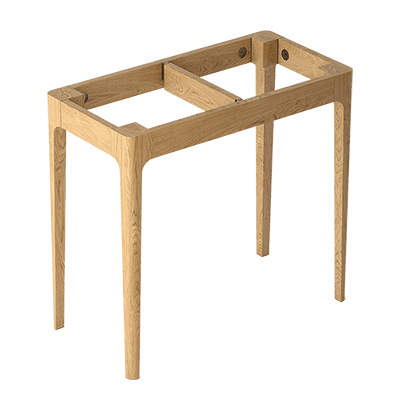
If you need not just a set of individual supports, but a more solid base, you can look Furniture Frames and Pedestals. This is useful for projects where it is important to assemble not a random support, but a structurally clear furniture unit.
For armchair and ottoman
The armchair and ottoman require stability and proper seating. The legs can be a visible decorative part, especially if the furniture is in the living room, bedroom, hallway, or commercial interior. But beauty should not interfere with strength and comfort.
For an ottoman, more expressive supports are often chosen because the body is small and the legs are clearly visible. For an armchair, you need to consider the installation angle, seat height, person's weight, and attachment to the frame. Before ordering, it is worth checking all parameters in the product card and matching them with the design.
Application of wooden legs in the interior
In the living room, wooden legs help make furniture lighter. A sofa, armchair, TV cabinet, coffee table, or console on supports look less heavy than items on a solid base. This is especially important in small rooms where every centimeter of the floor affects the perception of space.
In the bedroom, legs often work more softly. They support bedside tables, ottomans, chests of drawers, dressing tables. Here, not only stability is important, but also a calm look. Too aggressive a shape can disrupt the intimacy of the bedroom, while a neat turned or simple wooden support will add warmth.
In the hallway, supports should be practical. An ottoman, shoe cabinet, console, or cabinet stand in an active use area. The legs may come into contact with shoes, wet cleaning, dust, and frequent touches. Therefore, the coating, stability, and ease of maintenance need to be considered in advance.
In the kitchen and dining room, wooden legs can be used for tables, chairs, benches, sideboards, island elements, and decorative items. Stability is important here, especially for tables and seats. When it comes to kitchen furniture, humidity, cleaning, and frequent use must be considered.
In the study, wooden supports help make furniture warmer and more prestigious. A desk, armchair, cabinet, console, or bookshelf on wooden legs looks more cohesive if the material is linked to other interior elements: floor, doors, panels, handles, decor.
In commercial interiors, legs must withstand more contact. A salon, showroom, cafe, hotel, or office requires not only an attractive shape but also practicality. Furniture is moved, different people interact with it, and cleaning is more frequent. Therefore, careful attention must be paid to the material, coating, fastening, and the possibility of replacing elements.
What to buy together with wooden furniture legs
Furniture legs are rarely purchased completely separately from other details. If you are changing supports, you often need to check the fastening, hardware, frame, underframe, decorative elements, and the overall style of the furniture. Otherwise, you might get a good leg that does not fit the structure or looks detached from the item.
For installation, it is worth checking in advance Furniture leg hardware. It is better to plan the fastening before purchase, especially if the furniture is heavy, old, being restored, or built from scratch. A mistake in fastening can lead to reworking the body.
If the project involves making new furniture, it is useful to look more broadly: Furniture Frames and Pedestals help assemble the structural foundation, rather than limiting yourself to individual supports. For custom pieces, this is especially important: legs must work together with the frame, aprons, tabletop, and fastening units.
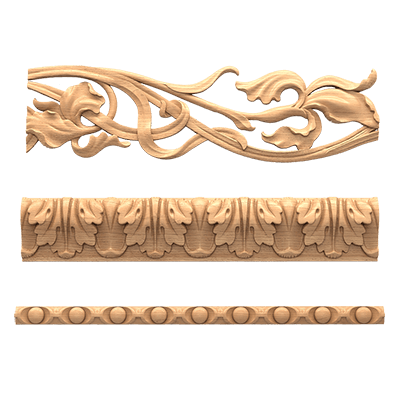
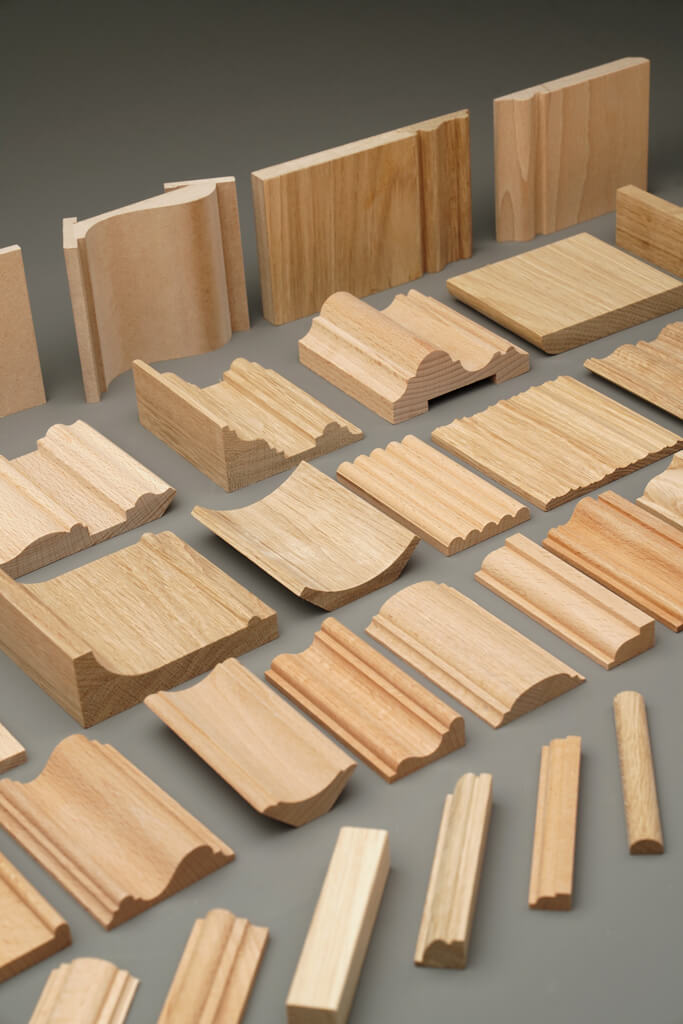
In decorative projects, supports can be linked to adjacent categories. Carved wooden decoration helps support the classic or artistic character of the furniture. wooden decorative elements can complement a facade, body, or interior item. Solid wood products useful to look at when you need to assemble several parts in one material direction.
Table: what to buy together
| What to add to the purchase | Why this is needed | Which scenario it suits | What to pay attention to |
|---|---|---|---|
| Furniture leg hardware | To plan the fastening and installation in advance | Replacing supports, new furniture, restoration | Compatibility with the leg, body, and load |
| Furniture Frames and Pedestals | To assemble a more integral structure | Tables, consoles, designer items, workshop projects | Dimensions, construction, purpose |
| Carved wooden decoration | To support the decorative style of the furniture | Classic, neoclassical, restoration, premium items | Do not overload the facade and supports simultaneously |
| wooden decorative elements | To connect the legs to the facade or body | Chests of drawers, cabinets, sideboards, custom furniture | Scale, material, finish |
| Solid wood products | To match adjacent wooden parts | Any project where a consistent material logic is important | Wood species, texture, color, style |
| unpainted solid wood furniture legs | To perform finishing according to the project | Painting, tinting, restoration | Surface preparation and compatibility with the finish |
| furniture legs with finish | To get a finished decorative element | Quick replacement, new furniture, commercial interior | Color, coating, care, combination with furniture |
This approach helps avoid buying legs separately from the furniture task. The support, hardware, frame, decor, and finish must work together. Then the furniture looks assembled, not composed of random parts.
How not to confuse wooden furniture legs with similar products
Wooden legs can be confused with decorative balusters, blanks, posts, molding fragments, metal supports imitating wood, or staircase decor elements. They may look similar externally, but their purpose is different. A furniture leg must be suitable for the load, attachment, and use in furniture.
An ordinary wooden blank is not always designed to serve as a support. It needs to be refined, the cross-section checked, the seat prepared, and the attachment and finish made. For a decorative project, this is possible, but for furniture that will be used daily, a ready-made furniture leg is more reliable and predictable.
A carved element is not always suitable as a leg. Decor can adorn the facade or body but not bear the load. If a buyer mistakenly uses a decorative part as a support, the result may be unsafe. Therefore, it is important to choose specifically the legs and supports section, not visually similar decor.
Metal adjustable supports solve a different problem. They can be convenient for technical furniture, kitchen modules, or hidden structures, but they provide a different visual effect. If a natural texture, warm material, and connection with wooden furniture are needed, wooden supports are more suitable.
A base and individual legs are also not the same thing. Legs are separate elements that need to be properly connected to the body. A base or frame can be a more integral structural solution. If it concerns a table or a complex furniture object, it is worth comparing both approaches and looking Furniture Frames and Pedestals.
Practical selection for specific situations
Need to update an old nightstand
First, evaluate the cabinet. If the facades are simple, you can choose more expressive legs. If the cabinet already has decorative details, it's better to keep the supports more subdued. Check the height: a new leg may change the usability and the position of the cabinet relative to the bed, sofa, or TV.
If the furniture will be repainted, it's more convenient to look at unpainted supports. If the cabinet color is already ready, you can consider legs with a coating. Before ordering, check the old mounting points and the possibility of attaching new elements.
Need to assemble a chest of drawers on legs
A chest of drawers requires stability. The taller and heavier the cabinet, the more attention you need to pay to the height and cross-section of the supports. The legs must withstand the load, not look thin, and not clash with the facade. If the chest of drawers is wide, it's important to consider the number of supports and weight distribution.
For a classic chest of drawers, turned or carved elements may be suitable. For a modern one, straight or more minimalist ones. If the facades are painted, unpainted legs will help make the finish uniform.
Need to select supports for a sofa
For a sofa, the seat height, frame, weight, and attachment are important. Don't choose legs based solely on decorativeness. A too thin or unsuitable support can ruin the seating and stability. If the sofa is used daily, the attachment and strength are especially important.
Decorative carved legs look good on classic upholstered furniture. Simple wooden supports are suitable for more subdued modern sofas. Before purchasing, you need to check the parameters against the design.
Need to make a custom table
For a table, the legs become part of the silhouette. They should match the tabletop, underframe, aprons, and overall height. If you need a ready-made structural unit, look not only at supports but also at furniture frames. This will help avoid a situation where the legs are beautiful on their own but work poorly in the structure.
Need to design a bench
A bench often stands in the hallway, bedroom, or by the bed. Its legs are clearly visible, so they can be expressive. But a bench is an item for sitting, so stability, height, and fastening are important. A shaped leg should not only decorate but also withstand the load.
Need to replace random supports with furniture legs
Sometimes furniture is assembled on temporary or random legs, and then they realize the item looks unfinished. Ready-made wooden furniture supports help bring the furniture to a normal appearance. In this case, it is important to measure the current height, assess the body, and understand what style is needed: neutral, classic, carved, modern.
Need to select legs for a commercial space
In a commercial interior, furniture is used more often. Legs should be not only beautiful but also practical. Check the coating, fastening, stability, ease of maintenance, and replaceability if necessary. For a cafe, salon, showroom, or hotel, it is better not to choose visually too fragile elements if the furniture is in a walk-through area.
Installation, fastening, and preparation for setup
Installation of legs begins not with a drill, but with checking the furniture. You need to understand what the body is made of, where the load-bearing elements are, what load will be on the supports, and whether the chosen fastening method is suitable. If the leg is beautiful but there is nowhere to attach it, the purchase becomes a problem.
Marking must be precise. The legs should stand symmetrically, at an equal distance from the edges, and not interfere with drawers, doors, or baseboards. If the item is wide or heavy, more supports may be needed than it seems at first glance. The number and placement should be determined by the design, not just by appearance.
Hardware plays an important role. For some tasks, mounting plates, fasteners, or other parts may be needed. Therefore, before buying supports, it is useful to look Furniture leg hardware and understand in advance what will be needed for installation.
If the legs are unpainted, it's better to plan the finish before installation. Coating an already installed support is more difficult: you can stain the body, miss hard-to-reach areas, or get an uneven finish. It's usually more convenient to prepare the legs separately, apply the finish, let the surface dry, and then install.
If the legs have a coating, the surface needs to be protected from scratches during installation. Tools, a hard base, dust, strong pressure, and careless marking can ruin the appearance. Carved and shaped elements, where the surface is more complex, require especially careful handling.
Care depends on the coating and operating conditions. Supports are close to the floor, so they collect dust, cleaning residue, accidental touches, and impacts. This is especially noticeable in hallways, kitchens, and commercial spaces. Before purchasing, consider how well the chosen finish suits the actual conditions.
Mistakes when buying furniture legs
Choose only by photo
In a photo, a leg may look larger, thinner, taller, or more decorative than in reality. Without checking the dimensions, it's easy to misjudge the scale. Before ordering, you need to look at the height, cross-section, shape, and correlate them with the furniture.
Not considering the load
The support must match the weight of the furniture and the usage pattern. Legs for a decorative cabinet and for a sofa work differently. If the furniture is used daily, the load becomes the main parameter. It cannot be replaced by a beautiful appearance.
Buying legs without understanding the attachment
Even a stylistically suitable support may not fit in terms of installation. You need to understand in advance how it will be attached to the body, what hardware is needed, whether there is space for installation, and whether the body can withstand the load.
Making a mistake with the height
A new height changes the furniture. A bedside table may become uncomfortable next to the bed. A sofa may be too high or too low. A chest of drawers may look visually disproportionate. Before purchasing, you need to calculate the final height of the item including legs.
Not matching legs with the facade
Legs should match the facade, handles, decorative elements, and body material. If they look like randomly chosen parts, the furniture loses its integrity. This is especially noticeable in custom projects and restoration.
Choosing too complex a shape
Carved legs are beautiful, but not every piece of furniture needs them. If the facade is already busy, a complex support can overload the item. Sometimes a simpler turned or straight leg looks more expensive precisely because it does not compete with the body.
Not planning the finish
An unpainted leg without further finishing may look incomplete and withstand use worse. A leg with a finish may not match the facade. You need to decide in advance who is responsible for the final appearance.
Using a decorative part instead of a support
A similar carved element is not always designed for load. For furniture, you need to choose specifically furniture legs and supports. If decorative style support is needed, it is better to add it separately, through carved decor or decorative elements.
Buying one leg instead of a set
Sometimes a buyer looks at the price of a single item and forgets that furniture requires a set. You need to immediately calculate the number of supports, spare parts, symmetry, possible additional elements, and fastening.
Not checking the product card before ordering
Before purchasing, you need to verify the current dimensions, material, coating, purpose, availability, order conditions, and compatibility. If the project is non-standard, it's better to ask questions to a STAVROS manager before payment.
Who wooden furniture legs are suitable for, and who should choose a different solution
Wooden furniture legs are suitable for those who want to make furniture warmer, more expressive, and closer to natural materials. They work well in projects made of solid wood, veneer, painted wood, upholstered furniture, classic and modern items, restoration, custom pieces, and interior projects.
They are especially useful if you need to update furniture without completely replacing the body. New supports can change the seating, visual lightness, and style of the item. A chest of drawers on good legs looks more put together. A cabinet becomes lighter. A sofa gets the right height. A bench or chair looks more complete.
Wooden supports are worth considering for craftsmen and furniture manufacturers. Ready-made elements help save time on making each leg from scratch, maintain shape repeatability, and assemble the project faster. If you need custom finishing, you can choose unpainted options. If you need a ready result, legs with coating will do.
It's better to choose a different solution if the furniture requires hidden adjustable supports, a technical base, a metal structure, or special height adjustment. For some kitchen modules, office systems, and technical items, a wooden decorative leg may not be the most practical option.
You also need to be careful if the furniture design is not intended for replacing supports. An old body may require reinforcement, new hardware, or the work of a craftsman. In this case, first assess the structure, and only then choose the legs.
Where to buy wooden furniture legs
If you are deciding where to buy furniture legs for a cabinet, sofa, chest of drawers, table, chair, or custom project, it's easier to start with a specialized catalog. In the section Buy wooden furniture legs you can compare options, view unpainted products, coated legs, and go to suitable categories.
Queries like "where to buy furniture legs", "furniture legs where to buy" and "where can I buy furniture legs" usually appear when the buyer already understands the task but doesn't yet know how to choose correctly. It's important not just to find a store, but to check the material, shape, height, coating, fastening, and purpose. These parameters determine whether the support will fit the furniture.
Before ordering, it's worth following a short route. First, determine the item: sofa, cabinet, dresser, table, armchair, bench, chair, or frame. Then choose a style: calm, carved, turned, straight, shaped. After that, decide on the coating: custom finish or ready-made option. Then check the height, cross-section, fastening, load, and quantity.
If the furniture structure is complex, it's better to prepare dimensions, photos of the body, information about the material, and desired height. This makes it easier to clarify compatibility with a STAVROS manager and not buy supports that are beautiful on their own but don't fit the furniture.
FAQ: frequently asked questions about wooden furniture legs
Where to buy wooden furniture legs?
Wooden furniture legs can be selected in the STAVROS catalog in the section Buy wooden furniture legs. Before ordering, you need to check the height, shape, material, coating, fastening, and purpose.
Which wooden legs to choose: coated or uncoated?
If you need custom painting, tinting, or finishing to match a specific facade, it's more convenient to choose unpainted legs. If you need a ready-made decorative element, furniture legs with a coating will do. The decision depends on the project stage and the future appearance of the furniture.
What furniture are wooden legs suitable for?
Wooden legs are used for sofas, armchairs, cabinets, chests of drawers, tables, chairs, ottomans, consoles, and other furniture. The main thing is to check the dimensions, load, fastening, and compatibility with the specific structure.
What should you check before buying furniture legs?
Check the height, shape, material, cross-section, attachment method, number of supports, presence of coating, purpose, and compatibility with the furniture. If the supports are placed on a heavy object, you additionally need to evaluate the load and body structure.
How do carved legs differ from simple wooden supports?
Carved legs work as a decorative element and as a support. They are suitable for classic, neoclassical, upholstered, and designer furniture. Simple supports look calmer and are more often used where strong decoration of the lower part of the item is not needed.
Can I buy hardware for attaching legs?
Yes, for installation you can look at Furniture leg hardware. It is better to select the fastening before installation to avoid reworking the body and searching for compatible elements at the last moment.
Which legs should I choose for a cabinet?
For a cabinet, height, visual lightness, and facade style are important. Low legs make the piece calmer and heavier, while high legs make it lighter. If the cabinet is simple, you can choose more expressive supports. If the facade is decorative, it's better not to overload the form.
Are wooden legs suitable for a sofa?
Yes, if they match the frame, load, seat height, and attachment method. For a sofa, you cannot choose supports based only on appearance. You need to check the furniture's construction and clarify the parameters before ordering.
What affects the price of furniture legs?
The price is affected by material, size, shape, complexity of carving or turning, presence of coating, series, purpose, and need for hardware. It's worth comparing costs only after understanding the task and furniture parameters.
Can unpainted legs be used for painting?
Yes, unpainted legs are suitable for projects that require custom finishing. They can be adapted to the facade, body, handles, and overall furniture color. Before working, you need to check the material and surface preparation.
How is a furniture leg different from a regular wooden blank?
A furniture leg is designed for use in furniture: it has a shape, purpose, and intended installation method. A regular blank requires modification, load testing, attachment, sanding, and finishing. For a finished furniture project, it's more reliable to choose specialized supports.
Do I need to buy legs as a set?
For most items, furniture requires a set of supports. The number depends on the design, size, and load. Before ordering, you need to calculate how many legs are needed, where they will be placed, and whether additional fastening is required.
Which legs to choose for restoring old furniture?
For restoration, unpainted wooden legs are often suitable because they can be finished to match the old or new look of the body. If you want to maintain a classic character, consider turned or carved shapes. Before ordering, check the old fastenings and the condition of the body.
Where to buy furniture legs in St. Petersburg?
It's more convenient to start your selection with the STAVROS catalog. In product cards, you can check current parameters, and it's better to clarify questions about ordering, availability, and compatibility before purchasing. The main thing is to choose supports not only by city but also by furniture, material, height, and fastening.
Result: how to choose wooden furniture legs without mistakes
Wooden furniture legs help change furniture not only technically but also visually. They set the height, support the body, affect stability, make the item lighter or more solid, add decorativeness, and help connect the furniture with the interior. But a good choice starts not with a beautiful shape, but with understanding the task.
Before purchasing, you need to determine which furniture needs supports: a sofa, cabinet, dresser, table, armchair, ottoman, or custom piece. Then choose the shape: simple, turned, figured, or carved. After that, decide on the coating: take unpainted legs for custom finishing or ready-made furniture legs with a coating. Next, check the height, cross-section, material, fastening, load, and quantity.
STAVROS helps approach the purchase as a furniture project, not a random selection of parts. You can open the section Buy wooden furniture legs, compare options, look at fittings, frames, underframes, carved decor, and solid wood products. This route helps choose supports that will not just stand under the furniture but work together with the body, facade, material, and interior style.