Article Contents:
- KL-001.02 or KL-014.02: short answer
- What the capital does in the finished composition
- The capital as a transition from vertical to horizontal
- The capital as part of the scale
- The capital as part of the set
- Image size does not equal product size
- Front view does not show depth and fit
- One capital and a pair are perceived differently
- Finishing changes the visual scale
- KL-001.02 65 × 65 and 90 × 90 mm
- KL-001.02 130 × 130 and 167 × 167 mm
- KL-001.02 194 × 194 and 220 × 220 mm
- Narrow pier
- Calm classic vertical
- Furniture portal
- Pair of identical posts
- Composition with PLM-018 and BS-002
- When KL-001.02 is too calm
- Door portal
- Wide pilaster
- Front composition
- Large format furniture portal
- Composition with PLM-014, PLM-016 and BS-007
- When KL-014.02 is too wide
- Width of pilaster
- Free space on the left and right
- Height above the pilaster
- External portal dimension
- Full-size template
- Drawing and consultation
- One capital
- Pair on the sides of the opening
- Several capitals on furniture
- Order in one batch
- Standard single-leaf door
- Tall door
- Double-leaf opening
- Open passage without door
- Classic opening in a modern interior
- Library and bookcase
- Sideboard or display cabinet
- Built-in wardrobe
- Kitchen portal
- Furniture facade as a unified system
- Beech for enamel
- Oak for tinting
- White enamel and scale
- Dark finish
- Same wood species for the set
- Why you cannot choose material only by price
- When "Standard" is suitable
- When to choose "Prestige"
- Installation height changes requirements
- Finish does not replace preparation
- Set with KL-001.02
- Set with KL-014.02
- Same finish
- Transition to cornice
- Check carving pattern
- Capital and base
- Capital and cornice
- Capital and decorative overlay
- Capital and console
- KL-001.02 and KL-014.02
- Need to design a narrow doorway
- Need to emphasize a wide portal
- Need to design a built-in wardrobe up to the ceiling
- Need to make the furniture facade more grand
- Need to maintain a calm interior
- Need to make an oak portal
- Need to paint the decor in the wall color
- Need to replace the existing capital
- Need to assemble a kit for a commercial interior
- Need to design only one side of the composition
- Marking on the wall
- Checking furniture doors
- Checking the side view
- Checking Symmetry
- Checking after finishing
- Dry fitting
- Foundation Preparation
- Center Marking
- Finish before installation
- Finishing after installation
- Maintenance
- Consider the maximum size as the best
- Compare only side A
- Consider the accompanying pilaster as a compatibility guarantee
- Buy one part for a paired portal
- Do not consider the base
- Mix beech and oak without a plan
- Select 'Standard' without considering finishing works
- Do not make a test paintout
- Trim the capital to width
- Do not consider furniture opening
- Install without a general drawing
- How is KL-001.02 different from KL-014.02?
- Which capital is more compact?
- Which model is wider?
- What is the minimum size of KL-001.02?
- What is the minimum size of KL-014.02?
- Which model to choose for a narrow pilaster?
- Which capital is suitable for a door portal?
- Can KL-001.02 be automatically installed on PLM-018?
- Does any KL-014.02 fit PLM-014?
- Can KL-014.02 be combined with PLM-016?
- Which base should I choose for KL-001.02?
- Which base should I choose for KL-014.02?
- What to choose for white enamel?
- How to preserve the wood texture?
- Which is better: "Standard" or "Prestige"?
- Do I need one capital or two?
- Can the capital be trimmed if it doesn't fit?
- How to check the size before purchasing?
- Does KL-014.02 work for furniture?
- Does KL-001.02 work for furniture?
- Can different sizes be used in one composition?
- Can beech and oak be mixed?
- What to check right before payment?
- Where to buy a wooden capital?
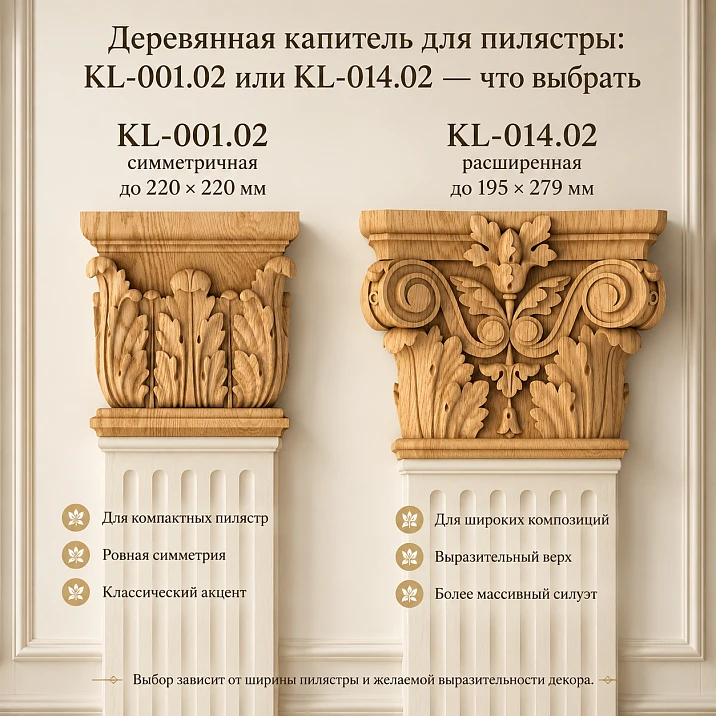
Comparison of two carved capitals for PLM pilasters, door portals, furniture facades and architectural decor
KL-001.02 or KL-014.02: short answer
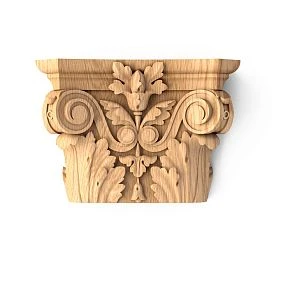
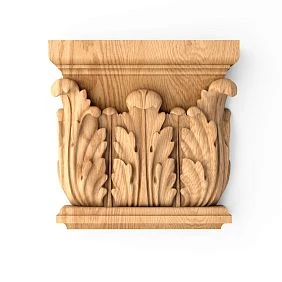
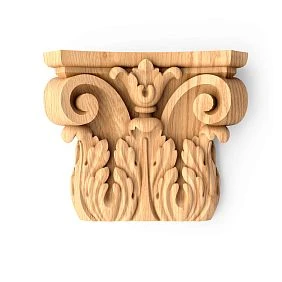
KL-001.02 is chosen when a symmetrical capital with equal sides A and B, a calm vertical finish and limited width around the pilaster are needed. The size range starts from 65 × 65 mm and goes up to 220 × 220 mm. KL-014.02 is suitable for a portal, wide pilaster and more formal composition: in all six options, side B is noticeably larger than A, and the maximum size reaches 195 × 279 mm. It expands the upper part more and forms a pronounced horizontal line.
Buy capital KL-001.02 Buy capital KL-014.02 View capital catalog How to choose a set
KL-001.02 — equal sides A and B. All six sizes have symmetrical square geometry: from 65 × 65 to 220 × 220 mm.
KL-014.02 — extended side B. Sizes range from 63 × 90 to 195 × 279 mm, so the capital extends further to the sides and emphasizes the top of the portal.
Materials are the same. Both models are available in beech or oak, with preparation for enamel or tinting.
Grinding — "Standard" or "Prestige". The choice depends on the requirements for subsequent finishing and the visibility of the carved relief.
The size cannot be chosen only by the width of the pilaster. You need to check the seating area, the protrusion relative to the wall, cornice, furniture, and adjacent decor.
Compatibility is not universal. Any modification of KL-001.02 or KL-014.02 does not automatically fit any PLM pilaster; dimensions and drawings are verified before ordering.
A buyer who wants to purchase a wooden capital for a pilaster usually sees two similar carved details and tries to choose by photo. With KL-001.02 and KL-014.02, this approach almost always leads to a scale error. One model forms a symmetrical finish with equal sides, the other noticeably widens the upper part. In a separate image, the difference seems decorative, but in the finished portal, it changes the width of the entire composition, the ratio of the pilaster to the opening, and the amount of free wall space on the sides.
The capital is located at the top point of the vertical. It completes the pilaster, connecting it with the horizontal cornice, upper door frame, furniture portal, or wall panel. Therefore, the size is chosen not as a separate square or rectangle, but as part of a complete system: base at the bottom, pilaster in height, capital at the top, and surrounding elements. If the top is too narrow, the pilaster looks unfinished. If too wide, the capital starts to interfere with the casing, cabinet door, ceiling cornice, or the other half of the portal.
KL-001.02 has six square options: 65 × 65, 90 × 90, 130 × 130, 167 × 167, 194 × 194, and 220 × 220 mm. The equality of sides helps maintain calm geometry and does not increase the horizontal span unnecessarily. KL-014.02 is also available in six options, but each is expanded along side B: 63 × 90, 85 × 121, 115 × 165, 148 × 212, 170 × 243, and 195 × 279 mm. This makes the model especially expressive above the portal, wide pilaster, and furniture composition.
For a compact vertical, you can choose a symmetrical capital for the pilaster. For a noticeable horizontal finish — choose an extended capital for the portal. If no geometry matches the mounting part or the project style, it is more reasonable choose a capital made of oak or beech of a different size than to trim the finished relief and disrupt the pattern.




What the capital does in the finished composition
The capital is not just a top overlay. It solves several practical tasks at once. First, it completes the vertical element and does not leave the pilaster visually cut off. Second, it forms a transition to the horizontal: the cornice, the top strip of the portal, the furniture frame, or the wall panel. Third, it helps to hide the joint of parts if the installation scheme provides for a neat overlap of the seam.
In architectural decor, the upper part is always perceived more strongly than it seems by size. A person looks at the portal as a whole, and the capital sets the width of the upper contour. KL-001.02 keeps it closer to the vertical. KL-014.02 expands the line and makes the opening more ceremonial. On a narrow wall, this difference can determine whether a sconce, painting, cabinet, or a second opening will fit nearby.
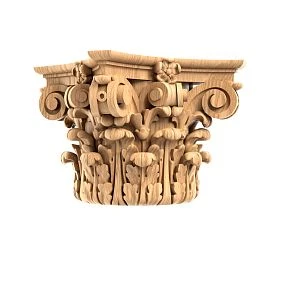
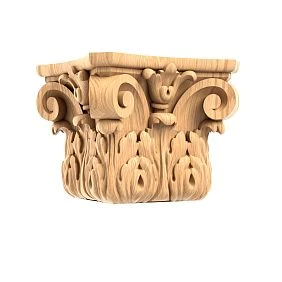
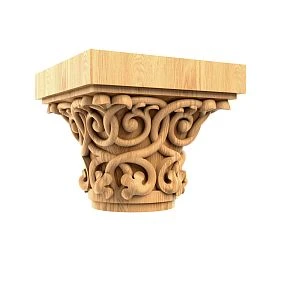
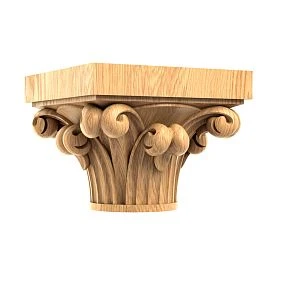
Our factory also produces:
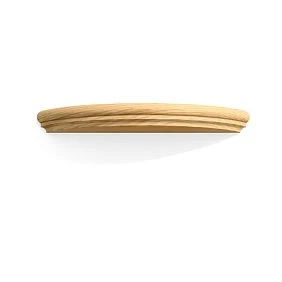
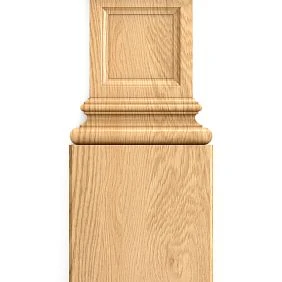
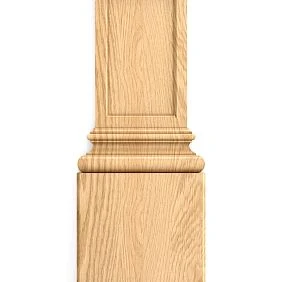
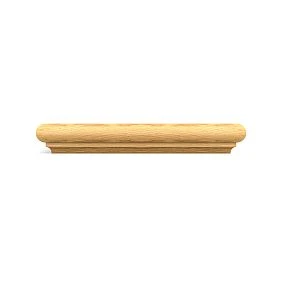
Capital as a transition from vertical to horizontal
The pilaster directs the gaze upward, while the capital stops the movement and redirects it to the side. In KL-001.02, the transition is restrained: equal sides do not create additional tension. In KL-014.02, side B is larger, so the top seems to open above the vertical. This effect is useful for a portal but requires free space.
Get Consultation
Capital as part of the scale
The same pilaster can appear thinner or more massive depending on the top element. A wide capital visually increases the significance of the vertical, even if its own width does not change. A compact one maintains a calm proportion and allows for a stronger emphasis on the central opening, facade, or decorative panel.
Capital as part of the set
Buying the top separately from the pilaster and base is risky. Models match not only in style but also in mounting logic. Related pages provide guidance, but final compatibility is checked against drawings. For example, for KL-001.02, the card recommends the option to select a wooden pilaster PLM-018, and for KL-014.02 — select a pilaster for the capital KL-014.02. This does not negate checking the specific size.
Confirmed characteristics of KL-001.02 and KL-014.02
| Parameter | KL-001.02 | KL-014.02 | Practical Meaning |
|---|---|---|---|
| Geometry | A and B are equal | B is noticeably larger than A | The first maintains symmetry, the second extends the top of the portal. |
| Size range A × B | From 65 × 65 to 220 × 220 mm | From 63 × 90 to 195 × 279 mm | KL-014.02 provides greater lateral offset with similar height for some options. |
| Number of sizes | 6 | 6 | You can adjust the scale without changing the nature of the carving. |
| Material | Beech or oak | Beech or oak | The shape can be compared without restriction by breed. |
| Sanding | "Standard" or "Prestige" | "Standard" or "Prestige" | The level of preparation is chosen based on the visibility of the relief and finishing requirements. |
| Preparation | For enamel or tinting | For enamel or tinting | Beech is logically chosen for opaque finishes, oak for preserving texture. |
| Main perception | Compact symmetrical finish | Wide horizontal finish | The choice affects the entire width of the portal or furniture frame. |
| Typical scenario | Narrow pilaster, calm vertical, limited wall space | Portal, wide pilaster, grand or furniture composition | The scenario is specified based on the specific dimensional modification. |
The table shows that models cannot be ranked as 'small' and 'large'. The maximum KL-001.02 reaches 220 × 220 mm, meaning on side A it is even larger than the maximum KL-014.02 with a height of 195 mm. However, KL-014.02 extends on side B up to 279 mm. Therefore, the main fork is not the overall size, but the direction of expansion.
Why you cannot choose a capital based only on a photo
The product photo isolates the item from the wall, pilasters, and opening. In it, KL-014.02 may appear only slightly wider, and KL-001.02 as a universal square piece. In a real composition, every millimeter adds to the existing dimensions. If the capital is installed as a pair on both sides of the door, the total expansion doubles. If a furniture facade or cornice is nearby, the side protrusion may cross their line.
The image size does not equal the product size
On screen, small and large modifications are often displayed in the same field. The buyer sees the same relief and underestimates the difference between 65 and 220 mm or between 90 and 279 mm. Before purchasing, you need to print the outline at full scale or cut out a paper template.
The front view does not show depth and fit
The main dimensions A × B help compare width and height but do not describe the entire mounting assembly. The seating part, thickness, and shape of the back surface are checked against the product drawing. That is why it cannot be stated that any KL-001.02 fits any PLM-018 or any KL-014.02 fits any PLM-014.
One capital and a pair are perceived differently
A single element on a furniture post may look moderate. Two identical capitals on the sides of a portal create strong symmetry and noticeably increase the external dimension. KL-014.02 in a pair particularly actively forms a horizontal line. For a narrow corridor or closely spaced doors, this effect may be excessive.
Finish changes the visual scale
A white capital on a light wall looks lighter than an oak one with dark tinting. Contrasting enamel emphasizes every relief protrusion. Therefore, the size should be evaluated in the intended color. The paper template can be painted approximately in the shade of the future coating.
Size grid KL-001.02: six symmetrical options
In KL-001.02, sides A and B are equal in all modifications. This helps maintain square geometry and select the capital primarily based on the vertical scale. However, equal sides do not mean an identical seating part. Each size requires its own drawing.
| Size KL-001.02 | Visual scale | Where to check first |
|---|---|---|
| 65 × 65 mm | Very compact | Narrow furniture stand, small pilaster, local facade decor |
| 90 × 90 mm | Compact | Small portal, furniture facade, limited pier |
| 130 × 130 mm | Medium | Standard interior pilaster and door framing |
| 167 × 167 mm | Expressive | High opening, wide furniture stand, noticeable top accent |
| 194 × 194 mm | Large | Grand interior, wide pilaster, free wall |
| 220 × 220 mm | Maximum in the series | Large architectural composition with sufficient space around |
These scenarios indicate the direction of choice, not guaranteed compatibility. Even a size of 130 × 130 mm may be too large for one installation and too small for another. The main advantage of the series is the ability to maintain a symmetrical character while changing the scale.
KL-001.02 65 × 65 and 90 × 90 mm
Smaller sizes are suitable where the top should not extend far beyond the stand. They are appropriate on a furniture portal, narrow decorative pilaster, built-in wardrobe, and small opening. However, a small capital may get lost next to a high ceiling and massive cornice. Before ordering, evaluate it from the distance from which the composition is usually viewed.
KL-001.02 130 × 130 and 167 × 167 mm
Medium options are the most flexible in perception. They are noticeable enough to complete the vertical but do not create excessive lateral projection. These sizes can be considered for an interior portal, decorative panel, or cabinet if the mounting part matches the selected pilaster.
KL-001.02 194 × 194 and 220 × 220 mm
Large square capitals require space. They are chosen for a high wall, wide opening, or massive architectural composition. Despite the symmetrical geometry, the 220 mm side creates a significant external dimension. When paired, check the distance between the inner edges and adjacent elements.
When to choose KL-001.02
KL-001.02 suits a project where the pilaster should read as an even vertical, and the capital should complete it without strong horizontal expansion. This is not necessarily small decor. The maximum modification is quite large, but the shape remains balanced due to equal sides.
Narrow pier
If the pilaster is located near a corner, door jamb, furniture, or a second frame, a symmetrical capital helps control the projection. First, measure the free space on both sides, then choose the size. On a narrow wall, even 90 × 90 mm may be more appropriate than an expanded KL-014.02 of similar height.
Calm classical vertical
In an interior with a moderate amount of carving, KL-001.02 completes the pilaster but does not turn the top into a separate cornice. It suits a composition where the door leaf, furniture front, or central panel remain the main elements.
Furniture Portal
On a wardrobe, sideboard, or bookcase, the space above and on the sides is usually limited. A square capital fits more easily between adjacent sections and the ceiling. For a combined solution, you can check out the material on how to design a portal with wooden pilasters and capitals.
A pair of identical posts
When two pilasters stand close together, symmetrical geometry leaves more air between the capitals. This is especially useful on a narrow doorway or a double-leaf furniture facade. Pairing enhances the relief, so the size should not be increased just to make one detail noticeable.
Composition with PLM-018 and BS-002
In the related products for KL-001.02, the pilaster PLM-018 is listed. It is useful for the buyer to view the pilaster with a height of 2200 mm and separately select the base BS-002 for the pilasterThe three cards need to be compared by size and pattern; the mere fact of being adjacent in the catalog does not replace checking the specific modification.
When KL-001.02 becomes too calm
On a wide portal, in a double-height hall, or above a massive pilaster, a square capital may appear insufficiently spread horizontally. If the top needs to connect with a large cornice and form a ceremonial outline, KL-014.02 can provide a more convincing finish.
Size chart KL-014.02: six extended options
For KL-014.02, side B is larger than side A in all sizes. The ratio is not identical down to the last millimeter, but the principle remains: the vertical dimension stays more compact than the horizontal one. This allows selecting the desired scale while achieving a characteristic lateral projection.
| Size KL-014.02 | Difference B relative to A | How it is perceived |
|---|---|---|
| 63 × 90 mm | +27 mm | Compact but already noticeably expanded finish |
| 85 × 121 mm | +36 mm | Light horizontal for a small portal |
| 115 × 165 mm | +50 mm | Medium size with confident side overhang |
| 148 × 212 mm | +64 mm | Expressive finish of a high pilaster |
| 170 × 243 mm | +73 mm | Large formal horizontal |
| 195 × 279 mm | +84 mm | Maximum extension for a large portal or furniture |
The larger the modification, the more noticeable the absolute increase in width. This does not mean that the maximum KL-014.02 is always better for a tall pilaster. You need to check the overall dimensions of the pair, the distance to the cornice, opening, furniture, and ceiling.
When to choose KL-014.02
KL-014.02 suits a project where the upper part needs to spread out more to the sides and connect the vertical with the cornice, frame, or wide horizontal panel. It does not necessarily look heavy: the smaller sizes remain compact. But even in the 63 × 90 mm option, side B is noticeably larger than side A, so the model's character is immediately apparent.
Door portal
Above a tall door, an extended capital helps create a convincing finish. It connects the pilaster with the top trim and makes the opening appear wider. For two sides of a portal, you need to consider not only the size of each part but also the distance between the inner edges, so that the top does not feel cramped.
Wide pilaster
If the vertical has a pronounced relief and sufficient width, a square capital may look too restrained. KL-014.02 adds a horizontal projection and supports large-scale architecture. The specific modification is chosen based on fit, not just the external width of the pilaster.
Formal composition
In a hall, living room, study, or commercial interior, the capital may be visible from a distance. KL-014.02 maintains readability thanks to its extended shape. The variants 148 × 212, 170 × 243, and 195 × 279 mm are particularly noticeable. On a small wall, the same effect can overload the space.
Large-format furniture portal
On a library, built-in cabinet, sideboard, or display case, a wide capital helps unify the top cornice and side posts into a single ensemble. It is necessary to check the door opening, distance to the ceiling, and adjacent sections. The capital should not cover functional gaps.
Composition with PLM-014, PLM-016, and BS-007
The KL-014.02 card has associated pilasters. You can buy a wooden pilaster PLM-014 or compare PLM-014 and PLM-016 pilasters. The bottom finish helps assemble a pilaster set with capital and baseAll three elements are checked against drawings and finishing before placing an order.
When KL-014.02 is too wide
If a pilaster is next to a corner, casing, cabinet door, or another opening, side B may extend into an undesirable area. On a small facade, the expansion looks disproportionate. In that case, KL-001.02 or another capital of the category better maintains the scale.
How to select size A × B for the pilaster
The size of a capital cannot be determined by a single formula like "20 percent wider than the pilaster." The carved pattern, seating part, and vertical shape vary. Practical selection is based on four measurements: pilaster width, free space on the sides, height of the available area, and the overall external dimension of the composition.
Pilaster width
First, measure or take from the drawing the top part of the pilaster to which the capital adjoins. Size A or B should not be automatically considered the seating width. The product card may have a separate drawing with internal steps and relief. The buyer needs a compatible component, not an approximately similar external number.
Free space on the left and right
Measure the distance from the axis or edge of the pilaster to the wall, door opening, furniture, switch, sconce, and adjacent decor. For KL-014.02, the direction of side B is especially important. If the capital is installed as a pair, draw both parts simultaneously.
Height above the pilaster
The capital may come into contact with a ceiling cornice, beam, niche, or upper furniture panel. Even the symmetrical KL-001.02 requires sufficient height. Do not trim the carved top for the sake of a few millimeters: this disrupts the pattern and may ruin the fit.
External portal dimension
Pilasters, capitals, and possible side projections are added to the opening width. For KL-014.02, the external size may increase noticeably. This calculation helps determine in advance whether the portal will fit on the wall and whether space will remain for baseboards, sconces, and furniture.
Full-size template
The most reliable method for visual verification is a paper or cardboard outline. Make it according to the specific dimensions A × B, secure it above the pilaster, and view it from several points. For a pair, mirror the template. Such a mockup does not check the fit but accurately shows the scale and side projection.
Drawing and consultation
After visual selection, open the card for the required size and compare the drawing with the pilaster. If doubt remains, provide the STAVROS manager with the article numbers, dimensions, and photos of the composition. This is safer than considering a related product as an automatic guarantee of compatibility.
Need one capital or a symmetrical pair
The quantity depends on the composition. One capital can finish a furniture post, a separate pilaster against a wall, a side element of a built-in cabinet, or a local decorative panel. A door portal and classic frame more often require a pair. However, two parts enhance the scale and increase the total material consumption, so the decision is made before calculating dimensions.
One capital
Single installation is suitable for an asymmetrical furniture composition, the edge of a library, a single decorative post, or a local architectural element. In this case, it is especially important that the capital does not look accidentally torn off from the free wall side. KL-001.02 is usually easier to use singly due to its symmetry.
A pair on the sides of the opening
Two capitals create a complete portal. They must match in article, size, material, sanding, and finish. KL-014.02 in a pair forms a strong horizontal line, so the distance between the inner edges needs to be checked. KL-001.02 leaves more air and makes the composition calmer.
Several capitals on furniture
A cabinet system can have two, four, or more vertical posts. The repetition of carved details creates a dense decorative row. The more elements, the more carefully the size and contrast of the finish are chosen. A large KL-014.02 on each post can overload the facade, while a compact KL-001.02 will create a unified pattern without excessive expansion.
Ordering in one batch
Paired and repeating capitals are best ordered simultaneously. This makes it easier to coordinate the wood, sanding level, and future color. When tinting oak, texture differences remain natural, but the overall shade must be uniform.
How to design a door portal
A door portal is built around the opening and must consider its function. The decor should not interfere with the opening of the door leaf, casings, hinges, or passage. Capitals are placed above pilasters and connected to the upper part. The choice between KL-001.02 and KL-014.02 depends on the wall width and desired character.
Standard single-leaf door
On a regular opening, a wide capital can quickly take up the entire wall space. KL-001.02 of medium size more often maintains proportion. KL-014.02 is suitable if the wall is free, the ceiling is high, and the upper horizontal line should be noticeable.
High door
Height increases the need for an expressive finish. A large KL-001.02 creates a calm square top. KL-014.02 opens the portal horizontally and makes it more ceremonial. The choice depends on the width of the door leaf and the distance to the ceiling decor.
Double-leaf opening
A wide opening more readily accepts KL-014.02 because the overall composition already has a large horizontal scale. But two maximum capitals may be excessive. Medium sizes sometimes look more convincing than maximum ones, especially if the pilasters are not too wide.
Open passage without door
In this scenario, the decor becomes the main completion of the opening. KL-014.02 can form a pronounced portal, while KL-001.02 creates a calmer frame. The wall thickness, slopes, and the view from both rooms must be considered simultaneously.
Classic opening in a modern interior
A carved capital can also work in a restrained modern room if the other elements are not overloaded. Monochrome enamel unifies the relief with the wall. KL-001.02 usually looks calmer, KL-014.02 creates a more distinct historical motif.
For a complete route, it is useful to study how to design a classic opening with wooden decor, and then return to the cards of specific sizes.
Capitals on furniture and built-in cabinets
A furniture portal has different requirements than a wall. Here you need to consider doors, cabinet cornice, side panel thickness, facade depth, and gap to the ceiling. The capital should not interfere with opening and should not appear too large relative to handles and panels.
Library and bookcase
KL-001.02 helps finish narrow side posts and keep books as the main content. KL-014.02 suits a wide library with a massive top cornice. If there are multiple sections, repeating extended capitals can create too dense a row.
Sideboard or display cabinet
The carved top connects glazed doors, bottom base, and cornice. Oak under tinting preserves the furniture character, beech under enamel allows combining the capital with a painted body. The size should match the width of the post and top panel.
Built-in wardrobe
Near the ceiling, there is often a limited gap. KL-001.02 is easier to fit into a tight upper area. KL-014.02 requires space on the sides and may cross the line of an adjacent section. Before ordering, a full-scale facade drawing is needed.
Kitchen portal
Capitals can decorate tall cabinets or a decorative area around the hood, if the project allows wooden carved decor. You need to consider humidity, heat, access for cleaning, and the chosen coating. Specific operating conditions and finish should be coordinated with the furniture maker.
Furniture facade as a unified system
The capital, pilaster, and base must match in style and scale. For a general understanding, you can read the material about capitals and pilasters for furniture facadeAt the same time, product dimensions are checked separately for a specific body.
Beech or oak: which material to choose
Both capitals are available in beech and oak, so the material does not limit the choice of shape. The buyer can first determine whether a symmetrical KL-001.02 or an extended KL-014.02 is needed, and then select the wood species for finishing and adjacent elements. The main practical question is whether the wood texture should remain visible.
Beech for enamel
Beech is suitable for opaque finishes. White, milky, gray, black, or colored enamel unites the capital with the pilaster and wall. The relief is preserved through chiaroscuro, but the wood grain does not become a separate motif. This option is convenient for a classic portal that should look like a single architectural frame.
Oak for tinting
Oak is chosen when it is important to preserve the natural texture. On KL-001.02, the pattern emphasizes the symmetrical volume; on KL-014.02, the wide horizontal shape. Tinted oak is especially expressive on furniture facades, libraries, and portals where oak panels, cornices, or doors are nearby.
White enamel and scale
Light color visually lightens large sizes. KL-014.02 195 × 279 mm in white enamel may appear calmer than a smaller oak capital with contrasting tinting. However, the physical projection does not change: the white detail still requires free space.
Dark finish
Dark enamel or rich tinting enhances the relief and makes the capital more noticeable. On a narrow portal, even a medium KL-014.02 can become dominant. KL-001.02 in a dark color retains its compact shape but also requires verification on a full-size mockup.
Same wood species for the set
It is better to choose the capital, pilaster, and base in the same wood species if the finish is semi-transparent. Under enamel, the visual difference can be hidden, but surface preparation must be coordinated. For an oak set, common tinting and simultaneous test painting are important.
Why you shouldn't choose material only by price
If oak is completely covered with dense enamel, the buyer loses its main visual advantage — texture. If beech is coated with transparent tint, the result may not match the expected oak pattern. Cards separate materials by finishing logic, and this helps make a rational choice.
'Standard' or 'Prestige'
Both models are offered with two levels of sanding. The choice affects the amount of preparation before finishing, especially in carving recesses and transitions. You shouldn't assume that "Standard" is automatically bad, and "Prestige" is mandatory for any project. The decision depends on the capital's location, type of coating, and requirements for the visible surface.
When "Standard" is suitable
This option can be considered if the workshop performs its own preparation, the product is painted with dense enamel, and the work budget accounts for additional manual processing. Before ordering, you need to assess who will refine the relief and how long it will take.
When to choose "Prestige"
More detailed sanding is useful for a capital located at eye level, furniture with close viewing, and oak under semi-transparent finish. On tinting, tool marks and uneven preparation are more noticeable, so surface quality is especially important.
Installation height changes requirements
A capital under the ceiling is viewed from a distance and from below. Small surface features are less noticeable than on a furniture facade. But side lighting can emphasize unevenness even at height. Lighting conditions should be checked before choosing the sanding level.
Finish does not replace preparation
A thick layer of enamel should not fill the carved pattern. Varnish or tint also do not automatically hide defects. Before finishing, the product is cleaned of dust, the relief is checked, and a test area is performed according to the chosen coating system.
How to coordinate capital, pilaster, and base
The complete set is built vertically: the base forms the lower finish, the pilaster creates the main line, the capital closes the top. If one element is noticeably larger than the others, the composition falls apart. Therefore, products are chosen not by individual beautiful photos, but by the overall scheme and drawings.
Set with KL-001.02
For a calm symmetrical composition, you can consider PLM-018 and BS-002. It is useful for the buyer buy a pilaster for an architectural composition и buy a wooden base for a pilaster. Then they check which of the six sizes of KL-001.02 matches the landing zone and overall scale.
Set with KL-014.02
For an extended capital, the scheme includes PLM-014, PLM-016 and BS-007. You can select a pilaster PLM-016 и select a base for KL-014.02The choice between PLM-014 and PLM-016 depends on the drawing, pattern, and dimensions, not just the series name.
Same finish
If the capital is white and the pilaster has a different shade of enamel, the difference is especially noticeable at the joint. For oak, a mismatch in tinting looks like a random part replacement. It is better to finish the set simultaneously and keep a color sample for future repairs.
Transition to cornice
The top part of the capital may adjoin a separate horizontal piece, but the specific cornice is not confirmed in the SEO scheme. Therefore, the article does not assign a random product. The width and profile of the top line are designed together with the capital, without adding unconfirmed elements.
Check carving pattern
Even size-compatible parts may differ in ornament character. On a classic portal, motif repetition should look intentional. If the capital is significantly more complex than the pilaster and base, it becomes the only active element. Sometimes this is needed, sometimes it disrupts balance.
What to buy together with the capital
A proper purchase is rarely limited to one top piece. A complete vertical requires a pilaster and base, and for a paired portal, an equal number of all elements. Related products should be added after checking specific dimensions, not mechanically by series name.
| What to add to the purchase | Why this is needed | For which scenario | What to Check |
|---|---|---|---|
| View dimensions of KL-001.02 | Choose one of six symmetrical options | Narrow pier, furniture stand, calm portal | Landing part, size A × B and free space |
| View dimensions KL-014.02 | Select extended horizontal finish | Door portal, wide pilaster, large furniture | Protrusion of side B and external dimension of the pair |
| select a wooden pilaster PLM-018 | Form vertical under KL-001.02 | Architectural composition or portal | Drawing, width, height and compatible capital size |
| Complete set with capital and base | Design the lower part of the pilaster | Set with KL-001.02 and matching vertical | Scale, fit, and uniform finish |
| View dimensions of PLM-014 | Check vertical for extended capital | Portal, furniture front, classic opening | Compatibility with selected KL-014.02 |
| Buy wooden pilaster for portal | Compare alternative vertical | Wide or more expressive composition | Size, pattern, and seat part |
| Buy BS-007 base for pilaster | Complete the lower part of the set | Composition with KL-014.02 and matching PLM | Width, height, material, and finish |
| Buy wooden capitals | Compare other shapes and sizes | KL-001.02 and KL-014.02 did not match the project | Real URLs, drawings, and confirmed specifications |
How not to confuse a capital with similar elements
Capital and base
The capital is installed at the top, the base at the bottom. Their shapes may be related, but their functions and mounting zones differ. You cannot flip the base and use it as the top just because the width fits.
Capital and cornice
The capital completes a single vertical, the cornice forms an extended horizontal. In a portal, they can work together but do not replace each other. The wide KL-014.02 creates a sense of horizontality, yet remains a local element above the pilaster.
Capital and decorative overlay
The overlay is attached to the facade plane and does not necessarily have mounting geometry for a pilaster. The capital forms a volumetric top finish. A similar carved pattern does not make the products interchangeable.
Capital and console
A console or bracket supports a protruding shelf or cornice and works in a different direction. The capital should not be used as a load-bearing support without a confirmed structure. Its purpose is the decorative finish of a pilaster.
KL-001.02 and KL-014.02
The main feature is the aspect ratio. For KL-001.02, A equals B. For KL-014.02, B is greater than A. If the dimensions on the drawing do not match this logic, you need to double-check the article number and the selected modification.
Practical selection for specific situations
Need to design a narrow doorway
Start with KL-001.02. Equal sides help control lateral offset and avoid taking extra wall. Make a template of two capitals as a pair, because a single piece does not show the actual density of the portal. If even the smaller size extends beyond the wall pier, look for another model in the category.
Need to emphasize a wide portal
KL-014.02 opens up the upper part and connects pilasters with a horizontal frame. For a double door or wide passage, medium and large sizes can look convincing. The maximum option 195 × 279 mm is chosen only after checking the wall at full scale.
Need to design a built-in wardrobe up to the ceiling
Check the gap between the top of the furniture and the ceiling. KL-001.02 is easier to fit into a limited height, especially in sizes 65 × 65, 90 × 90, and 130 × 130 mm. KL-014.02 requires additional space on the sides and may conflict with an adjacent section.
Need to make the furniture facade more grand
Extended KL-014.02 creates a pronounced upper accent and suits a wide display case, library, or sideboard. But it must be supported by the cornice and overall body geometry. If the furniture is compact, symmetrical KL-001.02 looks neater.
Need to maintain a calm interior
KL-001.02 in the color of the wall or furniture completes the pilaster without excessive expansion. White enamel reduces contrast, oak under light tint adds natural texture. The size is chosen so that the capital is noticeable but does not become the main object of the room.
Need to make an oak portal
Select oak for capitals, pilasters, and bases, then coordinate the overall tint shade. On wide surfaces, KL-014.02 texture is more noticeable, while on KL-001.02 it looks more compact. It is better to order the set in one batch and finish simultaneously.
Need to paint the decor in the wall color
Beech under enamel allows combining carved elements with architecture. The relief remains visible due to shadows but does not create a contrasting wood spot. For close viewing and complex enamel, you can choose "Prestige."
Need to replace the existing capital
Take precise measurements of the old part, mounting area, and clearance. You cannot choose a replacement based only on the outer contour: the new relief and back part may differ. The old mounting point also does not guarantee compatibility.
Need to assemble a set for a commercial interior
In a restaurant, salon, hotel, or showroom, the decor is viewed from different angles and under bright lighting. KL-014.02 creates a grand effect, while KL-001.02 is easier to repeat across multiple openings. For a series project, create a specification for each article, size, and sanding level.
Need to decorate only one side of the composition
A single capital is possible on furniture or a separate decorative post. KL-001.02 often looks more natural due to symmetry. KL-014.02 may require visual continuation to the side, otherwise the extension will seem random.
How to check the protrusion relative to the wall and furniture
The side offset determines whether the capital will interfere with adjacent elements. For KL-014.02 it is especially important, but the large KL-001.02 also takes up significant space. The check is performed before ordering, while the size can still be changed without reworking the finished product.
Marking on the wall
Mark the pilaster axis, top line, and outer contour of the capital. For a portal, repeat the marking on both sides. Check the distance to the opening, ceiling decor, sconce, switch, furniture, and wall corner.
Checking furniture doors
On the built-in cabinet, open the doors fully and see if the trajectory intersects with the capital. Consider handles, hinges, and pull-out elements. Even a beautiful top should not impair furniture usability.
Side view check
The front template does not show depth. Make a side sketch based on the drawing, especially if the pilaster protrudes from the wall or the facade has multiple levels. The capital must rest on the design plane, not hang over empty space.
Symmetry check
On old walls and furniture, actual distances may differ on the left and right. Measure both sides separately. If one KL-014.02 fits but the other collides with a corner, the pair cannot be installed asymmetrically without a special project.
Check after finishing
Enamel, primer, and glue can add a small amount of thickness, but the main goal is not an absolute fraction of a millimeter, but the absence of conflicts. Leave a reasonable installation allowance and do not design the capital flush against moving doors or a cornice.
Installation, preparation, and finishing
The exact method of fastening is not specified in the SEO scheme, so the article does not prescribe a universal glue, screw, or hidden fastener. Installation depends on the wall, furniture, back surface of the capital, weight of the selected size, and finish. The decision is made by the craftsman after studying the drawing.
Dry fitting
Before applying glue or drilling, the capital is placed against the pilaster and the joint is checked. For a pair, both sides and the top horizontal line are aligned simultaneously. An error of a few millimeters is more noticeable when the carved pattern repeats symmetrically.
Preparation of the Base
The wall, furniture panel, or pilaster must be strong, dry, and level. Weak paint, peeling plaster, or a thin decorative layer do not provide a reliable base. For furniture, check the body material and embedded inserts.
Center marking
Align the axis of the capital with the axis of the pilaster, unless the design specifies a different pattern. KL-001.02 is especially sensitive to displacement due to equal sides. KL-014.02 shows an error in the horizontal projection.
Finishing before installation
This makes it easier to process the ends and recesses of the carving. After a test fit, the products are removed, marked, and coated with the chosen system. Connection points may require local finishing after installation.
Finishing after installation
Suitable for a set that is painted together with the wall, pilaster, or furniture. Joints can be prepared as a single line. Adjacent surfaces need to be protected, and the relief should not be filled with an excessive layer of enamel.
To keep the decor attractive, it is enough to periodically wipe it with a soft dry or slightly damp cloth. For heavy soiling, use a mild soap solution. Avoid aggressive chemical agents and stiff brushes, which may damage the finish.
Carved relief collects dust more than a smooth panel. For regular cleaning, use a soft dry brush or cloth that does not damage the coating. Aggressive compounds and excess moisture can alter the finish, so maintenance should be coordinated with the chosen finishing system.
Errors when ordering KL-001.02 and KL-014.02
Consider the maximum size as the best
A large capital does not automatically make a portal more expressive. On a narrow wall, it looks heavy and conflicts with adjacent details. The choice should be based on scale and available space.
Compare only side A
For KL-014.02, side B is significantly larger. The buyer sees the height of 195 mm and does not account for the width of 279 mm. As a result, the capital extends beyond the boundaries of the portal or furniture.
Consider the accompanying pilaster as a guarantee of compatibility
The card helps find the direction, but products have size variants. You need to compare drawings, the seating part, and specific A × B. You cannot buy any size of KL-001.02 with any PLM-018.
Buy one part for a paired portal
Door framing often requires two capitals, two pilasters, and two bases. If you order one element, the batch and finish may differ when purchasing additional items later. The quantity is determined before purchase.
Do not consider the base
The top and bottom must be coordinated. A large capital above a too-small base makes the vertical appear unstable. The set should be evaluated as a whole.
Mixing beech and oak without a plan
Under tinting, the difference in wood species is noticeable. Under enamel, materials can be visually combined, but the preparation and surface behavior differ. It is better to choose a single species for the set.
Choosing "Standard" without considering finishing work
If the workshop does not plan additional preparation, the result may not meet expectations. The sanding level is coordinated with the coating and installation location.
Do not make a test paintout
Tinting of oak and enamel on beech may look different than on the screen. On relief, color distributes more complexly, and shadows enhance the shade. A test area reduces the risk of redoing the entire pair.
Trim the capital in width
Longitudinal trimming disrupts symmetry, relief, and the seating part. If the product does not fit, choose a different size or model, rather than reducing the finished decor on site.
Not accounting for furniture opening
An extended capital may interfere with a door or adjacent section. Checking the trajectory before ordering is mandatory for built-in cabinets and kitchen furniture.
Installing without a general drawing
Individual parts may be of high quality, but the composition will turn out random. The drawing shows axes, distances, heights, dimensions of capitals and bases, as well as the overall dimension of the portal.
Who KL-001.02 is suitable for
- for a narrow or medium pilaster with confirmed fit;
- for a limited wall section and a wall near a corner;
- for a calm symmetrical finish;
- for a furniture portal and built-in wardrobe;
- for a repeating row of small posts;
- for a project where the capital should not dominate the opening;
- for beech under enamel or oak under tinting;
- for choosing one of six square sizes;
- for a single capital or compact pair;
- for a composition with a suitable PLM-018 and BS-002 base after checking the drawings.
Who KL-014.02 is suitable for
- for a wide door portal;
- for a grand hall, living room, study, or commercial interior;
- for large furniture and a wide top frame;
- for a pronounced horizontal finish;
- for a pilaster that needs a noticeable side projection;
- for beech under enamel or oak under tinting;
- for selecting one of six extended sizes;
- for a paired composition with sufficient free space;
- for PLM-014 or PLM-016 and BS-007 base after compatibility check;
- for a project where the capital should be readable from a distance.
When it's better to choose a different capital
- KL-001.02 looks too restrained, and KL-014.02 is excessively wide;
- no seating part matches the selected pilaster;
- a different carved pattern is required;
- the capital conflicts with the ceiling cornice, door, or furniture;
- a purely flat decoration is needed, not a volumetric finish;
- the project requires outdoor use without confirmed conditions;
- unable to select a base and pilaster in the same scale;
- there is not enough space for a symmetrical pair;
- a modern composition without classical top decor is planned;
- the finished size has to be trimmed and the relief disrupted.
In these cases, it is better View capital catalog and choose a different shape with confirmed dimensions.
For a complex portal, it is useful to create a separate specification for each side: the capital article number, size A × B, the selected pilaster, base, material, sanding, and finish. Such a document is especially important when multiple doors or furniture sections are being designed in one room. It helps avoid confusing KL-001.02 with KL-014.02, ordering different sizes for a symmetrical pair, or mixing beech with oak. The specification should be accompanied by a front drawing, side view, and a photo of the wall with outlines marked. After the dimensions are approved, the craftsman can check the joints, installation sequence, and areas that need finishing before installation. This reduces the risk that the capital looks beautiful on its own but does not match the pilaster, base, or portal width.
What to check before placing an order
- the exact article number KL-001.02 or KL-014.02;
- the specific size A × B;
- a drawing and the seating part;
- the width and height of the selected pilaster;
- the external dimension of one capital and a pair;
- the distance to the wall, opening, furniture, and ceiling cornice;
- the quantity of capitals, pilasters, and bases;
- compatibility of PLM-018, PLM-014 or PLM-016 with a specific modification;
- compliance of BS-002 or BS-007 with the lower part of the kit;
- material: beech or oak;
- sanding: "Standard" or "Prestige";
- finish: enamel or tinting;
- installation and finishing procedure;
- current price, availability and delivery times in the product card;
- need for consultation with a STAVROS manager.
How to buy KL-001.02 or KL-014.02 at STAVROS
Start with the external geometry. For a calm symmetrical top, open KL-001.02 and compare six square dimensions. For a portal with a pronounced horizontal, study KL-014.02 and check side B. Then select a pilaster and base, cross-referencing drawings of all elements.
If you need a compact option, you can Buy capital KL-001.02. For a wider finish — Buy capital KL-014.02. Before payment, select the material, sanding level and future finish.
If the project starts from scratch, it is useful to first understand, how to choose pilasters and capitals for interior. For a finished portal or furniture, it is better to provide the manager with a drawing, opening dimensions, and a list of selected article numbers. Ordering finished elements with a confirmed size grid is more reliable than a random carved blank that has to be trimmed and adjusted without a compatible set.
FAQ: questions about KL-001.02 and KL-014.02
How is KL-001.02 different from KL-014.02?
For KL-001.02, sides A and B are equal in all six sizes. For KL-014.02, side B is always larger than A, so the model creates a wider horizontal finish.
Which capital is more compact?
In terms of design, KL-001.02 is more compact because it does not expand on one side. However, its maximum size of 220 × 220 mm is itself large, so a specific modification must be chosen.
Which model is wider?
The maximum width of KL-014.02 reaches 279 mm. For KL-001.02, the maximum side is 220 mm.
What is the minimum size of KL-001.02?
65 × 65 mm. Next available: 90 × 90, 130 × 130, 167 × 167, 194 × 194, and 220 × 220 mm.
What is the minimum size of KL-014.02?
63 × 90 mm. Next available: 85 × 121, 115 × 165, 148 × 212, 170 × 243, and 195 × 279 mm.
Which model to choose for a narrow pilaster?
Often start with KL-001.02 because the symmetrical geometry fits more easily on a limited wall pier. Compatibility is checked against the mounting part and drawing.
Which capital is suitable for a door portal?
Both models can be used in a portal. KL-001.02 creates a calm finish, KL-014.02 expands the top more and suits a more formal composition.
Can KL-001.02 be automatically placed on PLM-018?
No. PLM-018 is listed as an accompanying pilaster, but the specific capital size must be checked against the drawing and mounting area.
Does any KL-014.02 fit PLM-014?
No. The capital has six sizes, and the pilaster has its own geometry. Compatibility is confirmed before ordering.
Can KL-014.02 be combined with PLM-016?
PLM-016 is listed among relevant products for selection, but the specific combination is checked by size, pattern, and installation diagram.
Which base should I choose for KL-001.02?
The SEO scheme suggests BS-002. It helps assemble the bottom finish, but its size and compatibility with the pilaster also need to be checked.
Which base should I choose for KL-014.02?
BS-007 is listed as an accompanying product. The final set is assembled after checking the capital, pilaster, and base.
What to choose for white enamel?
Beech under enamel. It is suitable for opaque finishes and allows combining the capital with the pilaster, wall, or furniture facade.
How to preserve the wood texture?
Choose oak for tinting and do a test coat. It is better to finish all parts of the set with one system.
Which is better: "Standard" or "Prestige"?
"Prestige" is suitable for close viewing, tinting, and projects with high requirements for surface preparation. "Standard" can be chosen if the workshop performs additional processing.
Do you need one capital or two?
For a single furniture post, one may be enough. A classic door portal often requires a symmetrical pair. The quantity is determined by the full drawing.
Can the capital be trimmed if it doesn't fit?
Not recommended. Trimming disrupts the carved pattern, symmetry, and seating geometry. It's better to choose a different size or model.
How to check the size before purchase?
Make a paper template according to A × B, apply it to the pilaster, and assess one or two capitals on the wall. Then check the fit against the drawing.
Is KL-014.02 suitable for furniture?
Yes, for a large library, sideboard, display case, or built-in wardrobe with sufficient space. Need to check doors, cornice, and adjacent sections.
Is KL-001.02 suitable for furniture?
Yes. The symmetrical shape is convenient for narrow posts, small portals, and repeating furniture sections.
Is it possible to use different sizes in one composition?
Only if it is specifically provided for by the project. In a paired portal, different sizes usually look like a mistake and break the symmetry.
Is it possible to mix beech and oak?
Under a transparent finish, the difference will be noticeable. For a complete set, it is better to choose one species. Under enamel, mixing is possible only after agreeing on the preparation.
What should you check right before payment?
Article, size A × B, quantity, material, sanding, finish, compatibility with pilaster and base, external dimension, and current card conditions.
Where to buy a wooden capital?
In cards KL-001.02 and KL-014.02 or in the category where you can Buy wooden capitals other shapes and sizes.
Result: KL-001.02 for symmetrical completion, KL-014.02 for a wide portal
KL-001.02 and KL-014.02 solve one task — they complete the pilaster and connect the vertical with the upper part of the portal or furniture. But the geometry gives different results. KL-001.02 has equal sides and six sizes from 65 × 65 to 220 × 220 mm. It is suitable for a limited wall space, calm vertical, furniture post, and a portal where the top should not expand significantly.
KL-014.02 is produced in sizes from 63 × 90 to 195 × 279 mm. Side B is larger than side A in all variants, so the capital opens more horizontally. It is chosen for wide openings, formal compositions, large furniture, and pilasters that require a noticeable top accent.
Both models are available in beech or oak, with "Standard" or "Prestige" sanding, for enamel or tinting. Before ordering, you need to check not only the external size, but also the mounting part, the set with pilaster and base, the number of parts, and the free space around. The accompanying card helps find the direction but does not automatically make any size combination compatible.
on the Stavros website you can Buy capital KL-001.02 for a symmetrical finish or Buy capital KL-014.02 for an extended portal. A finished carved part with a confirmed size grid allows you to focus on selecting the set, finishing, and installation, rather than cutting a complex shape from a random blank and trying to fit it to an unsuitable pilaster.