

























Article Contents:
- What is a wooden finial: explanation without embellishment
- Where wooden finials are used: complete scenario map
- Stair posts in the house
- Balustrades and railings for double-height spaces
- Porch
- Terrace and veranda
- Decorative railings and partitions
- Facade decoration
- How a finial differs from a capital: important distinction
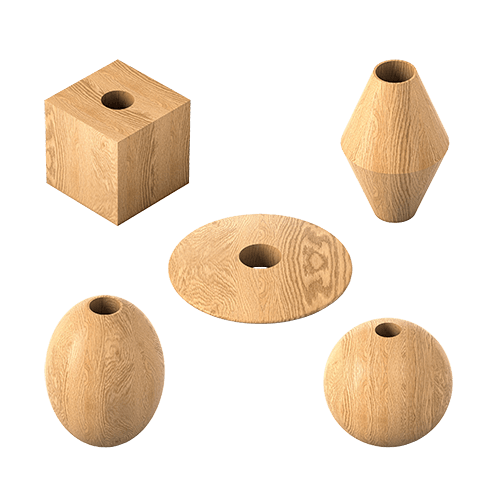
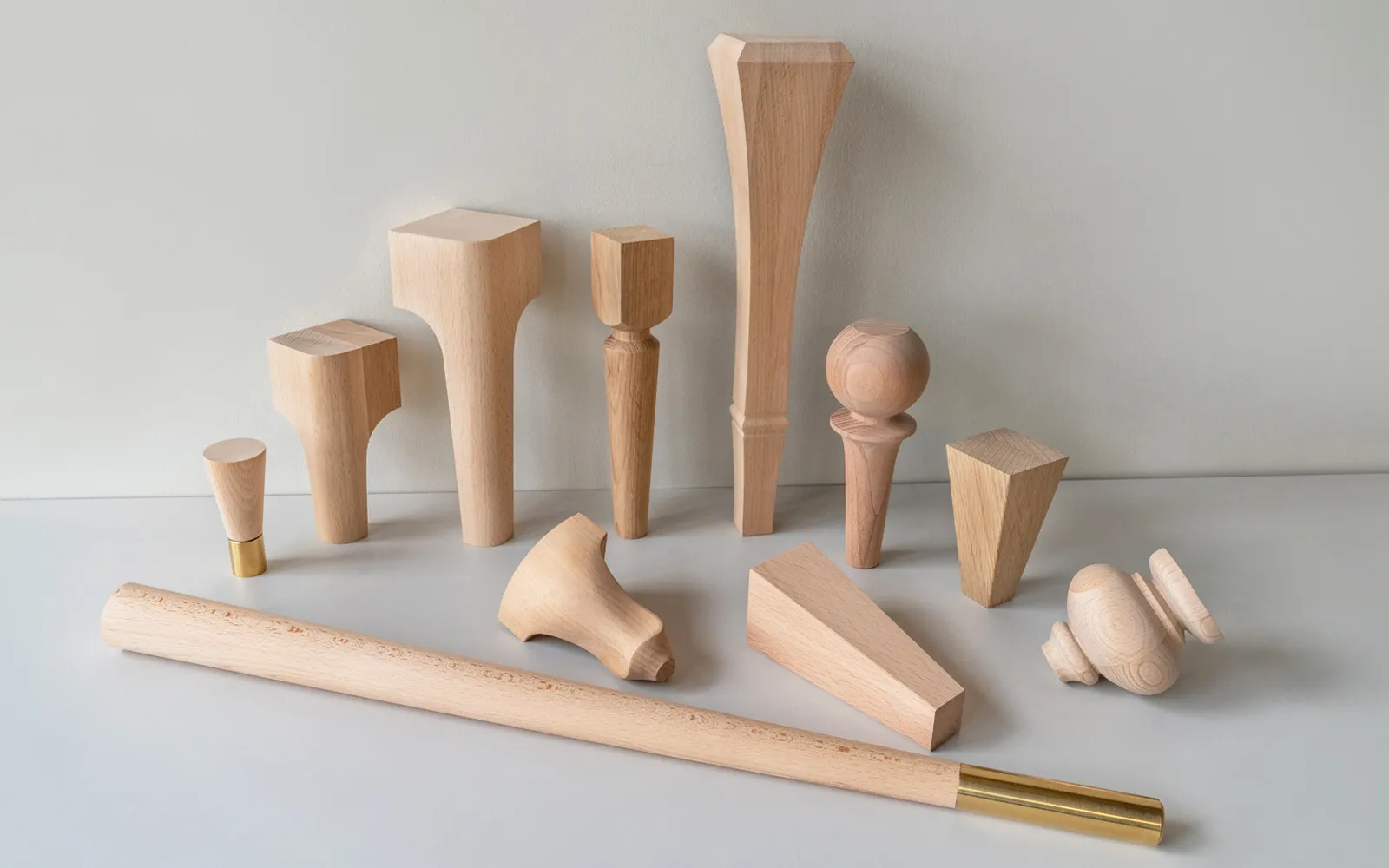
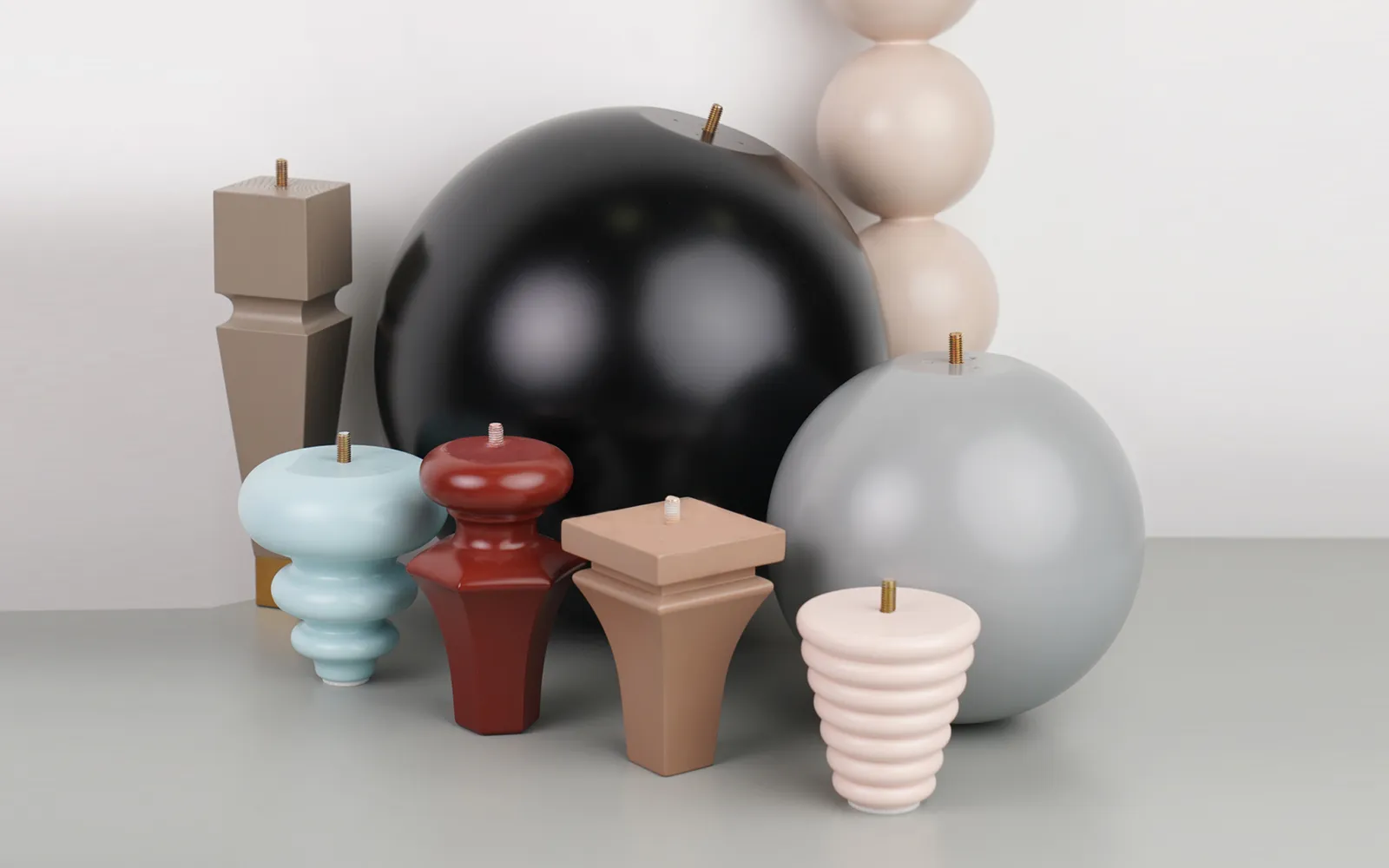
- Shapes of wooden finials: from sphere to carved accent
- Sphere — timeless classic
- Cap on the post — a calm finish
- Carved finial — for expressive classics
- Turned finial — an ensemble element
- Figurative cap and multifaceted shapes
- How to choose the size of the finial: four working parameters
- Parameter 1: Post cross-section
- Parameter 2: Finial height
- Parameter 3: Overall staircase scale
- Parameter 4: Ceiling height and space
- How to match the finial to balusters and handrail: a system, not a coincidence
- Finial and Balusters
- Finial and Handrail
- How to Choose Wood Species and Tone
- Wooden Finial in Home Interior: Where and How It Works
- Newel Post: The Face of the Staircase
- Top Post on the Landing
- Intermediate Posts and Corner Posts
- Wooden Finial for Porch and Terrace: Outdoor Application
- Wood Species for Outdoor Finials
- Coating for Outdoor Finials
- Installation of the external finial
- Styles and characters: how to match a finial to the staircase style
- Classic style
- Neoclassicism
- Country, rustic, Provence
- Scandinavian style and minimalism
- Art Deco
- Mistakes when choosing a wooden finial: an honest analysis
- Installation of a wooden finial: key principles
- Mounting methods
- Preparing the post top
- After installation
- How to assemble a staircase kit: step-by-step algorithm
- Wooden finial as part of a large wooden house system
- FAQ: answers to key questions about wooden finials
- What is a newel cap?
- What is the wooden ball on a stair post called?
- How is a newel cap different from a capital?
- How to choose the right size of a newel cap?
- Can a wooden newel cap be used outdoors?
- How to attach a wooden newel cap to a post?
- Do all stair posts need a newel cap?
- What style of newel cap suits a white classic staircase?
- About the Company STAVROS
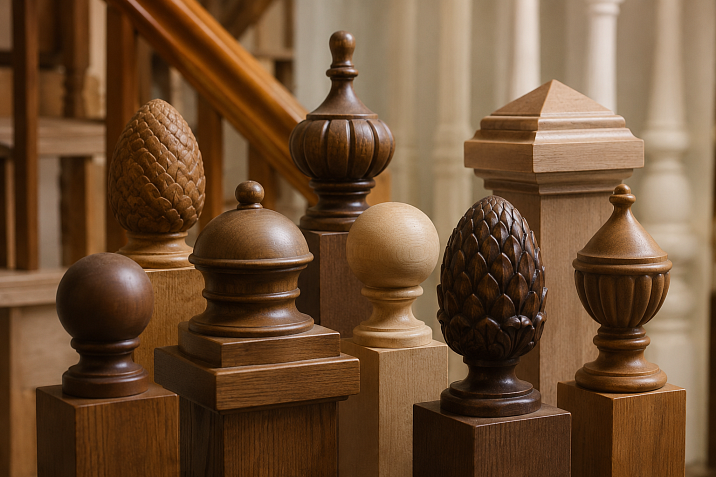
Look at a finished staircase — one that truly looks complete. Posts, balusters, handrail, treads — everything in its place. And on top of each post — a neat, precisely chosen element. A ball. A decorative cap. A carved finial. A detail you might not consciously notice, but without which the staircase loses something important.
Now look at a staircase with bare, cut-off post tops. A familiar feeling of incompleteness, right? Like a sentence without a period. Like a frame without glass. The post stands — and leads nowhere at the top.
Wooden finial — this is the final element that puts the finishing touch. It completes the stair post, gives the railing integrity, and makes the staircase — whether in a house, on a porch, or on a terrace — a true architectural object, not just a set of functional parts.
This guide covers everything you need to know to choose the right finial: shape, size, material, combination with balusters and handrails, installation nuances, mistakes, and usage scenarios.
View wooden finials, posts, balusters, and handrails STAVROS →




What is a wooden finial: an explanation without lyricism
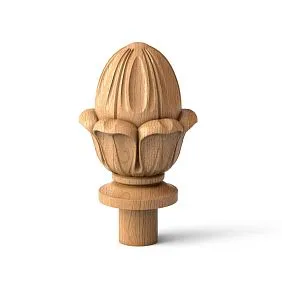
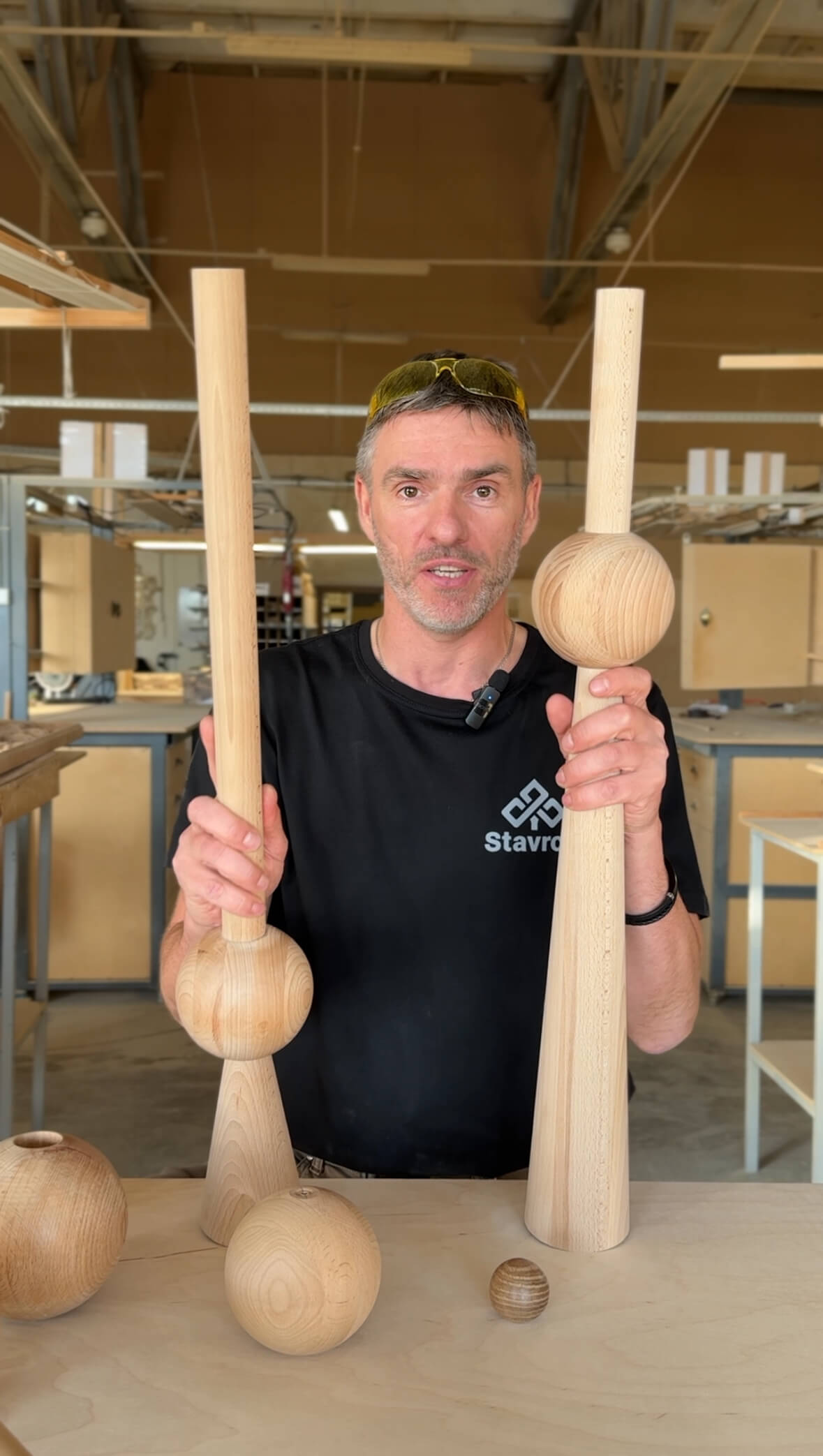
A finial — from the word 'top'. It is the upper decorative detail installed on top of a stair post, support column, balustrade, porch post, or railing. To draw an architectural analogy — it is what a capital is to a column. For a stair post, it is the finial.
But it is important to understand the difference: Capital — this is a detail of the architectural system 'column — cornice', it connects the vertical with the horizontal. The finial solves a different task: it simply completes the post from above — protects its end, covers the fasteners, and creates a decorative accent.
The finial can be:
-
in the shape of a ball — a classic that never goes out of style
-
in the shape of a cap or pyramid — a calm, practical finish
-
in the form of a carved decorative element — for expressive classic staircases
-
of a turned figured shape — for an ensemble with turned balusters
-
in the form of a faceted or multi-faceted cap — for Art Deco and modern classics
All of these are Finials for posts. Different shapes for different styles, different staircases, and different tasks.
Where wooden finials are used: a complete map of scenarios
If you think that a finial is exclusively a detail of a staircase in a private house, that is too narrow a view. The scope of application is much wider, and understanding this helps to choose the right shape and size.
Our factory also produces:


Staircase newel posts in the house
The most obvious scenario. In a wooden staircase, the starting newel is an architectural focal point: it is what catches the eye first when seeing the staircase. The top newel on the second-floor landing is also highly visible. Both require completion — a finial for a staircase newel post here it is not an option, but a logical part of the set.
Get Consultation
Balustrades and railings of the second light
In houses with open second-floor galleries or mezzanines, baluster posts are topped with finials. They are all in plain sight, there are many of them, and the uniformity of shape creates rhythm and order — exactly what distinguishes a well-thought-out interior from a random assembly.
Porch
The porch is the first thing guests see. Porch support posts with beautiful finials instantly elevate the perception of the entire house. It is not an expensive pleasure, but the effect is disproportionately high. Porch finial is most often chosen larger and more expressive than for an interior staircase — porch posts are more massive, and the detail must match them.
Terrace and veranda
On the terrace, wooden railings with finials create a complete architectural ensemble. Here, additional protection from moisture and ultraviolet light is important — therefore, for outdoor use, the choice of material and coating becomes critically important.
Decorative railings and partitions
In modern homes, wooden railings zone the space — separate the living room from the kitchen, create a partition on the mezzanine, mark the boundary of the fireplace area. In such structures Decorative Finials on the posts is a mandatory finishing element, without which the railing looks like a temporary structure.
Facade Decoration
House carving for the porch and facade — a separate topic, but finials for outdoor posts fit into it organically. Carved or turned finials on entrance posts, fence posts, and canopy structures are details that set the style for the entire facade.
How a finial differs from a capital: an important distinction
This question arises for many — and it's worth understanding honestly to avoid confusion when choosing.
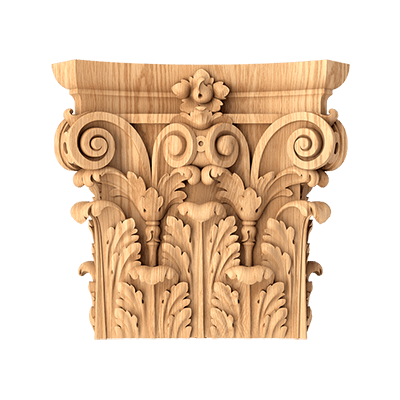
Capital — an architectural element. It completes a column or pilaster as part of an order system and structurally connects the vertical with a horizontal cornice or architrave. A capital is a detail of a portal, wall system, or classic furniture facade. Its form is regulated by architectural orders: Doric, Ionic, Corinthian.
A finial is an engineering-decorative element. It tops a post or upright from above, without creating a transition to a horizontal element. It covers the end, protects the fastening point, and creates a final decorative accent. A finial works in the context of a staircase, balustrade, or railing.
Practically, this means the following: if you have a staircase post — you need a finial. If you have a decorative column or pilaster in a portal — you need a capital. If you have both — both elements, but each in its place.
There are also transitional cases. In some rich classical staircases, the newel post is designed as a mini-column — with a base, shaft, and a capital-like element on top. This is an architectural solution where the capital and finial converge in function. But for most wooden staircases in private homes — it's a finial, specifically as the top finishing point.
Shapes of wooden finials: from a sphere to a carved accent
Variety of forms is not marketing, it's a real need. Different staircase styles, different post sections, and different homeowner tastes create a demand for a wide range.
Ball — eternal classic
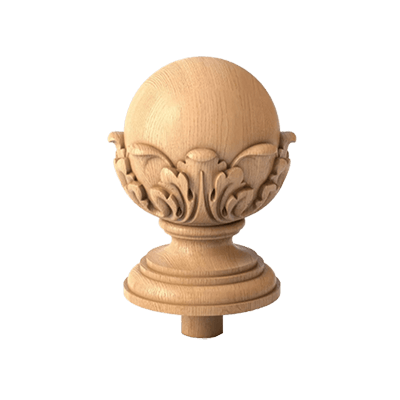
Wooden ball for post — is the most recognizable and most popular option. Why? Because a ball is an ideal shape. It has no direction, does not create unnecessary movement in space, and is balanced from all sides. A ball looks equally good on both round and square posts. It is appropriate in classic, country, rustic, and modern country interior styles.
The ball diameter is selected based on the post section. Standard sizes: from 60 mm (for thin baluster posts) to 200 mm and more (for large load-bearing posts). For most interior staircases, a diameter of 80–120 mm is the working range.
A beech ball under white enamel is a classic for a white staircase. An oak ball under oil is a warm natural accent for a wooden staircase. A turned ball is calm and concise. A carved ball with an ornament or fluting is expressive and decorative.
Post cap — calm finish
Wooden post cap — is a flat or slightly convex element that 'sits' on the top end of the post like a cap. It does not create a vertical accent but neatly finishes the post and protects its end from moisture and dirt.
A cap is the best choice where a calm finish without extra volume is needed. For example, in modern minimalist staircases, in railings with a horizontal accent (slats, horizontal handrail), in Scandinavian style, where restraint and purity of form are important.
Carved finial — for expressive classics
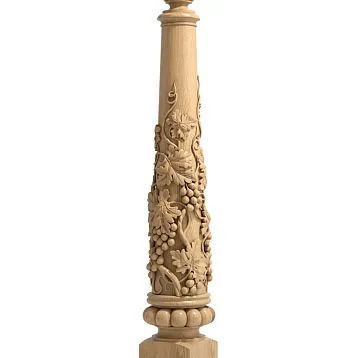
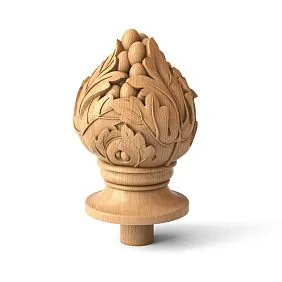
If a ball is conciseness, then a carved finial is character. Carving can be flat (ornamental belts on the surface of a ball or shaped element) or three-dimensional (leaves, flowers, geometric shapes). Carved finial works well in rich classical staircases with carved balusters and massive handrails.
An important principle: the carving on the finial should echo the carving on the balusters and the profile of the handrail. If the balusters are turned and the finial is carved with a floral ornament, this is not a contradiction but requires moderation. If the balusters already have ornamental decor, it is better to choose a calmer finial.
Turned finial — an ensemble element
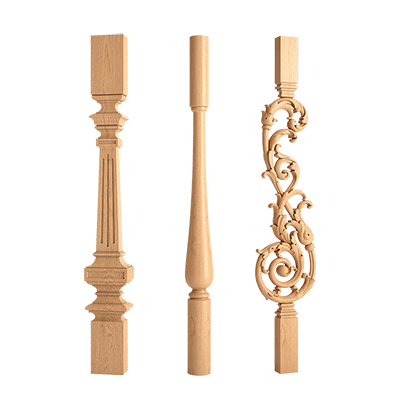
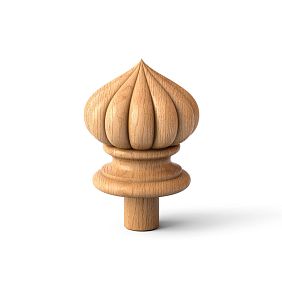
A turned finial is a shaped element turned on a lathe. Cylinders, spheres, cones, vases, spires — turning provides a wealth of forms with strict symmetry. Such a finial is ideally combined with turned balusters for a staircase — they are created by the same technological method and carry the same surface character.
A vase-shaped turned finial with an expressive silhouette is a favorite element of classic wooden staircases in the Empire style and "English" classics. A stricter cylindrical one is for neoclassicism. A cone-shaped one is for the country or rustic style.
Figural cap and multifaceted shapes
Pyramidal and multifaceted finials are a more modern solution. They are appropriate in Art Deco interiors, where geometry is the main expressive language, and in modern homes with an emphasis on form. A four-sided pyramid on a square column is a very clean, very precise solution that works in a strict minimalist context.
How to choose the size of a finial: four working parameters
A size mistake is the most common when choosing a finial. And it is clearly visible: either a tiny ball on a massive column looks like a pea, or a huge element presses down on a thin post and makes the staircase visually unstable.
Parameter 1: Column cross-section
This is the starting point. For a square column 80×80 mm, the finial should be slightly wider — at least 90–100 mm in diameter or at the base. For a column 100×100 mm — 110–130 mm. For a massive column 120×120 mm and larger — from 130 to 160 mm.
A finial that exactly matches the width of the column body looks like a 'continuation' — and does not create the necessary accent. It should be noticeably wider to create a 'cap' — a visual completion that is perceived as a separate element.
Parameter 2: Finial height
Height is what defines the silhouette. A tall finial creates a vertical accent — a spire, an elongated ball, a tall vase. A low one creates a horizontal accent: a flattened ball, a flat cap. Neither is inherently better — context matters.
For classic staircases with tall posts (900 mm and above), finials with a height from 100 to 200 mm work well. For baluster posts 700–800 mm — 80–120 mm. For porch posts — depending on their height and diameter: the proportion 'finial : post' should be approximately 1:6–1:8 in height.
Parameter 3: Scale of the entire staircase
A light balustrade with thin balusters and an elegant handrail requires a delicate finial: a small ball, a smooth cap, a simple turned element. A heavy classical staircase with massive posts, carved balusters, and a wide handrail requires a large, expressive finial: a voluminous ball, a carved vase, a multi-tiered turned element.
The rule is simple: the finial must be "readable" on its post from a distance of several meters. If it gets lost, it is too small.
Parameter 4: Ceiling height and space
The finial at the bottom point of the staircase is installed on a post that stands in the entry area — where a person usually passes. If the ceiling is low (2.4–2.5 m) and the post is tall, a tall finial can create a feeling of "crampedness." In such cases, it is better to choose a flat cap or a ball with a small height.
For spaces with high ceilings (3 m and higher), the finial can be expressive and tall — it will only emphasize the vertical character of the space.
How to choose a finial for balusters and handrail: a system, not a coincidence
A staircase is a single product. And staircase components should look like a system — consistent in shape, material, and surface character. The finial is part of this system — and cannot be selected in isolation from the other elements.
Finial and balusters
Balusters for staircase determine the rhythm and character of the entire side surface of the fence. If the balusters are turned, the finial should also be turned. This is not a strict rule, but visual logic: the same method of wood processing creates a sense of a unified ensemble.
If the balusters are carved with an ornament, the finial can be either carved (consistent with the ornament) or simple turned or spherical (as a "quiet" finish that does not compete with the richness of the balusters but balances it).
Smooth square balusters with geometric grooves are a modern option that pairs well with a laconic cap or multifaceted finial. A lush turned baluster with a multi-tiered profile requires a finial of a similar character—also multi-tiered, also "talkative" in silhouette.
Finial and Handrail
the handrails for the staircase — the horizontal reference point of the entire fence. Its width and profile determine the "weight" of the system. A thin elegant handrail with a diameter of 40–50 mm means a light staircase, and the finial for it should be delicate. A wide handrail of 80–90 mm with rounded sides means a massive classic staircase, and the finial here can be large, expressive, with volume.
It is very useful to keep the image of the entire staircase in mind: post — balusters — handrail — finial. These are four elements of one chain. None should stand out sharply or be dissonant with the others.
How to Choose Wood Species and Tone
Ideally, all elements of the staircase—posts, balusters, handrail, finial—are made from the same wood species. This gives a uniform color with the same coating. If elements are from different species, the difference in texture and shade will be especially noticeable when applying oil or varnish.
Beech has a smooth, dense texture, well suited for enamel. Oak has an expressive texture, looks good under oil and varnish, giving a warm golden-brown tone. Pine is an economical option, accepts paint well, but is less stable with humidity changes.
If the staircase will be painted white or any other opaque color, the wood species is not as important; the main thing is the surface quality: knots, cracks, irregularities. For a transparent coating, the character of the specific board's texture is important.
Wooden finial in the home interior: where and how it works
A staircase in a home is not just a function for ascending to the second floor. It is an architectural object that occupies a significant part of the hallway or living room and is always in sight. And that is why every detail of the stair railing matters — from the first step to the last post.
Entry post: the face of the staircase
The lower entry post is the first accent a person sees upon entering the home. It sets the tone for the entire staircase. A massive post 120×120 mm with a voluminous wooden finial — is a statement. A thin post 80×80 mm with an elegant turned ball — is delicacy and airiness.
For a classic interior with high ceilings, it is recommended to use a larger entry post and a more expressive finial — to support the scale of the space. In small homes with compact staircases — a restrained finial that does not 'steal' space.
Upper post on the landing
The upper post also requires a finial — especially if it is visible from the first floor. Often, the upper landing is not given due attention during staircase assembly, but it is precisely this that often catches the eye of those looking at the staircase from below.
The upper post is usually slightly lower than the lower one (height from landing to handrail is about 900 mm). The same finial as for the lower one is suitable for it — they should be identical, creating a visual rhyme at the beginning and end of the railing.
Intermediate posts and corner posts
On long stair flights and landing turns, intermediate posts are installed — where the staircase changes direction or where an additional support point is needed. These posts are also topped with finials — usually slightly smaller than the entrance ones if they are not as massive.
Intermediate and corner posts require the same finial as the main ones — uniformity here is essential.
Wooden finial for porch and terrace: outdoor use
When it comes to outdoor use, the task becomes more complex: operational requirements are added to decorative ones. Wood outdoors works in harsh conditions — moisture, frost, ultraviolet radiation, temperature expansion. An incorrectly chosen or improperly treated element will start cracking and darkening after just one season.
Wood species for outdoor finials
For the porch and terrace, dense, durable species are preferable. Oak is a very good choice: dense, heavy, absorbs moisture slowly. Larch is an excellent option for outdoor use: one of the few coniferous species that does not rot in damp conditions. Pine is more affordable but requires high-quality treatment.
For outdoor finials on posts untreated wood is categorically unsuitable: it quickly darkens and cracks. Coating is mandatory.
Coating for outdoor finials
Oil with UV protection is the best option for outdoor wooden elements. The oil penetrates the wood structure without forming a film that could peel off. The UV filter prevents graying under the sun. Application: 2–3 coats, renewal every 2–3 years.
Alkyd varnish for outdoor use creates a film that provides good moisture protection. However, it requires complete renewal when cracks appear in the coating — otherwise water gets under the film and peeling begins.
Acrylate paint for outdoor use — if the porch staircase is painted, the finial is also painted in the same color. High-quality facade paint on a white or colored base adheres well to wood.
Installation of an outdoor finial
For outdoor use, the tightness of the joint between the finial and the post body is especially important. If water gets into the joint, the wood starts to rot there. Therefore, during installation, the joint should be treated with a waterproof sealant, and the finial should be positioned so that water flows down without pooling.
The correct shape for an outdoor finial is with sloped surfaces. A flat cap on a post holds water — that's bad. A sphere sheds it — that's good. A pyramidal finial also works well outdoors precisely because water does not linger on the sloped faces.
Styles and characters: how to choose a finial to match the staircase style
The staircase is a mirror of the home's style. And the finial is its final touch.
Classic style
For a classic wooden staircase with turned or carved balusters, a wide profiled handrail, and massive posts — the finial should be expressive and voluminous. A sphere with fluting, a carved vase-shaped finial, a turned multi-tiered element — all these options create the desired level of decorativeness.
In classic style, symmetry is important: the lower and upper posts carry identical finials, while intermediate ones carry slightly smaller versions of the same element.
Neoclassicism
Here you need to balance between decorativeness and restraint. A turned ball without unnecessary ornament, a neat conical cap, a laconic vase with one ornamental belt — this is the register of a neoclassical finial. No lush multi-tiered elements, but not an absolutely smooth lid either.
Country, rustic, Provence
Here, wood is loved "alive" — with texture, with a natural tone, without strict geometry. Wooden finial For a country staircase — a simple wooden ball made of oak under oil. Or a rough turned cap with deliberately irregular lines. Minimum polishing, maximum living wood surface.
Scandinavian style and minimalism
Here the finial should almost disappear. A smooth flat cap matching the handrail — and that's enough. No balls, no carving. Just a neat closure of the post end — and the purity of form comes to the forefront.
Art Deco
Geometry, rhythm, expression of form — that is the language of Art Deco. For such a staircase, a multifaceted finial is suitable — an octagonal pyramid, a stylized spire, a stepped form. This is expressive and exactly matches the spirit of the style.
Mistakes when choosing a wooden finial: an honest analysis
Buying a finial without measuring the post cross-section. This is the first and most obvious mistake. A finial that does not fit the base of the post will either not cover the end or will wobble. Always start your selection with precise dimensions.
Choosing a ball that is too small. A small finial on a large post looks like a randomly forgotten detail — it does not create an accent, does not complete the vertical, and does not fit into the system. Making a mistake "on the smaller side" is easier than it seems.
Installing a carved finial without connection to the style of the balusters. A richly carved Crown Molding against the background of smooth rectangular balusters without decor — this is a stylistic dissonance. The decor level of all elements must be coordinated.
Do not consider the mounting method. Different finials have different fastening solutions: some are mounted on a dowel, others on a metal rod, and others on glue. Clarify in advance how the selected element is installed and ensure the post is prepared correctly.
Mixing different wood species and shades. If the posts are oak, the balusters are pine, and the finial is beech — with the same transparent coating, the color and texture will differ noticeably. This is not a disaster, but it reduces the sense of a unified product.
Forgetting about coating for outdoor use. A wooden finial for a porch or terrace without protective coating is a matter of one or two seasons. The wood will darken and crack. Treatment is mandatory.
Buying elements from different stylistic series. Posts for staircase, balusters, handrails and finials must belong to a single stylistic system. Purchasing elements from different manufacturers without coordinating the character of profiles and shapes is a direct path to visual fragmentation.
Not planning the color and coating in advance. This is a decision made before purchase, not after installation. The same finial shape looks fundamentally different under white enamel, dark oil, and clear varnish.
Installation of a wooden finial: main principles
Installing a finial is a simple operation but requires precision. A carelessly installed element will be noticeable: misalignment, poor fit, protruding fasteners — these are details that are immediately visible.
Methods of mounting
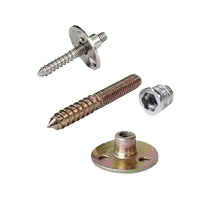
On a dowel. A hole is drilled into the end of the post, a wooden or metal dowel is glued into it, and the finial is placed on the dowel with glue. This method is reliable, hidden, and creates a monolithic connection.
On a metal rod. Similar to a dowel, but the rod is metal (most often threaded). Allows removal and replacement of the finial if necessary. Suitable for outdoor use where elements may need periodic replacement.
With glue. For lightweight interior finials — high-quality wood glue on carefully leveled end faces is sufficient. A simple, clean method that does not require drilling holes.
With a screw from below. A countersunk screw is driven through the post body from below into the finial. Reliable, but requires a pre-drilled hole strictly along the post axis.
Preparing the post end face
The post end face needs to be cleaned — remove burrs, level the surface. If the post protrudes unevenly, the end face is sanded. For outdoor use, the end face should also be pre-coated with a protective compound, even if the finial itself will cover it from above.
After Installation
The finish coating is applied after all elements are installed — this way the boundary between the post and finial is hidden in the overall coating film. Exception: elements of different colors — in this case, each is painted before installation with subsequent touch-up of the joint.
How to assemble a staircase kit: step-by-step algorithm
If you are assembling a staircase from scratch or updating the railing, here is a working selection sequence.
Step 1: Determine the style and character of the staircase. Classic, neoclassical, country, minimalism — this is the starting point for all decisions.
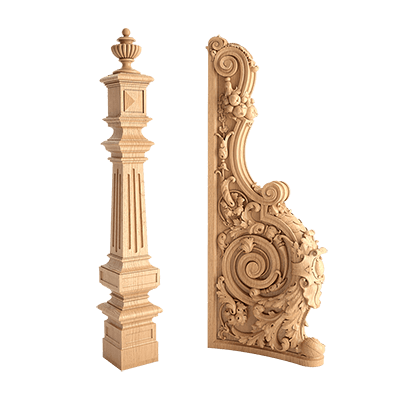
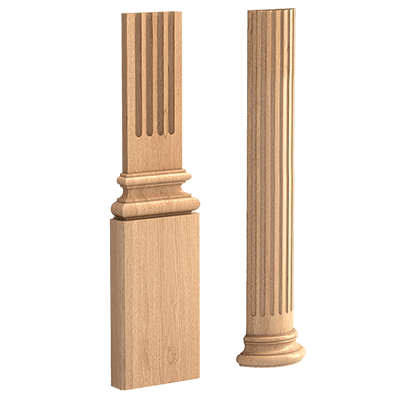
Step 2: Choose the posts. Wooden posts for the staircase — this is the base of the railing. Their cross-section and height determine the scale of the entire structure.
Step 3: Choose the balusters. Balusters for staircase must be consistent in style with the posts. Turned, carved, square with chamfers — these are all different characters.
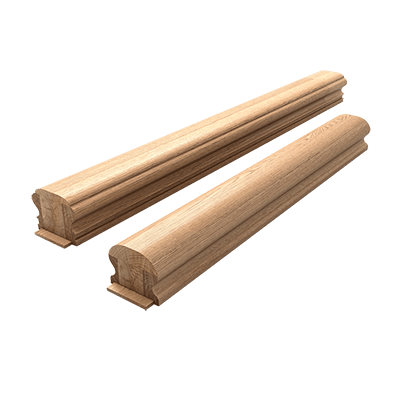
Step 4: Choose the handrail. the handrails for the staircase define the profile of the horizontal line of the railing. Its width should be proportional to the balusters and posts.
Step 5: Choose the finial. Wooden finial is selected last — it must be consistent with the shape of the balusters, the scale of the posts, and the overall character of the staircase.
Step 6: Check compatibility. All elements must be from the same wood species or from tonally matched species. The style must be unified. The manufacturer — preferably the same.
Step 7: Order as a set. The entire set staircase components from one catalog — a guarantee of unity.
A wooden finial as part of a large wooden system of the house
A wooden staircase does not live in isolation. In a well-designed interior, it is connected to the wooden floor, with wooden trim — baseboards, architraves, thresholds — with doors, furniture, and wall decor.
The finial of the stair post becomes part of this system: it is of the same wood, the same tone, the same surface character. It is a small but important detail that connects the staircase with the rest of the interior into a single whole.
If the house has a porch with wooden posts and house carving on the facade — the finials on the porch posts echo the carving in style. If the staircase leads to a study where the walls are decorated with pilasters with capitals — the finial on the post can be chosen in the same ornamental key as the capital.
This is how, from individual details, an interior is born that is perceived as a coherent statement. Not a set of objects — but an environment in which you want to live.
FAQ: answers to the main questions about wooden finials
What is a stair post finial?
A finial is the top decorative element installed on a stair post, baluster, porch post, or railing. It covers the end of the post, protects it, and creates a final decorative accent.
What is the wooden ball on a stair post called?
This is a wooden finial in the shape of a ball. In everyday speech, it's called a "post ball" or "ball finial." Formally — Wooden ball for post, one type of decorative finial for stair posts.
How is a finial different from a capital?
A capital completes an architectural column or pilaster and connects it to a horizontal cornice — it's an element of the classical order system. A finial completes a stair post or railing baluster — it's a decorative and protective element of a stair set. Their application differs, even if they may resemble each other externally.
How to choose the right size for a finial?
The starting point is the post cross-section. The finial should be noticeably wider than the post body. Standard ratio: finial diameter or width = post cross-section + 20–30% on each side. Finial height = 1/6–1/8 of the post height.
Can a wooden finial be used outdoors?
Yes, with the right choice of material and coating. For outdoor use, oak or larch are preferred. The coating should be oil with UV protection, alkyd varnish for exterior use, or facade paint. The coating should be renewed every 2–3 years.
How to attach a wooden finial to a post?
The main methods: on a dowel with glue, on a metal rod, on glue, on a screw from below. The choice of method depends on the type of finial and operating conditions. For outdoor use, a metal rod with the possibility of replacing the element is recommended.
Do all staircase posts need a finial?
Yes. Uniformity is a key principle. The bottom and top newel posts, corner and intermediate posts — all are finished with finials. The absence of a finial on any post creates a feeling of incompleteness.
What style of finial suits a white classic staircase?
For a white classic staircase, the best choice is a turned or ball-shaped finial made of beech, painted white to match the railing. The shape can be either laconic or multi-tiered — depending on the richness of the balusters.
About the company STAVROS
STAVROS is a Russian manufacturer of wooden elements for staircases, railings, and architectural decor. The company's catalog includes a complete set for assembling a wooden staircase: Wooden Caps, Posts for staircase, balusters, handrails and all necessary staircase components.
STAVROS products are made from solid oak, beech, larch, and other wood species. All elements are designed with system compatibility in mind: finials, posts, balusters, and handrails are coordinated in style and size — allowing you to order a complete set in one place without the risk of stylistic inconsistencies.
Buy wooden stair post finial and select the complete set solid wood products can be found in the STAVROS catalog on the website.