

























Article Contents:
- What is a decorative element in a professional design project
- How a decorative element differs from an accessory
- Why this reduces the number of errors
- Moldings
- Corner Elements
- Recessed Outlets
- Brackets and Consoles
- Capitals and pilasters
- Panels and large compositional elements
- When a ready-made SKU is more rational
- When a custom element is needed
- Example with a furniture facade
- Example with a wall frame
- Central
- Corner
- Side
- Horizontal
- Vertical
- Symmetric
- Oriented
- Profile first
- Then the corners
- Then the center
- Check the inner field
- What to check on a wooden part
- Oak and beech
- Why a sample is needed
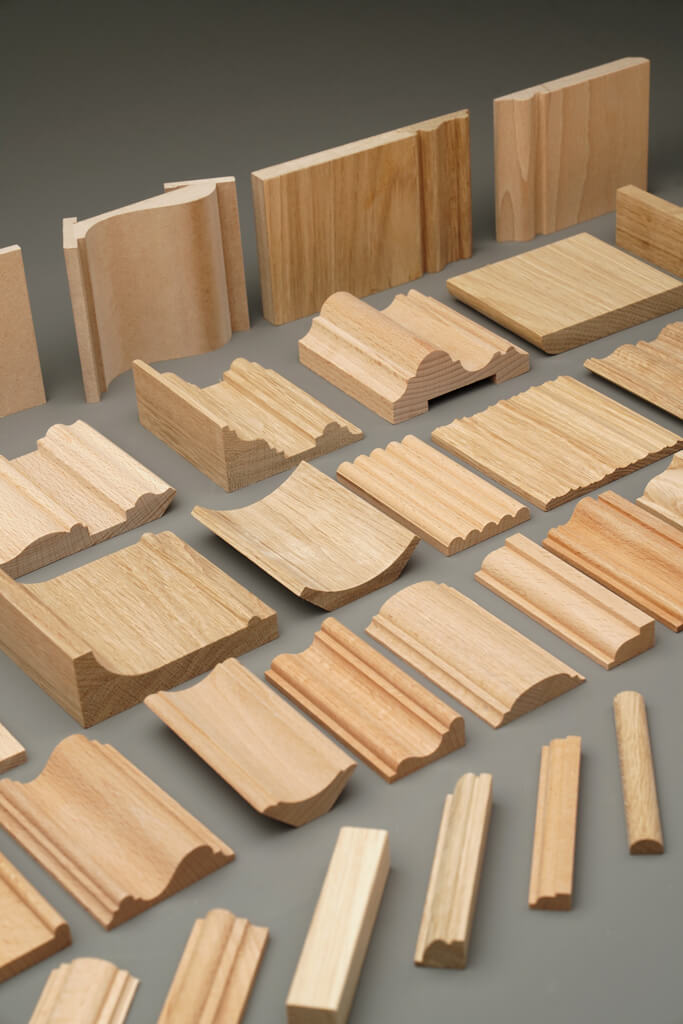
- Moldings
- Recessed Outlets
- Brackets
- Capitals and pilasters
- Baguette and frame elements
- Why you shouldn't choose carving separately from scale
- Why L/R shouldn't be counted as one position
- When polyurethane is especially convenient
- When you need a series of repeating elements
- Relief decoration
- Wood is suitable when these matter
- Polyurethane is suitable when these matter
- Combined project
- Geometric
- Botanical
- Order-based
- Neutral
- How to check the compatibility of two ornaments
- Step 1. Determine the central axis
- Step 2. Choose the central element
- Step 3. Build the frame
- Step 4. Define the corners
- Step 5. Check the left and right sides
- Step 6. Repeat the system
- Why the axis matters more than an individual element
- Molding frame
- TV Area
- Headboard
- Portal
- Check the handle
- Check the opening
- Check the repeat
- Why
- Top termination
- Side elements
- Connection with baseboard
- Example
- 1:1 check
- Why a mock-up is stronger than a single sample
- Do not stretch a finished SKU
- Check the entire module
- Why a map is needed on complex walls
- Why a code is needed during installation
- Why a single name is not enough
- Why status is needed in the specification
- Central elements
- Corner Elements
- Paired L/R elements
- Brackets
- Repeating decor
- Reserve
- Wooden items
- Polyurethane
- Catalog
- Professional work
- Mistake 1. Choosing by beauty, not by function
- Mistake 2. Not checking the actual size
- Mistake 3. Ignoring the molding
- Mistake 4. Confusing L and R
- Mistake 5. Using a conditional 3D object
- Mistake 6. Not creating a mock-up
- Mistake 7. Not recording the SKU
- Mistake 8. Mixing too many ornaments
- Active architecture
- Small facade
- Complex wall relief
- High operational load
- No clear function
- Why store the implemented context
- What counts as decorative elements in a design project?
- What to choose first — the element or the function?
- How to tell if the overlay fits in size?
- When are paired elements needed?
- Which is better — wood or polyurethane?
- Why does a designer need 3D?
- Why DWG?
- When is a mock-up needed?
- Where to find carved elements?
- Where to view digital materials?

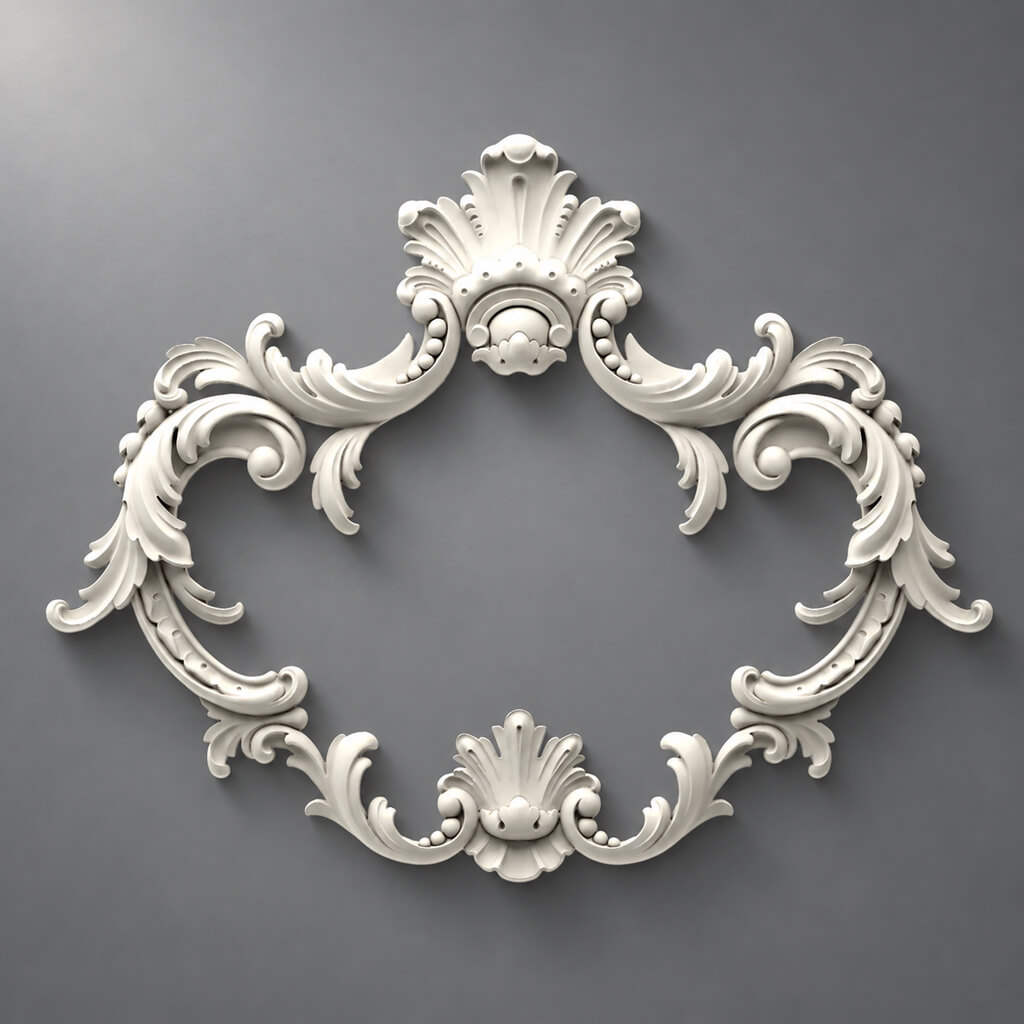
A decorative element in a professional design project is not "a beautiful detail in general," but a specific item with a function, material, geometry, size, SKU, and place in the composition. That is exactly why decorative elements for a design project should be chosen not on the principle of "like it or don't like it," but according to the project task.
Work sequence:
design concept → element function → type → scale → material → actual SKU → sample / mock-up → 3D/DWG → element map → specification → quantity → order.
This way, the designer avoids a typical mistake: first choosing a decorative overlay, and then trying to fit it into a frame, facade, or portal for which it is initially unsuitable in scale or geometry.
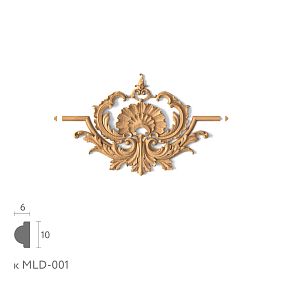

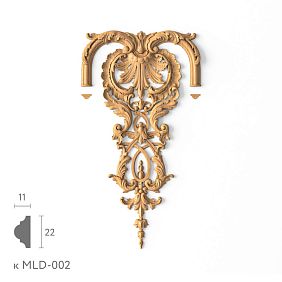
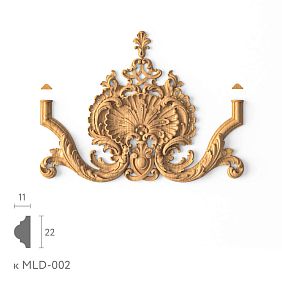
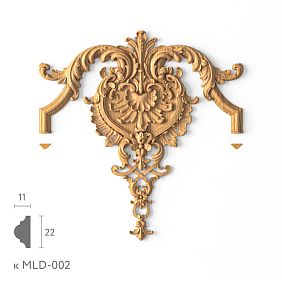
What is a decorative element in a professional design project
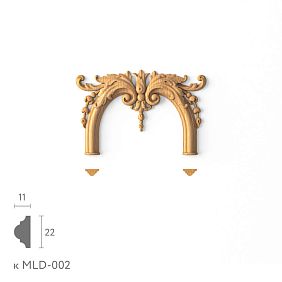
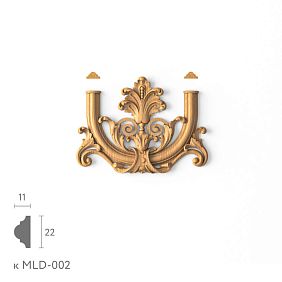
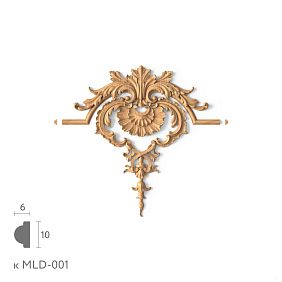
In this article, a decorative element is a specific architectural or furniture detail:
- overlay;
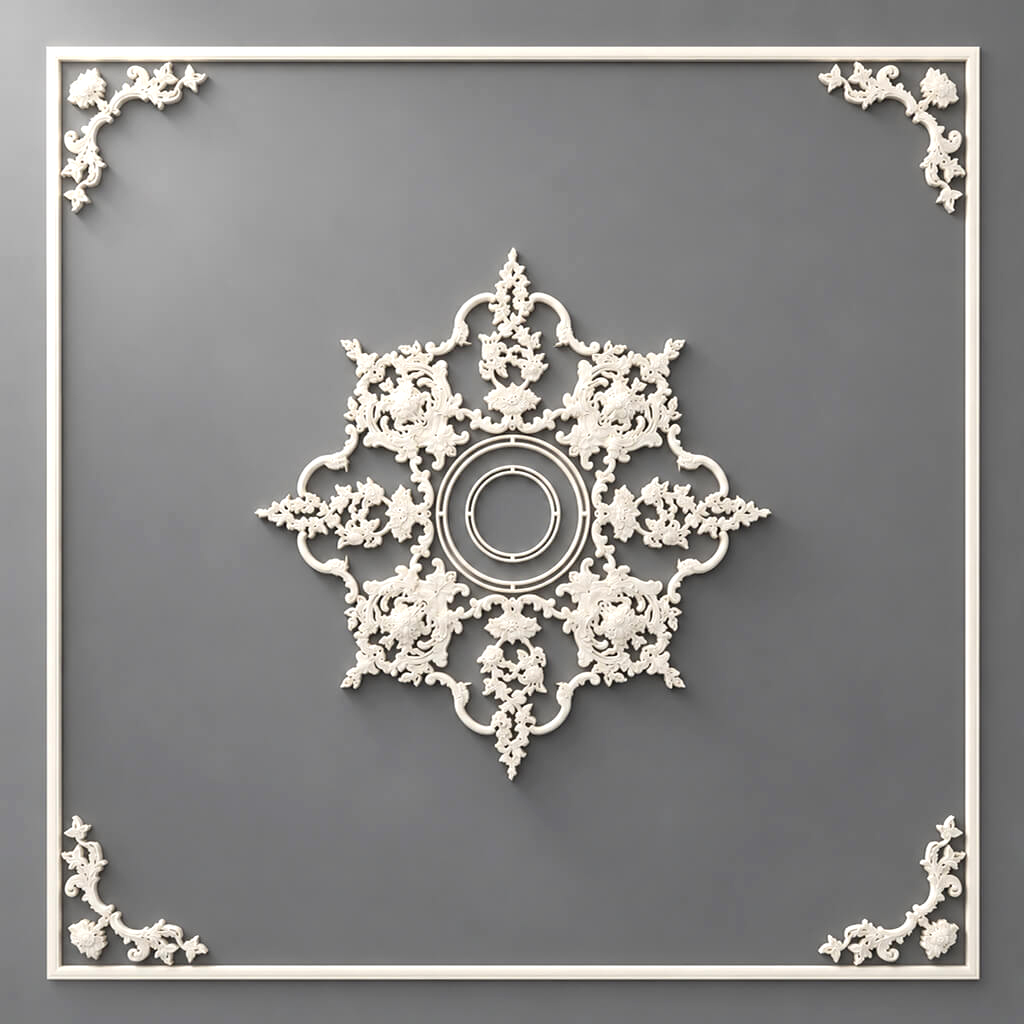
- rosette;
- corner element;
- molding end cap;
- bracket;
- capital;
- pilaster;
- panel;
- cartouche;
- medallion.
Such an item always has a linked set:
material → geometry → actual size → product code → place in the project.
Therefore wooden decorative elements it cannot be perceived merely as a catalog of ornaments. For a designer, it is a set of design details that must be tied to a specific wall, facade, portal, or piece of furniture.
How a decorative element differs from an accessory
An accessory can be replaced without changing the architecture.
A decorative overlay, corner element, or bracket is often part of the composition's geometry. Replacing them can change:
- frame size;
- symmetry;
- axis position;
- rhythm;
- thickness;
- depth of the relief;
- the perception of the entire wall or facade.
Therefore, decorative elements must be included in the project before the final release of working drawings.
Our factory also produces:
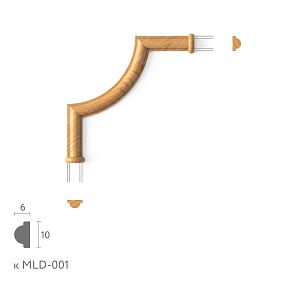
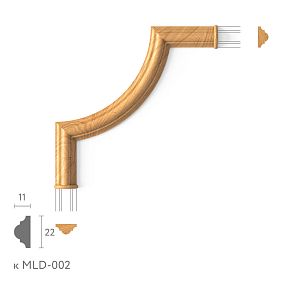
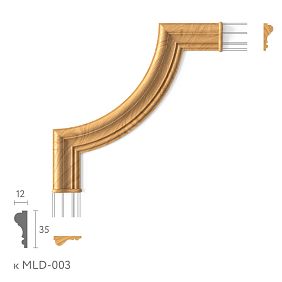
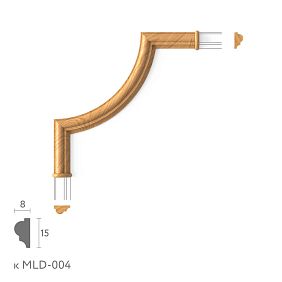
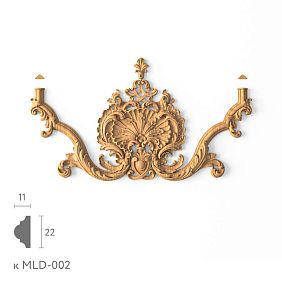
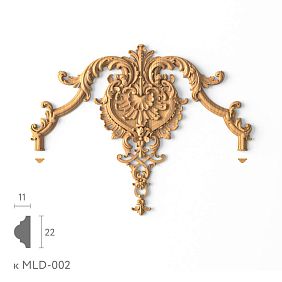

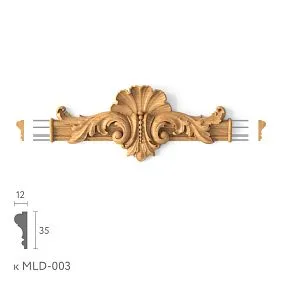
Function first — appearance second
Main principle:
Not:
"I liked a rosette — where should it go?"
But:
"I need to complete the center of the composition — which type of element solves the task?"
A single design task may have several visual solutions, but function is determined first.
| Project task | Suitable element type |
|---|---|
| complete the corner of the frame | Corner overlay |
| form the center | socket / medallion |
| support the shelf | bracket |
| finish the molding | Tip |
| create a vertical | Pilaster |
| Make a central accent | panel / cartouche |
| link paired sides | left + right elements |
| highlight the furniture facade | overlay / socket / frame decor |
Get Consultation
Why this reduces the number of errors
When the function is predefined, the designer immediately checks the required parameters.
For the corner element — the geometry of the joint.
For the central overlay — dimensions and axis.
For the bracket — size, location, and visual load.
For the socket — diameter or overall dimensions.
For paired decor — left and right orientation.
What decorative elements are included in a design project
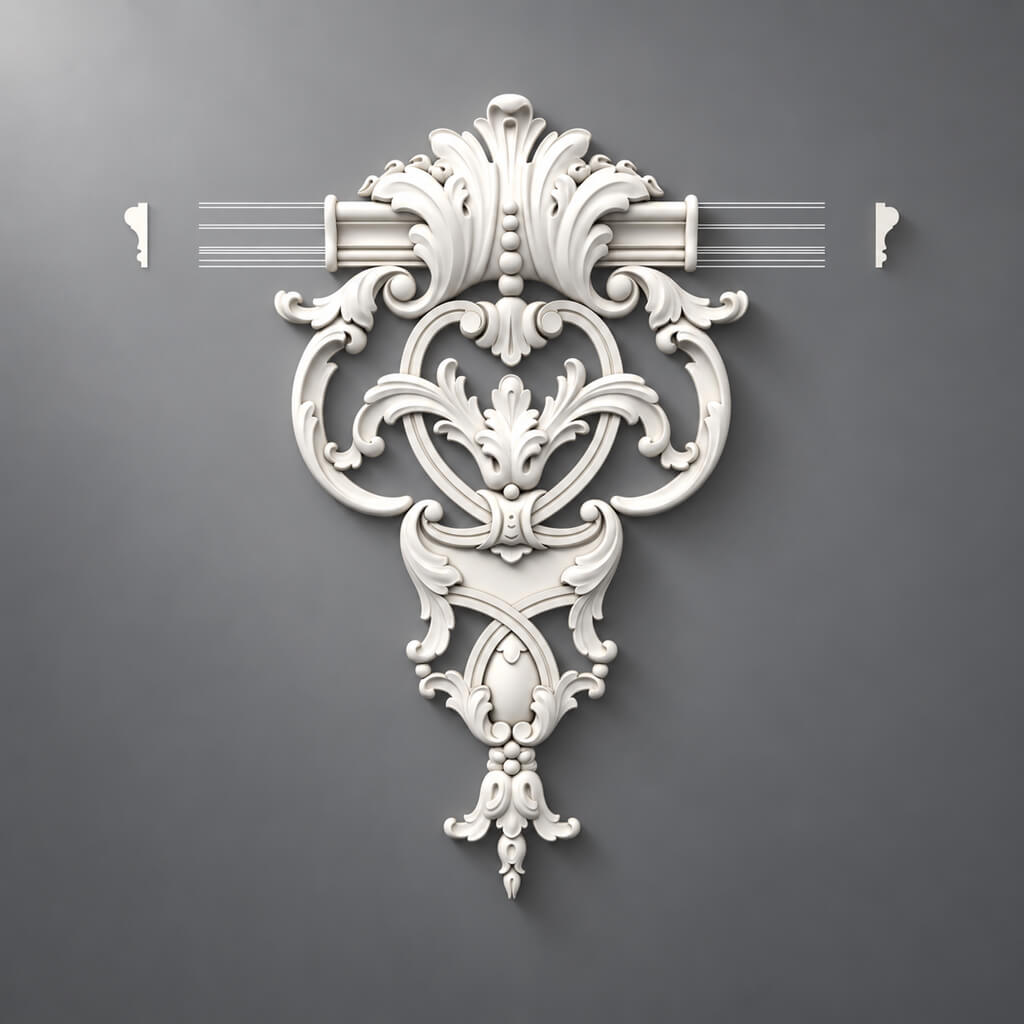
Plates
Decorative wooden inlays are used on walls, furniture fronts, doors, panels, and in frames.
By composition, they can be:
- central;
- corner;
- side;
- paired;
- symmetrical;
- vertical;
- horizontal.
The overlay must have a clear role: center, corner, termination, or repeating accent.
Corner elements
Their main task is to turn an ordinary molding frame into a complete decorative system.
When choosing, it is important to check:
- angle;
- size;
- the depth;
- the width of the adjacent profile;
- matching ornament;
- the direction of the pattern.
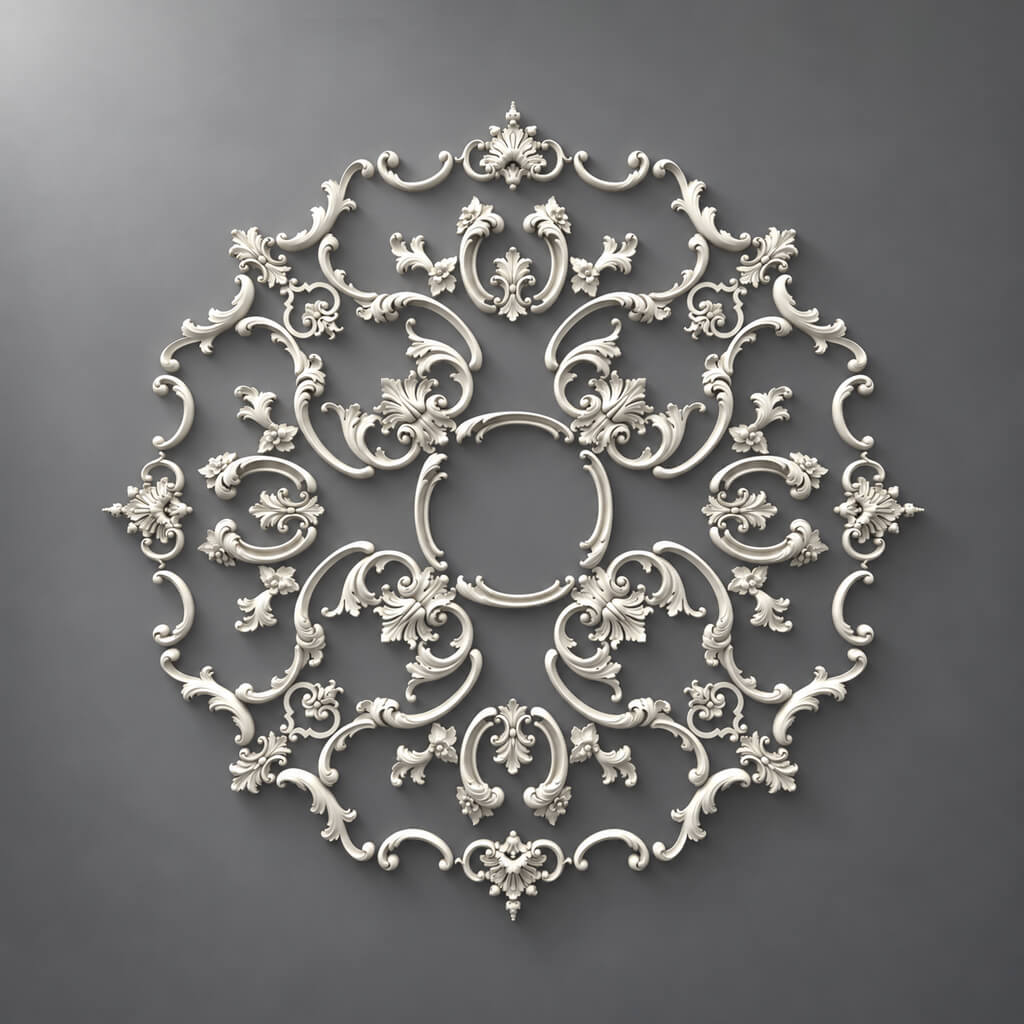
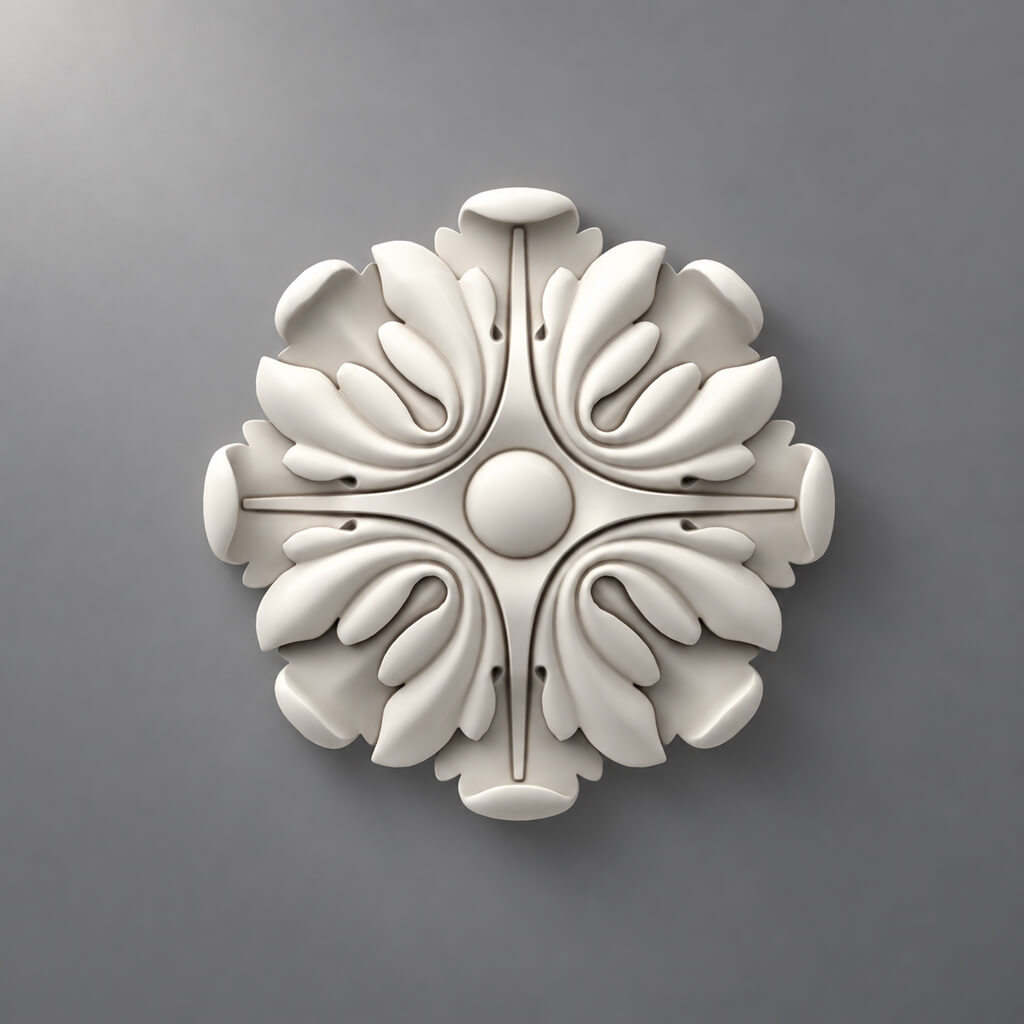
Outlets
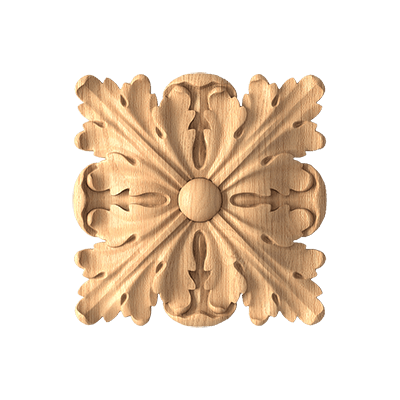
Wooden sockets can be used in furniture, wall, and architectural compositions.
In a project, a rosette often works as:
- compositional center;
- a repeating module;
- an accent within a frame;
- an element of a furniture facade.
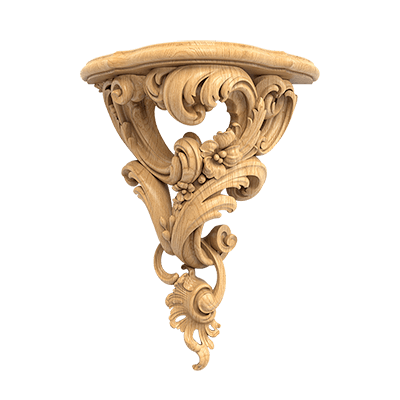
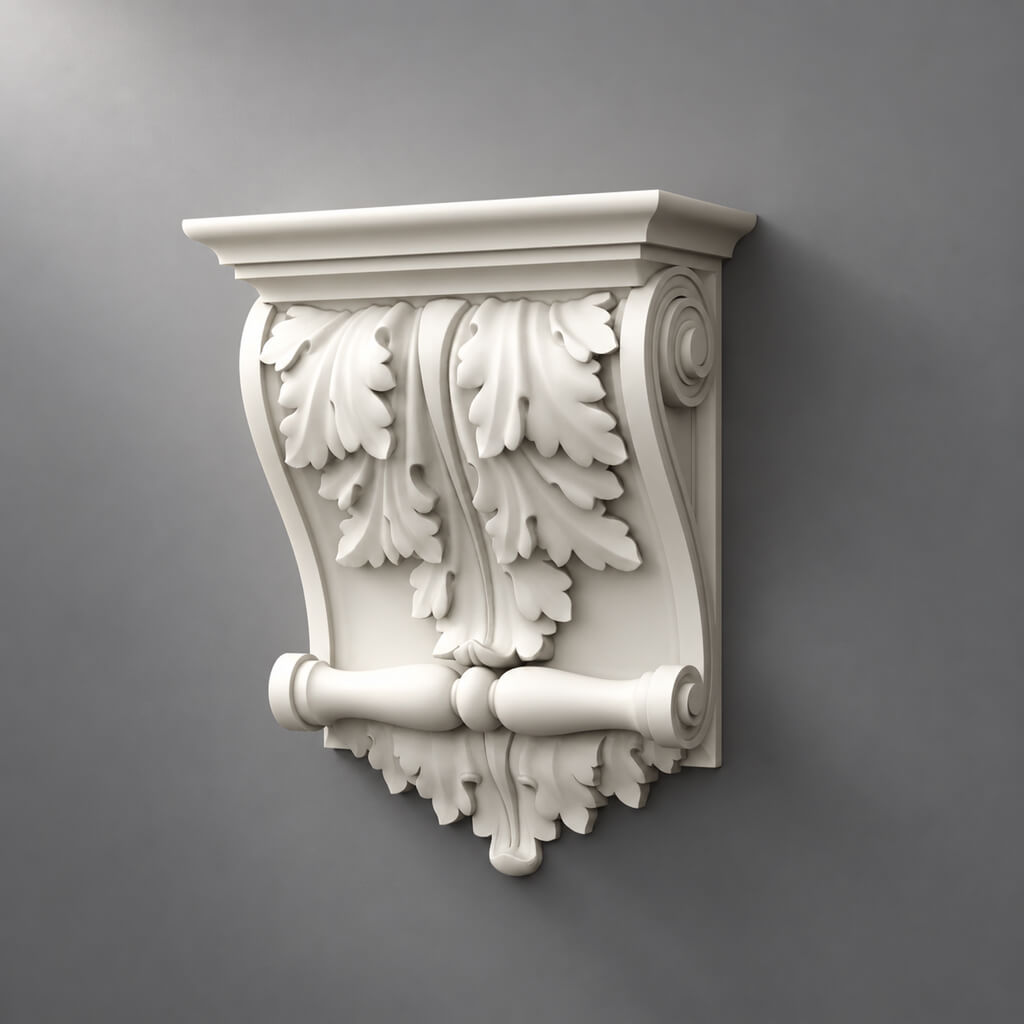
Brackets and corbels
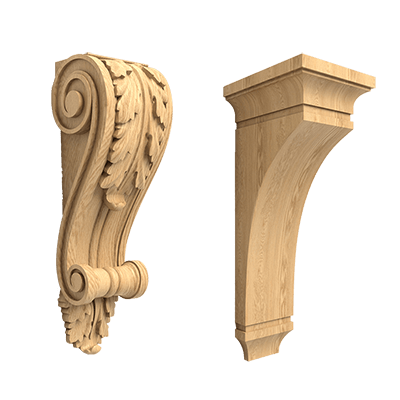
Wooden Brackets can be used in the design of shelves, consoles, portals, furniture, and architectural units.
For a designer, it is important to distinguish between decorative and structural function. If an element must actually bear a load, that is already a separate engineering task, which cannot be derived solely from the appearance of a decorative bracket.
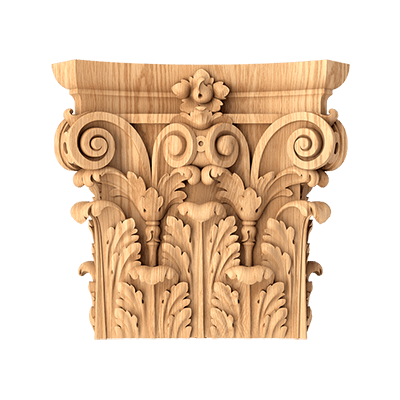
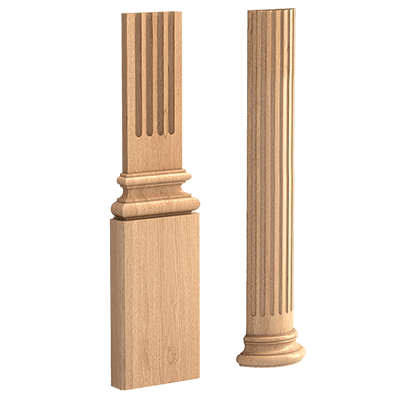
Capitals and pilasters
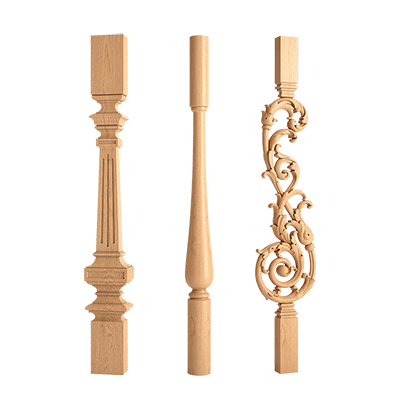
They form verticals and the order structure.
A capital without a clear vertical looks accidental. A pilaster without a base and upper termination is often perceived as unfinished.
Panels and large compositional elements
They work as a standalone accent, so they are especially sensitive to scale.
The larger the detail, the earlier it should appear in 3D and on the layout.
Ready-made decorative elements or custom manufacturing
Before developing a new product, you first need to check ready-made decorative elements.
Checked:
- whether a suitable SKU exists;
- whether the actual size fits;
- whether there is a paired element;
- whether there is a corner version;
- whether the ornament matches;
- whether the material is suitable;
- whether the part fits into the existing molding system.
When a ready-made SKU is more rational
If the difference from the original sketch is minimal and does not affect the composition.
Advantages of a ready-made item:
- clear product code;
- known size;
- easier to include in the specification;
- easier to reorder;
- it's easier to get 3D/DWG if they are available for the product.
When a custom element is needed
If the standard range doesn't cover:
- a specific size;
- a custom ornament;
- a historical motif;
- a non-standard profile;
- a special L/R pair;
- a unique composition module.
Then a separate development process is initiated.
How to choose a decorative element by scale
An element cannot be evaluated separately from the surface.
It should be compared with:
- wall;
- the furniture facade;
- doorway;
- the molding frame;
- ceiling height;
- neighboring details.
Example with a furniture facade
Facade width 600 mm.
Overlay width 260 mm.
Free field:
600 − 260 = 340 mm
When centering:
340 / 2 = 170 mm
on each side.
If there is a frame inside the facade that reduces the usable field to 460 mm:
460 − 260 = 200 mm
or by 100 мм on each side.
The second figure is much more important for the actual composition.
Example with a wall frame
Frame 1200 × 800 mm and a central element 300 mm wide.
The internal scale depends not only on the outer size of the frame, but also on the width of the moulding.
If you replace a 30 mm profile with a 60 mm one, the internal field will decrease by 60 mm along each dimensional axis.
Because of this, the overlay begins to be perceived as larger, even though its own size has not changed.
Decorative overlay elements
Under the term "decorative overlay elements" it is useful to distinguish several functional groups.
Central
Work along the axis.
are used:
- in the center of the frame;
- above the door;
- on the furniture facade;
- in the panel.
Corner
Complete the frame or connect the directions of the ornament.
Side
Form the left and right parts of the composition.
Horizontal
Suitable for top finishes, friezes, facade accents.
Vertical
Used on pilasters, doors, tall panels.
Symmetric
Can be repeated without L/R orientation.
Oriented
Have left and right versions.
For complex symmetrical compositions this is fundamental: the right element cannot be considered simply "another one of the same thing."
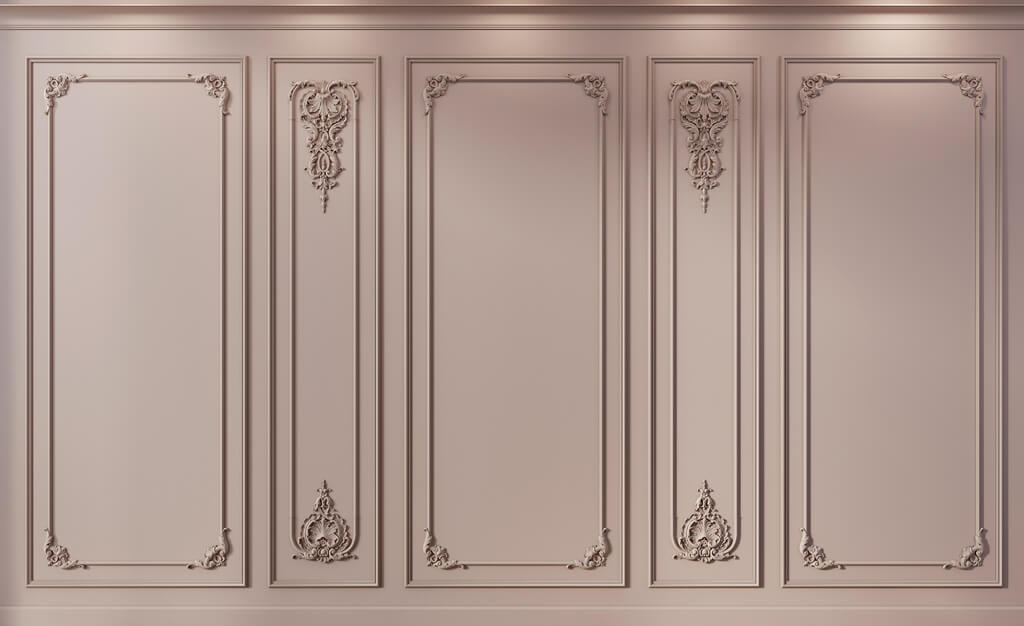
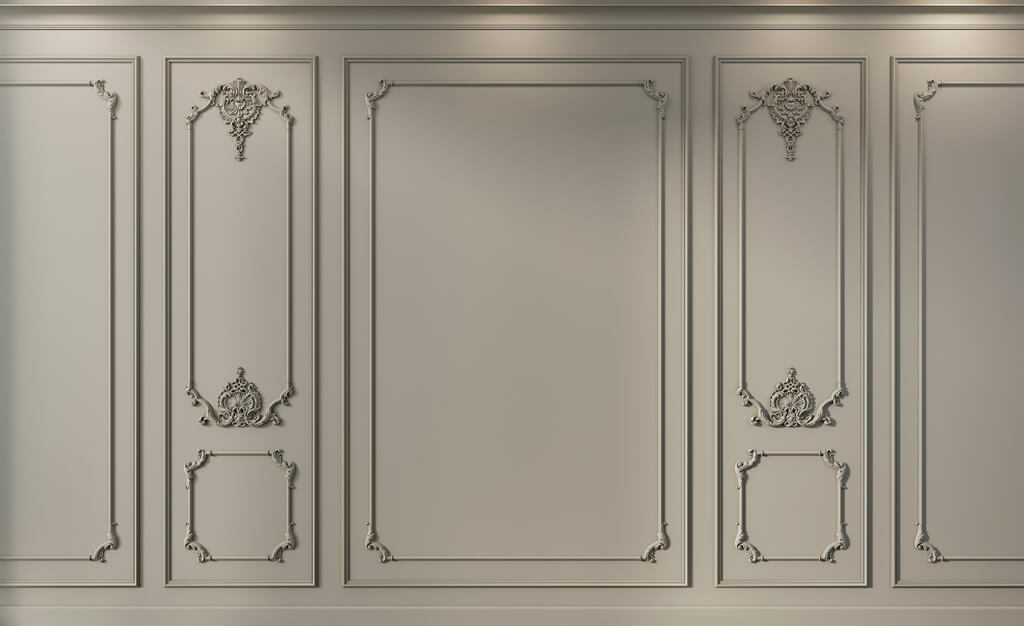
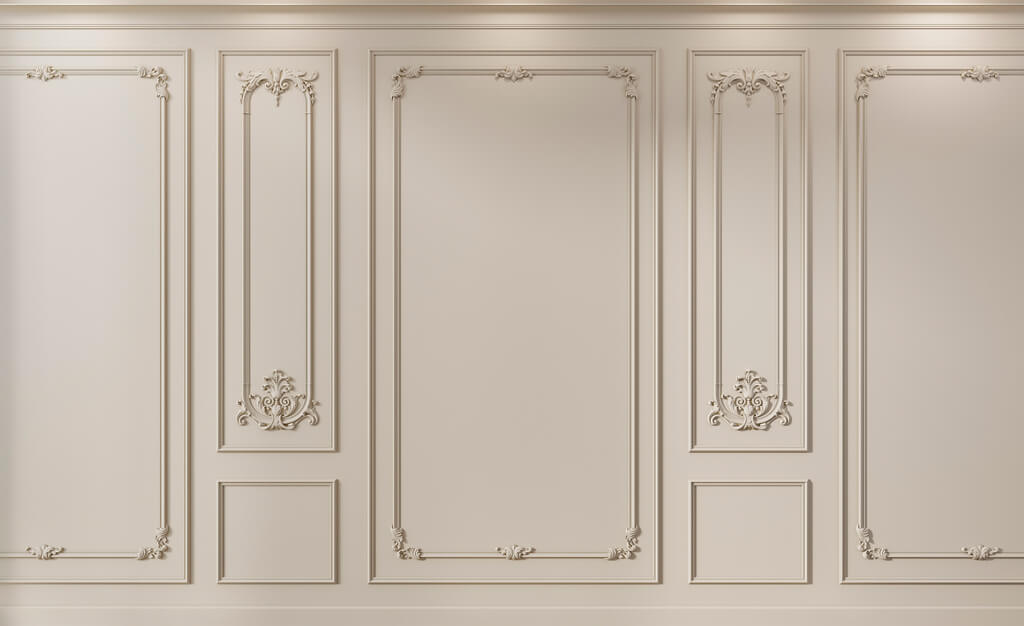
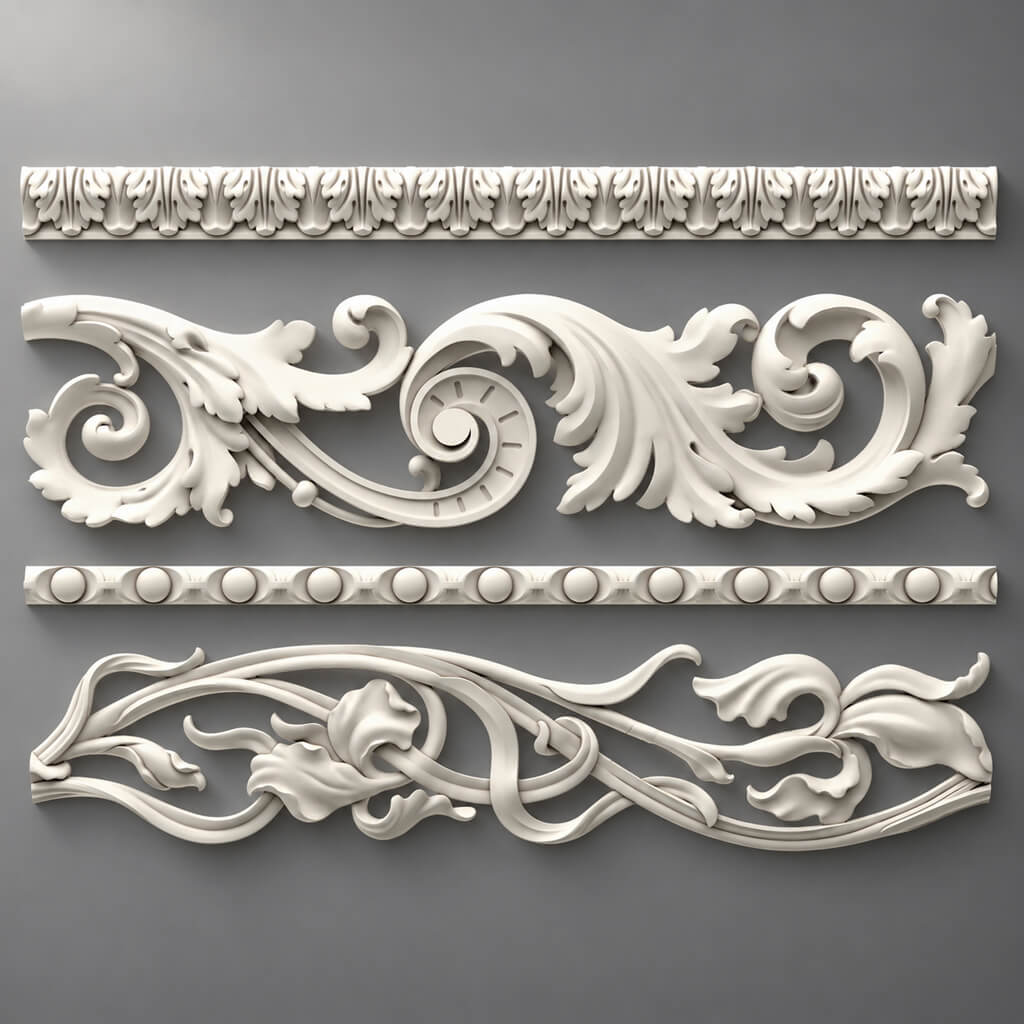
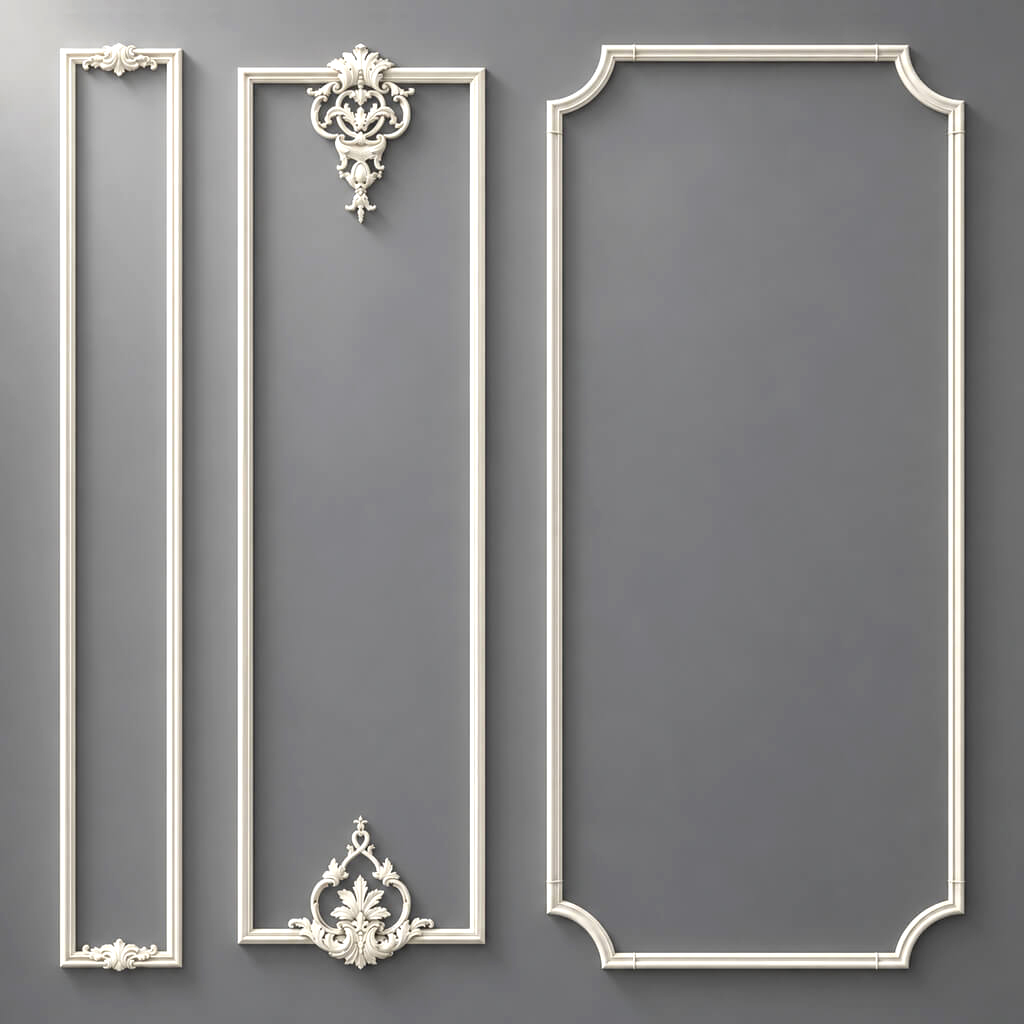
Decorative elements for moulding frames
The system is built as follows:
moulding + corner element + central overlay + symmetry.
Especially useful for this task Decor for Molding.
First the profile
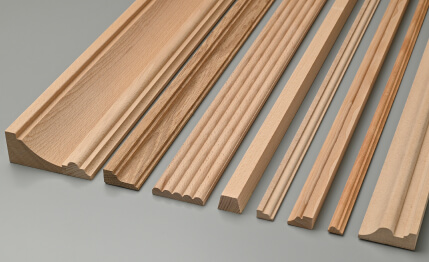
You need to choose Moldings made of polyurethane and only then check the decor.
The reason is simple: the width and relief of the moulding set the scale of the entire frame.
Then the corners
The corner element must:
- fit;
- match the relief;
- not overlap the field;
- logically continue the ornament.
Then the center
The central overlay must be tied to the axis of the frame.
Check the inner field
If the outer frame is 1000 × 700 mm and the profile is wide, the actual inner size may be noticeably smaller.
This is why a drawing is needed, not an estimate "by eye".
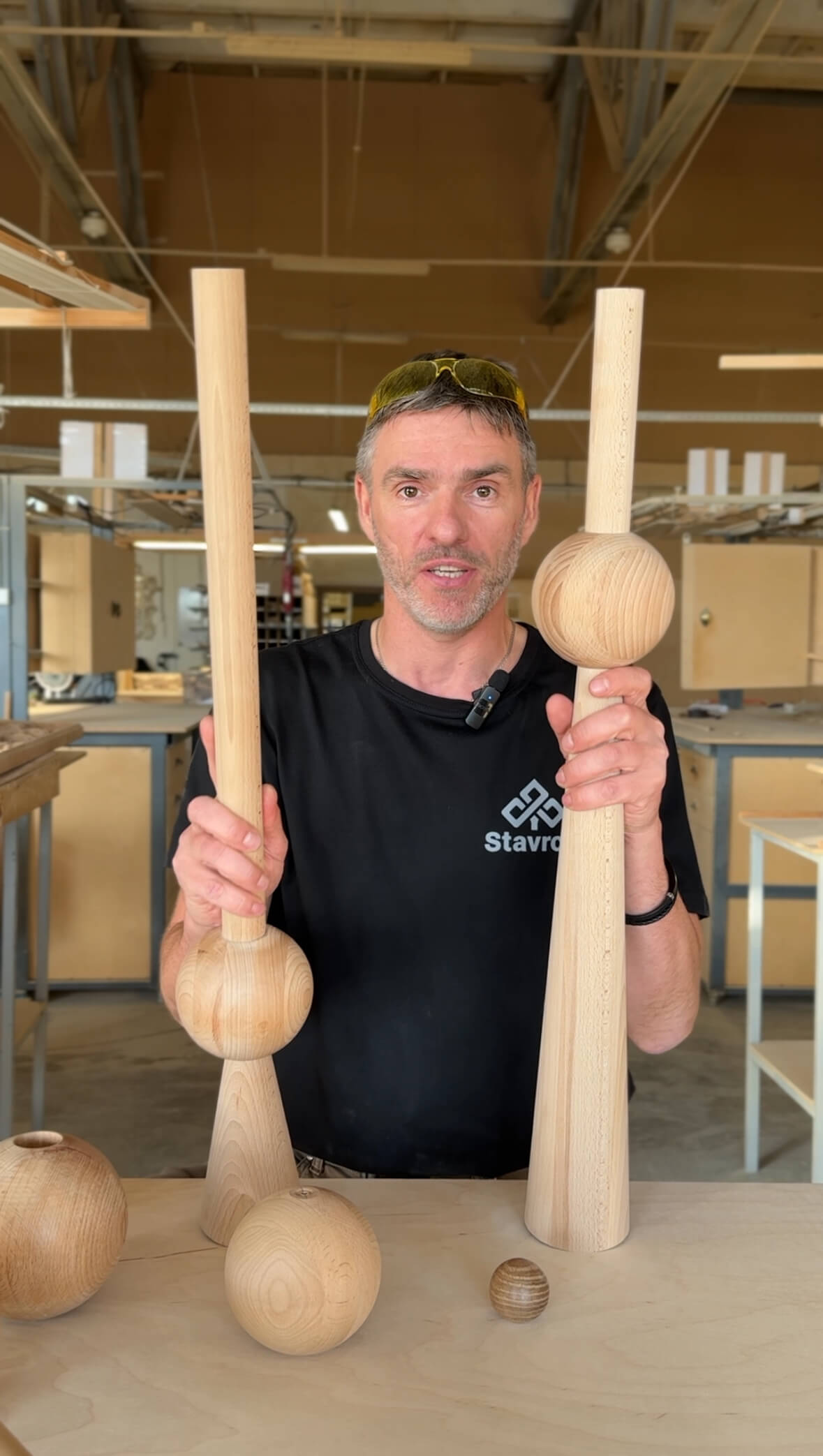
Wooden decorative elements
Wood is chosen not only for its classic style. Its value in a project lies in its natural texture, the possibility of joinery finishing, and expressive carved relief.
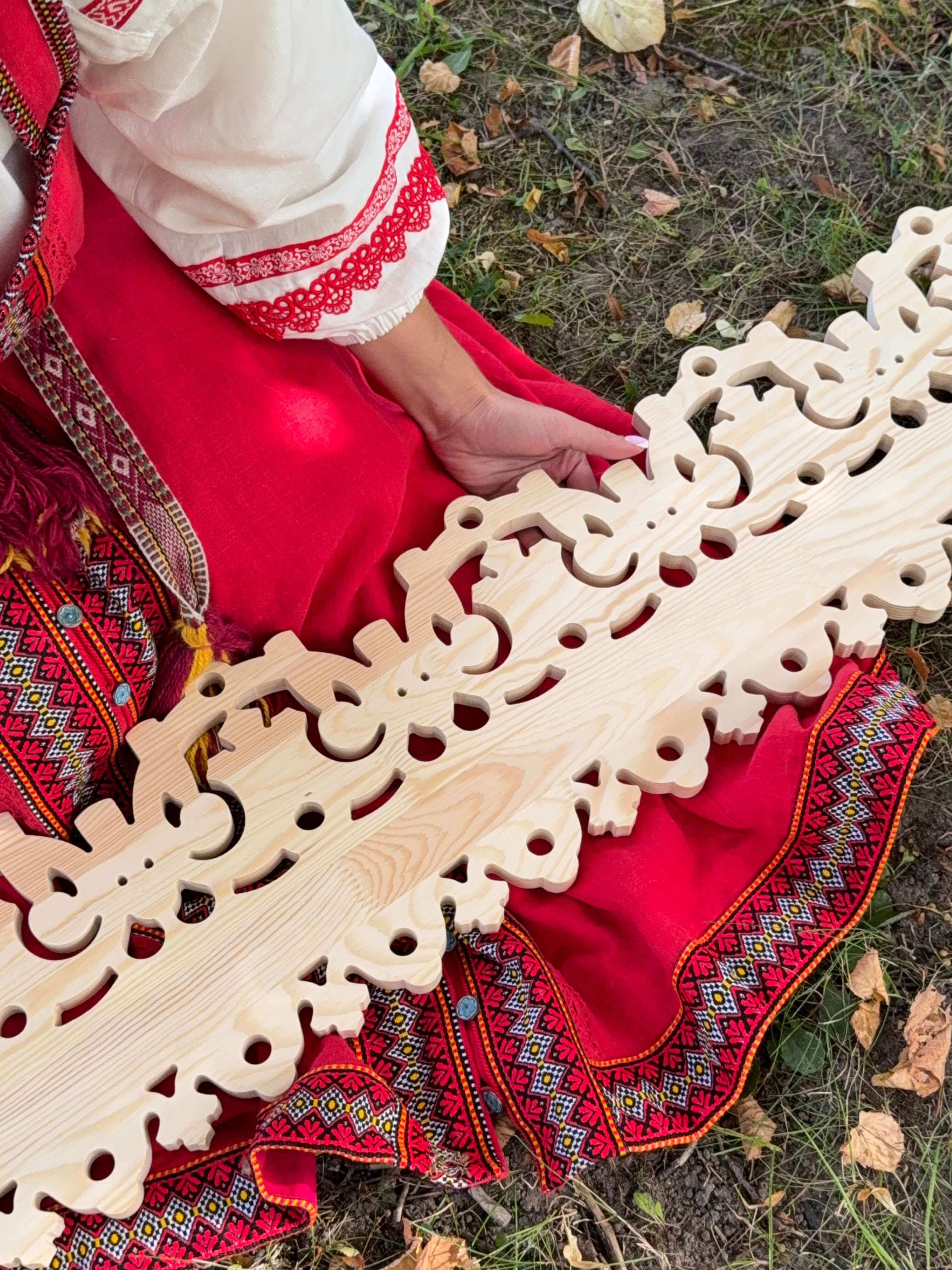
Carved decorative elements used on furniture, doors, portals, wall panels, mirrors, and in interior compositions.
What to check on a wooden part
- breed;
- size;
- depth of the carving;
- grain direction;
- sanding;
- finish;
- installation location;
- adjacent material.
Oak and beech
If the decor remains under a transparent finish, differences in wood species will be part of the design.
If the entire element is painted with opaque enamel, the visual role of the texture decreases, but the geometry and surface quality remain critical.
Why a sample is needed
A screen does not show the natural variability of wood accurately enough.
For a project with an open texture, it is useful to compare the sample with:
- the front;
- flooring;
- a door;
- furniture;
- metal;
- textiles.
Carved decorative elements
Carved wooden decoration includes several types of parts that solve different tasks.
Plates
Used as an accent or part of a framed composition.
Outlets
Work as a compact center.
Brackets
Can be part of furniture, a portal, a shelf, or a wall composition.
Capitals and pilasters
Create vertical architecture.
Baguette and frame elements
Used around mirrors, panels, and other accent areas.
Why you shouldn't choose carving separately from scale
On screen, a complex ornament almost always looks expressive.
In a real interior, fine carving can disappear from a distance, while large carving can overwhelm a small facade or frame.
Therefore, a carved detail must always be checked in the context of the surface.
Carved overlays: where orientation matters
carved appliqués can be symmetrical or have a pronounced pattern direction.
If the composition is built as a pair, the designer must determine in advance:
- whether the left element is needed;
- whether the right one is needed;
- whether they are mirrored;
- whether the quantity is the same;
- how they are oriented relative to the axis.
Why L/R cannot be counted as one position
Suppose four identical panels each use one left and one right element.
Then the specification must contain:
- L — 4 pcs.;
- R — 4 pcs.
A single line “decor — 8 pcs.” is not sufficient for purchasing.
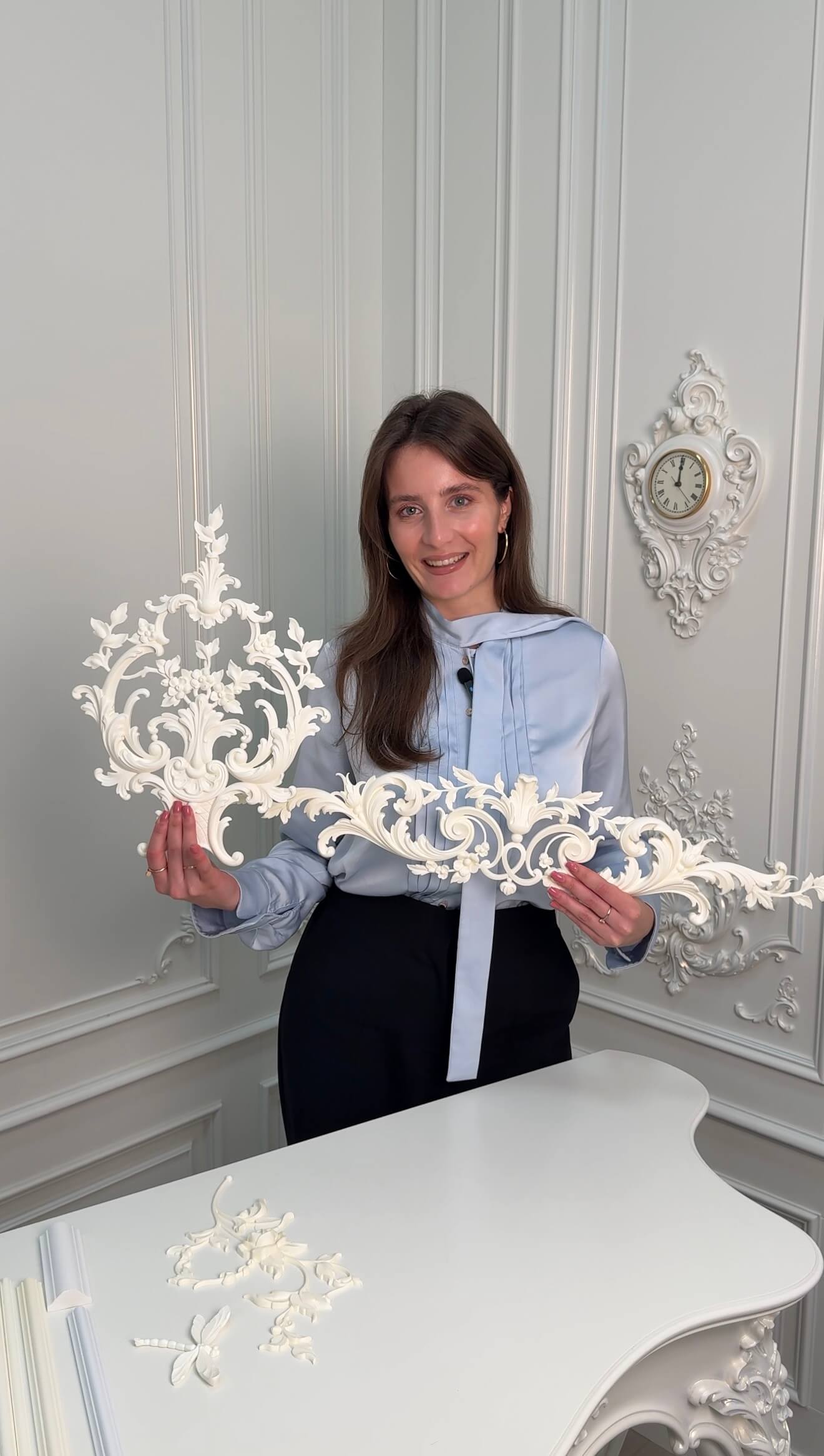
Polyurethane decorative elements
decorative polyurethane elements they are convenient where repeatable geometry, complex relief, painting, and relatively low weight matter.
In the project they are used:
- inside molding frames;
- on walls;
- on furniture;
- on doors;
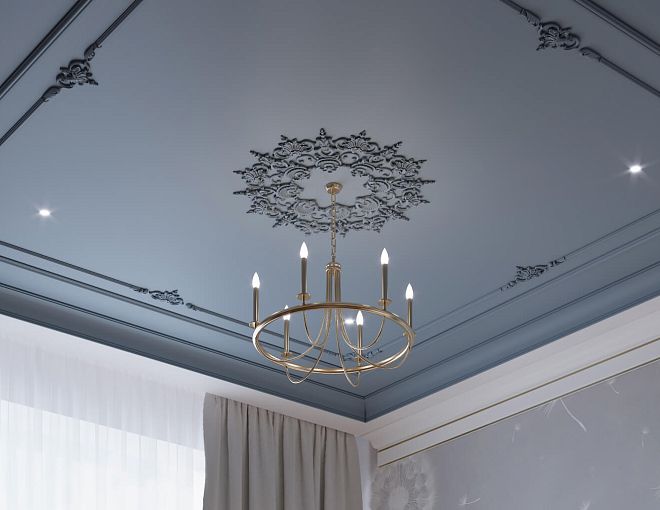
- in ceiling compositions;
- as central and corner details.
When polyurethane is especially convenient
If all the decor is painted to match the color of the wall or facade.
Then the material visually recedes, and the relief becomes the main focus.
When a series of repeating elements is needed
For a hotel, restaurant, long wall, or a series of facades, repetition matters more than the uniqueness of each detail.
Polyurethane Moldings & Decorative Accents
molded decoration made of polyurethane should be selected together with the actual profile if it is part of a frame system.
Wood or polyurethane
The question is not which material is “better,” but what role the element performs.
Wood is suitable when the following are important
- natural texture;
- stain;
- oil;
- varnish;
- joinery finish;
- connection with solid wood furniture.
Polyurethane is suitable when the following are important
- light weight;
- painting;
- repeatability;
- complex relief;
- serial compositions.
Combined project
Both materials can be used simultaneously.
For example:
- polyurethane frame;
- wooden central overlay;
- wooden portal;
- polyurethane ceiling decor.
But the scale and color must be coordinated.
How to choose an ornament
An ornament is not just a stylistic marker. It affects the visual density of the composition.
Geometric
Suitable for more austere interiors, Art Deco, and modern neoclassical designs.
Floral
Works well in classic, neoclassical, and more fluid compositions.
Order-based
Capitals, pilasters, bases, and other elements of the architectural system require a more rigorous logic.
Neutral
If the element should work as a relief rather than an ornament.
How to check the compatibility of two ornaments
Compare:
- the scale of the pattern;
- the depth;
- direction;
- density;
- repeatability.
If one element is very small and active, and the second is large and calm, together they may look random.
How to build a symmetrical composition
A symmetrical system is built from the axis.
Step 1. Determine the central axis
This could be:
- center of the wall;
- center of the sofa;
- center of the wardrobe;
- axis of the door;
- center of the bed.
Step 2. Choose the central element
Rosette, medallion, panel, or overlay.
Step 3. Build the frame
Taking into account the actual profile.
Step 4. Determine the corners
Identical or mirrored.
Step 5. Check the left and right sides
Especially if the ornament is directional.
Step 6. Repeat the system
If the composition repeats on adjacent modules.
Why the axis matters more than an individual element
Even an expensive, high-quality overlay will look random if it is offset relative to the frame and furniture without a compositional reason.
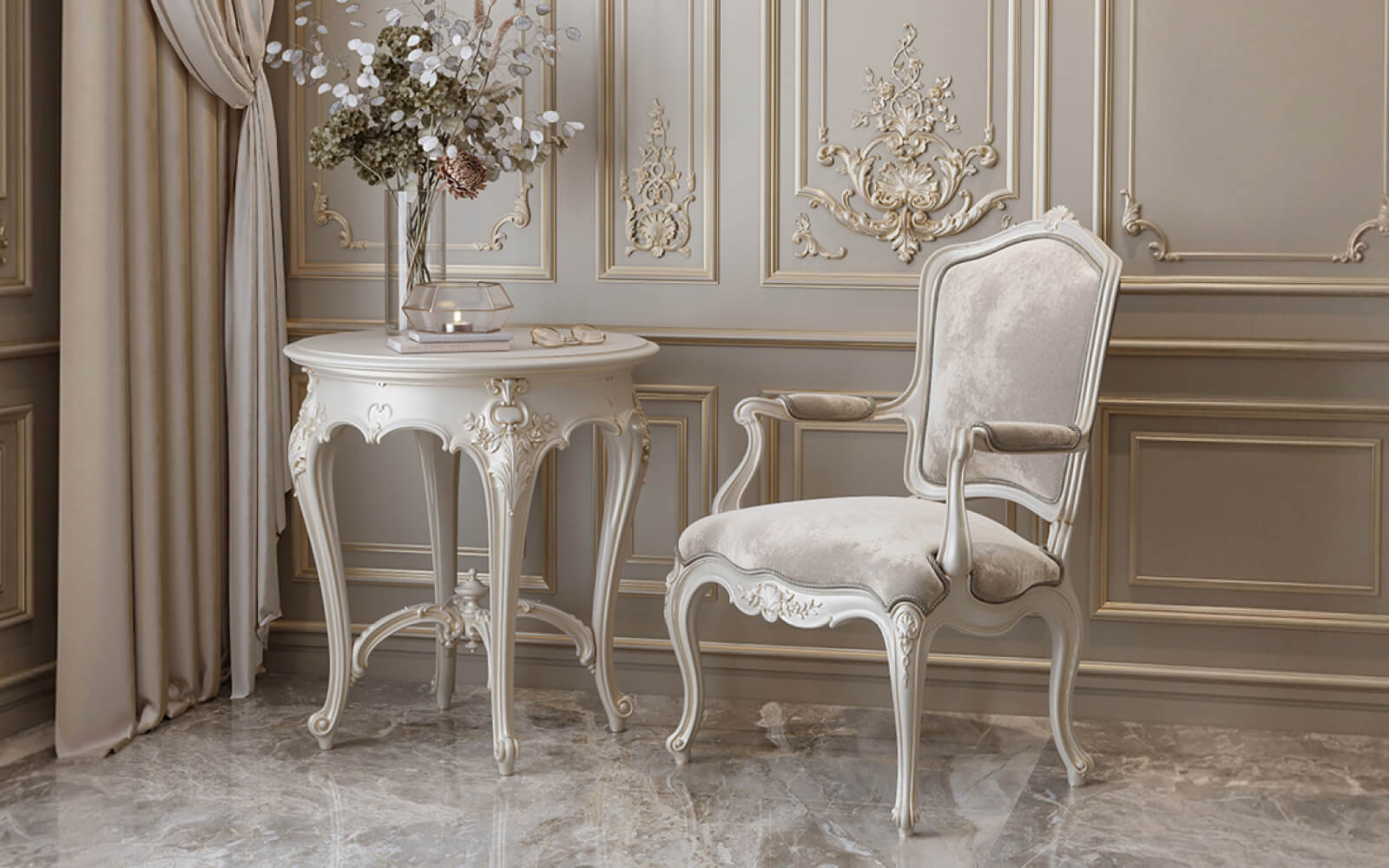
Decorative elements on the wall
For wall systems, it is useful to use Polyurethane wall decor as one of the product groups, but design the entire composition as a whole.
Main scenarios:
- molding frames;
- headboard;
- TV zone;
- fireplace area;
- portal;
- Accent Wall.
Molding frame
Need to check:
- outer dimension;
- internal dimension;
- profile;
- corner elements;
- central overlay.
TV area
The decor should not conflict with the screen, cabinet, outlets, and lighting.
Headboard
Frames and overlays should account for wall sconces and bedside tables.
Portal
Decorative elements should follow the overall axis of the opening.
Decorative elements on furniture
On furniture, the following are more commonly used:
- Plates;
- Outlets;
- corner elements;
- Moldings;
- Brackets.
The main limitation is the small scale of the surface.
A detail that works well on a wall may be too large on a furniture front.
Check the handle
If the handle and the overlay compete for the center, the front becomes overloaded.
Check the opening
The protruding relief must not catch on the adjacent front.
Check the repeat
If the decor repeats across a series of doors, the rhythm must be consistent.
Doors and portals
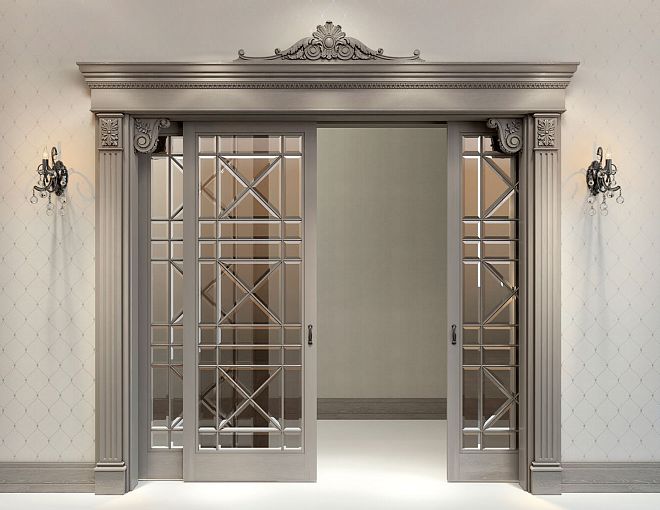
The portal should be designed as a system:
architrave → overlay → pediment → pilaster → capital.
These elements cannot be chosen independently.
Why
They share a common vertical axis, scale, and depth.
Top finial
The pediment or central overlay must be coordinated with the width of the opening.
Side elements
Pilasters or vertical overlays must have the same offset.
Connection with the baseboard
The lower part of the portal must have a clear joint with the baseboard.
How to check the compatibility of an element with the molding
This is especially important for corner elements and end caps.
What needs to be checked:
- width;
- height;
- thickness;
- depth of the relief;
- the geometry of the joint;
- the continuation of the ornament;
- orientation.
Example
If the molding has a visually thin profile, and the corner overlay protrudes three times more, the corner may look heavy.
1:1 check
Best approach:
- open DWG;
- assemble a corner;
- produce a large fragment;
- if possible, create a mock-up.
This way the solution is verified before installation.
How to use a sample before approval
Chain:
SKU → sample → mock-up → approval.
A sample allows you to check:
- actual size;
- relief;
- quality;
- color;
- finish;
- behavior under side lighting.
Why a mock-up is stronger than a single sample
A single overlay shows the product.
The mock-up shows the composition.
For example:
molding + corner element + overlay + wall color.
It is this combination that will exist in the interior.
How to check decorative elements in 3D
3D Decor Models are needed not to replace the sample, but to check scale and composition.
Checked:
- actual dimensions;
- depth;
- chiaroscuro;
- number of repeats;
- position relative to the furniture;
- symmetry.
Do not stretch a finished SKU
If a product has a fixed size, changing the scale in 3D turns it into a non-existent item.
Check the entire module
Not only the overlay in close-up, but also the wall, facade, or portal as a whole.
DWG and working drawing
DWG decor drawings are needed to capture the actual geometry.
The working drawing specifies:
- coordinates;
- dimensions;
- the axes;
- spacing;
- orientation;
- quantity;
- position code.
This way, the installer doesn't assemble the composition "from a picture."
How to create a decorative element map
For each wall, door, or furniture front, it's convenient to use project codes.
For example:
DEC-01
DEC-02
DEC-03
On the elevation:
- code;
- coordinates;
- size;
- orientation;
- quantity.
In the specification:
DEC-01 → SKU → URL → material → quantity.
Why a map is needed on complex walls
If five types of decor are used on a single wall, labels directly on the elevation are faster to read than long product names.
Why a code is needed during installation
The installer sees:
DEC-03 × 4
and checks against the specification.
Specification of decorative elements
The specification must link the design code to the actual product.
Example:
| Code | SKU | Type | Material | Size | Quantity |
|---|---|---|---|---|---|
| DEC-01 | … | Overlay | Wood | … | 4 pcs. |
| DEC-02 | … | Rosette | PU | … | 2 pcs. |
| DEC-03 | … | bracket | Wood | … | 4 pcs. |
| DEC-04 | … | Corner element | Wood | … | 8 pcs. |
Additionally, it is useful to store:
- room;
- zone;
- URL;
- finish;
- approval status;
- L/R orientation;
- project revision.
Why a name alone is not enough
"Large carved overlay" is a bad line.
A few months later, it cannot be unambiguously restored.
You need to:
manufacturer → SKU → size → material → URL.
Why status is needed in the specification
Each item must have a clear stage:
- SHORTLIST;
- APPROVED;
- SPECIFIED;
- ORDERED.
Only the approved version is included in the purchase.
How to count decorative elements
Central elements
Counted by the number of compositions.
If each of the four wall frames has one central rosette:
4 × 1 = 4 pcs.
Corner elements
If each frame has four corners:
4 frames × 4 corners = 16 pcs.
But if a corner is covered by furniture or the composition is asymmetrical, the quantity changes.
Paired L/R elements
Four panels, each with one left and one right element:
- L = 4 pcs.;
- R = 4 pcs.
Do not merge into a single anonymous line.
Brackets
Calculated according to the design scheme.
If a shelf has two brackets and there are six identical shelves:
2 × 6 = 12 pcs.
Repeating decor
If the ornament repeats along the length, calculate based on the actual repeat and working length.
Allowance
A reserve is needed not "out of habit," but when justified:
- complex installation;
- fragile small parts;
- mirrored pairs;
- large project;
- risk of damage during fitting.
How to buy decorative elements for a project
The commercial stage begins after the function, material, SKU, and quantity have already been determined.
Scheme:
task → SKU → mock-up → specification → quantity → order.
Wooden items
After approval, you can move on to product categories and select specific SKUs.
Polyurethane
For frame and wall systems, the decor must be checked against the moldings used in the project.
Catalog
General the STAVROS catalog useful for a final category check and finding a specific product item before purchasing.
Professional work
STAVROS for designers and architects can be used as a professional entry point for project materials and working with 3D/DWG.
Mistakes when selecting decorative elements
Mistake 1. Choosing by beauty, not by function
Cause: the element looks good on its own.
Consequence: it has no logical place in the composition.
How to avoid: first define the task.
Mistake 2. Not checking the actual size
Cause: a photo does not convey scale.
Consequence: the applique is too large or too small.
How to avoid: compare with the actual surface.
Error 3. Not accounting for the molding
Cause: the overlay is selected separately.
Consequence: the inner field of the frame ends up smaller than expected.
How to avoid: account for the entire system.
Error 4. Confusing L and R
Cause: the elements look similar.
Consequence: symmetry is broken.
How to avoid: separate line items in the specification.
Error 5. Using a placeholder 3D object
Cause: the required model is not at hand.
Consequence: visualization approved on non-existent geometry.
How to avoid: replace the proxy before final approval.
Mistake 6. Not making a mock-up
Cause: it seems that 3D is enough.
Consequence: the actual relief and joint differ from expectations.
How to avoid: physical test for complex assemblies.
Mistake 7. Not fixing the SKU
Cause: the product seems obvious.
Consequence: the kit assembler looks for an alternative.
How to avoid: item code in the map and specification.
Mistake 8. Mixing too many ornaments
Reason: each element is liked separately.
Consequence: the interior looks cluttered.
How to avoid: limit the decorative language.
When a decorative element is not needed
Not every empty surface needs to be filled with ornament.
Active architecture
If there are already complex panels, striking stone, furniture, and lighting, an additional overlay may be unnecessary.
Small facade
A large decorative element can take up too much useful space.
Complex wall relief
If the surface itself is expressive, additional decor may compete with it.
High operational load
Protruding elements are not always rational where they will be constantly bumped into.
No clear function
If it is impossible to answer what compositional task an element solves, it is better not to add it.
How to create a library of decorative elements in a design studio
Convenient structure:
STAVROS / Wood / Decorative Elements
STAVROS / Wood / Rosettes
STAVROS / Wood / Brackets
STAVROS / PU / Moldings Decor
STAVROS / PU / Wall Decor
For each SKU, store:
- preview;
- article number;
- size;
- the material;
- URL;
- 3D;
- DWG;
- sample;
- project;
- comment.
Why store the implemented context
After installation, it is useful to add a photo and a short note:
- where it was used;
- at what scale;
- what the relief looked like;
- whether there were difficulties;
- how much material was used.
This is how the library becomes not a catalog of images, but a base of experience.
Final designer checklist
Before ordering, check:
- The element has a specific function.
- A real SKU has been selected.
- The actual size has been verified.
- Material confirmed.
- The scale has been verified in context.
- Molding and decor are compatible.
- L/R are separated.
- The central axis has been determined.
- 3D matches SKU.
- The DWG matches the geometry.
- The sample has been checked, if needed.
- The mock-up is made for a complex assembly.
- The DEC position map is ready.
- Quantity calculated.
- The specification is up to date.
- The order is generated from the final revision.
FAQ
What counts as decorative elements in a design project?
Appliqués, rosettes, corner elements, molding end caps, brackets, capitals, pilasters, panels, medallions, and other specific details that are part of an architectural or furniture composition.
What should be chosen first — the element or the function?
The function. First, determine what needs to be done: finish a corner, create a center, support a shelf, frame a portal. Then choose the type and SKU.
How can you tell that an appliqué fits in size?
Compare it not only with the overall width of the wall or façade, but also with the actual internal field after accounting for moldings and adjacent elements.
When are paired elements needed?
When the ornament has a direction and the composition is built symmetrically. Then L and R are counted separately.
Which is better — wood or polyurethane?
It depends on the task. Wood is chosen for its natural texture and joinery finish, polyurethane — for its low weight, paintability, and repeatable relief.
Why does a designer need 3D?
To check the scale, light and shadow, repeatability, and position of the element in a real interior.
Why DWG?
To fix the real dimensions, coordinates, axes, and joint geometry in the working documentation.
When is a mock-up needed?
For a complex frame, a large element, finished wood, an L/R composition, or an expensive series purchase.
Where to find carved elements?
In the carved decor section and specialized categories of overlays, rosettes, and brackets.
Where to view digital materials?
On the STAVROS downloads page, catalogs, 3D models, and DWG files are available for various product groups.
Final workflow
1. Define the function.
Center, corner, support, termination, vertical.
2. Select the element type.
Overlay, rosette, bracket, capital, pilaster.
3. Choose the material.
Wood or polyurethane.
4. Check the size.
In the actual composition field.
5. Select SKU.
6. Check pairing and orientation.
7. Download 3D/DWG.
8. Check in the visualization.
9. Get a sample.
10. Make a mock-up if the assembly is complex.
11. Apply DEC codes to the unfolded drawing.
12. Fill in the specification.
13. Calculate the quantity.
14. Check the final revision.
15. Place the order.