










































































Article Contents:
- Why a big picture looks cheap precisely because of the frame
- What happens when the frame 'works'
- Wooden molding: when the frame becomes part of the interior
- Shadow as a design effect
- What wooden molding is suitable for: a complete list of scenarios
- Large poster on the wall: why a confident profile is needed here
- Proportion of frame to image: a practical rule
- Why a poster should look like a painting
- Canvas frame: how not to weigh it down or lose the painting
- Does a canvas even need a frame?
- When a wide canvas frame is needed
- When a thin profile is needed
- The warmth of wood and painting: why it works
- Picture frame: ready-made or from a molding strip
- Ready-made frame: speed and predictability
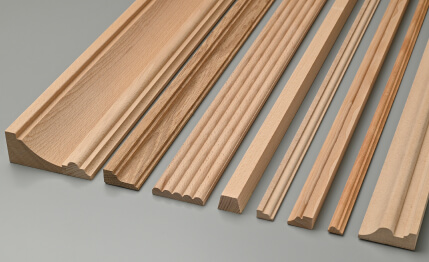
- Wooden molding by the meter: freedom and flexibility
- Who each option suits
- How to choose the frame width: a practical guide
- Influence of ceiling height on frame width
- Bagette color: how it connects the painting with the interior
- Natural wood: a standalone accent
- Matching the floor or doors
- Dark tones: stained oak, wenge, walnut
- For painting: maximum tonal freedom
- Coordination with furniture
- Frame shape: rectangle is not the only option
- One large painting or a gallery of frames: two approaches to wall decoration
- One large piece: maximum accent power
- Gallery wall: a system of frames in dialogue
- Principles of gallery hanging
- Mistakes when choosing a baguette and frame: how not to ruin a good painting
- Wooden moldings and carved decor: how a painting fits into the finishing system
- Where to buy wooden baguettes and frames for paintings
- FAQ: answers to the most important questions about wooden baguettes
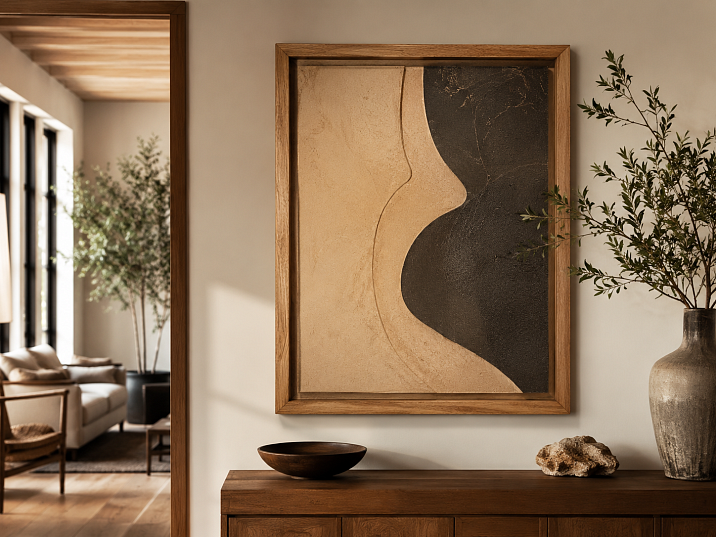
Imagine: you spent a long time choosing a poster. You found the exact print that matched the mood and style of your living room. You ordered a print on thick paper. You hung it on the wall. And something went wrong. The poster is there, but there's no impression. The painting looks like a printout, not a work of art. The wall didn't 'come alive'. The print is not to blame. The frame is to blame.
A thin plastic profile that doesn't hold the scale of the image, that isn't connected to the furniture, the floor, or other wooden details — it's what turns a potentially strong interior accent into a random object. And that's why choosing wooden molding is not a technical trifle, but a full-fledged design solution.
In this article, we'll break down everything: what a baguette is as an interior tool, what formats it's needed for, what width and color to choose, how a linear baguette strip differs from a ready-made frame — and how to make a painting or poster finally become what it should be: the center of the wall, not its secondary decoration.




Why a large painting looks cheap precisely because of the frame
There is a golden rule in interior design: the impression of an object is formed not by the object itself, but by its context. The sauce makes the dish. The setting makes the stone. The frame makes the painting.
This is especially critical for large formats. A small 20×30 cm photo can be placed in a thin frame — and the loss will be minimal. But when a poster measures 80×120 cm or 100×140 cm, when it must "hold" the wall above a sofa or above a bed — here the frame either works or ruins everything. There is no third option.
A plastic frame for a large poster is like a gold ring with a plastic stone. The material around it devalues what is inside. And it's not about snobbery or price. It's about plastic having no depth: neither visual, nor tactile, nor the shadow that a good wooden profile casts.
A wooden frame for a painting works differently. It has mass, volume, texture. It casts a shadow along the edge of the image — and this shadow creates an illusion of depth, "lifting" the painting off the wall. It complements the parquet, wooden doors, wooden furniture — and thus integrates the painting into the overall interior context, making it a part of the space, not an addition to it.




What happens when the frame "works"
When the frame is right — you don't think about the frame. You look at the image. The frame simply holds it, organizes the space around it, creates the necessary pause between the living content of the painting and the neutral background of the wall. That is the main task of a good frame: not to stand out, yet to do everything right.
When the frame is wrong — your eye stumbles precisely on it. The wrong color, a profile that is too thin or too thick, plastic cheapness — all of this creates an obstacle between the viewer and the image. The space irritates where it should remain silent.
Our factory also produces:




Wooden frame: when the frame becomes part of the interior
There is a fundamental shift in perception that occurs when molding chosen correctly: the frame ceases to be a frame and becomes part of the interior. It enters the system of materials already present in the room.
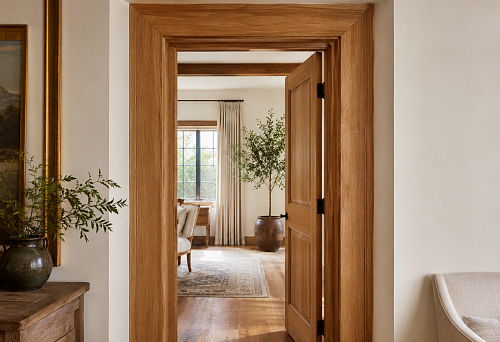
Imagine a living room with natural oak parquet. Wooden doors with architraves of the same tone. Wooden legs on the sofa and armchairs. Wooden slats on the accent wall. And then a poster in a wooden baguette matching the same oak appears above the sofa. This is not just a frame — it is a continuation of one material language. The painting "settles" into the interior, rather than hanging in it temporarily.
This is precisely the difference between a frame-holder and a baguette as an interior tool. The former is functional. The latter is artistic.
Get Consultation
Shadow as a design effect
One of the main visual properties of a wooden baguette is shadow. The right profile with a bevel or step creates an inner shadow around the image. This shadow — subtle, controlled, beautiful — is that very "feeling of expensive framing" that people sense but cannot always articulate.
A flat plastic profile does not create a shadow. It simply frames. A wooden profile with the right geometry turns a flat image into a three-dimensional object. This is the effect for which expensive framing workshops charge money — and it is achievable with the right choice of wooden profile.
What wooden baguette is suitable for: a complete list of scenarios
Wooden Picture Frame — a universal tool. Here is the full range of applications, in each of which it works better than the plastic alternative:
-
Painting on canvas — the wooden profile supports the scale and texture of the painting, adding a "museum" feel;
-
Large poster or print — a natural wood frame elevates the poster from the category of "paper on the wall" to the category of "art object";
-
Family or art photography — a wooden frame adds solemnity and durability to the photo;
-
Interior print or illustration — matching the wood in the interior creates unity;
-
Map, city plan, antique engraving — wood is ideal for a "documentary" look;
-
Decorative panel or collage — the frame structures the composition;
-
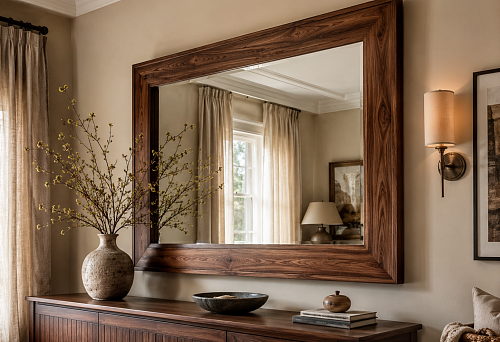
Mirror — a wooden frame for a painting profile matching the window casings creates an architectural look;
-
Gallery wall — a collection of frames in the same style and material unifies different images;
-
Large art object above the sofa, bed, or fireplace — the main wall accent requiring a frame with character.
In all these cases, a wooden frame does the same thing: it says "this is important." It gives the image status.
Large poster on the wall: why a confident profile is needed here
A large poster is a different story. The modern trend of gallery walls and large prints in interiors has created a special challenge: how to make a poster look like part of a well-thought-out space, rather than a temporary illustration?
The answer is straightforward: the frame profile must match the scale of the image. For a 70×100 cm poster, a thin profile with a width of 15–18 mm is categorically insufficient. Such a frame literally "gets lost" on a large image. The eye doesn't feel the boundary, the picture doesn't "sit" on the wall, but rather dangles on it.
For a large poster, you need Wooden Picture Frame a profile from 30–40 mm and wider. It is this profile that creates the feeling of a "frame" in the full sense: it is visible, it holds the scale, it creates a pause between the image and the wall.
Frame-to-image proportion: a practical rule
There is an unwritten but working rule: the width of the frame should be approximately 1/12–1/15 of the shorter side of the image. For a 70×100 cm poster, this gives a profile width of 47–58 mm. For a 100×140 cm poster, it's 67–83 mm.
This is not a dogma, but a guideline. In classic interiors, you can take a wider frame—it will add solemnity. In modern minimalist ones, a slightly narrower one for restraint. But going below the lower limit is already a risk of losing scale.
Why a poster should look like a painting
In a modern interior, the line between a "poster" and a "painting" has blurred. A high-quality print with the right picture frame frame made of natural wood looks like a full-fledged art object—no worse, and sometimes better, than a canvas in a cheap frame. It's a matter of framing, not content.
That's why serious interior photographs and designer posters are sold without a frame: the manufacturer understands that the buyer will choose the right frame themselves — to match their interior, their taste, and their material system.
Molding for canvas: how not to weigh down or lose the painting
Canvas on a stretcher is a special case. It already has volume: the stretcher lifts the image off the wall by 15–40 mm. This means the frame for the canvas must account for this depth and work with it properly.
Does a canvas even need a frame?
This is the first question you should ask yourself. A canvas without a frame on a white wall is contemporary art, a gallery look, and deliberate minimalism. A canvas in a frame is a more traditional, 'homey' presentation that makes the painting feel more complete and integrated into the interior context.
For most residential interiors, a frame for a canvas is the right choice. It completes the painting, creates a clear boundary, and helps the image 'sit' on the wall rather than 'float' in the space.
When a wide molding for canvas is needed
Wide frame for canvas is appropriate in classic and neoclassical interiors, in studies with dark finishes, and in living rooms with high ceilings. A wide profile adds solemnity and a 'museum-like' weight to the painting. It works especially well with realistic painting, landscapes, and portraits.
For these tasks, a profile from 50 mm and above is suitable — wooden, with a milled or profiled pattern, and a tint in dark oak, walnut, or wenge.
When a thin profile is needed
A thin frame for canvas is a modern, minimalist look. A 20–30 mm profile creates a neat framing without claiming to be an architectural accent. This works well for abstract painting, minimalist prints, and Scandinavian or Japandi interiors.
It is important to consider the depth of the stretcher: if the canvas has a depth of 30–40 mm, the frame must have a corresponding rabbet so that the painting fits tightly into it.
The warmth of wood and painting: why it works
A wooden frame adds warmth to the canvas — especially if the molding is tinted to resemble natural oak or ash. Warm wood tones echo the warm tones of the painting, creating color unity. Cold metal or plastic, on the contrary, can conflict with the vibrant colors of the artwork.
Frame for a painting: ready-made or from molding strip
This is one of the main practical questions. Buy frames for paintings ready-made or work with molding strip two different approaches with different advantages. Let's examine both.
Ready-made frame: speed and predictability
Ready-made frame for a painting is a factory-assembled structure of standard size. Advantages:
-
no tools or carpentry skills needed;
-
you can immediately evaluate the appearance;
-
standard formats cover most typical poster and photo sizes (A4, A3, A2, 40×50, 50×70, 60×90, etc.);
-
convenient for the end customer who wants a quick result.
Disadvantages: limited range of sizes, limited profile selection, inability to make a custom format without modification.
Wooden molding by the meter: freedom and flexibility
Buy molding by the meter — this is the choice for those who want maximum flexibility. The molding is sold by linear meter of the desired profile, and the frame is assembled to the specific image size.
This is the ideal option for:
-
non-standard formats (canvases, panels, panoramic images);
-
design projects where precise profile selection is needed;
-
frame workshops and woodworking productions;
-
galleries and exhibition spaces;
-
framing a series of works in a single style;
-
cases where a unique profile is needed that is not available in ready-made frames.
Picture frame strip made of natural wood — this is a blank with the desired profile, from which four parts are cut at 45° and a frame of any size is assembled. With a miter box and a miter saw, assembly takes 20–30 minutes.
Who each option is suitable for
| Situation | Recommendation |
|---|---|
| Standard size poster, one copy | Ready-made frame |
| Non-standard canvas or panel | Bagette molding by the meter |
| Gallery of 5–10 frames in one style | Ready-made frames or by the meter for uniformity |
| Designer project with precise requirements | By the meter for the project |
| Workshop, regular orders | By the meter in warehouse stock |
| Large format from 80×100 cm | Footage for the desired profile |
How to choose baguette width: a practical guide
Profile width is the most important selection parameter. An error in width to the left or right changes everything: a profile that is too thin gets lost, one that is too wide overwhelms.
Here are specific guidelines:
Small image (up to 30×40 cm): profile width 15–25 mm. A neat frame that does not overload a small format. Suitable for intimate photographs, small illustrations, small mirrors.
Medium format (40×50 — 60×80 cm): width 25–45 mm. A universal range for most living rooms, bedrooms, and studies. The profile is noticeable enough to hold the image and calm enough not to compete with the content.
Large format (70×100 — 100×140 cm): width 40–70 mm. Here a confident profile is needed. The frame creates an "architectural" border that holds the scale of a large image.
Very large format (from 100×150 cm): width from 60 mm. This is already an art object requiring a frame with weight. The use of composite profiles or double baguettes is possible.
Gallery wall with multiple works: a uniform profile width for all frames works best — with different image sizes, this creates visual order. Or variation within a single "family" of profiles.
Influence of ceiling height on frame width
High ceilings allow for wider frames. Low ceilings require restraint: a wide wooden baguette in a room with a 2.4 m ceiling will visually lower an already small space. This rule applies to all vertical accents in the interior — frames, doors, panels.
Baguette color: how it connects the painting to the interior
Color is the second most important parameter after width. An incorrect frame color creates a disconnect between the painting and the interior. A correct one integrates it into the space.
Natural wood: a standalone accent
Natural wood tones — light oak, ash, beech — are a universal choice for modern interiors in Scandinavian minimalism, Japandi, and country styles. They are warm, lively, and do not conflict with anything. They work especially well in interiors that already have wooden flooring or wooden furniture of a similar tone.
Matching the floor or doors
This is a classic designer technique: Wooden Picture Frame it is tinted or chosen in the same shade as the parquet, doors, or wooden trim. The result is that the painting is perceived as an organic part of the wooden context, not as a random object on the wall.
Dark tones: stained oak, wenge, walnut
A dark wooden baguette is classic and solemn. It works especially well with black-and-white photographs, landscapes, and paintings in warm tones. In classic studies and neoclassical living rooms, a dark frame is practically the standard.
For painting: maximum freedom of tone
Wooden baguette for painting — this is an unpainted or primed strip that you paint yourself in any desired color. A white frame on a white wall — the frame "dissolves" and the image hangs as if without a border. A black frame on a light wall — a contrasting accent. A frame matching the wall color — the image "grows" out of the wall.
This is the most flexible option, allowing you to create a precise color solution for a specific interior.
Matching with furniture
If the living room has wooden furniture with a dark finish — a frame in a similar tone creates a connection between the painting and the furniture. If the furniture is light — a light or natural baguette. If you want contrast — a frame in the opposite tone: this creates tension that makes the painting more noticeable.
Frame shape: rectangle is not the only option
Most frames are rectangular. But this is not the only possibility.
Oval picture frame — a classic form rooted in portrait painting. An oval frame adds softness and elegance to the image. Especially suitable for portraits, family photos, romantic landscapes. In classic interiors, an oval frame with a wooden profile is a nod to tradition, perceived as a sign of taste.
Round picture frame — a modern accent. Round frames came into fashion along with Scandinavian and Japandi styles: their concise geometry works well in minimalist spaces. A round frame with a wooden profile, hung in a group on the wall, creates an organic, warm composition.
A square frame is a strong geometric choice for modern interiors. A square within a rectangular wall creates a pronounced tension that makes the painting stand out.
One large painting or a gallery of frames: two approaches to wall decoration
This is a fundamental choice that changes the character of the entire space.
One large piece: maximum accent strength
One large art object above a sofa, bed, console, or fireplace is a strong, calm, confident solution. It says: 'Here is the center of this wall. This is what you should look at.' No fuss, no overload.
For this scenario, the frame must be proportionate to the image and the furniture beneath it. The classic rule: a painting above a sofa should be no narrower than 2/3 of the sofa's length. A frame with a good wooden profile maintains this scale and makes the art object convincing.
Buy a picture frame a large size made of natural wood — this is exactly the case where saving on the frame devalues the entire wall. For a large format, a profile with weight is needed.
Gallery wall: a system of frames in dialogue
A gallery wall is a collection of frames of different sizes that create a single composition. Here, the main principle is unity of framing. All frames must be made of the same material and in the same or a similar tone. If one frame is wooden oak, another is plastic gold, and a third is black metal, then no gallery will result: there will be chaos.
Wooden Picture Frame One profile, purchased by the meter, is an ideal tool for creating a gallery wall. You cut frames to the required sizes from a single molding strip and get a perfectly uniform framing despite any variety of sizes and images.
Principles of gallery hanging
A few practical rules for those creating a gallery wall:
-
Uniform bottom edge: all frames are aligned along the bottom line — this creates order and readability;
-
Or a uniform center: all frames are aligned along the horizontal axis — a more dynamic, lively layout;
-
Distance between frames: 5–10 cm is the standard that ensures cohesion without merging;
-
Preliminary layout on the floor: before hanging, arrange the frames on the floor in the desired configuration — this allows you to evaluate the composition without mistakes on the wall.
Mistakes when choosing a molding and frame: how not to ruin a good painting
Over years of working with wooden products, a list of mistakes that occur again and again has accumulated. Most of them are not about taste, but about a misunderstanding of mechanics.
Frame too thin for a large format. The most common mistake. A 100×140 cm poster in a frame with a 12 mm profile is disproportionate. The painting 'floats' in space, the frame does not hold the scale.
Plastic framing in an interior with expensive finishes. Parquet flooring at 15,000 rubles per square meter, wooden doors with carved architraves, quality furniture — and a plastic frame with wood imitation. This ruins the impression.
The frame clashes with the furniture color. A frame that is too warm in a cool interior, or vice versa — this creates tension where there should be unity.
The color is chosen, but the width is not considered. You can get the tone right and make a mistake with the width. This is especially critical for large formats: a wide frame in the right color is one thing, a narrow frame of the same color is a completely different impression.
A molding that is too active for a small painting. A wide profile with ornament and carving under a small watercolor 20×30 cm — the frame 'swallows' the image. A small work requires delicate framing.
Different frames in a gallery are not connected. Each frame made of a different material, different color, different profile — this is not eclecticism, it's a mess. A gallery only works if there is a unifying principle.
The weight is not considered for a large format. A large frame with canvas on a stretcher, matte glass, and mat can weigh 5–10 kg. This requires proper wall mounting — not a single nail in drywall, but a special bracket with reliable anchoring.
The frame was bought before measuring the image. Buying a 50×70 cm frame, but the print turned out to be 48×68 — an unpleasant story. Always first the exact size of the image, then the frame or molding.
Forgot about the mat. A mat is an intermediate insert between the image and the frame that adds 'air' around the painting. For photographs and watercolors, a mat is often mandatory: without it, the image presses against the frame and loses its breathing space. A wooden frame plus a mat plus the image is professional framing.
Wooden moldings and carved decor: how a painting fits into the finishing system
A painting in a wooden frame is not a separate object, it is an element of the system. The richer the system of wooden elements in the interior, the more convincing each individual object looks.
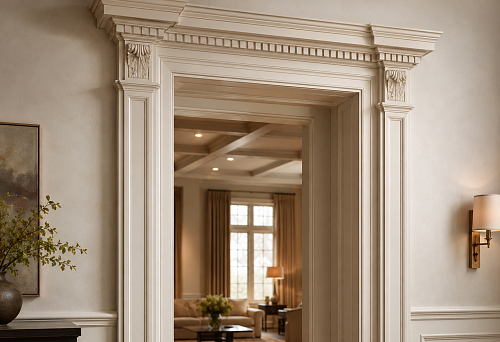
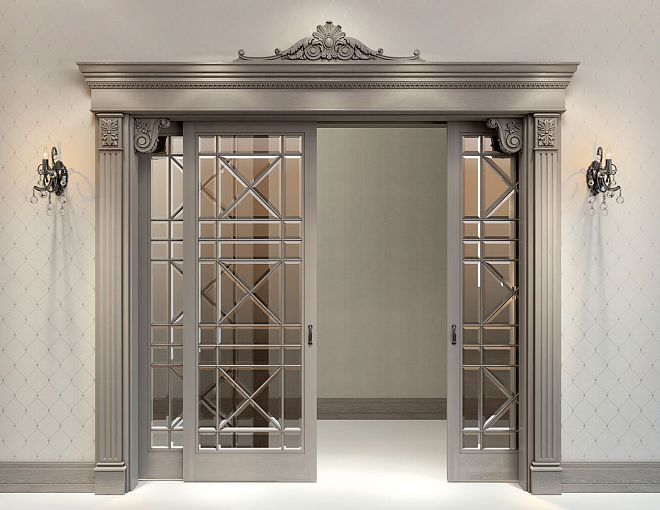
Wooden trim — baseboards, architraves, cornices, moldings — these are horizontal and vertical lines that structure the walls and ceiling. A painting in a wooden frame fits into this system as another wooden element — it "understands" the language of the space.
Carved wooden decoration on the walls — applied rosettes, medallions, ornamental strips — creates a context in which a carved or profiled picture frame becomes part of the architectural finish. This is especially characteristic of classical and neoclassical interiors, where paintings are literally "built into" the decoration system.
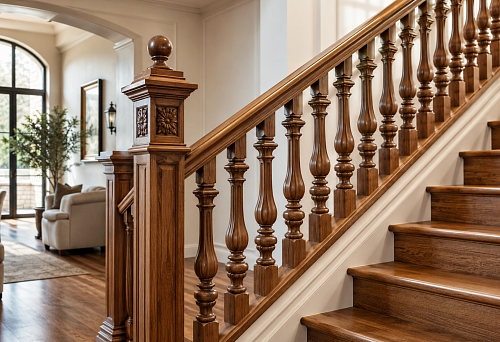
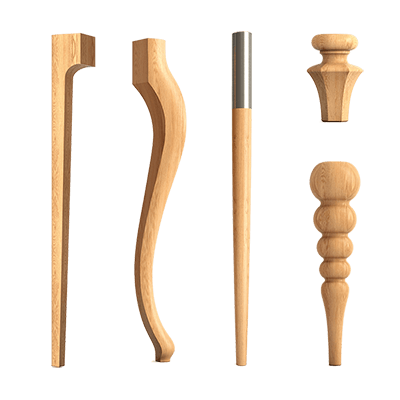
Solid Wood Items STAVROS covers this entire range: from ceiling cornices to furniture legs, from wooden moldings to frames and decorative overlays. This means that a painting in a wooden frame can literally be matched to the same material from which the door architraves and floor baseboards are made.
Where to buy wooden frames and picture frames
If you are looking for where Buy wooden picture frame molding from solid wood, Buy frames for paintings in standard sizes or take molded trim by the meter for a custom project — STAVROS offers a full range of wooden moldings and frames for framing paintings, posters, canvases, and mirrors.
In the catalog you will find:
-
Wooden frames and moldings from solid wood — meter-length strips for assembling frames of any size;
-
Frames for paintings — ready-made wooden frames for standard formats;
-
Oval picture frames — classic shape for portraits and special projects;
-
Round picture frames — modern shape for gallery and decorative walls;
-
Carved wooden decoration — for decorating walls around pictures;
-
Solid Wood Items — full catalog of wooden elements for interior.
Shipping buy baguette possible from one linear meter. Delivery across Saint Petersburg and all of Russia. Buy picture frame baguette in St. Petersburg with delivery within the city — within working deadlines without delays.
STAVROS is a Russian manufacturer of wooden products for furniture and interiors. Mouldings, frames, cornices, baseboards, legs, handles, carved decor — everything is produced at our own facility from properly dried solid wood with quality control. Over 4,000 items in the catalog. STAVROS understands: a beautiful painting deserves a worthy frame. And a worthy frame is always wood, always character, always part of the interior, not a random detail on its periphery.
FAQ: answers to the most important questions about wooden baguettes
Which baguette should I choose for a large painting?
For large formats (from 70×100 cm), choose Wooden Picture Frame a profile width of 40–70 mm. Such a profile holds the scale of the image and creates the right feeling of "framedness."
How is a wooden baguette better than a plastic frame?
A wooden baguette has real depth and texture, casts a shadow around the image, and complements other wooden interior elements — furniture, flooring, doors. A plastic frame is flat and faceless; it doesn't "work" in a natural interior.
Can I buy baguette by the meter?
Yes. Baguette strip by the meter is a convenient format for non-standard sizes, design projects, and workshops. The strip is cut to the required size and assembled into a frame of any format.
What is better: a ready-made frame or a length of molding?
Ready-made frame for a painting Convenient for standard sizes without additional tools. A length of molding gives you the freedom to choose any size, color, and profile — ideal for non-standard formats.
Is a wooden frame suitable for a poster?
Yes. A wooden frame elevates a poster from the category of "printout" to the category of "art object." This is especially important for large posters that should become the main accent of the wall.
Which profile should I choose for a gallery wall?
For a gallery wall, it is best to use one profile in one tone — for all frames. This creates unity despite any variety in sizes. Buy molding for paintings One length of molding is the most convenient way to ensure uniformity.
Is a mat needed for a painting in a wooden frame?
For photographs, watercolors, and small prints, a mat adds "breathing room" around the image and gives the framing a professional look. For canvases and large prints, a mat is typically not used.
How to properly hang a heavy painting?
A large frame with canvas and glass can weigh 5–10 kg. For secure mounting, use special picture brackets with wall anchors. Do not use single nails in drywall — it is unsafe.