
























Article Contents:
- Why does the top of the door often look empty
- What is a capital in simple words
- Capital above the door: when is it really needed
- Capital for an interior door: how not to overload the opening
- Capital and pilaster: why they work together
- Pilaster capital in the interior: several application scenarios
- Column capital: when a grand effect is needed
- Columns with capitals in a modern classic interior
- Carved capital: when a detail should be noticeable
- How to Choose the Size of a Capital
- Capital width
- Height of the Capital
- Depth of Relief
- What to consider when choosing a size
- Wooden or polyurethane capital: which is better
- Wooden capital
- Polyurethane capital
- Carved wooden or profiled capital
- What to pair a capital with: a complete ensemble
- Basic set for a doorway
- Extended system
- Complete door portal
- Style compatibility
- Mistakes when buying a capital
- Mistake 1: buying without measurements
- Mistake 2: installing an overly massive element
- Mistake 3: mixing styles
- Mistake 4: not considering ceiling height
- Mistake 5: forgetting about symmetry
- Mistake 6: using a capital without a base and vertical element
- Mistake 7: not tying to the room's style
- Mistake 8: choosing only by price
- Capital in a classic interior
- Capital in neoclassicism
- Decorative top above the door: different approaches
- Wooden capital for an opening: why wood wins
- Where to buy a capital above the door, for a column or pilaster
- About the company
- Frequently Asked Questions
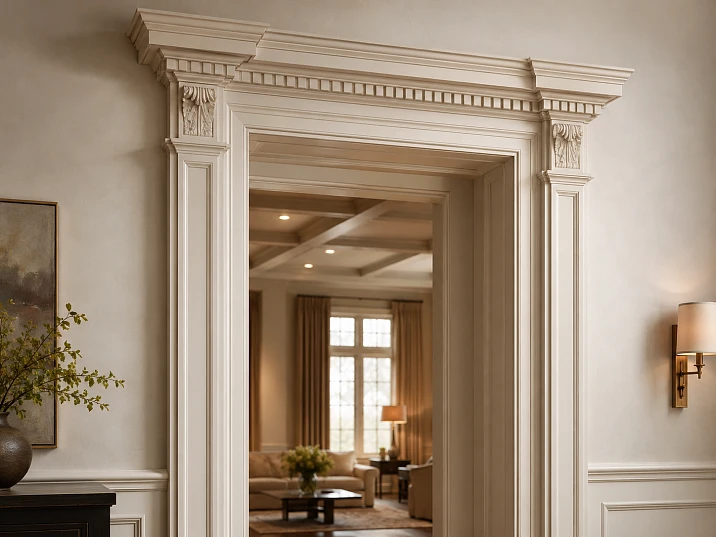
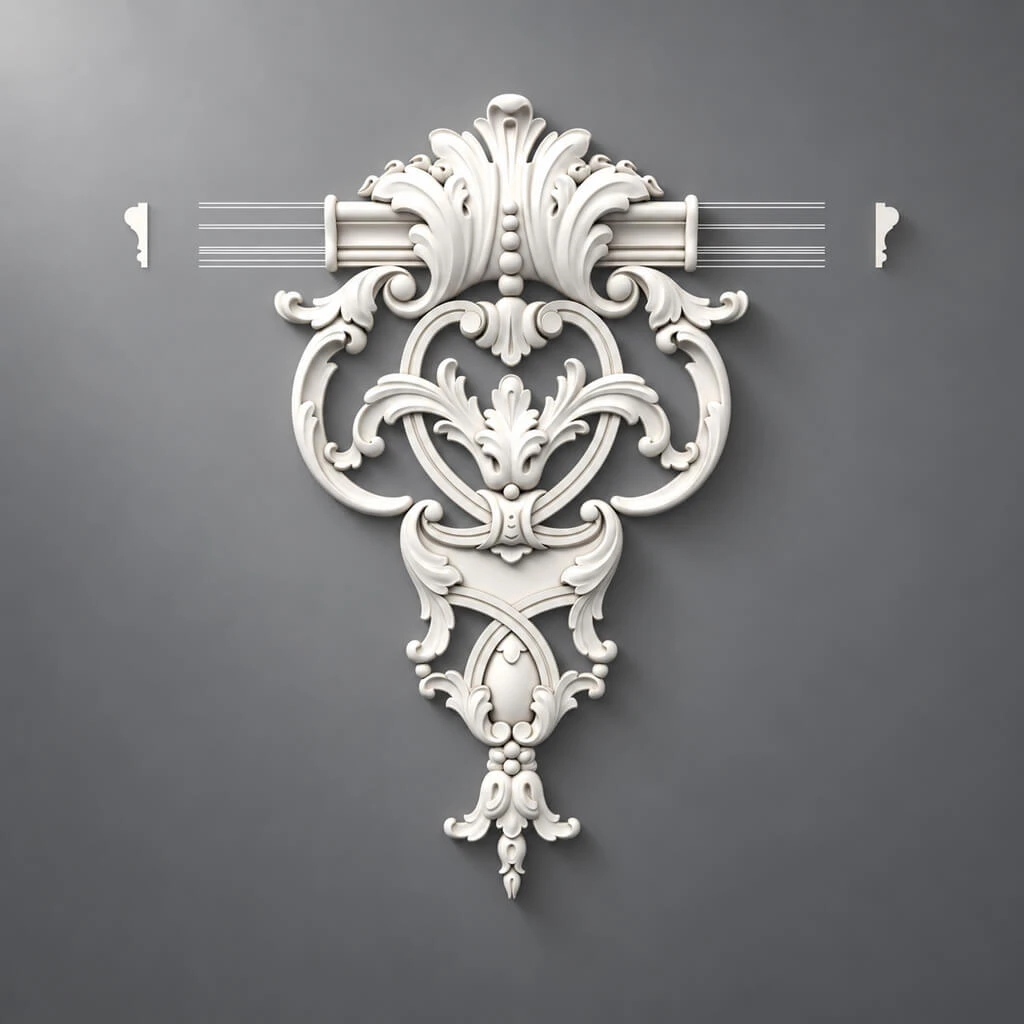
There is a moment in renovation when the walls are already leveled, the door is installed, the architraves are selected, but something still feels off. The upper line of the opening remains empty, flat, almost construction-like. The door is expensive, the finish looks neat, but there is no architectural feel. This is where the task arises that solves capital above the door — the upper decorative element capable of turning an ordinary opening into a full-fledged architectural composition.
This article is for those who are already thinking about details, not just about covering joints. Here we will break down what a capital is in an interior sense, when it is needed, how to choose the size and style, what to combine it with, what mistakes are made when purchasing, and where to find a quality wooden product for a specific opening.
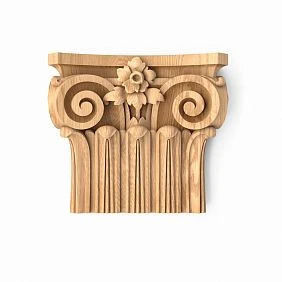
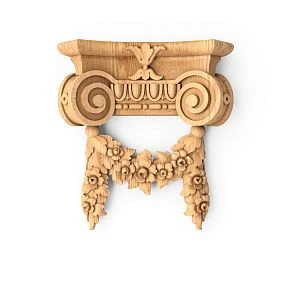
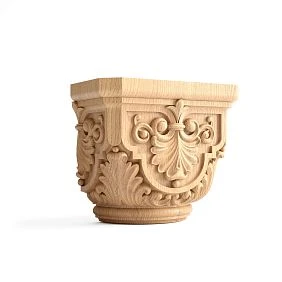
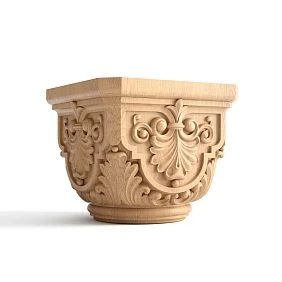
Why the top of the door often looks empty
This is not a question of the door's price or the quality of the architraves. It is a question of architectural logic. A classic door opening always consists of three parts: side verticals, a top horizontal, and a transition zone between them. When the verticals are covered by pilasters or architraves, and the horizontal top remains bare, the eye senses incompleteness. There is something at the bottom, something on the sides—but at the top, it is empty.
It's not about wanting stucco for the sake of stucco. It's about the fact that a doorway in a classic, neoclassical, or Empire-style interior is an architectural unit. It has a logic: a base, a vertical element, and a completion. It is the completion that gives a sense of finality. Without it, the door looks like a box, not part of a well-thought-out interior.
Another reason is visual weight. When all decorative accents are concentrated in the lower and middle zones of the wall, while the upper part remains empty, the interior feels grounded. A properly selected capital on the door lifts the gaze upward, emphasizes the ceiling height, and gives the opening a ceremonial feel.
That is why in historical interiors, palace halls, classic villas, and country houses, the upper part of the door was never left empty. Architects of the past understood: details make all the difference.
What is a capital in simple terms
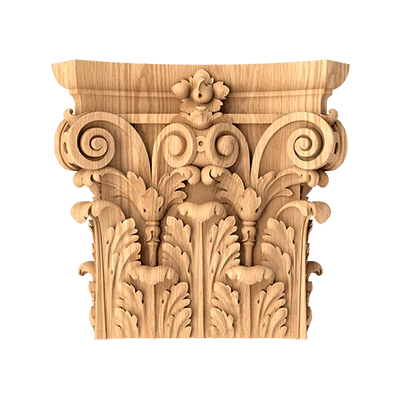
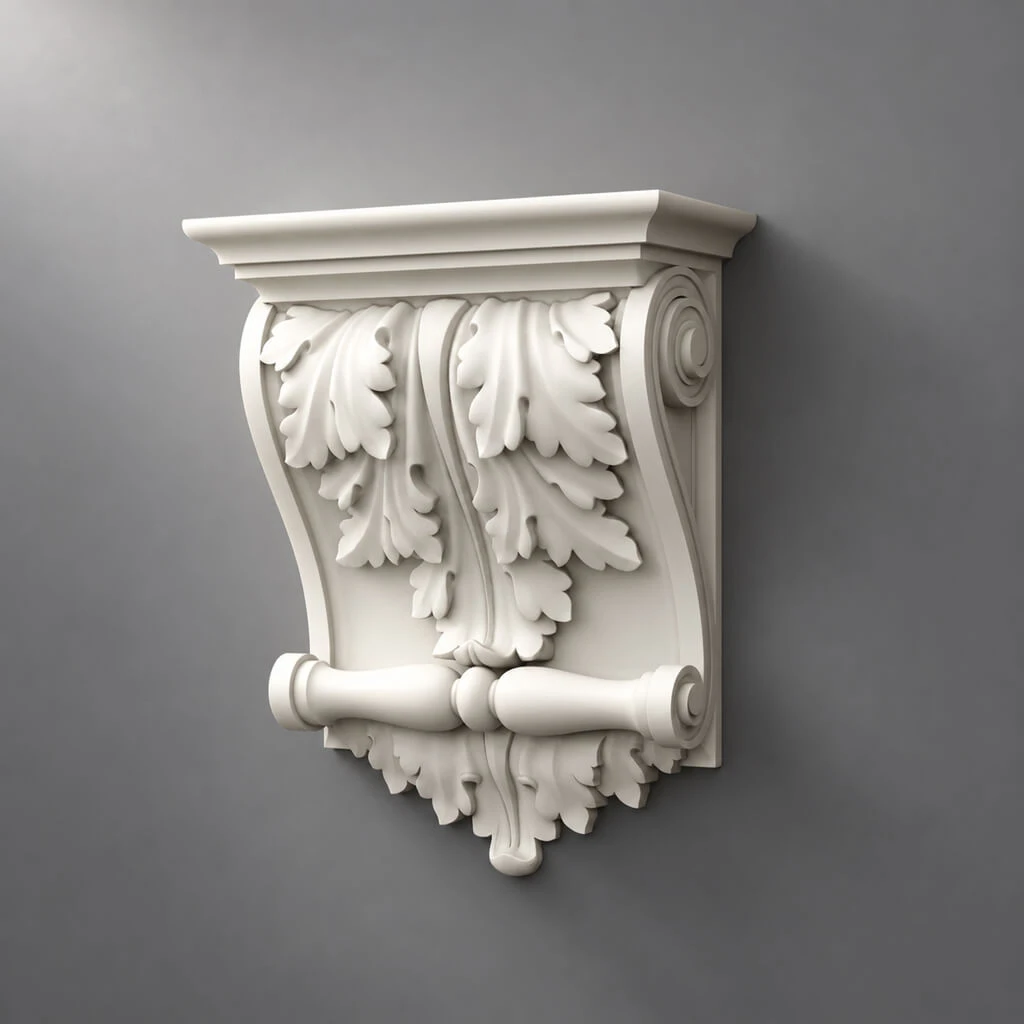
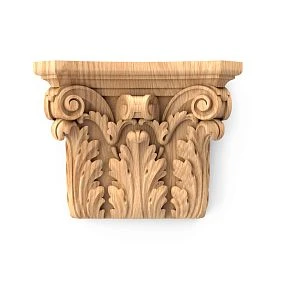
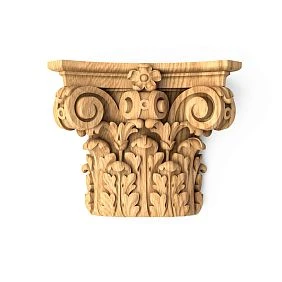
A capital is the upper part of a column, pilaster, or decorative vertical element. In classical architecture, it is the capital that defines the style of the entire column: the Doric order differs from the Ionic and Corinthian primarily in the design of the capital. But that is the academic side of the matter.
In modern interiors Capital column or pilaster is a decorative element installed at the top of a vertical frame. It can be strict and geometric, carved and lush, smooth with profiles, or adorned with plant motifs. The size, pattern, and shape depend on the interior style, ceiling height, and overall architectural concept.
In interior applications, the capital does not necessarily have to be attached to a real load-bearing column. It is placed above a pilaster, in a door portal, as an independent decorative element above an opening, in a fireplace area, or on stair posts. It works wherever an expressive top accent is needed.
To put it even more simply: wooden capital — это дорогая деталь, которая делает верх конструкции значимым. Она говорит: здесь не просто стена и дверь, здесь — архитектура.
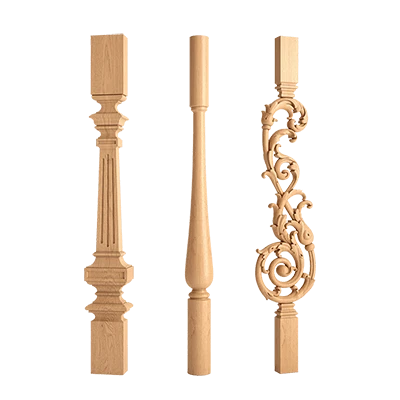
Our factory also produces:
Капитель над дверью: когда она действительно нужна
Не каждый проём требует капители — это честно. Маленькая дверь в технический коридор или стандартный ввод в спальню в минималистичном интерьере вполне обходится без дополнительного декора. Но есть ситуации, когда capital above the door становится не желательным, а необходимым элементом.
Высокая межкомнатная дверь — пожалуй, самый очевидный случай. Двери высотой от 2,2 метра и выше уже сами по себе создают парадное ощущение, но без завершения в верхней точке это ощущение не заканчивается — оно обрывается. Капитель даёт точку завершения.
Проём в гостиную или столовую — зона, которую хозяева демонстрируют гостям. Здесь каждая деталь работает на общее впечатление. Дверной портал с пилястрами и capitals for doors мгновенно поднимает восприятие интерьера на уровень выше.
Вход в кабинет или библиотеку — традиционно одно из самых "архитектурных" мест в доме. Здесь капитель органична: она создаёт ощущение значимости, основательности, серьёзного пространства.
Прихожая с классической отделкой — первое, что видит гость. Если вся прихожая оформлена в классике, декоративные наличники без завершающего верхнего элемента будут смотреться неполно. Капители на двери межкомнатные here is the logical culmination of the architectural idea.
A portal without a door leaf — an arched or straight opening without a door that connects two zones. Such a portal almost always requires decoration, and the capital for a door portal here it works especially expressively: it gives the structure weight and completeness.
A wide opening between rooms — when the width of the opening exceeds the standard 80–90 centimeters, the empty top line begins to visually "wander." A decorative top above the door balances the space and holds the gaze.
A door with pilasters is already an architectural structure that logically requires completion. pilasters and columns without a capital — like a sentence without a period.
An interior in classic, neoclassical, Empire, or Russian style — in all these styles, the capital is part of the architectural language. Its absence is as noticeable as the absence of a cornice or baseboard.
Get Consultation
Capital for an interior door: how not to overload the opening
This is perhaps the most practical question when choosing. When a person sees a beautiful carved doorway capital in the catalog, the first reaction is admiration. But the second, sober thought: wouldn't that be too much?
The answer depends on three things: ceiling height, opening width, and room style.
For a standard apartment with a ceiling of 2.7–3 meters, medium-sized capitals with a pronounced pattern but without excessive relief depth are best. Such elements support the casing, visually complete the pilaster's vertical line, and make the top of the door noticeable but not heavy.
Massive formal capitals—with acanthus leaves, intricate carving, deep relief—are organic in high rooms, country houses, historical interiors, and grand halls. In a city apartment, they can create a feeling of overload, especially if other decorative elements are laconic.
A good rule is to match the scale of the capital with the width of the pilaster and casing. If Wooden pilasters the opening is 8–10 centimeters wide, the capital should be slightly wider, but not twice as much. It should dominate the pilaster at the top—but not engulf it.
Important: buy a capital only after the exact dimensions of the pilaster and casing are determined. Buying "by eye" is a sure way to get either a too small, inconspicuous element, or a detail that overloads the opening and does not fit the style.
Capital and Pilaster: Why They Work Together
A pilaster and a capital are not just two decorative elements. They are an architectural pair that has existed for thousands of years. The pilaster provides the vertical: it sets the rhythm, forms the framing, creates a sense of support. But without a top finish, this vertical remains incomplete. It is the capital that capital of pilaster puts the visual period.
When you look at an opening with pilasters and capitals, the eye moves from bottom to top: from the base up the vertical—and to the finish at the top point. This is classical order logic that works in any interior regardless of the era. It is intuitively perceived as harmonious because it aligns with a person's architectural memory.
Without a capital, a pilaster loses about a third of its architectural strength. It turns into a wide trim strip. There is nothing wrong with that — but it creates a different effect: not architecture, but mere framing. If the goal is to create a full-fledged door portal, then the "pilaster + capital + cornice" system works as a single ensemble.
The installation order also follows architectural logic: first, the wooden pilaster is attached, then on top — the capital, which slightly extends beyond the width of the pilaster and creates a horizontal finish. If a cornice goes above the capital, it rests on it, continuing the horizontal line across the entire width of the opening or wall.
Pilaster capital in interior design: several application scenarios
A classic living room with symmetrical pilasters on either side of the fireplace. Here, the capitals set a solemn tone for the entire area. Pilasters can be of the same width, but it is the capitals that define the style: smooth — for strict neoclassicism, carved with acanthus — for Empire style, with geometric patterns — for a more modern interpretation of classics.
An entrance hall with two pilasters on either side of the main door. In this case, the capital is the central accent of what every person entering sees. It must be high-quality, expressive, and precisely match the overall decorative language of the hallway.
A library or study with wall panels. When walls are finished with wooden panels featuring pilasters, the capitals become part of the boiserie — a complex interior system that turns the room into a cohesive work of art.
Column capital: when a grand effect is needed
If a pilaster is an architectural detail tightly pressed against the wall, then a column is a volumetric, free-standing or semi-attached structure. And Capital column — this is a completely different scale of task.
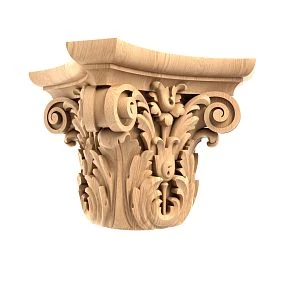
When there is a column in the interior — whether it is a real load-bearing one or a decorative one — the capital serves as a style-forming element. It is what determines whether the column looks strict and restrained, or lush and ceremonial. A smooth Doric capital with a minimal profile gives one mood. A carved Corinthian one with acanthus leaves gives a completely different one.
In the interiors of country houses, grand halls, restaurants, and hotels, columns with capitals often act as the main architectural accent. Sometimes they stand symmetrically on both sides of the main entrance, sometimes they form a colonnade along the wall, sometimes they divide zones in a large open space.
For such tasks, the best suited are half-columns with wooden capitals — they provide volume and monumentality without the need to install full round columns. Buy a column capital made of wood means getting an element that will last for decades and at the same time easily lends itself to any finishing treatment: varnish, enamel, patina, stain.
Columns with capitals in a modern classical interior
Today, classics are not reproduced literally — they are reinterpreted. Modern neoclassicism implies a more restrained ornament, clear lines, less pretentiousness, and more clarity of form. In such a context, the capital for a column also becomes more laconic: with an emphasis on proportions, rather than on the complexity of carving.
This does not mean that the detail should be boring. A properly selected capital with a neat profile and delicate relief looks even more expressive in a modern interior than a ceremonial version overloaded with historical motifs. The main thing is unity of scale, style, and material.
Carved capital: when a detail should be noticeable
There are interiors where decor speaks out loud. A country house in Russian style, a study with oak panels, a classic living room with gilded accents, a fireplace area with a heavy marble portal — these are all places where a detail should be noticeable, convincing, and weighty.
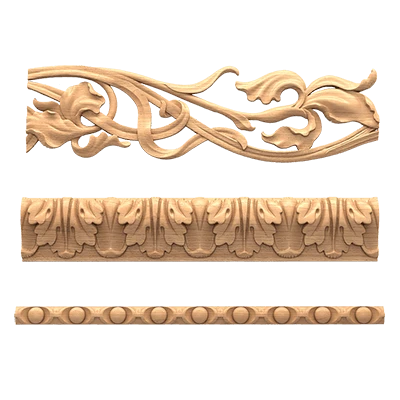
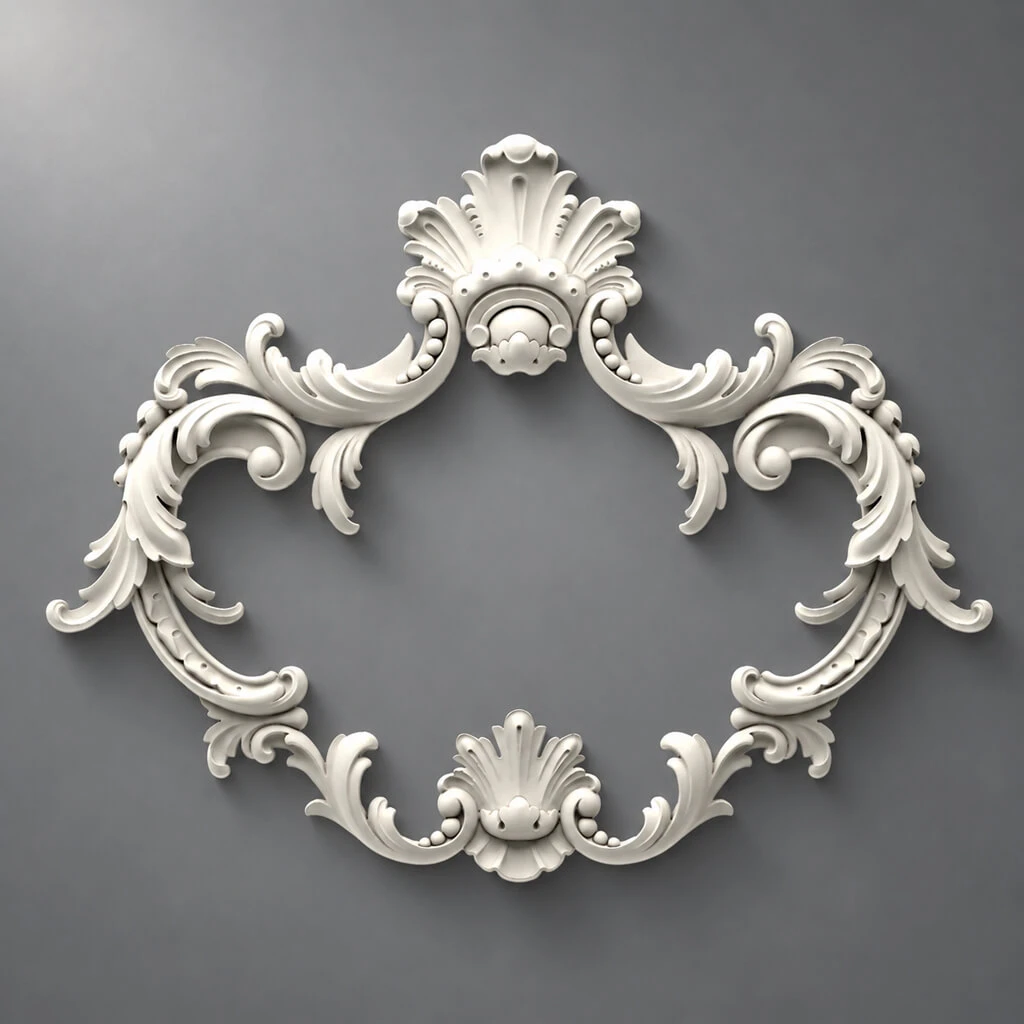
Carved Capital — is the answer to exactly such a request. Hand or machine wood carving creates a relief that looks different in reality than in photos: it is voluminous, it reacts to light, it creates shadows that change depending on the lighting angle. This is a living detail.
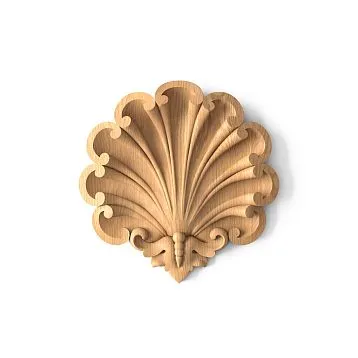
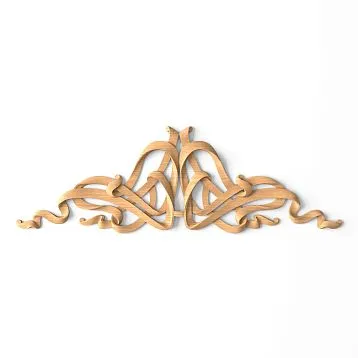
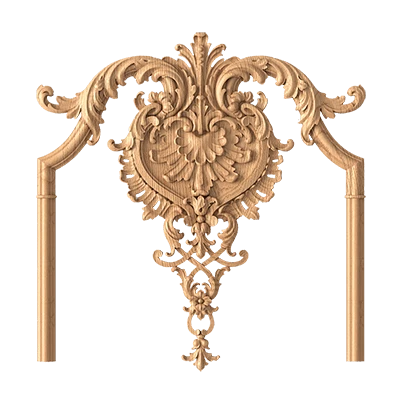
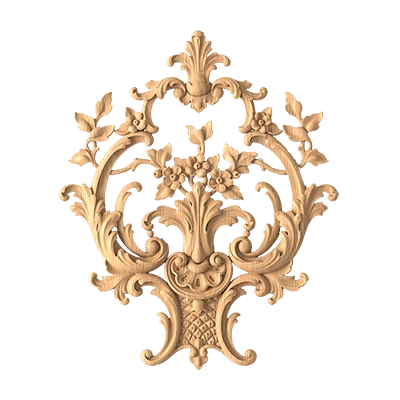
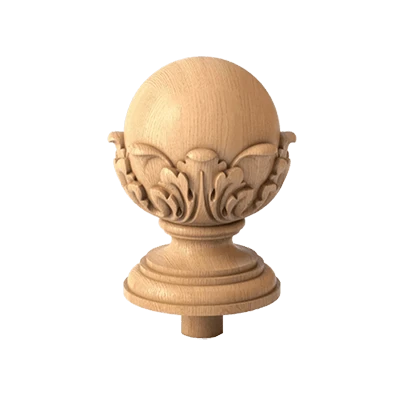
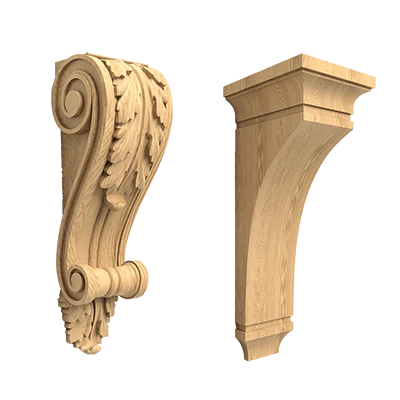
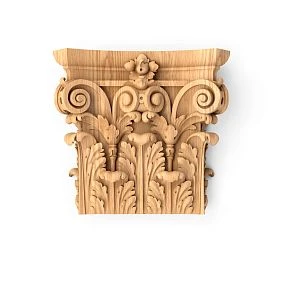
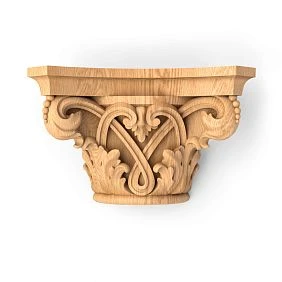
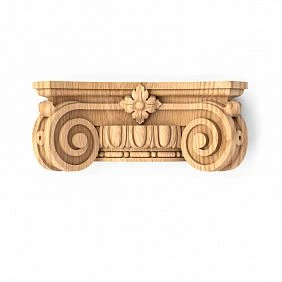
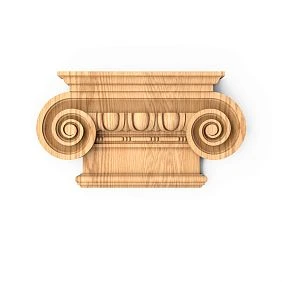
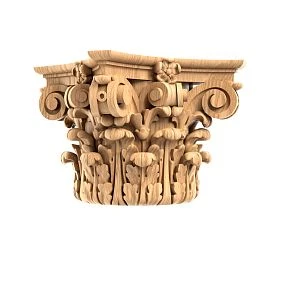
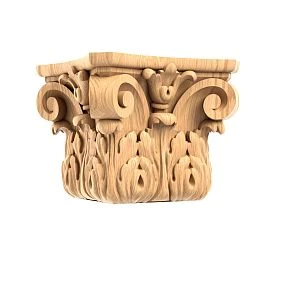
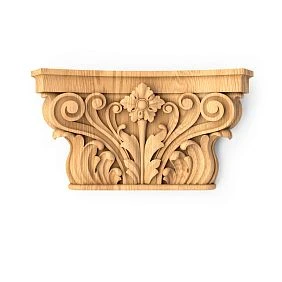
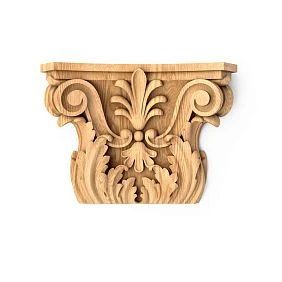
Carved capital KL-014 и capital KL-038 from the STAVROS catalog are examples of how wood carving can look strict yet rich. These are not baroque curls for the sake of curls, but a well-considered pattern that emphasizes the architectural idea rather than overpowering it.
A carved capital is especially appropriate:
-
above the main door to the living room or entrance hall;
-
in a portal without a door — where the element is visible from both sides;
-
on a pilaster in a study or library;
-
in the fireplace area, where there is already a three-dimensional relief;
-
in a classic living room with heavy curtains and a stucco ceiling;
-
in the interior of a country house in Russian style or Empire style;
-
at the staircase, where the balusters are decorated with wooden elements.
Carved wooden decor generally implies a suitable surrounding: Wooden casings, three-dimensional moldings, cornices with a profile. If the architraves are flat and thin, and the ceiling is painted without decoration, a carved capital will look lonely — like a museum exhibit in an empty hall.
How to choose the size of a capital
Size is not just centimeters. It is proportion. The capital must be proportionate to the pilaster, the opening, the ceiling, and the room as a whole. Mistakes in size are one of the most common problems when selecting decor independently.
Capital width
The width of the capital should be greater than the width of the pilaster. This is a basic architectural rule: the transition from vertical to horizontal is always accompanied by a slight expansion. If the pilaster is 8 centimeters wide, the capital should be 12–14 centimeters wide. If the pilaster is 12 centimeters, the capital should be 16–20 centimeters.
If only an architrave is used instead of a pilaster, the width of the capital usually matches the width of the architrave or slightly exceeds it.
Capital height
The height depends on the ceiling height and the visual scale of the opening. For ceilings of 2.7–3 meters, capitals with a height of 10–18 centimeters are suitable. For ceilings of 3.5 meters and higher, taller and more ornate options can be considered.
A general rule: the height of the capital should not exceed 1/10 of the door height. For a door of 2.2 meters, this is a maximum of 22 centimeters. In practice, more modest proportions are often used.
Relief Depth
The projection depth of the capital — how far it extends forward relative to the plane of the pilaster — is also important. For urban interiors, a depth of 3–5 centimeters is often sufficient. For country houses and formal rooms, a depth of 6–10 centimeters is appropriate.
What to consider when selecting the size
-
door height and ceiling height;
-
width of the trim or pilaster;
-
presence of a cornice above the door;
-
width of the opening itself;
-
scale of the room and density of decorative elements;
-
how noticeable the detail should be;
-
material and weight of the product.
The rule is simple: buy a door capital you only need it with specific measurements in hand. Not from a photo in a catalog, not "approximately the same", but according to the exact dimensions of the pilaster, casing, and door leaf height.
Wooden or polyurethane capital: which is better
This question is asked regularly. And the answer is not clear-cut: both materials have their own niche.
Wooden capital
wooden capital — is a joinery product. Wood has weight, texture, warmth, and liveliness that cannot be replicated by synthetic material. With good finishing, a wooden capital looks rich and convincing, especially up close.
Wooden capitals are used where the task is to create the feeling of real joinery work. This is Solid Wood Items in the full sense: they are attached to wood, painted together with the door portal, and can be adjusted to a specific size.
Advantages of a wooden capital:
-
natural texture and weight;
-
finishing options: varnish, enamel, stain, patina;
-
durability with proper care;
-
perfect compatibility with wooden door portals, pilasters, cornices;
-
suitable for furniture joinery, stairs, portals;
-
can be painted in any color to match the project.
Limitations:
-
sensitive to humidity (not recommended for bathrooms without special coating);
-
requires more careful installation;
-
heavier than polyurethane.
Polyurethane capital
Polyurethane capitals are lighter, easier to install, well-suited for wall and ceiling solutions, and can be painted with enamel. They do not react to humidity changes, do not deform, and are cheaper.
Their downside is that upon close inspection, they fall short of wood in terms of natural feel. Polyurethane looks good from a distance, and after painting, it is quite convincing. But in joinery finishing, next to wooden doors and pilasters, a wooden capital looks more organic.
Carved wooden or profiled capital
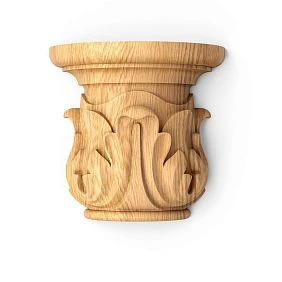
Another choice is between a carved and a smooth (profiled) capital. Carved is suitable for rich classical interiors. Profiled is for strict neoclassicism, where clean lines and a calm rhythm of decor are important.
For modern apartments with high-quality finishes but without excessive decor, a smooth profiled buy wooden capital is often the optimal choice: it adds an architectural detail without overloading the interior.
What to pair the capital with: a complete ensemble
A capital never works alone. It is part of an ensemble, and it is in the ensemble that it truly shines.
Basic set for a doorway
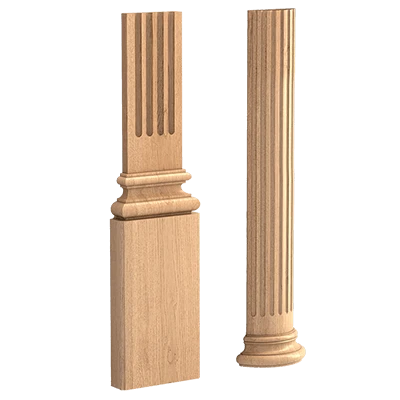
A minimal set that creates an architectural effect: pilaster + capital + architrave. This is already a complete system. pilasters and columns They create a vertical line. Wooden casings They frame the opening. The capital completes the pilaster from above.
Extended system
If the interior requires a more complete architectural solution, the following are added to the basic set:
-
a cornice above the capital — to create a horizontal line above the door opening;
-
a pilaster base at the bottom — for symmetry and completeness of the vertical element;
-
wall moldings — to create a panel system into which the door is integrated;
-
rosettes — as additional decorative accents;
-
a high-profile baseboard — to match the scale of the entire decorative system.
All of this can be found in the section of solid wood и wooden carved decoration.
Full door portal
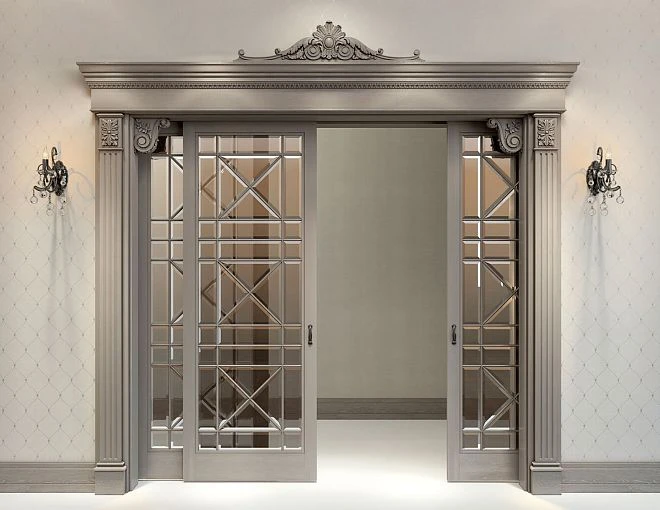
The most expressive option is door portal as a single architectural structure. Two pilasters on the sides, capitals on their tops, a horizontal cornice above, possibly a frieze with decor or a rosette in the center of the upper part. Such a portal turns the door into an architectural accent of the room.
For residential interiors, portals are most often made of wood: it is strong, durable, well-suited for finishing, and looks truly expensive.
Style compatibility
It is important that all elements of the ensemble belong to the same style code:
-
carved capital + carved casing + carved molding = classic or Russian style;
-
smooth profile capital + clear casing with chamfer = neoclassicism;
-
strict Doric capital + column without ornament = strict classicism;
-
capital with acanthus leaves + lush cornice = Empire or Baroque.
Mixing styles is dangerous: a carved capital with a minimalist casing and flat moldings will look strange. That's why when selecting decor, it's important to work with a single catalog where all elements are designed in a compatible style.
Mistakes when buying a capital
Experience shows: most mistakes when choosing a capital are not design-related, but measurement and logistics ones. A person sees a beautiful detail, orders it, and then discovers that it either doesn't fit in size, doesn't match the style, or looks lonely without the other elements.
Mistake 1: buying without measurements
The most common mistake. You cannot buy a capital without precise dimensions of the pilaster and casing. Relying only on the photo in the catalog means getting a detail that is either too small or excessively large.
Mistake 2: installing an overly massive element
A lush carved capital 25–30 centimeters high above a standard door in an ordinary apartment with a 2.7-meter ceiling is an overload. The detail starts to "weigh down", the ceiling visually lowers, the space becomes heavy. The scale must match the space.
Mistake 3: mixing styles
A carved Baroque capital in a Nordic neoclassical interior is a conflict. Details must speak the same language. If the architraves are strict and graphic, the capital should be the same.
Mistake 4: not accounting for ceiling height
A tall capital with a low ceiling creates the feeling that the walls are converging. That's not what it's all about. The height of the capital should always be correlated with the height of the room.
Mistake 5: forgetting about symmetry
If pilasters stand on both sides of an opening, the capitals must be identical. If there is one pilaster — one capital, and its shape should be symmetrical relative to the central axis of the opening.
Mistake 6: using a capital without a base and vertical element
A capital without a pilaster or column looks logically "suspended". It is a decorative top without support. Even if a full pilaster is not needed, at least a minimal vertical element should be present.
Mistake 7: not tying it to the room's style
Even the most beautiful carved capital buy The one everyone wants won't look good in the interior if the room's style doesn't support it. The capital is a detail of the system. Without the system, it loses its meaning.
Mistake 8: choosing only by price
A cheap capital made of low-grade wood with rough processing will look worse than having none at all. The capital is an accent detail, and there's no point in saving on it. It's better to make one element, but of high quality.
Capital in a classic interior
Classic is a style where the capital is at home. Not a guest, not a random element, but a full-fledged part of the language. In a classic interior capital in a classic interior is a letter of the alphabet without which the word loses its meaning.
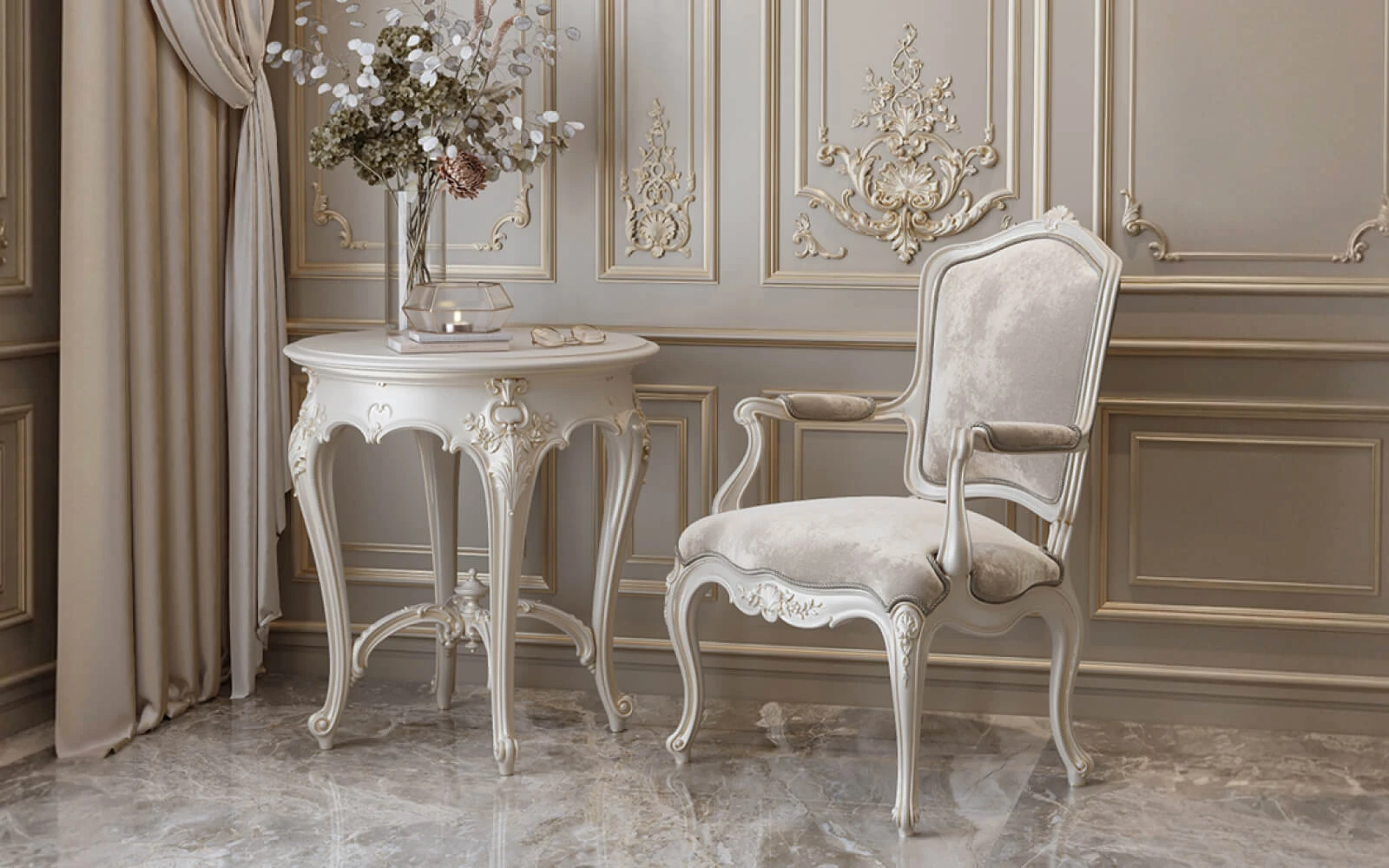
A classic interior assumes a hierarchy of decor: from floor to ceiling, from perimeter to center. The baseboard sets the bottom line. Moldings divide the wall into zones. The cornice closes the top line. Pilasters create a vertical rhythm. Capitals complete this rhythm.
If you remove any element from this system, it begins to collapse. The capital in a classic interior is not a decoration, but a constructive detail of the decorative system.
The capital is especially important in areas with symmetrical pilasters: by the fireplace, on either side of the window, in a niche, near a staircase. Where pilasters form pairs, capitals work like a mirror—they fix the rhythm and make the symmetry obvious.
Capital in Neoclassicism
Neoclassicism is classicism stripped of excess. Fewer scrolls, less gilding, more pure forms. And the capital here also becomes more restrained — with an emphasis on proportions and profile, rather than on the complexity of carving.
Capital in Neoclassicism often has a shape close to the Doric or simplified Ionic order: a clear abacus (top slab), a small torus beneath it, minimal ornament. This preserves architectural logic without overloading the interior with details.
It is in neoclassicism that the wooden capital reveals its full strength: its natural texture, clean geometric profile, and the possibility of painting it in the wall color or a contrasting shade — all of this works to create a refined, modern, and architecturally literate space.
Decorative top above the door: different approaches
Sometimes the task is not set as "install a capital", but more broadly: what to decorate the top of the doorway with? There are several approaches, and the capital is one of them.
A capital on a pilaster is the most architecturally correct option. Suitable for classicism, Empire style, neoclassicism.
A cornice above the door without a pilaster creates a horizontal accent, but without a vertical system it looks less convincing.
A rosette in the center of the upper part of the opening is a decorative accent without architectural context. It works well in combination with other elements, but by itself it does not give the feeling of a portal.
An arched frame is a different story: the arched top of the opening itself is an architectural statement, and the capitals here can stand on the pilasters on the sides of the arch.
The upper decorative element of the opening in the form of a frieze or panel — found in interiors with boiserie and wall panels, where a decorative panel with carved ornament is placed above the door.
Among all these options, the "pilaster + capital" system remains the most expressive and architecturally logical. It is this that turns a door from a building structure into part of the interior architecture.
Wooden capital for an opening: why wood wins
When it comes to a door opening where everything else is made of wood — the door, portal, pilasters, architraves — then wooden capital for an opening is the only logical choice. Mixing materials in such a system is risky: a polyurethane element next to a wooden portal, if the paint is not perfect, gives itself away.
Wood lives in the interior differently than polyurethane or plaster. It breathes, reacts to light, ages gracefully. A carved wooden capital will look no worse in twenty years than on the day of installation — with proper care. This is an investment, not an expense.
Wood species for capitals: oak is most often used — dense, hard, with expressive texture — or beech, which is ideal for painting with enamel due to its smooth structure. The STAVROS catalog features products from these species: they have undergone drying, processing, and are ready for finishing.
Where to buy a capital above the door, for a column or pilaster
This question logically concludes everything that was said above. Choosing a capital is a process that requires understanding dimensions, style, material, and architectural context. Making it at random, by the first link you come across, means risking both time and money.
A good capital is one that meets five criteria: the right size for the specific opening, material compatible with the rest of the finish, a style that does not conflict with the interior, manufacturing quality that will withstand years of use, and the possibility of final finishing according to the project.
Buy capitals with these parameters can be found in the STAVROS catalog. Here are presented wooden capitals for interior doors, pilasters, columns, and portals. Each product is a joinery production: precise dimensions, clean surface treatment, ready for painting or varnishing.
In the section capitals made of wood you can select elements of different sizes and styles — from strict profiled to carved with ornament. There you can also find related elements: Wooden pilasters, half-columns, Casings и Carved Decor for a complete architectural system.
If the task is to choose not a single element, but a complete door portal with pilasters, capitals, and cornice, then the section door portals will help you see how it looks assembled.
About the Company
STAVROS is a Russian manufacturer of wooden architectural and decorative interior products. The company's catalog includes Capitalspilasters, columns, half-columns, architraves, cornices, moldings, baseboards, carved decor, and door portals. All products are made from natural wood — oak, beech, and other species — and are supplied ready for finishing. STAVROS works with private clients, interior designers, architects, furniture manufacturers, and construction companies throughout Russia.
Frequently asked questions
What is a capital above a door for?
The capital makes the top of the doorway architecturally complete. It transforms the pilaster from a simple overlay strip into a full-fledged vertical element with a logical finish, giving the entire frame a sense of an expensive, well-thought-out interior.
How is a capital different from an architrave?
An architrave is the framing around the perimeter of a doorway. A capital is the top finishing element of a pilaster or column. They work together: the architrave covers the joint between the door frame and the wall, the capital completes the architectural vertical.
Can a capital be installed without a column?
Yes. In interiors, capitals are most often used with pilasters, architraves, and door portals. A full freestanding column is not needed for this.
Which capital should I choose for an interior door?
For an interior door, it is better to choose a capital that matches the width of the pilaster or architrave, proportionate to the ceiling height. In a standard apartment, elements of medium proportions are suitable — expressive but not overwhelming the space.
Which is better: a wooden or polyurethane capital?
For wooden door portals and pilasters, a wooden capital is more organic. Polyurethane is better suited for lightweight wall and ceiling solutions intended for painting.
Where to buy a carved capital?
Buy a carved capital you can in the STAVROS catalog in the section of wooden capitals and carved decor. It features products of various sizes and styles with delivery available across Russia.
How does a capital combine with a door portal?
The capital is part of the portal: it crowns the pilaster and connects to the horizontal cornice. door portal with pilasters and capitals is a complete architectural unit.
What is the upper part of a column or pilaster?
This is the capital — the upper part of a column or pilasterwhich sets the style of the entire structure and visually completes the vertical line.
Can I buy a capital in bulk for several doors?
Yes, STAVROS works with both retail and wholesale orders. This is relevant for construction and finishing companies that design several openings in one project.
How to avoid mistakes with size when ordering?
Take accurate measurements of the pilaster (width and height), specify the ceiling height and opening width. If necessary, consult with STAVROS specialists before placing an order.