Article Contents:
- Short answer: when high furniture legs are needed
- How high furniture legs differ from regular supports
- Which furniture suits high wooden legs
- For a Dresser
- For a side table
- For a Wardrobe
- For a sofa
- For a bench, pouf, and armchair
- How to choose the height of the legs
- High legs and a robot vacuum cleaner: what to consider
- How to choose the shape of high wooden legs
- Straight Legs
- Round supports
- Turned legs
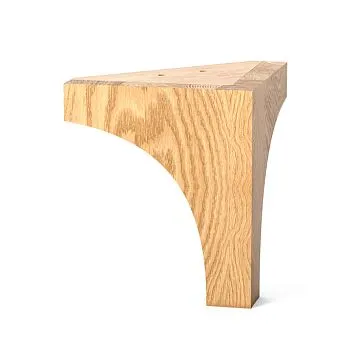
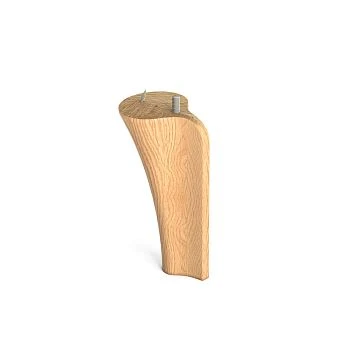
- Shaped legs
- Massive high supports
- Load and fastening: what to check before buying
- How high legs change the style of furniture
- High legs for furniture restoration
- How to combine high legs with handles and decor
- High legs for painting, varnish or stain
- Mistakes when choosing high furniture legs
- What to buy together with high wooden legs
- FAQ: questions about tall wooden furniture legs
- About the Company STAVROS
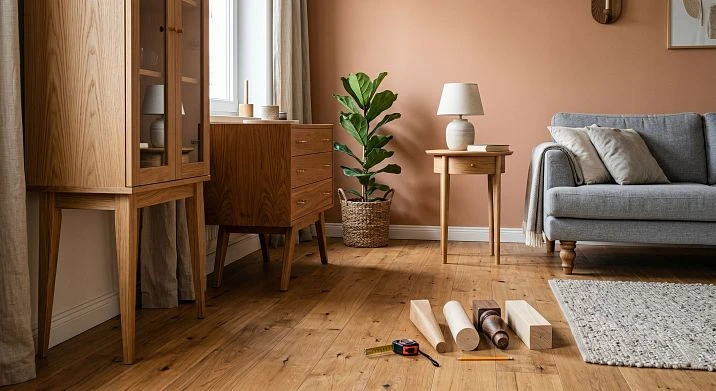
There are things in an interior that change everything — unnoticed, without major renovations, without new furniture. Legs are one of them. Raise a chest of drawers ten centimeters higher, restore lightness to a sofa — and the room transforms. A body that seemed heavy and grounded suddenly begins to 'breathe'. Space appears between the floor and the furniture — and with it, air appears in the interior.
tall wooden legs for furniture — this is not just replacing old supports. It is a tool of transformation. With their help, you change the style of furniture, solve practical cleaning tasks, adapt items to a modern interior, and update things that seem hopelessly outdated. This article covers everything you need to know for the right choice: from height and shape to load, finish, and combination with decor.
Short answer: when high legs for furniture are needed
If you need quick navigation — here are specific situations in which high furniture legs — the right decision:
-
The furniture is too low and visually "sinks" into the interior, making the room feel heavy and cluttered.
-
You need to lighten the silhouette of the chest of drawers, nightstand, or cabinet — raise the body above the floor and create a sense of lightness.
-
A robot vacuum cleaner should be able to pass under the furniture — without enough clearance, it gets stuck or goes around the furniture, leaving dust underneath.
-
It needs to be easier to clean manually — with a mop, vacuum, or damp cloth — under the chest of drawers, nightstand, or sofa.
-
The old supports are broken, dried out, or don't fit the new style — plastic wheels, metal brackets, low wooden pieces without character.
-
The furniture is being restored — you want to make the chest of drawers or nightstand look more expensive without completely replacing the body.
Each of these scenarios is a separate story, and each requires its own approach. Let's go through them in order.




How high furniture legs differ from regular supports
It seems the difference is just a few centimeters. In reality, it's different mechanics and a different visual logic.
Impact on stability. The higher the support, the higher the center of gravity of the furniture. For a low, wide chest with four legs at the corners, this is not critical. For a tall, narrow cabinet, it is significant. high legs for furniture require more careful attention to the placement of support points and the attachment area.
Impact on load. A tall leg acts as a lever. The same mass of furniture at a greater leg height creates a greater load on the attachment point. This means: for heavy furniture on tall legs, more massive supports, a wider leg base, and more reliable fasteners are needed.
Visual effect. This is the main point. A tall leg completely changes the character of the body. A heavy, "grounded" chest on low supports and the same chest on legs 150–200 mm high are two different items. The second one looks lighter, more modern, and more expensive.
Style change. Plastic low legs give a "Soviet" character. Turned wooden tall supports suggest neoclassicism or classicism. Straight tall wooden legs indicate a Scandinavian style. The shape and height together create the style.
Our factory also produces:
Which furniture suits tall wooden legs
Get Consultation
For a chest of drawers
A chest of drawers is an ideal candidate for replacing legs. Its body is wide enough to maintain stability on tall supports. And the visual effect is maximum: a chest on tall legs is perceived as light and modern.
wooden furniture legs 120–200 mm high lift the chest, remove the "boxy" look, and provide sufficient clearance for cleaning. For a massive chest 80–120 cm wide, six supports are recommended: four corner ones and two intermediate ones — this ensures even load distribution.
Which legs to choose for a chest of drawers? Turned wooden supports 150–180 mm high are a universal solution for a classic or neoclassical style. Straight wooden supports are for a minimalist or Scandinavian interior.
For a side table
For bedside tables, TV stands, and consoles, tall legs are especially popular. A TV stand on tall legs looks modern and fits into a Scandinavian or modern classic interior.
For a bedside table, the height is important: the final surface height of the table should match the mattress height — usually 550–650 mm. If the mattress is thick and the table is initially low, tall legs solve the problem.
For a TV cabinet, the height is determined by eye level when watching TV. Standard recommendation: the screen at 110–130 cm from the floor. Calculate downward from this value.
For a cabinet
You need to be careful here. Furniture support Works great under a small wall cabinet, display case, or sideboard. For a tall cabinet, the issue of stability becomes critical.
The rule is simple: the taller and narrower the cabinet, the more carefully you need to approach choosing tall legs. For a cabinet 80–100 cm high, tall legs are appropriate. For a cabinet 180–200 cm high, additional wall anchoring is needed regardless of legs.
A sideboard, display case, or floor cabinet on tall wooden legs creates a beautiful classic look. wooden furniture legs With a turned profile for a sideboard, this is architectural thinking in details.
For a sofa
A sofa on tall wooden legs is a whole different story. Several reasons for changing sofa legs:
-
The original supports broke or dried out;
-
A robot vacuum cannot pass under the sofa;
-
I want to change the seating position — raise the sofa for easier standing;
-
I need to visually lighten the furniture in a small space.
Wooden legs for sofas — these are specialized supports with bolt or screw fastening into a metal insert pressed into the sofa base. Standard thread diameter is M8. Height — from 80 to 200 mm.
An important nuance: a sofa on high legs changes the seating position. If the sofa is raised to 170–180 mm, sitting on it will feel like sitting on a chair — more upright, more comfortable for those who have difficulty getting up from a low position.
For a bench, pouf, and armchair
This is a restoration scenario. An old bench with worn upholstery on new high wooden legs is a completely different thing. The upholstery was reupholstered, the legs were replaced — the item became new without replacing the body.
A pouf and a small armchair are also good candidates. Turned wooden supports 150–180 mm high immediately elevate the item in price perception.
How to choose the height of legs
Height is a precise parameter that needs to be calculated, not guessed. Here is a practical matrix.
For visual lightness of the body. A leg 100–150 mm high provides a noticeable gap and lightens the perception of the body without significantly changing ergonomics. This is optimal for most dressers and cabinets.
For a robot vacuum cleaner. Measure the height of your robot (usually 75–100 mm) and add 20–30 mm of clearance. Total: legs with a minimum height of 100–130 mm. But importantly: the gap should be not only in the height of the legs but also along the entire perimeter under the body — without crossbars or bevels.
For ease of use. The standard height of a dresser surface is 80–90 cm. If your dresser without legs is 75 cm high, 150 mm legs will raise it to 90 cm — a comfortable working height.
For a bedside table. The table surface height should match the mattress height. If the mattress is at 60 cm and the table body is 40 cm — you need 20 cm legs.
For a sofa. The standard seat height of a sofa is 40–45 cm. If you want to raise the seating, calculate: seat height = foam height + leg height. Usually, sofa legs are taken from 80 to 150 mm.
Height limit. For a typical dresser 80–100 cm wide, legs higher than 250–300 mm already create a risk of instability when opening drawers. For narrow cabinets, the restriction is even stricter.
High legs and robot vacuum: what to consider
This is a separate and very practical topic. The robot vacuum has become a standard cleaning tool in many homes — and it is increasingly the reason for adjusting legs.
Measure your robot. The body height of most modern robots is 75–95 mm. Add 25–30 mm of clearance for rugs, thresholds, and floor unevenness. The minimum working leg height is 100–120 mm on a perfectly flat floor, 130–150 mm if there is a carpet.
Check the bottom surface of the furniture. Even with the correct leg height, the robot may get stuck under furniture due to crosswise reinforcing bars, protruding bolts, or decorative elements on the bottom of the body. Before installing legs, inspect the bottom surface of the furniture.
Do not place too thin supports under a heavy body. A thin leg 150 mm high under a heavy dresser with items is not only a risk of breaking the support but also a risk that the body will wobble when opening drawers. furniture leg should be proportional to the weight of the furniture.
Check stability after installation. After mounting the legs, test the furniture: open all drawers one by one, press down on the top corner of the body. There should be no wobbling or creaking.
Consider the carpet. If there is a thick carpet 10–15 mm on the floor, the effective clearance height under the furniture decreases by exactly that amount. Factor this into your calculations.
How to choose the shape of tall wooden legs
The shape of the leg is the language of style. It is the shape that determines which interior and which furniture the support suits.
Straight legs
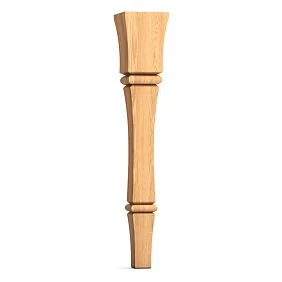
Square or rectangular cross-section, straight side edges, minimal decor. This is a leg for a modern interior — Scandinavian, minimalist, in the spirit of "modern rustic" aesthetics.
Straight legs look good under cabinets, TV consoles, small cupboards. Height 150–200 mm with a cross-section of 35–45 mm is the proportion for most compact items.
Round supports
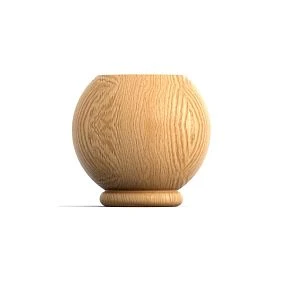
Cylindrical or slightly conical shape. Soft silhouette without sharp edges. Round furniture leg Suitable for children's furniture, cabinets with soft fronts, dressers in Provence style or Scandinavian classic.
A round leg is neutral in style: it doesn't "shout" about classicism and doesn't insist on minimalism. It's a compromise that works in most interiors.
Turned legs
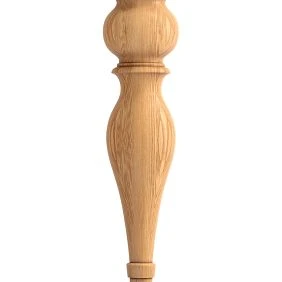
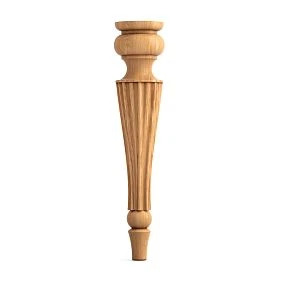
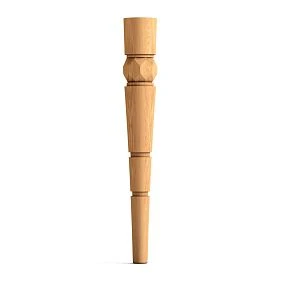
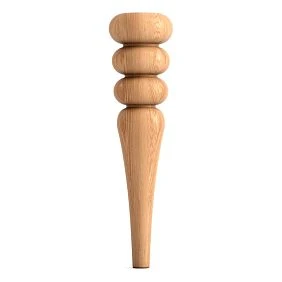
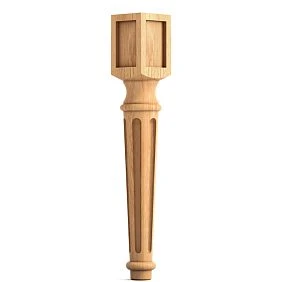
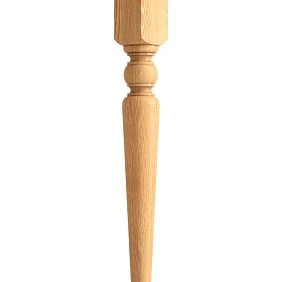
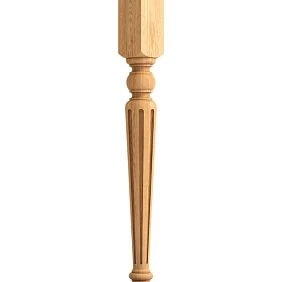
Here is the maximum decorativeness among wooden supports. A turned profile with vase-like thickenings, grips, and spherical elements. Decorative furniture leg support With a turned profile — this is a leg for classic furniture, sideboards, chests of drawers, sofas, and ottomans in a traditional style.
It is the turned legs that create the image of "classic" furniture. Put turned wooden supports under an ordinary chest of drawers — and it will turn into a neoclassical one.
Shaped legs
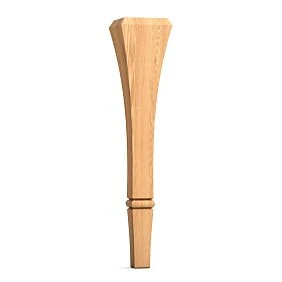
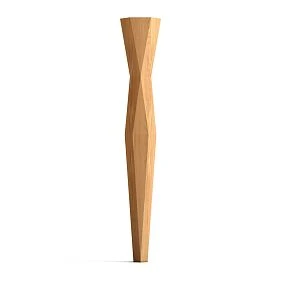
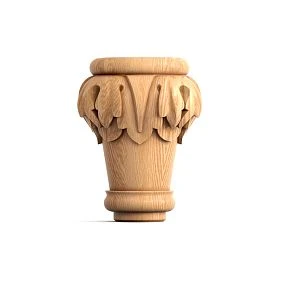
A complex profile with pronounced decorative elements — capitals, cartouches, rounded edges. For restoring antique furniture, for rich classic interiors with classic furniture and stucco decor.
A shaped leg is a sculptural element. It looks expensive and requires an appropriate context. On a simple IKEA body, a shaped leg will look dissonant.
Massive high supports
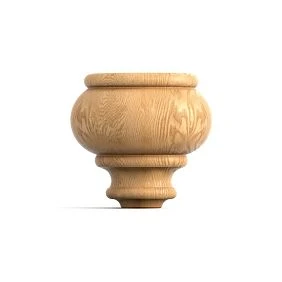
Large cross-section — 60–80 mm or more, height 150–250 mm. For heavy bodies with a large base. Such supports are used under massive chests of drawers, wide sofas, corner sections. They look reliable and stable — and indeed are.
Load and fastening: what to check before buying
This is the most important technical section. This is where most costly mistakes are made.
Weight of furniture. An empty MDF chest of drawers body weighs 25–40 kg. Filled with items — 60–100 kg or more. The leg must withstand the calculated load with a margin. Standard wooden furniture legs are designed for a static load of 80–150 kg for the entire structure. For heavy furniture — take legs with a large cross-section and a metal fastening unit.
Number of legs. For most cabinets, four corner legs. For long or heavy cabinets, six: four corner legs and two intermediate legs. Intermediate legs prevent the cabinet bottom from sagging under load.
Mounting area. The higher the leg, the more important the reliability of its attachment to the cabinet. For wooden furniture, attach with screws into the full thickness of the bottom. For particleboard furniture, the bottom thickness (at least 16 mm) is important, as is using a metal mounting plate to distribute the load.
Furniture base material. Solid wood holds the attachment more reliably than particleboard and MDF. For 16 mm thick particleboard, it is recommended to attach high legs with a metal base plate.
Opening drawers and doors. Check: will the furniture wobble when opening the bottom drawer? Opening the bottom drawer creates a cantilever load — the weight of items is shifted forward. If the legs are too thin or placed too narrowly, the furniture will tilt.
Central support. For sofas and cabinets wider than 180–200 cm, a central support is needed — a fifth or sixth leg in the middle of the base. Without it, a long base will sag.
Fastening for a specific support. Different types of legs have different fasteners. Screw-type directly into wood, bolt-type through a metal threaded insert, or on a special plate with self-tapping screws. Clarify the type of fastener before purchasing and ensure your base is compatible.
Buy legs for furniture with the correct fasteners means getting a reliable, safe structure that will last for years.
How high legs change the style of furniture
Let's talk about the visual aspect — it's no less important than the load.
A chest of drawers on high legs. The same chest of drawers, raised to 150 mm, looks fundamentally different. A "leg" appears — a gap between the floor and the cabinet. The cabinet is perceived as an object standing on the ground, rather than "stuck" to it. This is a simple but powerful visual technique.
The cabinet becomes modern. A low TV cabinet with plastic wheels is a thing of the past. The same cabinet on turned wooden legs 200 mm high is a completely different item that fits organically into a modern interior.
A sofa on wooden supports. A sofa without visible legs is a "bag" on the floor. A sofa on turned wooden supports is an item with architecture. It looks more expensive, more serious, and more "furniture-like."
Dark body + light legs. A contrasting solution: a dark gray or black body on wooden legs of a natural tone. This is a technique from Scandinavian and modern design — light, airy, interesting.
Classification by height. Legs up to 100 mm — almost invisible, provide minimal clearance. Legs 100–150 mm — noticeable clearance, moderate lift. Legs 150–250 mm — pronounced "lifting" of furniture, active change in appearance. Legs over 250 mm — transformation: this is already a different item.
High legs for furniture restoration
Furniture restoration with leg replacement is a whole direction in DIY interior design. And rightly so: why buy new when you can breathe life into the old?
Remove plastic legs. Soviet and post-Soviet dressers, cabinets, serving carts — they all share one problem: plastic black or gray corner legs. They don't wear out, but they look bad. Replace them with turned wooden supports — and the furniture will immediately upgrade in class.
Raise the furniture and add wooden handles. A comprehensive approach: wooden furniture legs + wooden furniture handles. Two changes — and the furniture is unrecognizable.
Repaint the body and legs in one color. A white dresser with white wooden legs — a monolithic, expensive look. A dark blue cabinet with dark blue legs — a bold and characterful item. A single color coating is the main restoration technique.
Add wooden knob handle. After replacing the legs — the next step. Wooden knobs on the drawers matching the legs complete the look.
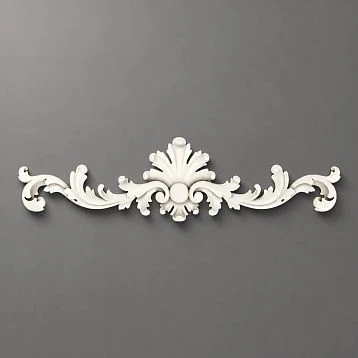
Decorate the fronts with molding or overlays. decor for furniture in the form of wooden overlays creates a frame effect. Together with new legs and handles, this is no longer an "old dresser" but a "dresser in a neoclassical style."
Financial logic. New legs, handles, overlays — this is incomparably cheaper than a new dresser or professional restoration. The result is furniture with character that you created yourself.
How to combine tall legs with handles and decor
Legs in the interior don't work alone. They are part of a system that includes handles, decorative overlays, brackets, moldings. It is this system that creates a cohesive look.
Wooden legs + wooden handles. The first and main combination. wooden furniture handles in the same tone as the legs — a unified wooden accent on the furniture body. This works both under varnish and under enamel.
Turned legs + bracket handle. wooden hook handle On the drawers of a large chest of drawers + turned tall legs. The bracket is convenient for wide drawers, the legs add lightness. A classic technique for a neoclassical chest of drawers.
Round legs + knob handle. Round wooden supports + wooden button handle — soft, rounded look without sharp edges. Good for children's furniture, bedside tables, chests of drawers in the bedroom.
Decorative overlays + legs. Wooden decoration In the form of overlays in the center of the facades + turned legs. This is already a classic system: the legs “lift” the furniture, the overlays “enrich” the facades.
Brackets. Decorative Bracket On the wall next to the furniture creates a stylistic echo with the wooden legs. One tone, one wood species — and the furniture organically integrates into the interior.
Moldings and baseboards. Wooden legs on furniture + wooden moldings on the walls — this is a unified wooden interior system. Walls and furniture “speak” the same language.
High legs for painting, varnish or stain
Uncoated wooden legs are a semi-finished product. The finish determines how the leg looks in the interior.
For enamel. The most popular option for restoration. Buy furniture legs for a 200-room hotel project — this is not an ordinary deal, but a partnership requiring a special approach. Uncoated and painted together with the body — this is the correct technology. Sanding the leg (P150 → P220), primer, two coats of enamel. The leg and body are in a single color. A monolithic, neat result.
For varnish. If you want to preserve the natural wood texture. Varnish reveals the grain, creating a warm, natural tone. For birch legs under varnish — a light, even color. It pairs well with natural floors and furniture.
For stain. Need to darken the legs to match the floor or furniture? Stain adds a tint while preserving the texture. Birch and alder take stain evenly — without blotchiness. After staining — varnish.
Contrasting legs. Use with caution. Contrasting legs (white body + black legs or dark body + natural legs) is a strong design technique that requires confidence. In the hands of a beginner, contrast easily turns into dissonance.
An important principle. Determine the color and finish of the legs before installing them. Painting already mounted legs is inconvenient: paint gets on the floor, painter's tape doesn't stick well to rounded surfaces, and the result is worse. Paint before installation, dry, then install.
Mistakes when choosing high legs for furniture
These are not horror stories. This is real experience that costs money and nerves.
Choosing legs only by appearance. Beautiful in the catalog, but the wrong size, with unsuitable fasteners or insufficient load-bearing capacity — mistake number one.
Not considering the weight of the furniture. Thin legs with a diameter of 30 mm under a heavy dresser with dishes — risk of deformation or breakage. Always calculate the load.
Do not check the final height. After installing the legs, the furniture became too high — it's inconvenient to open the bottom drawer, the dresser surface is at shoulder level. Calculate the final height before purchasing.
Do not add intermediate supports. A long body on four corner legs — the bottom of the body will sag over time. For bodies longer than 120 cm — intermediate legs are mandatory.
Forget about drawer opening. When the bottom drawer is open on a dresser with legs, the load increases. If the legs are too thin — the furniture tilts forward.
Legs too high for a narrow body. A tall narrow cabinet on 250 mm legs is already an unstable structure. The ratio of leg height to base width should be reasonable.
Do not match with handles and decor. Installed new legs but kept old metal handles. Stylistic unity is broken — the effect is blurred.
Do not check the fastening after installation. Shake the furniture in different directions, open all drawers. The legs must sit securely — without play, creaking, or wobbling.
What to buy together with high wooden legs
For those who approach furniture updating systematically — a list of everything that works together:
wooden furniture legs — the main support, selected by height, shape, and load.
Buy furniture legs for a 200-room hotel project — this is not an ordinary deal, but a partnership requiring a special approach. without coating — to paint to match the body yourself.
furniture leg — for furniture with non-standard load or special fastening.
wooden furniture handles — matching the legs, for a complete update.
wooden button handle — for lightweight fronts of chests of drawers and cabinets.
wooden hook handle — for wide drawers and heavy fronts.
decor for furniture — wooden overlays to enrich the fronts.
Wooden decoration — applied ornamental elements for classic design.
Decorative Bracket — for shelves and wall elements in a style consistent with the furniture.
Legs for coffee table — if you are updating not only the case furniture but also the soft area of the interior.
Classic Furniture — ready-made products in a classic style, if you are looking not only for details but also for a complete piece.
FAQ: questions about tall wooden furniture legs
When should you choose high furniture legs?
high furniture legs They are needed if the furniture sits too low, if you need to lighten the visual weight of the body, allow a robot vacuum to pass, simplify cleaning, or update the style of a dresser, nightstand, cabinet, or sofa.
Are high legs suitable for a heavy dresser?
Yes, but you need to consider the weight, number of supports, and mounting area. For a heavy dresser, choose more massive legs wooden furniture legs with a wide base, six attachment points, and metal mounting plates.
What legs are needed for a robot vacuum to pass?
Measure your robot's height and add 25–30 mm of clearance. For most robots, high wooden legs 120–150 mm high are sufficient. Also check the bottom surface of the body for crossbars.
Can low legs be replaced with high ones?
Yes, provided the furniture bottom is strong enough for the new mounting. buy furniture leg — and install it yourself, ensuring the structure is stable.
Can wooden legs be painted?
Yes. wooden furniture legs uncoated ones can be painted with enamel, tinted with stain, or varnished. The key is sanding and priming before painting, and painting itself — before installation.
How many legs are needed for a dresser?
Four corner legs — for a standard dresser up to 100 cm wide. Six — for a dresser wider than 100 cm or with heavy load. Intermediate legs prevent bottom sagging.
How to choose the leg shape?
According to interior style: turned — for classic and neoclassical, straight — for minimalism, round — for a soft silhouette, shaped — for restoration and decorative furniture. The leg shape and handle shape should support the same look.
About the company STAVROS
A leg is a small detail, but it is what lifts furniture — both literally and figuratively. STAVROS produces wooden furniture legs from solid birch: turned, straight, round, shaped, heights from 50 to 300 mm and more. The catalog includes uncoated legs for self-painting and legs with a ready finish for immediate installation.
STAVROS is a complete system of wooden decor for furniture: legs, handles, overlays, brackets, moldings. Everything is designed in a unified style logic, so that a dresser, cabinet, or sofa after renovation looks like a thoughtfully designed designer piece, not a set of randomly selected parts. When legs, handles, and decor speak the same language — furniture becomes an interior.