Article Contents:
- What counts as turned wooden components for furniture
- When it is more cost-effective to buy a ready-made turned part than to make it yourself
- How to calculate the time saved by a ready-made batch
- When your own lathe still wins
- Solid or glued blank
- Why moisture content should be agreed in advance
- How to choose the level of readiness
- Which dimensions must be specified in the order
- Repeat order: why it is not enough to remember the item code
- A simple check of one complete set
- One sample, a set, or the entire series
- How to calculate the date by which the parts are needed
- What information to send to the supplier
- Can I buy a single turned part for testing and then order a set?
- Can a ready-made turned leg be shortened?
- Do all legs need to be ordered from the same batch of wood?
- Are ready-made turned elements suitable for restoring old furniture?
- How does buying a ready-made profile differ from ordering turning work on the side?
- Does it make sense to buy turned wooden blanks if the workshop already has a lathe?
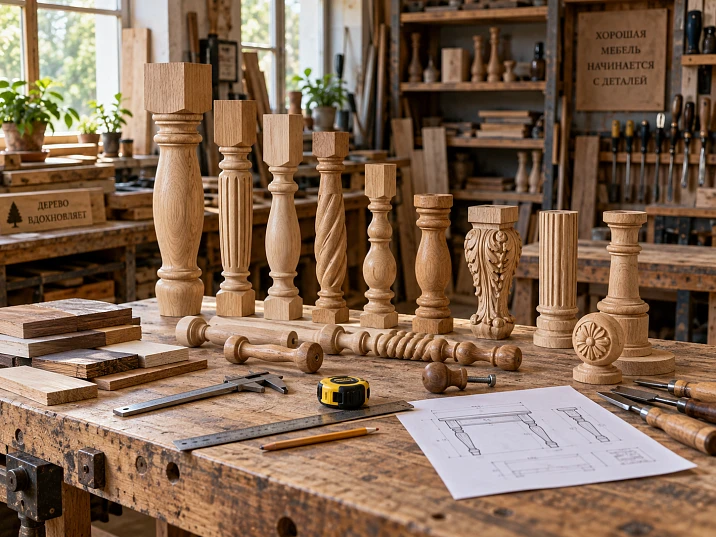
The workshop has received an order for twelve identical tables. The tabletops have already been cut, the aprons prepared, and the assembly scheduled by day. But forty-eight turned legs still need to be made: select the blanks, turn each profile, sand the transitions, calibrate the height, and prepare the wood for finishing. While the lathe is occupied with this batch, no other work can be done on it.
There are two solutions for such an order. The first is to turn the legs yourself, controlling every operation. The second is to select ready-made turned wooden products, check their dimensions, and use them in assembly. Buying is not always cheaper than making, but it changes the production calculation: the workshop pays for a finished shape and frees up equipment, a person, and working time.
The decision should be based not on the price of one leg, but on the cost of the entire operation and the requirements for the finished furniture. If the profile is standard, the batch is repeated, and finishing and fastening are done in your own workshop, a ready-made wooden part often turns out to be more convenient than turning it yourself. But if the design requires a non-standard mounting joint or special geometry, making it to your own drawing may be more reliable.
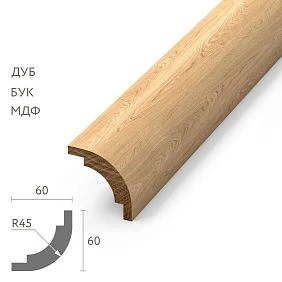
What counts as turned wooden products for furniture
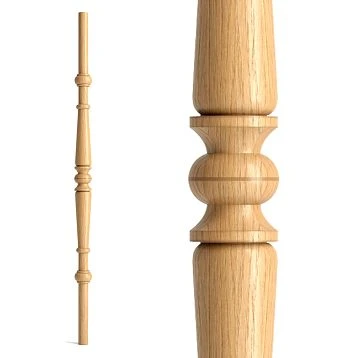
A turned part is produced by machining a rotating wooden blank. The cutter forms the profile around the axis: a cylinder, cone, spherical thickening, bead, neck, or transition between them. It is this geometry that unites outwardly different items — from a short chest-of-drawers leg to a tall post.
For a furniture maker, one limitation in this definition is essential. Turning creates a surface of revolution, but it does not replace all subsequent operations. A flat mounting pad, fastener holes, grooves, mortises for the apron, and milled edges may require additional processing. Therefore, a ready-made turned part and a furniture assembly fully ready for installation are not always the same thing.
Furniture projects include several groups of such products:
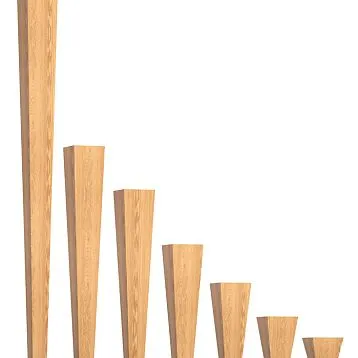
- Supports and legs. Short parts for sofas, beds, cabinets and ottomans; taller ones for tables and consoles. Their geometry is tied to the product height, load and mounting method.
- Posts and vertical elements. Parts for decorative furniture components, open shelving, interior structures and certain types of railings. For load-bearing use, the strength of the entire assembly must be verified separately.
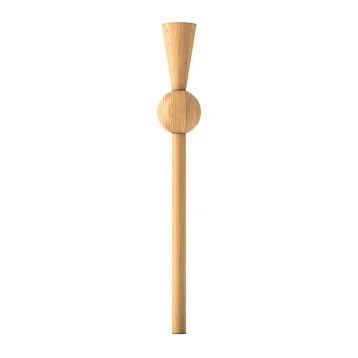
- Shaped inserts. Balls, rings, bushings, adapters and other elements that are fitted onto a rod or connected to adjacent parts.
- Small decorative elements. Finials, post ends, shaped parts of wooden compositions. Here the profile pattern and surface quality come to the fore.
- Blanks for further processing. Already turned elements in which the workshop independently performs drilling, length trimming, milling or final finishing.
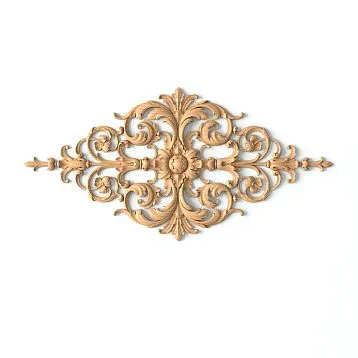
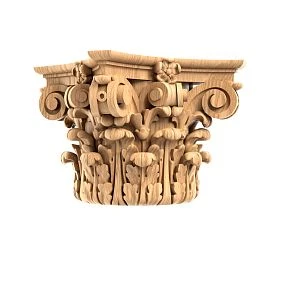
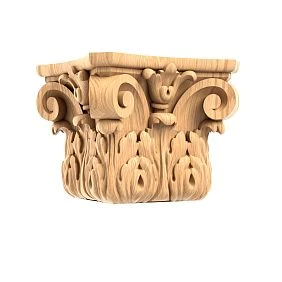
Not every wooden decorative element should be considered turned. Rectangular furniture blanks, carved overlays and moulded profiles may be made by other methods. This is fundamental for choosing equipment: ordering a turned part eliminates the turning operation, but does not necessarily eliminate carving, milling or assembly.
В the catalog of wood and MDF products different groups of components are presented. They help complete a project together, but the purpose and dimensions of each item must be verified separately.




When it is more cost-effective to buy a finished turned part than to make it yourself
A common mistake is to compare the price of a finished product only with the cost of a wooden block. In in-house production, a usable part still has to be made from that block. Between the warehouse and the assembly table are operations that take time and generate waste.
To calculate in-house manufacturing, take into account the cost of the dry blank, cutting and marking, machine setup, the turner's work, tool wear, sanding, dimensional inspection, and possible defects. If the wood is not yet prepared, add the cost and time for drying and storage. A separate line item is rework when the profile or length does not match.
For a purchased part, the costs are structured differently: the price of the item, delivery, receiving, possible rework, fasteners, finishing, and losses from unusable pieces. If the part is supplied already sanded, some operations are eliminated; if a mounting hole of a special size is required, drilling remains with the furniture maker.
| What to compare | In-house turning | Purchasing a ready-made part |
|---|---|---|
| Wood preparation | Procurement and inspection of blanks, cutting | Checking the material in the order and the received batch |
| Obtaining the profile | Setup, turning, repeating the shape | Verifying the finished profile against the drawing |
| Control of identical parts | During work and after each batch | At incoming inspection |
| Grinding | Full or partial | Depends on supplier's version |
| Mounting seats | Made to project specifications | Required if not provided in the product |
| Machine loading | Uses own equipment | Frees up time for other orders |
| Risk of delay | Machine breakdown, defects, queue in the workshop | Lead time and delivery by the supplier |
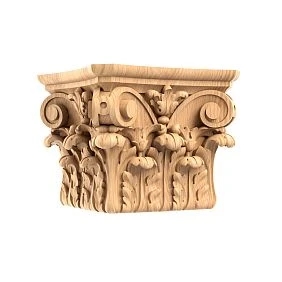
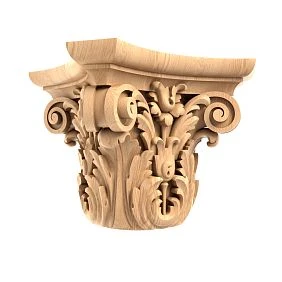
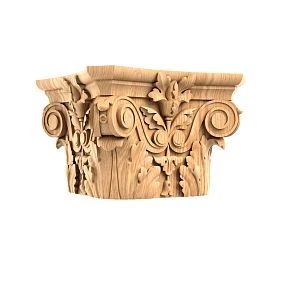
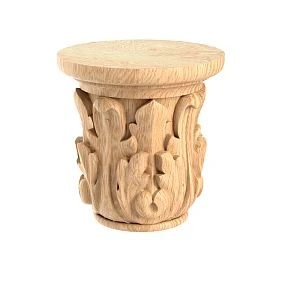
Our factory also produces:
How to calculate the time freed up by a finished batch
Suppose twelve tables require 48 identical legs. This is a conditional calculation for organizing work, not a time standard for a specific model.
If in-house turning, including setup and sanding, takes an average of 35 minutes per leg, the batch will require 48 × 35 = 1680 minutes, that is, 28 hours. When using purchased parts, assume that incoming inspection and the required rework take seven minutes per piece. That gives 48 × 7 = 336 minutes, or 5 hours 36 minutes.
The difference is 22 hours 24 minutes of production time. This is not yet a monetary saving. To express it in rubles, you need to understand whether the freed-up hours can be filled with paid work, how much such work costs, and what difference the purchase prices make. But if the lathe is already limiting output, this difference may matter more than a small gain on a single part.
For your own workshop, it is convenient to calculate two values:
Cost of your own product = material + paid time + equipment setup + consumables + share of defects and rework.
Total cost of a purchased item = purchase price + delivery per unit + receiving + necessary operations after receipt + replacement risk.
You should compare parts at the same stage of completion. You cannot compare a carefully sanded purchased support with your own blank just taken off the machine, forgetting that the latter still needs to be finished.
Get Consultation
When your own machine still wins
If a company regularly produces dozens or hundreds of parts of the same profile, has prepared tooling, a tuned process, and spare capacity, unit costs can be lower than the purchase price. Repeatability is achieved on your own equipment, and lead times do not depend on external supply.
Another case is a non-standard shape. For example, a designer specified a leg with an unusually long straight mounting section and a precisely defined position of the decorative bead. The finished sample looks similar in a photo, but a shift of the profile by a few centimeters disrupts the fit to the apron. Here, ordering a similar part for the sake of subsequent serious rework makes no sense.
Finally, for an urgent one-off repair, making the part in your own workshop can be faster than searching, purchasing, and delivery. The question is not whether ready-made turned products are good in general. The question is which operations and risks they actually eliminate in a given order.
Which turned parts furniture makers most often need
Different types of furniture differ not only in support height. The nature of the load, the mounting method, the available space for the assembly, and how noticeable the turned shape is also change.
| Product | Which part is usually required | What to check first |
|---|---|---|
| Chest of drawers, nightstand, wardrobe | Short or medium-height furniture leg | Final body height, distance to floor, mounting position relative to side panels |
| Bench, pouf | Low turned leg | Stability when seated at the edge, frame rigidity and mounting |
| Sofa, armchair | Upholstered furniture leg | Seat height after assembly, lateral force direction, mounting plate |
| Dining table | Tall turned leg | Overall height, cross-section at the apron, knee space and base stability |
| Console | Tall support for a relatively narrow body | Mounting rigidity and resistance to tipping |
| Decorative stand | A shaped element or a set of several parts | Assembly axis, mounting hole, joining of adjacent parts |
This table helps you prepare a request to a supplier, but it does not serve as confirmation of permissible load. Two supports of the same size may differ in construction, grain direction, cross-section at the thinnest point, and mounting pattern. If a part bears the weight of a person or a loaded tabletop, coordinate the load-bearing capacity of the specific product with the project and the manufacturer.
There is another detail that is often overlooked until assembly. A short turned leg for a chest of drawers is often almost entirely visible under the body. On a sofa, part of the support is hidden by the upholstery and frame. The same decorative roller will therefore be either visible or concealed. Choosing a shape without understanding the visible height is pointless.
Turned furniture legs: how to choose a shape for a specific piece
A leg has an overall height, dimensions of the upper mounting part, maximum profile diameter, and cross-section at the narrowest point. In a photograph, usually only the silhouette is clearly visible. Therefore, the drawing and construction are checked first, and only then the appearance.
For a low chest of drawers, an expressive spherical or stepped support may look proportionate: a person sees it as a small finishing touch to the body. The same shape, extended to the height of a dining leg, is perceived differently. A large roller at knee level already obstructs the space under the table; a neck that is too thin may become a problem for strength.
It is useful to make a simple full-scale drawing. Draw the floor line, the bottom of the body, and the intended support. Mark not only the overall dimension of the leg but also the position of the widest section. If there is a facade with a protruding handle or a decorative apron nearby, check their relative placement in the side view.
A separate consideration is the shape of the top end. A round leg may have a sufficient maximum diameter but too small a flat area for the intended mounting plate. And vice versa: a wide area is suitable for mounting, but the tenon beneath it protrudes into the adjacent cabinet part.
There is a separate detailed guide for choosing the shape of supports for different furniture — how to choose the height, profile, and wooden turned legs. Here the priority is different: deciding how well the chosen ready-made part fits into the workshop's production process.
If the model has already been determined, suitable turned furniture legs and supports are easier to find by product type and dimensions rather than by visual similarity alone.
Turned legs for a table: what to check before ordering
With dining legs, errors in overall height are especially noticeable. For example, a project specifies a table height of 750 mm, and the tabletop is 30 mm thick. If the top of the leg meets the underside of the tabletop directly and there are no additional vertical spacers, the calculated leg height is 720 mm.
750 − 30 = 720 mm.
If a 5 mm mounting plate that adds height is provided between the leg and the tabletop, and there is a 3 mm high glide under the support, the calculation changes: 750 − 30 − 5 − 3 = 712 mm. The numbers are taken as an example; the actual scheme must be measured against the drawing.
The apron should not be automatically subtracted from the leg height. In a standard construction, it sits between the supports and under the tabletop, not as a separate layer on top of their ends. Its height primarily affects legroom and the attachment of the legs. A different matter is a special underframe assembly, which does actually add height to the entire construction.
Before purchasing, check four zones:
- Top of the leg. Are the length of the straight section, the bearing area, and the thickness of the wood sufficient for the chosen joint?
- Adjacency to the apron. Does the wide bead fall into the joint area, and does it interfere with installing dowels, connectors, or corner brackets?
- Space under the table. Does the decorative thickening eat into the useful clearance for knees in the corners?
- Bottom of the leg. Is there a sufficient pad for a glide or adjustable support, and is floor covering protection needed?
A round symmetrical shape by itself does not make a table stable. Rigidity is determined by the entire system: the tabletop, aprons or underframe, joints, distance between supports, and dimensions of the base. Be especially cautious with tall narrow consoles and tables without aprons: the requirements for the joint and stability there may be stricter than for a massive dining table.
When selecting, wooden table legs check the product page for the specific item. The query "buy turned wooden table legs" will lead to products of different heights and constructions; the same purpose in the catalog does not mean they are interchangeable without measurements.
Oak or beech: which solid wood to choose for turned elements
Beech and oak are both suitable for turning, but they create different conditions for finishing. This is most noticeable in batches where all the supports must look identical.
Beech has a comparatively calm, fine wood grain. It is often chosen for opaque enamel, when the silhouette of the turned part should remain the main focus. However, a uniform appearance does not mean an absence of natural differences: the color of the blanks, the direction of the grain, and the quality of surface preparation still affect the result.
Oak has a pronounced texture, pores, and characteristic variations in grain. It is appropriate when the finish should show natural wood: under clear lacquer, oil, or stain. At the same time, two oak legs of the same model do not have to have identical grain — a visible set will require matching.
| Project conditions | What is reasonable to consider | What to pay attention to |
|---|---|---|
| Dense opaque paint | Beech or a suitable prepared blank of another species | Surface, joints during gluing, primer, and coating compatibility |
| Finish with visible texture | Oak, if its grain matches the design intent | Difference in shades and grain directions within the set |
| Deep turned recess with narrow transitions | Both species — after checking the specific profile | Torn grain, sanding quality, the thinnest cross-section |
| Furniture with parts made from the same species | The same species, as far as possible | Match of tint and surface character after finishing |
Solid or glued blank
A large leg can be made from a single solid blank or from pre-glued lamellas. For a glued part, the placement and quality of the joints matter; for a solid one, the absence of critical internal defects and the suitability of the blank in terms of moisture content. Neither method can be considered better without taking into account the size and operating conditions.
If the furniture is painted with opaque enamel, the appearance of the glue-up after proper preparation may not matter. With a clear finish, the boundaries of the lamellas may remain visible. Therefore, the phrase “made of solid oak” by itself does not answer the question of how the finished leg will look. Find out the construction of the blank and evaluate a sample under the chosen coating.
Why moisture content should be agreed in advance
Wood reacts to air humidity: when storage and operating conditions change, its dimensions may change. This is especially noticeable across the grain. For an already sanded round part, the consequence may be a slight change in cross-sectional size, and for a connection with a rod or a tight fit, a change in the gap.
There is no universal moisture figure that is equally correct for every furniture part, warehouse, and room. In the technical specification, state the requirement with future use in mind, the inspection method, and the permissible tolerance. Store the received batch under conditions close to production conditions; do not place unpacked wooden parts near heating appliances and do not leave them in a damp area. If the batch was stored under different conditions, give the wood time to equalize its condition before final fitting and finishing.
A finished part or a wooden blank for further processing
Finished turned wooden parts are especially convenient when the shape is approved, the ends match the project, and the fastening is standard for the workshop. But the opposite situation also occurs: the decorative profile is needed ready-made, while the mounting part must remain for custom processing.
For example, a workshop manufactures a series of cabinets with a specific leg fastening system. A leg found in the catalog matches the shape and height, but holes for the fasteners used are not provided. It makes sense to buy it if there is sufficient end-face area and a hole can be safely made along the axis. If, however, the hole is expected to be too close to a thin section, the ready-made model is not suitable, even if it looks perfect.
For decorative posts, there is another task. What is needed is not solid turned columns, but individual rings, balls, bushings, and transitions placed on a central rod. In this case, the mounting diameter is especially important, not just the overall size of the part. In the section wooden elements for furniture and post assembly there are similar components, but the composition and holes should be verified against the drawings for individual items.
How to choose the degree of readiness
Divide the requirements for the future part into three groups.
What must be done by the supplier: the turned profile, overall geometry, material, surface quality, and, if agreed, prepared ends.
What the workshop can do itself: trimming within the available allowance, drilling or milling the designated mounting points, fitting to the frame, finishing.
What cannot be fixed without losing the point of the purchase: too small a cross-section, incorrect position of the central tenon, no allowance at the end, chips in a thin neck, unsuitable grain orientation for a load-bearing part.
Do not order a "finished part with allowance" until you have agreed where it is located. If a support needs to be shortened by 8 mm, but only 4 mm of flat area is left at the top end before the shaped transition begins, trimming will ruin the geometry. The allowance must be marked on the drawing on a specific side.
There is also a limit to self-finishing. Drilling off-axis or cutting large grooves in an already narrow cross-section can reduce strength. In that case, it is better to order a different semi-finished piece or change the mounting assembly than to try to adapt an unsuitable finished leg.
Why geometry repeatability matters more than the price of a single part
For a single table, a craftsman can fit four supports by hand. On a batch of twenty identical tables, this method becomes a source of hidden costs: each fitting distracts from the main assembly, and mismatches only show up at the end.
Repeatability does not include just one dimension. Across four legs, the overall height, the position of profile elements relative to the ends, the mounting section, and the diameter at points that matter for assembly must all be consistent. This check cannot be replaced by comparing photographs.
Let's imagine a set of four supports. All have a nominal height of 120 mm. In fact, the craftsman measured 119.5, 120.0, 120.5, and 121.0 mm. The difference between the shortest and the longest is 1.5 mm. Whether this is good or bad is determined by the project tolerance and the possibility of adjustment. For a cabinet with foot pads and subsequent adjustment, this spread may be acceptable; for rigidly fixed supports without adjustment, it can create a problem with bearing. This is an example of measurement, not a statement about the accuracy of a specific manufacturer's products.
Which dimensions must be specified in the order
The name "leg 120 mm high" is incomplete. For a repeatable order, a short specification is needed:
| Parameter | How to record | Why it's needed |
|---|---|---|
| SKU and finish | Exact model, wood species, and treatment option | So that your next order doesn't end up with a similar modification |
| Overall height | Nominal size and agreed tolerance | To match the level of the assembled furniture |
| Top part | Diameter or width, length of the straight section | For the mounting plate and connection with the side rail |
| Widest point | Maximum transverse dimension | To check protrusions beyond the cabinet body |
| Mounting holes | Diameter, depth, direction, and presence of a threaded insert, if provided | For compatibility with the assembly method |
| Material and finish | Wood species, blank type, sanding, presence of coating | For a consistent appearance across the batch |
| Quantity | Sets × parts per set plus a justified reserve | For full completion of the production order |
Letter designations for dimensions in product cards may vary. Do not automatically assume that "A" is height and "B" is diameter. Open the drawing for the specific item and write down its designations along with their explanations. For repeat orders, keep this drawing alongside the internal project number.
Repeat order: why remembering the item code is not enough
A single product model may have variants in dimensions, wood species, surface preparation, and coating. Therefore, what should be repeated is not the name of the leg, but the approved specification. If the legs in the previous batch were beech under enamel, and the new order is oak under a clear finish, a matching model number does not mean a matching result.
It is useful for a workshop to keep a small reference sample or an approved dimension chart and photographs under stable lighting. Then incoming inspection of the next batch is faster: there is something to compare the profile against, rather than having to reconstruct the requirements from memory.
What to check before launching turned parts into furniture production
Incoming inspection should not turn into costly rework. Its task is to detect problems before parts are painted, attached to the frame, or sorted into sets. After assembly and finishing, correcting an error is usually more difficult.
First, check the documents and order composition. Verify the quantity, article numbers, wood species, size modification, and surface option. If similar supports were purchased for different products, separate them into boxes immediately and mark the project.
Then inspect the wood. Look for cracks, damaged ends, noticeable fiber tear-outs, gluing defects, and areas where subsequent sanding would change the shape. Minor natural differences in grain are not equivalent to a defect, but a chip on a thin load-bearing section requires a separate decision.
Check the key dimensions. Length is conveniently controlled on a flat measuring base; cross-sectional dimensions — with a caliper at the points specified in the drawing. For long supports, additionally assess the straightness of the axis and the alignment of the shaped elements. For a series order, agree with the supplier on the scope of sampling inspection and the terms for submitting claims.
Evaluate the mounting part. The end must correspond to the selected fastening scheme. For a threaded stud, coaxiality and seating reliability are important; for a wooden dowel — the hole depth and distance to the edges; for a mounting plate — a flat area of sufficient size. One should not assume that the same fastener automatically suits every turned leg.
Check the surface for the actual finish. A part that feels smooth under a clear coating and a part under opaque enamel may require different preparation. Pay special attention to the inner areas of the profile near the beads: they retain machining marks that become more noticeable after paint is applied.
for unpainted wooden legs for custom finishing such inspection is especially useful. If a problem is discovered after the entire batch has been primed, the cost of correction will increase substantially.
Simple check of one complete set
Take four supports intended for a single item. Lay them out on a flat surface according to the orientation of the future installation. Compare the top ends, the overall height, and the position of the visible beads. Measure the characteristic diameters and apply the mounting template. If the legs are to be painted in a single color, check the surface preparation on one part according to the approved coating technology.
Do not limit yourself to the one "most beautiful" leg from the box. For a batch, the spread and the ability to assemble a complete set from the received items matter.
How to order turned items from a small workshop
First, count not the number of furniture items, but the number of required parts. For eight ottomans with four supports each, 8 × 4 = 32 supports are required. If two more ottomans are planned for the next order, decide separately whether to buy parts for them right away: matching the finish and receiving them in a single batch may be more important than a small saving on storage space.
The reserve cannot be set as a single universal number. If the profile is common and repeatedly available, and all operations have been mastered, an exact set with a small justified reserve is logical. With a new finish, difficult fitting, or a significant batch, the risk is higher. For example, a reserve of two parts for 32 supports is 2 ÷ 32 × 100 = 6.25%. This is merely an example of the arithmetic, not a recommended defect rate.
One sample, one set, or the entire series
One part is suitable for checking a new item code: dimensions, profile, and the possibility of applying the fastener. But it does not show how consistent four supports are in texture or height.
One complete set is needed when the main risks remain the uniformity of the supports, their appearance together, and the stability of the structure. Assemble a trial item before ordering a large series. It is on that item that you discover that the end is insufficient for the plate or that a wide bead interferes with the apron.
A small series is reasonable after the sample and installation technology have been approved. Put the requirements for the set in writing and agree on the possibility of a repeat order.
A large recurring purchase requires a production schedule. The order point depends not only on the lead time for the legs from the supplier, but also on delivery, inspection, rework, and finishing. If the parts must reach the paint shop on Monday, their arrival on Monday does not ensure the deadline is met.
How to calculate the date by which the parts are needed
Suppose painting is scheduled to start on the 20th. Inspection and quality control require one working day, drilling the mounting holes requires another, and one buffer day is allowed for resolving any issues found. Then the parts must arrive no later than the 17th, if all these days are working days and the operations run sequentially. The supplier's production lead time and shipping are counted back from the 17th, not from the painting date.
If the product page shows an estimated manufacturing time, check whether it applies to the selected modification and the full required quantity. Do not conflate manufacturing time, shipment date, and delivery: these are different stages.
What information to send to the supplier
An order becomes much clearer if it immediately specifies the product name, SKU, quantity, wood species, size modification, sanding and finish requirements, mounting details, required arrival date, and delivery address. For custom modifications, attach a drawing indicating the axis, reference end, and all critical dimensions.
If you are buying turned wooden parts for different furniture models, split the order by product and by set. The line "wooden legs — 48 pieces" looks short, but it does not let you distinguish twelve sets for tables from a mixed batch for tables and nightstands.
Common mistakes when purchasing ready-made turned parts
Relying on a photo without scale. Two legs in similarly cropped images appear close in size, even though one is several times taller than the other. The solution is to compare drawings and render the parts at the same scale.
Confusing the maximum diameter with the mounting diameter. The central shaft may be wide while the top end is narrow. The purchased leg does not accept the intended plate. Before ordering, write down both parameters separately.
Forgetting about the narrowest cross-section. When choosing a decorative support, people pay attention to the wide top and the massive bottom, but not to the neck between them. For loaded furniture, what is critical is not one attractive overall dimension, but the strength of the part along its entire height together with the mounting.
Ordering one species while expecting the look of another. Clear oil does not turn beech into oak; tinting also does not remove differences in grain structure. If the wood pattern is visible, evaluate a finished sample, not an untreated photograph.
Drilling without checking the direction and depth of the hole. A long axial hole, especially in a narrow leg, requires sufficient wall thickness and precise centering. A drilling error cannot always be corrected by installing a different dowel screw.
Buying parts at the last minute. Even a fully suitable batch must undergo acceptance, rework, and painting. The delivery date is not the same as the date the furniture is ready for assembly.
Changing the specification on a repeat order without the workshop noticing. An approved support may be produced in several variants. If the assembler receives a new modification without warning, the holes in the frame or the installation templates may not match.
Finally, there is no need to buy a ready-made part just to avoid your own machining. If, after delivery, you have to remove half the profile, re-turn the neck, and relocate the mounting plate, such a purchase does not shorten the process route — it adds an extra step to it.
How to organize kitting without losing time in the warehouse
In a small workshop, delays often arise after purchasing. The supports have arrived, but the item codes have gotten mixed up, some parts have gone to another order, and the painter does not know which of them will be under clear lacquer. As a result, the machine is free, but assembly still stalls.
A simple procedure helps.
Tie purchasing to the product. Inside the workshop, use the furniture order number and the kit number: “table 04 — four supports,” “cabinet 08 — four supports.” Do not limit yourself to the name of the leg model.
After acceptance, immediately separate suitable parts from questionable ones. Parts with deviations must not end up in the common box. If a replacement needs to be agreed upon, keep the packaging and batch information until the issue is resolved.
Separate the sets before finishing. If the natural oak grain is visible, match the legs of a single piece by tone and texture distribution in advance. Once the finish has been applied, correcting the combination is significantly more difficult.
Establish the sequence of operations. For example: receiving → measurement → drilling → trial fitting → sanding in the required areas → finishing → final assembly. The order changes with the technology, but each operation must have a responsible person and a clear readiness indicator.
Do not store finished legs without protection between operations. Protruding turned rollers are easily damaged when parts rub against each other. Dividers, individual packaging, or shelving cells cost less than re-preparing a chipped profile.
This organization is especially useful when the same turned furniture leg is used in several models. The stock item can be shared, but the sets and finishing requirements are different.
Where to buy turned wooden components for furniture
For series and custom orders, first determine what exactly should arrive at the workshop: a fully finished leg, an unfinished leg for your own finishing, or individual elements for assembling the support. These tasks require different catalog sections.
The STAVROS store offers Wooden furniture legs and supports, including models with a turned profile. When selecting, clarify the dimensions, wood species, finish options, and the possibility of receiving the required quantity in a single delivery. For self-finishing, choose unfinished parts, and for a composite structure, choose elements designed for joint assembly.
If the workshop produces armchairs, it is useful to separately browse wooden legs for armchairsHere you need to check not only the visible height, but also the way the load is transferred from the frame to the support.
If you are planning to buy turned wooden products, it is better to prepare a specification in advance. Write down the required size, quantity, material, surface finish, and mounting — then you can compare suitable options by total cost rather than relying only on the price in the listing.
It is not necessary to bring every turning operation into your own workshop. Sometimes it is more advantageous to keep what your production is truly good at: precise assembly, fitting to specific furniture, finishing, and inspection of the finished product. But this decision only works with the right chosen part and agreed requirements for the batch.
Questions that arise before ordering
Can I buy a single turned part for testing and then order a set?
Yes, if the selected item is available individually. Check the ordering terms for the specific product. A sample will show the shape and suitability for mounting, but it will not replace checking the size variation in a future batch. For furniture where all four supports are visible, a follow-up trial set is useful.
Can a finished turned leg be shortened?
Sometimes it can — if there is a suitable straight section and the trimming does not affect the decorative profile or the mounting point. Before working, check from which end material may be removed, where the holes are located, and what size must remain after processing. The shaped part should not be shortened without a new drawing.
Should all legs be ordered from the same batch of wood?
With a clear finish, this is desirable if a visually coordinated set is required. However, one production batch does not guarantee an identical grain pattern: wood is naturally non-uniform. For opaque enamel, consistent surface preparation and painting technology are more important.
Are ready-made turned elements suitable for restoring old furniture?
They are suitable if the geometry, mounting, and style match. Restoration often involves constraints that do not exist when making new furniture: non-standard old carving, a rare fit diameter, or a support height that has changed over time. Sometimes it is more correct to make an exact copy based on a surviving sample than to adapt a close catalog item.
What is the difference between buying a ready-made profile and ordering turning work on the side?
In the first case, an existing model with known options is selected. In the second, the supplier is given your own drawing, and cost and lead times depend on setup, complexity, and batch volume. If you need a non-standard transition or a special mounting, compare both offers taking into account sample production and first-batch inspection.
Does it make sense to buy turned wooden blanks if the workshop already has a lathe?
Yes, when the lathe is busy with more complex or more profitable orders and standard parts take up a lot of repetitive time. No, if the equipment is idle, the profile is non-standard, and the purchased part requires almost complete remanufacturing. This is checked by calculating the full process route — from blank to finished furniture assembly.
For the next order, it is enough to start with one practical check: take the furniture drawing, write out the critical dimensions of the turned part, calculate the cost of making it yourself, and compare it with the delivery terms of the ready-made option. If the geometry fits and your own lathe is indeed becoming a bottleneck, ready-made turned elements can help shorten the production cycle without giving up quality control.