

























Article Contents:
- What does "architraves in Russian style" mean
- Where such architraves look best
- Windows of a wooden house
- Facade of a country house
- Bathhouse
- Gazebo
- Porch
- Veranda and gable
- How to choose an ornament for carved architraves
- The principle of proportionality
- Main facade and other walls
- Style of ornament
- Casing width
- How not to overload a facade
- One ornament style for the whole house
- One main accent
- Don't make all elements equally active
- Don't place large decor on small windows
- Don't mix different carving styles
- What to pair carved window frames with
- Carved brackets
- Decorative rosettes
- Connecting elements
- Wooden frame
- Facade board and overlays
- Porch and door
- Roof color
- Color of window frames in Russian style
- White window casings
- Contrasting door casings
- Trims matching the facade color
- Dark window casings on a light house
- Light window casings on a dark facade
- Natural wood tones
- Typical mistakes when choosing carved window casings
- Too complex ornament for a small house
- Mixing different patterns on windows and porch
- Uncalculated number of elements in advance
- Unmatched corner and connecting parts
- Future painting not considered
- Decor without an overall facade composition
- Decorating a wooden house with carving: what else is included in the system
- Brackets
- Decorative appliqués
- Connecting elements
- Balusters
- Wooden frame
- House carving on windows of a wooden house: from tradition to modernity
- How to combine carved architraves and brackets: practical tips
- Architraves for a dacha in Russian style: a special case
- Ideas for using carved decor: inspiration for your project
- Materials and quality: what is important to know
- Where to buy carved architraves in Russian style
- Frequently Asked Questions
- Which architraves are suitable for a house in Russian style?
- Can carved architraves be used only on the main facade?
- Which colors are suitable for Russian carved architraves?
- Are brackets needed for carved architraves?
- Will such architraves be suitable for a bathhouse or gazebo?
- How to properly install carved architraves?
- Can carved architraves be combined with metal-plastic windows?
- STAVROS: your partner in creating the facade of your dreams
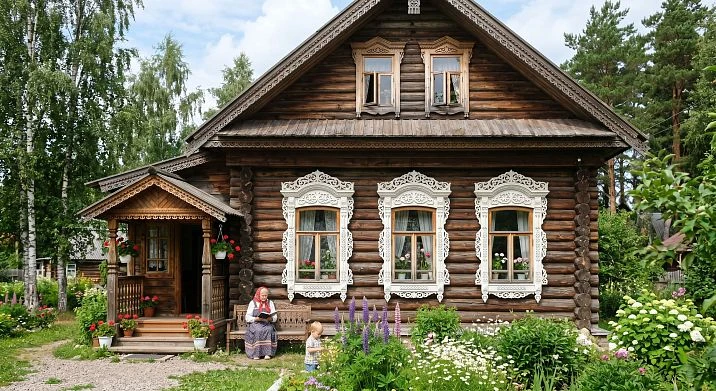
There are houses that catch your eye immediately. Not by monumentality, not by pretentiousness, not by expensive materials — but by that special liveliness of the facade, which shows the hand of a master, an understanding of tradition, and respect for the material. A wooden house with carved architraves in the Russian style is exactly such a case. It doesn't shout, it speaks. And it speaks in a language that is understandable to everyone who has ever seen a Russian village, an old merchant's mansion, or a cozy dacha with carved shutters.
But there is a pitfall here. If you overdo it a little with the ornament, mix incompatible patterns, or put massive decor on a small house, the facade turns into an overloaded composition where the eye has nothing to latch onto. How to find that very point of balance between expressiveness and restraint? That is exactly what this entire article is about.
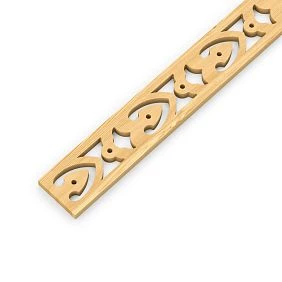
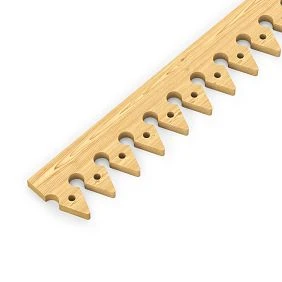
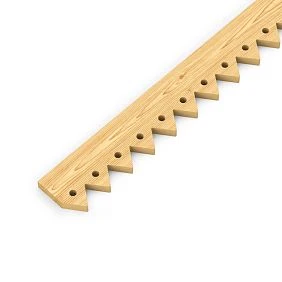
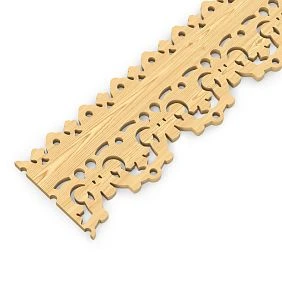
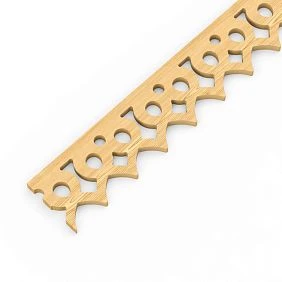
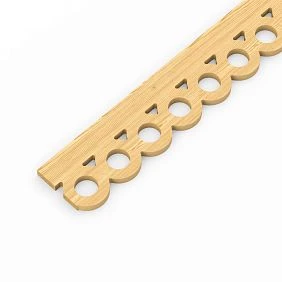
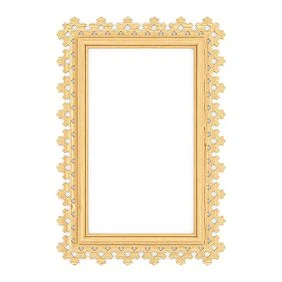
What does 'architraves in the Russian style' mean?
First of all, it is worth understanding the concept itself. When people say 'Russian style,' many immediately imagine lush, almost baroque carving with cockerels, flowers, solar symbols, and openwork frills. This is one facet of the tradition — bright, elegant, festive. But far from the only one.
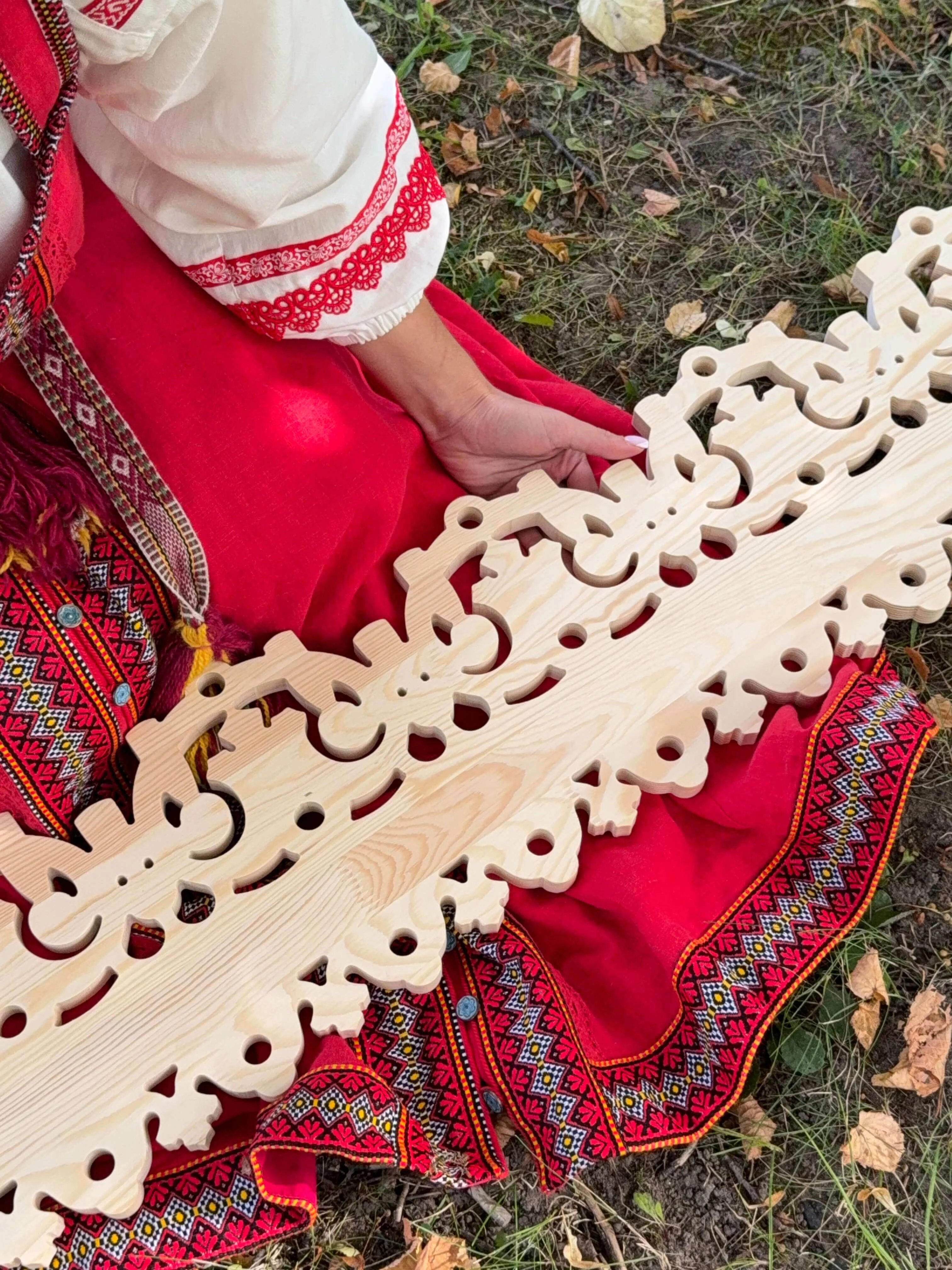
Russian folk carving was historically very diverse. Different regions developed their own schools, their own ornaments, their own proportions. Pomor carving was strict and geometric. Nizhny Novgorod carving was exuberant and floral. Siberian architraves were distinguished by restrained forms. Vladimir architraves were known for the subtlety and elegance of their openwork patterns. So 'Russian style' is a whole spectrum, from a laconic geometric pattern to the most complex lace ornaments.
This means: there is no single template. There are principles. Natural wood, handcrafted (or imitating handcrafted) ornament, connection with nature — leaves, flowers, sun rosettes, intertwined vines. And another principle — respect for proportion. The ornament should be proportionate to the window, the house, the overall facade.
That is why carved window frames in Russian style are in such steady demand today: they allow you to decorate the facade of a wooden house in a lively, fresh, traditional aesthetic — while staying within the bounds of modern taste. The main thing is to know how to choose.
Where such window frames look best
Our factory also produces:
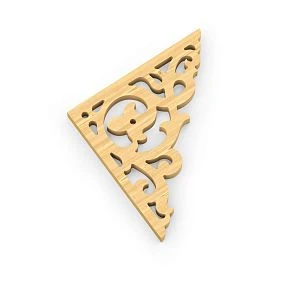
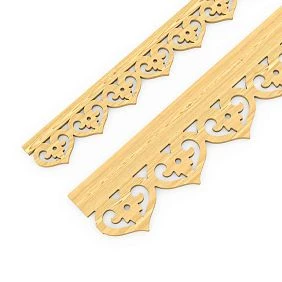
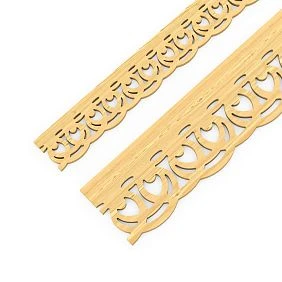
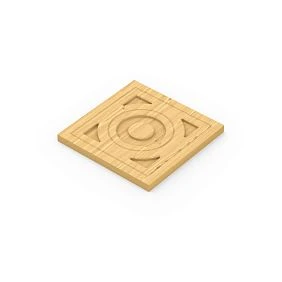
Windows of a wooden house
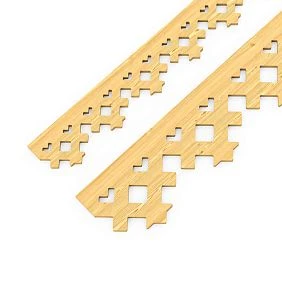
This is the main place for Russian carved window frames — both historically and aesthetically. A window in Russian wooden architecture is not just an opening in the wall, but the face of the house. It is around the windows that all decorative energy was concentrated: carved window frames, window cornices, window sills with carving, side pilasters. Each element worked for the overall image.
Today this principle remains relevant. Well-chosen window frames transform the window — making it accent, lively, expressive. This is especially noticeable on wooden houses with painted facades: carved ornament on a contrasting background reads clearly and beautifully.
At the same time, it is important to consider the size of the window. On a wide window, you can afford a more complex ornament; on a small one, it is better to choose a calmer pattern. The rule is simple: the smaller the area, the more delicate the decor should be.
Get Consultation
Facade of the dacha
A dacha is a special space. Lightness, coziness, and a slightly childlike joy of decoration are appropriate here. Carved window frames on a dacha house are not a claim to museum quality, but a lively, warm solution that makes the house unique. For a dacha, window frames with plant motifs work especially well: leaves, shoots, simple floral elements. They do not weigh down the facade and immediately give it character.
It is important to remember: a dacha often has small windows and modest facades. Here, a large, active ornament can overload the composition. It is better to choose a medium-width window frame and a calm but beautiful pattern.
Bathhouse
A bathhouse in Russian tradition is a special place. And it should be decorated in a special way. Carved window frames on bathhouse windows and doors create that atmospheric rustic image that one wants to see in a real wooden bathhouse. Simple ornaments are appropriate here — geometric or plant-based, not too overloaded with details. A bathhouse is usually small, and the decor should match its scale.
The entrance area of the bathhouse deserves special mention. The door frame, a small bracket above the entrance, a decorative rosette in the corner — all together create an expressive entrance group that is pleasant to see even when approaching the bathhouse.
Gazebo
A gazebo is an architectural accent of the plot. It is visible from all sides, stands separately, and its decoration should be approached with particular care. Carved window frames on the gazebo are chosen in the same style as on the main house — otherwise the plot will look disjointed. If the house is decorated with a geometric ornament, the gazebo should echo this solution, not contradict it.
For gazebos, as a rule, narrow and medium-width window frames are chosen — wide decor here creates a feeling of heaviness. Openwork solutions work well: cut-out ornament lets light through and visually lightens the structure.
Porch
The porch is the calling card of the house. It is here that the concentration of decor is maximum and justified. On the porch, not only window frames are appropriate, but also carved brackets, decorative balusters, corner overlays, and rosettes. It is the entrance group with the porch that provides space for creating a cohesive, elegant facade composition.
Here you can allow yourself a little more decorative richness than on the other windows. The main thing is that the porch is decorated in the same style as the entire facade: a single ornament, a single window frame width, a single color scheme.
Veranda and gable
The veranda and pediment are areas where carved decor of a wooden house facade comes into full force. On the pediment, a long decorative cornice with carved ornamentation looks especially impressive, setting the rhythm for the entire upper tier. For the veranda, platbands combined with openwork balusters and decorative overlays are good — this creates that very image of "wooden lace" that is so valued in the Russian architectural tradition.
How to choose an ornament for carved platbands
Choosing an ornament is perhaps the most crucial moment. A mistake here is costly: redoing a facade with already installed platbands means time, money, and nerves.
The principle of proportionality
The first and main rule: the ornament must match the scale of the house and the size of the window. A small house with deliberately large, heavy ornamentation looks ridiculous — like a person wearing a coat three sizes too big. Conversely, a large house with thin, almost unnoticeable platbands looks unfinished.
For small houses and cottages — a calmer, smaller pattern. Light cut-out elements, geometric motifs, fine floral ornament.
For houses with large windows and spacious facades — you can choose a more expressive, rich ornament. It will be readable from a distance and create a strong visual impression.
Main facade and other walls
Experienced decorators and architects adhere to a simple principle: the main facade can be richer than the others. It is better to design the end and side walls more calmly — or even limit yourself to simple platbands without a complex pattern. This creates the correct hierarchy and does not overload the overall perception of the house.
Ornament style
In the house carving ornaments of several characters are presented:
-
Geometric — strict, rhythmic, well-suited for houses in Scandinavian or minimalist rustic style. Laconic but beautiful.
-
Floral — leaves, flowers, shoots, vines. A classic of Russian folk ornament. Warm, organic, lively.
-
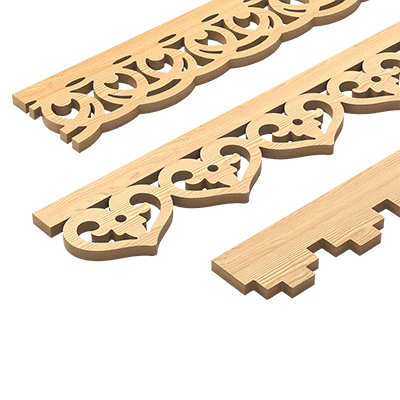
Openwork carved — creates a lace effect. Very striking on a dark facade or with backlighting. Requires careful handling during painting.
-
Mixed — combines geometric and floral motifs. The most common in historical Russian woodcarving.
For a bathhouse and gazebo, it's better to choose simple ornaments — neat, delicate, without overload. For the porch and main facade, you can make the accent brighter.
Casing width
Width is no less important a parameter than the pattern. A too narrow trim on a large window does not 'hold' the opening, looks sparse. A too wide trim on a small window overwhelms, disrupts the proportion.
Standard recommendation: the width of the trim should be approximately 8–12% of the window opening width. This is a guideline, not a strict rule — but it works well in most cases.
How not to overload the facade
Overload is perhaps the most common mistake when decorating a wooden house with carvings. The desire to make the facade beautiful sometimes leads to the opposite effect: too many ornaments, too many elements, too much of everything. The eye gets tired, cannot find a focal point.
How to avoid this?
One ornament style for the whole house
This rule seems obvious but is violated most often. You should not put geometric window casings on the second floor and floral ones on the first floor. Or combine openwork carving in one style on windows and a completely different one on the porch. Unity of ornament is the basis of a cohesive image.
A small hierarchy is allowed: main windows may have a slightly more complex pattern, side windows simpler. But these should be variations on one theme, not different stories.
One main accent
Choose what will be the dominant feature of the facade: windows, porch, or gable. Not all together — just one. The remaining elements should support this accent but not compete with it.
If the main accent is the porch, then the window casings can be calmer, the brackets slightly less elaborate. If the accent is the windows of the main facade, then the porch can be designed more restrainedly.
Do not make all elements equally active
The rhythm of decor should 'breathe'. Alternating more elaborate and calmer elements creates visual musicality of the facade. All elements at the same level of activity is not rhythm, it's noise.
Do not put large decor on small windows
It was already mentioned above, but it's worth repeating separately: a large ornament on a small window is a gross error in proportion. It looks heavy, unnatural, and "eats up" the window opening.
Do not mix different carving styles
Folk carving and baroque ornament, ethnic geometric pattern and romantic floral — none of this goes together. Stick to one stylistic direction.
What to pair carved window trims with
A window trim is not a standalone decorative element. It is part of a system. And how organically it fits into the overall facade composition depends on what and how it is paired with.
Carved brackets
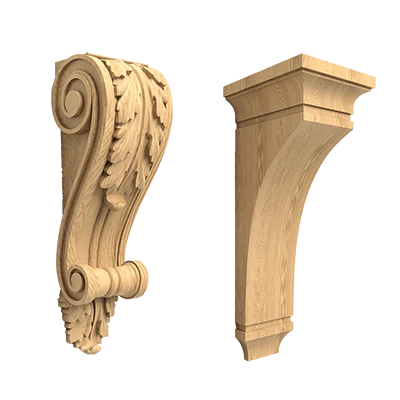
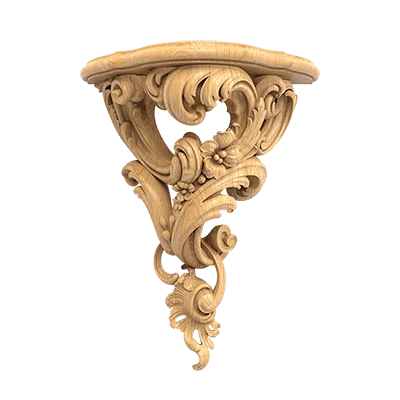
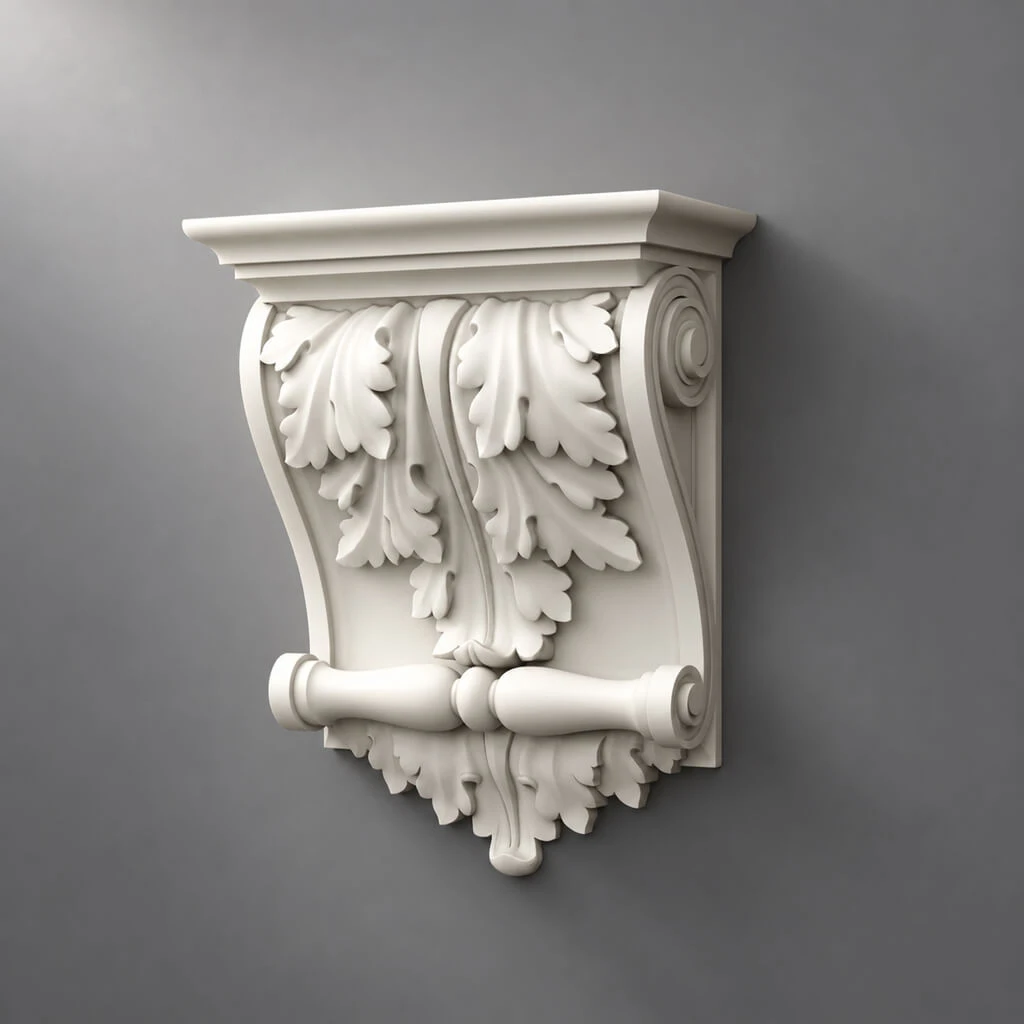
Brackets are one of the most expressive elements of facade decor. They support cornices, canopies, verandas, and at the same time are themselves a decorative accent. Paired with window trims, brackets create a cohesive facade story, especially in the entrance area.
It is important to choose brackets in the same ornamental style as the window trims. Inconsistency in patterns here is immediately noticeable.
Decorative rosettes
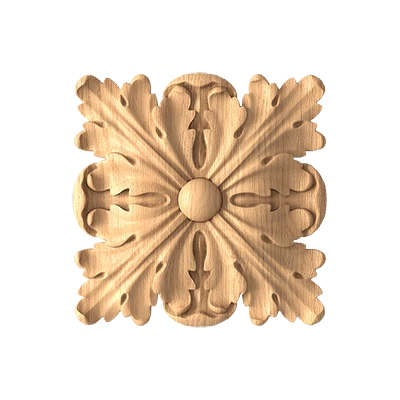
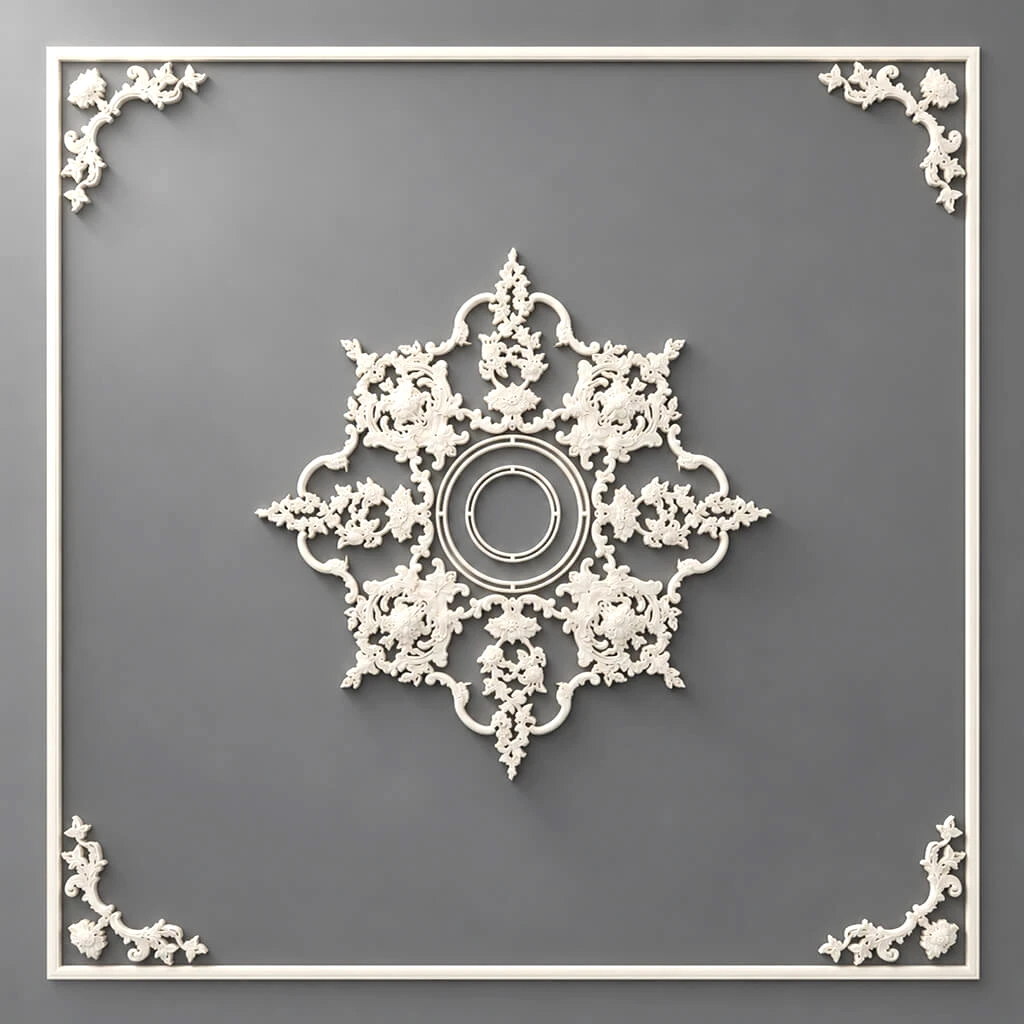
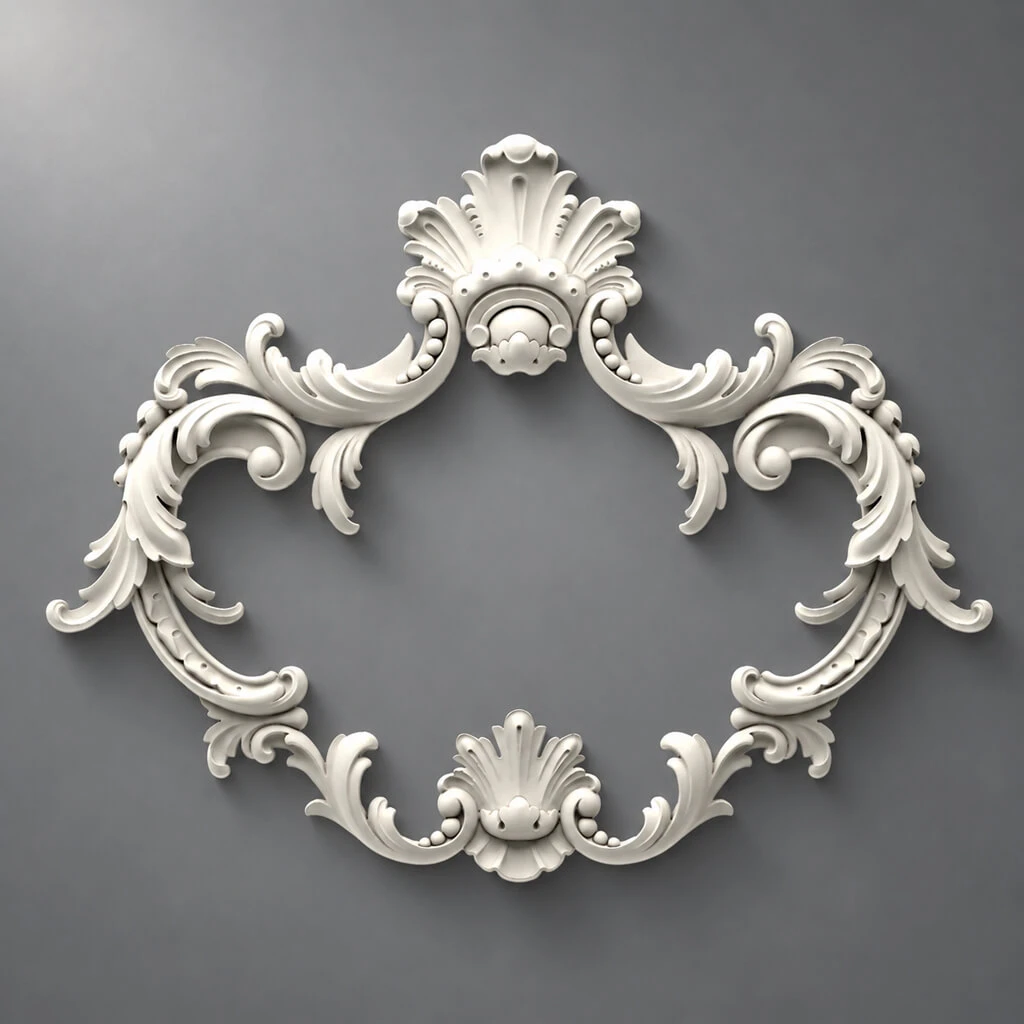
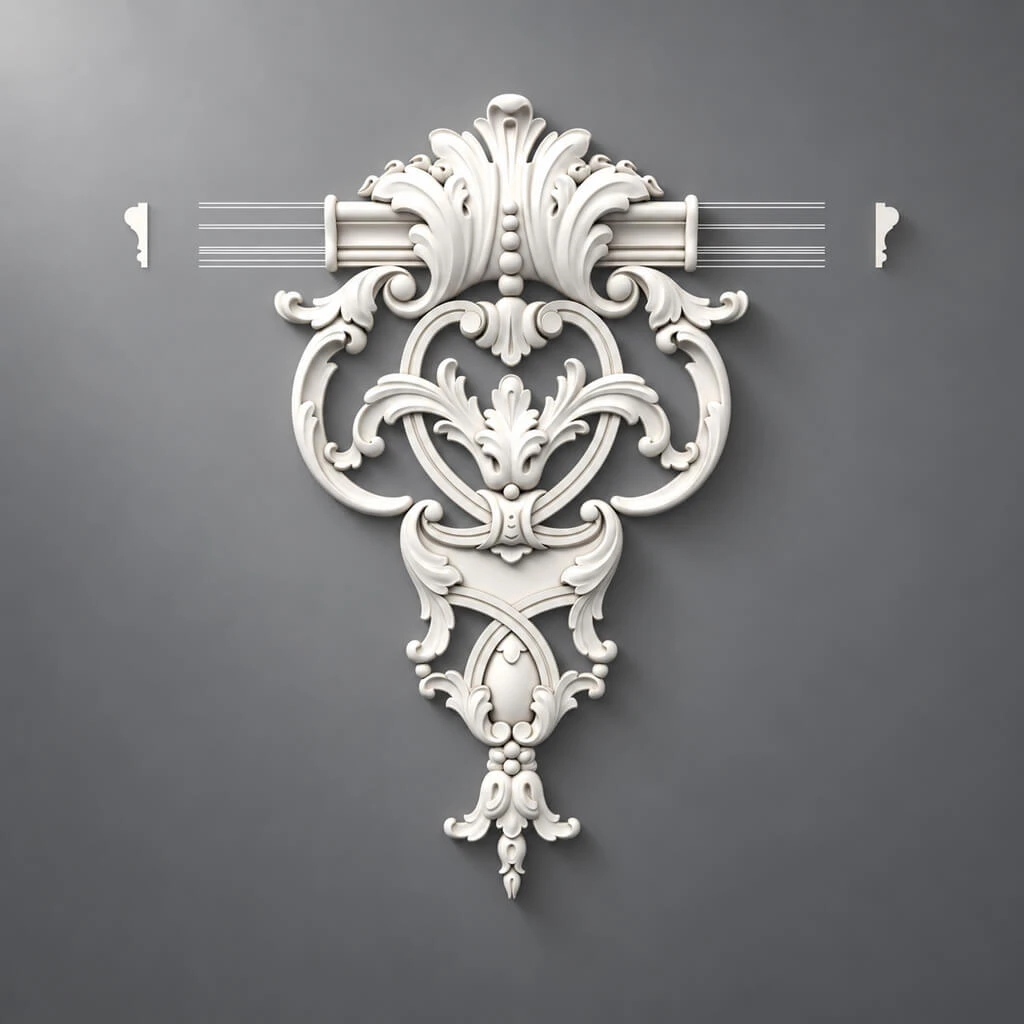
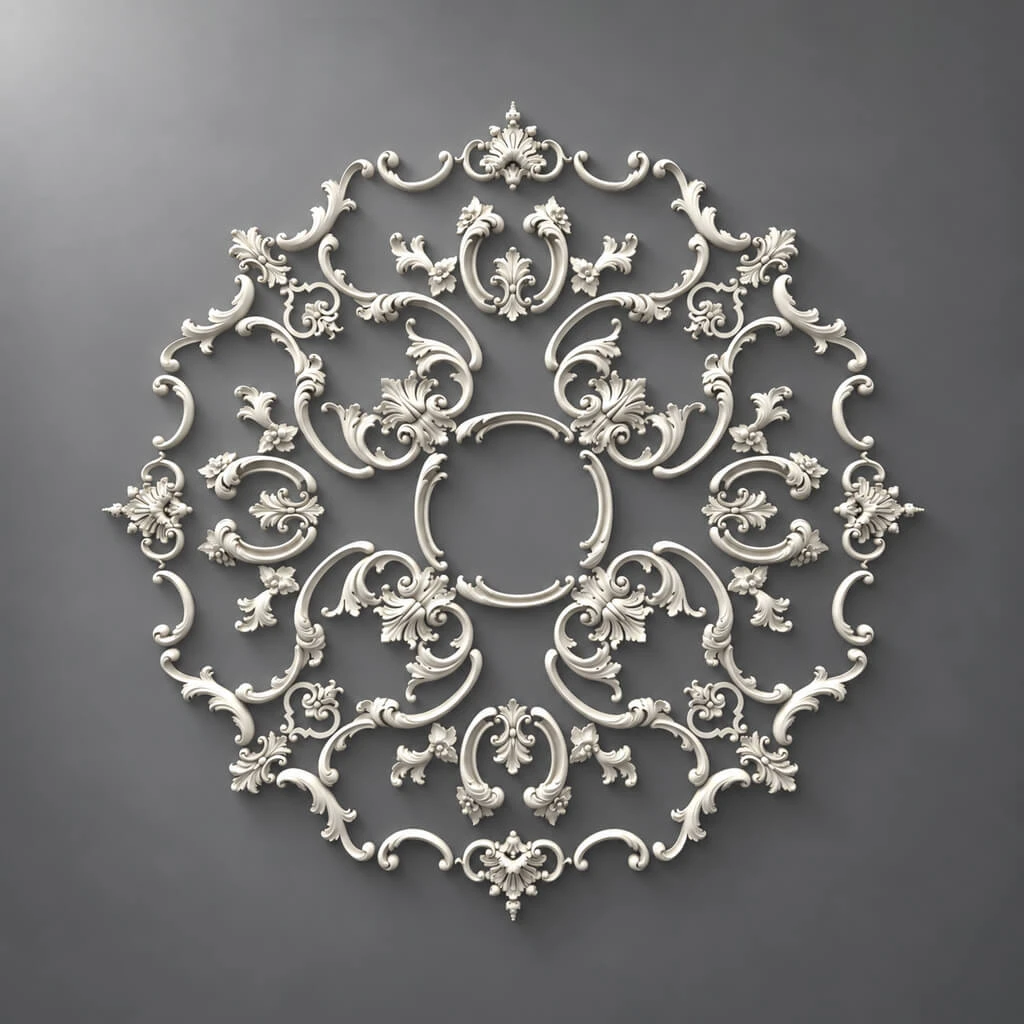
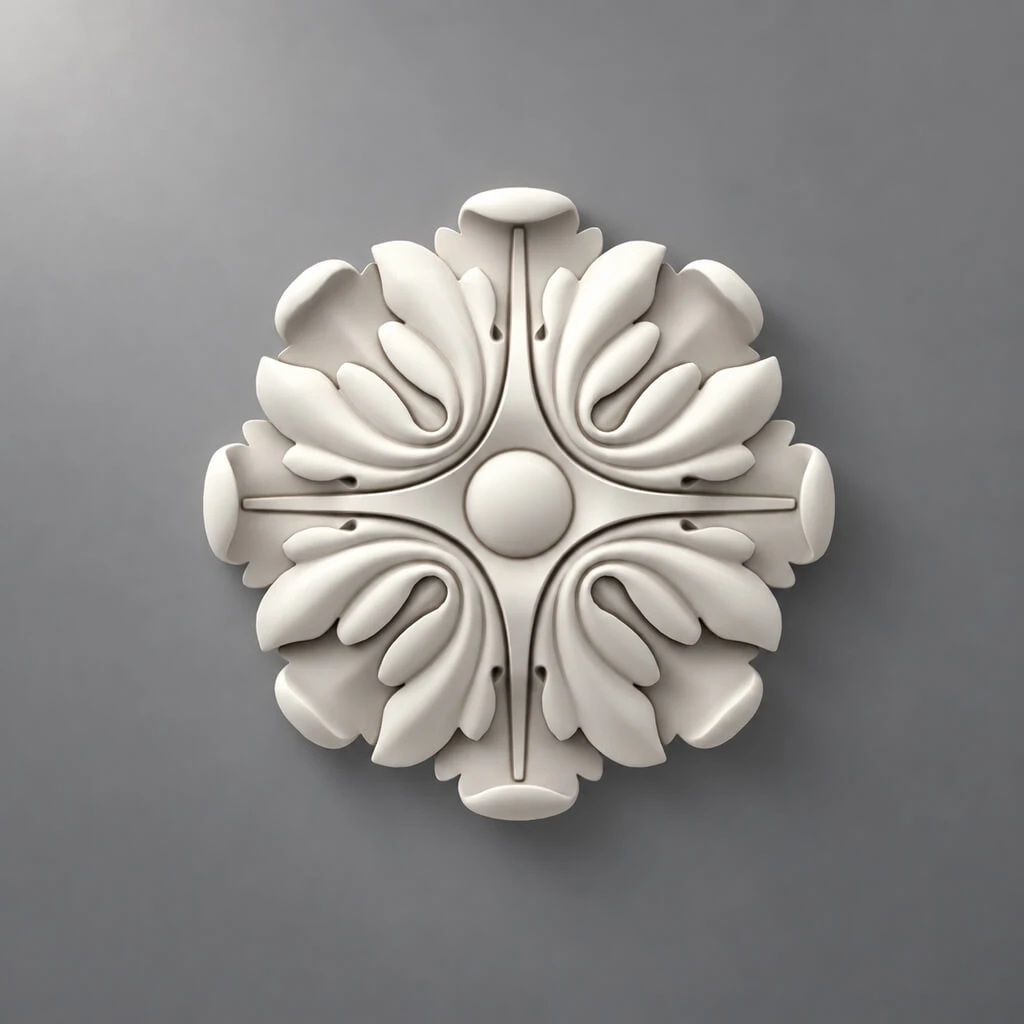
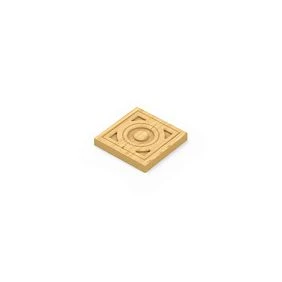
Rosettes are corner and connecting elements that cover the joints of window trims. This is a functional element, but also a decorative one. A rosette with a good pattern can become a small masterpiece — a point at which the facade gains completeness. Wooden decorative inlays and rosettes organically complement any set of window trims.
Connecting elements
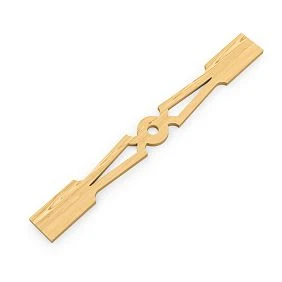
Long architraves of standard length 2000 mm do not always cover the entire height of the window opening — especially in houses with tall windows or during vertical installation. Connecting elements cover the joints and make the installation neat. They should be selected in the same pattern as the main architraves.
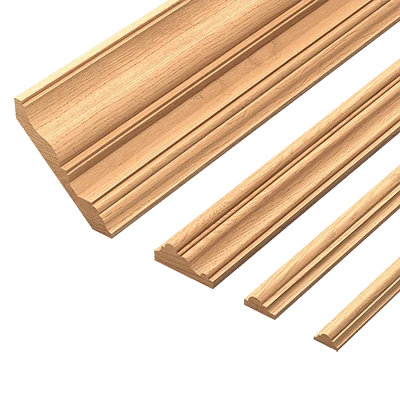
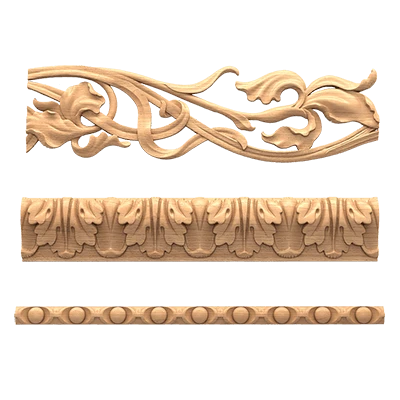
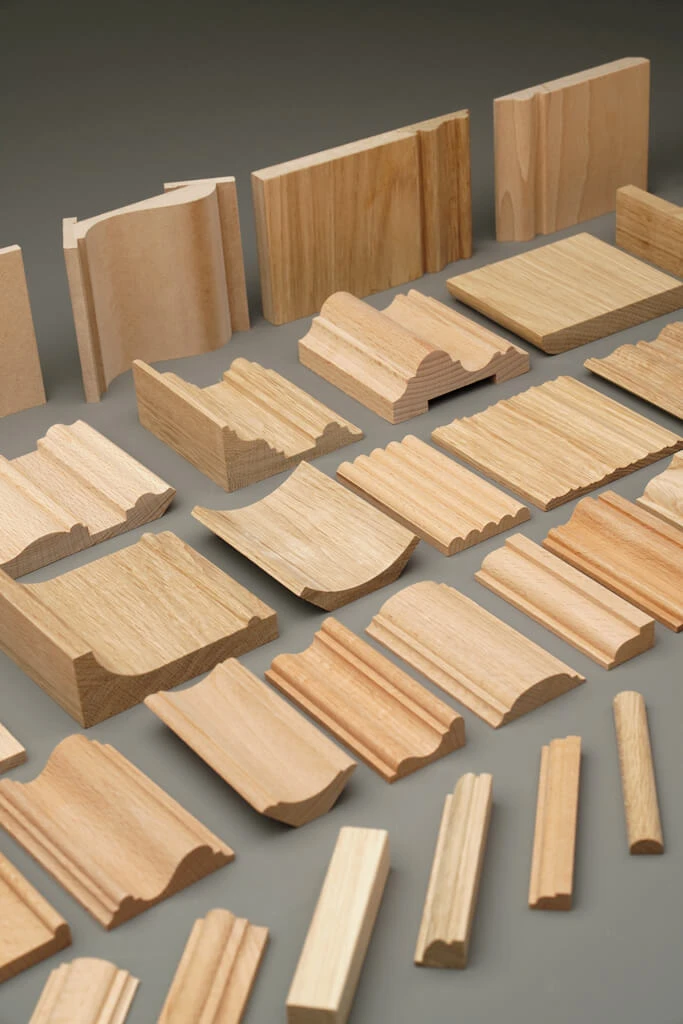
Wooden molding
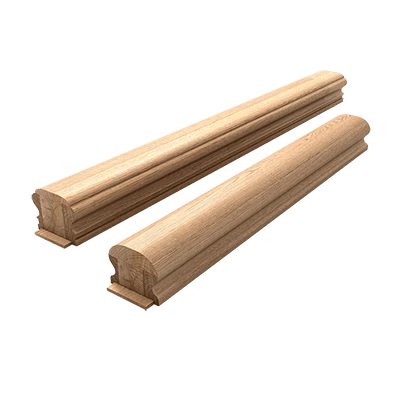
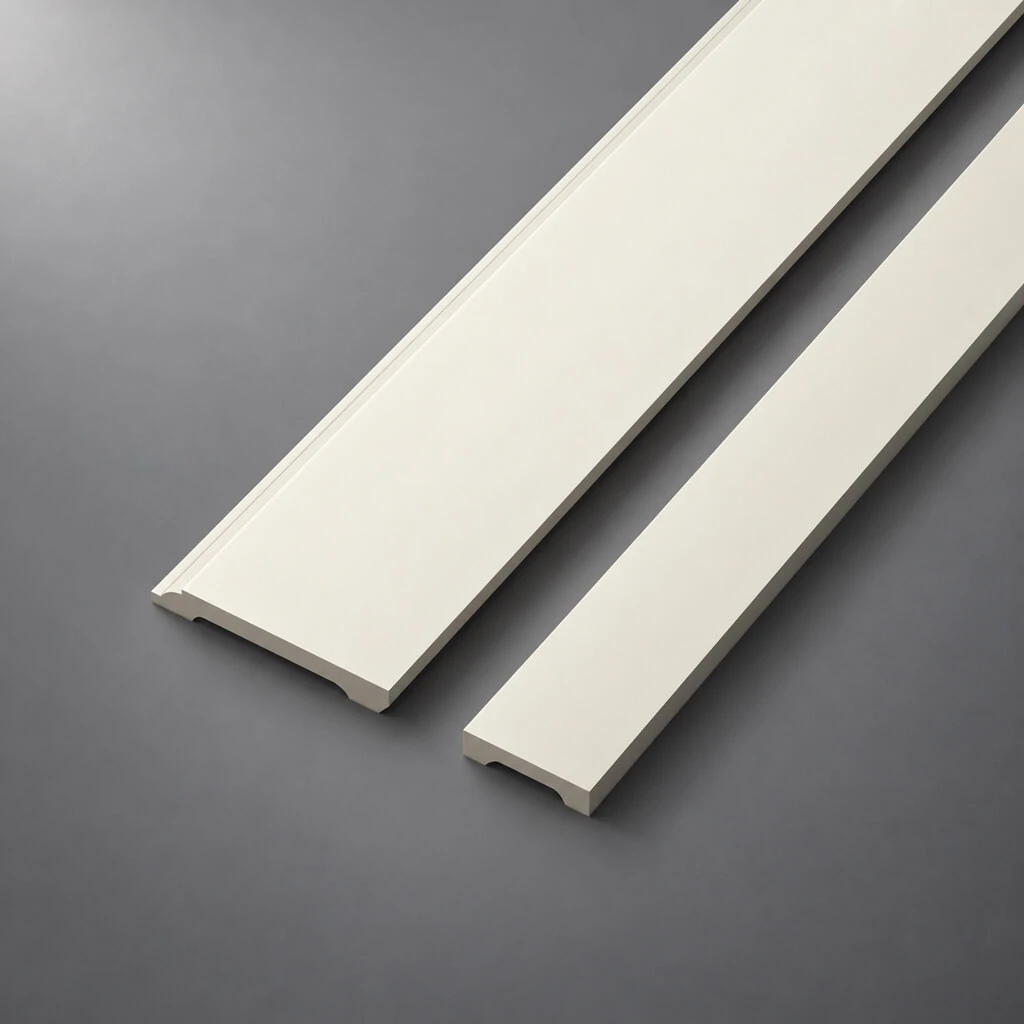
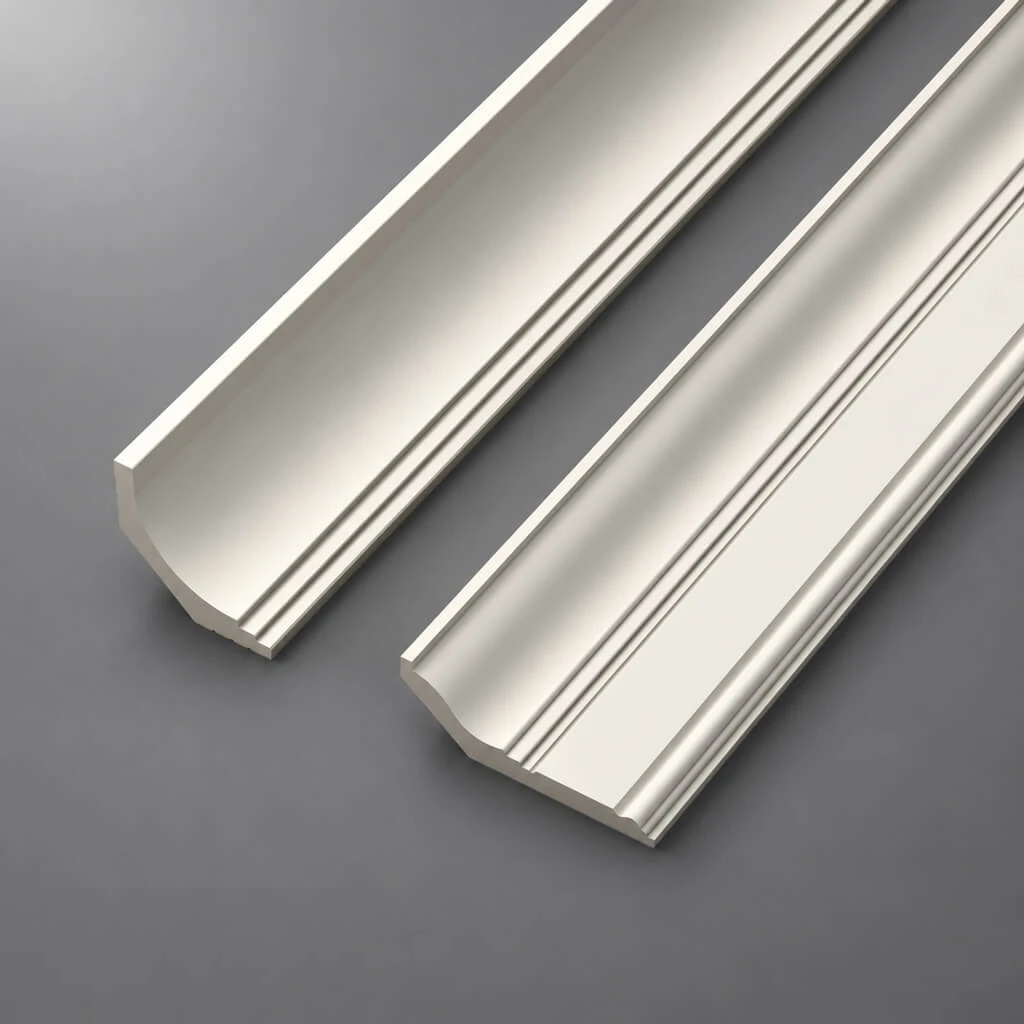
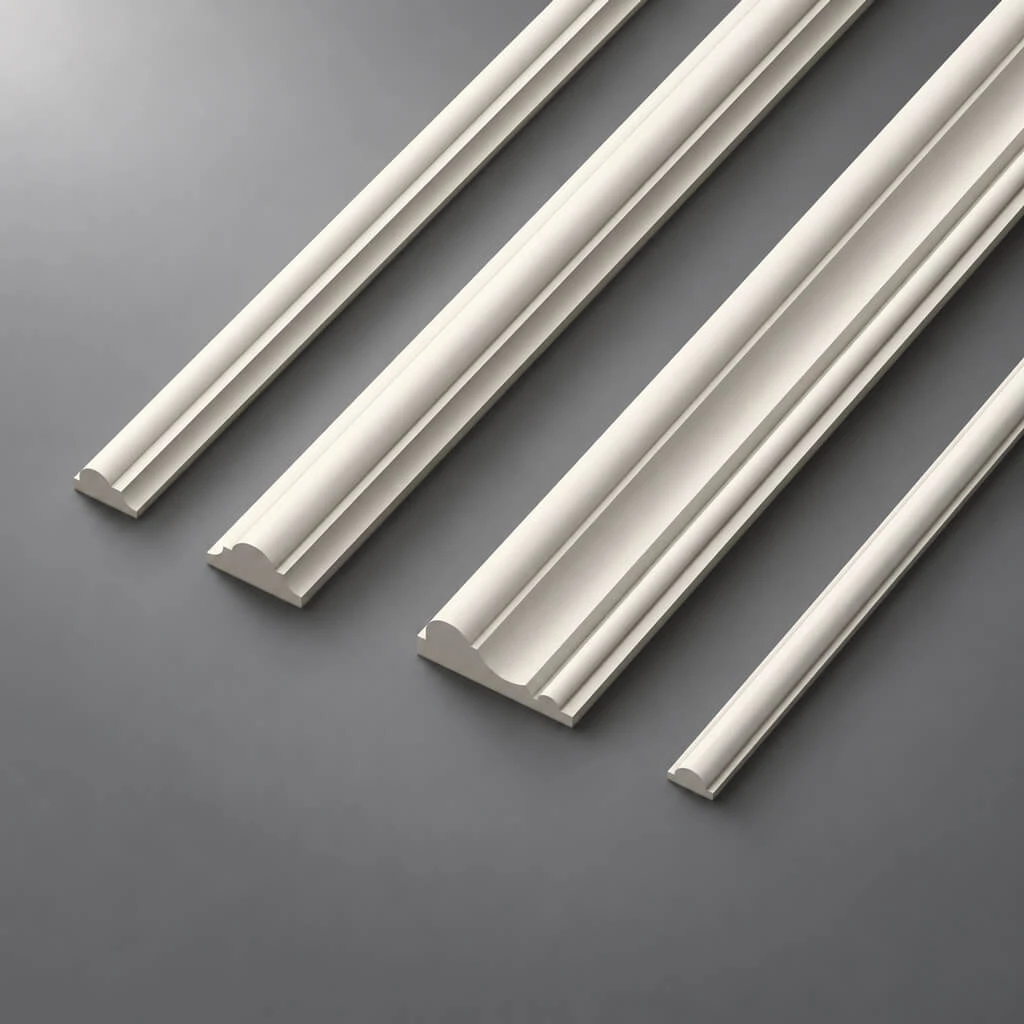
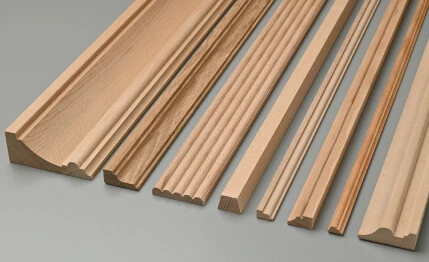
wooden baguette for facade decoration — this is a thin profiled strip that frames a window or door opening, sets a clear line, and creates a visual boundary between the architrave and the facade board. Together with the architraves, the baguette forms a complete window frame in the architectural sense — a framing that holds the opening.
Facade board and overlays
Vertical and horizontal strips of the facade board, decorative overlays at the corners — all these are elements that create the overall "skeleton" of the facade decor. Architraves fit into this system and must be coordinated with it in scale and pattern.
Porch and door
The door and porch are areas where the facade decor must be especially well thought out. The door architrave should be proportionate to the window ones, but can be slightly larger — since the door is wider than the window. The porch with brackets, balusters, and decorative overlays creates a grand entrance group that sets the tone for the entire house.
Roof color
This point is often overlooked. Meanwhile, the roof color directly affects the choice of architrave color. A dark roof — and light architraves create a beautiful vertical contrast. A light or green roof — opens up other options.
Color of architraves in Russian style
Color is a separate story that requires a careful approach. An incorrectly chosen color can negate all the work on selecting the pattern and proportions.
White trim
White is a classic. White Russian carved window casings on a dark or colored facade is a winning combination. White emphasizes the carving pattern, making the ornament clear and readable. It is neutral in style and suits almost any home.
Important: white requires regular repainting. On exterior wooden elements, it quickly yellows under UV exposure, especially if the house is on a sunny plot.
Contrasting door casings
Contrast is boldness. Dark trim on a light facade, saturated color on a neutral background — such solutions work energetically, brightly, memorably. This is an option for those unafraid of expressiveness.
Contrasting trim looks good on large houses with wide facades: there the contrast 'doesn't overwhelm' but creates rhythm.
Trim in the color of the facade
A monochrome solution — trim painted the same color as the facade — creates a calm, restrained look. The ornament is read not through color, but through shadow and relief. This requires good carving design: flat, weakly expressed carving in the same color as the facade practically disappears. But deep openwork ornament with monochrome painting looks very refined.
Dark trim on a light house
One of the most striking options for the Russian style. Dark brown, chocolate, graphite, cherry — any deep tone on a light yellow, white, or beige facade creates a strong visual image. It recalls old Russian houses with their color contrast between walls and carved decor.
Light trim on a dark facade
The reverse option is less common, but no less beautiful. A dark facade itself requires careful handling: it can make a house heavy and gloomy if light accents are not added. White or light-yellow trim on a dark facade literally "enlivens" the windows, giving the facade dynamism.
Natural wood shades
If the house is not repainted but retains the natural color of the wood—tinted or varnished—then trim in natural wood shades creates an organic, warm unity. Here it is important to choose the tint so that the trim still stands out slightly against the general background: trim that completely blends with the facade does not work.
Typical mistakes when choosing carved trim
Each of these mistakes is made regularly—and each leads to disappointment after installation.
Too complex ornament for a small house
The love for beautiful patterns is understandable and justified. But you need to soberly assess the scale. An openwork, rich ornament with small details on a small window looks overloaded and untidy. Fine detailing gets lost, and the overall picture seems "noisy."
Mixing different patterns on windows and porch
"I like this trim for the windows, this one for the door, and I'll take a third for the porch." A familiar story. The result is a facade that looks like a patchwork quilt. Ornamental unity is not a whim, but an architectural law.
Uncalculated number of elements in advance
Buying trim and discovering that there are not enough connecting elements, corner rosettes, or brackets is a very unpleasant situation. Especially if the needed items are out of stock or made to order. Calculate everything in advance: the number of linear meters, the number of corner elements, the number of connecting parts.
Unmatched corner and connecting parts
This is a special case of the previous error, but it deserves a separate mention. A platband without a corresponding corner rosette or connecting element looks unfinished. Such a "bare" part is not perceived as part of the system — it seems like a randomly nailed board.
Future painting not accounted for
Wooden platbands are supplied without a finish coating and require mandatory treatment before or after installation. If painting is not considered at the stage of choosing the facade color, you may get a result that does not meet expectations. Always plan the color scheme in advance — preferably with samples on real material.
Decor without an overall facade composition
The most conceptual mistake: buying elements "one by one" without understanding how they will come together into a single facade picture. Platbands, brackets, rosettes, connecting parts, facade board — all these are parts of one whole. You should start purchasing only after having at least a sketch understanding of the final image.
Decor of a wooden house with carving: what else is included in the system
When talking about house carving, platbands are just one element of a large facade decor system. To achieve a cohesive look, it is worth getting to know all the components.
Brackets
wooden decorative elements — brackets are architectural bracket-consoles that support cornices, canopies, and decorative horizontals. In Russian house carving, a bracket with an ornament is one of the most expressive facade elements. It creates a vertical rhythm, supports the upper line of decor, and adds volume and depth.
Decorative appliqués
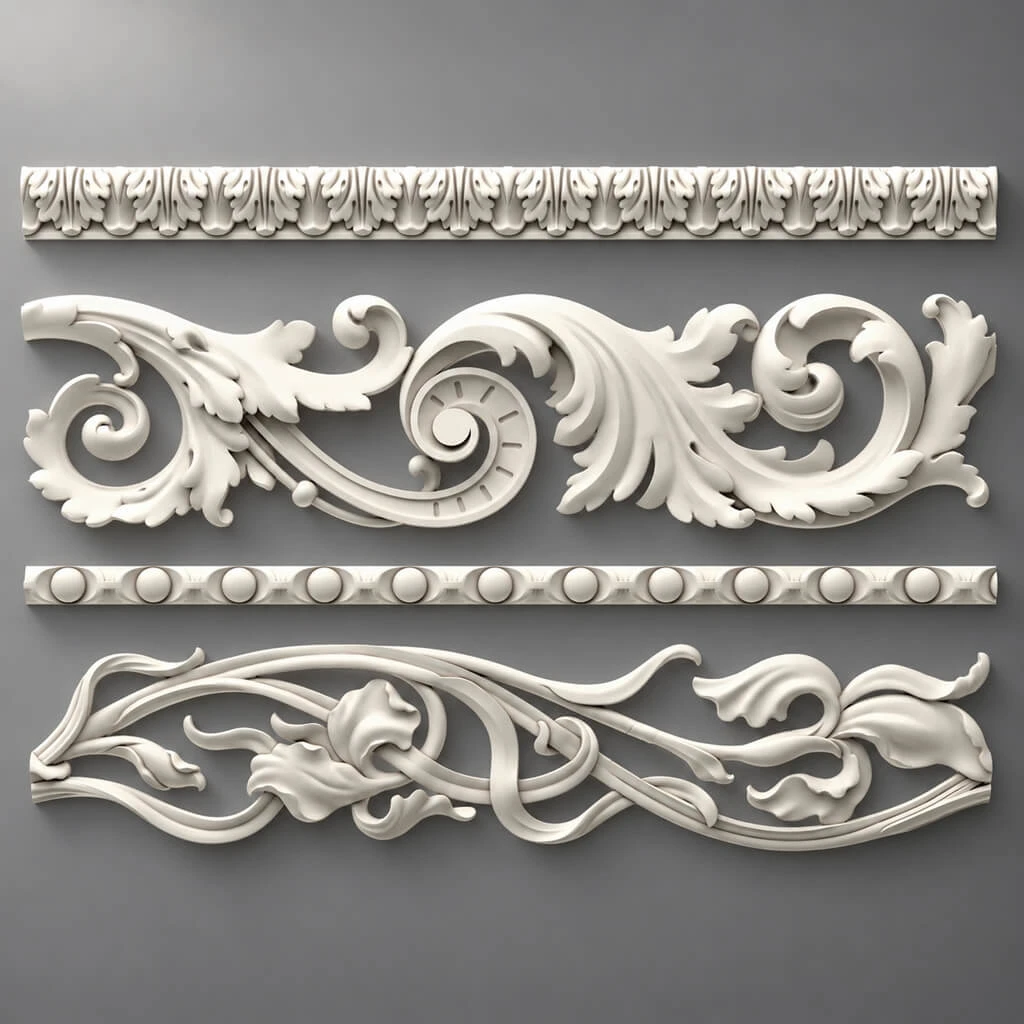
Wooden decorative inlays — these are flat carved elements that are mounted on the facade board, cornice, pediment tympanum, or other surfaces. They allow you to "assemble" a decorative surface from individual elements, creating the desired rhythm and saturation without using solid carved panels.
Connecting elements
Connecting parts cover the joints of platbands and give the installation a neat appearance. They can be simple — in the form of a small overlay — or more complex, with their own ornament that acts as a small accent element in the decor system.
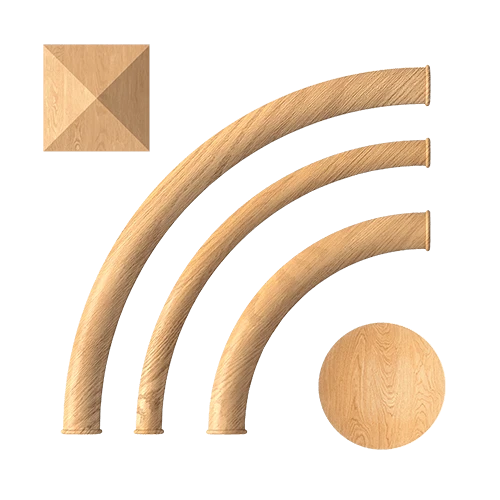
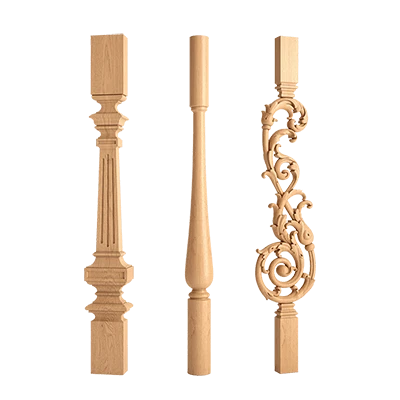
Balusters
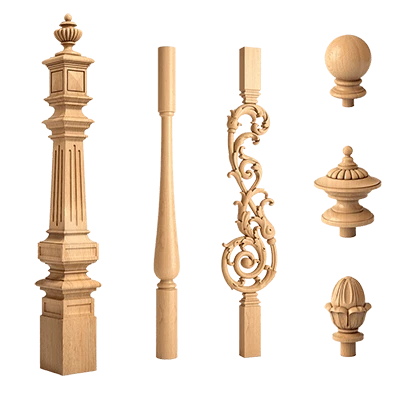
For a veranda, gazebo, or porch railing, carved flat balusters are an excellent solution. They create a transparent, airy fence in the style of house carving, and combine well with platbands and brackets in a unified ornamental key.
Wooden molding
wooden baguette for facade decoration — this is a profiled strip for framing openings, creating moldings, and decorating the space under the cornice. It adds architectural clarity and helps visually structure the facade.
House carving on windows of a wooden house: from tradition to modernity
House carving in Russia is a living tradition, not a museum one. It exists today, it is in demand, and interesting processes are taking place within it.
On one hand, there is a steady demand for historical authenticity: people build wooden houses, baths, gazebos and want to decorate them 'like before' — with expressive, deep carving in the folk spirit. On the other hand, there are more and more people who want a Russian character, but without directly quoting antiquity. They need a modern interpretation of tradition — concise but recognizable.
That is why a good catalog house carving should present different options: from restrained geometric to rich floral. This allows everyone to find their own solution — matching both the architecture of the house and their own taste.
An important detail: modern buy house carving which can be in standard configuration — is manufactured on CNC machines from glued pine panel. This ensures dimensional accuracy, absence of knots and resin pockets, material stability, and readiness for final painting without additional preparation. Manual finishing — sanding and final cleaning — guarantees that the product has no burrs or mechanical defects.
How to combine carved architraves and brackets: practical tips
This topic deserves a separate discussion — because it is the pair of "architrave + bracket" that defines the face of the entrance group and the main facade.
Rule one: unified ornament. If the architraves have a floral motif with smooth lines, the brackets should be in the same vein — with similar curls, leaves, transitions. Mixing ornamental languages here is especially noticeable.
Rule two: consistent scale. A massive bracket next to a thin, delicate architrave is a violation of proportion. And vice versa: a thin bracket next to a wide, rich architrave looks helpless. The scale of the elements must be consistent.
Rule three: brackets — in the entrance and cornice area. There is no need to place brackets under every window. This will overload the facade and deprive the bracket of its accent function. Use it where it is truly needed: the entrance group, cornice line, veranda.
Rule four: bracket color = architrave color. This is a simple rule that is not always followed. Different colors of ornamentally related elements destroy the unity of the facade.
Architraves for a dacha in Russian style: a special case
A dacha is a space where the rules are a bit softer, and the soul craves coziness, not formality. Yet, decorating a dacha house with architraves is a serious decision that affects the overall appearance of the property.
For a dacha, architraves with a warm, homey pattern are especially valuable: floral motifs, leaves, small curls. This creates a feeling of liveliness, handcraftedness, and lived-in comfort.
An important point is color. At a dacha, bolder color solutions are often acceptable than in a city or suburban house: bright blue, rich green, warm terracotta — all of these can work beautifully in combination with white or contrasting architraves.
Another important issue is durability. A dacha often stands without constant maintenance, and the coating on the trim must be designed for such conditions. Use high-quality facade enamels or antiseptics with UV protection — this will extend the life of the decor and preserve its appearance for many years.
Ideas for using carved decor: inspiration for your project
Want to see how all this works in practice? Ideas for using carved decor — a section that collects real facade solutions, combinations of elements, and ready-made looks for houses, bathhouses, gazebos, porches, and verandas. This is a valuable resource for those just starting to work with facade decor and want to rely on proven combinations.
Looking at ready-made solutions doesn't mean copying them. It's a way to understand the logic of facade composition, see how elements work together, and feel the rhythm and proportion. Sometimes one look at a successful example gives more than long theoretical discussions.
Materials and quality: what's important to know
Materials and quality of STAVROS products — this is a topic worth paying special attention to, especially if you are ordering trim for the first time.
All carved trim is made from glued pine panels. Unlike solid boards, glued panels contain no knots or resin pockets: they are cut out during the material preparation stage. This is important because knots can ooze resin under the influence of sun and heat, and resin pockets can deform the board. Glued panels are free from these problems.
Products are manufactured on CNC machines — this guarantees precision and repeatability of dimensions. After milling, each product is hand-sanded and ready for the final coating. The standard length of the trim is 2000 mm, thickness is 18 mm. The warranty on the finished product, provided operating rules are followed, is 1 year.
Where to buy carved trim in Russian style
The final and practically important question: where to buy carved window frames in the Russian style with a quality guarantee, the right assortment, and the ability to select all accompanying elements?
This is where you should turn to the STAVROS catalog. In the section house carving carved window frames of various models are presented — from minimalist to richly ornamental. Nearby are brackets, connecting elements, rosettes, decorative overlays. Everything in a unified stylistic key, all from the same material, all ready for final painting.
If you need to buy carved facade decor as a whole — balusters, overlays, brackets, wooden baguette — the entire necessary assortment is available in the catalog. This allows you to select all elements in a unified ornamental key and not waste time searching for compatible parts from different manufacturers.
Delivery is carried out throughout Russia. Certain items are part of the warehouse program and are shipped promptly. Products are supplied without a final coating — this allows you to paint them in any desired color to match a specific facade.
Frequently asked questions
Which window frames are suitable for a house in the Russian style?
For the Russian style, wooden carved window frames with expressive ornamentation — floral, geometric, or mixed — are suitable. The pattern should be selected based on the window size and overall facade scale: for small houses, a more subdued pattern; for spacious facades with large windows, a richer one. The main condition is a unified ornamental language throughout the entire house.
Can carved window frames be used only on the main facade?
Yes, this is a completely justified solution if you need to emphasize the front side of the house without overloading the other walls. In this case, the main facade receives all the decorative "charge," while the side and end walls remain calm. This creates a proper hierarchy and allows you to save on decor without losing the image.
What colors are suitable for Russian carved window frames?
The most common are white, dark brown, chocolate, contrasting rich tones, and natural wood shades. White is a classic that suits any facade. Dark is for bold, expressive solutions. A color matching the facade is for a restrained monochrome look. The choice should always be coordinated with the color of the roof, door, and porch.
Are brackets needed for carved window frames?
Not necessarily on every window. But in the area of the entrance group, porch, cornice, or veranda, brackets significantly enrich the facade composition. They add volume, create a vertical rhythm, and make the architecture of the house more expressive. They should be selected in the same ornamental style as the window frames.
Are such window frames suitable for a bathhouse or gazebo?
Yes, carved window frames in the Russian style are well suited for a bathhouse, gazebo, country house, and wooden veranda. For these objects, it is recommended to choose small, neat ornaments without excessive detail — the scale should match the size of the building.
How to properly install carved window frames?
Wooden window frames 2000 mm long are cut to the required size. The joints are covered with corner rosettes or connecting elements. Installation is carried out on a pre-prepared and painted facade surface. Before installation, the window frames must be treated with an antiseptic and coated with a finishing coating — facade enamel or varnish with UV protection.
Can carved window frames be combined with metal-plastic windows?
Yes, this is a common practice. A wooden casing is mounted on the facade around a metal-plastic window and visually "woodenizes" it, integrating it into the overall aesthetic of a wooden house. It is important to choose a casing with the correct width — it should cover the mounting foam and slopes, but not extend onto the glass.
STAVROS: your partner in creating the facade of your dreams
STAVROS company specializes in the production of wooden carved decor for facades, interiors, and furniture. The catalog includes carved casings, brackets, rosettes, connecting elements, decorative overlays, wooden baguettes, balusters, and other carved facade decor in Russian and classical styles.
All products are made from glued pine panels on CNC machines with manual finishing. They are free of knots and resin pockets, ready for any final coating, and maintain geometry under temperature and humidity fluctuations. This is important for outdoor use, where wood works under load — in rain, snow, and summer heat.
STAVROS offers not just a set of parts, but a facade decor system: all elements are designed in a unified ornamental style and are suitable for combined use. This eliminates the need for complex searching of compatible parts and allows you to create a cohesive, harmonious look for your home.
Select wooden decor for the facade in Russian style, explore Ideas for using carved decor, view the full catalog and place an order with Contact us to confirm shipping to your destination. on the STAVROS website.