Article Contents:
- Why an old house needs architraves: reasons that are not immediately obvious
- Which areas of an old house can be updated with carved decor
- Windows of the main facade
- Side windows
- Front door
- Porch
- Canopy and veranda
- Bathhouse and country buildings
- Pediment and cornice area
- How to choose carved window frames for an old wooden house
- Step one: assess the condition of the facade
- Step two: determine the style
- Step three: choose the width
- Step four: select the ornament
- Color of window frames for an old house: how to choose and not make a mistake
- White window frames: the eternal choice
- Contrasting door casings
- Window frames in the color of the walls
- Dark window frames to match the roof and door
- Natural wood tones
- What to add to window frames: a facade decor system
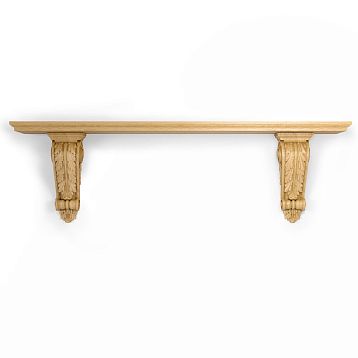
- Carved brackets
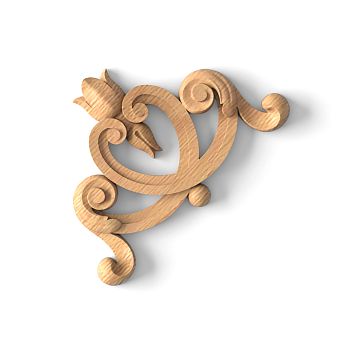
- Decorative rosettes
- Connecting elements
- Wooden decorative overlays
- Wooden frame
- Elements for porch and veranda
- How not to spoil an old facade with new decor
- Mistake one: too large a casing for a small window
- Mistake two: different ornaments on different windows
- Mistake three: too active decor on a dilapidated facade
- Mistake four: ignoring the condition of the base
- Mistake five: painting without treating the ends
- Mistake six: buying without calculating the set
- Ready-made casings or custom selection: what to choose for an old house
- Updating the facade of an old dacha: a special conversation
- Updating the facade of an old house: a step-by-step plan
- Material and quality: why it matters for an old house
- Three examples: how carved window frames transformed different old houses
- First example: an old village house
- Second example: an old dacha
- Third example: a bathhouse at a country house
- How much does it cost to update the facade of an old house with window frames
- Frequently Asked Questions
- Can an old wooden house be updated with carved window frames?
- Which window frames to choose for an old dacha?
- Do I need to replace windows to install new window frames?
- How to combine new architraves with an old facade?
- What else to buy together with architraves?
- How long do wooden architraves last?
- Can I install architraves myself?
- STAVROS: reliable decor for homes that deserve the best
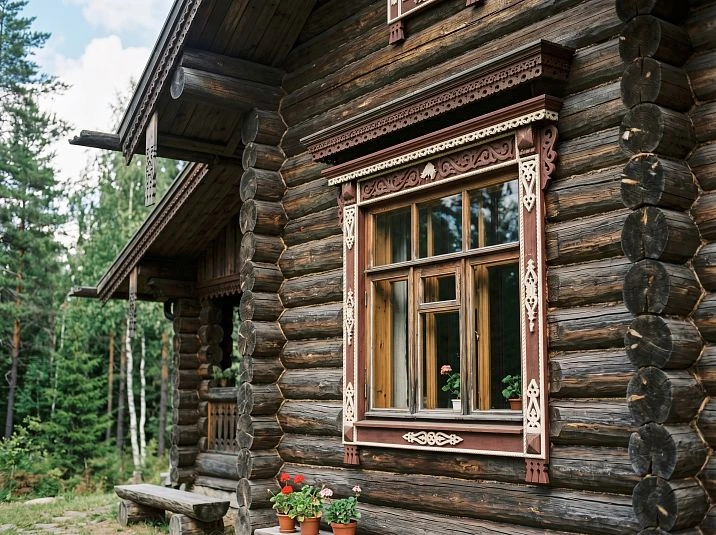
An old wooden house is not a problem. It is history. It is character. It is years grown into wood and earth. But character fades over time: paint peels, slopes lose their shape, windows look out onto the street empty and expressionless. And the owner faces a choice: either a big expensive renovation, or resigning to the fact that the house looks as if it has been long forgotten.
There is a third way. It requires neither dismantling walls, nor replacing windows, nor a team of builders for several months. Carved architraves for an old house — is a fast, precise, and aesthetically powerful tool for facade renovation. A few wooden elements, skillfully selected and properly installed, change the appearance of the house as if it were just built. Or, more precisely, as if it had always been that way — just waiting for its time.
About how this works and what you need to know — in this article.
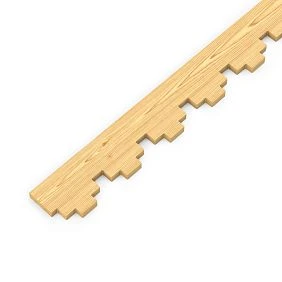
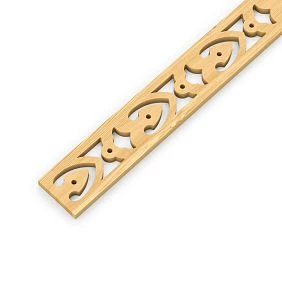
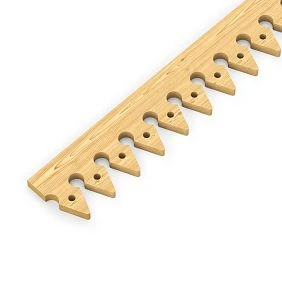
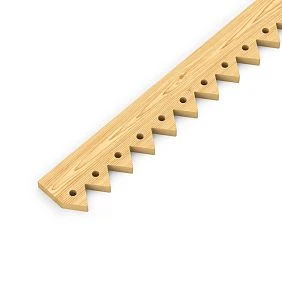
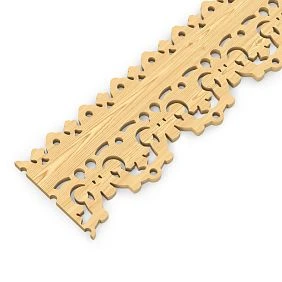
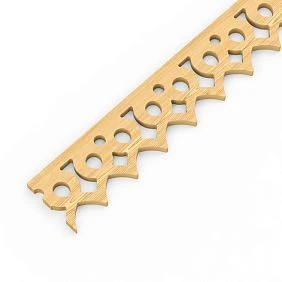
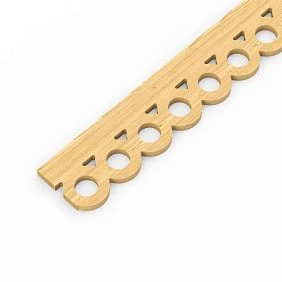
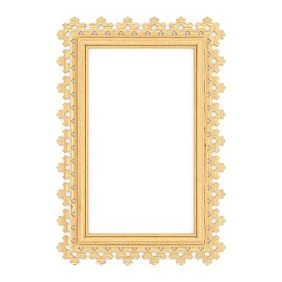
Why an old house needs window casings: reasons that are not immediately obvious
Ask the owner of an old wooden house what their facade is missing — and most will answer something like "painting" or "repair." Few will immediately say "window casings." Yet it is their absence or poor condition that most often turns a solid, sturdy house into a visually sloppy one.
Why does this happen?
It's about the architectural logic of a window opening. Any window is a boundary between inside and outside. Architecturally, this boundary requires framing: it "holds" the opening, creates a clear transition from wall to window, and gives the eye a point of reference. Without a casing, the window looks like a hole in the wall — no matter how good the glass behind it is.
Old houses have a different problem: casings once existed but have deteriorated over decades. They either rotted, cracked, or were torn off during window replacement and never put back. Now the facade looks bare, unfinished, somehow uninhabited — even if everything inside is cozy and lived-in.
The third situation is that casings exist but are old, dull, and without any ornament. A flat board without a pattern technically performs its function but says nothing about the house. Replacing such casings with carved ones is a cheap and powerful cosmetic upgrade for the facade.




Which areas of an old house can be updated with carved decor
Before discussing the choice of specific casings, it's worth looking at the house as a whole — and understanding where carved decor will have the greatest effect.
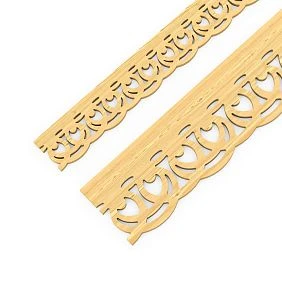
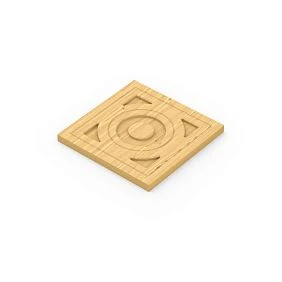
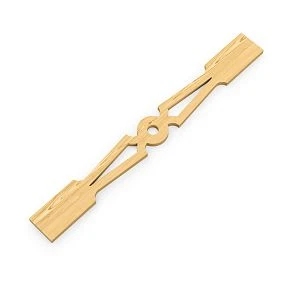
Our factory also produces:
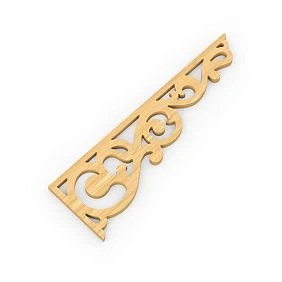
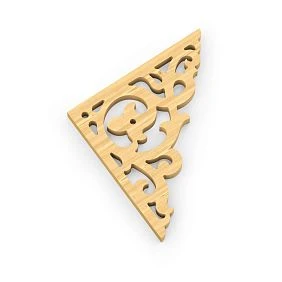
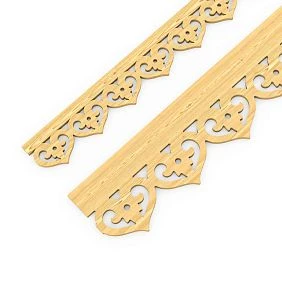
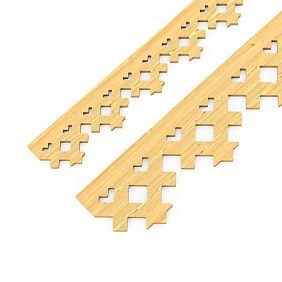
Windows of the main facade
This is priority number one. The main facade is what is visible from the street, what forms the first impression of the house. It is here that carved casings work with maximum impact: they turn a row of ordinary windows into an architectural rhythm, creating an expressive facade image.
For the main facade, you can choose a more saturated ornament, provided it matches the scale of the windows and the overall character of the house.
Get Consultation
Side windows
Side facades rarely receive as much decorative attention as the front one. But it is on them that traces of time are often visible: peeling paint around a bare opening, cracks in the slopes. A neat trim — even simpler than on the main facade — covers these imperfections and brings the whole house into a unified appearance.
For side facades, trims from the same ornamental series as on the main facade are chosen, but, as a rule, slightly more modest in width or pattern saturation.
Entrance door
The entrance door is the face of the house in the literal sense. Every guest approaches it, and it creates the first contact. The trim around the entrance door is the architectural framing of the main transition. It should be large-scale: the door is wider than the window, and the trim should reflect that.
Porch
The porch is the area of maximum concentration of decor in any wooden house. Everything is appropriate here: the trim around the door, brackets under the canopy, decorative overlays on horizontal beams, carved balusters. Renovating the porch with wooden decor means giving the whole house a new entrance mood. wooden decorative elements for the porch and entrance area will give a quick and bright result even on the most worn-out facade.
Canopy and veranda
The canopy over the entrance — if there is one — is another area where carved decor works strongly. Brackets with ornament supporting the awning immediately elevate the status of the entrance area. The same applies to the veranda: carved overlays on horizontal beams, trims on veranda windows — all this creates an atmosphere that cannot be achieved with paint or metal parts.
Bathhouse and country buildings
If there is a bathhouse, gazebo, or country building next to the house, they also need updating. Carved window casings on bathhouse windows, neat decor at the gazebo entrance — these are small expenses, but they create unity for the entire architectural ensemble of the plot.
Gable and cornice area
The gable is the upper triangular or rectangular end of the house under the roof. On old houses, it often looks neglected: the wooden cladding has faded, the ornament (if any) has deteriorated. New gable decor — decorative cornice, overlays on the tympanum, corner elements — provides an instant transformative effect. It is the gable that is visible from afar, it defines the silhouette of the house.
How to choose carved window casings for an old wooden house
Choosing window casings is not just a matter of ornament. It solves several tasks simultaneously: functional, aesthetic, and practical.
Step one: assess the condition of the facade
Before choosing window casings, you need to honestly look at the condition of the facade. If the wall requires painting or cladding, this must be done before installing the casings. If the slopes around the windows are damaged, they need to be repaired. A new casing on a damaged foundation will not save the situation — it will only emphasize the contrast between it and the neglected wall.
The good news: in most cases, preparing the facade does not require major repairs. It is enough to clean and paint the wall around the window opening — and the base is ready.
Step two: determine the style
House Carving offers a wide range of styles. Which one suits your home?
If your home features elements of folk architecture — a wooden log house, a Soviet-era dacha, an old village house — it's better to choose window trims with traditional Russian ornamentation: plant motifs, geometric patterns, openwork carved designs.
If your home is more neutral in style — a standard dacha, a small country house made of timber — window trims with moderate, restrained ornamentation will work. They add character without overwhelming the facade.
If your home looks modest and you want exactly that — choose a minimalist window trim with a simple geometric pattern. It will frame the window, create neatness, but won't 'shout'.
Step three: choose the width
The width of the window trim is one of the key parameters that directly affects the visual result.
-
Up to 90 mm — narrow format. Suitable for small windows, old dachas with small openings. Light, delicate, doesn't overload the facade.
-
90–120 mm — medium format. A universal choice for most standard windows. Works well with ornamentation of any complexity.
-
From 120 mm — wide format. For large windows, the main facade, door framing. Creates a monumental, weighty frame.
Practical rule: the width of the window trim should be sufficient to cover all technical gaps and transitions around the window opening — but not so large as to eat up the wall area between adjacent windows.
Step four: choose the ornament
For a small or old house during restoration, choose an ornament based on the principle of "less is more, but cleaner." A well-drawn, clear pattern looks more noble than an overloaded, intricate one.
For the main facade, you can allow a more complex ornament. For the side walls, simplify it. For a bathhouse and country buildings, choose the calmest option.
Color of window trims for an old house: how to choose and not make a mistake
Color is half the result. The most beautiful ornament in the wrong color will not make the right impression. And vice versa: even a simple pattern in the right color transforms the facade.
White window trims: the eternal choice
A white trim on a wooden house is an image that has long become part of the cultural code. White contrasts well with any natural wood tone, from light to dark. It clearly reveals the ornament and creates a feeling of cleanliness and neatness.
White is especially effective on houses with a tinted or painted facade in brown, blue, or green tones. On a dark facade, white trims literally "light up" the windows.
Practical point: for outdoor use, use facade enamel with UV protection. Without it, white quickly yellows under the sun.
Contrasting door casings
Dark brown, chocolate, graphite — strong, energetic shades on a light facade. This is a solution for those who want an expressive result, not a soft update. The contrast works well on houses with spacious facades and large windows.
On an old house with peeling paint — first we level and repaint the wall, and only then hang contrasting trim. Otherwise, the contrast will not be between the trim and the facade, but between the new decor and the ruined wall — that's a completely different effect.
Trim in the color of the walls
Monochromatic solution: trim the same color as the wall. The decor works through relief and shadows, not through color contrast. This is an exquisite, calm option — for those who value restraint.
An important condition: the ornament must be deep. A flat pattern in the same color as the facade simply disappears. Carved or relief ornament with monochromatic painting looks very dignified.
Dark trim matching the roof and door
A professional technique that creates integrity in the facade composition: linking the color of the trim to the color of the roof or front door. Three dark accents — roof, trim, door — create a "skeleton" of the facade that holds its entire visual structure.
For an old house where a lot of color chaos has accumulated over the years, this technique is especially valuable: it brings order and unity without completely repainting the entire facade.
Natural wood shades
If the facade is coated with a transparent or semi-transparent antiseptic that preserves the wood texture, the trim can be painted in a close natural tone. Slightly darker or slightly lighter than the wall, but in the same color family. This creates a warm, organic unity.
What to add to the trim: a facade decor system
Trim is the first step. But the truly transformative effect comes from a system: several coordinated elements that together form a cohesive facade image.
Carved brackets
The bracket supports the canopy, cornice, and visor — while also serving as a strong decorative accent. In the entrance group area, brackets next to the architraves create a solemn, lively framing. carved facade decor — brackets, overlays, rosettes — are available in the catalog in several ornamental variants, allowing them to be matched in a unified style with the architraves.
Decorative rosettes
Rosettes are corner and connecting overlays that cover the joints of architraves. A small but important element: a good rosette makes installation neat and the window framing complete. On an old house where slopes may be uneven, the rosette covers technical imperfections, preventing them from being conspicuous.
Connecting elements
The standard length of an architrave is 2000 mm. For tall openings, the length needs to be extended using connecting elements. They cover the joint and, with proper ornament selection, are virtually invisible in the overall composition.
Wooden decorative overlays
Wooden decorative inlays — these are flat carved elements for wide horizontal surfaces: facade boards, cornice areas, pediment tympanums. On an old house, they are especially valuable: where the surface has lost its appearance, the overlay covers defects and simultaneously decorates.
The application is broad: horizontal porch beams, the board under the window, pediment tympanum, cornice area. Everywhere there is a flat wooden surface that you want to enliven.
Wooden molding
wooden baguette for facade decoration — a profiled strip that creates architectural clarity around a window or door opening. Paired with an architrave, the molding forms a complete architectural framing — multi-layered, expressive, giving even a simple window significance.
For an old house, this is a good way to create a "new facade over the old": the molding covers unevenness around the perimeter of the opening, and the architrave completes the framing.
Elements for the porch and veranda
Carved balusters, horizontal decorative strips, fencing elements, wooden beam overlays — this entire assortment is available in the catalog and allows you to update the porch or veranda without touching their structure. New decor over the old frame — a principle that works precisely here.
How not to ruin an old facade with new decor
This is a delicate issue, and it should be taken seriously. New decor on an old facade is always a tricky combination. If approached carelessly, the result can be disappointing.
Mistake one: a trim that is too large for a small window
On small windows of old dachas and village houses, a wide, heavy trim creates a sense of mismatch: the frame is larger than the picture. Choose a trim proportionate to the window. For small openings, opt for a narrow or medium format.
Mistake two: different ornaments on different windows
The temptation to take 'this one for one window' and 'another for the second' is quite understandable. But the result is always the same: the facade looks unplanned and random. A uniform ornament on all windows of one facade is a rule that should not be broken.
Mistake three: overly active decor on a dilapidated facade
If the walls of an old house haven't been painted for a long time, and the wood has darkened and cracked, a bright, rich trim will only enhance this contrast. Before installing fancy decor, the facade needs to be put in order: at least paint the wall around the windows. Otherwise, the new trim will look like an expensive tie on a torn shirt.
Mistake four: ignoring the condition of the base
An old house means old slopes, old paint, and rot in places. If you mount the trim on a rotten base, it will soon come off. Check the condition of the slopes and the adjacent part of the wall. If necessary, replace damaged fragments before installation.
Mistake five: painting without treating the ends
The ends of the trim are the most vulnerable spot. Moisture penetrates the wood fastest through them. If you only paint the front surface and sides without treating the ends, the trim will start to rot from the inside. Always treat the ends: with an antiseptic, end sealant, or finishing coating.
Mistake six: buying without calculating the kit
A very common situation: trims are bought, but corner rosettes are missing. Or connecting elements. Or the needed brackets. And the item is made to order, with lead times of 3–4 weeks. Always calculate and order the full kit in advance: trims + rosettes + connecting elements + brackets (if needed).
Ready-made trims or custom selection: what to choose for an old house
This question is often asked, especially by owners of houses with non-standard windows.
The honest answer: for the vast majority of old houses, bathhouses, and dachas, standard ready-made trims 2000 mm long are suitable. They are cut to the required size and installed on site. Even non-standard windows — with a "Soviet" size of 1160×1460 mm or an old "village" opening of 800×1200 mm — are easily finished with standard trims by trimming.
Standard trims are also a matter of speed and predictability. You know exactly what you will get: a specific width, a specific ornament, a specific material. No waiting for sketches and approvals.
The only case when you should consider a custom solution is if the house has very specific architecture, non-standard shaped openings, or the task is to recreate a specific historical ornament.
For everything else — the catalog house carving covers most tasks: different widths, different ornaments, different series — from restrained to expressive.
Updating the facade of an old dacha: a special conversation
An old dacha is a separate architectural story. As a rule, it is a small house from the Soviet or early period, with small windows, wooden walls, and a porch that remembers several owners. Such a house does not need monumental decor. It needs warmth, coziness, and that special residential expressiveness that carved wood creates.
For an old dacha, window trims with floral or mixed ornaments work best: leaves, flowers, small curls. These are patterns that carry natural lightness. The width is narrow or medium. There is no need to overload a small facade with large elements.
Color: at the dacha, freer, warmer solutions are acceptable. Blue, green, terracotta, yellow — all of these can work perfectly. The main thing is that the color of the trims echoes something else on the property: the color of the fence, benches, or gazebo trims.
An important practical point: the dacha often stands without constant maintenance. The coating on the trims must be especially durable. Choose facade compounds with maximum protection against moisture and ultraviolet radiation — this directly affects the lifespan of the decor.
Brackets above the porch of a dacha house — simple, not large — complete the entrance group and give it that special "village" look that is so valued and appropriate at the dacha.
Updating the facade of an old house: a step-by-step plan
Let's put everything said into a practical sequence. This is not an installation guide — it is the logic of decision-making.
Step 1. Inspection and assessment. Walk around the entire facade. What is in the worst condition? Where are trims missing? Where do they need replacement? What is the condition of the walls around the windows? This will give an understanding of the scope of work.
Step 2. Setting priorities. If the budget is limited, start with the main facade and the entrance group — this is where the effect of the renovation will be maximum.
Step 3. Choosing the style, width, and ornament. Based on the character of the house and the size of the windows. Study Ideas for using carved decor — this helps to see ready-made combinations and navigate the choice.
Step 4. Choosing the color. In combination with the color of the facade, roof, and door. Preferably with samples, not "by eye."
Step 5. Calculating the set. The number of linear meters of trim, corner rosettes, connecting elements, brackets — everything is calculated in advance.
Step 6. Ordering. Everything from the same series, from the same material. This guarantees matching sizes and ornament.
Step 7. Preparing the base. Painting or touching up the walls around the openings. Replacing rotten fragments. Checking the slopes.
Step 8. Preparing the trim. Antiseptic treatment, end impregnation, final coating.
Step 9. Installation. To the casing or to the facade structure — depending on the type of house. In an old house with rigid window fixation, attachment to the slope or wall is usually acceptable — but always with a preliminary check of the base.
Material and quality: why this is important for an old house
An old house requires reliable solutions. Dubious platbands made from raw boards will last 2–3 years — and then crack, deform, and start to rot. This is not saving money; it's wasted money and time.
You can learn more about materials and production technology in the section Materials and quality of STAVROS products. Here are just the key points.
All platbands are made from glued pine panels. Knots and resin pockets are removed from the material — these are the source of deformation and paint leaks on cheap products. The glued panel is stable: it does not warp or crack along the grain when drying.
Production is carried out on CNC machines — this ensures dimensional accuracy and repeatability of the ornament. After milling, manual finishing follows: sanding, cleaning, and surface quality inspection.
The thickness of the platband is 18 mm. This is the optimal indicator for outdoor use: sufficient strength, good relief depth, moderate weight. Standard length is 2000 mm. Cutting to the required size is a standard part of the installation process.
Three examples: how carved platbands transformed different old houses
Sometimes the best way to explain is to show. Three typical situations that owners of old houses deal with.
First example: an old village house
A house built in the 1960s, a wooden log structure. Windows have been replaced with plastic ones, the platbands were removed during replacement and not reinstalled. The facade is gray wood, white windows without framing. Result: expensive windows that look alien in the old log house.
Solution: wide architraves with traditional floral ornament, painted dark brown to match the old wooden details. Brackets above the entrance group. Decorative overlay on the pediment.
Result: the house gained integrity. The plastic windows no longer 'stick out' — they fit into the facade thanks to the wooden framing. The house became rustic again — in the best sense of the word.
Second example: old dacha
Dacha from the 1980s. Small house 6×4 m, small windows 600×800 mm, facade painted blue, which has long faded. There were never any architraves — just a smooth slope.
Solution: narrow architraves with geometric ornament, painted white. Small brackets above the entrance. Touch-up of the facade in the same blue, but fresh.
Result: the dacha house went from inconspicuous to picture-perfect. Simple white architrave on a blue facade — a classic that always works.
Third example: bathhouse at a country house
Bathhouse made of rounded logs, 4×5 m. Windows — one small in the dressing room, one in the steam room. Architraves — flat boards without ornament, blackened and cracked.
Solution: medium architraves with neat floral ornament — the same as on the main house, but slightly narrower. The replacement fully integrated the bathhouse into the overall look of the property. Buy Carved Door Stops for the bathhouse, you can use the same series as for the house — this ensures stylistic unity.
How much does it cost to update the facade of an old house with architraves?
A question that naturally arises after everything said above.
The cost depends on several factors: the number of windows and doors, the chosen width of the architrave, the ornament series, the need for brackets and other elements.
For reference: a standard window frame — two side elements and one top element — plus corner rosettes. This is a quite specific set with a specific price. Multiply by the number of windows — and you get the base cost of the project.
Add brackets for the porch (usually 2–4 pieces), connecting elements if necessary, overlays for the gable — and you have the full picture.
Compared to a full facade renovation, this is incomparably cheaper. In terms of the result, it is quite comparable visually. That is why carved architraves remain one of the most effective tools for updating a wooden house.
Frequently asked questions
Can an old wooden house be updated with carved architraves?
Yes, and this is one of the most affordable ways to transform the facade without major repairs. Carved architraves frame windows, cover technical transitions, and give the facade completeness and character. It is enough to choose the right width, ornament, and color.
Which architraves to choose for an old dacha?
For an old dacha, narrow or medium architraves with a simple ornament — floral or geometric — are best. It is not worth overloading a small facade with decor: the more modest the house, the more delicate the choice should be. White color or a bright contrasting one — both options work well.
Do I need to change windows to install new trim?
Not necessarily. Trim is a decorative element that is mounted around the existing opening. If the window functions normally, it does not need to be replaced for trim installation. It is only important to check the condition of the slopes and the base around the opening.
How to combine new trim with an old facade?
The main thing is to prepare the base: paint or touch up the wall around the window, tidy up the slopes. Then choose a trim color that is linked to other facade elements (roof, door, porch). And do not choose too active an ornament for a worn-out facade — first the surface, then the decor.
What else should I buy along with the trim?
For a complete, neat design, you will need corner rosettes (2–4 per window), connecting elements (if you need to extend the length), brackets (for the entrance group and porch). For a more thorough update — Wooden decorative inlays horizontal surfaces and decorative baguette for clear framing of openings.
How long do wooden trims last?
With proper preparation and painting — 10–15 years or more. Key conditions for durability: high-quality antiseptic before painting, treatment of ends, good facade enamel with UV protection, timely renewal of the coating every 5–7 years.
Can I install the trim myself?
Yes. Installing wooden trim does not require special tools or professional skills. You will need: a hacksaw or miter saw, a level, self-tapping screws, and a screwdriver. The main thing is careful cutting of corners and proper preparation of the base.
STAVROS: reliable decor for homes that deserve the best
STAVROS company produces carved wooden decor for facades, interiors, and garden architecture. The catalog includes carved trims, brackets, Wooden decorative inlays, rosettes, connecting elements, wooden baguette for facade decoration, balusters, and other elements for facade decor.
Production is from glued pine panels, without knots or resin pockets, on CNC equipment with manual finishing. Standard sizes, precise ornament, ready for any final coating. All elements are designed in unified ornamental series — this allows you to select trims, brackets, and overlays in a single style without extra effort.
For an old wooden house, cottage, bathhouse, porch, or veranda — the STAVROS catalog has a solution of any scale: from one window to full facade decoration. View Ideas for using carved decor, explore the entire assortment, and place an order with Contact us to confirm shipping to your destination. on the STAVROS website.