Article Contents:
- What are carved wooden overlays for furniture and why are they needed
- Furniture restoration: when exactly are decorative overlays needed
- When the old decor is lost
- When the facade is too boring
- When furniture 'moves' to a different interior
- When you need to 'cover up' repairs
- Where to place decorative overlays: cabinet, chest of drawers, bedside table, kitchen
- Overlays for a cabinet: facades, cornice, side panels
- Overlays for a chest of drawers: drawers, belts, decorative axis
- Overlays for a cabinet: scale and restraint
- Overlays on kitchen facades
- How to choose the shape of a carved overlay for a specific facade
- Central overlays: anchor and accent
- Corner overlays: four points of the system
- Horizontal and vertical overlays
- How to properly select the size of a decorative overlay
- Measurement methodology
- Uniformity of sizes when repeating
- Material and finish: why wood is the only right choice for restoration
- Why Not MDF
- Why not polyurethane and not plastic
- Solid beech: why it's a working choice
- Overlay finishing technology
- Overlays and furniture styles: correspondence table
- How overlays work in the STAVROS furniture decor system
- Overlays + handles
- Overlays + legs
- Overlays + moldings and baguette
- Overlays + pilasters and decorative elements
- Overlays + moldings
- Furniture styles and restoration scenarios
- Classic: Baroque and Empire
- Neoclassical: purity and symmetry
- Provence: softness, light, naivety
- Russian style: texture, ornament, roots
- Restoration: fidelity to the original
- Mistakes when choosing decorative overlays for furniture
- Where to buy carved wooden overlays for furniture restoration
- Frequently Asked Questions
- About the Company STAVROS
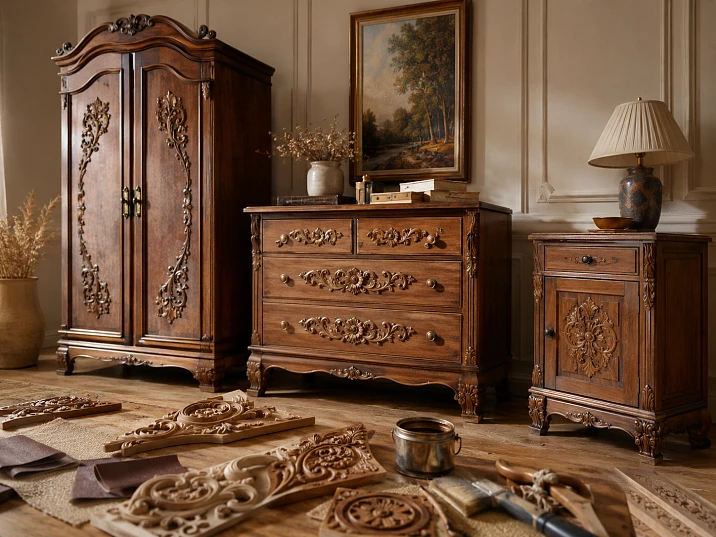
Imagine a cabinet that has stood in a house for twenty years. Sturdy, stable, made of decent material — but painfully boring. Flat facades, no architecture, no character. It's a shame to throw it away. Leaving it as is is impossible when the interior is clearly moving towards classic.
It is at this very moment Carved decorative inserts for furniture they become not just a decorative detail — they become a tool of transformation. You take a blank facade and turn it into an object with character. Without repainting the entire apartment, without replacing furniture, without expensive renovations. One overlay in the right place changes the readability of an object just as a well-chosen tie changes the image of a person in a suit.
Buy decorative furniture overlays made of wood means giving furniture a second chance. Or a first one — if it's about a new item you want to make truly expressive.
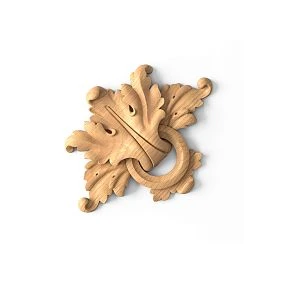
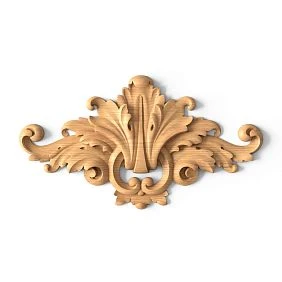
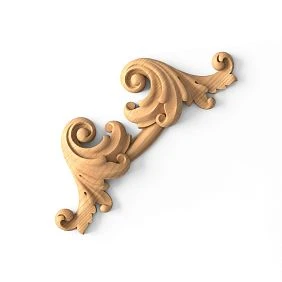

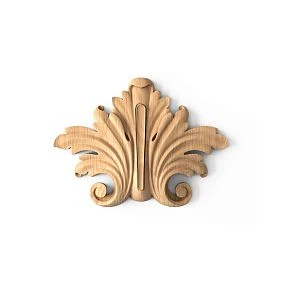
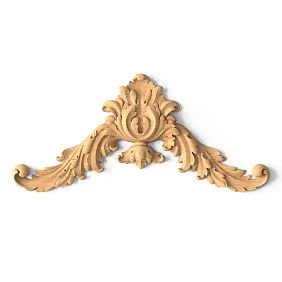

What are carved wooden furniture overlays and why are they needed
Before diving into details, it's necessary to clearly define: what exactly we are talking about. Because different people understand different things by the word "overlays."
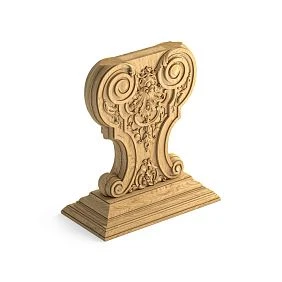
Decorative furniture overlays made of wood are individual shaped or carved solid wood elements that are mounted on the surface of facades, side panels, base and cornice parts of furniture. They do not bear a load-bearing function: they do not hold the structure, they are not involved in opening mechanisms. Their task is exclusively decorative.
But a decorative task is not "beautiful for a photo." It is work in several directions:
Visual enrichment of the surface. A flat facade reads as a background. A facade with a central carved overlay reads as an independent statement. The relief creates chiaroscuro that lives with the lighting: in the morning the overlay looks different than in the evening.
Emphasis placement. The overlay fixes the gaze at the desired point — on the center of the box, on the axis of the facade, on the corner elements of the frame. This is control of the viewer's attention: you decide where to look.
Stylistic statement. The shape and ornament of the overlay communicate the style of the furniture: classic, neoclassical, baroque, provence, renaissance. The same cabinet with different overlays will look fundamentally different.
Camouflage. During restoration, overlays cover traces of repair, worn areas, repaired damage, outdated fittings. This is an honest and beautiful way to "reset" the history of damage.
Carved wooden overlays for furniture in the STAVROS system are made from beech wood: uniform density, neutral texture, excellent workability. They are supplied without a finish coating — for painting or tinting at the buyer's choice.




Furniture restoration: when exactly decorative overlays are needed
This is a separate conversation, important and honest. Because overlays for restoration are not the same as overlays for new decor. The scenarios are different.
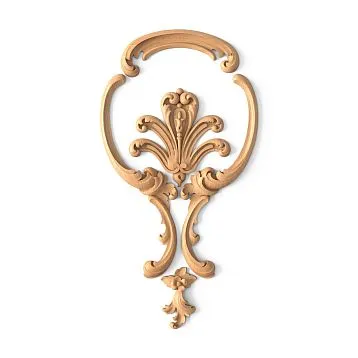
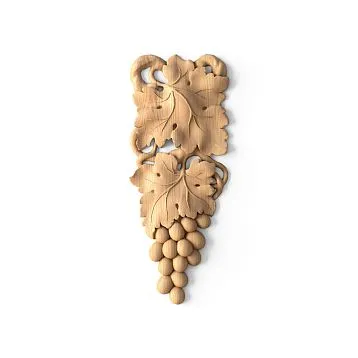
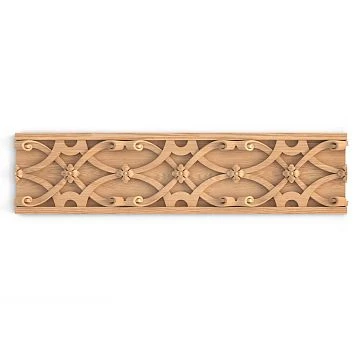
Our factory also produces:
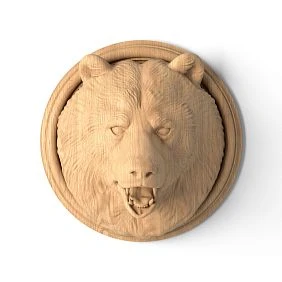
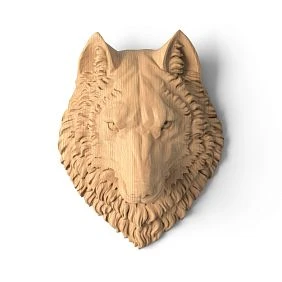
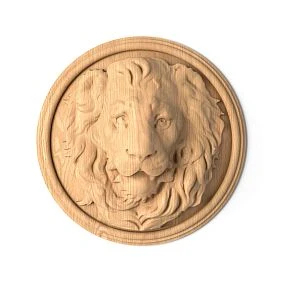
When the old decor is lost
An antique or Soviet cabinet often comes to the restorer with "wounds": one overlay is broken, another is lost, a third is held on by a thread. The task is to recreate or approximate the original.
Here it is important: you don't need to copy the original decor letter for letter. It is enough to preserve the style, scale, and rhythm. Decorative carved overlays for furniture from the catalog allow you to choose a shape that stylistically "befriends" the old facade, even if it is not an exact copy.
Get Consultation
When the facade is too boring
Furniture made of laminated chipboard or MDF with smooth facades is a common story. The manufacturer made a neutral piece. The buyer wants character. Wooden carved overlays for furniture are mounted on top of such facades and literally "retell" the piece in a different style.
An important nuance: solid wood overlays on synthetic facades are installed using glue (construction or carpentry) with fixation until dry. Before installation, the surface is sanded for better adhesion.
When furniture "moves" to another interior
It happens like this: old furniture in a neutral style, new interior — classic or neoclassical. The piece is physically good, but visually does not fit. Overlays, handles, moldings — a set of measures that transfers furniture from one stylistic register to another.
In this scenario, the system is important: one overlay will not solve the task. You also need to think about wooden furniture handles in a classic style, possibly add Wooden furniture legs, update the color of the facades.
When you need to "finish" the renovation
A crack on the facade, a dent from an impact, a patch after replacing a hinge. An overlay of the correct size and shape is mounted over the problem area, integrating into the overall decor. This is not "hiding defects" in a bad sense — it is a decorative solution that turns a problem into an advantage.
Where to place decorative overlays: wardrobe, dresser, nightstand, kitchen
Overlays for the wardrobe: facades, cornice, side panels
The wardrobe is the largest piece of furniture in most rooms. That is why decorative overlays on the wardrobe work with maximum visual impact: they are seen first, they shape the "face" of the furniture in the interior.
В in cabinet decor solutions overlays are used in several areas:
Central axis of the facade. One overlay in the center of each door is a classic solution. For a two-door wardrobe, this is a symmetrical pair mirroring each other. For a three-door wardrobe, three identical elements creating a rhythm.
Corner overlays. Small carved elements in the corners of the facade: four points that frame the perimeter of the door. Combined with the central overlay, they create a "frame" structure of the facade without an actual molding frame.
Decor of the cornice part. The upper part of the wardrobe — the cornice — can be decorated with overlays along the horizontal band. Here, the overlays work as an ornamental strip, adding volume to the upper zone.
Side panels. If the wardrobe stands in an open space, the visible side surfaces can also receive decor. A vertical overlay in the center of the side panel is an element that "fills" the empty plane.
Connection with moldings. For a classic effect, the cabinet receives not only overlays, but also Wooden moldings along the perimeter of the facades — a frame system, inside which the overlay becomes the "central character."
Overlays for a chest of drawers: drawers, belts, decorative axis
A chest of drawers is a horizontal rhythm. Drawer after drawer, row after row. Decorative overlays on a chest of drawers work in several logics.
Overlay on each drawer. A repeating element of the same size in the center of each facade creates a vertical axis and unites the horizontal rhythm of the drawers into a single decorative system.
Overlay on the central axis. One large overlay on the central drawer with more modest overlays on the remaining drawers — a hierarchy with a "main" element.
Belt of decor. A horizontal strip of overlays or a single decorative element on the "belt" between groups of drawers — a way to break the vertical row into meaningful parts.
For a chest of drawers, consistency with furniture handles и wooden legsAll three elements — handles, legs, overlays — form the "language" of the item. If they are coordinated, the dresser looks designer. If not, it looks random.
Overlays for a cabinet: scale and restraint
A cabinet is a small item, and this is the key limitation when choosing overlays. An overly large overlay will "eat up" the facade, disrupt proportions, and make the item look heavy.
For a bedside table — a small central overlay on the facade of a single drawer or door. Size: no more than 30–40% of the facade width. Shape: compact, without overloaded relief.
For a TV cabinet with a horizontal body — several small overlays in a horizontal rhythm. Or one large central overlay on the main section.
For a console decorative cabinet in the hallway or living room — there is more freedom here. The cabinet stands in an accent point, it is examined. A more expressive overlay combined with a patina handle and figured legs — a complete image.
Overlays on kitchen facades
Kitchen decor is a separate and complex topic. But in classic and neoclassical kitchens, which are designed in the style of kitchen decor, overlays on facades are a common technique.
For MDF kitchen facades for painting Decorative overlays for furniture facades They are mounted before final painting: after installation, everything is painted in a single color, the overlays are "fused" into the facade, and the relief remains as part of the surface.
Feature of kitchen use: moisture-resistant primer and high-quality enamel are mandatory. The kitchen is a humid environment, and wooden elements need proper protection.
Important: decorative overlays on island facades, refrigerator decorative panels, or columns are especially effective. They turn a technical object into an architectural element.
How to choose the shape of a carved overlay for a specific facade
Shape is the first decision. And the most important one.
Central overlays: anchor and accent
A central overlay is an element placed in the geometric center of the facade. It is the "anchor point" of the entire decorative system. It should have a symmetrical, complete silhouette: diamond, oval, square, cartouche, rosette.
For a large facade (cabinet, tall door) — an overlay with a large central motif: floral rosette, ornamental cartouche, radial pattern. For a small facade (dresser drawer, small nightstand) — a compact element with a laconic but clear silhouette.
A common mistake: placing a small overlay on a large facade. It gets lost, doesn't read, and creates an unfinished impression.
Corner overlays: four points of the system
Corner overlays are small elements placed in the four corners of a facade or in the corners of a molding frame. They can be used independently (without a central overlay) or in a system with it.
Corner elements create a "frame effect" without an actual frame: four points define a contour, inside which a decorative field appears. In combination with wooden cornice or wooden moldings — this is a full-fledged frame system for the facade.
Horizontal and vertical overlays
Not all overlays are square or symmetrical. There are elongated horizontal elements — for decorative belts, cornice parts, horizontal friezes. And vertical ones — for decorating the central axis of a tall facade or side panels.
A horizontal overlay on the belt between cabinet sections is a way to create a visual "border," dividing the cabinet into upper and lower parts.
A vertical overlay along the central stile of a sliding wardrobe is a decorative interpretation of a pilaster, without the volume of the pilaster itself.
How to choose the right size for a decorative overlay
Size is where most people make a mistake. Not because they can't calculate, but because they evaluate the overlay on a photo, not in the context of a specific facade.
Measurement method
First step: measure the width and height of the facade (door, drawer, panel). Record the central axes — vertical and horizontal.
Second step: determine the "active field" — the area of the facade minus the margins along the edges. Margins are the distance from the edge of the facade to the edge of the overlay. Standard: 8–15% of the facade width on each side.
Third step: within the "active field," determine the maximum size of the overlay. The overlay should not occupy more than 40–50% of the "active field" area. Otherwise, it will press on the facade, creating a feeling of tightness.
Fourth step: account for the handle position. If the handle is placed along the vertical axis (above or below the overlay), there should be at least 3–4 cm between the overlay and the handle.
Uniformity of sizes when repeating
If overlays are placed on several identical facades, they must be absolutely identical in size and position. Any deviation is noticeable.
Tip: when installing multiple overlays, make a cardboard template — it will help accurately repeat the position of the center point on each facade.
Material and finish: why wood is the only correct choice for restoration
This question deserves a direct answer. The market offers overlays made of different materials: MDF, plastic, polyurethane, metal. For restoration and decoration of classic furniture — only wood.
Why not MDF
Decorative MDF overlays for furniture — is a product that exists. But it has fundamental limitations.
MDF does not hold fine relief as well as solid wood. On sharp edges of an ornamental motif, MDF chips during milling, and the lacquer coating reveals unevenness. When exposed to moisture, MDF swells, which is critical for a furniture facade. Repainting MDF is more difficult: it requires a denser primer.
For flat or semi-flat overlays with minimal relief, MDF works. For carved elements with pronounced ornamentation — it does not work.
Why not polyurethane and not plastic
Polyurethane overlays are lightweight and have a clear shape. They are suitable for stucco on ceilings and walls. For furniture — they have fundamental drawbacks: they do not accept wood glue as well as wood; under mechanical load (a door opened and closed, someone bumped into it) — they are prone to delamination.
Aesthetically, polyurethane on a wooden facade creates a difference in texture that is visible under oblique lighting. Wood on wood — a unified material language.
Solid beech: why it is a working choice
Beech is the standard for furniture decor for a reason. The uniform fine-grained structure allows milling thin and complex ornaments without chipping. The hardness is sufficient for the relief's resistance to mechanical impacts, but not excessive for processing.
carved wooden appliqués for furniture any finish coating is accepted from the array: acrylic and alkyd enamel, nitrocellulose varnish, oil tinting, wax patina.
Overlay finishing technology
For overlays to be painted in one color with the facade: sanding with 120 grit → acrylic primer 2 coats → finish enamel 2 coats. After installation — a final coat of enamel over the mounted overlay to cover the joint line.
For tinting to look like natural wood: sanding → water-based stain of the desired shade → matte or semi-matte varnish 2–3 coats.
For a patinated finish in a classic style: primer → dark tinting → sanding on the convexities of the relief → gold or silver paste on the top points of the ornament → varnish. This technique reveals the relief, making the overlay "readable" from a distance.
Overlays and furniture styles: correspondence table
| Style | Overlay shape | Size | Finish | Connection with other decor |
|---|---|---|---|---|
| Classic (Baroque) | Cartouche, acanthus, floral rosette | Large, expressive | Patina, gilding, dark lacquer | Pilasters, handle overlays, carved legs |
| Neoclassical | Symmetrical geometric or light floral motif | Medium, restrained | Enamel matching the facade | Moldings, minimalist handles, tapered legs |
| Provence | Soft rounded ornament, floral motif | Small or medium | White/cream enamel with patina | Handles with patina, open shelves, carved decor |
| Russian style | Ornamental carving, geometric and floral motifs | Large, rich | Natural tinting, varnish | Ornamental architraves, cornices |
| Restoration | Close to the original decor of the item | According to the original | According to the original or for renewal | The entire furniture decor system |
How overlays work in the STAVROS furniture decor system
One of the main principles of professional furniture decor: no element works in isolation. An overlay is not a final touch. It is one position in the system.
Overlays + handles
A handle and an overlay are two visually active elements on the same facade. If they are in different styles, the facade "splits." If they are coordinated, they create a unified image.
wooden furniture handles — wooden carved or turned handles in the same ornamental language as the overlays. For classic: a handle with carved ornament + a central carved overlay. For neoclassical: a laconic geometric handle + a restrained overlay with a soft motif.
handles without coating and overlays without a finish coating are painted simultaneously — a unified finish, a unified tone.
Overlays + legs
Wooden furniture legs — a vertical accent at the bottom of the furniture. Overlays are an accent on the facades. These are the "lower" and "middle" visual levels of the item's decor. The closer they are stylistically, the more convincing the image.
A carved overlay with ornament + a carved figured leg in the same ornamental register = furniture that reads as a unified concept. A carved overlay + a conical neutral leg = a stylistic contradiction that even a person who does not professionally deal with decor will notice.
Overlays + moldings and baguette
Wooden Picture Frame и Moldings on the facade create a frame structure. The overlay is an element inside this structure. The frame sets the field, the overlay accents its center.
For a cabinet with a molding frame on the facades: inside each frame — a central overlay. The corner joints of the frame are finished decor for moldings. The result is a facade with a complete decorative program.
Overlays + pilasters and decorative elements
pilasters and columns on cabinets and large case furniture — an architectural technique. Pilasters divide the facade vertically, overlays decorate the fields between them. This is a full-fledged architectural furniture system, characteristic of the classic interior style.
wooden decorative elements — rosettes, cartouches, corner inserts — work as independent point accents. In a system with overlays, they complement the decorative program of the item.
Overlays + moldings
solid wood millwork — profiles and strips for frame systems, paneling, overlay parts. In a furniture context, moldings are used as a frame profile along the perimeter of facades. In combination with overlays: the molding creates a geometric frame, the overlay — an ornamental center.
Furniture styles and restoration scenarios
Classic: Baroque and Empire
Classic is hierarchy and ornamental richness. Here, a large central overlay with pronounced relief is acceptable: acanthus, laurel branches, floral cartouche. The surface is dark tinting with patina on the convexities of the relief, gilding of key points is possible.
For a classic-style cabinet: a large central overlay on each door + corner overlays in the corners of the facade + a molding frame + pilasters on vertical stiles + carved legs at the bottom + handles with patina.
Neoclassicism: purity and symmetry
Neoclassicism removes Baroque overload while preserving architectural logic. Here, overlays are medium-sized, with geometric or light floral ornamentation. The finish is enamel matching the facade, with relief maintained through chiaroscuro.
For a neoclassical chest of drawers: identical overlays on each drawer, strictly along the central axis + minimalist handles without coating in the same color + tapered or neat shaped legs.
Provence: softness, light, naivety
The Provencal style is white or cream enamel, soft forms, light patina on edges. Overlays here are small, with floral or simple ornamentation, without heavy relief.
For a bedside table in Provencal style: a small overlay with a floral motif in the center of the door + a knob handle with patina + soft shaped legs under white enamel.
Russian style: texture, ornament, roots
Russian classical style is more ornamental, with geometric and floral carving that traces back to folk motifs. Expressive, more "handcrafted" carving is appropriate here, with tinting to match natural wood tones, matte or semi-matte varnish.
Restoration: fidelity to the original
In restoration, the most important thing is not to "make it beautiful," but to "preserve the style." The new overlay must be stylistically compatible with the old piece. This means: look at the remaining original details and find an analogue in STAVROS overlay catalog — by shape, scale, ornament.
Mistakes when choosing decorative overlays for furniture
This is not an abstract list — each of these mistakes occurs in real projects.
1. Choosing by photo without dimensions. A photo does not convey scale. Order a sample or specify dimensions: width × height × thickness (relief). Only then can you assess the actual scale on a specific facade.
2. Too small an overlay on a large facade. It will look lost. Rule: the overlay should be visible from a distance of 2–3 meters. If the detail is not readable from that distance, it is too small.
3. Different overlays on identical facades. Symmetry is a basic principle of classic decor. All identical facades should receive identical overlays in the same position.
4. Inconsistency with handles. The handle and overlay on one facade are a dialogue. If they stylistically do not 'hear' each other, the facade falls apart.
5. Not considering moldings and frames. If the facade already has a molding frame, the overlay should be placed inside it, without covering the molding.
6. Mixing wood and plastic. A wooden overlay on a facade next to a plastic handle is a material conflict. All furniture decor should be from the same material family.
7. Installation without surface preparation. An overlay on an unprepared facade holds poorly. The surface must be degreased and, if necessary, sanded for better glue adhesion.
8. Not planning painting before installation. If you paint the overlay after installation, the joint line with the facade is visible. The correct approach: apply the main layers before installation, the finishing layer after.
9. Placing the overlay "where there is space left." The overlay should be at the geometric center of the facade. Not "a bit to the left" and not "approximately in the center." Mark the center axes before gluing.
Where to buy carved wooden overlays for furniture restoration
Buy carved overlays for furniture from STAVROS solid wood means getting a product that is manufactured with furniture application in mind: precise dimensions, a neutral surface for any coating, a clear relief without losses during milling.
In full catalog of solid wood products — everything necessary for systematic furniture decor:
-
wooden furniture handles — for coordination with overlays
-
wooden furniture legs — for the lower part of furniture
-
Wooden moldings and cornices — for frame decor of facades
-
Wooden Picture Frame — for frame profiles
-
Decor for Molding — for corner elements and joints
-
wooden decorative elements — point accents
-
Wooden trim — for frame systems
-
pilasters and columns — for architectural cabinet decor
-
Carved Decor — extended line of carved elements
Contact us to confirm shipping to your destination. Warehouses in Moscow and St. Petersburg.
Frequently asked questions
Which overlays to choose for restoring an old cabinet?
Assess the cabinet style by remaining details: handles, facade shape, cornice decor. For a classic cabinet — an overlay with a floral or ornamental carved motif of medium-large size. For a simpler cabinet — a geometric or restrained floral shape. The main principle: the overlay should stylistically harmonize with what is already on the piece.
Can carved overlays be used on a chest of drawers?
Yes, this is one of the most common scenarios. For each drawer — an identical overlay along the central axis. The size should not exceed 40% of the drawer front width. Maintain equal margins from the edge and from the handle on all drawers.
How are wooden overlays better than plastic or MDF ones?
Solid wood overlays hold fine relief without chipping, accept any coating (enamel, tinting, patina, varnish), and join seamlessly with wooden facades. MDF overlays work for flat shapes but lose quality with complex carving. Plastic and polyurethane do not match the texture of wooden furniture under oblique lighting.
Are overlays suitable for kitchen facades?
Yes, provided proper finishing: moisture-resistant primer, high-quality enamel in 2–3 layers. Overlays are installed before final painting, after which everything is coated with a single layer of enamel.
Can overlays be painted after installation?
It is recommended to apply the main coating layers before installation and the final one after. This hides the joint line with the facade and provides a more even finish. Painting entirely after installation is not prohibited, but the joint line may be visible under side lighting.
What to pair carved overlays with in a furniture decor system?
With wooden handles in the same stylistic register, wooden legs of a suitable shape, moldings and baguettes for frame decor of facades, decorative elements, and pilasters. All wooden elements must be brought to a unified finish — a single tone, a single type of coating.
About the company STAVROS
Furniture decor is a discipline where details make all the difference. One bad overlay ruins the image. One correct one creates it.
STAVROS is a Russian manufacturer of wooden furniture and interior decor from solid wood. Complete system: carved overlays, handles, legs, moldings, millwork, baguettes, decorative elements, pilasters, carved decor. Manufactured in Russia. Warehouses in Moscow and St. Petersburg. Delivery across all of Russia.
STAVROS does not create individual pieces — but a language that furniture speaks. When an overlay, handle, leg, and molding from the same system come together on one piece, what designers call integrity occurs. This is not magic. It is simply consistent work with material and form.