


























Article Contents:
- Confirmed specifications of M-017 and M-018
- Main comparison of base sizes
- What is an overlay carved mascaron
- Why M-018 cannot be considered a reduced copy of M-017
- Why the 15 mm difference is noticeable
- How to print a 1:1 template
- How to make a 3D mockup
- How to determine the free decorative field
- How to leave margins around decor
- Central layout
- Placement in the upper third
- Offset layout
- One mascaron or several
- How to repeat decor on a series of facades
- M-017 for a wide cabinet door
- M-018 for a small door
- M-017 for a sideboard
- M-018 for a dresser
- Masqueron on the cabinet box
- M-017 on the interior door
- M-018 inside the door panel
- Masqueron on the double door
- How to account for a door handle
- How to account for the trim
- Installation before or after hanging the door
- M-017 inside the wall frame
- M-018 above the console
- Masqueron between sconces
- Masqueron in the classic study
- Maskaron in the hallway
- Maskaron in the bedroom
- Maskaron in a hotel interior
- How to choose a molding for M-017
- How to choose a molding for M-018
- How to calculate a frame
- Smooth frame and carved center
- Carved baguette and maskaron
- Can two ornaments be used
- Maskaron as a finish for a vertical molding
- Maskaron inside the furniture portal
- Beech for enamel
- Oak for tinting
- "Standard" or "Prestige"
- For enamel or tinting
- White Enamel
- Dark enamel
- Contrasting wooden decor
- Patina on the relief
- How not to flood the relief with paint
- Test swatch
- Paint before or after installation
- Dry fitting
- How to transfer the central axis
- Installation on MDF
- Installation on solid wood
- Installation on painted wall
- Can it be attached only with glue
- How to hold the maskaron until drying
- How to remove excess glue
- Can the mascaron be removed
- How to replace a damaged overlay
- How to store before installation
- How to accept goods upon delivery
- Why base sizes are not the only choice
- Extended sizes M-017
- Extended sizes M-018
- How not to confuse size and article number
- M-010 as an intermediate option
- When to choose M-014
- When to choose M-015
- When M-011 or M-012 are needed
- When to look at M-019
- How not to confuse a mascaron with a socket
- How not to confuse it with a furniture handle
- How not to confuse it with exterior facade decor
- Mistake: choosing only by the first digit
- Mistake: ignoring the 65 mm depth
- Mistake: thinking M-018 is invisible everywhere
- Mistake: putting M-017 on every small drawer
- Mistake: placing M-018 alone on a tall door
- Mistake: not considering the handle
- Error: ignore panel
- Error: order one element for paired doors
- Error: mix sizes without system
- Error: count sanding as coating
- Error: choose oak for opaque enamel without reason
- Error: choose beech expecting oak texture
- Error: fasten only on weak paint
- Error: apply random glue
- Error: not do dry fitting
- Error: mount without template on door series
- Practical choice: chest of drawers with four drawers
- Practical choice: double door
- Practical choice: panel above the console
- Practical choice: series of hotel wardrobes
- What not to cut from scratch
- How to buy M-017 on STAVROS
- How to buy M-018 on STAVROS
- When to open the overlays category
- When a design project is needed
- Where to study materials
- Where to view installation recommendations
- How to choose size by surface type
- What to buy together with M-017 or M-018
- How to calculate the number of mascaron
- One large or several compact
- How to check the view from a distance
- How to check side light
- How to connect mascaron with furniture handle
- How to connect with cabinet cornice
- How to connect with pilaster
- How to connect with mirror
- How to choose for repairing old furniture
- How to choose for new furniture
- How to choose for a DIY project
- How to choose for a commercial interior
- How to check the project cost
- How to check deadlines
- What to check before payment
- Final check before installation
- How to check symmetry on two doors
- How to choose color for paired mascaron
- How to check the frame before ordering molding
- How to prepare a technical specification
- How to save data for reordering
- How to check M-017 on a 400 mm wide facade
- How to check M-018 on a facade 300 mm wide
- How to choose for a vertical panel
- How to choose for a square panel
- How to check the relief near fabric or curtains
- How to choose for a mirror portal
- How to check a combination of several sizes
- How to prepare the surface for a series
- How to check the result after installation
- How to prepare a spare part
- How to check the composition after a week of use
- How to match a mascaron to an existing molding
- How to design the central section of a wardrobe
- How to choose a mascaron for a low chest of drawers
- How to check compatibility with cleaning and maintenance
- How to coordinate a mascaron with adjacent carved details
- FAQ: questions about M-017 and M-018
- How is M-017 different from M-018?
- What size is M-017?
- What size is M-018?
- What does the size 100 or 85 mm mean?
- Which maskaron should I choose for a cabinet?
- What is better for a small chest of drawers?
- Will M-017 fit an interior door?
- Can M-018 be installed on a drawer?
- How can I check the scale before purchasing?
- Do I need to print the template at 1:1 scale?
- Can I use two identical maskarons?
- How to position the decor on paired doors?
- How to choose a molding around the maskaron?
- What type of wood are the models made from?
- Can I order a version for enamel painting?
- Can I order it for tinting?
- What to choose — "Standard" or "Prestige"?
- How to attach the mascaron to MDF?
- Can the product be installed on a wall?
- Can it be attached only with glue?
- Where to download DWG?
- Is M-018 a reduced copy of M-017?
- When to choose M-010?
- When to choose M-014 or M-015?
- Where to buy M-017?
- Where to order M-018?
- What is the production time?
- Do I need to buy a spare?
- Can the mascaron be used outdoors?
- What should I check before ordering?
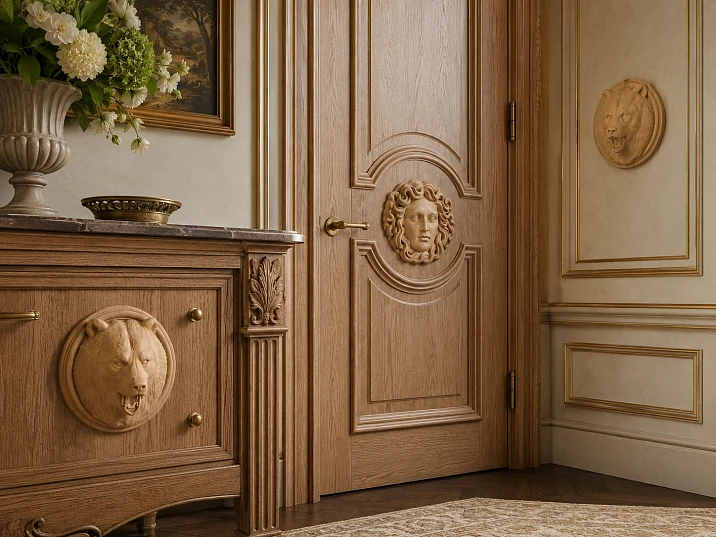
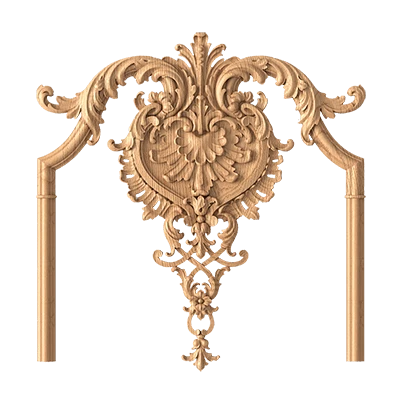
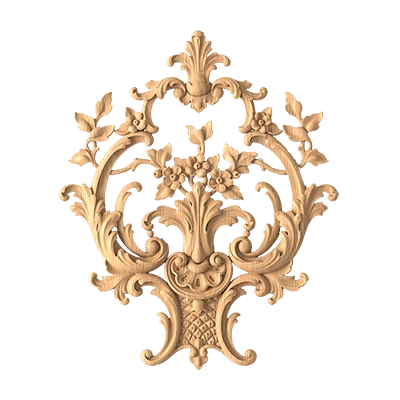
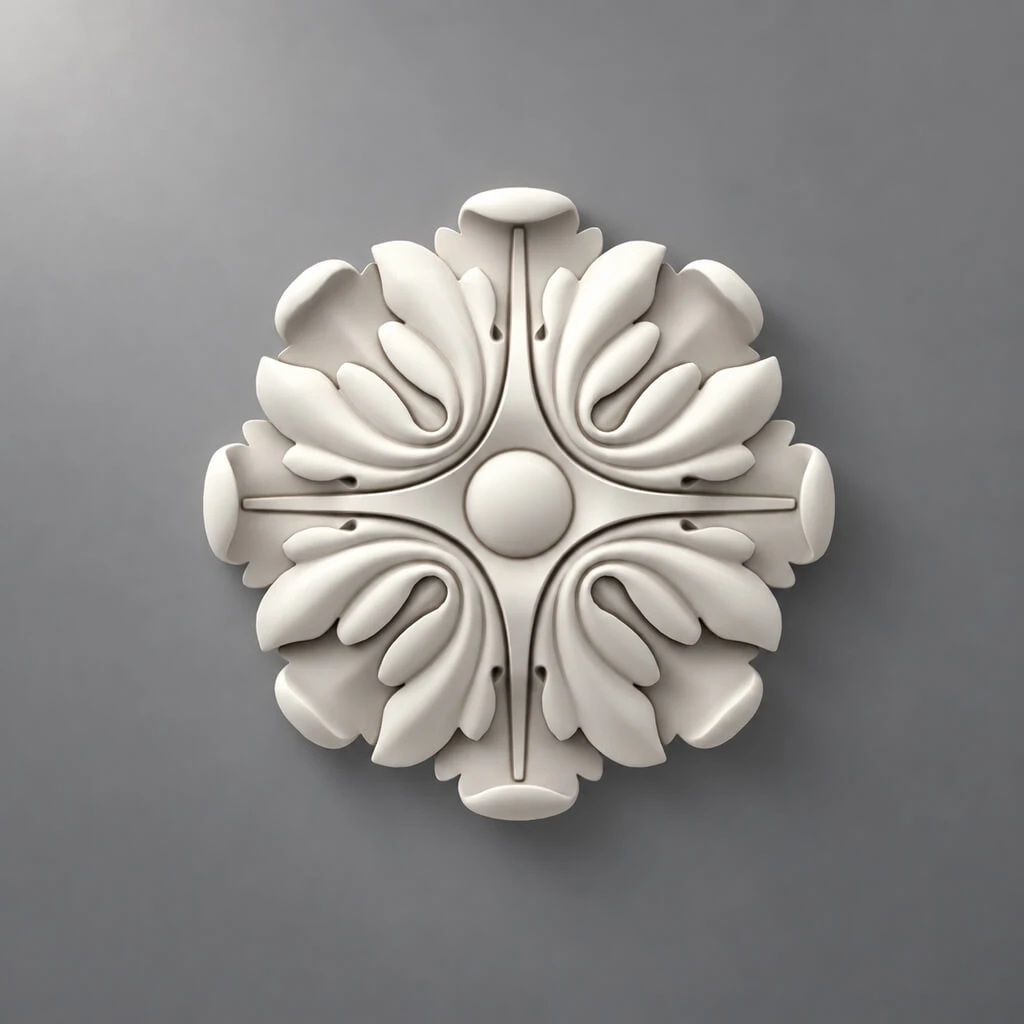
It is easier to buy a carved mascaron when comparing not abstract "large" and "small" decor, but precise basic dimensions. The initial version of M-017 is 100 × 100 × 65 mm, while M-018 is 85 × 80 × 26 mm. The difference in the first dimension is 15 mm, in the second — 20 mm, and in relief depth — 39 mm. On a cabinet door, interior door panel, or inside a wall frame, these values change the free margins, visual weight, and requirements for the base.
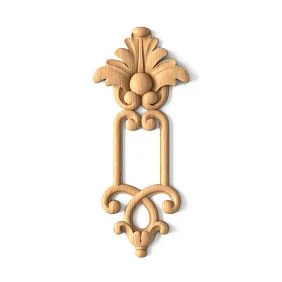
Buy carved mascaron M-017 in the basic size is suitable when a noticeable central accent is needed: on a wide cabinet door, tall panel, furniture portal, door, or medium-scale wall panel. The square dimensions of 100 × 100 mm and depth of 65 mm make the part voluminous, so it cannot be placed close to a handle, molding, or edge of the facade.
Buy mascaron M-018 is reasonable for a small door, dresser drawer, nightstand, narrow vertical panel, or a repeating rhythm on several facades. The basic configuration of 85 × 80 × 26 mm is noticeably more compact and shallower in relief, making it easier to combine with thin molding and limited decorative space.
Both cards offer more than one size. M-017 is produced in five versions up to 300 × 300 × 196 mm, M-018 — in four versions up to 233 × 220 × 72 mm. Therefore, the article compares specifically the basic variants with the designation A 100 and 85 mm, and before ordering, the buyer must select the actual size line, material, sanding, and surface preparation.
Short answer. M-017 100 × 100 × 65 mm is chosen for an independent central accent and deeper relief. M-018 85 × 80 × 26 mm is for compact furniture, small panels, and repeating a single motif on a series of facades.
Before purchasing, print two rectangles at 1:1 scale, mark the actual relief depth, apply the layouts to the surface, and check the distances to the handle, molding, panel, hinges, and adjacent parts.
Buy M-017 100 mm Buy M-018 85 mm Buy decorative furniture overlays Buy molding for frame Order decorative layout
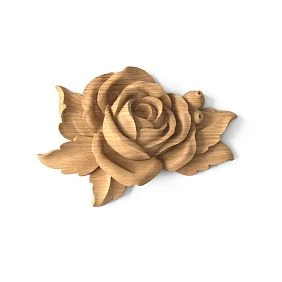
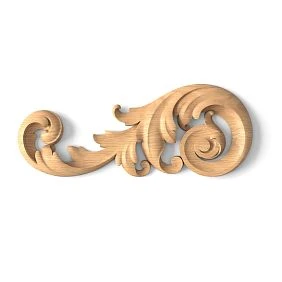
Confirmed specifications for M-017 and M-018
| Parameter | M-017 | M-018 |
|---|---|---|
| Base size A × B × C | 100 × 100 × 65 mm | 85 × 80 × 26 mm |
| Other sizes | 150 × 150 × 98; 200 × 200 × 131; 250 × 250 × 163; 300 × 300 × 196 mm | 127 × 120 × 39; 180 × 170 × 56; 233 × 220 × 72 mm |
| Material | Beech or oak | Beech or oak |
| Sanding quality | "Standard" or "Prestige" | "Standard" or "Prestige" |
| Preparation of beech | For enamel | For enamel |
| Oak preparation | For tinting | For tinting |
| Average production time for made-to-order items | 5–10 days | 5–10 days |
| Ready-made coating | Not confirmed as standard configuration | Not confirmed as standard configuration |
| Mounting hardware | Not confirmed as part of the set | Not confirmed as part of the set |
| Purpose | Overlay carved decor for furniture and interior compositions | Overlay carved decor for furniture and interior compositions |
Main comparison of base dimensions
| Criterion | M-017 100 × 100 × 65 mm | M-018 85 × 80 × 26 mm | Practical conclusion |
|---|---|---|---|
| Difference in A | 100 мм | 85 мм | M-017 is 15 mm larger |
| Difference in B | 100 мм | 80 мм | M-017 is 20 mm wider |
| Difference in C | 65 мм | 26 мм | M-017 deeper by 39 mm |
| Visual role | Independent central accent | Subtle accent or repeating motif | Choice depends on free space and viewing distance |
| Wide furniture front | Often looks more convincing | May require a frame or repetition | Need a 1:1 template |
| Small door | May overload | Often preserves free margins | Check handle and edges |
| Relief depth | Requires more space in front of the surface | Easier to place next to molding | Important for door and passage |
| Series of identical facades | Creates an active repetition | Creates a calmer rhythm | Quantity is checked on the overall layout |
Our factory also produces:
What is an overlay carved mascaron
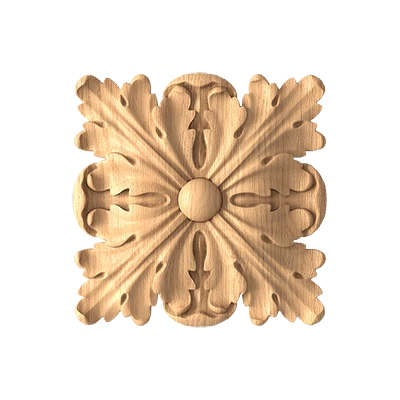
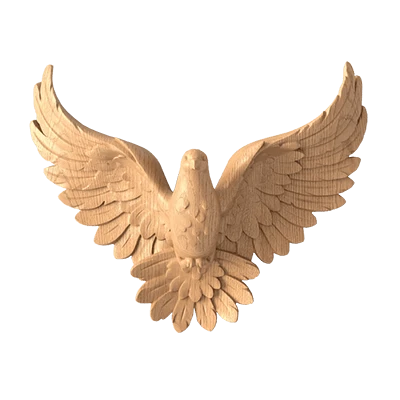
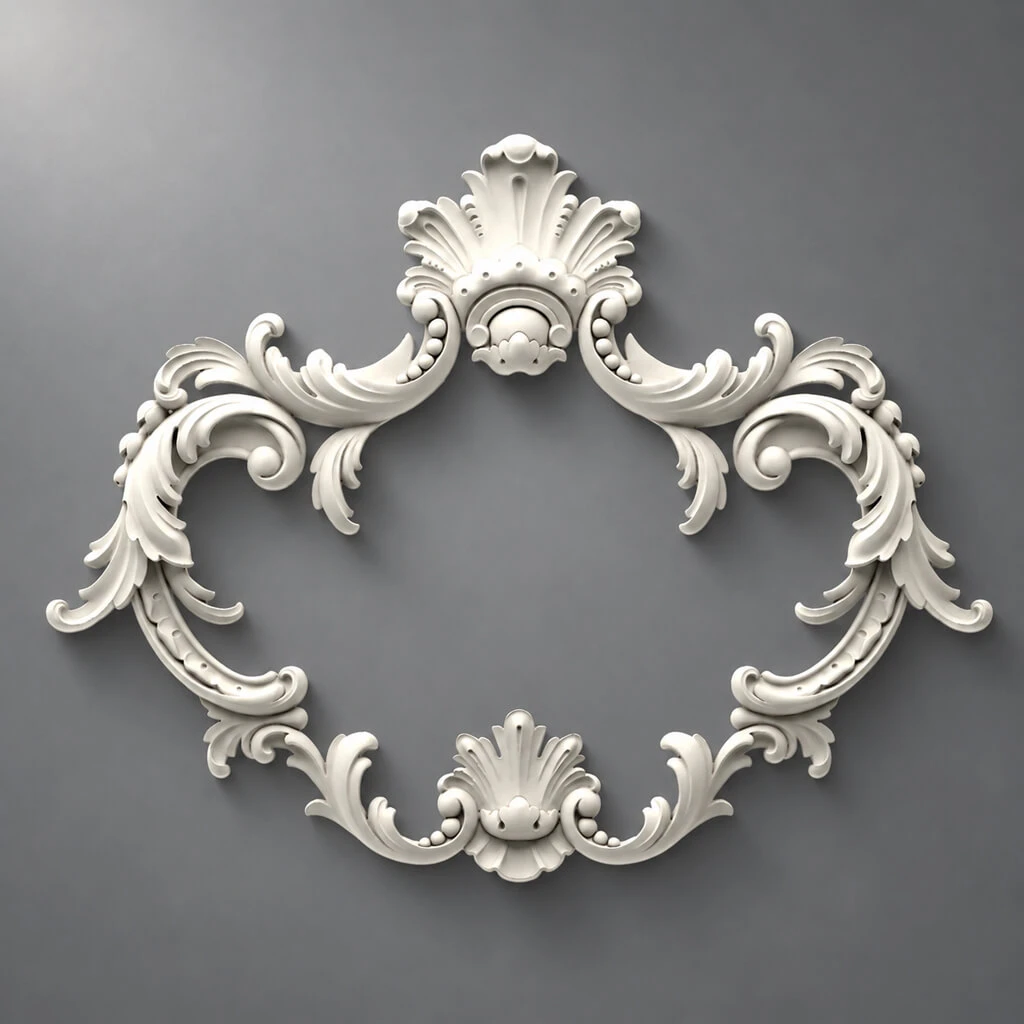
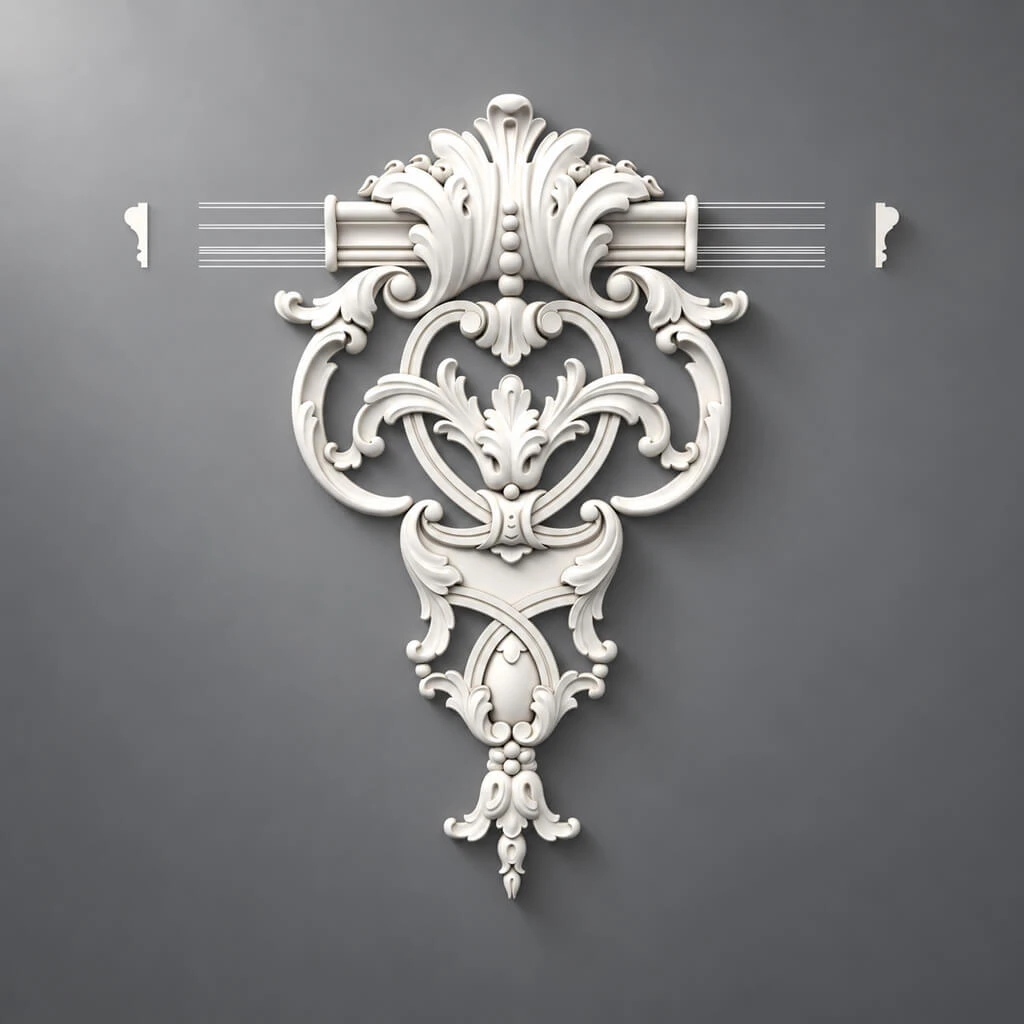
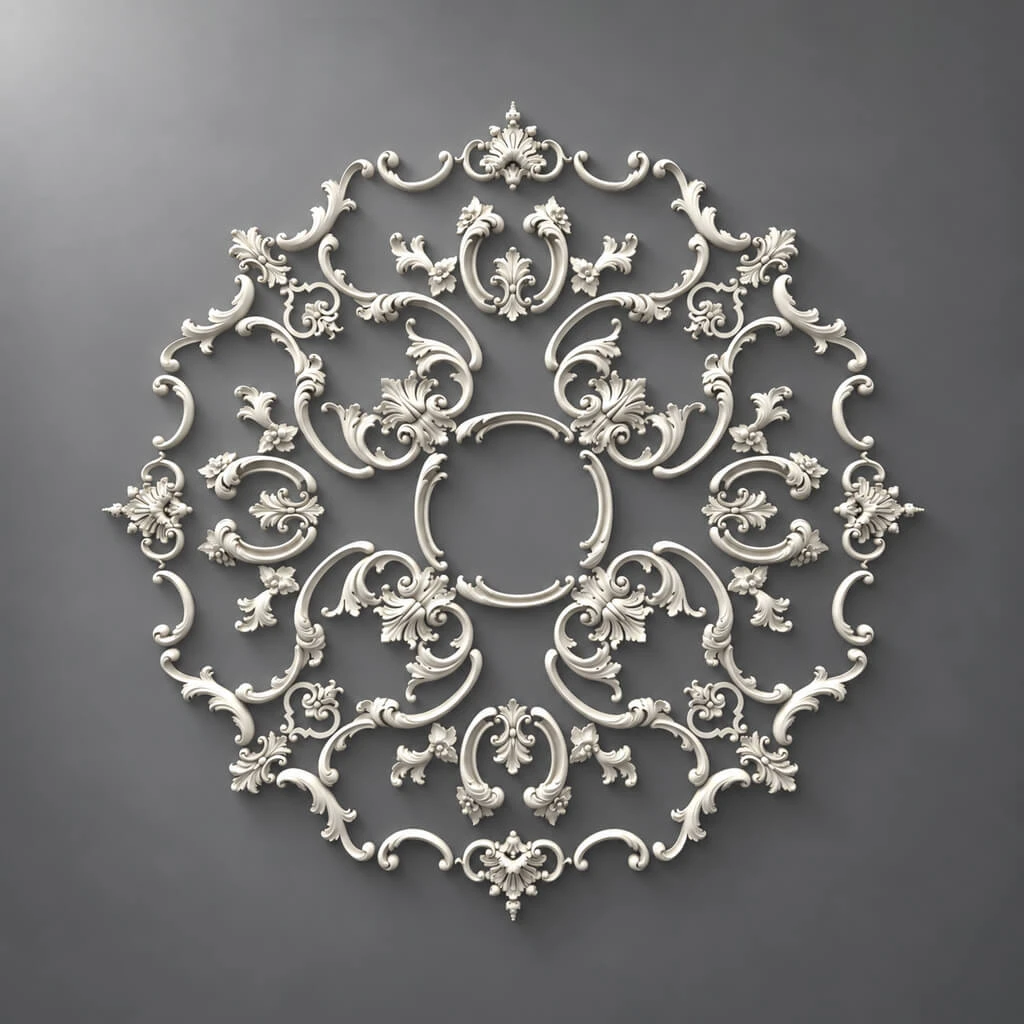
A mascaron is a central decorative overlay with expressive relief. In furniture and interior design, it fills an empty field, gathers the molding frame around itself, and sets the point where the eye first falls.
What matters to the buyer is not historical background, but scale. A detail that is too large overwhelms the door, one that is too small gets lost inside a tall panel. Therefore, M-017 and M-018 are compared by actual dimensions, depth, and free fields.
The overlay format is convenient because the finished carved form does not need to be cut out manually. The base remains flat, and the decor is selected, finished, and installed as a separate element.
Get Consultation
Why M-018 cannot be considered a reduced copy of M-017
The models have different proportions and depth. The basic M-017 has a square of 100 × 100 mm and a depth of 65 mm, while M-018 has 85 × 80 mm and a depth of 26 mm.
The difference is not only about scale. The relief, silhouette, and light behavior can be perceived differently, so the choice cannot be based on a simple reduction of the same pattern.
Before ordering, compare images, DWG files, and physical templates of each model.
Why the 15 mm difference is noticeable
Fifteen millimeters may seem small on a ruler, but on a door that is 300–400 mm wide, it is a noticeable part of the free field.
M-017 approaches the molding and handle, while M-018 leaves more air. On a series of identical drawers, the difference repeats several times and changes the entire rhythm.
Additionally, the basic M-017 is 39 mm deeper, so visually it is significantly stronger than a single A comparison shows.
How to print a 1:1 template
For M-017, create a contour of 100 × 100 mm, for M-018 — 85 × 80 mm. Mark the depth of 65 and 26 mm with a separate strip or folded cardboard.
Check the print scale with a ruler: the printer should not automatically reduce the page.
Secure the template with masking tape and examine the surface from a normal distance. This reveals free margins, handle position, and overall composition weight.
How to make a 3D mockup
Flat paper does not show the relief protrusion. For M-017, you can assemble a box with a thickness of 65 mm, for M-018 — 26 mm.
The mockup is especially important on a door, in a narrow passage, and next to a pull-out drawer. It shows whether the decor will interfere with the hand, trim, or adjacent facade.
The exact shape of the relief differs from the box, but the 3D test helps evaluate the depth.
How to determine the free decorative field
From the total width and height of the facade, subtract the frame, panel, handle, lock, gaps, and other elements.
The resulting rectangle is the actual field for the mascaron. It is compared with 100 × 100 or 85 × 80 mm.
If a detail fits only technically, but there is almost no air around it, the composition will look cramped.
How to leave margins around decor
A universal distance cannot be assigned without the size of the facade and molding.
Margins should allow the relief to be read separately, not merge with the frame. The more active the molding profile, the more important the free space.
Several options are checked on the template, rather than placing a mascaron in the first found center.
Central layout
The center is suitable for a single door, drawer, wall panel, and furniture portal.
M-017 in the center becomes the main sign of the composition. M-018 looks more delicate and can work inside a small frame.
The geometric center does not always coincide with the visual one if there is a handle below or an asymmetrical molding nearby.
Placement in the upper third
On a tall door, a mascaron is often raised above center to connect it with the upper panel or cornice.
M-017 holds a large vertical well, M-018 is suitable when the upper area is narrow.
The position is checked together with the handle: decor and hardware should not form an accidental close pair.
Offset layout
Offset is possible on an asymmetrical facade, a door with a side handle, or a wall panel next to furniture.
This technique requires a deliberate connection to another line. A randomly shifted mascaron is perceived as a mistake.
For a series of doors, it is better to maintain a single coordinate system.
One mascaron or several
One M-017 is suitable as a central accent on a large facade or door.
Several M-018 are more convenient for a repeating rhythm on drawers, paired doors, or wall sections.
The quantity is determined by the overall layout. Repeating the large M-017 on each small facade can overload the furniture.
How to repeat the decor on a series of facades
The first facade becomes the reference: height, offsets, and orientation are approved on it.
After that, a template is made for the remaining doors or drawers.
It is better to order all mascaron ornaments in one batch, especially with transparent oak finish.
M-017 for a wide cabinet door
The base square 100 × 100 mm is noticeable on a facade 400–600 mm wide and can become the center of the panel.
The depth of 65 mm requires checking the handle and clearance. On a hinged door, it is important to ensure the decor does not hit the adjacent door.
Beneficial see the application of carved decor on cabinets before approving the scale.
M-018 for a small door
Dimensions 85 × 80 × 26 mm fit more easily on a nightstand, narrow cabinet, and small buffet section.
It leaves more room for molding and handle, but may get lost on a very tall smooth door.
If the decor seems weak, first try a frame rather than immediately switching to a larger model.
M-017 for a buffet
On the central section of the buffet, M-017 creates a pronounced focus and supports the classic architecture of the furniture.
It doesn't have to be repeated on every side door. One large center and calmer adjacent facades often look more convincing.
The material and finish are tied to the cornice, legs, and baguette.
M-018 for a dresser
The compact model fits a drawer or small dresser door.
On four identical facades, you can repeat four details while maintaining equal indents.
Before choosing, you need to select a mascaron for the furniture facade and evaluate the composition together with the handles.
Mascaron on the cabinet drawer
On the drawer, not only the width is important, but also the space for the handle.
If the handle is centered, the mascaron can be raised higher or used as the only decorative center without separate hardware only if the opening system is technically provided.
M-018 is usually easier to place, M-017 requires a tall facade.
M-017 on an interior door
A tall panel can accommodate a larger and deeper accent.
M-017 can be placed inside the top panel or molding frame, but the depth of 65 mm must be safe for opening.
To understand the scale, it is useful to look at carved interior doors.
M-018 inside the door panel
The compact size fits a small top panel and a narrow door leaf.
It should not approach the frame so much that the relief blends with the profile.
Before installation, check both sides of the door, the lock, the handle, and the opening trajectory.
Maskaron on a double door
Two identical maskarons on the leaves or one common compositional center on the fixed part are possible.
The paired scheme requires mirror marking and the same height.
M-018 creates a calmer pair, M-017 is an active palace repeat.
How to account for the door handle
The handle forms its own focal point and palm workspace.
The mascaron should not interfere with the grip, touch the wrist, or be positioned too close to the hardware.
On the mockup, mark the full handle contour and hand movement, not just the hole center.
How to account for the casing
On an open door, deep decor may approach the casing or wall.
Check the actual opening angle and distance to adjacent surfaces.
M-018 with a depth of 26 mm is easier in a tight opening, but this does not eliminate the need for verification.
Installation before or after hanging the door
On a removed door panel, it is easier to maintain axes and press the decor.
After installing the overlay, the door becomes more vulnerable during transfer.
The master determines the sequence, but dry fitting is done before final fastening.
M-017 inside the wall frame
A 100 × 100 mm square and deep relief work well in the central section of the boiserie.
The frame must be large enough so that the mascaron does not look cramped.
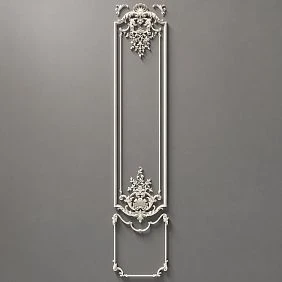
You can view the design of wall panels and tie the decor to the overall wall layout.
M-018 above the console
The compact piece suits a small panel above a cabinet, console, or chest of drawers.
It can be surrounded by a thin smooth frame with an open field left.
If the wall is tall and empty, one M-018 may not be enough — then repetition, a frame, or a larger model helps.
Maskaron between sconces
The lights set the side boundaries of the composition.
Deep M-017 creates strong shadows, while M-018 looks softer.
The template is checked with evening light on, because the relief changes with the direction of the beam.
Maskaron in a classic study
Oak under tinting ties the decor with the library, desk, and wall panels.
M-017 suits a large central section, M-018 suits repeating narrow fields.
There is no need to use an overly active baguette and several large maskarons at the same time.
Maskaron in the hallway
The decor on the cabinet door or panel near the mirror is visible from close range.
The depth of M-017 may be excessive in a narrow passage, so a full-scale mockup is mandatory.
M-018 usually fits more easily into a compact hallway.
Mascaron in the bedroom
On a cabinet, nightstand, or wall above a dresser, the mascaron supports the classic theme.
A calm enamel in the color of the facade softens the relief, while contrasting tinting enhances it.
For multiple items, it is better to use one model and a consistent height.
Mascaron in a hotel interior
In a room or lobby, repeatability and maintainability are important.
M-018 is convenient for a series of small facades, M-017 for a single central portal.
They preserve the article, size, breed, and finish recipe.
How to choose a molding for M-017
A deep and large mascaron requires a frame that does not look accidentally thin.
At the same time, an active carved profile can compete with the central relief. It is often better to use a calmer molding and leave some distance.
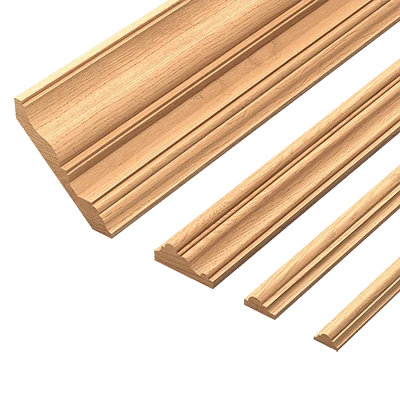
In the catalog you can buy a wooden molding for a frame around a mascaron after checking the cross-section.
How to choose a molding for M-018
A compact model is easier to combine with a thin rectangular frame.
If the profile is too wide, the mascaron visually disappears. If it is too thin, the composition may look unfinished.
The mascaron template is applied simultaneously with a real sample of the molding.
How to calculate the frame
First, determine the outer field, then the position of the mascaron, and only after that the profile lines.
The distances on the left and right should be equal for a symmetrical composition.
The exact length of the molding is calculated along the perimeter of the frame, taking into account the miter cuts.
Smooth frame and carved center
This is a safe scheme for M-017: the deep relief remains dominant, and the frame organizes the field.
With M-018, the smooth profile helps not to overload a small door.
The color can be made uniform or the center can be emphasized with tinting.
Carved baguette and mascaron
Two active ornaments require a sufficient surface scale.
On a large portal M-017 can be combined with carved molding, but on a cabinet such a solution often looks heavy.
Before ordering, it is worth choose a carved wooden baguette and compare the patterns on one layout.
Can two ornaments be used
Yes, if one remains the main one and the second supports it.
Large M-017 and a rich baguette of equal strength start to compete. Compact M-018 is easier to make a secondary accent.
Color and patina should not enhance both elements simultaneously without necessity.
Maskaron as the completion of a vertical molding
The overlay can complete a vertical line on a pilaster, furniture portal, or wall panel.
M-017 suits a wide vertical, M-018 suits a narrow strip.
The center of the mascaron must align with the profile axis.
Mascaron inside the furniture portal
The portal has its own architecture: side posts, a top crossbar, and a central field.
M-017 can serve as the main finish, M-018 as a small repeat on the side sections.
The size is chosen based on the portal width, not on a photo of an individual part.
Beech under enamel
Both models are available in beech prepared for opaque finish.
This option is suitable for painted facades, doors, and wall panels.
A test coat is needed to avoid flooding small details and to check the color next to the molding.
Oak under tinting
Oak is chosen when the texture needs to be preserved.
On M-017, the wood grain is noticeable on the large and deep form; on M-018, it is perceived more delicately.
It is better to order and tint all elements of one composition together.
'Standard' or 'Prestige'
"Standard" means machine sanding, "Prestige" means more detailed manual preparation.
For complex relief, the quality of preparation affects the amount of finishing before the final coat.
The choice is made considering the workshop, type of coating, and requirements for visible details.
For enamel or for tinting
Under enamel, lamellas are not matched by color and texture because the surface is covered with an opaque material.
For tinting, the wood is selected more carefully so that the grain remains part of the appearance.
These concepts refer to the preparation of the workpiece, not to the finished coating.
White enamel
White color unites the mascaron with the facade and makes the relief noticeable through light and shadow.
M-017 remains voluminous even without contrast, M-018 looks calmer.
The shade of white and the degree of gloss are coordinated with the door or furniture.
Dark enamel
The dark finish enhances the silhouette and depth.
On a small door, M-017 may appear visually heavy, while M-018 more often maintains balance.
The sample is examined under working lighting.
Contrasting wood decor
The oak mascaron on painted MDF creates a material accent.
This combination is especially expressive on the central door or wall panel.
The wood color is tied to the handles, legs, or tabletop.
Patina on the relief
The patina emphasizes the recesses and makes the ornament more readable.
On deep M-017, the effect is stronger, so the contrast is dosed.
Patination is not considered a standard ready-made option without order confirmation.
How to avoid flooding the relief with paint
Thick primer and enamel smooth out fine lines.
The composition is applied in thin, even layers and checked with side lighting.
Special attention is paid to internal recesses and edges.
Test swatch
The sample must match the wood species and sanding of the selected model.
It is applied to the facade together with the molding.
After approval, the composition, color, gloss, and layer sequence are fixed.
Paint before or after installation
It is easier to process a separate part from all sides without soiling the base.
After installation, only local finishing is performed, if needed.
The reverse side must remain compatible with the chosen adhesive.
Dry fitting
The mascaron is applied without glue and examined from several angles.
Check the center, margins, handle, frame, and depth.
For paired doors, both parts are fitted simultaneously.
How to transfer the central axis
A vertical and horizontal line are drawn on the facade, then aligned with the template's reference points.
A laser helps on walls and a series of doors, but does not replace measurements from edges.
Marking is done with a removable tool that does not damage the coating.
Installation on MDF
The base must be level, strong, and clean.
The adhesive is selected considering the wood and MDF coating.
If the facade is already painted, check the adhesion of the coating, not just the glue to the wood.
Installation on solid wood
The wooden base and mascaron may react to humidity.
The surface is cleaned, and the connection is chosen according to the project.
Mechanical fixation cannot be assigned without knowledge of thickness and reverse geometry.
Installation on a painted wall
The overlay is held by the finish layer, so weak paint or plaster may peel off.
The base is checked before installation.
For deep M-017, it is especially important to assess the weight and the need for an additional solution.
Can it be attached only with glue
A universal rule for any surface has not been confirmed.
Glue is suitable for many interior tasks, but size, weight, base, and usage vary.
The final scheme is chosen by a specialist.
How to hold the mascaron until drying
Use painter's tape, a temporary support, or another means that does not damage the relief and finish.
Deep M-017 requires more reliable support than compact M-018.
The holding time is taken from the glue instructions.
How to remove excess glue
The compound is removed immediately using a compatible method.
It cannot be spread over the oak under a transparent finish or matte enamel.
Before working, a test is done on a sample.
Can the mascaron be removed
Removal depends on the glue and base and may damage paint, veneer, or wood.
If future replacement is anticipated, the fastening is designed in advance.
It is impossible to guarantee a traceless removal.
How to replace a damaged overlay
The article number, size, material, and finish recipe are preserved.
The new part must match not only the name but also the selected line A × B × C.
For a complex project, it is useful to order one spare overlay.
How to store before installation
The part is kept in a dry room on a flat, soft base.
Deep relief must not be loaded from above.
After painting, the surfaces are separated with a material that does not stick to the finish.
How to accept goods upon delivery
Check the selected article, size, beech or oak, "Standard" or "Prestige", and surface preparation.
Check the relief, edges, and back side before painting.
All issues are recorded before installation and modification of the product.
Why base sizes are not the only choice
Card M-017 contains five sizes, M-018 contains four.
If 100 or 85 mm are not suitable, you can choose an enlarged configuration of the same article, but the proportions and depth will also change.
Before ordering, you need to compare the full string A × B × C, not just the first digit.
Enlarged sizes M-017
After 100 × 100 × 65 mm, 150 × 150 × 98, 200 × 200 × 131, 250 × 250 × 163, and 300 × 300 × 196 mm are available.
These options are designed for large portals, walls, and large-scale furniture.
They are not an automatic replacement for the base size without a new template and installation check.
Enlarged sizes M-018
After 85 × 80 × 26 mm, 127 × 120 × 39, 180 × 170 × 56, and 233 × 220 × 72 mm are available.
This allows preserving the M-018 pattern on a larger surface.
Choosing an enlarged size may be more accurate than switching to a different article.
How not to confuse size and article number
One SKU has several sizes, and different SKUs may have similar first dimensions.
In the specification, they write, for example: M-017, 100 × 100 × 65 mm, oak, "Prestige", for tinting.
The phrase "masqueron 100 mm" without a SKU and full string is insufficient.
M-010 as an intermediate option
The basic M-010 has dimensions 90 × 90 × 37 mm.
It falls between M-018 and M-017 in the first dimension, but differs in pattern and proportions.
If 85 mm seems too small and 100 mm too large, you can look at the compact masqueron M-010 with a size of 90 mm.
When to choose M-014
The basic M-014 has dimensions 121 × 85 × 42 mm and elongated proportions.
It is suitable when a taller silhouette is needed without the square shape of M-017.
Before ordering, it is useful view larger M-014 mascaron size 121 mm.
When to choose M-015
The basic M-015 measures 126 × 100 × 30 mm.
It is taller than M-017, but significantly shallower in depth, so it is perceived differently.
You can view M-015 mascaron size 126 mm for an elongated panel.
When M-011 or M-012 are needed
These models should be considered for a larger central accent and a different pattern.
In the catalog you can view carved M-011 mascaron size 131 mm и view large mascaron M-012 size 135 mm.
The comparison is made using the full card, not just the number in the name.
When to view M-019
Sometimes a different pattern suits the buyer while maintaining the choice between oak and beech.
Then it's worth viewing another mascaron made of oak or beech and comparing its drawing.
A neighboring article is not considered interchangeable without checking the size.
How not to confuse a mascaron with a rosette
A rosette is often built around a geometric or floral center and may have a different symmetry pattern.
The mascaron is perceived as an independent figurative central element.
The card always checks the name, article number, and pattern.
How not to confuse it with a furniture handle
The mascaron is a decorative overlay and should not be automatically used to open the facade.
It does not have a confirmed handle function or corresponding fasteners.
If a grip is needed, specialized furniture fittings are chosen.
How not to confuse it with exterior facade decor
The article covers interior surfaces, furniture, and doors.
Exterior use requires different wood preparation, glue, and separate confirmation.
The interior configuration cannot be transferred to the building facade.
Error: select only by first digit
100 and 85 mm do not describe the entire shape.
Base models differ in width and depth: 100 × 100 × 65 vs 85 × 80 × 26 mm.
The full string better explains the real difference.
Error: ignore depth of 65 mm
M-017 protrudes significantly above the surface.
On the door, in the passage, and near the handle, this can be of practical importance.
A volumetric layout protects against unexpected results.
Error: consider M-018 inconspicuous everywhere
On a small cabinet or drawer, 85 × 80 mm is a full-fledged accent.
The problem only occurs on a too large empty field.
A frame, repeat, or different size helps adjust the scale.
Error: placing M-017 on every small drawer
Repeating deep large details makes the dresser visually heavy.
For a series of fronts, M-018 or one central M-017 is often more convenient.
The solution is checked on the overall layout.
Error: placing M-018 alone on a tall door
Compact decor can get lost if there is no frame and compositional connections around it.
In such a situation, use molding, a paired repeat, or a larger size.
You cannot evaluate a detail only up close.
Error: do not consider the handle
The hardware and the mascaron compete for space and attention.
Too close placement interferes with the grip and looks cramped.
The template must include the handle outline.
Error: ignore the panel
The carved overlay requires a flat support area.
If the back surface falls on the transition between the frame and the panel, the glue will not ensure proper adhesion.
The facade cross-section is checked before ordering.
Error: ordering one element for paired doors
If the project requires identical decor on two doors, a set of two pieces is needed.
One mascaron on one leaf creates asymmetry if it is not intended.
The quantity is fixed according to the facade scheme.
Error: mixing sizes without a system
Different scales can indicate hierarchy, but random alternation looks like a shortage of goods.
A large element is placed on the central section, compact ones on the side sections.
The principle is recorded in the project.
Error: considering sanding as a coating
"Standard" and "Prestige" describe wood preparation.
Enamel, tinting, and protective finish are done separately.
Before installation, the unpainted part must be prepared according to the project.
Error: choosing oak under opaque enamel without reason
Oak is valued for its pronounced texture, which is hidden by opaque coating.
For enamel, beech is usually more rational with appropriate preparation.
An exception is possible, but it must be deliberate.
Error: choosing beech expecting oak texture
Beech has a calmer pattern and is often used under enamel.
Under a transparent finish, it will not look like oak.
The material is chosen based on the actual finish.
Error: attaching only to weak paint
The glue will hold the mascaron together with a layer of coating that may peel off from the wall or facade.
The base is tested for strength.
When in doubt, the installation diagram is changed.
Error: using random glue
The composition must be suitable for the wood and the base.
Transparent tinting and painted facade require careful work without stains.
For the project, you can buy glue and finishing materials after compatibility check.
Error: not doing a dry fit
After applying glue, it is difficult to change the position.
Dry layout shows the center, margins, scale, and conflicts.
A photo of the approved version helps the installer.
Error: mounting without template on a series of doors
A difference of a few millimeters becomes noticeable in a repeating rhythm.
The control template transfers the same position.
Left and right doors are checked mirror-wise.
Practical choice: a chest of drawers with four drawers
Four M-018 create rhythm and do not overload the facades.
One M-017 can be placed on the central door or a wide top section.
Mixing sizes should have a clear hierarchy.
Practical choice: double door
Two M-017 create an active formal composition, two M-018 create a calmer one.
They check the same height, central gap, and opening.
For narrow panels M-018 is usually more convenient.
Practical choice: panel above the console
M-017 fits a standalone center within the middle frame.
M-018 requires a more compact field or support with molding.
The distance to sconces and furniture is assessed on the wall.
Practical choice: series of hotel cabinets
M-018 is convenient for repetition and requires less space.
M-017 fits central or more prestigious sections.
For repairs, order a reserve and keep the finish recipe.
What not to cut from scratch
Ready-made M-017 and M-018 already have complex relief and several size options.
The buyer does not need to manually repeat the pattern, achieve identical parts for a series, or create a model for milling.
Work focuses on choosing the scale, finishing, and installation.
How to buy M-017 on STAVROS
Open the card and select a specific row A × B × C.
Then specify beech or oak, sanding quality, and preparation.
Before payment, compare the template with the surface.
How to buy M-018 on STAVROS
Choose the basic 85 × 80 × 26 mm or one of the enlarged options.
Check the material and the finishing route.
For the series, specify the exact quantity and reserve.
When to open the overlay category
If the pattern or dimensions of two models do not fit, do not adjust the facade.
In the category you can view all carved decor and choose a different overlay.
The alternative card should be checked just as carefully.
When a design project is needed
The project is useful for wall panels, portals, paired doors, and a series of facades.
You can order the layout of decor on furniture or wall and compare scales before purchase.
The layout helps calculate the quantity, molding, and margins.
Where to study materials
Beech, oak, "Standard", "Prestige", for enamel and for tinting have different tasks.
Before ordering, it is worth check materials and surface preparation.
Thus, the choice of wood species is linked to the actual finish.
Where to view installation recommendations
General tips help prepare the base and adhesive.
Useful recommendations for installing carved decor, but the specific scheme depends on the size and surface.
The DWG of the selected model takes priority.
How to choose size by surface type
| Surface | When to choose M-017 | When to choose M-018 | What to Check |
|---|---|---|---|
| Wide cabinet door | Need an independent center and deep relief | Has an active frame or repeat on multiple panels | Handle, panel, passage, and depth 65 mm |
| Small cabinet door | Only with a high free field | Basic and safer option | Margins to edges and hardware |
| Dresser drawer | One large accent on the wide section | Repeat on several drawers | Handle and drawer movement |
| Interior door | Tall panel and formal composition | Narrow panel or compact top field | Lock, casing, and opening angle |
| Wall frame | Medium or large central section | Small panel or repeating rhythm | Molding, sconce, furniture, and lighting |
| Furniture portal | Main top finish | Side or secondary accents | Post axes and overall scale |
What to buy with M-017 or M-018
The mascaron itself only solves the central relief problem. A finished composition may require a frame molding, carved baguette, finishing materials, and a project layout. Additional elements are selected after the template is approved, not before.
| What to add | Why | For which scenario | What to Check | Link |
|---|---|---|---|---|
| M-017 | Get a large deep accent | Cabinet, door, portal, wall panel | Full string A × B × C | decorative overlay 100 mm |
| M-018 | Maintain compact scale | Cabinet, drawer, small door, series of facades | 85 × 80 × 26 mm and fields | compact carved overlay size 85 mm |
| Overlay category | Compare other patterns and sizes | When pair M-017/M-018 does not fit | SKU, material and scale | Buy decorative furniture overlays |
| M-010 | Get intermediate scale 90 mm | Between M-018 and M-017 | Pattern 90 × 90 × 37 mm | look at the compact masqueron M-010 with a size of 90 mm |
| M-014 | Select elongated shape | Narrow tall panel | 121 × 85 × 42 mm | view larger M-014 mascaron size 121 mm |
| M-015 | Get a higher but shallow relief | Door or vertical panel | 126 × 100 × 30 mm | view M-015 mascaron size 126 mm |
| Moldings | Assemble a calm frame | Facade, door, boiserie | Section and distance to relief | buy a wooden molding for a frame around a mascaron |
| Carved molding | Create a richer portal | Large furniture or wall composition | Do not overload with two ornaments | choose a carved wooden baguette |
| Materials | Perform finishing and installation | Beech for enamel or oak for tinting | Compatibility of glue and coating | buy glue and finishing materials |
| Design project | Check scale and quantity | Paired doors, series of facades, wall panel | Axes, handles, frames and light | order the layout of decor on furniture or wall |
How to calculate the number of mascaron
A single facade requires one piece, paired doors require one or two depending on the composition, a series of drawers requires the number of repeats.
The quantity is calculated by the layout, not by the number of furniture items.
For transparent tinting and complex enamel, a reserve for damage is useful.
One large or several compact
One M-017 forms the center and leaves adjacent surfaces calm.
Several M-018 create rhythm and unify a series of doors or drawers.
The choice depends on the furniture architecture, not just the total area of the decor.
How to check the view from a distance
On furniture, the mascaron is often viewed from two to three meters, on a door from the adjacent room, on a wall from the entrance.
M-018 can be expressive up close and disappear from afar.
M-017 retains its strength, but in a small room it may look heavy.
How to check side lighting
The depth of the relief creates a shadow, which is sometimes more important than the width.
M-017 becomes especially voluminous under side lighting, M-018 gives a finer pattern.
The test layout is examined in the morning and evening.
How to connect a mascaron with a furniture handle
The handle should remain functional, the mascaron decorative.
They can be placed on the same axis, but a free field is left between them.
If both elements are active, one is made calmer in color.
How to connect with the cabinet cornice
The top cornice and mascaron should have a common hierarchy.
M-017 is suitable for the central section under a developed cornice, M-018 for side doors.
Too close placement turns two elements into one heavy node.
How to connect with a pilaster
A mascaron can finish or accent a vertical furniture pilaster.
The size is chosen based on the width of the post: the part should not extend beyond the edges without design intent.
The axis of the mascaron is aligned with the axis of the pilaster.
How to connect with a mirror
On a wall panel, the mascaron can be above the frame or inside the side section.
Deep M-017 should not appear as a random protrusion next to the mirror.
M-018 is easier to use in a compact composition.
How to choose for repairing old furniture
First, determine a free level field and the condition of the coating.
A finished mascaron can cover a small empty area, but should not mask a damaged base.
If the furniture is to be repainted, beech under enamel simplifies coordination.
How to choose for new furniture
The position of the decor is set before the facades are made.
You can create a level platform, frame, and axes in advance.
Thus M-017 or M-018 become part of the architecture, not a later sticker.
How to choose for a DIY project
The buyer will need a template, markings, a finishing system, and a suitable adhesive.
The safest way is to first order one part or create an accurate mockup.
It's better to entrust a complex facade to a workshop.
How to choose for a commercial interior
Repeatability, repair reserve, and durable coating are needed.
M-018 is convenient for series, M-017 for a central accent.
The requirements of the object and finish are confirmed separately.
How to check the project cost
The price of the mascaron is only part of the budget.
Finishing, molding, glue, base preparation, and installation are added.
Options should be compared based on the cost of the finished composition.
How to check the deadlines
Cards indicate an average production time for custom orders of 5–10 days.
Finishing, drying, and delivery are added to it.
Several sizes and materials may have different current availability.
What to check before payment
SKU, full size string, material, sanding, preparation, and quantity.
Finishing, adhesive, installation, and delivery route are also specified.
Current payment and delivery terms are checked before ordering.
Final check before installation
The template must be approved, the base must be sturdy, and the finish must be dry.
All paired elements are marked simultaneously.
After applying the adhesive, it is too late to adjust the scale.
How to check symmetry on two doors
Close the doors and mark the common horizontal line. Then check each door separately, because the fronts may have slight differences.
The template is applied mirrored, and the control points are measured from the central gap.
After installation, both parts should read as a pair and not collide when opening.
How to choose a color for paired mascaron
Identical finish emphasizes symmetry. Contrasting colors are only acceptable as part of the overall furniture palette.
On oak, the natural grain varies, so absolute mirror matching of the texture is impossible.
For enamel, both parts are painted with the same batch.
How to check the frame before ordering molding
First print the mascaron, then draw several frames around it.
Measure the outer perimeter and distances to the decor. Only then choose the profile and footage.
This way, the molding won't be too wide or too busy.
How to prepare a technical specification
Specify the article number, size A × B × C, material, sanding, finish, quantity, and installation location.
Add a photo of the surface, frame dimensions, handle position, and drawing.
For a series of facades, number each item.
How to save data for reordering
Save the product card, DWG, finishing recipe, and photos of the finished composition.
After a few years, current options may change, so a repeat order is rechecked.
A spare part from the first batch simplifies repairs.
How to check M-017 on a 400 mm wide facade
A 100 × 100 mm square occupies a noticeable part of the field, so free zones for the frame and handle should remain nearby.
If the panel is narrow, a depth of 65 mm can visually enhance the size even more.
The template is examined with the door both closed and open.
How to check M-018 on a 300 mm wide facade
A dimension of 85 × 80 mm usually leaves enough air, but the exact perception depends on the frame.
On a smooth facade, the model may look lonely, so a thin molding helps.
The handle and mascaron should not be brought together without a mockup.
How to choose for a vertical panel
A tall narrow panel requires not only the appropriate width but also the correct vertical positioning.
M-014 or M-015 may be more appropriate due to their elongated proportions.
M-017 and M-018 are compared on the same vertical sweep.
How to choose for a square panel
Square M-017 naturally supports equal field sides.
M-018 has a slightly rectangular base dimension and leaves more free space.
Pattern and depth may be more important than formal contour matching.
How to check the relief near fabric or curtains
On the wall by the window, protruding decor should not catch the fabric.
M-017 with a depth of 65 mm requires more distance, M-018 with a depth of 26 mm is easier to place.
Curtains are checked in open and closed positions.
How to choose for a mirror portal
A mascaron can complete the top of the frame or the central panel.
Deep M-017 suits a large portal, M-018 — a thinner frame.
Reflection and side lighting are evaluated before installation.
How to check the combination of multiple sizes
A large mascaron can be used in the center, compact ones — on the side sections.
This creates hierarchy, not a random set.
All dimensions are fixed in the specification with article numbers and rows A × B × C.
How to prepare the surface for the series
All facades must have the same coating and strength in installation zones.
The first element is installed as a reference, the rest — according to a template.
The difference in position is corrected until the glue is completely dry, only within the limits of its instructions.
How to check the result after installation
The composition is viewed straight on, from the side, and from a normal distance.
Check the verticality, margins, shadows, and absence of glue on the front surface.
Doors and drawers are opened several times to rule out any catching.
How to prepare a spare part
It is better to order a spare mascaron in the same size, material, and sanding quality.
It can be finished together with the main batch or kept as a blank with an exact recipe.
For transparent oak, a reserve from the first batch is especially useful.
How to check the composition after a week of use
After a few days of use, details become noticeable that are not always visible during a dry fitting: proximity to the hand, accidental brushing, sharp shadows, and inconvenience during cleaning.
Doors and drawers are opened in normal mode, and the wall composition is examined under different lighting. If the mascaron is stable, does not interfere with movement, and retains expressiveness, the scale is chosen correctly.
How to choose a mascaron for an existing molding
Measure the width and depth of the installed profile, then apply templates M-017 and M-018 inside the finished frame.
The large M-017 requires a more open center, the compact M-018 is easier to fit into an already assembled system. If both options look cramped, it is better to choose a different model rather than reduce the margins.
How to design the central section of a cabinet
The central door can have one M-017, while the side facades can remain without decor or use M-018 as a secondary motif.
Such a hierarchy emphasizes the center and does not overload the entire furniture with equally deep elements.
How to choose a mascaron for a low dresser
On low furniture, the height of each drawer and the distance to the countertop are important.
M-018 more often maintains the correct scale, while M-017 should only be used on a sufficiently high central facade. The paper template is applied together with the handle.
How to check compatibility with cleaning and care
Deep relief collects more dust and requires accessibility for a soft brush or cloth.
M-017 has a more pronounced depth, M-018 is easier to maintain on frequently used furniture. Specific care depends on the finish coating.
How to match the mascaron with adjacent carved details
If the furniture already has carved legs, cornice, or baguette, the mascaron should support their scale, not compete with each element.
One large M-017 is appropriate as a centerpiece, and M-018 as a calm repeat. All details are considered in a general photo or visualization.
FAQ: questions about M-017 and M-018
How is M-017 different from M-018?
In basic versions, M-017 has dimensions of 100 × 100 × 65 mm, M-018 — 85 × 80 × 26 mm. M-017 is larger and significantly deeper.
What size is M-017?
The basic version is 100 × 100 × 65 mm. Enlarged versions up to 300 × 300 × 196 mm are also available.
What size is M-018?
The basic version is 85 × 80 × 26 mm. Other versions go up to 233 × 220 × 72 mm.
What does the size 100 or 85 mm mean?
This is the first value A in the size string. All three parameters A × B × C must be considered for selection.
Which mascaron should I choose for a cabinet?
For a wide, tall door, M-017 is more suitable; for a small door or a repeating row, M-018 is better.
What is better for a small chest of drawers?
M-018 is usually easier to place on a drawer or small door. M-017 is suitable for a large central section.
Will M-017 fit an interior door?
Yes, if the panel and opening allow for 100 × 100 × 65 mm placement with clear margins.
Can M-018 be installed on a drawer?
Yes, after checking the handle, guides, clear space, and mounting method.
How to check the scale before purchasing?
Print the 100 × 100 and 85 × 80 mm outlines at 1:1 scale and make 3D mockups with depths of 65 and 26 mm.
Do I need to print a 1:1 template?
Yes. It's the easiest way to see margins, handle position, and the size's impact on the facade.
Can I use two identical mascaron?
Yes, for example on paired doors or two identical sections. The layout must be mirrored and precise.
How to position decor on paired doors?
At the same height and equal distance from the central gap, taking into account the orientation of the pattern.
How to choose a molding around a mascaron?
First, determine the size of the mascaron and the free margins, then select a profile that does not compete with the relief.
What type of wood are the models made from?
Both cards offer beech or oak.
Can I order a version for enamel?
Yes, beech is offered with preparation for opaque enamel.
Can I order it for tinting?
Yes, oak is offered with preparation for translucent tinting.
What to choose — "Standard" or "Prestige"?
"Standard" — machine grinding, "Prestige" — more detailed manual preparation.
How to attach a mascaron to MDF?
On a solid, even base with compatible glue; the need for additional fixation is determined by a specialist.
Can the product be installed on a wall?
Yes, if the layer of paint or plaster is strong and the mounting system matches the size of the part.
Can it be attached only with glue?
A universal rule is not confirmed. The solution depends on the base, size, and usage conditions.
Where to download DWG?
The drawing is available in the card of the selected mascaron.
M-018 — a reduced copy of M-017?
No. The models have different proportions, depth, and pattern, so they are compared as separate products.
When to choose M-010?
When an intermediate base size of 90 × 90 × 37 mm is needed and its pattern is suitable.
When to choose M-014 or M-015?
When a more elongated shape or different relief is required: base sizes 121 × 85 × 42 and 126 × 100 × 30 mm.
Where to buy M-017?
In the main product card of the carved mascaron M-017 on the STAVROS website.
Where to order M-018?
In the product card of the carved mascaron M-018, selecting the size, material, and finish.
What is the production lead time?
The cards indicate an average production time for custom orders of 5–10 days.
Is it necessary to buy a spare?
For series, transparent finishes, or complex enamel, a spare part can simplify future repairs.
Can the mascaron be used outdoors?
Standard outdoor use is not confirmed. It requires a separate technical configuration.
What should be checked before ordering?
Full size, material, sanding, finish, quantity, base, molding, handle, and installation diagram.
Result: M-017 100 mm or M-018 85 mm
The basic M-017 measures 100 × 100 × 65 mm and is suitable for a prominent central accent. It is chosen for a wide cabinet door, tall panel, interior door, furniture portal, or medium wall frame.
The basic M-018, measuring 85 × 80 × 26 mm, fits more easily into small furniture, drawers, cabinets, and series of identical facades. It leaves more space around the molding and protrudes less from the surface.
The difference between the models is not just 15 mm in parameter A. The M-017 is 20 mm wider and 39 mm deeper. Therefore, the final choice is made using a 1:1 template and a 3D model, considering the handle, panel, frame, clearance, and lighting.
Both models are available in beech for enamel and oak for staining, with "Standard" or "Prestige" sanding. On the STAVROS website, you can choose a basic or enlarged size, compare adjacent mascaron, select molding, and order a layout project. The finished carved overlay helps achieve repeatable decor without having to make a complex shape yourself.