




























































Article Contents:
- What is carved decor for furniture: essence and purpose
- Ready-made wooden elements for facades
- Who needs this
- What elements are included in carved furniture decor
- Carved Inlays
- Decorative rosettes
- Corner Elements
- Moldings for furniture
- Central ornaments and medallions
- Decorative belts and friezes
- Carved inserts for frame facades
- How carved decor differs from regular furniture fittings
- Function vs. decor
- Decor as an investment in furniture value
- Decor as a language of style
- Carved decor for a wardrobe: how decor works on a large facade
- Wardrobe facade decor scheme
- How not to overload a wardrobe facade
- Color and finish of decor on a wardrobe
- Carved decor for a chest of drawers and nightstand: proportions and symmetry
- Decor of drawer facades
- Handles, legs, and decor: a unified ensemble
- Nightstand decor
- Buffet and display cabinet decor: classic look
- Top of the buffet: crown of the decorative scheme
- Glass display cabinet doors: frames and corner elements
- Bottom of the buffet: base and plinth
- How to choose a carving style: dictionary of ornaments
- Classic and neoclassical: acanthus, volute, meander
- Floral ornament: Provence, country, eco
- Geometry: Art Deco and modern classic
- Russian style and folk carving
- Baroque and Rococo: richness and complexity
- How to choose the size of decorative elements
- Decorative scale table
- The 'one-fifth' rule
- Element thickness: relief and installation
- Decor for painting: how to make an overlay a 'part' of the facade
- Why this works
- Preparing decor for painting
- Choosing a color for decor to be painted
- How to combine decor with handles, legs, and other elements
- Decor and handles: one style — a unified look
- Decor and legs: connection through form
- Decor and moldings: volume and rhythm
- Mistakes when choosing carved decor for furniture
- Carved decor for furniture restoration
- Recreating lost decor
- Updating modern furniture with classic decor
- Where to buy carved decor for restoration
- FAQ: Answers to Popular Questions
- About the manufacturer
There is furniture that gets noticed. And there is furniture that is simply used. The difference between them is not in the wood species or the price. It is in the details: in whether the facade has depth, rhythm, decorative logic. A simple smooth facade is a surface. A facade with carved overlays, rosettes, and moldings is character.
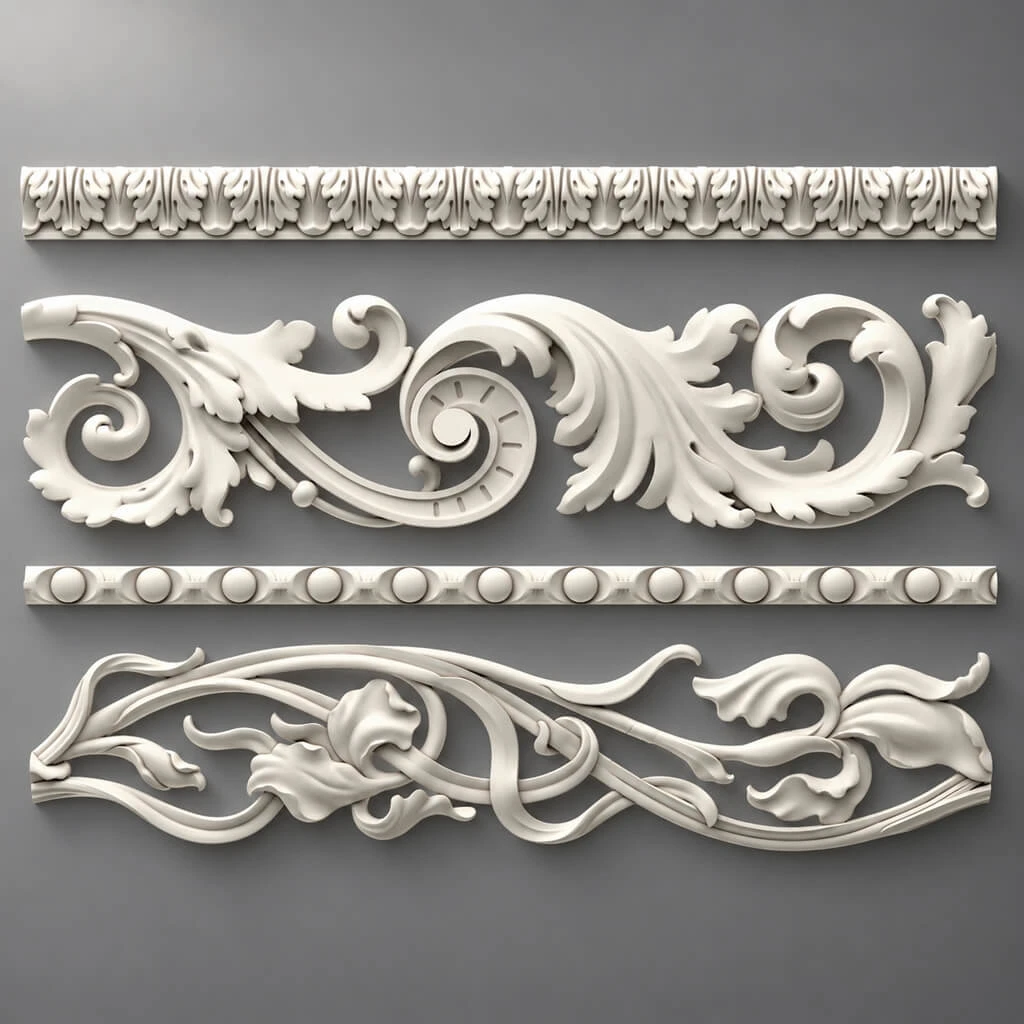
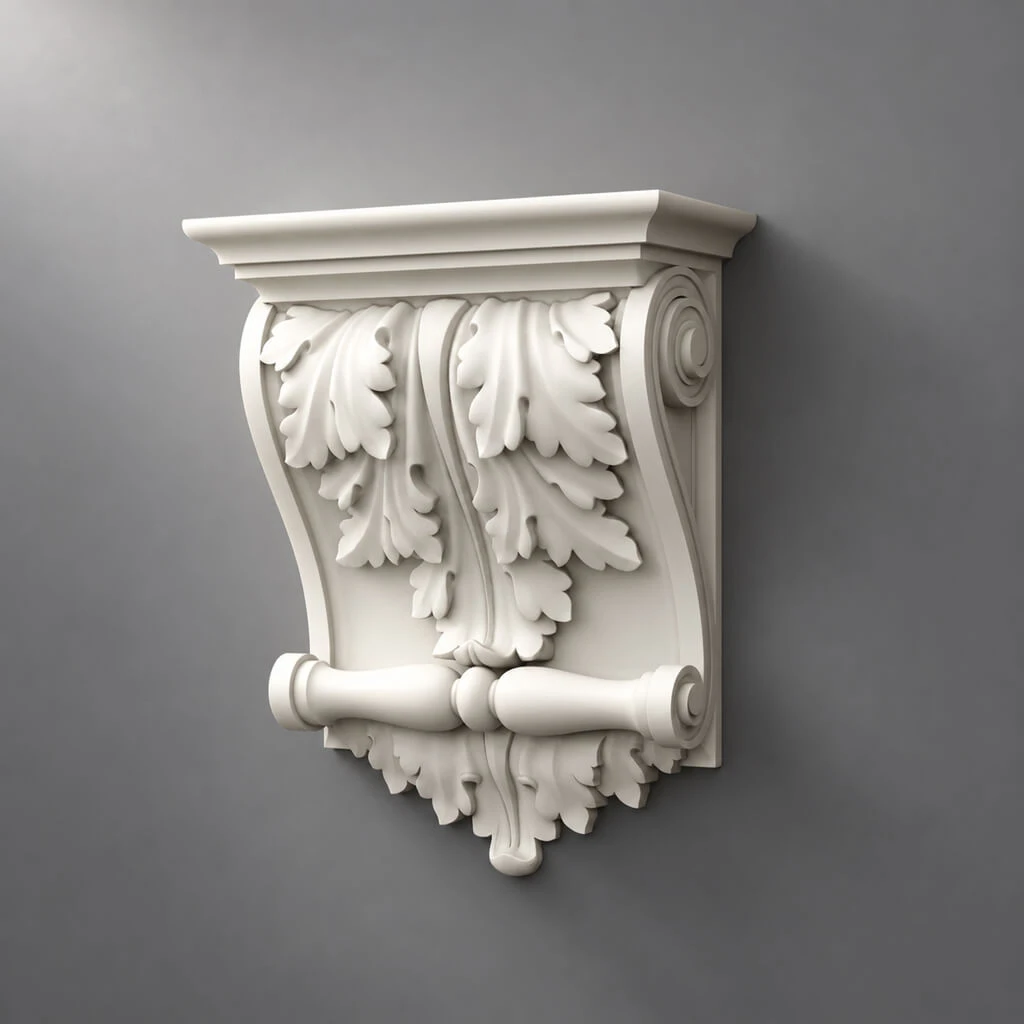
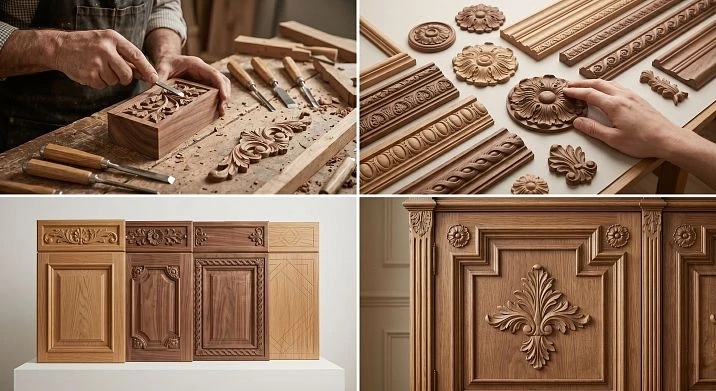
Carved furniture decor — these are ready-made wooden elements that are attached to the surface of facades, doors, drawers, side panels, and cornices. They turn an ordinary cabinet into an object worthy of an interior with history. They make a chest of drawers — a chest of drawers with a face. A sideboard with properly selected overlays and moldings ceases to be "just storage" and becomes a furniture accent of the living room.
This article is a detailed professional analysis: what elements are included in furniture decor, how to choose them, how to compose them, how to avoid mistakes, and how to turn ordinary furniture into expensive, expressive, and stylish pieces.
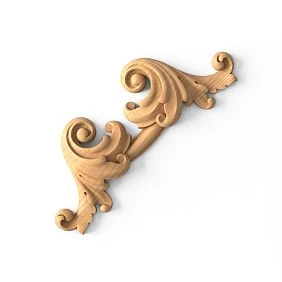

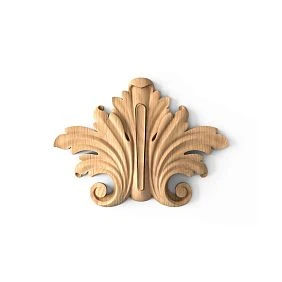
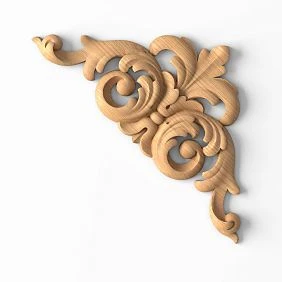
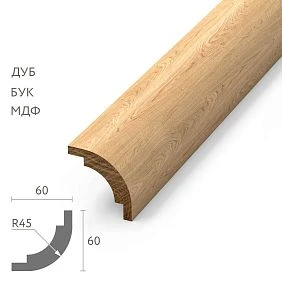
What is carved furniture decor: essence and purpose
Before choosing, you need to clearly understand what exactly is being chosen. Because the word "decor" often implies different things—from upholstery nails to stucco cornices.
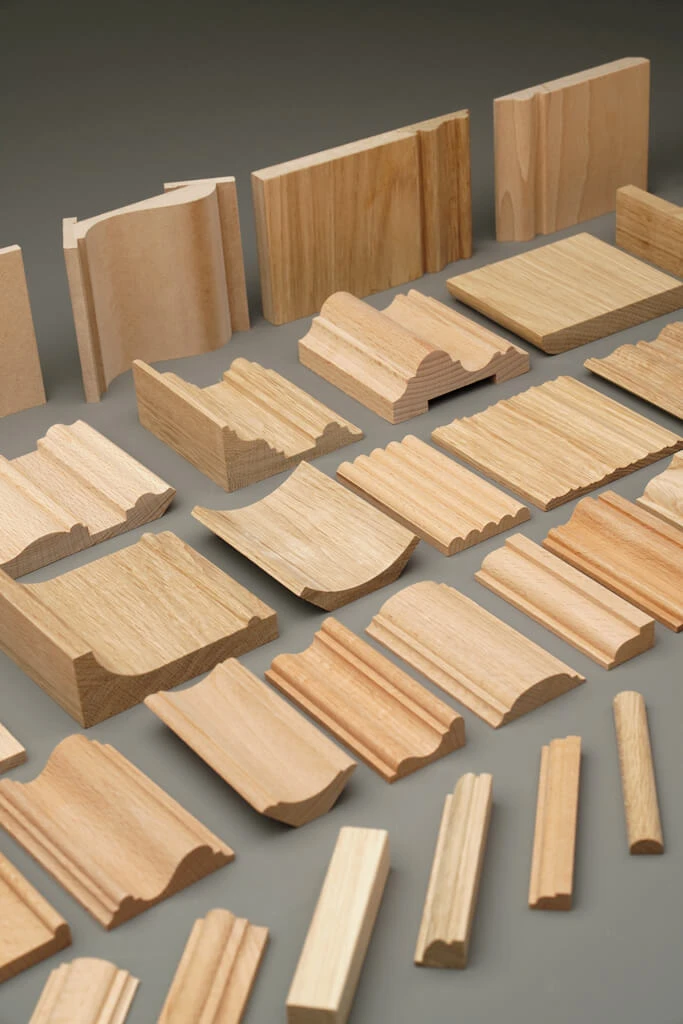
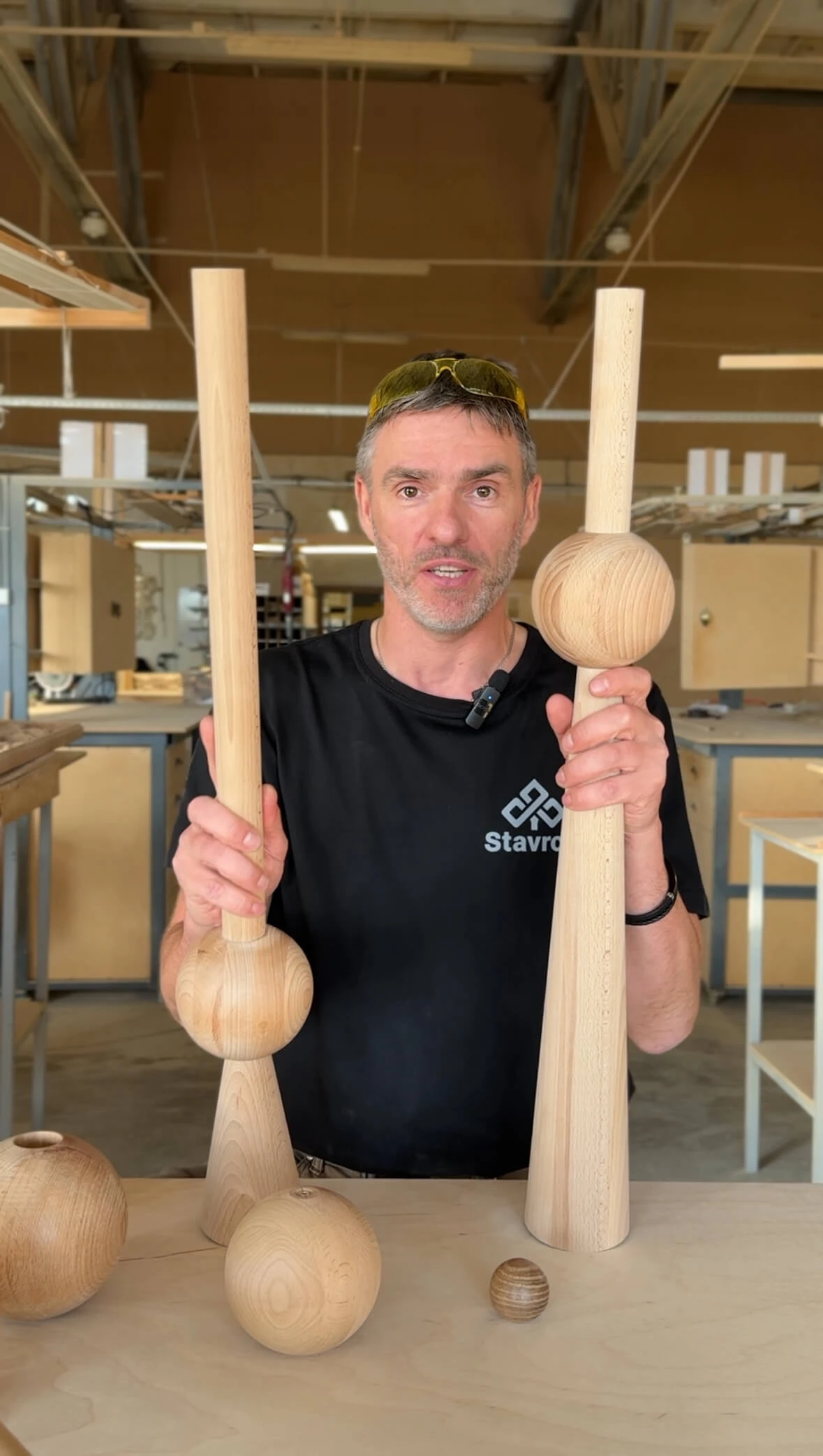
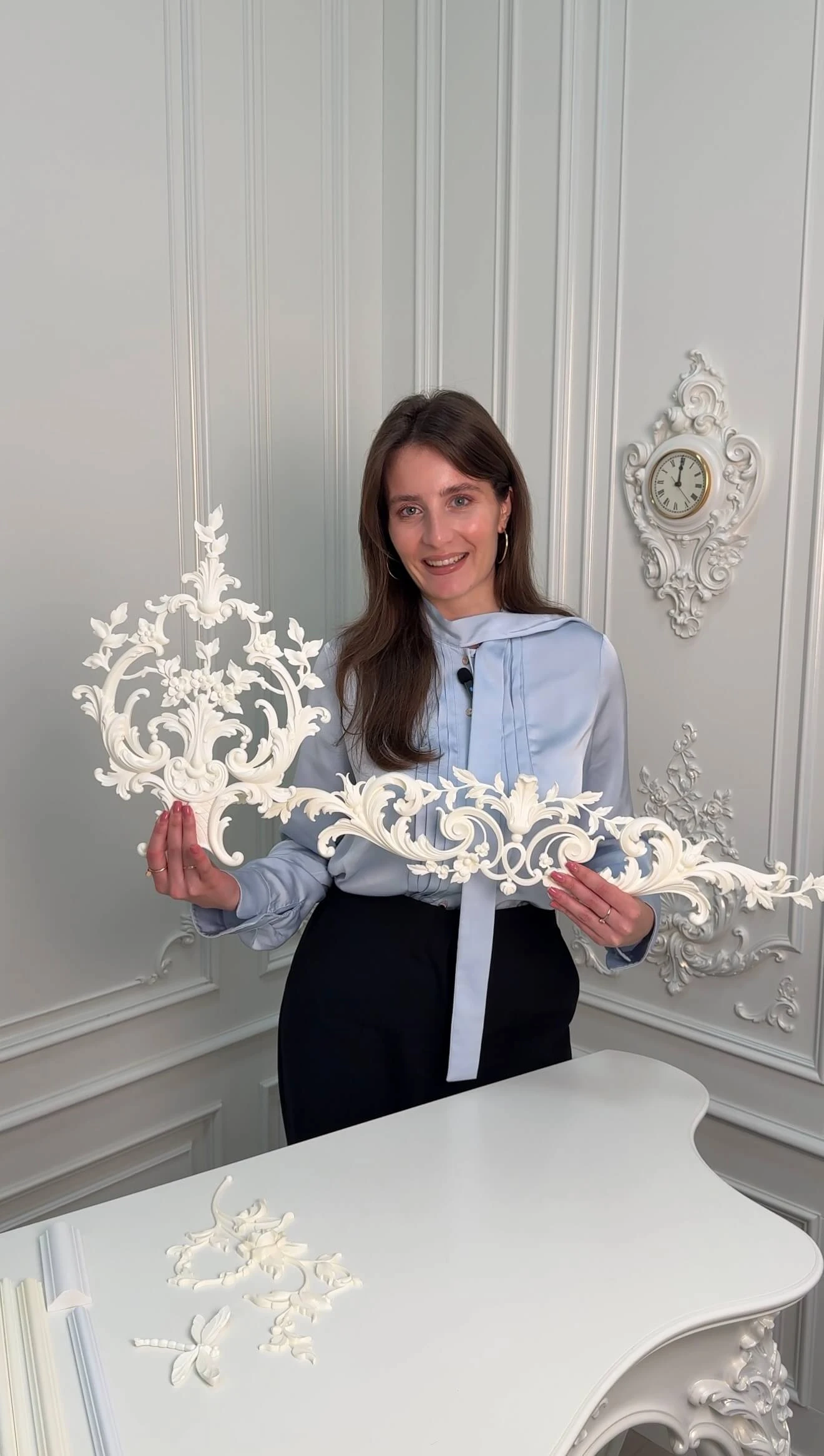
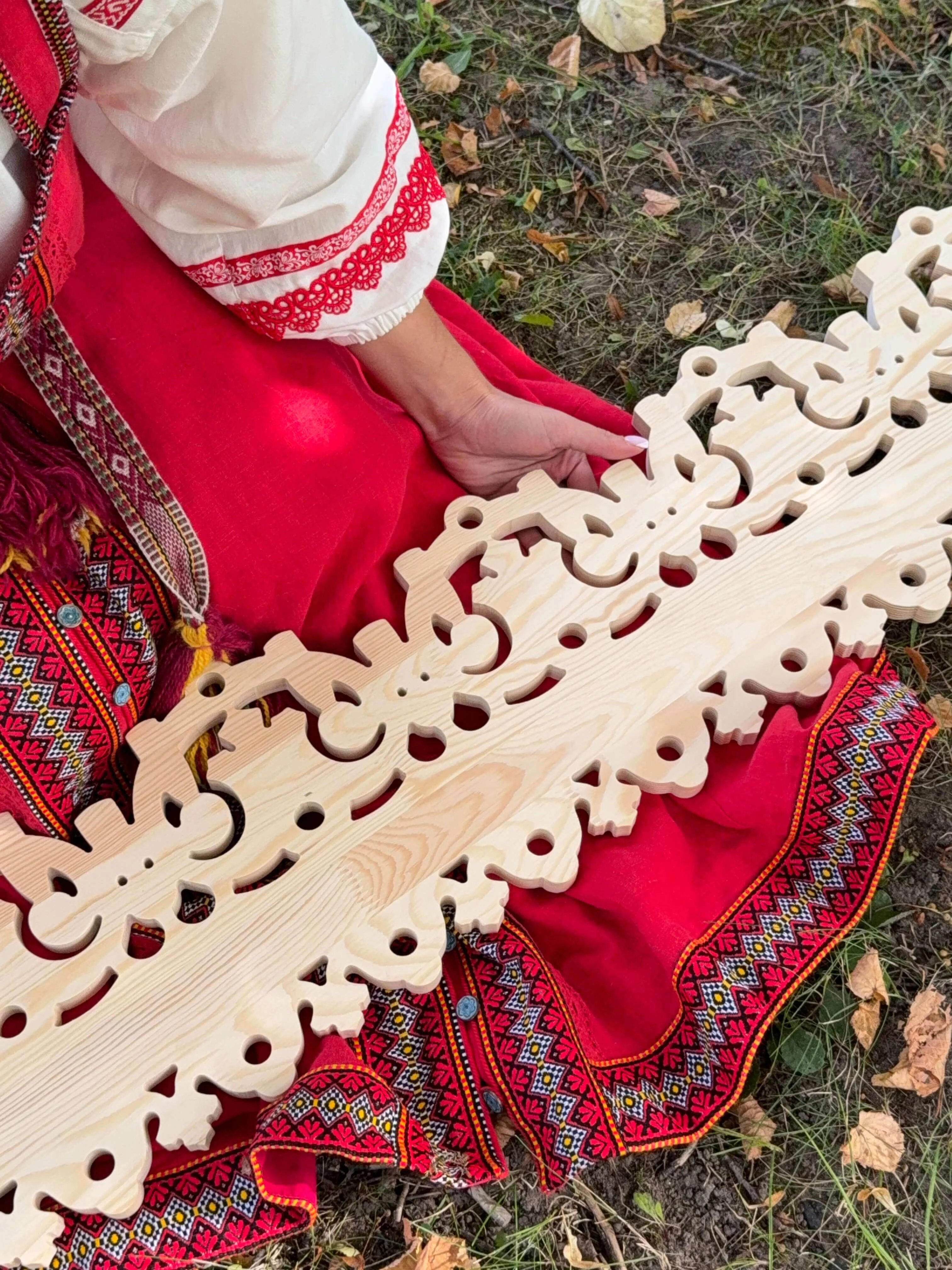
Ready-made wooden elements for facades
applied decoration for furniture —this is not painting, engraving, or material texture. These are three-dimensional elements made from solid wood that:
-
are manufactured separately from the furniture;
-
are attached to the facade with glue, screws, or special fasteners;
-
create relief, shadow, and decorative depth on a flat surface;
-
can be finished to match the furniture or as a contrasting accent.
This is a fundamental difference from milled decor (which is cut directly into the facade body) and from appliqués (which are glued on without volume). Overlay carved elements create real relief—with shadows, tactile depth, and a sense of craftsmanship.
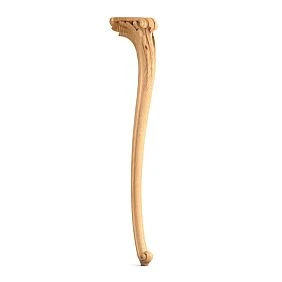
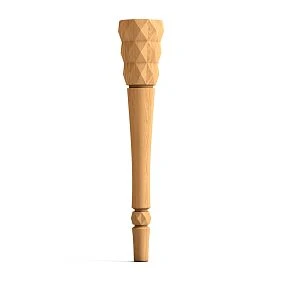
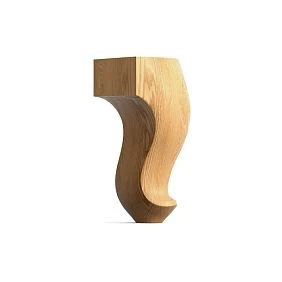
Our factory also produces:
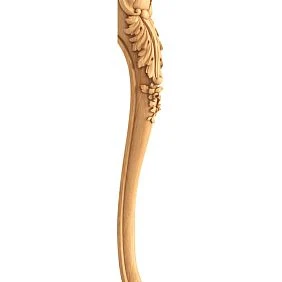
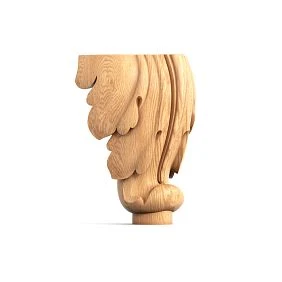

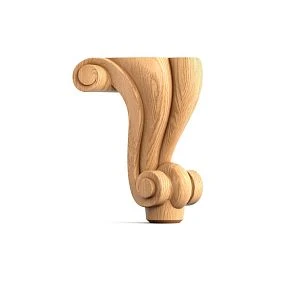
Who needs this
wooden furniture appliqués — a product for several customer categories.
Furniture makers and carpenters use ready-made carved elements instead of doing hand carving themselves. This saves time without losing decorative quality.
Interior designers select overlays, rosettes, and moldings for furniture projects in classic, neoclassical, or traditional styles — when decorative depth is needed without ordering handcrafted work.
Furniture owners — restorers who want to update an old cabinet or chest, add decor to a smooth facade, or recreate missing elements.
Manufacturers of case furniture — who include applied decor as a finishing option in their products.
Get Consultation
What elements are included in carved furniture decor
Carved furniture decor is not one type of product, but a whole system of elements. Each solves its own task in the decorative composition of the facade.
Carved Appliqués
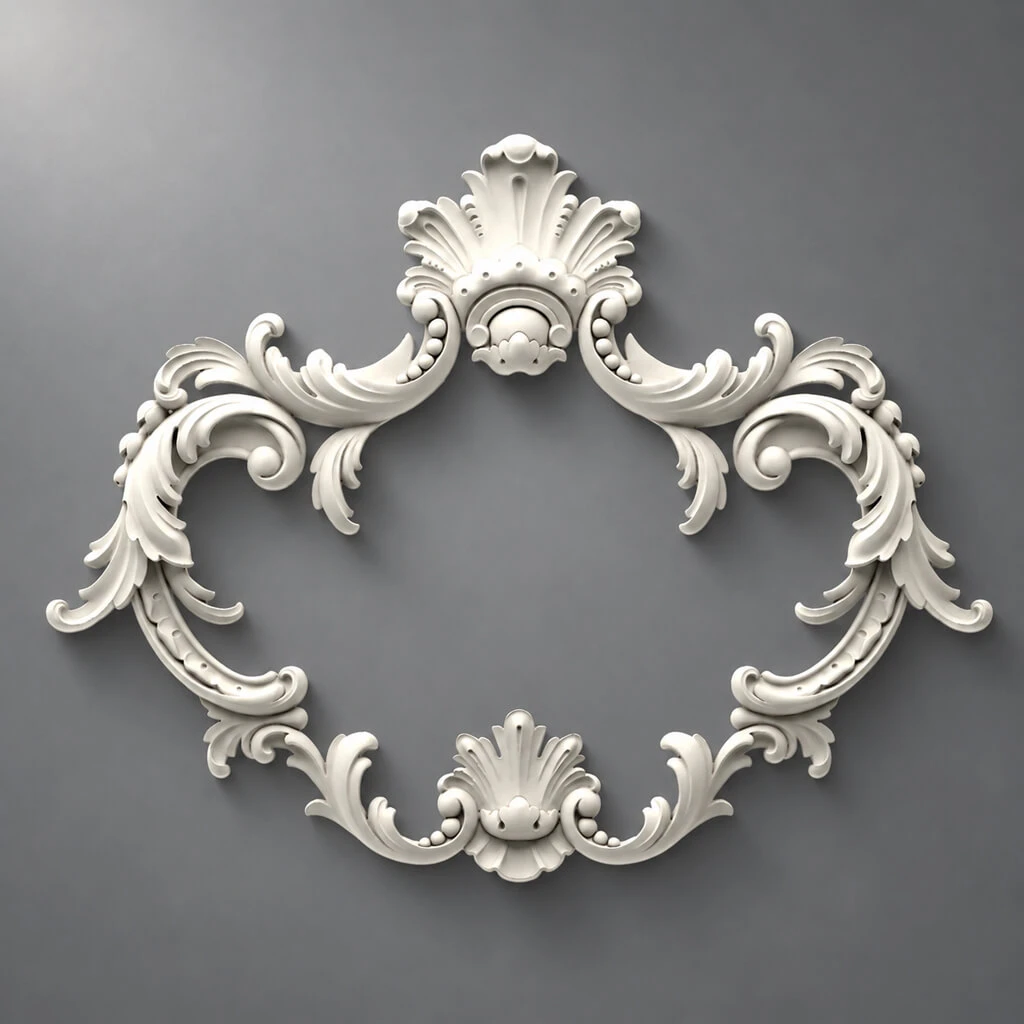
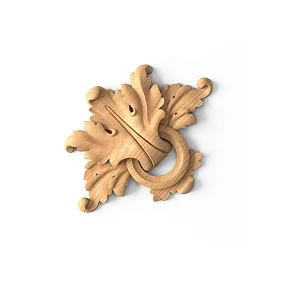
Flat or relief elements with an ornament that are attached to the central or corner area of the facade. They can be symmetrical (central overlay on a door) or asymmetrical (decorative element in one corner).
Overlays are:
-
Rectangular — for vertical and horizontal areas of the facade.
-
Oval and round — for the center of the door or as a separate decorative accent.
-
Figural — repeating the silhouette of a leaf, cartouche, or medallion.
Thickness of overlays: from 8 to 25 mm depending on the relief of the ornament.
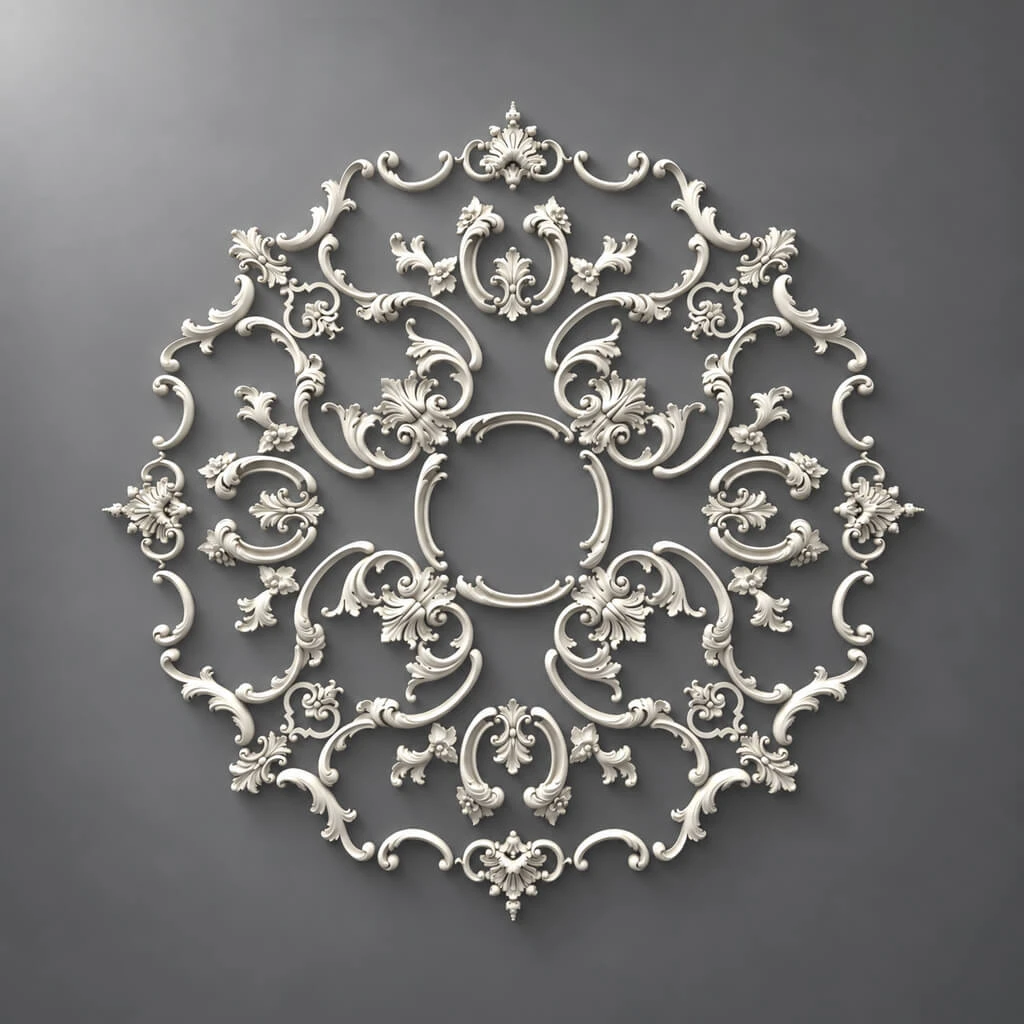
Decorative rosettes
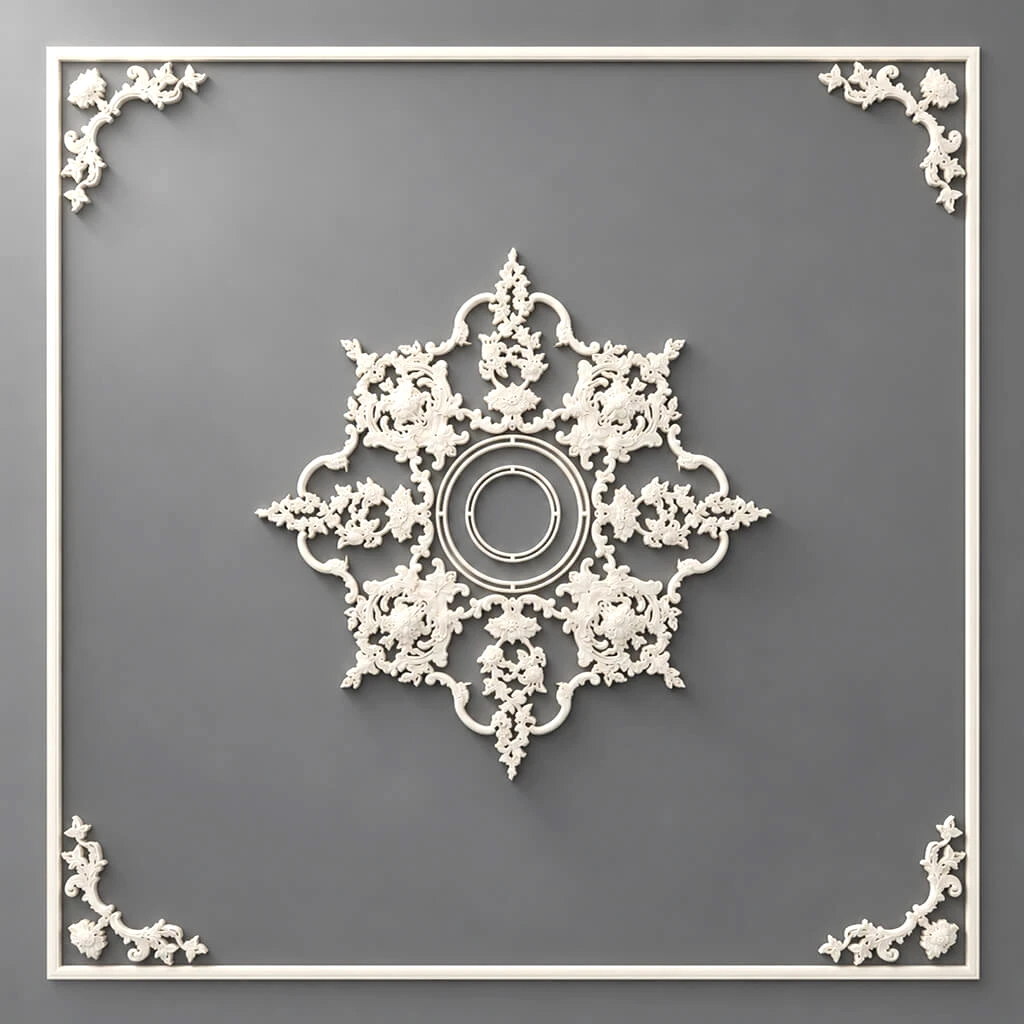
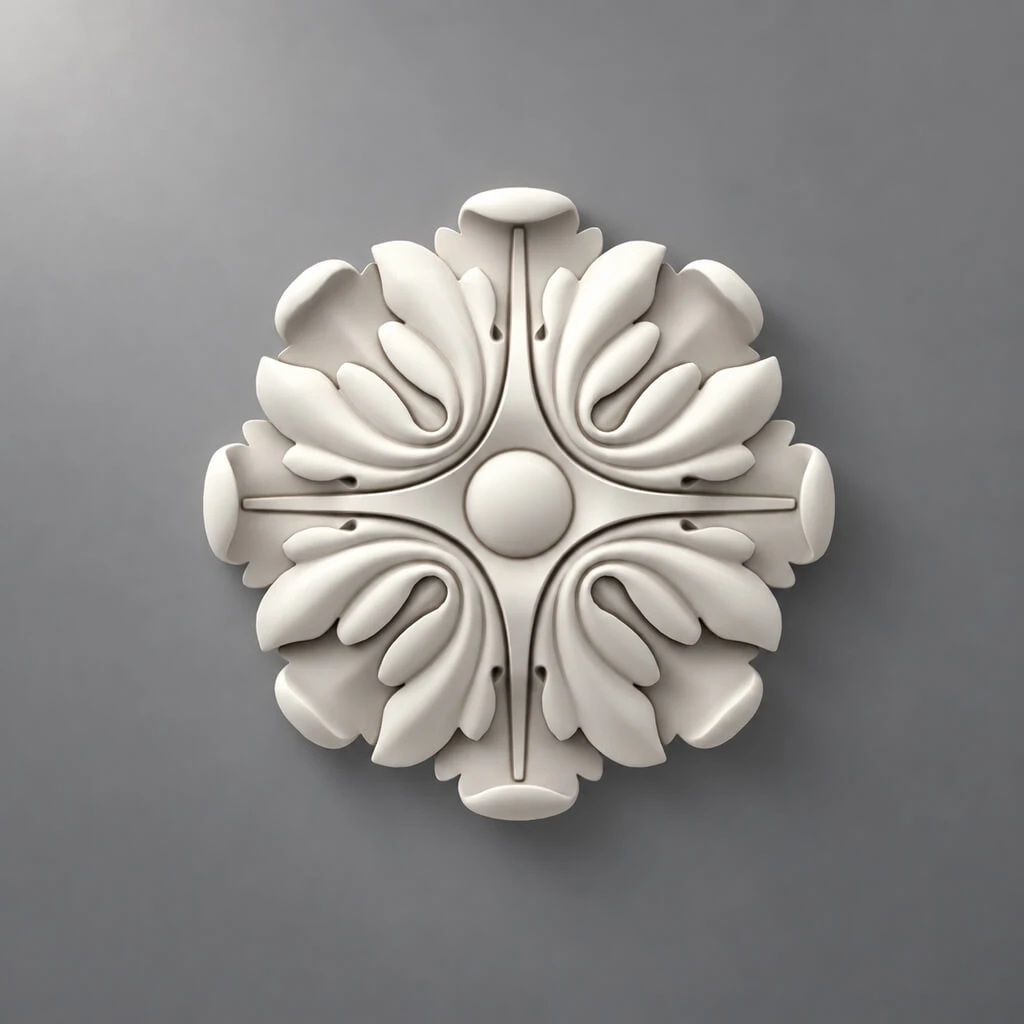
Furniture rosette — a round or polygonal central element with a radial ornament. This is a "solar" motif: petals, rays, curls radiating from the center.
Rosettes are installed:
-
in the center of a cabinet or sideboard door;
-
at the intersection of molding frames;
-
as a corner element of a decorative frame;
-
in the center of a drawer front.
Diameter of furniture rosettes — from 60 to 200 mm. Small (60–80 mm) — for dresser drawers, large (120–200 mm) — for cabinet and sideboard doors.
Corner elements
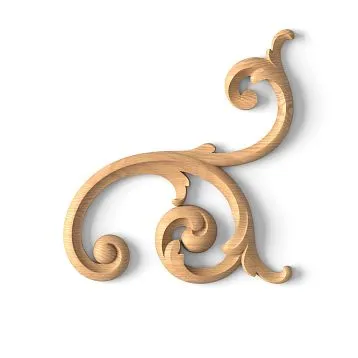
Decorative corner overlays for facade corners: L-shaped, with ornament on both "wings". Installed on four corners of a door or drawer — create a frame effect without continuous molding.
Corner elements work well paired with a central overlay: 4 corners + 1 central piece = a complete decorative scheme.
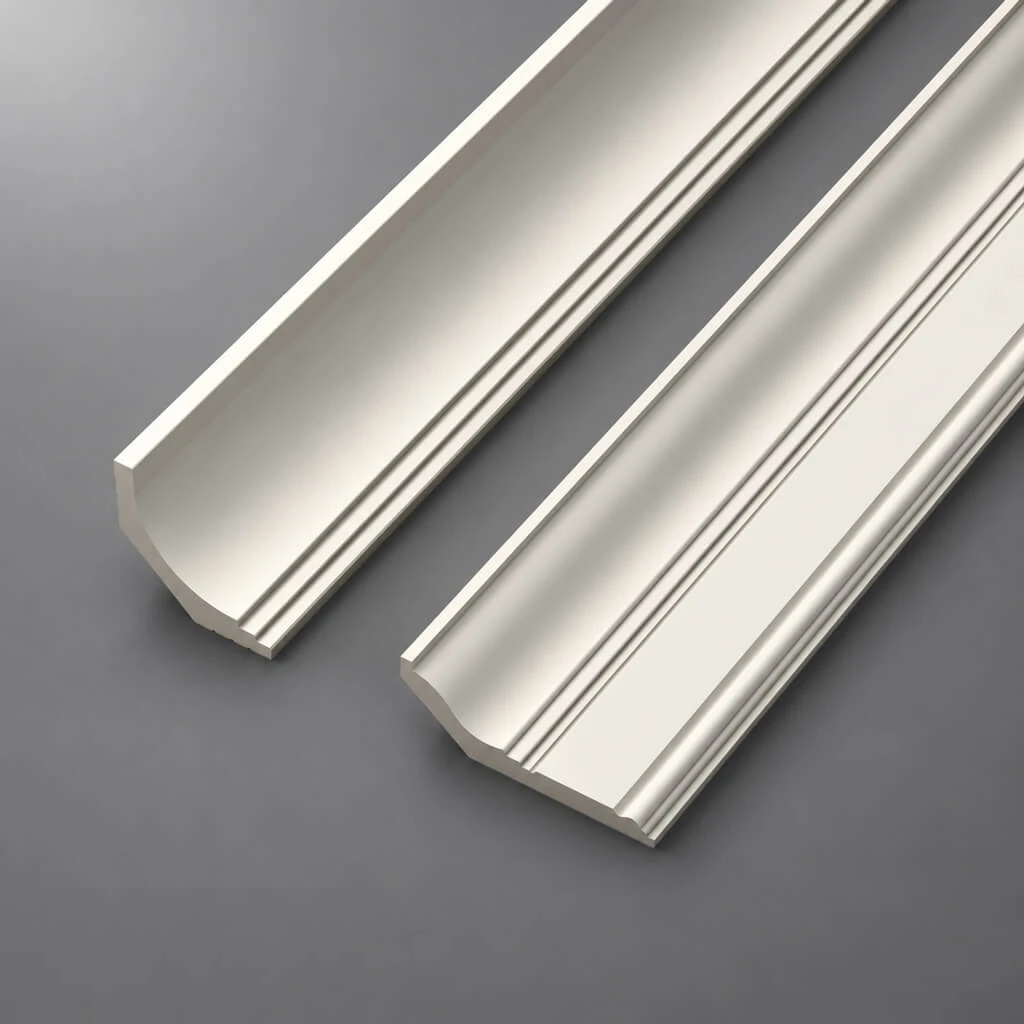
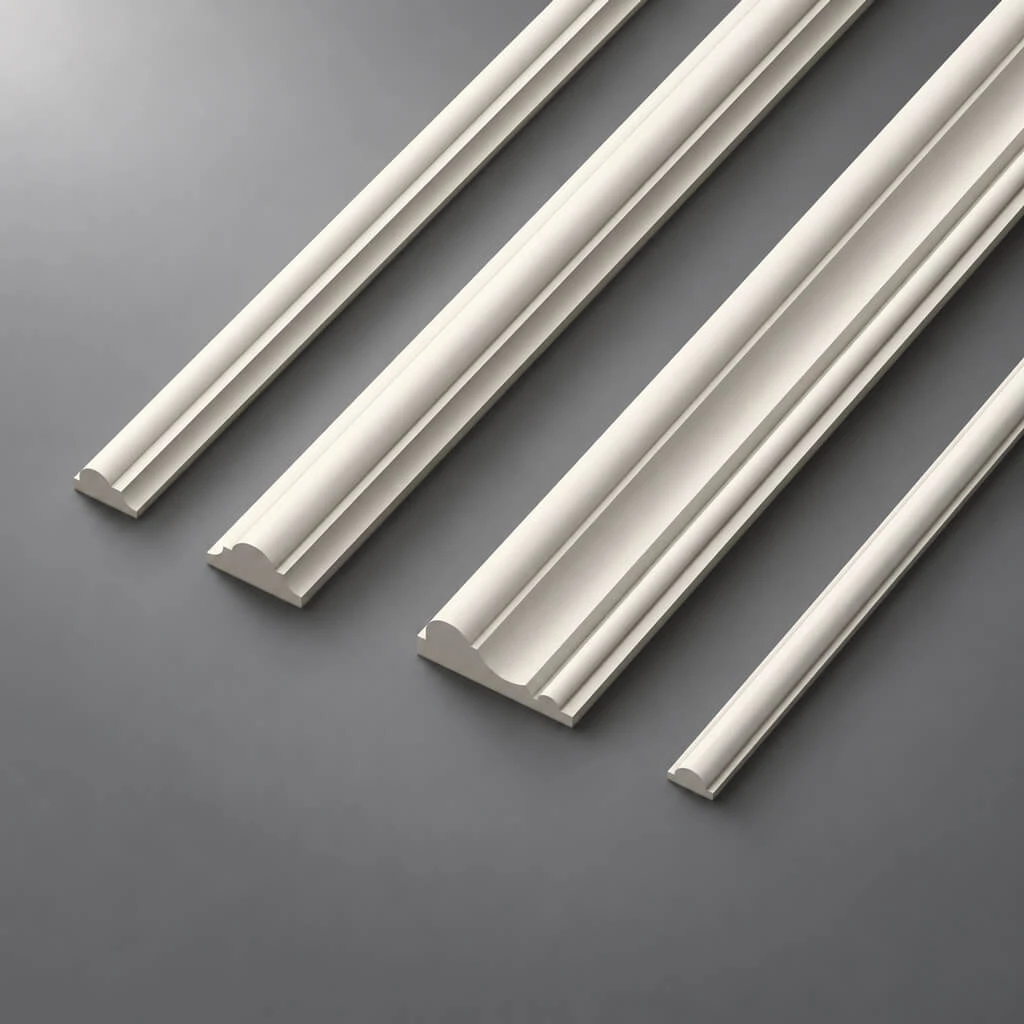
Moldings for furniture
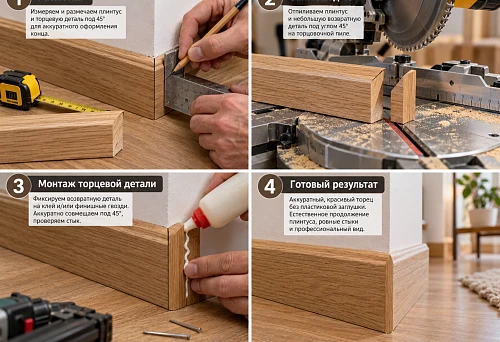
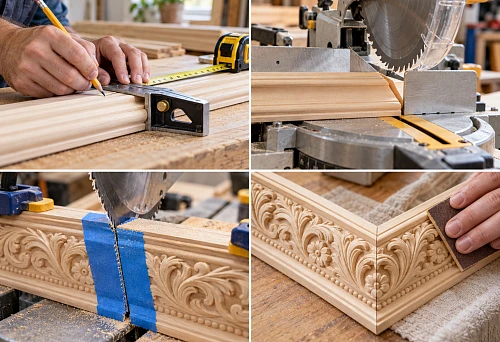
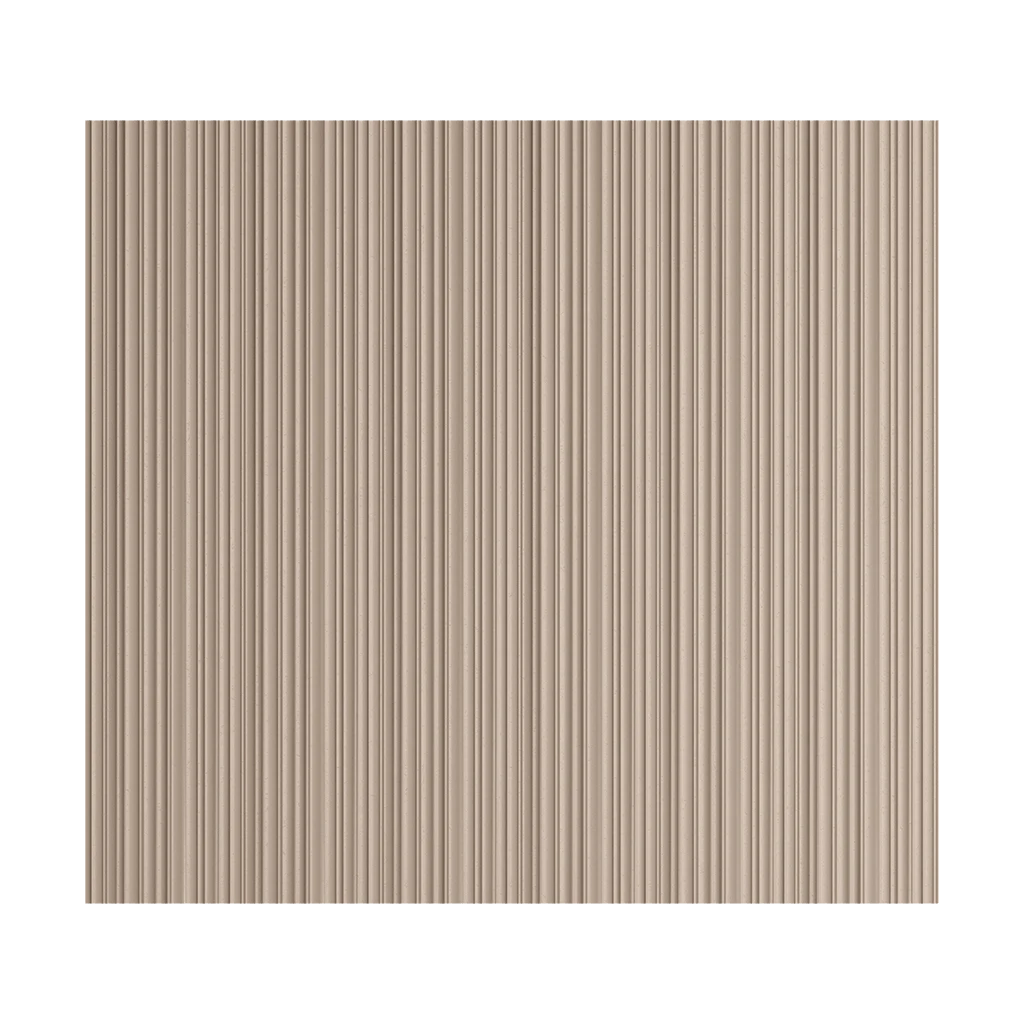
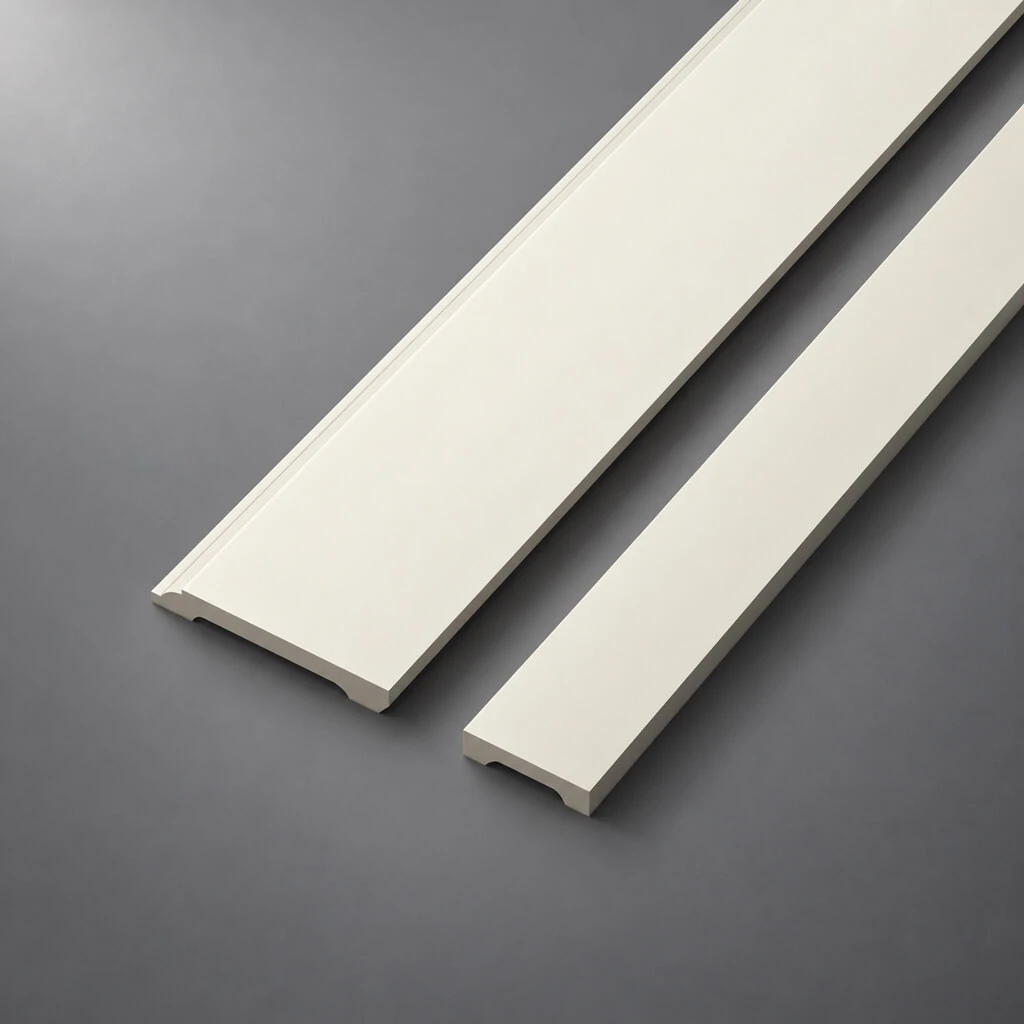
Moldings for furniture — profiled wooden slats that are mounted along the perimeter of the facade, creating a frame effect. Unlike shaped overlays, molding is a linear element: it is cut to length, joined at corners at 45°.
Molding on a furniture facade:
-
Divides the plane into zones (horizontal molding in the middle of the door).
-
Creates a frame around the central area or insert.
-
Emphasizes the contour of the facade along the perimeter.
-
Imitates a paneled construction on a flat facade.
Molding profiles: straight, semicircular, with quarter, with double bead, with astragal, classic "ovolo" and "cavetto".
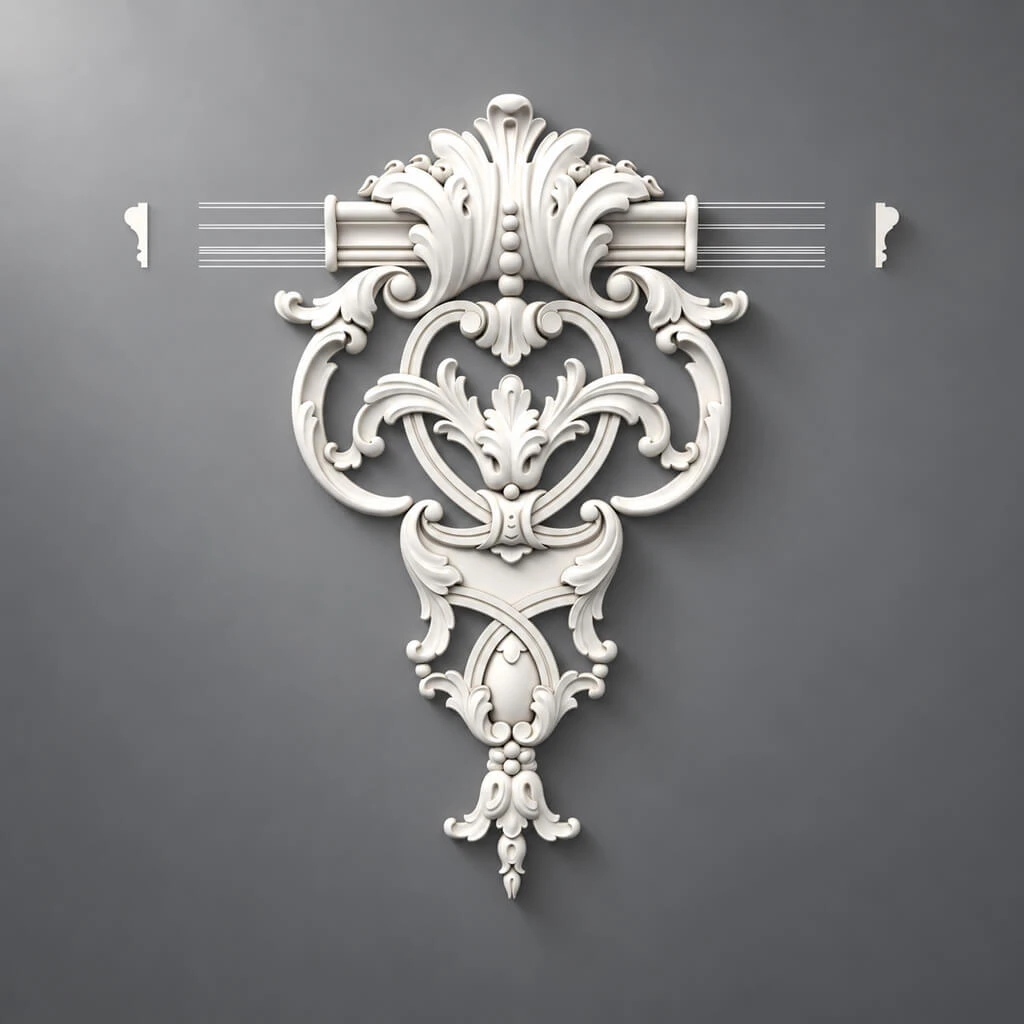
Central ornaments and medallions
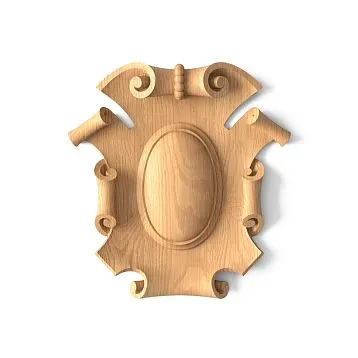
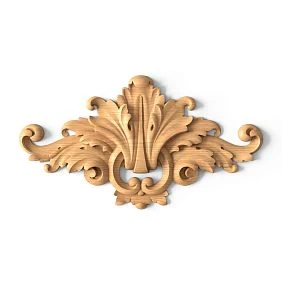
The central ornament is a larger and more complex version of the overlay. It can be a cartouche, medallion, heraldic motif, floral composition, or intricate plant ornament. It is installed in the center of a large cabinet door, sideboard, or display case.
The central ornament is the "soloist" of the decorative scheme. There should be only one: if there are two, they compete.
Decorative belts and friezes
Horizontal relief strips with a repeating ornament: running meander, garland, wave, row of petals. They are installed on horizontal areas of furniture: the upper cornice of a cabinet or sideboard, the horizontal belt between sections.
Carved inserts for frame facades
For frame (panel) facades, carved inserts are used, which are placed in the recessed panel. This is a full-fledged carved element — only the front side is visible, the edges are hidden by the frame.
How carved decor differs from regular furniture fittings
This is a fundamental question — and not just theoretical. In practice, this means that when furnishing furniture, decor and fittings perform different tasks and are selected according to different criteria.
Function vs. decor
Furniture fittings — hinges, locks, guides, confirmats, ties — are functional elements. They are needed for the furniture to work: open, close, hold, move.
Carved wooden decoration is solely responsible for the appearance. Without it, the furniture functions the same. With it, it looks completely different.
Decor as an investment in furniture value
Correctly chosen Carved furniture decor actually increases the perceived value of the product. A cabinet made of laminated chipboard with properly selected wooden overlays for painting will look significantly more expensive than its actual price. This is not an illusion — it is the laws of visual perception: relief, shadow from the overlays, and the quality of carving signal a "masterpiece" product.
Decor as a language of style
Each ornament speaks its own language. Acanthus leaves and volutes are the language of classicism. Geometric repeating motifs are Art Deco. Stylized flowers and leaves are Provence and country. A strict meander is Empire and neoclassicism. Before choosing overlays, determine the style — otherwise the "vocabulary" of decor will be mixed.
Carved decor for a cabinet: how decor works on a large facade
A cabinet is one of the main objects for applying furniture decor. The large facade area, several doors, visible side panels, cornice, and base — all these are zones where decor works.
Cabinet facade decor scheme
A professional cabinet facade decorating scheme is built on the principle of hierarchy: there is a main accent and supporting elements.
Upper belt (cornice, frieze): Molding or a decorative frieze along the top horizontal line — completes the cabinet, creates a "crown" of the structure.
Doors: central overlay or rosette + corner elements at the four corners of the door + molding along the door perimeter. This is a standard "classic" scheme.
Horizontal belt: if the cabinet consists of an upper and lower part — decorative molding along the dividing line creates a visual horizontal line.
Side panels: overlays or molding on visible side panels — if the cabinet stands in an open space, not flush against a wall.
Base: base molding at the bottom completes the lower contour.
How not to overload a cabinet facade
Main rule: decor should create a system, not "fill" the area. One door — one decorative theme (rosette + molding). Do not place a rosette, central overlay, corners, and additional ornament at the same time.
Rule of proportionality: the area of all decorative elements — no more than 25–30% of the facade area. The rest is a "breathing" plane.
Color and coating of decor on the cabinet
Two options:
-
To match the facade — overlays, rosettes, and molding are painted in the same color as the cabinet facade. The decor reads as relief and shadow, not as a foreign element. This is a "factory" look — the furniture is perceived as a single piece.
-
Contrast accent — decor darker or lighter than the facade. For example, a white facade + dark wooden overlays. Or a dark facade + gilded overlays. This is an "author's" technique — bolder and more decoratively complex.
Carved decor for a chest of drawers and cabinet: proportions and symmetry
A chest of drawers is a piece of furniture with several drawers and relatively small facades. Here, the scale of decor is crucial.
Decor of drawer facades
The facade of a chest of drawers drawer is a small rectangular plane: height 150–250 mm, width 400–800 mm. On such an area, a large central ornament will look heavy. The following work:
-
Small horizontal overlays (length 100–200 mm) centered on the drawer facade.
-
Small corner elements at the corners of the facade.
-
Molding along the perimeter of the drawer facade.
Key: each drawer must be decorated identically — full symmetry from drawer to drawer. Different overlays on adjacent drawers is a common mistake that creates a feeling of a "mixed bag".
Handles, legs, and decor: a unified ensemble
A chest of drawers is decorated not only with overlays. wooden furniture handles и wooden furniture legs — part of the same decorative ensemble.
A carved overlay on the facade + a wooden handle in the same style + a turned leg — this is a system. They must be from the same wood species, in the same tone, and in the same decorative "vocabulary."
If the overlay is classic with an acanthus leaf — the handle should be of a classic shape, the leg turned. If the overlay is geometric — the handle is minimalist, the leg straight.
Decor of a bedside table
A bedside table is a small item: one or two doors, one or two drawers. Here the principle of minimalism works especially clearly. One small element on the facade — a rosette with a diameter of 60–80 mm or a molding around the perimeter — is enough. An overloaded table looks ridiculous.
Decor for a sideboard and display cabinet: a classic look
A sideboard and display cabinet are furniture with a rich history. They store dishes, display collections, and create a formal "center" of the living room or dining room. It is for this furniture that decor is especially important.
Upper part of the sideboard: the crown of the decorative scheme
The top part of the sideboard is the "head" of the piece. Suitable here:
-
Cornice Molding along the upper contour — creates a finished silhouette.
-
Frieze with decorative band — a horizontal zone with a repeating pattern.
-
Central ornament or cartouche — above the central section.
Glass display doors: frames and corner elements
Display doors with glass are a special case. Here, molding works as a frame around the glass, giving the door an architectural look. Corner overlays at the corners of the glass door are a traditional technique for classic display cases.
Important: overlays on the glass door should be low in relief — so as not to overload the lightweight structure and not to "eat up" visibility through the glass.
Lower part of the sideboard: base and plinth
The lower part of the sideboard is the base of the piece. Here:
-
Base molding along the lower perimeter.
-
Overlays on the lower doors are slightly more modest than on the upper ones (hierarchy decreases from top to bottom).
-
Decorative legs or support base.
A mistake is when the lower part is decorated more richly than the upper part: the eye goes down instead of up to the main thing — the display case with the collection.
How to choose a carving style: a dictionary of ornaments
Carving is a language. Each ornament carries a visual signal. Choosing the right carving style is half the success of the decorative scheme.
Classic and neoclassical: acanthus, volute, meander
The most common ornamental language for furniture decor. Acanthus leaf is a symbol of classical architecture and furniture. Volute (spiral) is a motif of the Ionic capital that has passed into furniture decor. Meander is a geometric endless line.
For furniture in classic, neoclassical interiors, for halls, living rooms with stucco — this is the basic choice.
Floral ornament: Provence, country, eco
Stylized flowers, leaves, branches, grapevines — for soft, "living" interiors. Provence, country, Scandinavian natural style. The ornament here is less strict, more organic.
Such overlays look good under white or milk enamel — like French country furniture.
Geometry: Art Deco and Modern Classic
Diamonds, checkerboard motifs, concentric rectangles, zigzags — for furniture in Art Deco, Art Nouveau, or modern design with a decorative accent. Geometric decor is more strict and restrained, works well paired with metal elements.
Russian style and folk carving
Berries, weaves, trefoils, diamonds with dots — traditional Russian ornaments. For furniture in Russian style, for rustic interiors, for dachas and country houses with a national character.
Baroque and Rococo: richness and complexity
Complex asymmetrical compositions with scrolls, shells, cartouches, putti. For formal furniture, for rich living rooms, for interiors with architectural excesses. This is the most decorative and complex level.
How to choose the size of decorative elements
The size of overlays and ornaments is a proportional task. There is no "correct" size in absolute numbers — there is a correct ratio to the facade.
Decor scale table
| Front size | Matching element | Approximate size |
|---|---|---|
| Drawer front (150–200 × 400–500 mm) | Small overlay or rosette | 60–100 mm |
| Chest drawer front (200–250 × 500–800 mm) | Medium overlay, molding | 100–180 mm |
| Cabinet door (400–500 × 700–900 mm) | Medium-large rosette, molding | 120–200 mm |
| Sideboard door (500–600 × 900–1200 mm) | Large ornament, medallion | 180–280 mm |
| Upper part of the sideboard (800–1200 mm width) | Central cartouche + cornice | 250–400 mm |
The 'one-fifth' rule
The central overlay on the door should not occupy more than 1/5 of the facade area. If the facade is 500 × 800 = 400 cm² — the overlay is no more than 80 cm² (≈ 89 × 89 mm per side). This is not a strict standard, but a good rule of thumb.
Element thickness: relief and installation
Overlay thickness: 8–25 mm. Thin (8–12 mm) — for MDF and laminated chipboard facades, where the overlay is glued: the relief is readable but does not create a 'protrusion'. Medium (12–18 mm) — for solid wood facades. Large (18–25 mm) — for formal sideboards and display cases where pronounced relief is needed.
Decor for painting: how to make the overlay a 'part' of the facade
One of the most effective techniques for modern use of carved decor is painting the entire furniture in a single color with the decor. The result is a facade that looks like a factory-made product with three-dimensional details.
Why this works
When furniture and decor are painted the same color, the boundary between the facade and overlay visually disappears. Only relief and shadow remain. The eye perceives this as a single surface with three-dimensional decor — like stucco or carved wood within the facade body.
This is the technique used in expensive furniture from Italy and France: a smooth white facade + white moldings + white overlays = a unified decorative system.
Preparing decor for painting
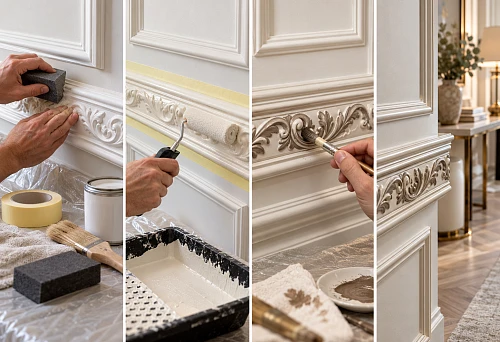
wooden furniture appliqués without coating — ready for final finishing. Sequence:
-
Mounting overlays on the facade (PVA glue or wood glue + screws with countersunk heads, filling holes with putty).
-
Priming the entire facade with overlays in 2 coats.
-
Sanding after the primer dries.
-
Enamel in 2–3 coats.
Result: a facade with three-dimensional decor, indistinguishable from a professional factory-made product.
Choosing a color for decor to paint
-
White and cream — for classic, Provence, neoclassical styles.
-
Gray and graphite — for modern classic and neoclassical in a dark palette.
-
Sage green — for Provence, country, and modern eco-interiors.
-
Midnight blue — for bold design solutions in modern classic.
-
Natural wood tone under varnish — to preserve the wood texture as an accent.
How to combine decor with handles, legs, and other elements
Carved furniture decor — is part of a broader decorative system. It should align with handles, legs, moldings, and the overall interior style.
Decor and handles: one style — a unified look
A carved overlay on the facade and a wooden handle — a visual pair. wooden furniture handles in the classic style with classic overlays create an organic unity. A knob handle with a floral ornament + a matching overlay with the same ornament = a strong decorative statement.
Error: metal handles in "high-tech" style + classic carved overlays. This is a conflict that cannot be "reconciled" by any color.
Decor and legs: connection through form
wooden furniture legs — lower accent. A turned leg with a classic profile + classic applied decor + classic molding = consistent decorative logic. A straight modern leg + a carved classic overlay = dissonance.
Decor and moldings: volume and rhythm
Molding and overlays complement each other. Moldings for furniture create a linear rhythm of the facade, overlays create a point accent. Together they form a hierarchy: line + accent. This is the basic decorative structure of any classic furniture facade.
Mistakes when choosing carved decor for furniture
Let's analyze each mistake specifically — because it is these mistakes that "kill" the decor even with good source material.
Buying elements without a facade scheme. You cannot buy overlays "by eye" and then figure out where to hang them. First — draw a facade scheme to scale, mark the decor zones, check proportions. Then — buy.
Mixing different ornaments on the same piece of furniture. Acanthus leaf + geometric meander + floral ornament on one dresser is not "richness", it is stylistic confusion. One ornamental language — one piece of furniture.
Placing large overlays on small doors. An overlay that occupies 40–50% of the drawer front area overloads it. The scale of the decor should be proportionate to the facade.
Ignoring handles and legs. The decor is considered in isolation from the rest of the furniture — and as a result, it doesn't fit. Overlays should be chosen together with handles and legs, as a system.
Forgetting about symmetry. Decor on furniture is not avant-garde. Overlays, rosettes, and moldings should be arranged symmetrically on all similar facades. One drawer with an overlay and the next without it is unacceptable.
Not checking the thickness of the element. An overlay that is too thin on a thick facade gets lost. One that is too thick sticks out and looks glued on. Check the proportion: the thickness of the overlay should be no more than 1/4 of the facade thickness.
Not planning the painting before installation. If the furniture will be painted after the decor is installed, all mounting holes must be filled and joints treated with putty. If painting the overlays separately, an exact match with the facade tone is required.
Choosing decor without connection to the furniture style. Baroque cartouches on furniture in a simple Scandinavian style are not serious. First, the style, then the choice of ornament.
Carved decor for furniture restoration
A separate and highly sought-after topic is the use of wooden decor for restoring old furniture.
Recreating lost decor
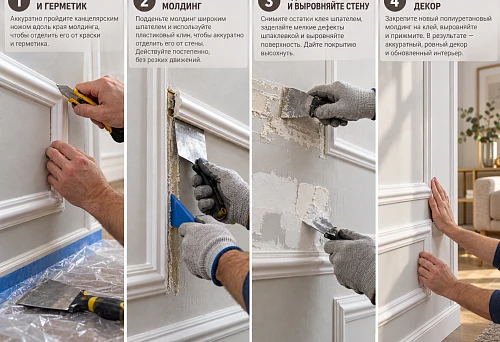
Old sideboards, chests of drawers, and cabinets often lose decorative elements: a rosette is broken off, an overlay is missing, molding has crumbled. Ready-made wooden furniture appliqués и Moldings allow restoring the decorative scheme without manual carving.
Selection principle: the closest possible ornament, the same wood species or one with a similar texture, the same scale. After installation and painting, a single coating makes the old and new indistinguishable.
Updating modern furniture with classic decor
A smooth chipboard facade with a wood finish is a common option for inexpensive furniture. Adding wooden decor for painting radically changes the appearance: the facade begins to read as classic.
This is a perfectly legitimate design technique: to elevate cheap furniture to the level of an expensive style product using properly selected decor and a single coating.
Where to buy carved decor for restoration
Carved wooden decoration for restoration and decoration — in the STAVROS catalog. Nearby — Wooden Inlays, Moldings for furniture, Handles и Legs — everything you need for a complete renovation or restoration of furniture in one place.
FAQ: Answers to popular questions
What is included in carved decor for furniture?
Carved overlays, decorative rosettes, corner elements, central ornaments, moldings, decorative belts and friezes. Each type of element solves its own task in the decorative scheme of the facade.
Which overlays are suitable for furniture facades?
Depends on the facade size: for cabinet drawers — small (60–100 mm), for wardrobe and sideboard doors — medium and large (120–280 mm). Shape — rectangular, oval, figured — according to the furniture style.
Can wooden furniture decor be painted?
Yes. Uncoated wooden overlays are specifically for finishing. Primer + enamel in 2–3 layers. Painting together with the facade gives a "factory" look of a single product.
How to choose decor for a wardrobe?
Determine the style, select the size of overlays proportional to the facade, create a layout: central element + corner overlays + molding around the perimeter. One decorative scheme — one door.
Which elements are suitable for a chest of drawers?
Small horizontal overlays, small corner elements, molding around the drawer perimeter. One type of decor for all drawers. Coordinate with handles and legs.
How does carved decor differ from furniture fittings?
Fittings — function (open, fasten). Carved decor — appearance (relief, shadow, style). They work together but are selected based on different criteria.
How not to overload the facade with carved elements?
Rule: decor occupies no more than 25–30% of the facade area. One ornamental language. One main accent + supporting elements. The smaller the facade, the more modest the decor.
How to combine decor with handles and legs?
Same wood species, same ornament style, same tone. Choose handles, legs, and overlays as a system — from one catalog.
Is carved decor suitable for furniture restoration?
Yes, this is one of the main use cases. Ready-made overlays allow you to restore lost decor or update a smooth facade without hand carving.
Where to buy carved decor for furniture?
In the STAVROS catalog: Furniture Decoration from Wood — overlays, rosettes, corner elements, Moldings, Carved Decor with delivery across all of Russia.
About the manufacturer
STAVROS is a Russian manufacturer of solid wood products for furniture and interiors. The catalog includes a full range for furniture decoration: Carved furniture decor, Moldings, Carved wooden decoration, Furniture Handles, furniture legs и Wooden products for interior — everything for creating, updating, and restoring furniture with professional results. Contact us to confirm shipping to your destination.