






























Article Contents:
- What to consider when choosing panels: Krasnoyarsk specifics
- Climate as a technical parameter
- Warmth as the main value of the Krasnoyarsk interior
- Air quality in the room
- Wall panels: choice of material and construction
- Living room: architectural accent and visual warmth
- Bedroom: silence, warmth and tactile quality
- Children's room: safety and play opportunities
- Kitchen and kitchen-dining room: practicality in priority
- Niches and built-in structures
- Ceiling Panels: Different Rules of the Game
- Slatted Ceiling as an Architectural Solution
- Partial Slatted Ceiling and Zoning
- Partitions Made of Slatted Panels
- Polyurethane Moldings: Architectural Decor for Krasnoyarsk Interiors
- Ceiling Cornices: The Essential Minimum
- Moldings: How to Divide a Ceiling Without Drywall
- Decorative Overlays and Medallions
- Baseboards and Pilasters: Spatial Structure
- Combining Linear and Relief Decor: A System, Not Randomness
- Surface Hierarchy
- Vertical and Horizontal: A Geometric Dialogue
- Color as a Unifying Factor
- How to Avoid Stylistic Confusion
- Define the Style First and Foremost
- Scale Compatibility
- The 'Less is More' Principle
- Practical Tips for Selection and Installation
- Calculating the Number of Slat Panels
- Calculating the Amount of Molding Trim
- Installation Order: What Comes First
- Corner Cornice Joints: The Key Technical Point
- Style and Material Compatibility Table for Krasnoyarsk
- FAQ: Answers to Questions from Krasnoyarsk Buyers
- About the Company STAVROS
Krasnoyarsk is a city with character. The harsh continental climate, powerful Siberian architectural tradition, modern residential quarters, and the historic center with merchant houses — all this creates a special context for interior solutions. The lightness of the Mediterranean or the casualness of Scandinavian holiday homes doesn't take root here. Krasnoyarsk interiors are about solidity, warmth, and depth. And it is in this context that solid wood slatted panels andPolyurethane moldingsturn out to be so organic that they seem created specifically for this city.
When a Krasnoyarsk resident searches for 'buy slatted panels in Krasnoyarsk', they are not just looking for a product — they are looking for a solution for a space where they will spend most of their life. The long winter demands a special quality from the interior: warmth, created not only by radiators but also by materials — wood, texture, proper lighting. This article is a detailed guide to choosing slatted panels and polyurethane decor for Krasnoyarsk apartments, houses, and commercial spaces.
What to consider when choosing panels: Krasnoyarsk specifics
Before moving on to materials, you need to understand what exactly makes the choice for Krasnoyarsk special. This is not paranoia or regional snobbery — it's practice: the same materials behave fundamentally differently in different climatic conditions.
Climate as a technical parameter
Krasnoyarsk has a sharply continental climate with temperature ranges from -40 degrees in winter to +35 in summer. For interior materials, this means one critical requirement: stability under significant temperature and humidity fluctuations.
Wood is a living material. It expands and contracts with changes in air humidity. In Krasnoyarsk, the heating season lasts 7–8 months — and all this time the air in apartments and houses is dry. Humidity drops to 20–30%, sometimes lower. When installing solid wood slatted panels, this creates a real risk: if the panels were delivered from a warehouse at normal humidity (12%), and the humidity in an apartment with working heating is 25% — the wood will dry out. The slats will shrink, gaps will increase, and the structure may deform.
What to do: acclimatization in the room is a mandatory and non-negotiable step. Wooden panels must be kept in an apartment with working heating for at least 7–10 days before installation. This allows the wood to reach equilibrium moisture content and stabilize its dimensions before installation.
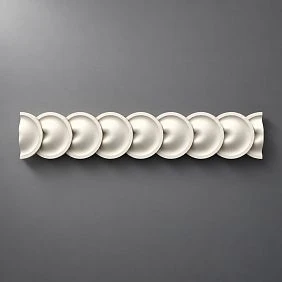
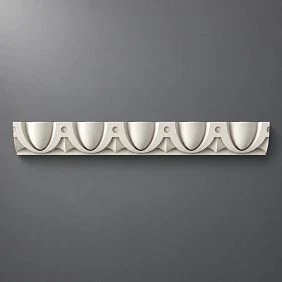
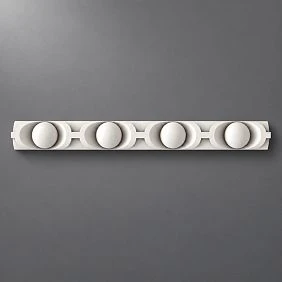
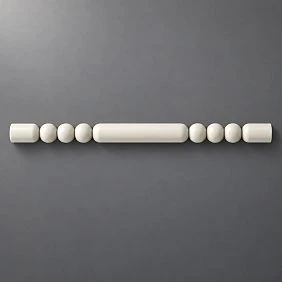
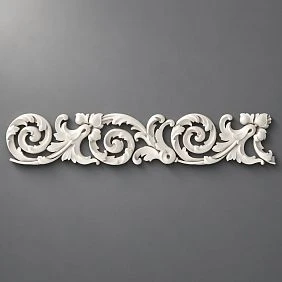
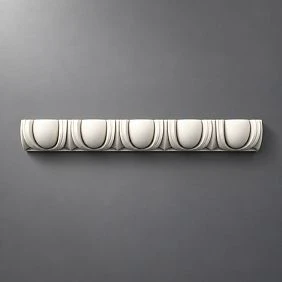
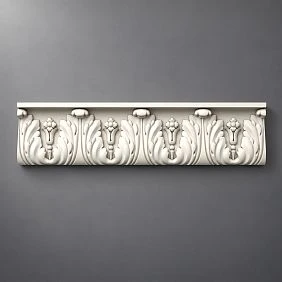
Our factory also produces:
Warmth as the Core Value of Krasnoyarsk Interiors
The Siberian interior has historically been built around warmth. Not in the literal sense, but in an aesthetic one. Natural materials, warm tones, tactile textures. Wood in Krasnoyarsk interiors is not a trend or a tribute to fashion. It is an organic part of the architectural tradition.
This is precisely why slatted panels made of oak, ash, or larch in warm tones work better in Krasnoyarsk than in any other region. Dark walnut, warm honey oak, golden ash—these shades create a sense of security and coziness, which is especially valued in a city with long, harsh winters.
Get Consultation
Indoor air quality
In winter, windows in Krasnoyarsk apartments are closed for months. This means finishing materials literally 'breathe' in the same space as people. Natural wood with an oil finish is an ecologically neutral material. MDF is also safe if it has an E1 or E0 formaldehyde emission certificate. Polyurethane decor is safe when using quality paints. This is important to understand when choosing: saving on cheap alternatives can mean not only poor surface quality but also increased emission of harmful substances in the enclosed winter space.
Wall Panels: Material and Construction Selection
When buying slatted panels in Krasnoyarsk, you need to understand exactly for which surface and in which room they will be used. This determines both the material and the construction.
Living Room: Architectural Accent and Visual Warmth
In a Krasnoyarsk living room, a slatted panel works as the main architectural tool. An accent wall with vertical slats—behind the sofa, behind the TV, or around the fireplace—sets the character of the entire space.
For a living room in a typical multi-story building (ceiling height 2.7 m), vertical slats 50–70 mm wide with a 15–25 mm gap are optimal. Such proportions create a balanced rhythm that does not overload a small space. Material: solid oak or ash with a warm oil finish tone—for visual warmth. Or MDF for painting in white or cream tones—for a light, airy interior that compensates for the lack of natural light in Krasnoyarsk during short winter days.
A wooden accent wall in the living room works well with directed side lighting. Track lights aimed at a 30–45 degree angle to the slatted wall create expressive shadows in the gaps—and the wall 'comes alive,' changing character throughout the day. This is important for Krasnoyarsk: in December, there is little natural light, and it is artificial lighting that creates the atmosphere of the room for most of the day.
Bedroom: silence, warmth, and tactile quality
In a Krasnoyarsk bedroom, a slatted panel behind the headboard is not just decor. It is an architectural detail that creates a sense of shelter and tranquility. A tall slatted panel behind the bed—120–150 cm high—forms a visual 'backdrop' for the sleeping area, setting it apart from the general space.
Solid wood with visible grain texture is especially suitable for the bedroom. Touching natural wood creates tactile pleasure that cannot be obtained from laminated or painted surfaces. In cold climates, this is particularly important: wood feels warm to the touch—unlike stone, metal, or glass.
Toning for the bedroom: light shades of oak with a milky or creamy undertone, light gray (greige), natural ash without toning. Dark slats in the bedroom create a sense of compression that is uncomfortable in a rest space. Exception: high ceilings from 3 meters, where dark wood works as an element of grounding architectural weight.
Children's room: safety and play opportunities
A children's room in Krasnoyarsk is a space where a child spends a lot of time. The long winter means many hours at home. Finishing materials must meet strict environmental requirements: E0 or E1 formaldehyde certificate for MDF, solvent-free oil coatings for solid wood.
Slatted panels in a children's room: horizontal slats on parts of walls create a sense of movement and play—especially if using several tones or shades. Vertical slats stretch the space upward—good for small children's rooms. Paintable MDF panels open the possibility to change the wall color as the child grows: repainting a finished panel is much easier than replacing the entire structure.
Kitchen and kitchen-dining room: practicality is a priority
The kitchen is the most challenging room for wooden panels. Steam from cooking, water splashes, grease deposits—all of this is an aggressive environment for any material. For a Krasnoyarsk kitchen with a long winter heating season, the factor of drying out is added: dry air from heating + humidity from cooking create sharp fluctuations.
Recommendations for the kitchen: MDF slats with moisture-resistant impregnation and varnish coating—for the dining area and eating zone. Areas near the sink and stove—not for slatted panels. Larch with moisture-resistant oil coating—if you want natural wood.
Niches and built-in structures
Wall niches are an architectural technique particularly popular in Krasnoyarsk apartments with non-standard layouts or in custom-designed houses. Slatted panels on the back wall of a niche transform it from a 'hole in the wall' into an architectural feature. Contrasting the niche's finish relative to the main walls is a standard designer technique that creates depth and emphasis.
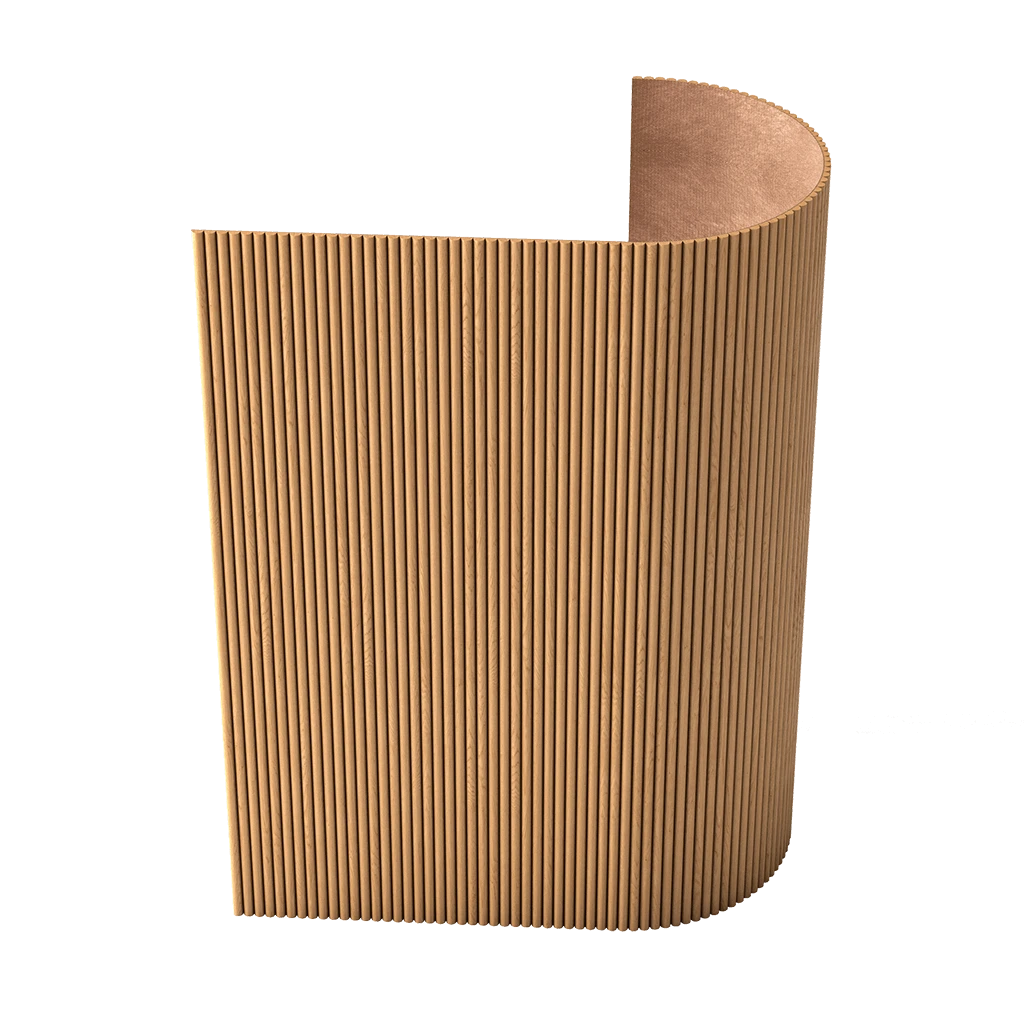
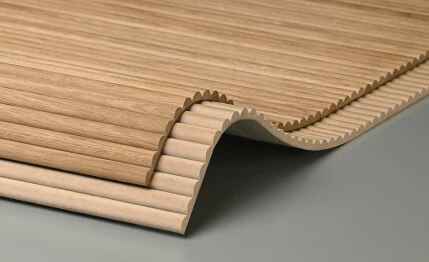
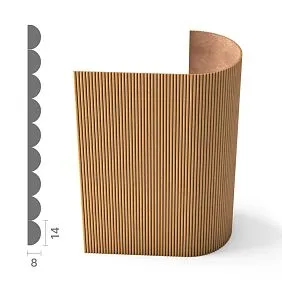
For niches, Flexible slatted panels are especially good — if the niche has rounded corners or non-standard geometry. Rigid panels in non-standard niches will require complex cutting.
Ceiling panels: different rules of the game
Ceiling application of slatted panels is a separate topic with its own technical and aesthetic principles.
Slatted ceiling as an architectural solution
A full-room slatted ceiling is an expressive solution for a living room or hall in a private house. Visually, it does two things simultaneously: it reduces the perceived height (which creates coziness in a high-ceilinged space) and introduces natural texture where monotonous drywall usually dominates.
For a slatted ceiling, the following are important:
-
Weight of the structure: wooden slats + frame — this is a significant load on the ceiling. It is necessary to check the load-bearing capacity.
-
Direction of the slats: perpendicular to the long axis of the room — visually widens; parallel — elongates.
-
Gap between slats: for ceilings, a 20–30 mm gap is optimal. A narrower gap on the ceiling gets lost.
Partial slatted ceiling and zoning
A slatted ceiling does not have to cover the entire room. A partial slatted ceiling over the dining area, over the bar counter, over the sofa group is an elegant way of zoning the space 'from above'. The transition from a smooth drywall ceiling to a slatted zone is an architectural boundary that also works acoustically: the slats create sound diffusion.
This technique works especially well over the dining area in open-plan layouts: a wooden 'ceiling island' over the table visually unites the dining group, creating a sense of a separate room without partitions.
Partitions made of slatted panels
Partitions made of slats are another popular application that solves several tasks at once in Krasnoyarsk apartments with open-plan layouts: visual zoning without losing light transmission, a decorative accent, and light acoustic diffusion.
A partition made of vertical slats with a 30–40 mm gap between the kitchen and living room lets light through, creates a feeling of open space, but at the same time clearly marks the boundary of the zones. This is better than a wall — because it does not create a sense of confinement; and better than a complete lack of separation — because it structures the space.
Polyurethane stucco: architectural decor for the Krasnoyarsk interior
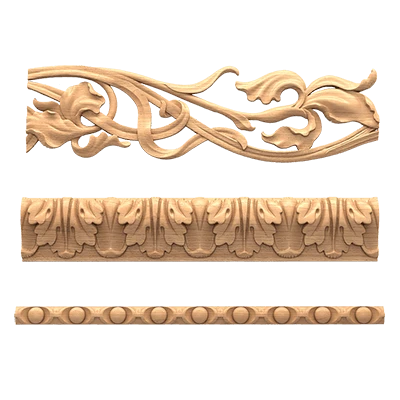
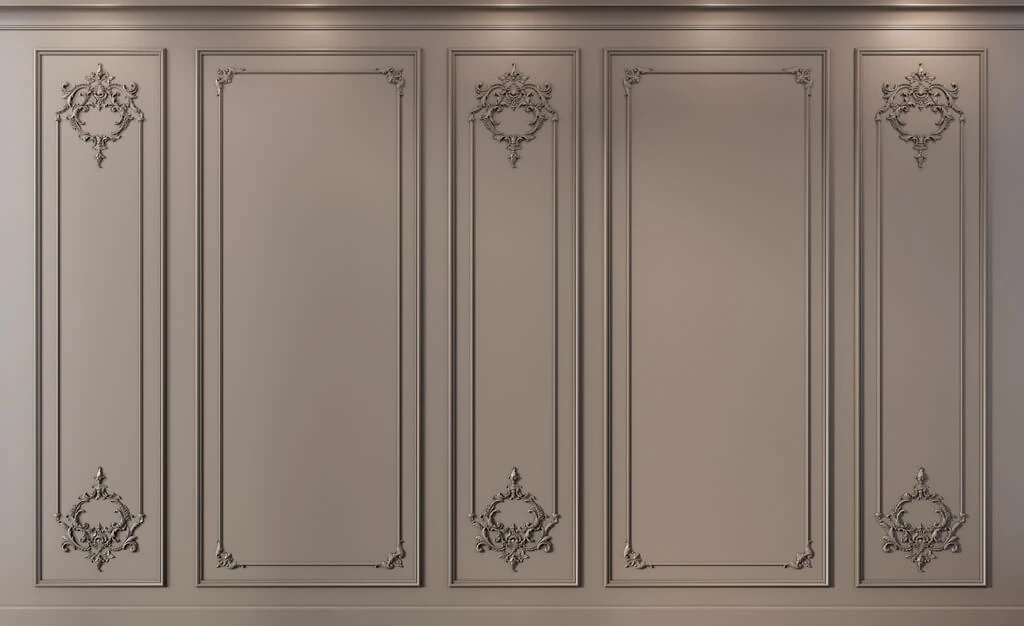
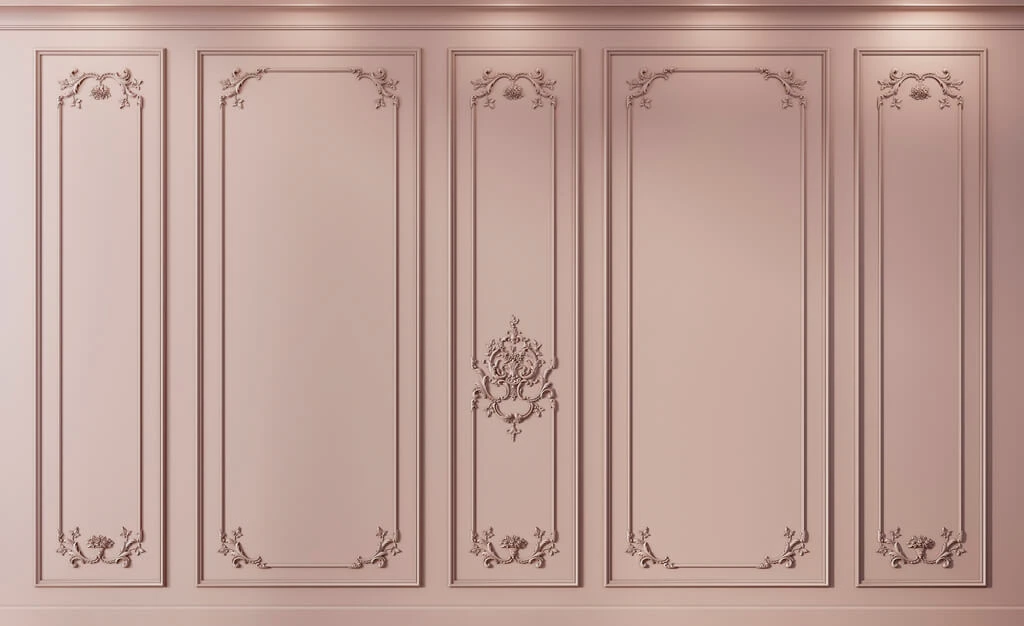
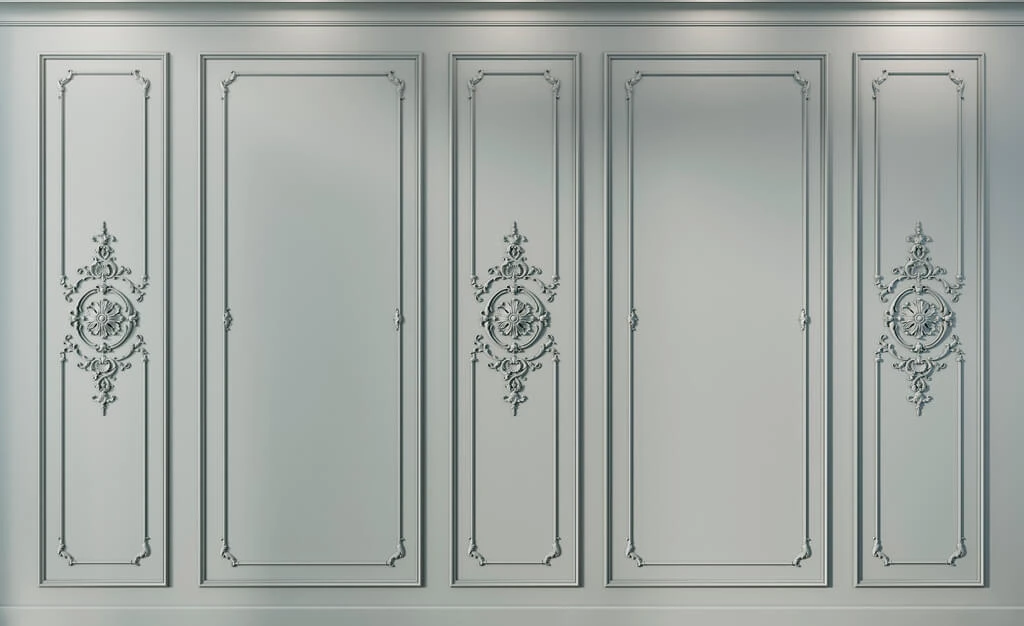
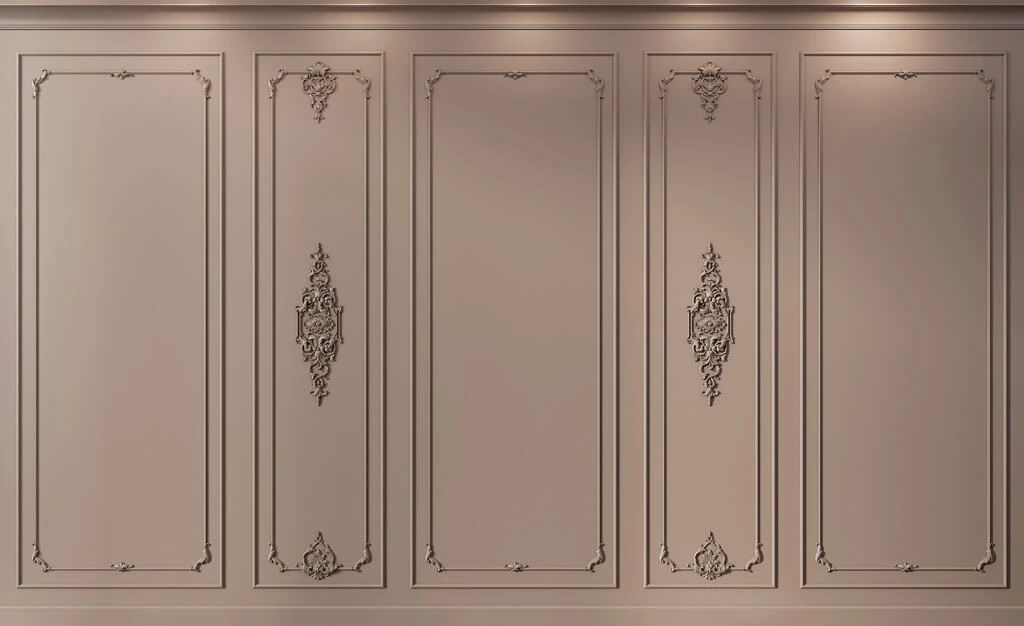
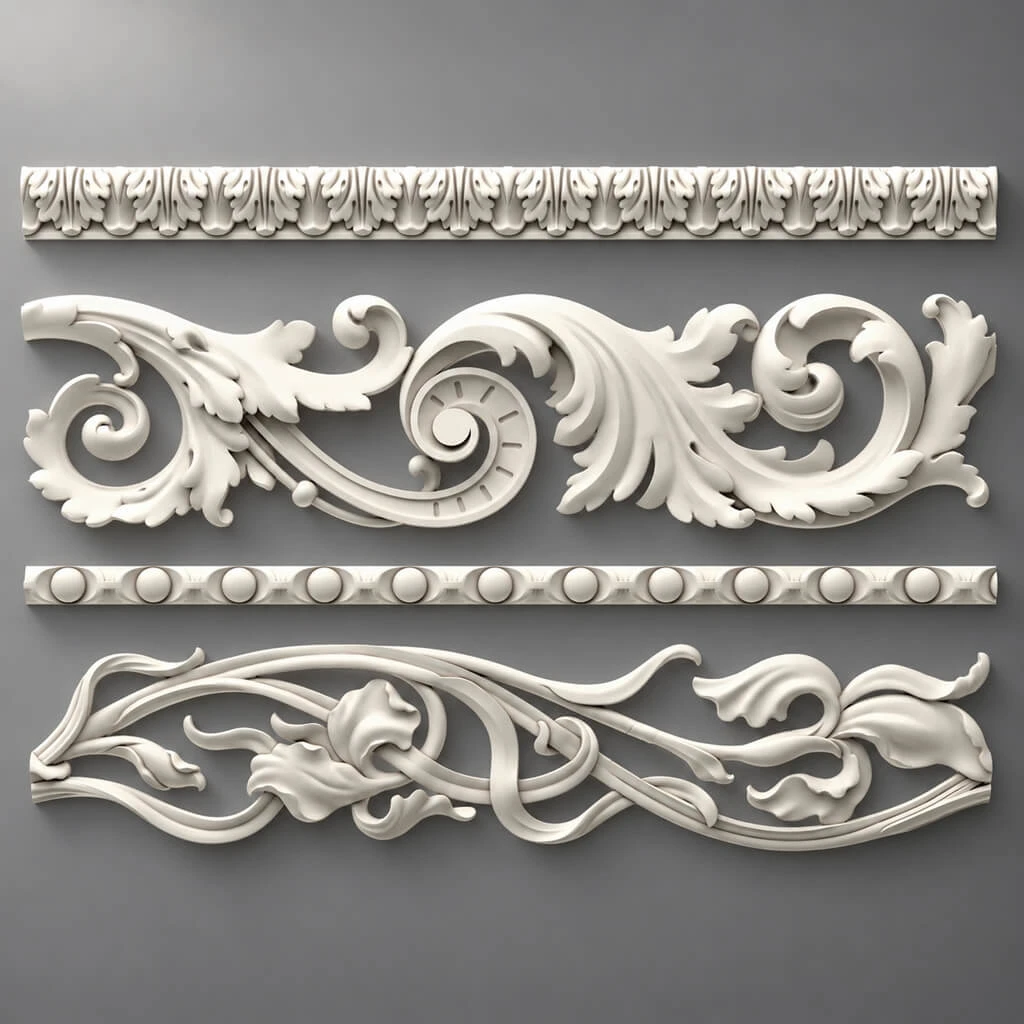
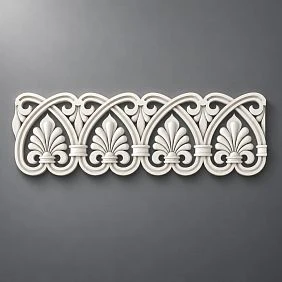
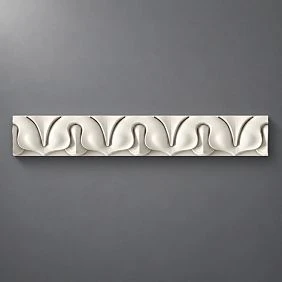
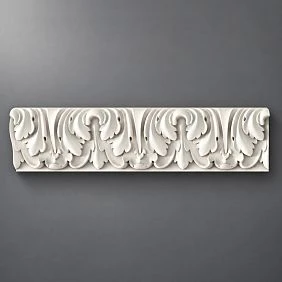
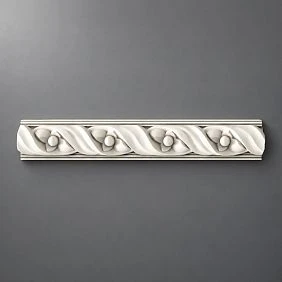
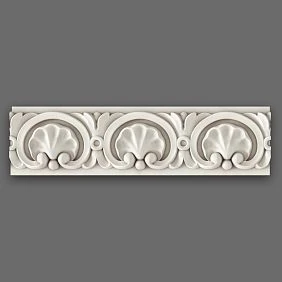
Polyurethane moldings— this is a topic surrounded by many prejudices. 'It's expensive,' 'it's only for classic styles,' 'it's difficult to install.' All three statements are incorrect. Modern polyurethane decor is affordable, looks organic in most contemporary styles, and is installed with glue in a few hours.
In Krasnoyarsk, polyurethane stucco is an especially organic choice: the cold climate encourages the creation of warm, 'enveloping' interiors with rich relief and details. It is precisely architectural decor — cornices, moldings, rosettes — that gives the interior that very completeness which distinguishes an expensive space from simply a neat renovation.
Ceiling cornices: the essential minimum
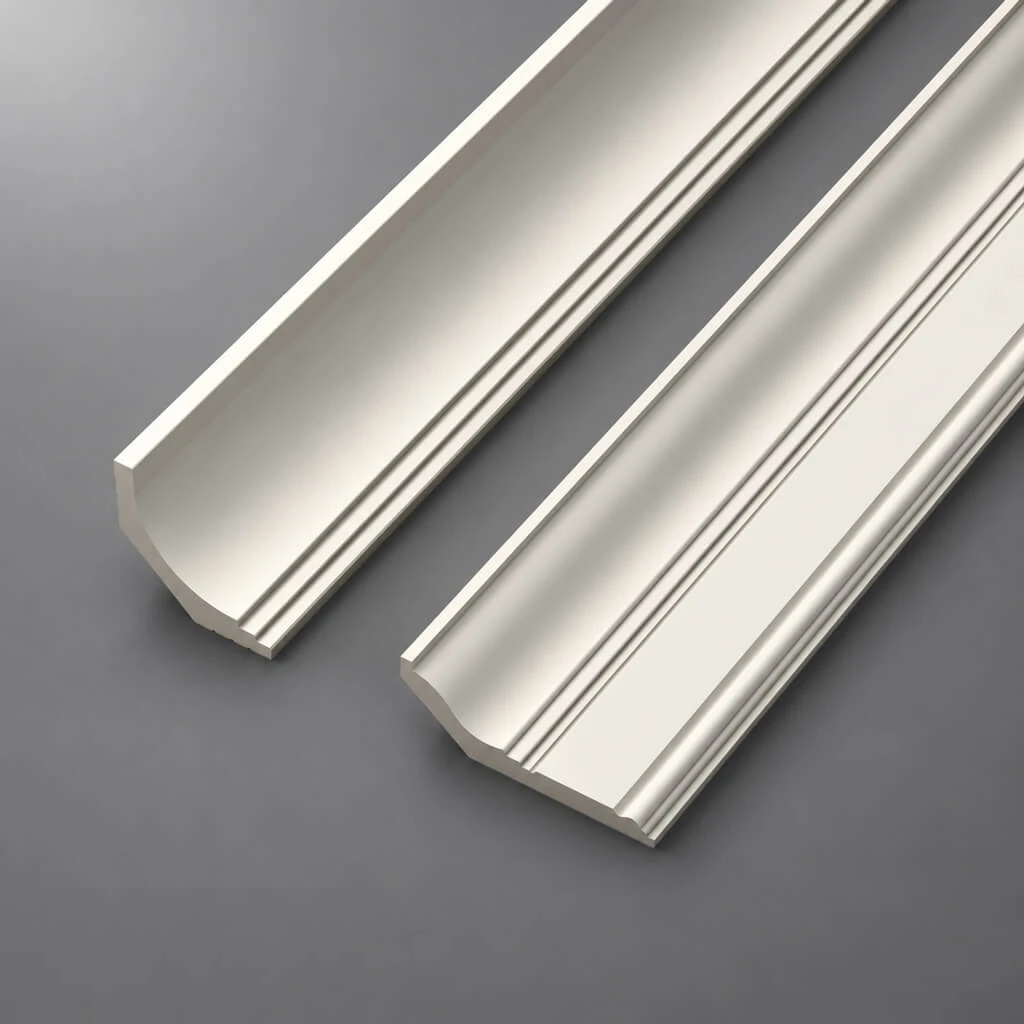
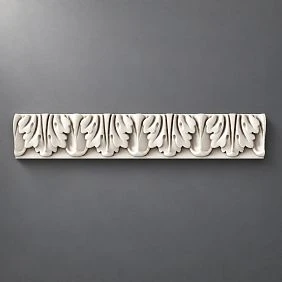
A cornice is not an option, it's a foundation. Without a cornice, the wall/ceiling transition is a right angle that creates a sense of incompleteness. With a cornice, it's an architectural detail, a horizontal line, a shadow, a sense of completion.
For a Krasnoyarsk interior, depending on the style:
-
Apartment in a modern style: a smooth 50–70 mm cove without ornament. A clean line, nothing extra.
-
Modern classic: a cornice with a moderate profile — meander, cyma reversa, simple ovolo. Width 80–120 mm.
-
Neoclassical in a private house with high ceilings: a cornice with a classical ornament, projection 100–150 mm. Creates a distinct horizontal shadow that is visible from any distance.
Important for Krasnoyarsk: a white cornice on a white ceiling is not monotony. It's an architectural relief that works through shadow. With low winter lighting, it's precisely the directed light on the cornice that creates its visibility. Place recessed lights near the walls, not strictly in the center of the ceiling — and the cornice will be visible at any time of day.
Moldings: how to break up a ceiling without drywall
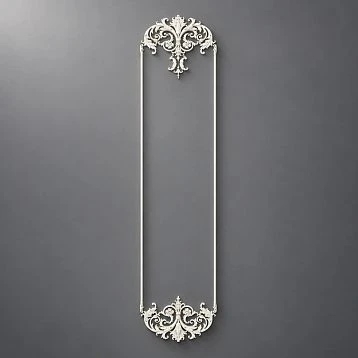
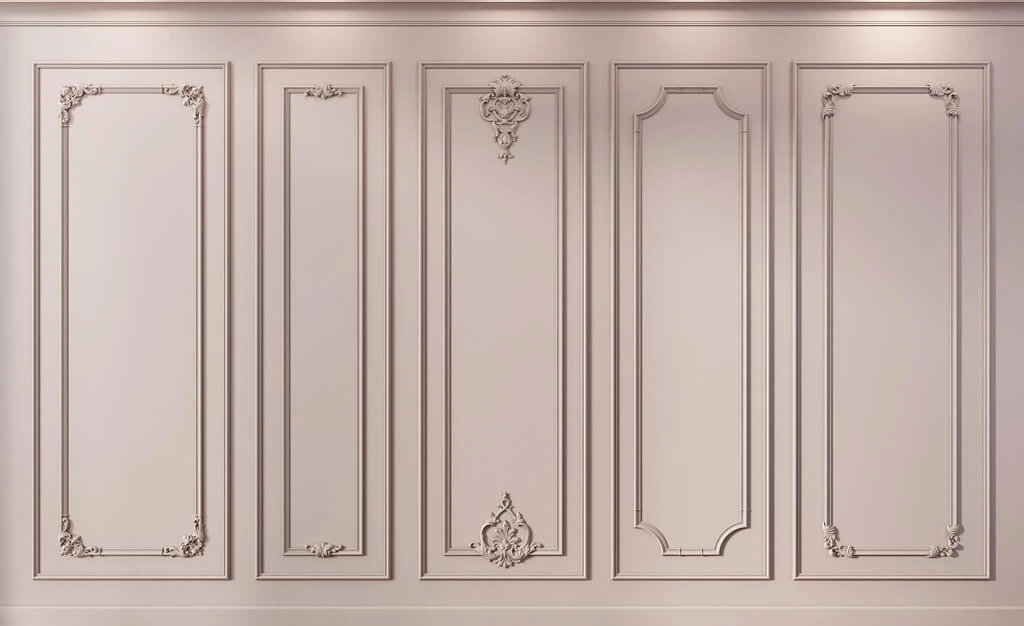
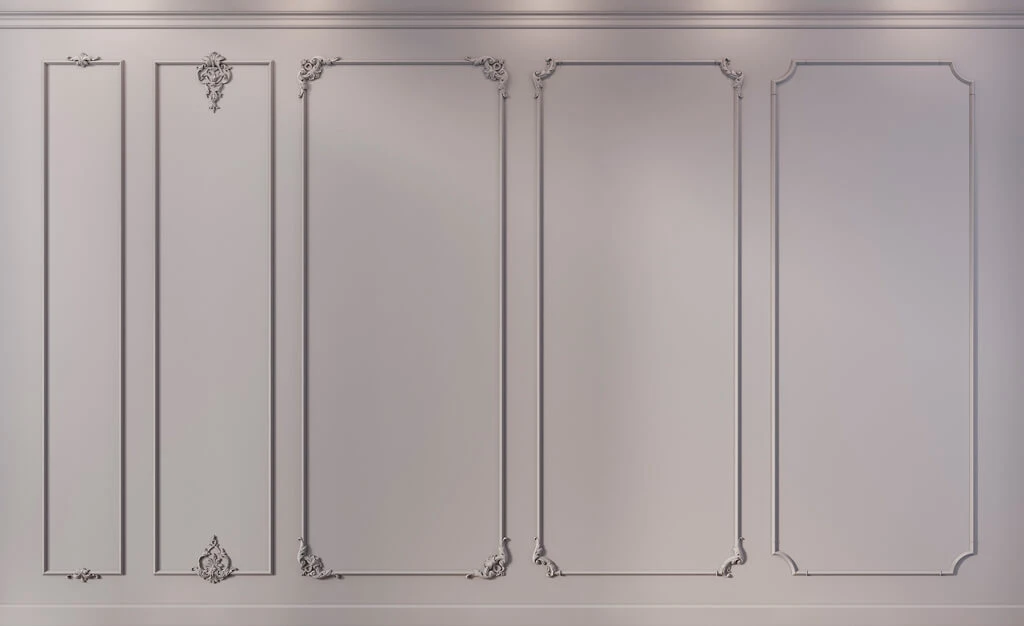
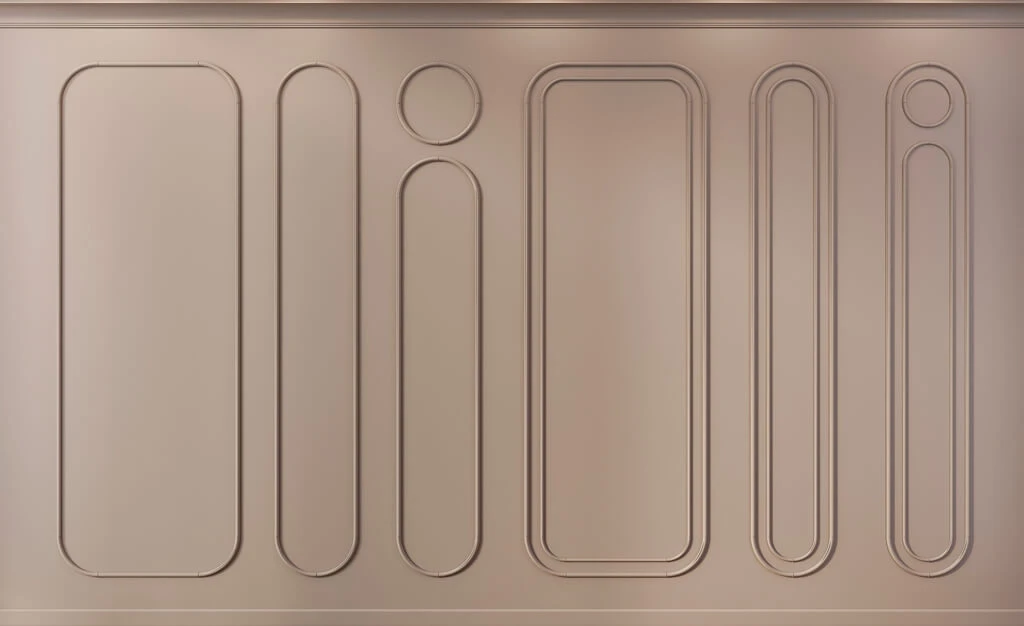
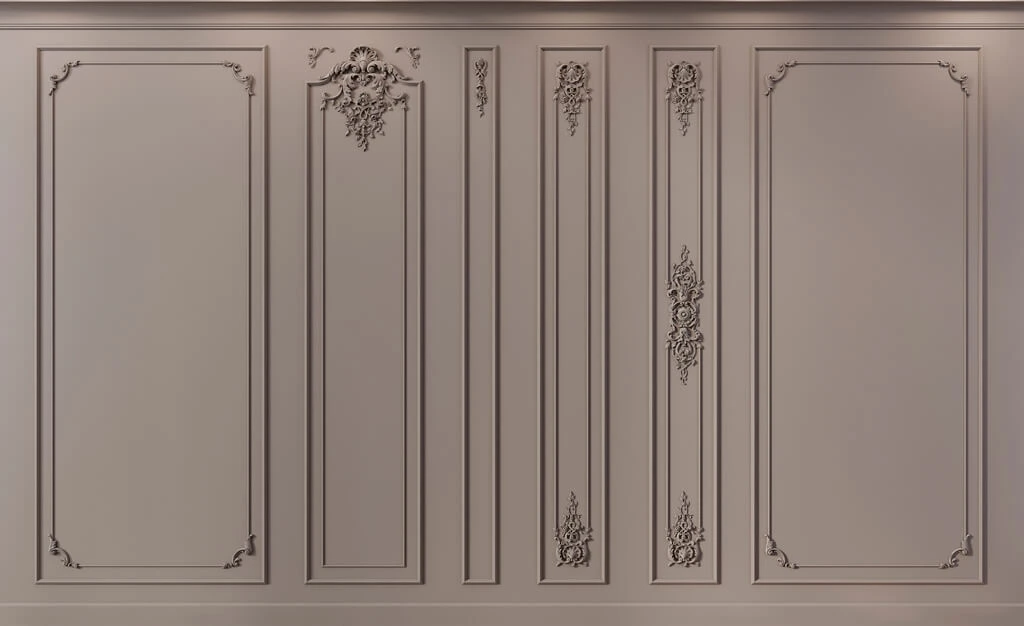
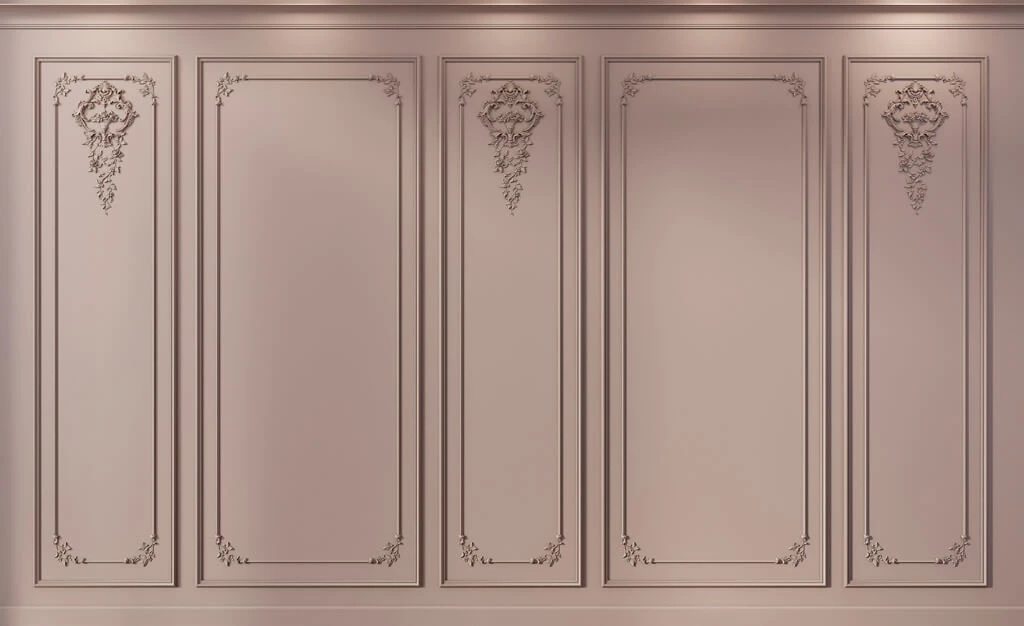
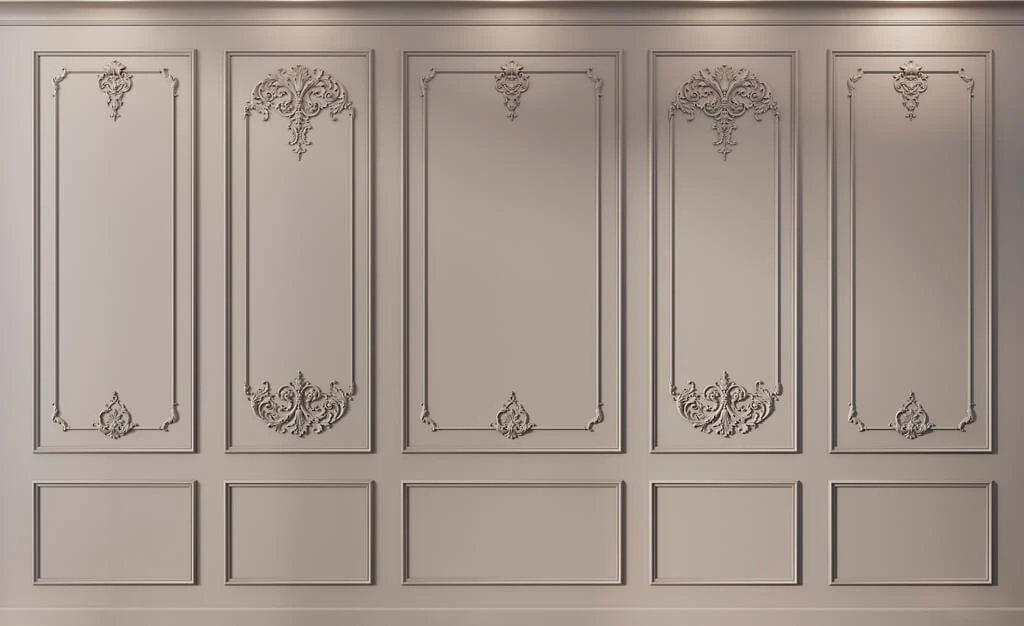
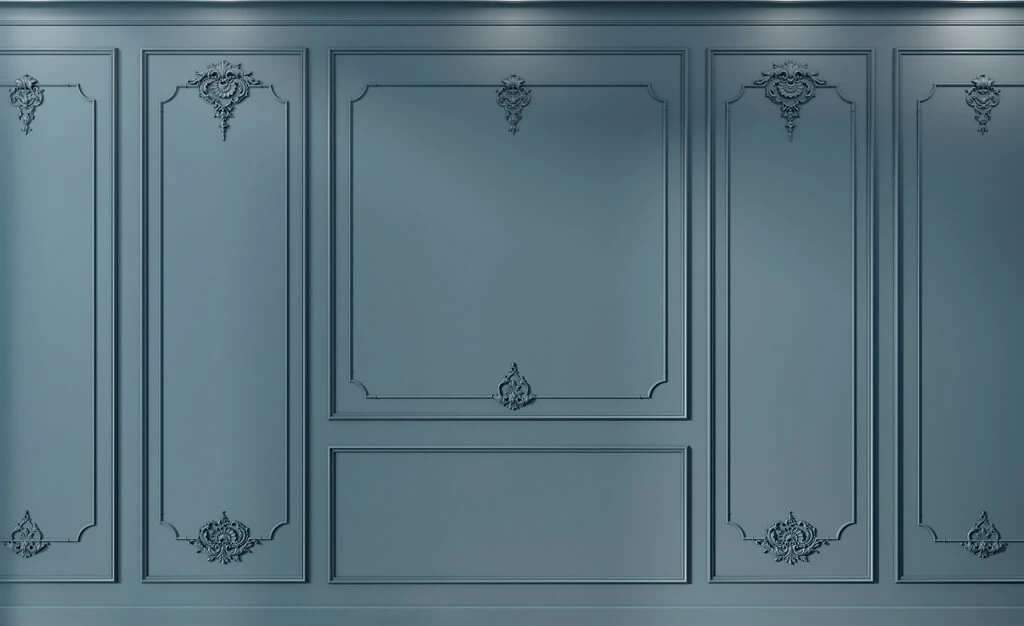
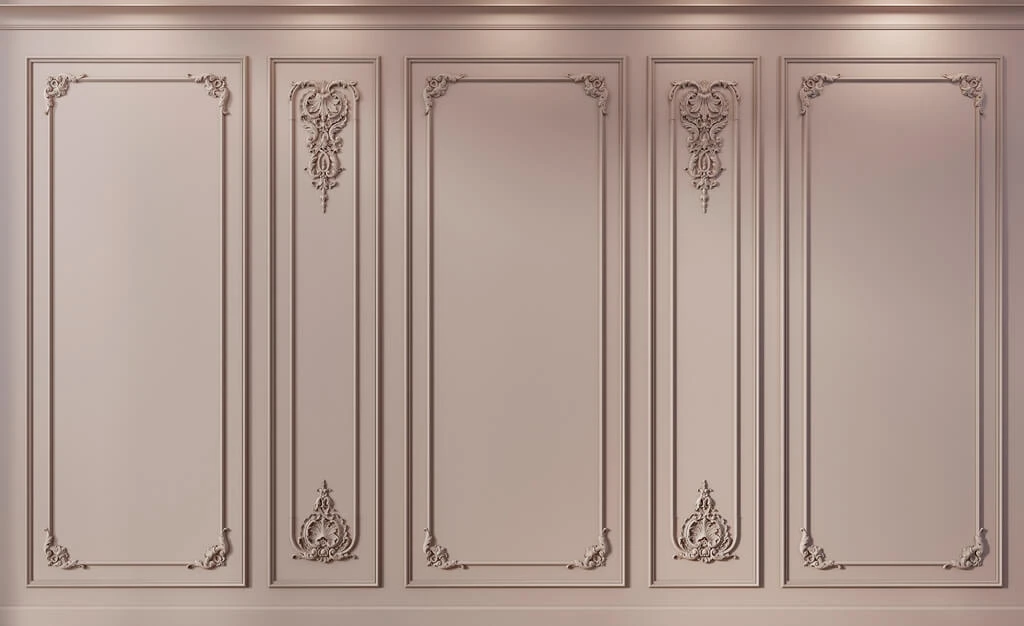
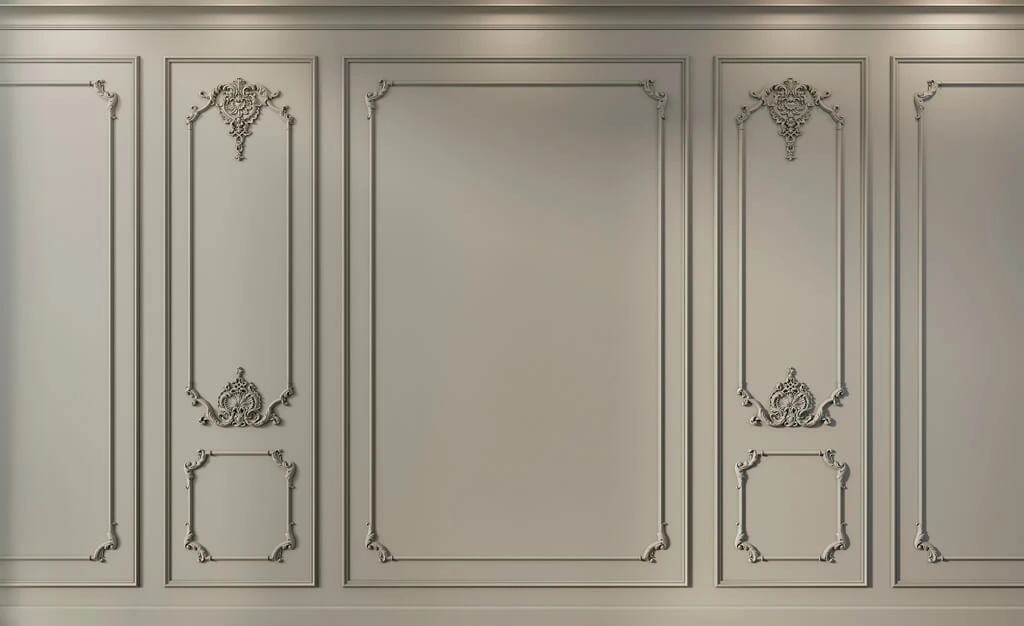
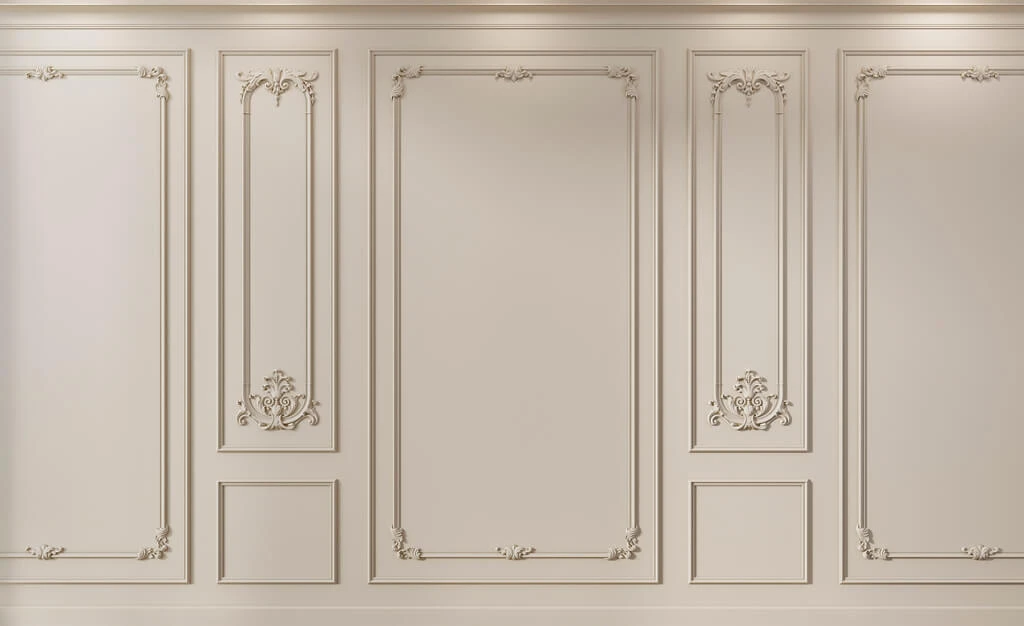
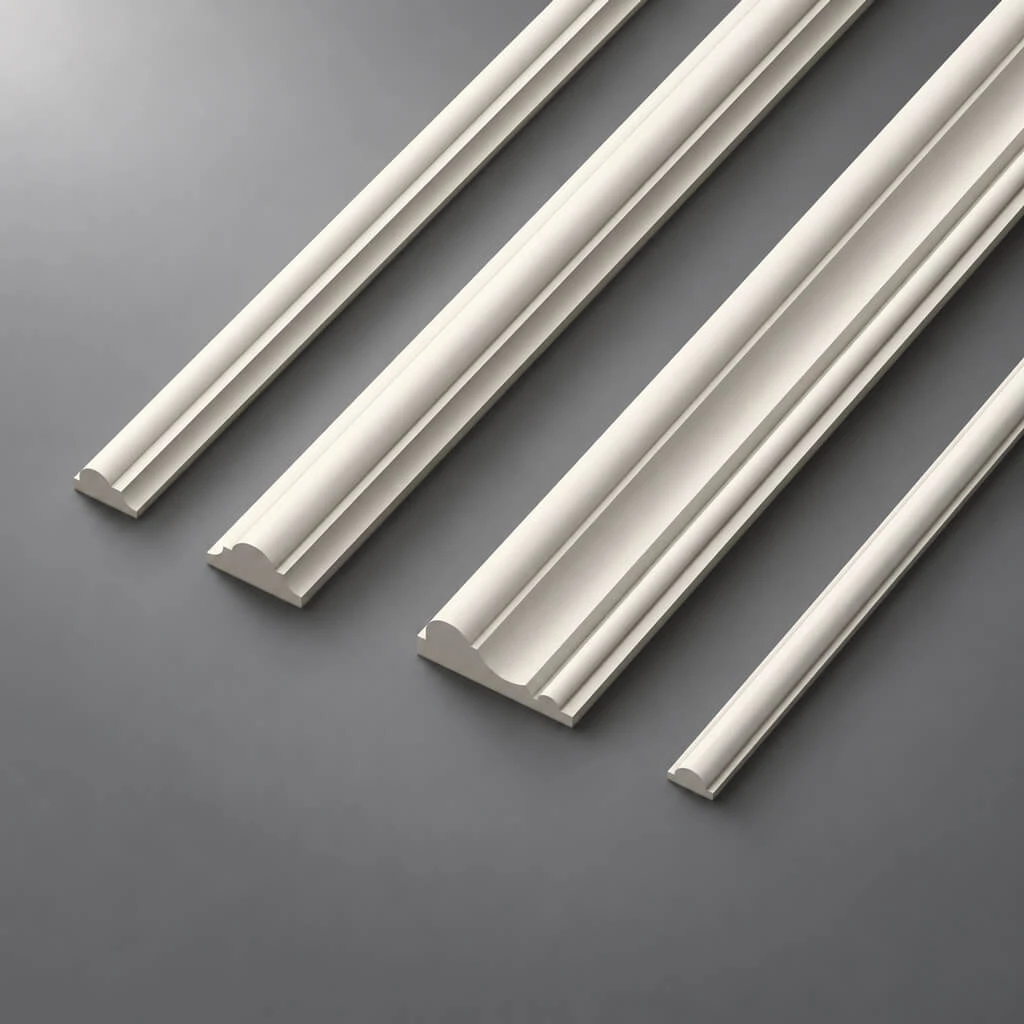
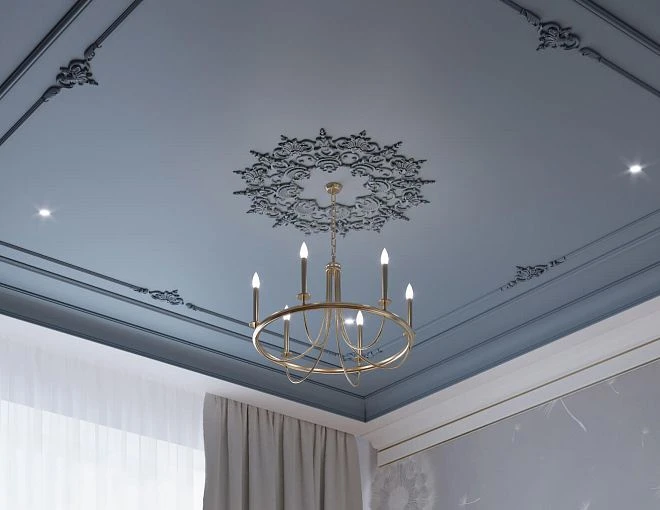
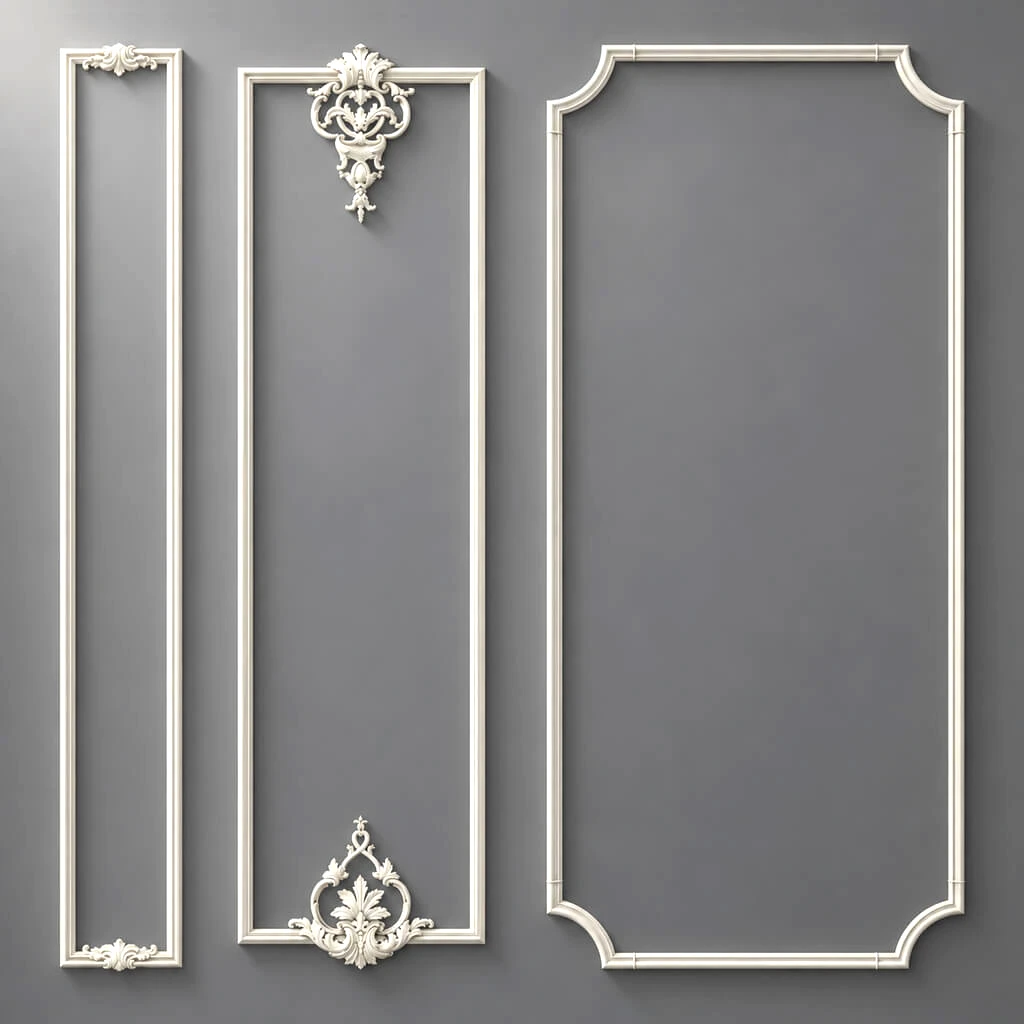
A coffered ceiling is a costly construction operation with drywall that requires a significant amount of work.polyurethane moldingsin the form of moldings creates the same visual effect without construction: moldings on the ceiling, breaking it into rectangular fields, are perceived as coffers.
This is especially relevant for Krasnoyarsk apartments in houses with flat ceilings without level differences: a couple of hours of work and several moldings turn an empty ceiling into an architecturally structured plane.
An important rule for coffered ceilings made of moldings: an odd number of fields in length and width prevents a 'prison-like' feeling. Three to five rectangles along the long axis of the room is the optimal scheme for a typical living room.
Decorative overlays and medallions
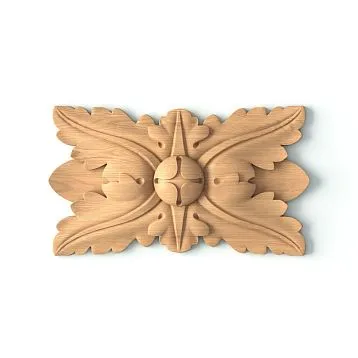
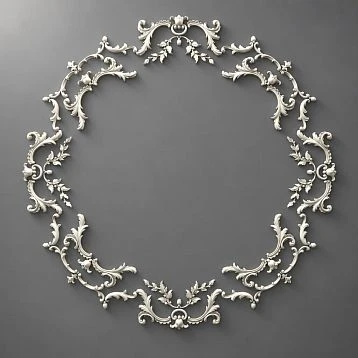
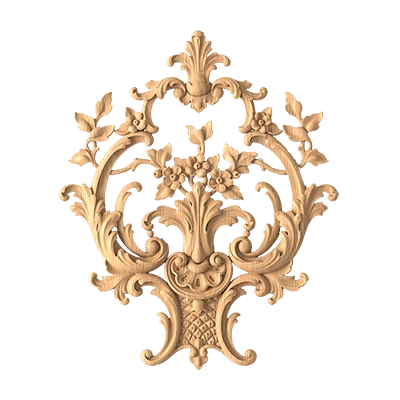
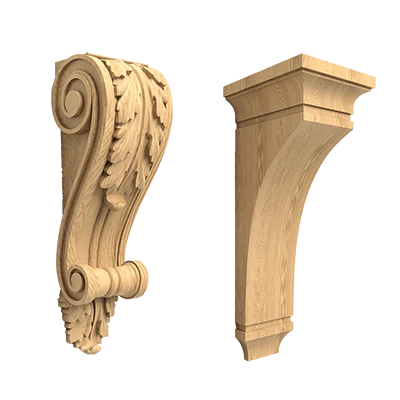
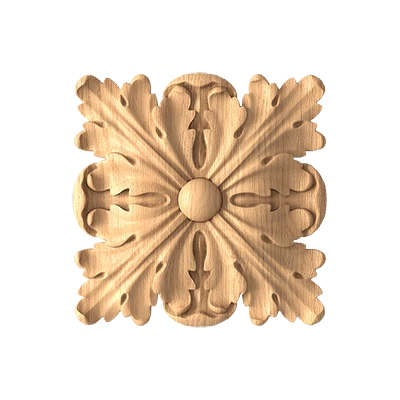
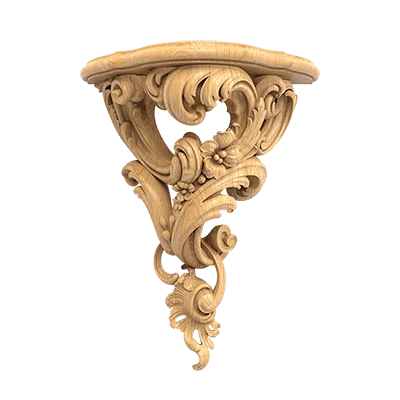
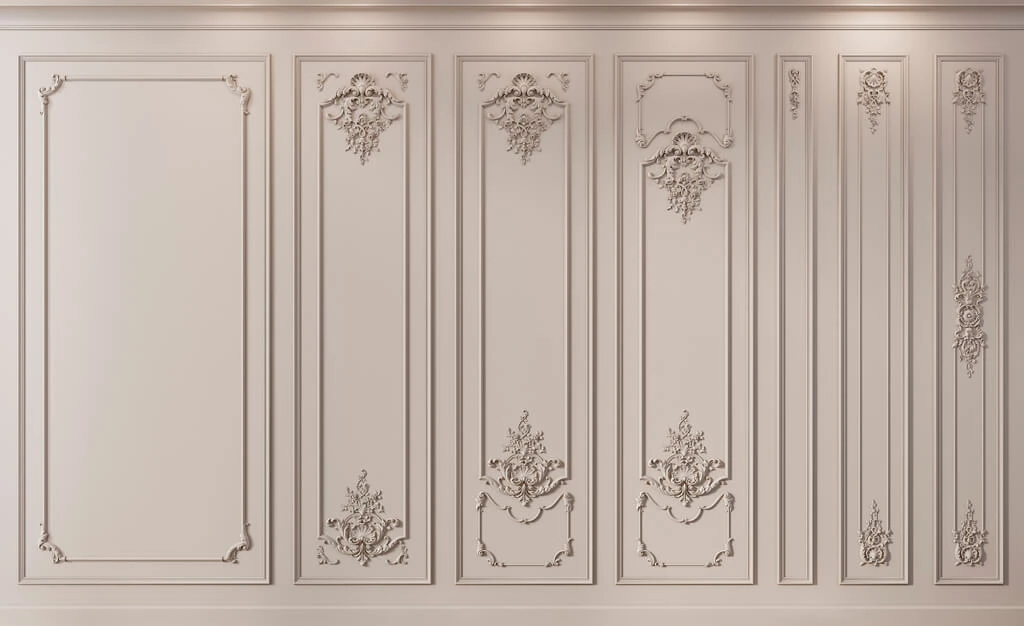
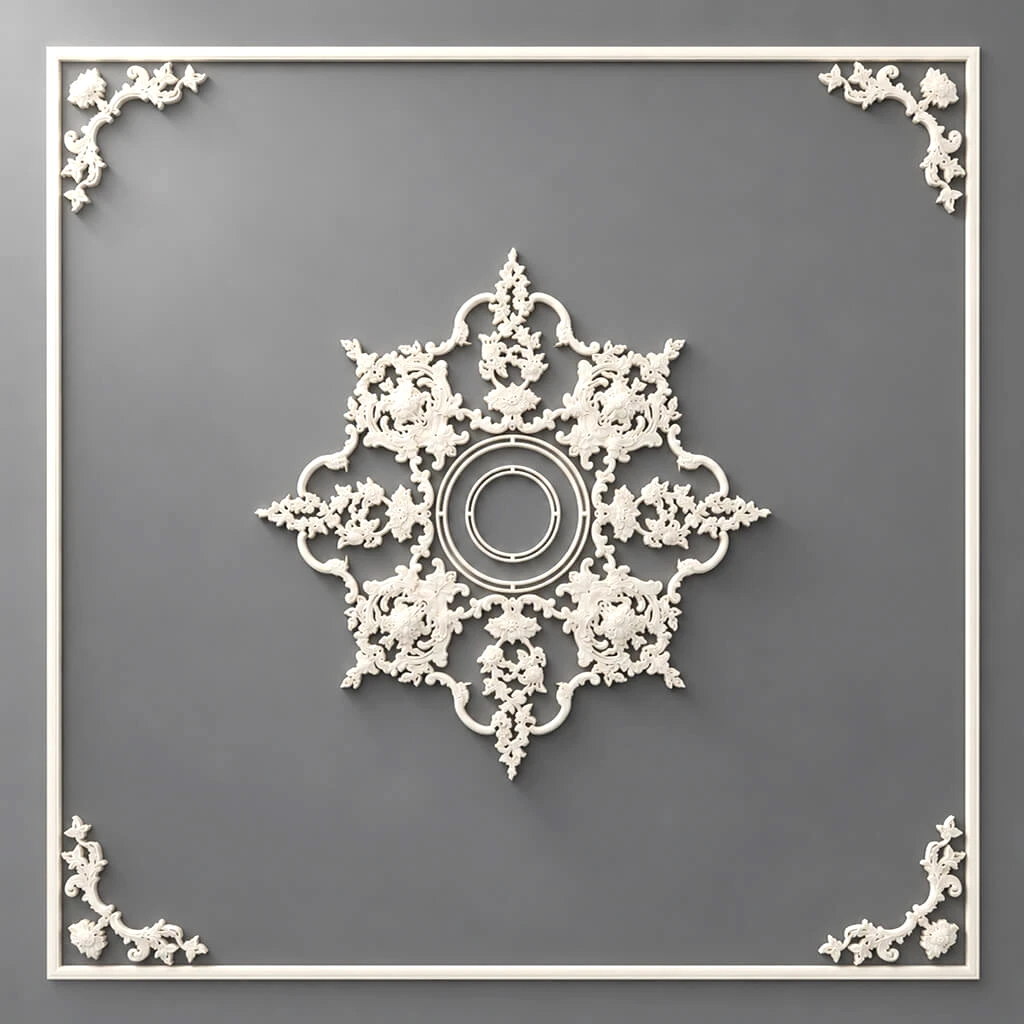
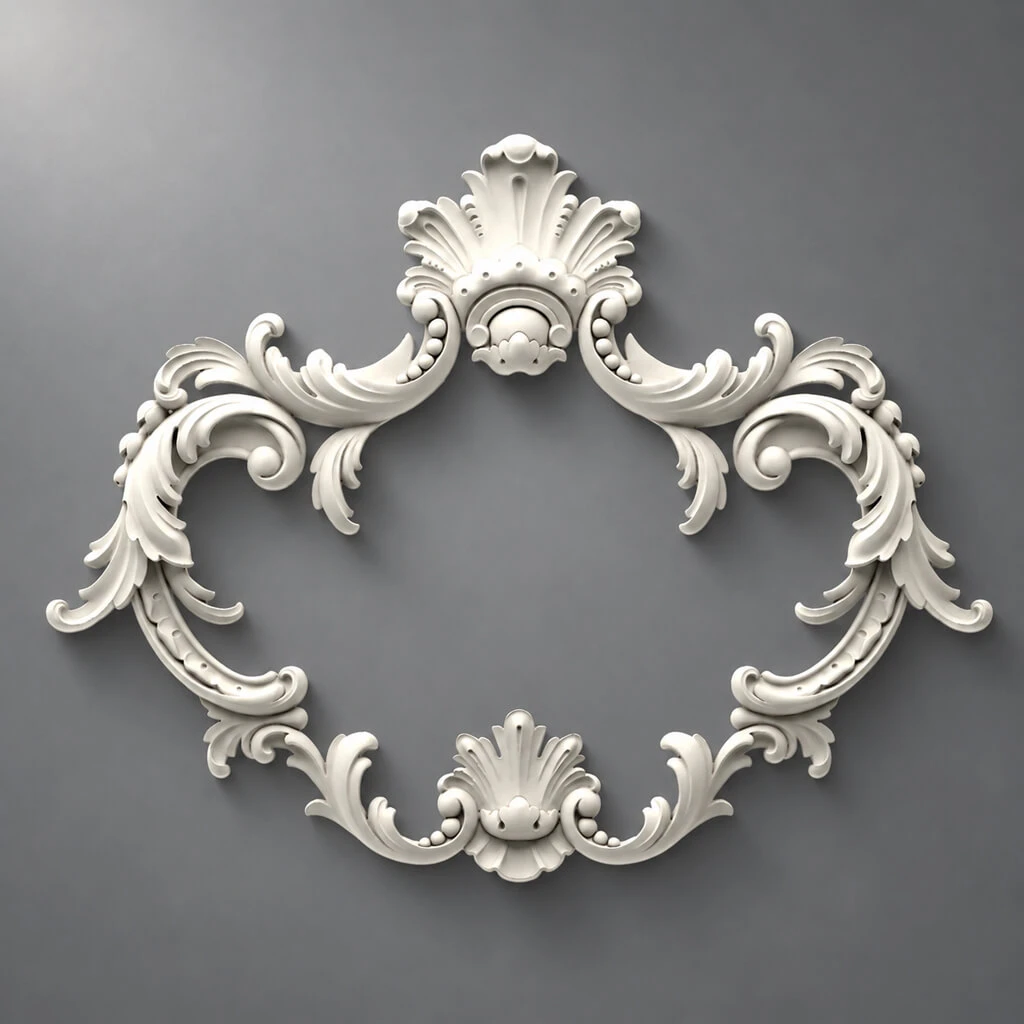
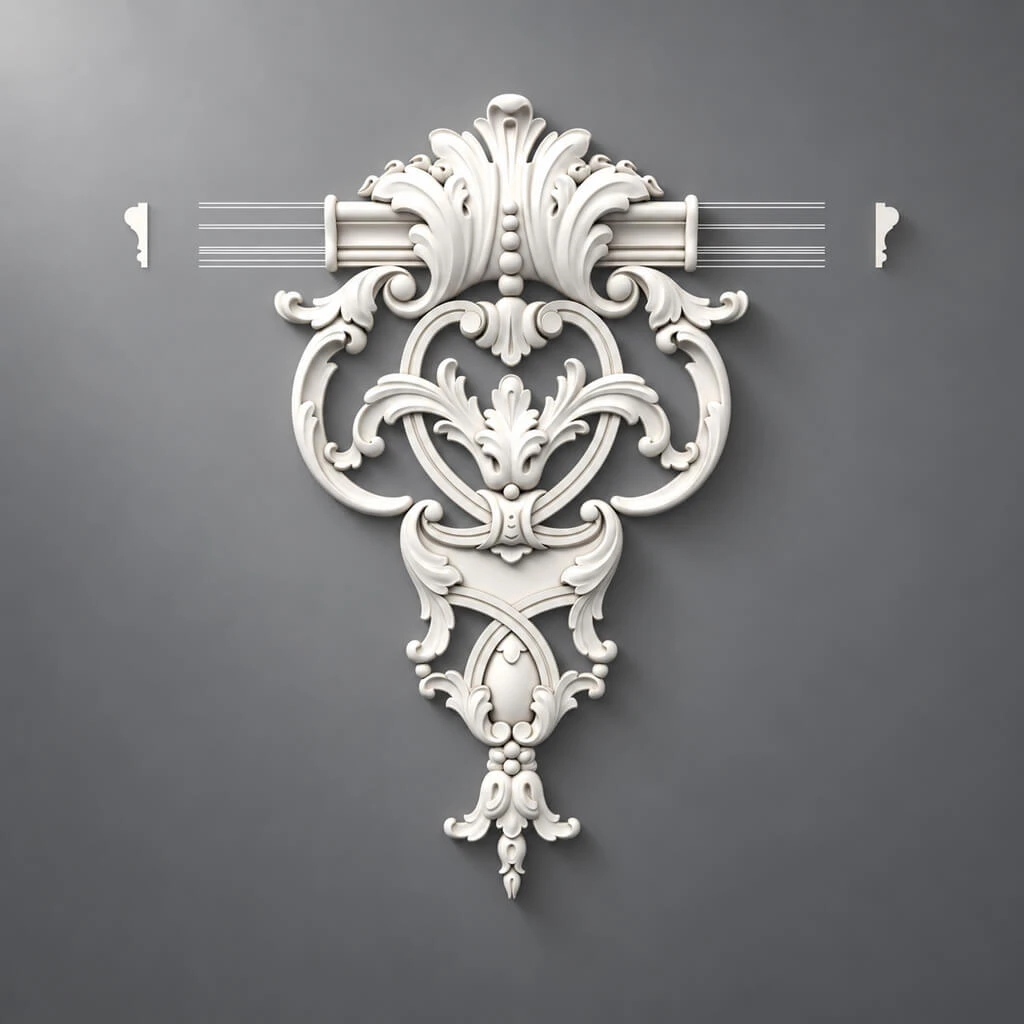
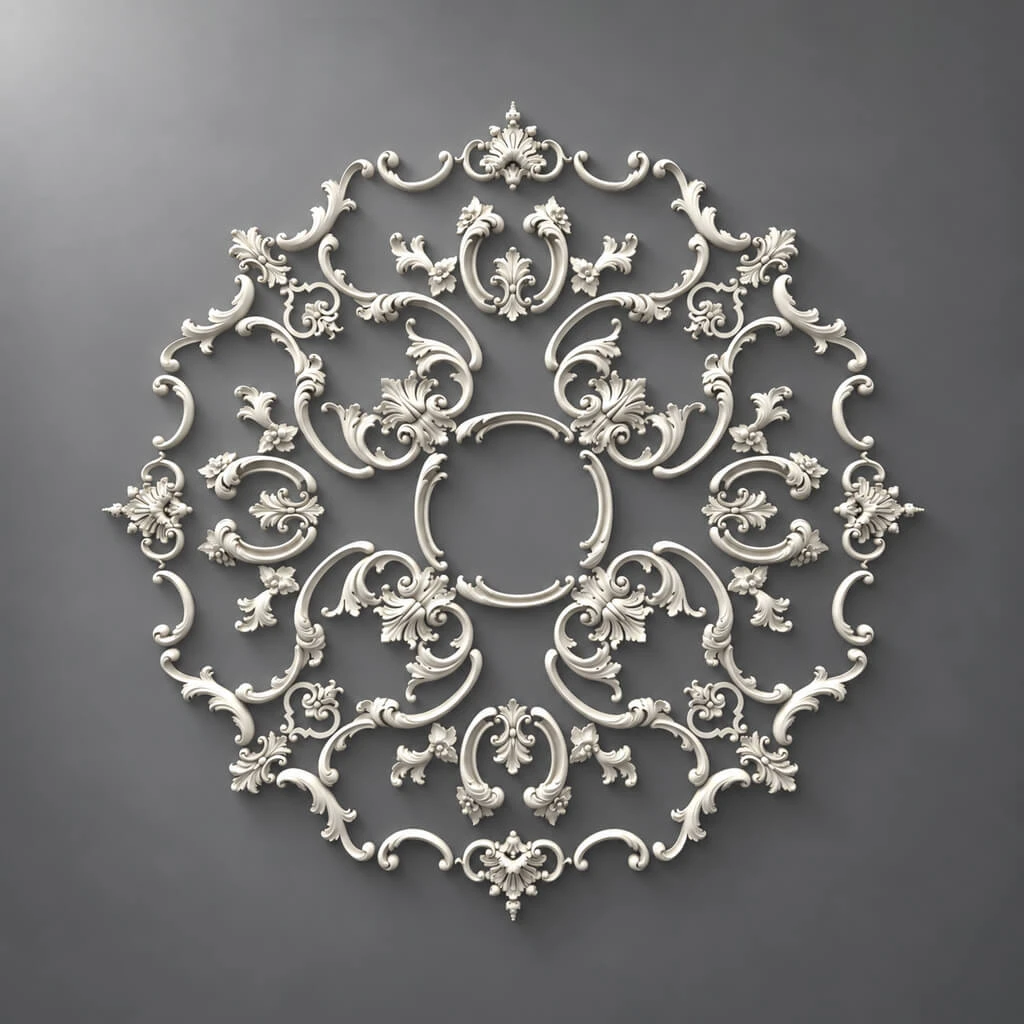
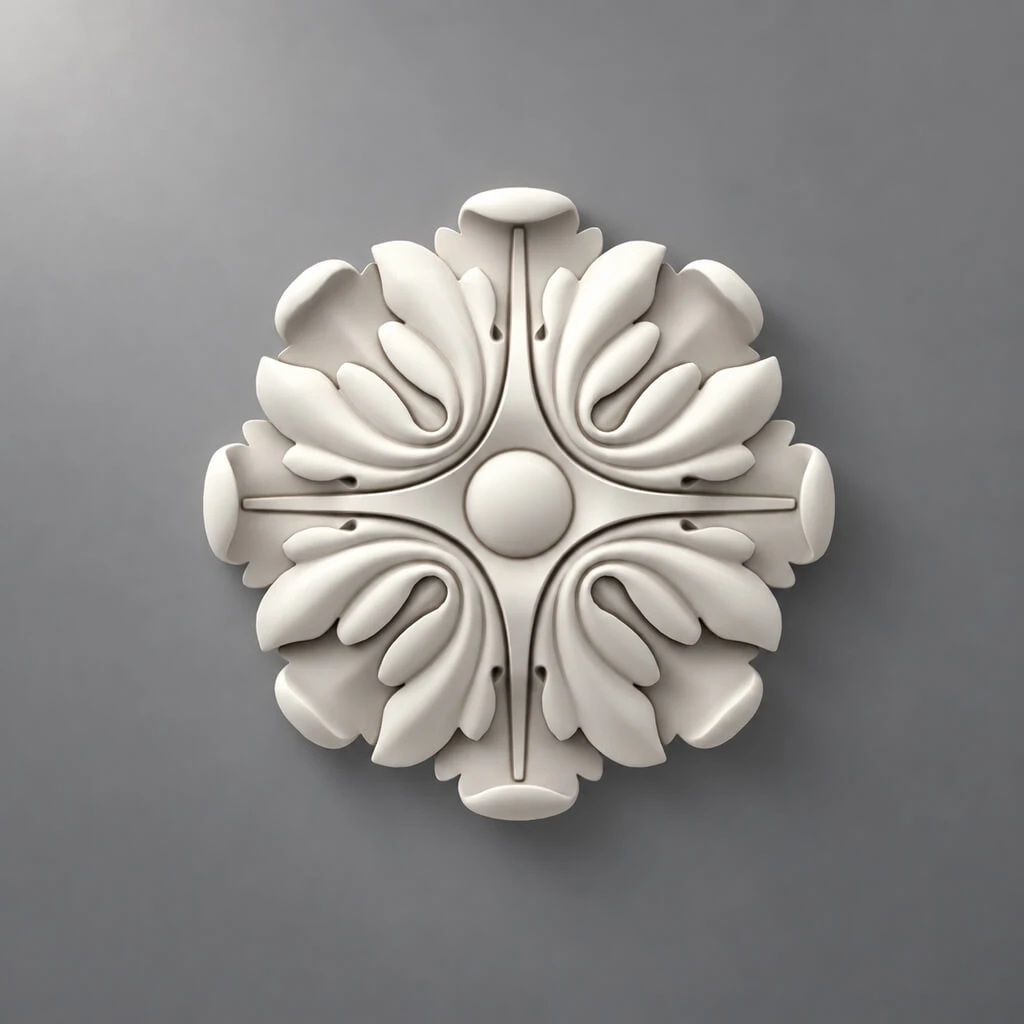
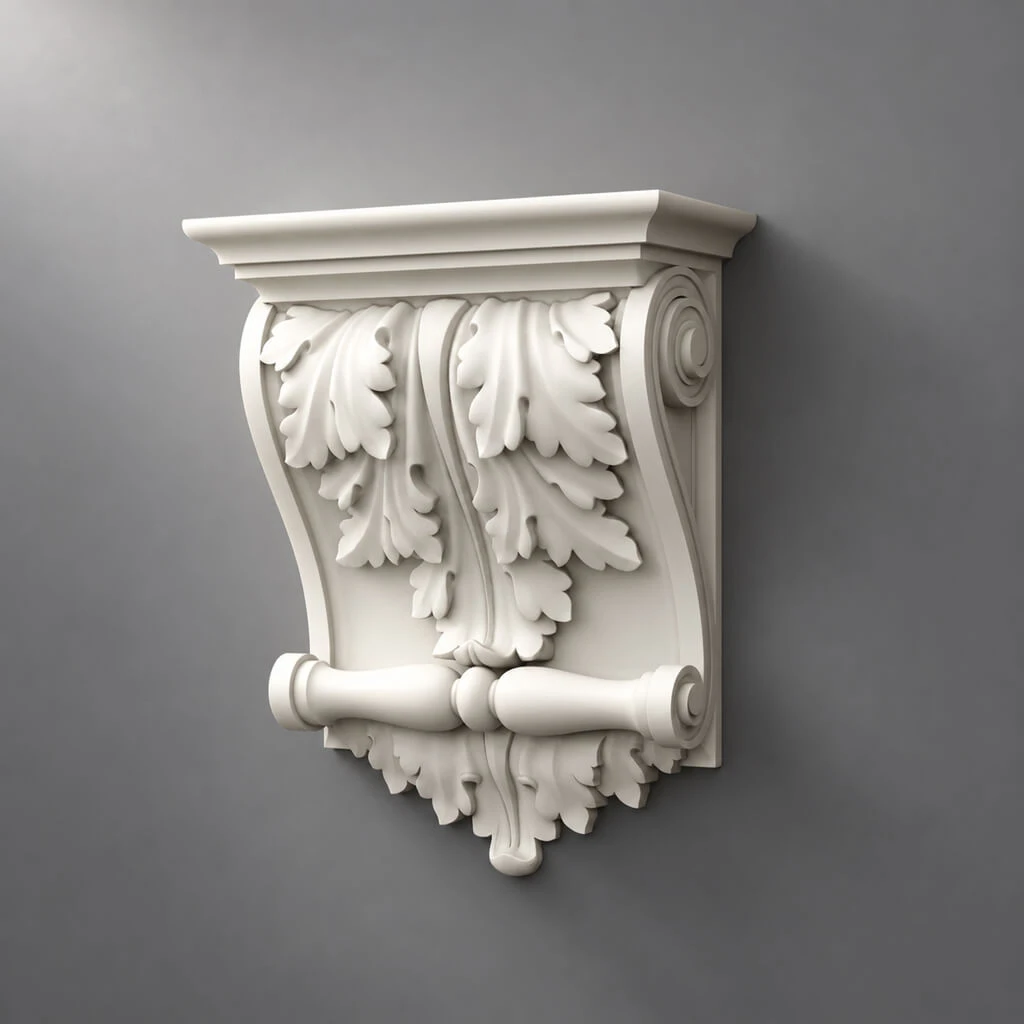
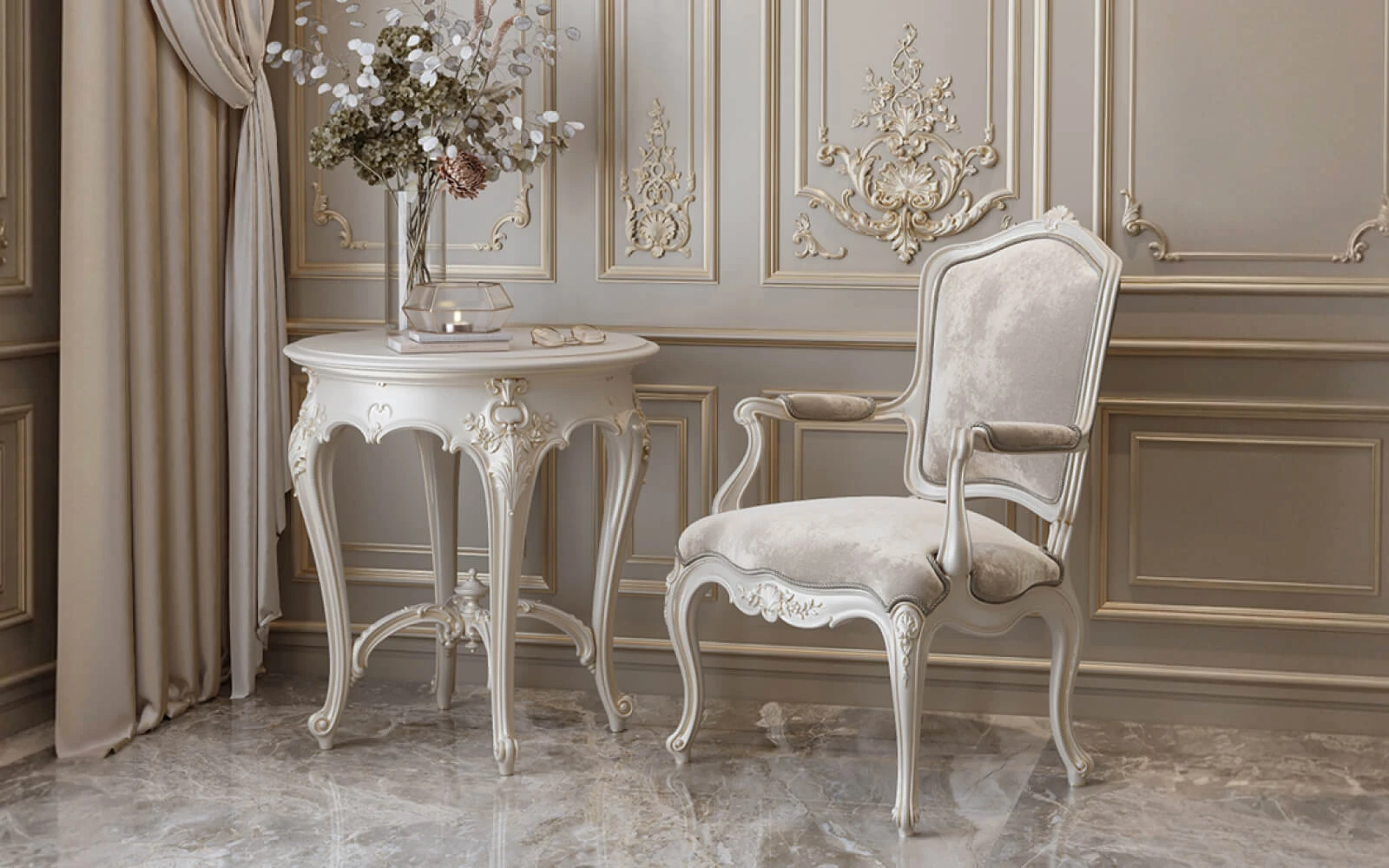
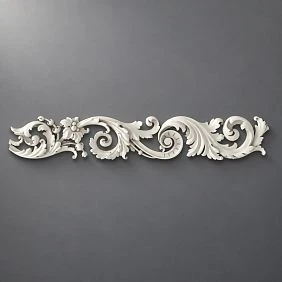
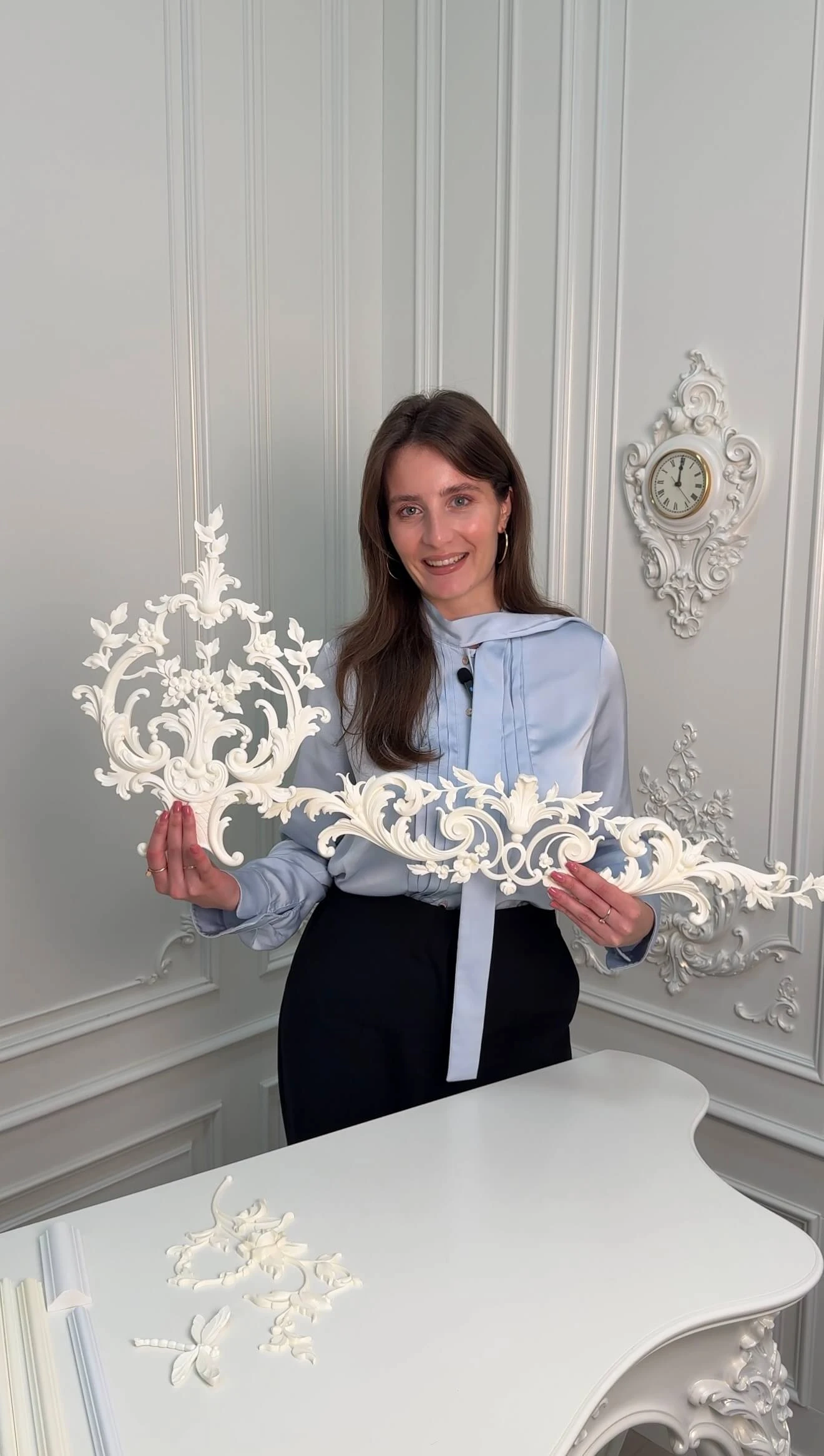
molded decoration made of polyurethanein the form of relief overlays and medallions — these are tools for pinpoint accentuation. Where an expressive visual element without linear decor is needed — a medallion on the wall, an overlay on a door panel, a decorative bracket under a shelf — these products work flawlessly.
In Krasnoyarsk interiors, such accents are appropriate:
-
Above the fireplace or fireplace portal
-
On the wall behind the headboard of the bed (combined with a slatted panel or on its own)
-
On doors in classic interiors
-
On a bar counter or kitchen island
A small relief medallion above a switch or socket is a detailing touch that speaks of attention to detail. In a good interior, not only major decisions are important, but also small details that you notice over time.
Baseboards and pilasters: spatial structure
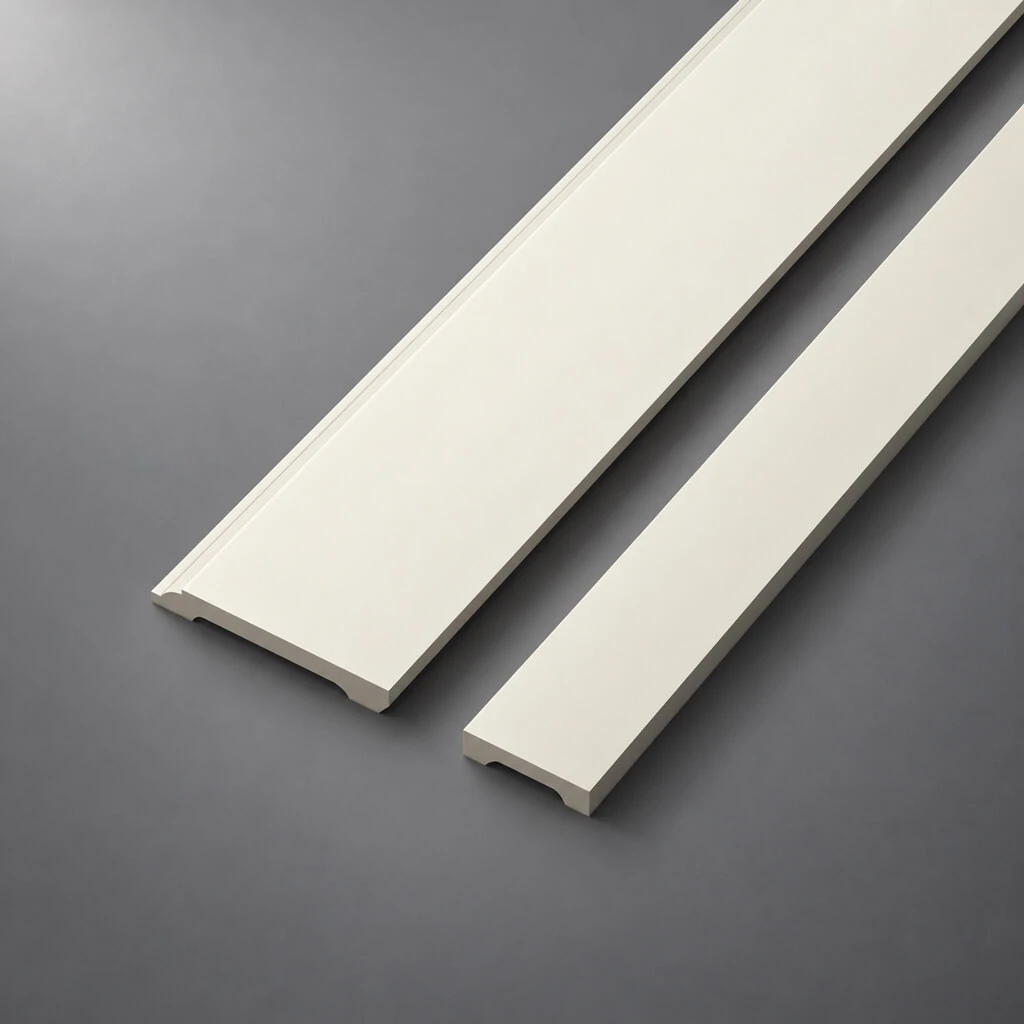
Polyurethane skirting boards are a practical alternative to MDF skirting boards in Krasnoyarsk conditions. During the warm season, Krasnoyarsk can be rainy, humidity increases, and wall bases receive additional stress. Polyurethane skirting does not absorb moisture, does not deform, and accepts any paint.
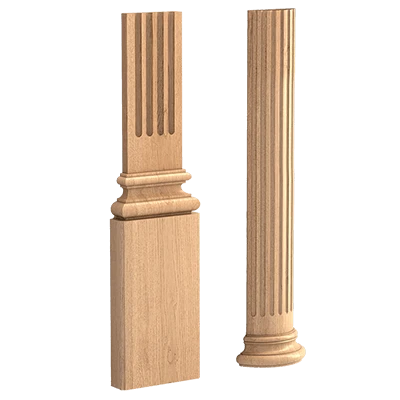
Pilasters — vertical decorative elements on walls — create the impression of supporting verticals where there are none. In spacious Krasnoyarsk living rooms of private houses, pilasters on the sides of a fireplace portal or on the sides of a slatted panel add classical dignity to the space.
Combination of linear and relief decor: a system, not an accident
Slatted panels create a linear rhythm. Polyurethane decor creates relief and architectural structure. Together they form an interior where every element is in its place. But this requires a system — a clear understanding of how these two types of decor interact.
Hierarchy of surfaces
Every room has a hierarchy of surfaces: some 'speak' loudly (accent wall), others quietly (neutral background). A slatted panel is a 'loud' element. Cornices and moldings are 'quiet' elements that structure the space without claiming the main role.
Rule: no more than one 'loud' element per room. If it's a slatted panel — the cornice should be delicate. If the ceiling is richly decorated with moldings — the walls should remain neutral, and slats are appropriate only in limited areas.
Vertical and horizontal: geometric dialogue
Vertical slats and horizontal cornice — this is a classic architectural dialogue of vertical and horizontal. Verticals create dynamics, horizontals create calm. Their combination gives the space both movement and balance.
Horizontal interfloor belt or molding at mid-wall height + vertical slats in the lower or upper zone — this is a 'layered' wall structure, well-known in classical architecture: lower zone (plinth), middle (main), upper (frieze). Reproducing this structure in a modern interior creates a sense of the room's architectural significance.
Color as a unifying factor
The most reliable way to create unity between battens and moldings is through color unity. Two options:
Contrast of materials with unity of planes: battens in natural warm wood + white cornice and moldings. The warmth of wood and the purity of white work in tandem, creating a balance of natural and architectural.
Monochromatic palette: all surfaces in one tone — battens, cornice, walls, ceiling. This is the most complex path, requiring absolute precision in shade selection. But the result is a space where only form, only relief, only chiaroscuro works. No color 'stories' — only architecture.
How to avoid stylistic confusion
Stylistic confusion is a situation where elements of different, incompatible styles are present in one interior. Battens in a brutal loft + Baroque cornices. Classical moldings + Scandinavian narrow battens without any connection. Minimalist interior + lush ceiling rosette with acanthus.
Define the style first
Style is not 'Scandinavian with elements of classicism.' It is one clear direction, within which variations are permissible, but not a mixture of incompatible elements. By defining the style, you automatically get a list of compatible materials and forms.
For Krasnoyarsk, the most organic are:
-
Modern classicism — the most appropriate style for Siberian interiors. Wood in warm tones, moderate classical decor, calm palette.
-
Scandinavian minimalism — works well in apartments with good natural lighting. Light battens, smooth cornices, neutral palette.
-
Neoclassical — for private homes with high ceilings. Rich decor, quality materials, strict proportions.
-
Loft — for apartments in renovated industrial buildings or with concrete ceilings. Dark slats, minimal decor, metal accents.
Scale compatibility
Thin delicate slats + a massive cornice with a deep overhang = a scale conflict. This is immediately visible and looks like a mistake, not a design decision. The scale of all elements must be coordinated: if the slats are narrow (40–50 mm), the cornice should be delicate (width 50–80 mm). If the slats are wide (80–100 mm), the cornice can be more expressive.
The principle of 'less but better'
In an interior with several decorative elements, the principle of reduction works: one good cornice and one expressive slatted panel are better than three types of moldings + two overlays + an inappropriate rosette. Each added element must justify its presence — functionally or aesthetically. Decoration for the sake of decoration in the context of a cold Siberian interior looks nervous.
Practical tips for selection and installation
Calculation of the number of slatted panels
The calculation is simple but requires care:
-
Measure the surface area (length × height)
-
Subtract the area of openings (doors, windows)
-
Divide by the area of one panel (standard: 0.5–1 sq. m depending on size)
-
Add 12–15% for trimming and waste
For niches and non-standard surfaces — add an extra 10% for complex trimming.
Calculation of linear molding quantity
For cornices: measure the perimeter of the room (without subtracting door openings — the cornice is interrupted, but the length remains). Add 10% for corner trimming. Corners are the most critical point for cornice installation: internal corners are cut at 45 degrees using a miter box or saw.
For moldings: calculate the length of each segment according to the plan. Sum them up, add 10% waste.
Installation order: what comes first
Correct sequence:
-
Marking all elements (cornice, moldings, slatted panel zones) — on paper and on walls
-
Surface preparation — leveling, priming
-
Electrical installation (if lighting behind slats is provided)
-
Frame installation for slatted panels
-
Installation of slatted panels
-
Installing cornices and moldings
-
Puttying all joints and seams
-
Sanding
-
Priming all surfaces
-
Paints well. Water-based, acrylic, or latex paints can be used. For facade work, special exterior paints are applied.
Exactly in this sequence — no other way. Painting before puttying joints means redoing the finish layer.
Cornice corner joints: the main technical point
Cornice corner joints are where mistakes most often occur. Internal corner: two pieces are cut at 45 degrees and joined. External corner: the same operation, but in mirror execution. Without a miter box with a fixed angle or a miter saw with precise angle adjustment, the corners won't work — the joints will separate.
After joining — putty the seam with silicone or finishing putty. Sanding. Only then — painting. Puttying corner joints without sanding leaves a noticeable seam that spoils the appearance.
Compatibility table of styles and materials for Krasnoyarsk
| Style | Slat panels | Molding | Shades |
|---|---|---|---|
| Modern Classic | Oak/ash, warm tint, vertical | Cornice with moderate profile, moldings | Warm white + natural wood |
| Scandinavian minimalism | MDF/birch, white or light tone | Smooth cove 50–70 mm | Neutral white |
| Neoclassical | Oak/ash in walnut tint | Rich cornice, coffered moldings, rosette | Cream, ivory |
| Loft | Dark oak/thermowood | Minimum or none | Anthracite, graphite, dark metal |
| Provence/Shabby | Wood in milk tint | Delicate cornice with floral ornament | White, milk, gray-blue |
FAQ: answers to questions from Krasnoyarsk buyers
Can Ibuy slatted panels in Krasnoyarsk with delivery from the manufacturer?
Yes. Most serious slatted panel manufacturers offer delivery to Krasnoyarsk. The transportation distance is significant, but quality materials are worth shipping — the local market often offers budget options with limited lifespan. Clarify packaging conditions for transportation: wooden products must be protected from moisture and impacts.
Is acclimatization of slatted panels needed in Krasnoyarsk?
Absolutely — especially in Krasnoyarsk. The long heating season means very dry indoor air in winter. If damp panels are installed in a dry apartment — they will shrink, gaps will increase, and the structure will deform. Acclimatization in a room with working heating: 7–10 days minimum.
Which wood species are better suited for the Krasnoyarsk climate?
For interiors — oak and ash as the optimal balance of quality and price. Larch — if the panels will be on a veranda or in rooms with high humidity. Thermowood — for areas with particularly sharp fluctuations in humidity.
Does polyurethane molding deform from cold?
In interiors — no. Polyurethane is stable at temperatures from -50 to +80 degrees. Polyurethane degradation occurs from prolonged exposure to UV radiation and atmospheric moisture — that is, outdoors without coating. In the interior of a Krasnoyarsk apartment or house, polyurethane decor will last for decades.
How long does it take to install a slatted panel on a wall with an area of 8 sq. m?
With tools and a level wall: marking and framing — 2–3 hours, panel installation — 3–4 hours. Total 1 working day. Finishing work (puttying, sanding, painting) — an additional day.
Can polyurethane cornice be installed without dowels — only with adhesive?
For lightweight, delicate cornices weighing up to 0.5 kg/linear meter — adhesive alone is sufficient. For cornices with a large overhang (more than 80 mm) and significant weight — combined installation is recommended: adhesive + dowels every 40–50 cm.
Should polyurethane decor be primed before painting?
Yes, if the product is supplied without primer. Adhesion primer for polyurethane ensures reliable paint adhesion to the surface. Without primer, the paint may peel. Most quality manufacturers supply products already primed — clarify when ordering.
About the company STAVROS
Krasnoyarsk is a city that knows how to value quality. It does not forgive superficial solutions: the long winter exposes all interior flaws, forcing every detail to speak for itself in full voice. That is why choosing a manufacturer of finishing materials here is not just a purchase, it is a decision that determines the quality of life for years to come.
STAVROS company produces slatted panels from solid oak, ash, MDF — with precise geometry, stable moisture content, and readiness for any finishing coating. Delivery to Krasnoyarsk is organized with packaging standards that prevent damage during long-distance transportation.molded decoration made of polyurethane— cornices, moldings, baseboards, overlay elements — in a full range from minimalist profiles to rich classical forms.
Technical consultations, quantity calculations, selection for a specific interior — this is not an additional service, but a standard of working with every customer. Becausebuy slatted panels in Krasnoyarsk— this is not a transaction, but the beginning of a long-term result that should delight every day.
STAVROS — materials with character for interiors with character.