

























Article Contents:
- Short answer: you can order NPU-465 separately, but it will be just the overlay
- NPU-465 and CRPU-067 in numbers: the difference becomes clear immediately
- Why NPU-465 cannot be called a "small CRPU-067"
- What the carved overlay NPU-465 is
- Where exactly NPU-465 works inside CRPU-067
- When a single NPU-465 on the ceiling is truly appropriate
- Need a small ornamental accent
- The decor is not placed directly under the chandelier
- Need to support the ornament in another part of the room
- The room is small, and large stucco molding looks visually heavy
- Want to test the idea gradually
- It's even more useful to test several schemes at once
- One NPU-465 — a point ornament
- Two NPU-465 — a direction appears
- Four NPU-465 — already a compositional system
- Look at the width of the lamp shade
- Consider the full dimensions of the chandelier
- Look at the composition from below
- Do not try to compensate for the wrong scale with a number of random details
- Height
- Free field
- Luminaire size
- Wall Saturation
- Task
- Look at the product type name
- Look at the dimensions
- Look at the composition
- Look at the task
- Situation 1. Bedroom 14–16 m², calm ceiling, small chandelier
- Situation 2. Medium-sized living room, want classics without pomp
- Situation 3. Spacious living room with a high chandelier
- Situation 4. Only a specific curl of CRPU-067 is appealing
- Situation 5. Need a truly rich ceiling, but don't want to assemble it yourself
- Can I buy the NPU-465 separately from the CRPU-067?
- Is the NPU-465 a small ceiling outlet?
- How many NPU-465 units are included in the CRPU-067?
- Can I buy four NPU-465 units and assemble a compact composition?
- Will one NPU-465 be suitable for a small bedroom?
- Can I place the NPU-465 right next to the chandelier?
- Can I use the NPU-465 instead of a decorative chandelier canopy?
- What is better for a small room: one NPU-465 or four?
- Can the NPU-465 be installed not on the ceiling?
- How much does the NPU-465 cost now?
- How much does the CRPU-067 cost?
- What to do if the NPU-465 is too small and the CRPU-067 is too big?
- How to understand the size before placing an order?
- Do I need to buy special glue?
- Can I first glue the NPU-465 and then install the chandelier?
- Will the NPU-465 suit a modern interior?
- What is more important when choosing: the area of the room or the ceiling height?
- Do I need to repeat four NPU-465 exactly as they are placed in CRPU-067?
- Can NPU-465 be combined with a full ceiling rosette?
- What should I choose if I don't want to come up with a composition myself?
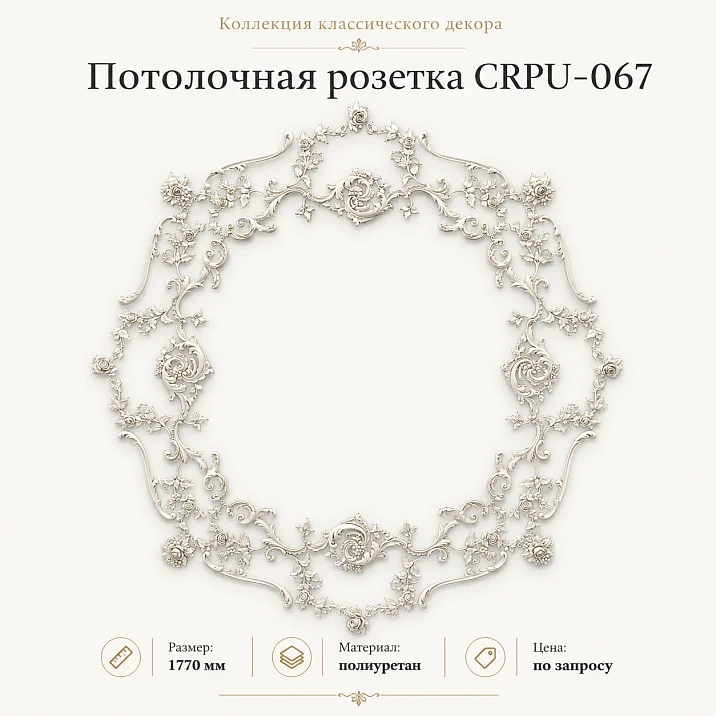
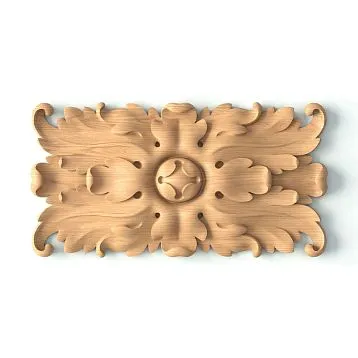
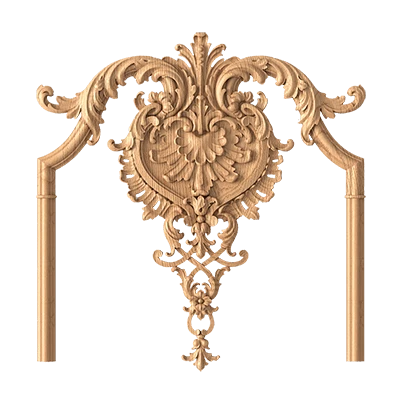
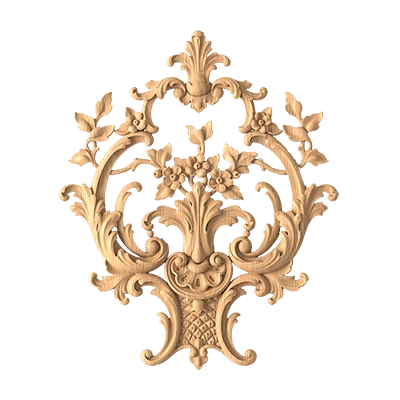
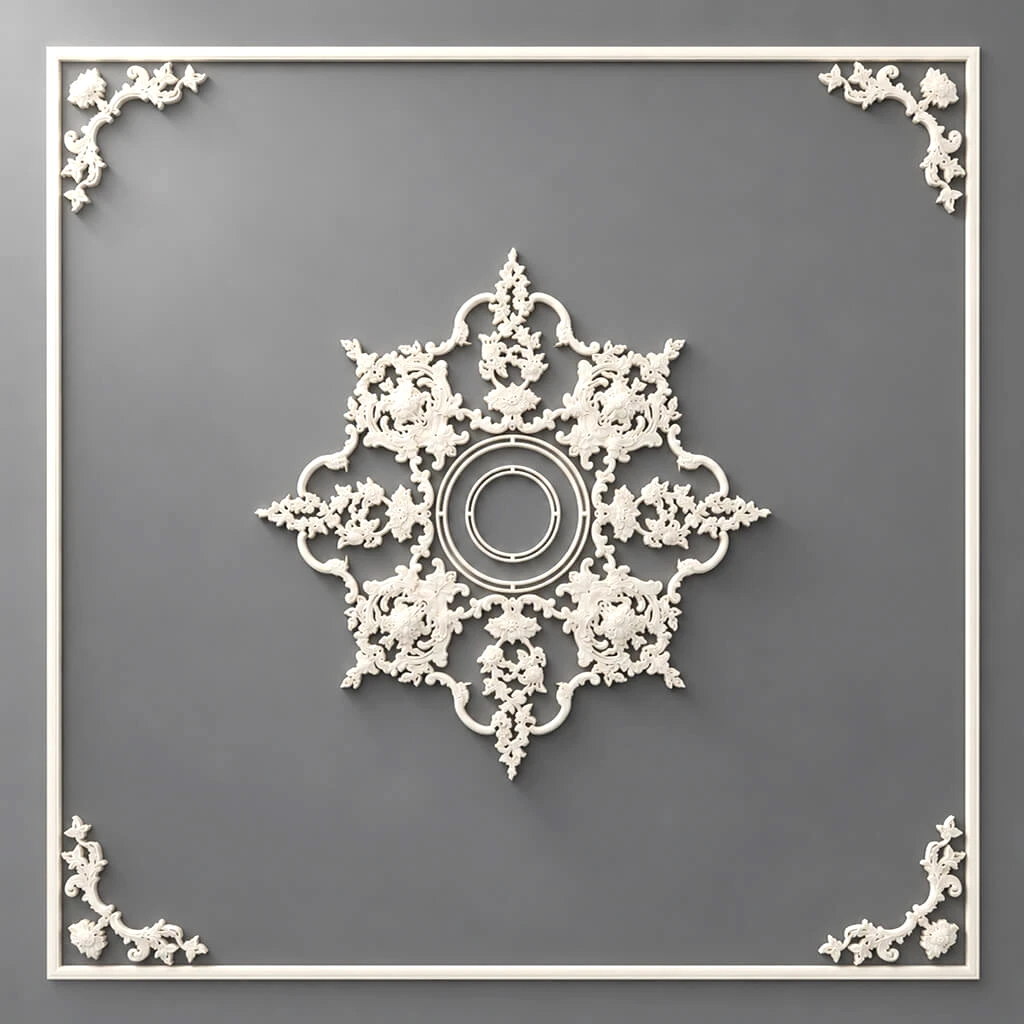
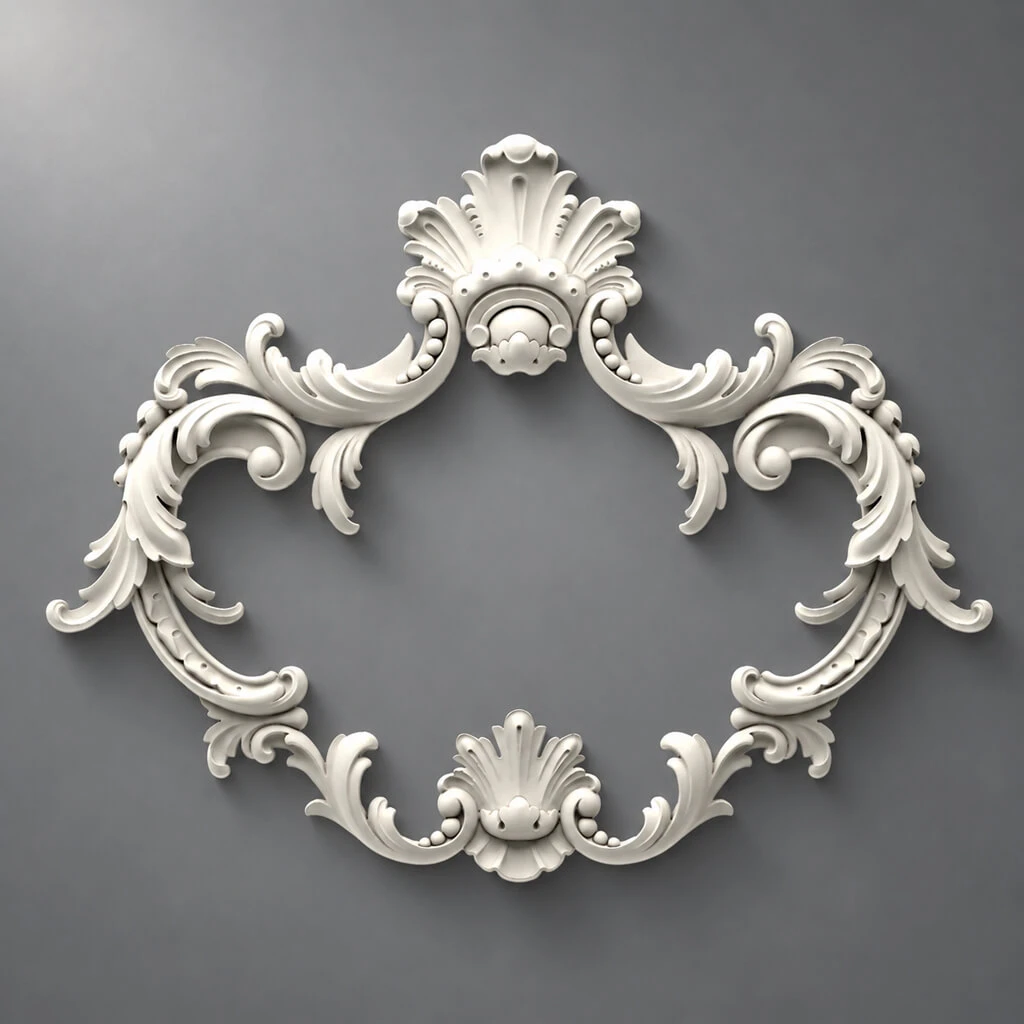
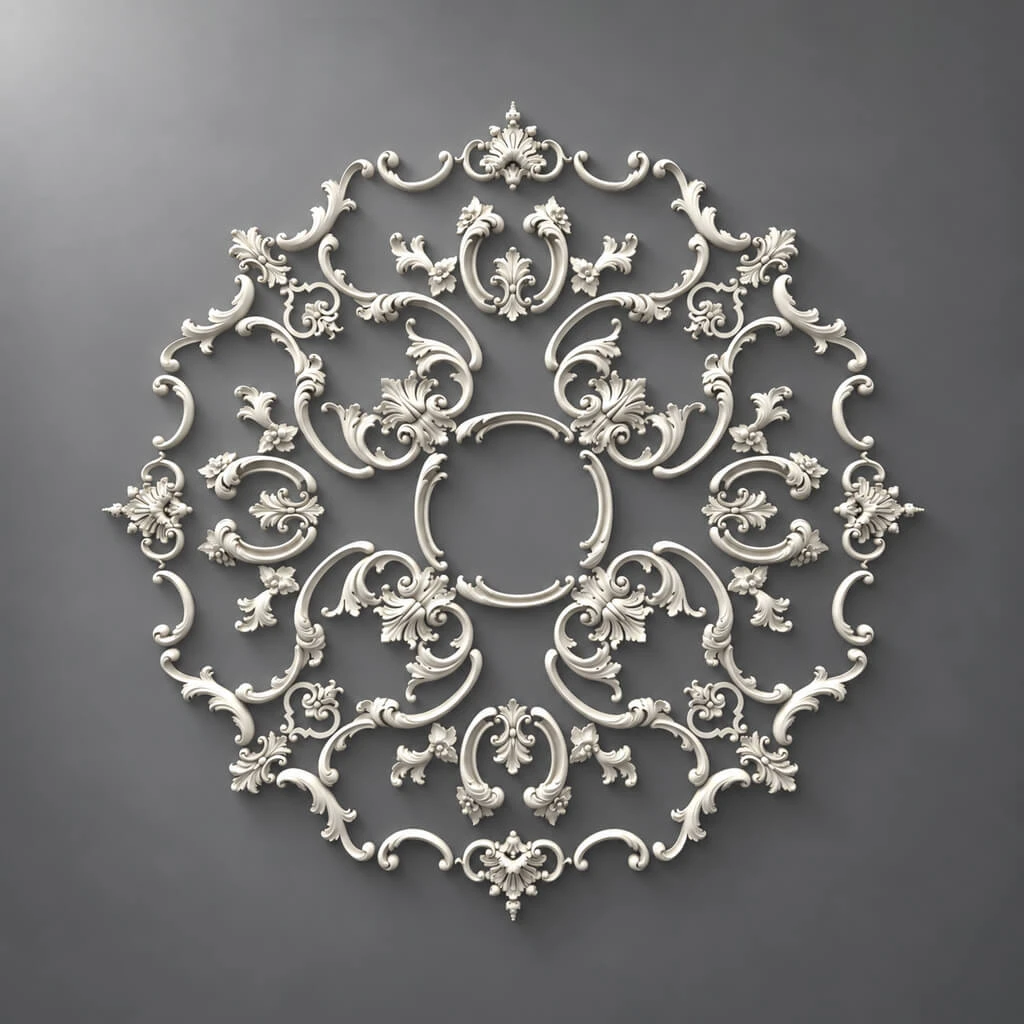
Did you like the large ceiling rosette CRPU-067, but its size of 1770 × 1770 mm is too big for an ordinary room? This is exactly the case when you don't have to give up the ornament you like entirely. As part of the large composition, four carved overlays NPU-465 are used, and NPU-465 itself is sold separately. It is a decorative polyurethane overlay measuring 330 × 190 × 12 mm and costing 2,920 ₽.
But there is a fundamental detail here. NPU-465 is not a reduced version of CRPU-067 and not a small ceiling rosette. It is an independent decorative element that is only one of the components of a large modular composition. Therefore, you can buy one NPU-465, but you shouldn't expect it to look like a compact copy of CRPU-067 on the ceiling.
It is this difference that helps make the right decision. If you want not a full rosette around the chandelier, but a small relief accent, a separate overlay may be much more appropriate. If you need a finished ceiling center that compositionally brings together the chandelier, wiring, room symmetry, and the rest of the molding, it's better to look toward ready-made ceiling fixtures made of polyurethane.
Let's figure it out without substituting concepts: what exactly do you get if you decide to buy the carved overlay NPU-465, in which rooms its size is really sufficient, when it's better to use two or four overlays, and why sometimes it's still more reasonable to choose a full ceiling composition.
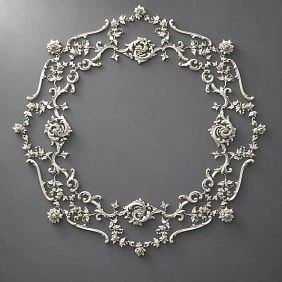
Short answer: you can order NPU-465 separately, but it will be exactly an overlay.
Yes. NPU-465 exists as a separate product, so you don't need to buy the entire CRPU-067 just for a fragment of the ornament you like.
This is an important advantage of modular decor logic. A person may like the artistic language of a large composition—smooth curls, plant plasticity, the character of the relief—but its scale may not suit them at all. A room of 12–18 m², an ordinary city bedroom, or a small study doesn't have to accept ceiling decor almost 1.8 m wide just because a particular motif appealed to them.
In such a situation, you can order NPU-465 made of polyurethane as an independent decorative overlay and build a completely different composition around it.
However, the function will change.
CRPU-067 is perceived as a large, complete ceiling system. NPU-465 works differently: it becomes a separate ornamental accent. It can be placed on the ceiling, wall, door, furniture facade, or used as part of your own symmetrical scheme. This is not a "trimmed rosette," but an independent detail with its own proportions.
Therefore, the main question is not "can you buy NPU-465 separately?"—you can. It's much more useful to ask: is one overlay measuring 330 × 190 mm enough specifically for your ceiling and the decorative task you want to solve?
The answer depends on the installation location, room size, scale of the light fixture, amount of free ceiling space, and whether you want a local ornament or a full architectural center.
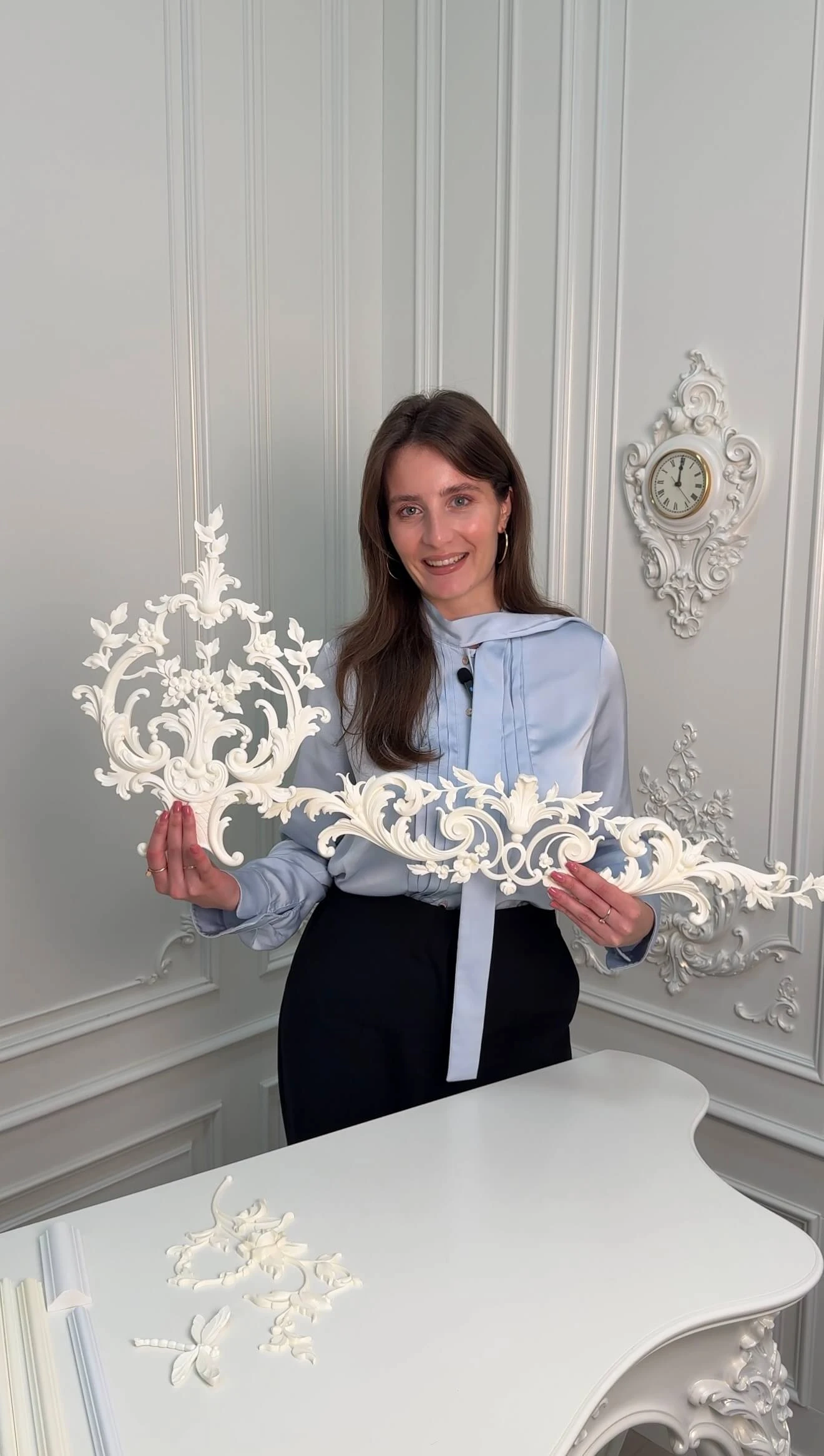

NPU-465 and CRPU-067 in numbers: the difference becomes clear immediately
| Parameter | NPU-465 | CRPU-067 |
|---|---|---|
| Product type | Carved decorative overlay | Modular ceiling rosette, modular composition |
| Material | Polyurethane | Polyurethane |
| Size | 330 × 190 × 12 mm | 1770 × 1770 × 20 mm |
| Price | 2 920 ₽ | 105 440 ₽ |
| Role | Separate decorative element | Finished large ceiling composition |
| NPU-465 included | Standalone product | 4 pieces used |
| Available for separate purchase | Yes | Purchased as a ready-made composition |
| Main Scenario | Local relief, separate accent, own composition | Large-scale decoration of the central ceiling zone |
| Is a small version of CRPU-067 | No | — |
The difference is in almost every parameter — from dimensions to the decorative logic itself.
The size of 330 × 190 mm means that NPU-465 occupies a relatively limited surface area. The 12 mm thickness provides relief but does not turn the overlay into a massive central structure. On the ceiling, it will be perceived primarily as an ornamental detail.
CRPU-067 occupies a square field measuring 1770 × 1770 mm. This is already an architectural scale. Such a composition does not just decorate a small area: it forms an independent zone that affects the perception of the entire ceiling.
Hence the first practical conclusion: NPU-465 and CRPU-067 should be compared not as two sizes of the same product, but as two different ways to decorate a ceiling.
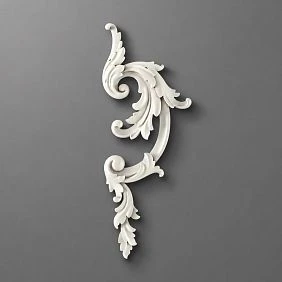
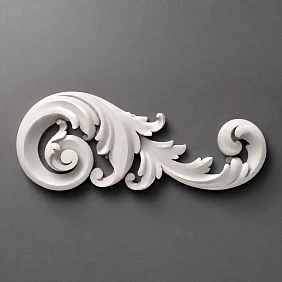
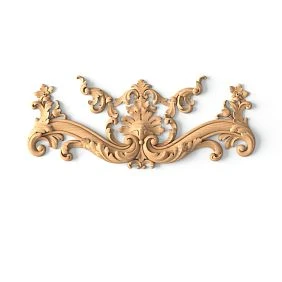
Our factory also produces:


Why NPU-465 cannot be called a "small CRPU-067"
The temptation is understandable. A buyer looks at a large composition, sees a fragment they like, and thinks: "If I order just this part, it will be the same thing, only more compact."
In decorative architecture, this does not always work that way.
CRPU-067 consists of several types of elements. Four NPU-465 units help form its structure, but around them are other details — larger, medium, and small ones, left and right elements, transitional ornaments. Together they create rhythm, symmetry, and a sense of completeness.
Imagine a classic frame. One carved corner of the frame can be beautiful on its own, but it does not become a reduced frame if you remove it and hang it separately. It begins to perform a new function — the function of an independent decorative accent.
The same happens with the NPU-465.
В ceiling rosette CRPU-067 the overlay is included in the system. Its position is determined by neighboring parts, composition axes, distances, and the overall square of 1770 × 1770 mm.
If you remove everything else and leave only one NPU-465, the large system disappears, but the overlay itself does not become worse. It simply starts to live by different rules.
On a small ceiling, this is sometimes even an advantage. Instead of a monumental center, you get a light ornamental touch. In a room where a full stucco composition would take up too much space and compete with the light fixture, a local overlay leaves more air.
Therefore, the correct way to pose the question is:
Do you like the pattern of CRPU-067, but its scale does not fit? You can take one of the expressive elements of this composition — NPU-465 — and design a different, more compact decorative scenario with it.
Get Consultation
What is the carved overlay NPU-465
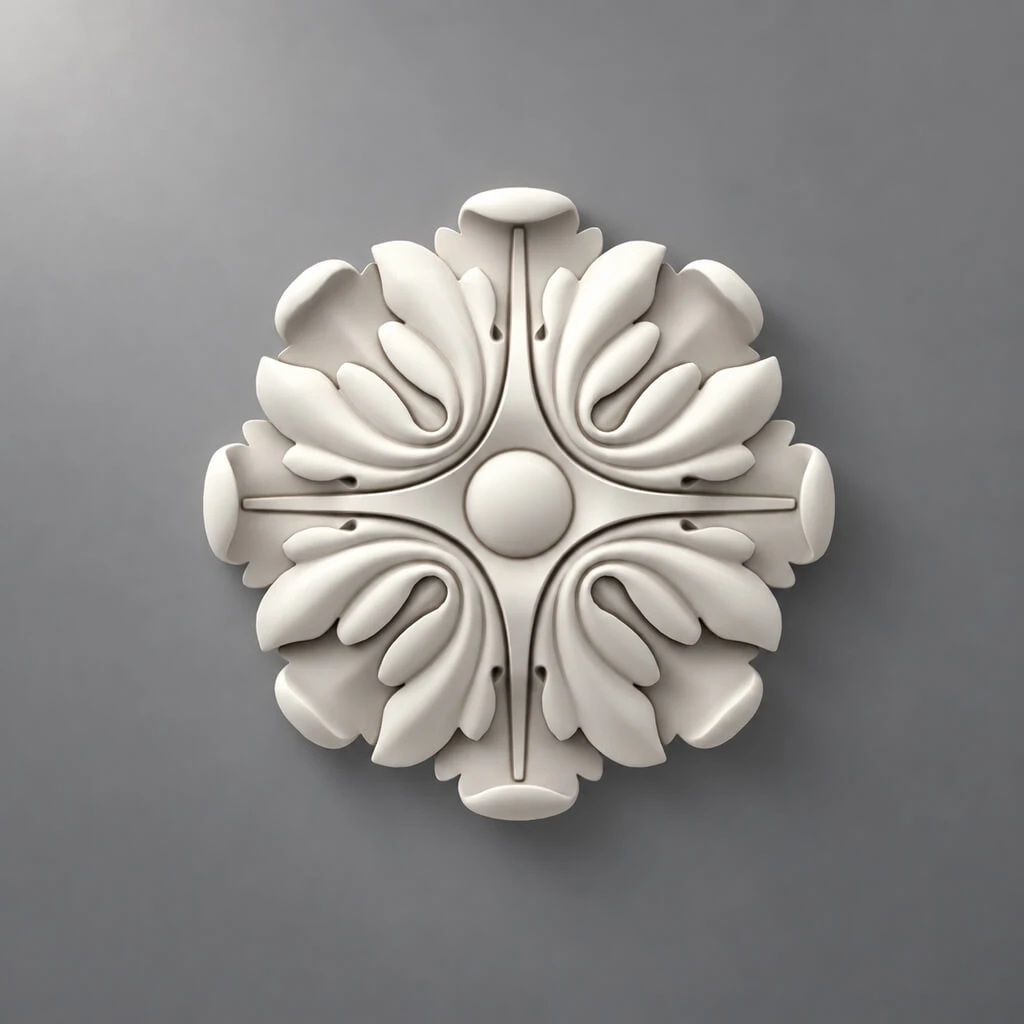
Carved overlay NPU-465 made of polyurethane and has dimensions of 330 × 190 × 12 mm. This format is fundamentally different from a round or square ceiling rosette: it is not a solid center, but an elongated ornamental element.
It is the shape that determines many application options.
The overlay can be placed horizontally to emphasize a certain axis. It can be included in a symmetrical pair. Four identical elements allow for a more developed scheme. It can work on the ceiling separately from the lamp, near a decorative frame, in a corner or axial composition.
There is another advantage: NPU-465 is not tied exclusively to the ceiling. The same element can be used on a wall, door, furniture, or facade. This is especially convenient if you want to repeat one motif in several parts of the interior. For example, the ceiling relief can be supported by a similar overlay on a door leaf or furniture facade, without overloading the space with many different ornaments.
For this approach, it is useful to look not only at one model, but also at the entire section, where you can Buy decorative polyurethane overlays. This makes it easier to assess the scale of neighboring parts and understand whether 330 × 190 mm is really the right size.
Where exactly NPU-465 works inside CRPU-067
The meaning of a separate purchase becomes even clearer if you look at the original composition.
CRPU-067 uses four NPU-465 units. That is, the large rosette is initially built not around this single part. The repetition of four identical elements helps create symmetry, while the other components continue and connect the ornament.
This is a good example of how assembled stucco molding works.
Instead of one giant casting, a system of parts is used. Each has its own pattern and its own role. Some set large directions, others connect fragments, and others work as small accents.
NPU-465 in this context is large enough to be noticeable, but not independent enough to replicate the entire look of CRPU-067 on its own.
That is why the buyer should not try to mechanically "shrink" the original composition. For example, you cannot simply take four NPU-465s, place them closer together, and assume that you get a smaller CRPU-067. Between the large elements, proportions will change, transitions will disappear, and the pattern will become different.
However, four identical overlays can be used as the basis for a new composition. In this case, you are not copying a ready-made rosette, but designing your own system to fit the room's dimensions.
The difference seems verbal, but in practice it determines the result.
A copy from which most of the details have been removed often looks unfinished.
A new composition, originally designed for one, two, or four NPU-465s, can look quite complete—precisely because it does not try to imitate what it is not.
When a single NPU-465 on the ceiling is truly appropriate
One overlay measuring 330 × 190 mm works best where it is not expected to provide the scale of a full rosette.
A small ornamental accent is needed
For example, the ceiling is already finished calmly: a smooth painted surface, a neat cornice around the perimeter, and a light fixture with its own expressive base. I don't want to add a huge composition around it, but the plane seems too neutral.
One NPU-465 can provide relief and pattern without the feeling that the ceiling has been "built up."
The decor is not placed directly under the chandelier
This is a very important scenario.
The overlay can be on a separate axis, between light points, near the ceiling frame, or as a local element of a symmetrical layout. Then it is not required to frame the technical center of the chandelier.
Need to support the ornament in another part of the room
Suppose a similar floral motif is already present on doors, furniture, or wall panels. In such an interior, NPU-465 on the ceiling can work as a repetition of a familiar decorative language.
The room is small, and large stucco visually feels heavy
In a compact space, it is sometimes better to leave a significant part of the ceiling free. A small relief creates character but does not take away the feeling of space from the room.
Want to test the idea gradually
Instead of buying an expensive large system, you can first assess whether you like the character of the ornament in a real interior. This is not about one NPU-465 replacing CRPU-067, but about the ability to understand how suitable such relief is for the room at all.
When one overlay will be too little
There is the opposite situation. A person sees a beautiful photo of large ceiling decor, buys one small piece, installs it in the center of a spacious living room, and gets an almost invisible fragment.
The reason is simple: the scale is assessed relative to the room, not relative to the product photo.
On a large wall or ceiling, 330 mm can be perceived as much more modest than on a screen.
The risk is especially high if the following are present at the same time:
-
large room area;
-
high ceiling;
-
massive chandelier;
-
wide cornice around the perimeter;
-
large furniture;
-
developed architectural wall decoration;
-
large door openings;
-
rich classical stylistics.
In such an environment, a small single element finds itself in an unfavorable neighborhood. It may be beautiful in itself, but visually it cannot withstand the overall scale.
Then there are three reasonable paths.
The first is to increase the number of NPU-465 and design a symmetrical composition.
The second is to supplement the overlay with other elements from the section moldings from polyurethane, without trying to literally repeat CRPU-067.
The third is to admit that the task still requires a full-fledged central element, and buy ceiling rosette CRPU-067 or choose another model of a smaller scale in the ceiling rosettes category.
Don't guess the scale: make a template 330 × 190 mm before ordering
This is one of the most useful ways to check NPU-465 specifically in your room.
The numbers 330 × 190 mm are clear on a drawing, but it's hard for a person to imagine how they will be perceived at a height of 2.7–3 m. Therefore, it's better to bring the size out of the screen into real space.
Take a sheet of paper, thin cardboard, or several glued sheets and make a rectangle measuring 330 × 190 mm. This won't replicate the exact carved contour of NPU-465, but it will show the maximum area it occupies.
Apply the template to the intended installation location.
Then step back to where the ceiling is usually seen in real life: to the room entrance, to the sofa, to the bed, to the work desk.
Don't evaluate only while standing directly under the cover. Ceiling decor is almost never viewed from a distance of half a meter.
If the rectangle seems barely noticeable, a single NPU-465 most likely won't provide the desired visual weight.
If the field reads well but doesn't draw attention to itself, the size is close to what's needed.
If even a simple rectangle looks too active, it might be worth choosing a smaller decorative element.
It's even more useful to check several schemes at once.
Make four identical templates.
First attach one.
Then two — symmetrically.
Then four.
You'll literally see how the scale of the composition changes without spending money on the experiment.
For a ceiling with a chandelier, it's useful to additionally mark the size of the decorative canopy on paper. Then it becomes clear how the two different scales relate to each other.
Such a mockup is much more reliable than the phrase "the room is kind of small." Two rooms of the same area can be perceived completely differently due to ceiling height, shape, furniture, and lighting.
One NPU-465, two covers, or four: these are three different solutions.
The number of decorative elements changes not only the price and coverage area. The very architecture of the ceiling changes.
One NPU-465 — a point ornament
A single overlay is suitable for a local accent.
It can be located above a specific zone, on the axis of the wall, near a decorative frame, or away from the technical center of the light fixture.
In this variant, there is no need to make it imitate a rosette. Let it remain a separate ornament.
A single detail works especially well where there is enough free space around it. The emptiness helps the relief to be read.
Two NPU-465 — a direction appears
A pair immediately creates an axis.
This is useful for an elongated room, a kitchen-living room, a bedroom with a pronounced central line, or a space where the ceiling is desired to be connected with the furniture layout.
Two overlays can be placed mirror-symmetrically relative to the light fixture or another central point. The distance between them should be determined already in the mockup.
Too close — the details will visually merge.
Too far — the connection between them will disappear.
Four NPU-465 — already a compositional system
Four elements allow creating a pronounced symmetry.
It is here that the buyer again feels the temptation to repeat CRPU-067. But it is better to resist this desire.
Four NPU-465 can become the basis of your own scheme, but this is still not CRPU-067. In the original large rosette, other elements work between them, so the visual density and transitions are completely different.
In your own composition, it is better to honestly use more air. Then the absence of other elements is perceived not as a loss, but as deliberate conciseness.
NPU-465 next to a chandelier and NPU-465 instead of a rosette are not the same thing
An important boundary lies here.
A ceiling rosette under a chandelier usually solves several compositional tasks at once. It marks the center, interacts with the lamp shade, and forms a complete decorative field around it.
NPU-465 has an elongated ornamental format. Therefore, one such overlay is not required and is not always able to serve as a central rosette.
If the lamp already has a beautiful base and the wiring outlet area is neatly finished, the decorative NPU-465 can be placed nearby and compositionally linked with the chandelier.
If you want to hide the technical zone and create a traditional symmetrical center specifically around the pendant, it is more reasonable to first view polyurethane ceiling rosettes.
Particular attention should be paid to the situation when an electrical outlet already exists.
The decorative overlay is not a mounting for the chandelier. The lamp must have its own mounting system to the ceiling base as provided by its design. You cannot rely on the polyurethane decor to bear its weight.
Additionally, before gluing the overlay, you need to understand where the wires run, where the mounting plate or hook is located, and whether the future relief will interfere with the installation of the chandelier's decorative canopy.
Therefore, the scheme "first glue a beautiful piece, then figure out the lamp" is a bad one.
First, the technical zone is designed. Then the decorative one.
How to evaluate NPU-465 relative to a chandelier
There is no universal formula for an elongated overlay. It is not a round rosette, so comparing only one diameter is meaningless.
But there are a few clear criteria.
Look at the width of the lamp shade
If the chandelier base takes up a significant area, a single NPU-465 may look like a small additional touch.
If the shade is compact, a 330 × 190 mm overlay will be more visually noticeable.
Consider the full dimensions of the chandelier
Not only the top shade, but also the overall weight of the fixture affects the perception of the ceiling decor.
A large multi-tier chandelier requires a more confident surrounding. A small ornament above it can get lost.
A minimalist medium-sized fixture, on the contrary, allows a small relief to become the main decorative feature of the ceiling.
Look at the composition from below
The ceiling plan is useful, but the final viewer is down below.
An overlay that seems large on the plan looks calmer with a ceiling height of 3.2 m than with a height of 2.5 m.
Do not try to compensate for the wrong scale with a number of random details.
If one NPU-465 is not enough, it does not mean that you need to glue everything you liked in the catalog nearby.
It is better to move from a single purchase to a system: two identical parts, four identical parts, or a ready-made set.
Why CRPU-067 requires a different room scale
The size of 1770 × 1770 mm is 1.77 m on each side. For a decorative ceiling center, this is a significant field.
In a large living room, such a scale can work confidently: the composition becomes part of the room's architecture.
In a small bedroom, the same size can occupy a large share of the visible ceiling plane. The eye begins to perceive not a room with decor, but decor inside which the room is located.
This does not mean that large stucco is "bad for an apartment." Everything is determined by proportions. But you cannot choose it only by the beauty of a photo.
If you are attracted to the monumental character, it is useful to first study the material about, how to choose a large ceiling rosette made of polyurethane. It helps to evaluate scenarios where large decor is truly justified.
If the conclusion is already obvious — "1.77 m is too much for our room" — then there is no point in forcing the space to accept a foreign scale. This is where the separate NPU-465 becomes an interesting alternative.
Not a one-to-one alternative, but a different level of decorative richness.
Room size is just the beginning: what else influences the choice
The area in square meters alone is not sufficient.
A room of 16 m² with a ceiling of 2.55 m and a large wardrobe reaching the ceiling feels different from a space of the same area with a height of 3.2 m, tall doors, and minimal furniture.
When choosing small stucco decor for the ceiling, it is useful to evaluate five factors.
Height
The higher the ceiling, the smaller a detail of the same physical size appears.
Free field
If the ceiling is already divided by moldings, lighting, beams, tracks, or other elements, an additional overlay has to compete for attention.
On a clean surface, it is more noticeable.
Size of the light fixture
A chandelier can be the main reference for scale. A large fixture can visually "reduce" adjacent decor.
Wall richness
If the walls are adorned with moldings, carved decor, and furniture with complex shapes, a too modest ceiling element may seem random.
Task
The most important point.
One person needs a barely noticeable relief.
Another needs a grand centerpiece.
The third one just needs to repeat the door decor motif on the ceiling.
In each case, the same NPU-465 receives a different rating.
How to choose the size of a ceiling rosette if you still need a finished center
If after trying it on you find that you need not a separate ornament but a rosette for the chandelier, it is better to stop comparing NPU-465 with CRPU-067 and move on to selecting within the desired product group.
A useful reference is a separate article about how to choose the size of a ceiling rosette.
Here the main principle is simple: the rosette is evaluated simultaneously relative to the ceiling and relative to the light fixture.
You cannot choose only by the chandelier. And you cannot choose only by the room area.
Imagine a light fixture with a diameter of 800 mm in a small room. Even if a large rosette relates beautifully to the chandelier, together they may take up too much ceiling space.
Conversely, in a spacious room, a small central element next to a large chandelier may look insufficiently convincing.
Catalog ceiling fixtures made of polyurethane It is needed precisely for such a choice: not "we take a large one or none at all," but we look for a model of a suitable scale.
This is an important commercial route for a buyer who likes CRPU-067 artistically but it does not fit physically.
A small room does not mean that stucco molding should be excluded
Sometimes after an unsuccessful fitting of a large rosette, a person makes too harsh a conclusion: "So, stucco molding is not suitable for us at all."
This is another extreme.
The problem may not be in the decorative language itself, but only in the scale.
In a small room, stucco molding works especially well in doses. The free field of the ceiling remains dominant, and the relief becomes an accent that is noticed not because of its size, but because of the pattern of light and shadow.
For this, individual ones are useful decorative polyurethane elements.
You can build an interior on several precise repetitions:
-
one motif on the ceiling;
-
repeat on the door leaf;
-
small decorative accent on furniture;
-
calm profile around the perimeter.
Then the interior gets a classic foundation without feeling heavy.
It is especially important not to try to reduce the scale by chaotically compacting small details. A small room benefits not from a large number of small moldings, but from a clear composition and enough empty space.
In the living room: when NPU-465 works better than a large rosette
The living room is the first space where you want to make the ceiling expressive. This is usually where the main light fixture is, and from the sofa the ceiling is especially well visible.
But living rooms can be completely different.
In a room with near-standard height and moderate area, a large CRPU-067 can become overly active. Especially if there are already cornices, wall moldings, tall cabinets, or expressive furniture.
One NPU-465 in such a room can work as a calm reference to classic decor.
Two will create a clearer symmetry.
Four will allow a transition to a true ceiling composition, but still leave much more air between the details than in CRPU-067.
If the living room is spacious and formal, the situation changes. A single NPU-465 may get lost. Then it is more reasonable to consider a full socket or buy polyurethane ceiling decor in the format of a more developed system.
The main idea: the living room itself does not require much decor. The scale is dictated by its actual proportions.
In the bedroom: less decor often works more convincingly
The bedroom rarely needs the same decorative intensity as a formal hall.
Here, a calm rhythm is more important.
If a chandelier or ceiling light is already noticeable, a small carved overlay can support the classic theme without excessive solemnity.
An interesting option is to place the NPU-465 not as a central socket, but along the axis of the bed. Then the decorative composition is connected not only with the lamp, but also with the main piece of furniture.
Two trims can support the longitudinal axis of the room.
One can work as a small decorative "dot" on an open field.
A paper template is especially useful. In the bedroom, the ceiling remains in the field of view of a person lying on the bed for a long time. What looks delicate from the doorway may seem much more active from the bed.
Therefore, the decor should be tried on from the actual observation points.
In the study and library: the ornament can become a connecting element
A study often allows for a denser decorative language: wood, bookshelves, paneled doors, wall frames, classic lamps.
Here, the NPU-465 can be especially interesting as a repetition of the ornamental theme.
If the ceiling is small, a large CRPU-067 can compete with the furniture.
A separate trim allows you to maintain the decorative connection without turning the upper plane into another saturated facade.
A good principle is to evaluate not the individual ceiling, but the overall density of the room.
If the walls are already "speaking loudly," the ceiling sometimes is better off answering with a short remark.
In the entryway and hall: everything is decided by the width of the space
In a long entryway, a square composition of 1770 × 1770 mm often simply does not match the geometry of the room.
But the elongated NPU-465 can support the direction of the passage.
A pair of overlays can create a rhythm along the longitudinal axis.
In a large square hall, it is the opposite: a single element may seem too small, while a full rosette is quite justified.
Therefore, the words "hall" or "entryway" mean nothing without dimensions. The shape of the room sometimes matters more than its purpose.
NPU-465 as part of your own ceiling pattern
The most interesting path begins when you stop choosing between "one overlay" and "ready-made CRPU-067" as the only options.
A separate detail allows for design.
For example, four NPU-465 can be distributed relative to the central zone. Leave a calm field between them. The central light fixture then gets its own design — either a compact socket or a neat cap.
You can build a rectangular composition to match the room's geometry.
You can use a pair on one axis.
You can tie the ornament to the ceiling frame.
It's useful to first study ready-made ceiling decor sets not for literal copying, but to see the principle: good ceiling decor is built on a hierarchy of elements, not on random filling of empty space.
NPU-465 is already used not only in CRPU-067, but also in more advanced ceiling systems. For example, you can look at Molding decor set CPU-P2 and see how the same ornamental element works within another compositional task.
This is more useful than trying to guess the scheme from a single photo.
Why can't you just compress the CRPU-067 scheme
Suppose the original composition takes up 1770 × 1770 mm. An idea arises: "We'll keep the same parts, just place them closer — it'll be smaller."
This approach is dangerous.
Ornamental elements have fixed physical dimensions. If you reduce the distances, the elements themselves won't shrink. The ratio of filled to empty space will change.
The parts will start crowding each other.
Where the original composition had a smooth transition, visual densification will occur.
Moreover, different elements are designed for specific neighbors. Left and right forms, transition pieces, and central accents support the overall rhythm.
When part of the system is removed, the remaining elements need to be recomposed, not just shifted.
This is the difference between design and mechanical reduction.
If you want a compact ceiling decor, start with the actual dimensions of your room and the chosen parts. Don't start with a photo of a large rosette that you need to "squeeze" at any cost.
Material matters: why polyurethane is convenient for this scenario
NPU-465 is made of polyurethane. For the buyer, what matters here is not an abstract characteristic of the material, but what it provides when working with a specific decorative element.
First, a relatively thin overlay creates relief without turning the ceiling into a heavy structure.
Second, polyurethane decor allows working with repeating shapes. If you decide to use two or four identical NPU-465 elements, they maintain a consistent pattern, which is especially important for symmetrical layouts.
Third, the material is suitable for painting, so the overlay can be integrated into the overall ceiling finish.
A white overlay on a white ceiling is perceived primarily through relief and shadows. This is a calm option.
Contrast finishing makes the ornament significantly more active. For a small room, this already requires caution: a physically small element can become very noticeable due to color.
If you want to look not only at NPU-465 but also at other options, it is convenient to go to the section and You can buy ready-made stucco matching the Baroque style. Calculate the quantity: linear meters of cornices and moldings, number of rosettes, pilasters, consoles, corner elements. Add a ten to fifteen percent allowance for trimming. after comparing shape, size, and purpose.
White on white or contrast: color changes scale more than it seems
The same relief can be perceived completely differently.
If the NPU-465 is painted to match the ceiling color, the edge of the detail visually softens. The ornament becomes visible through shadows.
This is a good technique for a small room where you want molding without strong decorative pressure.
If the overlay is darker than the ceiling, the eye begins to read not only the relief but also the entire outer contour of 330 × 190 mm. The detail becomes graphic.
Gilding or highlighting individual protruding parts further enhances the ornament.
Therefore, a paper template should be tested not only for size but also for color. If a contrasting finish is planned, paint the mockup in approximately the desired shade.
This is a simple experiment, but it often changes the decision about the number of details.
A single white NPU-465 may seem very calm.
The same overlay in a contrasting color can already become the center of attention.
Light also changes the perception of the 12-millimeter relief.
The thickness of NPU-465 is 12 mm. On paper, the number seems small. On the ceiling, the effect depends on the light.
With uniform diffused lighting, shadows are soft, and the relief looks calmer.
With side or directional light, recesses and protrusions become more noticeable.
Therefore, it is advisable to evaluate the future decor not only during the day, but also with the lighting turned on.
If the lamp directs part of the light to the ceiling, the relief may read more strongly than expected.
If the ceiling remains in soft partial shade, on the contrary, a complex ornament will look calmer from a distance.
This is another reason not to choose the number of NPU-465 based on the catalog image. The catalog photo shows the shape. In your interior, its perception is determined by height, color, light, and distance.
What to do with the wiring outlet
If NPU-465 is placed next to a chandelier, the wiring issue is usually simple: the overlay remains a decorative element and does not interfere with the technical unit.
If you want to bring it closer to the wiring outlet, you first need to understand the lighting fixture's scheme.
Check:
-
where exactly does the cable come out;
-
where is the hook or mounting plate;
-
what size is the chandelier's ceiling canopy;
-
which direction does the wire come out;
-
how much free surface is required for mounting the light fixture;
-
will the cover plate cross the mounting plate area.
Do not glue the decorative element and then try to adjust the chandelier mounting to fit it.
And again: NPU-465 does not serve as a load-bearing base for the light fixture. The chandelier is attached to its designated base independently of the molding.
If you need to move the electrical outlet or change the mounting, it is better to resolve this part of the work before the decorative installation.
How to prepare for mounting NPU-465 on the ceiling
First, do a dry fit.
Even if the dimensions have already been checked on a paper template, the actual part has a complex contour, and the impression may differ.
Mark the axes with a pencil or a suitable marking method.
If two or four overlays are used, do not mark each one separately "by eye." First set the central axes of the entire composition, then transfer the positions of individual elements.
Otherwise, the first part may turn out almost right, the second may shift slightly, and by the fourth the error will already be noticeable.
The base must be suitable for gluing. The choice of adhesive depends on the surface and installation conditions, so instead of a random universal glue, it is better to find out in advance which glue to use for stucco decor.
Particular care must be taken with an already painted ceiling. The decor actually holds not "on the ceiling in general," but on the layer of the base that the glue contacts. If the finish coating is peeling, good adhesion of the glue to the weak
What to buy together with NPU-465
It is better to view the purchase not as a single line in the cart, but as a complete small project.
In the simplest scenario, you need the decor itself and a suitable mounting compound.
If a more complex ceiling is planned, other elements are added.
If the task has shifted from a local accent to a full-fledged central composition, it is more useful to switch to ready-made rosettes rather than increasing the number of random overlays.
| What you will need | Why | When especially relevant | Where to go |
| NPU-465 | Main ornamental accent | A specific motif from CRPU-067 is needed without the entire large composition | Buy NPU-465 330 × 190 mm |
| Mounting compound | Fixing the decor on a prepared base | For ceiling, wall, and other mounting | molded decoration adhesive |
| Other decorative overlays | Development of a custom composition | If one NPU-465 is not enough | Buy decorative polyurethane overlays |
| Ceiling rosette | Finished center for a chandelier | If you need not a local ornament, but a full-fledged design of the light point | buy polyurethane ceiling rosettes |
| Ready-made ceiling kit | Coordinated system of several elements | When you don't want to design a complex scheme yourself | buy polyurethane ceiling decor |
| CRPU-067 | Large ready-made composition | For a room where the scale of 1770 × 1770 mm is justified | buy ceiling rosette CRPU-067 |
The main thing here is not to buy accompanying elements "in reserve." First determine the composition, then complete it.
A single piece or a set: a simple way to make a decision
| Situation | One NPU-465 | Several NPU-465 | Ready-made ceiling rosette or set |
| Need a small ornament | Suitable | Possibly redundant | Usually not required |
| Need to repeat the liked motif CRPU-067 | Suitable | Suitable | CRPU-067 is needed only at a suitable scale |
| Need to design the center around the chandelier | Not always enough | Author's scheme possible | Usually the clearest path |
| The room is small | Often appropriate | Requires a layout | Large models need to be checked especially carefully |
| The space is spacious | May get lost | Fits better | Often justified |
| Don't want to design it myself | Just for a single accent | A risk of errors appears | A ready-made system is more convenient |
| Precise symmetry is needed | Simple | Requires careful marking | Already built into the composition |
| I like the whole CRPU-067 itself | It won't replace it | It still won't become a full CRPU-067 | Choose an original composition at a suitable scale |
This table clearly shows the main point: a separate overlay and a ready-made socket do not compete directly. They address different tasks.
How not to confuse NPU-465 with a ceiling socket
The most common mistake starts with visual similarity.
Both NPU-465 and CRPU-067 belong to decorative molding. Both can be on the ceiling. Both are made of polyurethane. NPU-465 even fits into CRPU-067.
But their purpose and compositional level differ.
Look at the product type name
NPU-465 is an overlay.
CRPU-067 is a ceiling socket, and it is modular.
Look at the dimensions
330 × 190 mm versus 1770 × 1770 mm.
This is not just a difference of "bigger or smaller." It is a shift into another category of scale.
Look at the composition
NPU-465 is a standalone piece.
CRPU-067 is a system of different pieces.
Look at the task
NPU-465 is good when you need a fragment of an ornament.
CRPU-067 is for when you need a large, complete composition.
If you keep these four differences in mind, there will be almost no wrong expectations before ordering.
Mistake #1: buying one overlay and expecting the impression of CRPU-067
This is a key mistake of the entire topic.
The photograph of CRPU-067 impresses not only with the NPU-465 pattern. The effect is created by scale, repetition, symmetry, and many neighboring elements.
One overlay conveys part of the artistic language, but not the entire result.
You should buy it because you need this particular ornamental element, not because you hope to get the visual effect of the entire composition worth 105,440 ₽ for 2,920 ₽.
Such understanding protects the buyer from disappointment.
Mistake #2: assessing size from a photo on the screen
330 mm on a laptop screen and 330 mm on a room ceiling are psychologically different values.
Until a full-size template appears, you are working with an abstraction.
Large interior photographs are especially deceptive. The camera changes perspective, and the lack of a clear scale makes it difficult to estimate the real size.
Therefore, a 330 × 190 mm mockup is not an unnecessary precaution, but a normal stage of selection.
Mistake #3: thinking that four NPU-465 automatically give a small CRPU-067
No.
Four identical overlays give four identical overlays.
For a finished composition, you need to determine their position, distances, central zone, relation to the chandelier and other ceiling lines.
CRPU-067 solves these issues within its own system.
In your own scheme, you will have to solve them anew.
Mistake #4: forgetting about ceiling height
On a high ceiling, the relief is perceived from a greater distance.
Even a beautiful and detailed element can become too quiet.
If the ceiling is high, check the layout from below, not by examining it on the table.
Mistake #5: choosing a decorative scheme before choosing a chandelier
It is better to design lighting and molding together.
After purchasing a large light fixture, it may turn out that the planned decor is too small.
After installing the molding, it may turn out that the chandelier base covers part of the ornament.
Such conflicts are cheaper to spot on a drawing and a paper mockup.
Mistake #6: using a rosette as a technical mounting point
NPU-465 is decorative.
It does not replace an embedded plate, mounting bracket, hook, or other intended lighting fixture mounting system.
This rule is especially important when the rosette is located near the wiring outlet point.
Mistake #7: adding details just because the space is empty
Empty space on the ceiling is not always a flaw.
In a small room, it is precisely the free space that allows intricate carving to look expressive.
If there is space around the NPU-465, do not rush to fill it with additional elements.
First, look at the composition from a distance.
Mistake #8: making the final layout based on the first overlay
For a pair or four pieces, first build the overall geometry.
One small mistake at the first point then multiplies.
Symmetrical stucco is especially sensitive to shifts because the eye automatically compares identical elements.
Mistake #9: not accounting for future painting
A white relief on a white background and a golden relief on a white background are practically two solutions with different visual weight.
If contrast is planned, be sure to consider it at the mockup stage.
Mistake #10: choosing between NPU-465 and CRPU-067 based only on price
The price difference is indeed huge, but these products solve different tasks.
It is cheaper to buy one NPU-465, but the savings are pointless if you need a grand centerpiece for a large hall.
Conversely, there is no point in buying CRPU-067 just because it makes a strong impression in photos if a single neat cover is enough for your bedroom.
The right choice is not the one where less is spent. The right one is where the needed scale is purchased.
Practical selection: five real situations
Situation 1. Bedroom 14–16 m², calm ceiling, small chandelier
Start with one NPU-465 template.
If the size reads confidently, a single cover or a pair may be sufficient.
CRPU-067 in such a scenario should only be considered after a very thorough scale check.
Situation 2. Medium-sized living room, want classics without formality
Try a scheme of two or four NPU-465.
Do not copy CRPU-067. Leave more free space.
This way you will get your own lightweight composition.
Situation 3. Spacious living room with a high chandelier
One NPU-465 may turn out to be too small.
Instead of increasing the number of random overlays, immediately compare the solution with catalog of ceiling rosettes.
Situation 4. You like only a specific curl of CRPU-067
Then the answer is the simplest: order NPU-465 made of polyurethane Separately, it is quite logical.
You don't need to buy the whole system for just one artistic motif.
Situation 5. You need a truly rich ceiling, but you don't want to assemble it yourself
Don't look at individual overlays, but at ready-made polyurethane ceiling decor.
Thus, the task of "assembling many compatible parts" turns into choosing a ready-made system of the appropriate scale.
Who should buy NPU-465 separately
The separate overlay is especially interesting for buyers who:
- like the NPU-465 ornament, not necessarily the whole CRPU-067;
- need a small ceiling accent;
- want to preserve more free space;
- need a decorative element for a wall, door, or furniture;
- want to assemble your own symmetrical composition;
- important to repeat one motif in several parts of the interior;
- the scale of 1770 × 1770 mm is not suitable;
- there is no need to arrange a full large area around the chandelier.
In such situations buying NPU-465 separately — is not a compromise, but a fully independent design solution.
When it is better to refuse one NPU-465 and choose another option
A single rosette may not be suitable if:
- a finished center around a large chandelier is needed;
- the room is very spacious;
- the ceiling is high, and the decor should be readable from a large distance;
- the interior already has large architectural molding;
- a ready-made symmetrical system is required;
- there is no desire to independently calculate the position of several parts;
- what is liked is not a separate ornament, but the complete image of CRPU-067.
Then it is more useful to move on to to polyurethane ceiling rosettes or to ready-made decor sets.
An honest rejection of an unsuitable part is sometimes more useful than trying to fit it into the project at any cost.
How to order NPU-465 on STAVROS and what to check before purchasing
Before placing an order, record the initial data once again.
The size of NPU-465 is 330 × 190 × 12 mm.
Material — polyurethane.
The current indicated price is 2,920 ₽.
If the parameters are suitable, you can proceed directly to the product page and to buy the carved overlay NPU-465.
Before ordering, it is desirable to already know:
- where exactly the overlay will be located;
- how many elements are required;
- whether the composition will be single, paired, or four-part;
- how NPU-465 relates to the luminaire;
- is the base ready for installation;
- what will the final finish be;
- is additional ceiling decor needed.
If answers are not yet formed, it's better not to pick up items randomly. First, assemble the composition at least to scale on the plan.
If you like the NPU-465, but one is not enough: where to go next
There is a convenient sequence.
First, evaluate one NPU-465.
Not enough? Check a pair.
Not enough? Make a layout of four.
If four pieces already require a large number of additional elements, ask yourself: have you imperceptibly moved from the task of a "small accent" to the task of a "full-fledged decorative ceiling"?
At this point, it makes sense to compare DIY assembly with ready-made solutions.
You can see the idea of decorating the ceiling CPU-P04, where NPU-465 is shown not in isolation, but within a developed system. This helps to see how differently the same element is perceived when neighboring details appear.
Such a check is useful precisely before purchasing: it shows the difference between "I like this overlay" and "I like the architecture of the entire composition."
If CRPU-067 is still needed
Sometimes after all the mockups, the conclusion turns out to be the opposite of the initial one.
A person starts with the thought: "CRPU-067 is too large," but after trying it out, realizes that the room is spacious enough, and one or four NPU-465 do not provide the needed expressiveness.
Then there is no reason to artificially simplify the project.
buy ceiling rosette CRPU-067 it is worth it precisely when its full compositional effect is needed and the room truly accommodates the size 1770 × 1770 mm.
The price of 105,440 ₽ here refers not to one large piece, but to a complex modular system.
If the space does not accommodate a nearly 1.8-meter composition, return to individual overlays or look at other ceiling rosettes of a smaller scale.
FAQ: questions about NPU-465 and CRPU-067 before ordering
Can I buy NPU-465 separately from CRPU-067?
Yes. NPU-465 is sold as a standalone decorative polyurethane overlay. You do not need to order the entire CRPU-067 if you only need this ornamental element. In the product card, you can buy NPU-465 330 × 190 mm separately.
Is NPU-465 a small ceiling rosette?
No. NPU-465 is a carved decorative overlay measuring 330 × 190 × 12 mm. It can be used on the ceiling, but by product type it does not become a reduced ceiling rosette. For a finished center under a chandelier, it is better to separately look at the ceiling rosette category.
How many NPU-465 are included in CRPU-067?
CRPU-067 includes four NPU-465 units. However, the large composition also includes other elements, so four overlays by themselves do not reproduce CRPU-067.
Can I buy four NPU-465 and assemble a compact composition?
Yes, four identical overlays can be used in your own symmetrical scheme. But it needs to be designed as a new composition. You cannot simply remove the other elements from CRPU-067 and automatically consider the remaining scheme a proportionally reduced version of the rosette.
Will one NPU-465 be suitable for a small bedroom?
It might be suitable if you need a local decorative accent. Before ordering, make a template of 330 × 190 mm and evaluate it on the ceiling from real viewpoints — from the entrance and from the bed. This will give a much more useful answer than the room area by itself.
Can the NPU-465 be placed right next to a chandelier?
You can design the overlay next to the light fixture if it does not interfere with the technical mounting and wiring outlet. But the NPU-465 does not replace the chandelier mounting and should not bear its load.
Can the NPU-465 be used instead of a decorative chandelier canopy?
This depends on the specific geometry of the light fixture and the composition, but in general, the overlay should not be considered a technical replacement for the canopy. The canopy relates to the structure and design of the suspension point, while the NPU-465 is decorative molding.
What is better for a small room: one NPU-465 or four?
If you need a calm accent, start with one. If you want symmetry and a more noticeable ceiling pattern, make a mockup of a pair and of four elements. The decision is determined not by the quantity itself, but by how much free space remains between the details.
Can the NPU-465 be installed not on the ceiling?
Yes, the overlay is also suitable for other decorative tasks: walls, doors, furniture, and facades. Therefore, the same ornament can be repeated in different areas of the interior.
How much does NPU-465 cost now?
The indicated price for the model measuring 330 × 190 × 12 mm is 2,920 ₽. Before finalizing the order, it is always wise to check the current price again directly on the product page.
How much does CRPU-067 cost?
The indicated price for the large assembled ceiling composition measuring 1770 × 1770 × 20 mm is 105,440 ₽. Before purchasing, it is worth evaluating not only the price but also the full physical scale of almost 1.8 × 1.8 m.
What to do if NPU-465 is too small and CRPU-067 is too large?
You don't have to choose only between these two extremes. You can use several NPU-465 units, select other decorative elements, or buy polyurethane ceiling rosettes of a different size.
How to understand the size before placing an order?
Make a paper or cardboard template of 330 × 190 mm, attach it to the intended location, and look at it from a distance. If you are considering a pair or four elements, mock up the entire quantity at once.
Do I need to buy special glue?
The composition is selected taking into account polyurethane and the specific base. You should not take a random glue just because the decorative part is relatively light. Before installation, it is useful to study the material about what to glue polyurethane molding with.
Can I first glue NPU-465 and then install the chandelier?
Only if the position of the mounting, wiring, and lamp cover is already precisely known. It is more correct to first design the technical unit of the chandelier, then position the decorative overlay relative to it.
Will NPU-465 suit a modern interior?
This depends on the overall style. An expressive floral ornament can be used not only in rich classic interiors: with a calm monochrome paint, a single overlay can work as a standalone relief accent. But it needs to be matched with the furniture, lighting, and the rest of the room's architecture.
What is more important when choosing: room area or ceiling height?
Both parameters are important, but the choice is not limited to them. You need to consider the free ceiling space, the size of the light fixture, the saturation of wall decor, and the desired visual role of the molding. Therefore, a full-scale mockup is more useful than a single universal formula.
Do I need to repeat four NPU-465 exactly as they are placed in CRPU-067?
No. If you are not buying the full CRPU-067 set, it is better to design the placement of the four overlays anew for your own room. This way the composition will look intentional, not like an incomplete version of the original system.
Can NPU-465 be combined with a full ceiling rosette?
Yes, decorative elements can be used in a more developed system if the scale and artistic logic match. Before purchasing several different parts, it is useful to first assemble a general ceiling plan so as not to end up with a set of beautiful but unrelated elements.
What should I choose if I don't want to come up with the composition myself?
Then it's easier to look at ready-made polyurethane ceiling decor sets or individual ceiling rosettes. A ready-made system removes a significant part of the questions about quantity, symmetry, and combination of elements.
The main decision: take NPU-465 for the sake of NPU-465 itself, not as a cheap replacement for CRPU-067
If you liked CRPU-067, but the size of 1770 × 1770 mm clearly does not match the room, you don't need to abandon the entire ornamental direction. As part of a large composition, four NPU-465 are indeed used, and the overlay itself, measuring 330 × 190 × 12 mm, is available separately.
And this opens up a much more flexible path.
You can order one NPU-465 and make a local ceiling accent. You can try a pair. You can build your own symmetrical composition of four elements. You can use the same motif on a wall, door, or furniture. Finally, after mock-up modeling, you can realize that a single overlay is still not enough and move on to a full-fledged ceiling rosette.
The main thing is not to mix different products and different expectations.
NPU-465 is not a reduced version of CRPU-067. It is independent and therefore interesting precisely because of its independence.
Before purchasing, make a template of 330 × 190 mm, evaluate it against the chandelier and ceiling dimensions, determine the number of parts, and only then proceed to order.
If you need a specific ornament you like without a large-scale ceiling system, you can to buy the carved overlay NPU-465.
If you need a finished center for the light fixture, first choose a polyurethane ceiling rosette.
If more complex decoration of the entire ceiling field is required, it makes sense to ordering polyurethane molding decor already as an agreed set of elements.
This approach is what distinguishes a thoughtful interior from buying molding based on a photo: first the task and scale are determined, then the specific part.
STAVROS company allows you to go through this path from a separate polyurethane overlay to a large assembled ceiling composition, without forcing the buyer to choose only between "no decor at all" and a monumental rosette. Therefore, if CRPU-067 turned out to be too large, the question is not closed. It just becomes more precise: what volume of ornament does your room actually need?
And if the answer is one expressive element measuring 330 × 190 mm, NPU-465 can be purchased separately precisely as a carved decorative overlay and build an interior around it at a scale that suits you.