Article Contents:
- Role separation: what bears the load and what creates the image
- Chair legs: the main structural choice
- Leg height: measure from the seat
- Leg shape: from turned classics to strict neoclassics
- Leg material: beech, oak, birch
- Load on a chair leg: why thickness matters
- Where polyurethane decor fits organically into a chair
- Top crossbar of the backrest
- Central insert or back splat
- Seat rail
- Side elements and armrests
- Furniture decor next to the chair
- How to combine wooden legs and polyurethane decor: three working scenarios
- Scenario one: chair for painting in a single color
- Scenario two: chair with exposed wood grain
- Scenario three: restoring an old chair
- Ready-made kits for specific tasks
- Classic style chair: basic set
- Set of chairs for dining table (6 pieces)
- Classic-style half-chair
- Restoring a chair with replacement of legs and decor
- What to buy together: complete shopping list
- Mistakes in purchasing and assembly: what costs a lot
- Buy decorative overlays instead of structural legs
- Not accounting for seat height
- Choosing too thin legs for a heavy chair
- Placing polyurethane decor in impact zones
- Not checking glue and paint compatibility
- Overloading a small chair with large decor
- Not matching the chair with the table and other furniture
- Not doing a test paint
- Chair in a set with classic furniture: how to build an ensemble
- Finishing: from raw frame to finished product
- Restoration specifics: what is important to know
- Classic chair in a small space
- FAQ: questions about chair legs and polyurethane decor
- About the Company STAVROS
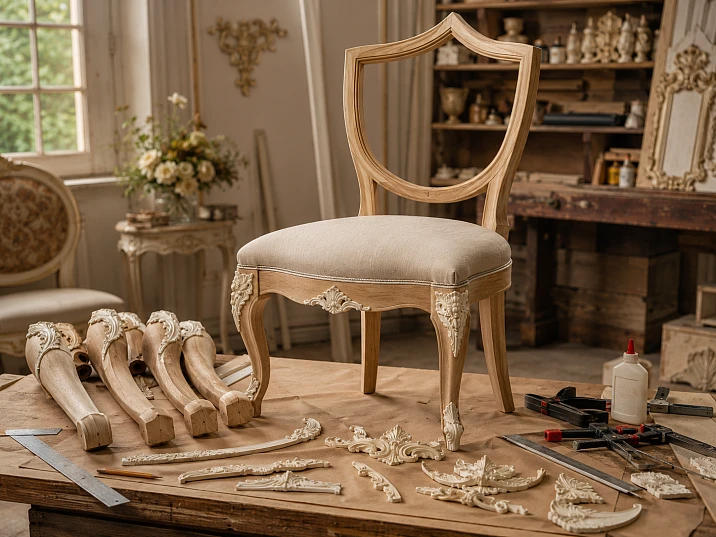
A chair is perhaps the most underestimated piece of furniture in any interior. It is bought last, chosen hastily, placed "as it comes" — and it is this that then ruins the entire picture of a classic living room or dining room. Yet a classic-style chair is both a structural and decorative challenge. And solving it correctly means understanding: what should be wooden here, what should be polyurethane, and what unites both materials into a single product.
This material is written for those who assemble or restore classic-style chairs: craftsmen, carpentry workshops, furniture designers, and private buyers who want a result, not a compromise. There are no generalities here — only a specific scheme: what to buy, in what sequence, what mistakes to avoid.

Role division: what bears the load and what creates the image
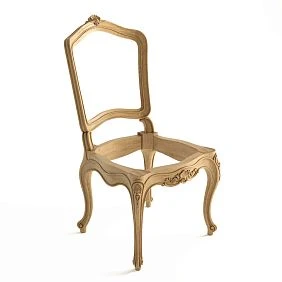
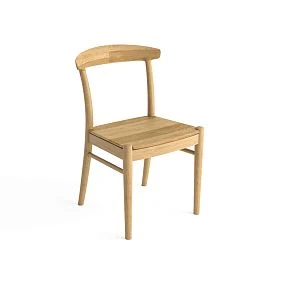
Before opening catalogs and calculating the budget, you need to understand one thing. A chair is not just a set of parts. It is a structure in which each element performs its function. And functions are of two types: load-bearing and decorative.
Load-bearing elements — legs, aprons, connecting stretchers — bear the actual load: a person's weight, dynamic loads when lifting, lateral force when shifting. These parts must be made of wood: strong, resistant to wear and mechanical stress. No polyurethane can handle this.
Decorative elements — back overlays, relief inserts on the top crossbar, decor on the apron, ornamental elements on the side panels — do not bear load, but they define the style of the product. Here polyurethane works flawlessly: precise relief, repeatability in series, light weight, perfect compatibility with painting.
This principle — wood for load-bearing, polyurethane for decoration — is the foundation of proper configuration of a classic chair.




Chair legs: the main structural choice
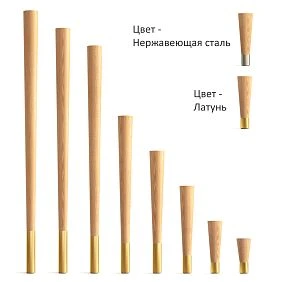
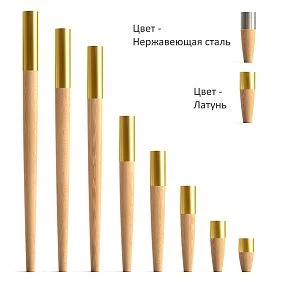
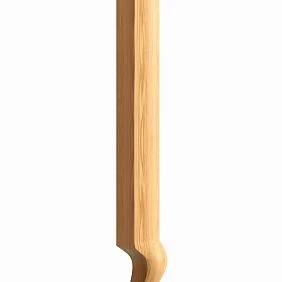
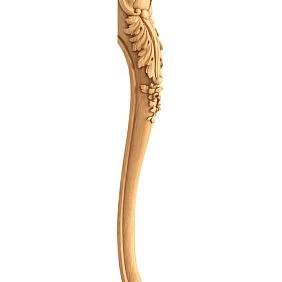
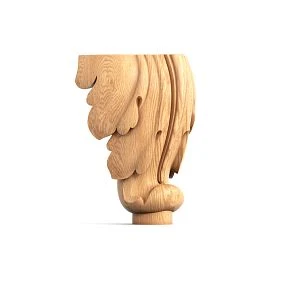
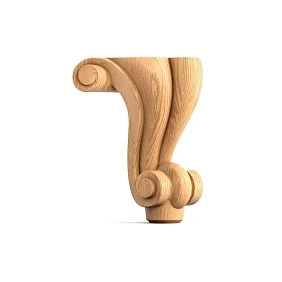
chair legs — these are not just supports. They are the fulcrum of the entire product, determining its height, stability, character, and visual weight. Incorrectly chosen legs make even a beautiful chair uncomfortable and short-lived.
Our factory also produces:
Leg height: measure from the seat
The standard seat height of a chair is 44–48 cm from the floor. This is an ergonomic standard proven over decades. The leg height depends on the thickness of the seat itself: if the seat is 4 cm, the leg should be about 40–44 cm. If the seat is thicker, the legs are slightly shorter.
For a chair for a dining table 75 cm high — the seat height should be 44–46 cm, which gives a gap of 29–31 cm from the tabletop to the thigh. This is a comfortable working seating position. When choosing furniture legs always specify which table they are for.
Get Consultation
Leg shape: from turned classic to strict neoclassical
The shape of the leg determines the style of the chair. Several main types for classics:
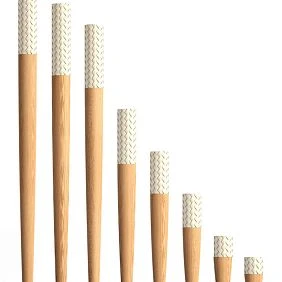
Turned conical leg — straight, tapering towards the floor. Laconic, versatile. Suitable for neoclassicism, Provence, Scandinavian classic. Diameter at the top — 40–50 mm, at the bottom — 20–30 mm. Height — 40–46 cm.
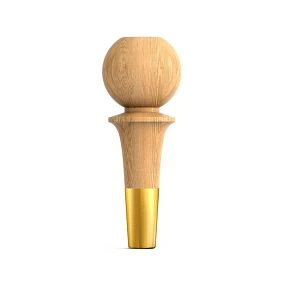
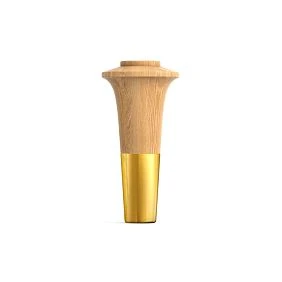
Turned shaped leg — with grips, balls, vase-like elements along the length. This is a richer classical style: Louis, Baroque, Rococo. Top diameter — 45–55 mm. Such a leg requires high-quality turned work from beech or oak.
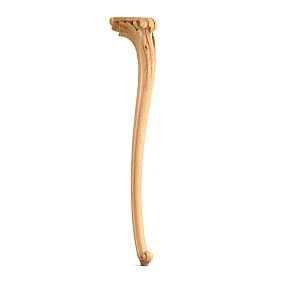
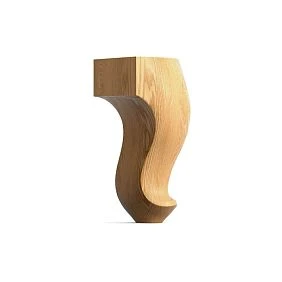
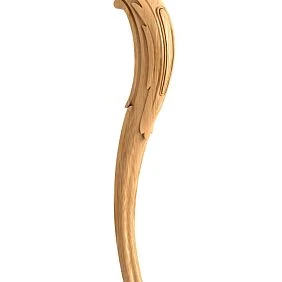
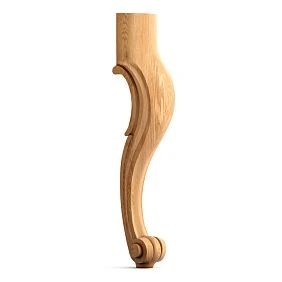
Cabriole — a leg with a double curve, widening at the top and tapering towards the foot. Exquisite shape, characteristic of 17th–18th century classics. Requires more complex production and a wider blank.
Square leg with chamfer — strict, with chamfers or flutes along the length. Characteristic of Classicism and Empire style. Simple to manufacture, pairs well with molding details.
For serial production of a set of chairs for a classic table, it is recommended to choose legs of the same article — this guarantees the identity of the set.
Leg material: beech, oak, birch
Wooden legs for a chair are made from several types of wood, and the choice depends on the load and final finishing.
Beech is the most common material for furniture legs. Hard, uniform, turns and processes well. Accepts any coating: staining, varnish, paint. The only drawback is it fears humidity with prolonged contact, so it is not suitable for bathrooms and damp rooms. For a chair in the living room, dining room, bedroom — an ideal choice.
Oak is a more expensive and harder material. Beautiful open texture, accepts staining well, creates an expressive surface with clear varnish. Oak legs are heavier, which gives the chair solidity.
Birch is an affordable and durable species. Uniform, without pronounced texture, paints well. Suitable for chairs for painting in a single color, where open texture is not needed.
For a chair to be painted — beech or birch. For a chair to be stained or lacquered with an open texture — oak or beech with a pronounced grain.
Load on a chair leg: why thickness matters
A chair is an object that is sat on abruptly, leaned on when standing up, and moved across the floor with force. The load on one leg during these actions can exceed 80–100 kg at peak. A leg with a diameter of 28 mm made of beech with a proper connection to the apron can withstand such a load without deformation.
If the legs are too thin — diameter 20 mm or less under standard load — they work in bending and eventually crack at the attachment point to the apron. This is not an aesthetic but a structural defect.
Rule: for a dining chair — minimum leg diameter at the top is 38–42 mm. For a lightweight accent chair without constant load — 30–35 mm is acceptable. For a semi-armchair — 45–55 mm.
Where polyurethane decor organically fits into a chair
The answer to the question 'is polyurethane even needed on a chair?' is definitely yes, but only in the right areas. polyurethane decor It does not replace the structure. It decorates those parts of the product that are visible, do not bear load, and shape the stylistic appearance of the chair.
Top crossbar of the backrest
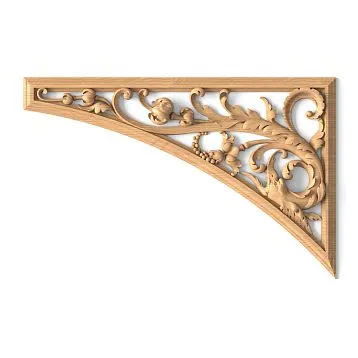
The top crossbar of the backrest — the horizontal element that finishes the backrest at the top — is the main decorative zone of the chair. It is here that carving was located in historical furniture: floral garlands, acanthus leaves, cartouches, geometric profiles. Today, this effect can be reproduced by gluing Polyurethane appliqués on the wooden crosspiece.
The polyurethane overlay replicates the relief of historical samples with a precision that hand carving in serial production cannot achieve. It is glued to the wood, puttied around the perimeter, primed, and painted together with the other parts. The result: the upper crosspiece with decorative relief without a single blow of a chisel.
Important: the overlay on the upper crosspiece of the backrest does not bear any load. A person does not lean on it with their hands during normal sitting, and it is not a mounting point. Therefore, polyurethane is fully justified here.
Central insert or backrest baluster
In classic chairs, between the upper and lower crosspieces of the backrest, there is often a decorative insert: a baluster, a panel, a block with a relief ornament. This is another area for decorative elements made of polyurethane.
This is especially relevant for chairs intended for painting in a classic style: a wooden baluster with complex relief is significantly more expensive than a similarly shaped polyurethane overlay on a wooden base. With a uniform paint job, the difference in materials is completely unnoticeable.
Apron under the seat
The apron is a horizontal beam connecting the upper parts of the legs and supporting the seat. It bears the load from the seat and ensures the rigidity of the structure. Therefore, the apron itself must be wooden and of sufficient thickness.
But the front plane of the apron — the visible front edge — can be decorated with polyurethane moldings or overlays. A profiled molding along the lower edge of the front apron, a small decorative insert in the center — these are details that visually enrich the chair without affecting its strength. In classic dining sets, such molding on the apron echoes the moldings of the dining table top.
Side elements and armrests
Semi-armchairs and armchairs with armrests have additional decorative planes: side panels, armrest overlays, decorative inserts between the leg and armrest. These are classic places for polyurethane decor: they are visible, do not bear the main load, and with proper installation, they last for years.
The armrests themselves and their bases — the points you hold onto when standing up — should be wooden. This is an area of tactile contact and load simultaneously.
Decor on furniture next to the chair
If the chair is part of a classic ensemble: sideboard, console, dining table — then the decorative motifs on the chair itself should echo those of furniture decor nearby items. A relief overlay on the top rail of the chair in the same theme as the overlay on the sideboard facade — these are details that turn a set of items into a furniture collection.
How to combine wooden legs and polyurethane decor: three working scenarios
Scenario one: chair for painting in a single color
This is the most common and most effective scenario for classic furniture For painting. Wooden legs, wooden apron, and backrest frame. On the top crossbar — a polyurethane overlay with the desired ornament. On the front edge of the apron — a molding with a small profile. All of this is puttied, primed, and painted in a single color: white, ivory, light gray.
With a single paint job, the boundary between wood and polyurethane completely disappears. The chair looks like a single piece with relief decoration — as if everything is carved from one block. This scenario is ideal for serial production: the same overlays on all chairs ensure absolute repeatability of the set.
Scenario two: chair with exposed wood texture
If the chair is intended for staining or clear varnish — polyurethane overlays are not suitable here. The wood pores absorb the stain with depth and a lively play of shade. Polyurethane gives a uniform painted layer without texture. Next to each other, this looks like incompatibility.
In this case, the decoration on the top crossbar is better made from wood: either a carved beech overlay or a milled profile. decor for furniture Made from solid wood — overlays, rosettes, ornamental elements — the right solution for a chair with exposed texture.
Scenario three: restoration of an old chair
Restoration is a separate story. An old chair may have worn, cracked, or missing legs. Buy chair legs For replacement — means choosing the same profile, the same height, the same wood species. If it is not possible to match exactly, it makes sense to replace all four legs at once so that the set is identical.
Decorative elements during restoration are often missing or damaged: overlays on the backrest are lost, molding on the apron is chipped. Here, polyurethane overlays provide a quick and precise solution. The desired relief is selected, the overlay is glued in place of the old decoration, puttied, primed, and painted. The chair looks renewed, not 'patched up'.
Ready-made kits for specific tasks
Classic style chair: basic set
For one classic style chair for painting:
-
chair legs — 4 pieces, turned from beech, height 42–44 cm;
-
wooden stretchers — front, back, and two side ones (from 40×25 mm timber);
-
wooden backrest frame;
-
Polyurethane appliqués for the top crossbar of the backrest — 1–2 elements;
-
polyurethane molding on the front stretcher — along the length of the front stretcher;
-
assembly adhesive for polyurethane and PVA glue or wood glue for wooden joints;
-
fasteners: confirmat screws, bolts with eccentrics, or dowels;
-
putty, acrylic sealant;
-
adhesive primer;
-
Paint.
Set of chairs for the dining table (6 pieces)
For a set, precise repeatability is needed. This is where polyurethane gives the main advantage: 6 identical back overlays mean 6 identical chairs. Wood carving cannot provide such repeatability.
-
Furniture legs from beech — 24 pieces (6 × 4);
-
polyurethane overlays on the top crossbar — 6 pieces of the same article;
-
moldings on the aprons — 6 sections of the same profile;
-
decorative polyurethane elements — central inserts, if provided by the design;
-
consumables with a 15% margin.
Semi-armchair in classic style
Semi-armchair is a larger piece with armrests. The load is higher. The legs must be thicker.
-
furniture legs — 4 pieces, top diameter 48–55 mm;
-
wooden armrests and side frames;
-
decorative polyurethane overlays on external side panels — where there is no tactile contact;
-
overlays on the top crossbar of the backrest;
-
paint or upholstery fabric — depending on the design.
Restoration of a chair with replacement of legs and decor
This is the most common request when restoring classic chairs:
-
new Wooden legs — 4 pieces, selected to match the size and profile of the original;
-
reinforcement of the stretchers with wood glue and dowels if necessary;
-
Polyurethane appliqués instead of lost decorative elements;
-
putty, primer, final painting.
Choosing the right overlay relief for restoration is often difficult: the old decor had a specific pattern that may not match the modern assortment. Here, you should consider several close options and decide on a partial style update: not to copy the original, but to create an updated version in the same spirit.
What to buy together: complete shopping list
A good purchase is when, after receiving the goods, work begins immediately, without 'another trip'. Let's break down the full list for a classic chair.
Wooden structural elements:
-
chair legs — with a reserve of 2 pieces above the norm per set (in case of defects during fitting);
-
bar for aprons and frame — cross-section 40×25 or 50×30 mm depending on the load;
-
bar for backrest crossbars;
-
wooden dowels or pegs for joints.
Polyurethane decorative elements:
-
Polyurethane appliqués — for the top crossbar of the backrest;
-
Moldings made of polyurethane — for the front apron;
-
decorative elements for furniture — if the project involves wooden overlay decor;
-
Polyurethane moldings — additional accents if necessary.
Fasteners and glue:
-
carpentry PVA glue or polyvinyl acetate-based glue — for wooden joints;
-
assembly glue for polyurethane — details on the right choice: what to glue polyurethane molding with;
-
confirmat screws or bolts with nuts — for detachable fastening;
-
clamps — for holding joints while gluing.
Finishing group:
-
wood putty — for filling fasteners and joints;
-
acrylic sealant — for the seam between polyurethane and wood;
-
adhesion primer — mandatory for polyurethane;
-
paint — water-based, acrylic or alkyd, depending on the finish;
-
varnish or oil — if the project involves an open wood texture;
-
spare of all elements 10–15%.
Mistakes in purchasing and assembly: what costs a lot
The list of mistakes here is not to scare you. It's a risk map worth studying before starting work.
Buy decorative overlays instead of structural legs
This sounds absurd, but it happens regularly: a buyer, carried away by decor, takes lush overlays and beautiful profiles, and thinks about legs "later". As a result, there is a lot of decor, but no chair. Start with the legs — as a structural foundation. Decor — later.
Not accounting for seat height
Seat height is a functional parameter, not an aesthetic one. A seat that is too high puts strain on the hips. Too low — on the back. When choosing legs for chairs always calculate from the seat thickness to the desired height: if the seat is 5 cm and the desired height is 46 cm — the leg is 41 cm.
Choosing too thin legs for a heavy chair
A chair with a wide, soft, fabric-upholstered seat weighs 8–12 kg. Under a person's load, that's another 80–100 kg. A 25 mm diameter birch leg is not designed for such a load under dynamic impacts. Thin legs are for lightweight decorative chairs without constant load.
Placing polyurethane decor in impact zones
The lower part of the leg, the front lower end of the apron, the edge of the seat — these are areas that regularly receive impacts: the chair is moved, kicked, placed on an uneven floor. Polyurethane chips off in these places. All mechanical contact zones should be only wood.
Not checking the compatibility of glue and paint
Some assembly glues contain components that are aggressive towards polyurethane. Some primers do not provide adhesion with the topcoat. Before purchasing a large batch for a set of chairs, test the entire material chain on a sample. That's one day of work versus a week of rework.
Overloading a small chair with large decor
A small chair — for example, a chair with a 40×40 cm seat — cannot handle large appliqués with deep relief. A massive carved insert on a small cross-section looks like a proportion error. The scale of the decorative element should be proportionate to the chair.
Not linking the chair with the table and other furniture
A chair is not an autonomous object. It stands next to a table, in a room with a sideboard and a console. If the chair legs do not echo the table legs in shape, if the chair decor is from a different style vocabulary than decor for furniture the surrounding items, the set will not be perceived as an ensemble.
Do not make a test paint
A test sample before painting the entire set is a mandatory step. It checks: how the primer lays on polyurethane, whether there is any seam lifting at the joint of wood and polyurethane, how the paint covers the material boundary, and what the final color looks like. Only after the test sample is approved — the series launch.
A chair in a set with classic furniture: how to build an ensemble
A classic chair rarely stands alone in an interior. Most often it is part of an ensemble: a dining area with a table, sideboard, and chairs, or a living room with a console, mirror, and accent chairs on the sides. In both cases, it is important that all items work in a unified system.
What connects the chair with the rest of the furniture?
Leg shape. Turned chair legs and turned table legs are one intonation. Square chair legs with a chamfer and square sideboard legs are another. Profile matching is not necessary, but a common character is mandatory.
Decorative motifs. A relief overlay on the top crossbar of the chair back with a floral ornament should echo the same ornament on the sideboard or display cabinet facade. This is what a "furniture collection" is — an ensemble, not a random set.
Color unity. If all furniture is painted in one color — the chairs should be the same. If the furniture is stained — the chairs should be in the same tone. Contrast is appropriate only as a deliberate design technique, not as a random mismatch.
Scale. A light chair with thin legs next to a heavy sideboard looks disproportionate. The chair should have a visual weight corresponding to other items in the area.
Finishing: from raw frame to finished product
The final finishing of a chair is a sequence of stages that cannot be disrupted.
Stage 1: Frame assembly. Joinery of stretchers with legs, backrest assembly. Wood glue, fasteners. Curing under a press or clamps until fully dry.
Stage 2: Installation of polyurethane elements. Glue on decorative overlays and moldings. Pressing. Curing. Filling joints with acrylic sealant. Sanding after drying.
Stage 3: Sanding of wooden surfaces. Abrasive paper with grit 120, then 180, then 240. Wooden surfaces are sanded along the grain.
Stage 4: Priming. Two coats of adhesion primer on all surfaces, including polyurethane elements. Intercoat drying.
Stage 5: Painting. Two coats of finish paint with sanding between coats using abrasive paper 280–320. Full drying cycle before use.
If the chair is planned with a fabric seat, upholstery is done after the paint is fully dry. The seat is attached from below with confirmat screws or self-tapping screws through holes in the top stretcher.
Restoration specifics: what is important to know
Restoration of a chair is not just replacing legs and painting. It is diagnosing the condition of joints, assessing the frame, making decisions about what to replace and what to preserve.
A wobbly chair is almost always the result of dried out or unglued tenon joints between legs and stretchers. Visually, the chair may look normal, but the joint no longer holds. During restoration, always disassemble the joints, remove old glue, clean surfaces, and glue them again. This takes time, but only then will the chair be strong again.
If some parts are irreparably damaged — primarily the legs — do not attempt to repair the broken element: buy new ones. Buy chair legs — this is easier and cheaper than repairing a broken leg, the result of which will still be unreliable.
Decorative elements lost or damaged during prolonged use — backrest overlays, moldings on aprons — are best replaced with polyurethane analogs. This is faster, more precise, and cheaper than reproducing the carved original.
Classic chair in a small space
A small apartment is no reason to abandon the classic style. But here, the correct proportion of the chair is important. An overly massive chair with a wide seat and thick legs eats up space. A light classic chair with turned legs 38–40 mm and a seat 42×42 cm, on the contrary, creates a feeling of airiness.
In a small space, a uniform color is especially important: if the chair, table, and furniture are painted the same color, they visually merge and do not overload the space with separate spots of different tones. White and ivory are absolute leaders for small classic halls.
The decor of the chair in a small hall should be moderate: the backrest overlay should be small, with a shallow relief. The molding on the apron should be a narrow profile. No lush baroque inserts with high relief.
FAQ: questions about chair legs and polyurethane decor
Can polyurethane decor be used on a chair?
Yes, but strictly on decorative areas: the top crossbar of the backrest, the central insert of the backrest, the front edge of the apron. Polyurethane moldings and polyurethane overlays are not suitable for structural parts: legs, supporting stretchers, tenons. There — only wood.
Which legs to buy for a classic chair?
Turned beech wood legs are the optimal choice for a classic-style chair. Height — 42–44 cm for standard seating. Upper part diameter — at least 38–42 mm for a chair with normal load. Shape — depending on the style: tapered for neoclassical, figured with grips for classic.
What to buy for chair restoration?
new Wooden legs if necessary, wood glue to strengthen joints, Polyurethane appliqués to replace lost decor, putty, primer, paint, and finish coating. Stock of all elements 10–15%.
Can wood and polyurethane be painted the same color?
Yes — and this is the best scenario for a classic chair to be painted. Wooden parts are sanded and primed. Polyurethane elements are primed with adhesion primer. A single layer of paint unifies everything into a monolithic surface.
What to replace carving with on a classic chair?
For decorative areas — decorative elements made of polyurethane with the desired relief. This is faster, more precise, and cheaper in series. For a chair with open texture for staining — decor for furniture made from solid wood. Load-bearing parts are always made of wood.
How to properly glue a polyurethane overlay to wood?
Choosing the glue is key. Not all mounting adhesives are compatible with polyurethane. A detailed guide on glue selection and application technology is in the article what to glue polyurethane molding with.
How many spare legs are needed for a set of chairs?
For a set of 6 chairs (24 legs), it is recommended to buy 26–28 pieces: 2–4 spare pieces in case of defects during fitting, transport damage, or size inaccuracies.
Is primer needed before painting polyurethane?
Absolutely. Without an adhesion primer, paint on polyurethane holds poorly and will peel over time, especially at the joints with wood. Primer is not an extra step, but a mandatory stage.
About the company STAVROS
All components for the production and restoration of a classic chair — wooden legs, decorative overlays, moldings, polyurethane decor — are available in the catalog of STAVROS. This is a Russian manufacturer and supplier of natural wood and polyurethane products for the furniture industry, carpentry workshops, and interior design.
STAVROS offers Furniture legs made from beech in a wide range of shapes and heights — from minimalist conical to shaped milled, with various mounting options. Alongside, the catalog features a full range of polyurethane decor: overlays, moldings, decorative elements for furniture, as well as decor for furniture made from solid wood for products with an open texture.
STAVROS traces its history back to 2002, when a St. Petersburg wood carving workshop became a contractor for restoration work on state-significant sites, including the Hermitage and the Konstantinovsky Palace. This history defines the standard of quality and precision with which every leg, every overlay, and every linear meter of molding is produced.
You can order components on the STAVROS website: from a single piece, with Contact us to confirm shipping to your destination., and professional consultations on selecting elements for a specific project.