Article Contents:
- What to buy for a window seat: a set without white spots
- A window seat is not just a wide windowsill
- Where to place a window seat: seven interior scenarios
- In the bedroom: a morning ritual zone
- In the living room: an accent zone with character
- In the children's room: durability above all
- In the study: a work break
- In the bay window: a three-sided structure
- In the window niche: built-in version
- In a country house: large scale and natural material
- Wood in the window sill: zones of strength and tactile contact
- Furniture legs and supports: load-bearing element
- Solid wood moldings: horizontal belts and strapping
- Wooden slats for lower panels
- Wooden decorative overlays on side panels
- Furniture handles for storage drawers
- Polyurethane in the window sill area: decor that holds the entire composition
- Moldings around the window sill area
- Wall frame from wall decor
- Polyurethane moldings: baseboard connection and top belt
- Molding decor: corner accents
- Wall overlays without load
- Ready-made sets: five solutions for different interiors
- Window bench in the bedroom: delicate classicism
- Seat in the bay window: three-sided symphony
- Window bench with storage: function plus beauty
- Classic living room: rich framing
- Children's area by the window: safety and play
- What to buy together: final list in one order
- Mistakes that kill the entire result
- Make a bench like a wide windowsill without supports
- Not accounting for load when choosing legs
- Choosing legs without calculating height
- Using polyurethane in a constant kick zone
- Not connecting the bench to the room's baseboard
- Forgetting about the radiator under the window
- Blocking access to radiator maintenance
- Overloading a small niche with large molding
- Not buying spare slats and trim
- Technical parameters: what to remove before ordering
- How to make a window seat truly expensive: designer techniques
- FAQ: Answers to Popular Questions
- What to buy for a classic-style window seat?
- Can polyurethane stucco be used next to the seat?
- How is a window seat different from just a wide windowsill?
- Which wooden legs to choose for a window seat?
- Can a seat be made over a radiator?
- How to properly glue polyurethane moldings next to a wooden structure?
- How to achieve clean corners of moldings around the window area?
- Can I order legs of non-standard height?
- About STAVROS
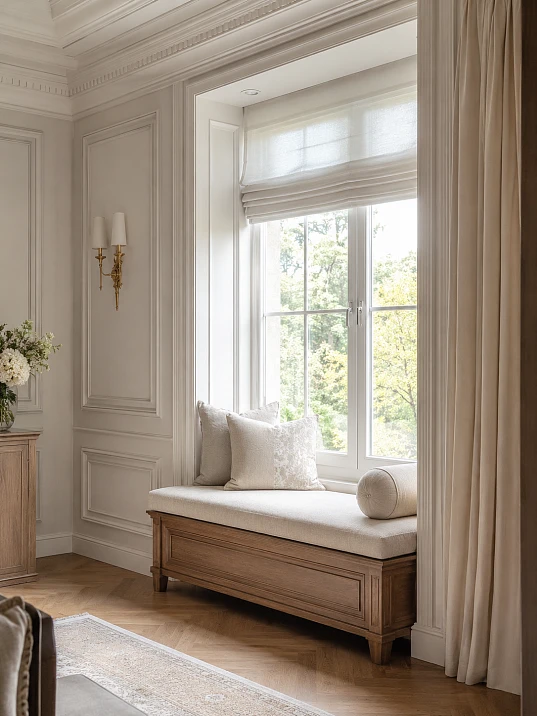
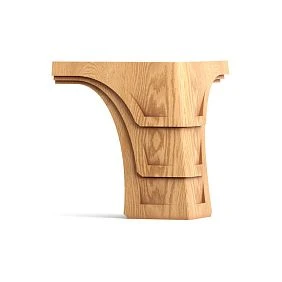
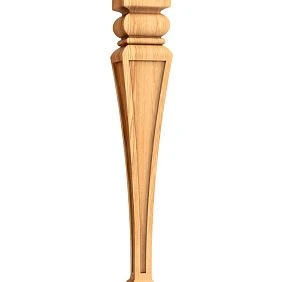
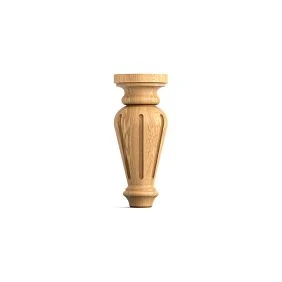
There is one place in the apartment that is almost always used for other purposes. A wide windowsill — it is either cluttered with things, or stands empty, or serves as a shelf for flowers. Meanwhile, this is a ready-made space for one of the coziest zones in the house: a window seat, a seating area by the window, a full-fledged furniture zone with character and style. When this idea is approached seriously — with wooden furniture legs, solid wood moldingswith decorative panels and polyurethane moldings the window sill area ceases to be an unfinished corner and becomes the best place in the room.
That's what the whole article is about. Not about slopes, not about trims, and not about curtains. About a window bench as a furniture piece. About how to assemble it, from what, in what sequence, and what definitely not to do.
What to buy for a window bench: a kit without white spots
A window bench is not a single element. It's a system. And if you miss something when ordering, you'll either have to improvise on the spot or wait for a second delivery. Both options are bad.
Here is the complete list of what is needed for a classic window bench:
Wooden elements:
-
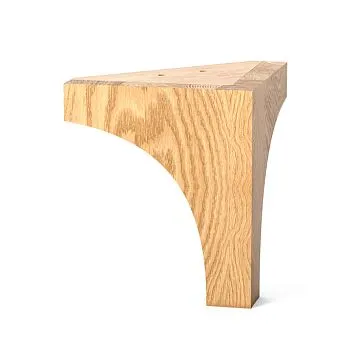
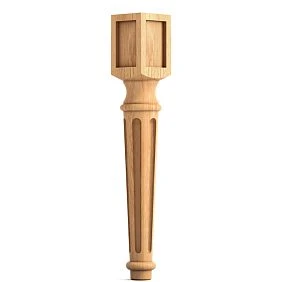
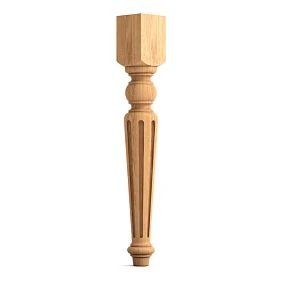
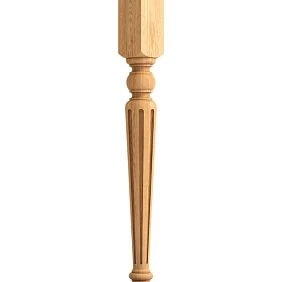
wooden furniture legs — load-bearing supports of the bench, selected considering seat height and load
-
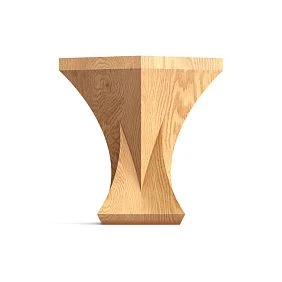
Solid wood furniture legs — side and corner support elements for the lower base
-
Pogonazh iz massiva — horizontal belts, frames of lower panels, seat strapping
-
Wooden planks — for decorative panels under the seat, side dividers
-
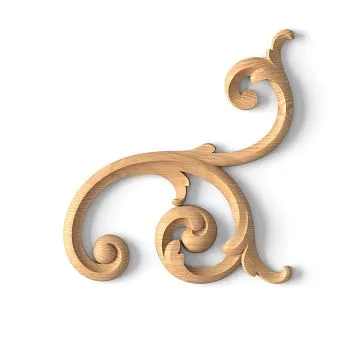
Wooden decor and solid wood overlays — decorative strips, rosettes, accent details on the shop front
-
decorative elements for furniture — for finishing side panels and front areas
-
Furniture Handles — if the bench includes storage drawers
Polyurethane elements:
-
Moldings made of polyurethane — for framing the window sill area on the wall, around a niche
-
Polyurethane trim — for baseboard connections, upper belt, horizontal accents
-
Polyurethane appliqués — decorative details on the wall without physical load
-
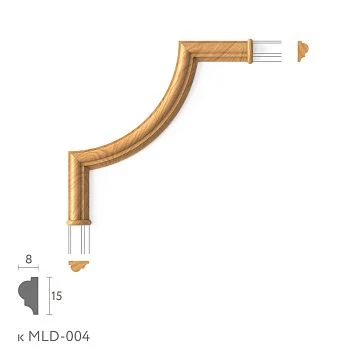
Decor for Molding — corner blocks and rosettes at molding intersections
-
Polyurethane wall decor — wall frames, panels, and geometric accents around the area
Consumables:
-
Fasteners — screws, anchors, furniture brackets for fixing legs and base
-
Construction adhesive — for moldings from polyurethane and overlays
-
Sealant — for junctions with walls, slopes, window sill
-
Primer — for painting all wooden and polyurethane parts
-
Paint, varnish or oil — depending on the chosen finish
-
Stock 5–10% for all molding items
This list is a working tool. Order everything at once, as a single item, and installation will go without interruptions.




A window bench is not just a wide window sill
Let's clarify the concept. Because a "window bench" and a "wide window sill" are fundamentally different things, although there is plenty of confusion here.
A wide window sill is a horizontal plane. Slightly wider than standard, sometimes with a cushion on top. No supports, no lower base, no connection to the interior. It just lies there.
A window bench is a furniture object. It has:
-
Seat — a horizontal plane of sufficient depth (from 40 cm) and correct height (42–50 cm from the floor)
-
Wooden legs or furniture supports — they bear the load of a person, these are load-bearing structural elements
-
Lower base — the space under the seat: either open with legs, or closed with panels and drawers
-
Side panels — they form the side ends of the bench and set its scale
-
Decorative overlays and slats — on the facade of the lower base, on the side panels
-
Connection with the baseboard and wall — Pogonazh iz massiva on the horizontal belts, Moldings made of polyurethane on the wall around
It is the last point that is most often overlooked. The bench is made, the legs are in place, the seat is beautiful — but the wall around is bare. And the whole impression is lost. Decorative framing is not an option, it is a necessity for a classic style.
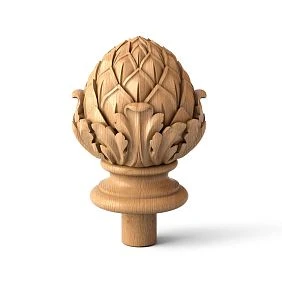
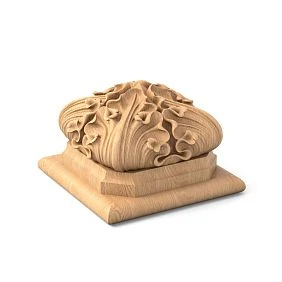
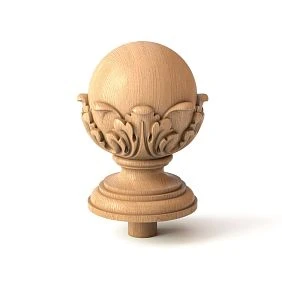
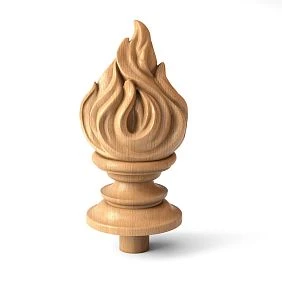
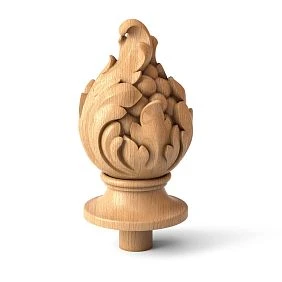
Our factory also produces:


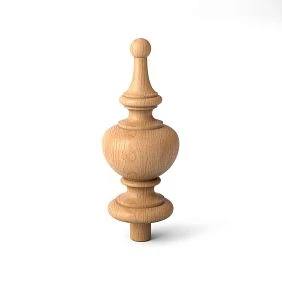
Where to place a window bench: seven interior scenarios
A window seat is available in any apartment and any house. The question is how to use this space as wisely as possible. Let's consider seven scenarios, each with its own logic.
Get Consultation
In the bedroom: a morning ritual zone
The bedroom is an ideal place for a window seat. In the morning — a cup of coffee, a book, silence. In the evening — a place for reflection before sleep. A window bench in the bedroom should be soft in character: Wooden legs with a turned profile, gentle Pogonazh iz massiva on the horizontal belts, Moldings made of polyurethane around the zone — thin, matching the wall color. No pressure, only coziness.
In the living room: an accent zone with character
In the living room, a window bench can be the main decorative accent of the window area. Here the scale is larger, the decor richer. wooden furniture supports with a carved or turned profile, lower panels with wooden planks in a rhythmic grid, Polyurethane wall decor on the wall nearby — frames, panels, wall cartouches. This is no longer just a "window seat," it's an interior story.
In the children's room: durability above all
In the children's room, a window bench is primarily a place for playing, drawing, and watching the street. The requirements are strict: durable Wooden legs with secure fixation, rounded edges on the seat, Pogonazh iz massiva on the frame — smooth, without sharp profiles. Moldings made of polyurethane around the area — delicate, without protruding relief.
In the study: a working pause
An office window bench is a place for changing posture, a short rest between tasks. Here the bench is most often combined with lower drawers for document storage. Facades with decorative elements made of solid wood и wooden handles — in the tone of the overall office furniture. The molding framing of the wall is strict, in a single profile.
In the bay window: a three-sided structure
A bay window is a gift for a window bench. Three sides, corner joints, large glazing area. The bench wraps around the bay window along the perimeter, legs and supports are arranged considering the three walls. Pogonazh iz massiva runs along the horizontal perimeter of the seat. Moldings made of polyurethane each of the three walls is decorated separately, connecting into a single decorative ring. A bay window bench is always impressive.
In the window niche: built-in version
If the window has a niche, it is a ready-made frame for the bench. The side walls of the niche take on the function of side panels. Wooden planks on the side walls of the niche, wooden legs or supports — only at the front. Moldings made of polyurethane along the outer contour of the niche — as an architectural frame of the opening.
In a country house: large scale and natural material
In a country house, the window bench has a different scale. Large windows, high ceilings, wide slopes. Pogonazh iz massiva large cross-section. furniture legs with a pronounced turned profile. Wall Decor on the wall below and above the window — full-height wall frames. A full classical scenario is appropriate here.
Wood in the window sill bench: zones of strength and tactile contact
Wood is not just a 'beautiful material.' In the context of a window sill bench, it is a technically justified choice for all areas with load and physical contact.
Furniture legs and supports: load-bearing element
This is the most critical part of the entire structure. wooden furniture legs must support the weight of an adult — and not just 'not break,' but maintain shape without play or deformation for many years.
Legs are made from beech or oak using turning and milling. Beech is dense, uniform, and takes paint well. Oak has a pronounced texture, richer in visual character. Both materials are suitable for load-bearing function.
The leg size is selected based on the seat height. The standard height of a window sill bench is 42–50 cm from the floor. If the window sill is high (55–60 cm), the bench may have no legs at all, resting on a lower base with side panels. If the window sill is at standard height — furniture legs are placed at four or six points, taking into account uniform load distribution.
Important: legs are attached to the seat through threaded inserts or bolts. Decorative "glue-on" fit for a load-bearing leg is not acceptable.
Solid wood millwork: horizontal belts and strapping
Pogonazh iz massiva in the window seat — these are the horizontal frames of the lower panels, the perimeter strapping of the seat, and intermediate belts between the legs. It sets the linear rhythm of the entire structure — horizontal lines that make the seat look like real classic furniture, not a "homemade box under the window."
For a classic style, choose millwork with a shaped profile: a small molding, groove, or quarter. This adds volume and shadow — a visual sense of depth even on flat surfaces.
Wooden slats for lower panels
The space under the seat is an area visible from below and from the front. Wooden planks in a vertical or horizontal rhythm on the lower panels turn a simple closed box into a decorative detail. The slats are mounted at a distance of 8–15 cm from each other — depending on the scale of the seat and the desired rhythm.
The slats are painted together with the main structure or in a contrasting tone — this is a design solution that adds character.
Wooden decorative overlays on side panels
Decorative Elements for Solid Wood Furniture — these are accents on the visible planes of the bench. The side panels are what is visible when approaching the bench from the side. If they are empty, the bench looks boring. Decorative Inserts on the side ends: a small cartouche, a shaped frame, a diamond or rectangular rosette — and the side panel becomes a decorative element.
Furniture handles for storage drawers
If the bench includes drawers or doors — Furniture wooden handles they are selected to match the tone of the entire structure. For classic style — elongated rectangular or oval pull handles. For Scandinavian or modern classicism — minimalist knobs. All in the same material as the main wooden parts.
Polyurethane in the window bench area: decor that holds the entire composition together
If the wooden elements are the body of the bench, then Polyurethane moldings — this is the architectural context around it. It is the polyurethane decor that turns a standalone furniture piece into part of the interior.
Moldings around the window area
Moldings made of polyurethane run along the walls next to the bench: to the left, right, and above the seat. They form a decorative frame that visually "integrates" the bench into the wall — like a built-in architectural niche. Without this frame, the bench stands by the wall. With it, it grows out of the wall.
For a correct result, technically competent is important installing polyurethane molding: clean corners, hidden joints, even line of horizontals and verticals.
Wall frame from wall decor
Polyurethane wall decor on the wall behind and next to the bench is the next level. Wall geometric frames, rectangular panels, vertical cartouches — all this turns the wall by the window from a neutral background into a decorative element. It is especially effective when the frames on the wall proportionally repeat the rhythm of the sections of the lower base of the bench.
Polyurethane moldings: baseboard connection and upper belt
Polyurethane trim solves the problem of horizontal connection. At the bottom — continuation of the baseboard along the bench and side walls. At the top, above the seat — a horizontal strip-belt that separates the bench area from the main wall field. These two horizontals structure the window sill area, set its boundaries without rigid frames.
Decor for moldings: corner accents
Decor for Molding — corner blocks, rosettes and inserts — are used at the intersection points of moldings: in the corners of the frame around the bench, at the intersection of horizontal belts with verticals. Without them, corners either require jewelry trimming or look rough. With them — elegant and fast.
Wall overlays without load
Polyurethane appliqués — small flat medallions, inserts, decorative accents — can be placed on the wall next to the bench as additional points of interest. They carry no load, are glued with mounting compound and complement the overall decorative system of the area.
Ready-made sets: five solutions for different interiors
A bench by the window in the bedroom: delicate classicism
The task is to create a cozy spot for morning coffee and evening reading without disturbing the bedroom's calm atmosphere.
Beech furniture legs — turned, with a soft profile, height 40–42 cm. The seat is wooden or with a soft cushion. Pogonazh iz massiva on the horizontal belts of the lower base. The lower base is closed with wooden planks in a vertical rhythm.
On the wall — thin Moldings made of polyurethane along the sides of the zone and above the seat. Decor for Molding in the upper corners of the frame — small rosettes. The entire structure is in white or cream. Calm, elegant, expensive.
Seat in the bay window: a three-sided symphony
In the bay window, the bench wraps around three walls. wooden furniture supports are placed around the perimeter with a spacing of no more than 80 cm. Pogonazh iz massiva forms horizontal belts on each of the three sections.
Moldings made of polyurethane decorate each wall of the bay window: along the side verticals and along the top horizontal. Wall Decor — wall-mounted frames on each of the three surfaces of the bay window, symmetrically, at the same scale. Polyurethane trim connects all three sections horizontally — a single belt above the seat.
Window seat with storage: function plus beauty
If drawers are needed under the seat, the design becomes more complex but gains functionally. The drawer fronts are made of wooden decor with overlay strips in a classic profile. Furniture Handles — in the tone of the main wooden elements. Pogonazh iz massiva — as the strapping of each box.
on the wall — Moldings made of polyurethane in the same proportion as the drawer fronts. This creates a visual rhyme between the structure of the bench and its decorative surroundings.
Classic living room: rich framing
In the living room — a full classic scenario. Wooden legs with turned profile, Decorative solid wood overlays on the side panels, Pogonazh iz massiva with a shaped profile on the belts.
On the walls — full molding framing: Moldings made of polyurethane around the perimeter of the area with decor for moldings in the corners, Polyurethane wall decor on the piers next to the window, Polyurethane trim like a horizontal belt above the seat. The entire structure is in white with a gold accent or in the color of the walls.
Children's area by the window: safety and play
A children's area requires a different approach. Wooden legs — shorter (35–40 cm) and widely spaced for stability. All edges are rounded. Pogonazh iz massiva with a soft profile without sharp edges. The lower panels are with bright wooden planks in a playful rhythm.
Moldings made of polyurethane — delicate, without protruding relief that could be bumped into. Polyurethane appliqués on the wall — simple geometric shapes. The color scheme is cheerful, contrasting.
What to buy together: final list in one order
This block is for those who are ready to act. The list is compiled on the principle of "nothing extra, nothing missed":
Wooden items:
-
wooden furniture legs — quantity depends on the size of the shop, minimum 4 pcs.
-
Solid wood furniture legs — for corner and intermediate support points
-
Pogonazh iz massiva — footage along the perimeter of horizontal belts plus 10% reserve
-
Wooden planks — for lower panels, quantity by rhythm
-
Wooden overlays and decor — for side panels and facade accents
-
decorative elements for furniture — on the facade of the lower base
-
Furniture Handles — if drawers are provided
Polyurethane items:
-
Moldings made of polyurethane — footage along the perimeter of the wall framing plus 15% reserve
-
Polyurethane trim — for baseboard connection and top belt
-
Polyurethane appliqués — additional decorative accents
-
Decor for Molding — corner blocks at all molding intersection points
-
Polyurethane wall decor — for wall frames near the bench
-
Polyurethane moldings — for additional decorative solutions
Consumables:
-
Assembly adhesive — selected based on the surface, more details: what to glue polyurethane molding with
-
Fasteners for legs and base
-
Sealant — for joints with walls and windowsill
-
Primer — for all painted wooden and polyurethane parts
-
Paint, varnish, or oil
-
Stock 5–10% for all molding items
Mistakes that ruin the entire result
Over decades of working with interior decorative materials, one can compile a long list of what goes wrong. Here are the most critical mistakes specifically in the topic of window sill benches.
Making a bench like a wide windowsill without supports
This is the most common mistake. They take a wide board, place it on the windowsill, and put a cushion on top. They call it a "bench." But the windowsill slab is not designed to bear the weight of an adult: it can sag, crack, or detach from the wall. Furniture legs or supports — this is not a decorative detail, it is a structural necessity.
Not considering the load when choosing legs
Not all wooden furniture legs are designed for the same load. Decorative thin legs that look great on a console table are not suitable for a seat that is regularly sat on. The load capacity of a leg is a parameter that needs to be clarified when ordering.
Choosing legs without calculating the height
The height of the windowsill bench should be comfortable for sitting: 42–50 cm from the floor for adults, 35–40 cm for children's areas. If the windowsill itself is high, legs may not be needed at all. If it is low, legs of the appropriate height are needed. Buying legs "by eye" means getting an uncomfortable height.
Using polyurethane in an area of constant foot impact
The area of the baseboard and the lower belt of the bench is a zone where feet constantly hit, toys bump, and heels press. Here polyurethane decor is not suitable. The lower belt of the bench should be wooden — Pogonazh iz massiva it will withstand this load without marks. Polyurethane — only above the level of possible impacts.
Not connecting the bench with the room's baseboard
If the room has a baseboard — and it is almost everywhere — the bench must 'communicate' with it. Either the baseboard goes under the bench and continues beneath it, or the lower belt of the bench picks up its height. The continuous horizontal line of the baseboard is the basic visual order of the room. Breaking it unjustifiably is not allowed.
Forgetting about the radiator under the window
This is a technical but critically important mistake. Most windows have a heating radiator under the windowsill. The windowsill bench above the radiator must provide a ventilation gap for warm air to escape — otherwise, heating efficiency will decrease, and condensation under the seat will cause problems.
Blocking access to radiator maintenance
Related to the previous point. If the radiator ever requires replacement or repair — access must be available. A bench with a permanently closed lower base without a removable panel is a potential need to dismantle the entire structure.
Overloading a small niche with large stucco
The scale of the moldings should match the scale of the space. A wide molding with deep relief, which works well in a spacious living room, will overwhelm a small window niche in a bedroom. For compact areas — thin Polyurethane trim and delicate applique.
Not taking a reserve of slats and moldings
Any installation requires a reserve. Trimming, fitting, cutting errors — all of this consumes additional material. The minimum reserve for linear items is 10%, for moldings — 15% considering corner cuts.
Technical parameters: what to measure before ordering
To ensure an accurate order, several parameters need to be measured in advance:
Window sill height from the floor. This determines the height of the legs or the lower base.
Window sill depth. For comfortable seating, at least 40 cm is needed. If the window sill is smaller, the seat will need to be extended forward with support on legs.
Zone width. From wall to wall or from slope to slope — depending on the design solution.
Height from the window sill to the ceiling. For calculating moldings and the upper belt.
Presence of a radiator. Its height and width determine the design of the lower base.
Wall type. The choice of fasteners for legs and moldings depends on this.
How to make a window seat truly luxurious: designer techniques
There are several techniques that visually elevate the level of a window seat regardless of budget.
A unified color for the entire system. When the seat, wall moldings, and Polyurethane trim are painted in one color — the area looks monolithic and architectural. The contrast between wood and white polyurethane is a deliberate technique. Random mismatching is chaos.
Symmetry in details. If Decor for Molding it is in the upper left corner of the frame — it should also be in the right one. Symmetry is the foundation of the classic style.
Proportionality. The width of the molding, the height of the leg, the spacing of the slats — everything must be in proportion to each other and to the scale of the area. Too large details in a small niche feel oppressive. Too small ones in a spacious bay window get lost.
Completeness of every detail. All visible ends are finished. All joints are puttied and painted. No open cuts, unfinished surfaces, or uncovered transitions. This is what distinguishes a master's work from an amateur's.
FAQ: Answers to popular questions
What to buy for a classic-style window seat?
Wooden furniture legs or furniture legs, Pogonazh iz massiva for belts, Wooden planks for lower panels, Wooden decor and overlays for accents, Moldings made of polyurethane for wall framing, as well as glue, fasteners, sealant, primer, and finish coating.
Can polyurethane molding be used near a seat?
Yes, but in the right areas. Polyurethane moldings works great on the wall next to a bench, in moldings around the perimeter of the area, in the upper decorative belt, and in wall frames. In high-traffic areas — lower belt, legs, seat edges — only wood.
How is a window bench different from just a wide windowsill?
A window bench is a furniture piece with load-bearing legs or supports, a lower base, decorative panels, and connection to the interior through moldings and trim. A wide windowsill is just a flat surface.
Which wooden legs to choose for a bench by the window?
For classic style — turned legs with a smooth profile made of beech or oak. The height is calculated according to the desired seat level. Important: the legs for the seat must have a load rating corresponding to the weight of an adult. The entire range solid wood furniture legs is available with load parameters specified.
Can a bench be made over a radiator?
Yes, but with a ventilation gap in the front part of the lower base — for free circulation of warm air. Access to the radiator through a removable or hinged panel is also necessary. Covering the radiator completely is not allowed, neither from the perspective of heat transfer nor technical maintenance.
How to properly glue polyurethane moldings next to a wooden structure?
The technology depends on the base surface. Full instructions with glue selection — in the article what to glue polyurethane molding with.
How to achieve clean corners of moldings around the window sill area?
Either through precise cutting at 45 degrees, or through corner blocks for moldingsThe second option is more reliable and faster. Detailed technology is in the article about installing polyurethane molding.
Can legs of non-standard height be ordered?
Yes, STAVROS produces items in non-standard sizes — this is one of the key advantages of the production.
About STAVROS
STAVROS is a Russian manufacturer of decorative products from solid wood and polyurethane for furniture and interiors. Full range for designing a window sill bench and the area by the window: Wooden furniture legs, Pogonazh iz massiva, Wooden planks, Decorative Inserts, Furniture Handles, Moldings made of polyurethane, Polyurethane trim, Wall Decor и Decor for Molding. Production using 3D milling, manufacturing in non-standard sizes, retail and wholesale operations. Contact us to confirm shipping to your destination. and CIS, warehouses in Moscow and St. Petersburg. Loyalty program for interior designers and furniture manufacturers.