
























Article Contents:
- Final touch in wood: buy wooden finial for portal, stairs, bed and custom interior
- What is a wooden finial and where it works
- Stairs and railing
- Portal and fireplace area
- Bed and headboard
- Custom furniture and decorative posts
- How wooden finial differs from capital, overlay and molding
- Finial and capital: different positions in architectural hierarchy
- Finial and overlay
- Finial and molding
- Staircase finial: when the top of the post needs to look finished
- How the finial relates to the entire set
- Wooden finial for a post: what to consider when choosing
- Buy wooden finials for posts: how many pieces are needed
- Finial for a portal and fireplace area: how a small detail makes the composition more expensive
- Portal logic: symmetry and completion
- Fireplace area: emphasis on the transition
- Wooden molding as a partner to the finial
- Finial for bed and custom furniture
- Bed headboard: verticals require completion
- Decorative post: finial as the semantic finale
- Custom projects and restoration
- Finial shape: sphere, square, pyramid, turned silhouette
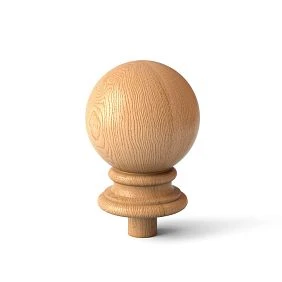
- Round finials: softness and versatility
- Square finials: strictness and geometry
- Turned finials: lathe classicism
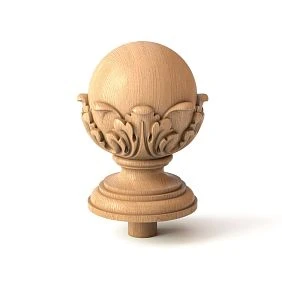
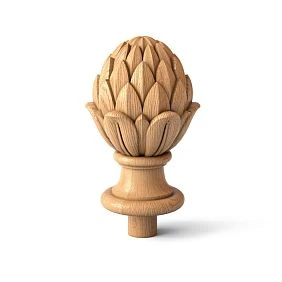
- Carved finials: for those unafraid of decoration
- Material: oak, beech, and solid wood for wooden finial
- Oak: texture and finish
- Beech: for painting and enamel
- Solid wood as a principle
- Kiln drying and stability
- Sizes and proportions: why the top cannot be chosen separately from the base
- The rule of proportion: top and post
- Specific size guidelines
- Top for a portal: room scale
- Top for a bed: matching the headboard
- How to finish a wooden post beautifully: practical advice
- What to buy together with a wooden finial
- For stair railing
- For portal and fireplace area
- For furniture and custom projects
- Mistakes when buying a wooden finial
- Where to buy a wooden finial for interior, stairs, and portal
- About STAVROS
- FAQ
- What is a wooden finial?
- Where are wooden finials used?
- Which finial to choose for a stair post?
- Round or square finial — which is better?
- Can the finial be used not for a staircase?
- Oak or beech for the finial?
- What to buy together with a wooden finial?
- Where to buy a STAVROS wooden finial?
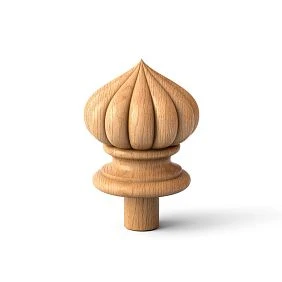
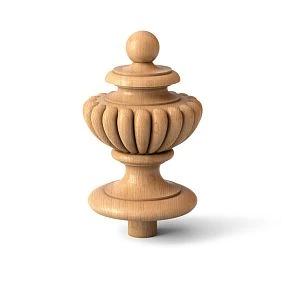
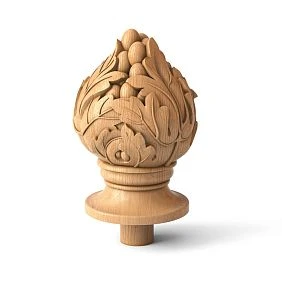
The final touch in wood: buy a wooden finial for a portal, staircase, bed, and custom interior
There are details that are not immediately visible. They don't catch the eye, don't occupy the center of the composition, and don't demand special attention. But their absence makes the interior feel incomplete — like a sentence without a period. Like a frame without a picture. Like a staircase with a post whose top has been cut off.
A wooden finial is that very final touch. The top accent that covers the end of a vertical element, completes the form, and gives the entire composition visual fullness. A small detail. But without it — it's not right. Something is missing. It's precisely this last stroke that says: everything here is thought through to the end.
This article is about how to choose and buy a wooden finial for a specific task: staircase, portal, fireplace area, bed, custom furniture, decorative stand. About shapes, materials, proportions, and style solutions. About what seems like a trifle — but in reality determines the quality of everything.
Catalog wooden finials STAVROS is the starting point for those who already understand exactly what they need. For the rest — this article.
What is a wooden finial and where does it work
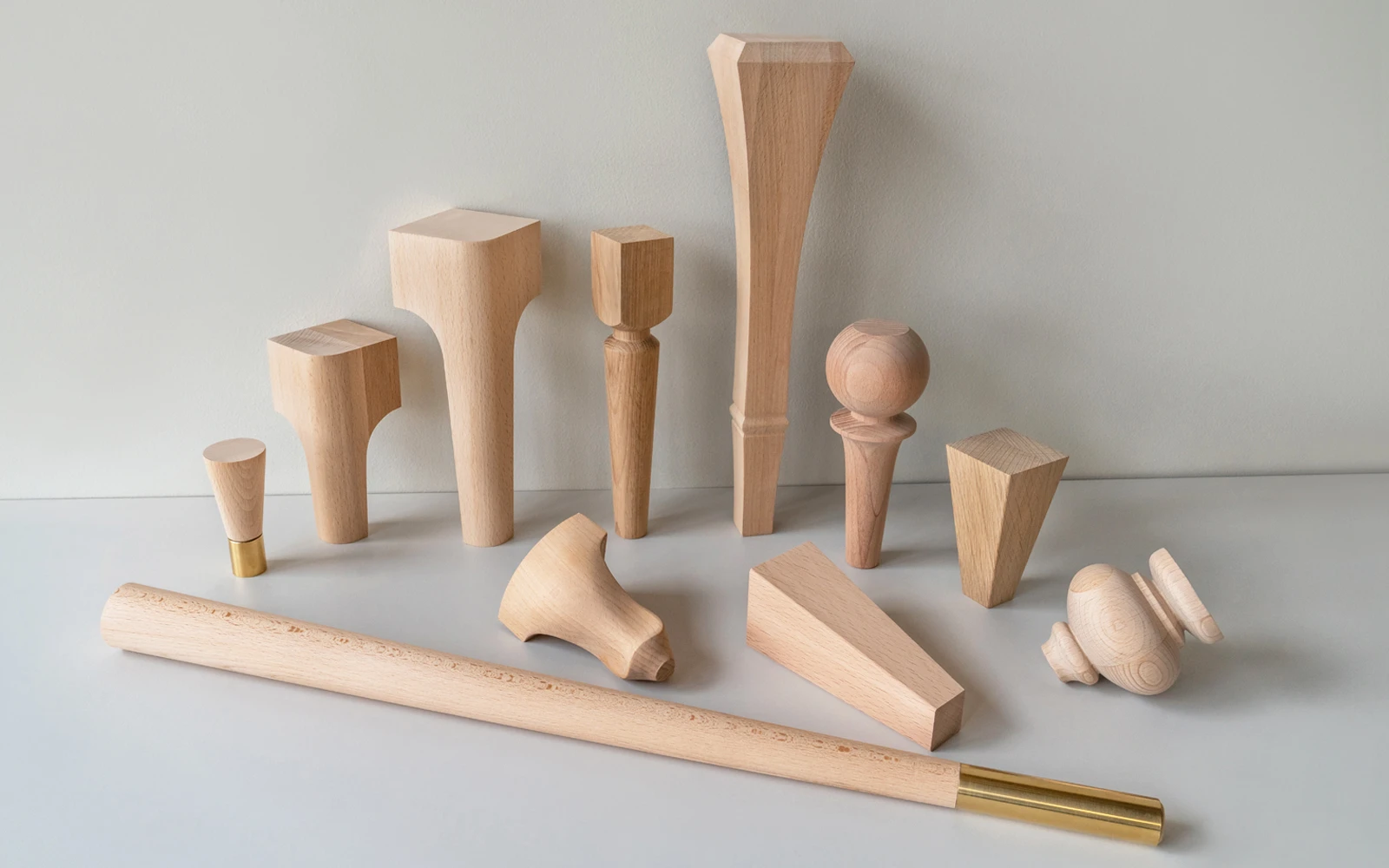
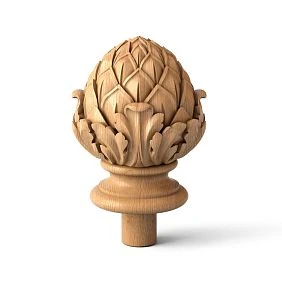
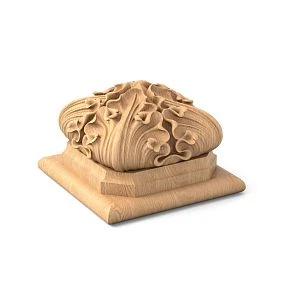
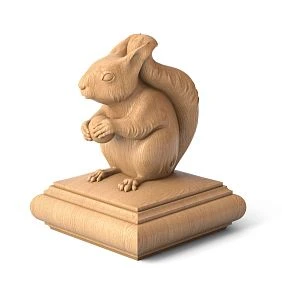
To put it simply: a finial is the top decorative element installed on the end of a post, pillar, pilaster, or other vertical base. Its purpose is to complete the vertical line, creating a visual "cap" that both protects the end from mechanical damage and gives the entire form a finished look.
But that's just a technical description. In practice, the finial works much more broadly.
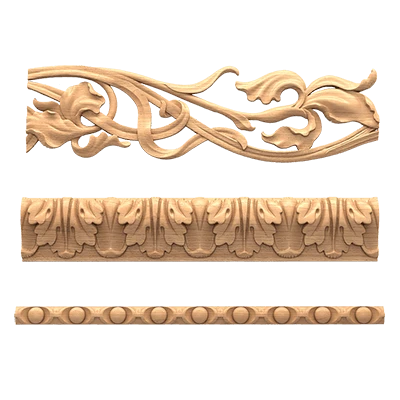
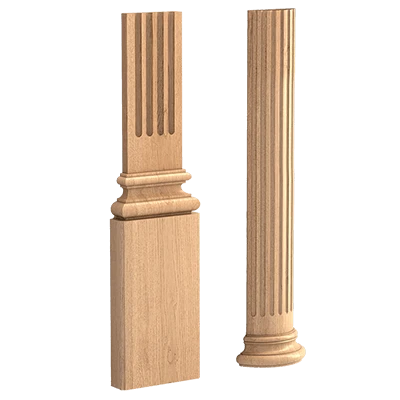
Our factory also produces:
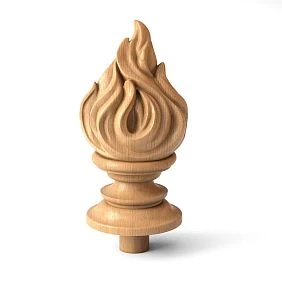
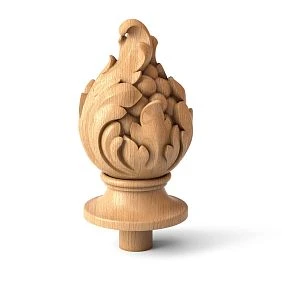
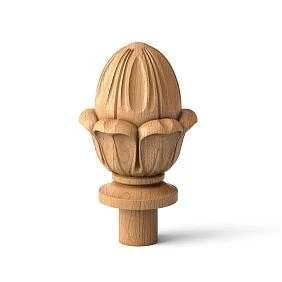
Staircase and railing
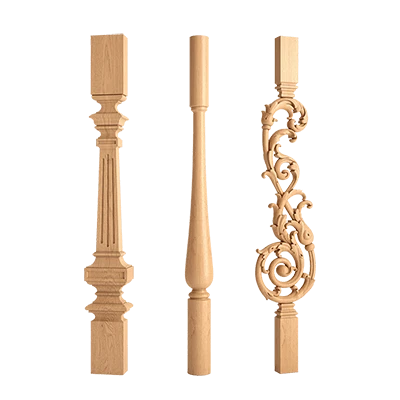
A stair post without a finial is an unfinished statement. The top end of the post remains cut off and random. The finial solves two issues at once: it covers the end and creates a "final chord" in the vertical line — a ball, a pyramid, a turned silhouette, or a carved element that echoes the balusters and the overall style of the railing.
Get Consultation
Portal and fireplace area
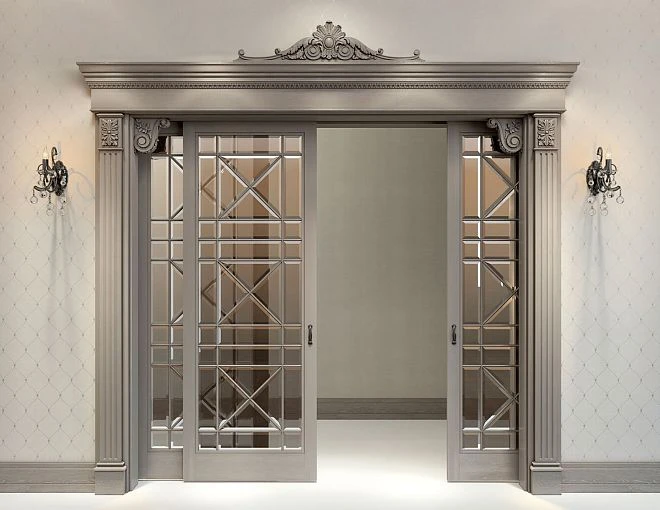
In a decorative portal — above a doorway, fireplace area, or decorative arch — the finial often serves as the central accent. It is installed on a pilaster, post, or side vertical of the portal and creates a symmetrical composition. Two finials on the sides, a central carved element on top — and the portal becomes an architectural statement.
Bed and headboard
A classic bed headboard often has vertical posts on the sides. The finial — a ball or turned element — transforms these posts from functional details into decorative accents. This works especially well in classic, baroque, and neoclassical interiors.
Custom furniture and decorative posts
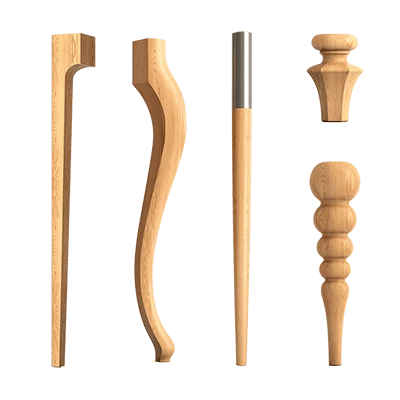
A decorative post for a vase, a floor lamp with a wooden base, a custom piece of furniture with a vertical profile — wherever there is a vertical line that needs to be completed, a finial is appropriate.
How does a wooden finial differ from a capital, overlay, and baguette?
These terms are often confused — and understandably so, because they all refer to decorative wooden elements. Let's break down the differences.
Finial and capital: different positions in the architectural hierarchy
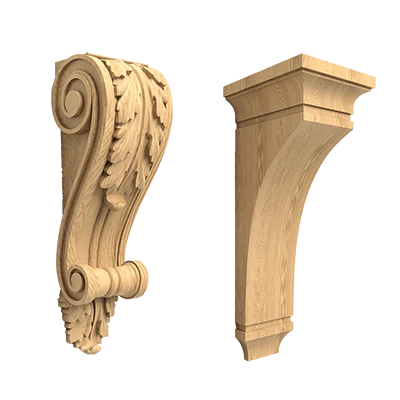
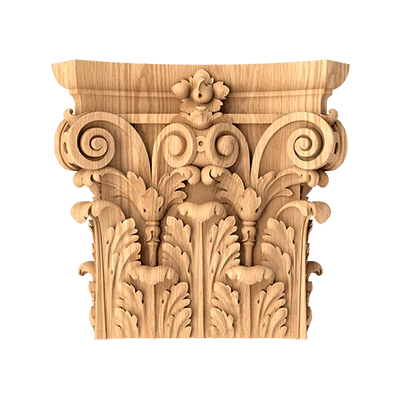
wooden capitals — this is the decorative top of a column or pilaster at the point where it transitions to a horizontal element: architrave, ceiling, cornice. The capital works at the transition between vertical and horizontal.
A finial is the final point of a free vertical. No transition: just the top. That's why finials are used on posts and uprights that don't support anything above but end in the air.
If a stair post stands alone — a finial is needed. If a pilaster transitions into a horizontal cornice — a capital is needed.
Finial and overlay
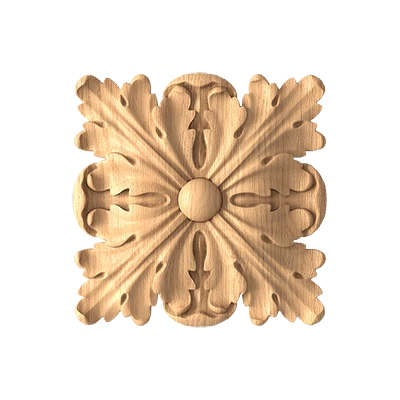
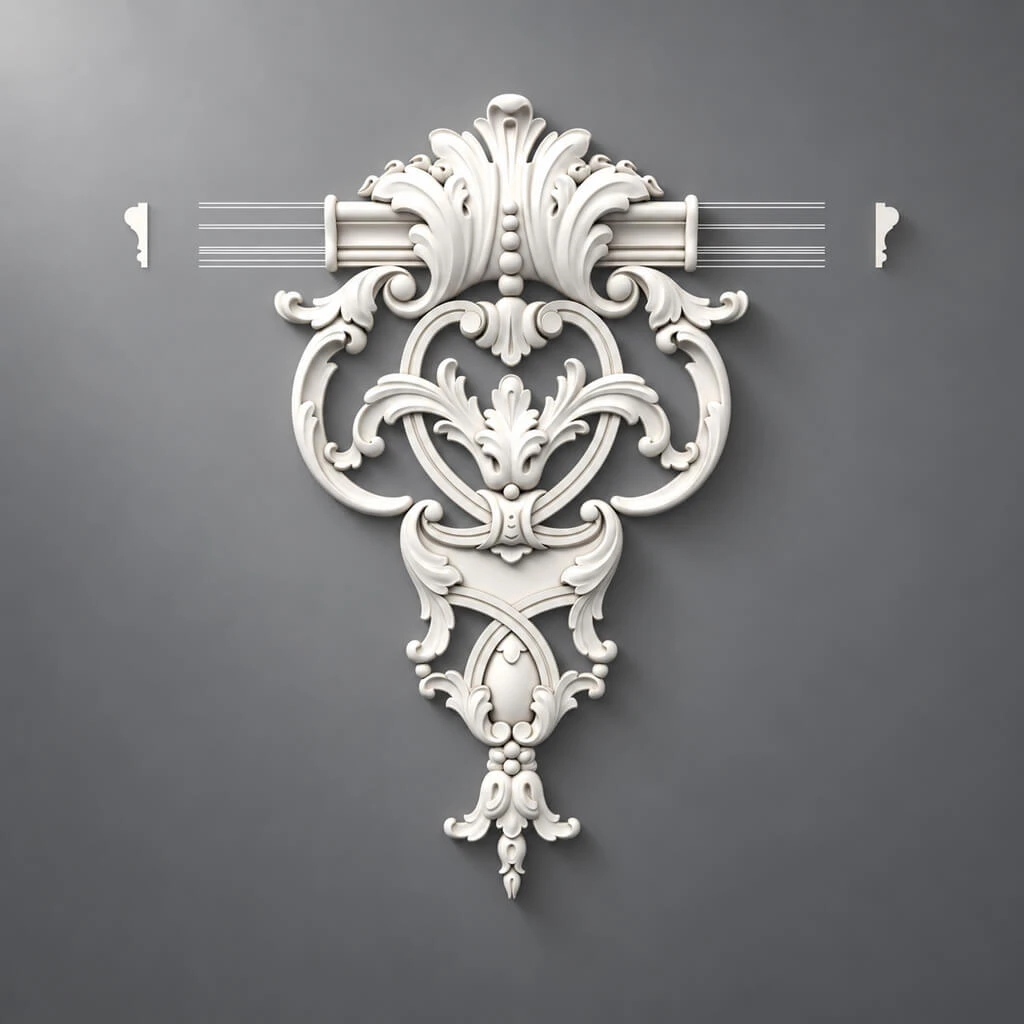
Decorative wooden inlays — these are flat elements: they are attached to a surface, creating relief decoration on a facade, door, wall panel, or furniture front. An overlay is a decoration of a plane.
A finial is a three-dimensional element. It occupies space in three dimensions and works with the vertical, not the plane.
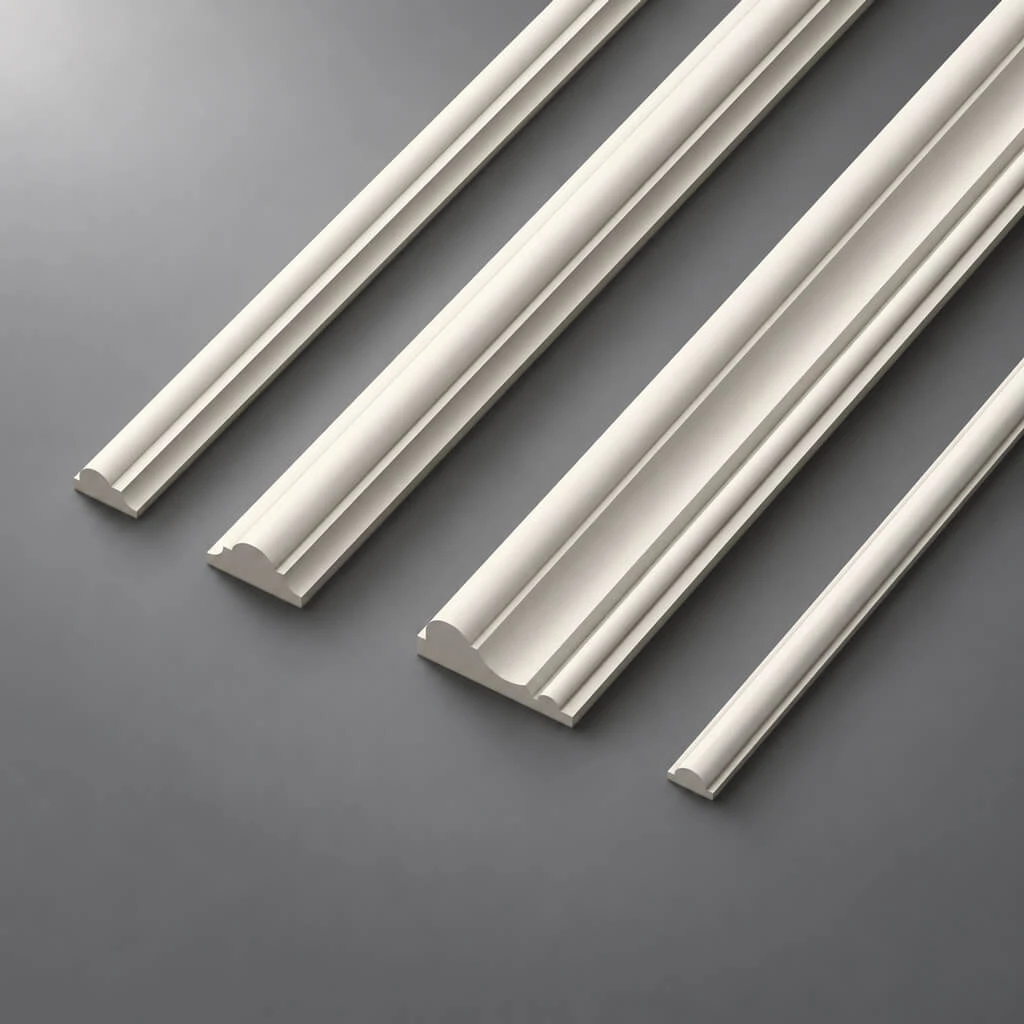
Finial and baguette
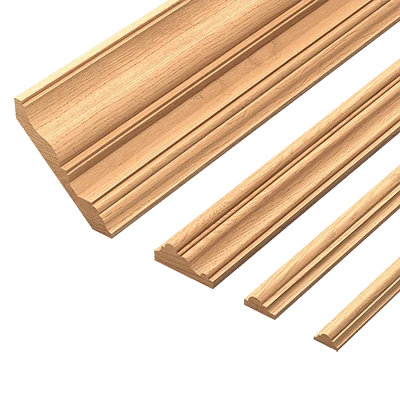
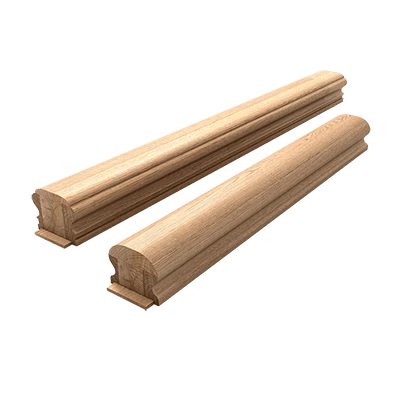
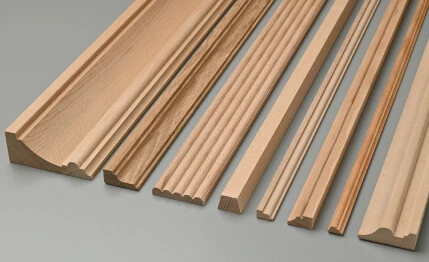
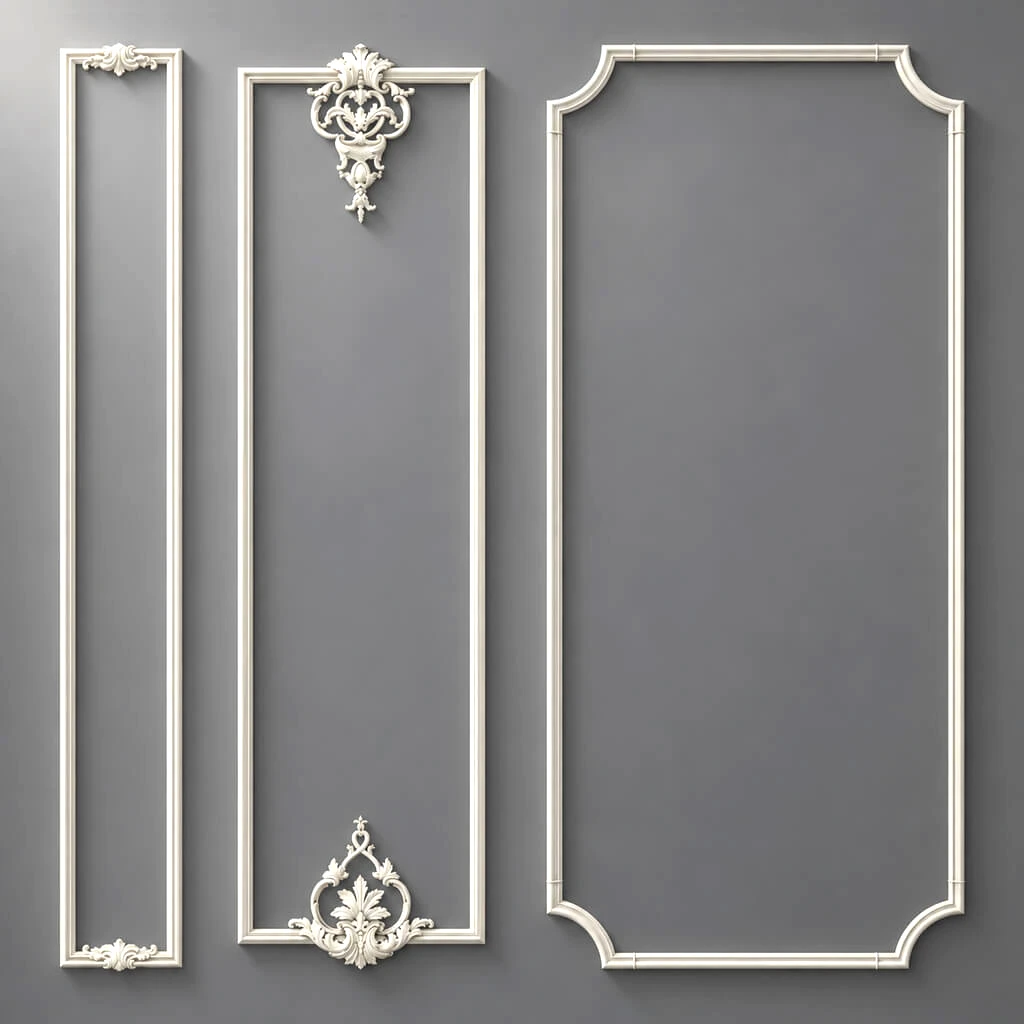
Wooden Picture Frame — a linear element. It creates a frame, a border, a horizontal or diagonal rhythm. A baguette is a line.
A finial is a point. The top point of a vertical. These elements can combine perfectly: portal posts are framed with baguette and finished with finials.
Understanding the differences helps when placing an order: avoid confusion, avoid overpaying for unnecessary items, and correctly assemble a set of decorative elements.
Finial for a staircase: when the top of a post should look finished
A staircase is an architectural object with its own logic of rhythm and proportions. In this logic, the finial holds a special place: it completes the stair post and, with it, the entire vertical hierarchy of the railing.
How the finial relates to the entire set
A stair railing is a system. The starting post bears the load and sets the scale. balusters for staircases create rhythm. stair railings complete the horizontal. The finial completes the vertical.
Remove one element, and the system falls apart. A post without a finial looks like unfinished work. This is especially noticeable when the balusters are turned, the handrail is wooden with a classic profile, and the top of the post is simply cut at a right angle. The dissonance is obvious.
Wooden post cap: what to consider when choosing
When choosing a wooden post cap, there are several key parameters:
Base cross-section. The cap is attached into a groove or onto a tenon at the top end of the post. The size of the mounting hole must exactly match the size of the cap's tenon. A cross-section of 100×100 mm fits one size, 120×120 mm fits another. Always check before ordering.
Style. If the balusters are turned and minimalist, the cap should match that style: a turned ball, a turned pyramid, a restrained classic silhouette. If the balusters are carved with acanthus, the cap can be more expressive.
Height. The cap adds 50–150 mm to the total height of the post. This must be considered when calculating the final height of the railing.
Wood species. Ideally, the same as the post. The same species with the same finish gives a uniform result.
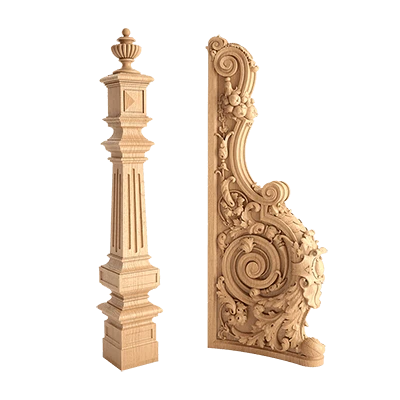
For example — post cap L-085: a neat, well-proportioned element for a stair or furniture post. Businesslike, without excess. For a restrained classic solution — a perfect fit.
For a more expressive solution, consider post cap L-104 with a richer decorative profile: for grand staircases, for stairs in a hall with high ceilings, for interiors with expressive classical decor.
А post cap L-081 — a version with a clear silhouette for a railing or furniture post where a neat finish is needed without emphasis on the cap itself.
All three models work within the staircase posts STAVROS systems and are designed for combined use.
Buy wooden post caps: how many pieces needed
Most often this is a paired element: starting post + ending post = two caps. For stairs with intermediate posts — one cap per post. For an L-shaped or U-shaped staircase with two turning posts — four or more.
Purchase all caps in one batch. Even a slight difference in shade or a batch shift in production can cause a color discrepancy. One batch — one result.
Cap for a portal and fireplace area: how a small detail makes the composition more expensive
This is not written about in standard articles about "post finials." And it's a shame. Because this is where a wooden finial works with maximum decorative power.
Portal logic: symmetry and completion
A decorative portal — above a door, above a fireplace, in a library niche, in a hall or living room — is an architectural frame. It consists of vertical pilasters or posts on the sides and a horizontal cornice on top. If the posts are finished with finials, the portal acquires a complete appearance: the verticals do not "go upward" into uncertainty but are closed off by a decorative element.
Two symmetrical finials at the edges of the portal create a monumental effect. This works even in a small space: properly selected details scale the room's appearance upward, making it visually "taller."
Fireplace area: emphasis on transition
A fireplace has pilasters. A decorative fireplace portal even more so. And these pilasters, if they don't end with anything significant, look unfinished. A wooden finial for the portal solves this problem: it is installed on the top end of the pilaster or decorative post and closes the transition with the right emphasis.
in combination with carved wooden decor — with overlays, brackets, cornices — the finial becomes part of the overall decorative program of the fireplace area.
Wooden molding as a partner to the finial
When the portal posts are framed wooden cornice, and the top of the post is finished with a finial — the result is an interior object with its own architectural logic. Line (molding) + point (finial) = completed vertical.
It is not difficult to implement. But it yields a result that is hard to achieve without understanding how these elements work together.
Finial for bed and custom furniture
Here, the discussion is not about furniture as a product, but about wooden decorative elements for furniture projects. For custom pieces, for restoring classic furniture, for those who make furniture to order or update existing items.
Bed headboard: verticals need completion
A classic headboard with posts is a common scenario for using a finial. Posts on the edges, a crossbar between them, and on top of each post — a ball, a turned element, or a carved finial. This detail elevates the bed from a "furniture piece" to an architectural item.
Especially suitable for headboards round wooden finials — the spherical shape softens corners, creating a finished silhouette without sharp accents. A universal option for a classic, neoclassical, and even modern bedroom.
Decorative post: finial as a meaningful finish
A standalone decorative post — a stand for a sculpture, a floor lamp with a wooden base, a display post in an interior — requires completion no less than a stair newel. Here, the finial adds completeness of form and independent artistic weight to the decorative object.
Author projects and restoration
Craftsmen who create custom furniture or restore antique items often need ready-made wooden decorative elements — finials, overlays, capitals — that match the required style and are made from the right type of wood. STAVROS is exactly such a supplier: a wide range, solid wood, shape compatibility.
Finial shape: ball, square, pyramid, turned silhouette
Shape is not just aesthetics. It is a stylistic message. A poorly chosen finial shape — and the entire carefully constructed staircase or portal area loses its unity.
Round finials: softness and versatility
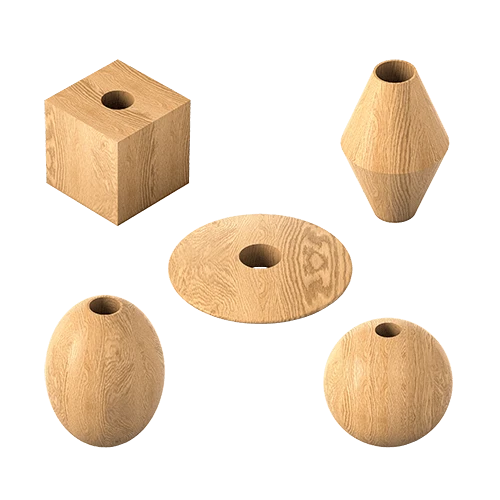
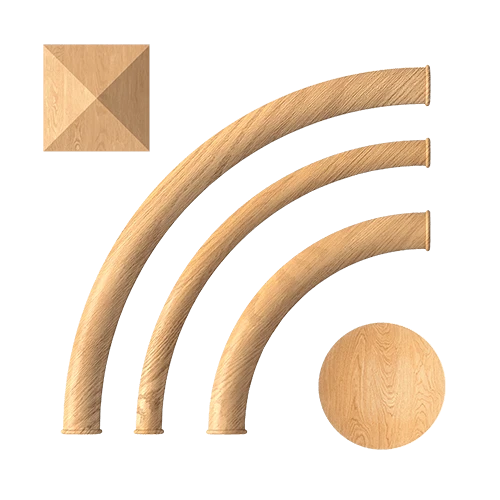
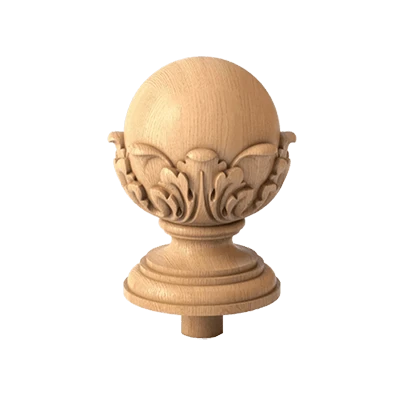
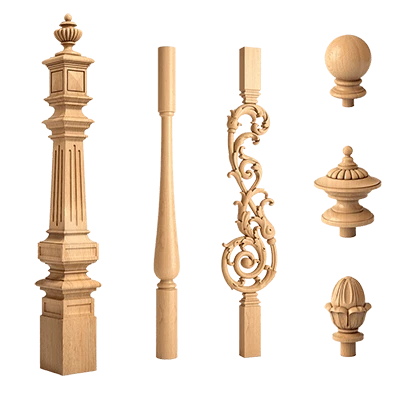
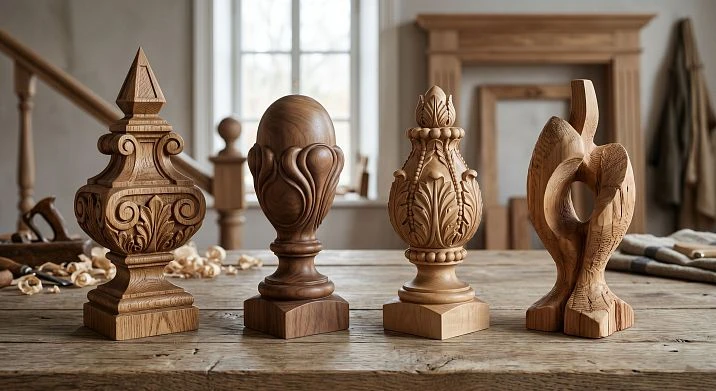
round wooden finials — these are balls and spherical silhouettes. They are versatile in a broad sense: suitable for classic, neoclassical, Provence, modern classic. Roundness softens the vertical, makes it friendlier, more human.
Where it works especially well: staircase with turned balusters, bed headboard, posts in a children's room or bedroom, simple portals without heavy decor.
| Shape | Suitable style | Application scenario |
|---|---|---|
| Ball (round) | Classic, Provence, neoclassical | Staircase, bed, post, portal |
| Square | Modern classic, art deco | Geometric portals, staircase |
| Turned (elongated) | Classic, Baroque, cabinet | Staircase, furniture, custom designs |
| Carved | Baroque, palace style, Russian | Grand staircase, fireplace portal |
| Pyramid | Empire, modern classic | Portal, furniture, decorative stand |
Square finials: strictness and geometry
Square wooden finials — for those who appreciate clear geometry. A square finial works well in interiors with a geometric rhythm: straight lines, right angles, architectural strictness.
Especially fitting: in modern classics with geometric balusters, in Art Deco interiors with their love for symmetry and verticality, in portals with clear rectangular proportions.
An important nuance: the square finial is installed so that its edges are strictly parallel to the edges of the post. A slight rotation — and the geometric strictness disappears.
Turned finials: lathe classicism
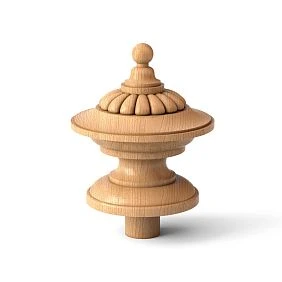
Turned wooden finials — these are shapes created on a lathe: elongated, rhythmic, with constrictions and thickenings. They belong to the tradition of decorative woodworking that spans several centuries.
A turned finial is a universal companion for a stair post. It continues the turned language of the balusters, creating a visual kinship between the standard railing elements and the accent post.
For classic staircases, study interiors, library spaces — a turned oak finial with oil or varnish finish is almost always the right answer.
Carved finials: for those who are not afraid of decor
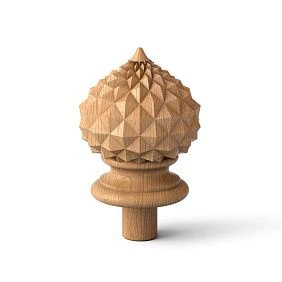
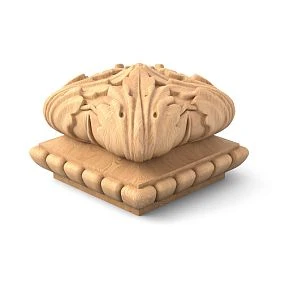
A carved finial is a sculptural element. Relief, ornament, hand or machine carving. Such a finial does not just complete the vertical — it becomes a decorative accent in its own right.
Application: grand staircases in mansions, fireplace portals in Baroque or Palace Classicism style, furniture with rich carved decor. Where the entire interior speaks the language of luxury and meticulous detail — a carved finial fits organically.
Material: oak, beech, and solid wood for a wooden finial
A finial is a small element. But 'small' does not mean 'it doesn't matter what it's made of.' The material determines both the appearance, durability, and finishing possibilities.
Oak: status and texture
Oak is a hard, dense wood (700 kg/m³) with expressive coarse texture. Under a clear coating — oil, varnish, tint — oak gives a rich, lively look. The pattern of medullary rays makes each piece unique.
An oak finial is a choice for those who want the detail to 'read' as wooden: with texture, with character, with the warmth of natural material.
A carved oak finial holds relief without blurring. The carving remains sharp over the years.
Beech: for painting and enamel
Beech is a closed structure with uniform density. Under white or colored enamel, beech gives an even, neat color without unwanted texture patterns.
A wooden finial for painting is almost always beech. For a neoclassical white interior, for a Provencal bedroom with a white wooden bed, for a portal with white pilasters — beech under enamel is the right choice.
Solid wood as a principle
Both oak and beech are solid wood. Not veneer, not MDF with facing, not plastic imitation. A solid wood finial is heavier, denser, and more reliable than any alternative. It does not delaminate, does not deform from temperature changes (with proper drying and treatment), and does not lose its shape.
Buying a solid wood finial means buying a part that will last as long as the staircase or furniture itself.
Kiln drying and stability
For interior use, wood moisture content should be 8–12%. A finial made from raw or poorly dried wood will develop cracks, deformation, and fitting issues. Kiln drying is a mandatory standard for solid wood products installed in heated spaces.
Sizes and proportions: why a finial cannot be chosen separately from the base
This is a block worth reading especially carefully — especially for those encountering the purchase of decorative wooden elements for the first time.
Proportion rule: finial and post
The finial is not an independent object. It works in tandem with the base. And the proportion of "finial to post" determines the visual result more than the shape of the finial itself.
General rule:
-
The diameter or width of the finial should be equal to or slightly exceed the cross-section of the post.
-
The height of the finial should be in the range of 0.5–1.5 times the height of one link of the turned profile of the post.
-
The finial should not be wider than the post by more than 20–25%; otherwise, it will look "clunky" and disproportionate.
Specific size guidelines
| Post cross-section | Recommended finial diameter |
|---|---|
| 80×80 mm | 80–100 mm |
| 100×100 mm | 100–120 mm |
| 120×120 mm | 120–140 mm |
| 150×150 mm | 140–180 mm |
Finial for a portal: room scale
For a portal, the proportion is different. Here, the finial relates not only to the cross-section of the post but also to the height of the pilaster, the width of the portal opening, and the overall scale of the room. In a tall space with ceilings of 3.5 m, the finial can be large and expressive. In a standard apartment with ceilings of 2.8 m, it should be moderate, without excess.
Finial for a bed: matching the headboard
For the headboard, the height and width of the posts serve as a guide. A too-small finial will get lost. A too-large one will be an aggressive accent. Rule: the finial should be "readable" from a distance of 3–4 m, but not shout about itself.
How to finish a wooden post beautifully: practical advice
The most common question: "How to finish a wooden post beautifully?" The answer consists of three steps:
-
Measure the cross-section of the post and the height of its upper part.
-
Determine the style of the finial: by the balusters, by the handrail, by the overall spirit of the interior.
-
Choose the shape (ball, turned, square, carved) and size — with a margin of 10–15 mm larger than the cross-section of the post.
This is exactly how professionals select finials. Not "by photo," but by parameters.
What to buy together with a wooden finial
A finial is rarely bought as a single element. More often, it is part of a larger order — staircase, furniture, or decorative. Here is what is usually included in the set.
For staircase railing
-
Posts for staircase — initial, final, intermediate
-
balusters for staircases — in the compatible collection
-
stair railings — wooden, in the same wood species and tone
-
Under-baluster rail — horizontal plank under the lower ends of balusters
-
Fasteners — studs, anchors, mounting cups
For the portal and fireplace area
-
Wooden Picture Frame — for framing posts and horizontal elements
-
Decorative wooden inlays — for relief surface decoration
-
wooden capitals — if pilasters transition into horizontal elements
-
Finishing materials — primer, varnish, oil, enamel
For furniture and custom projects
-
Decorative overlays — for facades
-
Carved elements from the general catalog wooden carved decoration
-
Finishing materials for the desired finish
The principle is simple: think about the system, not the individual element. The finial is the final point. But a point only makes sense in the context of the entire text.
Mistakes when buying a wooden finial
This is not a didactic list — it's practical observations that help avoid unnecessary costs and rework.
Buying without dimensions. The photo is nice, but the finial's tenon doesn't fit into the post's mounting hole — because the cross-sections don't match. Always measure the post top before ordering.
Buying one finial for a paired symmetrical composition. A staircase has a starting and ending post. A portal has two posts. One finial without a pair — visual imbalance.
Mixing different carving styles. A carved finial with acanthus next to strict rectangular balusters — that's a style conflict. The style should be unified.
Do not take the finish coating into account. Oak under white enamel is not the best idea: the texture shows through. Beech is for painting. Oak is for transparent coatings.
Choosing a shape without considering adjacent elements. A spherical finial next to geometric square balusters is a dissonance of shapes. The shape of the finial should echo the shape of nearby parts.
Forgetting about height. The finial adds height. The final height of the post with the finial must match the calculated height of the railing.
Not checking the compatibility of the fasteners. The finial is attached with a tenon that fits into the groove of the post. If the post attachment method is a metal rod on top, make sure this does not interfere with installing the finial.
Where to buy a wooden finial for interiors, stairs, and portals
Once the task is defined, all that remains is to find the right place where buying a wooden finial is not only possible but also convenient: with the right assortment, actual sizes, and compatibility with other elements.
Section wooden finials STAVROS is a structured catalog with filtering by shape, size, processing type, and collection. Here you can buy a wooden finial for a specific task: for a stair post, in a portal area, for a furniture project.
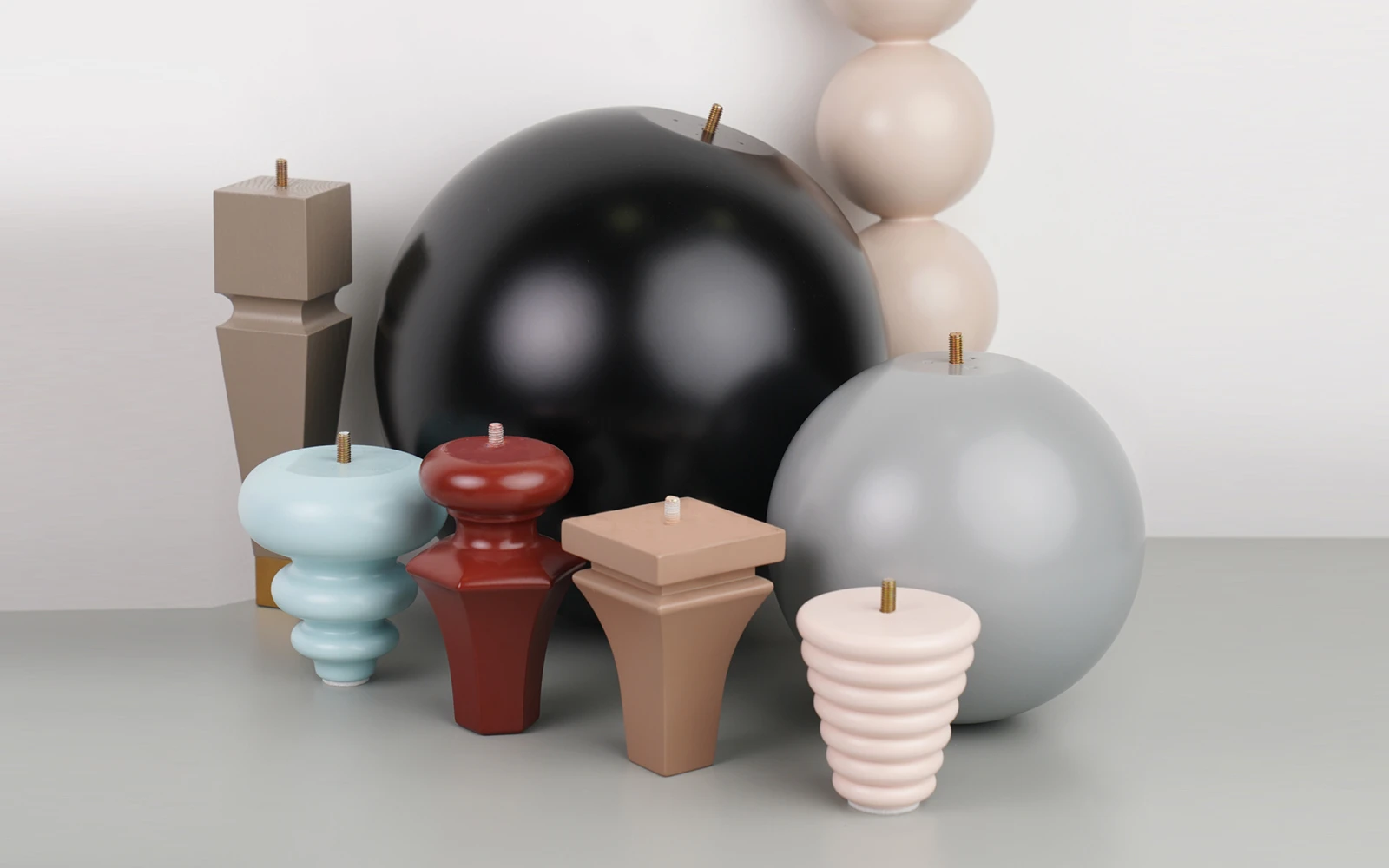
Finials are available in several versions — turned, carved, in the shape of a ball, square, pyramid — made of solid beech and oak, kiln-dried, for any finish coating.
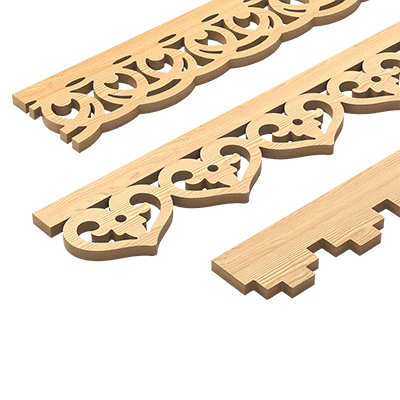
Nearby, the entire Carved wooden decoration For a complete order: overlays, capitals, brackets, baguette, cornices.
About STAVROS
Choosing a wooden finial made from solid wood means choosing a manufacturer who understands not only how the part looks in the catalog, but also how it works in a specific interior.
STAVROS is a Russian manufacturer and supplier of decorative wooden products made from solid beech and oak since 2002. The assortment includes finials, posts, balusters, handrails, capitals, brackets, overlays, moldings, carved decor, millwork — everything for wooden stairs, portals, and classic interiors.
All products are made from kiln-dried solid wood (8–12% moisture), with clear carving relief and stable geometry. Suitable for painting, enamel, oil, varnish, or tinting — depending on the task.
Among STAVROS's projects are the Hermitage, the Konstantinovsky and Alexandrovsky Palaces. Rating 5.0, over 260 verified reviews. Showrooms in St. Petersburg and Moscow. Contact us to confirm shipping to your destination. via CDEK and DPD.
FAQ
What is a wooden finial?
This is a top decorative element made of solid wood, installed on the end of a post, pillar, pilaster, or other vertical structure. Its purpose is to complete the vertical line, protect the end, and give the entire form a finished look.
Where are wooden finials used?
On stair posts, decorative portals, fireplace areas, bed headboard posts, custom and classic furniture, decorative floor stands.
Which finial should you choose for a stair post?
You need to consider the column cross-section (landing size), the style of balusters and handrail, and the finish coating. For turned balusters — a turned or spherical finial. For carved ones — a carved finial. Size: diameter or width of the finial ≈ column cross-section ±10–20%.
Round or square finial — which is better?
It depends on the style. Round is softer, more versatile, for classic and Provence styles. Square is stricter, for geometric and modern interiors. Both options are correct — in their context.
Can a finial be used not for a staircase?
Yes. A wooden finial is used for portals, fireplace zones, bed headboards, decorative posts, and custom furniture projects.
Oak or beech for the finial?
Oak — for transparent coatings (oil, varnish, tinting): expressive texture. Beech — for painting with enamel: smooth surface without unwanted grain.
What to buy together with a wooden finial?
For a staircase: posts, balusters, handrails, bottom rail. For a portal: baguette, overlays, capitals. For furniture: decorative overlays, carved elements, finishing materials.
Where to buy a wooden finial STAVROS?
In the section wooden finials STAVROS catalog — with filtering by shape, size, and processing type.