






























































Article Contents:
- Not a craft, but a module: what is the fundamental difference
- What is the STAVROS "Constructor" system
- Geometric figure KN-003
- Geometric figure KN-005
- Geometric figure KN-008
- Geometric figure KN-013
- Geometric figure KN-014
- Partition set KON-006
- Mounting hole 34 mm: why this is the main parameter when choosing
- Seven shapes and where they work
- Ball
- Cube
- Disc and washer
- Bushing
- Cone
- Faceted shape
- Where are wooden modules from the KN series used
- Decorative stand
- Furniture support and designer leg
- Barbell with Rhythm
- Baluster and Railing
- Decorative partition
- Beech or Oak: The Material That Defines Everything
- Oak
- Oak
- How to Assemble a Modular Rack: Step-by-Step Logic
- Wooden Blanks in the Interior System: Combination with Other STAVROS Elements
- Racks and Slat Panels
- Racks and Linear Moldings
- Racks and Furniture Legs
- Decor and Accents
- 10 Mistakes When Choosing Wooden Modules for Racks and Supports
- What to Buy Together with KN Series Modules
- Frequently Asked Questions
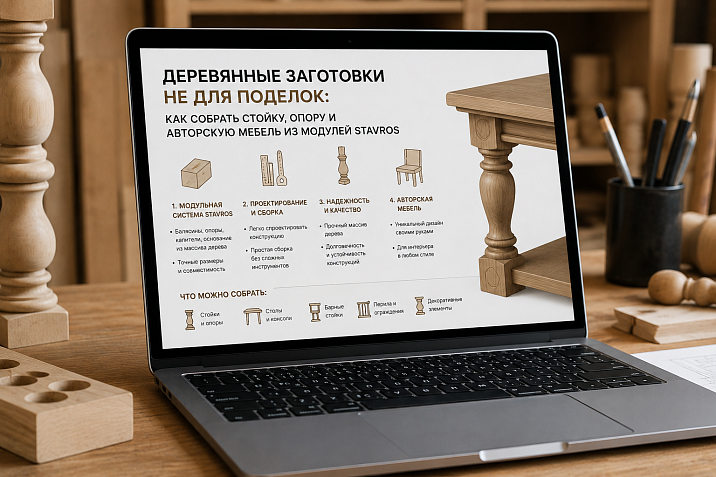
Type "buy wooden blanks" into search — and the first pages of results will be flooded with decoupage, children's beads, plywood figures for painting, and craft eggs. The handmade internet is vast, and it has long mastered this query. But if you're looking for turned solid beech and oak parts for a decorative stand, furniture support, custom leg, or rod with a rhythm of geometric shapes — that's a completely different story.
The story is that a wooden blank can be not only a canvas for decoupage but also a structural module for a furniture designer, interior designer, or craftsman who wants to assemble something of their own. Without a lathe, without a carpentry workshop, without milling from scratch. Only a smart selection of ready-made elements with the correct fitting parameter — and the structure comes together.
This is exactly what the STAVROS solid wood construction kit is dedicated to — a section that at first glance looks like a set of "some parts," but in reality represents a system of unified turned elements made of beech and oak with a 34 mm mounting hole. Spheres. Cubes. Discs. Bushings. Faceted shapes. And all of this — for serious tasks.



Not a craft, but a module: what's the fundamental difference
The conversation needs to start with an honest distinction, because confusion arises almost always.
A hobby blank is a plywood figure, a wooden egg with a smooth surface for painting, a foam or cheap beech bead for a string. Such items are sold in craft stores, cost pennies, and are intended for one thing: to become a canvas for someone's imagination. No requirements for precision, hole diameter, sanding quality, wood species, or durability under a finish coating.
Buy wooden blanks from STAVROS is a completely different segment. Here, each element has specific dimensional characteristics, a unified mounting hole diameter, and is designed for integration into a structure: a furniture leg, decorative stand, divider node, rod, or baluster. This is not a "blank for something" — it's a part with a fit.
The difference in approach: a hobby blank is bought to apply something on its outside. The STAVROS module is bought to embed inside a structure.
And it is this distinction that determines who this article is addressed to. If you are looking for wooden figurines for crafts with children — this is not the place. If you are designing custom furniture, assembling a decorative stand, looking for a rod element, or want to create a unique furniture support — you have come to the right place.




What is the STAVROS "Constructor" system
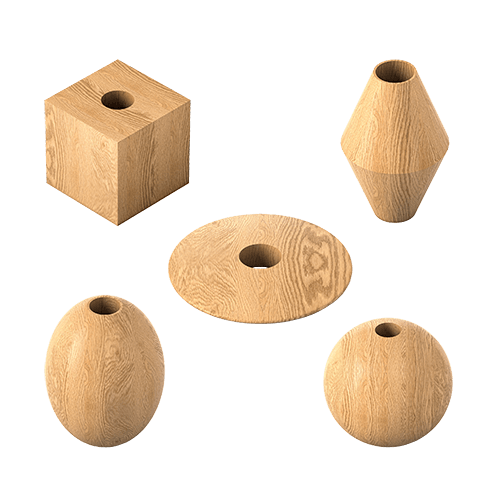
The "Constructor" system is a set of turned and geometric solid wood elements united by one principle: a unified mounting hole with a diameter of 34 mm. This means all parts are compatible with each other and are strung on a single axis, rod, or bar.
Imagine a decorative vertical stand: at the bottom — a large ball, then a separator disc, then a faceted figure, another disc, a small cube — and so on up to the top. This is not a monolithic part custom-turned on a lathe. It is a set of standard elements assembled in the desired rhythm and order. Each can be bought separately. Each can be replaced, added, or rearranged.
The "Constructor" section features several series of article numbers. Let's look at specific items to keep the discussion from being abstract.
Our factory also produces:


Geometric figure KN-003
Geometric figure KN-003 — is a basic element of the system. A solid wood part with a mounting hole D 34 mm. It is designed to be strung on a rod or axis, mates with other elements of the KN series, and requires no modification during installation if the axis diameter matches.
KN-003 is suitable for decorative stands, supports, balusters, and separation nodes. It is the "workhorse" of the system: a versatile element that works well both in the center and at the edges.
Get Consultation
Geometric figure KN-005
Geometric figure KN-005 — a more compact element with the same 34 mm mounting hole. Its concise shape makes it a useful divider between large modules: it creates a pause in the rack's rhythm without overloading it. Works well on a rod between spheres or large geometric accents.
Geometric figure KN-008
Geometric figure KN-008 — an expressive element with a more complex profile shape. It can be used as an accent central module of the rack or as a transitional piece between segments of different heights. Paired with KN-005, it creates a lively rhythm — alternating large and small.
Geometric figure KN-013
Geometric figure KN-013 — a compact geometric part with a 34 mm mounting hole. Works well in multi-element racks as a small accent. Its small size allows for a dense rhythm without overloading the structure.
Geometric figure KN-014
Geometric figure KN-014 — features its own geometry and creates a different character in an assembled rack. If KN-013 provides smoothness, then KN-014 provides an accent with a stricter profile. Good for custom furniture with geometric design: armchairs, dressers, coffee table supports.
Partition set KON-006
Special attention deserves Partition kit KON-006. This is no longer just a separate element, but a ready-made system for assembling a decorative partition from wooden modules. The principle is vertical rods with strung parts, forming a rhythmic space enclosure. Suitable for zoning a living room, study, studio, or restaurant.
34 mm mounting hole: why this is the main parameter when choosing
Here you need to speak directly, without evasions. When you buy a wooden ball for a hobby craft, the hole diameter is a secondary thing: you can thread a thread, fishing line, or cord of any size. When you buy modular elements for a stand or furniture support, the hole diameter becomes a critical parameter.
The mounting hole D 34 mm means: the part is designed for installation on a rod, pipe, wooden stick, or metal bar with an outer diameter of 34 mm. This is not a random number — it is a unified standard to which all compatible elements of the KN series are matched.
If you work with a different axle diameter — say, 30 mm or 38 mm — the part will either not fit tightly or will not go in at all. This cannot be fixed by force. This is fixed by correct calculation before ordering.
What to check before buying wooden blanks from the KN series:
-
The actual outer diameter of your axle, pipe, or rod. Not "about 34", but an exact value measured with a caliper.
-
Compatibility of all modules by hole diameter — if you mix several SKUs, make sure they are all designed for the same fit.
-
Clearance and type of fit: a tight fit is suitable for fixed elements, with a small clearance — for those that need to be disassembled.
-
The height of each element — the total height of all modules must match the length of the axle.
One mistake in diameter — and the entire batch of parts doesn't fit. This is not an exaggeration. This regularly happens to those who order without measurements.
Seven shapes and where they work
The "Constructor" system covers several basic geometric shapes. Each has its place in the structure and its character in the interior.
Ball
The softest and most organic shape. Wooden balls with a hole work as a "living" element in the rack: they soften the strictness of the metal axis, add naturalness and warmth. The ball is good in classic designs, Scandinavian and eco-style, in side supports of beds and nightstands.
Buy wooden balls with a hole from the STAVROS line — means getting an element that is precisely processed, sanded and ready for applying the finish coating.
The ball creates a tactilely pleasant accent. Run your hand along a vertical rack where balls and discs alternate — the hand feels a sense of rhythm. This is not a part that is only looked at. This is a part that is felt.
Cube
A strict, intellectual shape. A wooden cube with a mounting hole creates a completely different rhythm — geometrically precise, with pronounced angles and edges. Suitable for minimalist interiors, office environments, a modern study, or designer furniture in the constructivist style.
The cube does not forgive a random environment: it requires clean space around it. Place it in a system next to a ball — and you get an interesting contrast of shapes. Give it only cubes as "neighbors" — and you create a strict architectural vertical.
Disc and washer
Separators. These elements do not work as independent accents, but as pauses and transitions between large modules. A wooden disc with a mounting hole creates a horizontal layer in a vertical structure, visually dividing it into sections.
A washer is an even thinner separator. Its task: to prevent two large elements from "sticking together" and losing air between them. A washer is space designed as a detail.
Without separators, a stand of spheres and cubes looks overloaded. With them, it becomes rhythmic, precise, and expensive.
Bushing
A technically important element. A bushing with a mounting hole D 34 mm is an adapter, retainer, or extension. It covers the ends of the axle, fixes adjacent elements against shifting, and creates integrity at attachment points to the floor or ceiling. In an assembled stand, bushings are often invisible — they go inside the structure. But without them, the structure wobbles.
Cone
A shape with direction and dynamics. The cone "points" up or down — and this creates movement in a static structure. Cone elements on a stand give it visual weight at the bottom (if the cone is wide side down) or lightness (if the tip is down). Use the cone as a finishing or starting element of the axis.
Faceted figure
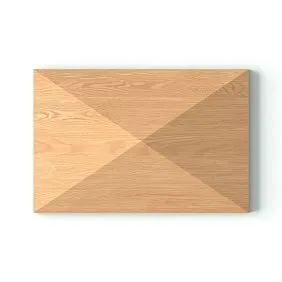
The most expressive of all. The faceted shape has visible edges and planes that play with light. At different lighting angles, the faceted element appears different: sometimes dark, sometimes light, sometimes with soft transitions, sometimes with sharp shadows. It is a living detail that changes throughout the day.
A faceted figure works well on its own — as an accent node on a support or baluster. Paired with neutral discs, it sounds especially convincing.
Where are wooden modules from the KN series used?
Decorative stand
A vertical stand is the most obvious and most beautiful scenario for using modules. A metal pipe or wooden rod with a diameter of 34 mm is installed between the floor and ceiling (or between two horizontal planes), and elements are strung on it in a given rhythm.
A stand with wooden modules is a decor that works both from a distance and up close. From three meters away, it reads as a vertical sculptural detail. Up close, each element is visible separately, its texture and shape clear.
Such stands are used in living rooms as an architectural accent, in studies as a zone divider, in hotel lobbies as an element of space branding.
Furniture support and designer leg
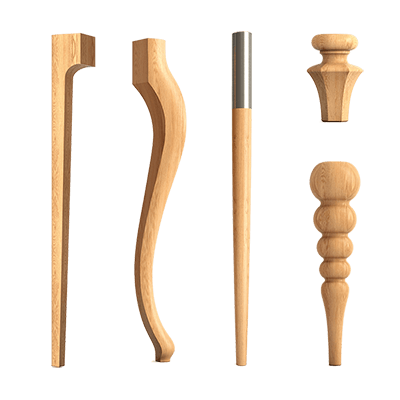
This scenario is especially interesting for professional furniture makers. Standard furniture legs and supports STAVROS are solid products. A modular leg is something completely different: it can be assembled from several elements, composing the shape for a specific table, console, chair, or bench.
A low coffee table on four supports, each made of two or three elements, looks fundamentally different from a table on standard legs. It is a handcrafted item with an original design — even if the buyer does not know how to turn wood.
For those who want a non-standard combination or size, STAVROS offers Custom item manufacturing — this is an option for those whose task goes beyond the standard catalog.
Bar with rhythm
A horizontal version of the same idea. A horizontal bar with threaded modules is a decorative partition, handrail, or divider in space zoning. Here, the rhythm of elements is perceived differently: they go from left to right, creating a horizontal ornament.
This technique is used in open shelving, bar counters with wooden elements, and children's play areas (but these are not children's beads — they are an architectural element).
Baluster and railing
The classic use of turned wooden elements is railings and stair balustrades. But unlike classic turned balusters, the KN series modules provide a modern geometric language. Several identical or alternating elements between horizontal handrails — and the staircase gains an original character.
This application is especially valuable in interiors with a modern or industrial aesthetic, where classic turned balusters with curls would be inappropriate.
Decorative partition
It is worth highlighting separately Partition kit KON-006 — this is a ready-made system for space zoning. The principle is the same: vertical axes with strung elements installed in a row. But here there is already a complete logic: everything needed to assemble one modular partition.
Such zoning works in studios, living rooms, and meeting rooms. It lets light through, does not completely block the space, but clearly marks the boundary of zones.
Beech or oak: the material that defines everything
Both materials are used in the production of KN series elements. The choice between them is not just a matter of taste; it is a technical and aesthetic decision.
Beech
Beech is a wood with a uniform, dense, fine-pored structure. Its texture is almost neutral: no pronounced veins, no large pattern. This makes beech an ideal material for painting, tinting, and enamel.
If you plan to paint the elements to match a specific interior color, beech will take the paint evenly without emphasizing the texture. If you want the purest, most uniform color, beech will not disappoint.
Among the disadvantages: beech is less expressive 'in its natural form.' Under clear oil or varnish, it gives a warm but not very rich pattern.
Oak
Oak is a wood with character. Pronounced texture, wide veins, medullary rays — silvery stripes on the tangential cut. Under oil or varnish, oak looks rich, prestigious, and unique.
Wooden blanks made of oak as part of a post or support — this is an element that speaks for itself. It does not need to be painted to look expensive; the right oil is enough.
Among the nuances: oak is less suitable for painting than beech. Its pronounced pores require careful priming and can result in an uneven finish.
Practical rule: check the specific product card to see what wood species the element is made from — availability by article numbers may vary. And order all elements of one batch from the same wood species so that the tone and texture match.
How to assemble a modular stand: step-by-step logic
This section is written not as an assembly instruction for a specific product, but as a methodological framework — so you understand the logic of selection and avoid mistakes from the start.
Step 1. Determine the load-bearing axis.
What material? Metal pipe, wooden rod, threaded rod? What is the exact outer diameter? Reminder: the mounting hole of KN modules is 34 mm. The outer diameter of the axis must match.
Step 2. Calculate the height of the stand.
The total height of all stacked elements must equal the length of the axis (adjusted for fasteners and stoppers). Measure the height of each selected element from the product card, add them up — and compare with the length of the axis.
Step 3. Choose a large central element.
This will be the visual focal point of the stand. Usually it is a large geometric shape, a large-diameter sphere, or a faceted element. It is placed in the center or in the lower third of the axis — where the eye naturally stops.
Step 4. Add separators.
Between large elements, discs or washers are needed — they create rhythm and air. Without them, the stand looks overloaded.
Step 5. Arrange the rhythm.
Rhythm is repetition. It can be symmetrical (large — small — large — small) or ascending (from small to large from bottom to top). Draw a diagram on paper before ordering.
Step 6. Check symmetry.
If there are several stands, make sure the order of elements is the same on all. Asymmetry of stands looks like a mistake if it is not intended.
Step 7. Choose the finish coating.
All elements in one stand must be coated the same. For oak — Rubio Monocoat oil. For beech for painting — primer + enamel. For a tinted look — oil with pigment.
Step 8. Assemble the set in one order.
Order all elements at once: from the same batch, same material. This ensures matching tone, density, and surface finish.
The full range for assembling a complete order is in the section STAVROS installation and finishing materials.
Wooden blanks in the interior system: combination with other STAVROS elements
Modular elements of the KN series work well not only on their own, but also in a system with other STAVROS products.
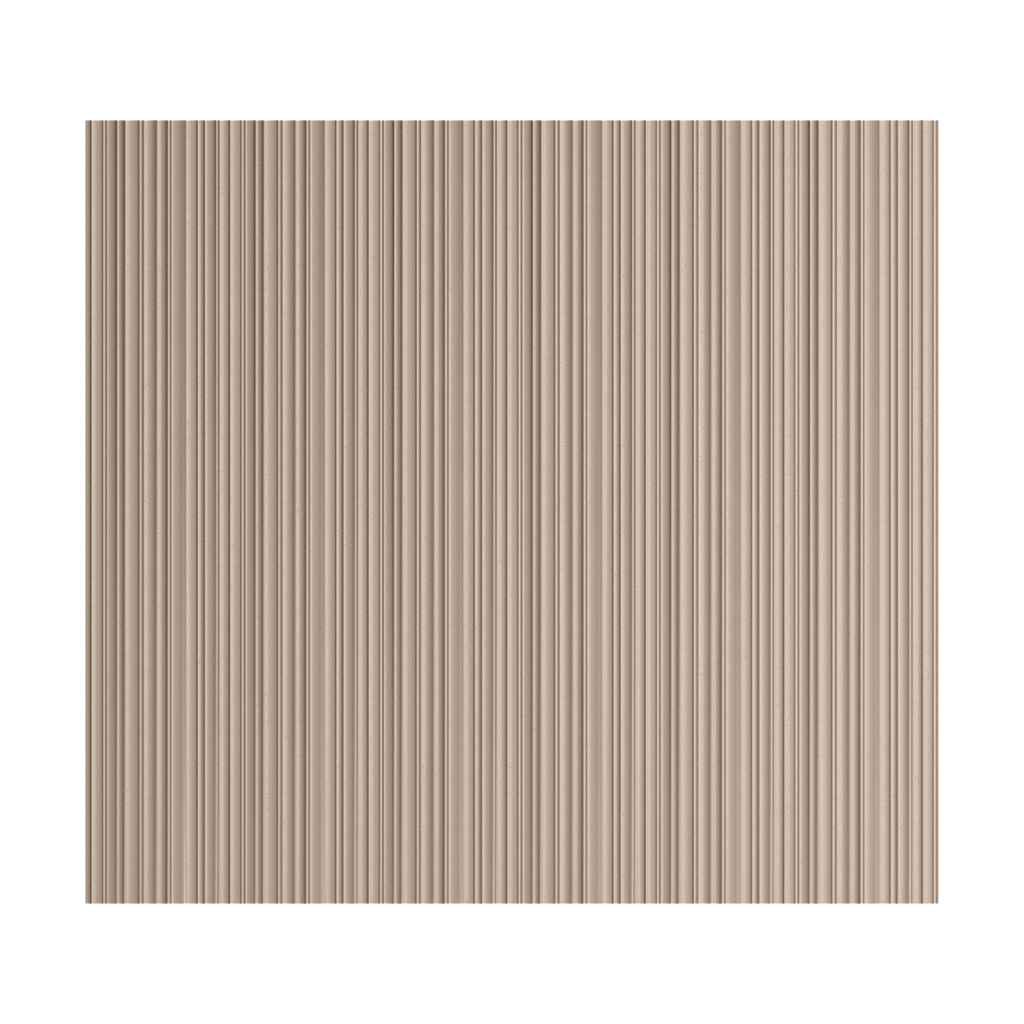
Racks and slatted panels
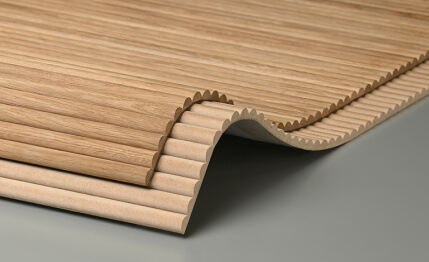
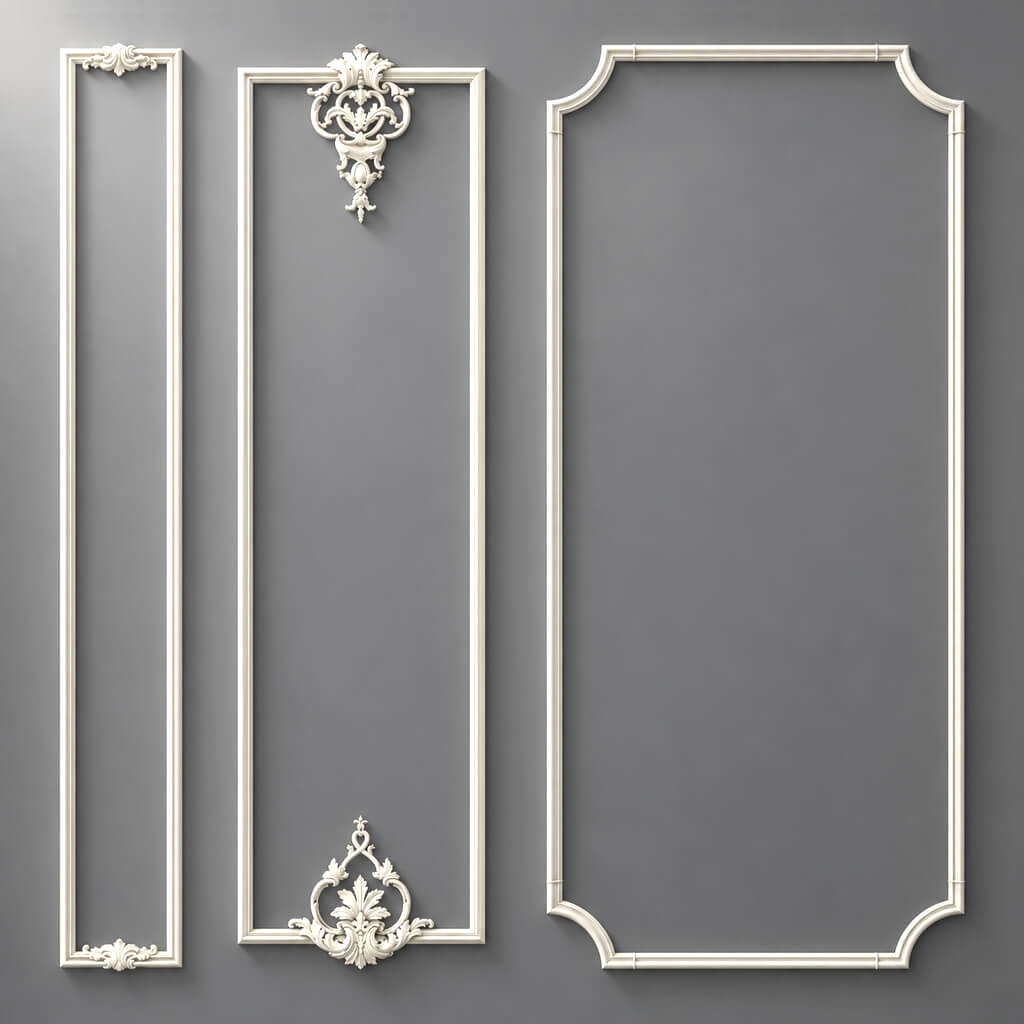
If the space plans Rafter panels on the wall — modular racks made of the same wood species create a unified textured ensemble. Slats on the wall + racks made of similar wood is a theme that works in an office, living room, or restaurant.
Racks and linear moldings
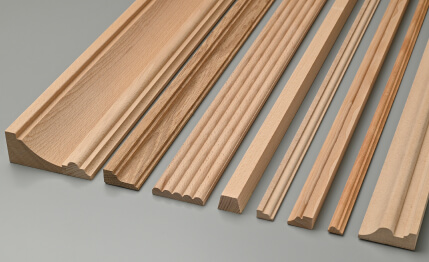
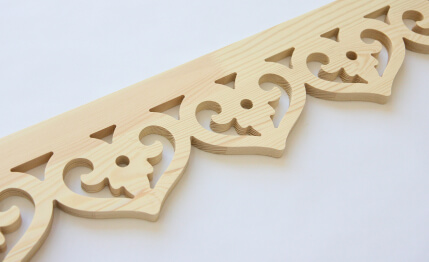
Wooden Pogonazh iz massiva — moldings, baseboards, cornices — form a horizontal rhythm in the space. Vertical racks with modules create a perpendicular rhythm. Two rhythms in one space — horizontal and vertical — is an architectural technique with a long history.
Racks and furniture legs
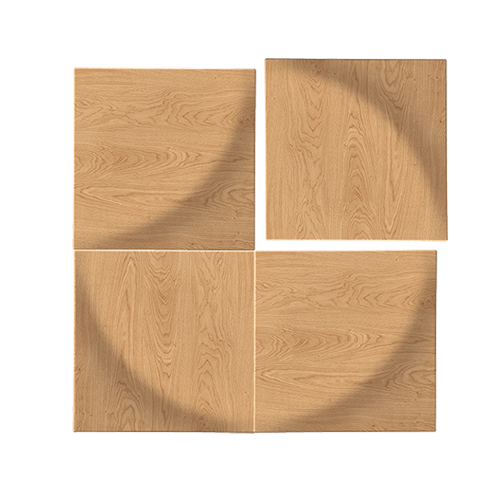
If tables or consoles in the space are placed on wooden furniture legs, decorative racks from the KN series should be from the same wood species or in the same tone. This creates a unified "vocabulary" of wooden details in the space.
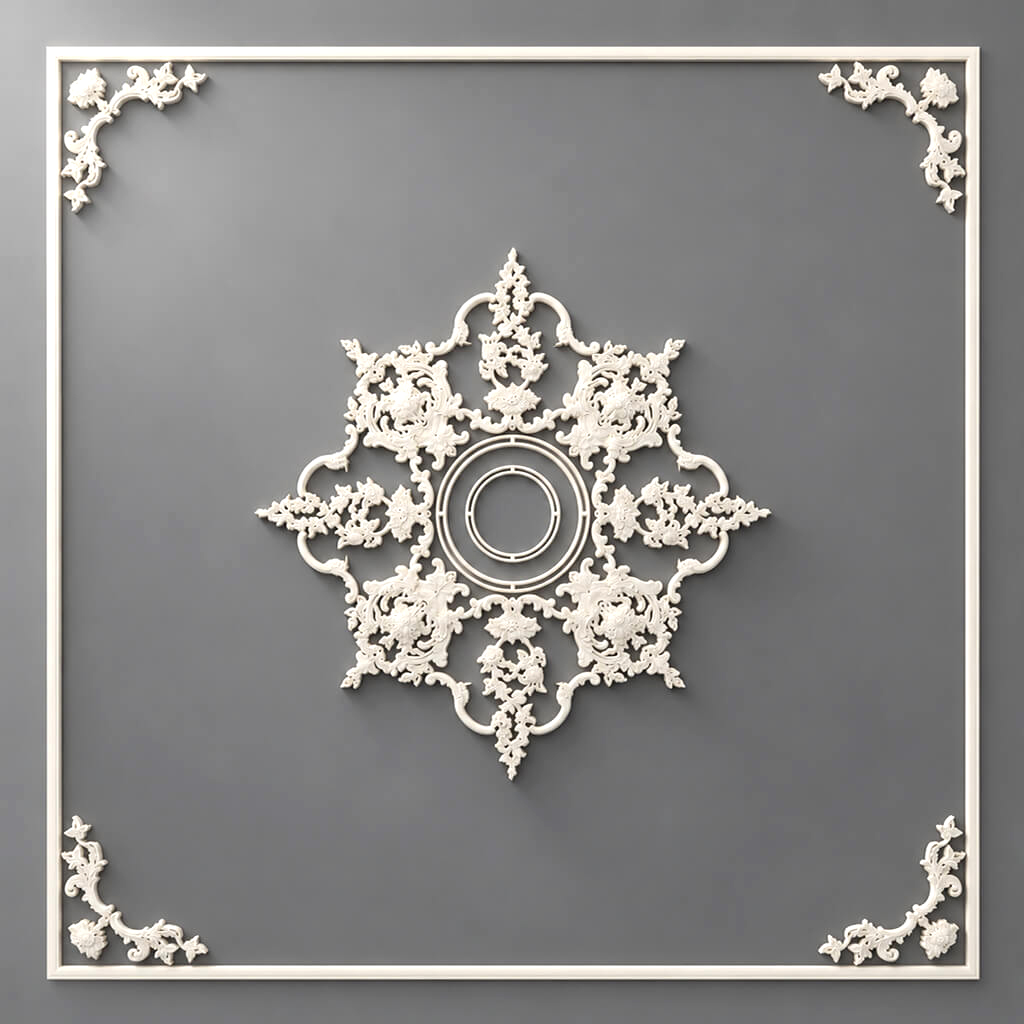
Decor and accents
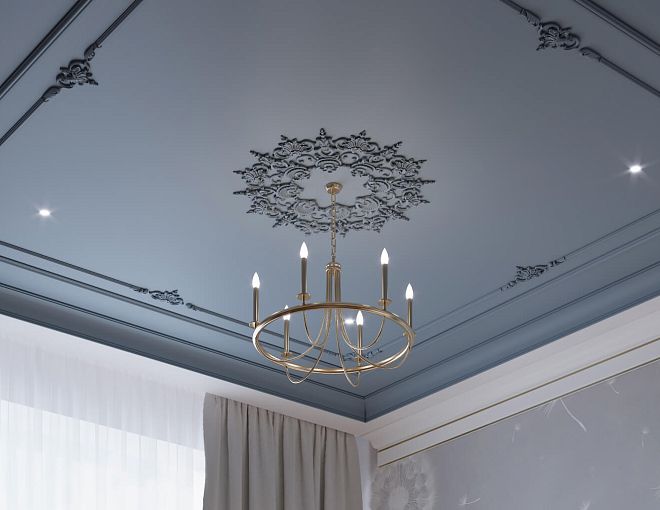
Wood and MDF moldings — another element that easily coordinates with wooden modules. The same wood species, the same finish — and the space gains a coherence that cannot be bought as a ready-made set.
10 mistakes when choosing wooden modules for racks and supports
The list of mistakes in this topic is predictable — but no less painful for that.
Mistake 1: buying them as ordinary wooden beads. KN series modules are not string decorations. They cannot be "re-threaded" or "reworked" without consequences. These are structural elements.
Mistake 2: not checking the 34 mm hole. This was mentioned above, but repetition is necessary here. A part with the wrong diameter is a loss of money and time.
Error 3: mixing parts with different mounting diameters. If one module is designed for D 34 and another for D 30, they are incompatible on the same axis. Check the specifications of each item.
Error 4: choosing a ball without considering the stand height. A large ball on a low stand looks unnatural. A tall stand with small elements gets lost. Scale matters.
Error 5: overloading the structure with large modules. Three large balls without separators do not create rhythm—they create clutter.
Error 6: not counting separators. Separators (discs, washers) are not extra parts. Without them, the stand looks like a random set of strung items.
Error 7: mixing beech and oak without a unified coating logic. Different wood species in one structure will give different tones and textures even under the same oil. Either all elements from one species, or with a clear design justification for the contrast.
Error 8: buying without understanding what an axis is. System elements themselves do not form a structure. They need an axis. What it is—a metal tube, a pin, a wooden rod—is decided before ordering.
Error 9: not considering the finish coating. Bare wooden elements without coating absorb moisture, get dirty, and lose their appearance. Finish is a mandatory step.
Error 10: ordering one by one, individually. If the project is large, order the entire set at once. Batches may differ slightly in tone. A set made in one order guarantees uniformity.
What to buy together with KN series modules
A correct order is not just a set of KN elements. It is a kit that covers the entire cycle from part to finished structure.
Axle or rod — check with STAVROS for compatible load-bearing elements. Diameter 34 mm is a standard size for many wooden and metal rods.
Furniture Legs and Supports — if modular elements are used in combination with ready-made supports, they must be ordered from the same wood species and with the same finish.
Rafter panels — to create a unified wooden theme in the space.
Wood and MDF moldings — moldings and cornices to match the modular posts.
Rubio Monocoat oil — finish coating for oak and beech elements. One of the best solutions for solid wood: deep penetration, natural look, protection without a film on the surface.
Mounting and finishing materials — adhesives, primers, auxiliary materials for final installation.
Custom manufacturing — if non-standard sizes, non-standard shapes, or unique assembly for a specific project are needed.
Frequently asked questions
What is the STAVROS "Constructor"?
This is a section with turned and geometric solid wood elements with a mounting hole D 34 mm. The parts are designed for assembling decorative posts, furniture supports, partitions, rods, and custom furniture.
Are these wooden blanks for decoupage or crafts?
No. KN series elements are production parts made of beech and oak for furniture and interior structures. They are not intended for decoupage, painting, or hobbies.
What is the diameter of the mounting hole?
For KN series elements, the mounting hole is D 34 mm. This is a unified parameter for the entire series.
Can different article numbers be mixed on one stand?
Yes, if they all have the same mounting hole D 34 mm and are designed for one axis. Check the specifications of each article in the product card.
Which coating is best for beech and oak elements?
For oak — oil, including Rubio Monocoat — enhances the texture and protects the surface. For beech under painting — primer and enamel. All elements in one structure must be coated identically.
Can the elements be used for outdoor applications?
Standard KN series elements are intended for indoor use. For outdoor structures, clarify the operating conditions and apply appropriate moisture-resistant coating.
Where to buy KN series wooden blanks with Contact us to confirm shipping to your destination.?
In the STAVROS online catalog, in the "Constructor" section, with Contact us to confirm shipping to your destination. from one item, as well as in showrooms in Moscow and St. Petersburg.
What to do if you need a non-standard part?
STAVROS offers custom manufacturing of products. Contact the managers with the parameters — diameter, height, shape, material — and get an individual solution.
Can I order samples before a large project?
Check with STAVROS managers about the possibility of ordering samples. For large projects, it is recommended to check the tone, texture, and parameters on actual parts before placing the main order.
How many elements are needed for one decorative stand?
It depends on the height of the stand and the sizes of the selected elements. Calculate the total height of all parts from the product cards and compare it with the length of the support rod. Order with a 10–15% margin in case of calculation errors.