






























































Article Contents:
- What is a handle with an insert and how is it different from a regular bracket
- Where handles with inserts work: scenario breakdown
- Kitchen: the main stage for hardware with an insert
- Walk-in closet: repeating texture along the entire height
- Wardrobe in the bedroom or study: accent without overload
- Chest of drawers and nightstand: one handle as the main element of the facade
- Custom furniture: insert as part of a design solution
- Five inserts: detailed breakdown of HL-070-1M options
- Wenge: dark authority
- Walnut: warm versatility
- Rosewood: for those who understand
- Zebrano: energy and contrast
- Carbon: technological modernity
- Stainless steel in the handle: why it's needed and how to match it
- How to properly combine an insert with a facade: practical schemes
- Light facade + dark insert
- Dark facade + neutral metal
- Wooden facade + matching insert
- Matte facade + contrasting texture
- Veneered facade + close-toned insert
- Handle with insert in different interior styles
- Modern style and minimalism
- Neoclassicism
- Art Deco
- Premium kitchen with custom design
- Technical parameters: what is important to know when choosing
- What to buy together with a decorative insert: a comprehensive approach
- 9 mistakes when choosing a handle with insert
- About the Company STAVROS
- Frequently Asked Questions
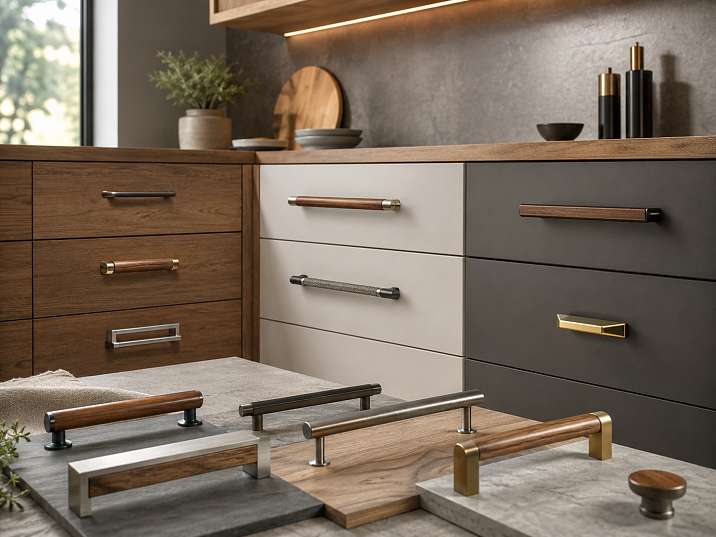
There is one phenomenon in interior design that is rarely spoken about out loud, but which any person with an eye for detail notices. Two identical facades. Two identical sets. One kitchen is expensive, the other is not. The difference is not in the material of the cabinets, not in the tiles, and not in the appliances. The difference is in the handle.
A furniture handle with an insert is not just hardware. It is a design detail that solves a problem that no paint or varnish material and no expensive facade can solve alone: it creates a visual connection between wood, metal, the texture of the countertop, the veneer of the side panels, slatted panels, and all other textures of the space.
Furniture handles with inserts — a topic that has been underestimated for a long time. It's time to truly understand it.


What is an insert handle and how is it different from a regular bracket
Before comparing wenge with carbon and choosing stainless steel, you need to understand the design concept.
A regular furniture handle is a single element: one material, one shape, one texture. A good bracket. A neutral detail. It performs a function but carries no statement.
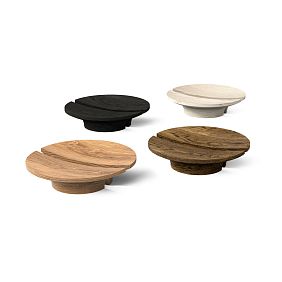
An insert handle is designed differently. Its construction has two components: a base (usually metal or polymer) and a decorative insert — a separate element with its own texture, material, and character. It is the insert that turns the handle from a utilitarian detail into a designer piece.
The insert performs three tasks simultaneously:
-
Visual connection — it repeats or echoes textures already present in the interior: the wood of the countertop, the veneer of the facade, the metal of the appliances, the color of the flooring.
-
Accent — it stops the eye at the right point and creates the feeling that the handle was chosen deliberately, not by chance.
-
Cost scaling — a proper insert makes the facade look more expensive. An improper one devalues even expensive veneer.
Furniture handle decorative insert HL-070-1M from STAVROS — a concrete implementation of this idea. Round shape with a diameter of 74 mm, thickness 13 mm, mounting depth 32 mm. Metal rim made of AISI 304 stainless steel. Five insert options: zebrano, carbon, wenge, rosewood, and walnut. This is not an abstract concept — it is a real product with clear characteristics and clear application.




Where handles with inserts work: scenario analysis
Our factory also produces:


Kitchen: the main stage for insert hardware
The kitchen is a space where the handle is under maximum load: tactile, visual, and operational. Here it is touched hundreds of times a day, here it competes with facades, countertops, backsplashes, appliances, faucets, and lighting fixtures.
That is why kitchen handles with inserts are not a decorative whim, but a smart design calculation. An insert made of natural wood or carbon imitation connects the handle with other kitchen textures into a single system.
On a kitchen island, where contrasting facades and open shelves are often found, a handle with an insert becomes especially convincing: it creates an accent rhythm that unites the heterogeneous elements of the set.
For tall cabinets and high cabinets — vertical handles with an elongated insert. For wall cabinets and lower drawers — horizontal brackets or round inserts. The main rule: all handles in the space must be from the same series or have a common unifying element — for example, the same metal trim.
Get Consultation
Walk-in closet: repeating texture along the entire height
A walk-in closet is a long vertical plane. Dozens of facades, identical heights, strict rhythm. Here the handle works as a module: it repeats at equal intervals, and any mismatch is immediately visible.
Handles with inserts for a walk-in closet are ideal in cases where there is already a wooden element in the space — a threshold, overlay, slatted panel on the wall, or a veneer furniture facade. An insert matching or contrasting with this wood creates a decorative logic.
A wardrobe in the bedroom or study: an accent without overload
A wardrobe in the bedroom is not a kitchen. Here, the handle should work more quietly, not competing with the bed and textiles. But it is here that an insert can make the wardrobe self-sufficient: one detail with character — and the door ceases to be just a plane.
For the bedroom, inserts made of walnut or rosewood work well: warm, natural, with a pleasant texture and a neutral temperament.
Chest of drawers and bedside table: one handle as the main element of the facade
Small furniture — a TV stand, a chest of drawers in the hallway, a bedside table — are objects where the handle occupies a significant portion of the visible plane. Here, one handle can become the main design solution for the entire piece of furniture.
That is why handles with inserts for a chest of drawers especially valuable: an insert with an expressive texture — zebrano or carbon — turns an ordinary chest of drawers into an object with character.
Custom furniture: the insert as part of the design solution
Professional designers and custom furniture manufacturers have long been working with the principle of "the handle as part of the project." Hardware is selected at the very beginning of the work — before choosing the facade, not after. The insert is determined based on the overall concept: what wood is in the interior, what metal, what floor tone.
In this approach decorative insert HL-070-1M takes its place in the system, rather than being chosen "as an afterthought" at the end.
Five inserts: a detailed breakdown of HL-070-1M options
Let's examine each option in detail — with specific scenarios and examples. Choosing an insert is not a matter of taste. It's a matter of interior logic.
Wenge: the dark authority
Wenge is an African wood with a rich dark brown color and characteristic straight grain from chocolate to almost black. One of the few species that looks prestigious in any interior without extra effort.
When to choose wenge:
-
Dark facades with lacquered or matte finish in colors like "graphite", "anthracite", "black matte".
-
Light facades, if contrast is needed — wenge on white creates a sharp, concise accent.
-
Interiors where dark wood is already present: a countertop with dark veneer, wenge or dark oak flooring, dark door trims.
-
Styles: neoclassicism with dark tones, art deco with contrasting palette, modern kitchen with dark facades.
Furniture handles with wenge inserts work especially convincingly paired with stainless steel: the metal edging HL-070-1M creates a geometric contour, and the dark wood inside it adds depth.
Walnut: warm versatility
Walnut is a warm brown color, a soft grain pattern, natural delicacy. There is no other species that fits so organically into a wide range of interior combinations.
When to choose walnut:
-
Facades in natural wood or veneer with warm shades: ash, oak, chestnut.
-
Kitchens in neoclassical, Provence, Scandinavian style — everywhere where naturalness is important.
-
Bedrooms and living rooms where a warm accent without emphasis is needed.
-
Custom-made furniture from solid wood or veneer with any species from the "warm" spectrum.
Walnut furniture handles — a win-win choice when the interior is built on natural materials and there is no need to make an accent "head-on".
Rosewood: for those who understand
Rosewood, or pink wood, is a material with history. Color from dark purple to reddish-brown with black veins. Natural luster even without polishing. A species used in Europe for finishing royal cabinets and musical instruments.
When to choose rosewood:
-
High-end furniture: study, library, formal living room.
-
Interiors with gold and bronze hardware — rosewood is in absolute harmony with them.
-
Facades in dark expensive tones or veneer with rich texture.
-
Styles: classic, colonial, exotic, eclectic.
The rosewood insert in the HL-070-1M handle is a statement. The person who chooses it knows what they want and needs no explanations.
Rosewood furniture handles — the most prestigious insert option in the STAVROS line.
Zebrano: energy and contrast
Zebrano is a striped African species with a contrasting pattern from golden yellow to dark brown. It is an energetic, active material. It is not quiet. It speaks.
When to choose zebrano:
-
Modern interior with contrasts: white + dark, light facade + dark countertop.
-
Kitchens and wardrobes where individual character is fundamentally important.
-
Objects with open natural surfaces: stone countertop, natural parquet, solid wood slats.
-
Styles: modern, fusion, exotic, boho.
It is important to understand: zebrano is a material with strong inherent energy. It cannot be placed on an already overloaded facade. It must be the only accent in the area. Then it works flawlessly.
Zebrano furniture handles — for those who are ready for the handle to be noticeable.
Carbon: technological modernity
Carbon is an imitation of carbon fiber weaving. Matte black with a geometric grid. It is not a natural material — it is an image of technology. And in the right context, it works with the same power as rare wood.
When to choose carbon:
-
Minimalist modern kitchen with dark facades, metal, and glass.
-
Interiors in the spirit of hi-tech, loft, industrial style.
-
Furniture with matte finishes in a dark palette.
-
Men's studies, home theaters, game rooms.
The carbon insert paired with the stainless steel edging of HL-070-1M is a precise hit in the aesthetics of technological minimalism. Fingerprints are not visible on the dark matte surface — a practical advantage for actively used furniture.
Stainless steel in the handle: why it's needed and how to match it
Metal edging HL-070-1M — this is AISI 304 stainless steel with a satin finish. Let's break down why this is the right design choice — and what follows from it when selecting.
Stainless steel works well with a wooden insert for three reasons:
-
The metal creates a clear visual contour around the insert — a "frame" that emphasizes it and makes the detail complete.
-
Satin-finished steel is neutral in color: it doesn't overpower the tone of the insert or create a competing accent.
-
Stainless steel is resistant to moisture, grease, and household chemicals — which is critical for the kitchen.
What needs to be matched:
Stainless steel furniture handles must match the metal tone of other metal elements in the space. If the faucet is glossy chrome and the handles are matte stainless steel, a quiet conflict arises between them that reads as carelessness.
A good practice is to compile a list of all metal surfaces in the area before choosing a handle: faucet, built-in appliances, hinges, cornices, lighting, display profiles. Then determine a single metal tone and match the handle to that tone.
For most modern kitchens with stainless steel appliances, matte satin steel HL-070-1M is the optimal choice.
How to properly combine an insert with a facade: practical schemes
Light facade + dark insert
Classic contrast. Light matte or glossy facade (white, ivory, light gray) + insert made of wenge, carbon, or rosewood. The handle becomes an expressive dark accent on a light background.
Works in: modern kitchen, minimalist interior, Scandinavian style with contrasting details.
Dark facade + neutral metal
Dark facades in colors 'anthracite', 'black', 'graphite' + handle with stainless steel and a minimal tone insert (carbon, wenge). The metal 'reads' on the dark background as a thin light line — a strict, technological effect.
Works in: art deco, modern style, loft, industrial interior.
Wooden facade + related insert
Oak or ash veneer facade + walnut or rosewood insert of a similar tone. Not a match, but a dialogue: the insert enhances the wood of the facade, creating a sense of expensive coherence.
Works in: neoclassical, eco-style, natural Scandinavian interiors, classic solid wood kitchens.
Matte facade + contrasting texture
Matte uniform facade (lacquer, enamel, film) + insert with an active texture: zebrano or carbon. The uniform surface of the facade allows the insert to speak out without competing with the background.
Works in: modern kitchens, wardrobes with monochrome design, office furniture.
Veneered facade + insert of a similar tone
Veneered facade with a pronounced natural texture + insert from the same or similar tone wood. A unified textural line creates a sense of integrity and an expensive solution.
Works in: classic, neoclassical, custom solid wood furniture, hotel projects.
Handle with insert in different interior styles
Modern style and minimalism
Minimalism is a style where every detail is visible because there are few details. Here, the handle carries increased responsibility. An insert of carbon or neutral wenge in a matte stainless steel frame is a precise fit for the aesthetics of a modern interior.
Important: in minimalism, the handle should not be "more noticeable" than the designer intended. The size and shape of the insert should be proportionate to the facade.
Neoclassicism
Neoclassicism allows for richer solutions than minimalism, but requires consistency. A walnut or rosewood insert + a thin matte steel border is a restrained but very convincing choice. For neoclassicism, avoid carbon and zebrano: they create a stylistic contradiction.
Art Deco
Art Deco loves contrast and geometry. A dark insert + a metal border is literally the DNA of the style. Wenge or carbon in a stainless steel frame work here as if they were created specifically for Art Deco.
Premium kitchen with a custom project
Here, the insert is coordinated with the facade veneer, countertop (marble, wood, metal), plank panels and other wooden elements of the space. Approach: one dominant wood species in the interior — and the handle insert from the same species or close in tone. This creates the feeling that the interior was designed as a whole, rather than assembled from individual elements.
Technical parameters: what is important to know when choosing
Decorative insert HL-070-1M has specific dimensions that need to be considered during installation.
| Parameter | Value |
|---|---|
| Diameter | 74 мм |
| Thickness | 13 мм |
| Mounting depth | 32 мм |
| Base material | Natural wood |
| Edge material | Stainless steel AISI 304 |
| Insert options | Zebrano, carbon, wenge, rosewood, walnut |
| Metal finish | Satin |
What else to check before buying:
-
Center-to-center distance of mounting elements for compatible STAVROS handles.
-
Compatibility of the insert with a specific handle model — check the product card or ask a manager.
-
The number of handles for all facades of the set — calculate before ordering so that the entire set is from the same batch.
What to buy together with the decorative insert: a complete approach
A proper handle does not work on its own, but as part of a system. Here is what professional designers add to the order of the HL-070-1M insert.
Furniture handles with STAVROS coating — the full line of handles into which the HL-070-1M insert fits organically. It includes Atlas, Wave, Orion, Halo, Xylon, Taurus, and other models with different shapes and metallic finishes.
STAVROS wooden furniture handles — wooden handles without coating, if a fully natural version is needed. They work well paired with handles with inserts in the same space — where it is necessary to separate the "work zone" and the "decorative zone."
handles without coating — for those who want to apply their own finish to match a specific interior color.
Decorative metal cap FUR-032 и FUR-033 — caps for decorative covering of fastening elements. If the handle mounting screw is visible on the facade, a metal cap hides it without disrupting the visual design.
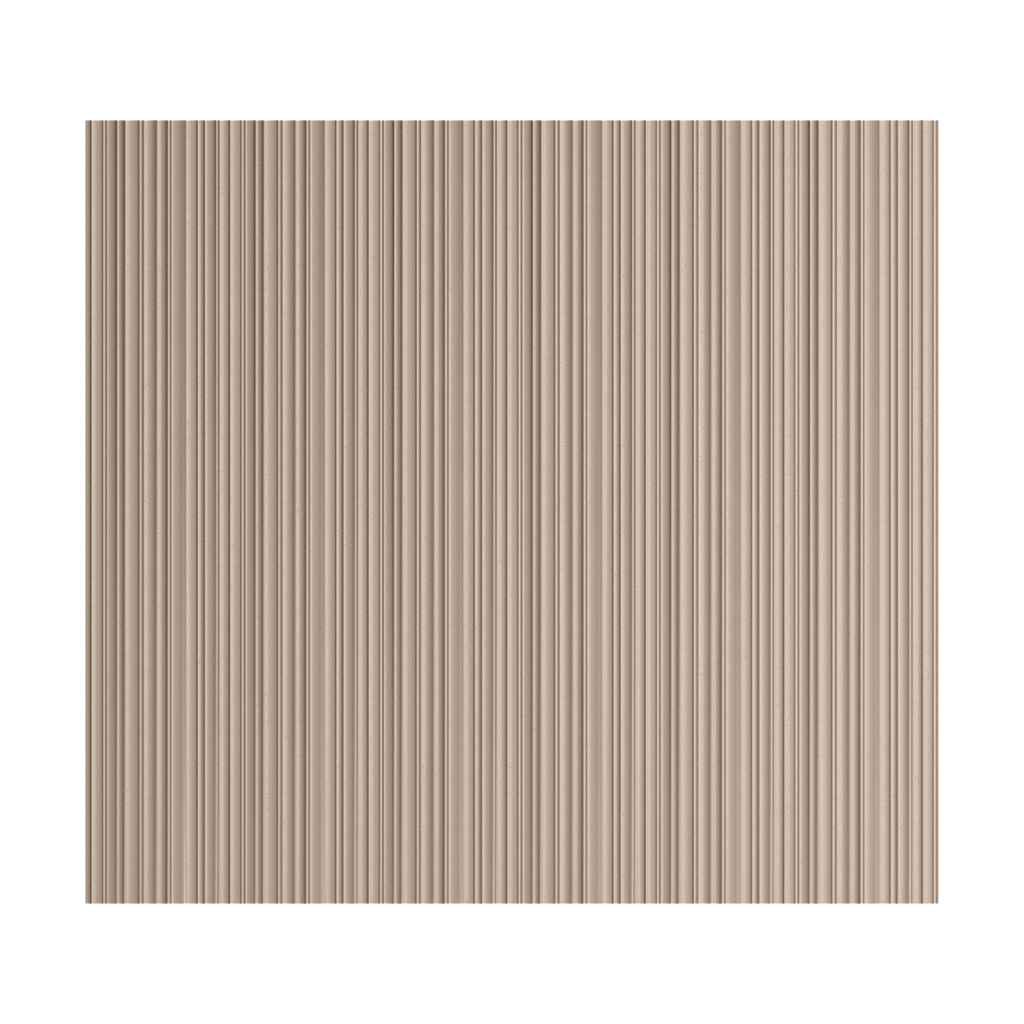
STAVROS slatted panels — if wooden slats are planned on walls, bar counters, or side panels in the space, their texture should match the handle insert. Oak slats + walnut insert, dark wood slats + wenge insert — this is a systematic approach.
STAVROS furniture fronts — if the project starts from scratch, the choice of facade and handle can be synchronized from the very beginning.
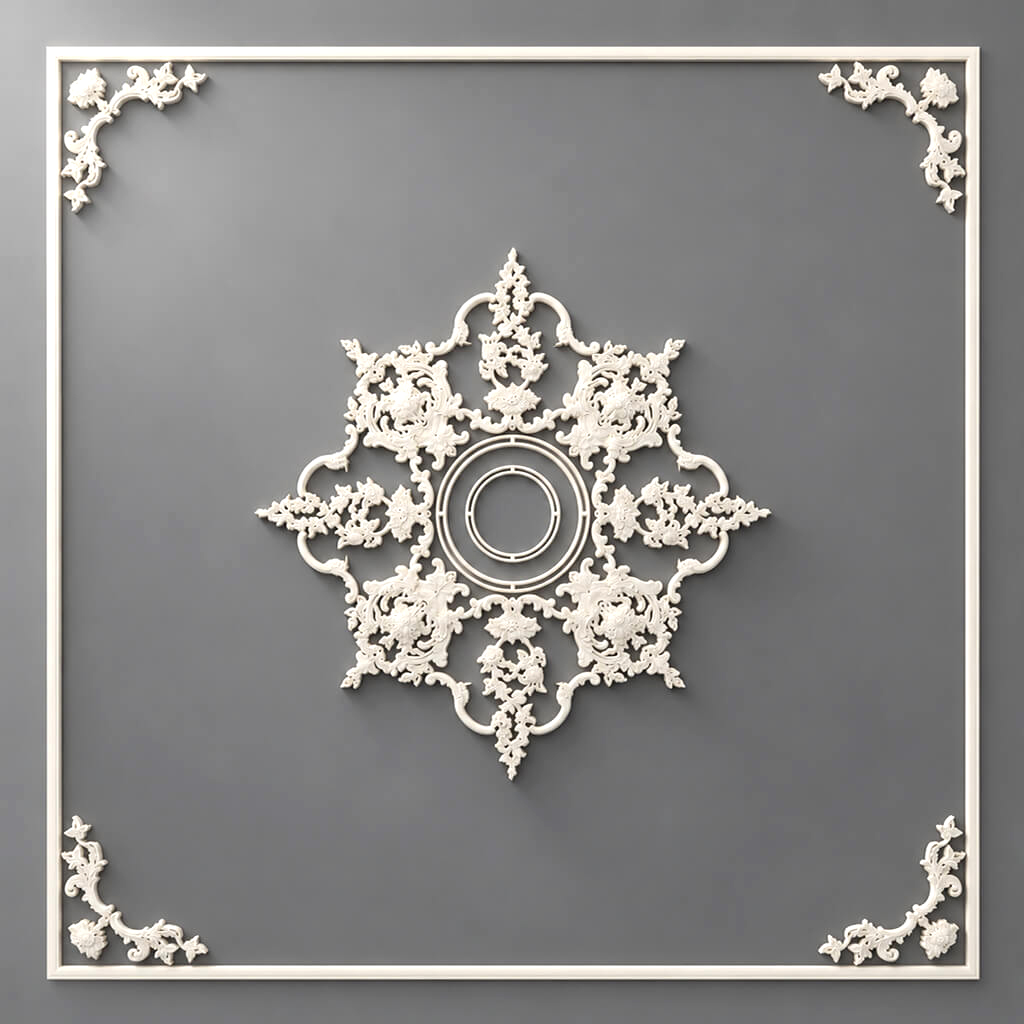
decorative inlays for furniture — if the facade is decorated with additional decorative elements, they should be in the same style as the handle insert.
STAVROS furniture fittings — a complete catalog of hardware solutions: materials for installation and finishing, caps, furniture legs, hinges, and everything needed for a finished project.
9 mistakes when choosing a handle with an insert
Mistakes on this topic recur with enviable consistency — and they are all predictable.
Mistake 1: choosing a handle separately from the facade. The handle looks one way in a photo, but different on a specific facade. Always evaluate the handle in combination with the color and texture of the facade.
Mistake 2: mixing several inserts without logic. Wenge in the kitchen, walnut in the dressing room, zebrano in the bedroom — if these are three different rooms with different concepts, it's fine. If all this is in one room — chaos of textures.
Mistake 3: not considering metal in the interior. The stainless steel of the handle should match the tone of the metal of the faucet, appliances, lighting fixtures, and other metal surfaces.
Mistake 4: placing an active insert on an overloaded facade. A facade with ornamentation decorative inlays and complex milling does not need an active zebrano insert. Here, a quiet detail is needed, not a competing accent.
Mistake 5: not checking the center-to-center distance. If the furniture is already ready and the holes are drilled, the insert must match the center-to-center distance of the specific handle. Otherwise, you'll have to cover up the old holes.
Mistake 6: choosing a handle only by picture. The wood tone on the monitor and in reality are different things. Order physical samples if the project is expensive.
Mistake 7: not coordinating handles on the kitchen, cabinets, and chests. If there are several pieces of furniture in one room, the handles should be from the same series or share a unifying principle (insert material, shape, metal).
Mistake 8: choosing handles "for later." Professional rule: hardware is selected at the very beginning of the project, not after the furniture is installed. The handle influences the choice of everything else.
Mistake 9: saving on hardware after expensive facades. Investing a significant amount in a veneered facade and then installing a cheap handle means devaluing the entire project. Hardware should match the level of the furniture.
About the company STAVROS
STAVROS started operations in 2002, when two artists — Andrey Ragozin and Evgeny Tsapko — founded a workshop for carved wooden products. Within a year, the company participated in the reconstruction of the Constantine Palace in Strelna, followed by the restoration of the interiors of the Hermitage, the Alexander Palace, and the Trinity-Izmailovsky Cathedral.
Today, STAVROS is a production facility in St. Petersburg, showrooms in Moscow and St. Petersburg, and Contact us to confirm shipping to your destination. from a single unit. The catalog covers furniture handles, decorative overlays, slatted panels, moldings, cornices, baseboards, wooden baguettes, mirror frames, hardware, and Wood and MDF Products.
The company supplies products to designers, architects, furniture manufacturers, and private customers — with the same high quality standard for orders of any volume.
Frequently asked questions
What is a decorative insert for a furniture handle?
This is a separate element of the handle design that serves a decorative function: it creates a visual connection with the facade and other textures in the interior. For the HL-070-1M STAVROS, the insert is round, 74 mm in diameter, made of natural wood or carbon imitation in a frame of AISI 304 stainless steel.
What insert options are available for HL-070-1M?
Five options: zebrano, carbon, wenge, rosewood, and walnut. The choice depends on the interior style, facade color, and other wooden or metal elements in the space.
What furniture is HL-070-1M suitable for?
For kitchen sets, wardrobes, bedroom and study cabinets, chests of drawers, bedside tables, built-in furniture, and custom furniture. Suitable for residential and commercial interiors.
How to choose the insert color to match the facade?
Basic principles: dark insert (wenge, carbon) on a light facade — contrast; walnut or rosewood on a wooden facade — harmony; zebrano on a uniform matte facade — bold accent. Always compare the insert tone with a physical facade sample.
Do I need to match the handle metal with other metal parts?
Yes. Satin-finished stainless steel pairs well with matte chrome elements. For glossy chrome or gold, a separate compatibility assessment is needed.
Can I order samples before purchasing a large batch?
It is recommended. For large-scale projects, request samples from the STAVROS manager to compare the insert with actual interior materials before finalizing the order.
What is the difference between STAVROS handles with coating and handles without coating?
Handles with coating have a final protective finish. Handles without coating are unpainted, intended for self-painting or tinting to match a specific interior color.
How to hide the visible mounting screw of the handle?
Use decorative metal caps FUR-032 or FUR-033 STAVROS. They cover the mounting hole and do not disrupt the visual design of the handle.