























Article Contents:
- NPU-302 is a small central plate, not part of the mounting hardware
- Confirmed specifications of NPU-302
- The main question before ordering: what is the base of your hook
- Size 84 × 77 mm: for which hooks it looks natural
- Small hook on a huge NPU-302
- Medium-scale hook
- Large double hook
- Three NPU-302
- Four NPU-302
- Five NPU-302
- Geometry
- Fastening
- Surface contact
- This is not a bracket. Mistake #3: driving the metal heel into the terrain.
- Can NPU-302 be used as a decorative backing for a hook?
- What is the size of NPU-302?
- How much does NPU-302 cost now?
- If I have four hooks, do I need four NPU-302s?
- Can a hook be screwed directly into the NPU-302?
- What to do if the hook base covers almost the entire NPU-302?
- Can the NPU-302 be glued above the hook?
- Can the plate be placed lower?
- What distance should be between hooks?
- Can five NPU-302s be installed in a row?
- Does the NPU-302 need to be painted to match the hooks?
- Can a contrasting color be used?
- Will the NPU-302 suit a small hallway?
- What is better: an NPU-302 behind each hook or one common molding frame?
- Can the NPU-302 be used if hooks are already installed?
- How can I check compatibility before purchasing?
- Can I order one NPU-302 first to try it out?
- Does the NPU-302 come with a hook?
- Is the hook mounting hardware included with the NPU-302?
- Can the NPU-302 be used on a wall panel?
- What should I do if the NPU-302 doesn't fit the size?
- Do I need to buy moldings together with the NPU-302?
- What should you check right before ordering?
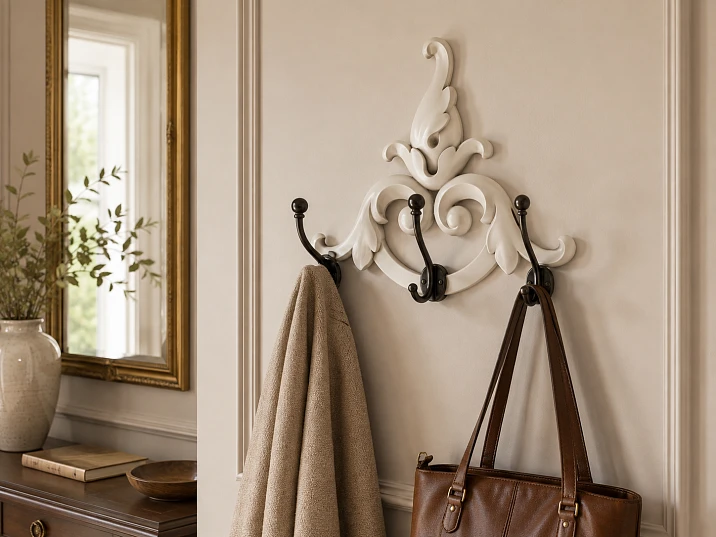
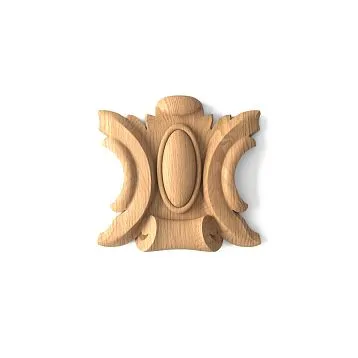
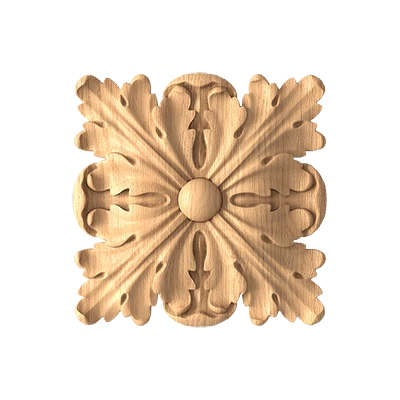
In a classic hallway, an ordinary metal hook can look unexpectedly out of place. The wall is painted, the baseboard and door trims are matched, the mirror has taken its place, and the row of hooks for coats and bags remains a purely utilitarian strip. The small central decorative overlay NPU-302 made of polyurethane, measuring 84 × 77 × 8 mm, allows you to look at this area differently: not to hide the hook, but to give it a decorative frame and incorporate several identical mounting points into a well-thought-out wall pattern.
The idea is clear: one hook — one NPU-302, four hooks — four identical rosettes. This creates a repeating row that can support a classic hallway character without a large wall panel or complex stucco composition. At a price of 840 ₽ per NPU-302, this option is easy to calculate even before ordering.
But this is exactly where an important technical limitation arises. NPU-302 is a decorative rosette, not a mounting plate, not a bracket, and not a load-bearing base for a hook. Hanging a coat "on polyurethane" cannot be set as a design principle. The hook's own fasteners must transfer the load to the wall or to another sturdy base designed for this purpose. The rosette is responsible for appearance, not for holding clothes.
Therefore, before buy the central rosette NPU-302, you need to check not only the ornament you like. Much more important are four things: the size of the hook's base, the location of its mounting holes, the geometry of the NPU-302 relief, and the method of attaching the hook directly to the wall. Only after this does the decorative idea become a proper working solution.
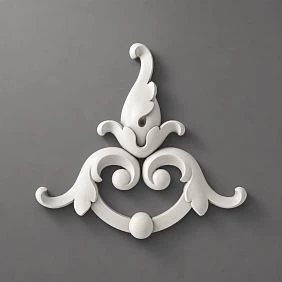
NPU-302 is a small central rosette, not part of the mounting hardware
Let's start with a precise definition of the product.
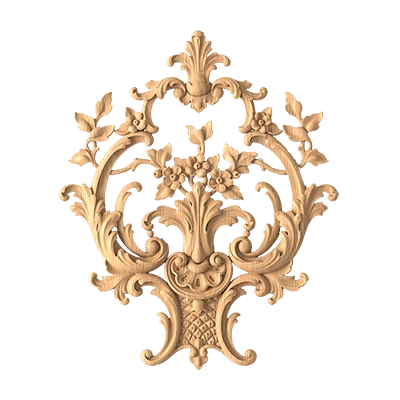
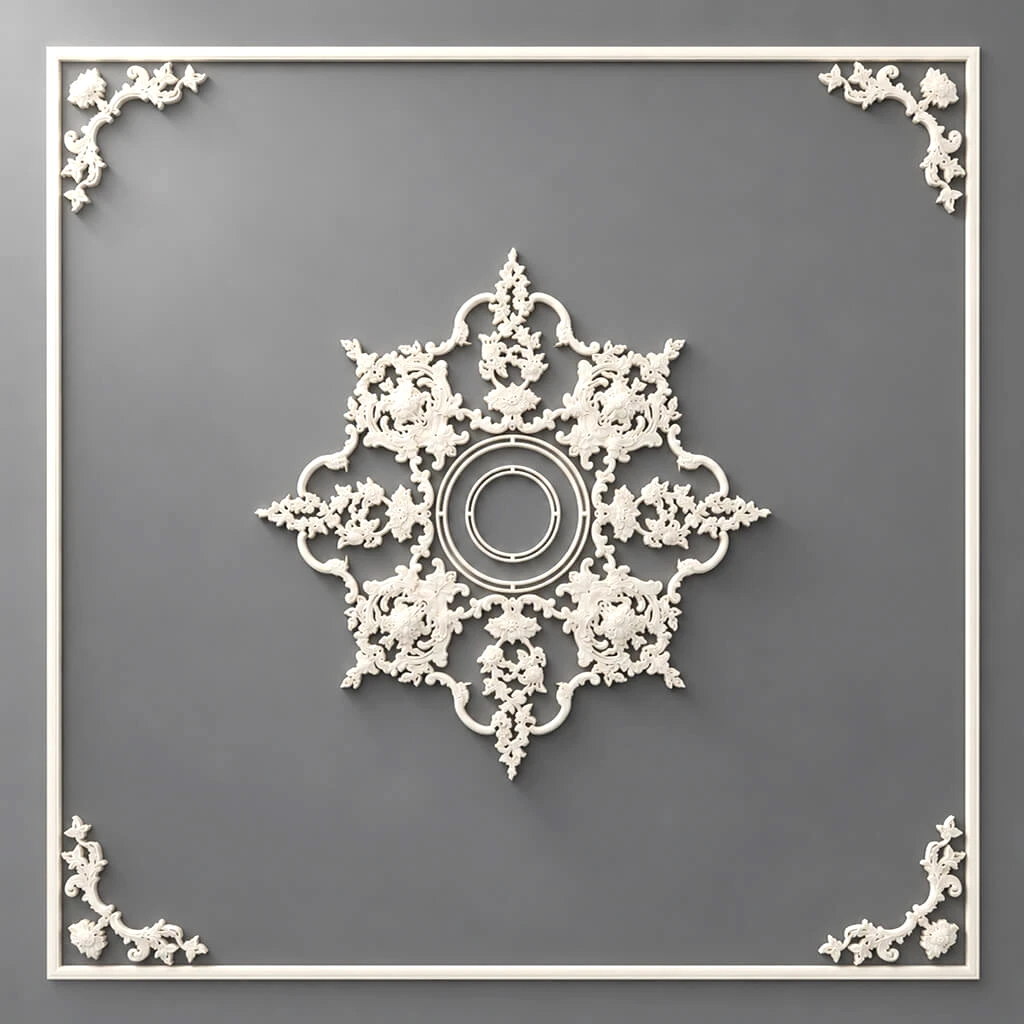
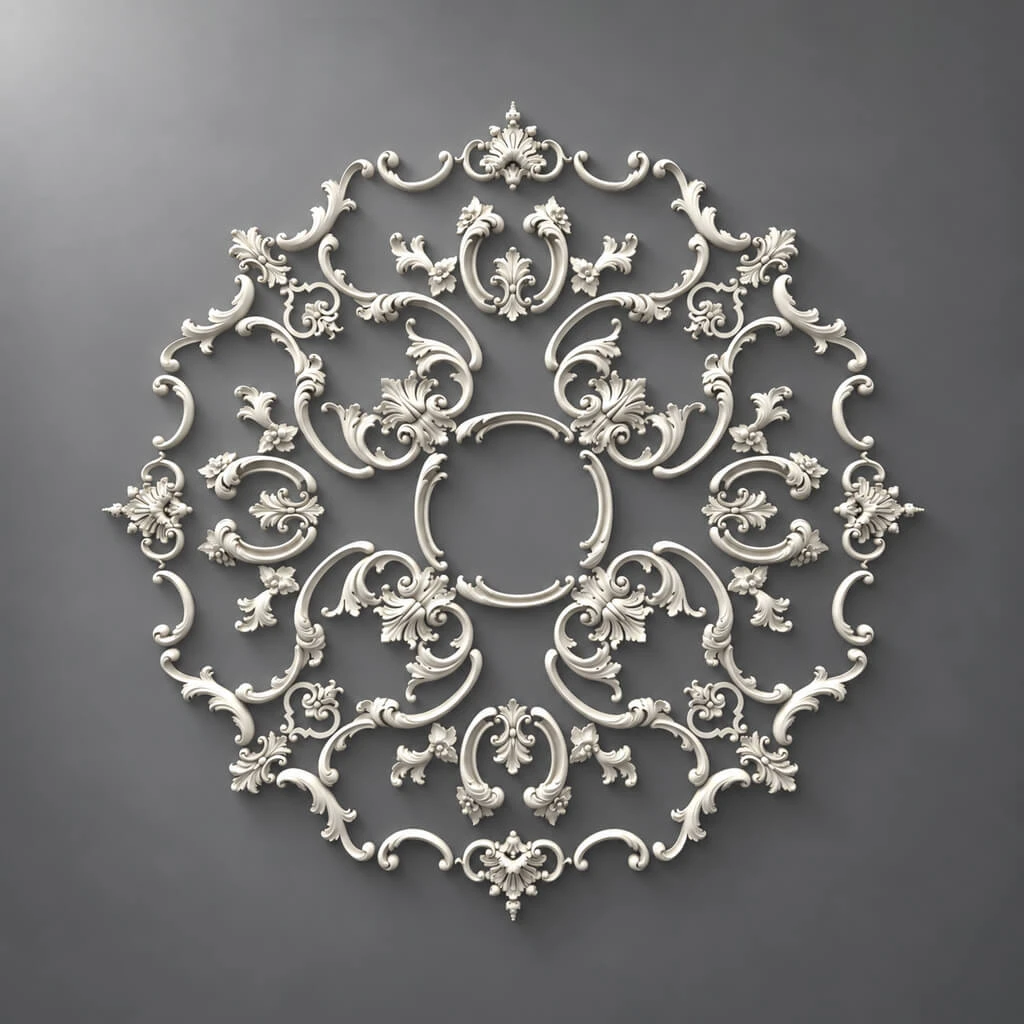
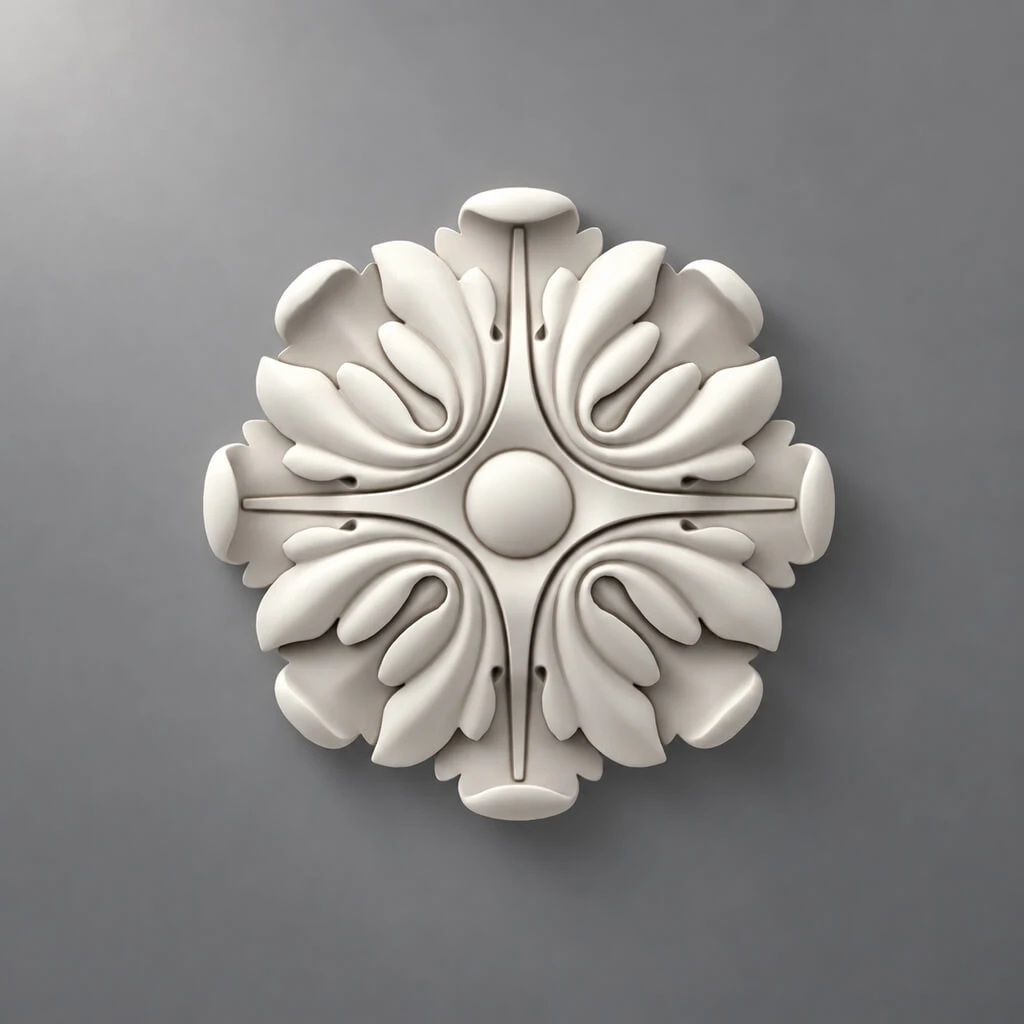
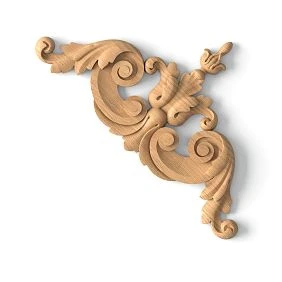
NPU-302 is a central decorative polyurethane rosette. Its dimensions are 84 × 77 × 8 mm. That is, we have a compact, almost square piece in terms of footprint, with a small thickness and a pronounced decorative function.
It is not a wall hook.
It does not replace a metal mounting plate.
It is not a furniture handle.
It is not a bracket.
It is not a power outlet for installing fittings.
It is this distinction that determines the entire subsequent project.
If a metal hook is installed directly on top of a decorative element, the polyurethane cannot automatically be considered part of the load-bearing connection. The hook must maintain its own structural connection to the wall. Depending on the chosen fittings, this may be screws, self-tapping screws, or other fasteners provided by the hook manufacturer, passing through the decorative area or located independently of it.
In other words, the principle should look like this:
hook → its fasteners → solid wall base.
And NPU-302 is located in this area as decor.
Not like this:
hook → NPU-302 → wall, as if the polyurethane pad is designed to bear the load of outerwear.
This difference is especially important in the hallway. Today a light scarf hangs on the hook, tomorrow a winter coat, a bag, or several items at once. The decorative element should not unexpectedly turn into a component on which the reliability of all this load depends.
Confirmed characteristics of NPU-302
| Parameter | NPU-302 |
|---|---|
| Article number | NPU-302 |
| Type | Central decorative overlay |
| Material | Polyurethane |
| Size | 84 × 77 × 8 mm |
| Length of one side by overall dimension | 84 мм |
| Second overall dimension | 77 мм |
| Thickness | 8 мм |
| Current price | 840 ₽ |
| Purpose in the project under consideration | Decorative design of the wall hook area |
| Load-bearing function | Not included |
| Quantity | Determined by the number of decoratively designed points |
| Principle for a series | For example, 4 hooks → 4 NPU-302 |
| Hook material | Selected separately |
| Hook fastening | Selected separately for the hook and wall base |
The size 84 × 77 mm is especially important here. This is not a large panel or an elongated frieze. NPU-302 occupies a limited field, so it can really be considered next to a separate hardware point: a hook, a small decorative center, an element inside a wall frame.
But the phrase "fits in scale" does not yet mean "fits any hook." Hook bases differ. One has a small round heel, another has a wide decorative plate, a third is attached with two screws at a significant distance from each other. That is why buying four NPU-302 before choosing specific hooks is risky.
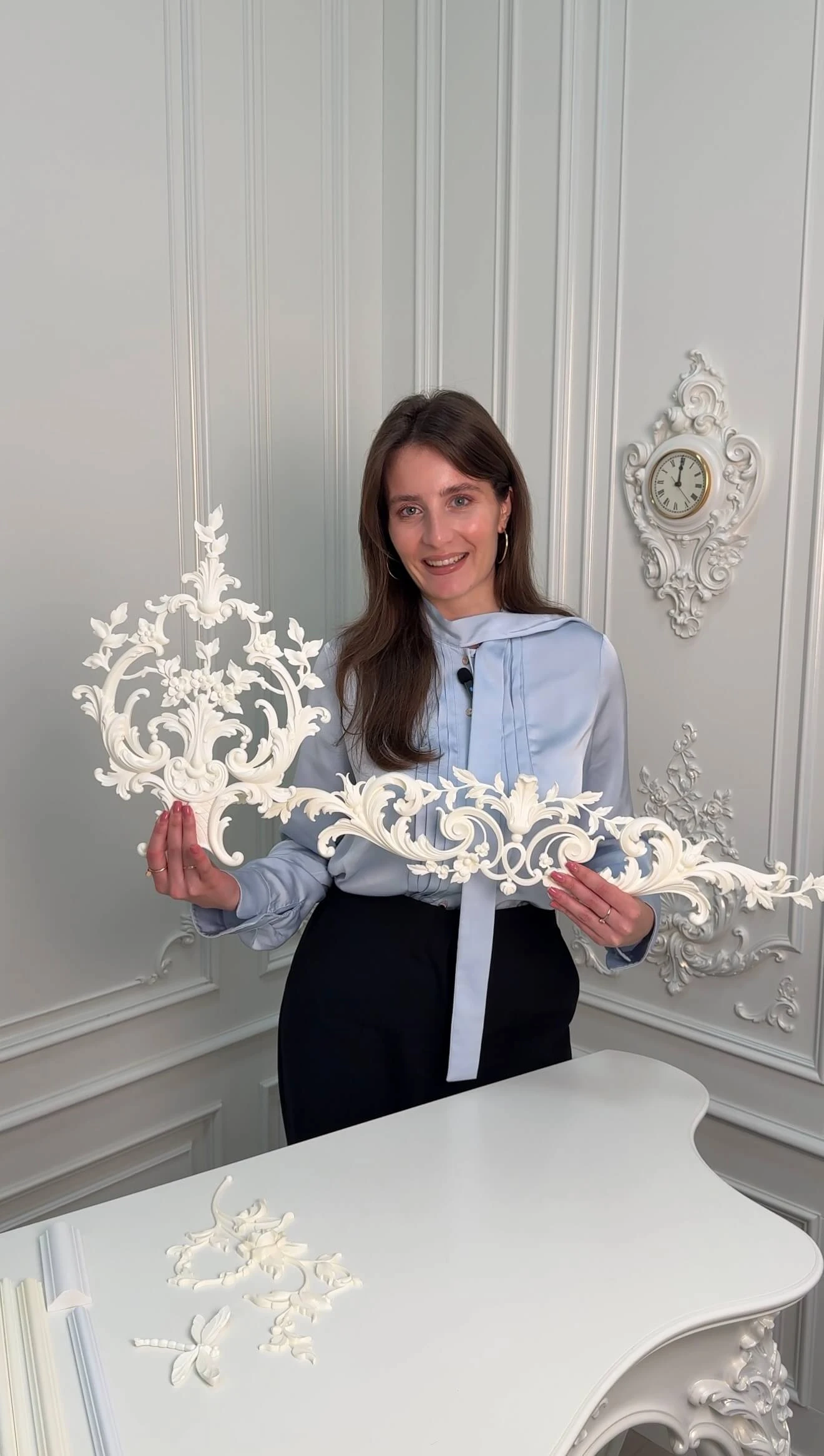
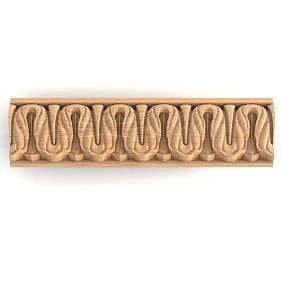
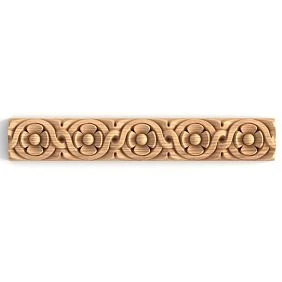
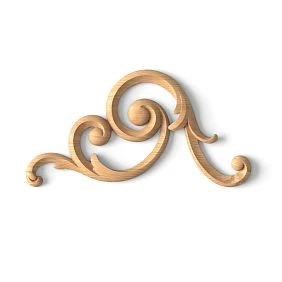
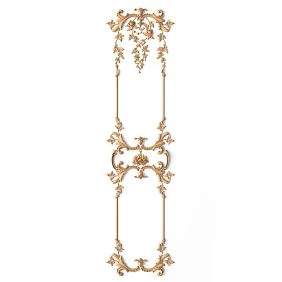
Our factory also produces:
The main question before ordering: what is the base of your hook
Let's imagine three metal hooks of the same external size.
The first is attached with a single central pin.
The second has a round base with a diameter of 30 mm and two mounting holes.
The third one is equipped with a wide vertical plate 80 mm high.
In the photo, all three may seem suitable for NPU-302. On the actual part, the result will be completely different.
For the first one, you need to figure out where the central fastener will go and whether it is structurally possible to arrange installation without damaging the decorative pattern.
For the second one, the base can neatly fit into the central part of the overlay.
For the third one, the metal plate can cover most of the relief, and then buying the decorative NPU-302 makes no sense at all.
Therefore, before ordering overlays, they measure not the hook protrusion itself, on which coats are hung, but its mounting part near the wall.
At minimum, you need:
-
maximum base width;
-
maximum base height;
-
heel shape;
-
number of mounting holes;
-
distance between holes;
-
position of holes relative to the center;
-
outer size of the decorative washer or plate, if present;
-
direction of fastener tightening.
The last point is easy to underestimate.
If the fastener tightens a metal heel directly to the wall, and a relief polyurethane part ends up between the metal and the wall, you need to decide in advance through which surface the force is transmitted. You cannot simply tighten the screw hard until the metal base "somehow sits" on the decorative relief.
Get Consultation
Size 84 × 77 mm: for which hooks it looks natural
The NPU-302 dimensions are successful precisely because of their compactness.
Imagine a rectangle on the wall approximately 8.4 × 7.7 cm. This is already a noticeable decorative point, but it does not turn every hook into a large panel.
In a small hallway, this scale can work especially interestingly. There is usually little free wall space, but the hook is used daily and is always in sight.
But the proportion depends on the hook itself.
A small hook on a huge NPU-302
If the hook's base is very small and the metal element itself is thin and minimalist, the NPU-302 can visually turn out to be significantly more active.
This is not necessarily a mistake.
If you want to emphasize classic molding, it is the decorative overlay that can become the main element, with the hook being a functional detail in its center.
But if the interior is modern and calm, such a ratio can look deliberate.
A medium-scale hook
This is the most natural scenario for the idea of a "decorative backing under the hook."
The metal hardware remains clearly visible, and behind it appears a relief field measuring 84 × 77 mm.
From a distance, one sees not a row of random metal points, but repeating decorative modules.
Large double hook
A large hook with a wide mounting heel can cover a significant part of the NPU-302.
Then you need to ask: what will remain visible after installation?
If only a few random curls remain at the edges, it is better to choose a different combination.
The overlay should work as a readable detail, not as an expensive gasket hidden under metal hardware.
A paper template of 84 × 77 mm solves half the questions
Before buying several identical parts, make a simple mock-up.
Cut out a rectangle of 84 × 77 mm from thick paper or cardboard. Draw the outline of the base of the selected hook on it at full scale.
If the hook is already purchased, it is even simpler — just attach it directly to the template.
It will immediately become visible:
-
how much decorative space will remain around the metal;
-
whether the base does not look too large;
-
whether the hook does not seem too small;
-
whether vertical or horizontal orientation is suitable;
-
how noticeable each point on the wall will become.
After that, make as many paper rectangles as there will be hooks.
Four hooks? Make four NPU-302 mockups.
Five? Five.
Secure them with masking tape at the intended height and step back to the front door.
It is at this moment that the real choice begins.
One square of 84 × 77 mm seems small. A row of five such elements already creates a distinct horizontal line a meter or more long — depending on the chosen spacing.
Therefore, a decorative coat rack should always be evaluated not by a single detail, but by the entire group.
One hook — one NPU-302: when this principle really works
The scheme is strong in its clarity.
The hook repeats.
The plate repeats.
The distance repeats.
The wall begins to be perceived as a designed system.
Suppose there are four wall hooks in the hallway. Without decor, these are four metal elements on a painted surface.
We add four identical NPU-302s and get four complete decorative nodes.
Here, the equality of repetitions is what matters.
If three hooks received NPU-302, and the fourth was left without it for no clear reason, the rhythm breaks.
If two plates are placed higher and two lower, a different pattern emerges, which already needs to be designed specifically.
For a simple classic coat rack, a clear rule works best:
same hook + same plate + same height + same spacing.
That is why before purchasing, it is useful to order the decorative plate NPU-302 first with an understanding of the final quantity, rather than picking up parts one by one after mounting the hooks.
Three, four, or five plates: the quantity changes the entire wall
The number of hooks should not be perceived only as a matter of capacity.
It shapes the scale of the decorative row.
Three NPU-302
Three points form a compact group.
It suits a short wall section, a small apartment, or a separate zone for everyday clothes.
A trio reads well as a complete composition, especially if the central hook aligns with the axis of the wall panel or furniture piece below.
Four NPU-302
Four points create a calmer, regular row.
This option is practical for a family if each person needs their own zone, and it works well on an elongated wall area.
But a question of the center arises: the axis of the entire row passes between the second and third elements. If a mirror hangs nearby or a bench stands below, it is useful to take this axis into account.
Five NPU-302
Five elements already make the middle hook an obvious center.
This is convenient when you want to build a symmetrical classic layout: two elements on the left, the central one, two on the right.
But the row becomes longer. On a narrow wall section, five decorative plates measuring 84 × 77 mm with normal gaps may simply not fit.
Therefore, first measure the available width, then choose the quantity.
How to calculate the spacing between hooks without random gaps
Equal spacing is one of the main signs of a neat wall-mounted hanger.
Do not mark each next hook "approximately a palm to the right."
First, determine:
-
the width of the entire available area;
-
the number of hooks;
-
desired edge margins;
-
central axes of each element.
If the wall width allows, it's easier to work from the centers of the hooks.
Suppose the available decorative field is 960 mm wide, and there will be four hooks. You want to leave equal edge margins and distribute the hooks evenly.
First, the entire layout is drawn on paper, and only then are the coordinates transferred to the wall.
Why is this fundamentally important specifically with the NPU-302?
Without overlays, a small error of 10 mm between two hooks is sometimes almost unnoticeable.
With identical ornamental elements measuring 84 × 77 mm, the eye begins to compare not small metal points, but rather large repeating shapes. Uneven spacing becomes more noticeable.
The more expressive the decor, the more precise the geometry of its placement must be.
Hanger height: focus on usability, not on molding
There is a risk of starting a project with a beautiful row of NPU-302 and forgetting that hooks are needed for clothes.
First, the convenient height of functional elements for a specific hallway is determined.
Only then are the overlays tied to the centers of the hooks.
Not the other way around.
If there are children in the family and some hooks should be lower, it is not necessary to force all NPU-302 to form one horizontal line.
You can create two functional zones.
But such a variant will no longer be a strict classic row — it requires separate compositional logic.
If all hooks are intended for adults, a single line usually looks more cohesive.
You also need to consider the length of coats and jackets, furniture under the coat rack, a bench, a shoe cabinet, switches, and the door trim.
A good decorative backing should not force a person to reach for an inconveniently high hook for the sake of beautiful symmetry.
NPU-302 behind the hook: the most striking and the most demanding option
This is the scenario that comes to mind first.
A metal hook is installed in the center of the decorative trim. The relief radiates around it, creating the effect of a specially designed base.
Visually, the solution is strong.
Technically, it is the most demanding.
Three levels of compatibility need to be checked.
Geometry
The hook's base must fit into the available central area and not destroy the pattern.
Mounting
The screws or other hook fasteners must work with the wall, not rely on polyurethane as a load-bearing material.
Surface contact
We need to understand how the metal heel will fit against the relief trim.
If the central part of NPU-302 is convex or has a complex pattern, a wide flat hook base may not achieve proper seating.
That is why the idea must be tested on real parts.
Not from a photo.
Not from a single dimension.
But from the hook and NPU-302 together.
When it is better to place NPU-302 above the hook
There is a simple way to preserve the decorative idea and completely separate the structural functions.
NPU-302 is installed slightly above the hook as an independent ornament.
The hook is attached directly to the wall below.
Then there is no question of transferring load through polyurethane and no need to align the fasteners with the relief.
Visually, each pair is still perceived together:
overlay on top — hook on bottom.
This arrangement is especially useful if:
-
the hook's mounting heel is large;
-
the holes inconveniently fall on the relief;
-
you don't want to drill or go through the decorative overlay;
-
the hook itself has a beautiful metal rosette;
-
you want to keep the NPU-302 fully visible.
One downside: the total height of the decorative module increases.
Therefore, on a low or narrow wall segment, this option needs to be mocked up.
NPU-302 below the hook: unusual, but sometimes logical
The lower position is less common, but it can make sense.
For example, a hook has an elongated upper part, and the space above it is occupied by a shelf.
A lower overlay can work as a decorative finish.
But here a practical danger arises: hanging clothes can completely cover the molding.
Before ordering, ask yourself a simple question:
will the NPU-302 even be visible when the hanger is in use?
If a coat covers it nine months a year, the decorative purchase loses a significant part of its meaning.
That is why a position above the hook or directly around it often turns out to be more expressive.
Comparing three placement schemes
| Scheme | Visual effect | Technical complexity | When to choose |
|---|---|---|---|
| NPU-302 directly behind the hook | Maximally solid decorative knot | High: need to check the base and fasteners | When the hook geometry is exactly compatible |
| NPU-302 above the hook | The overlay is fully readable | Below: functions are separated | When the hook has a large heel or complex mounting |
| NPU-302 below the hook | Unusual decorative finish | Low, if elements are spaced apart | When there is little space above and clothing does not cover the overlay |
| NPU-302 separately in a common frame | More architectural composition | Depends on the molding scheme | When the hanger is part of a full wall design |
This table shows the main thing: the word "backing" should not be taken too literally.
If it is technically inconvenient to place the polyurethane overlay directly under the metal, the decorative connection can be maintained without physically joining the parts.
The hook must hold onto the wall, not the relief
This is the central technical principle of the project.
Polyurethane NPU-302 is purchased for the decorative pattern.
The hook is subjected to a load.
These are different functions.
Let's imagine that the metal heel of the hook is screwed on top of NPU-302, and the screws do not reach the solid base or only tighten the decorative layer. Then the entire mounting logic is flawed.
Another bad scenario: the fastening in the wall is reliable, but when tightened, the metal base strongly compresses the protruding relief. The fastening holds, but the decorative overlay receives unwanted mechanical stress.
The correct solution depends on the actual hook design, so it is impossible to universally describe a specific fastener without its model.
But the principle is universal:
the load-bearing capacity is determined by the wall and the hook's fasteners. NPU-302 is not included in the load calculation.
If this condition cannot be met beautifully and technically clearly, it is better to separate the overlay and the hook vertically.
What to check in the wall itself
The word "wall" can hide completely different bases.
Concrete.
Brick.
Partition.
Sheet material on a frame.
Wooden panel.
Furniture board.
Wall finishing over the base.
For a decorative overlay, the only question is what to glue it with.
For a loaded hook, it's completely different: the force from hanging items is transferred elsewhere.
These two tasks cannot be combined into one just because the parts are in the same place.
For example, the NPU-302 can be carefully glued to a prepared painted surface. But it does not at all follow that a hook for a heavy coat can be screwed into the same surface without checking.
Therefore, when designing a coat rack, the structural part is solved first.
After that, the molding is adapted to the finished technical solution.
Painted wall: why the decorative backing is especially noticeable
On a smooth wall, metal is often perceived very harshly.
A white or colored flat surface.
A hook protrudes from it.
In a utilitarian hallway, this is enough. In a classic interior, there is a feeling of incompleteness.
NPU-302 adds an intermediate scale.
Wall → relief overlay → hook.
The transition becomes richer.
This works especially well if similar molding language is already present near doors, mirrors, or in molding frames.
If you are just starting to design the hallway, it is useful to look at broader material about Stucco decor for the hallway, to understand whether the hook zone should remain independent or be better connected to the rest of the wall.
Painting NPU-302 in the wall color is the calmest scenario
If you want a classic relief without the feeling of a decorative showcase, the overlay can visually merge with the main wall plane.
Then NPU-302 is read primarily through light and shadow.
The relief is noticeable but does not turn into a separate color spot.
Against such a background, the metal hook remains a contrasting functional object.
This scheme is especially good for a small hallway, where four or five contrastingly colored plates could create too much visual information.
White wall and white molding.
Gray wall and coordinated relief.
Soft neutral tone with solid plates.
The color scheme depends on the project and the chosen finish. Before painting, you need to check the permissible materials and technology for the specific product.
Contrasting relief and metal hooks: more striking, but more complex
Another way is to highlight the NPU-302.
For example, decoratively tie it to the tone of the metal hardware.
It's easy to cross the line here.
Five hooks.
Five carved elements.
Contrast color.
Metal highlights.
On a small wall, all this can turn into too active a stripe.
Therefore, contrast trim is better to model first.
Print or cut out mockups and color them approximately in the future tone. Even a rough color sample will quickly show the difference.
Particularly cautious should be taken with the attempt to literally imitate metal on polyurethane just to match the hooks. Such a decorative effect should be part of the overall concept, not an automatic rule.
NPU-302 can quite remain in the wall color, and the hook can have a shade of brass, bronze, black metal, or other chosen hardware.
Why identical finish does not always mean harmony
Let's imagine an entryway where everything is gold.
Door handle.
Mirror frame.
Hooks.
Lamp.
And now five more golden NPU-302.
Formally, everything matches.
Visually, the interior may become overloaded.
Harmony is built not only on color repetition, but also on the distribution of intensity.
Sometimes metal elements are better left as the only shiny points, and the stucco molding made part of the wall.
Then the eye sees a sequence:
calm background → relief → metal.
So the decorative plate really works as a backing, rather than competing with the hook.
Small hallway: don't turn four plates into a wall of ornaments
NPU-302 is compact.
But four compact elements are already a noticeable system.
In a hallway of just a few square meters, decorative saturation is perceived more strongly than in a large living room.
There is little distance.
A person walks right next to the wall.
The relief is practically at arm's length.
Therefore, for a small space, the rule of a limited decorative vocabulary works especially well.
If NPU-302 appears around the hooks, perhaps another series of different overlays is not needed nearby.
If there is already a complex molding frame, additional carved points require verification.
Buy polyurethane wall decor It makes sense not for the sake of the maximum number of elements, but for the ability to assemble a coherent wall.
Long corridor: repeating NPU-302 can fix monotony
In an elongated hallway, the situation is the opposite.
A long empty wall can look monotonous.
A row of four or five hooks and identical overlays forms a local horizontal section.
The coat rack area gets a beginning and an end.
If necessary, this section can be supported with a molding frame.
But here it is important not to stretch the hooks along the entire length of the corridor just to fill the wall.
A functional coat rack should remain compact and convenient.
The rest of the surface is better addressed with other means.
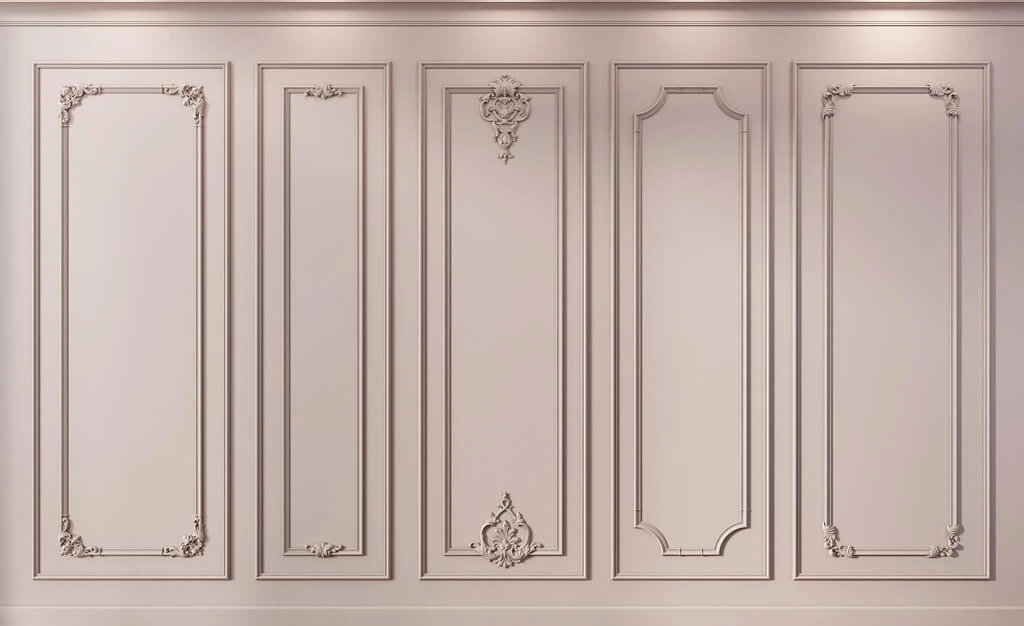
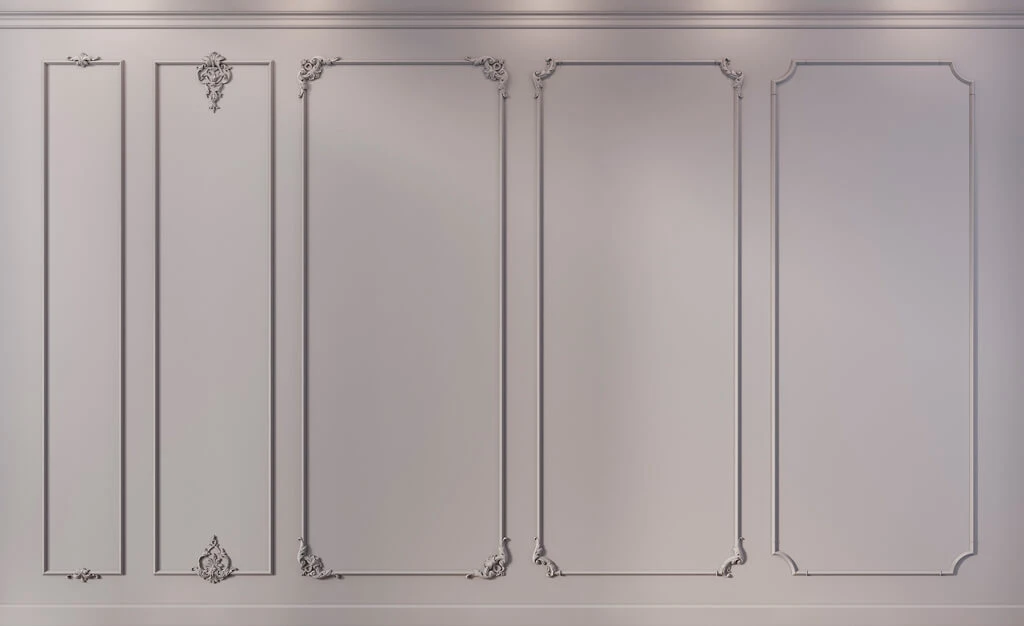
When it is better to fit the NPU-302 inside a molding panel
There are entryways where separate small plates look too fragmented.
Then it is useful to create a common architectural boundary.
For example, a row of hooks is placed within a rectangular field formed by molding. Each point additionally receives an NPU-302.
This results in two levels of order:
-
a large frame organizes the entire coat rack;
-
small plates organize individual hooks.
This option is suitable for richer classic and neoclassical styles.
If such an idea is closer, it's useful buy polyurethane moldings after the size of the overall panel has been calculated.
First, the hooks.
Then their extreme points.
Then the frame.
Not the other way around.
When a common molding frame is better than several NPU-302
NPU-302 is not a universal answer to any ugly hooks.
There are situations where a common frame works more convincingly.
For example, five hooks have large metal bases and would almost completely cover the relief of individual overlays.
Instead of five NPU-302, the entire area can be designed as a single panel of moldings.
Or the hooks are placed on a wooden plank. Then a separate plate behind each one may be unnecessary, because the common backing already exists.
Or the interior is very strict, and repeating five carved elements disrupts its character.
Hence a simple criterion:
NPU-302 is chosen when you want to emphasize each individual point. A molding panel is chosen when it is more important to design the entire coat rack as a single field.
Can both solutions be combined
Yes, if the scale of the room and the style allow it.
For example:
-
a rectangular molding frame;
-
inside four identical hooks;
-
behind each one — NPU-302;
-
all elements are painted in the color of the wall;
-
The metal of the hooks remains the only contrast.
With a calm, monochromatic finish, such a number of details can look much more restrained than it seems from the description.
But if the moldings are contrasting, the overlays are contrasting, and the hooks are active, the visual density increases sharply.
Therefore, the combined system must be seen in its entirety before ordering.
Central overlays: why the NPU-302 shape is convenient for a repeating row
NPU-302 belongs to central overlays.
For a zone with identical hooks, this is logical geometry.
The central decorative element has a clear axis, so it is convenient to align it with the axis of the hardware.
There is no need to select left and right parts.
There is no question of where the asymmetric ornament should be directed.
Each point repeats the previous one.
If NPU-302 seems right in concept, but after trying it on, its size or pattern turns out to be unsuitable for the chosen hook, you can buy central polyurethane overlays after comparing other options from the same functional group.
This is more reasonable than buying NPU-302 just because the initial idea was built around this specific item.
The product should fit the project.
Not the project to the product.
Decorative wall overlays: why size should be assessed as a series
The search query "buy decorative wall overlays" sounds like searching for a single piece. But interior design almost always requires thinking in groups.
NPU-302, measuring 84 × 77 mm, takes up little space on its own.
Five NPU-302 units already form a repeating stripe.
If, for example, a noticeable distance is left between the centers of the hooks, the overall row will stretch across a significant part of the wall.
That is, before decorative wall plaques to buy, you need to determine not only the size of one element, but also the overall size of the finished group.
This is one of the most common sources of errors in wall decor.
Each piece is appealing.
All together — it's already too much.
A mockup of the entire series solves the problem before purchase.
Hooks on a furniture board: is NPU-302 needed
Sometimes a wall rack is not a set of individual hooks on a painted wall, but a wooden or furniture panel.
In this case, the decorative trim can still be used as a visual element, but the project changes.
A ready-made backing appears.
We need to understand whether NPU-302 will be the third level:
panel → polyurethane trim → metal hook.
For rich classic style, this may be appropriate.
For simple furniture, it is excessive.
Additionally, the load-bearing part must be calculated based on the panel and its attachment to the wall, not on the decorative trim.
Coat rack next to the mirror: what to align with
A very common entryway:
mirror on the left;
On the right, a row of hooks.
The question arises: along which line should the NPU-302 be aligned?
In the center of the mirror?
Along its top edge?
At the level of the door handle?
At the height of the coat rack?
There is no correct universal answer.
Priority still remains functional: hooks are placed at a convenient height.
After that, the decorative row can be linked to neighboring objects through one clear line.
For example, the top of the relief overlays coincides with a certain horizontal line of the mirror frame.
But you don't need to move the hooks to an inconvenient height for such a coincidence.
The function sets the starting points.
The decor organizes them.
There's a switch nearby: to prevent competition from small elements
Switches, sockets, intercoms, and hooks in the hallway often end up on the same wall.
Adding NPU-302 makes each hook more noticeable.
Therefore, the neighboring switch also starts to participate in the composition, even if you didn't think about it before.
Bad situation:
The outermost plate almost touches the switch frame.
You get two square objects with a small random gap.
It's better to check the edge fields in advance.
Sometimes, for the sake of a clean wall, it's wiser to reduce the number of hooks from five to four.
Sometimes — shift the entire row slightly.
But you can't move only the edge NPU-302 separately: the equal spacing will immediately be disrupted.
The door casing defines the boundary of the zone
The row of hooks often starts near the entrance door.
Don't press the first plate flush against the casing.
The door frame should have its own zone.
The NPU-302, measuring 84 mm along its larger dimension, is visually more noticeable than a small hook. Therefore, the edge offset should be assessed based on the molding, not just the metal hardware.
Make a mockup.
Open the door.
Look at the wall in real-world use.
If the first overlay seems to be part of the trim, although it is not intended by the design, increase the offset or reconsider the number of elements.
Hooks above the bench: decor should account for clothing
An empty wall and a used coat rack look different.
It is clearly visible on the NPU-302 mockup.
Once coats appear on the hooks, half of the decor may be hidden.
It is normal if the overlays work nicely when the rack is free and are partially readable when in use.
But there is no point in placing expensive relief where clothing constantly covers it completely.
This especially applies to the lower placement of NPU-302.
Before ordering, hang temporary hooks or mark their locations and hold real outerwear against the wall. Such a practical test provides more benefit than a perfect visualization of an empty hallway.
Children's hooks: a separate height requires a separate layout
If part of the rack is intended for a child, the hooks must be accessible to them.
Attempting to maintain a single perfect horizontal line with adult elements contradicts the function.
There are several ways:
-
a separate lower group;
-
two symmetrical rows;
-
a children's zone on the adjacent wall section;
-
abandoning NPU-302 on the lower hooks if the composition becomes too complex.
The main thing is not to pretend that decorative symmetry matters more than convenience.
A classic interior looks good precisely when order supports life rather than hinders it.
NPU-302 in the dressing room: a different distance and a different scale
In the dressing room, hooks often play a supporting role.
Belts, bags, and clothes may hang there for a short time.
If the wall is open and finished in a classic style, NPU-302 can support furniture facades.
But in a cramped closet or niche, the relief behind each hook may be almost invisible.
Then the decorative purchase is not justified.
That is, the same product makes sense in an open hallway but may be excessive in a closed wardrobe.
Commercial interior: beautiful, but you need to think about the load even more strictly
In a salon, office, small hotel, or other public space, a row of decorative hooks can become part of the interior.
But the frequency of use is higher, and controlling the weight of items is more difficult.
Therefore, the separation of functions becomes even more important.
Decor — separately.
Reliable mounting — separately.
You cannot assume that visitors will only hang light items.
If the structure experiences regular load, the load-bearing scheme must be chosen based on the wall base and hardware, and NPU-302 should be considered solely as decoration.
A polyurethane overlay and a wooden decorative backing are not the same thing.
Sometimes wooden blocks or a common board are specially made under the hooks.
Such a detail, with the appropriate design, can participate in the mounting.
NPU-302 plays a different role.
It is purchased as stucco decor.
Therefore, the logic of a massive wooden mounting plate cannot be applied to it.
If a load-bearing decorative backing is needed, it must be designed as a structural element separately.
If a classic relief detail around a technically correctly installed hook is needed, the NPU-302 becomes an interesting option.
How not to confuse the NPU-302 with other products
This is not a bracket.Mistake No. 3: tightening the metal heel into the relief
Even with long fasteners, contact must be checked.
A wide flat base and a convex decorative relief may not combine well.
If you have to press the metal hard against the molding protrusions to secure the hook, that's a sign that the layout is poorly chosen.
Better to find a hook with a different geometry or space the elements apart.
Mistake #4: buying five overlays and only then measuring the wall
The size of one NPU-302 seems very small.
But the decorative series also includes gaps.
For example, five modules require not only a total of 420 mm in width of the parts themselves. Space must remain between them, otherwise the relief will turn into a solid strip.
Plus, edge margins are needed.
Therefore, the entire row can take up significantly more width.
First, a plan.
Then the quantity.
Mistake #5: choosing the spacing based only on the beauty of the empty wall
Items on hooks have width.
If hooks are placed too close together, jackets will overlap regardless of how beautiful the decorative row is.
Therefore, the spacing is determined simultaneously:
- usage;
- clothing sizes;
- wall width;
- number of hooks;
- size of NPU-302.
Decor does not cancel ergonomics.
Mistake #6: making uneven gaps to go around a switch.
If a switch on the right suddenly gets in the way, don't just move the last hook closer to the previous one.
A row of identical NPU-302 units especially shows unevenness.
It's better to recalculate the entire section.
For example, use four elements instead of five and redistribute them.
Mistake #7: using hooks that are too different
NPU-302 repeats.
If the hooks above it differ in size, shape, and metal without a clear reason, the decorative order disappears.
For a regular row, it's better to choose identical hardware.
Or plan intentional asymmetry in advance, which is much more difficult.
Mistake #8: painting everything in contrast at once
Five carved overlays can look much more active after contrasting painting than in white polyurethane at the fitting stage.
Therefore, the color needs to be checked in advance.
Especially if the wall is dark and the overlays are light or metallic in shade.
Mistake #9: forgetting about moldings and other wall lines
If a wall molding passes through the hanger area, NPU-302 should either be inside the formed field or have a clear connection with that line.
A random intersection of a molding and a row of hooks looks bad.
If the walls are not yet finished, it is advisable to design all lines together first.
Mistake #10: thinking that classic style requires maximum decor
Classic style is not the number of scrolls per square meter.
Sometimes four identical NPU-302s on a clean painted wall look more convincing than a complex panel of a dozen different elements.
Repeating one form creates order.
And it is precisely this order that is especially useful in a small hallway.
When the NPU-302 is truly suitable
The solution deserves attention if:
- the hooks look too utilitarian on a smooth wall;
- you want to style each point separately;
- the hook base is visually compatible with the 84 × 77 mm dimension;
- the technical mounting can be reliably performed independently of the decorative function;
- several identical elements fit on the wall at equal intervals;
- the ornament matches the overall character of the hallway;
- NPU-302 remains quite visible after installing the fittings;
- the wall finish allows the polyurethane relief to be organically integrated.
Then NPU-302 84 × 77 × 8 mm buy reasonably already in the calculated quantity.
When it is better to refuse such a backing
NPU-302 should not be bought for hooks if:
- the metal heel completely covers the relief;
- fastening cannot be organized without undesirable load on the overlay;
- a wide decorative panel is already used for the hanger;
- the hallway is very minimalist and the carved ornament looks accidental;
- the wall is so narrow that several hooks almost touch;
- the hooks are in an area that is constantly completely covered by outerwear;
- various technical elements prevent maintaining an even step;
- you need a load-bearing mounting plate, not decorative trim.
In these cases, it is better to change the concept itself rather than force the NPU-302 to perform a function that is not its own.
What to buy together: we do not turn a small project into a random assortment
A simple coat rack does not require a dozen types of molding.
The basic idea can consist only of the NPU-302 and properly selected hooks.
If the area becomes part of the overall hallway finish, you can move on to other categories.
| What to look at | Why | When this is needed | Link |
| NPU-302 | Decorative design of one hook point | When the size 84 × 77 × 8 mm fits the selected hardware | buy the central rosette NPU-302 |
| Central overlays | Find another size or pattern | If NPU-302 does not match the hook base | buy central polyurethane overlays |
| Decorative overlays | Compare other types of piece decor | If the central shape is not suitable | Buy decorative polyurethane overlays |
| Moldings | Make a common frame panel around the coat rack | When individual decorative points are not enough | buy polyurethane moldings |
| Wall decor | Design the hallway as a single system | If not only a row of hooks is being decorated | Buy polyurethane wall decor |
| Polyurethane stucco molding | Expand the project to adjacent areas | For a comprehensive classic design | You can buy ready-made stucco matching the Baroque style. Calculate the quantity: linear meters of cornices and moldings, number of rosettes, pilasters, consoles, corner elements. Add a ten to fifteen percent allowance for trimming. |
| Installation materials | Install decorative molding on the prepared surface | After selecting the surface and technology | molded decoration adhesive |
The hooks themselves are intentionally absent from this table: a confirmed internal link to a specific suitable model is not defined in the original scheme. Picking a random URL for an extra link would be worse than honestly leaving the choice of hardware as a separate step.
If one NPU-302 is not enough: first understand what exactly is missing
Imagine you have made a mockup.
Four NPU-302s around the hooks look neat, but the whole wall still seems empty.
There is no need to immediately buy eight more overlays.
Perhaps a common border is missing.
Then the molding solves the issue.
Or there is a lack of vertical connection with the mirror.
Then it's better to reassemble the entire wall composition.
Or the problem is higher — an empty area above the coat rack.
A different type of decor might be appropriate there.
That's why a general catalog, where you can ordering polyurethane molding decor, is useful after defining the task, not instead of it.
Each subsequent element should answer a specific question.
When it's worth limiting yourself to one NPU-302
Not every article about hooks means a row of five elements.
In a small entry area, there may be a single separate hook — for a bag, key holder, umbrella, or guest clothing.
One NPU-302 can turn it into a deliberate decorative object.
Such a scenario works well near a mirror or a small console table.
But the same technical rules apply here as well.
The hardware is attached to the base.
The overlay decorates.
The size is checked.
How to arrange a pair of hooks
Two points are more complex than three.
Three have a clear center.
Four have clear regularity.
Two hooks form a pair, and the distance between them becomes especially noticeable.
If using two NPU-302, it is useful to tie the pair to something else:
- the center of a narrow wall section;
- the width of the bench;
- the mirror;
- the furniture cabinet.
Then the two decorative points do not look like a random fragment of a longer row.
Six or more NPU-302: should we switch to a common panel
When the number of hooks grows, it is worth reassessing the principle itself.
Six NPU-302.
Seven.
Eight.
The wall begins to be covered with a dense regular ornament.
For a long public cloakroom, this can be a separate design idea.
For an ordinary apartment, it is a reason to think about a common panel.
The more identical elements, the more important it is to compare the cost, marking labor intensity, and visual density with an alternative solution made of moldings.
Preparing the wall for a decorative overlay
NPU-302 must be on a prepared base.
If the wall is already painted, the condition of the coating needs to be assessed.
A weak, peeling layer does not become a good base just because a high-quality mounting compound was chosen.
If the project is being done during renovation, it is more convenient to determine the placement of the overlays before final finishing. Then you can calmly mark the axes, try on a row, and check the overall composition.
When choosing an adhesive solution, it is useful to study in advance the material about which adhesive to use for stucco decor, and coordinate the specific technology with the type of base and the chosen finish.
What to install first: NPU-302 or hooks
There is no universal answer without knowing the hook's design.
But they need to be designed simultaneously.
If the NPU-302 is positioned above or below, the functions are completely separated. You can first do the decorative marking, then independently secure the hardware according to your own scheme.
If the hook must be located directly in the center of the NPU-302, the order depends on the actual mounting method.
Then, before gluing the entire series, it is advisable to test one assembly at full scale.
Exactly one.
Not four.
Because if incompatibility is found on the first one, you won't have to redo the entire wall.
Why a test module is more useful than a pretty visualization
A 3D image shows the overall idea well.
It says almost nothing about the contact of the metal heel with the relief.
Therefore, for the complex scheme 'hook over NPU-302', it's better to assemble a physical test node before final installation of the entire group.
Need to check:
- what the hook base looks like on the actual ornament;
- what overlaps;
- where the mounting points land;
- Does the relief interfere?
- How does the 8 mm thickness look from the side?
- How neat is the metal-to-polyurethane transition.
After such a check, you can confidently calculate the required quantity.
Price of a row of NPU-302: easy to calculate
Current price of one overlay is 840 ₽.
Accordingly:
| Quantity of NPU-302 | Cost of overlays |
| 1 pc. | 840 ₽ |
| 2 pcs. | 1 680 ₽ |
| 3 pcs. | 2 520 ₽ |
| 4 pcs. | 3 360 ₽ |
| 5 pcs. | 4 200 ₽ |
| 6 pcs. | 5 040 ₽ |
The calculation concerns specifically decorative overlays.
Hooks, their fasteners, mounting materials, and finishing work are not included here.
Before placing an order, it's always useful to double-check the current price on the product page.
This calculation helps compare two concepts even before renovation: several separate NPU-302 units or a larger overall wall composition.
Practical scenario: four brass hooks on a light wall
Let's imagine a small entryway in calm classic style.
A light painted wall.
Door trims.
A small bench.
Four metal hooks in a warm shade.
Without decor, the hooks look practical but a bit stark.
Four NPU-302 units in the wall color add relief around them.
From a distance, a calm, light plane is preserved.
Up close, the carving is visible.
Metal remains the main contrast.
For such a scenario, a monochromatic finish is often more expressive than trying to paint the plates to look like metal.
Practical scenario: a dark hallway and black hooks
On a deep wall color, the NPU-302 relief can be well read even without contrast.
If the plates are painted together with the wall, side light emphasizes the shape.
Black hooks can then almost blend into the background or, conversely, stand out with the metal texture.
Such a project is already closer to neoclassicism or modern eclecticism.
The main thing is not to try to prove the classical character by gold-painting every decorative element.
The form itself can provide the necessary reference.
Practical scenario: hooks inside a white molding frame
A wide rectangular frame is created on the wall.
Inside — four NPU-302.
At each point — a metal hook.
All polyurethane parts are the same color.
This scheme is architecturally stronger, but requires precise geometry.
The frame must account for the outermost NPU-302, not just the centers of the hooks.
You cannot first buy molding, make an arbitrary field, and then try to squeeze four decorative modules into it.
Practical scenario: ready-made hooks are already hanging
This is a common real-life situation.
The renovation is complete.
The hooks are installed.
The owner wants to add decorative covers without drilling anything new.
Then, first of all, they take measurements of the existing mounting and determine whether the NPU-302 can be placed directly behind the hardware without rework.
If not, it's not necessary to dismantle everything.
The covers can be placed above each hook.
This creates a new decorative rhythm while preserving the existing fasteners.
This is a good example of why the term "backing" should be understood flexibly.
Practical scenario: the hooks haven't been purchased yet.
There are more opportunities here.
You can first take the size of NPU-302 — 84 × 77 × 8 mm — as a bounding decorative field and look for a hook with a compact mounting part.
But even in this case, you cannot choose hardware based only on appearance.
You need to find out its mounting scheme.
The best combination is when a beautiful hook also technically fits well with the decorative area.
If NPU-302 turned out to be small
Suppose a massive double hook is chosen, and the paper template of 84 × 77 mm visually gets lost.
There is no need to buy NPU-302 hoping that the actual relief will seem significantly larger.
The size will physically remain the same.
Better to move to the category and buy central polyurethane overlays after comparing elements of a larger scale.
If the NPU-302 turned out to be large
The opposite situation.
A thin small hook gets lost on a paper field of 84 × 77 mm.
Allowed:
- choose a different hook;
- refuse the position directly in the center;
- place the NPU-302 higher;
- select a smaller decorative plate.
A bad option is to consider the disproportion unimportant just because you already like the product.
How to consciously buy NPU-302 on STAVROS
By the time of ordering, you should have answers to specific questions.
First: how many hooks will be on the wall?
If four — in a typical scheme, four decorative covers will be required.
Second: is the size 84 × 77 mm suitable?
Not by eye. By template.
Third: what does the hook base look like?
You need to know its actual mounting geometry.
Fourth: where does the fastener run?
It must work with a solid wall base.
Fifth: is the NPU-302 located behind the hook or nearby?
The complexity of installation depends on this.
Sixth: is additional decor needed?
If not, don't add it just to fill the cart.
After such a check, you can order the decorative plate NPU-302 in the exact quantity.
When to open the general catalog of decorative overlays
NPU-302 is not always suitable.
But the very idea of "one hook — one ornamental center" might appeal to you.
Then there's no need to abandon the concept.
Better Buy decorative polyurethane overlays after comparing sizes, shapes, and relief.
It's the size of the hook's base that should be the filter.
Not just style.
Not just price.
Not just a photograph.
When you need not just a single item, but decor for the entire hallway.
Sometimes NPU-302 becomes the starting point.
You tried on four overlays and realized that you want a frame nearby.
The frame required a connection with the mirror.
Then it turned out that the adjacent wall section was empty.
The project grew.
At such a moment, it's better to stop adding details one by one and look at the wall as a whole.
Useful to study Stucco decor for the hallway and decide which zones really require decoration.
So the NPU-302 will retain its role, but will not be forced to "save" the entire hallway on its own.
FAQ: NPU-302 and wall hooks in the hallway
Can the NPU-302 be used as a decorative backing for a hook?
Yes, the NPU-302 can be considered as decorative framing for the hook area if the geometry of the two parts is compatible. However, the plate should not be considered a load-bearing base: the hook's fasteners must transfer the load to the wall or another sturdy base intended for it.
What is the size of the NPU-302?
The plate size is 84 × 77 × 8 mm. Before ordering, make a paper template of this size and hold it against the chosen hook.
How much does the NPU-302 cost now?
The current price is 840 ₽ per piece. Before placing an order, it is better to double-check the price directly on the product page.
If I have four hooks, do I need four NPU-302s?
For the "one hook — one decorative cover" scheme, you will need four identical NPU-302 units. But first, it is worth prototyping the entire row to check the overall width and intervals.
Can a hook be screwed directly into the NPU-302?
The polyurethane cover should not be relied upon as a material that holds the load from clothing. The specific way the fastener passes depends on the hook and the wall, but the structural connection must be provided to a solid base.
What to do if the hook base covers almost the entire NPU-302?
In such a combination, the decorative meaning of the cover is lost. It is better to choose a hook with a more compact mounting part, select a different cover, or position the NPU-302 above the hook.
Can the NPU-302 be glued above the hook?
Yes. This is one of the most convenient ways to separate the decorative and structural functions. The cover remains fully visible, and the hook is independently attached to the wall.
Can the cover be placed below?
Yes, if such a position matches the composition and the NPU-302 will not be constantly fully covered by clothing. Before purchasing, it is better to test this scenario on a prototype.
What distance should be between the hooks?
There is no universal distance: it depends on the width of the wall, the number of hooks, and the actual clothes that will hang on them. The main thing is to choose an equal step and check that items do not interfere with each other.
Can five NPU-302 be installed in a row?
Yes, if the wall width allows maintaining normal gaps and edge indents. Five elements create a pronounced symmetrical pattern with a central point.
Do I need to paint NPU-302 to match the color of the hooks?
No. A very calm option is painting the overlays to match the wall color, where the ornament is read through the relief, and the hook metal remains a separate expressive material.
Can a contrasting color be used?
Contrast finishing can be considered as a decorative technique, but it is better to test it on a mockup in advance. Several contrasting carved elements can look much more active than one overlay.
Will NPU-302 suit a small hallway?
It may suit precisely due to its compact size of 84 × 77 mm. However, several identical overlays should be evaluated as a group: four or five elements can form a fairly noticeable decorative row.
What is better: NPU-302 behind each hook or one common molding frame?
If you want to emphasize each point separately, NPU-302 is more interesting. If it's more important to gather the entire hanger into one architectural field, a general frame made of moldings may be better. In rich classic style, both solutions can be combined.
Can NPU-302 be used if hooks are already installed?
Yes, but first you need to check their mounting geometry. If placing the overlay directly behind an existing hook is not possible without rework, NPU-302 can be considered as a separate decor above it.
How to check compatibility before purchasing?
Measure the hook's mounting base, trace its outline onto a paper template of 84 × 77 mm, and mark the fastening holes. Then make several identical templates and place them on the wall with the intended spacing.
Can I order one NPU-302 first as a trial?
If you need to verify the actual combination of a specific hook with the relief, testing one decorative element before purchasing the entire series is a reasonable approach. Current ordering conditions should be checked in the product card.
Is NPU-302 included with a hook?
There is no reason to consider the hook as part of NPU-302. In the article in question, it refers to an independent decorative overlay; the hardware and its mounting are selected separately.
Is the hook's fastening included with NPU-302?
There is no confirmed data about such a kit, so you cannot count on it. The fastening must be determined based on the specific hook model and wall material.
Can NPU-302 be used on a wall panel?
Decorative use can be considered, but the load-bearing scheme of the hook still depends on the specific panel, its thickness, construction, and mounting method. You cannot automatically assume any panel is a sufficient structural base.
What to do if NPU-302 does not fit in size?
It is better not to rework a good hook or try to hide the mismatch. You can buy central polyurethane overlays after comparing other sizes and ornaments.
Do I need to buy moldings together with NPU-302?
No. For a simple row of decorative hooks, NPU-302 can be used on its own. Moldings are only needed when the entire coat rack area should get an additional architectural frame.
What should be checked right before ordering?
Match the size 84 × 77 × 8 mm with the hook base, check the position of the fasteners, the number of elements, the width of the entire wall, the spacing between hooks, and the chosen layout scheme for NPU-302 — directly behind the hook, above, or below.
NPU-302 in the hallway: a beautiful row starts not with decor, but with proper mounting
The idea of placing one NPU-302 behind each classic hook is truly interesting. It turns several utilitarian metal points into a repeating decorative row and allows adding molded relief where a full wall composition would be too complex.
The dimensions of 84 × 77 × 8 mm make the NPU-302 compact. The current price of 840 ₽ allows calculating the set in advance: four overlays — 3,360 ₽, five — 4,200 ₽. But price and size are only the beginning of the choice.
Before ordering, you need to check the mounting heel of the hook.
Check the location of the holes.
Make a full-size template of the NPU-302.
Place the entire intended row on the wall at once.
Check the equal spacing.
And most importantly — separate the decorative and structural functions.
The NPU-302 decorates. The hook holds items. The load is taken by its fasteners and the intended solid wall base.
If the metal hook fits neatly within the 84 × 77 mm field and can be technically correctly fastened independently of the polyurethane decor, the scheme "one hook — one NPU-302" makes sense. Then you can buy the central rosette NPU-302 in the quantity corresponding to the calculated series.
If the hook's heel is too large, there is no need to abandon the entire idea. You can position the NPU-302 higher, choose a different central plate, or switch to a common panel made of moldings.
If the project has grown from four decorative points into a full wall design, it is more reasonable You can buy ready-made stucco matching the Baroque style. Calculate the quantity: linear meters of cornices and moldings, number of rosettes, pilasters, consoles, corner elements. Add a ten to fifteen percent allowance for trimming. to treat it as an agreed-upon system and tie the coat rack area to the mirror, door, baseboard, and other hallway elements.
STAVROS allows you to go exactly this way: from one small central plate to a whole wall composition, without forcing the buyer to complicate the interior where four precise details are enough.
A well-designed coat rack should not look like a decorative experiment. A person enters the hallway, takes off their coat, and uses the hook without thinking about the construction. And the wall looks as if every element—from the ornament to the metal—was planned in advance.
This is exactly the result you should check before ordering the NPU-302.