Article Contents:
- Why wall width matters more than it seems
- What wall dimensions to measure before choosing a set
- Mini checklist before purchase
- Narrow wall: a compact set as a precise tool
- Medium wall: a versatile zone for most interiors
- Wide accent wall: when scale is needed
- Set selection table by wall width
- How to match a stucco decor set with furniture
- Decor above the sofa
- Decor behind the bed
- Decor in the TV area
- Decor in the hallway
- How ceiling height affects the choice of a set
- How to avoid mistakes with indents
- Tip with painter's tape
- When a ready-made set is enough, and when additional moldings are needed
- Typical mistakes when choosing a set based on wall width
- Mini-guide: which set to choose for your wall
- Choose a compact set if:
- Choose a medium set if:
- Choose a wide set if:
- Combine the set with moldings if:
- Select a set based on your wall width
- About the company
- FAQ: Answers to Popular Questions
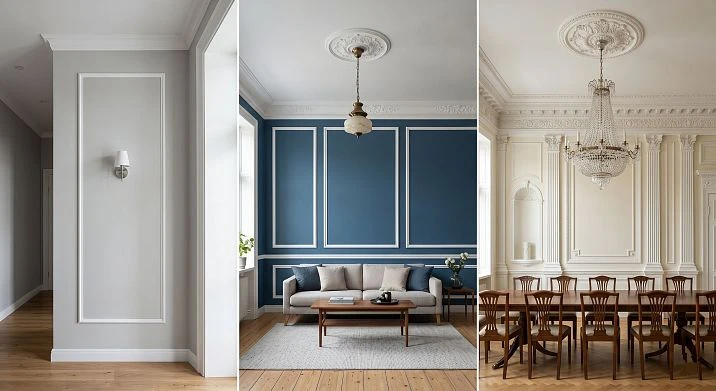
It would seem simple: choose a beautiful set of stucco decor, hang it on the wall — and you're done. But this is exactly where most buyers make the same mistake: they choose decor based on a photo, style, color — and completely forget to consider how it will fit the actual dimensions of a specific wall. Then it turns out that a beautiful set looks like a small spot on a wide wall canvas or, on the contrary, a bulky accent on a narrow partition.
Wall width is the first thing to measure before purchasinga set of stucco for the wall. Not the second or third — precisely the first. Because everything depends on this parameter: the scale of the decor, the number of elements, the type of composition, the relationship with furniture, and the feeling of completeness of the interior. In this article, we will break down how to correctly matchstucco decor to the wall size, avoid mistakes with proportions, and make a choice that will delight you for years.
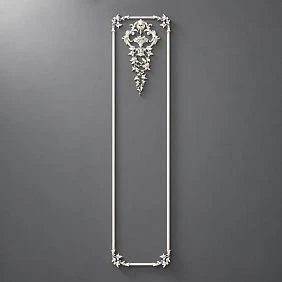
Why wall width is more important than it seems
Imagine two identical sets. The first is installed on a narrow wall 80 cm wide in the hallway. The second is on a wide living room wall 4.5 meters long. The same product — two completely different impressions. In the first case, the decor can be proportionate and beautiful. In the second, it can look lost, like a random accent in the middle of empty space.
This is not an exaggeration. This is visual psychology that works in every interior. The scale of decor is always perceived in relation to the scale of the surface. Too smallStucco decor for an accent wallon a spacious wall gets lost and doesn't create the desired effect. Too large a set on a narrow area feels oppressive, eats up space, and creates a sense of visual chaos.
There is another point that buyers often overlook. It's not the full width of the wall that matters — it's the working width of the decorative zone. This is the space actually available for decoration: between furniture and a corner, between a door and a window, above the headboard of a bed, around a TV. It's the working zone that needs to be measured and it's with this that the size of theset of stucco decor should be matched to the width of the wall.
Add to this the ceiling height, the presence of furniture, outlets, switches, sconces, curtain rods — and it becomes clear that the task is a bit more complex than just "choosing a beautiful set." But it is this complexity that makes the right choice so valuable. Decor precisely matched to the width of the zone looks like part of the architecture — organic, confident, professional.




What wall dimensions need to be measured before choosing a set
Before opening the catalog and looking at photos, arm yourself with a tape measure. Here's what you need to record — and this is not just a formality, but a real basis for correctly choosing theset of stucco molding for the wall by size.
What to measure:
-
The full width of the wall — from corner to corner or from one opening to another
-
The working width of the zone — the part of the wall where the decor will actually be placed
-
The height of the wall from the top of the baseboard to the ceiling — or to the lower edge of the cornice, if present
-
The width of furniture placed against this wall — sofa, bed, dresser, TV stand
-
The distance from the decorative zone to the nearest doors, windows, and slopes
-
The location of outlets, switches, sconces, air conditioners — everything that cannot be covered by decor
-
The width of the wall section if decor is planned between two openings
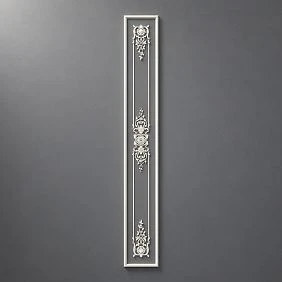
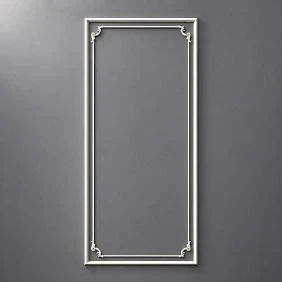
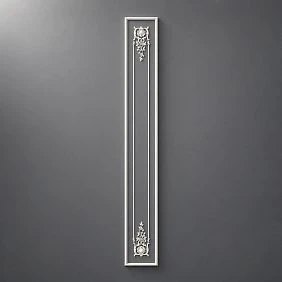
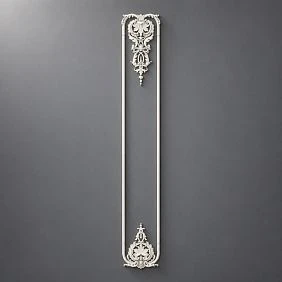
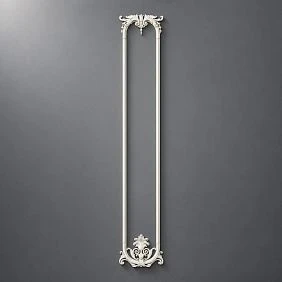
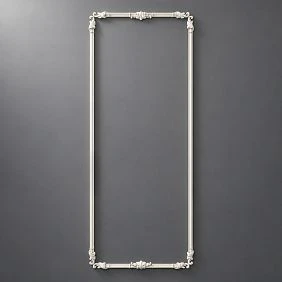
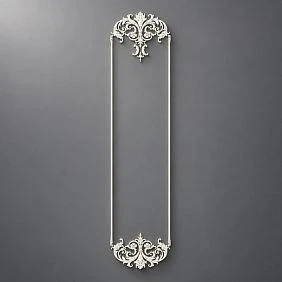
Our factory also produces:
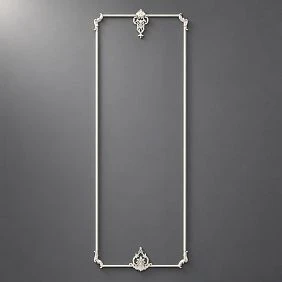
Mini checklist before purchase
Write down five numbers — and the choice will become much easier:
-
Wall width: ___ mm
-
Free working area width: ___ mm
-
Height from baseboard to ceiling (or cornice): ___ mm
-
Width of furniture standing against the wall: ___ mm
-
Desired margin left and right from the edge of the decor: ___ mm
Once you have these numbers, you can open the catalog. Clear lines, created using modern technologies, emphasize the strict aesthetics of the room. Each decorative element harmoniously fits into the overall concept, creating a sense of order and thoughtfulness.and compare product sizes with your wall dimensions. This takes minutes but saves hours of disappointment after a failed purchase.
Get Consultation
Narrow wall section: a compact set as a precise tool
A narrow wall section is perhaps the most delicate area for decor. Here, a scale error is most noticeable. An overly large element in a narrow space looks pretentious and heavy. A properly chosen compactdecor for a narrow wall sectionis an accent that reads clearly, does not overload the space, and adds character to the interior.
Where does a narrow wall occur:
-
between two doors in a hallway or entryway
-
between a window and a corner of the room
-
next to a mirror in the entryway
-
behind a console at the entrance
-
between a wardrobe and a doorway
-
in a small bedroom with a non-standard layout
-
in the area between windows if they are far from the center of the wall
For such areas, vertical compositions work best. They visually elongate the section, making it taller and more significant. A wide horizontal scheme on a narrow wall is a common mistake that makes the space squat and cluttered.
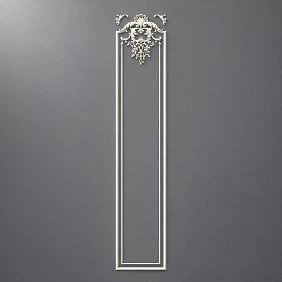
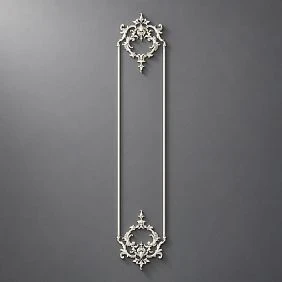
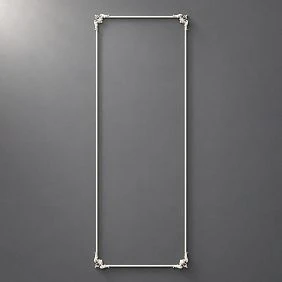
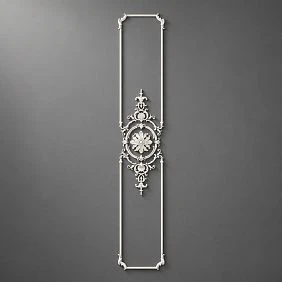
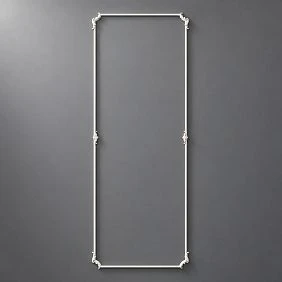
For a narrow wall, suitablestucco decor setscompact format — about 530 mm wide, if the work area allows. Suchstucco decor 530 mmfits neatly into a wall space, leaves air on the edges and does not overwhelm the area. It is important that the margins from the edges of the decor to the zone boundaries are equal — symmetry is key here.
A few rules for narrow zones:
-
decor should leave at least 5–8 cm on the edges to the nearest openings, frames, or furniture
-
avoid massive overlays with large relief — they visually "eat up" the width
-
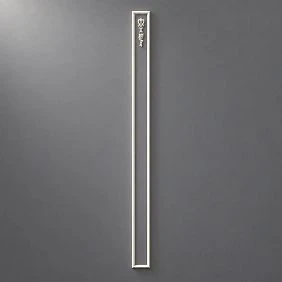
if the wall space is very narrow (less than 50 cm) — it is better to considerPolyurethane decorative appliquesas a standalone element without a molding frame
-
a vertical layout with two small panels one above the other works better than one wide one
For more details on how to design such zones, see the articlestucco decor for niches, ledges, and piers.
Medium wall: a versatile zone for most interiors
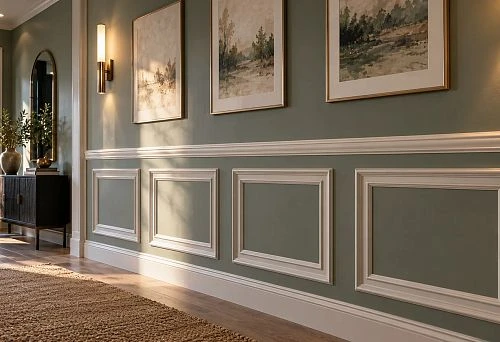
A medium-width wall is the most common scenario. Mostready-made stucco decor setsin catalogs are designed for such zones. This is the area behind a dresser in the bedroom, the wall at the head of the bed, a small section behind the sofa, the TV zone in a medium-sized living room, the wall behind the desk in the study.
What is typical for a medium zone:
-
working width is usually from 700 to 1200 mm
-
symmetry and a well-defined center are easy to achieve here
-
both horizontal and vertical schemes work well
-
it is important to match the width of the set with the width of the furniture underneath
The last point is critically important. If you chooseBedroom stucco decor setAbove the headboard, the decor should not be noticeably narrower than the bed. Otherwise, it will feel like it has "fallen" into the space above the furniture. Optimal: decor width from 70 to 100% of the headboard or furniture width below it.
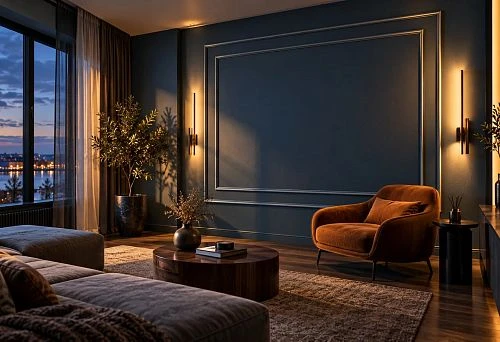
For the TV zone, the guideline is different:Set of stucco decor for the TV zoneIt should visually frame the TV, not compete with it. A composition around the screen that is too active or overloaded with details distracts the eye. Restrained frame schemes work well here — calm geometry that highlights the zone rather than fighting for attention.
Sets about 900 mm wide are a good starting point for medium zones.Molding decor 900 mmAlready creates a noticeable decorative effect without overloading the wall. This is a universal size suitable for most standard interiors in apartments with ceilings of 2.5–3 m.
Styles for medium walls:
-
Neoclassic Collection— strict geometry for a modern interior
-
Neoclassic Light collection— light decor without visual overload
-
Japandi collection— minimalist wall decor in a Japanese-Scandinavian spirit
If you are decorating the wall behind the sofa, be sure to read the articlepolyurethane wall decor behind the sofa — it covers specific scenarios with proportions and examples.
Wide accent wall: when scale is needed
A wide wall is both an opportunity and a challenge. An opportunity because a large canvas allows you to create a truly strong decorative accent. A challenge because a small set on a wide wall looks random and indecisive.
A wide accent zone is:
-
the main wall in a spacious living room (3.5 m and wider)
-
a wall in a dining room or dining area of an open-plan layout
-
a hall or entryway in a country house
-
a wall in a study with high ceilings
-
a representative area in a commercial interior
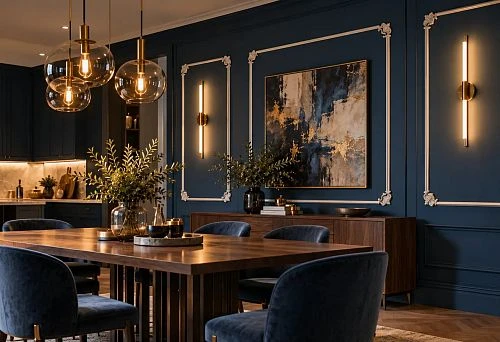
On such a wallWide stucco set — it's not just decoration, it's an architectural statement. The decor should occupy a significant part of the wall, create rhythm, have a center and symmetry.
If one ready-made set is not enough in width, there are several solutions:
Solution 1: multiple modules. One central set and symmetrical side panels. This creates rhythm and fills the space evenly.
Solution 2: ready-made set + moldings. The central decorative composition from the set is complementedpolyurethane moldings on the sides. The moldings form a frame structure around the entire area, unifying the space.
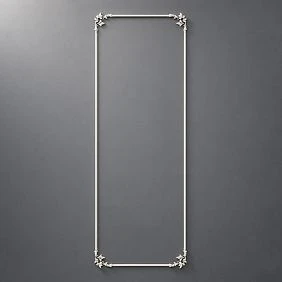
Solution 3: full filling with frames. The entire wall is divided into zones by molding frames with decorative accents in the corners and centers. For this, you needpolyurethane wall moldings, Molding corner piecesandPU decorative overlays.
For classic and rich interiors, it is perfectVersailles Light collection — a classic set of stucco decor with an expressive profile that creates the necessary scale. For more details on how to work with high walls, see the articlestucco decor for high walls and stairwell halls.
Table for choosing a set by wall width
Use this table as a guide — it will help you quickly determine the appropriate decor format even before opening the catalog.
| Work area width | Kit type | Where it is used | What to pay attention to |
|---|---|---|---|
| Up to 60 cm | Compact vertical | Hallway, corridor, area between doors | Leave air on the edges, avoid bulky overlays |
| 60–100 cm (about 530 mm) | Narrow / vertical | Pier, area behind a console, small bedroom | Indentation symmetry, vertical orientation |
| 100–150 cm (about 900 mm) | Universal medium | Bed headboard, TV area, wall behind dresser | Match furniture width, verify center |
| 150–250 cm | Medium or wide | Living room, bedroom, study | Check symmetry, add side moldings |
| Over 250 cm | Wide or multiple modules | Large living room, hall, dining room | Use multiple panels or a set + moldings |
| Custom | Set + moldings | Niches, ledges, complex layout | Create a layout before purchasing |
Please note: dimensions are for the decorative working area — not the full wall width. This is a key difference.
How to match a set of decorative molding with furniture
Furniture is not a background for decor. It is part of it. Sofa, bed, dresser, TV stand — all create a horizontal line, relative to which the vertical of wall decor is built. When the proportions between furniture and decor are balanced, the interior reads as cohesive. When they are not, there is a feeling that something is off, even if the person cannot immediately explain what.
Decor above the sofa
This is a classic area, one of the most popular application scenariosof a ready-made stucco decor set for the living room. A few rules:
-
decor width — at least 60–70% of the sofa width
-
if the sofa is 2 m — the decor should be no narrower than 120–140 cm, otherwise it will be 'lost'
-
leave equal margins on the sides — symmetry is mandatory
-
the decor should not compete with sconces, paintings, shelves — it's better to keep the wall clean around it
If the wall behind the sofa is wide, consider a set + side moldings option — this creates a frame structure that covers the entire area above the furniture. A detailed breakdown is in the articlepolyurethane wall decor behind the sofa.
Decor behind the bed
The wall at the headboard is a special place. Here, the vertical axis is important: the decor must be clearly centered relative to the bed.Stucco molding set for the bedroomwith a central accent element — a rosette or medallion — creates a complete look.
-
the width of the set should correspond to the width of the headboard or bed
-
for a double bed 160 cm — decor from 100 to 160 cm in width
-
vertical elements visually elongate the wall — especially important with low ceilings
Decor in the TV area
The TV is already an accent. The task of the decor is to create a frame for it, not to compete with it. Recommendations fora set of stucco decor for the TV area:
-
mark sockets and cable channels even before marking
-
the decor should not be flush with the TV — minimum distance from the edge of the screen 5–10 cm
-
avoid overloaded, relief overlays — they distract from the screen
-
calm frame geometry is the optimal choice
Everything about decor for this area is in the articlePolyurethane TV zone decor.
Decor in the hallway
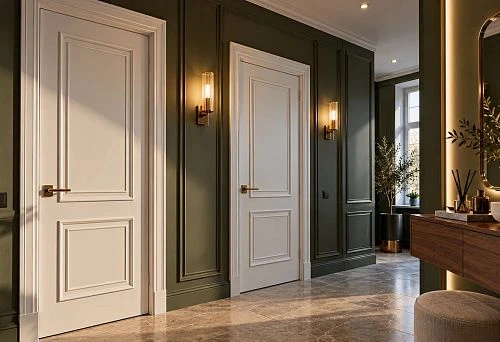
Compact solutions are most often appropriate here. The walls are narrow, there is little space between doors and the closet. The task of decor is to give character to the area, not to fill the entire space.Vertical wall decor made of polyurethaneis a good solution for such spaces.
How ceiling height affects the choice of set
The article focuses on width — but ceiling height directly affects which decor proportions will look organic. This cannot be ignored.
Ceilings of 2.5 m are the standard for most modern apartments. Medium-scale sets work here. A too tall vertical composition will hit the cornice or ceiling. Decor should leave visual air at the top and bottom.
Ceilings of 2.7–3 m offer more room for maneuver. Taller and larger-scale compositions can be considered. The central decor element can be placed at eye level and given vertical development.
Ceilings of 3 m and above — here small decor gets lost. NeedReady-made molded decor kitswith larger elements or composite compositions with a repeating rhythm. For such spacesVersailles Light collection— an expressive classic decor with the right scale.
Low ceilings (up to 2.4 m) — avoid wide horizontal compositions. Vertical schemes are your ally.Vertical molded decoroptically increases the height of the room.
Important guideline: it is recommended to leave at least 30–40 cm from the top edge of the baseboard to the bottom point of the decor. From the top point of the decor to the ceiling — at least 20–30 cm. This creates the necessary "breathing" and does not turn the wall into a solid filled fragment.
How to avoid mistakes with indents
Indents are invisible but very tangible parameters. Properly maintained margins make the decor part of the wall. Incorrect ones create the feeling that the decor was "stuck anywhere."
Practical recommendations:
-
From the corner of the wall to the edge of the decor — at least 5–10 cm, preferably 15–20 cm
-
From the baseboard to the bottom point of the decor — at least 30–40 cm with standard ceilings
-
From the ceiling to the top point of the decor — at least 20–30 cm
-
Symmetry on the left and right is mandatory; even a deviation of 1–2 cm is noticeable
-
From a doorway or window slope — at least 5–7 cm
-
From a socket or switch — at least 3–5 cm so the decor does not interfere with use
Tip with painter's tape
Before ordering, transfer the dimensions of the chosen set to the wall using painter's tape. Mark the outline of the decor directly on the wall and look at it from the main viewpoint — from the doorway, from the sofa, from the threshold. Often it is at this moment that you realize: you need a larger size, or, conversely, the composition is too bulky. Tape is the cheapest and most effective way to "try on" decor before purchasing.
Detailed calculation method — in the articlehow to calculate moldings and stucco decor for a wall.
When a ready-made set is enough, and when additional moldings are needed
This is a question that logically arises after you have measured the wall and understood its dimensions. Sometimes a ready-made set is enough. Sometimes it is not.
A ready-made set is enough if:
-
the working width of the area matches the width of the set well
-
the wall has no non-standard obstacles
-
one complete decorative composition is needed
-
the room is standard, without architectural complexities
-
there is no task to continue the decor on adjacent walls
It is worth addingMoldings made of polyurethane, if:
-
the wall is wide and one set is not enough horizontally
-
a frame structure needs to be created around the central set
-
I want to design several zones in a single style — with a unified rhythm of moldings
-
you need to go around a niche, ledge, or door
-
I want to combine several decorative zones into one system
In this caseset of stucco decorworks as a central accent, andmoldings to expand the compositioncreate a framing structure. This approach is one of the most professional: it provides both the predictability of a ready-made solution and the flexibility of individual arrangement.
Add to thisDecor for Molding— corner elements, decorative inserts for frames — and you get an interior system where every element is in its place.
More about choosing between a set and individual elements in the articlea ready-made set of stucco decor or individual moldings.
Typical mistakes when choosing a set by wall width
This is not theory. This is practice — gathered from real situations where a buyer returns with the question 'why does it not look like in the photo?'
Mistake 1: choosing by photo without looking at dimensions. A photo studio interior creates one impression. Your real wall is another. Without numbers, any choice is guessing.
Mistake 2: not measuring the work area. They buy a set for a '4-meter wall' when there is only 140 cm of free space between the sofa and the corner.
Mistake 3: ignoring furniture. A set that is already smaller than the furniture underneath it is a common and very noticeable mistake. The decor looks lost.
Mistake 4: taking a set that is too small for a wide wall. The result is that the decor looks like a random spot in the middle of empty space.
Error 5: taking a too wide set for a narrow wall. The decor overloads the area, visually narrows it, and creates a feeling of clutter.
Error 6: forgetting about indents from doors and windows. Decor that "creeps" onto the slope or is flush against the door frame looks unprofessional.
Error 7: not considering the ceiling height. With low ceilings, choosing a too tall vertical composition — it hits the cornice or compresses the space.
Error 8: not doing preliminary marking. The only way to check the size before purchase is painter's tape on the wall. Not using it means losing money.
Error 9: mixing elements from different styles. A classic molding with corner elements in Japandi style — a visual conflict that cannot be fixed without complete dismantling.
Error 10: not thinking about the center of the composition. The decor should be centered relative to the furniture and wall. A shifted axis reads as a mistake even to those who don't understand design.
Mini-guide: which set to choose for your wall
Below is a quick checklist for each scenario:
Choose a compact set if:
-
the work area is already a standard accent wall
-
this is a pier between two openings
-
next to a door, window, cabinet, or corner
-
you need to vertically "stretch" a narrow area
-
there is no space for a wide layout in the hallway or corridor
Choose the medium set if:
-
this is the area above a dresser or nightstand
-
the wall at the head of a standard double bed
-
TV zone with screen diagonal up to 65 inches
-
a calm, balanced decorative scheme is needed
-
ceiling height is standard (2.5–2.7 m)
Choose a wide set if:
-
this is the main accent wall in the living room or hall
-
the work area is 200 cm or wider
-
the decor should become the main visual accent of the room
-
there are not many doors, windows, or furniture nearby
-
ceilings are high (from 2.8 m)
Combine the set with moldings if:
-
the wall is wider than the standard set
-
a large frame system for several zones is needed
-
there are niches, protrusions, or non-standard geometry
-
I want to repeat the decorative motif on adjacent walls
-
A complex, multi-layered interior pattern is needed
Choose a set to match the width of your wall
In the STAVROS catalog you can selectReady-made molded decor kitsfor narrow piers, medium walls, and wide accent zones. For complex walls, the set can be supplemented withpolyurethane moldings, PU decorative overlaysanddecor for moldings.
Ready-made style solutions for different sizes and formats:
-
Neoclassic Collection— a current strict geometry for modern interiors
-
Neoclassic Light collection— a light option for standard apartments
-
Japandi collection— minimalist wall decor for a modern style
-
Versailles Light collection— classic decor with a rich profile for tall and spacious rooms
-
All products made of polyurethane— a full range for any task
Useful articles on the topic:
About the Company
STAVROS is a manufacturerpolyurethane interior decorfor decorating walls, ceilings, and interior spaces. The assortment includes ready-made collections for different styles and sizes, moldings, overlays, corner and central elements. STAVROS works with private customers, designers, construction companies, and suppliers of finishing materials throughout Russia.
FAQ: Answers to popular questions
How to choose a set of stucco decor based on wall width?
First, measure not the entire wall, but the working area — the section where the decor will actually be placed. Compare it with the width of the set and leave equal free margins on the left and right. Consider furniture, doors, and windows.
Which set of stucco decor to choose for a narrow wall section?
For a narrow wall section, a compact vertical set is optimal. It does not overload the space and visually elongates the area. Horizontal wide patterns on a narrow wall make it appear even more squat.
Will a 530 mm stucco decor fit a small wall?
Yes. A set around 530 mm works well on a narrow wall section, in a hallway, between doors, or above a small console. The main thing is to have neat equal margins on the edges.
Where to use a 900 mm stucco decor?
A set around 900 mm is a universal choice for a medium wall: above the headboard of a bed, in a small TV area, above a dresser, or behind a desk. This size provides an expressive effect without overloading.
Which decor to choose for a wide wall?
For a wide wall, you need a large-scale set, several symmetrical modules, or a combination of a ready-made set with side moldings. Small decor on a large wall looks random and loses all effect.
Do I need to consider furniture when choosing a set?
Absolutely. The width of the decor should correspond to the width of the sofa, bed, or cabinet underneath it. Decor that is noticeably narrower than the furniture looks lost. The optimal ratio is 70 to 100% of the furniture width.
Can I supplement a ready-made set with individual moldings?
Yes, this is one of the best scenarios for wide walls. The ready-made set is used as a central decorative accent, and polyurethane moldings expand and frame the composition on the sides.
How can I check the size of the set before purchasing?
Transfer the dimensions of the set to the wall using painter's tape. Look at the result from the main viewpoint. This is the simplest and most reliable way to ensure the scale is correct.
What is the working width of the decorative zone?
This is not the entire width of the wall, but only the part that is actually available for decor: between furniture and a corner, between a door and a window, between a cabinet and an opening. This is the size you need to compare with the width of the set.
Is stucco decor suitable for walls in a new building with low ceilings?
Yes, but it's important to choose vertical layouts and avoid overly tall compositions. Light collections — such as Neoclassic Light — work well in spaces with ceilings of 2.5–2.7 m.