










































































Article Contents:
- What is a batten and why is it needed in modern finishing
- Where wooden batten is used: usage scenarios
- For paneling
- For wall panels
- For doors
- For ceiling
- For log houses and baths
- For furniture
- Spruce and pine
- Oak and Ash
- Oak
- Larch
- What is a nashchelnik?
- What is a nashchelnik used for in a wooden house?
- What to use to close the gap between clapboards?
- What is the difference between a nashchelnik and a glazing bead?
- How to close the edge of clapboard if it doesn't reach the corner?
- What to use to close the gap between the wall and an MDF panel?
- Can solid wood nashchelniks be painted?
- What to use to glue a nashchelnik to concrete or drywall?
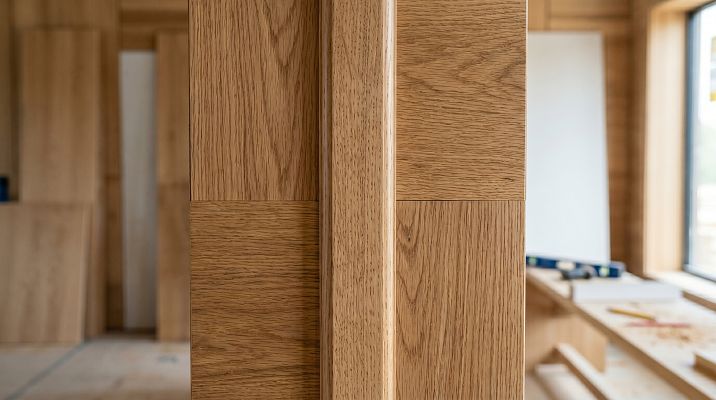
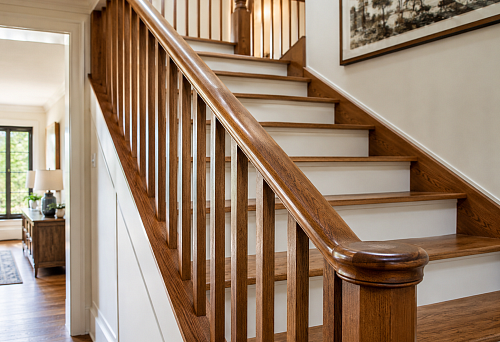
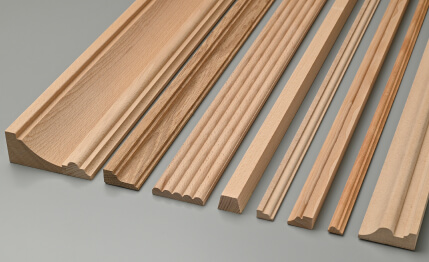
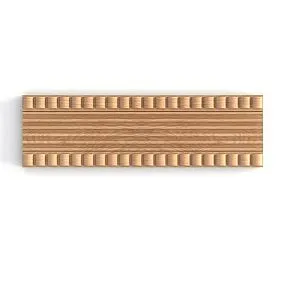
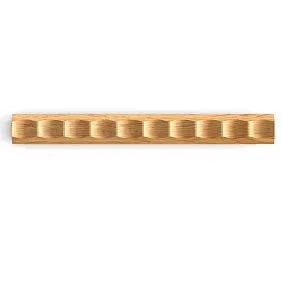
Anyone who has ever dealt with renovation or construction knows: the devil is in the details. Perfectly smooth walls, expensive materials, impeccable design — all of this can be ruined by one untidy gap between finishing elements. This is where wooden nashchelnikThis is a narrow but incredibly important decorative strip, whose sole purpose is to masterfully conceal gaps, joints, and spaces between different materials. Unlike a massive corner piece or a specific glazing bead, a flat wooden trim is used where a thin, elegant transition line is needed: on paneling, wall panels, doors, ceilings, in log houses, or during furniture installation.
Many mistakenly believe that any gap can be filled with sealant or hidden behind the first available batten. But true professionalism lies in selecting the right wooden molding. If you want your interior to look complete, you simply must choose quality elements. We invite you to explore the magnificent Wooden trim STAVROS, where every detail is crafted for the impeccable aesthetics of your home.


What is a trim and why is it needed in modern finishing
What is a trim in its true essence? It's not just a piece of wood. It's a tool for visual control over space. When you ask yourself what a trim is for, the answer lies on the surface: for harmony. During the shrinkage of a wooden house, temperature changes, or simply due to technological tolerances during installation, gaps form. Leaving them open means admitting your own carelessness. A decorative trim acts as the artist's final touch.
Wooden trims perform several functions at once. First, a protective one: they prevent dust, moisture, and drafts from entering structural joints. Second, an aesthetic one: a wooden trim strip creates a clear outline, emphasizing the geometry of the room. Third, a masking one: even the most experienced craftsman cannot always make a perfect cut, and this is where wooden trims come to the rescue, hiding minor work imperfections.




Where is wooden trim used: usage scenarios
The versatility of this profile is astonishing. From classic country houses to ultra-modern lofts, there is always a place for a properly selected joint strip. Let's take a closer look at the main scenarios.
Our factory also produces:




For paneling
Paneling finishing is a classic. But how to cover the joint of paneling along the length or in corners? This is where it works flawlessly batten for liningIt allows you to create a continuous wooden surface, hiding the expansion gaps necessary for the wood to "breathe."
Get Consultation
For wall panels
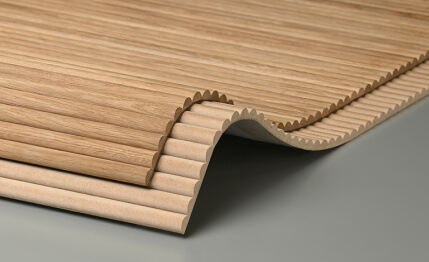
Modern interiors often use MDF or solid panels. The question arises: how to close the gap between the wall and the panel? A smooth, flat wooden batten handles this flawlessly, especially if you use stylish slatted panels for walls, where the rhythm and spacing of the slats require a perfect edge framing.
For doors
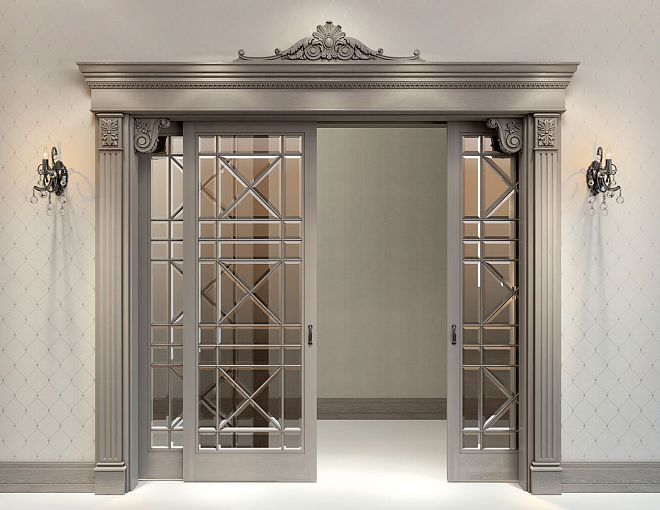
A situation often arises where a standard casing does not cover the entire installation seam. How to close the gap between the door and the wall in such a case? A door batten comes to the rescue. It neatly complements the door unit without visually overloading it.
For ceiling
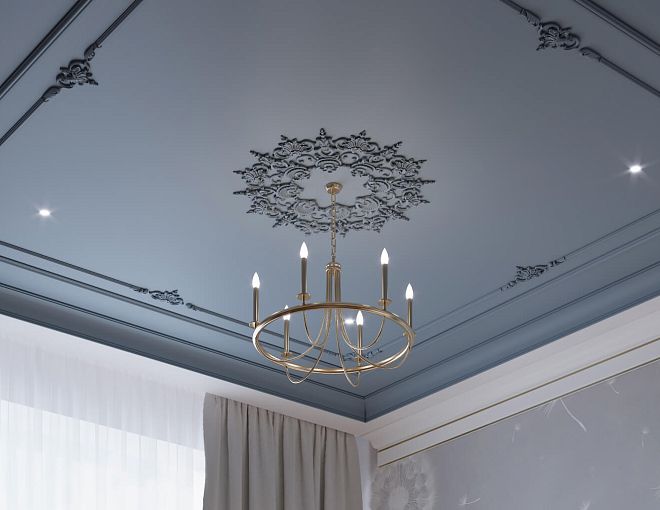
How to close the joint on the ceiling if board or plywood was used there? Heavy cornices are not always appropriate. A lightweight ceiling batten will solve the problem, creating a weightless boundary between the planes.
For log houses and bathhouses
Wooden houses are subject to significant shrinkage. A batten for a log house and a batten for a bathhouse are a necessity. They protect inter-crown joints from freezing and birds, while preserving the authentic appearance of log walls.
For furniture
When restoring or assembling built-in wardrobes, a furniture batten helps hide gaps between facades and the body, giving the product a factory-made, monolithic look.
How a batten differs from a corner piece, casing, glazing bead, and rebate strip
Beginners in renovation often get confused with the terminology of wooden moldings. Batten or casing — what's the difference? How does a batten differ from a corner piece? Let's finally dot all the i's using a comparison table.
| Type of molding | Main purpose | Characteristic shape | Where it is used |
|---|---|---|---|
| Wooden batten | Covers gaps, joints, and crevices in one plane or with minor differences. | Flat, slightly convex, or shaped strip (semi-circle, mushroom). | Panel joints, lining, gaps near walls, ceilings, furniture. |
| Wooden Miter for Finishing | Protects and decorates external (less often internal) 90-degree corners. | L-shaped profile. | Wall corners, window slopes, boxes, niche framing. |
| Wooden casings | Framing of door and window openings, masking of mounting foam. | Wide, often carved or profiled board. | Doors, windows, portals. |
| Glazing bead | Holding glass or thin panel in the frame. | Narrow strip (often triangular or complex cross-section). | Window frames, door panels with glass, furniture fronts. |
| Rebate strip | Concealing the gap between two swinging door leaves. | A strip with a rebate (quarter) or simply a flat batten. | Double doors, gates, shutters. |
As you can see, each part has its strict function. If you try to close a flat joint with an angle bracket, it will protrude awkwardly. If you take a glazing bead, it will be too small. Only a wooden cover strip is specifically designed to solve the problem of gaps on a flat surface.
Cover strip for paneling: how to neatly close joints and edges
Finishing with paneling requires a special approach. Wood "moves" depending on humidity and temperature. Therefore, technological gaps are always left during installation. How to close the edge of the paneling or the place of the end joint of the boards? The answer is simple: you need a wooden cover strip for paneling to buy and install it correctly.
This element acts as a kind of bridge that connects two arrays of wood, allowing them to freely expand and contract underneath it. In addition, the cover strip masks uneven end cuts. If you are sheathing an attic, bathhouse, or loggia, you cannot do without this additional element. When choosing a strip, pay attention to its thickness — it should not be too massive so as not to weigh down the sheathing, but it must be wide enough to reliably cover the gap with a margin of at least 5-7 mm on each side.
Cover strip for wall and slatted panels
In modern design solutions, wall panels play a huge role. But panels rarely end perfectly flush from corner to corner without using an additional profile. What should you use to cover the joint of wooden panels to make it look expensive and stylish? A decorative trim made of high-quality solid wood is the ideal choice.
Unlike cheap plastic plugs, a wooden strip for joints supports the overall status of the interior. It can be painted to match the color of the panels to create a monolithic surface, or coated with contrasting oil to emphasize the geometry of the walls. This looks especially impressive when the interior features Wooden slats and strips — the trim becomes an organic continuation of this rhythmic pattern.
Door trim: where it is needed and how it differs from a platband
The door opening area is one of the most challenging in finishing. We have already clarified the difference between a platband and a trim. But when exactly does the need arise to buy a trim specifically for a door? Imagine a situation: the door frame is installed deep in the opening, the platband covers part of the wall, but a treacherous gap remains between the frame and the extension (or between the platband and the perpendicular wall, if the door is in the very corner).
That's exactly where a narrow door trim is neatly integrated. It becomes the invisible savior of your renovation. It is thinner and more elegant than a platband, so it does not draw attention to itself, but modestly and effectively performs its job of masking installation seams.
Corner trim: a decorative strip for smooth transitions
There is a specific need to cover an internal or external corner where a classic L-shaped wooden corner would look too bulky. In such cases, a so-called corner trim (or cove molding, if referring to an internal corner with a smooth radius) is used.
It is ideal for smooth transitions: for example, when paneling bay windows with clapboard, where the corners are not 90 degrees. A regular corner simply won't fit there, but a flexible or profiled trim will neatly cover the joint, creating a soft transition line. The main rule here is to choose the profile shape based on the angle of the plane junction.
How to choose the size of a wooden trim
Size matters enormously. A strip that is too narrow won't cover the gap during seasonal wood movement, while one that is too wide will look crude. How to choose the right dimensions?
Basic rules for selecting width:
- For hairline gaps and micro joints: width 20-30 mm.
- For standard paneling joints: width 30-45 mm.
- For door gaps and furniture: width 40-50 mm.
- For log houses and timber frames: width from 60 to 120 mm (depending on log diameter).
Always measure the widest part of the gap to be covered and add at least 10-15 mm to this value so the strip has a reliable base for fastening at the edges.
Trim material: which wood to choose
Buying linear molding means choosing the wood species. This determines durability, texture, and price. If you plan to buy a wooden trim, decide on the operating conditions.
Pine and Spruce
The most popular and affordable option. Pine trim is easy to work with, has a pleasant light shade and a pronounced grain. Perfectly suitable for dry rooms, country houses, bedrooms.
Oak and Ash
Hard, noble species. Oak trim is a status symbol. It is incredibly durable, resistant to mechanical damage, and has a luxurious texture. Ideal for classic interiors and expensive furniture.
Beech
Dense wood with a fine texture. An excellent trim for painting, as it does not have pronounced annual rings that could show through the enamel.
Larch
The number one choice for damp rooms and outdoors. Larch trims are not afraid of moisture, do not rot, and only become harder over time. Ideal for a bathhouse, sauna, or facade.
Finishing and final coating: varnish, oil, paint, tinting
Wood in its natural state is beautiful but requires protection. If you buy unpainted trim, a multitude of possibilities open up before you. Varnished trim will preserve the natural beauty of the grain. The varnish creates a durable film that protects against scratches.
Using oil or wax will emphasize the depth of the wood pores (especially relevant for oak and ash), leaving the surface tactilely pleasant and "breathable". If your interior requires strict colors, choose trim for painting. Modern enamels allow you to achieve a perfectly smooth surface that blends in color with the panels or door.
Installation of wooden trim: glue, nails, hidden fastening
Many people wonder: how to attach a wooden trim strip and what to glue it with to avoid ruining the appearance? Installing a wooden trim strip requires precision.
Main fixing methods:
- Liquid nails / construction adhesive: The most aesthetic method. Apply the adhesive in dots or a snake pattern. Suitable for smooth surfaces (panels, flat walls). No traces of fasteners.
- Finish nails: Nails with a microscopic head or without one. Driven with a pneumatic nailer or manually (then countersunk with a nail set and filled with wax). A classic method for paneling and log houses.
- Self-tapping screws: Rarely used, only for massive, wide planks in log houses. Countersinking and masking the heads with wooden plugs (dowels) is mandatory.
Typical mistakes when choosing and installing a trim strip
Experience comes with mistakes, but it's better to learn from others'. Here is a list of the most common failures when working with this type of molding:
- Buying without a width margin: Gaps "breathe." If you buy a strip flush, the gap will reappear in winter.
- Rigid fixation on both sides: If the trim strip covers the joint of two movable panels (or boards), it should only be attached to one side. If nailed to both, the strip will crack during shrinkage.
- Ignoring humidity: Using pine in a bathhouse steam room is a bad idea (resin will seep). Not considering the room's humidity during installation will cause the strip to warp.
- Using random battens: Trying to cover a beautiful joint with a scrap of an unknown board instead of buying a proper decorative trim from a trusted manufacturer.
How a joint cover strip works in interior design
In the hands of a skilled designer, a joint strip ceases to be just a "patch." It becomes a graphic tool. Contrasting wooden trims on a light wall background can set a strict rhythm, echoing ceiling beams or flooring. In combination with an element such as Wooden baseboard, they create a unified room framing ensemble.
You can buy wooden moldings with complex profiles, milling, and fluting, and then a simple joint turns into an exquisite decorative element worthy of palace interiors. Explore the luxurious Solid wood productsto understand how limitless the possibilities of natural material are.
Where to buy a wooden joint cover: what to look for from a supplier
If you decide to buy a wooden joint cover, don't rush to the nearest hardware store and grab the first crooked product you see. High-quality solid wood moldings require strict adherence to drying technology and profiling geometry.
Pay attention to: wood moisture content (should be 8-12%), absence of loose knots, blue stain, and sapwood. Perfect surface smoothness (grinding quality) is the key to ensuring that the grain does not rise during painting and the product looks flawless. That is why such materials should only be purchased from manufacturers with an impeccable reputation.
Frequently Asked Questions (FAQ)
What is a joint cover?
This is a specialized narrow decorative strip made of wood, metal, or plastic, designed to mask gaps, joints, and spaces between finishing elements.
What is a batten strip used for in a wooden house?
It protects inter-crown insulation from external influences, prevents drafts, and gives the walls an aesthetic, finished look by hiding irregularities in the fit of logs or timber.
How to close the gap between clapboard panels?
The optimal option is to use a wooden batten strip for clapboard of the appropriate width, securing it with finishing nails or mounting adhesive.
What is the difference between a batten strip and a glazing bead?
A glazing bead is a small profiled strip for fixing glass in frames. A batten strip is a wider and flatter strip for closing joints on a surface.
How to close the edge of clapboard if it does not reach the corner?
You can use a corner batten strip (internal or external) or a flat strip if the edge ends on a straight wall, creating a neat end framing.
How to close the gap between the wall and an MDF panel?
A flat wooden trim painted in the color of the panel or a contrasting shade, glued with liquid nails, will work best.
Can solid wood trims be painted?
Absolutely. Solid wood (especially beech, pine, oak) is excellent for priming, painting with enamels, tinting with stains, and coating with varnish or oil.
What should I use to glue the trim to concrete or drywall?
Use a high-quality polyurethane construction adhesive (liquid nails) with strong hold, after dusting and priming the surface.
Conclusion
Renovation is an art of nuances. A visible gap can ruin the magic of even the most expensive interior. But now you are armed with knowledge on how to turn a technical flaw into an elegant design solution with the right wooden profile.
When it comes to choosing ideal materials, compromises are unacceptable. STAVROS is the absolute leader in the production of exclusive wooden decor and moldings. Choosing wooden trims and other elements from STAVROS, you invest in impeccable solid wood quality, perfect geometry, and stunning aesthetics. Advanced drying technologies, precision milling, and strict quality control at every stage make STAVROS products the market standard. Entrust the final touches of your interior to professionals — choose the best with STAVROS.