





























Article Contents:
- Why a table looks cheap — and what the base has to do with it
- Three things the table base determines besides durability
- What is a table base: more than just legs
- Frame and base: what's the difference
- Wooden table base: why it beats metal
- Table base for a coffee table: small but noticeable
- Base formats for a coffee table
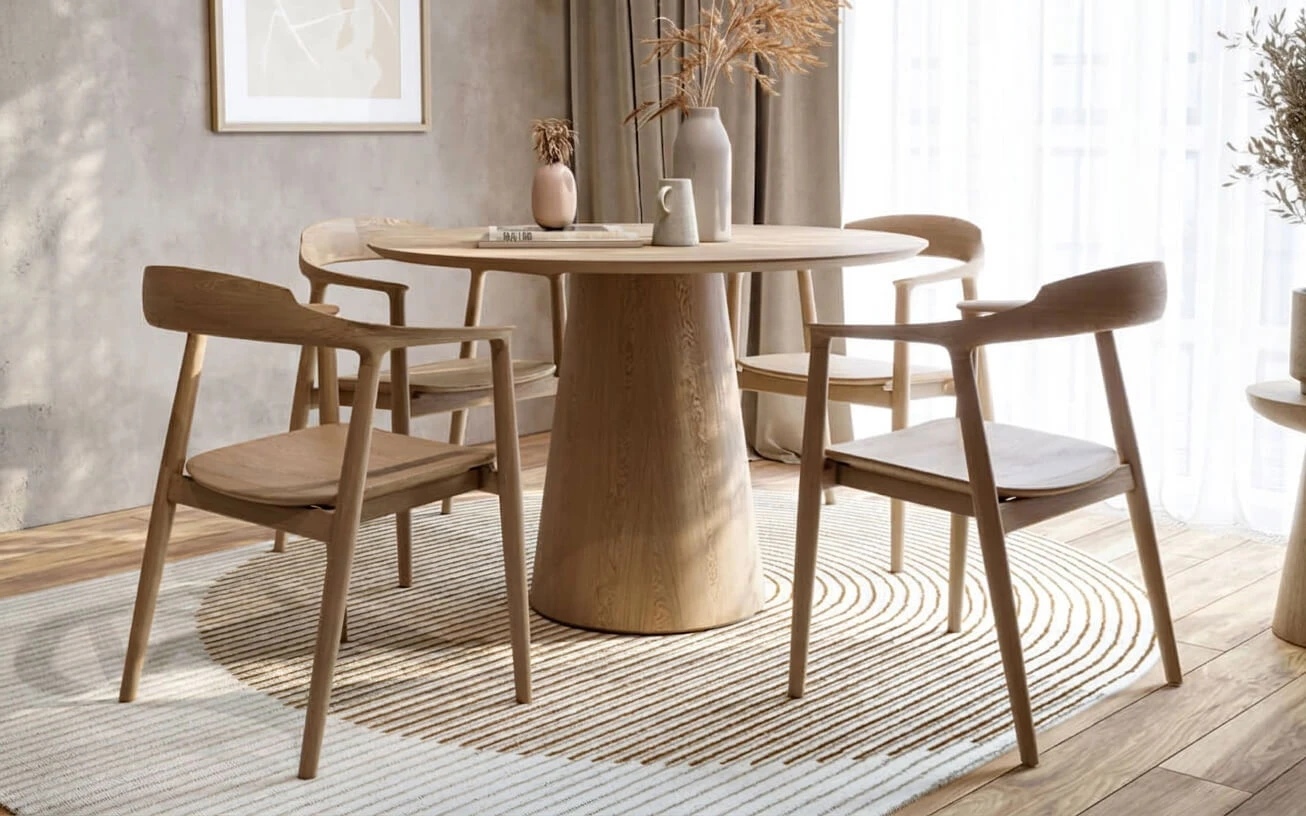
- Table base for a round table: balance and seating freedom
- Round table leg rule
- Underframe for kitchen and dining table: strength as a priority
- Kitchen table and compact underframe
- Underframe for desk and workspace
- Console as a desk: a slim solution
- Table frame: when a full structure is needed
- When the tabletop comes included
- Carved underframe: when the table base becomes a work of art
- Carved underframe and tabletop: pairing rules
- How to choose an underframe for a tabletop: practical criteria
- Tabletop size and shape
- Tabletop weight and thickness
- Table height and chair height
- Floor material
- Interior style and base style
- Mistakes when choosing a wooden table base
- Assembly: how to properly assemble a table on a wooden base
- Assembly sequence
- Glue or fasteners?
- Where to buy a wooden underframe and table frame
- FAQ: popular questions about wooden underframes
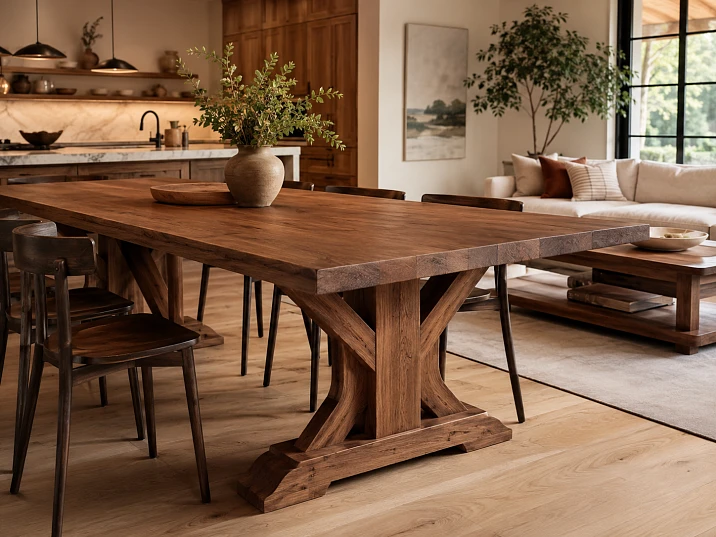
There is a special type of disappointment in furniture — when you see a beautiful tabletop, marble or wooden, expensive and well-thought-out, but underneath it is held up by something vague: thin metal tubes, random legs that wobble at the first touch. Or, even worse, a structure that gets in the way of seated people's legs, cannot support the normal weight of dishes, and creaks with every movement.
A good table is not just a surface. It's what that surface stands on. wooden table base — the supporting structure under the tabletop — determines the stability, height, silhouette, style, and overall feel of the furniture. A properly chosen base turns even a modest tabletop into a full-fledged piece of furniture. A wrong one devalues even an expensive slab.
Let's break it down: what a table base is, how it differs from legs, how to choose it for different table formats — and why wood almost always wins in this matter.

Why a table looks cheap — and what the base has to do with it
Imagine two tables. Both have the same oak tabletop. The first stands on a wooden base with turned supports, aprons, and neat joinery — it looks like furniture from a carpenter's workshop. The second stands on thin metal legs with plastic caps. It looks like a tabletop placed on a rack from a hardware store.
The difference in the cost of the bases can be minimal. The difference in perception is colossal.
Why does this happen? Because the eye evaluates not the tabletop separately, but the table as a single object. And the base is the architecture of the table. It sets the proportions, weight, and stylistic character. Thin legs make the table light and temporary. A massive wooden base makes it stable and serious.
Three things the table base determines besides strength
Visual weight. A table should look proportionate to its function. A dining table for six people on thin legs is an imbalance. wooden base with the right proportions creates a sense of reliability even before anyone sits at the table.
Freedom for legs. The base design determines how comfortable it is to sit at the table. Four corner legs provide more freedom than a central column. Aprons that are too low press against the knees. X-shaped crossbars restrict seating. All of this needs to be thought out in advance.
Style unity. A solid wood tabletop and a wooden base of the same species form a cohesive system. Wood on top and metal on bottom is either a deliberate design choice or an accident. The latter is immediately obvious.
Our factory also produces:
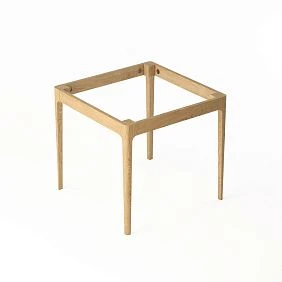
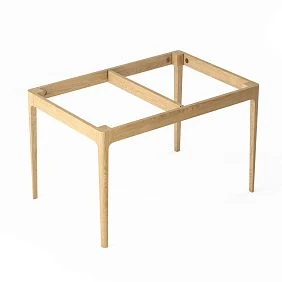
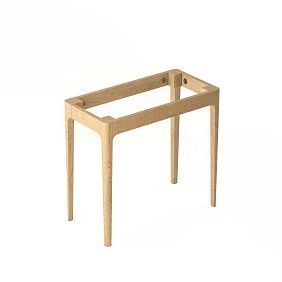
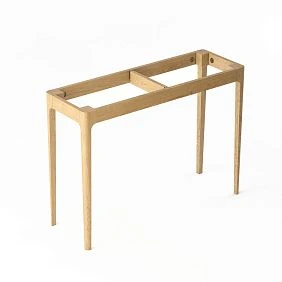

What is an underframe: more than just legs
Many people confuse the concepts of "table legs" and "underframe." The difference is fundamental.
Legs are four (or more) separate supports that are attached to the tabletop independently of each other. They provide freedom of arrangement but do not form a single load-bearing structure.
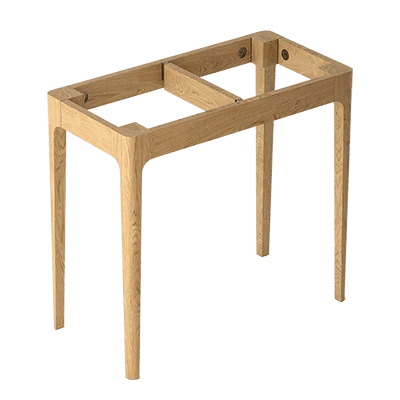
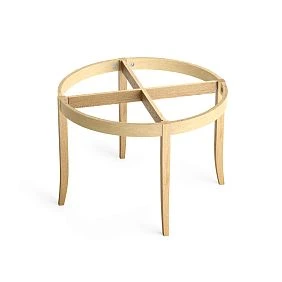
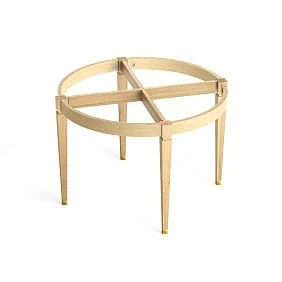
Wooden underframe for a table is a ready-made assembled or solid base: supports connected by horizontal elements (aprons, crossbars, frame). This is a complete structure that:
-
Evenly distributes the load from the tabletop;
-
Gives the table rigidity — it does not wobble or "walk" under load;
-
Forms a unified silhouette of the lower part of the table;
-
Simplifies assembly: the base is assembled separately, the tabletop is placed on top and secured.
The underframe is the correct answer to the question 'how to make a table reliable and beautiful from below'.
Get Consultation
Frame and underframe: what's the difference
The terms 'underframe' and 'frame' are often used as synonyms, but there is a nuance. An underframe is typically a more compact base: a support frame under the tabletop with side panels or turned legs. table frame — a more complete support system that may include additional ties, support crossbars, drawers, or shelves.
For a simple dining or coffee table, an underframe is sufficient. For a desk with drawers, a console, or a work table with storage, a frame is needed.
Wooden underframe: why it wins over metal
The question of the base material is not rhetorical. Metal bases have their use cases: industrial style, loft, open spaces. But in most residential interiors — especially warm, wooden, classic, country — a wooden base works better.
Here's why.
Tactility and warmth. Wood does not chill the legs upon accidental touch, does not ring, does not vibrate. In a space designed for comfort, a metal base introduces a 'technical' note that disrupts coziness.
Compatibility with a wooden tabletop. Wooden table base Made from the same wood species as the tabletop — it's a unified furniture system. No material joints, no contrast that needs explanation.
Possibility of painting and tinting. Wood accepts any coating: varnish, oil, stain, enamel. This allows it to fit into any color context of the interior.
Furniture image. The wooden base is perceived as a joinery product, not an industrial structure. This creates a feeling of "made to order" — even if the base was purchased ready-made.
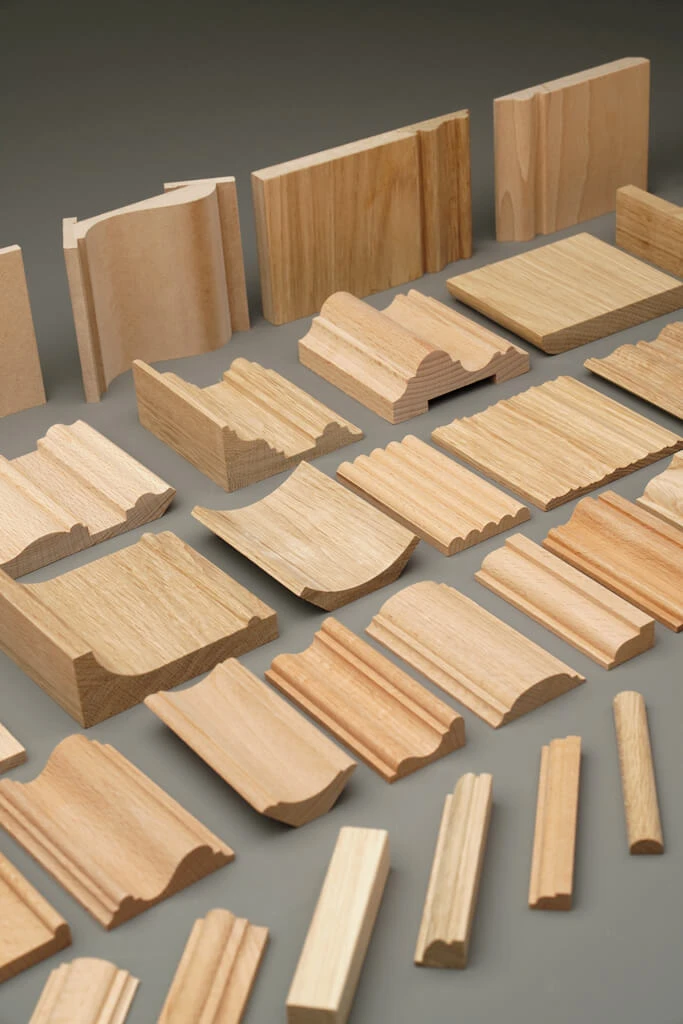
Good pairing with a wooden interior. Wooden panels on the walls, wooden furniture legs, Wooden moldings and cornices, Solid Wood Items — all of this creates a context in which the wooden underframe is an organic part of the space, not an insert element.
Underframe for a coffee table: small but noticeable
A coffee table is not auxiliary furniture. It stands in the center of the living room, in front of the sofa, next to the armchair. It is constantly looked at — from several points simultaneously. And that is why its base must be flawless.
coffee table base — one of the most delicate formats. Several things are important here.
Height. A coffee table usually has a height of 40–50 cm — lower than a dining table. The base must be proportional: not too massive so as not to weigh down the space, and not too thin so that the table does not look toy-like.
Visibility from all sides. The base of the coffee table is fully visible — its lower part, crossbars, and supports. Therefore, there is no room for "technical carelessness": every detail must be neat.
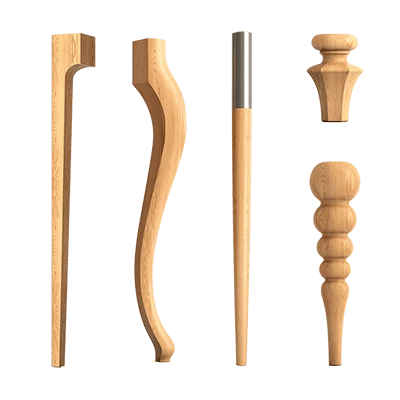
Consistency with the surroundings. The coffee table is a detail in the living room system. Its base should echo the wooden legs for furniture of the sofa or armchairs, with the material and tone of wooden elements in the room.
Stability with minimal weight. A good frame for a coffee table should be visually light and structurally stable. This is achieved through proper proportions of supports and competent connections.
Base formats for a coffee table
-
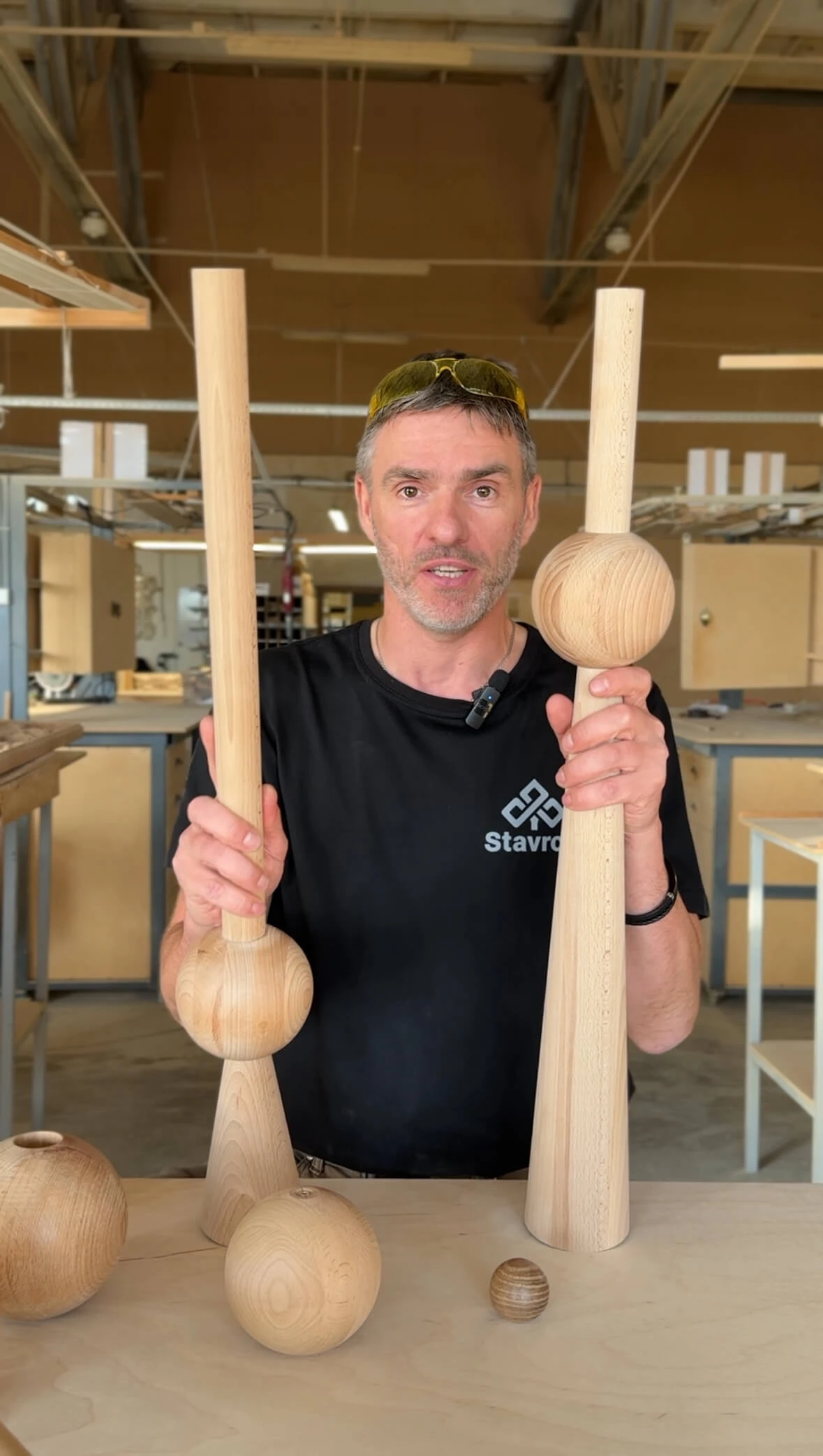
Four turned legs with a lower crossbar — classic, light and airy;
-
H-shaped base (two side frames connected by a crossbar in the middle) — stable and looks good in minimalist interiors;
-
Cross base — expressive and stable, works well under a round or square tabletop;
-
Solid frame with decorative posts — a more "furniture-like" look, suitable for classic and neoclassical styles.
Base for a round table: balance and seating freedom
A round table is a special challenge for the base. It has no corners, no clear front or back, no "correct" side. You can sit at it from any point around the circumference. This means the base must provide legroom from all sides — not obstruct the seating space.
base for a round table most often comes in two types:
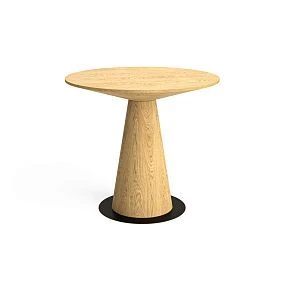
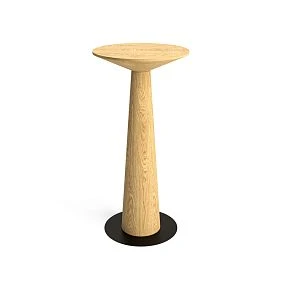
Central column (pedestal base). One massive support in the center — the most space-free solution. Legs don't hit anything. But the central column requires a very stable base on the floor — a wide cross base or a heavy support platform.
Cross or star base. Four or five rays from the center to the periphery. Good stability with less mass than a pedestal. But it's important that the rays don't interfere with chairs when seating.
Four legs around the perimeter. A traditional solution that also works for a round table. The legs are placed in a square inside the circle of the tabletop — with sufficient clearance from the edge so that chairs don't hit them when moving.
Overhang rule for a round table
For a round tabletop, the overhang (distance from the leg or frame edge to the tabletop edge) must be sufficient to allow a chair to be pulled up and seated without contact with the support. Minimum comfortable overhang — 150 mm. Optimal — 200–250 mm.
That is why Base for a round tabletop should always be more compact than the tabletop itself: the base is taken smaller than the diameter of the slab.
Base for kitchen and dining table: strength as a priority
The kitchen and dining table is the most heavily used furniture in the home. Hot, heavy, and wet items are placed on it. Children sit at it, rocking on chairs and leaning on the tabletop with their full weight. It is moved during cleaning. It works three times a day, every day, without days off.
wooden base for table for the dining area — this is primarily about strength. And only secondarily about beauty.
Key requirements:
-
Rigidity of all connections — no 'play' in the aprons and supports;
-
Sufficient cross-section of the legs — for a dining table 120×70 cm, legs from 60×60 mm;
-
Stability on uneven floors — adjustable feet or the correct ratio of base to height;
-
Durability of the coating — varnish or oil that withstands wet cleaning;
-
Load margin — the base must support not only the weight of the tabletop but also people leaning on the table.
Kitchen table and compact underframe
For small kitchens, a compact underframe format with two support posts on two legs — the so-called "U"-shaped or "L"-shaped base — is relevant. It frees up some space under the table and allows chairs to be pulled closer. This format works well for a table for 2–4 people.
Underframe for a desk and workspace
A home office, a work corner in the bedroom, a table by the window with a garden view — these scenarios are increasingly relevant. And for them, a wooden underframe is the best choice if you want to make the workspace not office-like but interior-oriented.
A metal frame on a desk creates an "office" atmosphere. Wooden table frame — residential, homely, warm.
For a desk, it is important to consider:
The height of the work surface. The standard for working at a computer is 720–750 mm. The table height is determined by the underframe height plus the tabletop thickness.
Legroom. The central crossbar or drawers should not interfere with the free positioning of legs. The height from the floor to the lower structural element is at least 650 mm.
Load. Monitor, laptop, books, documents — a considerable weight accumulates on the desk. The base must be designed for this.
Additional storage. For a desk with cabinets or drawers, you need table frame with side sections, not just an underframe. This is a more complex structure that includes cabinet blocks.
Console as a desk: a slim solution
A separate format is the console table: narrow, elongated, often side-mounted. It is used as a desk against the wall, a vanity table, a workspace in the hallway, or a decorative surface in the foyer.
Underframe for a console is a special format: thin turned legs with minimal connections or an H-shaped frame with decorative posts. The console visually 'floats' above the floor — and its base must support this lightness.
Table frame: when a full structure is needed
Sometimes an underframe is not enough — a full-fledged Table Frameis needed. This is relevant in the following cases:
-
Large table (from 180 cm) — requires additional longitudinal ties for rigidity;
-
Table with drawers or cabinets — side sections with guides are needed;
-
Console table with shelf — a lower shelf frame is needed;
-
Kitchen table with pull-out extension — requires a frame with a sliding mechanism;
-
Desk with cable channels — a specialized design is needed.
Solid wood furniture frames — is a product for those who build a table "from the base up." The frame is chosen first, and the tabletop is selected or made to match it.
When the tabletop is included
A convenient option is to buy the underframe together with the tabletop made of the same material. Tabletop for the table and the base from the same catalog guarantee a match in wood species, tone, and style. No compromises in the final result.
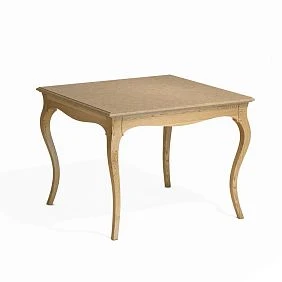
Especially relevant for square tables square tabletop 800×800 — a compact format for the kitchen, balcony, study, or corner area of the living room.
Carved underframe: when the table base becomes a work of art
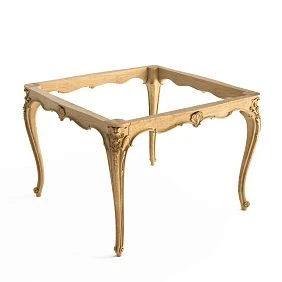
There is a category of tables where the underframe is not a load-bearing element hidden under a beautiful slab. It is the main visual accent. It is the base that makes the table expensive, recognizable, unique.
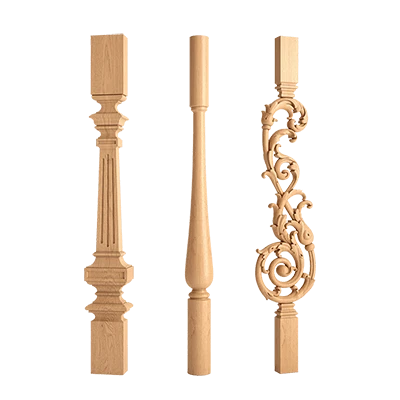
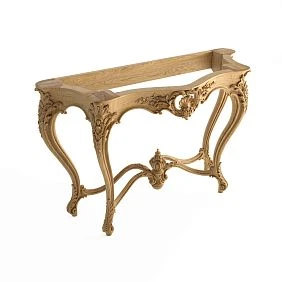
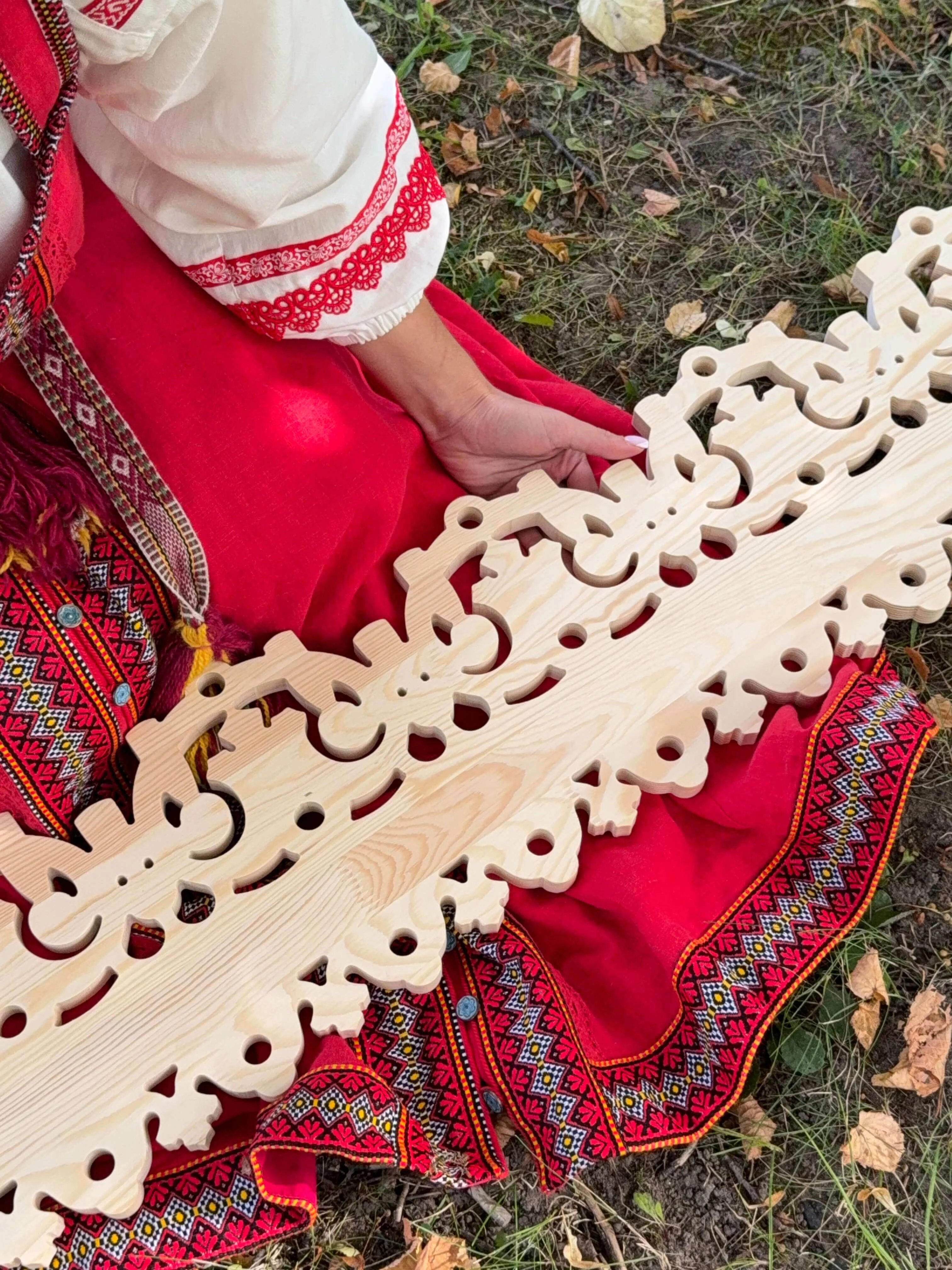
Carved table frame — this is a product in which every element of the supporting structure is decorated: twisted legs, carved crossbars, ornamental details. This is a base for tables in:
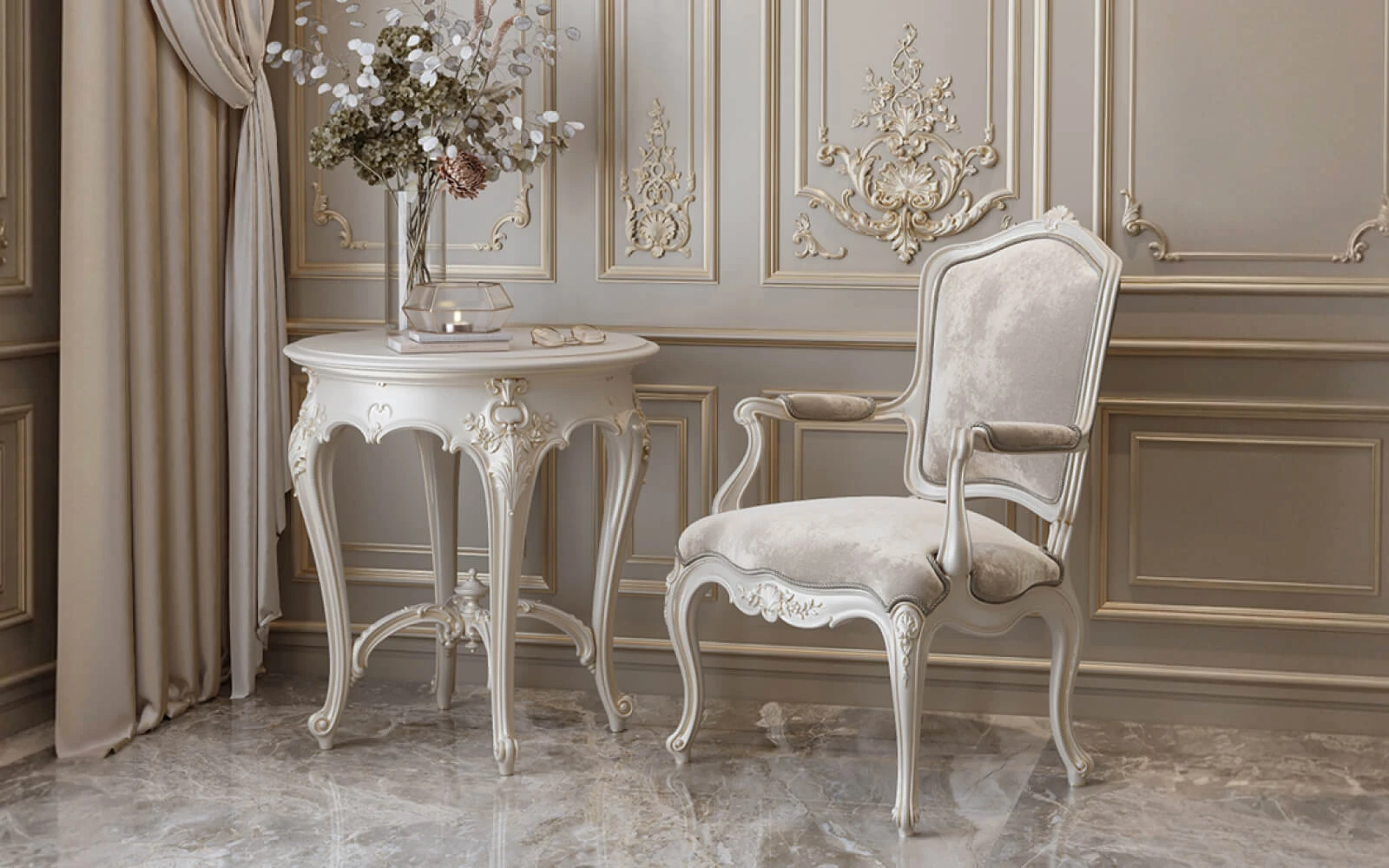
Classic and neoclassical dining room. A large dining table with carved legs, profiled aprons, and twisted crossbars is what used to be called "furniture for receiving guests." Such a table becomes the center of the dining room.
Country house with wooden interior. Carving in country style is less formal, more lively. Floral ornament, geometric inserts, tinted wood — this is the image of a home where people live, not receive delegations.
Study and library. A writing or reading table with carved legs is a table for thinking. It creates an atmosphere, not just a work surface.
Fireplace area and hall. A console next to the fireplace with carved legs and ornamental details is not just a shelf for vases. It is an architectural element that continues the theme of the fireplace and wood trim.
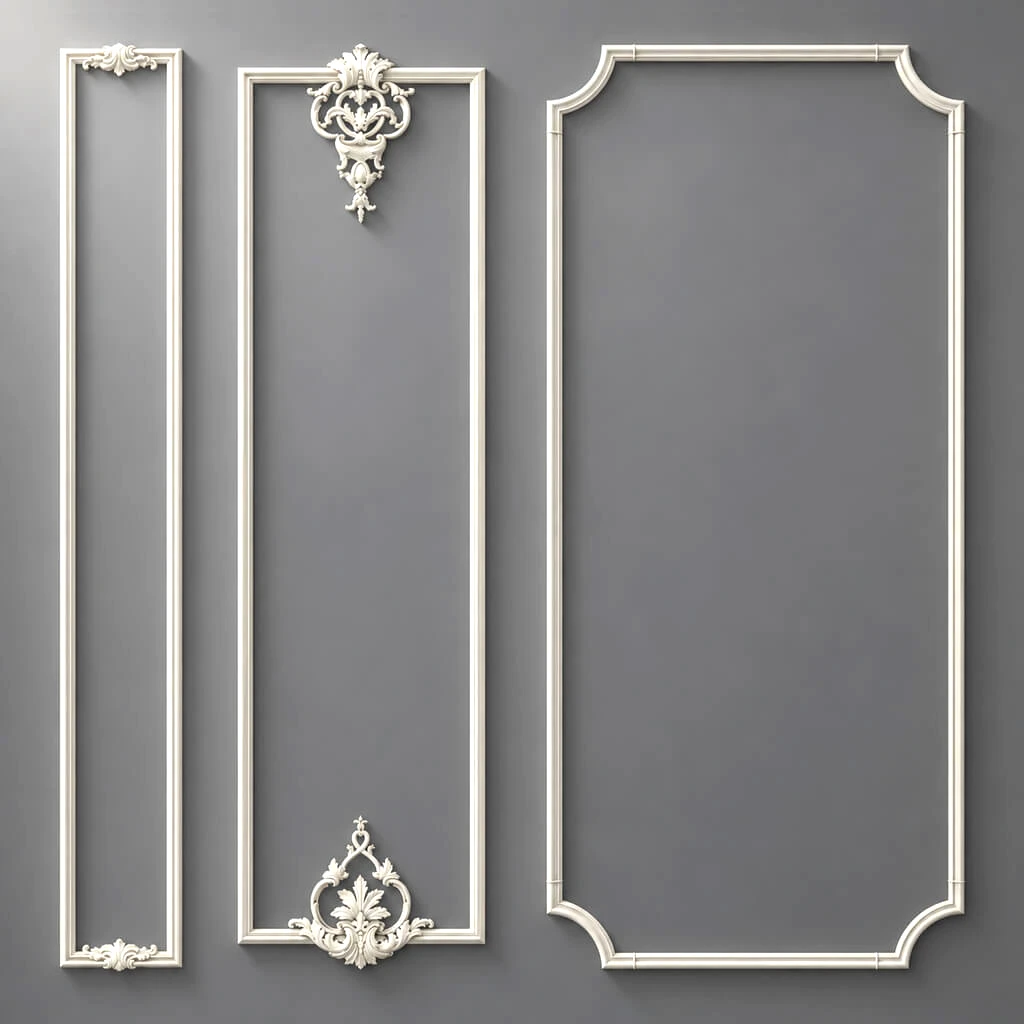
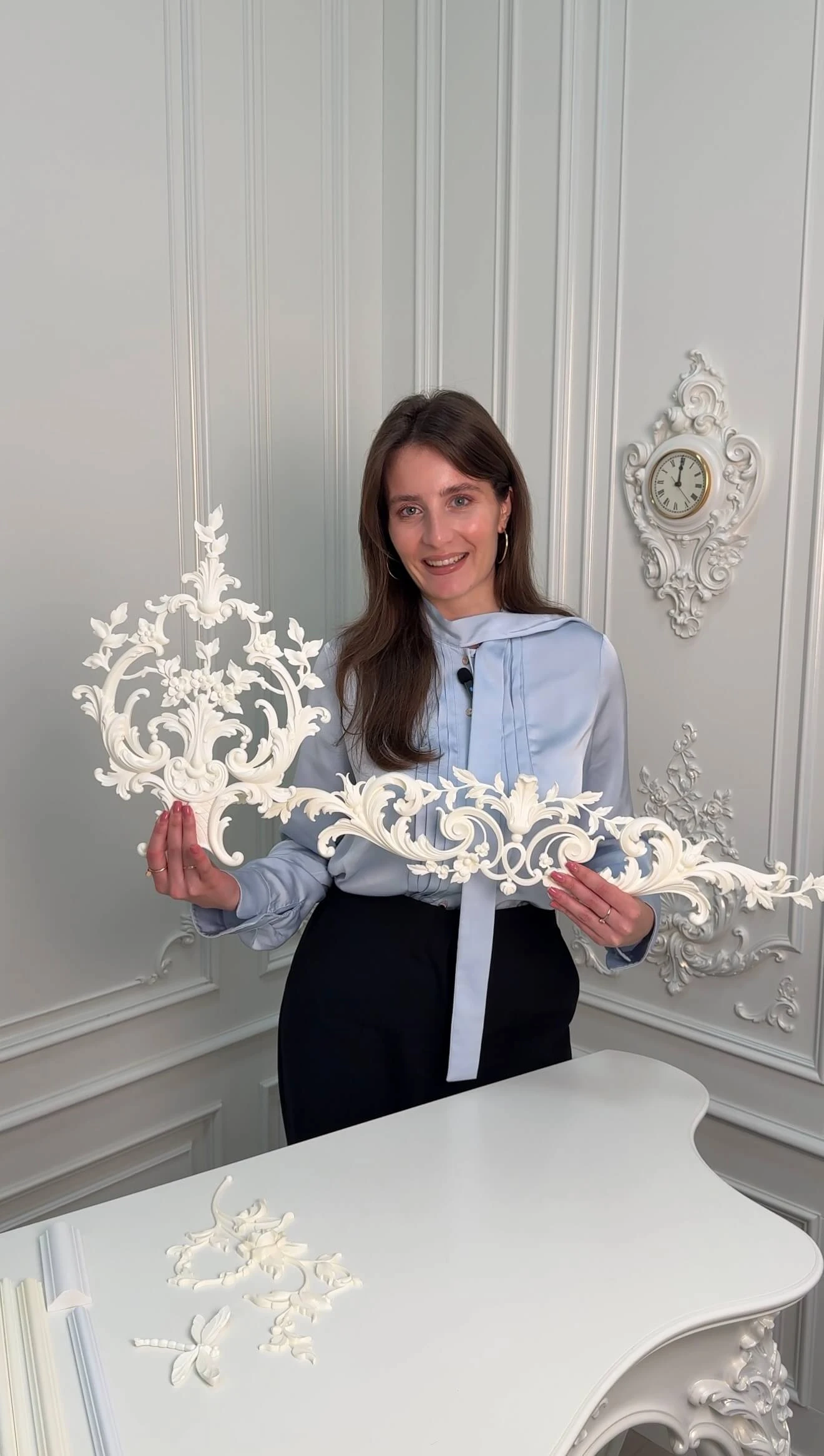
In the interior with carved wooden decorIf the space has wooden wall panels, carved cornices, ornamental architraves — the carved table base organically fits into this system and completes it.
Carved table base and tabletop: rules of the pair
A carved base requires a "worthy" tabletop — solid, made of quality wood, with a good texture. A smooth white laminated chipboard on a carved base is a mismatch that is immediately noticeable. An oak or ash tabletop with a good finish is the right pair.
How to choose a table base for a tabletop: practical criteria
Choosing a table base is not just about style. It is a precise technical calculation. Making a mistake here is costly and disappointing.
Size and shape of the tabletop
The first parameter everything depends on. For a rectangular tabletop — a rectangular base. For a round one — a round, cross-shaped base, or a central pedestal. For a square one — a square base or four corner supports.
The table base should be smaller than the tabletop in perimeter — for overhang. The standard overhang on each side is 150–250 mm. This ensures comfortable seating and visual lightness.
Weight and thickness of the tabletop
A massive oak tabletop with a thickness of 50–60 mm and a width of 120 cm can weigh 40–60 kg. The base must support this weight plus the operational load (another 50–100 kg). Thin turned legs are not an option for such a slab.
For heavy tabletops, bases with wide supports (from 70×70 mm), quality joints, and preferably a lower crossbar that adds rigidity are needed.
Table height and chair height
The standard dining table height is 740–760 mm. The standard dining chair seat height is 430–460 mm. The difference between them (the "knee clearance" height — from seat to tabletop) should be 280–300 mm. This is the space for leg placement.
If the table is too high relative to the chairs — it's uncomfortable. Too low — poor posture. Always consider the "table + chair" system, not just the table height.
Floor material
On a hard wooden floor without adjustment, the underframe must stand level on its own. On tile — anti-slip glides are important. On laminate — soft pads that do not scratch the surface. On uneven floors in a country house — adjustable glides are mandatory.
Interior style and base style
| Interior style | Suitable base |
|---|---|
| Classic, neoclassic | Carved supports, profiled aprons, dark wood |
| Provence, country | Turned legs, light wood, aged paint finish |
| Scandinavian | Tapered minimalist legs, light pine or beech |
| Japandi | Low base, square supports, dark oak or walnut |
| Suburban house | Massive timber supports, horizontal crossbars |
| Modern Classic | Oval or square legs, soft oil finish |
Mistakes when choosing a wooden base
Experience shows: most mistakes are made before installation — at the moment of choice. Here are specific miscalculations that cost nerves and money.
Choosing a beautiful but weak base. A thin and elegant underframe that wobbles under real load is a failure. Always check the cross-section of the supports and the method of joining elements.
Not calculating the weight of the tabletop. A stone slab, a massive oak board, a thick solid wood panel — each requires a base designed for the corresponding weight. Thin legs under a heavy slab are a risk.
Putting a small underframe under a wide tabletop. If the base is too compact relative to the size of the slab, the table will be unstable: just lean on the edge and it will tilt.
Forgetting about leg comfort. Check before purchase: where will the lower crossbar be located? Will it hit the shins of the seated person? Will the aprons block seating for people with long legs?
Not accounting for the height of the chairs. A beautiful set is ruined if the table and chairs don't match in height. Always consider the pair.
Mixing different styles of tabletop and base. A rustic massive beam at the bottom and a thin modern slab on top is a style conflict with no winners. Unity of material and style is the main principle.
Choosing only by photo. A photo can distort proportions. Always request exact dimensions: height, width, support cross-section, base size.
Not planning the attachment of the tabletop to the base. The tabletop must be fixed — otherwise it will shift under load. The attachment method (screws into the aprons, furniture ties, plastic corners) must be considered in advance.
Making a large overhang without additional support. If the tabletop extends significantly beyond the base (more than 300 mm), the edge may sag under load. For large overhangs, additional supports or a thick solid slab are needed.
Saving on the base material. An underframe made of soft pine under a massive oak tabletop may deform over time. The base wood species must match the load.
Assembly: how to properly assemble a table on a wooden base
Practical section for those doing everything themselves.
Assembly Sequence
-
Assemble the underframe according to the instructions — on a flat, horizontal surface;
-
Check the geometry: angles, verticality of supports, flatness of the top frame;
-
Turn the tabletop face down on a soft pad;
-
Install the underframe on the tabletop, center it with equal overhang;
-
Mark and secure — through the technological holes in the aprons or through furniture brackets;
-
Turn the table over and check stability;
-
Adjust the support feet, if any.
Glue or fasteners?
For a knockdown table — only fasteners (screws, confirmats, ties). For a stationary table, you can combine glue and fasteners — this gives maximum joint rigidity.
If the base will be in contact with wet floors (terrace, veranda) — the joints must be made with stainless or galvanized fasteners.
Where to buy a wooden underframe and table frame
If you are looking for where Buy wooden furniture for the kitchen, living room, coffee table or workspace — STAVROS offers a full range of wooden bases, frames and components for tables of all formats.
In the catalog you will find:
-
wooden base for the table — ready-made bases for dining, kitchen, coffee, and work tables;
-
table frame — complete support systems for self-assembly;
-
Carved table frame — for classic and country interiors;
-
Tabletop for the table — paired with a table base;
-
square tabletop 800×800 — for compact tables;
-
Underframe for a console — for side tables and work areas;
-
Solid wood furniture frames — complete catalog of support structures;
-
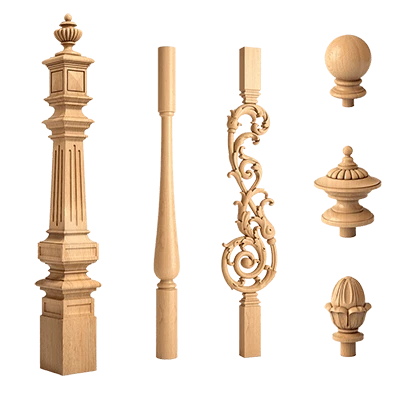
wooden furniture legs — individual supports for custom solutions;
-
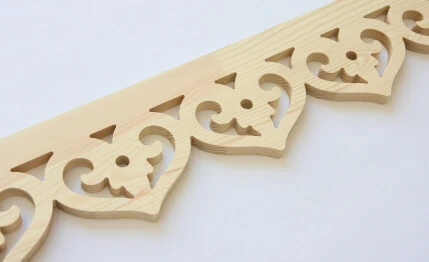
Carved wooden decoration — for adding decorative elements to a carved table;
-
Solid Wood Items — full catalog of wooden interior products.
to buy a base for a table in Saint Petersburg and with Contact us to confirm shipping to your destination.
STAVROS is a Russian manufacturer of solid wood products. Table bases, table frames, tabletops, legs, decorative elements — everything is produced at our own facility from hardwood and softwood. Each product undergoes geometry and surface quality control. Over 4,000 items in the actual catalog. STAVROS knows: a table starts from the bottom. And if the base is made correctly, the tabletop sits on it as expensive furniture should.
FAQ: popular questions about wooden table bases
How is a table base different from table legs?
Legs are four separate supports. wooden base — a solid structure: supports connected by aprons and crossbars into a single rigid system. It is more stable and durable.
Which table base should I choose for a round table?
For a round table, a central column on a cross base or a cross base with four arms is suitable. Base for a round tabletop should provide freedom for legs from any side.
Can I buy a wooden table base separately from the tabletop?
Yes. Buy wooden base it can be purchased separately — for a ready-made, bought, or custom-made tabletop.
What is more important: the tabletop or the table base?
Both elements are equivalent. The tabletop is the surface, the underframe provides stability, height, and silhouette. A table without a proper base is not perceived as a complete piece of furniture.
Would a wooden underframe suit a modern interior?
Yes. A laconic wooden base with clean lines, in a light wood species or with a matte finish, works in Scandinavian, Japandi, modern classic, and minimalist interiors.
How to calculate the size of the underframe for a tabletop?
The width and length of the underframe = tabletop size minus 300–500 mm (150–250 mm overhang on each side). The height of the underframe = table height minus tabletop thickness.
Which wood species is best for an underframe?
For heavily used tables (dining, kitchen) — oak, beech, ash. For a coffee table — any species with proper coating. For a country house — larch or pine.