








































































Article Contents:
- Why furniture wobbles even when it's new
- Five reasons why furniture wobbles
- What is a furniture glide: the essence in one paragraph
- What are furniture glides for: seven tasks of one part
- Adjustable glide: precision where it's needed
- Where an adjustable glide is especially needed
- M8 glide for threaded rod: technical standard
- Plastic glide: basic protection without extra complications
- When a plastic furniture glide is enough
- Felt and wool felt furniture glides: soft protection for delicate floors
- What types of furniture are felt furniture glides suitable for
- Diameter and shape: how to choose
- Chair furniture glide: daily floor protection
- Three types of furniture glides for chairs
- How often to replace furniture glides on chairs
- Table furniture glide: stability and freedom on the work surface
- Furniture glides for cabinets and kitchens: precise installation of large furniture
- Kitchen: why adjustment is mandatory
- Cabinet: height and stability
- Case furniture in the bathroom and toilet
- How to choose a furniture foot by furniture type: summary table
- How to attach a furniture foot to furniture: four methods
- Self-adhesive pads
- Push-on caps and plugs
- Furniture foot on M8 stud
- Bolt fastening
- Wooden legs and furniture feet: a unified support system
- Mistakes when choosing and installing furniture feet
- Where to buy furniture feet: STAVROS catalog
- FAQ: answers to popular questions about furniture glides
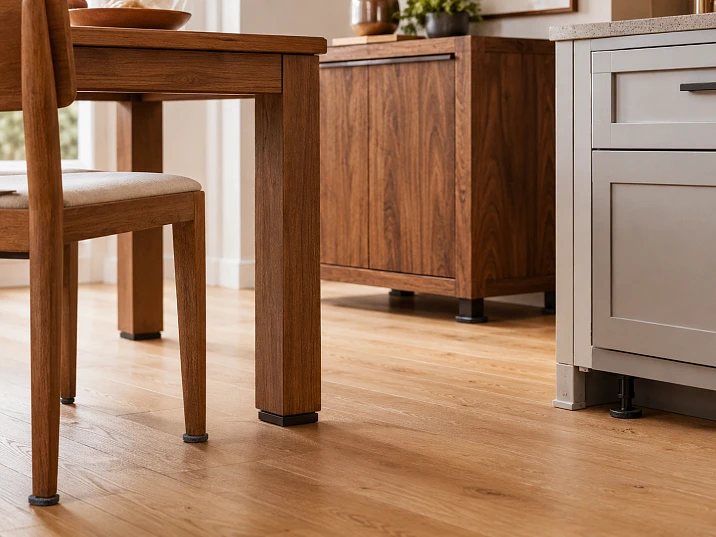
Here's a paradox many face: the furniture is bought good, assembled correctly, stands in a beautiful room — and yet something is off. The cabinet is slightly tilted. The desk wobbles when writing. The chair leaves a new scratch on the parquet with every movement. The kitchen module sits crooked, and the door doesn't close properly.
The reason lies in what the furniture stands on. Not in the quality of the construction, not in the assembly, but in the very bottom, the most grounded detail: the glide. Or rather — in its absence or incorrect choice.
furniture foot — it's a small part with a big responsibility. It sits between the furniture leg and the floor. Protects both. Dampens noise. Compensates for unevenness. And ultimately determines whether the furniture will stand securely or wobble every time someone touches it.
Let's break it down in detail: what a glide is, what types exist, how to choose for a specific type of furniture and floor — and why it's one of the most underestimated details in home furnishing.

Why furniture wobbles even if it's new
Imagine a new cabinet, just assembled according to the instructions. All bolts are tightened, hinges adjusted, back panel in place. The cabinet is placed against the wall — and it stands. Almost level. Almost. Because the floor in an apartment, as in most modern homes, is not perfectly horizontal. A difference of 3–5 mm between two support points — and the massive body already behaves not as it should.
It is here Furniture glider does its main job: it compensates for the difference. It allows you to precisely level the furniture — regardless of how even the screed underfoot is.




Five reasons why furniture wobbles
Uneven floor. The most common reason. Screed with a slope, tiles with differences, wooden floor with sagging — all this creates an uneven support surface.
Supports without a protective element. A wooden leg directly on a hard floor: contact area is minimal, stability is unstable, the floor is damaged.
Uneven leg length. Even in high-quality furniture, legs sometimes have microscopic differences in length. An adjustable foot pad eliminates the problem without disassembly.
Lack of shock absorption. Rigid contact between the leg and the floor transmits vibrations and sounds. This is especially noticeable in a kitchen where appliances are running.
Wear of the leg end. A wooden leg without a protective element will eventually swell from moisture, wear out, and delaminate. A foot pad prevents this process.
Our factory also produces:
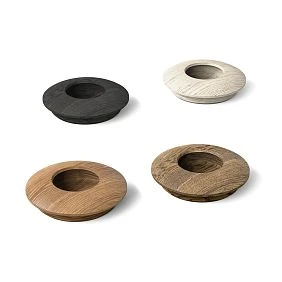
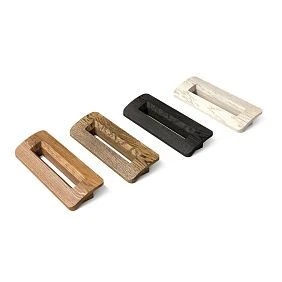
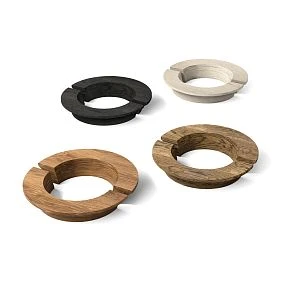
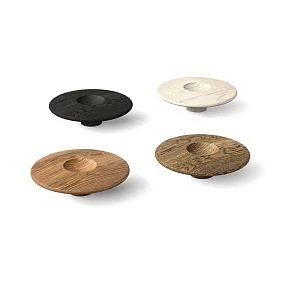
What is a furniture foot pad: the whole essence in one paragraph
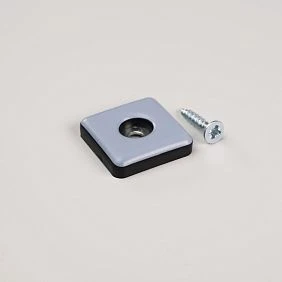
furniture glider is a hardware element that is installed on the lower part of a leg, support, or furniture body. It performs several functions simultaneously: protects the floor from mechanical damage, prevents the leg end from wear, reduces sliding, dampens vibrations, and — in the case of adjustable options — allows precise height adjustment of the support.
By design, foot pads can be overlay (fitted externally), inset (inserted into the leg end), and mounting (attached with a bolt or stud). By material — plastic, felt, wool felt, rubber. By function — protective, adjustable, anti-slip.
A small detail — but it determines whether the furniture will stand rock-solid or annoy you every day.
Get Consultation
What furniture foot pads are for: seven tasks of one detail
People who have never thought about foot pads usually think of them as "pads to avoid scratching the floor." This is true — but only partially. In fact furniture feet solve a whole range of tasks.
Floor protection from scratches. Especially relevant for parquet, laminate, engineered wood, and linoleum. The hard end of a wooden or metal leg leaves marks instantly when moved. A soft glider eliminates this contact.
Protection of the lower part of furniture. The end of the leg is the most vulnerable spot. It absorbs moisture when washing the floor, wears out when moved, and cracks under load. A glider creates a buffer layer.
Reduction of slipping. Furniture that 'wanders' across the floor at the slightest touch is inconvenient and dangerous. A glider made of rubber or high-quality plastic with a textured surface secures the furniture in place.
Compensation for floor unevenness. adjustable foot allows precise leveling of furniture even with significant base differences — up to 15–20 mm depending on the design.
Noise reduction. When moving chairs, pulling out drawers, or operating kitchen appliances, the glider absorbs vibrations and reduces contact noise.
Improved ventilation under the body. The glider lifts the furniture a few millimeters above the floor. This creates a ventilation gap — important for kitchen modules and cabinets in the bathroom.
Leveling furniture during assembly. Adjustable gliders are the standard when installing kitchen sets and cabinet furniture. They allow precise adjustment of each module and achieve a straight horizontal line along the entire length of the kitchen.
Adjustable glider: precision where it's needed
If your task is not just to "protect the floor," but to precisely level the furniture — you need Adjustable furniture foot. This is a design that allows you to change the support height by rotating the adjustment element.
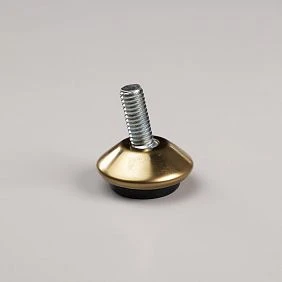
How it works: a stud (most often M8) is screwed into the lower part of the furniture body or leg, onto which a support pad with an adjustment mechanism is placed. By rotating it, you increase or decrease the support height — with an accuracy of up to 1 mm.
Where an adjustable support pad is especially needed
Kitchen. Installing a kitchen set is perhaps the main scenario for using an adjustable support pad. Floor kitchen modules must be strictly level: only then does the countertop lie flat, doors close evenly, and facades form a straight line. In practice, the kitchen floor is almost never perfectly horizontal. Adjustable support pads are the standard solution to this problem.
Tall cabinets. A cabinet 2.2–2.4 m high with a deviation from vertical of 5–7 mm looks clearly skewed. And this skew is especially noticeable next to a horizontal ceiling. Adjustable furniture support pad solves the problem without using coins and cardboard — elegantly and reliably.
Old housing stock and country houses. In houses with wooden floors and uneven floors — which is the majority of old apartments and country houses — adjustable support pads are practically mandatory for any cabinet furniture.
Cabinets and tall cabinets in the bathroom. Wet rooms are a high-risk area for the lower part of furniture. Adjustable support pads lift the body above the floor, reducing contact with moisture during cleaning.
Furniture with heavy filling. A bookcase with full shelves, a chest of drawers with belongings, a utility cabinet — loaded furniture sags over time and begins to rest unevenly. Adjustable support feet allow you to correct this without unloading or rearranging.
Support foot M8 for stud: technical standard
Support foot M8 for stud — the most common standard for adjustable supports of cabinet furniture. The M8 stud is screwed into the lower part of the body or leg, the support foot is screwed onto the stud and secured with a lock nut.
The diameter of the support platform of a standard support foot is 25 mm. This is sufficient for stable support of medium-weight cabinet modules. For heavy structures, choose support feet with a larger platform — 30–40 mm.
The adjustment range of most support feet of this type is from 10 to 25 mm. When working with uneven floors, this covers almost any household scenario.
Plastic support foot: basic protection without unnecessary complications
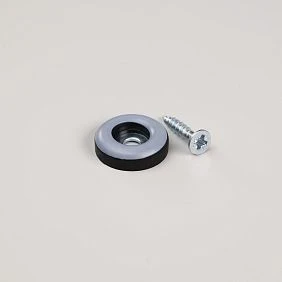
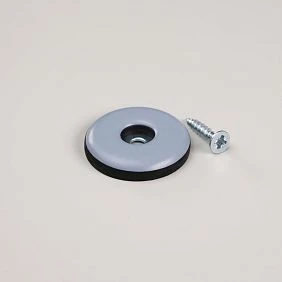
Plastic support foot for furniture — the most common and affordable option. It is used where simple, reliable, and neat protection of the support is needed without an adjustment function.
Plastic support feet come in overlay (fitted onto the outer end of the leg) and inset (inserted into the hollow section of a tubular leg) types. The former are for wooden and turned legs. The latter are for metal tubes and profiles.
Plastic — rigid or semi-rigid — provides the following properties:
-
Good wear resistance under normal loads;
-
Resistance to moisture and household chemicals;
-
Minimal slipping (with a properly selected polymer);
-
Neat appearance — the glider is hidden under the leg.
When a plastic glider is sufficient
Plastic furniture glider Suitable for:
-
Tables on a level floor without the need for fine adjustment;
-
Cabinets and dressers with medium contents;
-
Shelving in the pantry, garage, or workspace;
-
Furniture on tiles or hard flooring, where the risk of scratches is lower;
-
Auxiliary furniture — benches, poufs, stands.
A plastic glider is the workhorse of furniture fittings. No serious assembly is complete without it.
Felt and wool felt glider: soft protection for delicate floors
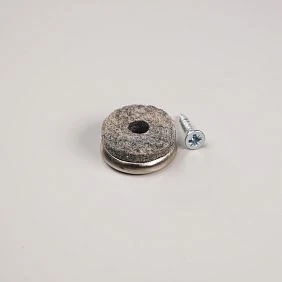
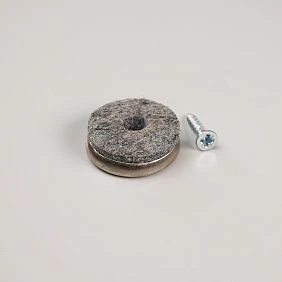
Parquet, laminate, engineered wood, natural stone — surfaces that are easy to damage and expensive to restore. It is for them that Felt foot pad it is the best choice.
Felt and wool felt are natural or synthetic fibrous materials with a soft structure. They:
-
Do not scratch the surface of the coating when moving;
-
Provide smooth sliding (relevant for chairs and tables that are often moved);
-
Dampen contact noise;
-
They leave no marks on the floor even with prolonged use.
Felt glider usually denser and more durable than soft felt. It holds its shape better under load and lasts longer on hard flooring surfaces.
What types of furniture are felt glides suitable for
-
Chairs are the most common scenario. Chairs are moved several times during each meal. Without a protective element, the parquet will show scratches within a few weeks.
-
Coffee tables are light and often moved. Felt glides allow this to be done without consequences for the floor.
-
Stools follow similar logic: constant movement, soft support is mandatory.
-
Armchairs — especially rocking chairs and armchairs with rigid legs.
-
Decorative items — floor vases, stands, etageres that stand on parquet.
Diameter and shape: how to choose
Standard diameters of felt glides are 19, 24, 28, 32, 40 mm. The choice is determined by the area of the support end of the leg: the glide should completely cover this end or be slightly smaller than it, without protruding beyond the edges.
Shape: for round legs — round glides. For square supports — square or rectangular self-adhesive pads. For complex profiles — shaped or oversized with support overlap.
Chair glide: daily floor protection
The chair is the champion of glide load. It is moved several times a day, sat on with full weight, slid across, pushed back, dropped, and rearranged. It is the most used piece of furniture in any home.
That is why chair glide — is not a formality. It is a practical necessity, without which the floor in the dining room or kitchen deteriorates fastest.
Requirements for a chair glide:
-
Softness — felt or wool felt to avoid scratching the floor during movement;
-
Durability — the material must withstand constant friction without rapid wear;
-
Good adhesion — the glide must not come off the leg when the chair is pushed back.
Three types of chair glides
Self-adhesive pads. The simplest option is soft felt or wool felt circles with an adhesive base. They are glued to the end of the leg and work as a protective pad. Easy to install, easy to replace when worn out.
Slip-on caps. They are put on the outer end of the leg. Available for round and square cross-sections. They hold tighter than self-adhesive options, especially on wooden legs.
Insert plugs. For chairs with hollow tubular metal legs — a plastic or felt plug is inserted inside the tube. Reliable, neat, durable.
How often to replace chair glides
Felt and wool felt glides wear out. With intensive use (4–6 people, daily meals) — it is recommended to check the condition once a year and replace when the layer is worn down by more than half of the original thickness. A worn glide is no longer protection, but an abrasive.
Table glides: stability and freedom on the work surface
A table that wobbles when writing or during meals is an annoying experience. Soup splashes. The laptop slides. Dishes shake with every movement. All of this is a consequence of poor support.
table foot is chosen based on two factors: the type of floor and the need for adjustment.
On a level parquet or laminate floor — a felt or soft plastic glide is sufficient. It will protect the surface and provide a level, stable support.
On an uneven floor — a Adjustable furniture glides for table legsThis is especially relevant for a dining table with four legs: on an uneven floor, three legs stand firmly, while the fourth "hangs" — and the table starts to wobble at the slightest load on the corner. Adjustment eliminates the problem.
On tiles — pay attention to slipping. Plastic glides on smooth tiles can slip. The best choice is rubber inserts or plastic with a ribbed anti-slip sole.
On soft carpet or carpeting — here the glide is needed more to protect the end of the leg than the floor: the carpet itself is soft. But the hard end of the leg will wear through the pile over time — a soft glide softens this impact.
Glides for cabinets and kitchens: precise installation of large furniture
For large case furniture — cabinets, kitchen modules, tall units, under-sink cabinets — furniture glides play a fundamentally different role than for a chair. Here the task is not so much to protect the floor, but to precisely level the body and ensure long-term stability of a heavy structure.
Kitchen: why adjustment is mandatory
Installing a kitchen set without adjustable glides is a professional mistake. Here's why:
The kitchen countertop is placed on top of all floor modules and must lie perfectly horizontally. If even one module is higher or lower, the countertop does not fit tightly, a gap forms between it and the body, and the doors of adjacent cabinets end up at different levels.
Adjustable support feet for each module allow precise height adjustment using a level. The standard adjustment range is 10–20 mm. This is sufficient for most floors in residential premises.
In addition, support feet under kitchen modules serve a hygienic function: they lift the body above the floor, preventing water from flowing under the lower edge of the furniture when washing floors.
Cabinet: height and stability
A tall wardrobe or hinged cabinet with a height of 2.2–2.4 m is a structure with a high center of gravity. If it stands crooked, it is not only an aesthetic problem but also a safety issue: a tilted cabinet with contents shifts the center of gravity and increases the risk of tipping over.
Support foot for cabinet with adjustment allows precise vertical alignment — and the cabinet stands as it should.
Cabinetry in the bathroom and toilet
In the bathroom, furniture is constantly exposed to moisture. The bottom end of a vanity or cabinet contacts the wet floor during every cleaning. Without a support foot — it swells, delaminates, rots. With a support foot — it lasts for years because the body is isolated from direct contact with the wet surface.
How to choose a support foot by furniture type: summary table
| Furniture type | Recommended glider |
|---|---|
| Chair (parquet, laminate) | Felt or wool felt |
| Chair (tile) | Soft plastic with ribbing |
| Dining table | Plastic or adjustable |
| Desk | Plastic or felt |
| Coffee table | Felt |
| Kitchen modules | Adjustable M8 |
| Sliding wardrobe, tall wardrobe | Adjustable |
| Cabinet, chest of drawers | Plastic or adjustable |
| Bathroom furniture | Adjustable with moisture-resistant body |
| Heavy cabinet with contents | Adjustable with wide platform |
How to attach a furniture foot to furniture: four methods
Choosing the right foot is only half the task. The other half is proper installation. Let's look at the main methods.
Self-adhesive pads
The simplest option. The protective pad (felt, fleece, plastic) has an adhesive backing — peel off the film, press the pad onto the end of the leg. Suitable for light and medium-weight furniture.
Important: degrease the leg surface before gluing. The adhesive base does not hold well on a dirty surface.
Slip-on caps and plugs
They are placed on the outer end of the leg (overlay option) or inserted inside a hollow leg (insert option). No glue required — they stay in place due to friction fit. For wooden legs — overlay type; for metal tubes — insert type.
Glide on M8 threaded stud
For adjustable glides under cabinet furniture. The stud is screwed into a pre-drilled hole in the bottom of the cabinet or leg. The glide is screwed onto the stud and secured. Adjustment is done by rotating the glide itself.
leg mounting for furniture legs the set includes all necessary hardware for installation — studs, glides, fastening elements.
Bolt fastening
A glide with a screw hole is attached directly to the bottom of the cabinet or leg — with screws into wood or bolts into metal. The most reliable option for heavy furniture and high loads.
Wooden legs and glides: a unified support system
It is impossible to discuss glides without mentioning legs — after all, the leg is the main support, and the glide is its final element.
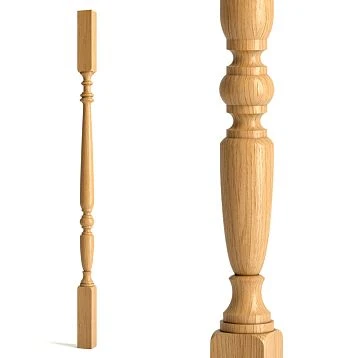
wooden furniture legs — turned, straight, tapered, carved — used in chests of drawers, tables, sofas, armchairs, nightstands, consoles. Each requires a corresponding glide:
-
The diameter of the support end — the glide should not extend beyond the area of the leg;
-
Floor material — felt for parquet, plastic for tiles;
-
Load — for heavy items, durable plastic or a metal insert;
-
Aesthetics — the glide should not be visible from under the leg if the leg is decorative.
A properly selected glide complements the wooden leg and extends its service life several times — protecting the end from moisture, abrasion, and mechanical damage.
Mistakes in choosing and installing glides
It would seem, what's so difficult — buy a glide and install it. But practice shows: mistakes in choosing this part are common.
Not considering the weight of the furniture. A soft felt glide under a heavy bookcase will flatten within a few months. For heavy furniture, rigid plastic or metal adjustable glides are needed.
Installing a soft option under actively used furniture. A felt glide is excellent, but it wears out quickly under a chair in a family with children. Here, harder felt or a felt+plastic combination is better.
Not considering the floor type. Plastic on parquet without a soft insert — scratches. Too soft felt on tiles — quickly gets wet and loses shape. The material of the glide and the floor material must be coordinated.
Forgetting to adjust on uneven floors. The most common mistake when installing a kitchen: installing fixed plastic glides and discovering that one module sits lower than the others. You have to disassemble it. Adjustable glides eliminate this scenario.
Installing a glide that is too small for a large support. A 19 mm diameter glide under a 50×50 mm leg is a poor support. The contact area with the floor is too small, and the furniture will "press through" the point under the leg.
Not checking the attachment method. A self-adhesive glide on a silicone or lacquered surface without degreasing holds poorly. A push-on cap on a conical leg comes off. Always check the compatibility of the attachment type and leg type.
Using different glides on the same piece of furniture. Three identical ones and one different one means different heights. The table will wobble. Always replace glides as a set.
Trying to compensate for a severe floor slope with a small adjustable glide. The adjustment range of a standard glide is 10–20 mm. If the floor height difference is 30 mm or more, you need either glides with an extended range or floor leveling.
Ignoring wear. An old, worn glide is worse than a new one in every way: it doesn't protect, doesn't hold, doesn't cushion. Replacing glides is furniture maintenance that should be done every 2–3 years with intensive use.
Where to buy furniture glides: STAVROS catalog
If you are looking for where buy furniture glides — adjustable, plastic, felt or wool felt — STAVROS offers a full range of furniture fittings for any task.
In the catalog:
-
Adjustable glide D25 FUR-019 — for kitchen modules, cabinets, case furniture, mounting on M8 stud;
-
Felt glider D24 mm FUR-027 — for parquet, laminate, engineered wood, chairs and light furniture;
-
Felt glider D28 mm FUR-028 — for wider legs, enhanced floor protection;
-
Furniture hardware — full catalog of gliders, fasteners and fittings;
-
Mounting for furniture legs FUR-001 — kit for mounting legs and gliders;
-
Furniture hardware — entire STAVROS furniture fittings section;
-
wooden furniture legs — for complete selection of leg and glider.
Buy furniture glides available individually and in sets. Delivery in Saint Petersburg and throughout Russia.
STAVROS is a Russian manufacturer and supplier of solid wood products and furniture fittings. Glides, fastening kits, legs, fittings — all in one catalog. STAVROS approaches every detail with the same seriousness as large products: even a small glide must work reliably, precisely, and for a long time. Because everyday comfort rests on such details.
FAQ: answers to popular questions about furniture glides
What is a furniture glider for?
Furniture glider protects the floor from scratches, prevents the leg end from wear and moisture, reduces sliding and noise, and adjustable options allow precise leveling of furniture.
How does an adjustable glide differ from a regular one?
A regular glide has a fixed height. adjustable foot has a height adjustment mechanism (usually 10–20 mm) — for precise furniture leveling on uneven floors.
Which glides to choose for chairs?
Felt foot pad or felt — the optimal choice. They do not scratch the floor when moving the chair and are easily replaced when worn.
What foot pads are needed for a cabinet?
For tall cabinets — adjustable shims with the ability to level precisely. For small cabinets — plastic ones.
Can a foot pad be placed on a table leg?
Yes. table foot protects the floor, eliminates wobbling, and extends the life of the legs. On uneven floors, an adjustable option is recommended.
How is the M8 foot pad attached?
The M8 stud is screwed into the lower part of the body or leg, foot pad for M8 stud is screwed on and adjusted in height by turning. It is secured with a lock nut.
How often should foot pads be replaced?
Felt and wool felt — every 2–3 years with active use. Plastic — when cracks or deformation appear. Adjustable — when fixation stability is lost.