
























Article Contents:
- Why the handrail is the main detail of the stair railing
- Three functions of a wooden handrail
- Wooden handrail: why wood specifically
- Why wood is associated with quality
- Handrail and railing: what is the fundamental difference
- How to choose the shape of the handrail: a profile that fits the hand
- Round handrail
- Oval Handrail
- Shaped Profile
- Wide handrail
- What to avoid in handrail design
- Wooden stair railings: a system, not a set of parts
- What makes up a complete railing system
- Proportion: how balusters and handrail should relate
- Wall-mounted handrail: an often underestimated solution
- How to attach a wall-mounted handrail
- How to choose a handrail to match balusters and posts
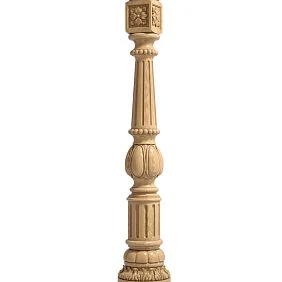
- Carved balusters — expressive handrail
- Minimalist balusters — calm handrail
- Finger-jointed handrail: for long spans
- Handrail for a wooden staircase in a country house
- Coating for a handrail in country conditions
- What material to choose for a wooden handrail
- Oak
- Oak
- Ash
- Coniferous species (pine, spruce, larch)
- Comparative Table of Wood Species
- Handrail, steps, interior: how to create a unified staircase system
- How to connect the handrail with the rest of the interior
- Steps and handrail: about step consistency
- Mistakes when choosing a wooden handrail and railings
- Where to buy a wooden handrail and balustrade for a staircase
- FAQ: answers to important questions about wooden handrails and balustrades
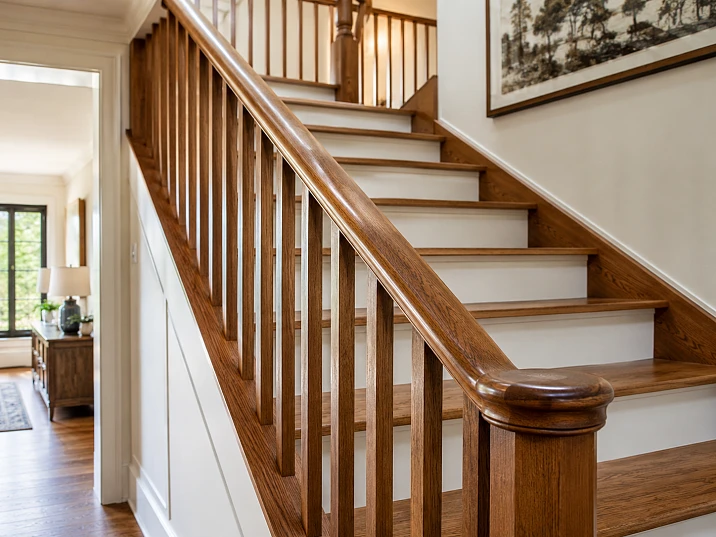
There are details in the house that you touch with your hands every day — literally. A light switch. A door handle. And a staircase handrail. Three times up, three times down — that's the minimum. And if there are children, elderly parents, or a two-story country cottage with a high staircase in the house — the handrail becomes one of the most used elements in the home.
And yet, it is the handrail that is most often chosen on a residual basis: "the steps are already ready, the balusters are installed, and the handrail — well, we'll pick something." The result is an uncomfortable shape that is unpleasant to hold. Or a metal tube, cold and slippery. Or a profile that is not stylistically connected to either the staircase or the interior of the house.
Wooden stair handrail — это не декоративная деталь поверх конструкции. Это элемент, который делает лестницу удобной, безопасной и законченной. Сегодня разберём, как его выбрать правильно: по форме, материалу, стилю — и как собрать из него полноценную лестничную систему, которая будет радовать каждый день.
Почему поручень — главная деталь лестничного ограждения
Начнём с честного вопроса: что вы замечаете, когда идёте по незнакомой лестнице? Скорее всего — поручень. Не ступени, не балясины, не столб. Именно поручень — потому что рука тянется к нему первой. Инстинктивно. Для уверенности.
Хороший поручень — это тот, которого не замечаешь. Рука ложится на него естественно, скользит по нему плавно, профиль не давит на ладонь острыми гранями. Лестница с таким поручнем воспринимается как надёжная и удобная — даже если вы не можете объяснить, почему.
Плохой поручень замечают всегда. Он неудобный, скользкий, слишком тонкий, слишком широкий, с острыми кромками или с покрытием, которое ощущается чужеродным. Лестница с таким поручнем раздражает — и это раздражение накапливается с каждым подъёмом.
Три функции деревянного поручня
Безопасность. Поручень — это страховочная линия. Особенно важна она для детей, пожилых людей, людей с грузом в руках. Надёжный хват — это профиль, удобный для ладони, и материал с правильным коэффициентом трения. Дерево в этом смысле превосходит металл: оно не скользит так, как лакированный металл, и не нагревается и не охлаждается до некомфортных температур.
Удобство. Это про ежедневный опыт. Лестница используется по нескольку раз в день — иногда торопливо, иногда в темноте, иногда с полными руками. Поручень должен быть там, где рука его ожидает, и в той форме, в которой рука его принимает.
Эстетика. Поручень — верхняя линия лестничного ограждения. Он всегда на виду. Он задаёт силуэт всей лестницы. Хороший деревянный поручень объединяет ступени, балясины, столбы и пространство холла в единый интерьерный образ.
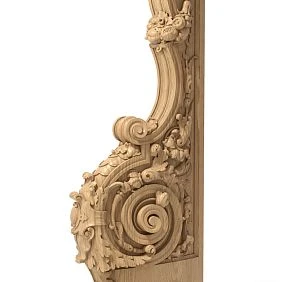
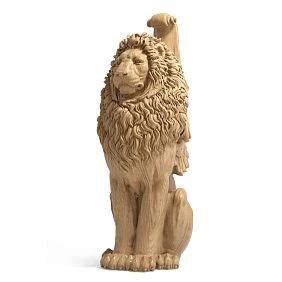
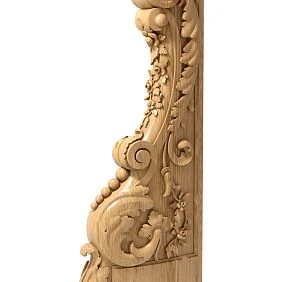
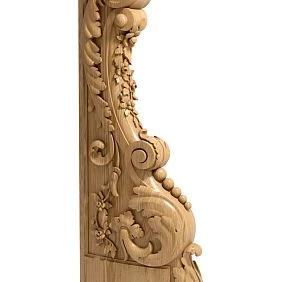
Our factory also produces:
Деревянный поручень: почему именно дерево
The question of handrail material is not just about aesthetics. It's about tactile contact that occurs dozens of times a day.
A metal handrail feels cold to the touch. In a country house in winter, this is especially noticeable. Additionally, metal is slippery with certain coatings and requires more careful maintenance against corrosion.
A plastic handrail is lightweight and cheap. But it cannot withstand long-term use, ages and loses its shape, and looks out of place in interiors with natural materials.
Wooden handrail — warm, lively, pleasant to the touch. The hand does not slip on it with a careful matte finish. It harmonizes perfectly with wooden steps, parquet, wooden doors, and furniture. It can be tinted to any shade — to match the color of the steps, balusters, or wooden wall panels.
Get Consultation
Why wood is associated with quality
There is a psychological dimension to choosing a material. Wood is perceived as a sign of quality and thoughtfulness. A wooden staircase with a wooden handrail creates an image of a home invested with care and taste. Metal or plastic next to wooden steps often gives a feeling of "unfinished."
That is why in most country houses and cottages with wooden staircases, owners choose Wooden handrail for staircase — so that the material "speaks" to itself and does not create a conflict.
Handrail and railing: what is the fundamental difference
These concepts are often confused — and this leads to confusion when choosing and ordering. Let's clarify once and for all.
A handrail is the upper horizontal (or sloping along the flight) part of the railing that you hold with your hand. It is a single piece — a profiled wooden strip that runs along the staircase.
Railing is the entire guard system as a whole. It includes:
-
handrail (the upper part that you hold);
-
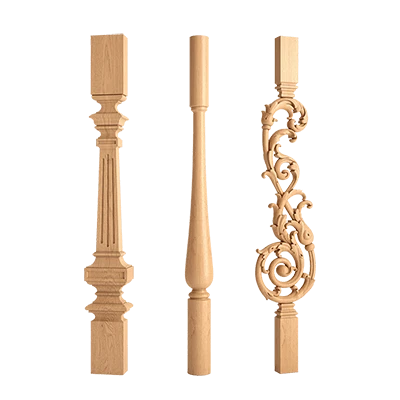
Balusters for staircase — vertical elements between the steps and the handrail;
-
Posts for staircase — supporting vertical posts at the beginning, end, and turns of the staircase;
-
under-rail strip — a horizontal element under the balusters;
-
finials — decorative top parts of the posts;
-
Fastening elements.
When a buyer searches for "wooden stair railing" — they usually want to purchase the entire system as a whole, not just a single handrail. This is important to consider when planning a staircase project.
How to choose the shape of a handrail: the profile that you hold with your hand
The shape of the handrail is not just about appearance. It's about ergonomics. You hold the handrail with your hand, which means its profile should fit comfortably in your palm.
Round handrail
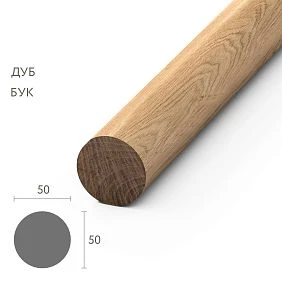
The classic round profile with a diameter of 40–50 mm is one of the most comfortable for most people. The palm wraps around it naturally, without strain. A round handrail is suitable for wall mounting and for systems with balusters. It is minimalist and concise — works well in modern interiors and in country houses with simple finishes.
Oval handrail
An oval profile is slightly flatter vertically, with a flattened lower edge. It fits well in the hand and looks a bit more "furniture-like," less technical than a round one. The optimal size is 50–60 mm in width and 40–50 mm in height. This handrail is comfortable both for a quick grip and for slow movement.
Shaped profile
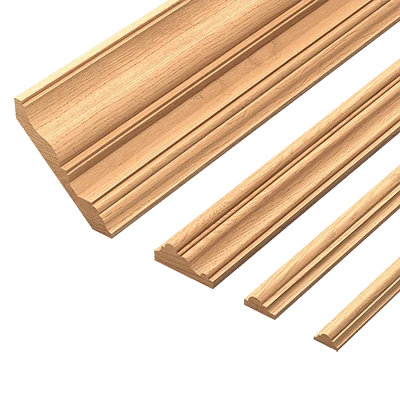
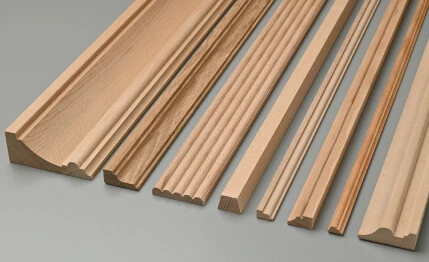
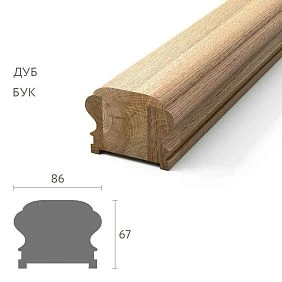
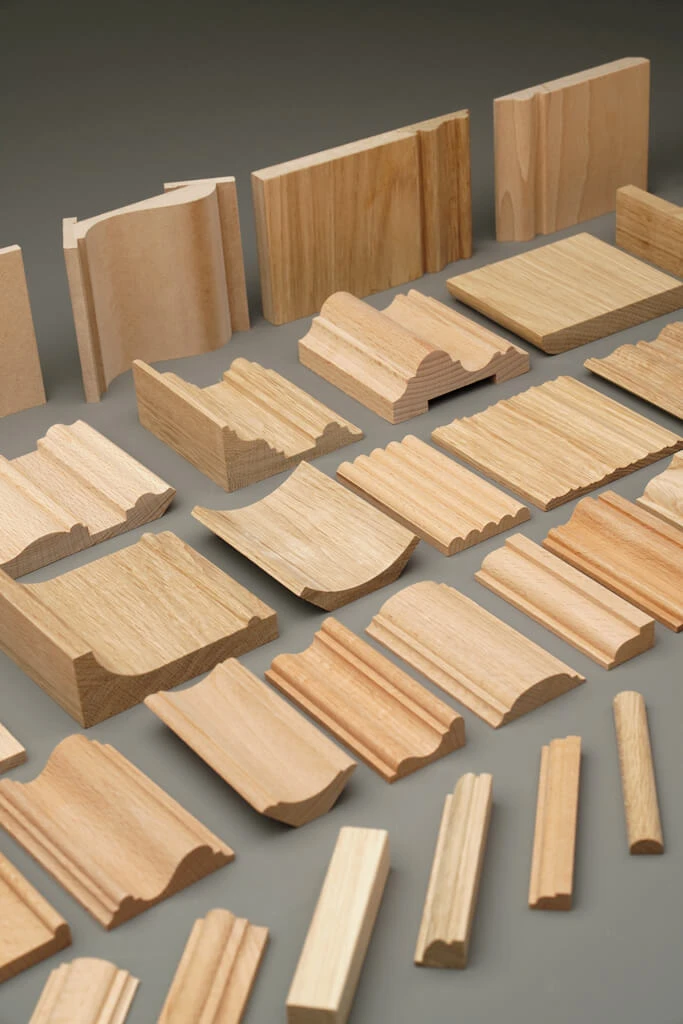
A shaped wooden handrail with a pronounced multi-level profile is a classic choice for decorative stairs in neoclassical interiors, country houses with carved elements, hallways, and living rooms with high ceilings.
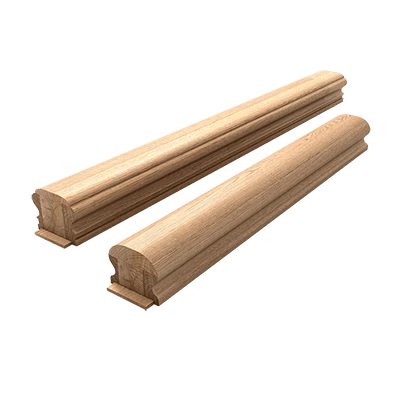
Stair handrail PR-004 — an example of such a profile: an expressive shape that visually "holds" the staircase and creates an architectural image. This handrail is appropriate where the staircase is the main element of the interior.
Wide handrail
A wide profile (60–80 mm) creates a sense of solidity and weight. It looks good on a wide staircase with massive balusters and large newel posts. But it is important that the hand can still grip it normally: a handrail 80 mm wide and 30 mm high turns into a flat shelf, not a comfortable grip.
What to avoid in handrail shape
-
Sharp edges — they press into the palm during active use;
-
Too thin a profile (less than 35 mm) for a massive staircase — it looks disproportionate;
-
Too smooth a lacquer coating on a straight profile — the hand will slip;
-
Non-standard shapes without 'in-hand' testing.
Wooden stair railings: a system, not a set of parts
This is where most buyers make their main mistake: they choose the handrail separately, the balusters separately, the posts separately — and then wonder why the staircase looks disjointed.
Wooden stair railings — it is a system, and all its elements must be coordinated: in style, wood species, coating tone, and scale.
What makes up a complete railing system
Handrail — the top line. Its profile sets the character of the entire railing: strict or decorative, minimalist or rich.
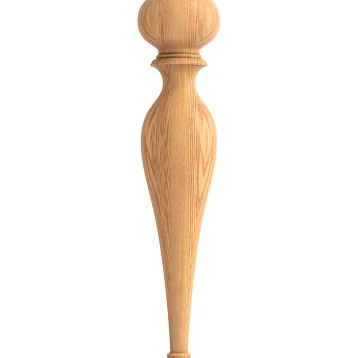
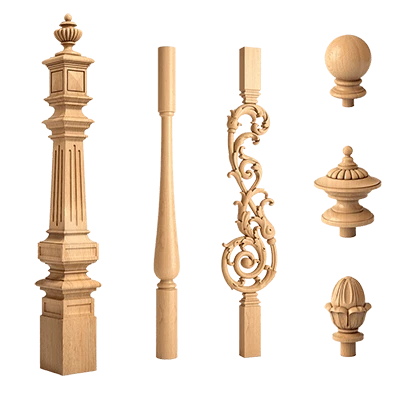
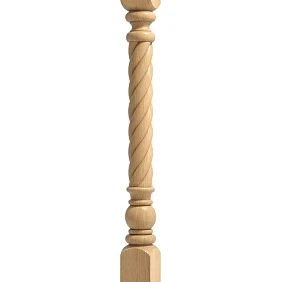
balusters — vertical posts between the steps and the handrail. They carry functional (safety) and decorative loads. Balusters can be turned (lathe profile), carved (with decorative ornament), flat (slat-like), or composite. The choice of baluster shape determines the stylistic appearance of the entire staircase.
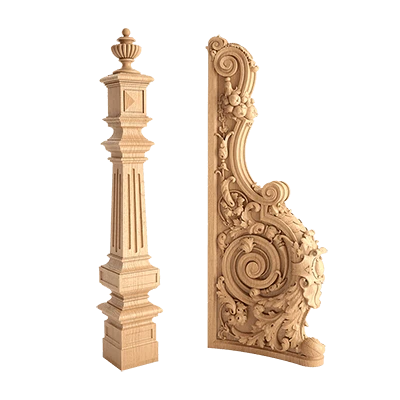
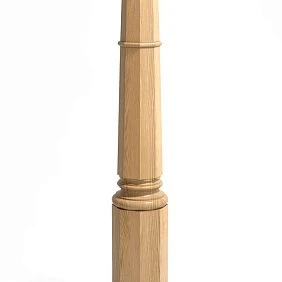
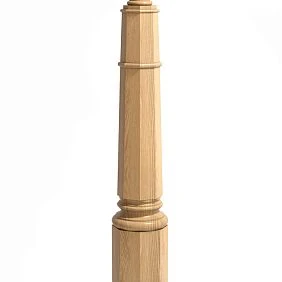
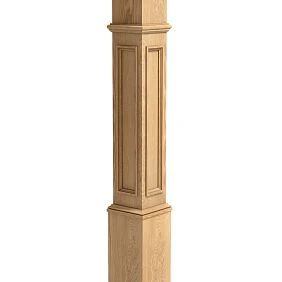
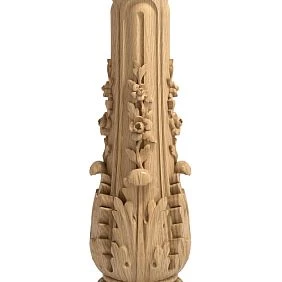
Posts for staircase — supporting vertical elements at the beginning, end, and turns of the stair flight. The post is the largest and most noticeable element of the system. It must be proportionate to the balusters and handrail in mass and proportions.
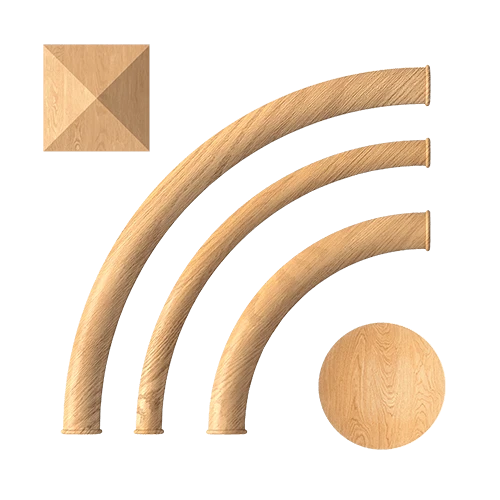
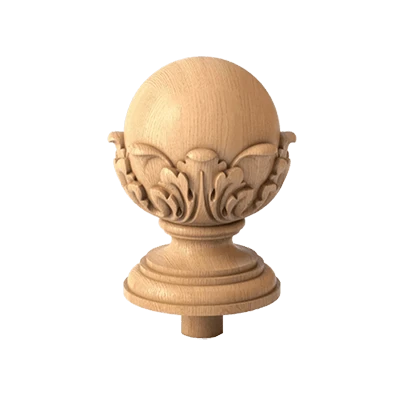
Post finial — a decorative element on top of the newel post. This is the final accent: a ball, vase, pyramid, or carved element. The finial gives the post a finished look and sets the decorative tone for the entire system.
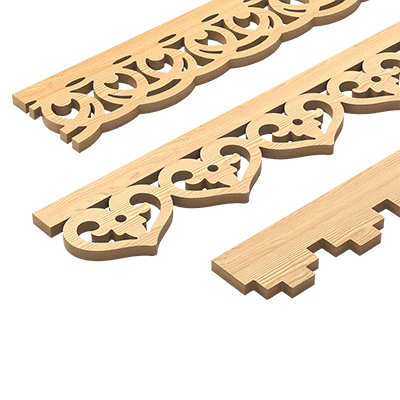
Under-rail strip — a horizontal strip between the steps and the bases of the balusters. It creates a straight line at the base of the railing and covers the baluster fasteners.
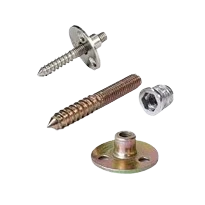
Components — brackets, holders, caps, bolts, ties. All of this is the technical foundation that holds the system in a single rigid state.
staircase components STAVROS allows you to select the entire system from the handrail to the lower supports in a unified style.
Proportion: how balusters and handrail should relate
The main rule: the scale of all elements must be coordinated. A light thin handrail on massive heavy balusters is a violation of balance: the top line appears weak. A massive wide handrail on thin elegant balusters, on the contrary, weighs down the structure.
Guideline: the width of the handrail should be comparable to the diameter or width of the baluster at its middle part. For turned balusters with a diameter of 45–50 mm, a handrail width of 50–55 mm works well. For larger balusters, wider.
Wall-mounted handrail: a solution that is often underestimated
A wall-mounted handrail is a handrail that is attached directly to the wall without balusters or posts. It is used where the staircase runs along a wall, or where it is not possible or necessary to install a full railing on both sides.
Buy a wall-mounted handrail for stairs — means getting a simple and effective solution for a number of scenarios:
A staircase along a wall. If the flight of stairs runs along a load-bearing wall, a wall-mounted handrail is a natural choice. It provides support for the hand without a bulky railing.
A narrow passage or corridor. On a narrow staircase with a width of less than 900 mm, full railings on both sides will turn the climb into an obstacle course. A wall-mounted handrail on one side is the right solution.
Descent to the basement. A staircase to the basement or cellar is often narrow and steep. A wall-mounted handrail here is a matter of safety, not aesthetics.
An attic staircase. Compact attic staircases often do not provide space for a balustrade. A wall-mounted handrail solves the problem neatly.
A country house. In a country house, functionality is more important than decorativeness. A wall-mounted Wooden handrail made of coniferous wood is a quick and practical solution.
How to attach a wall-mounted handrail
A wall-mounted handrail is fixed on brackets that are screwed into the wall. The bracket spacing is 600–900 mm. The handrail is placed on top of the brackets or inserted into special holders. Important: the brackets should be made of wood or neutral metal — matching the handrail or neutral. Bright chrome brackets under a wooden handrail create a contrast that often looks random.
How to choose a handrail to match balusters and posts
Choosing a handrail in isolation from balusters and posts is like choosing a top button without knowing the color of the shirt. The handrail is the top line that should "read" with the lower verticals as a single composition.
Carved balusters — expressive handrail
If Balusters for staircase with carved ornament or complex turned profile — the handrail should be expressive enough to "hold" this decorativeness. A very laconic round handrail on carved balusters will look like an unfinished thought. Here, a shaped profile or a wide oval handrail with accent coating is appropriate.
Stair handrail PR-004 — an example solution for such cases: an expressive profile shape that works in conjunction with decorative balusters.
Laconic balusters — calm handrail
Simple turned balusters, straight balusters, or flat plate balusters require a handrail without unnecessary details. A round or oval profile without complex milling is an ideal pair. Laconicism in one element supports laconicism in the entire system.
Finger-jointed handrail: for large flights
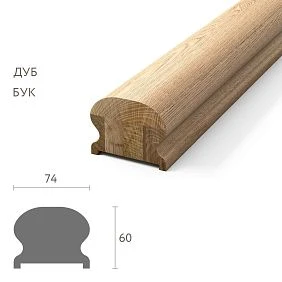
Finger-jointed handrail for staircase PR-002 — this is a handrail made of glued (finger-jointed) blanks, which allows you to obtain a part of the required length without restrictions associated with the length of solid timber. A finger-jointed handrail has uniform strength characteristics along its entire length and accepts coating well. This is a convenient solution for long flights and composite staircases.
Handrail for a wooden staircase in a country house
A country house is a special context. Here, wood is not a decorative choice, but the basis of architecture. Log house, timber, wooden floor, wooden doors, wooden ceilings — all this creates a context in which a metal handrail will look like a foreign element.
Wooden stair handrail In a country house, it is a continuation of the architectural language of the entire building. It must be consistent:
-
With the material of the steps. If the steps are oak — the handrail is oak. If made of larch — from larch. Complete matching by species is the most reliable option.
-
With the color of the flooring. The handrail and floor do not have to be the same tone, but they should be in the same "color family."
-
With wooden trim elements. Door trims, wooden cornices, wooden panels — all of this forms the context into which the handrail must fit organically.
Coating for the handrail in country conditions
A country house involves humidity fluctuations, temperature differences between seasons. The handrail must be coated with a material that protects the wood from these effects. The best options are:
-
Oil-wax — penetrates the wood structure, does not create a film, preserves the natural appearance. It is easy to refresh.
-
Matte varnish — creates a protective layer without adding shine. Durable.
-
Tinting oil — allows you to achieve the desired shade while protecting the wood.
Glossy varnish on a handrail in a country house is not the best choice: it makes the handrail slippery and gives it a "furniture-like" appearance that does not match the spirit of natural wood.
Which material to choose for a wooden handrail
Choosing a wood species is not just about appearance. It's about density, strength, abrasion resistance, and ease of processing.
Oak
Oak — density around 700–750 kg/m³, Brinell hardness around 3.7. This is the optimal material for a handrail in homes with heavy use. Oak does not wear quickly, takes stain and varnish well, and has an expressive texture with a characteristic pattern. Oak Wooden handrail for staircase — a classic choice for grand staircases, halls, classic interiors, and country houses.
Beech
Beech — dense, uniform, without a pronounced texture. It is easy to work with and takes coating evenly and neatly. A beech handrail is delicate and calm. Suitable for interiors where a neat, "unobtrusive" detail without an emphasis on wood grain is needed.
Ash
Ash — one of the most beautiful materials for a handrail in terms of texture. Its fibrous pattern with pronounced stripes is striking and recognizable. Ash is strong and bends well when steamed (important for curved sections of stairs). An ash handrail is an elegant choice for modern and neoclassical interiors.
Softwood species (pine, spruce, larch)
Softwood handrails — softer, cheaper, and visually warmer. They are suitable for baths, dachas, country-style homes, and interiors where a "living" natural texture without pretensions to strictness is important. Larch, however, is significantly stronger than spruce and pine — it holds load well and is resistant to moisture.
Comparative table of wood species
| Species | Hardness | Texture | Application |
|---|---|---|---|
| Oak | High | Expressive | Grand staircases, classic |
| Beech | High | Calm, uniform | Minimalist interiors |
| Ash | High | Striped, striking | Neoclassicism, modern classic |
| Larch | Medium | Warm, resinous | Country house, sauna |
| Spruce | Medium | Soft, lively | Dacha, country, budget option |
Handrail, steps, interior: how to create a unified staircase system
A staircase in a house is not just a structure for climbing. In a multi-story private house, the staircase occupies a central place in the hall or living room. It is visible from several points at once. It is perceived as an architectural element.
And this architecture requires unity. The handrail is only one of the elements. But it is the one that sets the top line and holds the entire visual system of the staircase.
How to connect the handrail with the rest of the interior
Coating tone. The handrail and steps should be in the same tone or in coordinated tones. A light handrail on dark steps is a deliberate contrast that only works with precise execution. A random discrepancy in tones simply looks like a purchasing mistake.
Consistency with the wooden elements of the hall. Wooden doors, Wooden casings, wooden baseboard, wooden floor — all this is the context for the handrail. When all wooden parts are from the same species and in the same tone, the staircase becomes part of the architecture, not just a "structure on the side."
Staircase scale and handrail width. A wide grand staircase with broad steps requires a proportionate handrail. A compact attic staircase requires a light, unobtrusive profile.
Steps and handrail: on step consistency
When a buyer chooses staircase components from one catalog — handrail, balusters, posts, steps — they automatically get a consistent system. This is the most reliable way to avoid mistakes in proportions and tones.
Mistakes when choosing a wooden handrail and railing
Practice shows: most mistakes in arranging staircase railings are made not from ignorance, but from a desire to save time or money at the selection stage. Here are specific situations best avoided.
Choosing a handrail only by photo. It's hard to assess the actual profile on screen. The handrail needs to be "held in hand" — at least mentally modeling the grip. Request exact dimensions in millimeters: width, height, edge rounding radius.
Not checking grip comfort. This is the main functional mistake. Looking at a photo and deciding "this one is beautiful" is not enough. The shape must be ergonomic.
Choosing too thin a handrail for a massive staircase. A light 35 mm profile on a wide staircase with large balusters and heavy posts creates visual imbalance. The top line will look weak.
Mixing different styles of balusters and handrails. Classic turned balusters with a minimalist rectangular handrail is a clash of eras. All system elements must belong to the same style family.
Not accounting for the width of the staircase. For very wide stairs (from 1.4 m), a handrail on both sides or a more massive support post in the center may be required. This is a structural requirement.
Forgetting about a wall-mounted handrail where there is no full railing. This is especially critical for narrow stairs and basement descents. A wall-mounted handrail is safety that is often put off "for later."
Choosing a handrail without considering the final coating. A raw handrail made of light pine in an interior with dark parquet looks accidental. Always plan the coating simultaneously with the profile selection.
Buying elements separately without an overall concept. A handrail from one catalog, balusters from another, posts from a third. The result is three different tones, three different profiles, three different styles. No system at all.
Not counting the number of balusters in advance. Standard: one baluster per step, or a baluster spacing of no more than 150 mm. Before ordering, count the number of steps and the required number of balusters to avoid buying more from a different batch later.
Saving on support posts. The support post at the beginning of the staircase bears the main load. It must be made of hardwood, with the correct cross-section and reliable fixation to the floor. This is not a place to save money.
Where to buy wooden handrails and railings for stairs
If you are planning a staircase from scratch or renovating an existing one, STAVROS offers a full catalog of wooden elements for stair railings: from handrails to components in a unified system.
In the catalog you will find:
-
Wooden handrails for stairs — different profiles, sizes, wood species;
-
Stair handrail PR-004 — shaped profile for decorative staircases;
-
Finger-jointed handrail PR-002 — for large flights;
-
balusters for staircases — turned, carved, laminated;
-
Posts for staircase — support posts in various formats;
-
staircase components — complete system from handrail to fasteners;
-
Solid Wood Items — for matching the staircase with other wooden interior elements.
Buy a handrail for stairs can be purchased from one linear meter. Buy a wooden handrail with delivery to Saint Petersburg and all of Russia.
STAVROS is a Russian manufacturer of solid wood products. Handrails, balusters, posts, steps, staircase components — everything is produced at our own facility. Solid hardwood, precise geometry, a unified style system, real warehouse stock. Over 4,000 items in the catalog. STAVROS knows: a staircase is not just a structure. It is the architectural heart of the home. And the wooden handrail is the first thing the hand reaches for. It must be worthy of that trust.
FAQ: answers to important questions about wooden handrails and railings
How is a handrail different from a railing?
A handrail is the upper part of a staircase railing that you hold with your hand. Wooden stair railings — this is the entire system: handrail, balusters, posts, under-rail strip, and components.
Which wooden handrail is more comfortable for a staircase?
The most comfortable are round or oval profiles with a diameter of 40–55 mm. They fit well in the hand and have no sharp edges. Buy a handrail for stairs of the desired profile can be found in the STAVROS catalog.
Can I buy a wooden handrail separately?
Yes. But it is important to ensure in advance that its profile, wood species, and coating tone will match the balusters, posts, and steps.
What to choose for a country house — wood or metal?
For a wooden staircase in a country house Wooden handrail significantly more organic: it feels warm to the touch, is not slippery, and harmoniously connects with the wooden interior.
Is a wall-mounted handrail needed on a narrow staircase?
Yes. Wall-mounted Stair Handrail — is convenience and safety where it is not possible to install a full balustrade railing.
Which type of wood is best for a handrail?
For actively used staircases — oak or ash: durable, long-lasting, with a beautiful texture. For a country-style house — larch or pine.
How to avoid mistakes when choosing railings?
The best way is to choose the handrail, balusters, and posts from the same catalog, from the same manufacturer: then the style, tone, and proportions will be pre-coordinated. staircase components STAVROS are presented in exactly this systematic logic.