










































































Article Contents:
- The stucco molding catalog is open. What's next?
- Why photos in the catalog are only the first step
- How to correctly 'read' stucco molding photos in a catalog
- How to read stucco molding sizes in a catalog: breaking down each parameter
- Height (for linear elements) and width (for overlays)
- Projection (relief depth, profile depth)
- Length of linear element
- Diameter of ceiling rosette
- Sizes of decorative overlays and stucco decor
- How to choose stucco models for a specific task
- Wall frames: molding strips
- Wall accent: decorative overlays
- Ceiling with chandelier: ceiling rosettes
- Top of the room: ceiling stucco
- Furniture Decor: Overlays and Moldings
- Selection table by task
- Stucco style: how to choose a model that suits your interior
- Classic and neoclassic
- Modern neoclassicism and eclecticism
- Art Deco
- Minimalism with classic details
- What to buy with stucco molding: a complete checklist
- Minimum kit
- Extended kit for a complete system
- How to calculate the quantity
- Eight mistakes when choosing stucco molding from a catalog
- Mistake one: choosing only based on a beautiful photo
- Mistake two: not checking the dimensions
- Mistake three: buying molding that is too small for the room
- Mistake four: taking an overly embossed overlay for a small wall
- Mistake five: not considering the ceiling height
- Mistake six: forgetting to account for extras
- Mistake seven: mixing elements from different styles
- Mistake eight: not planning the painting in advance
- How to check the completeness of an order before shipping
- How to use the STAVROS catalog: practical tips
- Use filters by categories
- Look at the dimensions in the product card
- Compare several models
- Don't forget the decor for moldings
- Final table: what to check before purchasing
- Frequently Asked Questions
- STAVROS: a catalog where dimensions matter more than pictures


The stucco catalog is open. What's next?
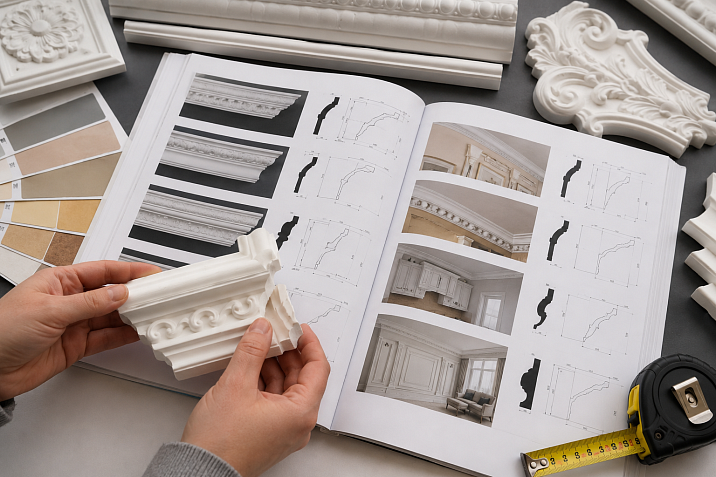
You already know you want stucco. You opened the catalog, looked at the photos — and most likely, you're confused. Some elements seem too small, others too ornate. Moldings differ in width, profile, and projection. Decorative overlays differ in size, relief, and style. Rosettes differ in diameter. Cornices differ in profile and weight.
How to choose correctly? How not to buy a beautiful model that turns out to be the wrong scale? How to know how many to take? What to check before clicking the "order" button?
This is the topic of this article. Not "what is stucco" — you already know that. But rather: how to read moldings catalog, what the numbers in the product card mean, by what criteria to choose a model, and what to definitely buy along with the main element.
Stucco from the catalog should be chosen not only with your eyes: the photo shows the style, the dimensions show the scale, the model shows the purpose, and the right set — Moldings made of polyurethane, Decorative stucco, glue, paint, and spare — helps you buy everything without rework.




Why the photo in the catalog is only the first step
A photo in the stucco catalog is an aesthetic statement. A well-made photo shows the profile, shadow, relief, and style. It helps you understand: "this is mine or not mine." This is important. But it's only the beginning of the choice, not the choice itself.
Here's what the photo doesn't show:
Scale. A 20 mm wide molding and an 80 mm wide molding can look exactly the same in a good photo. The fourfold difference is not readable without a scale object nearby.
Projection. The depth of relief — how much an element protrudes from the wall — is smoothed out in photos. An element with an 8 mm projection and one with a 35 mm projection look similar in a flat image, but fundamentally different on the wall: the first barely casts a shadow, the second creates a full shadow relief.
Proportions in a specific room. The catalog photo was taken in a specific interior or on a neutral background. Your room is different. Different ceiling height, different furniture scale, different viewing distance.
Compatibility with other elements. A decorative overlay looks beautiful in a photo by itself. But will it scale with the moldings you've already chosen? Or with the cornice you're planning?
That's why experienced craftsmen and designers look at photos last. First — the task, room dimensions, ceiling height, scale of existing finishes. Then — the element's characteristics. And only then — the photo.
Our factory also produces:




How to correctly "read" a photo of stucco molding in a catalog
A few techniques that help:
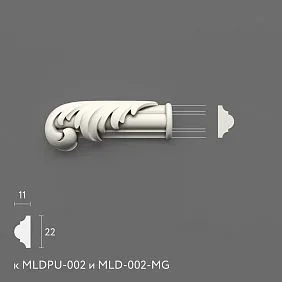
Look for a scale reference. If the photo includes a door, window, or baseboard — use them as a reference point. The standard door height is 200–210 cm. If a molding frame next to a door looks like 1/4 of its width — that's approximately 50–55 mm.
Look at the shadow depth. The darker and sharper the shadow under the molding or overlay in the photo — the greater the projection. This is an important criterion: for interior decor, a projection of 15–25 mm gives a good shadow; for facade decor, 30 mm and above is needed.
Read the description, not just the photo. The product card should include all parameters: width, height, projection, length. If they are missing — that's a reason to ask a question before purchasing.
Get Consultation
How to read molding dimensions in the catalog: breaking down each parameter
This is the most important section. If you can read dimensions, you are protected from major mistakes.
Height (for linear elements) and width (for overlays)
For cornices, moldings, baseboards — the main parameter is "height" or "profile width". This is the cross-sectional size of the element: how high it rises from the base.
Guidelines for selection based on ceiling height:
| Ceiling Height | Recommended cornice | Recommended molding |
|---|---|---|
| Up to 250 cm | 40–60 mm | 15–25 mm |
| 250–280 cm | 60–80 mm | 20–35 mm |
| 280–320 cm | 80–110 mm | 30–50 mm |
| More than 320 cm | 100–150 mm | 40–60 mm |
For decorative overlays and rosettes, height is the vertical size of the overlay. For horizontally oriented ones, it is the width.
Projection (relief depth, profile depth)
Projection is the distance from the back surface of the element to the most protruding point of the relief. In other words: how far the decor 'sticks out' from the wall.
-
Projection 5–10 mm — very delicate. For thin flat moldings. Minimal shadow.
-
Projection 10–20 mm — standard interior. Works well with directional lighting.
-
Projection 20–35 mm — expressive relief. Readable from a distance of 3–5 meters.
-
Projection 35–60 mm — for large cornices and architectural elements. Facade scale.
for ceiling moldings Horizontal projection is also important: how far the cornice 'protrudes' horizontally from the wall. This affects whether the curtain rod is hidden behind it.
Length of linear element
Moldings, cornices, and baseboards are sold by linear meter or in fixed lengths. Standard catalog lengths are 1 m, 1.5 m, 2 m, 2.5 m.
How to calculate quantity:
-
Measure the perimeter of the installation area.
-
Add 15–20% for joint trimming (for straight rooms).
-
For rooms with bay window corners — add 25%.
-
Round up.
Example: room 5×4 m, perimeter 18 m. With 20% margin = 21.6 m. Round up: 22 m.
Ceiling rosette diameter
ceiling rosettes measured by outer diameter. Guidelines for selection:
-
Diameter 150–250 mm — for small rooms up to 15–18 m². For a small chandelier or light fixture.
-
Diameter 300–450 mm — for standard rooms 18–30 m².
-
Diameter 500–700 mm — for large living rooms, halls, high ceilings.
-
Diameter 800 mm and above — for formal spaces with ceilings from 300 cm.
Rule: rosette diameter should not exceed 1/6–1/8 of room width. For a 4-meter room — maximum 500–650 mm.
Dimensions of decorative overlays and stucco decor
Decorative stucco in the catalog are measured by two parameters: height × width. This is the "spot" of the overlay on the wall.
Guidelines:
-
Furniture decor, small inserts: 50–100 mm.
-
Wall accent overlays: 100–200 mm.
-
Large medallions, cartouches: 200–350 mm.
-
Grand architectural elements: 350 mm and above.
How to choose stucco models for a specific task
The stucco catalog is not a souvenir shop where you pick "what you like." It is a toolkit. And each tool has its own purpose.
Wall frames: molding strips
If the task is to create molding frames on walls, divide the wall into sections, or create a "panel" structure — look for Moldings made of polyurethane.
What to watch in the catalog:
-
Profile: rectangular (modern), semicircular, classic (with two or three levels).
-
Width: according to the table above.
-
Projection: for wall frames — 10–20 mm.
-
Are there corner inserts for this series — this greatly simplifies installation.
Accent on the wall: decorative overlays
If the goal is to create a focal point, design a mirror area, console, or accent wall — look for buy decorative moldings.
What to watch:
-
Ornament style: floral, geometric, Empire, Baroque.
-
Size: should match the scale of the area.
-
Projection: from 15 mm — to create shadow.
-
Shape: medallion (circle/oval), cartouche (rectangle with relief), palmette, rosette, console.
Ceiling with chandelier: ceiling rosettes
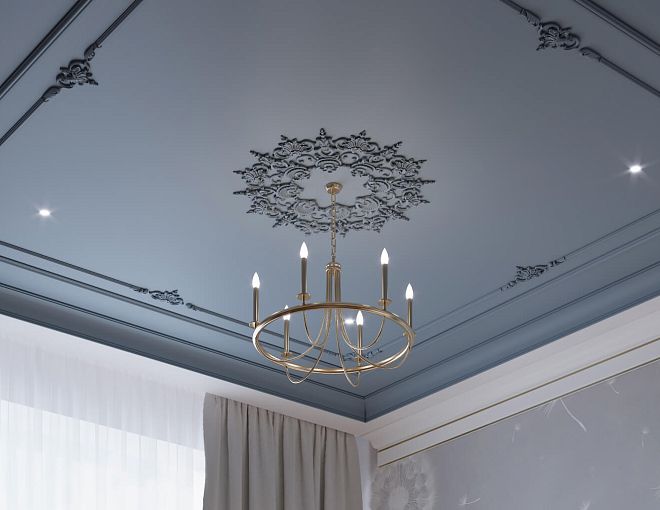
ceiling rosettes in the catalog — for the chandelier hanging area. The rosette decorates the "zero point" of the ceiling where the electrical wire exits into the space.
What to watch:
-
Diameter (according to the table above).
-
Presence of a central hole: for routing the wire under the chandelier — a hole of 10–20 mm is needed.
-
Profile: smooth (minimalism), ornamental with leaves (classic), geometric (art deco).
-
Projection: 10–25 mm for ceiling rosettes.
Top of the room: ceiling stucco
Cornices, ceiling moldings, friezes — all of this Ceiling molding In the upper zone of the room. It creates a "cap" for the decorative system.
What to watch in the catalog:
-
Profile: the higher the ceiling, the more complex the profile is acceptable.
-
Height: see table above.
-
Horizontal projection: if curtains are planned, the cornice should have a horizontal projection of at least 50 mm to hide the pipe.
Furniture decor: overlays and moldings
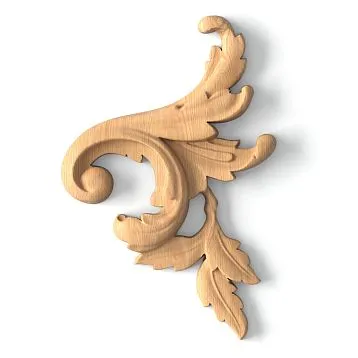
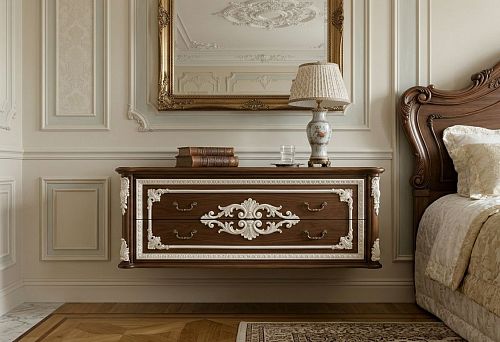
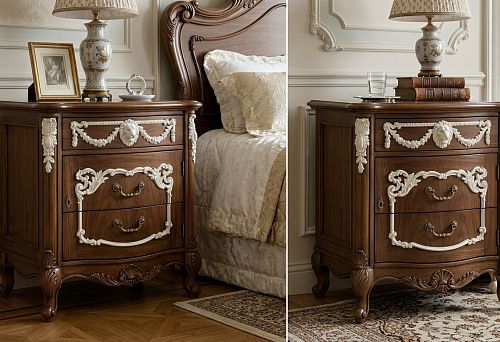
For decorating cabinet facades, doors, frames — Decor for Molding and furniture overlays.
What to watch:
-
Molding width: 15–30 mm for furniture.
-
Projection: 8–15 mm — furniture requires a delicate relief.
-
Overlays: width 50–120 mm for standard door and cabinet facades.
Task selection table
| Task | What to search in the catalog | Category link |
|---|---|---|
| Frames on walls | Moldings, trim | Moldings made of polyurethane |
| Accent on the wall | Decorative overlays, medallions | Decorative stucco |
| Ceiling with chandelier | Ceiling rosettes | ceiling rosettes |
| Top of the room | Cornice, ceiling molding | Ceiling molding |
| Furniture and doors | Furniture moldings, overlays | Decor for Molding |
| Facade and entrance area | Cornice, exterior moldings | Polyurethane Items |
Stucco style: how to choose a model that suits your interior
This is the most frequently asked question: "How do I know if a model fits?" The answer is through interior style and the principle of scale unity.
Classicism and neoclassicism
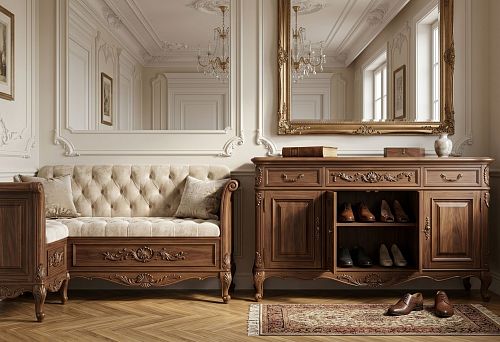
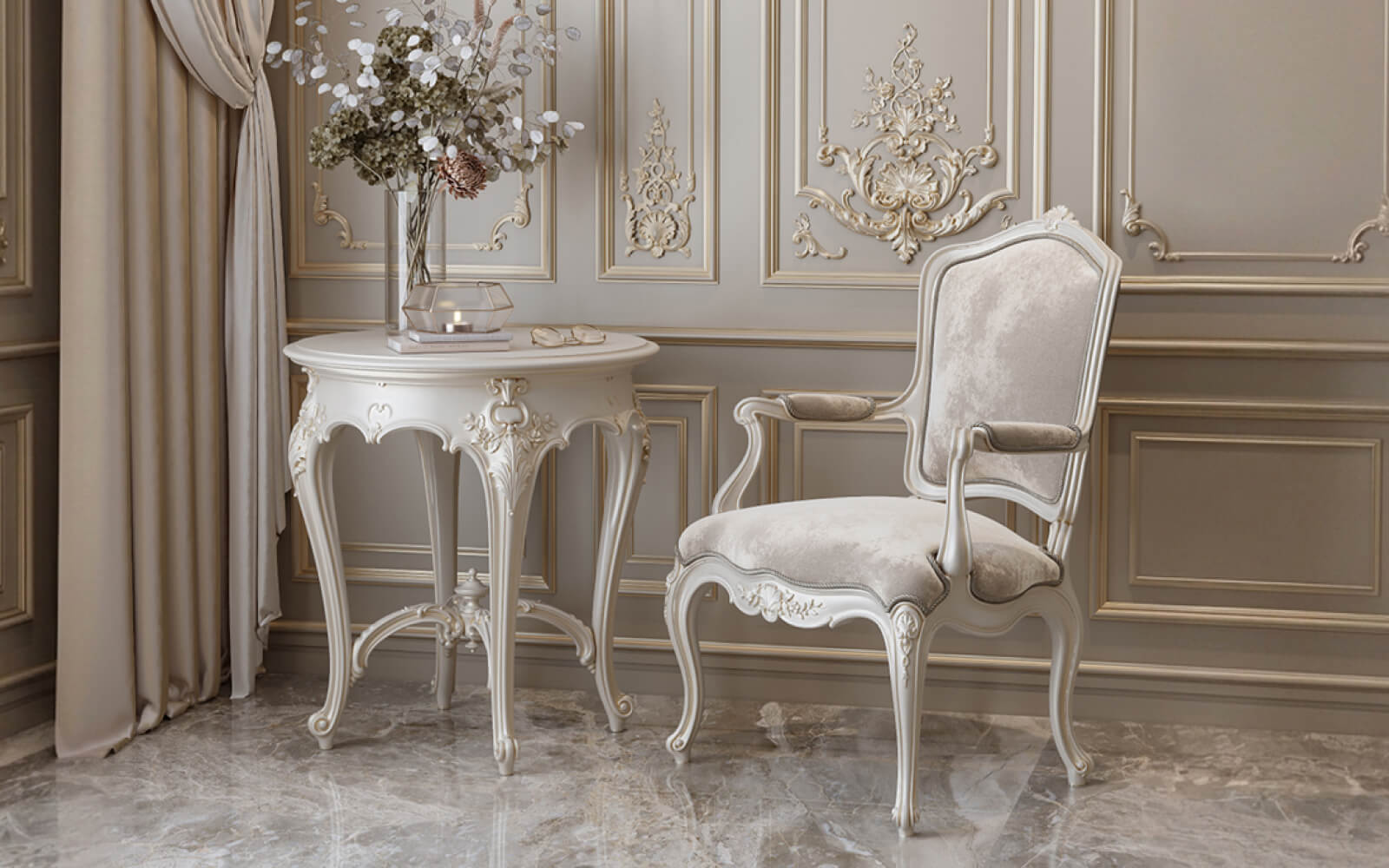
A profile with multiple levels, ornamental relief — acanthus leaves, floral motifs, palmettes. Decorative overlays in the form of medallions, cartouches. Ceiling rosettes with rich ornamentation.
Molding width: 25–60 mm. Projection: 15–35 mm. Rosettes: medium and large sizes with ornamentation.
For such interiors Buy moldings available in a wide range — classics are always well represented in professional catalogs.
Modern neoclassicism and eclecticism
Clean profile without ornamentation. Geometric moldings with rectangular or semicircular cross-section. Overlays with minimalist relief — no floral curls, only geometry.
Molding width: 20–45 mm. Projection: 10–20 mm. Rosettes: smooth or with a laconic geometric pattern.
Art Deco
Strict horizontals and verticals. Geometric patterns: diamonds, zigzags, radial compositions. A powerful cornice with clear horizontal levels. No floral curls.
Molding width: 30–70 mm. Pronounced projection: 20–40 mm. Rosettes: geometric with radial or radial symmetry.
Minimalism with classic details
One or two architectural elements for the entire space. Very thin molding (15–20 mm) on the walls. Delicate cornice (40–50 mm). No decorative overlays.
What to buy with stucco: a complete checklist
This is the most practical part of the article. One of the main mistakes when ordering is to buy only the stucco itself and then find that there is not enough glue, or a spare is forgotten, or there is no primer.
Minimum kit
-
The stucco itself: moldings, cornice, overlays — what is chosen.
-
Spare 15–20% (for straight rooms) or 25% (for bay windows, arches, complex geometry).
-
Mounting adhesive: acrylate mounting adhesive. For polyurethane — special or universal mounting adhesive.
-
Acrylic sealant: for sealing joints. Must be acrylic, not silicone (silicone cannot be painted).
-
Primer: acrylic, for surface preparation before installation and before painting.
-
Paint: acrylic or alkyd, in the wall color or a contrasting color.
Extended kit for a complete system
-
Cornice — if not included in the main order.
-
Baseboard — so the bottom line of the room rhymes with the top.
-
Corner inserts — for cornice and moldings at corners.
-
Ceiling rosette — if there is a chandelier in the room.
-
Decor for Molding — decorative inserts in the corners of molding frames.
-
Putty: finishing, for smoothing installation areas and joints.
-
Sandpaper: 120–180 grit for sanding after putty.
How to calculate the quantity
Linear elements (moldings, cornice, baseboard):
Perimeter × safety factor = order length.
-
Straight room without niches: factor 1.15–1.20.
-
Room with niches and protrusions: 1.20–1.25.
-
Bay window, arches, broken walls: 1.25–1.35.
Overlays and rosettes: piece goods. Recount installation positions and add 1–2 spare elements in case of chipping during cutting.
Glue: one tube (300–310 ml) per 5–7 linear meters of medium-section molding. For large cornice — 3–4 linear meters per tube.
Eight mistakes when choosing stucco from a catalog
Mistake one: choosing only based on a nice photo
Without checking sizes — this is the most common mistake. The result: "so small?" or "so huge?" — after receiving the order.
Mistake two: not checking the sizes
The card always has sizes. If not, ask before ordering. You won't ask later.
Mistake three: buying molding that is too small for the room
Molding 12–15 mm with a ceiling of 270 cm — it will simply get lost. From two meters away, it will look like a thin scratch on the wall.
Mistake four: taking an overly embossed overlay for a small wall
A cartouche 300×200 mm on a pier 40 cm wide will look like a patch. The decorative element should fit into the wall space with "breathing room" on all sides.
Mistake five: not considering the ceiling height
Buy molding with a cornice 130 mm for a room with a ceiling of 240 cm — means getting the feeling that the ceiling has "slid" down. The scale of the cornice should match the room's height.
Mistake six: forgetting the spare
No installation is complete without a spare. The first corner cut is always a 'practice' one. A cracked element during installation needs to be replaced with something. It's better to have an extra 20% and not use them than to interrupt work and pay extra for urgent delivery.
Mistake seven: mixing elements from different styles
A baroque cartouche with lush curls + a minimalist rectangular molding = a stylistic conflict. All elements in a room should be from the same style register.
Mistake eight: not planning the painting in advance
Buy decorative stucco — this is only half the task. If the decor is not painted together with the wall, it will look like a 'plugged-in' element. Monochrome painting requires primer, at least two coats of paint, and sanding between coats.
How to check the completeness of an order before shipping
Before confirming the order in the molding store, go through this checklist:
-
✅ The dimensions of all elements have been checked — not only by photo, but by numbers.
-
✅ The footage of the linear meters has been calculated with a margin.
-
✅ Corner inserts for the cornice and moldings have been added.
-
✅ Included Ceiling rosette for the chandelier (if needed).
-
✅ All elements in one style.
-
✅ Glue, sealant, primer, and paint have been added.
-
✅ The purpose has been verified: interior or exterior decor.
-
✅ Decorative overlays match the scale of the room.
How to use the STAVROS catalog: practical tips
A good catalog of moldings is not just a gallery of photos. It is a selection tool with full technical specifications for each element.
Use category filters
В molding catalog Items are grouped by purpose: cornices and moldings, ceiling decor, decorative overlays, rosettes. Start with a category, not a general search — this narrows down the selection to relevant items.
Check the dimensions in the product card
Each card includes: profile width, height, projection, segment length. These are all key parameters. Don't look at photos without reading the dimensions.
Compare several models
Place several options side by side. Compare profiles, projections, widths. Imagine them in your room — against the existing finishes, furniture, ceiling height.
Don't forget Decor for Molding
This is a category often overlooked. Decorative corner inserts for molding frames — they complete the corners of frames and make them look like real classic decor.
Final checklist: what to check before buying
| Parameter | What to Check | Why |
|---|---|---|
| Profile width/height | Ceiling height compatibility | Scale |
| Overhang | At least 12–15 mm for interior | Shadow and relief |
| Segment length | Multiple of total length | Minimum joints |
| Profile style | Consistent with other elements | Harmony |
| Purpose | Interior or facade | Right material |
| Reserve | +15–25% to footage | Cutting and unforeseen |
| Accessories | Glue, sealant, primer, paint | Full purchase |
Frequently asked questions
How to choose molding from the catalog?
Start with the task and room parameters: ceiling height, zone size, style. Then open moldings catalog and filter by category. Look at the dimensions — width, projection, length. Check the profile style. And only then evaluate the photo.
What is more important: the photo or the dimensions of the molding?
Dimensions are more important for a correct purchase. The photo shows the style — whether you like it or not. Dimensions determine whether the molding will be proportional in your room. Without dimensions Buy molding it is practically impossible to avoid mistakes.
What to buy together with stucco?
Essential minimum: construction adhesive, acrylic sealant, primer, paint, 15–20% extra. Extended set: Ceiling rosette for the chandelier, corner inserts for moldings, Decor for Molding for the corners of frames.
How to avoid mistakes with the molding model?
Define the task: ceiling cornice, wall frames, accent overlay, furniture decor. Open the corresponding category in the catalog. Compare the dimensions with the room and furniture parameters. Make sure the profile style matches the interior style.
Can you mix elements from different series?
Acceptable if they are in the same scale and style register. A baroque cartouche and a strict geometric molding — no. A classic medallion and a classic profile molding — yes, if the widths are proportional.
How to calculate the amount of stucco molding?
Linear footage: perimeter of the zone × 1.15–1.20 (for straight rooms). Piece elements: by number of installation positions + 1–2 spare. Glue: 1 tube per 3–7 linear meters depending on the cornice profile.
How to determine the suitable relief projection?
For furniture and doors — 8–15 mm. For wall moldings and frames — 12–20 mm. For ceiling cornice in a room — 15–30 mm. For facade elements — 25–50 mm. Larger projection = more expressive shadow = better readability from a distance.
STAVROS: a catalog where dimensions matter more than pictures
Professional selection of stucco molding begins not with admiring a photo, but with understanding the parameters. STAVROS provides a full catalog with technical specifications for each item: width, height, projection, length, purpose.
In the Stavros catalog — Moldings made of polyurethane of all profiles and sizes, Ceiling molding for any room height, Buy decorative stucco in a full assortment of overlays, medallions, and cartouches, ceiling rosettes for chandeliers, Decor for Molding to complete the frames.
Buy molding Choosing STAVROS means getting not just a product, but confidence in the right choice. Delivery across Russia. Pickup in Moscow and St. Petersburg.
Choose wisely — and your interior will thank you.