


























Article Contents:
- What exactly is happening here: the furniture area at the entrance
- Set for the shoe cabinet and bench area: what's included
- First principle: wood where there is load and contact
- Second principle: polyurethane where there is decor and atmosphere
- Classic-style shoe cabinet: how to assemble the look
- Bench for the hallway: what to pay attention to
- Where wood works best: application areas
- Where polyurethane creates classic style: design areas
- Ready-made sets: four scenarios for the hallway
- Minimal classic set
- Shoe cabinet in classic style: complete look
- Hallway with mirror
- Small hallway: without overload
- Grand hallway: rich look
- How to make a hallway look more expensive: five working techniques
- Full list: what to buy for a classic hallway
- Moldings on the wall behind the bench: how it's done
- Baseboard and moldings around the shoe cabinet: the bottom line of the interior
- Shoe cabinet on legs and polyurethane decor: how it combines
- Bench with wooden supports and stucco molding: details that create an image
- Mistakes when choosing decor for a small hallway
- How to properly prepare surfaces for installation
- What to buy together: a complete purchasing strategy
- Hallway as an investment: why details pay off
- FAQ: Answers to Popular Questions
- Which legs to choose for a bench in the hallway?
- Can you combine a shoe cabinet and a bench with polyurethane stucco molding?
- What to buy for a classic hallway?
- Where is it better not to use polyurethane decor?
- How to make a small hallway look visually more expensive?
- What to use for gluing polyurethane moldings in the hallway?
- Is a spare needed when ordering moldings?
- Which decor to choose for a bench with stucco on the wall?
- About the Company STAVROS
The hallway greets everyone who enters the home. It is the first to bear the brunt of outdoor cold, dust from soles, accidental bag bumps against the wall, moisture from umbrellas, and daily hustle — taking off shoes, putting them away, grabbing things. It is here that small details decide everything: how neat the furniture looks after a year, whether the bench legs can withstand daily load, whether the stucco will crumble where it is constantly brushed against. If you consciously assemble the shoe cabinet and bench area in a classic style — choosing the right materials for each detail, thinking about the set rather than a single item — the hallway ceases to be "just a corridor" and becomes a full-fledged space with character and style. This article is for those who want to buy a classic-style shoe cabinet, choose a bench for the hallway, select wooden legs, furniture handles, moldings, and decorative baseboards — and do it once, correctly, without rework.
What exactly happens here: the furniture zone at the entrance
Before talking about decor and materials, it is worth honestly answering the question: what happens in this zone every day? A person enters, sits on the bench, leans toward the shoe cabinet, opens it by the handle, puts away shoes, stands up — and leaves. This scenario repeats several times a day. Multiply by the number of family members, add guests, couriers, children with backpacks — and you get the real picture of the load. The bench bears a person's weight. The shoe cabinet legs hold the body with shoes. The handles are opened again and again. The lower part of the wall behind the bench is brushed by heels and bags. The baseboard takes hits every time someone changes shoes. This is a high-wear zone, not a display case. Therefore, it is especially important here to distinguish: what should be made of wood — durable, warm, contact material — and what can be finished with lightweight polyurethane decor that creates a classic atmosphere without the risk of being broken by the first umbrella.
Set for the shoe cabinet and bench area: what is included
A buyer who first takes on decorating a hallway in a classic style often makes the same mistake: buys furniture separately, decor separately, baseboard "whatever they found," handles — those that were in the nearest store. The result is a collection of random items that do not come together into an image. A classic hallway is built differently — from the overall concept to details, where each element knows its place. The complete set for the shoe cabinet and bench area includes: Furniture legs for the bench and shoe cabinet, furniture legs for cabinet elements, Furniture Handles for shoe cabinet facades, decorative elements for furniture — overlays on facades and side panels, Moldings made of polyurethane for the wall behind the banquette, baseboard, decorative frame above the shoe cabinet, adhesive for mounting polyurethane elements, fasteners for wooden parts, sealant for joints, primer, paint, and finishing coating for wood — varnish or oil. This is not an excessive list. This is the minimum needed for the area to look complete, rather than assembled from leftovers.
Our factory also produces:
First principle: wood where there is load and contact
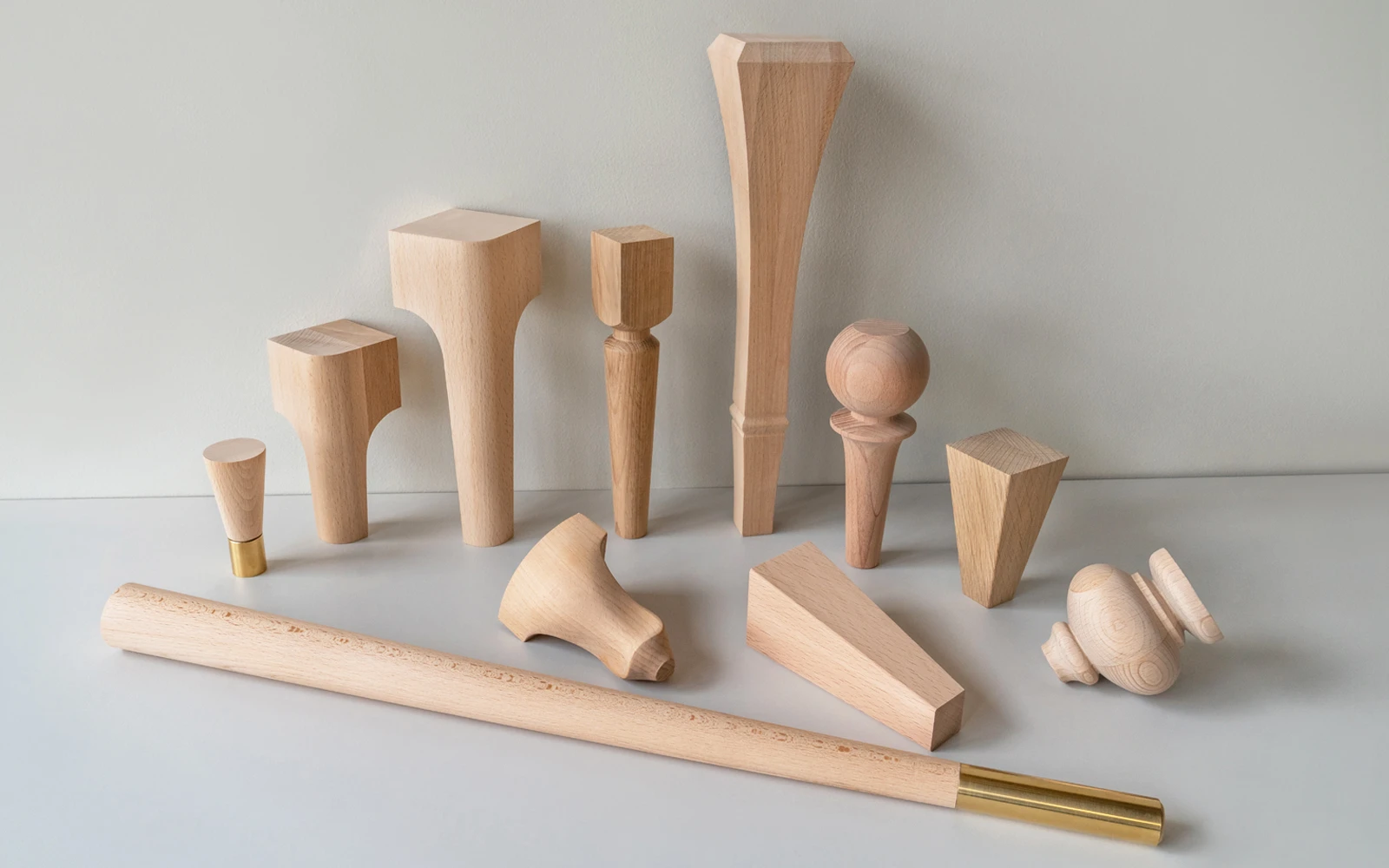
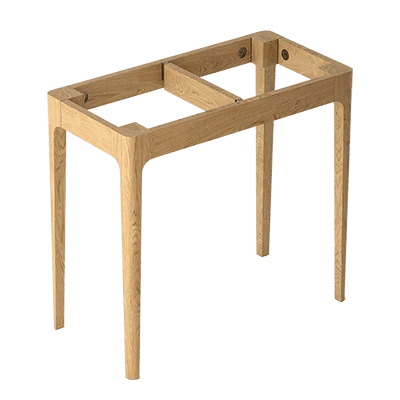
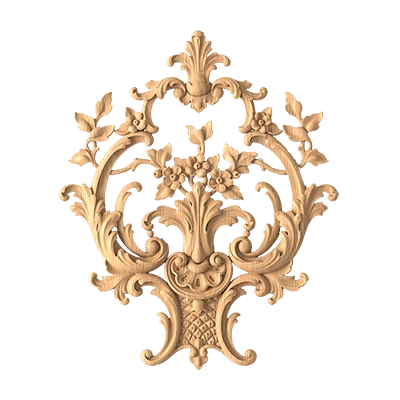
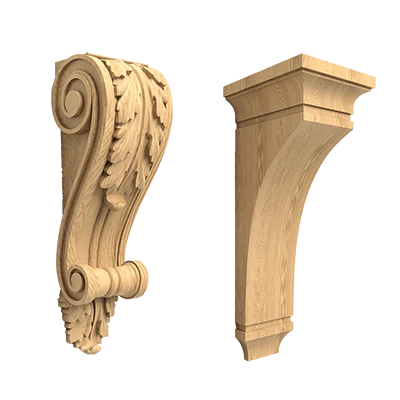
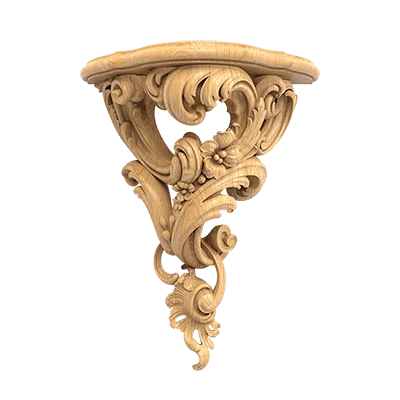
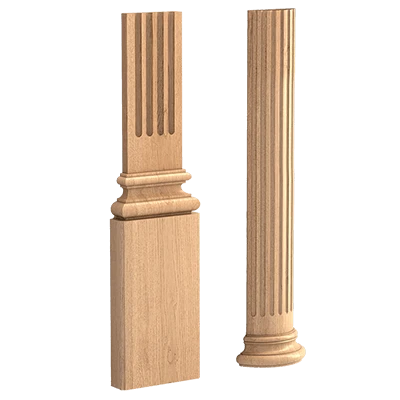
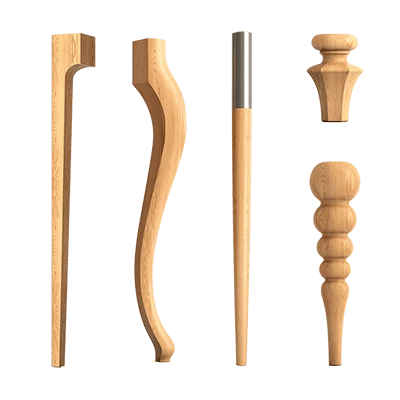
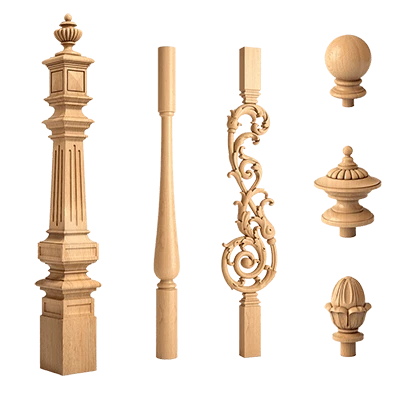
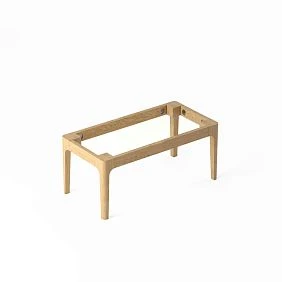
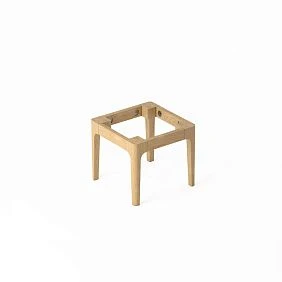
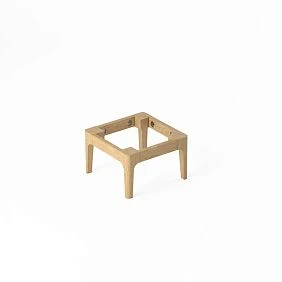
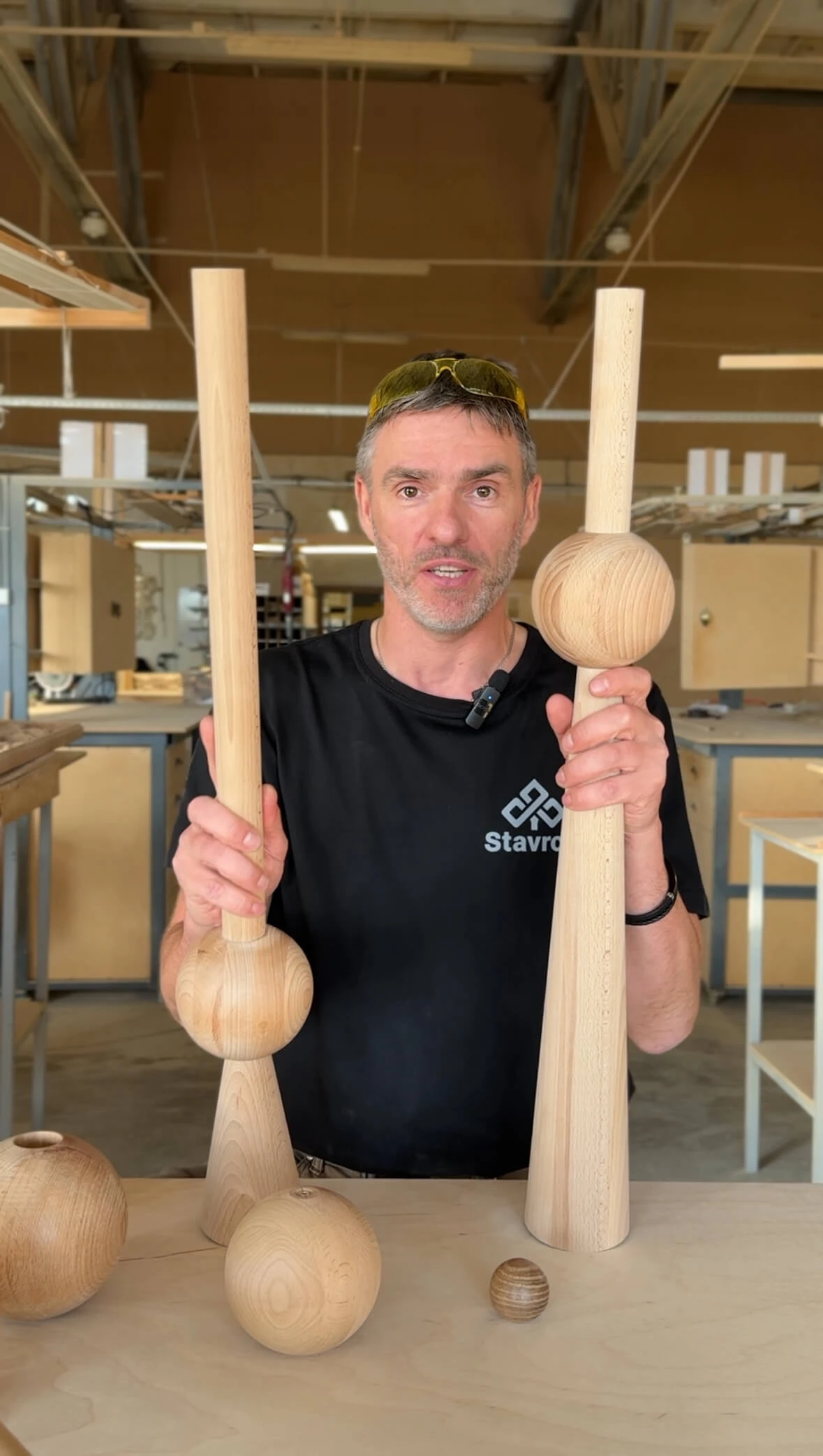
A classic interior is primarily a hierarchy of materials. Each is used where it reveals its best properties. Wood in the hallway is a material of strength and tactile contact. When you sit on the banquette, your hands touch the surface, your feet rest on the legs, your body weight transfers through the seat to the supports. No other material provides such a combination of strength, warmth, and aesthetics simultaneously. That is why wooden furniture legs — this is not a decorative detail, but a structural foundation. They must withstand the weight of an adult, not loosen over time, not creak, and not deform from moisture, which is always abundant in the hallway. Legs made of solid beech or oak are the optimal choice: hard woods, resistant to loads, accepting coatings well. For a shoe cabinet in a classic style, not just any supports matter, but legs with correct proportions — tall enough to ensure visual lightness of the body, and massive enough to hold a loaded cabinet. Poorly chosen legs — too thin or too low — instantly ruin the image, making the furniture grounded and unstable. Wood is also used for handles. Wooden handles are opened every day, they are touched with wet hands after coming from outside, they are brushed with gloves, caught with bags. Metal handles in the daily contact zone quickly lose their coating or leave a feeling of cold. Wooden ones are warm, pleasant to the touch, non-slip, and easily repainted to match any furniture color. In a classic style, the shape of the handle matters: U-shaped brackets, oval overlays, minimalist buttons — each option creates its own mood, from strict classic to soft Empire. decor for furniture made of wood — overlays on facades, side strips, corner accents — also belong to the strength zone. An overlay on the shoe cabinet facade is a detail seen every time the door is opened. It must hold securely, not detach from accidental impact, and not deform from humidity changes. Carved wooden overlays made of beech or oak are ideal for this: they are glued to the facade, additionally fixed with fasteners, and last for years without losing shape.
Get Consultation
Second principle: polyurethane where there is decor and atmosphere
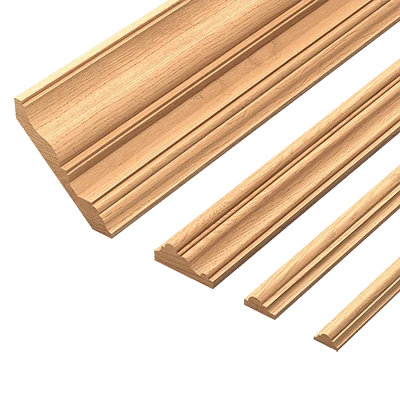
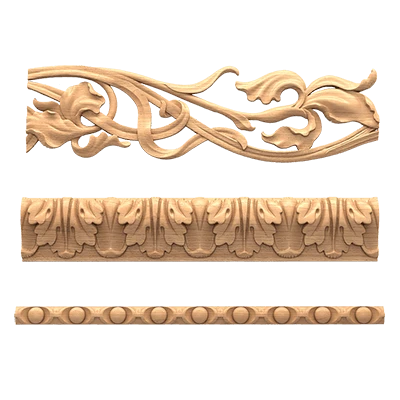
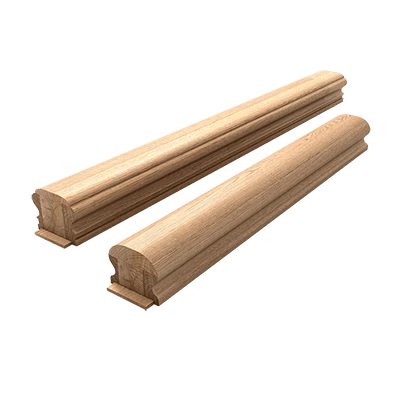
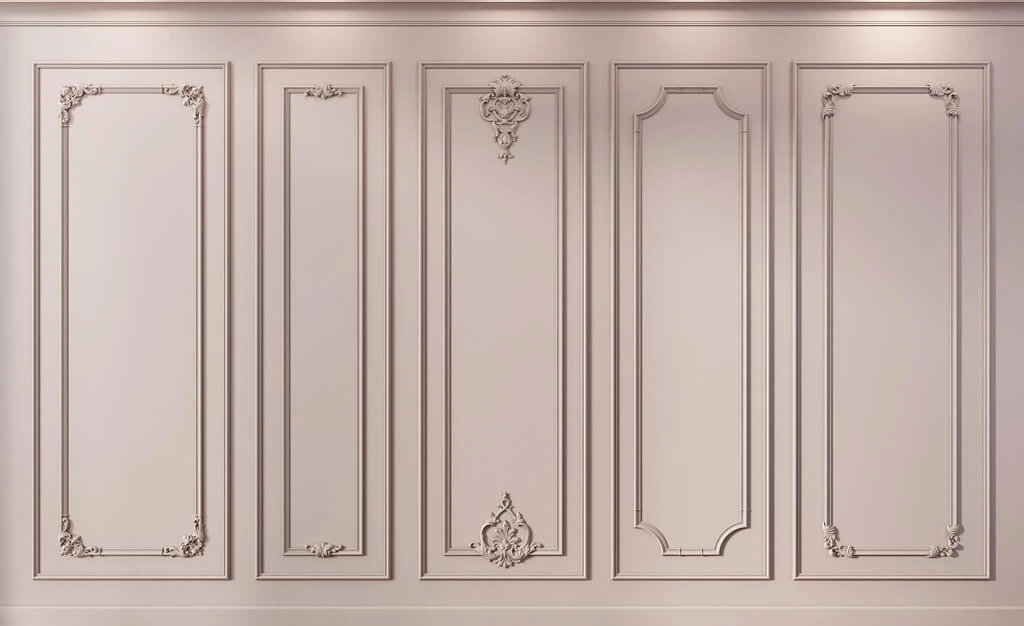
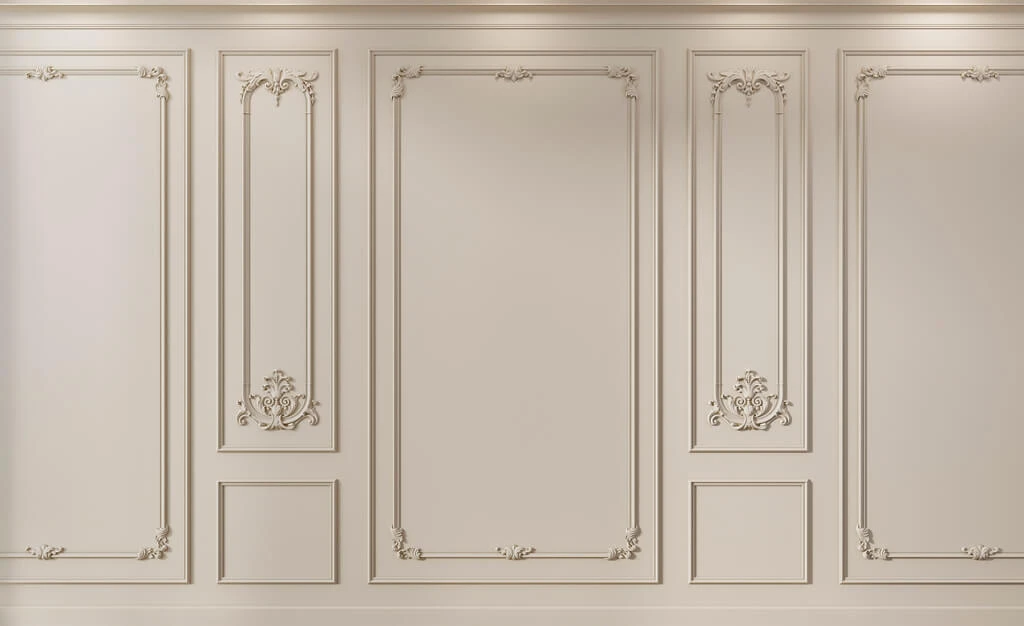
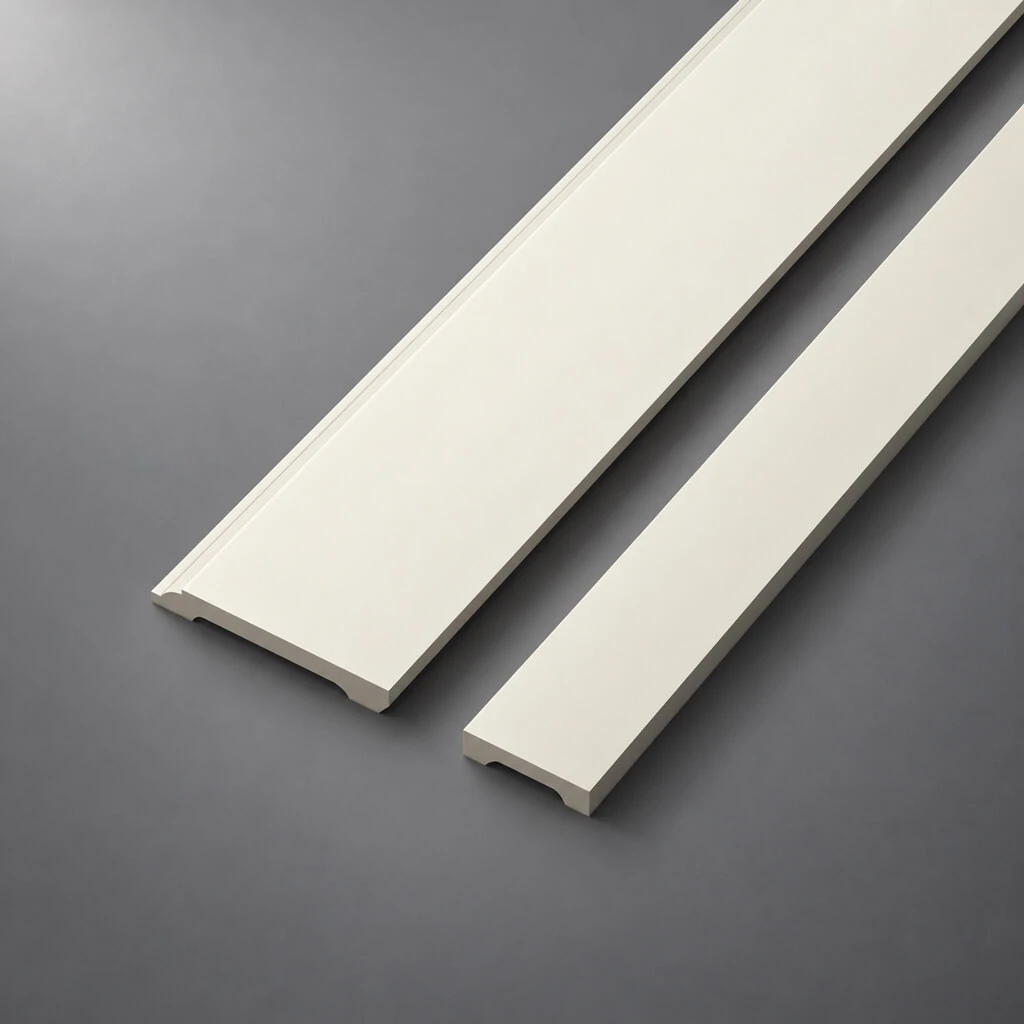
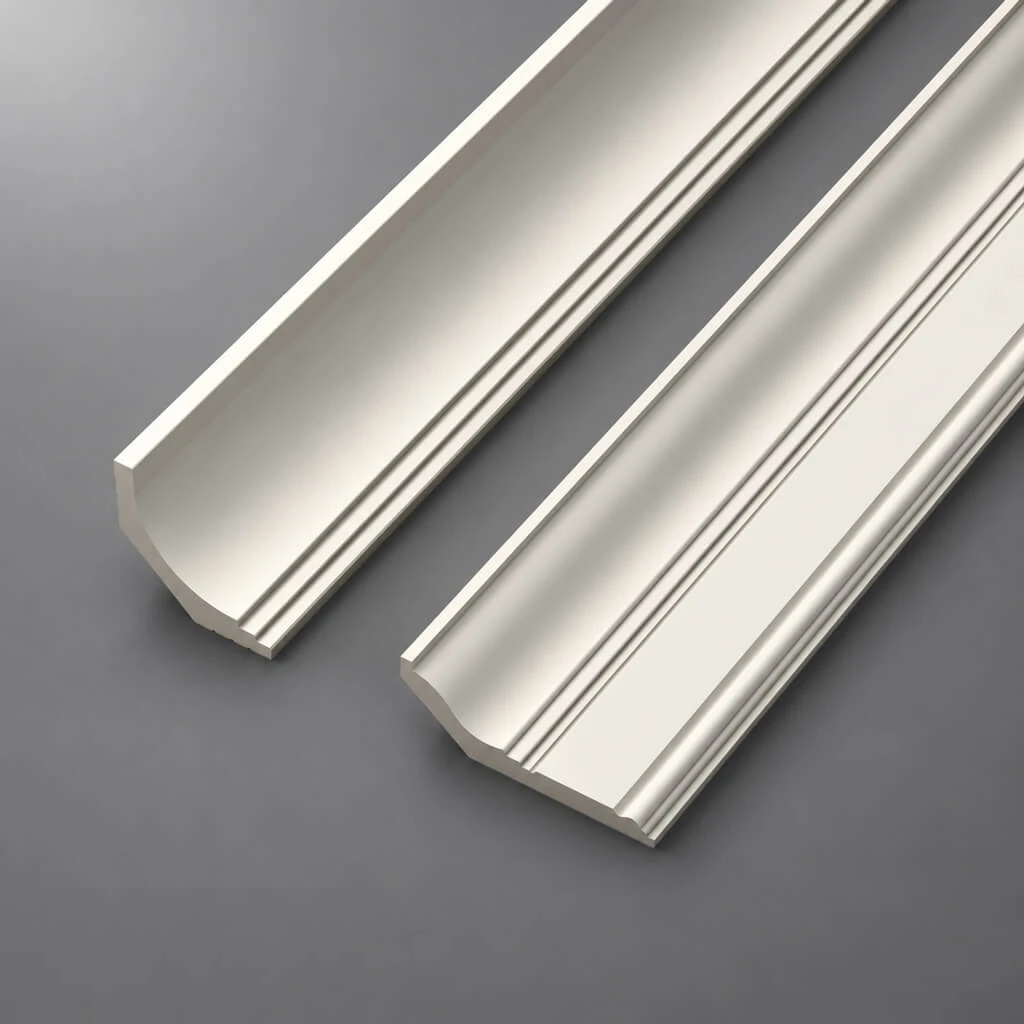
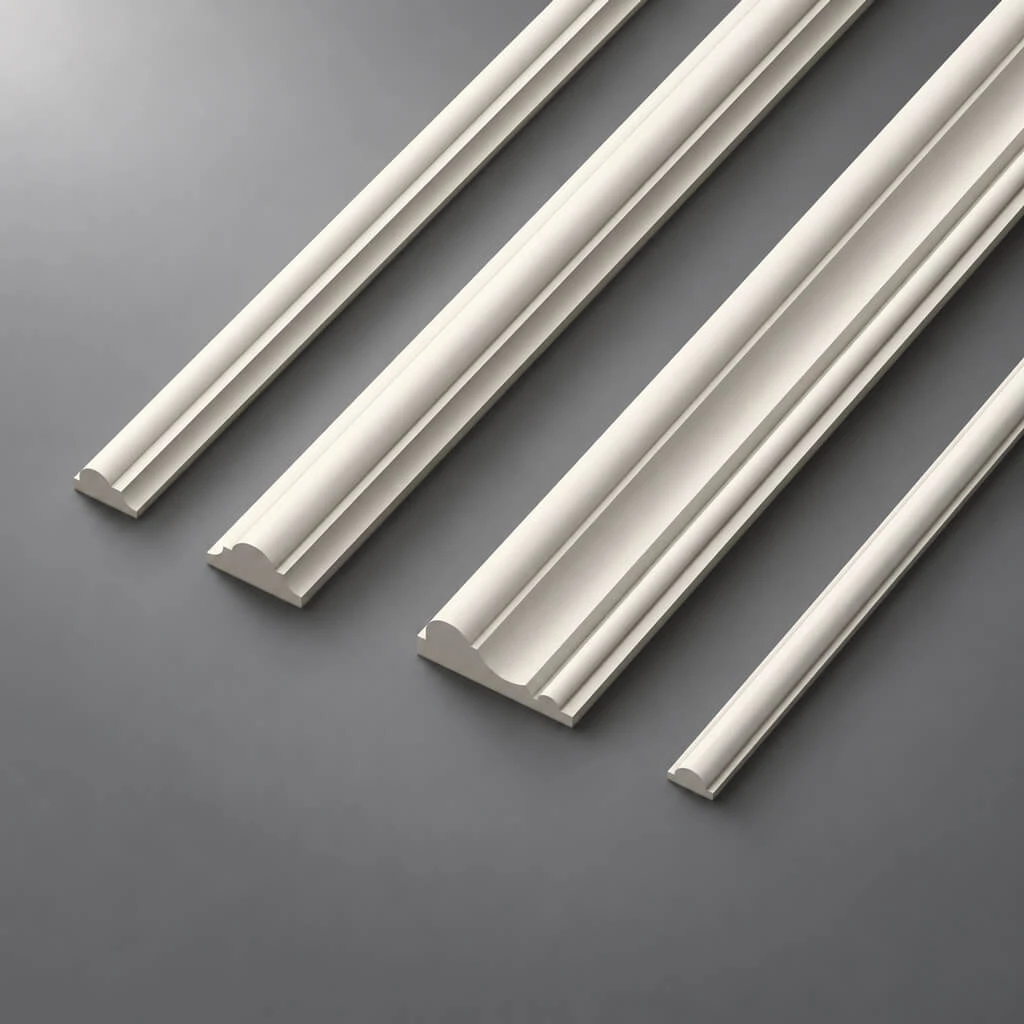
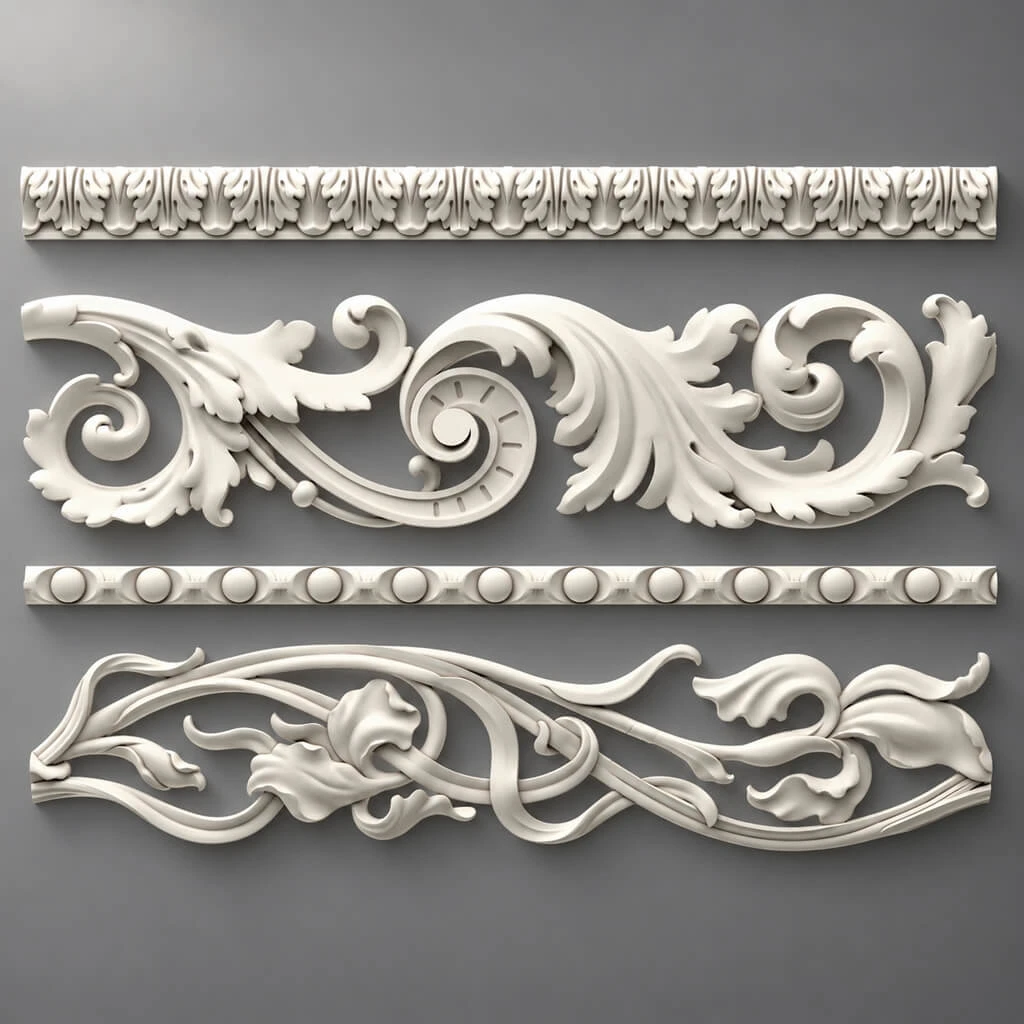
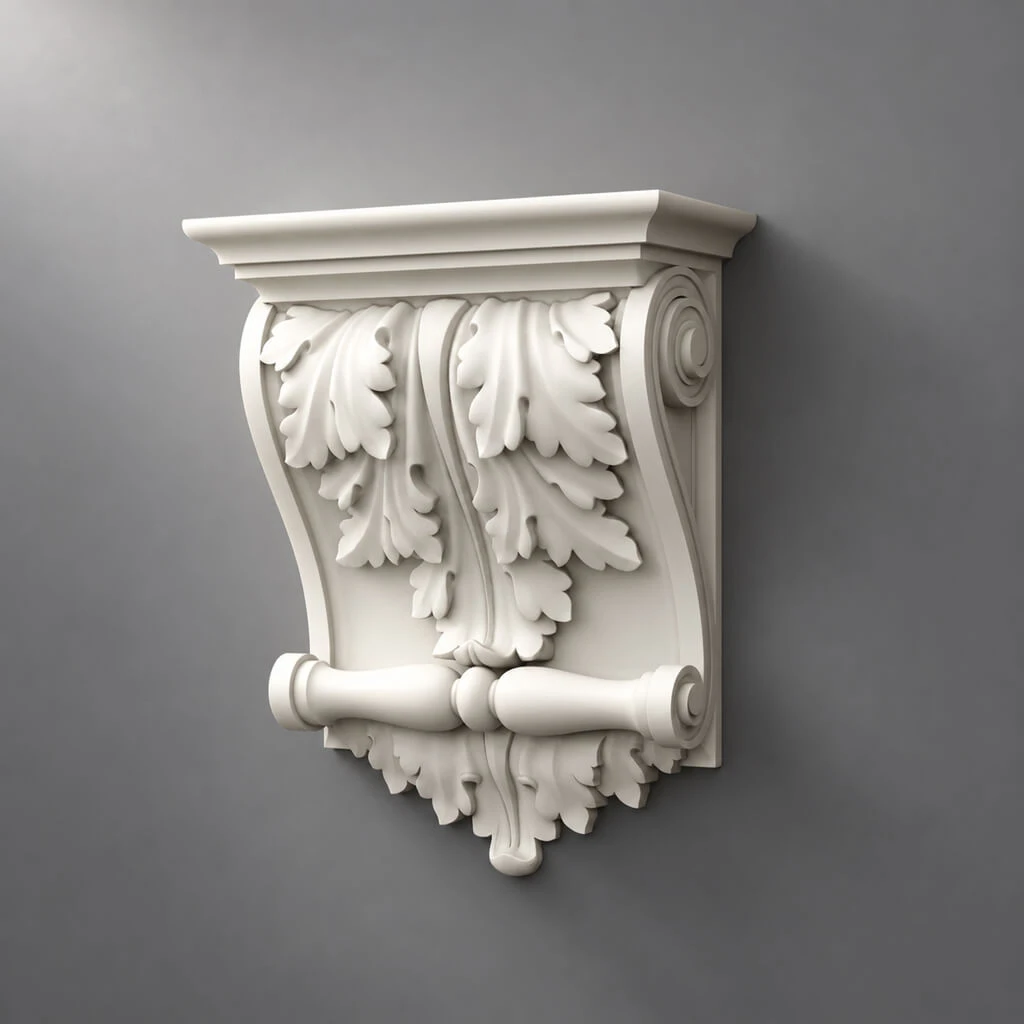
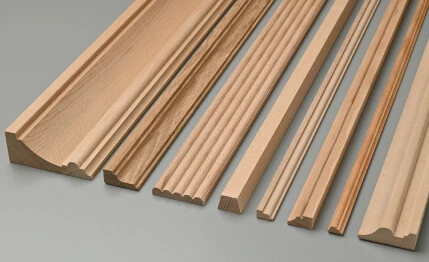
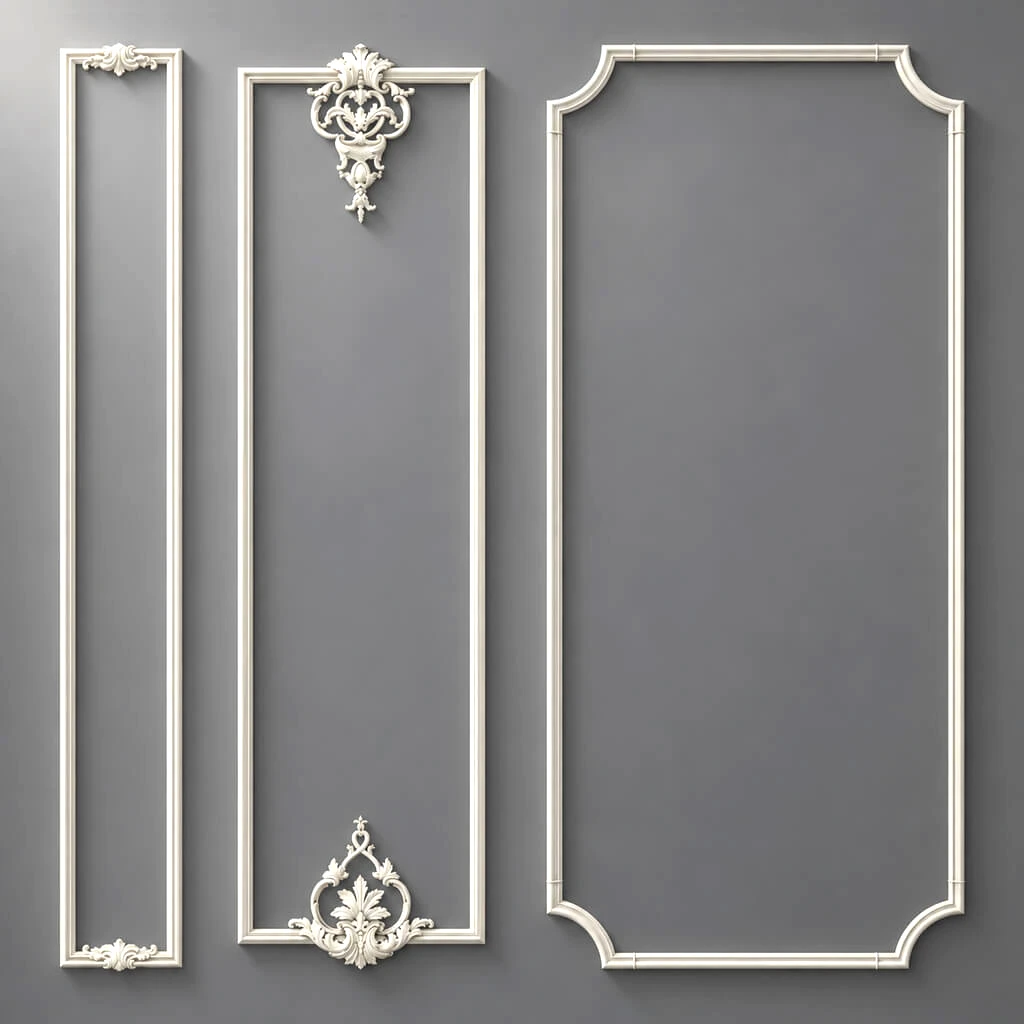
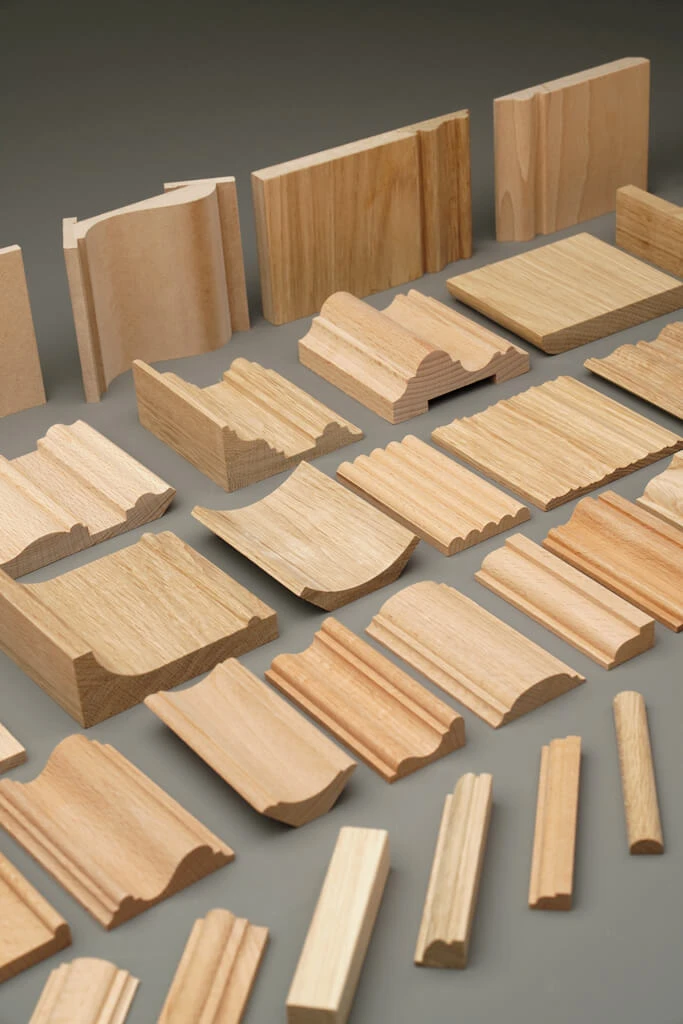
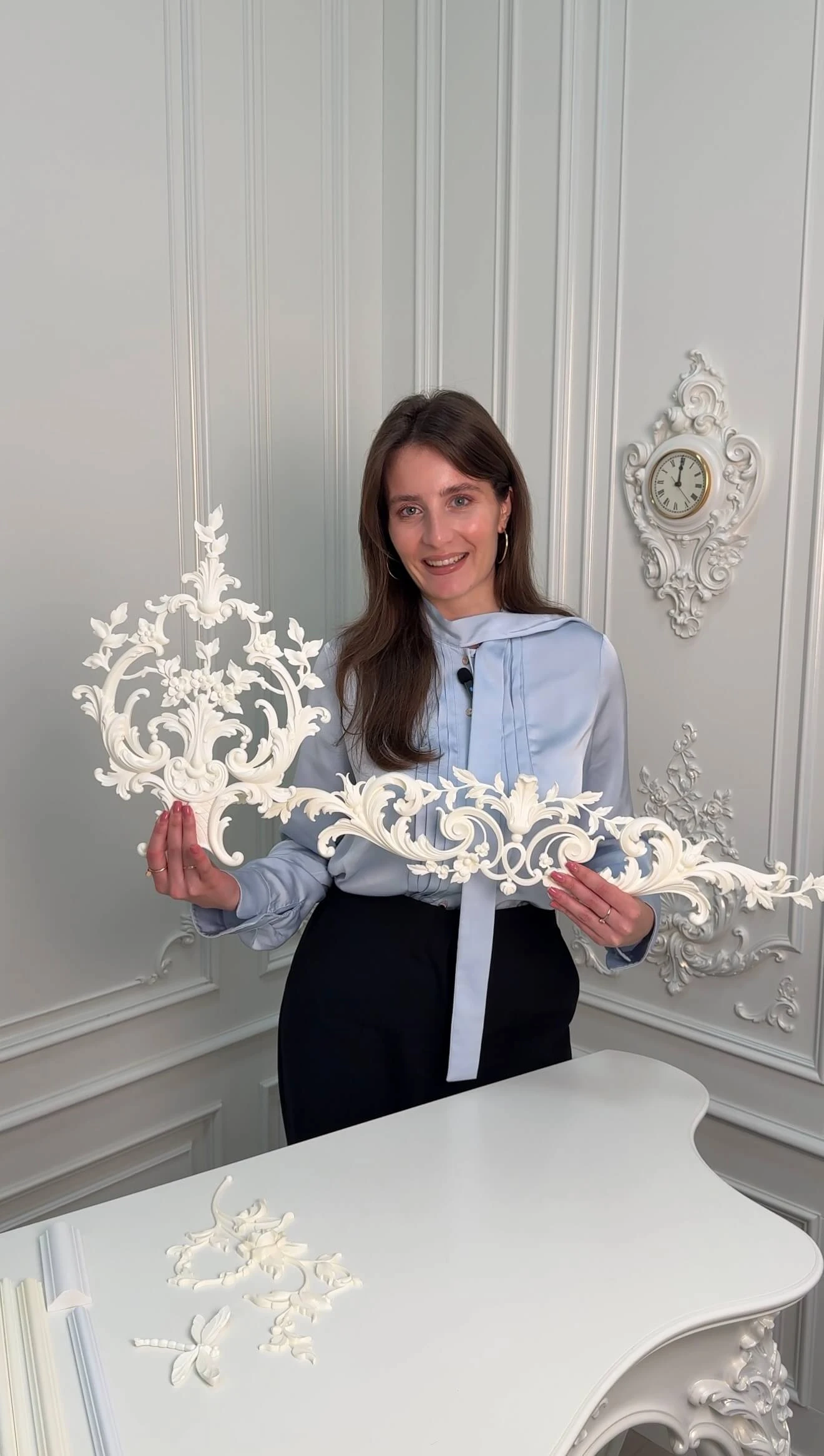
If wood is about durability and contact, then Polyurethane moldings — this is atmosphere and visual volume. Polyurethane decor in the hallway is used where there is no direct mechanical load, but there is a task to create a classic interior image. The wall behind the banquette is an ideal place for of polyurethane moldings. They form a horizontal line, visually 'hold' the space, create a frame around the seat — and are located above the active contact zone with shoes and bags. The baseboard along the bottom line of the wall is another correct application of polyurethane. A polyurethane baseboard is easy to cut, mounted with adhesive, paints well — and covers the bottom line of the hallway, protecting the wall in the most vulnerable area. A decorative frame above the shoe cabinet, mirror framing, a cornice line under the ceiling of a small hallway — all these are tasks for polyurethane decorImportant caveat: polyurethane elements should not be used in areas subject to direct impacts. If the lower part of the wall is regularly hit by heels, a baseboard made of a more durable material or additional protection is needed there. Polyurethane holds its shape well under moderate loads, but is not designed to protect surfaces from impact. Its strength lies in its lightness, profile flexibility, and ability to accept paint as well as plaster molding, but without its fragility.
Classic-style shoe cabinet: how to put together a look
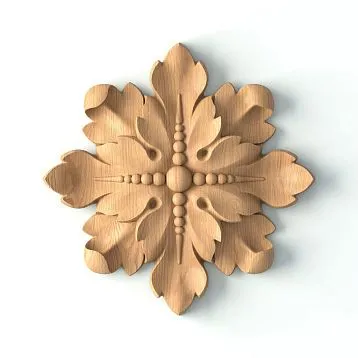
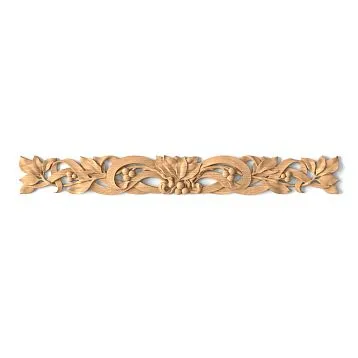
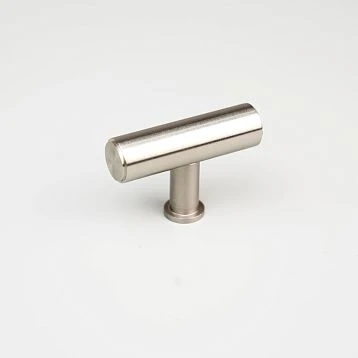
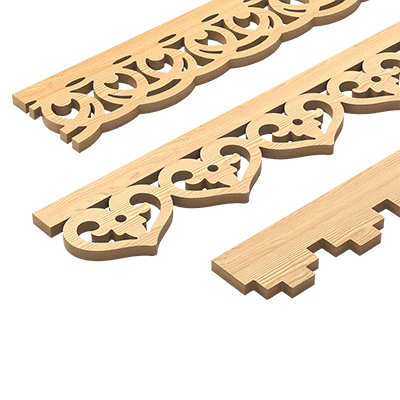
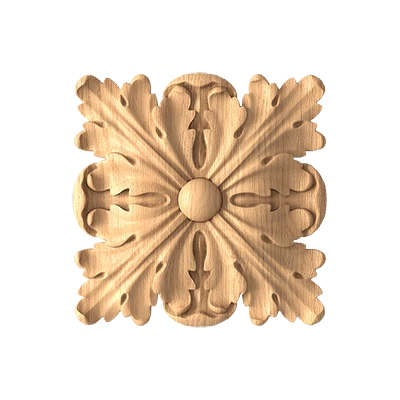
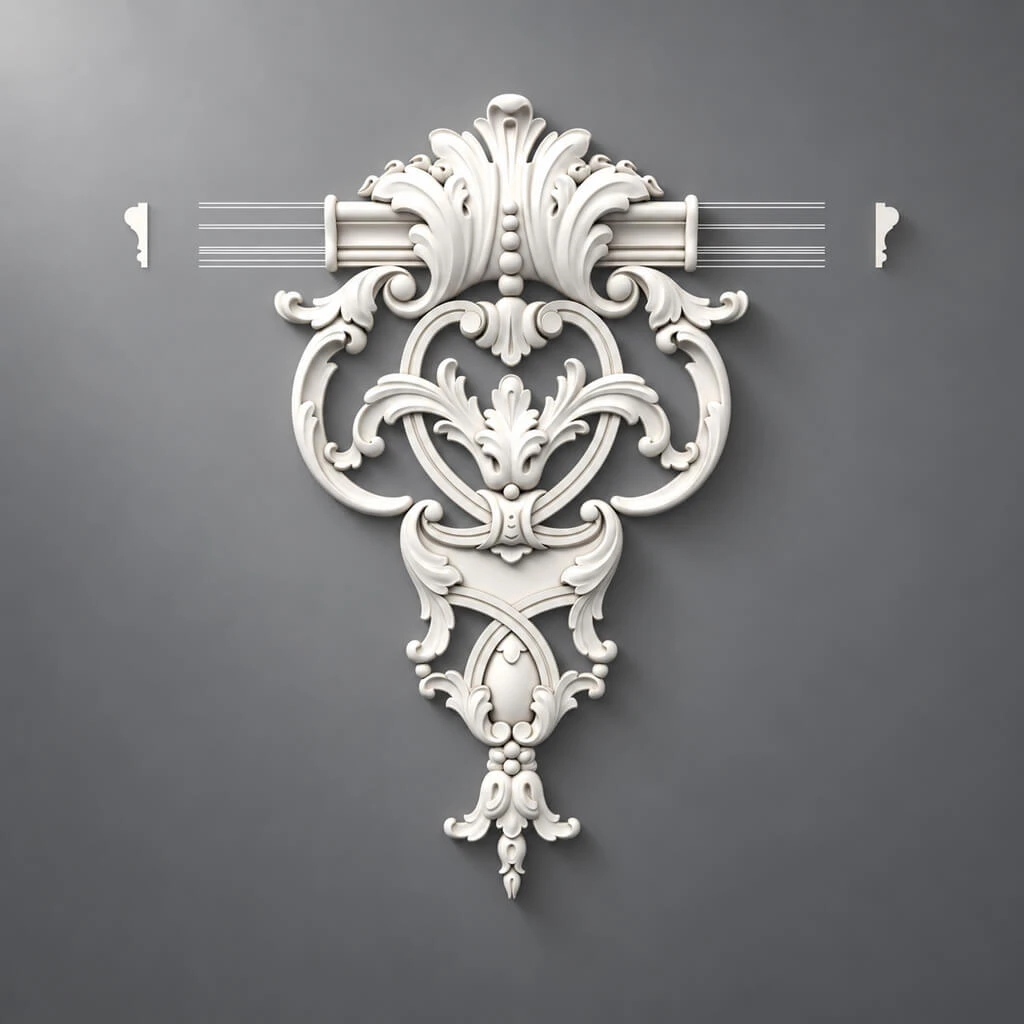
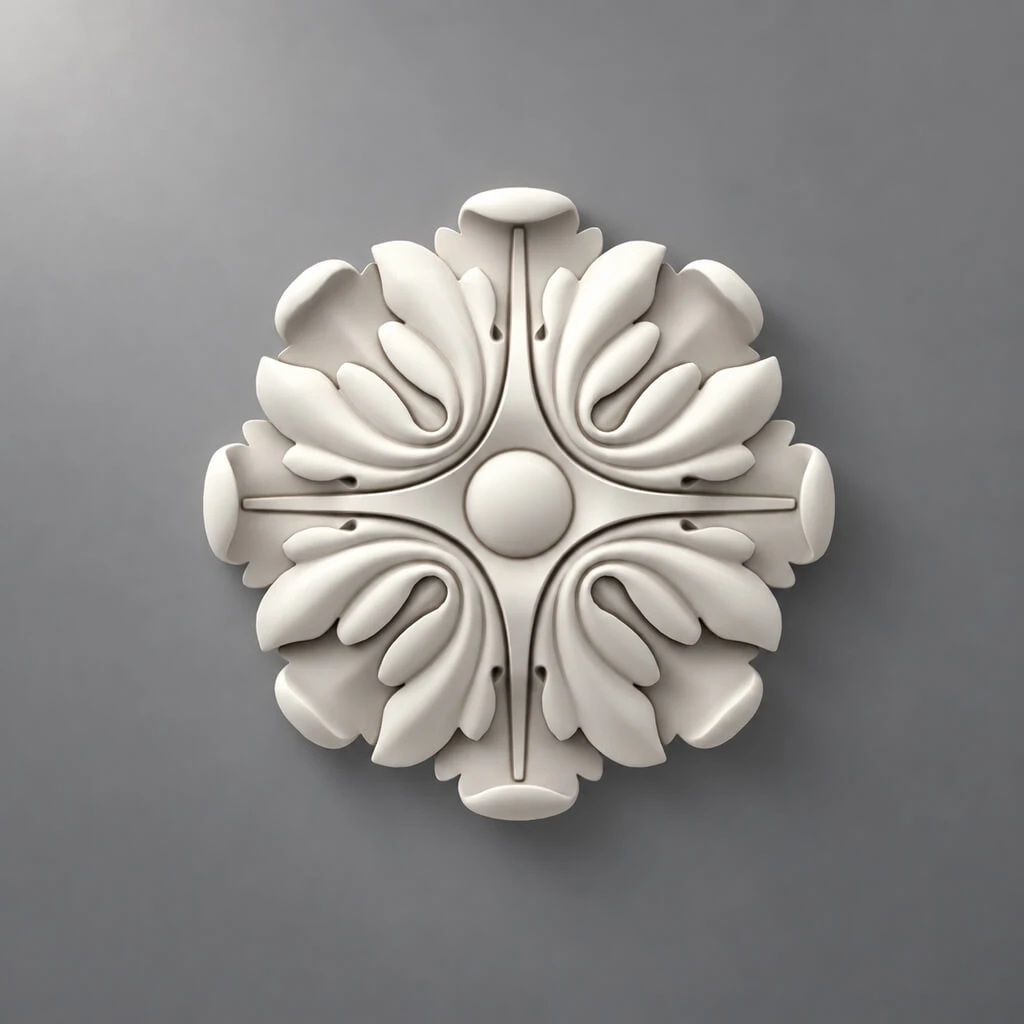
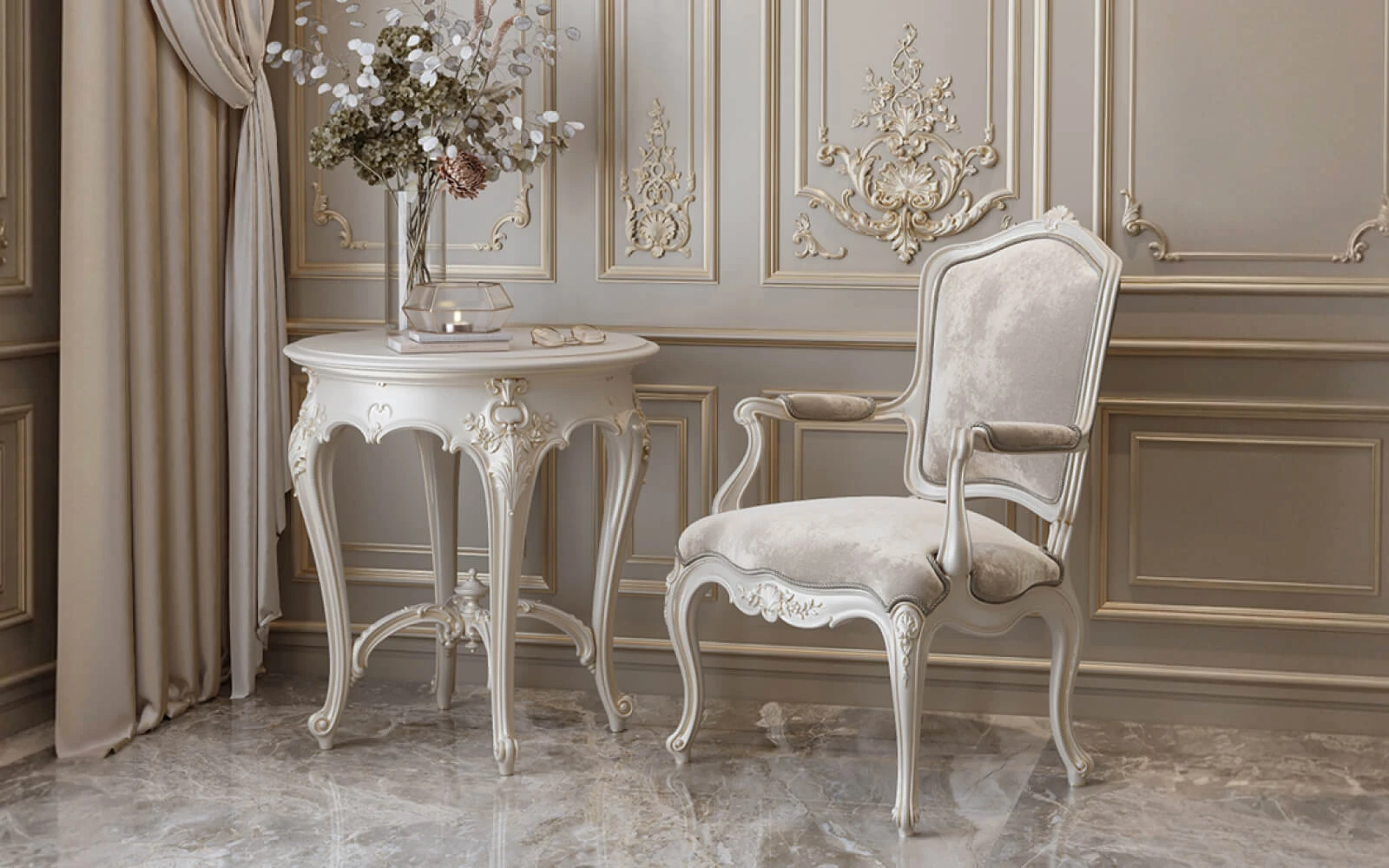
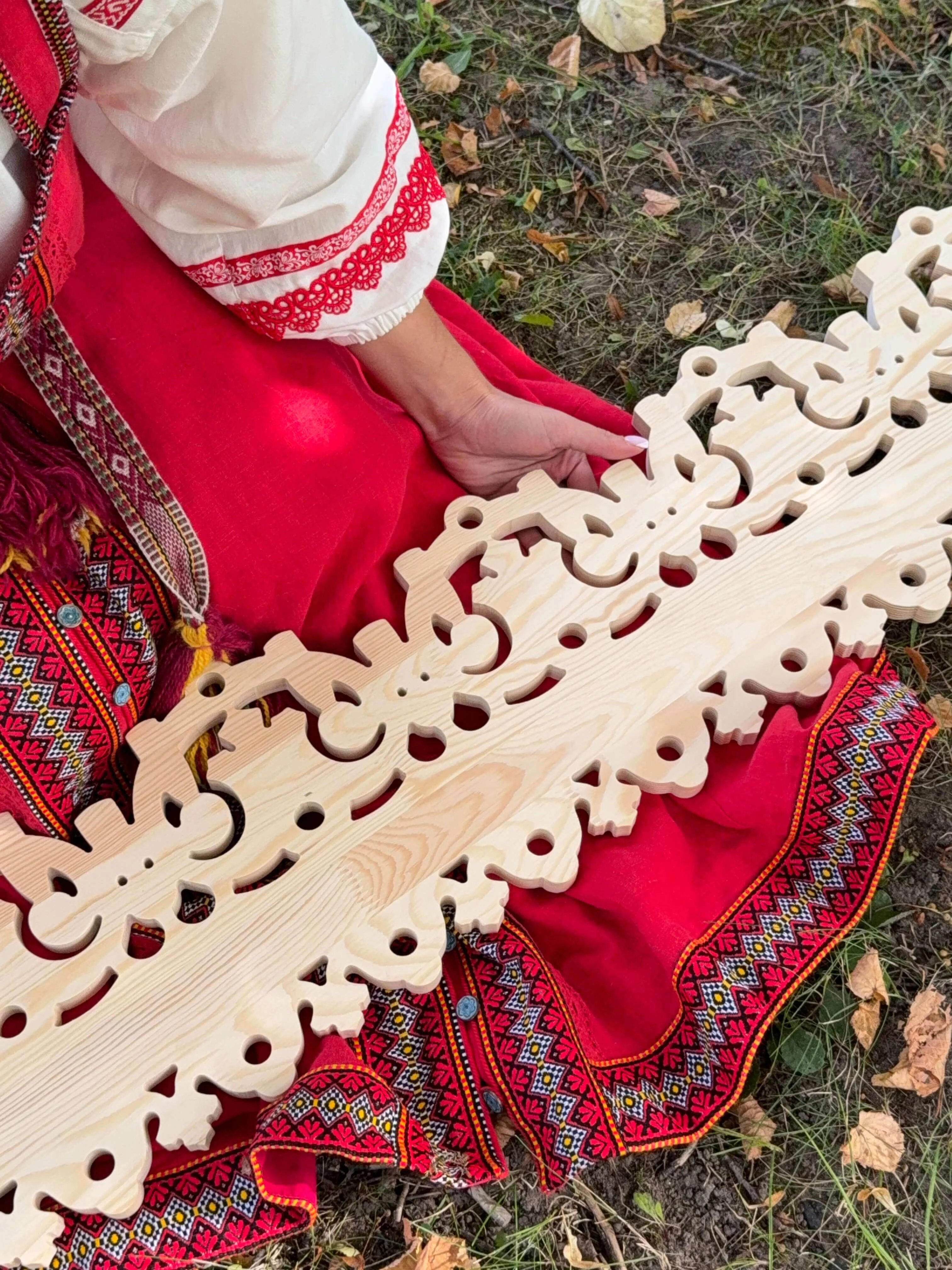
A classic-style shoe cabinet is not just a box for shoes. It is a piece of furniture with character: with correct proportions, details that emphasize its stylistic affiliation, and materials that withstand daily use. What distinguishes a classic shoe cabinet from a faceless white cabinet? First, the legs. Classics do not tolerate furniture pressed to the floor. The shoe cabinet should stand on legs — turned, with smooth lines, high enough to store a few pairs of shoes underneath or to pass a mop. wooden furniture legs in a classic style — these are turned conical or curved shapes, natural wood or painted to match the body. They immediately elevate the furniture to a different weight category. Secondly, the handles. For a classic-style shoe cabinet, suitable handles are Wooden handles — of the overlay type, with an ergonomic grip, in the shape of a bracket or oval. Handles made of solid wood by STAVROS are manufactured using 3D milling from beech and oak, available in several colors — black, white, brown, or with a clear coating — and are mounted with included fasteners. Thirdly, overlays on the facade. Decorative elements for furniture — corner overlays, central rosettes, ornamented strips — give the facade volume and make it recognizably classic. Wooden decoration in the form of carved overlays made of oak or beech is glued to the facade and secured with fasteners. The STAVROS catalog has more than 400 models of overlays — from laconic smooth strips to luxurious ornamental panels with acanthus leaves and baroque motifs. Next to the shoe cabinet — on the wall — are appropriate Moldings made of polyurethane: a horizontal frame, vertical pilasters, or a decorative panel that visually integrates the furniture into the wall, creating the feeling of a built-in niche. This technique is especially good in small hallways: it adds depth and makes the furniture part of the architecture, rather than a random object against the wall.
Bench for the hallway: what to pay attention to
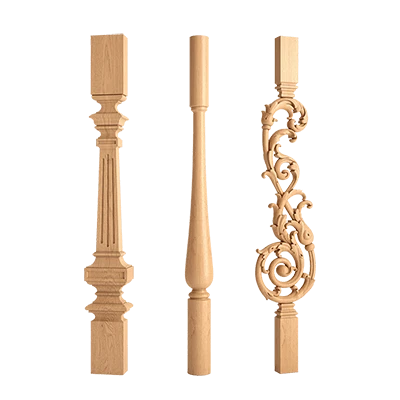
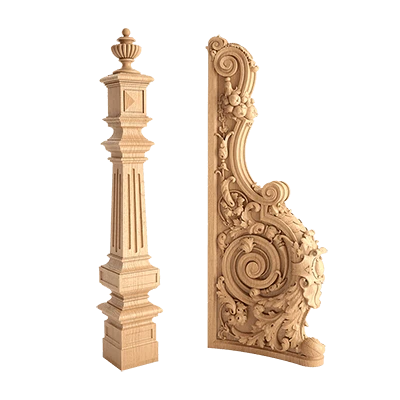
Buying a bench for the hallway is a task with more nuances than it seems at first glance. A classic-style bench must solve several tasks simultaneously: serve as a seat for changing shoes, be stable under load, fit the dimensions of the hallway, and organically combine with the shoe cabinet in height, style, and color. The height of the bench is one of the key parameters. The standard seat height of 45–50 cm allows for comfortable sitting and standing. If the shoe cabinet is nearby, their heights should be coordinated: either the bench is lower than the top cover of the shoe cabinet, or they are equal in height and form a single horizontal line. The legs of the bench are a load-bearing element. Here you cannot skimp and install decorative thin-walled supports not designed for load. Furniture legs made of solid oak or beech can withstand significant static and dynamic loads — exactly the kind that occur when a person sits down and stands up abruptly, leaning on the seat with their hands. The STAVROS collection has more than 130 models of furniture legs — from classic straight to curved with decorative relief. This allows you to choose legs precisely for the style of the bench: strict classic, soft Empire, neoclassicism with a touch of Art Nouveau. The wall behind the bench is a separate topic. It is this place that takes the load of a person's back, gets touched by shoulders when bending, and comes into contact with bags and outerwear. Here it is reasonable to provide Polyurethane wall decor — a wall panel or horizontal molding that protects the wall while creating a decorative accent. Polyurethane appliqués on the wall behind the bench — it's both protection and style. They are glued on, easily painted any color, and require no complex maintenance.
Where wood works best: application areas
Material separation in the hallway is not a theoretical principle but a practical solution that affects the service life of each element. Let's list specific areas where wood is the optimal choice. Bench legs: daily load, direct contact with a person, risk of loosening from sudden movements — all of this requires solid wood. furniture legs made of beech or oak with the correct fastening system last for decades without losing geometry. Shoe cabinet legs: the cabinet with shoes weighs a lot, especially if the hallway is used by a large family. Weak legs will sag or loosen within a few months. Wooden furniture supports with professional fasteners are the only reliable option. Handles on shoe cabinet doors: they are opened several times a day, gripped with pressure, sometimes with a jerk. Wooden handles made of hardwoods do not lose their shape or coating even with intensive use. Decorative overlays on facades: if the overlay is glued to a door that is opened daily, it must hold securely. decorative elements for furniture made of solid wood with additional fixation is the right choice for actively used facades. Side strips and lower furniture elements: the lower part of the shoe cabinet is the zone of contact with shoes and cleaning equipment. Wooden overlays here are more reliable than polyurethane ones. Decorative strips on furniture sides: the sides of a bench or shoe cabinet are often bumped upon entry. Wood here is stronger and more durable than any decorative polyurethane.
Where polyurethane creates classics: design zones
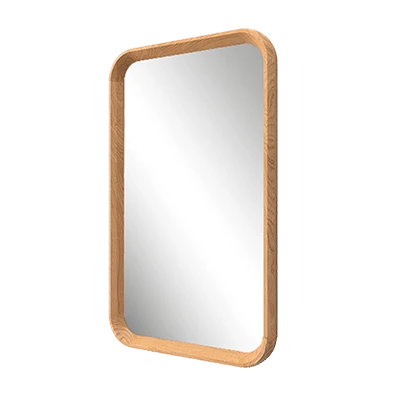
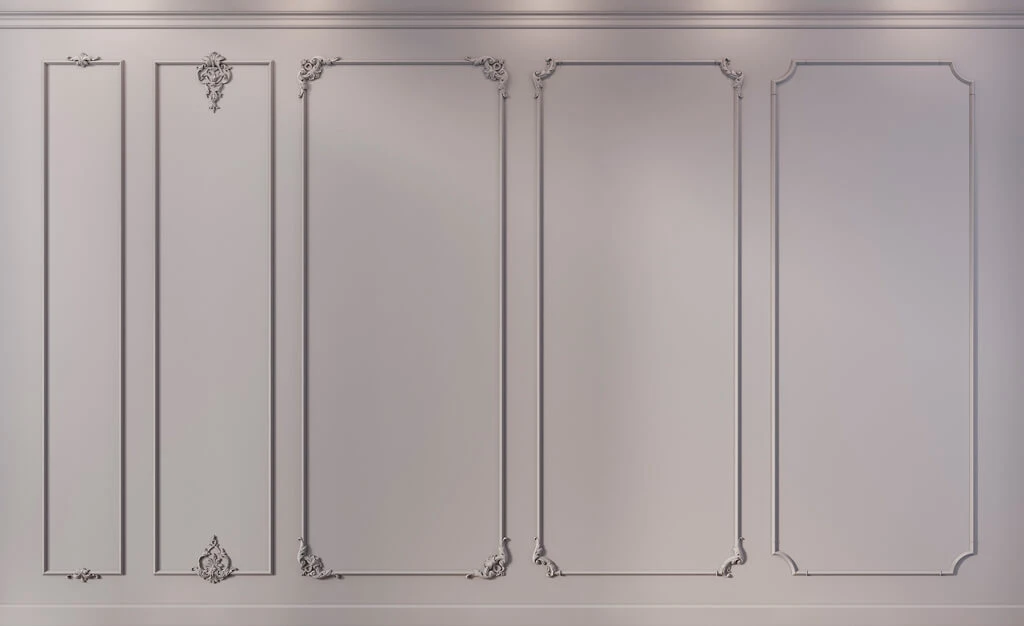
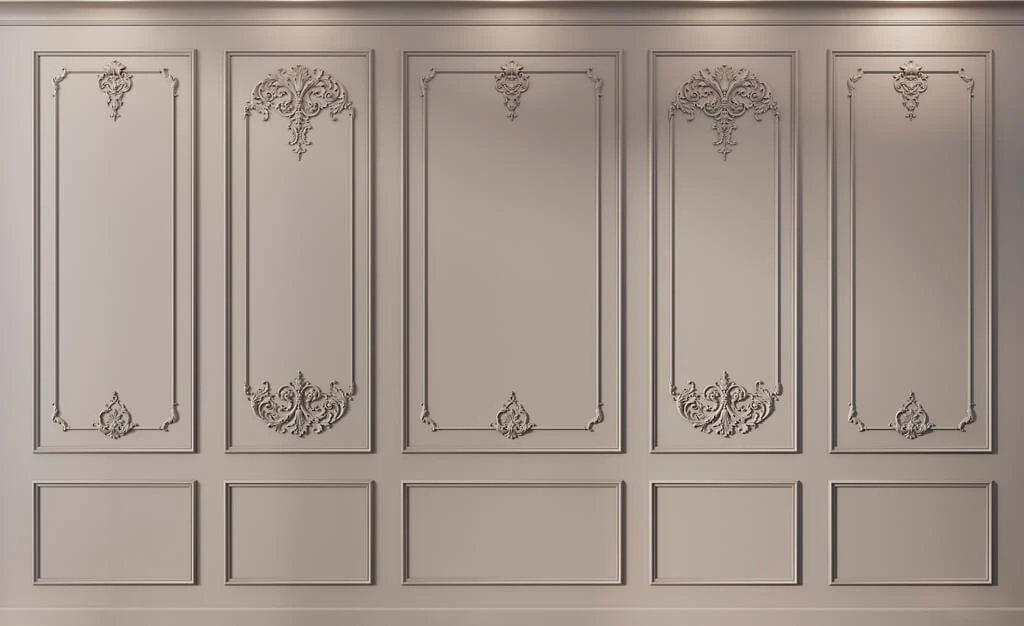
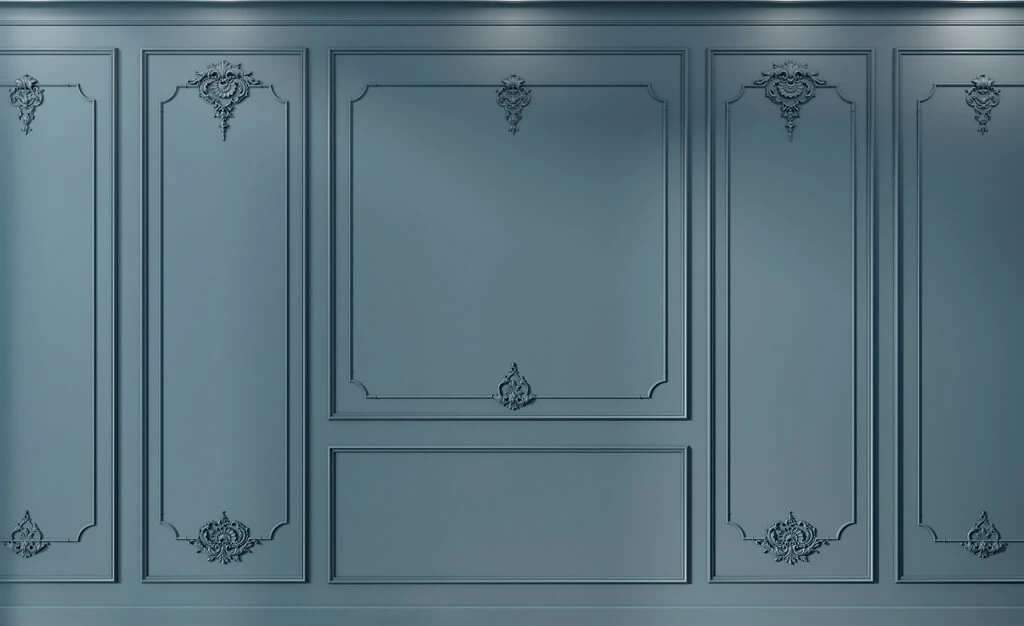
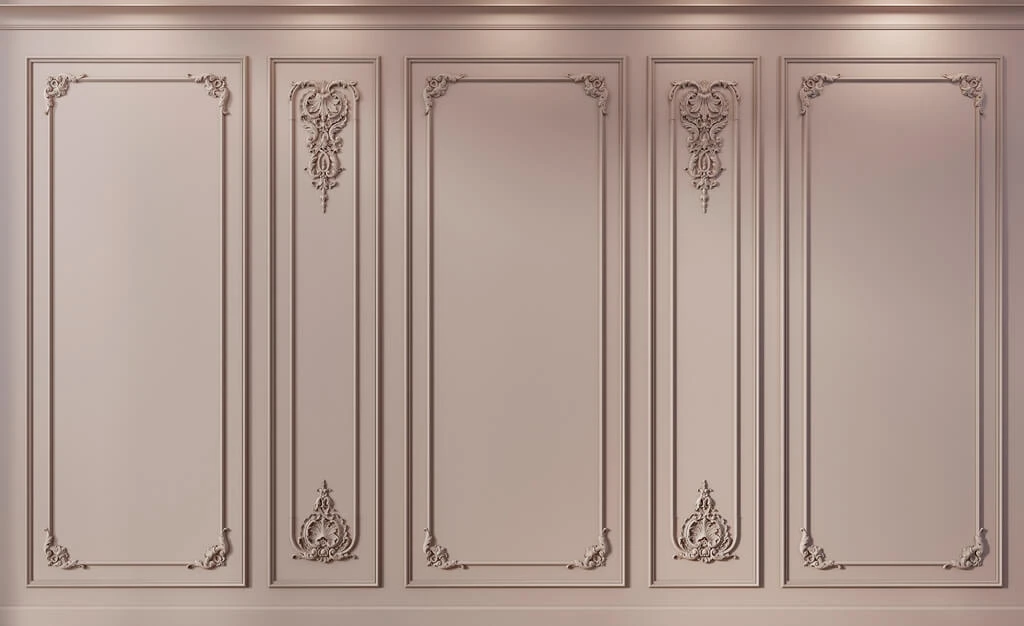
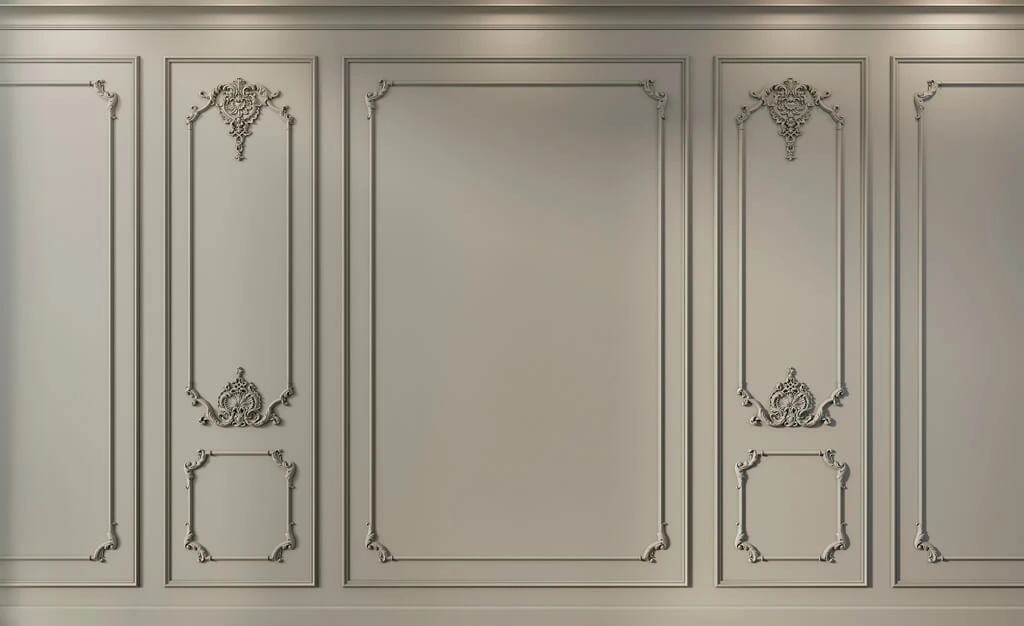
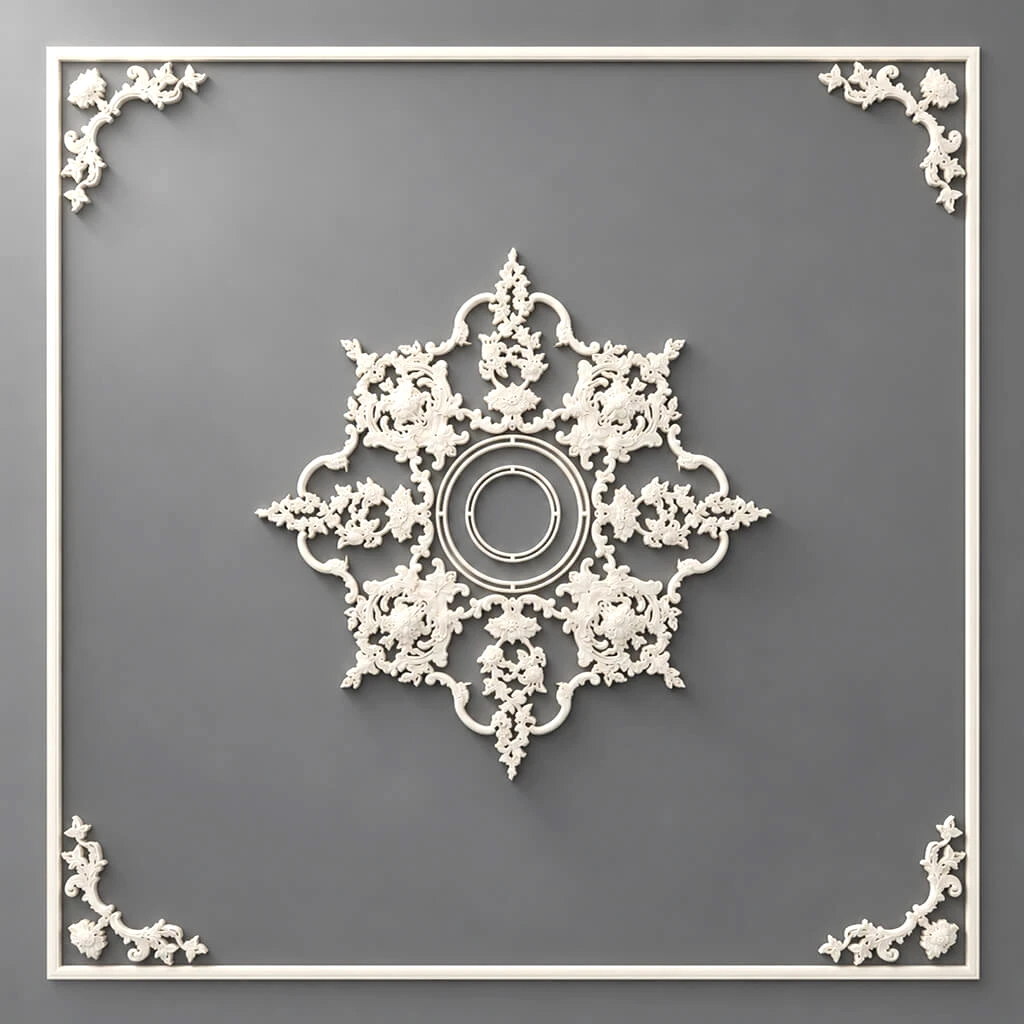
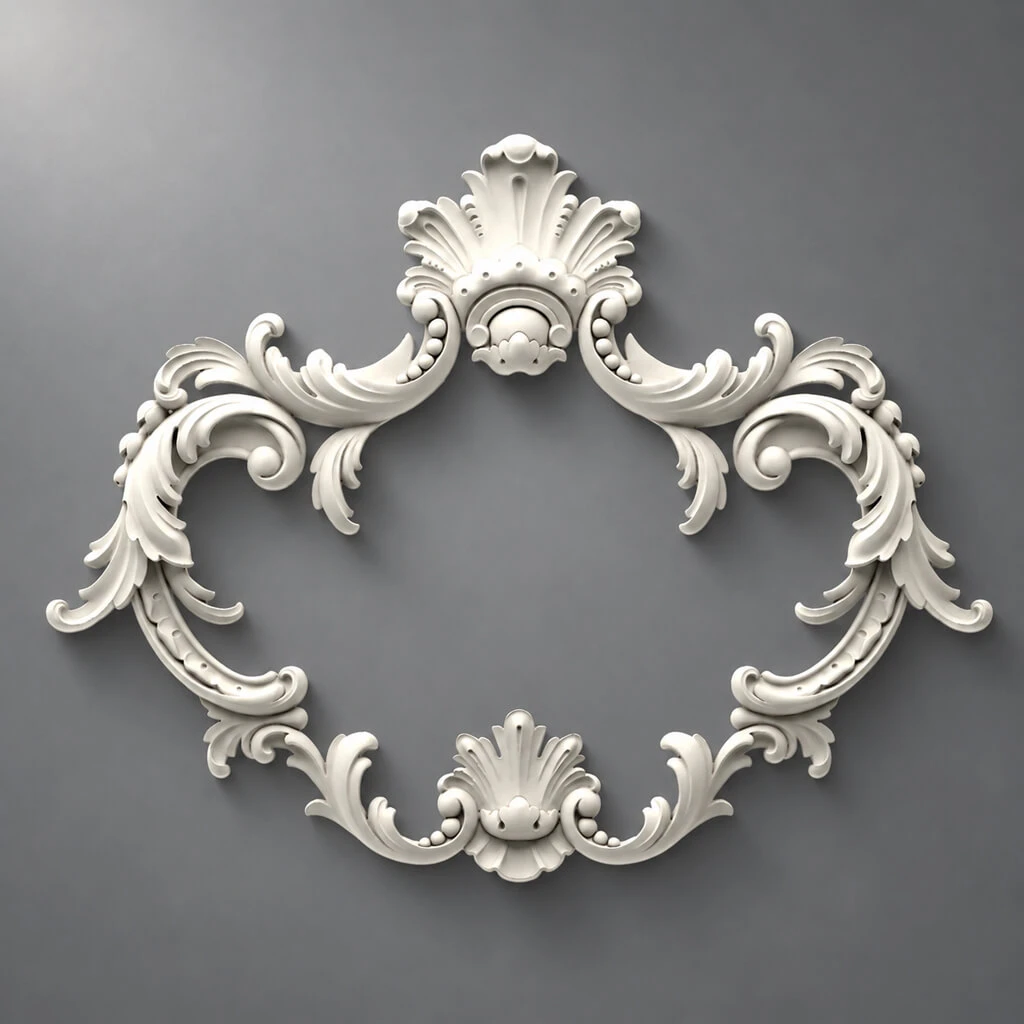
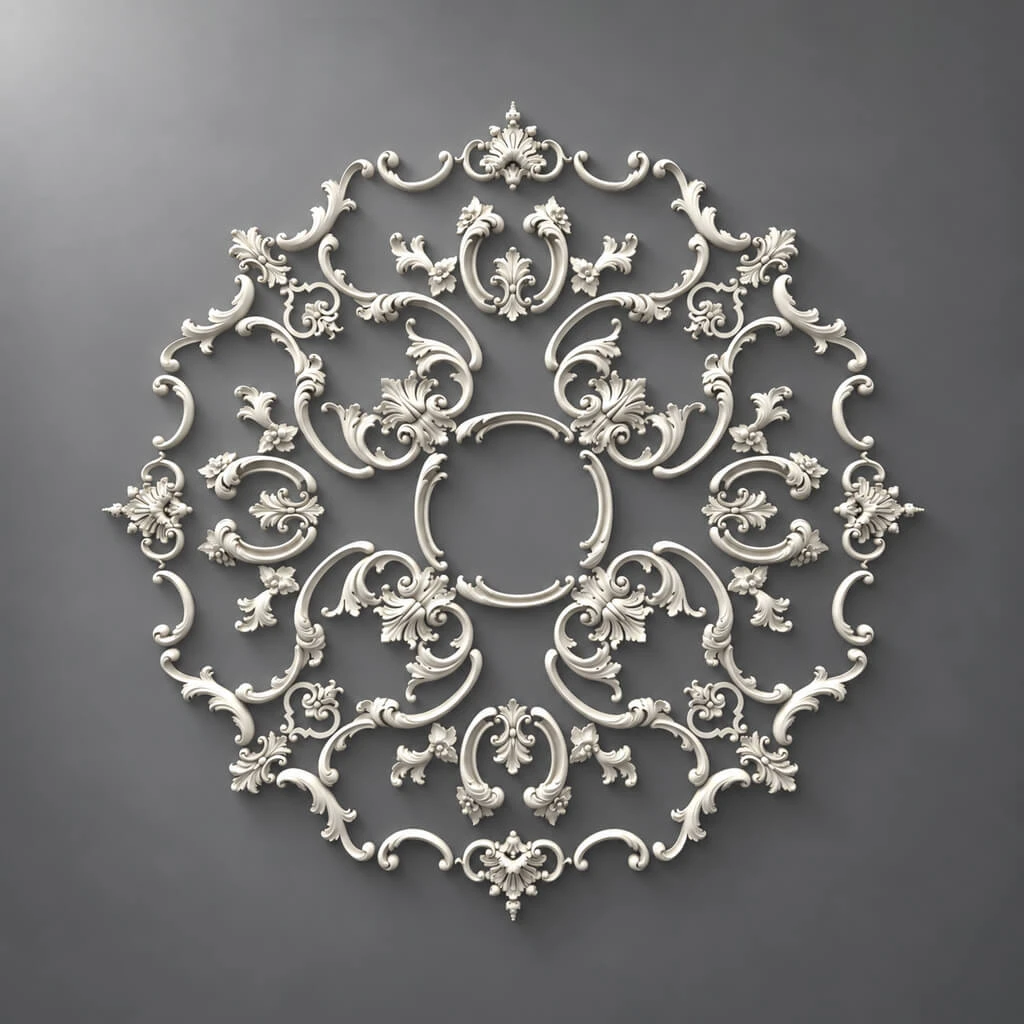
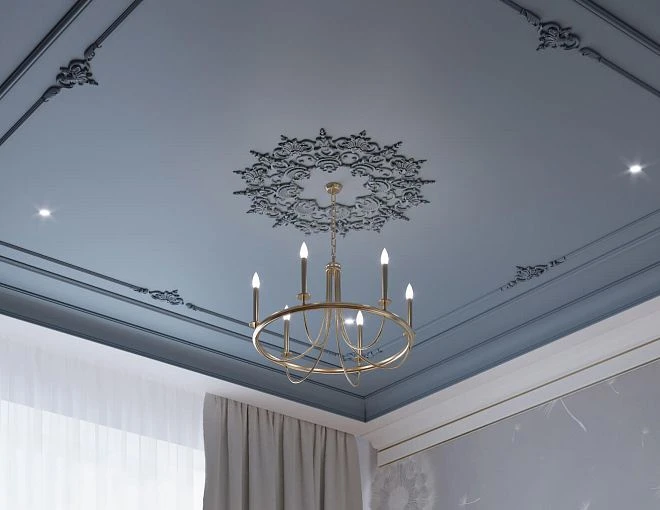
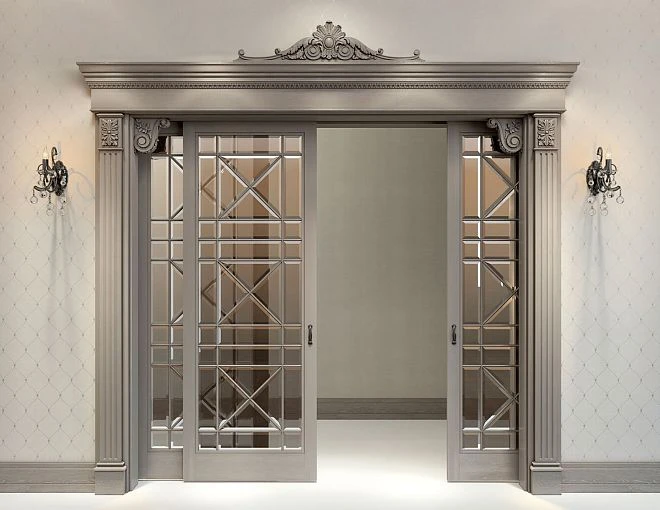
Polyurethane moldings for a hallway with furniture works differently than in a living room or bedroom. Here it does not create a lush stucco ceiling but forms a restrained classic background against which the furniture looks expensive and well-thought-out. Molding on the wall behind the bench is the most obvious and effective application. Horizontal Polyurethane molding at the level of the top of the bench creates a "horizon line" — a visual anchor that organizes the space. In a small hallway, this is especially important: the molding prevents the gaze from "floating" along the wall; it holds the space. A decorative frame above the shoe cabinet is an effective and simple technique. The moldings form a rectangle around the upper part of the cabinet, creating the illusion of a built-in niche or architectural portal. This turns an ordinary shoe cabinet into an element of an interior scene. A baseboard along the bottom line — protection and decor simultaneously. A polyurethane baseboard is appropriate where there are no direct impact loads. In the active shoe-changing zone, the lower part of the wall is better additionally protected with a wooden panel or a more durable baseboard. Decor for Molding — corner elements, decorative inserts, rosettes at intersections — complete the molding lines and give them a finished, professional look. Without these details, the moldings look unfinished, especially in the corners. Mirror framing: if there is a mirror in the hallway — and in a classic hallway it is almost mandatory — Polyurethane appliqués or a molding frame around it instantly elevates the status of the entire area. A cornice line under the ceiling: even in a small hallway, a thin polyurethane cornice creates a sense of height and completeness. It "closes" the upper part of the space, separating the walls from the ceiling and giving the hallway architectural scale.
Ready-made sets: four scenarios for the hallway
Minimal classic set
This is a solution for those who want to create a classic look with minimal investment. A bench or small seat + wooden furniture legs + a baseboard along the bottom line of the wall + a horizontal molding behind the seat at back level. This set solves the main task: the hallway ceases to be faceless. The molding and baseboard set a classic line, the legs lift the furniture and give it style. The cost of such a set is minimal, and the effect is maximum with the correct selection of elements.
Shoe cabinet in classic style: a complete look
Shoe cabinet with wooden furniture supports + Wooden handles on the facades + decorative elements for furniture on the doors + moldings on the wall next to the shoe cabinet. This set turns an ordinary shoe cabinet into an element classic furniture. Decorative overlays on the facades create relief, handles add a hardware accent, and moldings nearby integrate the furniture into the wall. The result is that the shoe cabinet looks like part of a well-thought-out interior ensemble.
Hallway with a mirror
Shoe cabinet + bench + moldings around the mirror + decorative baseboard along the entire perimeter of the hallway. A mirror in a classic hallway is more than just a functional item. In a frame of polyurethane decor it becomes an architectural accent that visually expands the space and focuses attention. The baseboard along the entire perimeter completes the bottom line and creates the feeling of a well-designed interior, rather than a set of random objects.
Small hallway: without overload
In a small hallway, decor should be light, otherwise the space will "shrink." The optimal option: thin turned Wooden legs for visual lightness of furniture + neat Wooden handles small size + thin polyurethane moldings without large relief + light painting of all elements in a single color. The key principle is color unity. If the furniture, legs, handles, moldings, and baseboard are painted in one shade — white, cream, gray — the hallway is perceived as a single space, rather than a set of disparate objects. This is the simplest way to make a small hallway visually more expensive without increasing its area.
Grand hallway: rich look
For a hallway with high ceilings, wide passages, and ambitious design: carved Wooden decoration with Baroque motifs on the facades + turned legs with decorative elements + Moldings made of polyurethane with ornament + cornice line + decorative pilasters between the shoe cabinet and mirror zones. This set requires careful planning and precise calculation of proportions. A grand hallway is not just a lot of decor; it is the correct placement of accents: carved overlays on furniture, restrained moldings on walls, clear verticals and horizontals, a unified color scheme.
How to make your hallway look more expensive: five working tricks
The most frequently asked question: how to make a small hallway look more expensive without overloading it or breaking the bank? The answer lies in details, not in the number of items. First trick: raise furniture on legs. A shoe cabinet and a bench on furniture legs look lighter, more elegant, and more expensive than the same furniture pressed to the floor. The gap between the floor and the body is air that lets the space breathe. Second trick: add a horizontal molding line. One horizontal polyurethane molding on the wall behind the bench — and the hallway visually "expands." The line holds the space, creating a sense of height and structure. Third trick: change the handles. This is the fastest way to change the perception of furniture. Furniture Handles made of solid wood instead of plastic or cheap metal — and an ordinary shoe cabinet takes on a completely different status. Fourth trick: a unified color scheme. All elements — furniture, legs, handles, moldings, baseboards — in one color. This creates a sense of a designer solution, not a random set. Fifth trick: the right baseboard. The baseboard is the bottom frame of the entire interior. A massive, well-painted polyurethane baseboard covers the bottom line of the wall, hides unevenness, and creates a visual "base" for the entire space.
Full list: what to buy for a classic hallway
To avoid forgetting anything when ordering, here is a structured list of all product categories for the shoe cabinet and bench area:
-
wooden furniture legs — for the bench and shoe cabinet, considering load and height
-
furniture legs — for cabinet elements with heavy weight
-
Wooden handles — for shoe cabinet fronts, with fasteners included
-
decorative elements for furniture — overlays for fronts, corner elements
-
Polyurethane wall decor — panels and relief elements for the area behind the banquette
-
Moldings made of polyurethane — horizontal and vertical profiles for wall decoration
-
Polyurethane appliqués — decorative elements for framing mirrors and niches
-
Decor for Molding — corner sockets, decorative inserts
-
Polyurethane moldings — general assortment of decorative elements
-
Glue — special adhesive for mounting polyurethane elements (correct glue selection is critical, more details — what to glue polyurethane molding with)
-
Fasteners — screws and dowels for wooden parts
-
Sealant — for joints of moldings and baseboards
-
Primer — for surface preparation before painting
-
Paint — for moldings, baseboards, and wooden decor
-
Varnish or oil — for final protection of wooden legs and handles
-
A reserve of 5–10% for each item is mandatory
Moldings on the wall behind the bench: how it's done
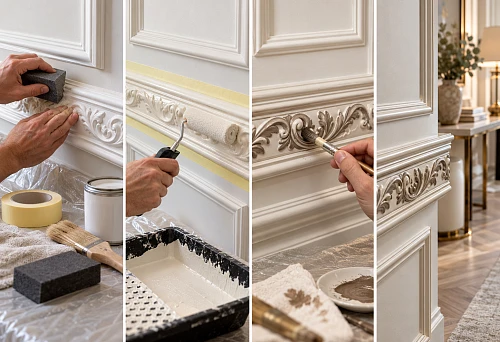
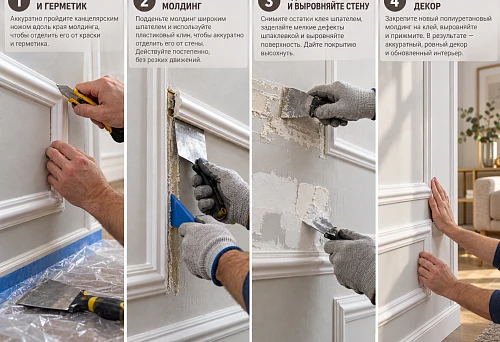
Installing moldings behind a bench is not a difficult task, but it requires precision. First, the height of the horizontal molding is determined: usually it's at the level of the upper third of the wall, about 20–30 cm above the bench. This creates the feeling of a seat back and protects the wall in the contact area with a person. Then vertical lines are marked — if a panel frame is planned, the vertical moldings define its width. The wall surface is primed, the moldings are cut to size with a margin for adjusting corner joints. Glue is applied to the back of the molding in dots or a strip, depending on the manufacturer's instructions. After gluing, the moldings are pressed and held in place while the glue sets. Joints and corners are treated with sealant and sanded after drying. Then the entire surface is primed and painted in a single color with the wall or in a contrasting color, depending on the design solution. The right glue is one of the key factors for durability. For moldings from polyurethane special compounds are used that ensure reliable adhesion to plastered, puttied, or painted surfaces. More details on choosing glue and application technology are in the article what to glue polyurethane molding with on the STAVROS website.
Baseboard and moldings around the shoe cabinet: the lower line of the interior
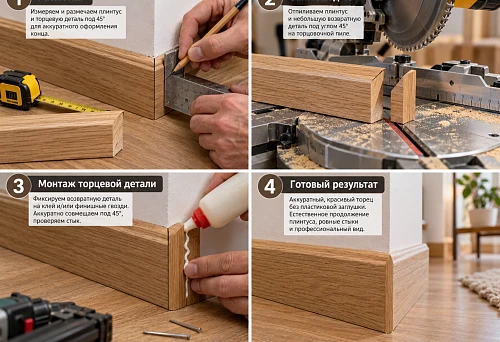
The baseboard and moldings around the shoe cabinet are not just a decorative detail. It's the lower frame of the entire hallway. Without a well-designed baseboard, even the most beautiful furniture will seem to be 'floating' in space without a foundation. For the shoe cabinet area, the baseboard serves a dual function: it hides the gap between the furniture and the wall, protects the lower part of the wall from contact with shoes and cleaning equipment, and creates a horizontal line that connects the furniture to the wall. Polyurethane baseboard is easy to install and paints well. For a hallway with heavy use, it's worth choosing a baseboard with a higher profile — it better protects the lower part of the wall. Vertical moldings on the sides of the shoe cabinet create an effect of built-in furniture: the furniture ceases to be 'freestanding' and becomes part of the wall. This is especially effective in small hallways, where it's important to visually expand the space through architectural techniques rather than actual area increase.
Shoe cabinet on legs and polyurethane decor: how they combine
A common question arises: how to combine wooden furniture on legs with polyurethane decor on the walls? The answer is simple — through a unified color and a consistent scale of details. If the legs of the shoe cabinet are painted white, the moldings on the wall should also be white. If the legs are natural wood, the moldings can be white or cream — this is a classic combination of 'natural wood + white molding' that works flawlessly in classic interiors. The scale of details also matters. Thin, elegant legs — thin moldings. Massive turned supports — a more voluminous molding profile. Violating this principle creates disharmony: heavy moldings with light furniture look excessive, thin moldings with massive legs get lost and don't create the necessary accent. Wooden decoration on furniture facades and polyurethane decor on walls are two different layers of the interior that work together when there is a dialogue between them: a common color, a consistent scale, a unified stylistic message.
Bench with wooden supports and stucco molding: details that create the image
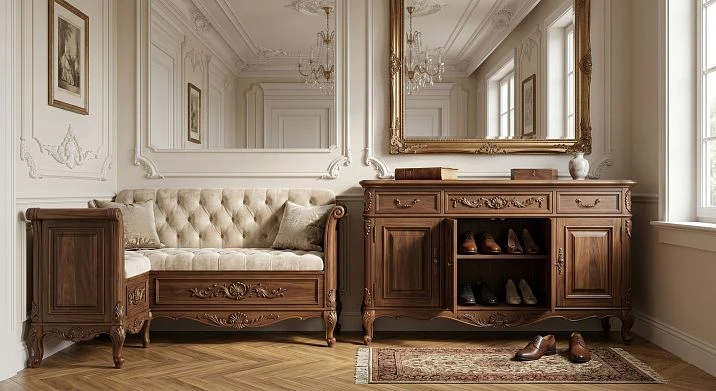
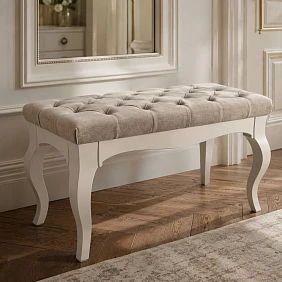
Let's consider a specific image: a bench upholstered in ivory-colored fabric, on four turned wooden legs beech legs painted white. Next to it is a shoe cabinet on the same legs, with fronts decorated with carved oak overlays. On the wall behind the bench is a horizontal polyurethane molding, dividing the lower part of the wall (painted gray-beige) and the upper part (white). Above the shoe cabinet is a molding frame creating the effect of a niche. Along the bottom line is a white polyurethane baseboard. The handles on the shoe cabinet fronts are wooden, U-shaped, white, made of beech. What do we see in the end? A classic hallway where furniture and walls are connected by a unified decor, where every element knows its place, and wood and polyurethane work in tandem — the former bears the load, the latter creates the atmosphere. This image is achieved not through expensive renovations, but through the correct selection of details and conscious coordination.
Mistakes when choosing decor for a small hallway
A small hallway forgives little. Here, every mistake is immediately visible — visually, tactilely, and functionally. Let's break down the most common ones.
Choosing a bench without considering the height of the shoe cabinet. This is a mistake that immediately catches the eye: the bench is too high or too low relative to the shoe cabinet — and the entire area looks mismatched. Heights need to be coordinated at the furniture selection stage, not after purchase.
Taking too fragile legs for the bench. Decorative legs not designed to bear the weight of an adult will last a few months. furniture legs made of solid wood with proper fasteners is the only correct choice for the load-bearing elements of the bench.
Not considering daily load. The hallway is the most heavily used place in the house. Decorative elements here must be resistant to moisture, impacts, and daily contact. Polyurethane decor in the zone of direct shoe impacts is a mistake.
Forgetting about handles. A shoe cabinet without proper handles is inconvenient to use. Furniture Handles This is not a finishing touch, but a basic element that needs to be considered before buying furniture, not after.
Placing active molding in the shoe impact zone. Large polyurethane elements on the lower part of the wall, where heels and soles regularly hit, will quickly deteriorate. The lower hallway belt requires either protected surfaces or more durable materials.
Not protecting the lower part of the wall. The wall behind the banquette at back level and below is an active contact zone. Without protective decor, it quickly loses its appearance. Molding, wall panel, or Polyurethane wall decor is mandatory here.
Not coordinating the baseboard, legs, and moldings into a single color concept. Different shades of white on the baseboard, legs, and moldings are not a nuance, but visual noise. All elements should be matched to a single color sample.
Buying decor without a reserve. During molding installation, there are always trimmings, inaccuracies, and the need for replacements. A 5–10% reserve of the calculated quantity is mandatory insurance.
Using too large a relief in a small hallway. Massive moldings with deep relief in a narrow corridor create a feeling of crampedness. In a small hallway, thin, laconic profiles work—they add character without visual heaviness.
How to properly prepare surfaces for installation
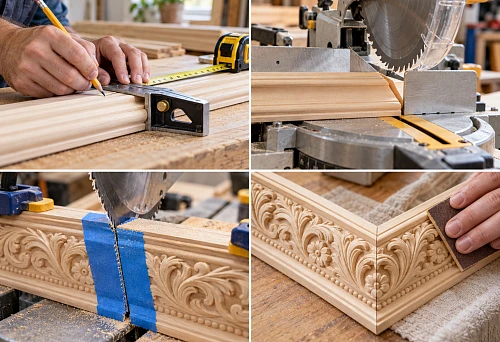
Before gluing moldings and installing legs, the surfaces need to be prepared. The wall for moldings must be level, dry, and clean. If the wall is wallpapered, it must be removed in the installation areas or, at a minimum, primed. Polyurethane moldings are not glued to wallpaper—this is one of the most common installation mistakes. Wooden legs are mounted on mounting bolts or special inserts in the lower part of the furniture body. If the body is made of chipboard, it is important to use reinforced fasteners that will not tear out under load. Wooden overlays on facades are glued with wood glue or PVA glue, followed by fixation with clamps or painter's tape until completely dry. Before painting, all wooden elements are sanded, primed, and painted in two to three coats with intermediate sanding. Polyurethane elements are primed before painting with a special polyurethane primer, which ensures paint adhesion to the material.
What to buy together: a complete purchasing strategy
Experienced craftsmen always order everything they need in one order. This saves time on delivery, allows you to compare colors and textures in a single order, and eliminates the situation where half of the decor is installed but the necessary elements are out of stock. Complete list for simultaneous ordering: wooden furniture legs — 4 pieces for the bench + 4 for the shoe cabinet with spare; Furniture Handles — according to the number of shoe cabinet fronts plus one spare; decorative elements for furniture — according to the number of fronts or panels with a 10% spare; Moldings made of polyurethane — calculated based on the wall length plus 10%; Decor for Molding — corner elements according to the number of corners; Polyurethane appliqués — for framing the mirror and niches; glue for mounting polyurethane elements; fasteners for wooden parts; acrylic sealant; primer — for wood and polyurethane; paint — in the desired shade and volume; varnish or oil for final wood protection. All these items are available in the STAVROS catalog. The company works with orders from one piece, delivers throughout Russia and to CIS countries.
Hallway as an investment: why details pay off
The hallway is the first and last thing a person sees in your home. When choosing between "do it quickly and cheaply" and "do it right once" — the second option is always more profitable in the long run. High-quality wooden furniture legs made of beech or oak will last for decades without replacement. Carved overlays on the fronts will withstand daily contact and maintain their shape. Properly installed moldings will not fall off or turn yellow. Wooden handles will not lose their coating or become loose. This is not a premium segment for status — it is reasonable savings: buy once more expensive than several times cheaper. At STAVROS, you can order all these elements from one manufacturer, which guarantees consistency of quality, style, and color solutions. This is especially important when furniture, decor, and hardware must work as a single ensemble.
FAQ: Answers to popular questions
Which legs to choose for a bench in the hallway?
For a bench in the hallway, you need sturdy wooden furniture legs made of hardwoods — beech or oak — with a height matching the desired seat height (45–50 cm), and a fastening system designed to support an adult's weight. Decorative legs made of soft woods are not suitable for a load-bearing seat. In a classic style, turned conical or curved legs with a profiled transition work well.
Can you combine a shoe cabinet and a bench with polyurethane molding?
Yes, and this is one of the most effective design solutions. Wood is used where there is load and contact — legs, handles, overlays on facades. Polyurethane moldings — where atmosphere and visual volume are needed: wall moldings, baseboards, frame above the mirror. A unified color and consistent scale of details ensure harmony between wood and polyurethane.
What to buy for a classic hallway?
A complete set includes: a shoe cabinet, a bench, Wooden legs, Furniture Handles, decorative elements for furniture, Moldings made of polyurethane, baseboard, molding decor, glue, fasteners, sealant, primer, and paint.
Where is it better not to use polyurethane decor?
In areas of direct contact with shoes, bags, and cleaning equipment. The lower part of the wall in the active shoe-changing zone, the lower edges of furniture, the sides of a shoe cabinet in a narrow passage — it's better to use wood or protected furniture parts there. polyurethane decor designed for wall decoration above the active contact zone.
How to make a small hallway look visually more expensive?
Five working techniques: raise furniture on elegant Wooden legs, add a horizontal molding behind the bench, replace handles with high-quality ones Wooden furniture handles, paint everything in a single color, add the correct baseboard along the bottom line of the wall.
What glue to use for polyurethane moldings in the hallway?
For installation of polyurethane moldings a special glue for polyurethane products is used. It is important that the surface is clean, dry, and free of wallpaper. A detailed guide on choosing glue and installation technology is in the article what to glue polyurethane molding with.
Is a reserve needed when ordering moldings?
Absolutely. The minimum reserve is 5%, the optimal is 10%. When cutting at angles, there are always trimmings; during installation, mistakes happen; after painting, a hidden defect may be discovered. Ordering delivery again for just one molding is much more expensive than taking a reserve right away.
What decor to choose for a bench with stucco on the wall?
For the wall behind the banquette, the optimal solution is: a horizontal polyurethane molding at the level of the upper part of the seat + Polyurethane appliqués or Wall Decor to create a decorative panel. A molding frame around the banquette area creates the feeling of an architectural niche and visually "embeds" the furniture into the wall.
About the company STAVROS
STAVROS is a Russian manufacturer of wooden decor and polyurethane products for furniture and interiors, with production and warehouses in Moscow and St. Petersburg. The assortment includes more than 130 models of furniture legs, 32 models of wooden handles, more than 400 types of decorative overlays made of solid beech and oak, a wide selection of moldings, baseboards, cornices, and stucco decor made of polyurethane. STAVROS works with orders from a single piece, provides fast Contact us to confirm shipping to your destination. and to CIS countries. All products are made from selected natural wood using 3D milling and undergo strict quality control. For serial furniture manufacturers, STAVROS offers the development of exclusive models according to technical specifications, the production of prototypes, and serial production in any volume. The company works with both private customers and professional designers, furniture factories, and construction organizations — and in each case provides the level of quality that makes the interior memorable.