



























Article Contents:
- What to buy for the coffee table area: a complete set
- Why the coffee table is not an auxiliary item
- Wooden legs for a coffee table: how to choose
- Profile and shape: the language of classics
- Leg height: calculation for the sofa
- Cross-section and load
- Leg coating: varnish, oil or paint
- How table legs fit into the living room furniture system
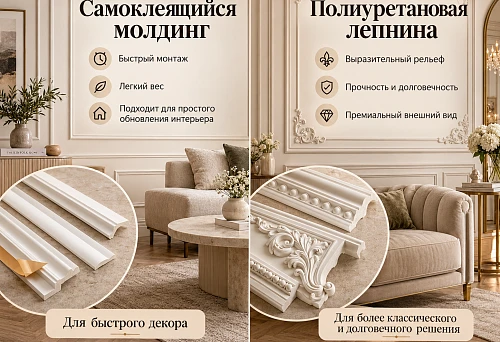
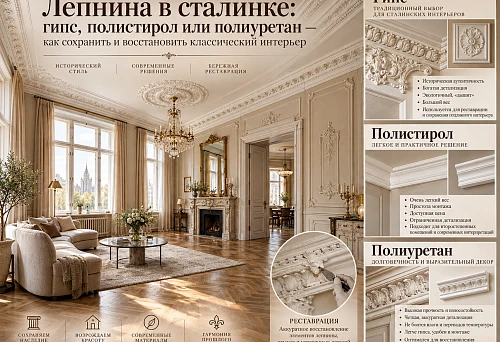
- Sofa zone: how polyurethane decor creates interior context
- Wall behind the sofa: the main field
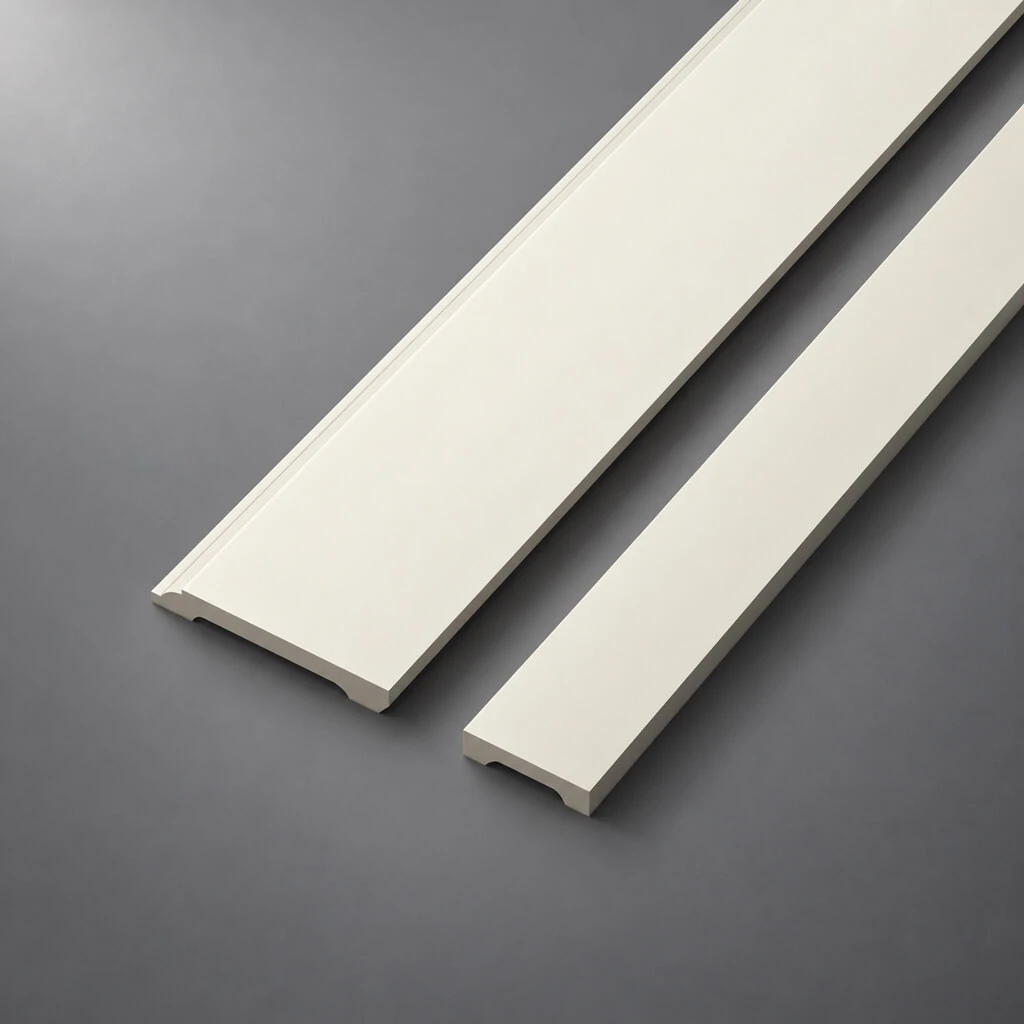
- Baseboard: the invisible hero of the interior
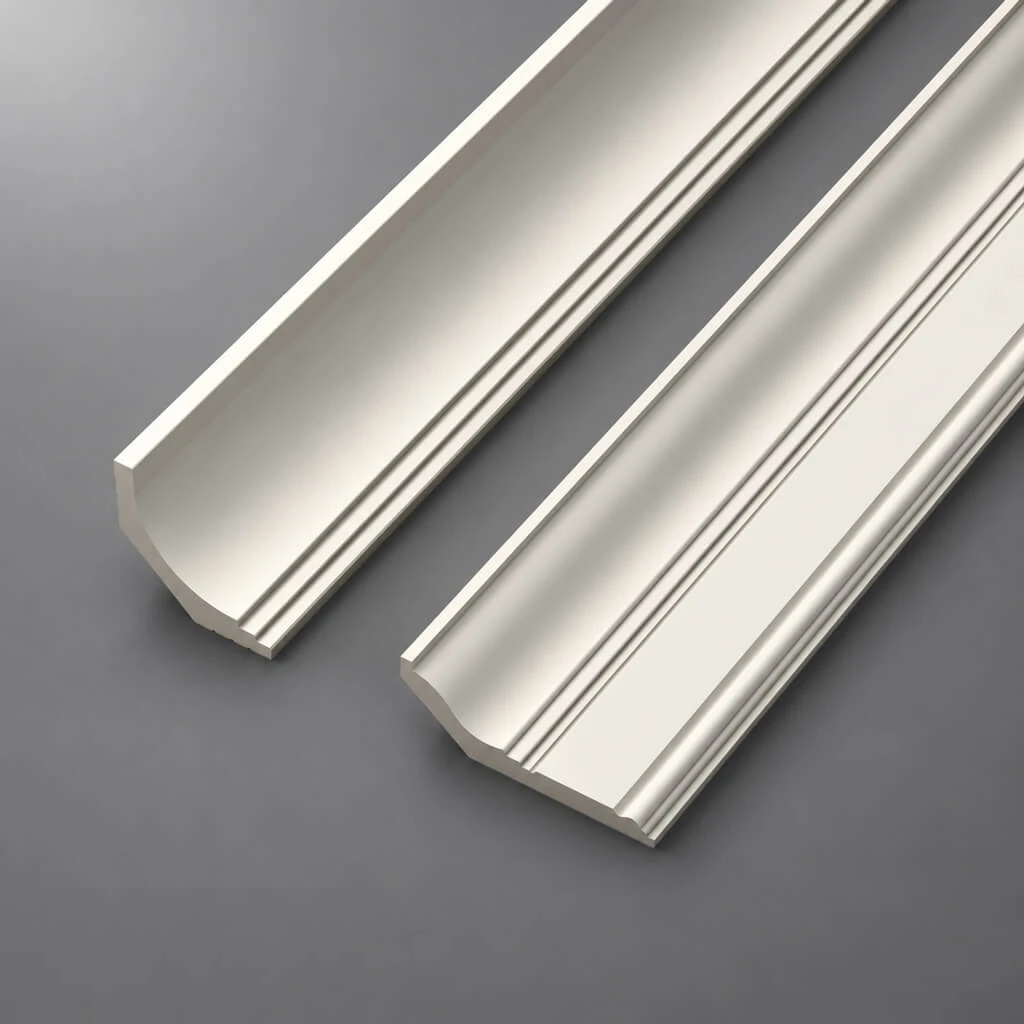
- Cornice: the top line of a classic living room
- Wall decor: accent zones
- Ready-made sets for different types of living rooms
- Set: coffee table for a classic living room
- Set: table with drawer in Empire style
- Set: sofa zone — full wall decor
- Set: soft classic — calm classic
- Set: small living room
- How to choose legs for a coffee table: step-by-step guide
- Step 1: measure the height of the sofa seat
- Step 2: calculate the required leg height
- Step 3: check if there is a rug
- Step 4: choose the profile according to the style
- Step 5: check the cross-section under load
- Step 6: match the leg finish with the rest of the furniture
- Step 7: check the fasteners
- Unified style: how to connect the table, sofa, and wall
- Mistakes when choosing legs and decor for the living room
- Mistake 1: choosing legs only based on a photo
- Mistake 2: not considering the sofa height
- Mistake 3: forgetting about the rug
- Mistake 4: using heavy legs for a small table
- Mistake 5: mixing styles of legs, handles, and moldings
- Mistake 6: having active decor on both the table and the wall simultaneously
- Mistake 7: not buying extra moldings
- Mistake 8: skipping sealant when installing stucco
- Installing coffee table legs: what you need to know
- Method of mounting
- Level uniformity
- Acclimatization of wooden legs
- STAVROS: legs, decor, and moldings — all in one standard
- Frequently Asked Questions
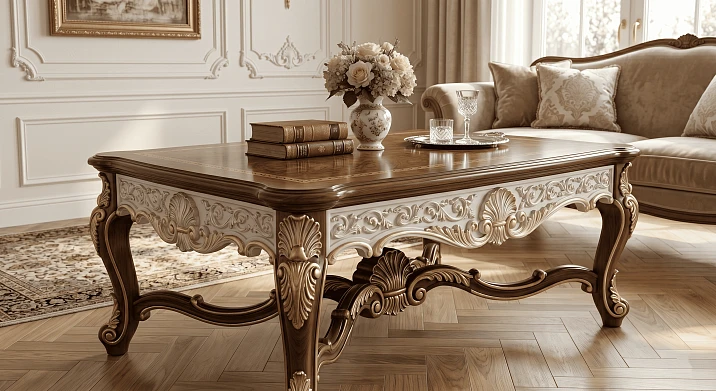
There is such a paradox in interior design: the smaller the piece of furniture, the more obvious the mistake in choosing it. A coffee table is one of the smallest objects in the living room in terms of height and mass. But it stands in the geometric center of the most important room: between the sofa and the TV area, on the rug, surrounded by armchairs. Its legs are visible from all sides. Its shape and proportions dictate the character of the entire lounge area.
Choose Legs for coffee table — means making one of the most noticeable design decisions in the living room. And this decision never exists in isolation: it always relates to the sofa, the rug, wall moldings, baseboard, cornice — with the entire decorative context of the room.
It is about such a system — about how the wooden legs of the table become part of the whole, how Polyurethane moldings on the walls and ceiling supports the classic character of the area, how all this comes together into a finished living room — this article is about.
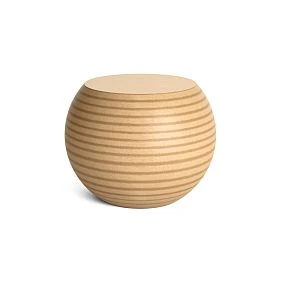
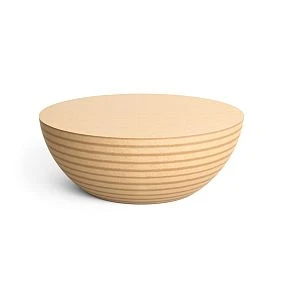
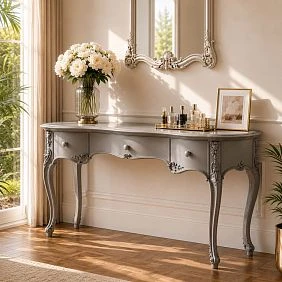
What to buy for the coffee table area: a complete set at once
For those already designing — a specific list without prefaces.
Wooden items:
-
Furniture legs — turned legs made of solid beech for a coffee table, 4 pieces;
-
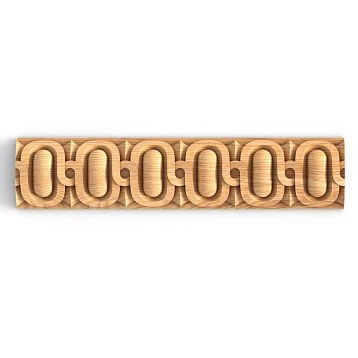
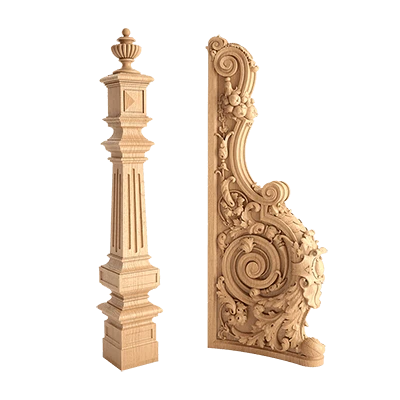
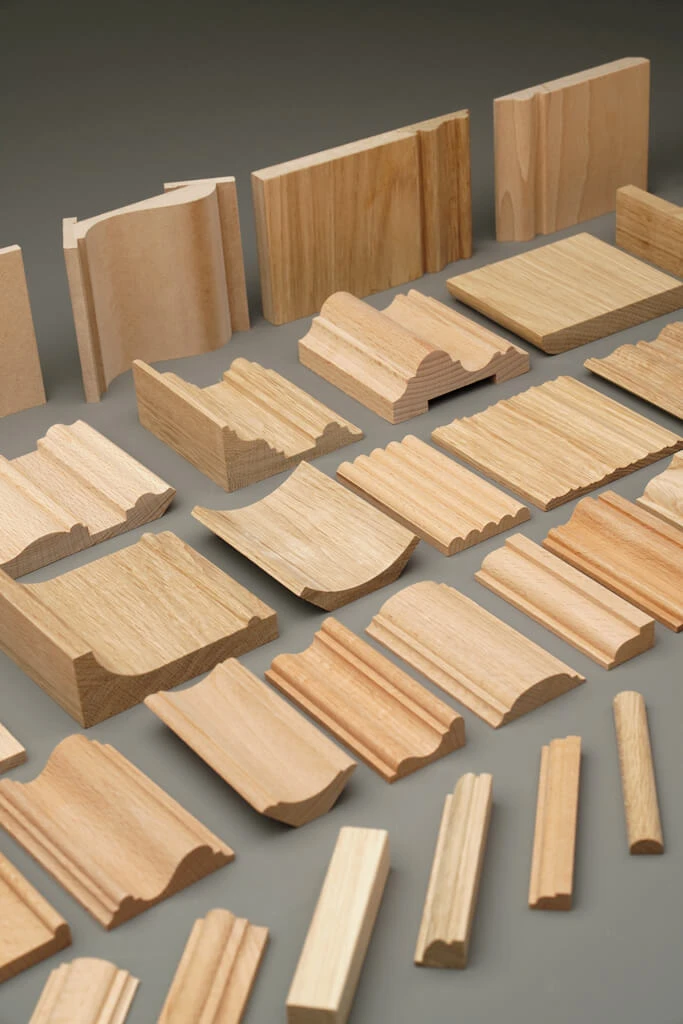
Wooden decor and overlays — decorative elements of the lower frame or apron of the table;
-
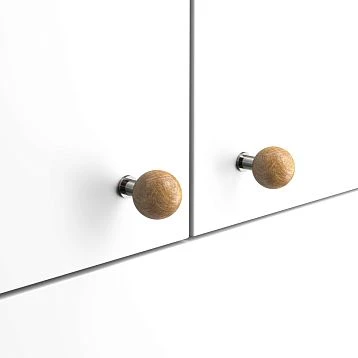
wooden handles from solid wood — if the table has a drawer;
-
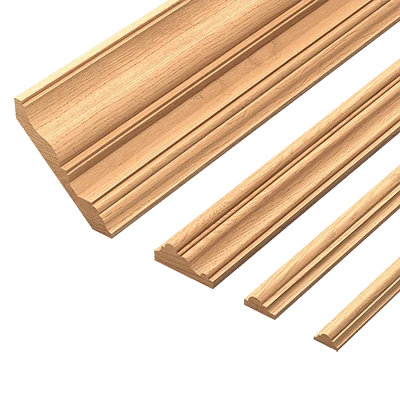
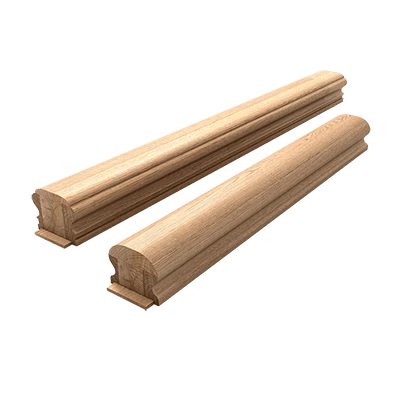
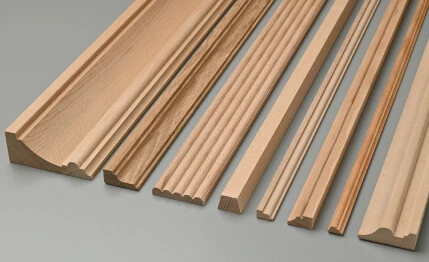
Pogonazh iz massiva — profiled molding for the tabletop frame.
Polyurethane items:
-
Moldings made of polyurethane — frames on the wall behind the sofa, side areas;
-
Polyurethane moldings — cornice profile, ceiling accents;
-
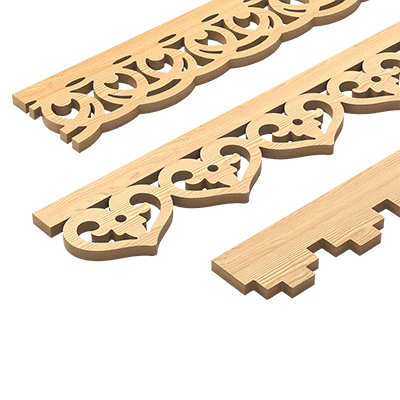
Polyurethane appliqués — decorative elements on cabinets and side panels;
-
Polyurethane wall decor — accent elements of the wall behind the sofa;
-
Decor for Molding — corner frame inserts;
-
Polyurethane trim — baseboard in the living room area.
Installation and finishing materials:
-
Fasteners for wooden legs (screw-in bolt-pin or mounting plate);
-
Mounting adhesive for polyurethane — the right choice;
-
Acrylic sealant — for joints of moldings;
-
Primer — for painting polyurethane;
-
Paint — for polyurethane elements;
-
Varnish or oil — for wooden legs and decor.
Main idea: the coffee table is in the center of the living room, so it cannot be chosen in isolation from the sofa, rug, wall decor, baseboard, and cornice. All of these are parts of one scene.
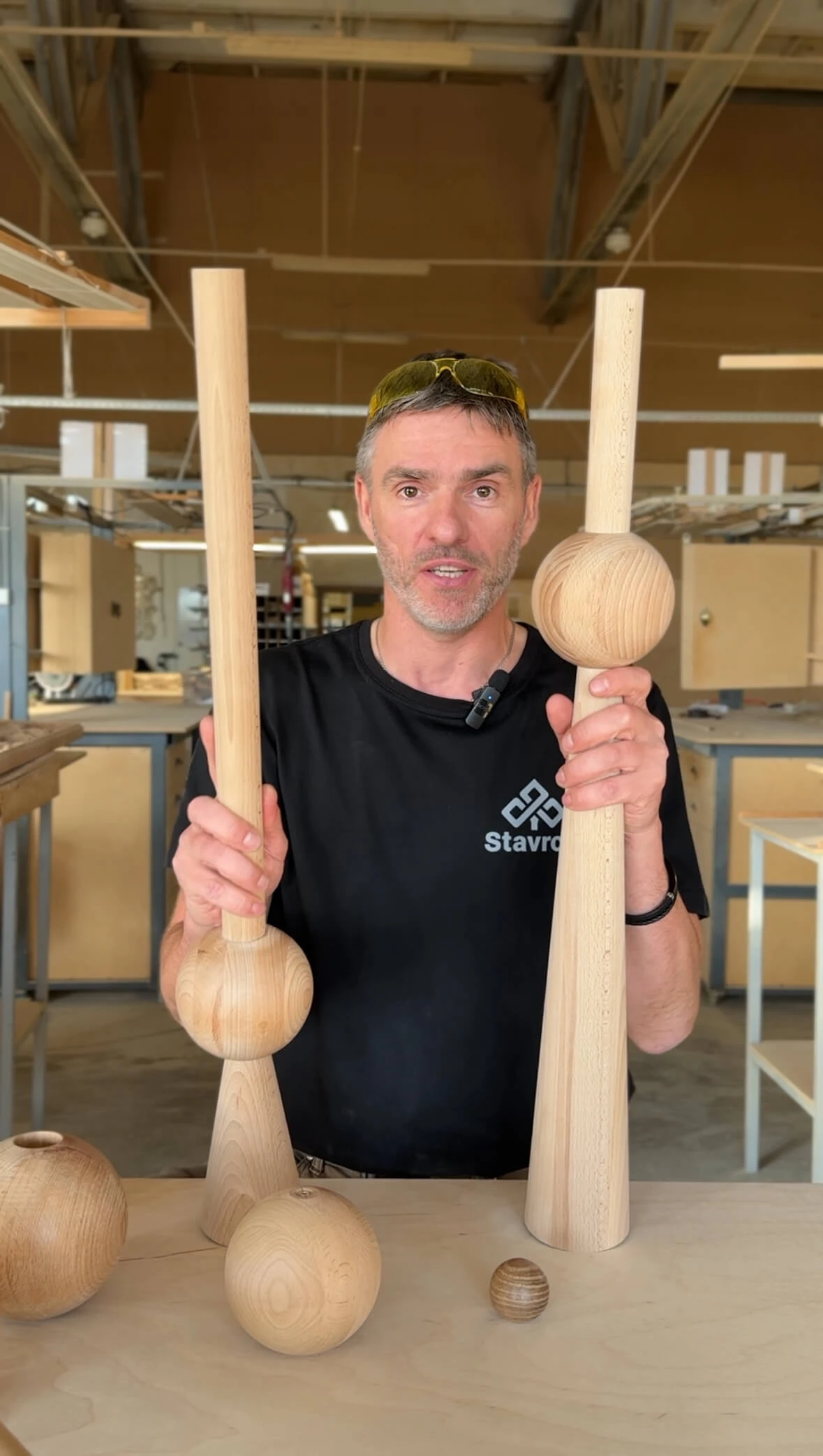
Why the coffee table is not an auxiliary item
Let's be honest. In any classic living room, the central visual triangle is the sofa, rug, and coffee table. The rug sets the horizontal plane. The sofa provides volume and scale. And the coffee table is the visual "anchor" of the entire area: it stands on the rug, people sit and move around it, and it is visible from any point in the room.
The height of the coffee table is typically 40–50 cm. This is below the seat level of the sofa. That is why its legs are fully visible — from below, from the side, and through under the tabletop. Furniture legs of the coffee table is not a hidden structural element, but an open decorative object.
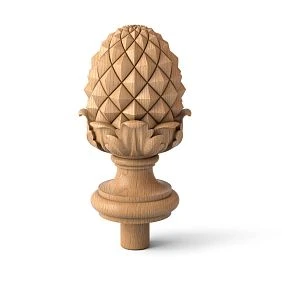
Correctly selected wooden furniture legs — turned, with a classic profile, made of solid beech — elevate a table from the "flat top with supports" category to the level of a true classic piece. Irregular ones turn an expensive tabletop into "something on top."
And here begins a systematic approach: furniture legs the table legs should echo the legs of the sofa and armchairs, the handles of side tables, the moldings on the wall, and the character of the baseboard. The living room is an orchestra. The legs of a coffee table are one of the most audible instruments.
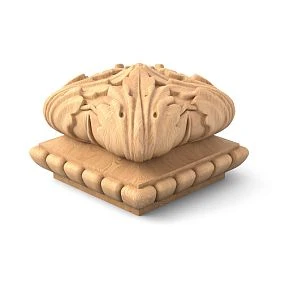
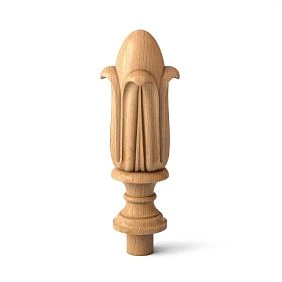
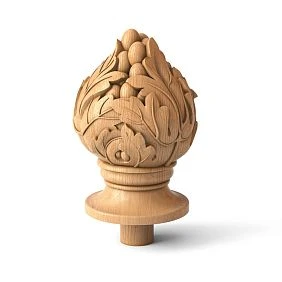
Our factory also produces:
Wooden legs for a coffee table: how to choose
Get Consultation
Profile and shape: the language of classics
Each wooden leg profile is a stylistic statement.
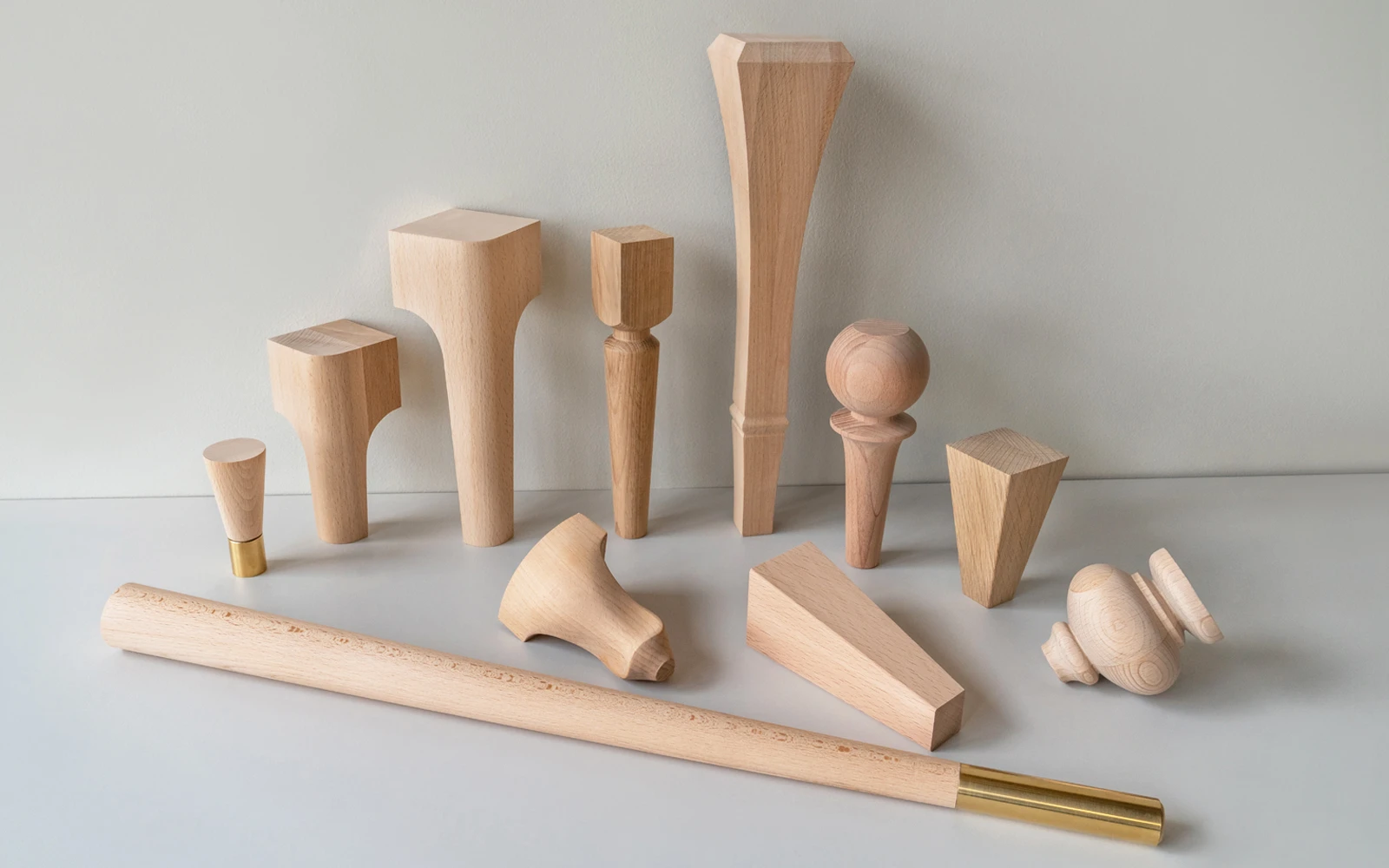
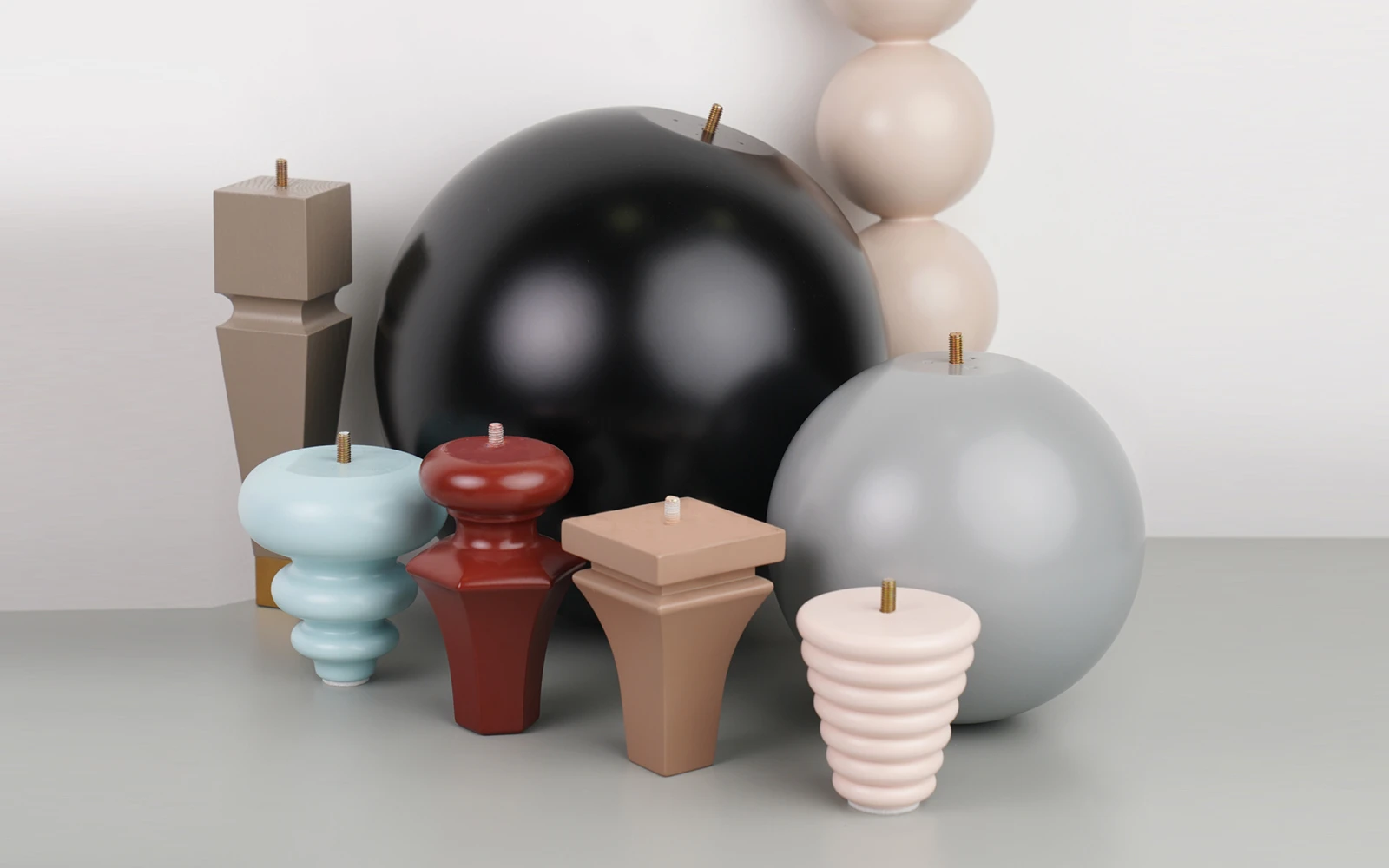
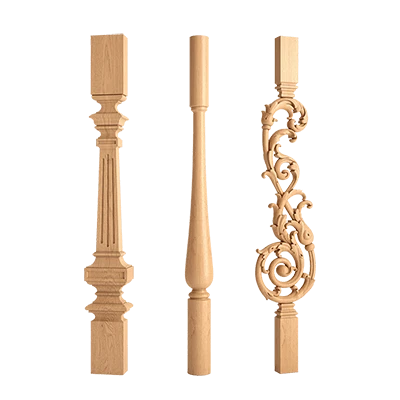
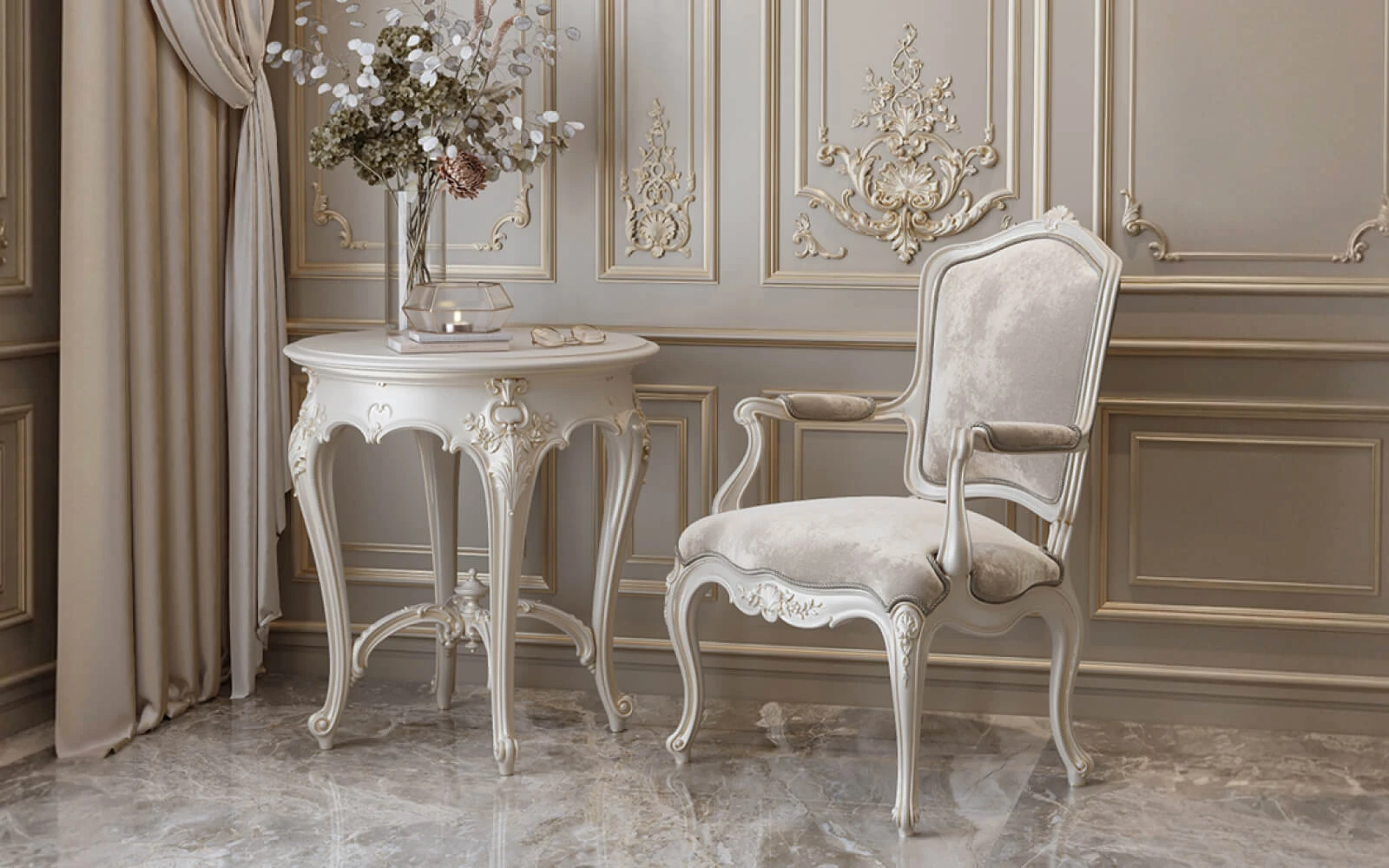
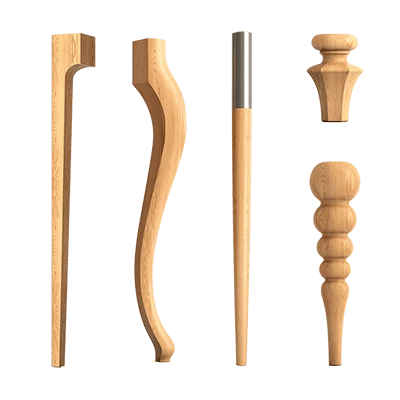
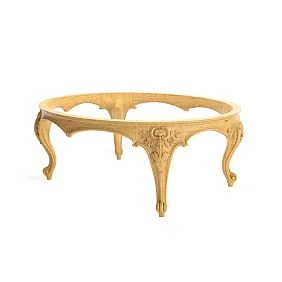
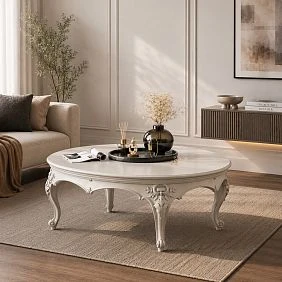
Cabriole — curved, with a characteristic knee and ending in a "paw" or "hoof." Baroque, Rococo, Chippendale. This form immediately makes it clear: we are dealing with high-quality classics.
Stem (turned conical) — straight, tapering downward, sometimes with a waist. Neoclassicism, Georgian style, Empire. Strict and elegant at the same time.
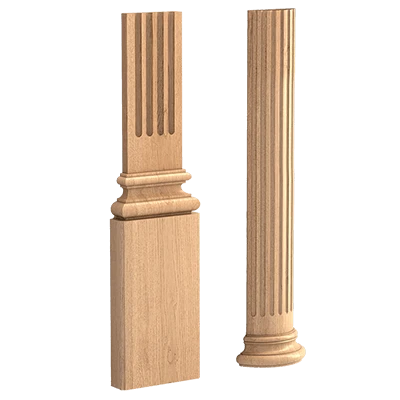
Square with a chamfer or fluting — a straight square leg with vertical grooves (fluting). Classicism, Hepplewhite. A very restrained, architectural style.
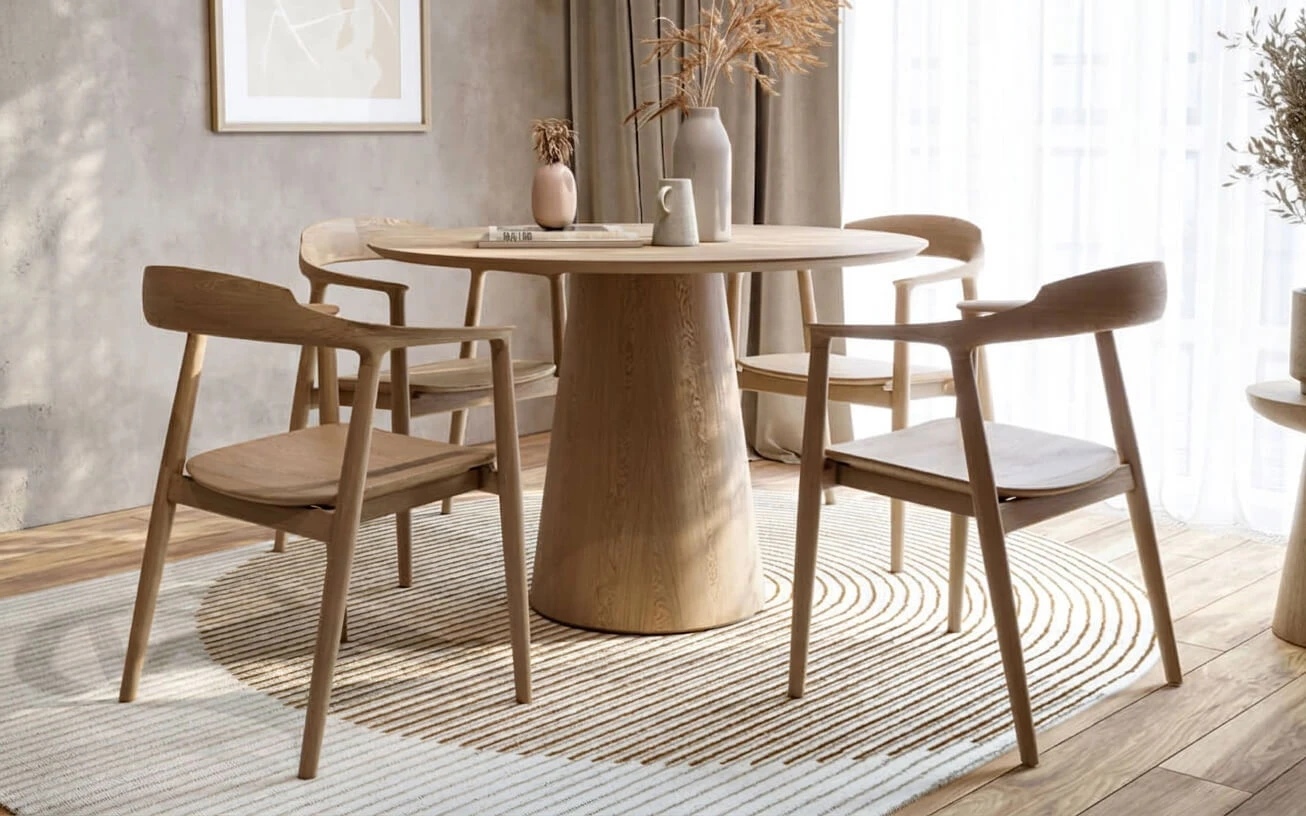
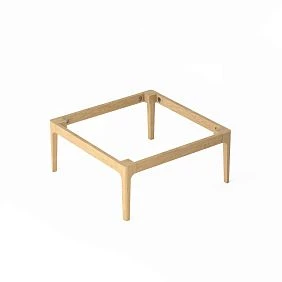
Straight conical — without frills, simply a tapering square or cylinder. Modern classic, Scandinavian style with classic notes.
All these forms are available in the catalog of solid beech furniture legs — with different coatings, for different tasks.
Leg height: calculation for a sofa
This is the most practical parameter — and the most often ignored.
Rule: a coffee table should be 2–5 cm lower than the sofa seat. If the sofa has soft cushions with a height of 45 cm — the table should be 40–43 cm. If the sofa is low, 38 cm — the table should be 35–36 cm.
Final table height = leg height + tabletop thickness. If the tabletop is 20 mm and the desired final height is 40 cm — the leg needs to be 380 mm. If the tabletop is 30 mm — the leg needs to be 370 mm.
Solid wood furniture legs are available in different heights — it is important to specify the required size when ordering.
Cross-section and load
A coffee table bears a moderate load: books, drinks, decorative objects — typically 10–20 kg. For such a load, a leg with a cross-section of 35–45 mm is sufficient.
If the table is large (80 × 120 cm or more) and will be used actively — section 50–60 mm. If the table is small (60 × 60 or 50 × 80 cm) — 30–40 mm.
Leg coating: varnish, oil or paint
wooden furniture legs beech legs are available in several finishes:
-
Natural beech under varnish — warm, honey shade; goes well with linen, cream, warm gray interiors;
-
Tinting (staining) — imitation of oak, walnut or wenge; allows you to fit the legs into a darker interior;
-
For painting — white primer or full painting with enamel; for classic living rooms in white and pastel tones.
How coffee table legs fit into the living room furniture system
A coffee table never stands alone. Around it are a sofa, armchairs, a TV cabinet, side tables, a console. Each of these items has its own legs, handles, legs — and they all must be coordinated.
The coordination principle is simple: the style of one item's legs should not contradict the style of another's legs. Not necessarily identical — but from the same style family.
-
Turned conical coffee table leg → same legs on armchairs → Furniture Handles on the TV stand of the same style group;
-
Cabriole leg on the table → similar shape of supports on the sofa or armchairs;
-
Square leg with fluting → straight legs on all pieces, strict classicism.
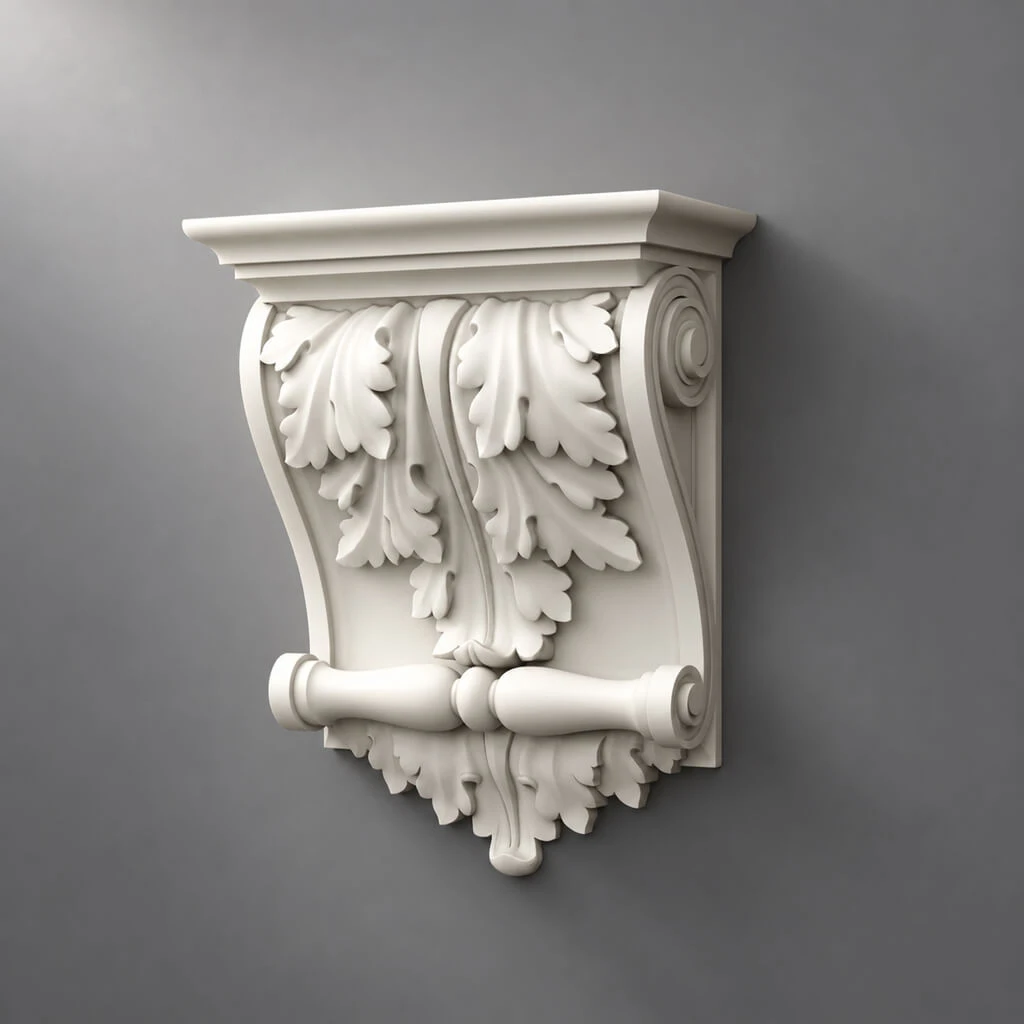
Wooden decoration on the fronts of cabinets and Polyurethane appliqués on the sides of side tables — this is the next level of consistency. The leg pattern is repeated in the decor pattern. The furniture begins to 'talk' to each other.
Sofa zone: how polyurethane decor creates an interior context
Wall behind the sofa: the main field
The wall behind the sofa is the most noticeable vertical surface in the living room. It is what people see first when entering the room. It is what a person sitting opposite the sofa looks at.
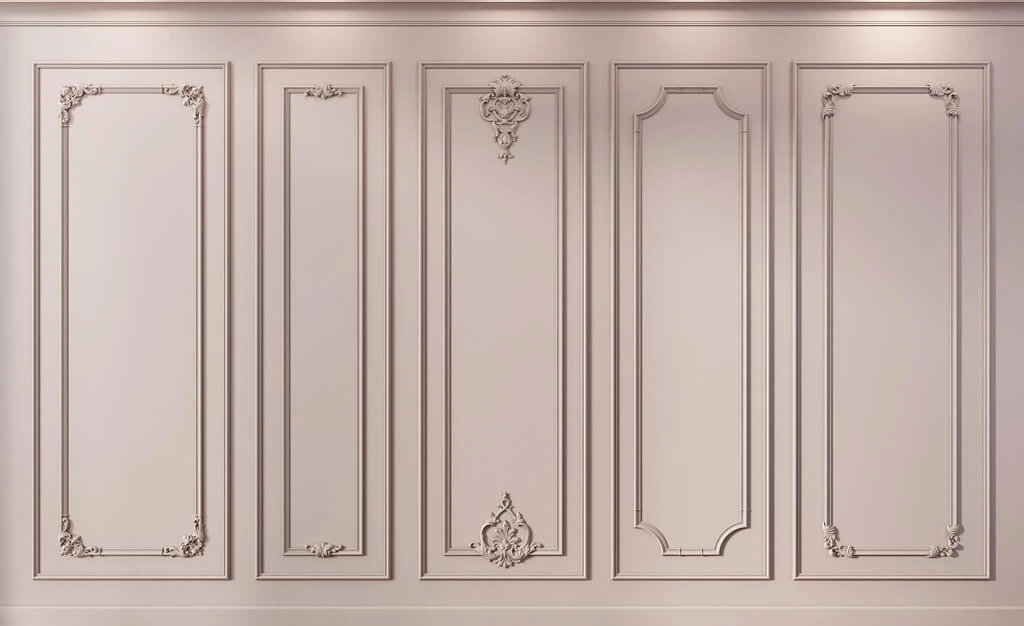
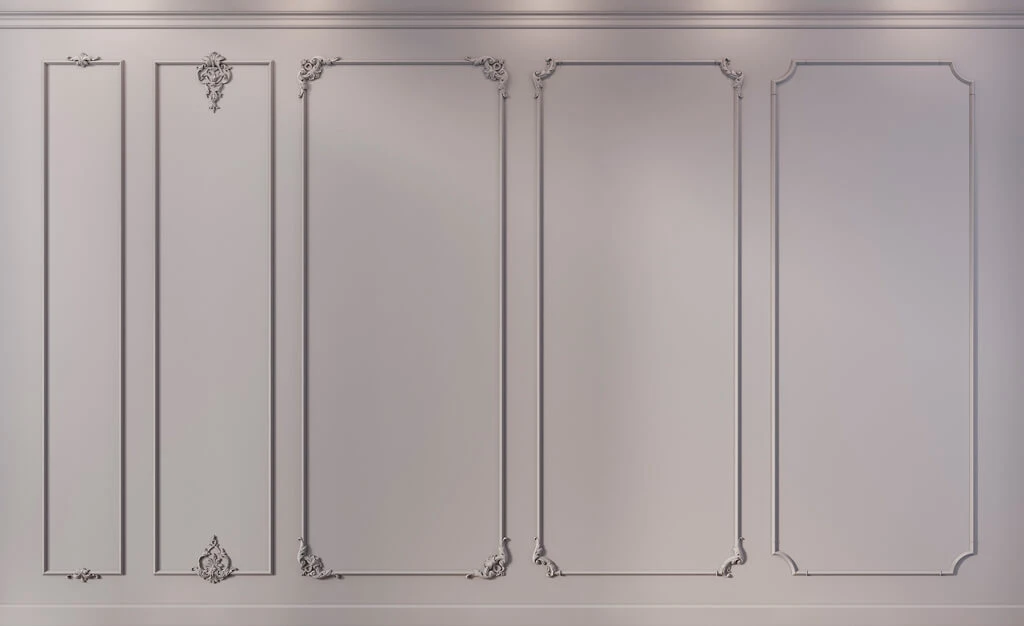
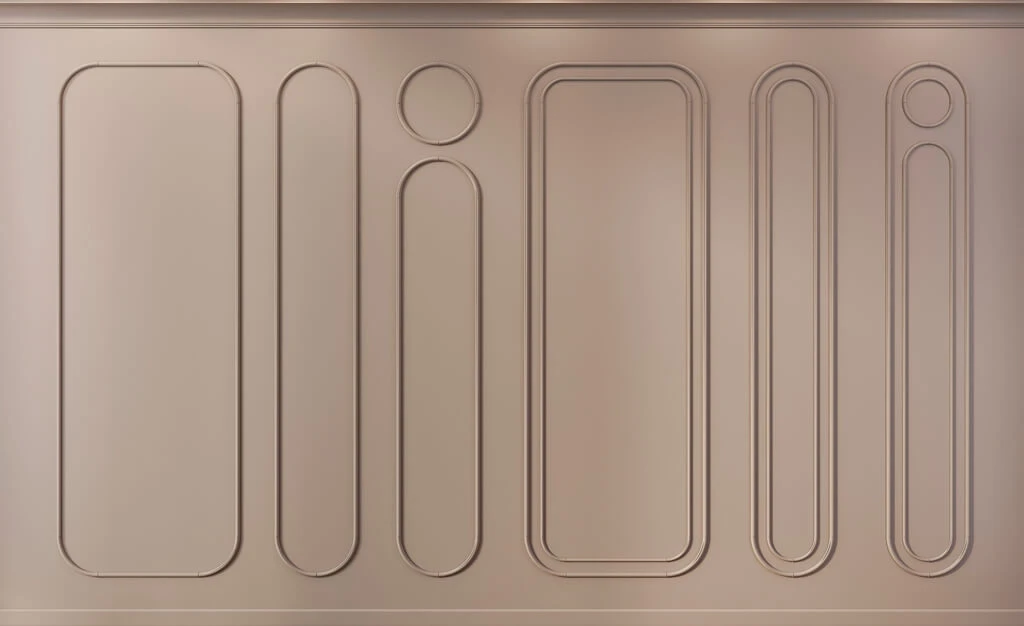
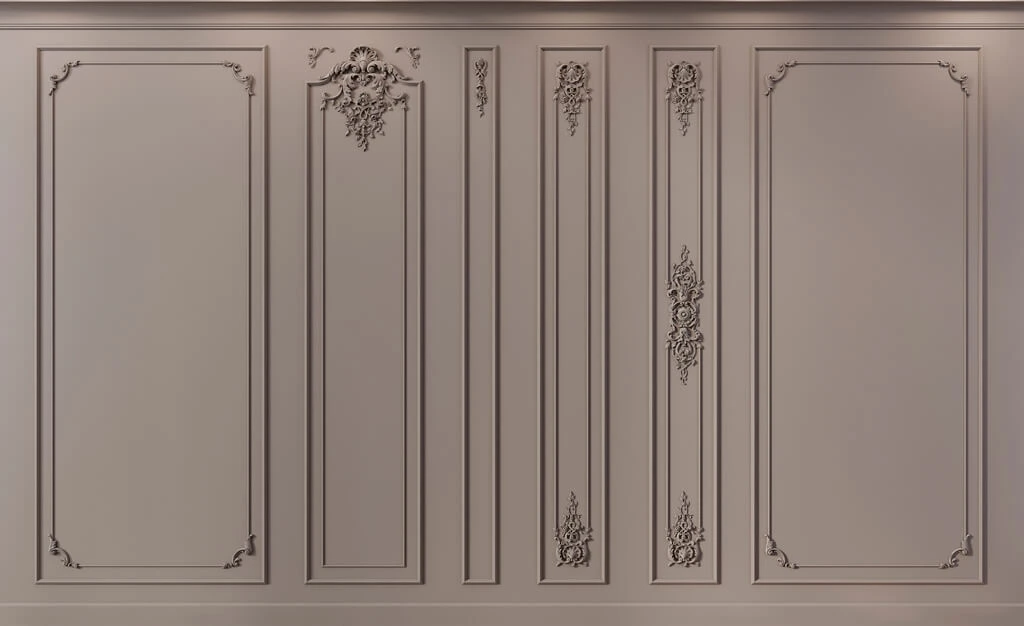
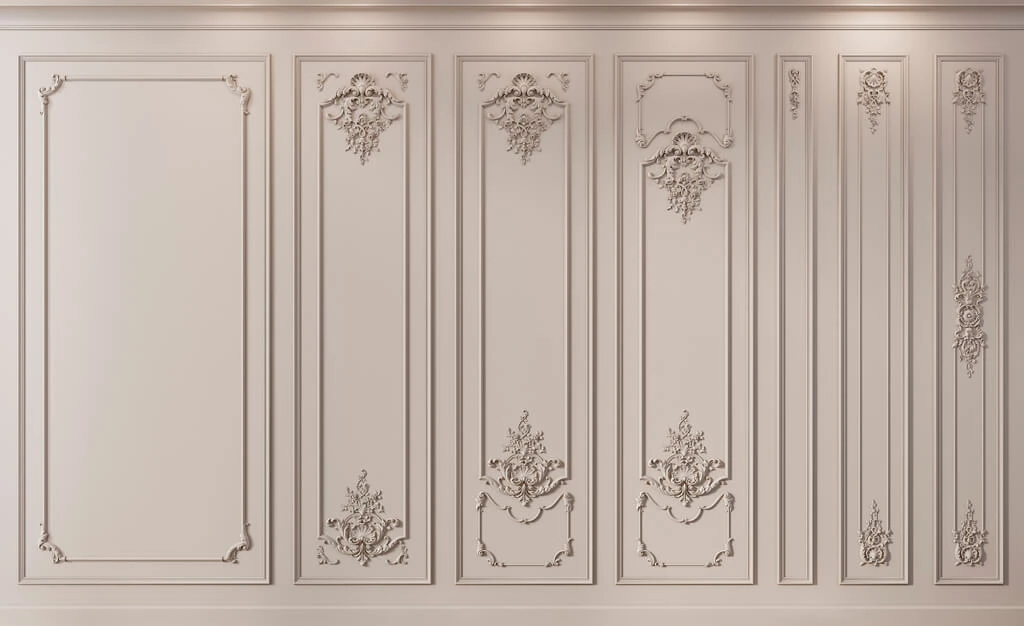
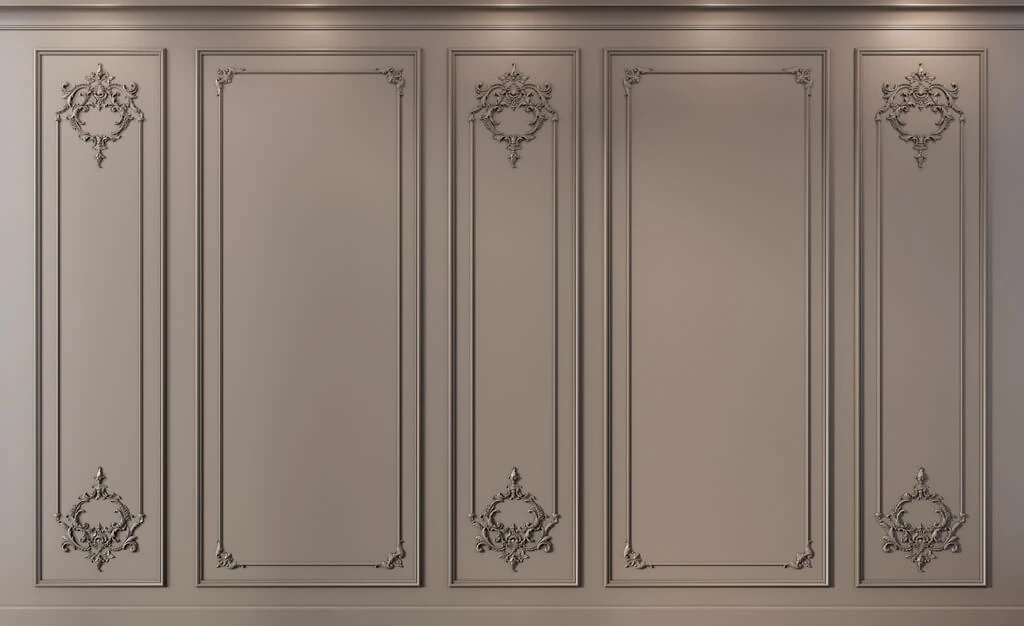
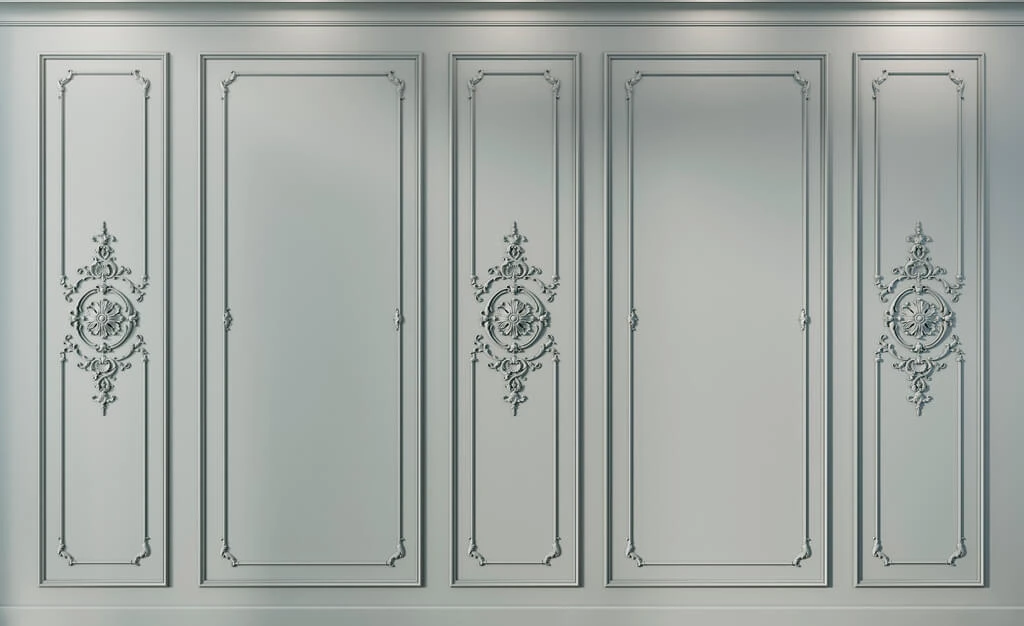
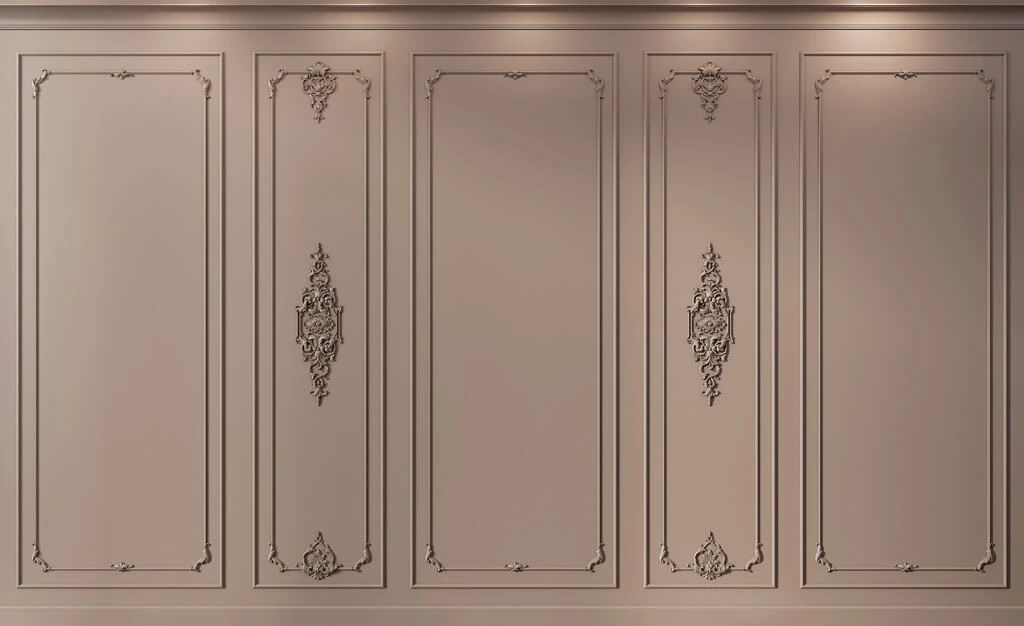
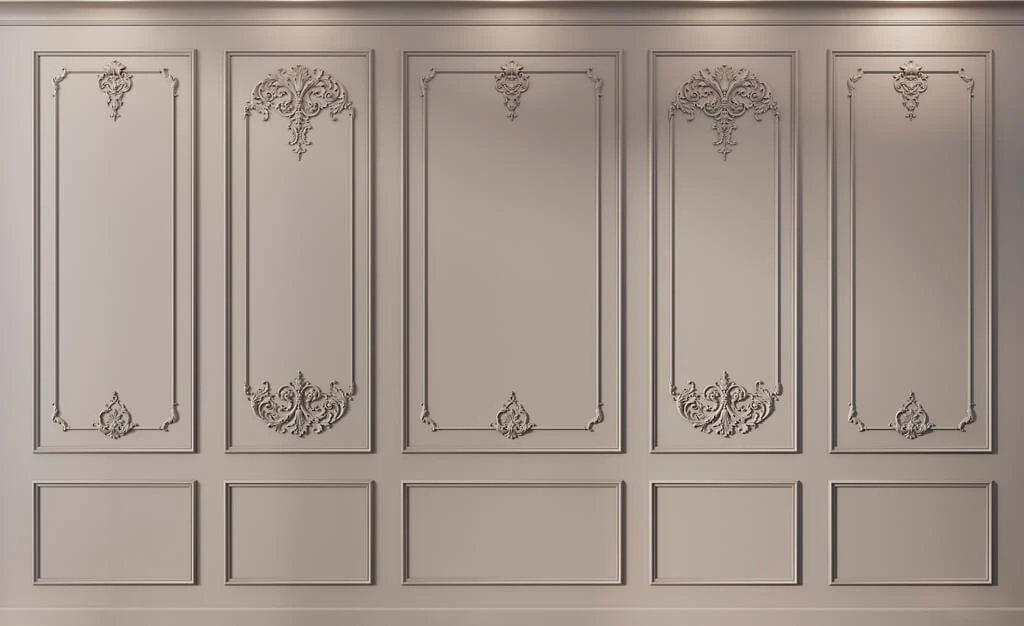
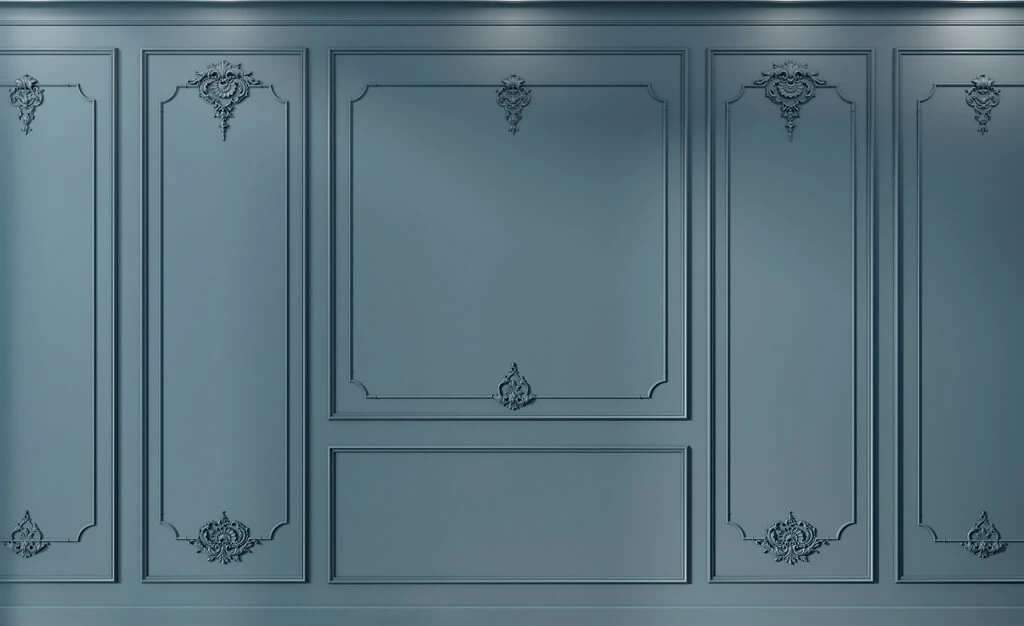
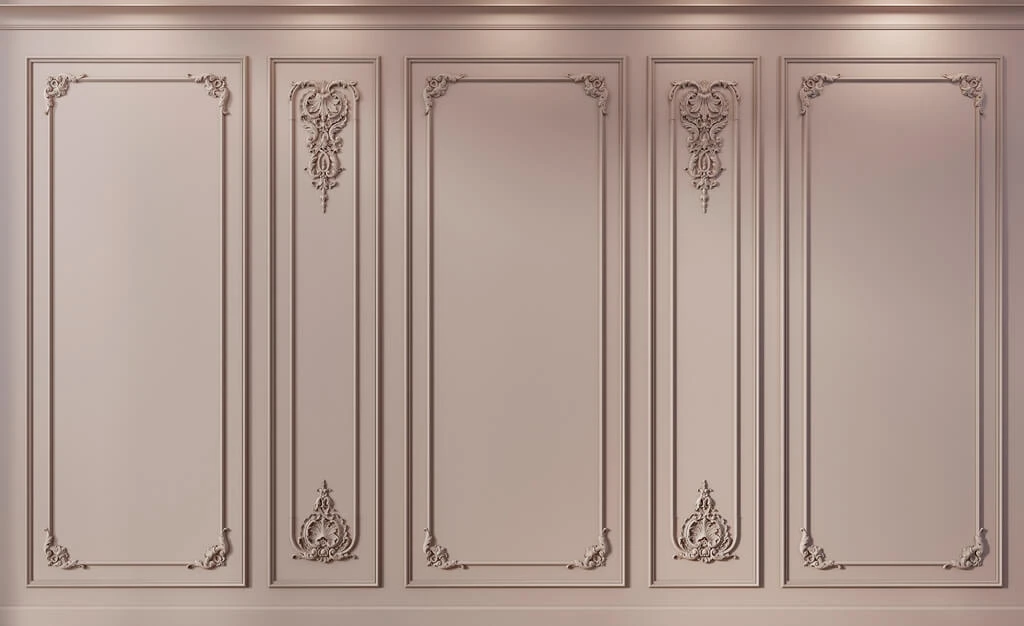
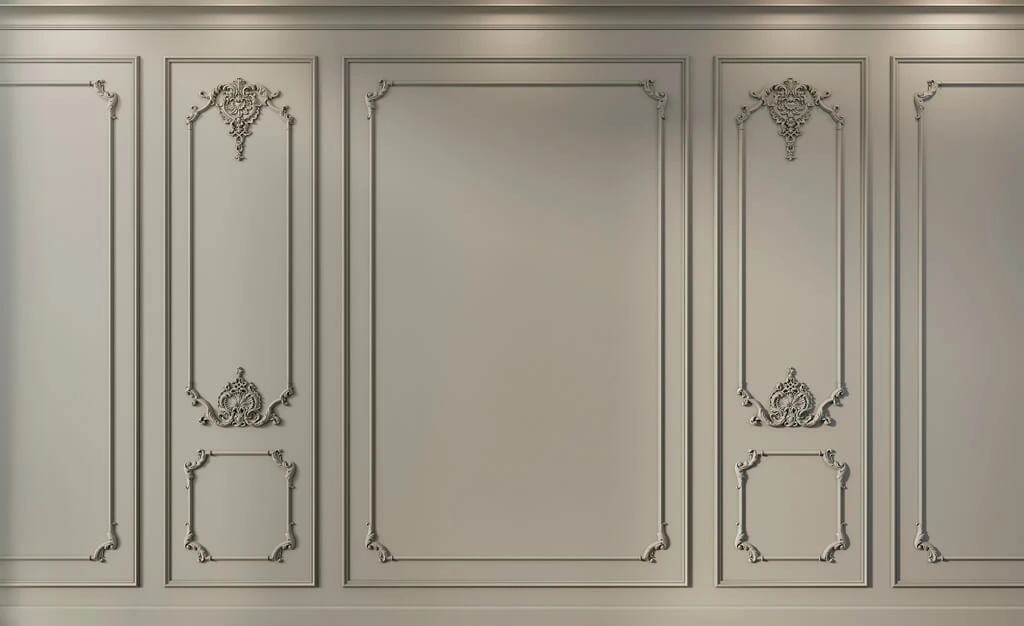
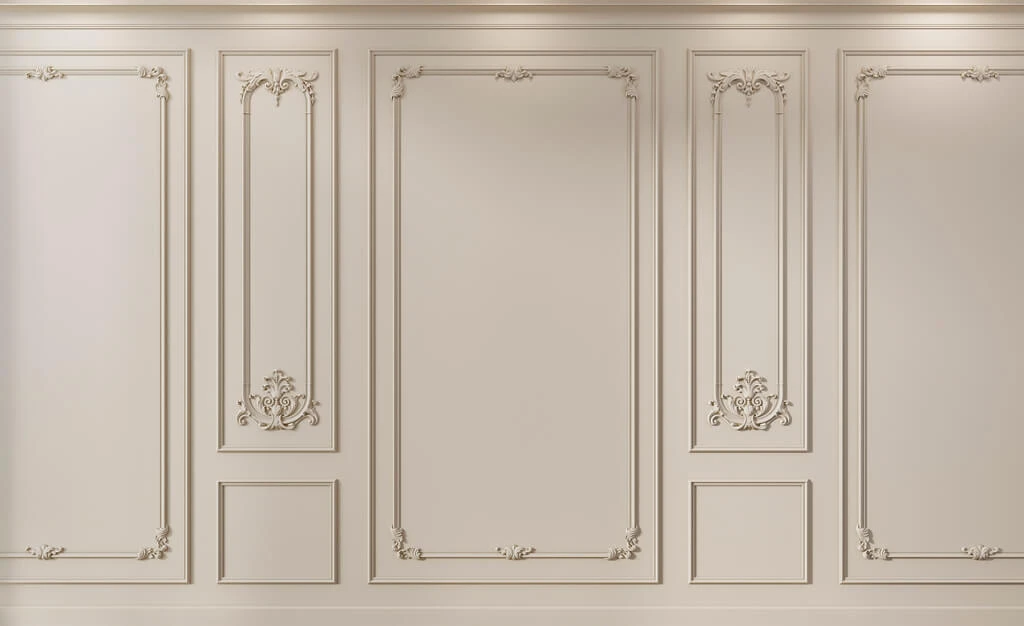
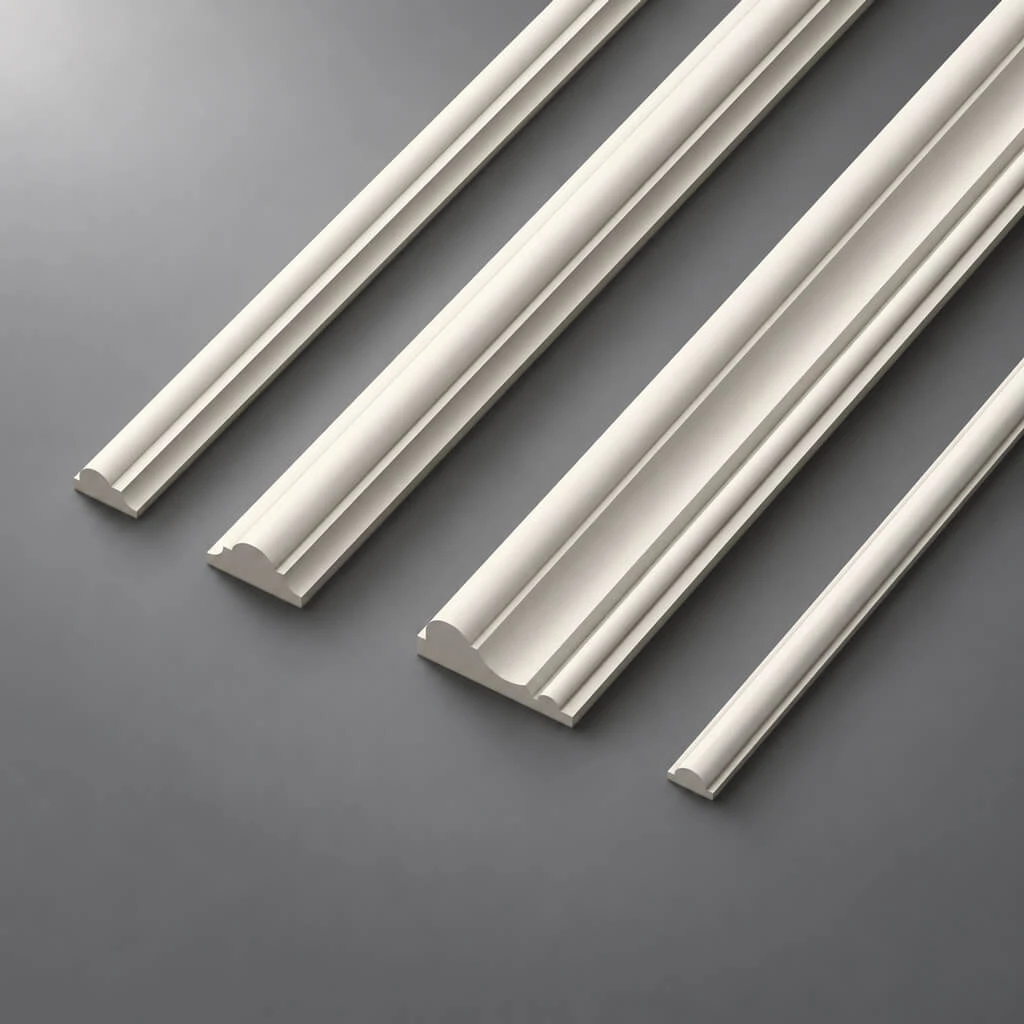
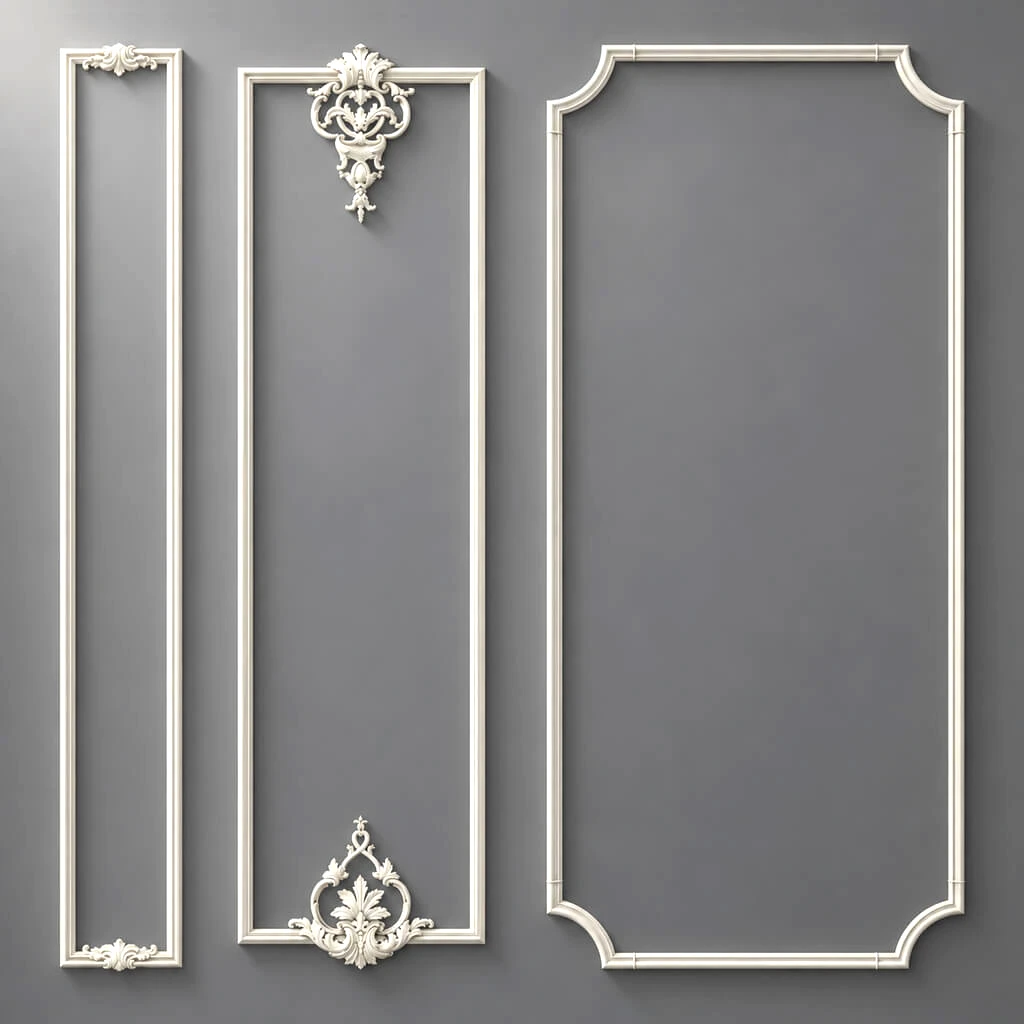
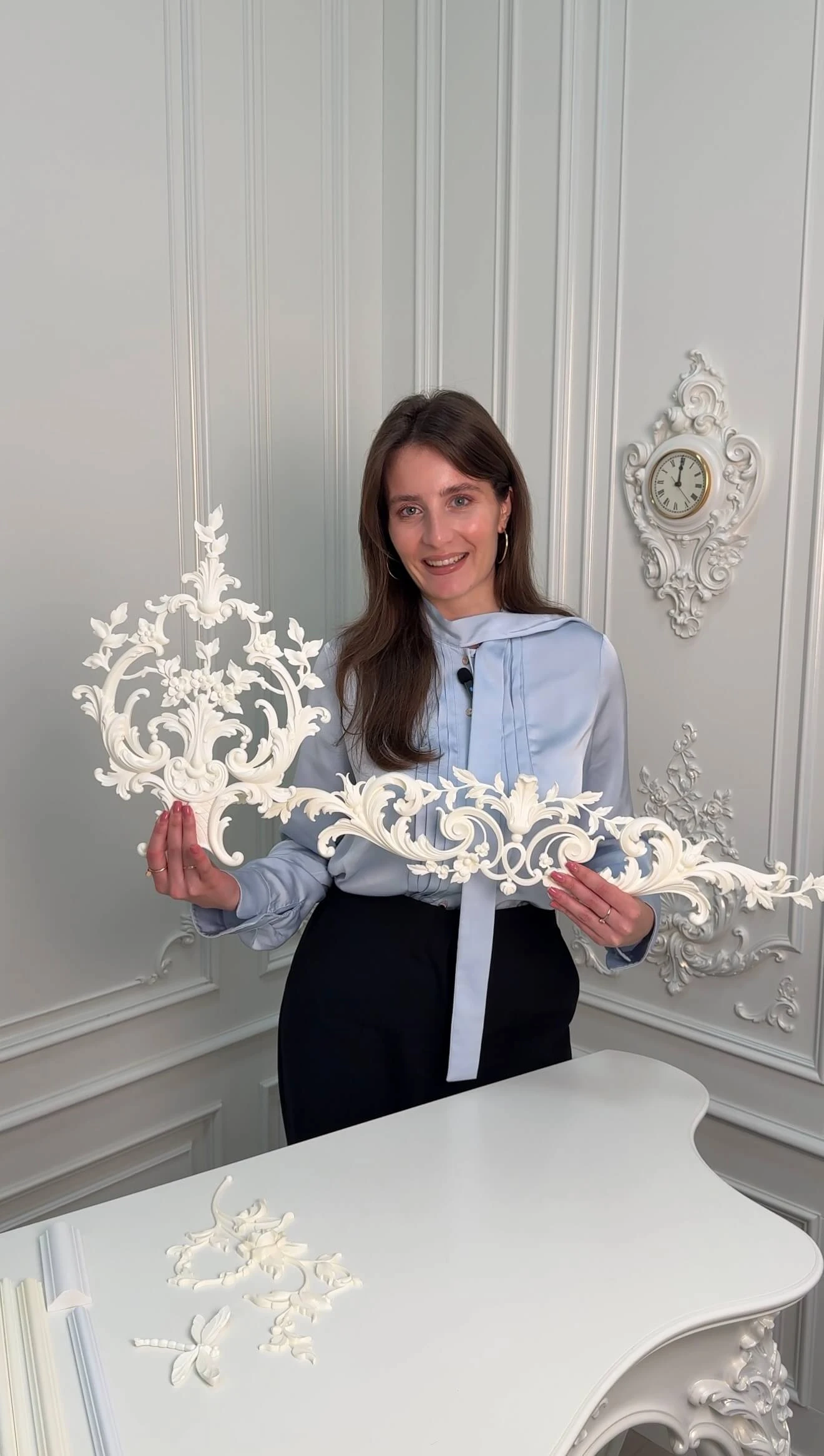
Moldings made of polyurethane on this wall — decorative frames, horizontal bands, vertical divisions — turn a simple painted plane into an architectural surface. They create a visual background against which the sofa and coffee table read as parts of a single scene.
How this technique works:
-
Large rectangular frame made of molding behind the sofa — a horizontal 'TV' that visually holds the sofa;
-
Inside the frame — a different color or wall texture (accent color, wallpaper, decorative plaster);
-
At the corners of the frame — Decor for Molding: corner inserts;
-
In the center of the wall above the frame — a small decorative accent: a painting, mirror, or polyurethane overlay.
Baseboard: the invisible hero of the interior
The baseboard — a horizontal line at the base of the walls — sets the lower limit of the living room. If the baseboard is small and inconspicuous, the room loses 'weight'. A proper classic baseboard made of polyurethane molding — 80–120 mm high — creates a clear foundation for the entire interior.
The baseboard also visually connects furniture legs to the floor: furniture legs the coffee table "grows" out of the floor plane, and the baseboard creates a transition between them.
Cornice: the top line of a classic living room
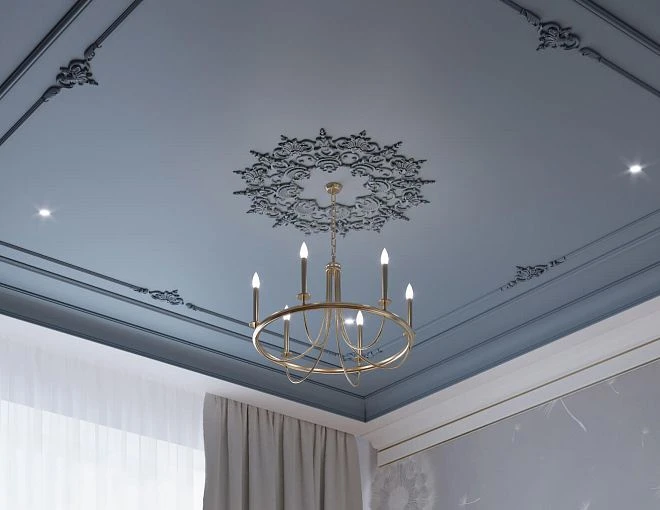
Cornice made of moldings from polyurethane along the perimeter of the ceiling — this is the top "frame" of the living room. In a classic interior without a cornice, the room looks unfinished: the ceiling "falls" onto the walls without an architectural transition.
Cornice in a classic living room — 60–120 mm high. For high ceilings (280 cm and above) — a more developed profile. For standard ones (250–260 cm) — neat, not overloading the space.
Wall decor: accent zones
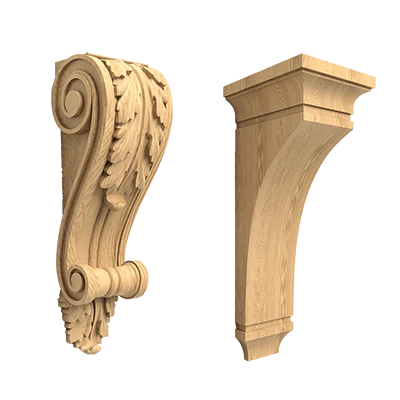
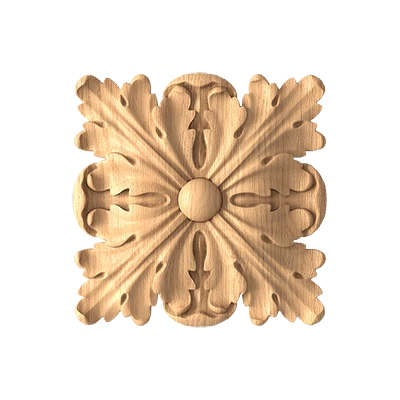
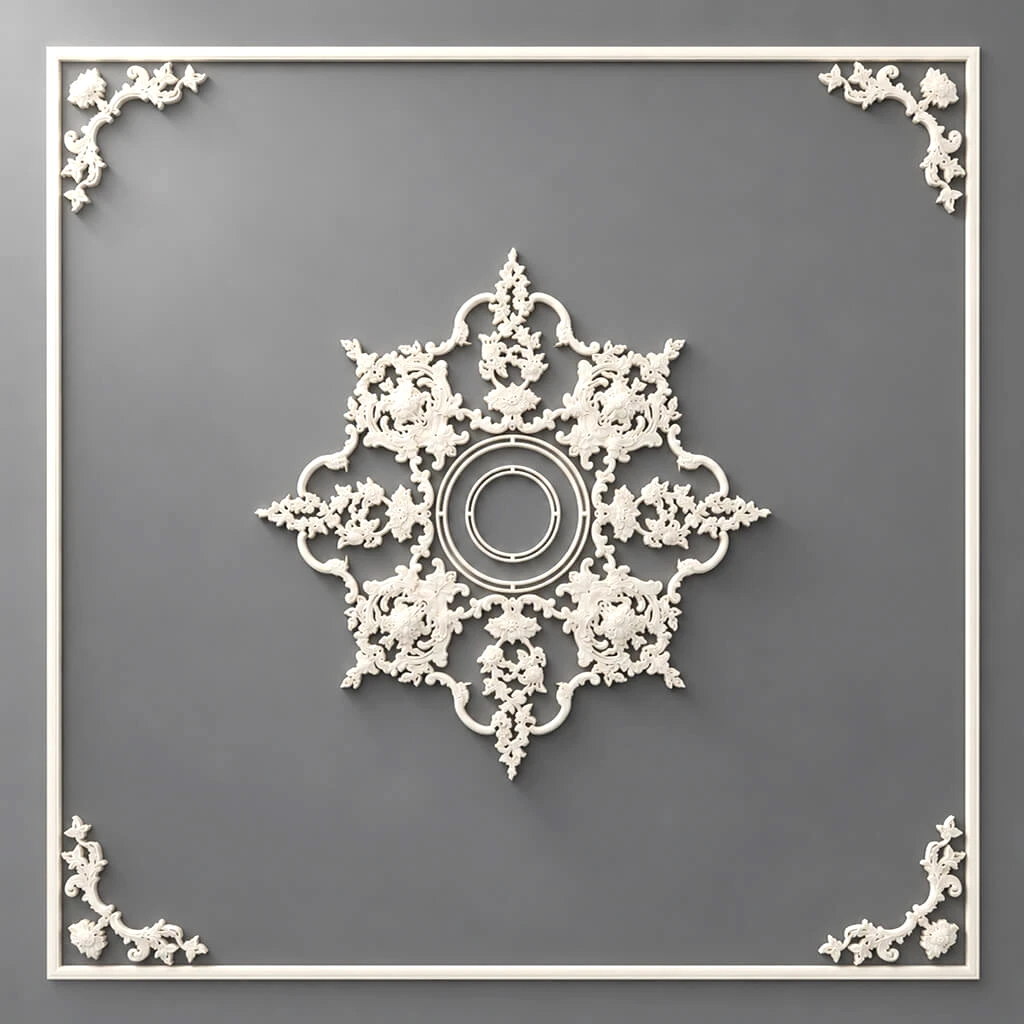
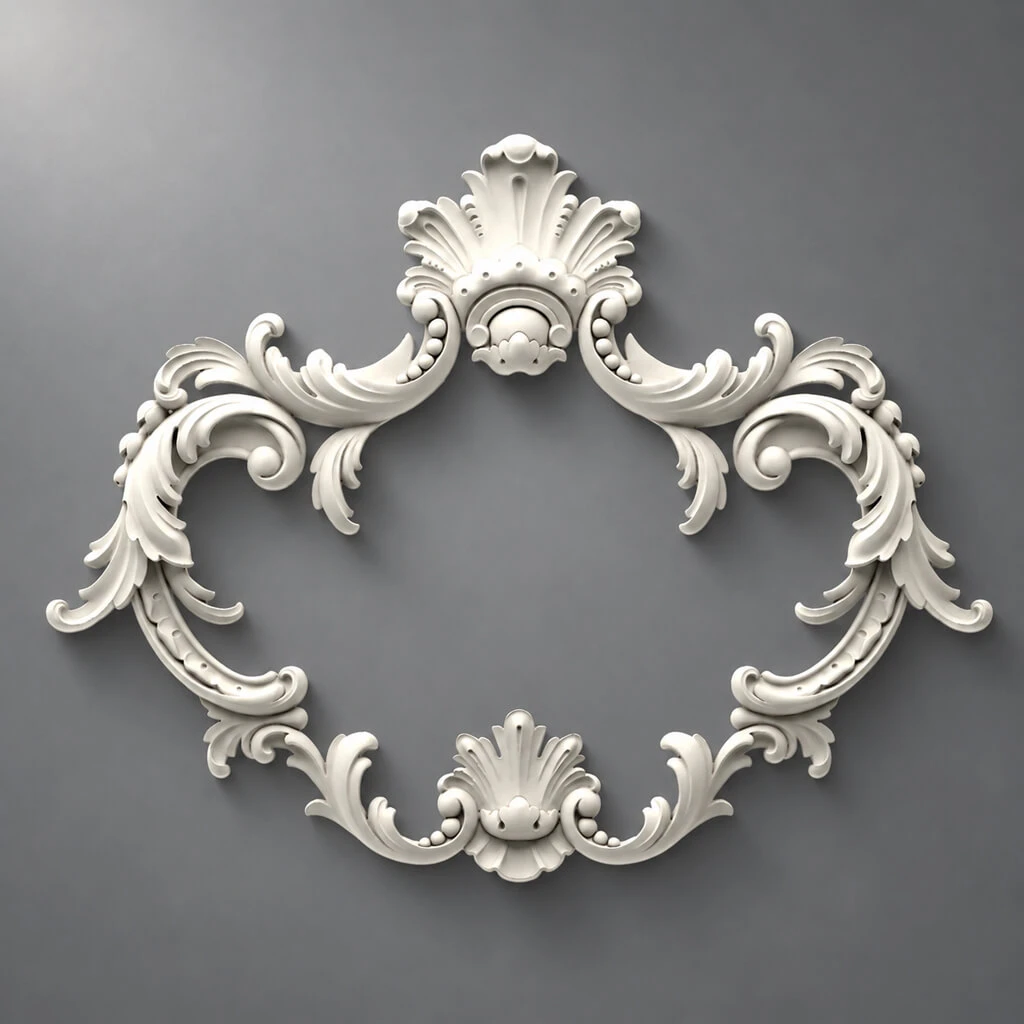
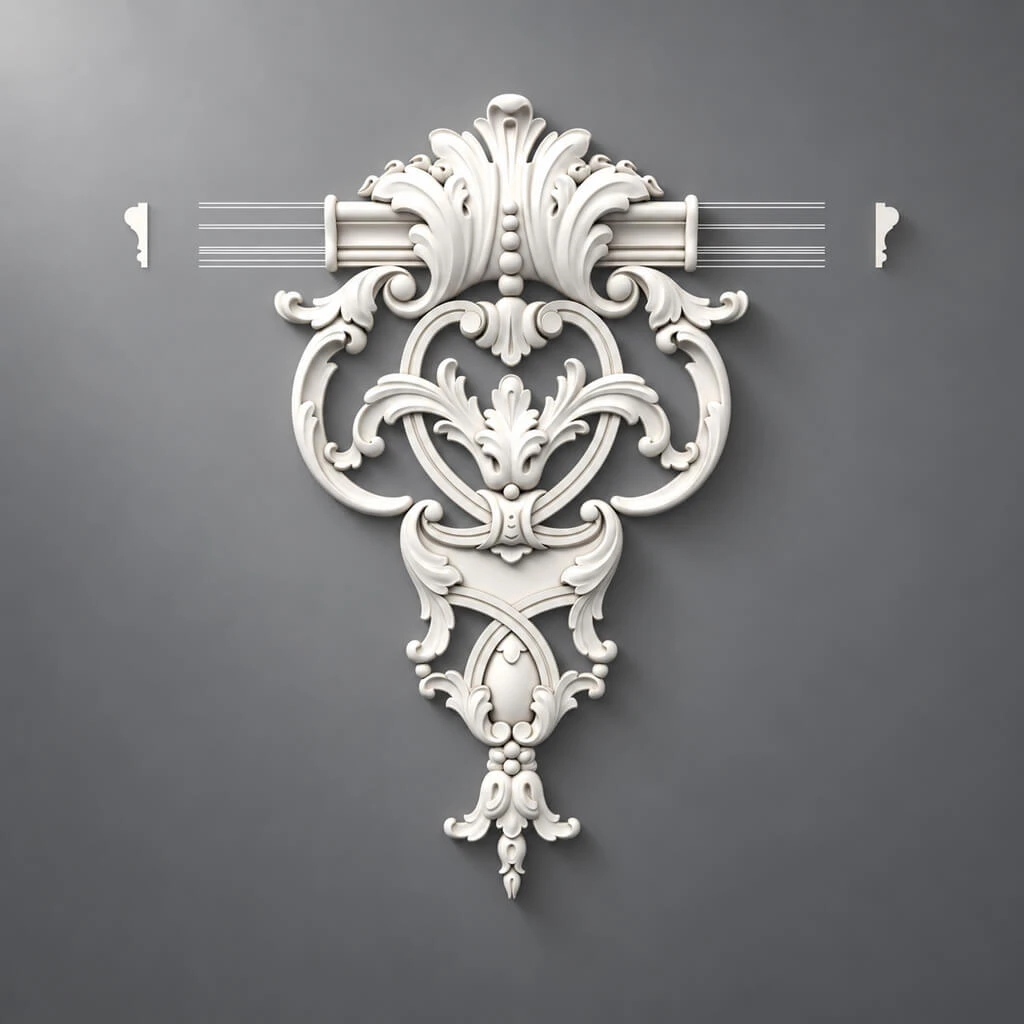
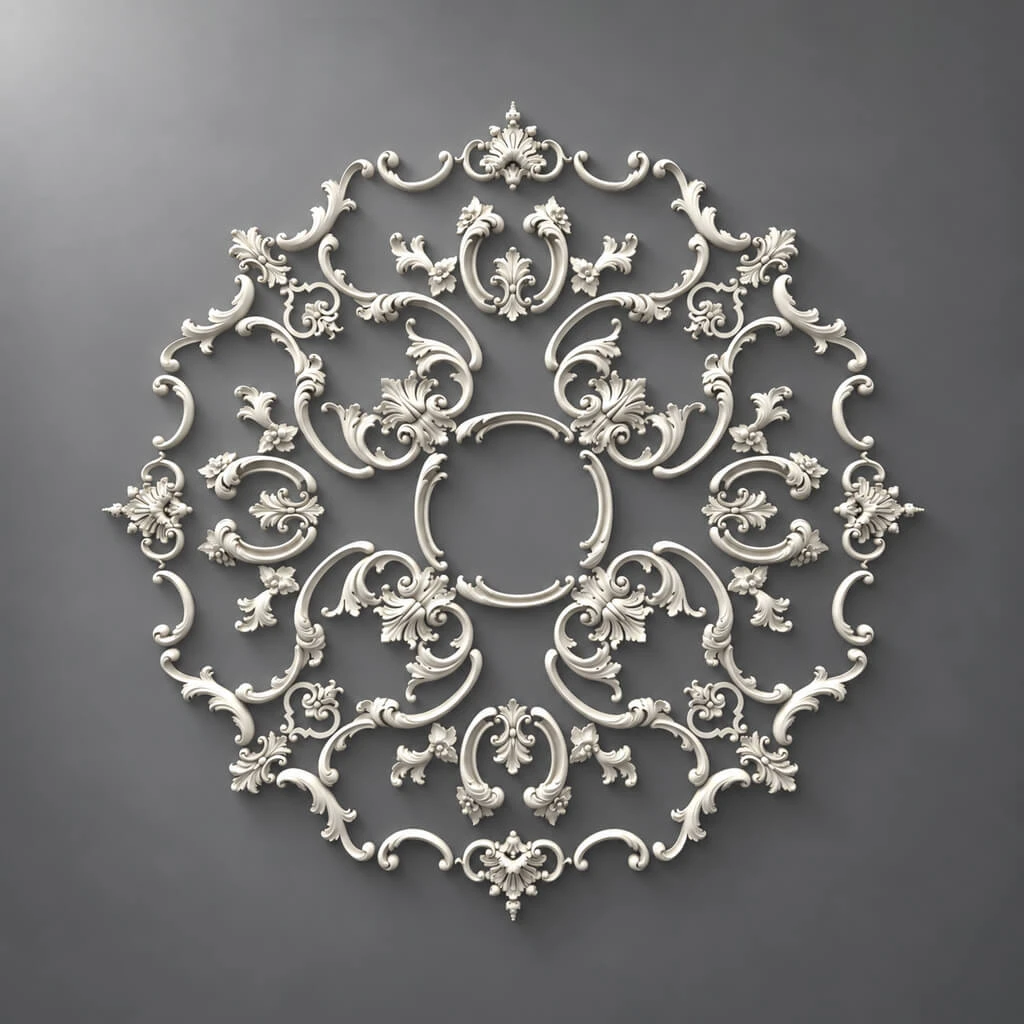
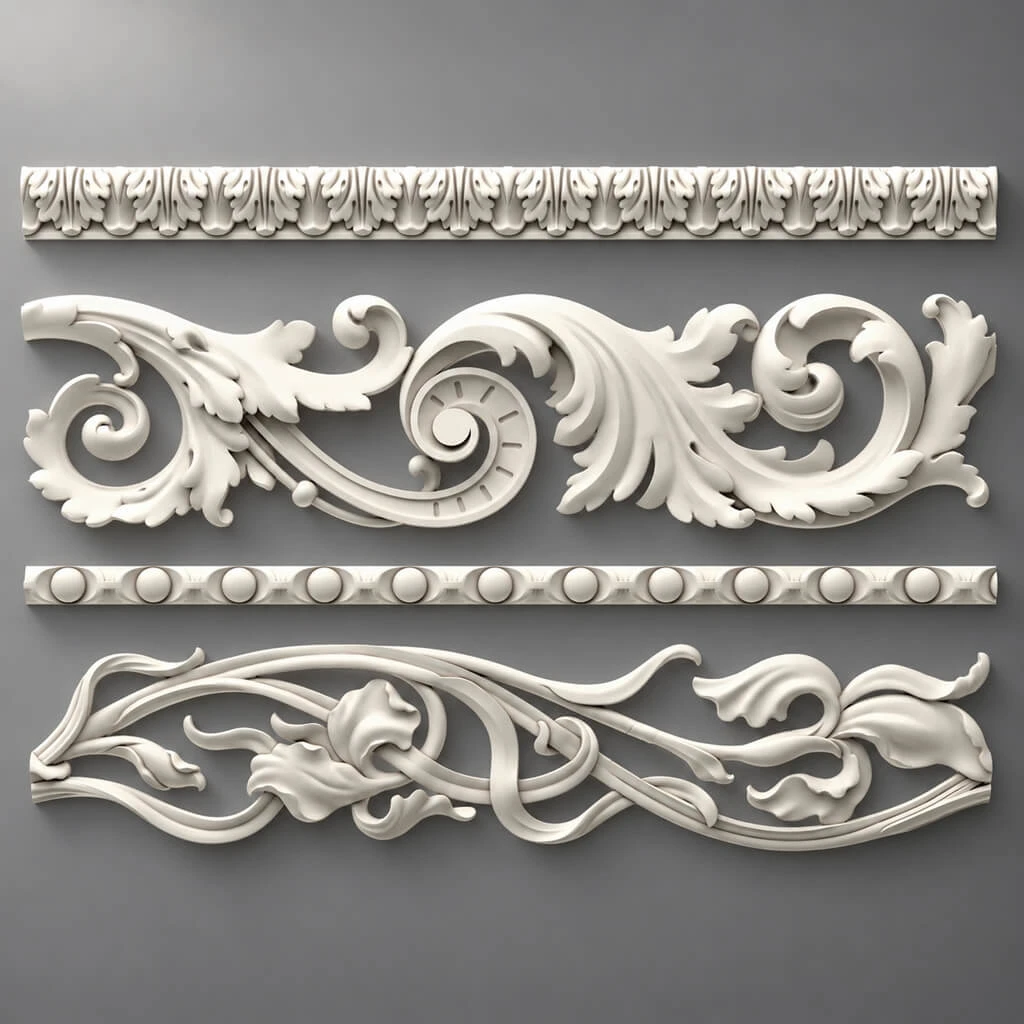
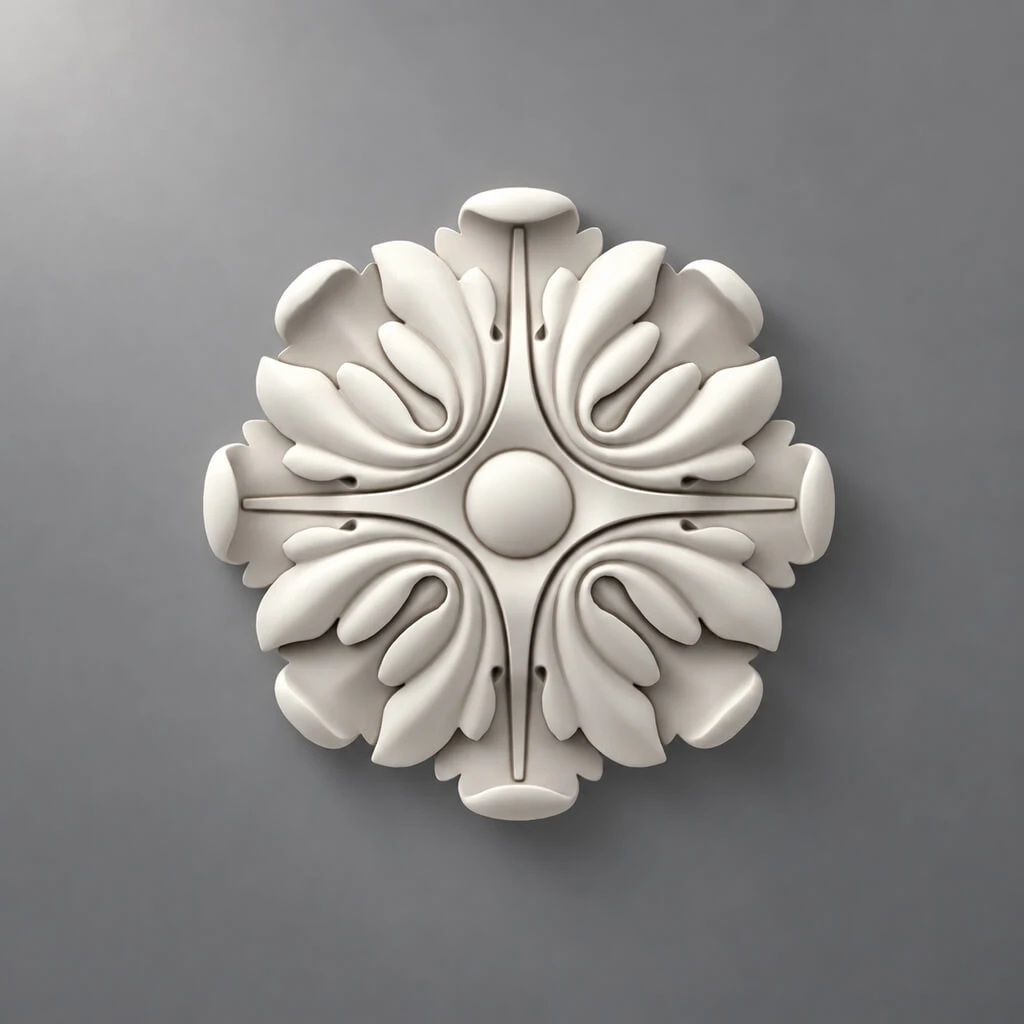
Polyurethane wall decor these are individual decorative elements: medallions, acanthus scrolls, relief inserts. They are used selectively — in specific areas of the wall — and create decorative accents without "filling" the entire plane.
Above the sofa, in the corners of the wall behind the TV, along the axis of a mirror or painting — Wall Decor works as decorative punctuation: dots, dashes, exclamation marks in the visual text of the interior.
Ready-made sets for different types of living rooms
Set: coffee table for a classic living room
Task: living room 20–25 m², style — modern classic, sofa 240 cm, coffee table 120 × 70 cm.
Wooden items:
-
Furniture legs — 4 pieces, turned, height 390 mm (final table height ~42 cm with 30 mm tabletop);
-
Furniture Handles — if the table has a drawer;
-
Wooden decoration — overlay on the apron (lower frame) of the table.
Polyurethane items:
-
Moldings made of polyurethane — frame on the wall behind the sofa (2 × sofa width + 2 × frame zone height);
-
Decor for Molding — 4 pieces for the frame;
-
Polyurethane moldings — cornice profile along the ceiling perimeter;
-
Polyurethane trim — baseboard along the living room perimeter.
Mounting materials:
-
Fasteners for legs, PU glue, sealant, primer, paint, varnish or oil for legs.
Set: table with drawer in Empire style
Task: coffee table with one drawer, classic Empire style, painted cream.
Wooden items:
-
Furniture legs — 4 pieces, square section with flutes, height 400 mm;
-
Furniture Handles — classic Empire-style deadlift;
-
Wooden decoration — central overlay on the drawer front.
Polyurethane items:
-
Polyurethane appliqués — corner decorative accents of the facade;
-
Moldings made of polyurethane — frame around the perimeter of the drawer front.
Finishing materials:
-
Primer, cream paint, 10% spare.
Set: sofa area — full wall decor
Task: decorate the wall behind the sofa 360 cm wide, ceiling height 270 cm, style — neoclassical.
Polyurethane items:
-
Moldings made of polyurethane — three rectangular frames across the width of the wall;
-
Decor for Molding — 4 × 3 = 12 corner inserts;
-
Polyurethane moldings — cornice around the perimeter of the ceiling in the living room;
-
Wall Decor — central accent in the middle frame;
-
Polyurethane trim — baseboard.
Wooden items:
-
Furniture legs — for a coffee table in the center of the zone;
-
Wooden decoration — accent overlays on the side cabinets.
Set: soft classic — calm classic
Task: living room 18 m², soft modern classic, minimal relief, no heavy stucco.
Wooden items:
-
Furniture legs — conical, section 35 mm, height 380 mm;
-
Furniture Handles — thin wooden, minimalist.
Polyurethane items:
-
Moldings made of polyurethane — thin profile (20–25 mm), one frame behind the sofa;
-
Polyurethane trim — baseboard 80 mm.
Set: small living room
Task: a studio or small living room of 14–16 m², visually expand the space, preserve the classic character.
Principle: in a small room, everything works for lightness. Thin legs, small molding, low baseboard.
Wooden items:
-
Furniture legs — tall (450 mm), thin (30 mm cross-section) — a table on high legs visually 'lifts' the space;
-
Furniture Handles — small, concise.
Polyurethane items:
-
Moldings made of polyurethane — thin profile, one row of frames in the lower half of the wall behind the sofa;
-
Polyurethane trim — baseboard 70 mm.
How to choose legs for a coffee table: step-by-step guide
This is one of the most practical sections of the article. Let's break it down step by step — no fluff.
Step 1: measure the height of the sofa seat
Sit on the sofa and measure the distance from the floor to the top plane of the seat (without softness — to the base of the cushion). This is your reference height. The table should be 2–5 cm below this mark.
Step 2: calculate the required leg height
Desired table height (e.g., 42 cm) minus tabletop thickness (e.g., 22 mm = 2.2 cm) = leg height = 39.8 cm ≈ 400 mm. Round to a standard leg size.
Step 3: check if there is a rug
A rug changes the effective leg height. A pile rug 15 mm thick effectively 'lowers' the table by 1.5 cm. If a rug is planned, add its thickness to the calculation.
Step 4: choose the profile according to the style
Sofa with curved wooden legs → coffee table with cabriole legs. Sofa with square minimalist supports → table with square legs. Sofa with tapered legs → table with tapered legs. furniture legs.
Step 5: check the cross-section under load
Tabletop up to 5 kg, light use — cross-section 30–35 mm. Tabletop 5–15 kg, standard use — 40–45 mm. Heavy tabletop (marble, solid oak) — 50–60 mm.
Step 6: match the leg finish with the rest of the furniture
If Furniture Legs In a living room with a 'dark walnut' finish — the coffee table legs should be in the same or a similar finish. If all furniture legs are white or painted — the table legs should be too.
Step 7: check the fasteners
Furniture legs are attached to the tabletop or frame in two ways:
-
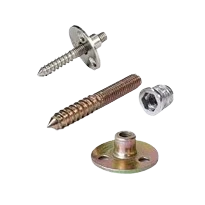
Screw-in bolt pin — the leg has a threaded hole, screws into a nut embedded in the base;
-
Mounting plate — on a bracket, screwed to the leg and to the base.
Make sure the chosen method is compatible with the thickness of your base.
Unified style: how to connect the table, sofa, and wall
Good living room design is not a set of beautiful objects. It is a system of visual rhymes: when the profile of a table leg echoes the profile of wall molding, when the wood tint matches the shade of wooden cornice elements, when Furniture Handles the cabinets "talk" to the chair legs.
Here are a few specific rhymes:
-
Turned conical table leg → thin elegant Polyurethane molding on the wall;
-
Cabriole leg → a richer cornice with moldings;
-
Square fluted leg → strict rectangular molding frames without complex profiles.
Scale principle: a large leg — a more expressive molding. A thin leg — a light, thin profile. No need for artificial contrast.
Mistakes when choosing legs and decor for the living room
Mistake 1: choosing legs only from a photo
A photo shows proportions, but not the actual scale. A leg that looks elegant in a picture may turn out to be too thin for your tabletop or, conversely, too heavy. Always check the dimensions: height, cross-section, diameter at the top.
Mistake 2: not considering the sofa height
A coffee table higher than the sofa seat is functionally inconvenient and visually strange. Calculate the height using the steps above — it will take 5 minutes but eliminate the mistake.
Mistake 3: forgetting about the rug
A pile carpet of 15–20 mm is a noticeable difference. Legs on a hard floor and on a soft carpet give different final table heights.
Mistake 4: choosing heavy legs for a small table
A massive leg 60 × 60 mm on a small table 50 × 80 cm creates a feeling of "an elephant in a china shop." Proportion: leg width — no more than 1/10 of the smaller side of the tabletop. For a 50 cm table — leg no wider than 50 mm.
Mistake 5: mixing styles of legs, handles, and moldings
Cabriole legs on a table + square handles on a cabinet + strict geometric molding on the wall — these are three different styles in one room. No unity. Choose one stylistic axis and follow it.
Mistake 6: active decor on both the table and the wall simultaneously
Carved decor on legs + rich stucco on the entire wall + complex cornice + overlays on all cabinets = overload. Rule: one main accent in the zone. If the wall is rich — the table is calmer. If the table is expressive — the wall is simpler.
Mistake 7: not taking a reserve of moldings
Moldings are cut to length. When installing a frame — 8 cuts for one rectangular frame. When using decoration for moldings (corner inserts) — fewer, but straight sections are still needed. Reserve of the polyurethane molding — 15%.
Error 8: skip sealant when installing molding
A joint between the molding and the wall without sealant is a potential crack after the first seasonal temperature change. Acrylic sealant is applied into the seam before priming and before painting. This is not an option — it is a mandatory step.
Installing coffee table legs: what is important to know
Fastening method
The most reliable option for furniture legs — a bolt-pin with threaded rod. It screws into the leg and is screwed into a steel nut (terminal insert) embedded in the table base. This connection can be removed and reinstalled.
Mounting plate (angle) — a simpler option, but less neat: the plate is visible from below.
Adhesive fastening without threads — only for lightweight decorative elements, not for load-bearing legs.
Level uniformity
After installing all four legs, check the table on a level surface: does it wobble? If it wobbles, one of the legs is slightly shorter. Solution: an adjustable cap-plug on the lower end of the leg (standard accessory) or a thin shim.
Acclimatization of wooden legs
wooden furniture legs Before installation, they must rest in the room for 24–48 hours. The wood adapts to humidity. Installation immediately after delivery, especially in winter, carries a risk of slight shrinkage.
STAVROS: legs, decor, and moldings — all in one standard
The living room is a space where every detail is visible. There are no "hidden" areas: table legs are fully visible, moldings cover the entire wall, baseboards run along the entire perimeter. That's why a unified standard of proportions and style is most important here.
STAVROS is a Russian manufacturer of decorative products made from solid beech and polyurethane, operating since 2002. Production is based in Saint Petersburg. The entire range is created within a unified system of proportions, where Furniture legs и Handles solid wood items are coordinated in scale with polyurethane moldings и moldings.
The STAVROS catalog includes everything needed for a classic living room:
-
Solid beech furniture legs — turned profiles of various heights and shapes;
-
Furniture Handles — 32 models, 4 finishes;
-
Wooden decor and overlays — for furniture facades and accent areas;
-
Pogonazh iz massiva — bead, layout, profiled trim;
-
Moldings made of polyurethane — frames and profiles for walls;
-
Polyurethane moldings — cornices, relief belts, ceiling accents;
-
Polyurethane appliqués — decorative elements without load;
-
Polyurethane wall decor — accent elements of the living room walls;
-
Decor for Molding — corner and lock inserts;
-
Polyurethane trim — baseboard and transition profiles.
Minimum order: one piece. Contact us to confirm shipping to your destination. Warehouse in Saint Petersburg. Showrooms in Saint Petersburg and Moscow. Shipping time: from 3 business days.
STAVROS is a manufacturer that understands: four coffee table legs и moldings on the wall behind the sofa — these are not two separate solutions. This is one interior. This understanding stands behind every item in the catalog.
Frequently asked questions
Which legs to choose for a coffee table?
Rely on three parameters: sofa height (the table should be 2–5 cm lower than the seat), living room style (cabriole for Baroque and Rococo, tapered for Neoclassicism and modern classic) and load (cross-section 35–50 mm). Full selection in the catalog solid wood furniture legs.
Can you combine wooden table legs with polyurethane stucco molding?
Yes, and that is the right system. wooden furniture supports — in the load-bearing parts of the table. Polyurethane moldings и Moldings — on the walls, cornice, and baseboard. Wood in furniture, polyurethane in an architectural context.
What to buy for the sofa area with a coffee table?
Legs for coffee table, Wooden decoration for the facade, Moldings made of polyurethane on the wall behind the sofa, stucco cornice, Skirting, PU glue, sealant, primer, paint, and spare material.
How not to overload the living room with decor?
One main accent in the zone. If the table legs are expressive, the wall is calmer. If the wall behind the sofa is rich, the table is more laconic. General rule: the smaller the room, the thinner the profiles and the fewer decorative layers.
Are polyurethane overlays suitable for cabinets next to the table?
Yes, for decorative areas without constant load — excellent. Polyurethane appliqués On the sides of cabinets, facade accents without mechanical impact — exactly where a light relief for painting is needed.
Is sealant needed when installing moldings in the living room?
Absolutely. Acrylic sealant is applied to the joint between the molding and the wall before priming. Without it, cracks appear along the joint line after seasonal temperature changes — especially noticeable on white and light surfaces.
How to calculate legs for a coffee table?
Sofa height (from floor to seat) minus 2–5 cm = required table height. Minus tabletop thickness = required leg height. Plus carpet thickness if present. Round to a standard size from the catalog. furniture legs.