










































































Article Contents:
- Capital: A Detail That Requires an Ensemble
- What Is a Capital and Why It Appeared This Way
- Three Classical Orders and Their Capitals
- Where a Capital Is Appropriate in an Interior: All Application Scenarios
- Pilasters by a Wall or Partition
- Door and Arch Portal
- Hall and Foyer
- Office and Library
- Classic Living Room with High Ceilings
- Commercial interiors
- How to Match a Capital to a Pilaster: Five Key Parameters
- First parameter: pilaster width
- Second parameter: wall height and order proportions
- Third parameter: capital relief depth
- Fourth parameter: ornament style
- Fifth parameter: capital material
- Moldings near the capital: how to create a unified architectural system
- Horizontal molding at capital level: support line
- Molding frames between pilasters
- Upper horizontal line: from capital to cornice
- Plinth and pilaster base: lower finish
- Decorative stucco and stucco decor in a system with a capital
- Overdoor overlay: accent above the capitals
- Stucco decor in the center of the wall panel
- Decor for moldings: corner inserts in frames
- Symmetrical decorative elements on the sides of the capital
- Four scenarios for using capitals: from minimal to formal
- Scenario one: "Door portal with capitals"
- Scenario two: "Pilasters in the hall"
- Scenario three: "Shelving unit with capitals"
- Scenario four: "Fireplace area with paired pilasters"
- How not to overload an interior with capitals: principles of restraint
- Principle one: one main zone
- Principle two: scale dictates quantity
- Principle three: calm capital + rich moldings vs rich capital + calm moldings
- Principle four: a single color
- What to buy together with a capital: a complete checklist
- Frequently Asked Questions
- STAVROS: the capital as part of a system


Capital: a detail that requires an ensemble
There are decorative elements that work on their own. A painting on the wall, a lamp above the table, a decorative vase — each of them exists autonomously and does not require an architectural context. The capital is not from this category.
A capital — the top completion of a vertical architectural element: a column, pilaster, portal — exists only in a system. One capital on a bare wall without a pilaster, without moldings, without a cornice looks like an architectural quote torn out of context. Beautiful? Possibly. Understandable? No. Complete? Never.
That's why the question "how to choose a capital" is actually the question "how to assemble an architectural system with the capital at its center". And this article is exactly about that.
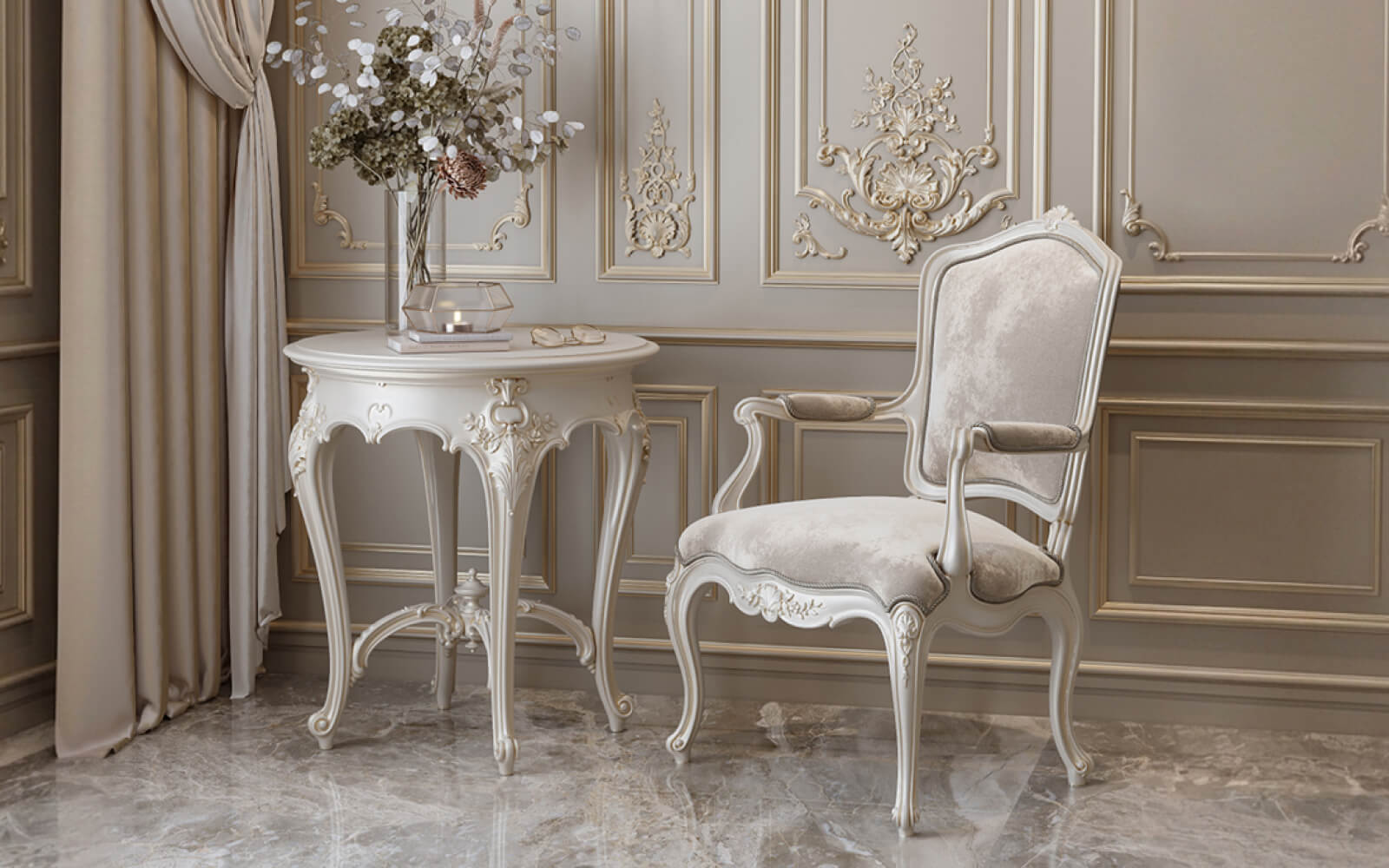
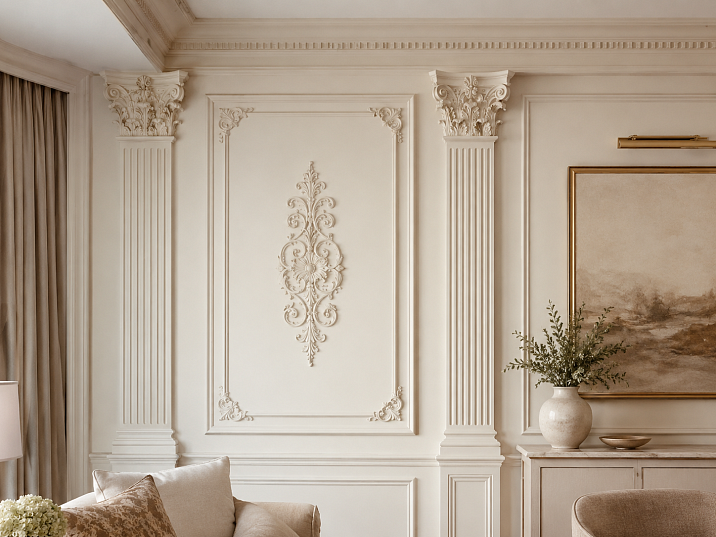
A capital only works within a system: the pilaster sets the vertical line, Moldings made of polyurethane connect it to the wall, Decorative stucco adds an accent, and a correctly chosen size makes the composition architectural rather than random.
If you have already looked at capitals in the catalog and couldn't figure out what to pair them with — this article will provide a comprehensive answer.




What is a capital and why it came to be exactly as it is
Before discussing selection, you need to understand the logic of the element. A capital is not just a decoration on top of a column. It is an architectural "transition zone" between the vertical load-bearing body and the horizontal ceiling.
In ancient architecture, the capital solved a structural problem: to expand the support area of the column before it receives the load of a beam or entablature. The Doric abacus — a slab above the echinus — is literally an adapter between the round section of the column and the rectangular beam ceiling.
That is why the capital visually appears "wider" than the body of the pilaster or column. This is not a decorator's whim — it is architectural logic, established over millennia.
In the interior, the capital retains the same role: it completes the vertical element and creates a transition to the horizontal line — the cornice, molding, or portal lintel. Without this horizontal line, the capital loses its meaning: it "transitions" into nothing.
Our factory also produces:


Three classical orders and their capitals
Doric capital — a strict echinus and abacus. Minimum ornament, maximum tectonic clarity. For interiors where restrained monumentality is valued: study, library, hall in a strict style.
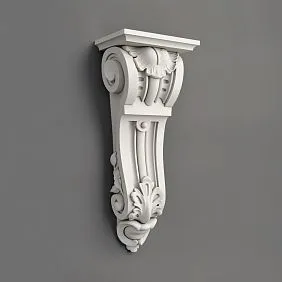
Ionic capital — characteristic volutes (scrolls) on the sides. More elegant than the Doric. For classic living rooms, bedrooms, studies with a touch of elegance.
Corinthian capital — a basket of acanthus leaves. The most ornamental, the most ceremonial. For formal interiors: entrance halls, living rooms with high ceilings, banquet halls.
In modern interior decor, simplified versions are added to these three — neoclassical capitals with generalized leaf ornament, geometric capitals for Art Deco, minimalist "cap" capitals for contemporary neoclassicism.
Get Consultation
Where a capital is appropriate in the interior: all application scenarios
The question "Do I need capitals?" is often asked. The answer is almost always yes, if the interior has at least one of the following elements.
Pilasters on a wall or partition
A pilaster is a flat half-column attached to a wall. It does not bear a load but creates a vertical rhythm, making the wall an architectural plane. A pilaster without a capital is just a vertical strip on the wall. A pilaster with capital is an architectural element.
Typical positions for pilasters with capitals:
-
On the sides of a doorway.
-
On the sides of a fireplace.
-
In the corners of a room as vertical accents.
-
Around the perimeter of a hall as a rhythmic system.
-
On a wide wall without windows to create architectural scale.
Door and arch portal
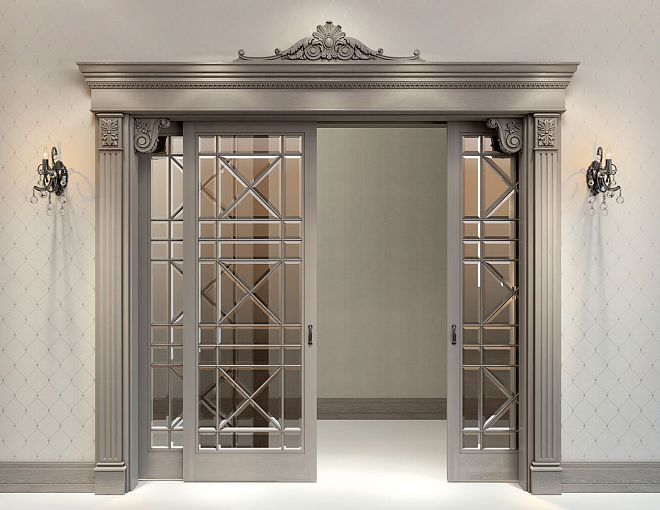
Portals — doorways designed architecturally — are a classic area for capitals. The vertical posts of the portal (pilasters or half-columns) are topped with capitals that support a horizontal cornice or arch archivolt.
buy a capital for a door portal — one of the most common tasks in classic finishing. Here, the capital works as an architectural node where the vertical movement of pilasters "stops" and transitions into the horizontal.
Hall and Entrance
The hall is the first and last space guests see. Capitals in the hall create a powerful first impression. A pair of pilasters with capitals on either side of the entrance door to the living room is an architectural "portal" to the house that is memorable.
Office and library
A strict Doric or Ionic capital on pilasters of a built-in bookshelf or on the sides of a work area is a "professional" decor that speaks to the seriousness of the space. In a study, a capital is also appropriate on small pilasters — 60–80 mm wide — as a marker for the vertical posts of the bookshelf.
Classic living room with high ceilings
A living room with a ceiling of 280–300 cm is an ideal environment for large capitals. They create a vertical rhythm that matches the scale of the room. Particularly expressive is a pair of pilasters on either side of the fireplace with Corinthian capitals under a powerful fireplace cornice.
Commercial interiors
Capitals in commercial interiors — restaurants, hotels, bank halls, meeting rooms — create a sense of prestige and durability. Here, large, richly ornamented capitals that work at a distance are appropriate.
How to choose a capital for a pilaster: five key parameters
This is the main practical question. Let's break it down in detail — no fluff, with specific numbers.
Parameter one: pilaster width
The capital must be wider than the pilaster body — this is a rule that cannot be broken. Typical ratio: capital width = pilaster width × 1.3–1.5.
Examples:
-
Pilaster 60 mm → capital 80–90 mm.
-
Pilaster 80 mm → capital 100–120 mm.
-
Pilaster 100 mm → capital 130–150 mm.
-
Pilaster 150 mm → capital 180–220 mm.
If buy a capital the same width as the pilaster — it "sinks" into the vertical and is not read as a completion.
Parameter two: wall height and order proportions
The classical order assumes certain proportions: the height of the column/pilaster from the base to the top of the capital is approximately 8–10 diameters (for the Ionic order) or 6–8 diameters (for the Doric order). In interiors, this ratio is adapted, but the logic remains.
Approximate pilaster height for different rooms:
-
Ceiling 240 cm → pilaster 200–220 cm.
-
Ceiling 260–280 cm → pilaster 220–250 cm.
-
Ceiling 280–320 cm → pilaster 250–290 cm.
-
Ceiling above 320 cm → pilaster can equal wall height.
Capital height — usually 1/6–1/8 of pilaster height. For pilaster 220 cm → capital 27–35 cm high. For pilaster 250 cm → capital 30–40 cm.
Third parameter: capital relief depth
Capital relief depth (projection) should match the projection of moldings and decor in the same area. Mismatch: thin flat moldings + massive high-relief capital — architectural conflict.
Recommendations:
-
For a delicate interior with moldings 15–25 mm → capital with projection 20–35 mm.
-
For a classic interior with moldings 25–40 mm → capital with projection 30–50 mm.
-
For a grand interior with cornice 80–120 mm → capital with projection 50–80 mm.
Fourth parameter: ornament style
This is a matter of stylistic unity of the entire interior. The capital style should match the style of the rest moldings.
| Interior style | Recommended capital type |
|---|---|
| Classicism | Ionic or Corinthian |
| Neoclassical | Simplified Corinthian, leaf ornament |
| Empire | Corinthian with acanthus, rich relief |
| Modern neoclassicism | Geometric or minimal leaf ornament |
| Art Deco | Geometric capitals, stepped profiles |
| Country, rustic | Doric, without ornament |
Parameter five: capital material
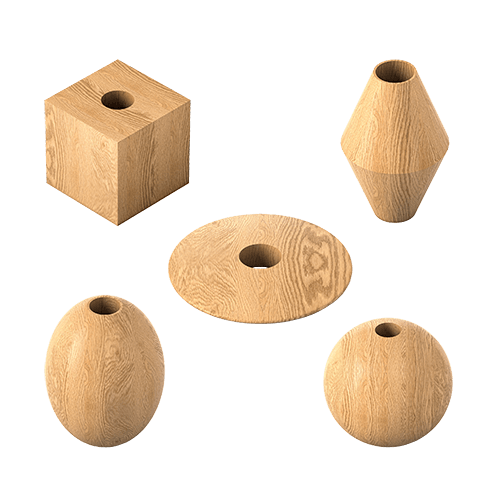
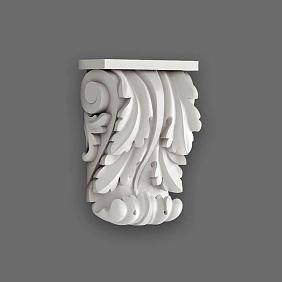
Capitals Natural wood is a special category. Wood provides a living texture, warmth of surface, and a sense of natural material. In an interior where wood is the main material — parquet, wooden doors, a wooden fireplace — a wooden capital is organic.
Wooden capitals are painted to match the rest of the stucco or left in a tinted natural color — as a warm accent against the background polyurethane products.
Moldings near the capital: how to create a unified architectural system
A capital without moldings is an incomplete story. Moldings are the "connective tissue" that integrates the capital into the wall plane and creates a sense of system.
Horizontal molding at the capital level: the support line
A horizontal molding running at the level of the capital's top edge along the entire wall is a key element of the system. It creates a visual "shelf" on which everything above "rests." The capital touches this line from below, the cornice or ceiling from above.
Width of the horizontal molding at the capital level: 30–60 mm, depending on the system's scale. This molding should "rhyme" in width with the ceiling cornice: typically 1.5–2 times thinner.
Buy polyurethane moldings Choosing a profile for this position means selecting one in the same stylistic register as the capital: classic with several levels or strict geometric.
Molding frames between pilasters
The wall zones between pilasters—"fields"—require decoration. Molding frames in these fields create a panel structure for the wall and provide architectural context for the capitals.
Without frames between pilasters, the capital looks like a separate detail. With frames, it appears as part of a well-thought-out system.
Height of frames: typically two zones—lower (from the baseboard to a horizontal belt at a height of 90–120 cm) and upper (from the horizontal belt to the molding at the capital level). Width of the frame molding: 20–40 mm.
Upper horizontal line: from capital to cornice
After the capital, the vertical movement of the pilaster "transitions" into a horizontal line. If there is a gap from the top edge of the capital to the ceiling cornice, this space needs to be finished.
Option one: horizontal molding belt at the capital level + neutral wall above + ceiling cornice. Two horizontal elements with a clean plane between them.
Option two: the horizontal belt at the capital level directly transitions into the ceiling cornice — they are at the same height or with a minimal gap of 10–15 cm. This is the cleanest and most architecturally convincing solution.
Baseboard and pilaster base: lower termination
The system is not only about the upper termination. The pilaster base — the lower element on which the vertical shaft stands — should harmonize with the room's baseboard.
The baseboard can serve as the base: if the pilaster sits directly on the baseboard, the baseboard becomes its base. This works if the baseboard is wide enough (60 mm and above) and has a classic profile.
For a more formal solution, a separate base for each pilaster. It is 10–20 mm wider than the pilaster and has its own profile.
Decorative stucco and stucco decoration in the system with the capital
Once the vertical system (pilaster + capital + moldings) is assembled, it's time for decorative accents. Moderation is key here: one or two points that enhance the system but do not compete with it.
Over-portal overlay: accent above the capitals
If the capitals are placed on either side of the door portal, the area above the horizontal lintel is the ideal spot for one decorative element: a cartouche, medallion, or keystone.
buy decorative moldings Choosing for the over-portal zone means selecting an element whose width does not exceed the distance between the pilasters. Size: 150–250 mm horizontally, 100–180 mm vertically.
Important: the style of the over-portal overlay ornament must match the style of the capitals. If the capital is Ionic with volutes — the overlay ornament should feature floral motifs; if Corinthian with acanthus — the overlay should also have a leaf relief.
Stucco decoration in the center of the wall panel
Between pilasters, within a molding frame — large or central — one is appropriate Buy Moldings in the form of a medallion or ornamental insert. It accents the center of the 'field' between two vertical elements.
Medallion size: should occupy no more than 1/3 of the width and 1/4 of the height of the wall panel. Placement: strictly in the center of the panel.
Decor for moldings: corner inserts in frames
Decor for Molding — corner decorative inserts that cover the corners of molding frames — are especially important in a system with capitals. They create 'locks' in the four corners of each frame and echo the detail of the capital ornament.
For a classical system with a Corinthian or Ionic capital — corner inserts with floral ornament. For a strict system with a Doric capital — geometric corner inserts.
Symmetrical decorative elements on the sides of the capital
In formal interiors — on the sides of the capital, between its outer edge and the edge of the molding frame — small symmetrical overlays. Palmettes, rosettes, floral modules measuring 60–100 mm.
This is a technique characteristic of interiors of imperial classicism. Capital in the center + two side ornaments — a full horizontal "stanza".
Four scenarios for using capitals: from minimal to formal
Scenario one: "Door portal with capitals"
The most common task. Two vertical elements on the sides of the doorway — pilasters 80–100 mm wide — are topped with capitals. Above the capitals — a horizontal cornice molding across the entire width of the opening. Above the cornice — a decorative overlay above the portal.
Set:
-
Capitals — 2 pcs., width 100–130 mm.
-
Pilasters — 2 pcs., height from the baseboard to the lower edge of the capital.
-
Horizontal molding above the opening — profile 40–50 mm.
-
Decorative stucco — 1 cornice overlay.
Effect: the doorway turns into a full-fledged architectural portal.
Scenario two: “Pilasters in the hall”
Four pilasters around the perimeter of the hall — at each wall or in the corners — with capitals. A horizontal molding belt at the level of the capitals along all four walls. Molding frames in the fields between the pilasters.
Set:
-
Capitals — 4 pcs.
-
Pilasters — 4 pcs.
-
Moldings made of polyurethane for the horizontal belt and frames.
-
Buy molding — ceiling cornice.
-
Buy Moldings — one accent medallion on the main wall.
Effect: the hall acquires a monumental classical character.
Third scenario: "Shelving with Capitals"
Built-in shelving in the study. The vertical posts of the shelving — pilasters — are topped with small capitals of the Doric or Ionic type. A horizontal cornice runs along the top line of the shelving.
Set:
-
Capitals small size — 80–100 mm, matching the number of posts.
-
Cornice for the shelving — profile 50–70 mm.
-
Moldings made of polyurethane for the lower facades of the shelving.
Effect: the shelving takes on the appearance of a library cabinet in the English style.
Fourth scenario: "Fireplace Area with Paired Pilasters"
A pair of pilasters on either side of the fireplace with Corinthian capitals. Above the capitals — a massive fireplace cornice 100–150 mm. A decorative overlay above the fireplace portal. Molding frames on the side walls.
Set:
-
Capitals — 2 pieces, large, 140–180 mm wide.
-
Pilasters — 2 pieces, height 220–250 cm.
-
A powerful profile of a fireplace cornice ceiling moldings.
-
Buy decorative stucco — a cartouche above the portal.
-
Moldings made of polyurethane for side frames.
Effect: the fireplace area becomes the grand architectural centrepiece of the entire living room.
How not to overload the interior with capitals: principles of restraint
A capital is a powerful element. And like any powerful element, it requires discipline.
Principle one: one main zone
In each room, there should be one main zone with capitals. One. A portal. Or a fireplace. Or a hall. When capitals are placed everywhere — in the portal, by the fireplace, on the shelving, and in the corners — each of them loses its significance.
Principle two: scale dictates quantity
For a small apartment (up to 80 m²) — a maximum of two to four capitals in one zone. For a large house — pairs and groups in several zones are acceptable, provided there is space 'without competition' between them.
Principle three: calm capital + rich moldings vs rich capital + calm moldings
This is the rule of balance. If the capital is Corinthian with rich acanthus ornament — Moldings made of polyurethane should be calm, with clear levels without ornament. If the moldings are rich — it's better to choose a stricter, Doric capital.
Two richly ornamented elements in one system — a struggle for dominance. One should "lead", the other — "support".
Principle four: single color
Buy moldings and capitals are painted in a single color. This rule is not negotiable. A capital in "natural" wood and white moldings — only if wooden decor is present as a recurring motif throughout the interior.
What to buy together with the capital: complete checklist
| Task | What to buy |
|---|---|
| Complete the pilaster fully | Capital + pilaster + base |
| Connect to the wall | Moldings made of polyurethane — horizontal belt + frames |
| Add top line | Ceiling cornice from polyurethane products |
| Finish frame corners | Decor for Molding — corner inserts |
| Accentuate a zone | Decorative stucco — medallion or cartouche |
| Design the above-portal area | Buy Moldings — above-portal overlay |
| Finish bottom line | Baseboard in a unified system with cornice |
| full set | Capital + pilaster + moldings + decor + glue + primer + paint + 20% reserve |
Frequently asked questions
What to buy together with a capital?
Essential set: a pilaster of the appropriate size, a horizontal molding at the capital level, Moldings made of polyurethane for frames on wall fields, mounting adhesive, acrylic sealant, primer, paint. Optional: Decorative stucco above the portal, Decor for Molding for corner inserts.
How to choose a capital for stucco molding?
Three criteria: ornament style — it must match; relief depth — correspond to the projection of moldings; capital width — 30–50% wider than the pilaster body. Look not at photos, but at parameters.
Is a capital only needed for a column?
No. Capitals appropriate on pilasters, portals, fireplace jambs, shelf verticals, and architectural accent walls. Everywhere where there is a completion of a vertical element — a capital is appropriate.
How not to overload the interior with capitals?
One main zone. One rich capital — the rest of the decor is calm. A single color. Reserve of "empty" space between decorated zones. Capitals are not everywhere, but where they make the space architectural.
Can wooden capitals be used with polyurethane stucco molding?
Yes, if they are painted in a single color. Wooden Capitals in combination with with polyurethane items — when painted uniformly — create a nuanced difference in textures, which reads as a subtle design technique.
How to calculate the height of a pilaster for a capital?
Ceiling height minus baseboard or base height (bottom) minus capital height (top) = pilaster shaft height. Example: ceiling 280 cm, baseboard 10 cm, capital 30 cm → pilaster 240 cm.
STAVROS: capital as part of a system
A capital is not the completion of an element. It is the beginning of an architectural conversation. When it is correctly selected and surrounded by the right system, the space acquires what cannot be explained in words, but cannot be left unfelt: architectural persuasiveness.
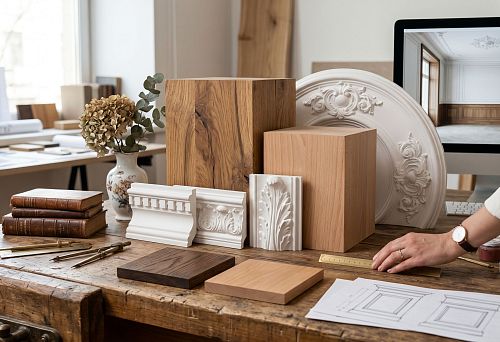
STAVROS offers Capitals made of natural wood — an element with a lively texture and precise relief. Along with them — a full range for systematic work: Moldings made of polyurethane for horizontal belts and frames, Buy decorative stucco for accent overlays, Decor for Molding for corner finishes.
Buy molding and a capital in one catalog means assembling a system, not a set of individual parts.
STAVROS. Delivery across Russia. Pickup in Moscow and St. Petersburg.
Your interior deserves architectural completeness. Start with the right capital — and the system will come together on its own.