
























Article Contents:
- Baroque is not "everything at once"
- Baroque from the inside: why furniture is the main actor
- What makes a Baroque interior heavy
- The principle of balance: three roles in a Baroque interior
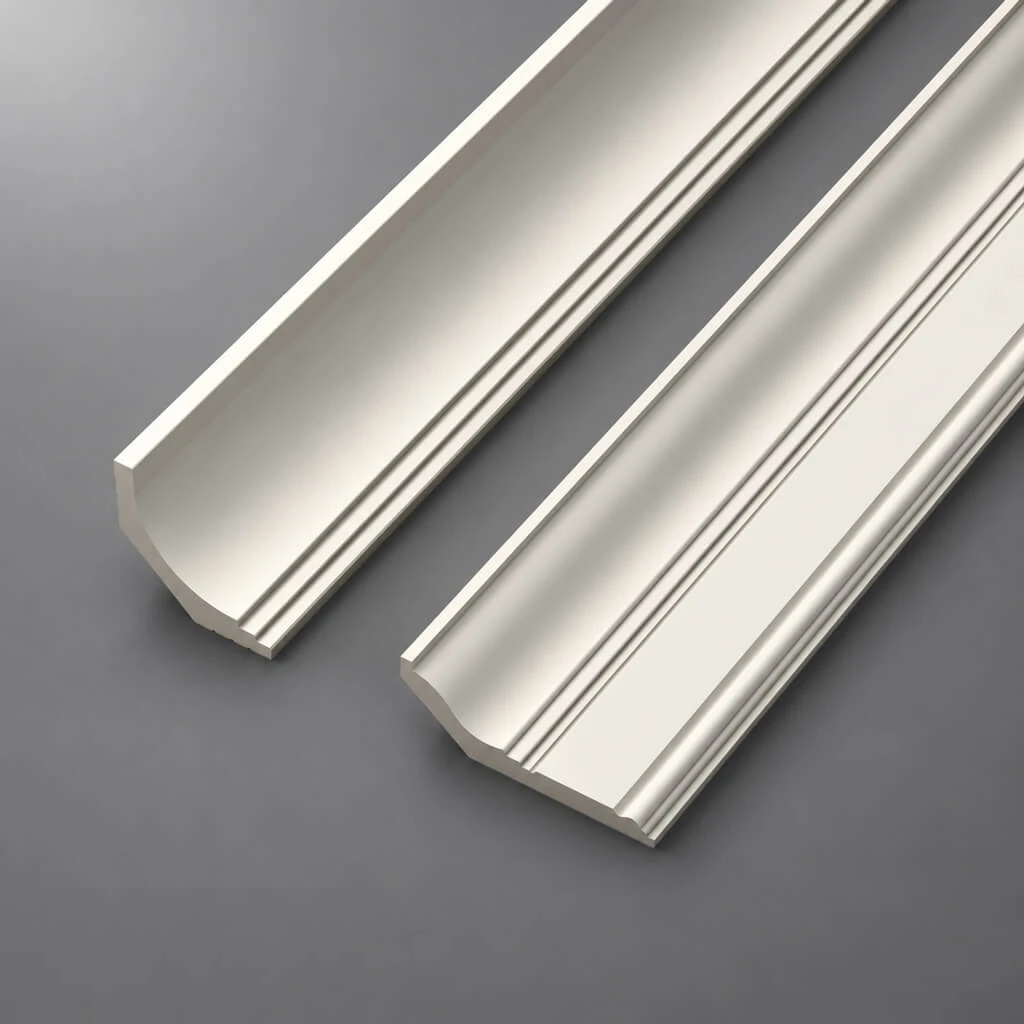
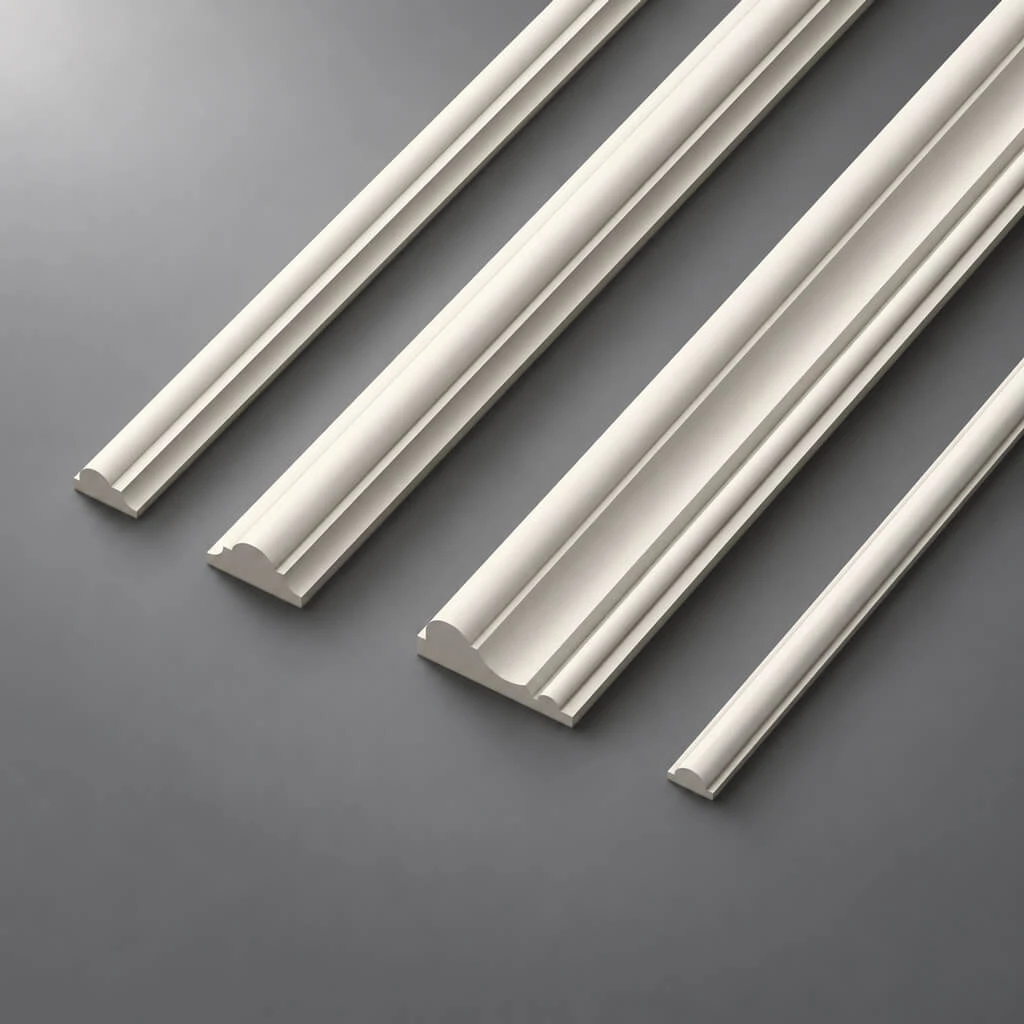
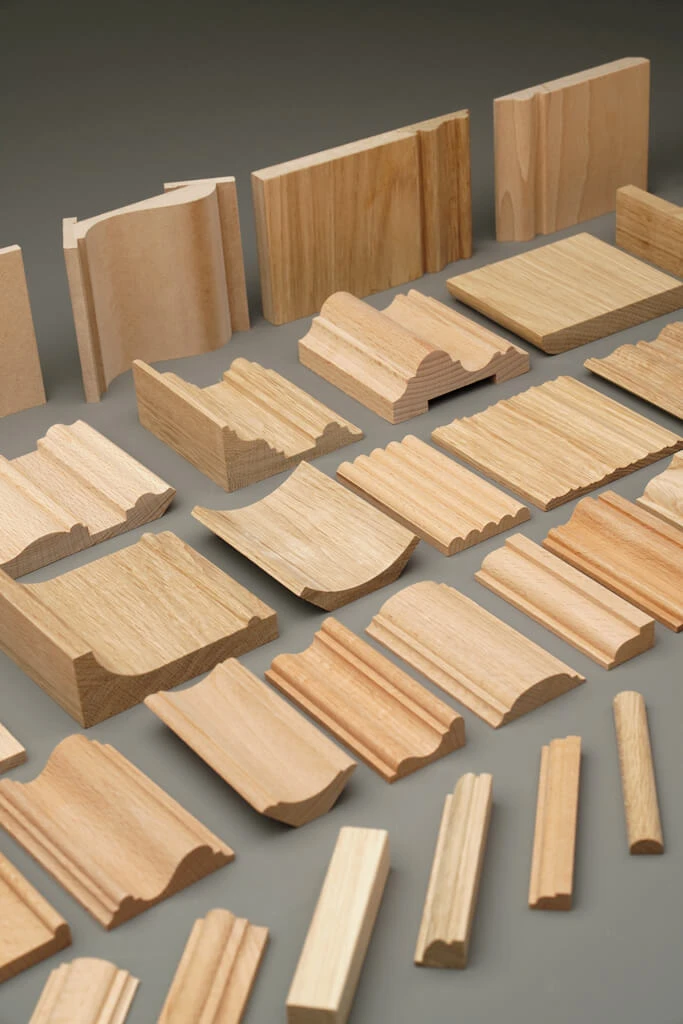
- Moldings as the architectural foundation of a Baroque interior
- Which molding profile suits Baroque
- Where to use moldings in a Baroque interior
- Molding sizes for a Baroque interior: table
- Ceiling rosette: how to connect a chandelier with a baroque interior
- How to choose the diameter of a rosette for a baroque chandelier
- When to choose a relief rosette
- When it's better to choose a plain rosette
- Connection of the rosette with the ceiling cornice
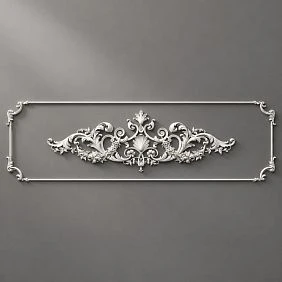
- Decorative stucco: an accent, not a carpet
- Above the console: a medallion or a cartouche
- Near the mirror: side symmetrical elements
- Above the headboard: an architectural 'canopy'
- In the area of the fireplace portal
- In the hall: decor as a "calling card"
- Color: how to combine furniture and stucco
- Monochrome option: everything in one color
- Two-tone option: wall in color, stucco white
- Ochre-gold option: warm monochrome palette
- Four spaces: specific solutions
- Living room in Baroque style
- Baroque-style bedroom
- Baroque-style study
- Hall with a baroque console
- What to buy for a baroque interior: final table
- Five mistakes when choosing stucco molding for baroque furniture
- Frequently Asked Questions
- STAVROS: system for baroque interior
Baroque is not "everything at once"
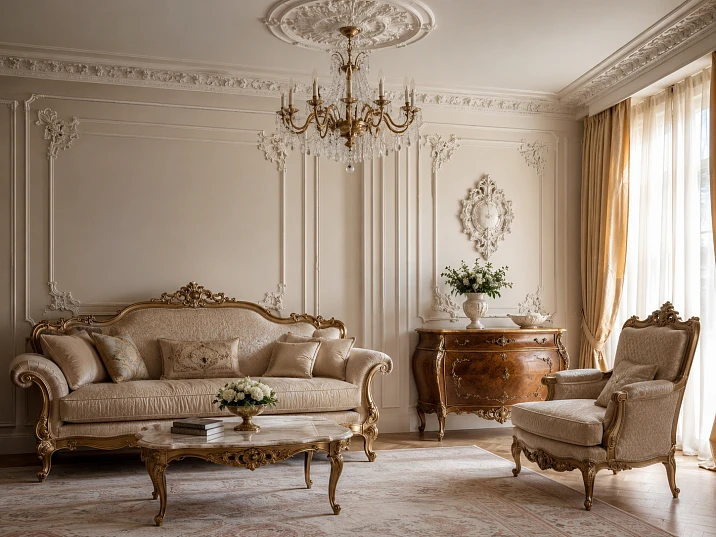
There is a persistent misconception about baroque: supposedly this style means "the more decorations, the better." Gilding everywhere, stucco on every wall, heavy velvet on windows, carving on every facade — and there it is, baroque. The result of this approach is well-known: an interior where it's hard to breathe. The eye doesn't know where to rest, everything screams at once, and even expensive furniture gets lost in this chaos of ornaments.
Real baroque is structured differently. It has a hierarchy: the main accent is furniture, architecture is the frame for it, decor is a point amplifier. Breaking this hierarchy means destroying the style, creating only its caricature.
That is why the question of how to choose stucco molding for baroque furniture, is not a question of "what else to add," but a question of "what exactly and where." Precision is more important than generosity.
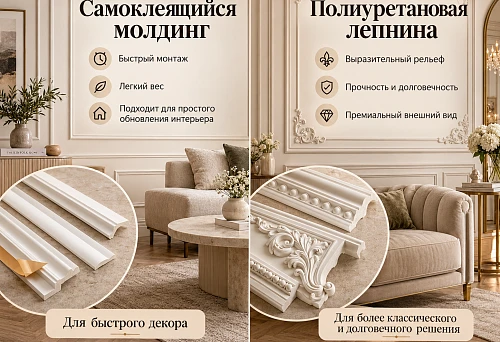
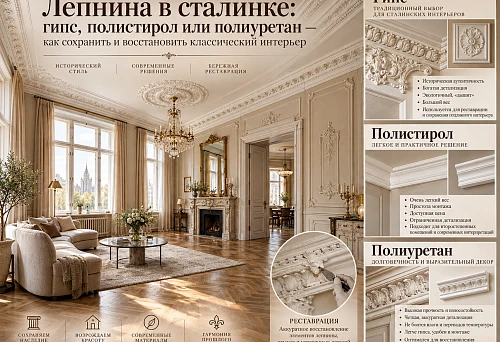
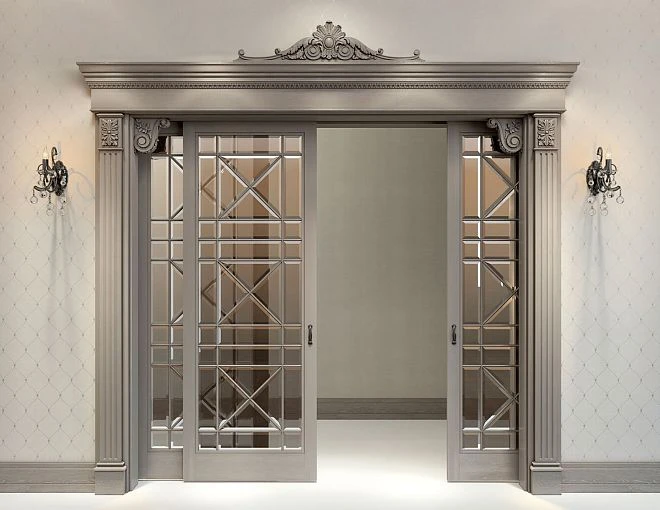
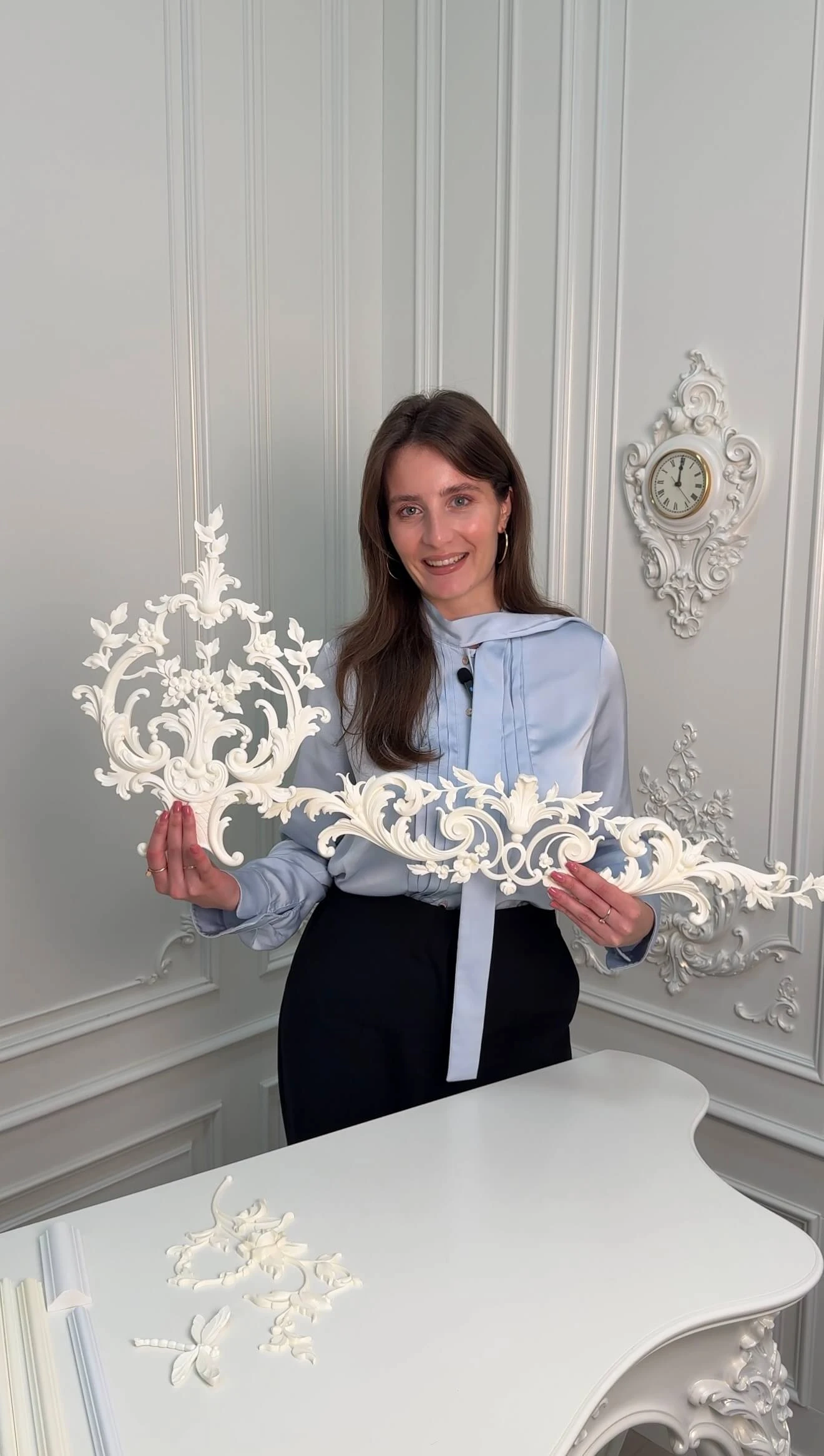
In a baroque interior, stucco molding should not argue with furniture, but support it: Moldings made of polyurethane gather the walls, Ceiling rosette connects the chandelier to the ceiling, decorative elements add an accent, and the right scale prevents the room from turning into an overloaded palace.
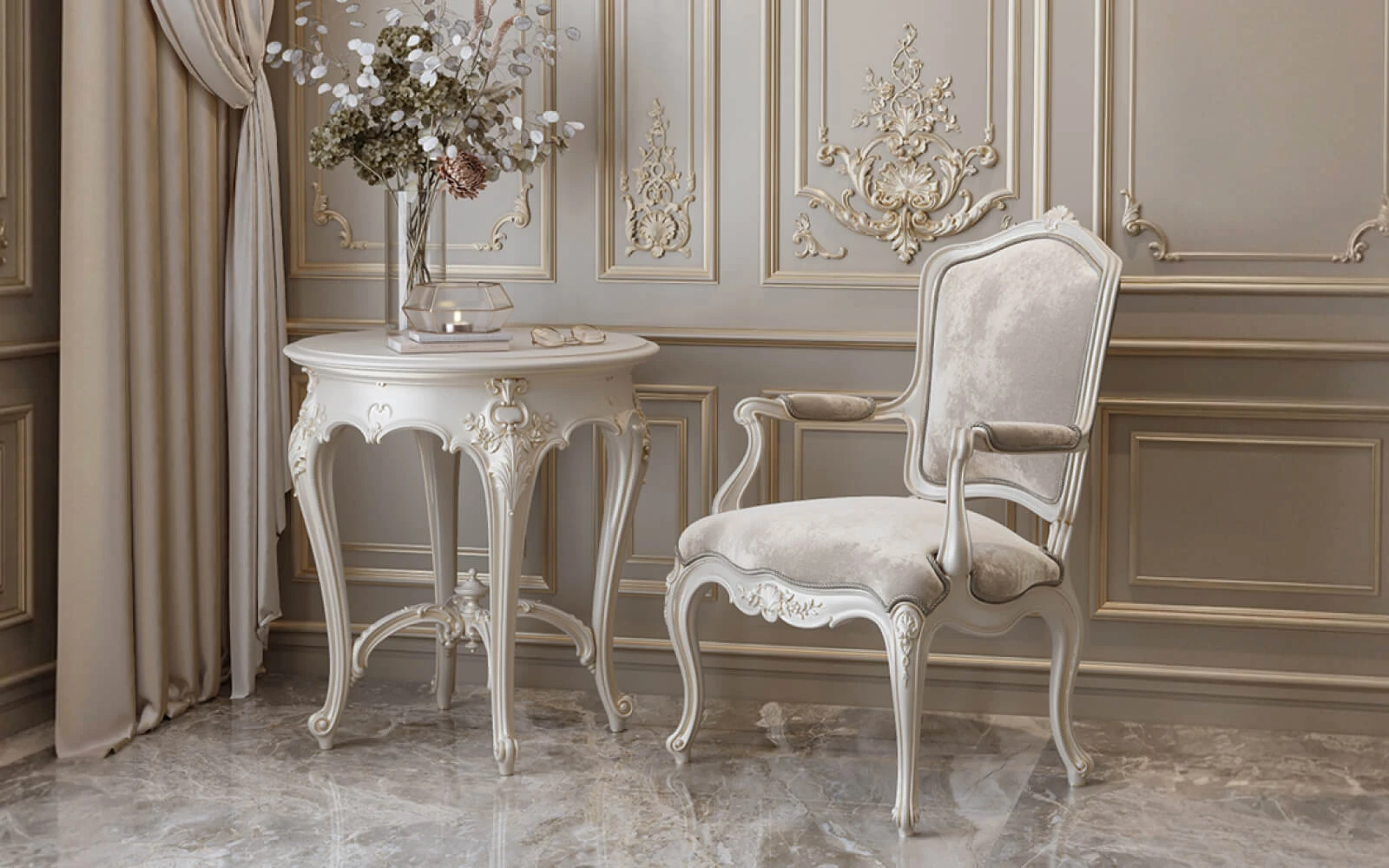
Baroque from the inside: why furniture is the main actor
Before talking about stucco, you need to understand the character of Baroque furniture. Without this understanding, it is impossible to correctly choose the architectural decor around it.
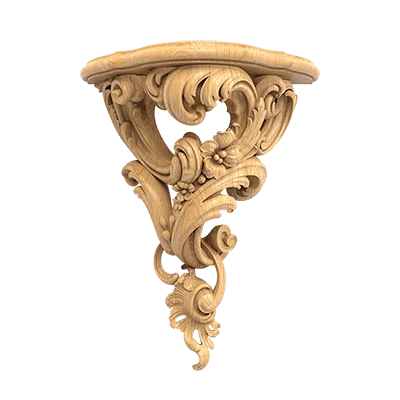
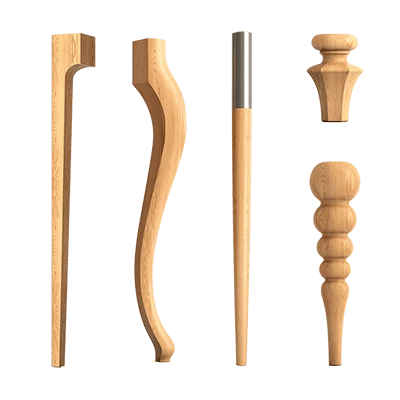
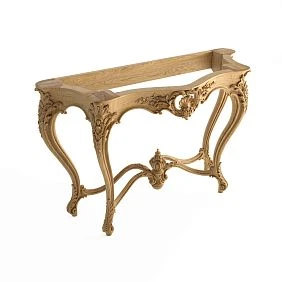
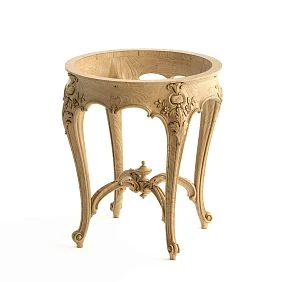
Furniture in Baroque style is architectural furniture. Each piece — a sofa with carved legs, a chest of drawers with bombé fronts, a console with gilded scrolls, a bed with a canopy — carries more decorative information than any other style. Baroque furniture itself is a work of plastic art.
This means: the walls, ceiling, and architectural decor around such furniture should be consciously quieter. They are the stage, the furniture is the performance.
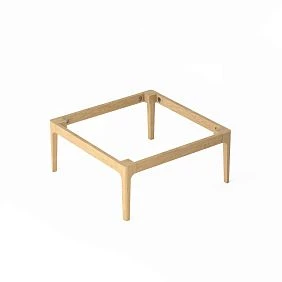
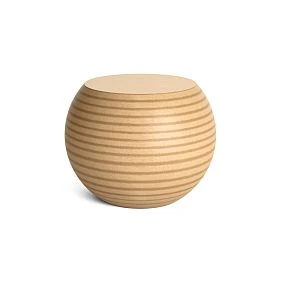
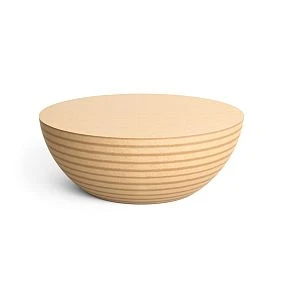
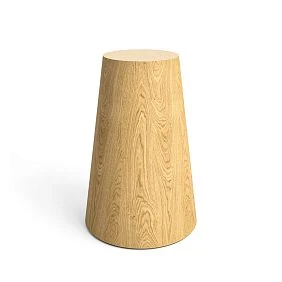
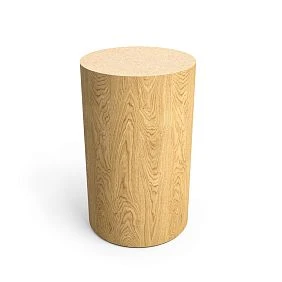
Our factory also produces:

What makes a Baroque interior heavy
Three main violations of hierarchy:
Active stucco on every wall. If all four walls are covered with rich ornamentation, it is physically impossible to add Baroque furniture there without conflict. The furniture and walls will 'shout over' each other.
Mismatch of scales. Large Baroque furniture — a sofa 220 cm wide, a bed 180×200 cm with a high headboard, a massive chest of drawers — requires proportionate architectural framing. A thin 15 mm molding next to such an item looks unimpressive. But a heavy, overloaded relief on the walls will 'overwhelm' the furniture.
The same detailing everywhere. When the relief of furniture, the relief of moldings, the relief of cornices, the relief of baseboards are all of the same intensity, the space loses depth. There is no main and secondary, only "everything at once."
Get Consultation
The principle of balance: three roles in a Baroque interior
Understanding the roles is the key to choosing the right moldings.
Role one — the "soloist": Baroque furniture. Sofa, bed, chest of drawers, console, armchair. The main decorative object that attracts the eye. It gets the first place.
Role two — the "orchestra": architectural decor. Moldings, cornice, baseboard, Ceiling rosette. They create an architectural rhythm, set the scale, and assemble the walls into a system. Noticeable but not dominant.
Role three — the "conductor": a point decorative accent. One or two elements decorative molding in strategic points — above the console, above the headboard, in the mirror area. They guide the eye but do not overpower the furniture.
If all three roles are distributed correctly, the interior is rich but not heavy. If furniture and moldings compete for first place, the interior becomes visual noise.
Moldings as the architectural foundation of a Baroque interior
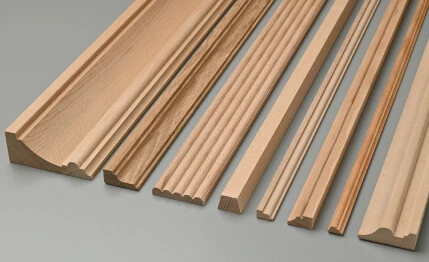
Moldings are the "skeleton" of architectural wall decoration. In a Baroque interior, they serve a special function: they give walls structure without trying to compete with furniture.
Which molding profile suits the Baroque style
Two strategies are possible here, and both work — provided they are applied consistently.
First strategy: "calm molding"
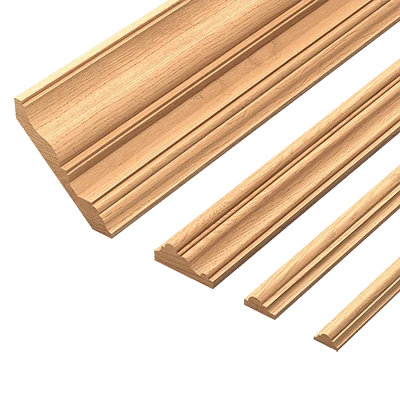
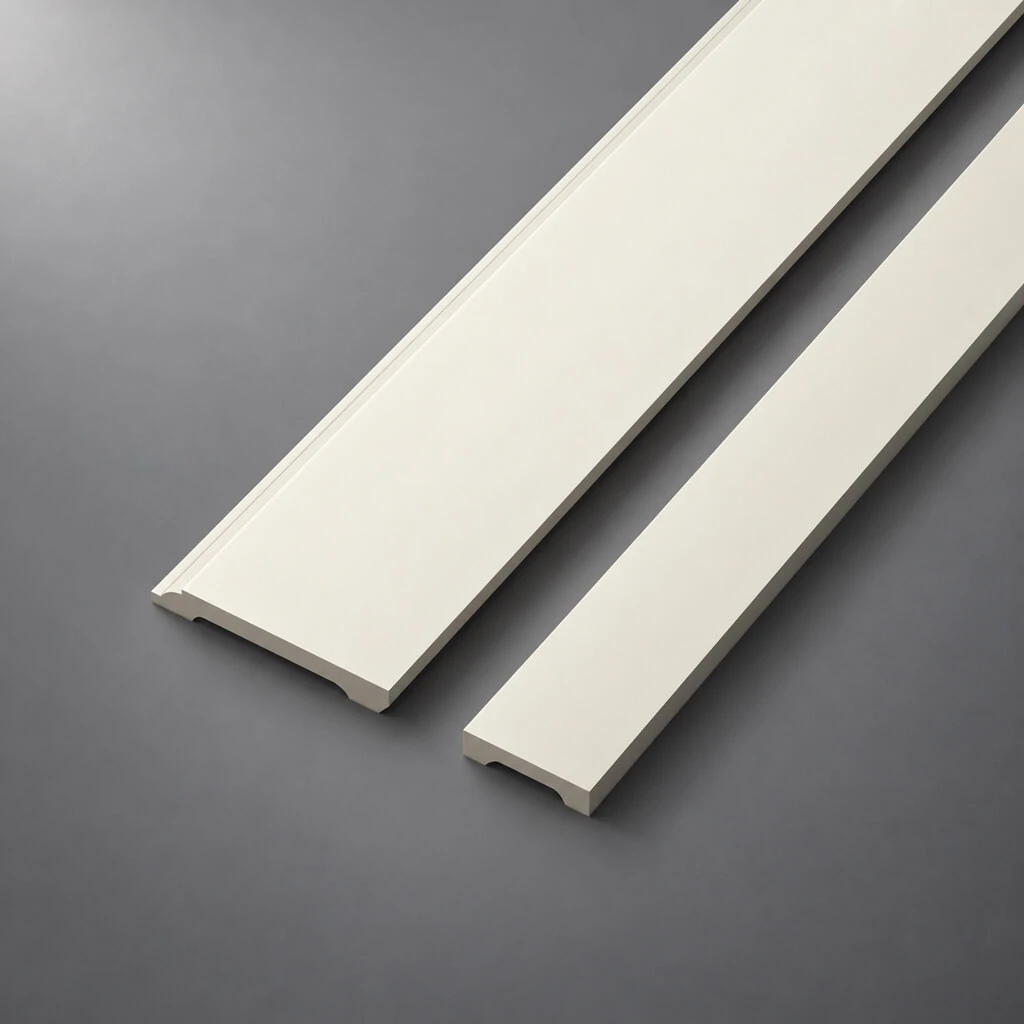
A molding with a clean, expressive profile without ornamentation. Several horizontal levels, a clear projection of 15–20 mm, width 30–45 mm. Such a molding creates an architectural frame but leaves the decorative "first voice" to the furniture.
This is the best choice for most interiors with Baroque furniture in residential houses and apartments. It is rich enough to "hold" the scale of the style and restrained enough not to compete with carving and gilding.
Second strategy: "Baroque molding"
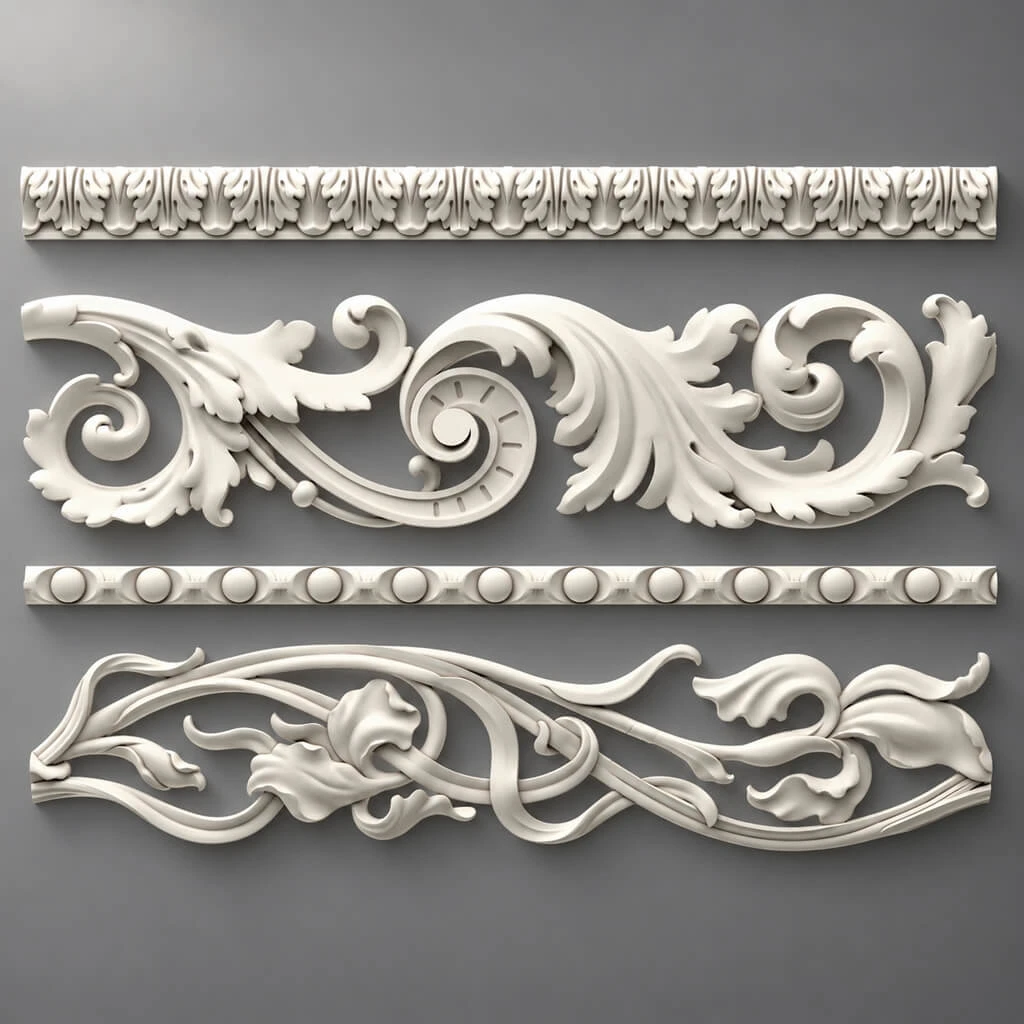
A molding with an ornamental relief — leaves, bead-and-reel, egg-and-dart, acanthus border. Width 40–60 mm, projection 20–35 mm. This is a more saturated solution, suitable for formal interiors with high ceilings.
But when choosing this strategy, there is a strict rule: decorative wall overlays and stucco decoration should be minimized. One rich element — the ornamental molding — and that's it. Nothing else active on the walls.
Where to apply moldings in a Baroque interior
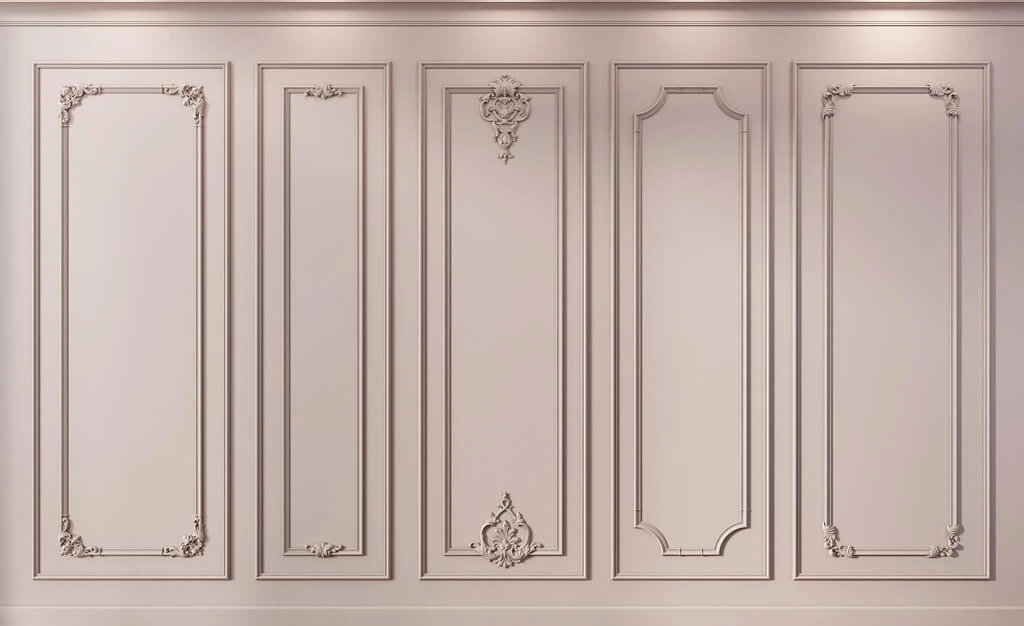
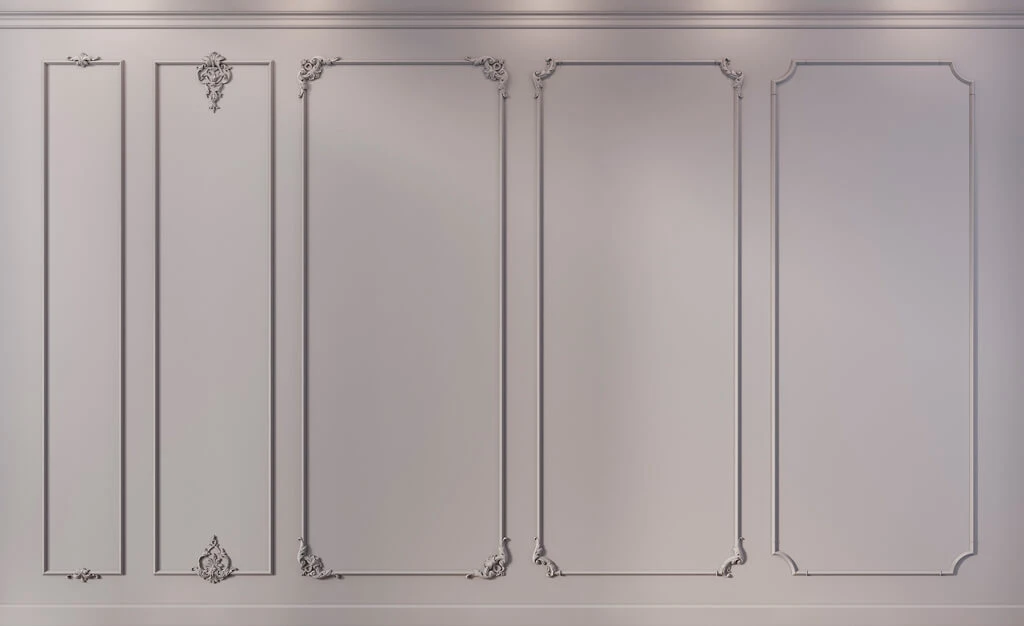
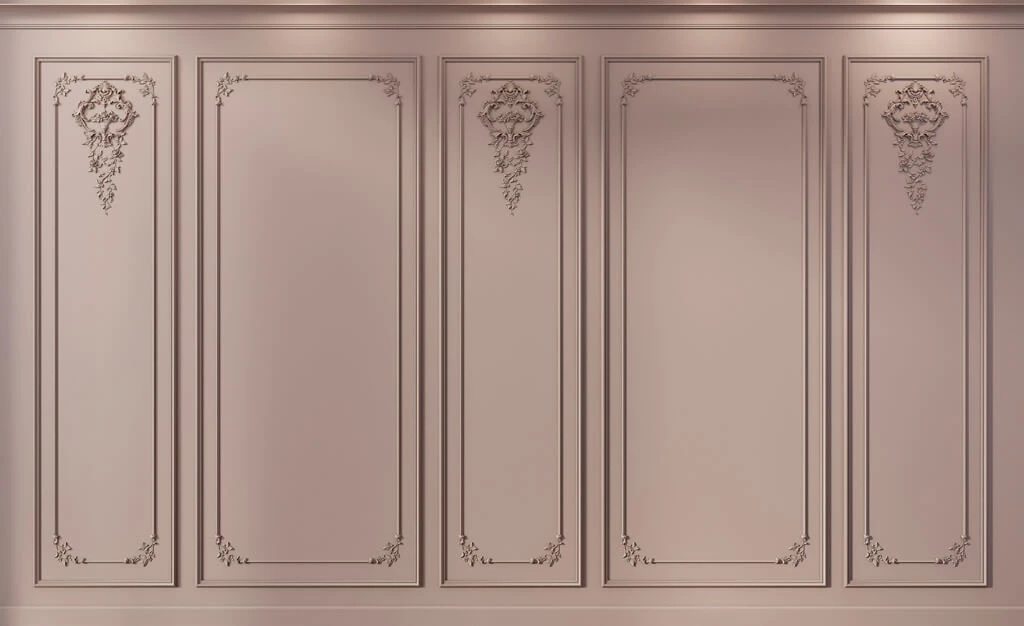
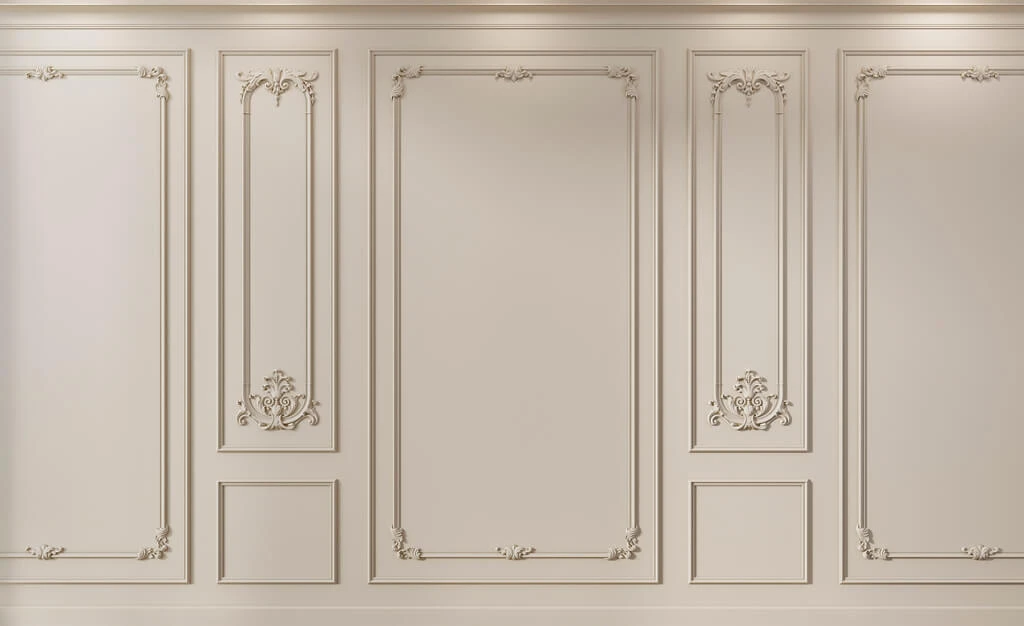
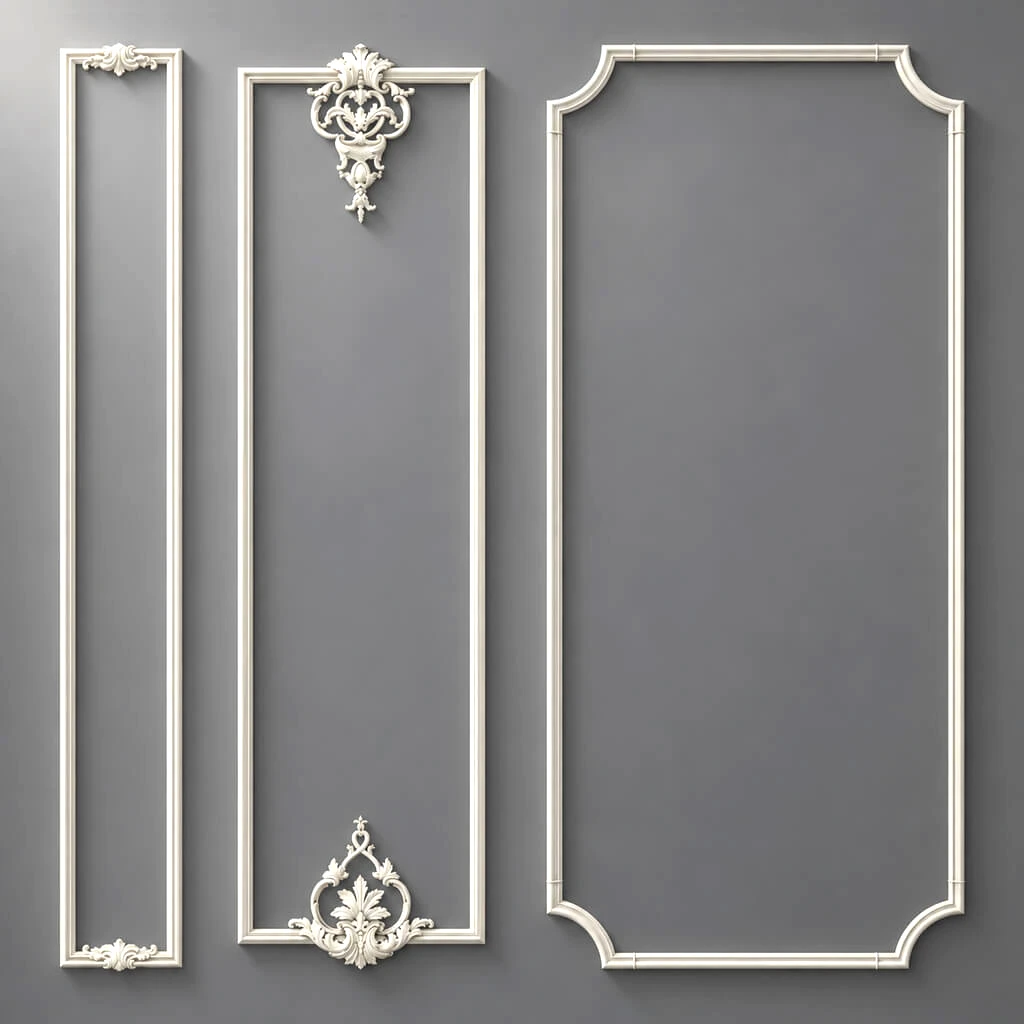
Behind the sofa: accent wall of the living room. A molding frame on the wall behind the sofa creates an architectural "throne" for the main piece of furniture. Frame size: slightly wider than the sofa — 20–30 cm on each side. Frame height: from the baseboard or horizontal belt to the cornice or molding at a level of 200–220 cm.
In the bed area: headboard. A molding frame behind the bed — a "picture" of architectural decor. Frame width: equal to the width of the bed or slightly wider. Height: from the floor to the molding at a level of 220–240 cm. Inside the frame — a clean wall or one delicate decorative accent.
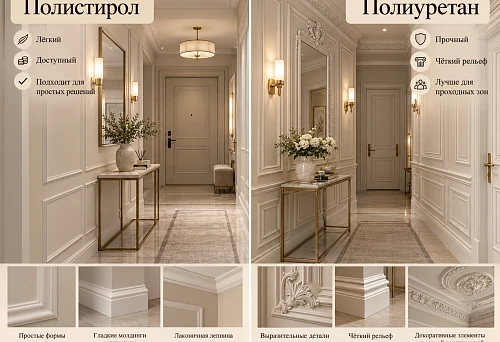
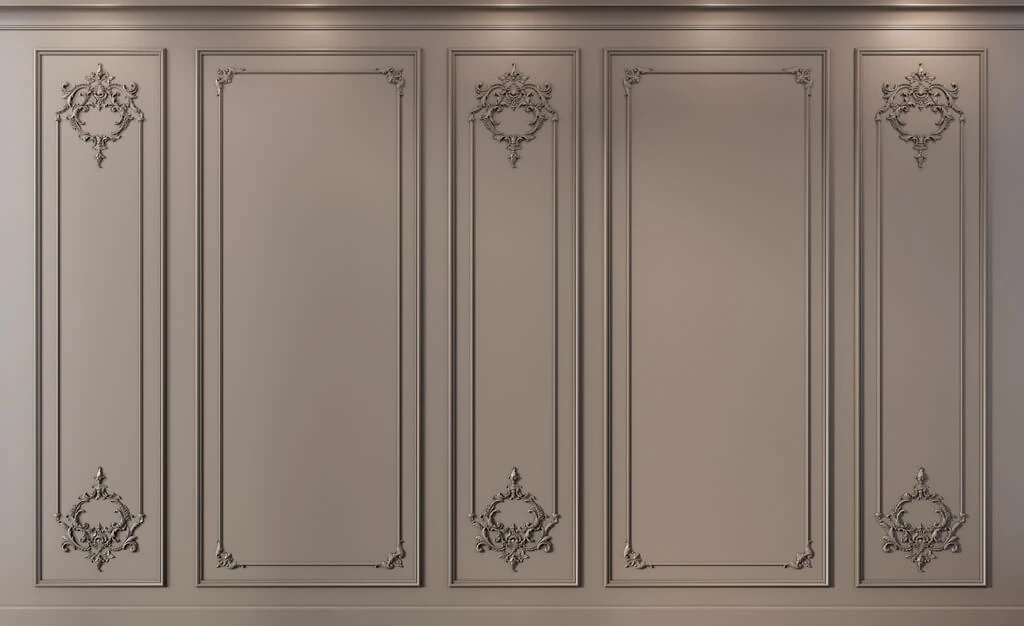
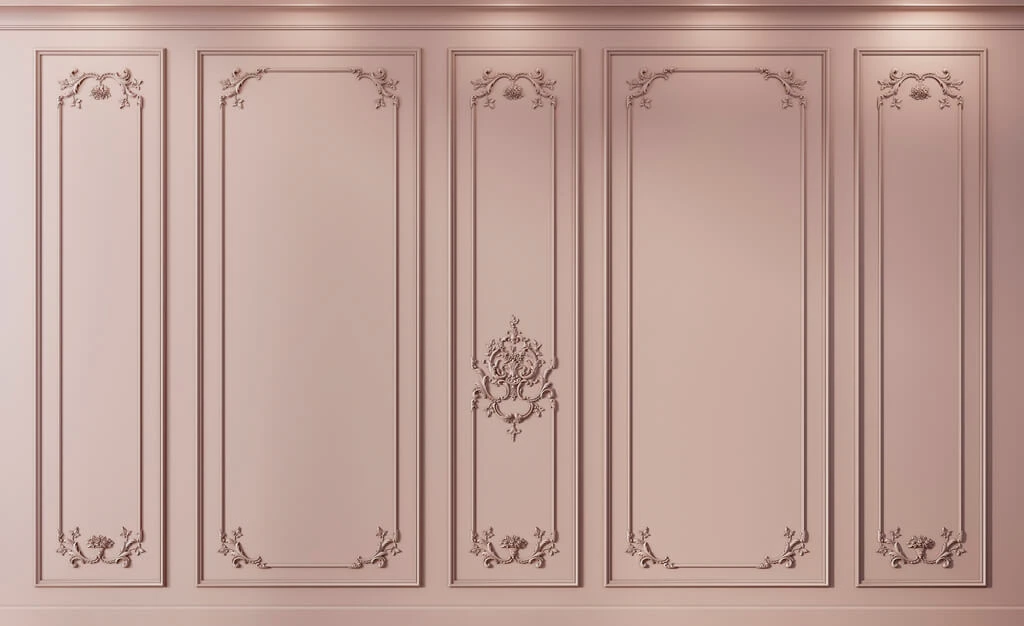
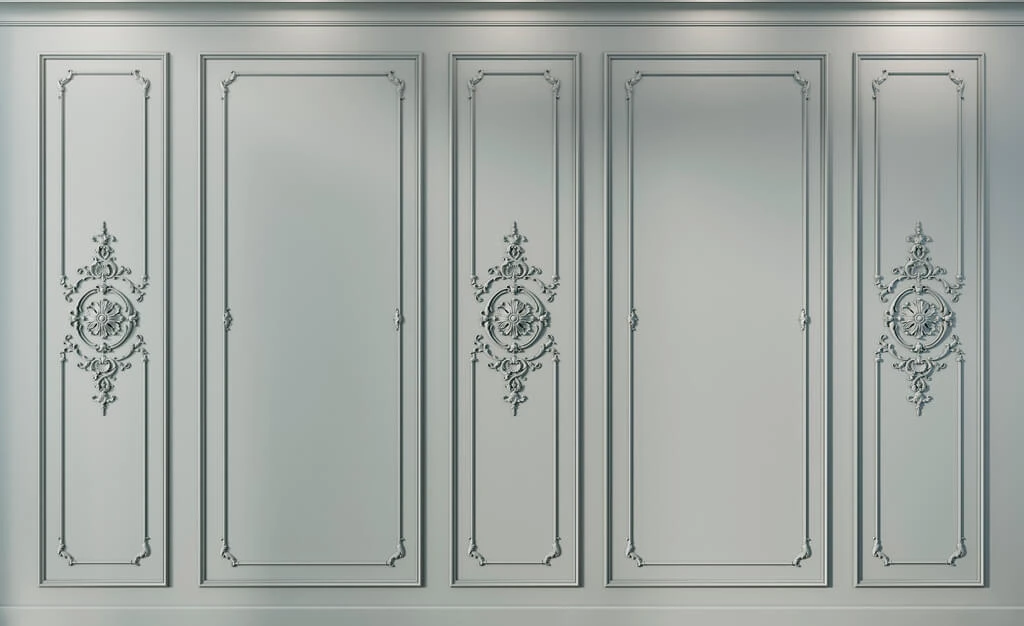
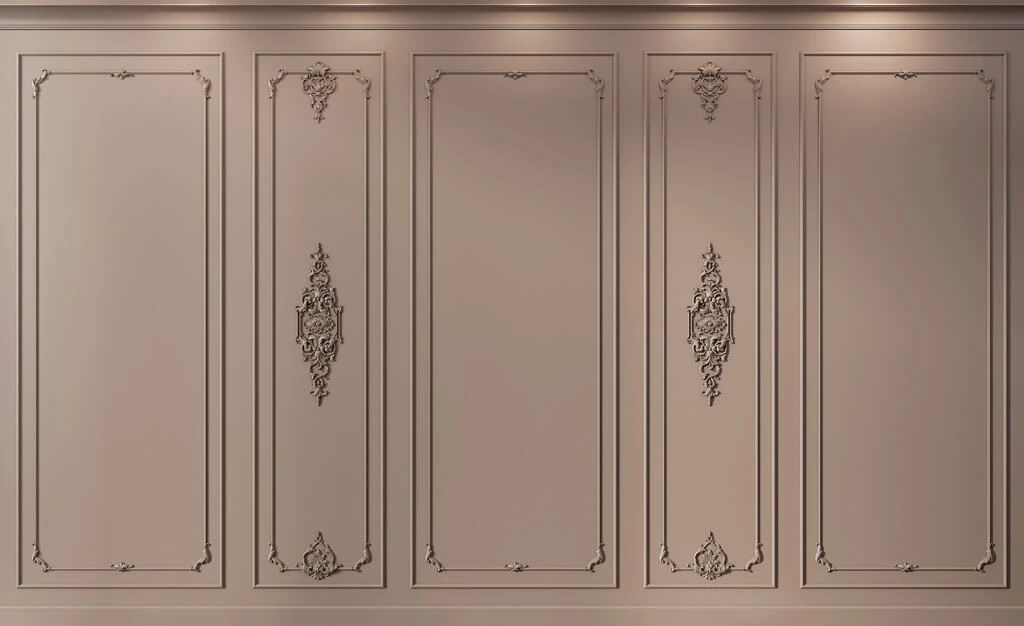
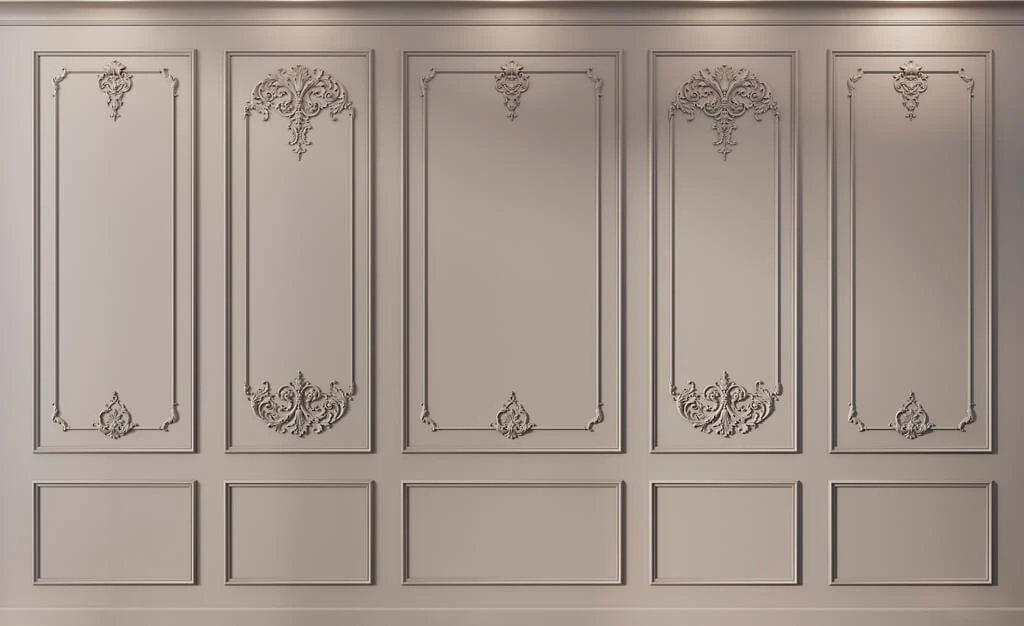
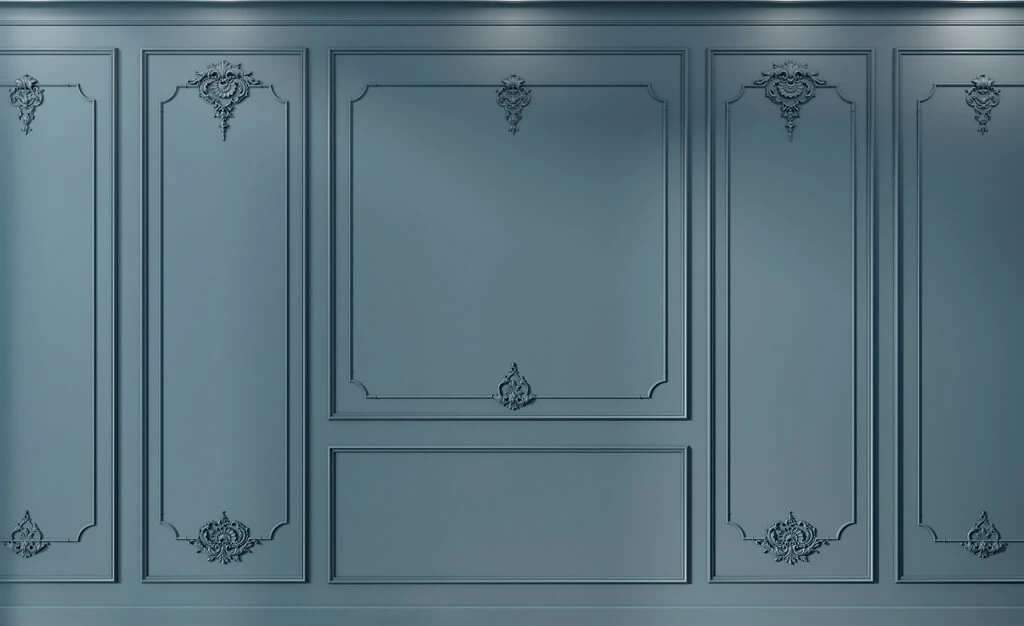
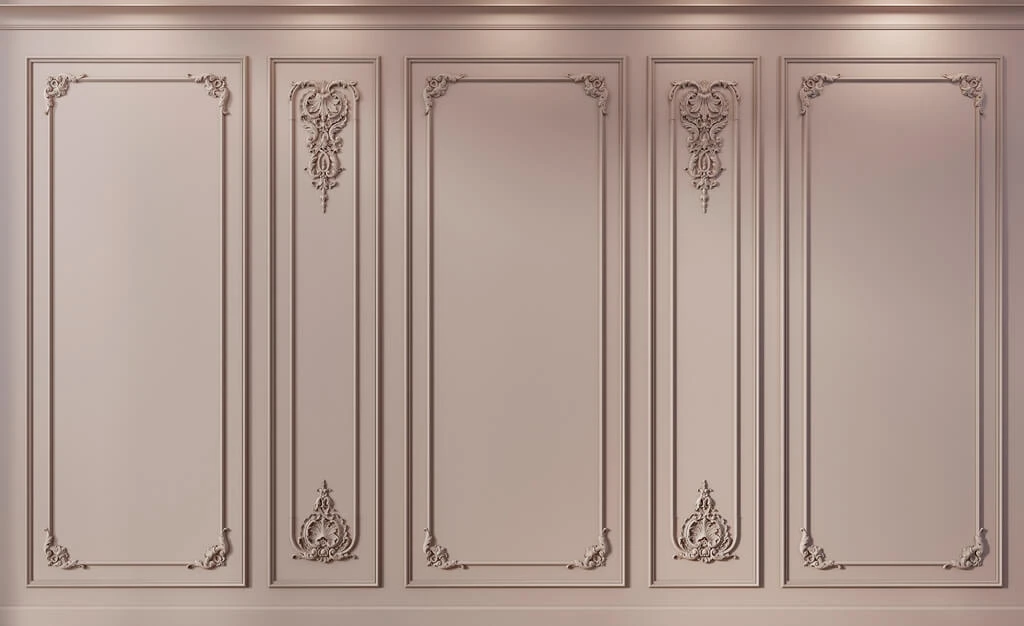
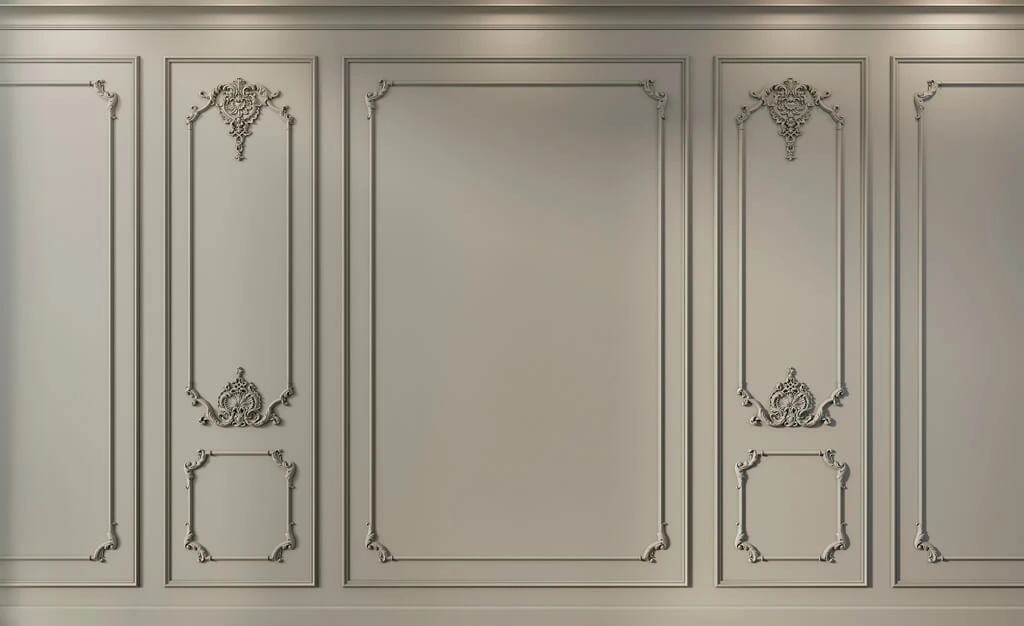
In the hall: an architectural technique. Molding frames on all walls of the hall create a "panel" structure. In a hall with a Baroque console and mirror, this is the right background: walls are rich but not competing with the console.
Around the mirror. A molding frame enclosing the mirror is a classic technique. Frame 35–45 mm, mirror inside with a field of 10–15 cm.
On the wall with sconces. A molding frame around each wall light. Frame size: 30×50 cm or 40×60 cm. This is an "exhibition" position for the sconce.
Around the console. Vertical moldings on the sides of the console + horizontal molding above it = architectural portal for the furniture piece.
Molding sizes for a Baroque interior: table
| Ceiling Height | Molding width | Projection | Crown Molding |
|---|---|---|---|
| 250–270 cm | 30–40 mm | 15–20 mm | 60–80 mm |
| 270–300 cm | 35–50 mm | 18–25 mm | 80–110 mm |
| 300–350 cm | 45–65 mm | 25–35 mm | 100–140 mm |
| More than 350 cm | 60–80 mm | 30–45 mm | 130–180 mm |
Buy polyurethane moldings for a Baroque interior means choosing profiles in the lower or middle part of the table for your ceiling height. A large molding with a 250 cm ceiling will create a feeling of tightness that conflicts with the freedom of the Baroque style.
Ceiling rosette: how to connect a chandelier to a Baroque interior
A Baroque chandelier is often the most impressive element of the ceiling. Forged branches, crystal pendants, multi-tiered construction — this is an object that 'holds' the vertical of the entire room. And that is why its suspension area requires architectural framing.
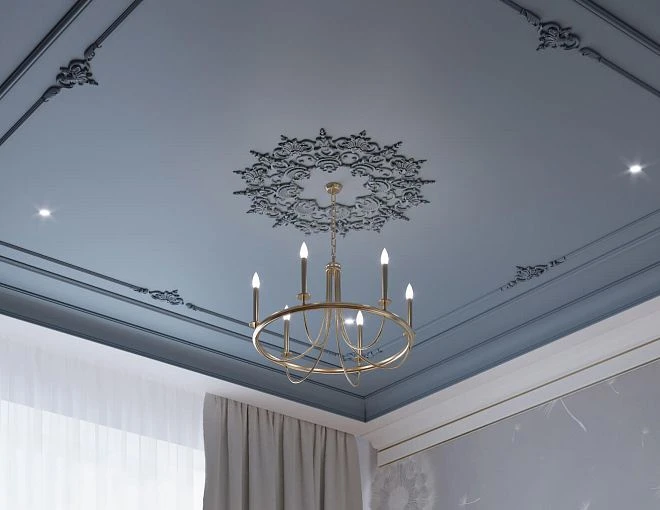
Ceiling rosette — is not just a decorative circle under the chandelier. It is the point where the ceiling 'receives' the vertical axis of the chandelier and connects it to the horizontal plane of the ceiling.
How to choose the diameter of the rosette for a Baroque chandelier
Scale rule: the diameter of the rosette should be comparable to the diameter of the chandelier. A too small rosette under a large Baroque chandelier is like a small frame under a huge painting.
Approximate ratios:
-
Chandelier diameter 50–70 cm → rosette 350–450 mm.
-
Chandelier diameter 70–90 cm → rosette 450–600 mm.
-
Chandelier diameter 90–120 cm → rosette 600–800 mm.
-
Chandelier diameter over 120 cm → rosette 800 mm and above.
Second criterion: room area. The rosette should not exceed 1/6–1/8 of the room width. For a room 5 m wide — maximum 700–800 mm.
When to choose a relief rosette
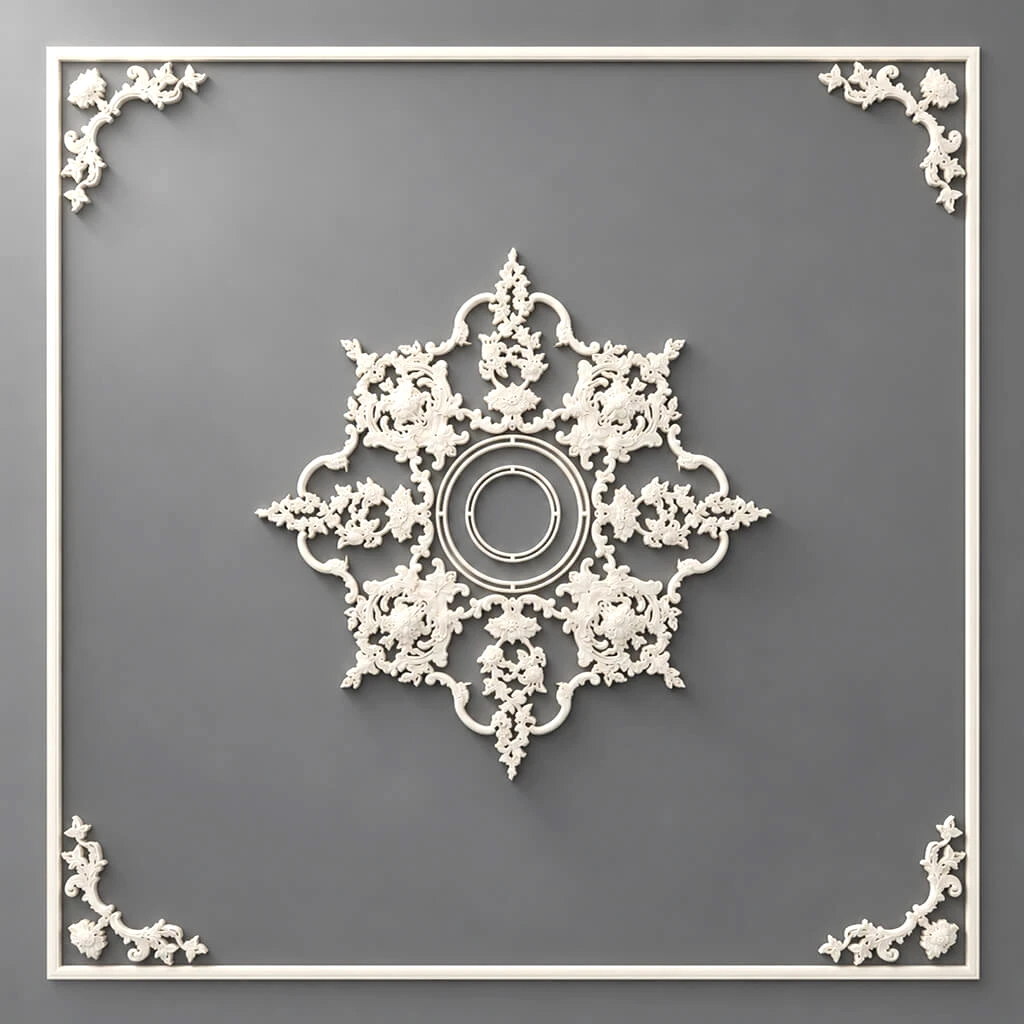
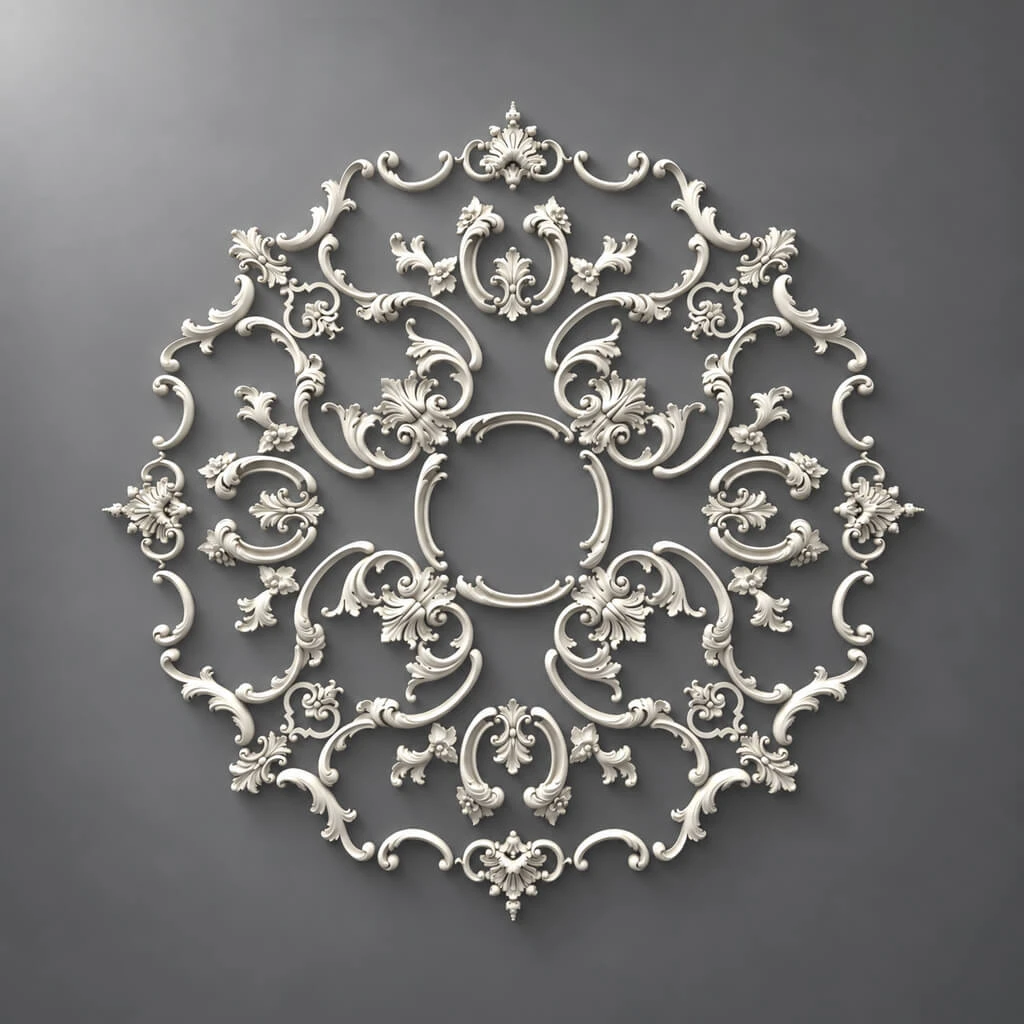
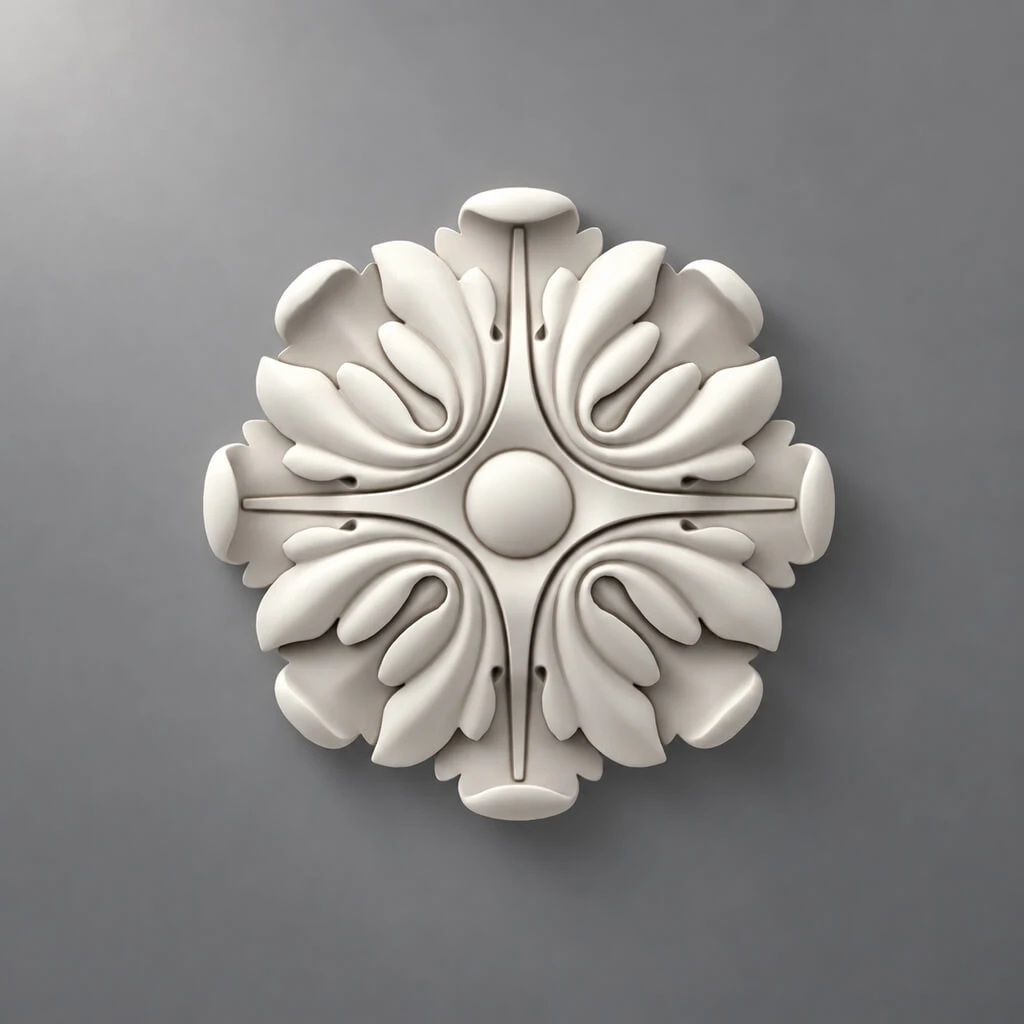
A Baroque interior allows — and even requires — the use of richly ornamented rosettes. Ornamental relief with acanthus leaves, floral swirls, or concentric ornament bands matches the spirit of the style.
But when choosing a rich ornamental rosette — the wall moldings should be calmer, without ornament. One main ceiling accent + calm walls = proper balance.
When to choose a calm rosette
If the wall moldings are rich and saturated, if the cornice is large with ornament — the ceiling rosette should be calm. Several concentric rings without ornament, clear geometry, projection 15–20 mm. This is a "quiet" rosette that marks the chandelier position without distracting from the richness of the walls.
Connection of the rosette with the ceiling cornice
The rosette and the cornice should be in the same stylistic register. If an ornamental cornice with pearls and leaves is chosen, the rosette should have a similar floral ornament. If the cornice is strict, with clear horizontal lines, the rosette should be geometric or with a simple ornament.
A unified style on the ceiling (cornice + rosette) is the "roof" of the entire Baroque system.
Decorative stucco: an accent, not a carpet
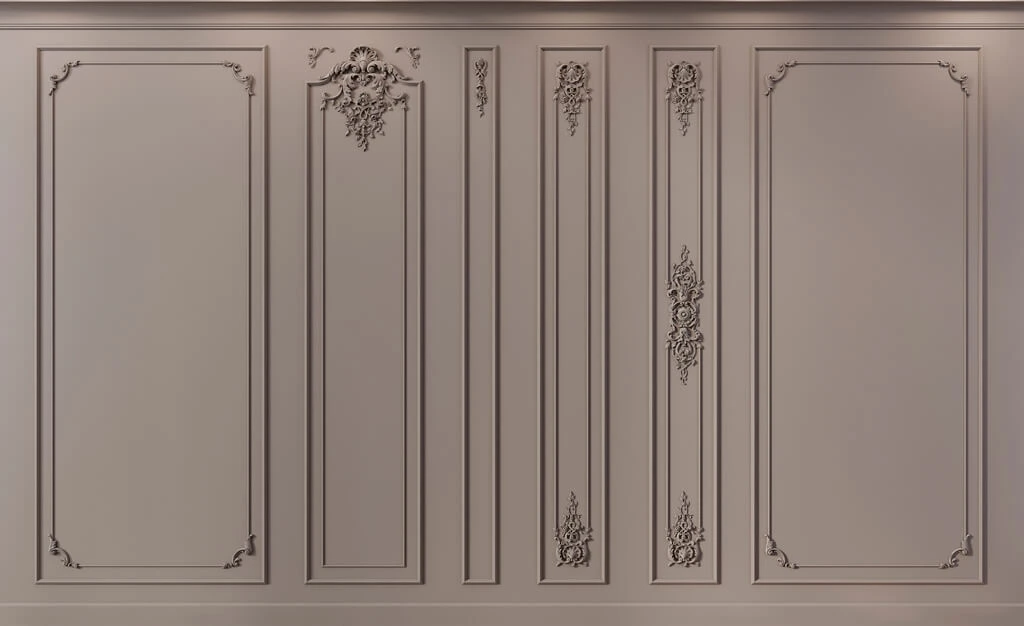
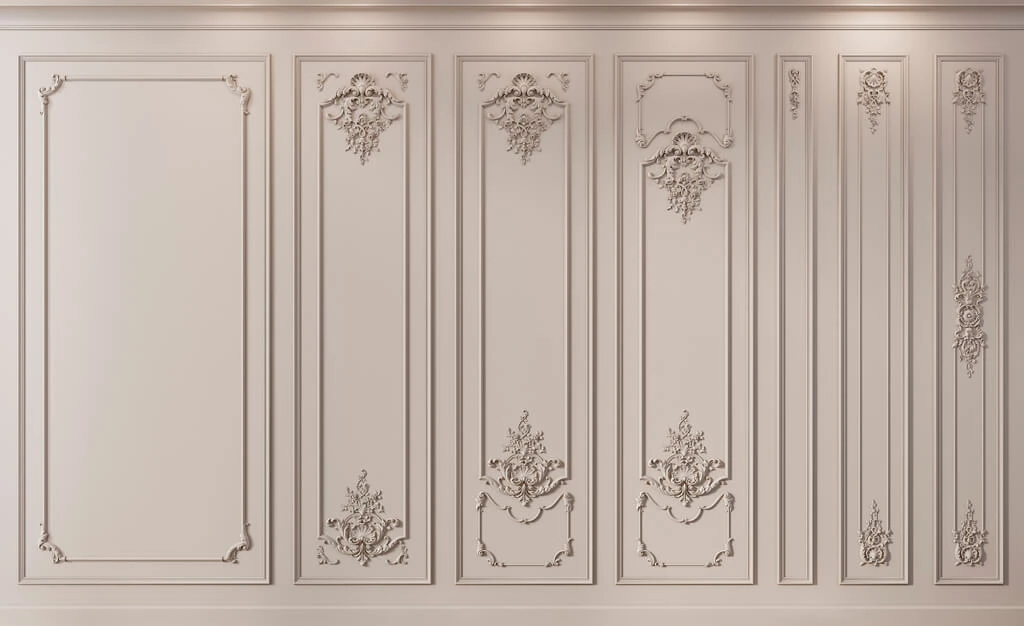
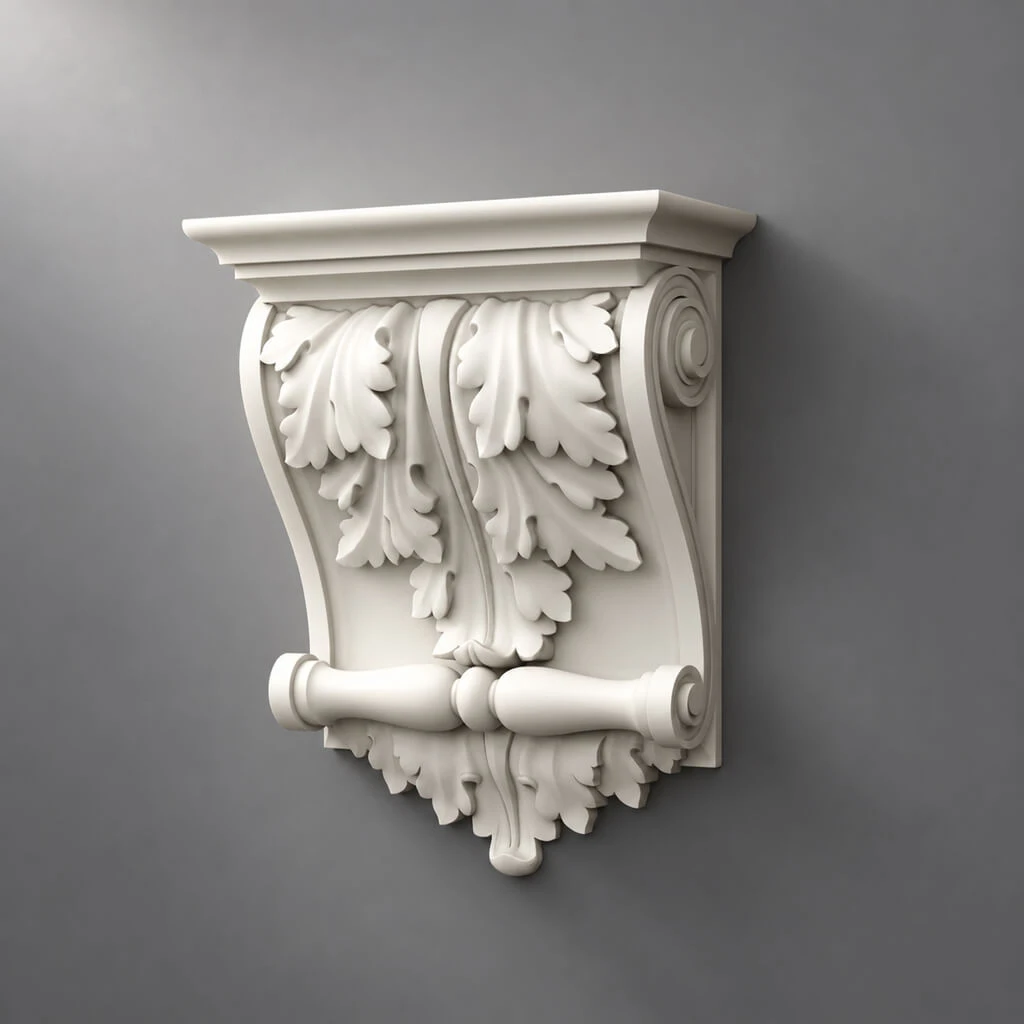
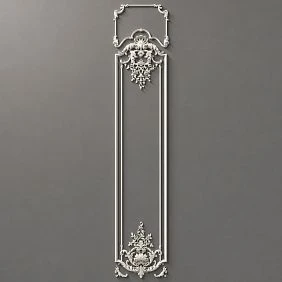
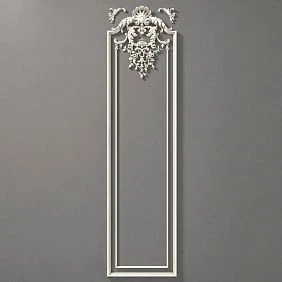
Now, about the most delicate question. decorative molding In a Baroque interior, it is used not by area, but on a point-by-point basis. One or two elements for the entire room.
Why? Because Baroque furniture already carries the maximum decorative signal. buy decorative moldings And placing it on every wall next to such furniture means creating decorative noise in which no single element is readable.
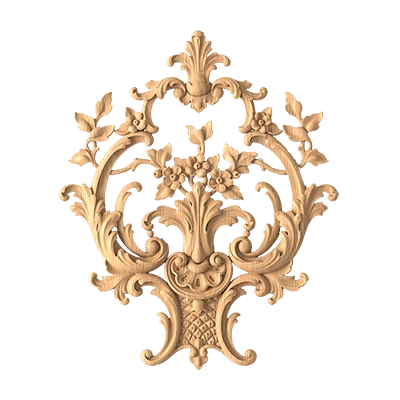
Above the console: a medallion or cartouche
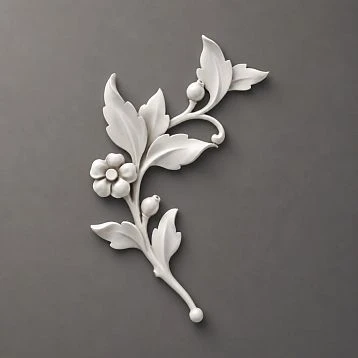
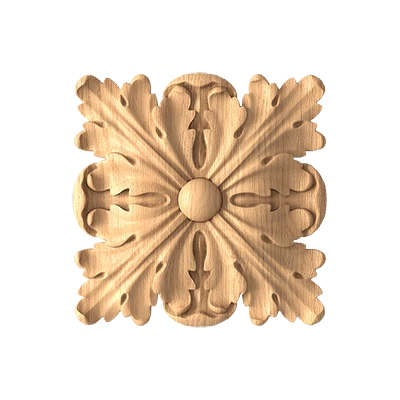
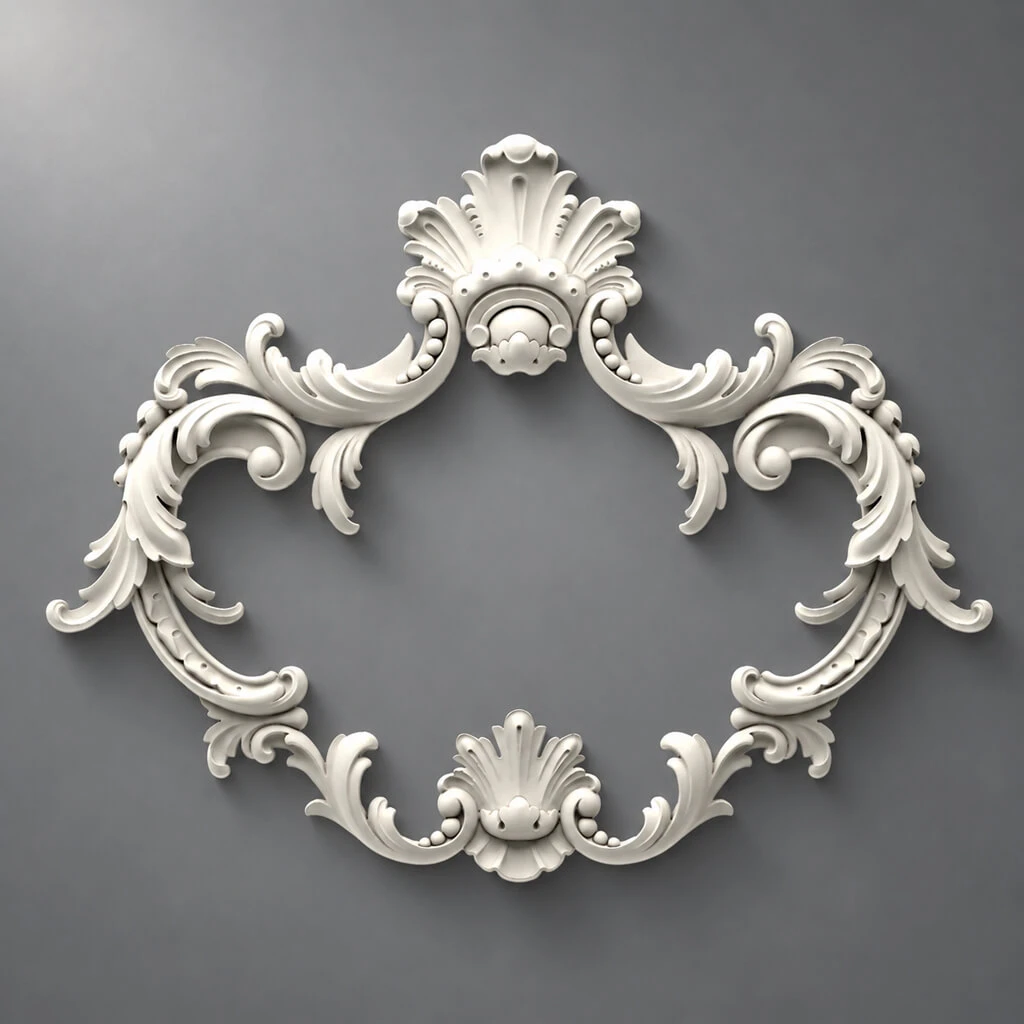
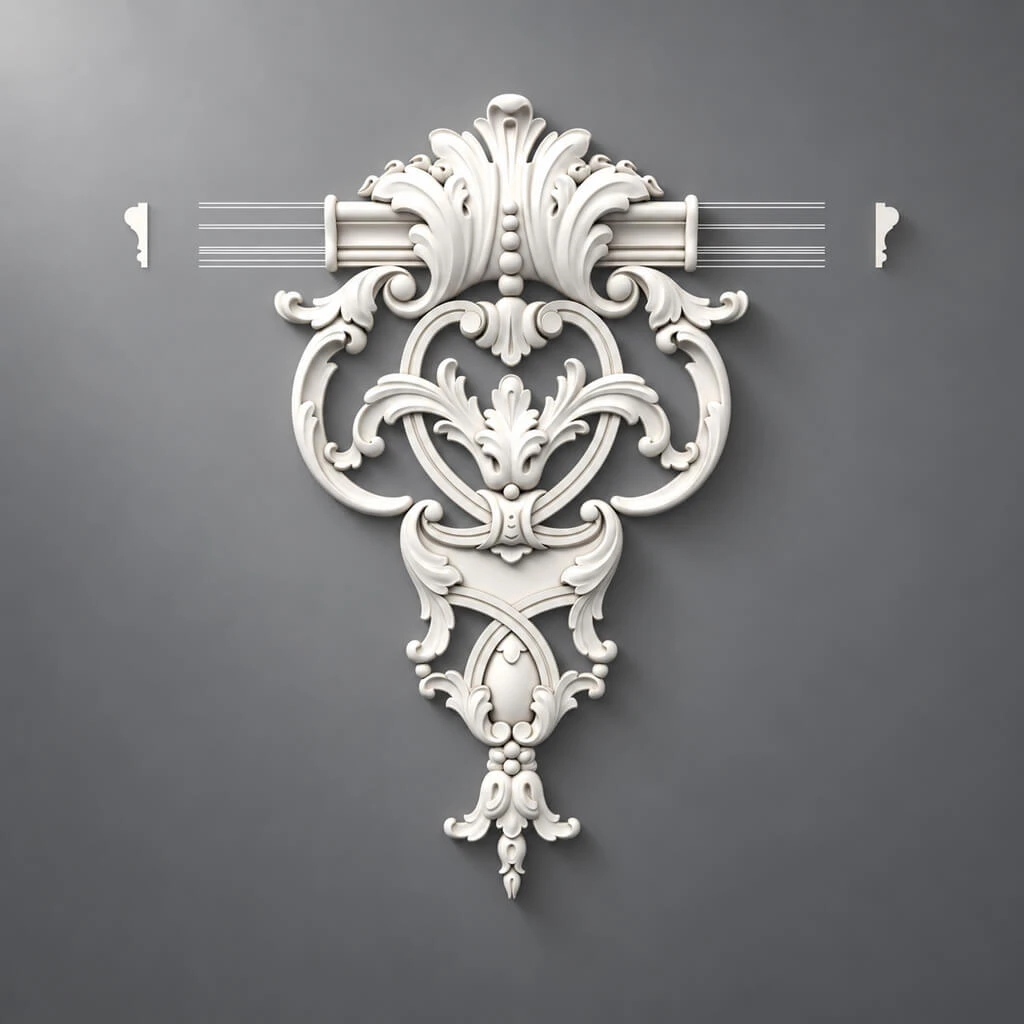
The console in a Baroque interior is one of the main "focal points." Above it is a mirror or painting. And one decorative element: a medallion 150–200 mm or a cartouche with a floral ornament.
Placement: along the central axis of the console, above the mirror or instead of it — as a decorative "header" of the zone.
Style: floral ornament, scrolls, acanthus leaves — in the Baroque spirit. Geometric overlays are inappropriate here.
Next to the mirror: side symmetrical elements
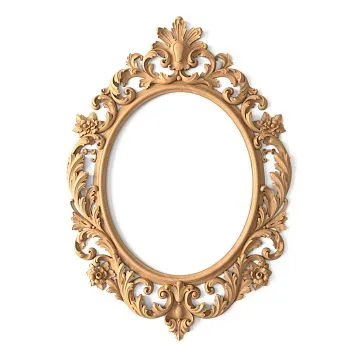
A large mirror in a Baroque frame is itself a powerful decorative object. Elements must be added to it very carefully. Small symmetrical overlays on the sides of the mirror — palmettes or small floral rosettes — create a "retinue" for the mirror without competing with it.
Size of side elements: 80–120 mm. Placement: at the level of the upper third of the mirror, strictly symmetrical.
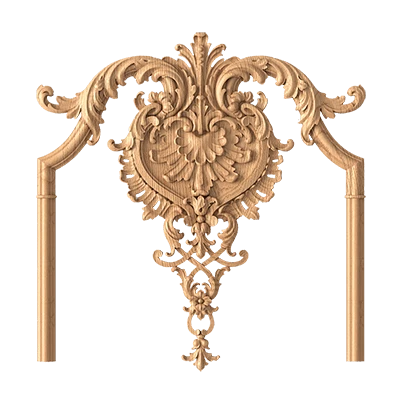
Above the headboard: architectural "canopy"
Above the bed, at the headboard — this is an area where one decorative element works especially expressively. A large cartouche or medallion 200–300 mm along the central axis of the bed in the upper part of the molding frame.
Buy Moldings for this position — means choosing the richest, most "Baroque" ornament. This is the main decorative accent of the bedroom — it is alone, and it must be significant.
In the fireplace portal area
Above the mantelpiece, on the wall between the top line of the portal and the ceiling — one decorative element. A wide horizontal cartouche or paired overlays on the sides of the central medallion.
Size of the central element: 200–300 mm. Side paired overlays — if space allows: 100–150 mm each.
In the hall: decor as a "calling card"
In a hall with a baroque console and mirror — one strong decorative accent above the mirror or on the main wall opposite the entrance. Buy decorative stucco For the hall, this is an investment in the first impression. It is the hall that sets the expectation for the entire home.
Color: how to unify furniture and stucco
Monochrome option: everything in a single color
Wall, moldings, cornice, rosette, decorative overlays — all in a single color. White, cream, pearl, light gray. Baroque furniture can be dark (wenge, walnut), gilded, or painted in a rich color — it "emerges" from the monochrome background like a soloist onto the stage.
This is the strongest solution for a modern baroque interior: the wall does not compete, the furniture is the main focus.
Two-tone option: wall in color, stucco white
A dark or rich wall — emerald, anthracite, deep blue — and white moldings, cornice, rosette. Baroque furniture in gold or warm tones against a dark background with a white architectural frame is very expressive. But it requires confidence and a professional approach to painting.
Ocher-gold option: warm monochrome palette
A wall in a warm cream-golden shade, stucco molding in a slightly lighter or white tone. Baroque furniture with gilding on such a background "lives" organically — the gold of the furniture rhymes with the warmth of the walls.
Four spaces: specific solutions
Living room in Baroque style
Main items: sofa, a pair of armchairs, coffee table, console by the wall, floor lamp, chandelier.
Stucco molding set:
-
Molding frames on the wall behind the sofa — profile 35–45 mm.
-
Horizontal molding belt at a height of 90–100 cm around the perimeter of the room.
-
Ceiling rosette under the chandelier — diameter 500–700 mm, ornamental.
-
Cornice 80–100 mm around the perimeter.
-
One decorative element above the console.
What not to do: do not place decorative overlays on all walls, do not choose ornamental moldings if the rosette is already rich.
Baroque style bedroom
Main item: a bed with a high headboard — the "queen" of the space.
Stucco molding set:
-
Molding frame behind the bed — full width, from floor to 230–250 cm.
-
Buy molding — cornice 60–80 mm, delicate profile. The bedroom does not tolerate heavy architecture.
-
Ceiling rosette — calm, 350–500 mm, without rich ornament.
-
One decorative accent — a cartouche above the headboard in the upper part of the molding frame.
What not to do: do not install a rich cornice and a rich rosette at the same time. The bedroom requires a soft architectural language.
Baroque style study
A baroque study is both stateliness and intellect. A desk, a bookshelf, an armchair, a carpet.
Stucco molding set:
-
Molding frames on the side walls.
-
Buy polyurethane moldings for the cornice line of the shelf.
-
Perimeter cornice — strict, 70–90 mm.
-
One decorative medallion on the main wall — opposite the desk.
-
Ceiling rosette — strict, 300–400 mm.
Hall with a baroque console
Stucco molding set:
-
Molding frames on all walls of the hall — profile 30–40 mm.
-
Horizontal belt at windowsill level or 90–100 cm.
-
Cornice 60–80 mm.
-
One main decorative element above the mirror or console — cartouche 180–220 mm.
-
Ceiling rosette — if there is a chandelier in the hall.
What to buy for a Baroque interior: final table
| Task | What to buy |
|---|---|
| Support Baroque furniture without overload | Calm Moldings made of polyurethane 30–45 mm |
| Design a Baroque chandelier | Ceiling rosette — ornamental or calm |
| Make the wall richer | Decorative stucco — one accent |
| Assemble a living room in style | Moldings + rosette + cornice |
| Make the bedroom softer | Moldings in wall color + delicate cornice |
| Connect furniture and architecture | Molding frames behind key furniture |
| full set | Polyurethane Items + Relief Decoration + glue + primer + paint + 20% spare |
Five mistakes when choosing stucco for baroque furniture
Mistake one: rich stucco on every wall. Classic Furniture Baroque is already saturated with decor. If every wall is also saturated — conflict is inevitable. One accent wall or zone, the rest — calmer.
Mistake two: small molding next to large furniture. A 15 mm molding next to a 220 cm wide baroque sofa looks like a random scratch. The scale of architectural decor should match the scale of furniture.
Mistake three: rosette and moldings of different styles. A geometric rosette and floral baroque moldings — stylistic conflict. A unified ornamental language for all elements.
Mistake four: decorative overlays without molding context. Buy Moldings and sticking a single overlay on an empty wall next to rich furniture is not decor, it's a misunderstanding. The overlay should be placed within the context of a molding frame or architectural zone.
Mistake five: an overloaded ceiling. A large ornamental cornice + a rich rosette + additional ceiling moldings make a heavy ceiling that "presses down" on any, even the most magnificent, furniture.
Frequently asked questions
Which stucco molding suits Baroque furniture?
Optimal: Moldings made of polyurethane with a classic profile of 30–50 mm, Ceiling rosette ornamental under a Baroque chandelier, one or two elements decorative molding at accent points. The main principle is that stucco molding supports the furniture, not competes with it.
What to buy for a Baroque-style living room?
Moldings made of polyurethane for frames on walls, ceiling outlet under the chandelier, a cornice 80–100 mm, one decorative element above the console. Plus glue, sealant, primer, paint, and a 20% reserve.
Is it possible to combine Baroque furniture and polyurethane stucco molding?
Yes. Polyurethane Items — precise profile, easy installation, any paint color. With a properly chosen scale and style of the profile, the result is no different from natural stucco, and surpasses it in practicality.
How to avoid making a Baroque interior too heavy?
The rule of one accent: one zone with rich decor per room. Furniture is the main accent. Stucco molding is the architectural frame. Decorative elements — one or two per room. A single color for all stucco molding.
Is a ceiling rosette needed if the chandelier is modern?
No. A ceiling rosette under a modern light fixture in a Baroque interior is a stylistic conflict. A rosette is only appropriate under a Baroque or classic chandelier.
Which cornice is suitable for a Baroque interior?
Classic profile 70–110 mm with several horizontal levels. For high ceilings — with an ornamental frieze. For standard heights — a strict multi-level profile without ornamentation. Buy molding in the form of a cornice — means choosing a profile proportionate to the ceiling height.
STAVROS: system for Baroque interior
Furniture in Baroque style requires a worthy architectural setting. Not just "something on the walls," but a well-thought-out system: cornice, molding frames, ceiling rosette, and a point decorative accent — all in a unified style and scale.
STAVROS offers Polyurethane Items of a full range for Baroque and Classic interiors: Moldings made of polyurethane from 15 to 120 mm for any wall height, ceiling rosettes — from delicate to richly ornamented, buy decorative moldings in a wide assortment of medallions, cartouches, and overlays.
All stucco is made of high-quality polyurethane: precise profile, perfect geometry, can be painted with any acrylic paint. The result is an architectural interior in which Classic Furniture looks exactly as it should: like the main character.
STAVROS. Contact us to confirm shipping to your destination. Pickup in Moscow and St. Petersburg.
Baroque is not "everything at once." It is the ability to choose the main thing and give it a stage.