Article Contents:
- Why this is not just a question of 'wood or plastic'
- How wooden baguette differs from polyurethane molding
- Wooden baguette: a material with history
- Polyurethane molding: lightweight profile for walls and panels
- Key differences in one table
- Where wooden baguette works best
- Paintings and artworks
- Mirrors in wooden frames
- Classic interiors with natural materials
- Furniture inserts and facades
- Bagette compositions and gallery walls
- Where polyurethane moldings work best
- Decorative frames on the wall
- Mirrors in wall color
- Decorative panels above console, bed, TV area
- Neoclassical interior
- Panels on painted walls
- Bedroom: headboard and side walls
- How to choose a profile for a specific task
- For a painting
- For a mirror
- For a decorative panel
- For an accent wall
- For furniture
- What to buy together: a kit for every task
- Kit for a painting in a wooden frame
- Kit for a wooden mirror frame
- Kit for a polyurethane wall panel
- Kit for framing a mirror with moldings in wall color
- Kit for a sideboard or display case with a wooden baguette
- Ready-made solutions: five scenarios
- Scenario 1: A painting in a classic interior
- Scenario 2: A mirror above a console in a neoclassical interior
- Scenario 3: Decorative wall panel in the bedroom
- Scenario 4: Buffet with glass doors
- Scenario 5: Neoclassical wall in the living room
- Can you combine wood and polyurethane in one interior
- Mistakes that cost money and time
- Buying only by photo, without checking the profile
- Using polyurethane molding for a load-bearing frame
- Choosing a wooden baguette for a painted wall
- Not considering the thickness of the mirror or glass
- Not counting corners and trimming
- Forgetting glue, sealant, and primer
- Mix wood and polyurethane without a color scheme
- Profile too wide for a small mirror
- Selection of additional keys: what else buyers are looking for
- FAQ: Answers to Key Questions
- What is better: wooden baguette or polyurethane molding?
- Can you make a mirror frame from polyurethane moldings?
- What to buy for a decorative wall panel?
- When is a wooden baguette definitely needed instead of a molding?
- How to choose the profile width for a frame?
- Can you paint a wooden baguette to look like a polyurethane molding?
- What is 'molding decor' and why is it needed?
- STAVROS: production and catalog for professionals and private buyers
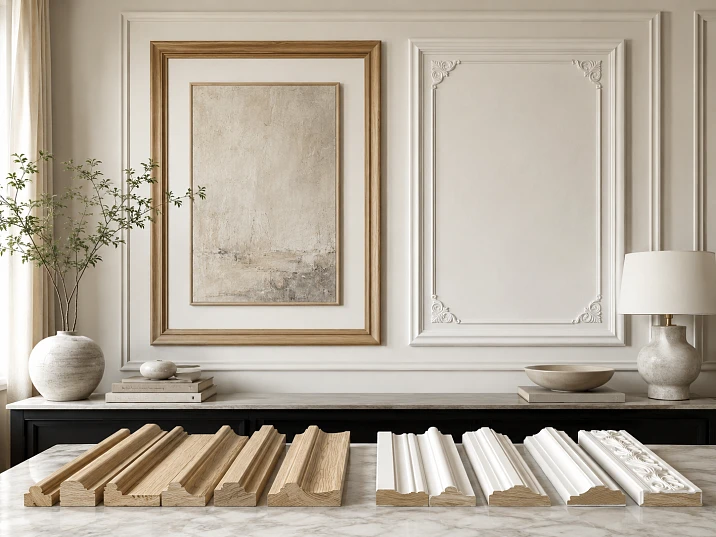
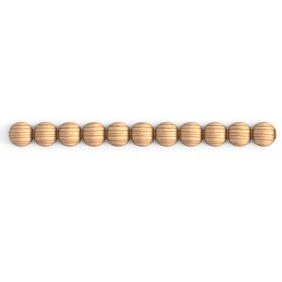
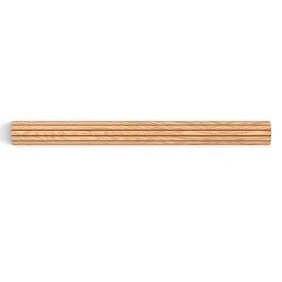
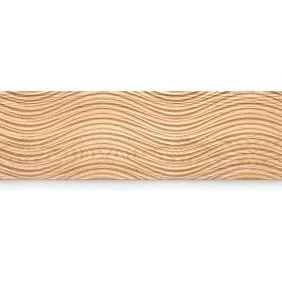
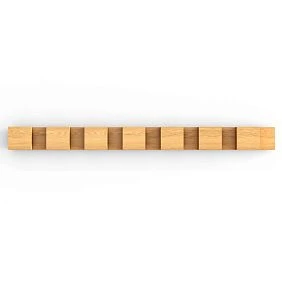
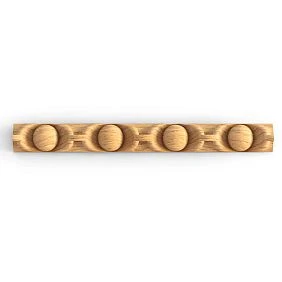
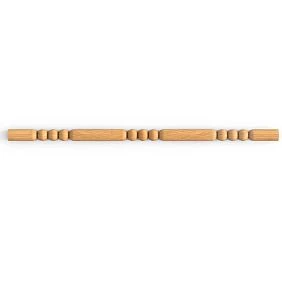
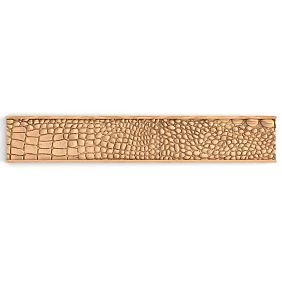
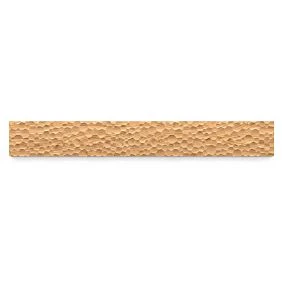
When the question of choosing a profile for a painting, mirror, or decorative panel arises, the buyer often finds themselves at a crossroads: Wooden Picture Frame or Moldings made of polyurethane? The answer depends not on personal taste, but on the specific task: what exactly is being framed, what style is the interior done in, will the surface be painted or should it retain a natural wood texture.
Why this is not just a question of 'wood or plastic'
Many buyers simplify the choice to a basic dilemma: natural or synthetic. But a professional sees it differently. A wooden baguette is frame logic, furniture aesthetics, tactile texture, and living material. A polyurethane molding is wall architecture, a paintable profile, ease of installation, and the plasticity of stucco relief.
These are two different tools for two different tasks. Sometimes interchangeable. More often, not.
Below is a detailed breakdown of each solution, specific application scenarios, typical purchasing mistakes, and ready-made kits for each task.




How a wooden baguette differs from a polyurethane molding
Before going to the catalog, it's important to understand the fundamental difference between these two products. The difference is not just in the material — it's in the very logic of application.
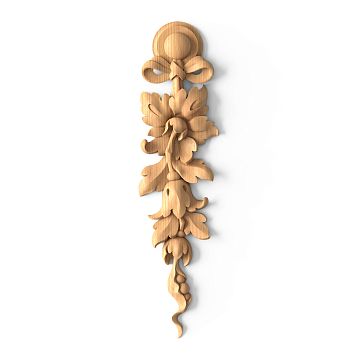
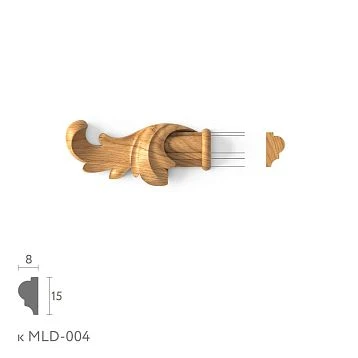
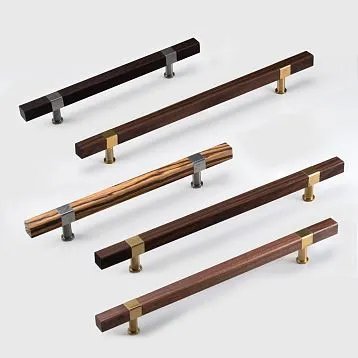
Our factory also produces:
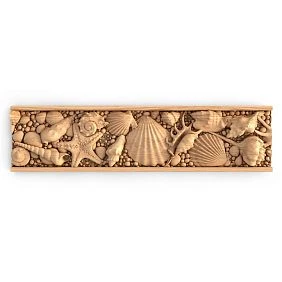
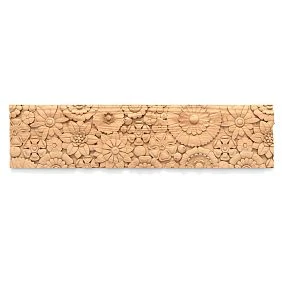
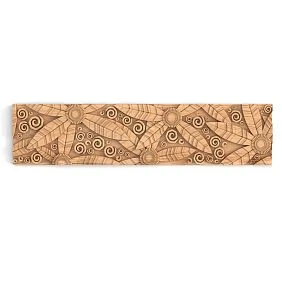
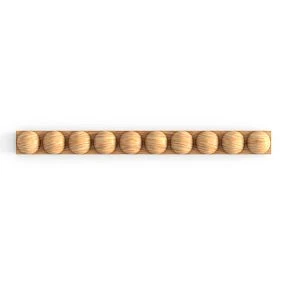
Wooden baguette: a material with history
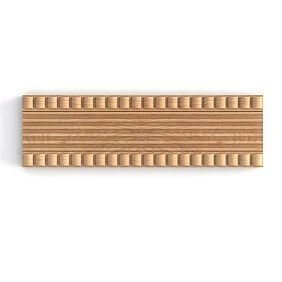
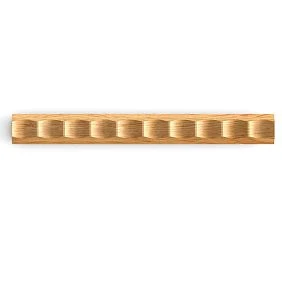
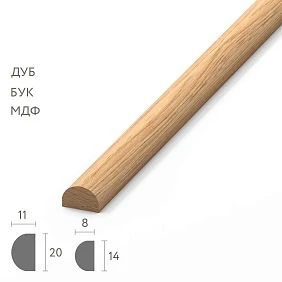
Wooden Picture Frame — this is a linear profile made from solid wood, historically intended for framing paintings, icons, mirrors, and photographs. Its cross-section is always designed with frame logic in mind: there are grooves, rabbets, and ledges—everything needed to hold glass, cardboard, or mirror panels.
Picture frame strip — a related term. It is the same linear blank that is cut, joined at 45° angles, and assembled into a frame. The difference between "baguette" and "strip" is more everyday: a strip is a long blank, while a baguette is already an assembled or ready-to-assemble structure.
Wooden baguette is made from beech, oak, ash, and other species. It carries the warmth of natural material, emphasizing a connection with furniture, wooden cornices, strips, and parquet. It is heavier than polyurethane and requires careful handling with a saw when cutting, but it provides that very frame completeness that cannot be imitated.
Get Consultation
Polyurethane molding: a lightweight profile for walls and panels
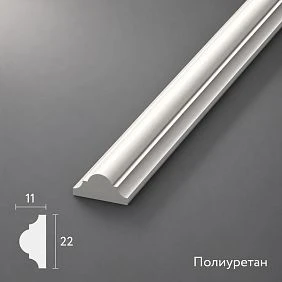
Polyurethane molding — this is a wall decorative profile. It does not have frame grooves. Its function is to create architectural relief on the wall: framing wall sections, forming panels, imitating stucco, framing a mirror built into a wall niche.
Polyurethane molding is lightweight, cuts well at any angle with a hacksaw or miter box, adheres with acrylic or construction adhesive, primes well, and accepts any paint color. That is why it is indispensable where a frame painted to match the wall is needed: a "frameless" mirror in a Scandinavian interior, a wall panel above a console, neoclassical rectangles on bedroom walls.
Polyurethane moldings — a broader concept that includes cornices, baseboards, corner elements, and overlays. Molding is one type of this stucco, a flat or relief profile that is mounted on vertical and horizontal surfaces.
Key differences in one table
| Parameter | Wooden baguette | Polyurethane molding |
|---|---|---|
| Material | Solid wood (beech, oak) | Polyurethane |
| Purpose | Frame for painting, mirror | Wall decor, panels, frames |
| Frame puzzle | Present | No |
| Weight | Medium and above | Lightweight |
| Painting | Stain, varnish, paint | Primer + paint of any color |
| Installation | Trimming, corner assembly | Glue, sealant, trimming |
| Texture | Natural wood | Homogeneous, for painting |
| Connection with furniture | Straight | Through color and style |
Where wooden baguette works best
There are a number of tasks where a wooden baguette or Picture frame strip — is the only correct solution. Not because "it's customary," but because only natural material gives the desired result.
Paintings and works of art
Oil on canvas, watercolor under glass, pastel, etching, icon — all of these require a full-fledged frame structure. frame for a painting holds the glass, mat, and cardboard. Mechanical strength and a precisely calibrated profile with a rabbet are needed here.
A wooden baguette for paintings is made specifically for this task. It has the necessary groove depth and allows you to choose the profile width to match the canvas size — from a narrow thin frame for watercolors to a massive wide baguette for a 100×80 cm canvas. Buy wooden picture frame molding for a painting is much more reasonable than trying to adapt a wall molding for this task.
Mirrors in a wooden frame
A classic mirror with a carved wooden frame is a standalone piece of furniture. Mirror wooden frame made of beech or oak carries the warmth of natural material; it is heavier and more massive than a polyurethane version, but it fits organically into interiors with parquet, wooden furniture, and wooden cornices.
When a designer selects the mirror frame for a classic or neoclassical interior with solid wood, a wooden option is the first choice. Especially if the mirror will hang opposite an oak cabinet, above an ash console, or in a hallway with wooden architraves.
Classic interiors with natural materials
In interiors where wood is already present — slats on the ceiling, wooden kitchen fronts, oak parquet, wooden cornices — Wooden decoration and a wooden baguette become part of a unified material story. Polyurethane will look foreign here, unless it is painted exactly to match the wooden elements.
Furniture inserts and fronts
Showcases, sideboards, shelving units, wardrobes — all often require a decorative profile for framing glass or mirror inserts. Here, it is precisely Wooden Picture Frame or a glazing bead — a thin profile that holds the glass in the groove. More about the function of the glazing bead can be read in the article about wooden trim.
Baguette compositions and gallery walls
When several paintings are assembled into a gallery composition, the unity of the frames creates cohesion. Wooden frames from a single profile provide this unity. Here, both the color, the width of the profile, the patina, and the type of wood are important.
Where polyurethane moldings work best
Now — the flip side of the choice. Moldings made of polyurethane they don't try to 'replace wood.' They solve fundamentally different tasks — those where wooden baguette is not applicable at all.
Decorative frames on the wall
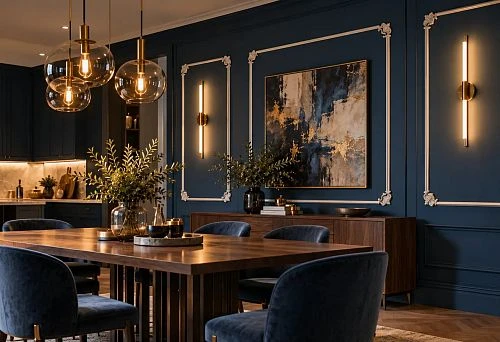
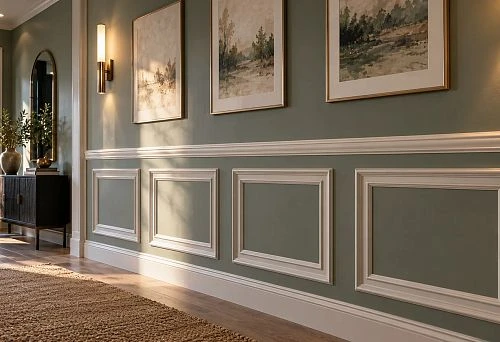
Wall frame compositions made of moldings are one of the most popular trends in recent years. Rectangles, squares, vertical panels — all of this is assembled from polyurethane profiles, glued to the wall, and painted in a single color. The result is an architectural relief that looks expensive and complex, yet is installed in a few hours.
buy polyurethane moldings for this task, you can use standard profiles of different widths and relief heights — from thin flat to lush classic.
Mirrors in wall color
This is a special scenario. When a mirror is built into a wall niche or simply hung on the wall and needs to be framed so that the frame blends with the wall — Moldings made of polyurethaneThey are glued around the mirror surface, painted in the wall color — and the mirror gets an 'invisible' frame that works as an architectural accent, not as a piece of furniture.
Decorative panels above a console, bed, TV area
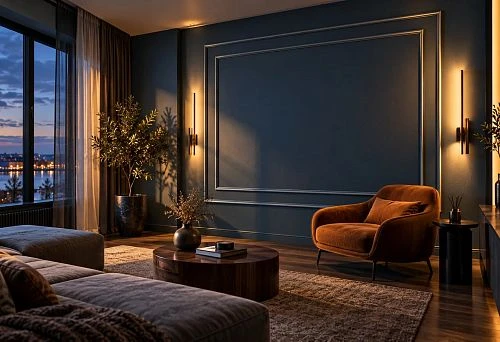
A wall panel made of polyurethane moldings is a frame on the wall with or without a decorative insert in the center. Above a console, above a bed at the headboard, around a TV panel, on an accent wall in the living room — polyurethane decor here solves the problem quickly, cleanly, and without extra weight.
Neoclassical interior
Neoclassicism is a style where stucco is mandatory, but in a light, modern interpretation. Heavy wooden baguettes are often inappropriate here. But Polyurethane moldings — moldings, cornices, baseboards, corner elements, decorative overlays — create precisely that architectural rhythm that distinguishes neoclassicism from any other style.
Panels on painted walls
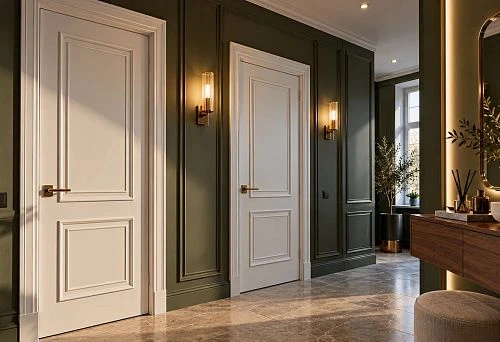
If the walls are already painted or will be painted, it makes sense to use moldings that accept the same paint. Polyurethane wall decor in this case becomes part of the wall — not an overlay element, but a continuation of the finish.
Bedroom: headboard and side walls
A headboard framed with wall molding frames is a classic design technique. Two or three rectangles of profile, painted in the tone of the wall or a contrasting color, turn an empty wall above the bed into an architectural accent. This does not require a wooden frame — here you need a lightweight mountable molding.
How to choose a profile for a specific task
The main question: what exactly are you designing? The answer determines everything else.
For a painting
If you need a full frame — with a groove for glass, mat, and cardboard — choose wooden picture molding. Select the profile width proportionally to the canvas size: for small formats (up to 40×50 cm), a narrow baguette of 20–35 mm is sufficient; for large canvases (80×100 cm and larger), a wide profile from 50 mm.
Consider the texture: smooth beech looks restrained and modern, oak with pronounced texture looks brutal and warm. For icons and classical paintings, profiles with shaped sections — with waves, Empire profiles, or carved decor — are traditionally chosen.
For a mirror
Here the fork is fundamental:
-
If the mirror is an independent object, hangs separately on the wall and should look like a piece of furniture — choose the mirror frame made of solid wood. A carved wooden frame for a mirror made of beech or oak gives a finished, substantial result.
-
If the mirror is built into a wall composition, panel, or TV area and should "dissolve" into the wall — use Moldings made of polyurethane. They are mounted around the mirror sheet and painted in the wall color.
For a heavy mirror (from 5 kg), the mounting of the mirror sheet itself is designed separately from the decorative frame — the molding does not perform a load-bearing function.
For a decorative panel
Decorative wall panel — a task for polyurethane. Buy moldings for panels can be in the form of standard profiles, from which the desired rectangular or square shape is assembled. Additionally, corner elements and Decor for polyurethane moldings — rosettes, overlays, corner "ears" that are placed in the corners of the frame.
For an accent wall
A wall with several panels, frames, horizontal and vertical stripes — Moldings made of polyurethane и decorative polyurethane elements provide complete freedom. Here, correct calculation of the amount of profile, corners, and overlays is important. It is recommended to take a margin of 5–10% of the calculated footage.
For furniture
Wooden decoration и decor for furniture made of solid wood — the right choice for wooden facades: cabinets, sideboards, chests of drawers, kitchen fronts. A wooden overlay on a wooden facade is organic. Polyurethane overlays are appropriate on painted MDF facades, where the entire surface will be under a single color.
What to buy together: configuration for each task
One of the most common mistakes is to buy only the profile and then go to the store twice for glue, corners, and paint. Below are complete kits.
Kit for a painting in a wooden frame
-
Wooden Picture Frame of the required profile and size with a 10% margin
-
Corner joints or miter box for cutting at 45°
-
Hardware: corner brackets or frame clamps
-
Glass or plexiglass (if necessary)
-
Mat board (for watercolor, graphics, photography)
-
Stain, varnish, or paint — depending on the desired finish
-
Hinges and hanging wire
Kit for a wooden mirror frame
-
mirror frame solid wood or Mirror wooden frame custom order
-
Mirror sheet cut to size (usually 5 mm thick)
-
MDF backing
-
Hardware: hinges, screws, dowels
-
Paint and varnish coating (stain + varnish, or paint)
-
Mounting adhesive or double-sided tape for fixing the mirror inside the frame
Kit for polyurethane wall panel
-
Moldings made of polyurethane with a 5–10% margin
-
Decor for polyurethane moldings: corner elements, rosettes, overlays
-
Mounting adhesive for polyurethane (see article what to glue polyurethane molding with)
-
Acrylic sealant — for sealing joints before painting
-
Polyurethane primer
-
Water-based paint (or alkyd — depending on the wall)
-
Miter box for cutting profile at a 45° angle
-
Ruler, level, pencil for marking
Set for framing a mirror with moldings in wall color
-
Moldings made of polyurethane around the mirror perimeter
-
decorative polyurethane elements for corner accents
-
Construction adhesive, sealant, primer, paint
-
Mirror panel fasteners — separately (mirror adhesive, clamps, or frame holders)
Set for a buffet or display case with wooden picture frame molding
-
Wooden Picture Frame or wooden trim for glass inserts
-
decor for furniture — overlays, profile elements matching the facade style
-
Stain and varnish matching the furniture color
-
Furniture glue or finishing nails
Ready-made solutions: five scenarios
Scenario 1: Painting in a Classic Interior
The interior is classic, neoclassical, or "modern classic" with wooden furniture. You need to frame an oil painting 60×80 cm. The right solution: Buy wooden picture frame molding for paintings with a 40–50 mm profile, tinted to match the furniture color or used in its natural state under varnish. Together with the frame — frame brackets, glass, and hinges. The result is a full-fledged gallery frame that pairs with the furniture.
Scenario 2: A mirror above a console in a neoclassical interior
The wall is beige, the console has drawers, the mirror is 80×120 cm. There is no desire to see a heavy wooden frame — you want a light, architectural framing. Solution: Moldings made of polyurethane around the mirror perimeter + Decor for Molding in the corners + painted to match the wall. The mirror "grows" into the wall but gets a expressive outline.
Scenario 3: Decorative wall panel in the bedroom
Wall behind the bed: want three rectangular frames in wall color, with a decorative overlay in the center of the middle one. Solution: buy polyurethane moldings, corner elements and decorative polyurethane elements for the central overlay. Glue, sealant, primer, paint — and in one weekend the wall is transformed.
Scenario 4: Sideboard with glazed doors
Sideboard made of solid oak, upper doors for glass. Need a profile to hold the glass and decorative framing around the door perimeter. Solution: wooden trim for glass + Wooden Picture Frame around the door perimeter as a frame profile. All from the same wood species, toned with the same stain.
Scenario 5: Neoclassical wall in the living room
Living room in neoclassical style: high ceilings, light walls, chairs with carved legs. I want to design one wall with a panel frame grid, cornice, and baseboard in a unified style. Solution: Moldings made of polyurethane for frames, cornice and baseboard from the section Polyurethane moldings, Decor for Molding in the corners. The entire system is painted in a single color — and the wall gains architectural depth.
Can wood and polyurethane be combined in one interior
This is a separate and important question. Short answer: yes, it can. Long answer: it requires unity of style or color.
Wooden furniture and wooden frames pair well with polyurethane moldings on walls if unified by a color scheme. For example: a wooden cabinet and wooden picture frames are tinted in wenge — and the wall moldings are painted dark gray, which reads as a continuation of that color story. Or vice versa: light walls, white polyurethane moldings, light beech in frames and furniture — unity through a light palette.
A mistake occurs when wood and polyurethane are simply "mixed" without a common theme: dark oak on furniture and white polyurethane frames on walls — this is a conflict, not a combination.
Professional technique: choose one base color or tone and apply it to both materials. Then the difference in texture (wood vs polyurethane) will work for interest, not dissonance.
Mistakes that cost money and time
Over years of practice, a pattern of the same mistakes emerges. It's worth knowing them in advance—to avoid redoing things.
Buying only by photo, without checking the profile
The width of the profile in the photo is deceptive. A 20 mm baguette looks the same on screen as a 45 mm one—if there's no scale ruler. Before purchasing wooden molding or molding, specify the exact cross-section, face width, and relief height.
Taking polyurethane molding for a load-bearing frame
Molding is a decorative profile, not a frame structure. It does not hold glass, does not support the mirror panel, and does not provide mechanical strength. For picture frames or for mirror frames with a load-bearing function—only a wooden baguette or a ready-made frame.
Choosing a wooden baguette for a painted wall
If the wall will be painted in one color and you want a frame ornament in the same color—a wooden baguette for painting will show noticeable texture and paint absorption. Polyurethane molding will take the paint more evenly and uniformly. For the task of 'frames in the wall color,' the right choice is Moldings made of polyurethane.
Do not account for the thickness of the mirror or glass
The groove of a wooden baguette is designed for standard glass thickness — usually 2–3 mm. A mirror 5–6 mm thick simply won't fit into such a groove. Check the rabbet depth before ordering.
Do not count corners and trimming
Each frame corner requires two 45° cuts. Each cut wastes several centimeters of profile. For a 60×80 cm frame, you'll need at least 300 cm of profile — with allowance for trimming and possible defects. Buying exactly to size means going back for more.
Forget glue, sealant, and primer
Especially relevant for polyurethane. what to glue polyurethane molding with — is a separate issue solved by choosing the right glue. Acrylic sealant is needed for sealing joints before painting — without it, seams will be visible after the first coat of paint. Primer for polyurethane ensures paint adhesion.
Mix wood and polyurethane without a color scheme
This was already mentioned above, but it's worth repeating: two materials in one space without a common theme create visual noise, not an interior.
Too wide a profile for a small mirror
A 40×60 cm mirror in a frame with an 80 mm profile is not a frame, it is a frame with a mirror inside. The profile should be proportionate to the object. For small mirrors — a 20–40 mm profile, for large ones — you can go up to 50–80 mm and higher.
Selection of additional keywords: what else buyers are looking for
In the theme of baguettes and moldings, there are related queries that often lead to the same product sections. Buyers are looking for:
-
carved millwork — leads to solid wood millwork, where all types of wooden profiles with ornamental milling are presented
-
buy a frame for a painting — leads to the section Frames, where there are ready-made solid wood products of various sizes
-
buy polyurethane decor — leads to the section moldings from polyurethane with the entire range of profiles, overlays, and decorative elements
-
polyurethane overlays — leads to section decorative PU overlays
-
wall decor buy — leads to section . Clear lines, created using modern technologies, emphasize the strict aesthetics of the room. Each decorative element harmoniously fits into the overall concept, creating a sense of order and thoughtfulness.
-
wooden overlays for furniture — leads to section wooden decor
All these queries have one thing in common: the buyer is looking for a profile for a specific task. And this task is always slightly different — a mirror or a painting, a wall or furniture, painting or natural look.
FAQ: Answers to Key Questions
What is better: wooden baguette or polyurethane molding?
It depends on the task. wooden picture molding indispensable where a full-fledged frame structure with a groove and natural texture is needed. Polyurethane molding works better in wall panels, decorative frames, and painted interiors. One material does not replace the other — each solves its own task.
Can you make a mirror frame from polyurethane moldings?
Yes. If the frame serves a decorative function and is mounted around the mirror panel on the wall, Moldings made of polyurethane handle the task. The mirror panel itself is attached to the wall separately — using mirror adhesive, clamps, or frame holders. For a load-bearing frame, where the mirror is held in the profile groove, you need Mirror wooden frame.
What to buy for a decorative panel on the wall?
buy polyurethane moldings + Decor for Molding into the corners + decorative polyurethane elements into the center of the panel. Additionally: adhesive for polyurethane (more details in the article what to glue polyurethane molding with), acrylic sealant, primer, and paint. Profile allowance — at least 5–10%.
When is a wooden baguette definitely needed instead of molding?
When a load-bearing frame is needed — with a groove for glass and cardboard. When the natural texture of wood is important. When the frame must coordinate with wooden furniture, parquet, cornices, or handles. When an icon, painting, or gallery wall with unified profile is being framed. Buy wooden picture frame molding in these cases — the only correct solution.
How to choose the profile width for a frame?
Guideline: the profile width should be between 5% and 10% of the object's smaller side. For a mirror 60×90 cm — profile 30–60 mm. For a painting 40×50 cm — profile 20–40 mm. The larger the object and the more classic the style, the wider the profile can be chosen.
Can a wooden baguette be painted to look like a polyurethane molding?
Theoretically, yes. A wooden baguette is primed and painted. However, the wood texture will still slightly show through the paint, especially in the first layers. For a perfectly smooth surface for painting Polyurethane molding it is better suited.
What is "decor for moldings" and why is it needed?
Decor for polyurethane moldings — these are corner elements, rosettes, "ears," and end caps that complement the profile at the corners of frames and in the centers of panels. They give the panel a finished look and decorative richness. Without corner elements, the profile joints look rough — with them, the frame becomes a full-fledged architectural element.
STAVROS: production and catalog for professionals and private buyers
All products described in the article — wooden baguettes, frames, moldings, stucco, and decor — are presented in the STAVROS company catalog. Production operates in St. Petersburg and Moscow, items are made from solid beech and oak using 3D milling with manual finishing, and the polyurethane range covers all types of profiles — from thin moldings 10 mm wide to lush classic cornices.
STAVROS offers products both retail and wholesale — for designers, furniture manufacturers, and construction companies, there is a loyalty program with attractive terms. Custom profiles and frames can be made according to individual sketches, subject to a minimum order quantity. Delivery is carried out throughout Russia and CIS countries, self-pickup is available from showrooms in Moscow and St. Petersburg.
If you are choosing between a wooden baguette and a polyurethane molding and are unsure which profile suits your task — STAVROS specialists will help with selection, quantity calculation, and configuration. For a painting, mirror, decorative panel, or furniture facade — the right solution can always be found in one catalog.